Arabs & Arabian Records Aggregator. Chronicler. Milestones of the 25 Countries of the Arabic Speaking World (official / co-official). AGCC. MENA. Global. Ist's to Top 10's. Records. Read & Enjoy./ www.arabianrecords.org
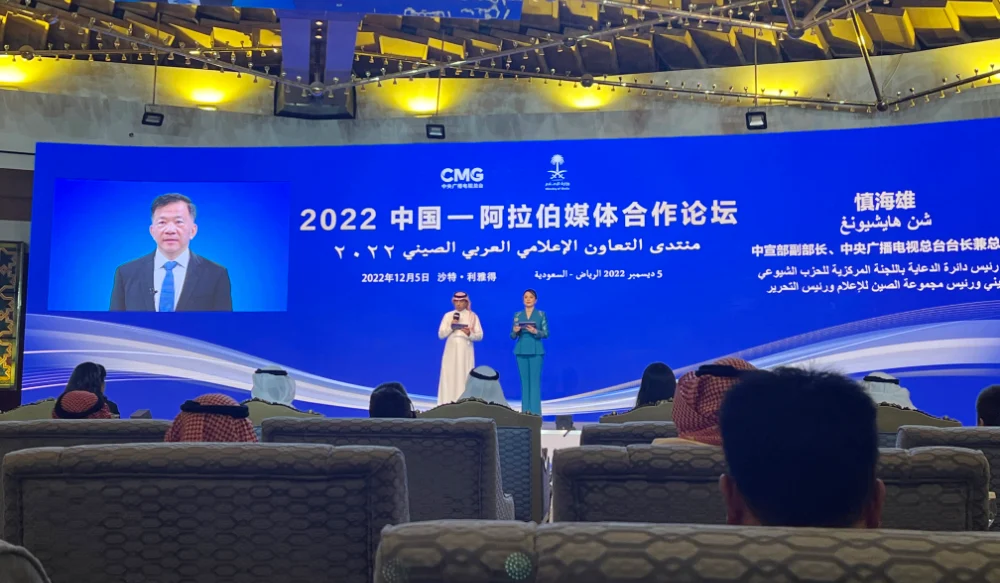
Ahead of the Chinese President’s visit to Saudi Arabia, the Saudi Ministry of Media and the China Media Group announced the launch of a joint partnership initiative to promote relations between Arab countries and China through media in a ceremony in Riyadh on Monday.
“It gives me great pleasure to welcome you to the Arab-Chinese Media Cooperation Forum, which is being held today in Riyadh…between the Saudi Ministry of Media and the China Media Group,” Acting Minister of Media Majid Al-Qasabi said.
Al-Qasabi addressed the audience in a speech via video extending his support for the cooperation.
“We look forward to the cooperation today to launch new media initiatives that contribute to deepening the ties between the Arab and Chinese cultures and between their peoples,” he said.
The initiative, he explained, will promote the presence of Chinese media on Arab channels, translating Chinese television shows into Arabic.
Through the initiative, Saudi and Chinese television will also work together to create programs highlighting the stories of individuals from both Saudi Arabia and China who achieved success in each other’s countries.
The initiative will also create opportunities for travel between the two countries, opening a space for greater understanding and strengthening the relationship between China and Saudi Arabia through media and cultural exchange.
In line with the aim of improving communication, the ceremony was held in both Arabic and Chinese in the presence of Ambassador of China to Saudi Arabia Chen Weiqing, Director-General of the Arab States Broadcasting Union Abdulraheem Sulaiman, and Chinese politician Li Shulei, head of publicity at the Central Committee of the Chinese Communist Party.
Mohammed Fahad Al-Harthi, president of the Arab States Broadcasting Union and CEO of the Saudi Broadcasting Authority, presented the initiative in a speech during the ceremony.
“Saudi-Chinese relations are old and well-established and strong, and they are witnessing prosperity and expansion,” he said, citing Crown Prince Mohammed bin Salman’s visit to China, the over 20,000 Arab students studying in China and the several schools in Saudi Arabia that teach the Chinese language and culture.
“We hope that this relationship will witness greater growth with the connection of interests and relations between the two peoples,” he added.
Toward the end of the ceremony, top media representatives from Palestine, Egypt, Bahrain, Libya, Yemen and Iraq extended their support for the initiative.
Al-Harthi stressed the importance of media in any country’s diplomatic relations.
“To achieve a solid relationship between the two societies, the media must play this role,” Al-Harthi said.
Through the initiative, translated Chinese works will be broadcast in Palestine, Algeria, Jordan, Sudan, Iraq and Saudi Arabia.
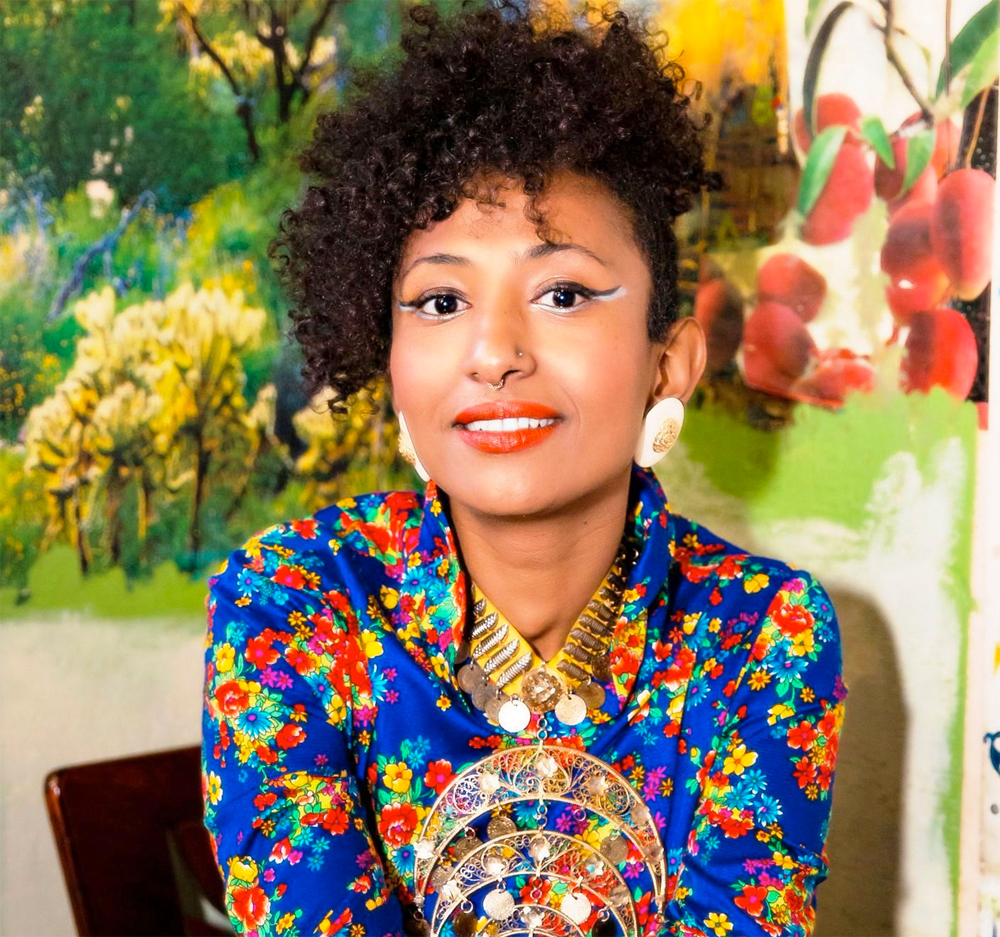
A singer, songwriter, and ethnomusicologist, Alsarah is a self-proclaimed practitioner of East African music, inspired by songs and cultures of Africa and the Middle East. Throughout her career, she performed as a band member of Sounds of Tarab, in addition to producing songs and albums under her stage name, and her band with her sister, Alsarah and the Nubatones. Furthermore, she was also featured in the documentary “Beats of the Antonov” in 2014.
Alsarah was born Khartoum, Sudan in 1982. As a child, her parents worked as activists at a time when many encouraged citizens to vote in the 1986 elections. Following the coup d’etat in 1989, however, her family fled the country to Yemen before the nation’s civil war forced them to relocate to Boston, the United States in 1994.
At this point in life, Alsarah turned to music for solace. In fact, music has been a big part of her childhood, with the very first music that spoke to her being played during her family’s activism in Sudan. Growing up, she studied ethnomusicology at Wesleyan University before relocating to Brooklyn, in New York, where became lead singer of the Zanzibari band Sounds of Tarab.
In 2010, Alsarah and her sister would start a band entitled “Alsarah and the Nubatones” along with band members Haig Manoukian, Kodjovi Mawuena, and Rami El-Aasser. The band released their debut EP, “Soukura,” followed by full-length album “Silt” in 2014, “Manara” in 2016, and “Manara Remixed” in 2017. In addition, Alsarah has also produced songs as a solo artist with albums such as “Aljawal,” “The Crow,” and “Min Ana.”
In general, many of Alsarah’s songs were influenced by artists from Sudan, Zanzibar, and Ethiopia. Her songs are available on Spotify and Deezer.
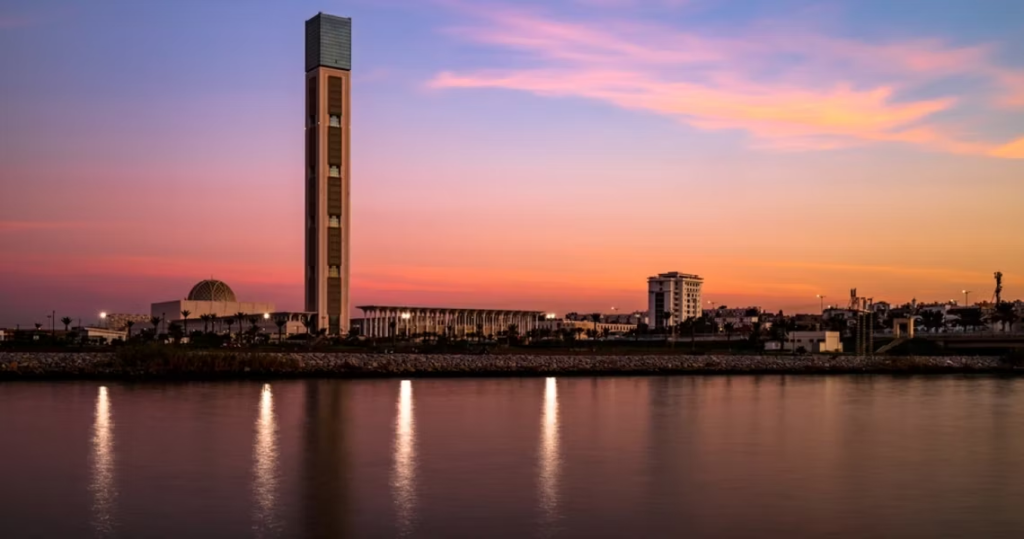
One doesn’t have to be a Muslim to visit the mosque or see the tallest minaret in the world.
Many people who think of a vacation to Africa make plans with Morocco in mind, South Africa at times, maybe Kenya, and definitely Egypt—to see the famous pyramids—or the 4,100-mile-long river that gave birth to that momentous civilization. Yet, as a continent, Africa has 54 countries, almost as many as the number of states in the U.S. Though it may come as a surprise, almost all of these countries are safe and have nearly the same conveniences as those found in many First World countries. Take Algeria, for instance, the biggest country in Africa and more than three times the size of Texas. This northern African country has pyramids, just like Egypt, and several fascinating ruins that would interest any history buff or anyone who’s out for some real adventure.
The Great Mosque Of Algiers And Its Record-Breaking Minaret
Also known as Djamaa el Djazaïr, the Great Mosque of Algiers is itself a monumental structure and an architectural marvel in its own right. However, what really puts it in the Guinness Book of World Records is its minaret. The reason is that the Great Mosque of Algiers is noted for having the tallest minaret in the world. For those who may be scratching their heads, a minaret is a tower—or a tower-like structure—built into mosques primarily to project the “Adhan,” the Muslim call to prayer. Of course, today, minarets serve other purposes as well. For instance, they are important landmarks of Islamic presence. Coming to the minaret of the Great Mosque of Algiers, we would not be remiss to expect a structure described as the world’s tallest to answer to that exceptional description. Well, the minaret of the Great Mosque of Algiers is 265 meters tall and hence, by all accounts, impressive.
For perspective, that’s the same height as Truist Plaza, the 60-story skyscraper in downtown Atlanta or the Panorama Tower in Miami, Florida. It’s also about half the height of the One World Trade Center, the tallest building in the United States. Minarets, however, have never been this tall. Before the Great Mosque of Algiers secured a page in the Guinness Book of World Records for its minaret, the tallest minaret was the 670-feet tower of the Hassan II Mosque in Casablanca, Morocco. The Algiers minaret, according to the Guinness Book of World Records, is now not just the tallest minaret in the world but the tallest building in Africa as well. This minaret is designed to withstand a magnitude nine earthquake, the highest earthquake magnitude. This type of earthquake can cause major damage over a region more than 1,000 km across.
Here’s A Brief History Of The Great Mosque Of Algiers And Its Minaret
The government of Algeria launched the construction of the Great Mosque and its record-breaking minaret in 2012. However, according to an adviser to the minister of housing responsible for the construction, the idea of constructing a mega-mosque had been in the cards from way back in 1962 when Algeria got its independence after 132 years of French occupation and after a 7-year brutal war that would send seismic revolutionary waves across the continent. For some reason, the efforts to put up a mega-mosque in Algiers had failed and foundered. However, with the election of Abdelaziz Bouteflika as President of Algeria in 1999, the building efforts would soon receive significant impetus.
Famous for his religious zeal and devotion to Muslim art and culture, Bouteflika would, unsurprisingly, actualize the mega-mosque dream even though his tenure as president would dramatically come to a premature end before the completion of his pet project. The mosque, however, including its record-breaking minaret, was an outstanding architectural masterpiece. According to the Guinness Book of World Records, the Great Mosque of Algiers sits on an expansive area of around 400,000 square meters (about 50 acres). For perspective, the building itself, plus the outside courtyard, can seat up to 120,000 worshipers.
Other Reasons Why The Great Mosque of Algiers Is Worth Visiting (& How To Visit)
The mosque looks towards the scenic Bay of Algiers, which features dazzling white buildings and panoramic views as far as the eye can see. Part of the mosque is a library that can stock more than a million volumes. In addition, the mosque has a Koranic school and a museum of Islamic art and history.
Where Is The Great Mosque of Algiers Located? This mosque is located on the Rue de la Marine in Algeria’s capital city, Algiers.
A crucial travel tip is to get in as a worshiper, probably during worship. Some visitors even carry a prayer mat or wear a scarf, especially women. Of course, one doesn’t have to be a Muslim to visit the mosque or see the tallest minaret in the world.
The American Music Awards played host to a glittering showcase of Arab fashion this week as the likes of Carrie Underwood, Kelly Rowland, Becky G and Lauren Jauregui showed off gowns from Middle Eastern designers.
Country singer Underwood opted for a multi-hued dress by Lebanese Italian designer Tony Ward. With a plunging scooped neckline and playful fringed beading, the gown hailed from the designer’s Spring/Summer 2023 collection.
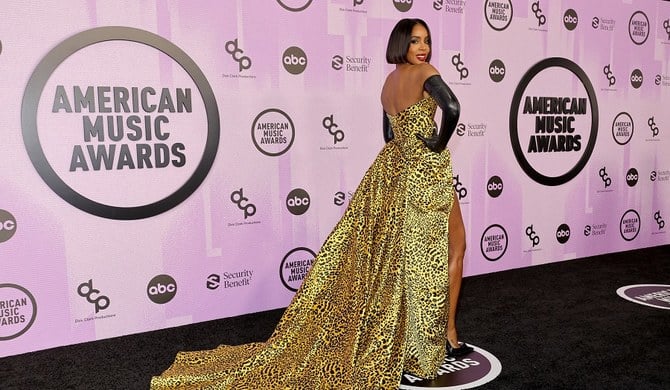
US singer and actress Rowland took things in a wilder direction with a leopard print sculptural gown by Lebanon’s Nicolas Jebran. The Rowland added black latex gloves for a dose of drama.
Meanwhile, US singer Becky G showed off an asymmetrical mini dress by Bahraini label Monsoori with a larger-than-life train and voluminous material draped on one shoulder.
For her part, US singer Lauren Jauregui, a member of Fifth Harmony, flaunted a floor-length number by designer Norma Kamali, who is partly of Lebanese descent. The heavily embroidered gown hailed from the designers Resort 2023 collection and featured tulip sleeves and a flared skirt.
Superstar singer and songwriter Taylor Swift won all six trophies she was contending for at Sunday night’s awards ceremony, including the artist of the year prize.
The new American Music Awards accolades lifted Swift’s lifetime total to 40, breaking her own record for most wins at the world’s largest fan-voted awards ceremony, Reuters reported.
The “Anti-Hero” singer said fan support in recent years had encouraged her to write more music, which made her happier.
“I have the fans to thank essentially for my happiness,” Swift said to a cheering crowd at the ceremony in Los Angeles.
Other honors for Swift on Sunday included favorite pop album, country album and video for her re-recording of 2012 record “Red.” The singer has been remaking albums from her past because of a dispute with her former record label.
For artist of the year, Swift triumphed over formidable names including Beyonce, Harry Styles, The Weeknd, Drake, Adele and Bad Bunny, who had gone into the night with a leading eight nominations.
Pop singer Pink opened the AMAs show dancing and singing on roller skates to her upbeat song “Never Gonna Not Dance Again.” Later in the ceremony, she performed “Hopelessly Devoted to You” in a tribute to Olivia Newton-John, the “Grease” singer who died in August.
Musician Lionel Richie, known for “All Night Long” and other 1980s hits, was celebrated with the AMA’s icon award. Stevie Wonder and Charlie Puth performed a medley of Richie songs on dueling pianos.
It has been another big week for Arab designers, with a number of celebrities opting for Middle Eastern looks for the 2022 Governors Awards in Los Angeles.
Actress Jessica Chastain showed off a red hot Zuhair Murad look, while Elizabeth banks chose a sleek gown by Elie Saab.
source/content: arabnews.com (headline edited)
_____________
Kelly Rowland wore a leopard print sculptural gown by Lebanon’s Nicolas Jebran. (AFP)
Tunisia’s prestigious industry event enjoys another successful year, helping spread a love of culture across the country.
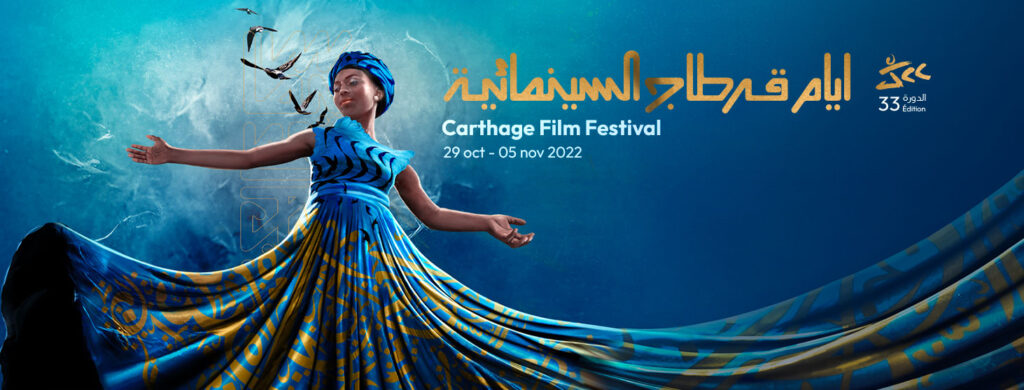
Another week of movie magic, street art and music has come to an end following the 33rd edition of the International Carthage Film Festival in Tunisia.
Titled “Hel Thneya”, which means “Open the Path” in Tunisian dialect, the festival once again cemented its status as a major cultural attraction for visitors of all ages, who flocked to cinemas and filled the streets en masse.
The festival, one of the eldest and most prestigious in the Mena region, ended on Sunday.
As is tradition, the capital Tuniswas transformed into an open celebration of not only cinema but all forms of arts, with independent young painters getting the chance to show their artworks to the public for the first time and musicians performing every evening to audiences in the middle of Avenue Habib Bourguiba. For many, it was an opportunity to watch films that they don’t usually have the means or the opportunity to see.
Speaking outside the Theatre de Region Cinema, Downtown Tunis, Amina told The National she had been waiting for the festival to introduce her two children to the world of the cinema.
“As a family, we always discuss films together but we never find the time nor age-appropriate films to watch. This is a great opportunity to let them discover the big screen,” Amina said.
Amina’s daughter Ritej, who is in the sixth grade, was grinning with happiness as she prepared to enter the cinema hall. “I’m excited, I’m sure I’m going to enjoy this and tell my friends about it,” Ritej said.
Amina said that she often encourages her children to value the arts, with Ritej currently rehearsing for a school play, and she wishes there were more events like it in Tunisia.
This year’s International festival was an opportunity to revive the city. According to organisers, the festival aimed to showcase both new cinema productions and also timeless films that the younger generations needed to be introduced to.
This year, 72 countries participated with Saudi Arabia being the guest of honour and special emphasis placed on Palestinian and Spanish Cinema — a choice that organisers said highlighted the intersection between north and south, placing migration under an artistic lens.
The festival also paid tribute to Arab filmmakers, both living and dead, namely the Moroccan director Mohamed Abderrahmen Tazi and Egyptian director Daoud Abdel Sayed, as well as the late Algerian director Yamina Chouikh and late Tunisian director Kalthoum Bornaz.
“Through this 33rd edition, we continued to foster cultural decentralisation by bringing new sections to the festival and programming screenings in different parts of the country,” journalist and cinema critic Yosra Chikhaoui told The National.
“This year marks the first edition of JCC for kids. We are bringing more screenings as part of our “street cinema” section as well as continuing the special screenings for prisoners and members of the Tunisian army inside military bases,” Chikhaoui, who is a member of the festival’s media committee, added.
JCC in Prisons, now in its eighth year,is the fruit of a partnership between the Tunisian Ministries of Culture and Justice and the International Organisation Against Torture. This year, 12 films were showcased in three prison facilities, while juvenile detainees were transferred to Tunis for a special showcase in a cinema.
According to Ridha Behi, general director of this year’s festival, film screenings in prisons serve as a reminder of the right all people have to access and experience culture.
Awards, meanwhile, highlighted the multitude and variety on show, with a focus on filmmakers whose work depicts the struggles of their respective societies.
The Tanit d’Or award for best feature film was given to Tug of War, directed by Amil Shivji — marking the first time a film from Tanzania has won the award. Meanwhile, the Tanit d’Argent and Tanit de Bronze were respectively awarded to the films Under the Fig Trees by Erige Sehiri from Tunisia and Sharaf by Samir Nasr from Egypt
Made of polymer using innovative designs and advanced security features, the banknote is the fourth in the Third Issuance of the National Currency Project, the Central Bank said.
The banknote will be available in Central Bank branches and ATMs in the first half of 2023, while the current Dh1,000 note will continue to be in circulation.
The front side of the banknote depicts the image of the late Sheikh Zayed bin Sultan Al Nahyan next to a model of a space shuttle. This was inspired by the meeting of the late Sheikh Zayed bin Sultan Al Nahyan with the pioneers of the American space agency NASA in 1976 to express the ambitions of the founding leader to position the UAE amongst the pioneering explorers of the space.
This ambition was achieved in the Emirates Mars Mission ‘Hope Probe’ journey in 2021, and it was embodied in the new banknote by placing the image entitled “Emirates Mission to Explore Mars – the Hope Probe” at the top of the banknote, left of late Sheikh Zayed image.
This dream was also reflected in the image of an astronaut added as a security mark that appears on both sides of the banknote, to express the arrival of the first Emirati astronaut to the space.
The Central Bank was also keen to focus on another global achievement for the UAE, by placing an image of the Barakah Nuclear Energy Plant in Abu Dhabi on the reverse. The plant will play a key role in diversifying energy sources in the country and reduce carbon emissions.
The design of this new banknote contains distinctive aesthetic characteristics, with different shades of brown. The CBUAE preserved the colour characteristics of the same denomination banknote currently in circulation to make it easy for the public to identify, in addition to the fluorescent blue marks of the UAE nation brand in the centre, and drawings and inscriptions created using advanced intaglio printing techniques.
Khaled Mohamed Balama, Governor of the CBUAE, said: “The issuance of the new Dh1,000 banknote comes under the vision of UAE’s President His Highness Sheikh Mohamed bin Zayed Al Nahyan to keep-up with the comprehensive development our country is witnessing, and represent UAE’s global achievements and successes, as well as highlight its future ambitions in various sectors.”
Over 1,200 years old, and after facing extreme neglect for decades, the Basatin Jewish Cemetery finally reopens.
The Basatin Jewish Cemetery – the second oldest Jewish cemetery in the world, and one of Cairo’s few remaining Jewish cemeteries – has undergone extensive renovations and opened its doors once more.
With a foundation dating to the 9th century during Egypt’s Tulunid Dynasty, the 147 acres of land designated for the cemetery at the time included separate areas for Rabbanite and Karaite Jews and extended beyond the Tulunid capital of Egypt.
In more recent times, allegedly during the reign of Mamluk Sultan Qaitbay in 1482, the cemetery was divided into separate pieces of property totaling roughly 27 acres. These plots include the Basatin graveyard’s common burial grounds, the private Mosseri family cemetery, Rav Haim Capusi’s grave, the private Moise Cattaui Pasha cemetery, and the remaining Karaite section of the original cemetery.
Over the past three years, the American Research Centre in Egypt and the United States’ Ambassadors Fund for Cultural Preservation and Drop of Milk Foundation have been working to restore the neglected cultural and religious heritage site.
After the completion of the conservation project, members of the Karaite Jewish community – known for exclusively respecting the principles of the Torah and disowning oral traditions like the Talmud and other writings of the Rabbis – from various nations attended the ribbon-cutting ceremony, and were able to revisit their families’ graves for the first time in decades.
Saudi Arabia was first vice-chair of the executive council for 2022.
Saudi Arabia’s Ministry of Tourism has announced the election of the Kingdom as chair of the executive council of the United Nations World Tourism Organization for 2023.
The announcement was made at the 117th session of the organisation’s executive council being held in Marrakesh, making the Kingdom the first Gulf country to hold the post.
“The Kingdom is honored to be elected as chair of the World Tourism Organization’s executive council and we believe in the importance of the organization’s pioneering role. We look forward to cooperating with all countries to support and develop the global tourism sector,” the Minister of Tourism Ahmed Al-Khateeb said.
He added that the Kingdom has been an active member of the organization by launching initiatives, supporting new ideas, and opening the organization’s first regional office in Saudi Arabia to promote its agenda and work in the Middle East and beyond.
“At the heart of the UNWTO is a desire to promote tourism as a catalyst of economic development, which Saudi Arabia wholeheartedly supports. We have committed $800 billion of government investment into the Saudi tourism industry by 2030.
“Our imperative is that the development we seek, both as a nation and globally, is sustainable, inclusive and resilient. That’s how we will address the fast-changing needs of businesses, communities and the planet,” Al-Khateeb said.
As chair, Saudi Arabia will set the agenda for all meetings, ensuring that it captures the most pressing issues and concerns for the tourism industry. It will facilitate and moderate meetings effectively, chair dialogue and encourage actionable outcomes.
The Sheikh Zayed Book Award (SZBA) of the Abu Dhabi Arabic Language Centre (ALC), part of the Department of Culture and Tourism – Abu Dhabi (DCT Abu Dhabi), has revealed the longlists for its 17th edition (2022/2023) in the Literature, Children’s Literature, and Young Author categories.
The announcement was made as the SZBA judging committees begin the evaluation process for all the longlisted entries.
The Young Author category saw 954 submissions this year, an increase of more than 8 percent from the 881 received last year. The Young Author recorded the highest growth in number of submissions among all categories, and now accounts for 30 percent of total nominations across all categories.
The Literature category received 688 submissions this year, ranking second in terms of submissions, while the Children’s Literature category saw 386 participations, up nearly 63 percent from the 236 submissions registered last year.
The Children’s Literature category received 12 submissions from nine Arab countries: UAE, Saudi Arabia, Egypt, Lebanon, Syria, Jordan, Bahrain, Kuwait, and Iraq. These included:
“La Ahad Yal’ab Ma’ai” (No One Plays With Me) by Mohammed Alohaly from Saudi Arabia, issued by Al Hudhud Publishing and Distribution in 2022.
“Lu’bat al-Nujoom” (The Star Game) by Afra Mahmood from the UAE, issued by Al Hudhud Publishing and Distribution in 2022.
“Min al-Fajr ila al-Ghuroob maa’ Toyour Ghabat Alkharuwb” (From Dawn to Dusk with the Birds of the Carob Forest) by Flora Majdalawi from Jordan, issued by Majdalawi Masterpieces Books in 2022.
“Mala Narah” (What We Don’t See) by Shaima Alwatani from Bahrain, issued by Afkar for Culture & Publishing in 2021.
“Aba’at Abi” (My Father’s Gown) by Basemah Alwazzan from Kuwait, issued by National Council for Culture, Arts and Literature in 2022.
“Jaddi wa al WhatsApp” (My Grandfather and WhatsApp) by Parween Habib from Bahrain, issued by Dar Al Saqi in 2022.
“lastu Wahedan” (I Am Not Alone) by Rami Tawil from Syria, issued by Dar Al Saqi in 2021.
“Rabieon Samet” (Silent Spring) by Razan Al Naeemy from Iraq, issued by Qindeel printing, publishing & distribution in 2022.
“Abhathu an Shai’”(I Am Looking for Something) by Sahar Naja Mahfouz from Lebanon, issued by Dar Kiwi Stories in 2022.
” Einstein: Asrar Alkoutaa 99” (Einstein and the Secrets of the 99th Element) by Sharif Saleh from Egypt, issued by Wow for Publishing & Educational Services in 2022.
“Rehla Dafeaa Molawana” (A Colourful Warm Journey) by Doha Jawad from Syria, issued by Dar Ashjar Publishing & Distribution in 2020.
“Al Sorra Al Ajeebah” (The Wonder Bundle) by Nadia AlNajjar from the UAE, issued by Alfulk Translation & Publishing in 2022.
The longlist for the Young Author category ranged from theses to literary works and included 12 titles, submitted from eight Arab countries: Tunisia, Egypt, Algeria, UAE, Iraq, Oman, Lebanon, and Saudi Arabia. The works on the longlist are:
“Madeeh Al Ikhtilaf: Derasat fi Falsafat Al Ketabawa Siasat Alhawiya ” (Praise of Difference: Studies in the Philosophy of Writing and Identity Politics) by Mohamed Bekkaye from Algeria, issued by Al Rawafed Culture and Nadim Edition in 2022.
“Al Khetab Al Kasasi fi Ayyam Al Arab fi Al Jahileya: Kiraah Tadawouleyah Hijajeyah (Narrative Discourse in the Days of Arabs in the Pre-Islamic Era: A Pragmatic and Argumentative Examination) by Dr. Abdessattar Al Jamai from Tunisia, issued by Dar Kunouz Al-Marefa Publishing & Distribution in 2021.
“Al Badawi Al Abiad” (The White Nomad) by Mutaz Albader from Saudi Arabia, issued by Dar Al Tanweer Publishing & Printing in 2021.
“Aroos Al Kamar, Hekayat Al Holm Al Afriki” (The Comoros Bride: An African Dream Tale) by Mohammad Tarazi from Lebanon, issued by Arab Scientific Publishers Inc. in 2021.
“Al Wahl wa Al Noujoom” (Dirt and Stars) by Ahmad Lutfi from Egypt, issued by Aseer AlKotb in 2022.
“Al Tajreeb fi Al Khetab Al Sheary Al Emarati Al Mouaaser” (Experimentation in Contemporary Emirati Poetic Discourse) by Dr. Hessa Abdulla Al Ketbi from the UAE, issued by Sharjah Department of Culture in 2021.
“Haraket Alfadh Al Hadarh Al Arabieyah min Bayan Al Jahedh to Aked iben Abd Rabbeh” (The Movement of Words in the Arab Civilization: From the Statement of Al Jahiz to the Unique Contract of Ibn Abd Rabbeh) by Dr. Ali bin Hamad Al Riyami from the Sultanate of Oman, issued by Alaan Publishers & Distributors & The Omani Society for Writers & Literati in 2022.
“Nehayat Al Sahra’a” (The End of the Desert) by Said Khatibi from Algeria, issued by Hachette Antoine / Nofal in 2022.
“Fawka Jisr Al Joumhoureyah” (Over the Republic Bridge) by Shahid Alrawi from Iraq, issued by Dar Alhikma Publishing & Distribution in 2020.
“Al Belad Al Tounnouseaya fi Oyoun Al Rahhalah Al Alman” (Tunisia in the Eyes of German Travelers (1535-1881 AD) by Dr. Atef Salem from Tunisia, issued by Editions Arabesques in 2021.
“Naqd Al Naqd Wa Tajalleyatoh Fi Al Tourath Al Nakdi Wa Al Balaghi Al Arabi” (Criticism of Criticism and Its Manifestations in the Arabic Rhetoric and Critical Heritage) by Dr. Issam Benchellel from Algeria, issued by Difaf Publishing & El-lkhtilef Publishing in 2021.
“Fareedah Wa Sedi Al Mathloum” (Farida and My Oppressed Master) by Heba Ahmad Hassab from Egypt, issued by Al Mahrousa Center for Publishing, Press Service, and Information in 2021.
As for the Literature category, 12 titles made it onto the longlist by novelists, writers and poets representing eight countries: Egypt, Morocco, Syria, Tunisia, Saudi Arabia, Lebanon, Sudan and Iraq. The titles are:
“Almer: Akhtam Al Madeenah Al Fadelah: (Almer: Seals of the Utopian City) by Abdelillah Benarafa from Morocco, issued by Dar Al Adab Publishing & Distribution in 2022.
“Hijab Al Saher” (A Magician’s Veil) by Ahmed Al Shahawi from Egypt, issued by Al-Dar Al-Masriah Al-Lubnaniah in 2022.
“Aseer Nish: Rakan bin Falah bin Hethlain” (Prisoner of Nish: Rakan bin Falah bin Hethlain) by Ahmed Hamad AlSubait from Saudi Arabia, issued by United Takween Group Press, Publishing & Distribution in 2022.
“Rasasa fi Al Raas” (A Bullet in the Head) by Ibrahim Issa from Egypt, issued by AlKarma Books in 2021.
“Hourrass Al Houzn” (Guardians of Sadness) by Amir Tag Elsir from Sudan, issued by Hachette Antoine / Nofal in 2022.
“Al-Qata’i: Thoulatheyat Ibn Tulun” (Al-Qata’i: Ibn Tulun’s Trilogy) by Reem Bassiouney from Egypt, issued by Nahdet Misr Publishing in 2022.
“Abnaa Hura” (The Sons of Hura) by Abdelrahim Kamal from Egypt, issued by AlKarma Books in 2021.
“Ifrah ya Qulbi” (Rejoice, My Heart) by Alawiya Sobh from Lebanon, issued by Dar Al Adab Publishing & Distribution in 2022.
“Ila Ayn Ayyathouha Al Kaseedah” (Whereto, O Poem? An Autobiography) by Ali Jaafar Alallaq from Iraq, issued by Alaan Publishing in 2022.
“Antakia Wa Molouk Al Khafaa” (Antioch and the Kings of Secrecy) by Lina Hawyan Alhasan from Syria, issued by Dar Al Tanweer Publishing & Distribution in 2021.
“ Moujazafat Al Aref” (Knowledgeable Risk) (Poetic Work) by Mohammed Ibrahim Yaghob from Saudi Arabia, issued by Tashkeel Publishing & Distribution in 2022.
“Kullo Aoushbaten Sawtouha wa Kullo Ghaimaten Kathalek” (To Every Grass Leave Its Sound, and to Every Cloud as Well) (Poetic Work) by Mohamed Ghozi from Tunisia, issued by Contraste Editions in 2022.
The Sheikh Zayed Book Award will soon be announcing the longlisted titles for the remaining categories in the 17th edition.
Rare first-edition copy of “Prehistoric Rock Art of Northern Saudi Arabia” was on sale at Sharjah International Book Fair
There was little or no recognition of the Kingdom’s ancient past before Majeed Khan’s book was published in 1993
In May 1976, Majeed Khan, a young graduate of the University of Sindh, Pakistan, traveled to Saudi Arabia to join the Ministry of Tourism as an archaeological consultant, advising on the development of museums and the conduct of archaeological investigations in the country.
It was to prove an inspired appointment.
Back then, with Saudi Arabia riding the wave of the first great oil boom and focused necessarily on its rapidly evolving future, archaeology in the Kingdom was in its infancy.
But in Khan the country had found a champion for one of its greatest heritage treasures — ancient rock art, thousands of examples of which are strewn across the landscape and which attest to a history of human culture that stretches back 10,000 years.
Khan, who lives in Riyadh, and at the age of 80 still works as a consultant to the Ministry of Culture’s Antiquities Department, has devoted his entire working life to a subject that continues to fascinate and surprise him to this day.
He received another surprise last month when he learned that his seminal book, “Prehistoric Rock Art of Northern Saudi Arabia,” published by the Saudi Ministry of Education’s Department of Antiquities and Museums in 1993, was now considered a collector’s item.
A first-edition copy was offered for sale for £1,250 ($1,448) by a specialist London book dealer at the UAE’s Sharjah International Book Fair, which ran from Nov. 2 to 13.
That, Khan felt, was a lot of money. But on the other hand, “it was the first research book on rock art published in any Arab country,” he said. At the time it came out, “there was no rock art taught in any Saudi university and no real rock art research in Saudi Arabia.”
Furthermore, there was little or no recognition in the wider world of Saudi Arabia’s ancient past — a past that is now being embraced enthusiastically as the backbone of major tourism projects, such as AlUla and Diriyah, designed to bring in millions of visitors a year to the Kingdom.
For example, in the supposedly comprehensive 1998 Cambridge Illustrated History of Prehistoric Art, published in 1998, there was not a single mention of Saudi Arabia — an oversight that would be dramatically exposed by Khan’s work.
To describe Khan as a pioneer in his field is to understate the impact he has had on the understanding of the extent and importance of the ancient past of the Kingdom.
Over the past four decades he has published dozens of research papers. The first, which he co-authored, was on “The Lower Miocene Fauna of Assarrar, Eastern Arabia,” published in Atlal, the Journal of Saudi Arabian Archaeology, in 1981.
His first book, which came out in 1993, shortly before his groundbreaking work on the prehistoric rock art of Saudi Arabia, was “The Origin and Evolution of Ancient Arabian Inscriptions,” also published by the Ministry of Education.
But it was to petroglyphs that he would devote the greater part of his energies, an academic commitment that in 2015 culminated in the rock art in the Hail region of Saudi Arabia being inscribed by UNESCO as a World Heritage Site.
Along with two colleagues from the then-named Saudi Commission for Tourism and Antiquities, Jamal Omar and vice-president Prof. Ali Al-Ghabban, it was Khan’s name that appeared on the nomination text that saw the twin sites near Jubbah and Shuwaymis in the northern province of Hail recognized by UNESCO as being of “outstanding universal value.”
As Khan told Arab News in January 2021, “it was for me the most emotional moment of my 40 years of research.”
Not that he is resting on his laurels. Hail is not the only region in Saudi Arabia where rock art can be found, and “these days I am working on the rock-art site of Hima, Najran, to see it, too, placed on the UNESCO World Heritage List.”
There are more than 2,000 rock-art sites around Saudi Arabia. But the greatest concentration of Neolithic petroglyphs, or rock carvings, and the oldest known examples, dating back 10,000 years, is to be found in the north of the country at two sites 300 kilometers apart in the Hail Province.
The ancient forebears of today’s Saudis had no paper, pens, or written language with which to record their time on earth.
But with the rocks of their dramatic landscapes as their canvas, thousands of years ago the ancient peoples of the land that would become Saudi Arabia found a way to leave their mark on history, with an astonishing pictorial representation of a now forgotten world, painstakingly pecked, chiseled and engraved out of the sandstone rocks of the region.
The first of the two Hail sites is at Jabal Umm Sinman, a rocky outcrop to the west of the town of Jubbah, some 90 kilometers northwest of the city of Hail and 680 kilometers from the capital, Riyadh.
The town’s origins date back to the dawn of Arab civilization, when the hills of Umm Sinman overlooked a freshwater lake, which eventually would be lost beneath the sands of the surrounding Nefud desert some 6,000 years ago.
It was on these hills, in the words of the UNESCO nomination document co-authored by Khan, that the ancestors of today’s Saudi Arabians “left the marks of their presence, their religions, social, cultural, intellectual and philosophical perspectives of their beliefs about life and death, metaphysical and cosmological ideologies.”
The rock art of Jubbah, said Khan, “represented all phases of human presence from the Neolithic, 10,000 years before the present, until the recent past,” and reflected a time when the climate and landscape were very different from today.
Etched upon the rocks, often at mysteriously inaccessible heights, are the trappings of a lost world: A parade of dancers, long-forgotten gods and goddesses, mythological figures, half-human, half-beast, and animals including sheep, ibex, camels, horses, wolves, ostriches and — reflecting a time when prey roamed abundant on the once lush plains of Arabia — lions.
“The type of animals (pictured) suggested changes in climate and environment,” said Khan. “Large ox figures indicated a cool and humid climate, while the absence of ox figures and the appearance of camel petroglyphs represented hot and dry conditions..
“Both at Jubbah and Shuwaymis this change in fauna and flora clearly represented gradual but drastic change in society and climate in the prehistoric and pre-Islamic era.”
Importantly, he said, similarities in themes and depictions in other parts of the world, including Africa, India, Australia, Europe and America, showed that “Saudi Arabia was part of world heritage and cultural traditions.”
Like other peoples around the world, “ancient Arab artists were drawing the animals with which they were living and depicting their social activities, like dancing and religious rituals.”
The second of the twin Hail sites is at Jabal Al-Manjor and Raat, 220 kilometers southwest of Jubbah near the village of Shuwaymis. Remarkably, its treasures were discovered only 20 years ago, a remarkable story in which, naturally, Khan played a leading role.
In 2002, Aramco World, the magazine of the Saudi national oil company, reported that in March the previous year a bedouin grazing his camels had stumbled on strange marks on a remote cluster of rocks. He happened to mention his find to a teacher from the local town of Shuwaymis. He alerted the authorities and they called in Khan.
“Yes, the story is correct,” Khan said. “I met both the bedouin and Mr. Saad Rawsan, the director of archaeology in the Hail region, who took us to the sites for further investigations and research.”
Together, he discovered, the twin sites told the story of over 9,000 years of human history, from the earliest pictorial records of hunting to the development of writing, religion and the domestication of animals including cattle, horses and camels.
As the UNESCO documents record, these sites justify their inscription on the World Heritage List because they feature “large numbers of petroglyphs of exceptional quality attributed to between 6,000 and 9,000 years of human history, followed in the last 3,000 years by very early development of writing that reflects the bedouin culture, ending in Qur’anic verses.”
Furthermore, the Jubbah and Shuwaymis sites comprise “the world’s largest and most magnificent surviving corpus of Neolithic petroglyphs.”
Neolithic rock art is found at many locations across Eurasia and North Africa, “but nowhere in such dense concentration or with such consistently high visual quality” as in this remote part of northwestern Saudi Arabia.
Peter Harrington, the London specialist book dealer that brought Khan’s book to Sharjah for the book fair, described it as “a pioneering monograph … the first and sole edition of this seminal work, which addresses a hitherto neglected subject, challenges the received wisdom that influences in rock art in the region originated from Mesopotamia, the Levant, and the Nile Valley, helped to put the Kingdom’s ancient past on the map of modern knowledge, and paved the way to the listing in 2015 of the rock art of the Hail region as a UNESCO World Heritage site.”
“I am extremely surprised to see the cost of my book,” Khan said after Arab News broke the news to him of the price being asked for the out-of-print volume at the Sharjah International Book Fair, although he had some news of his own.
“The ministry is printing it again.”
That, however, is unlikely to prove a deterrent for collectors always keen to snap up rare first editions of books dealing with the region’s history — and there are few histories as fascinating as that of the rock art of Saudi Arabia, and few books as significant in the growing appreciation of the Kingdom’s past as Khan’s 30-year-old volume.