LEBANESE AMERICAN Filmmaker Ruby Malek shines spotlight on Saudi Talent 

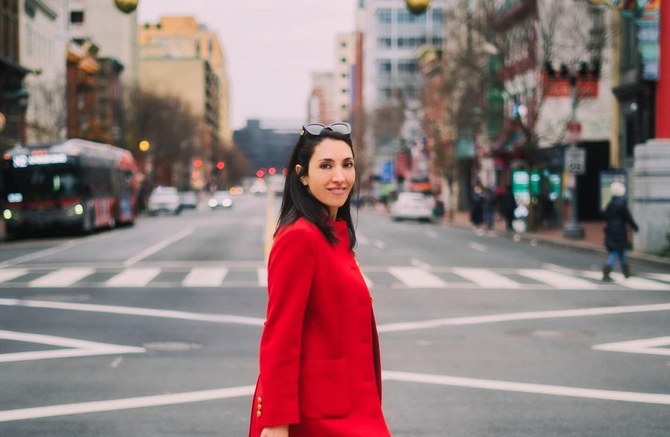
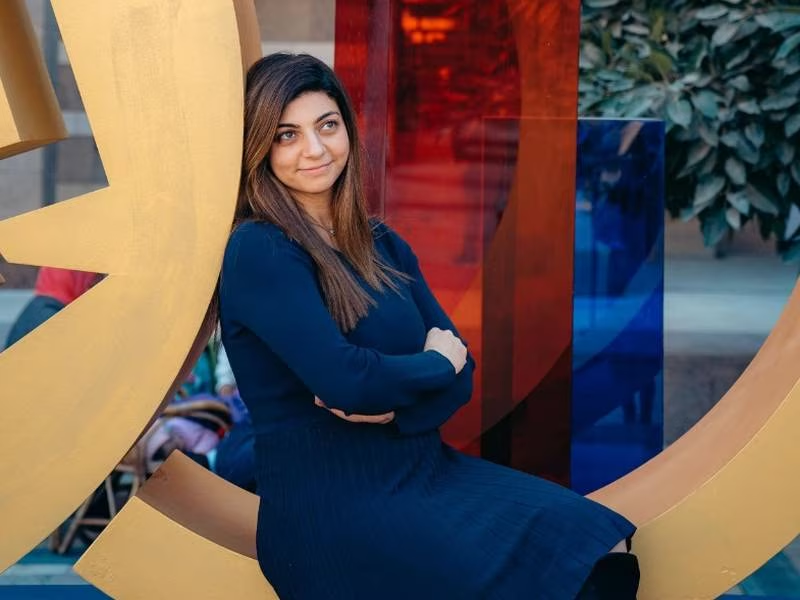
Arab American filmmaker Ruby Malek is shining a spotlight on Saudi talent in the 10-episode docuseries “Herstory” which follows the journeys of Saudi’s modern-day female music stars.  

“We were just fascinated by the amount of talent because a lot of these artists are self-taught. And, you know, there were no music schools that they went to. There wasn’t like a piano teacher that would teach these women,” said Malek to Arab News.  

“A lot of these artists actually didn’t show their identity, didn’t show their faces, and weren’t really out there… We’re still talking about 2020 now, so it wasn’t like now in 2023.”  

Chronicling these artists’ struggles, triumphs and their place in the cultural history of the Kingdom, the series blends the passion for music-infused storytelling Ruby honed making music videos and her skills as a documentarian.  

“I’m the generation that grew up watching MTV, VH1, so I was very into the various reality shows, and that’s what I kind of fell into. I fell into creating reality shows and formats, and so went from music videos to reality shows, documentaries. And then one thing led to another,” said Malek.  

Motivated by the positive changes of Saudi Vision 2030, Malek sought to showcase a side of Saudi Arabia that she had not seen in the West. With the series having opened doors for the creator, she’s excited to continue working in the Kingdom.  

“I actually have been back to Saudi. I shot a show for Vice, and yes, I would definitely (work there again). I mean, as a producer, there’s so much potential and there’s so many stories to be told that I think I will be going there more often and very soon,” she said.  

source/content: arabnews.com (headline edited)

__________

Arab American filmmaker Ruby Malek is shining a spotlight on Saudi talent in the 10-episode docuseries “Herstory” which follows the journeys of Saudi’s modern-day female music stars.  

_________________________

AMERICAN / LEBANESE

OMANI Scientist Razan bint Hamad Al Kalbani Wins International Competition in South Korea

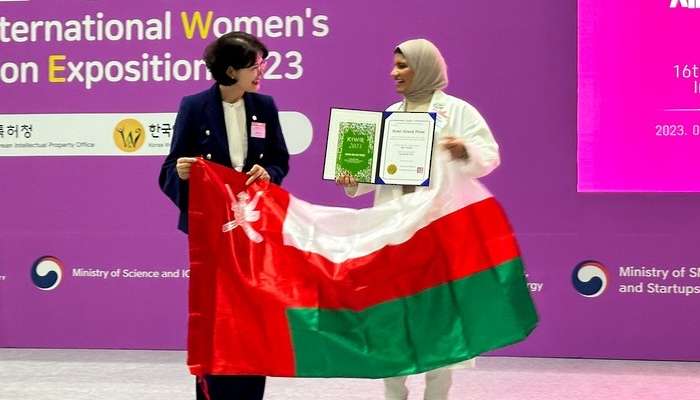
An Omani innovator has won the Grand Prize in an international competition in South Korea among 353 innovations from more than 18 countries around the world, Oman News Agency (ONA) announced.

Omani innovator Razan bint Hamad Al Kalbani won the Grand Prize in the Korea International Women’s Innovations Exhibition and Competition (KIWIE) for her innovation “X-ray absorbing coating from a natural ingredient”, among 353 innovations from more than 18 countries around the world.

Razan Al-Kalbani told Oman News Agency that her scientific innovation is a coating that absorbs X-rays from a natural ingredient (lycopene), which is the red pigment found in tomatoes, watermelons, red fruits and vegetables in general.

She added “After extracting the lycopene, I carried out laboratory tests and mixed it with a coating with unique properties and techniques to ensure that the properties of the lycopene were not affected.”

She pointed out that the scientific innovation is the first of its kind in the world using a natural compound to shield rays, indicating that the paint absorbs rays by 97%, and is characterized by being 100% water and moisture resistant, and 95% heat resistant, and prevents the formation of mold and bacteria, and is non-flammable.

She pointed out that one of the most prominent features of this scientific innovation is the possibility of using tomato mold to extract lycopene, and in terms of mechanical advantage, it is less expensive than the lead currently used.

She stated that her participation in the Korea International Women’s Innovations Competition and Exhibition (KIWIE) came with the support of the Ministry of Culture, Sports and Youth.

She stated that her scientific innovation achieved many achievements at all levels, whether global, regional and local, most notably her winning the first place in the Falling Walls Lab competition in November 2020, the silver medal at the Challenge and Innovation Forum in the State of Qatar, the gold medal at the Second Beirut International Innovation Exhibition.

 She also won the silver medal at the level of the Middle East in the Mabaret Fayda Al-Saad competition in the State of Kuwait.

source/content: timesofoman.com (headline edited)

___________

_________

OMAN

SUDANESE-AMERICAN Iman Abuzeid makes it on Forbes’ Richest Self-Made Women List

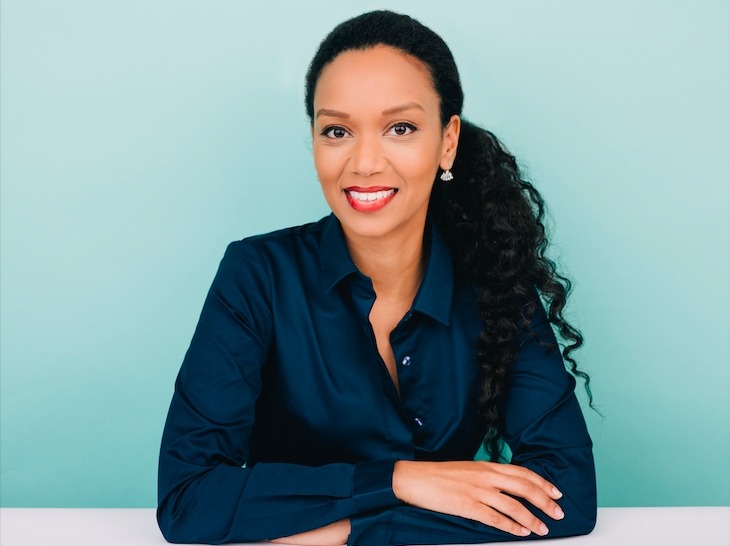
Achieving success is no easy feat especially if you are working from the ground up. With passion and skill, a lot of people achieve self-made success. Today we are celebrating one such individual, Sudanese-American physician Iman Abuzeid who is the co-founder and CEO of a digital nurse hiring platform. She just nabbed a spot on Forbes’ ninth annual list of America’s Richest Self-Made Women and for good reason, with an impressive net worth of 350 million US dollars.

Being only one of two Arab women on the Forbes list, Abuzeid’s ranking is placing the Arab identity and voice at the forefront. Beyond that, the 38-year-old doctor is the only self-made millionaire on the list who earns money through the field of medicine on Forbes’ list of America’s Richest Self-Made Women. She achieved her impressive ranking almost a year after her nurse-hiring start-up called Incredible Health was able to raise 80 million US dollars and that helped hike her company’s valuation to 1.65 billion US dollars.

Along with Abuzeid, many other prominent self-made women made it to the Forbes list including TV creator Shonda Rhimes and Insitro founder and CEO Daphne Koller. Also for the sixth consecutive year, the top spot went to building supply distributor Diane Hendricks. With all that being said, knowing the incredible work each of these women achieved acts as a beacon of inspiration for younger girls to follow in their footsteps.

source/content: scoopempire.com (headline edited)

____________

___________________________

AMERICAN / SUDANESE

DUBAI, U.A.E: Expo City’s Dome, Al Wasl Plaza secures Guinness World Record for the ‘Largest Interactive Immersive Dome’

The city’s trophy cabinet has a new addition.

Dubai holds lots of Guinness World Records from being home to the world’s tallest tower, the world’s deepest swimming pool and the world’s tallest landmark sign.

And now, the city can add another accolade to its impressive list of world records as Expo City’s Al Wasl Plaza has secured a Guinness World Record.

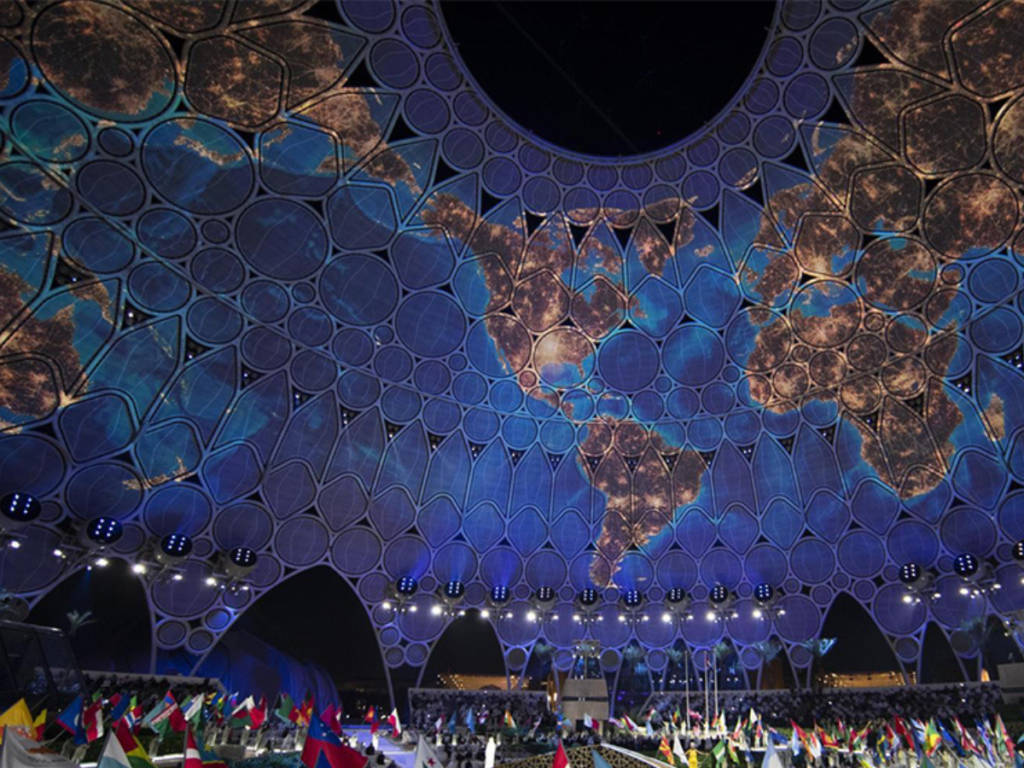
Al Wasl Plaza – Expo City’s dome – has won the Guinness World Record title for the largest interactive immersive dome.

Alwaleed Osman, Official Adjudicator at Guinness World Records, said on the unveiling of the award: “Al Wasl Plaza stands as a testament to architectural excellence and a distinguished structure that resonates with those who have had the privilege of experiencing it.

“Its recognition in Guinness World Records underscores the commitment of Expo 2020, and the subsequent Expo City Dubai, to innovation and excellence.”

The beating heart of Expo City, it’s 130 metres in diameter and over 67 metres tall (that’s big enough to fit the Leaning Tower of Pisa beneath it) and visitors can see immersive 360° videos projected onto the surface of the dome.

Up to 252 laser projectors are used to put images on the architecture that can be viewed from inside or outside of the dome.

Designed by Adrian Smith + Gordon Gill Architecture, Al Wasl Plaza has been built using unique materials that ensure it can be used year-round.

The semi-outdoor space has a trellis framework made out of steel and the pattern is inspired by the logo of the Expo 2020 exhibition. Fun fact: The logo is fully visible at the apex of the dome.

During Expo 2020 Dubai, Al Wasl Plaza was a hub for events from concerts to performances and, next year, it will host the UNTOLD music festival.

Al Wasl Plaza hosts daily projection shows and, upon news of its latest award, has opened the new Al Wasl Plaza Café – a homegrown brand that offers Arabic fusion cuisine.

Expo City Dubai.

source/content: timeoutdubai.com (headline edited)

___________

___________________________________________

DUBAI, UNITED ARAB EMIRATES (U.A.E)

SYRIA’s Rami Al-Ali Becomes First Syrian Acknowledged On Business Of Fashion List

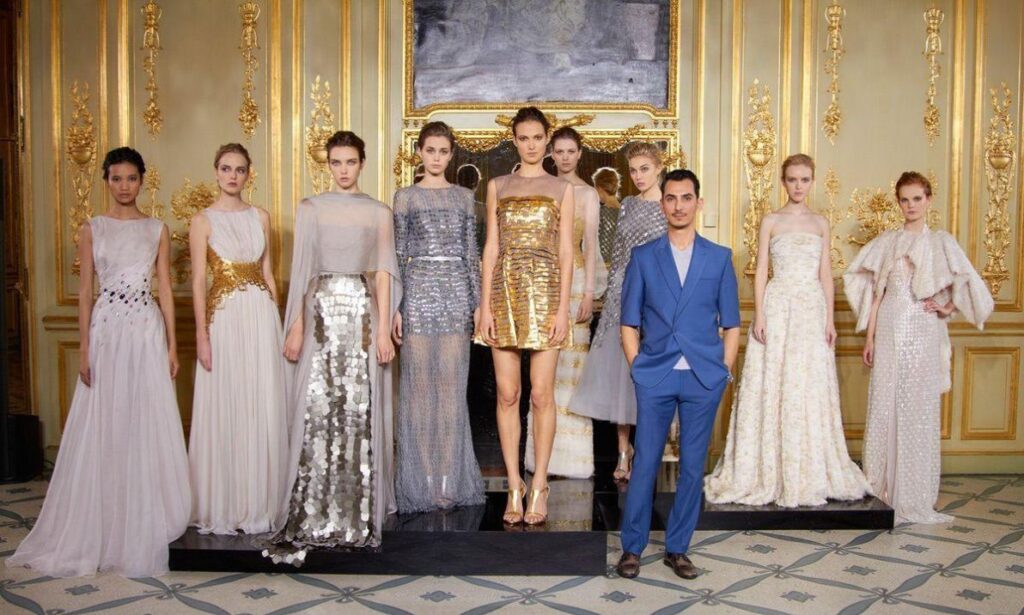
Rami Al-Ali became the first Syrian Fashion designer to be recognized by the Business of Fashion List.

The Dubai-based fashion designer creates couture, bridal, and ready-to-wear collections. Naomi Campbell, Amal Clooney, and Assala are among some of the many celebrities he has dressed. 

In 2001, he established his couture collection in Dubai and made his debut in Paris Couture Week in 2012.

The Business of Fashion is an online Magazine renowned globally for its definitive, explanatory point of view on the fashion world. Their aim is to build fashion’s worldwide community to inform, advise, and connect the Fashion industry. The online publication was founded in 2007 by Imran Amed. 

The BoF 500 list is an index of diverse people molding the fashion world; from designers to entrepreneurs to personalities.

Other Arab figures who made the BoF’s 500 list feature Mohammed Ashi, Saudi’s first designer on the list, Emirati’s Khadija Al Bastaki along Saudi internet personality Amy Roko.

source/content: scoopempire.com (headline edited) / mariam sarhan

________

_________

SYRIA

SAUDI ARABIA : Engineer Rakan Al-Shammari — a Saudi Success Story. Teaches on the Railway Industry in Germany

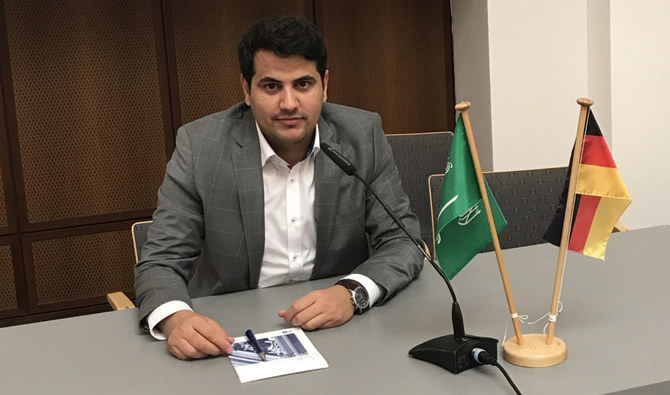
Saudi engineer Rakan Al-Shammari has left an indelible mark on the railway industry in Germany.

His journey began with the pursuit of electrical engineering studies and he later taught at several German universities.

Al-Shammari’s path to success began while working as a project manager at Rail Power System GmbH. His dedication and passion for trains led him to excel in the field. The journey was not without its difficulties, as it required him to learn German, pursue bachelor’s and master’s degrees, and eventually take on teaching responsibilities.

Al-Shammari said: “In 2006, after graduating from high school, I applied for the Custodian of the Two Holy Mosques Foreign Scholarship Program. I spent a year studying the German language, followed by preparatory studies, and then I joined the University of Kassel to major in electrical and communications engineering. During my final year at university, I undertook practical training at the German Railways Company.”

He noted that after completing the practical experience, he pursued further education as a graduate student. “While studying for my master’s, I was offered a position as a lecturer at the university under a contractual arrangement, where I taught electricity to first and second-year students.”

He received a job offer in 2017 and joined a company specializing in railway project management in Germany. “This company managed new construction projects, particularly in infrastructure, as the German Railway Company itself does not execute such projects,” he noted.

Al-Shammari told Arab News that his educational journey began in the desert, where he studied until the third grade of primary school, living in tents and drinking well water. He later attended Al-Yarmouk Primary School in the city of Rafha for grades four to six and completed his secondary education in the city of Al-Uwaiqliyah.

Al-Shammari firmly believes that Saudi Arabia is on the cusp of a transportation revolution and is already reaping the rewards. He emphasized that the Kingdom will emerge as a developed country in the coming years, not solely reliant on oil and energy, but also due to the strength of its people and leadership, and their commitment to continual development and competition.

He expressed pride in having visionary leaders who invest in the talents of their citizens. He also noted Germany’s openness to creative minds and its support for them, attracting skilled individuals from around the world. He believes that effective resource management enhances the economy and strengthens Germany’s global position.

Al-Shammari acknowledged the initial difficulties he faced in studying in Germany, as it was his first experience living outside his familiar surroundings.

His advice to everyone is to embrace their sense of responsibility, seize opportunities, and pursue continuous learning in order to contribute to their country. He also emphasizes the importance of diversifying educational sources and collaborating with experts and scholars to develop a unique persona capable of competing on a global scale.

Finally, Al-Shammari expressed gratitude to the Saudi leadership, his family and friends, and the Saudi Cultural Mission in Germany. He acknowledged the mission’s continuous support, including increased stipends for Saudi students who excelled academically, enabling them to perform to the best of their abilities during their scholarships.

source/content: arabnews.com (headline edited)

___________

Al-Shammari said his educational journey began in the desert, where he studied until the third grade of primary school, living in tents and drinking well water. (Al-Shammari’s Instagram)

__________________

SAUDI ARABIA

QATAR SPORTS INVESTMENTS (QSI) Acquires WORLD PADEL TOUR (WPT) to form Single Global Padel Entity

Qatar Sports Investments (QSI) has reached a deal to acquire the World Padel Tour (WPT), the oldest global professional padel tour, from Spanish brewing powerhouse Damm’s Setpoint Events.

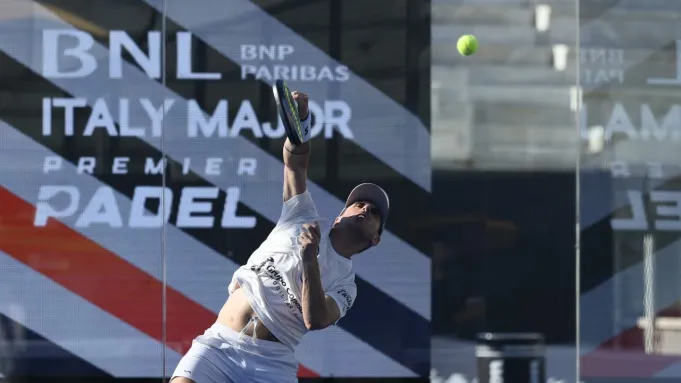
Under this agreement, the WPT will be combined with the QSI-owned Premier Padel to form a single global professional padel tour. The tour, which will be called Premier Padel, will be governed by the International Padel Federation (FIP). Financial terms of the agreement were not released.

“This is a historic moment for the sport of padel,” Nasser Al-Khelaïfi, the chairman of QSI and Premier Padel, said in a statement. “As the fastest-growing sport globally, QSI is proud to be at the heart of driving the development of padel professionally worldwide, always placing the players at the center of our mission to grow the sport everywhere.”

The new tour will kick off in 2024. Until the end of 2023, the separate WPT and Premier Padel tours will be played as scheduled. 

QSI, which also owns Ligue 1’s Paris Saint Germain, launched Premier Padel in 2022. Within its first year, over 500 players worldwide competed in tournaments in five cities. The tour was expanded to eight cities in 2023. According to the organizers, the inaugural 2022 tour has broadcast agreements that cover over 180 countries and attracted 22.7 million views on YouTube. 

World Padel Tour (WPT) started in 2013 and has been the prominent padel circuit, featuring over 26 men’s and women’s tournaments across six countries. A total of 510 men and 317 women compete in the circuit, which is broadcast in more than 150 countries.

While WPT has a total prize fund of $121,000, Premier Padel has $568,000.

There have been disputes between the two leagues. When players signed with WPT, their contracted barred them from playing in other leagues.

According to Politico , last year, the world’s top padel players and FIP jointly submitted a competition complaint to the European Commission, accusing Damm’s Setpoint Events—which runs WPT—of breaking EU law by distorting competition. WPT responded by suing players that joined Premier Padel and taking legal action against FIP, the Professional Players Association (PPA) and QSI, arguing that QSI is trying to exclude them from the market. The WPT also had filed a lawsuit in Madrid against the FIP, claiming it was deviating from its role as an impartial, non-profit regulatory body.

The global padel industry is valued at over $2 billion and is forecast to surpass $4 billion by 2026, according to a recent report from Deloitte .

There are currently 25 million people playing Padel in 110 countries, compared to 16 million two years ago.

source/content: sportico.com (headline edited)

____________

Starting in 2024, the World Padel Tour and Premier Padel will combine to operate as a single tour.PHOTO BY DOMENICO CIPPITELLI/NURPHOTO VIA GETTY IMAGES

_________

QATAR

EGYPTIAN-AMERICAN: AI Captain! Rana El Kaliouby’s bold trek to the final frontier of Humanising Technology

Egyptian-American founder of Affectiva is on a mission to revolutionise the way we connect with our digital devices, and each other, by building in emotional intelligence.

The earliest memory that Rana El Kaliouby can conjure is of standing on a tiny blue plastic chair in a romper suit confidently declaring whatever was on her toddler mind at the time.

She is about three years old, revelling in her father’s attention as he dispenses tips – “look at the audience, enunciate your words” – and records the ramblings for posterity with the first commercially available home video camera.

These regular living room sessions led to El Kaliouby going on to give many accomplished public-speaking performances around the world as an artificial intelligence scientist and entrepreneur, most recently this month at the CogX Festival Deep Tech Summit in London.

Her big message after decades working in technology is that the final frontier lies at the point where AI can be immersed in emotional intelligence , or EI, to revolutionise the human-to-computer experience.

But it’s obvious that the first seeds of that life-fulfilling mission were sown more than 40 years ago in her childhood home in Kuwait where she was first encouraged to get to grips with ideas and machines.

“Our family is really big on education, the thing my parents invested in me and my sisters,” El Kaliouby, 45, tells The National.

“And because they were both in tech, we were always exposed to the latest and greatest gadgets. I was a big Atari game player,” she adds, laughing.

El Kaliouby looks back fondly on those clunky old VHS cassettes and hours the family spent playing Pac-Man as examples of the positive way in which electronic devices can bring loved ones together.

Less happy interactions with latter-day technology, however, brought about the realisation that something was missing – all the rich communication signals provided by non-verbal cues were being lost.

An enterprising mission

Her focus ever since has been on developing artificial intelligence that recognises facial expressions so that people can have better connections with their laptops, and, crucially, with each other.

Born in Egypt after her tech guru father, Ayman, met his future wife, Randa Sabry, on a university campus, it seems almost inevitable that El Kaliouby grew up to be a proud geek pursuing a career in computer science.

“It’s a cute story,” she says. “My dad was teaching COBOL programming, this obsolete language that nobody uses any more but was the programming language in the 70s.

“My mum, who was a business major, decided to explore this thing called computer science, and he was kind of interested in going out with her. She said, ‘I don’t do that. No dating allowed.’ And he was like: ‘Ok, then I’ll propose.’”

Soon after, the newlyweds moved to Kuwait, and her mother became one of the first female computer programmers in the Middle East, until having to flee when Saddam Hussein invaded.

Aiming for the stars

Next stop was Abu Dhabi, where El Kaliouby’s Muslim-Arab upbringing was conventional in many ways, bounded by “lots and lots” of rules that included not making any boy friends while at school.

“I always imagined walking around with a gold star on my forehead. I was a very nice, rule-abiding daughter. I stuck to the strict curfews. I never dated through high school or college and I think, by and large, I was always an A student.

“But, at the same time, it was very empowering. I have two younger sisters and the message was always: ‘You can do anything you want in the world.’”

She continued to meet these expectations into her early 20s, earning undergraduate and master’s degrees in Computer Science at the American University in Cairo, and marrying the founder of a start-up, Wael Amin.

Within a year, though, El Kaliouby was undertaking a PhD 5,000km away at Cambridge University despite both sets of parents saying: “Wait a second, you’re married now and you can’t leave.”

Amin, she says, deserves the credit for supporting her daring dream and agreeing to a long-distance relationship.

“It was really unheard of. I did break rules more as an adult as I explored my passions and my quest for being a researcher and an entrepreneur.

“That’s how I think I pushed the boundaries and definitely made my parents uncomfortable.”

And then? “I like the wording that my life went off the rails. I think that kind of encapsulates it.

“Cambridge opened my horizons. It’s like I discovered the world and it was hard to unlearn that.”

The enthusiasm for her life’s work comes across even through the medium of our Zoom interview, but it’s also clear that this was not an easy time.

El Kaliouby arrived in England a few days after the September 11, 2001 attack in America, a young Arab woman then wearing a hijab.

“I was visibly Muslim. My parents were very concerned about my safety.”

The perpetual smile she adopted by way of a peace offering was also something of a mask, hiding the loneliness and separation from those she loved.

Back then, the technological means for staying in contact across the distance was largely restricted to the kind of messaging that proved a barrier to expressing true feelings, making El Kaliouby all the more determined to humanise technology.

“My PhD was centred around building a machine with emotional artificial intelligence, and I recognised at the time that a lot of the ways I was communicating with my family back home, and especially my husband, was through chat.

“We didn’t have video communication and it was certainly very expensive to make phone calls so we would use texting.

“I often felt I could hide my emotions behind the machine. There were many days where I would be homesick or even in tears, but I’d never communicate that. The best I could do was send a sad face emoji.”

The personal hardships became a driving force for her work. In a career paved with “what if” moments, El Kaliouby began to ask: “What if we could teach technology to understand us in the same way that we understand each other?”

“It’s not even in the choice of words we use. It’s our vocal intonations, our facial expressions, our body posture – and all of that was just getting lost via digitally mediated communications.”

Life was about to take another decisive twist as she received an email that the scientist, inventor and entrepreneur Professor Rosalind Picard was coming to give a talk on campus.

El Kaliouby had long been an admirer of this trailblazing woman in an almost overwhelmingly male-led field, whose book on designing computers to recognise human emotions she read while still in Cairo.

Life-changing encounter

“I often say this is the moment that changed the trajectory of my life,” she says of Picard’s request to meet some of the students.

So impressed was Picard by this intense young woman that she offered El Kaliouby a post-doctorate place on the Affective Computing Research Group at the Massachusetts Institute of Technology Media Lab before their first 20-minute conversation had ended.

“I remember thinking, ‘But I need to go back to Egypt. I have this husband waiting for me.’ And she basically said, ‘Just commute from Cairo. Show up whenever you want to.’’’

By then, El Kaliouby had a daughter, Jana, born in the UK, and a son, Adam, arrived in that other Cambridge in the US, but the constant round trips were becoming unsustainable.

“I was just doing that crazy back and forth. I would say it was OK until it went insanely chaotic when I started the company.”

The company was Affectiva, founded with Picard in 2009 with the goal of creating a commercial applications of emotion-sensing AI.

Growth was fast and it was an exciting time but there was another, darker side. “I was travelling so much, there was very little presence in anything I did,” El Kaliouby says.

Big lesson learnt

“I feel like I was out of balance. I didn’t make any time to sleep well. I would wake up at three in the morning almost every day and fire all these emails to my team. And so these poor people would wake up at six or seven in the morning with a whole slew of notes from me.

“I would go on vacation with my husband and my two young kids, and I’d just be on call all the time. There were zero boundaries, zero balance, and that was a big lesson learnt. There’s always time for self-care. There should always be time to spend with family and loved ones and friends. And, I didn’t do that, you know?”

By 2016, she was a divorced mother of two young children living full-time in America, and decided to bare that vulnerability in her role as chief executive of Affectiva.

Staff could see on El Kaliouby’s calendar that 3.30pm was demarcated to collect her son from school, and she explained to them that a Zumba class each Friday ensured a happier, healthier leader.

“I think it made for a much more authentic environment,” she says.

The family now lives in what El Kaliouby describes as a charming New England home filled with distinctive Middle Eastern touches and often by the aroma of molokhia soup made to her mother’s recipe.

Love for Egypt

“It’s very modern but with a lot of Egyptian things, Arab and Islamic inscriptions. I think of myself as Egyptian American, and very Egyptian in a lot of ways. I love Egypt. A lot of qualities – the Arab warmth, generosity and even intimacy – that’s very much who I am and I would say it’s the same for my kids.

“But I also have embraced what people would call American values. I’m very ambitious, very driven, very globally minded.”

That ambition and drive has taken her far. Affectiva is employed by brands in about 90 countries for market research, but also helps children with developmental difficulties, such as autism , to better interact with those around them.

More recently, the company has developed technology to make driving safer by enabling cars to detect if a motorist is becoming drowsy or distracted.

It was acquired in 2021 by the Swedish AI giant SmartEye for what was said to be about $73 million, with El Kaliouby becoming deputy chief executive.

She has long predicted that the day will come when all devices have an emotion chip and we won’t remember what it was like before screens could comprehend the meaning of us frowning at them.

“When we first started doing this work, we always said this will become ubiquitous and ingrained in every technology. Now, I think it’s more true than ever because AI is becoming a lot more conversational and perceptual.

“You can imagine that the final frontier is this emotional and social intelligence. Initially, my work was very much around human-to-computer interaction, making machines more intelligent, and how they communicate with humans.

“Now it’s back to the human connection. How are AI assistants and AI technologies going to make us better humans, especially better at connecting with each other?”

Along the way, she has learnt that daily affirmations are as integral to life as algorithms, and celebrating the small achievements, such as growing her own tulips, is as important as publishing a best-selling memoir, Girl Decoded.

Among the accolades amassed, El Kaliouby can cite becoming a World Economic Forum Young Global Leader, being listed on the Forbes Top 50 Women in Tech, and receiving the Smithsonian Magazine’s American Ingenuity Award in Technology. Earlier this year, she was invited to ring the opening bell on New York’s Nasdaq exchange as a female pioneer in AI, and was recently made a 2023 Eisenhower Fellow.

None of this seems to have gone to her head, however, perhaps because her family does a good job of keeping her grounded.

When El Kaliouby gave a TED Talk some years ago, she explained that in emotion science all facial muscle movements are measured as action units with specific numbers for each.

Words from the wise

In a throwback to those early guided sessions in the family living room in Kuwait, the night before she walked on stage, her daughter Jana, 12 at the time, helpfully texted: “Good luck mummy!! I’m sure your gonna do awesome. Remember: don’t play with your hair, connect with audience, give them a present, gesture on words, gesture to emphasise.”

The response sent in live time was the old-school 🙂 emoticon but the algorithm that is El Kaliouby’s labour of love would have strongly detected action unit 12, the main component of, in this particular case, a very indulgent smile.

From her parting message to readers of The National, it is clear that she won’t rest until the technology responds just as accurately across the whole gamut of social and emotional states irrespective of people’s age, gender or ethnicity. Going forward, El Kaliouby insists, the watchword has to be inclusivity.

“I’m on this mission to diversify the face of AI. So it’s a call to action to get involved. It’s super exciting and we need a lot of diverse people being part of it.”

source/content: thenationalnews.com (headline edited)

__________

_______________________

AMERICAN / EGYPT

MOROCCO’s Arif Esa Appointed Deputy Chairman at International Trade Council (ITC)

Esa hopes that his new role will help him raise Morocco’s profile in the fintech and digital industry globally.

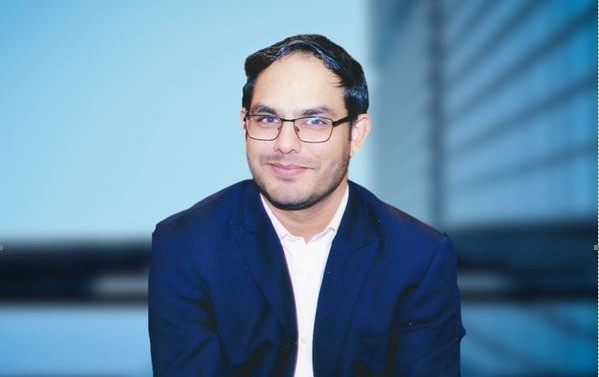
Founder and CEO of Moroccan fintech startup moneyIN Arif Esa has assumed the position of Deputy Chairman for the Banking/Finance/Blockchain & Trade Finance department at the International Trade Council (ITC). 

This appointment not only recognizes Esa’s outstanding contributions but also positions him as the first Moroccan entrepreneur to hold such a role within the ITC.

Esa, who holds a stellar track record in finance and fintech, with a portfolio of global recognition and awards, spoke with Morocco World News about his motivation for taking this role, as well as his new responsibilities and objectives.

“Accepting this responsibility was not just an honor but an opportunity to provide pivotal advice and give back to the community. It also aligns seamlessly with our global vision to establish Morocco and Africa as prominent players in the fintech and digital industry,” he said.

As a globally recognized figure, Esa’s reputation in the finance and fintech industry drew the attention of the ITC panel, which spans 179 countries, 79 government trade and investment agencies, 418 chambers of commerce, and a vast network of businesses and employees. 

After undergoing a “meticulous” evaluation process, Esa was humbled to be selected as the Deputy Chairman of this division, he said.

In his capacity as Deputy Chairman, Esa will play a key role in shaping the strategic direction of the ITC’s Banking/Finance/Blockchain & Trade Finance department. 

This role includes overseeing various key focus areas, including financial Instruments, risk mitigation, regulatory compliance, promoting innovative solutions, and capacity building, among others.

A bridge to Morocco

Highlighting the significance of his new role, the Moroccan entrepreneur emphasized, “I am excited about the impact we can collectively achieve, and I look forward to contributing meaningfully to the growth and transformation of trade finance and continuing to promote Morocco and the economy in the years to come.”

One of the central aspects of Esa’s new position is its potential impact on the Moroccan fintech landscape and businesses. His appointment is expected to open doors for Moroccan start-ups and fintech ventures on an international platform, he said.

“With my reputation, influence, and track record in the finance and fintech industry, I am poised to attract heightened attention and interest from investors, venture capitalists, and family offices,” he underlined.

In addition, the Moroccan entrepreneur intends to use his position to advocate for supportive regulatory frameworks for fintech start-ups in Morocco, fostering an environment that encourages investment. 

He also emphasized the importance of mentorship and personalized guidance, stressing that he is “committed to assisting start-ups in overcoming challenges, honing their strategies, and maximizing their potential for success.”

Esa’s engagement with international networks through the ITC is expected to provide Moroccan start-ups with expanded access to global markets, he noted, explaining that it will help them open doors to new markets and strengthen their credibility and standing on a global stage.

He further emphasized that his appointment “symbolizes a bridge between the Moroccan fintech ecosystem and the international financial landscape,” allowing him to “catalyze a transformational shift in how Moroccan start-ups are perceived, supported, and propelled towards greater success.”

Esa reflected on his journey with Morocco moneyIN, an instant payment solution, and how it prepared him for this new position.

“My journey with moneyIN Morocco has been a transformative experience that has uniquely prepared me for the prestigious role of Deputy Chairman within the Banking/Finance/Blockchain & Trade Finance department at the International Trade Council,” he explained.

He highlighted several key areas where his experience with moneyIN proved instrumental, including his ability to navigate the rapidly evolving fintech landscape and understand the potential of technologies like blockchain.

In particular, his background as an entrepreneur equipped him to empathize with the challenges start-ups face and advocate for measures that facilitate their growth.

His engagement with start-ups underscored the importance of mentorship and education, which Esa plans to extend globally.

Esa concluded by offering valuable advice to aspiring Moroccan entrepreneurs, encouraging them to “dream boldly, embrace disruption, and lead with integrity.”

He emphasized the importance of resilience, continuous learning, and global thinking, saying, “Aspire not only to make a mark but to leave an indelible legacy of positive change that reverberates across borders and generations.”

source/content: moroccoworldnews.com (headline edited)

____________

____________

MOROCCO

SHARJAH, U.A.E: Najla Al Midfa, CEO of Sheraa Wins Arabian Business Award

Najla Al Midfa, CEO of the Sharjah Entrepreneurship Centre (Sheraa), has received the coveted Arabian Business Arab Woman Award for Entrepreneurship during the Arabian Business Arab Woman Awards 2023, held at Jumeirah Mina A’Salam Hotel in Dubai.

The Arabian Business Arab Woman Awards 2023 recognised and celebrated exceptional women who have made significant contributions to various fields.

This prestigious accolade is a testament to Al Midfa’s relentless dedication to fostering entrepreneurship in the Arab world and her true commitment to empowering founders and innovators.

Najla Al Midfa’s passion for entrepreneurship has helped take Sheraa to new heights, empowering aspiring entrepreneurs not just in the UAE but across the Arab region and the world. Through various initiatives, Sheraa has emerged as a thriving ecosystem that nurtures and supports budding business founders, providing them with the tools and resources needed to transform their dreams into reality.

Commenting on the award, Najla Al Midfa eloquently said, “It is often said that every great dream commences with a dreamer standing atop the shoulders of giants. I humbly dedicate this award to two such giants, visionaries who have paved the way for us on this remarkable journey. H.H. Dr. Sheikh Sultan bin Muhammad Al Qasimi, Supreme Council Member and Ruler of Sharjah, who envisioned the emirate not merely as an Arab city, but as a global beacon for human advancement and progress, and Sheikha Bodour bint Sultan Al Qasimi, Chairperson of Sheraa, whose unyielding commitment to nurturing the next generation of changemakers knows no bounds.”

The Sheraa CEO gave homage to her team saying, “The incredible team at Sheraa embodies the essence of this vision, thanks to their relentless drive that every idea finds its purpose, every challenge morphs into an opportunity, and every enraptured dream inches closer to reality. And lastly, a tribute to the entrepreneurs we have had the honour of working with. You invigorate us every single day with your determination to push the boundaries of what is possible. Your ventures echo the realisation of the vision that guides us at Sheraa, reiterating that with collective effort, the sky is not the limit but the beginning.”

source/content: wam.ae (headline edited)

________________

______________________________________________

SHARJAH, UNITED ARAB EMIRATES (U.A.E)