Arabs & Arabian Records Aggregator. Chronicler. Milestones of the 25 Countries of the Arabic Speaking World (official / co-official). AGCC. MENA. Global. Ist's to Top 10's. Records. Read & Enjoy./ www.arabianrecords.org
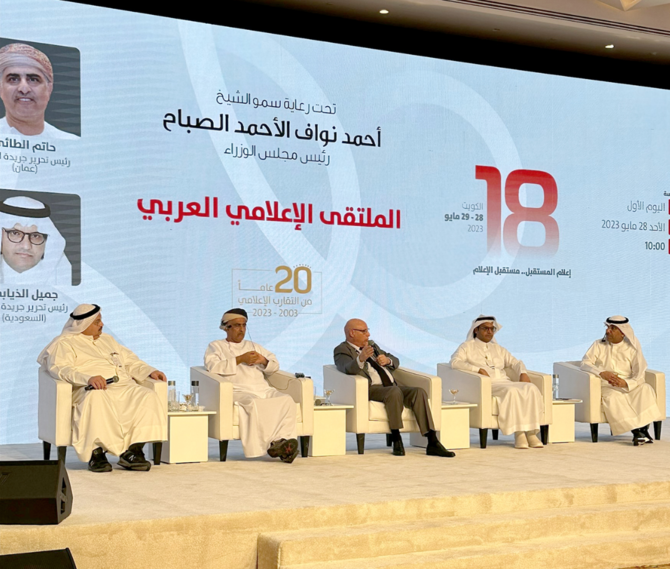
The 18th Arab Media Forum kicked off on Sunday in Kuwait under the patronage of Prime Minister Sheikh Ahmad Nawaf Al-Sabah.
The event focused on a range of issues pertaining to the future of media in the region, Kuwait News Agency reported.
During one of the sessions, Jameel Al-Thiyabi, editor-in-chief of Saudi newspaper Okaz stated that the rise of Artificial Intelligence would have an impact on media outlets all over the world, emphasizing the importance of keeping up with AI developments in media rather than falling behind.
The Arab League’s assistant secretary-general for media Ahmed Khattabi stressed the importance of addressing challenges within digital media, adding that improving media capacities should not overshadow topics of significant importance to the Arab world, particularly the Palestinian cause.
Meanwhile, Waleed Al-Jasim, editor-in-chief of Kuwaiti newspaper Al-Rai, said Arab media faced challenges surrounding media freedoms, adding that social media platforms allowed for more freedom of expression compared with mainstream media.
Hatim Al Taie, editor-in-chief of Omani newspaper Al-Roya, warned younger people working in the industry needed to prepare for the oncoming digital media transformation. He called on the Arab League to impose fees on international media companies, with the money used in funding media entities in the Arab region.
Egyptian businessman said Rishi Sunak had shown himself to be ‘very capable’.
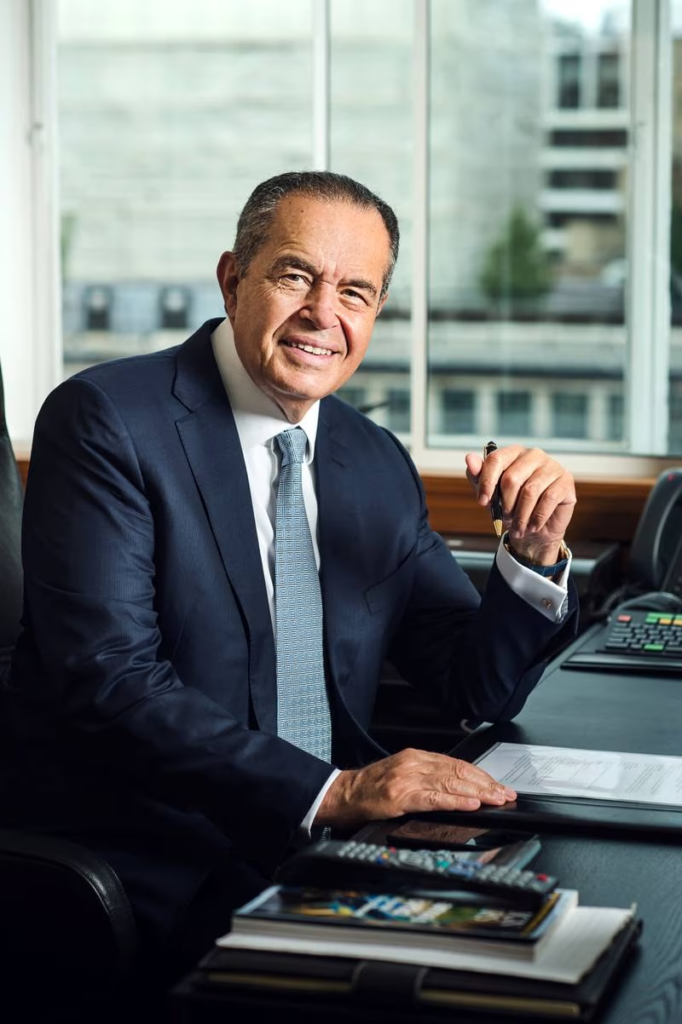
The Conservative party has received its largest donation in more than two decades from an Egyptian-born, British-based billionaire.
Mohamed Mansour has given the party £5 million ($6.2 million) and thrown his backing behind Prime Minister Rishi Sunak, saying he understands “how growth is generated in the modern economy”.
Writing in The Telegraph on Monday, Mr Mansour, who previously spoke to The National for an Arab Showcase feature, said Mr Sunak had shown himself “to be very capable”.
He wrote: “He gets the importance of technology and innovation. He can make the modern economy work for all UK citizens.”
The £5 million donation is the second largest individual gift on record to a political party, after Lord Sainsbury of Turville gave £8 million to the Liberal Democrats in 2019.
And it matches the £5 million donation to the Conservative Party by Sir Paul Getty in 2001. Mr Mansour’s gift has contributed to one of the party’s most successful first quarters of donations in recent years.
“I believe that this country has a very capable Prime Minister,” he wrote.
“My confidence in the Prime Minister is why I was proud to become a senior treasurer of the Conservative Party last December. I want to give him the best chance of having a full five-year term and so have donated £5 million to the party’s election fighting fund. I look at what he has achieved in his first months in office and think what he could do in five years.”
‘I had to do something in my life’
Mr Mansour has overseen the expansion of his family’s company, which has grown from its early beginnings as a cotton exporter to the global conglomerate it is today, with revenue of more than $7.5 billion.
He told The National in 2021 about how a period of convalescence aged 10 gave him the impetus he needed to go on to succeed in life.
Week after week he lay in plaster recuperating from horrific injuries after a car hit him as he was crossing the street.
The doctors had wanted to amputate his leg, but the headstrong boy refused, vowing to stick it out as long as necessary. It took three years.
Mr Mansour looks back on the episode as a part of his life when his father taught him how to be a good entrepreneur and an honourable man.
“That’s when I developed in me that I had to do something in my life,” he told The National.
The billionaire learnt as a boy the importance of a strong work focus, determination, vision and priorities, but also trust, understanding, empathy and loyalty that goes both ways.
“People who love and respect you will do anything for you, I find, and vice versa,” Mr Mansour said.
They are the qualities he credits for his successful leadership at the helm of the Mansour Group, which has a presence in 100 countries and 60,000 employees.
The Egyptian cotton trading company was founded in 1952 and run by his father, Loutfy Mansour.
“My father always told me: ‘Mohamed, you’re a very special young man because of the strength you showed when everybody was saying that we have to amputate the leg. You’re telling the doctors, ‘No.’
“I said, ‘No’,” Mr Mansour recalls, with an edge to his voice, “and I meant it.”
Family’s home seized
The fortune that his father amassed as a textiles trader was lost in 1963 when the business was nationalised by the Egyptian government.
Mr Mansour’s childhood home, with its 40 rooms and 30 staff was confiscated, and his father went from feted capitalist to persona non grata on a state income of $75 a month.
He explains how his life changed overnight, with his family unable to support him while at university in the US, forcing him to trade in his car and work as a waiter.
Back in Egypt, his father was left trying to support the family on a meagre salary, which left Mr Mansour with a lifelong belief in the importance of political stability, property rights and the rule of law.
Mr Mansour joined the company in 1973 and took it in a new direction, forming a strategic partnership first with the automotive multinational General Motors and then with the construction equipment manufacturer Caterpillar. Other leading brands, such as Philip Morris, Peugeot, MG and McDonald’s would follow.
Mr Mansour and his two brothers continued to steer the company to success after their father’s death in 1976.
In 2005 Mr Mansour stepped back from his business to serve in the Egyptian government, spending almost four years trying to modernise the country’s transport infrastructure.
In the article on Monday he says: “But when I had finished that period of service, I knew there was one country where I wanted to base my business. A place where the rule of law is paramount, property rights are respected and with an enviable record of political stability. This country: the United Kingdom.”
He says he loves and respects the country, which has welcomed himself and his family so warmly.
“It has a proud history and noble traditions. I believe that it has great days ahead of it. I want to do what I can to help this country – the place where I am watching my grandchildren grow up – achieve its great potential,” he adds.
The authority said the forum is an opportunity to learn from regional and global experiences and to share best practices in safeguarding competition and combating monopolistic practices.
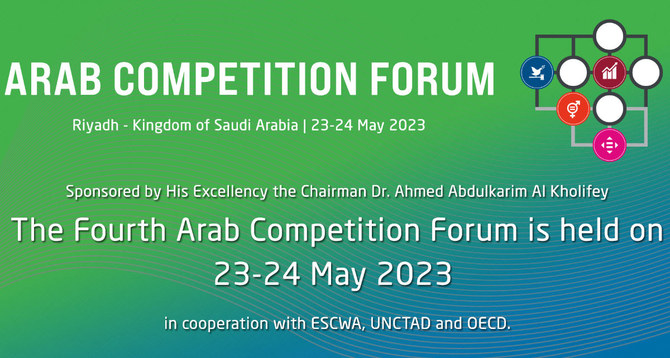
Saudi Arabia will host the fourth Arab Competition Forum, organized by the UN Economic and Social Commission for Western Asia, the UN Conference on Trade and Development, and the Organization for Economic Co-operation and Development.
The General Authority for Competition said that Saudi Arabia’s hosting of this forum emanates from its pioneering role in organizing events and forums aimed at upgrading the level of cooperation with other Arab countries to enhance fair competition in the markets, raising the level of consumer welfare in Arab countries, and stimulating enterprises to develop and innovate.
The event will take place from May 23–24 with the involvement of other competition agencies from fellow Arab countries and more than 15 experts and representatives from international agencies and organizations involved in the competition.
The authority said the forum is an opportunity to learn from regional and global experiences and to share best practices in safeguarding competition and combating monopolistic practices.
It focuses on discussing mergers and acquisitions, as well as enhancing the effectiveness of competition authorities in developing countries.
It also examines best practices for planning and conducting market studies as well as concerns arising from abuse of dominance in digital markets.
The forum was first launched in 2020 and aimed at establishing a continual knowledge-sharing platform on competition policy and enforcement for Arab stakeholders.
It advances advocacy and knowledge, builds capacity on best practices in competition across the Arab region, and facilitates coordination and collaboration at the national, regional and international levels.
Sheikha Bodour bint Sultan Al Qasimi, the President of the American University of Sharjah (AUS), has been honoured as one of Fast Company Middle East’s Most Creative People in Business 2023, specifically recognised in the “Bringing Good Things to More People” category.
Expressing her gratitude upon receiving the award, Sheikha Bodour humbly acknowledged the recognition, expressing surprise and appreciation. She described creativity as the act of transforming something from nothing and finding innovative solutions to problems. Sheikha Bodour expressed her delight if her creative endeavors have contributed to addressing challenges. Reflecting on the words of Steve Jobs, she emphasised that those who dare to believe they can change the world are the ones who actually do. Sheikha Bodour emphasised the importance of thinking differently to make a meaningful impact, highlighting the shared trait among all the nominees for the award.
In addition to this prestigious accolade, Sheikha Bodour has been recognised for her innovative thinking and leadership in various initiatives for the greater good, with a particular focus on literacy, reading, and culture.
One of her notable accomplishments was the establishment of the Emirates Publishing Association in 2009, a non-profit trade association dedicated to developing and professionalising the UAE’s publishing industry. Sheikha Bodour’s international perspective led the EPA to obtain membership in the International Publishers Association (IPA) in Geneva, a historically Western-led organisation. She also played a pivotal role in piloting IPA committees and initiatives before being elected as its vice-president from 2019 to 2020.
Sheikha Bodour’s commitment to making a difference in the literary world extended beyond the UAE. In 2019, she formed a partnership between the IPA and Dubai Cares, resulting in the Africa Publishing Innovation Fund (APIF). The fund invested $800,000 in 18 projects from 2020 to 2022, promoting indigenous languages, literacy, education, library access, and accessible book publishing for visually impaired readers. The APIF continues to positively impact thousands of people across 20 countries.
During her presidency of the IPA from 2021 to 2022, Sheikha Bodour faced the challenges posed by the COVID-19 pandemic, which significantly impacted the book industry. However, she successfully unified the global publishing community by redefining it as a balanced ecosystem comprising interconnected stakeholders.
Advocacy for women’s representation was a core aspect of Sheikha Bodour’s tenure as IPA president. She actively promoted female inclusion in committees, discussion panels, and meetings. Her efforts resulted in her successors as president and vice-president both being women. In 2025, when the vice-president assumes the top role, she will become the third consecutive woman to lead the organisation.
In 2019, Sheikha Bodour established “PublisHer” in response to the underrepresentation of women in leadership positions within the publishing industry. PublisHer serves as an interactive platform that amplifies the voices of women in the industry and provides practical support to help them advance their careers.
Sheikha Bodour’s long-standing determination led to Sharjah earning the esteemed status of World Book Capital City in 2019. Her innovative year-long program prioritised inclusivity, and as a lasting legacy, she conceptualised the remarkable House of Wisdom, a cultural hub and library that focuses on fostering human interaction and enlightenment.
Furthermore, in 2016, Sheikha Bodour launched the Kalimat Foundation, which aims to provide access to books for Middle Eastern children affected by conflict or visual impairment. The foundation empowers vulnerable young individuals by equipping them with knowledge and ideas by giving them books in accessible formats. So far, it has touched the lives of 162,000 disadvantaged children in 31 countries in Asia, Africa, Europe, and Latin America.
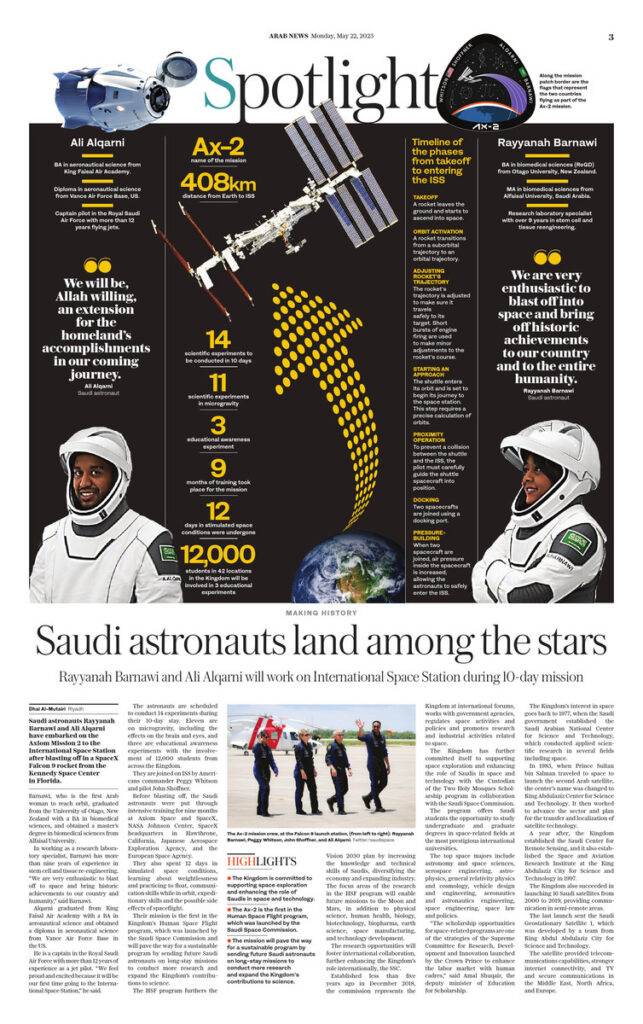
During their eight-day stay on the ISS, the team will aim to conduct 20 research projects.
Saudi Arabia made history on Sunday as its first female astronaut, Rayyanah Barnawi, and her colleague Ali Al-Qarni launched toward the International Space Station (ISS).
The duo were on board the Axiom Space 2 mission, which launched at 5:37 p.m. (EDT time). Astronaut Peggy Whitson and business pioneer and pilot John Shoffner are also part of the mission.
Before the launch, Barnawi, a breast cancer researcher, expressed her excitement and honor at representing Saudi Arabia and the Saudi Space Commission as the country’s first female astronaut. She highlighted her passion for research and described the opportunity as a dream come true for everyone involved.
During their eight-day stay on the ISS, Whitson, Shoffner, Al-Qarni, and Barnawi aim to conduct 20 research projects. Among them are 14 projects developed by Saudi scientists, covering various areas such as human physiology, cell biology, and technology development.
The launch was with a SpaceX Falcon 9 rocket, and had a backup launch opportunity scheduled on Monday at 5:14 p.m in case of a launch failure.
It’s the same spot where Saudi Arabia’s first astronaut, Prince Sultan bin Salman, soared in 1985.
On Saturday astronaut Al-Qarni shared pictures on his Twitter account the contents of his space travel bag.
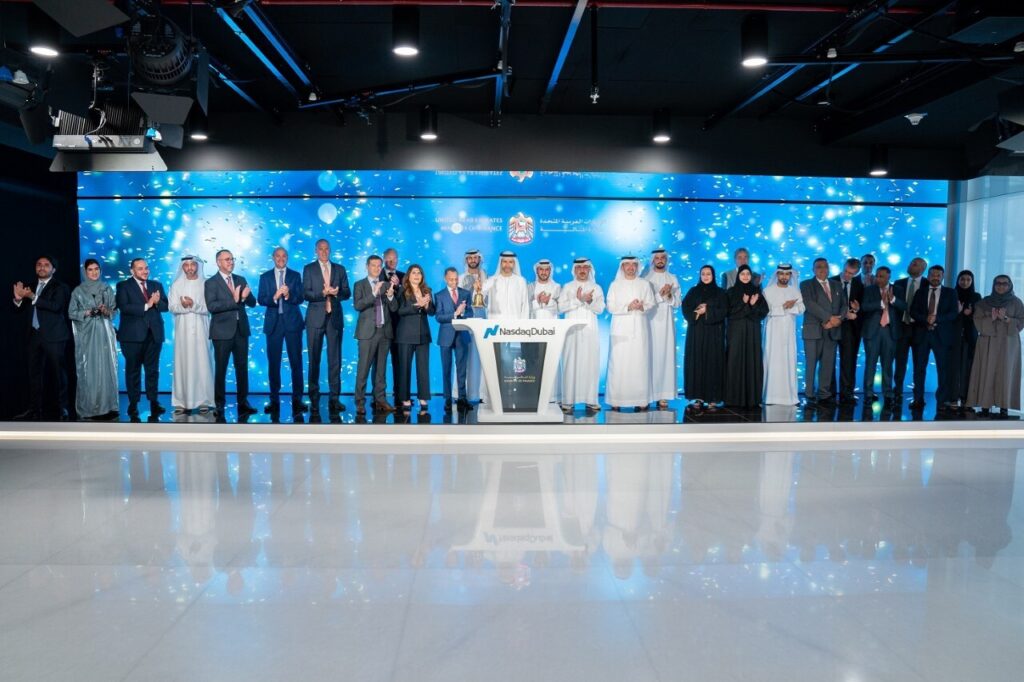
Mohamed Bin Hadi Al Hussaini, Minister of State for Financial Affairs, rang the market-opening bell to celebrate and mark listing the domestic Dirhams Islamic Treasury Sukuk (T-Sukuk) on Nasdaq Dubai.
The United Arab Emirates, represented by the Ministry of Finance (MoF) as the issuer and in collaboration with the Central Bank of the UAE (CBUAE) as the issuing and paying agent, has announced launching dirham-denominated Islamic Treasury Sukuk (T-Sukuk), with a benchmark auction size of AED1.1 billion.
The launching of Dirham-denominated Islamic Treasury Sukuk (T-Sukuk) includes a series of issuances, in order to attract a new category of investors and support the sustainability of economic growth.
Total issuance of AED1.1 billion
The issuance of T-Sukuk is aimed at enhancing the UAE’s economic competitiveness by providing high-quality Islamic assets at competitive prices. This will support the Central Bank of the UAE in managing liquidity within the banking sector and boosts the size of financial investments, which will reflect positively on the country’s economy, investment environment, per capita income, and gross national income.
The bell-ringing ceremony was attended by a number of senior officials from the Ministry of Finance, Central Bank of the UAE, Nasdaq Dubai, and the CEOs of the eight banks that were onboarded as primary dealers, in addition to other senior officials from various relevant authorities.
The inaugural issuance of the Dirham-denominated Islamic Treasury Sukuk programme witnessed a strong demand through the eight primary bank dealers, with bids received worth AED8.3 billion, and an oversubscription by 7.6 times.
The strong demand was across both tranches, with a final allocation of AED550 million for the two-year tranche, and AED550 million for the three-year tranche, with a total issuance of AED1.1 billion. Other tranches of Islamic Treasury Sukuk will be issued with various tenures of up to five years initially, followed by a 10-year sukuk at a later date.
Reaffirming UAE’s position in Islamic economy
Al Hussaini noted that issuing the T-Sukuk contributes to expanding the scope of Islamic banking and is one of the most important tools for managing monetary policy and liquidity to finance development programmes and projects.
The T-Sukuks are Sharia-compliant financial certificates for trading in the secondary market along with the main distributors, reflecting the current return on investment. These sukuk will also contribute to stimulating the securities market and strengthening the base of Islamic securities, providing safe and rewarding investment alternatives, and attracting new segments of local and international investors.
He emphasised that the success of the first auction is another testament to the UAE’s creditworthiness as one of the most advanced and competitive economies in the world, reaffirming its position as a leading investment hub in the field of the Islamic economy.
Al Hussaini said, “The issuance of Islamic Treasury Sukuk is a new step towards achieving the comprehensive and sustainable economic and social development objectives of the UAE. It contributes to the development of the financial market and the investment environment in the country by attracting financial investments and rejuvenating the local financial and banking sector to diversify funding sources, which cements the UAE’s position as a global hub for the Islamic economy.”
Efficiency of UAE’s financial sector
Khaled Mohamed Balama, Governor of the Central Bank of the UAE, said, “The T-Sukuk programme’s first issuance, denominated in UAE Dirhams, reinforces the UAE’s competitive position as a developed global financial centre.
The programme has succeeded in diversifying financial markets activities, enhancing infrastructure to support Sharia-compliant investment options and alternatives, and strengthening the resilience and stability of the financial system. This milestone will also support in bolstering financial investments and promoting greater confidence among local and international investors in the UAE’s financial system, leading to further strategic growth across the sector and fortifying the UAE’s role in the global Islamic economy.”
He added, “The remarkable success of the first auction for the issuance of T-Sukuk denominated in UAE Dirhams is a testament to the soundness of the financial and economic policies, the robust creditworthiness, and the efficiency of the UAE’s financial sector. It also supports the UAE’s stimulating investment environment globally to diversify investment and financial alternatives and continue sustainable growth underpinned by future visions and plans. We are pleased to have partnered with the Ministry of Finance in enhancing the UAE’s financial markets and improving the investment environment in the country.”
Dubai as global centre for Sukuk listings
Hamed Ali, CEO of Dubai Financial Market and Nasdaq Dubai, said, “The issuance of the T-Sukuk is an important development for the UAE capital markets attracting diversified investment categories to the country and providing an important investment tool for Islamic banking. The listing today further strengthens Dubai’s position as one of the largest centres for Sukuk listings globally with US$77.67 billion total value of Sukuk listed in Dubai.
This opens the path for regional and international investors to strengthen their links with the UAE government as well as to expand their investment options in the UAE. At Nasdaq Dubai, our mission supports the UAE Central Bank’s ambitious strategy to develop a strong fixed-income market in the UAE by providing investors with investment opportunities in sovereign issuances and a more effective yield curve gauge in debt instruments.”
The Ministry of Finance onboarded eight banks, namely Abu Dhabi Islamic Bank (ADIB), Dubai Islamic Bank (DIB), Abu Dhabi Commercial Bank PJSC (ADCB), Emirates NBD, First Abu Dhabi Bank (FAB), HSBC, Mashreq, and Standard Chartered as Primary Dealers to participate in the T-Sukuk primary market auction and to actively develop the secondary market.
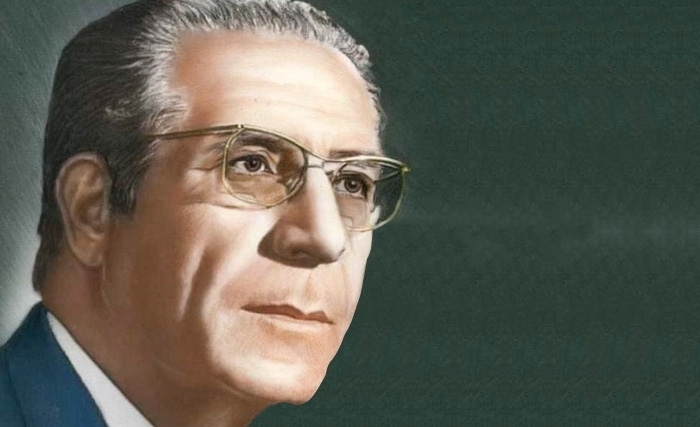
Hedi Amara Nouira was born in Monastir in April 1911 and was trained as a lawyer. In 1934, he assisted Habib Bourguiba establish the Neo-Destour Party, a radical branch of the nationalist Destour Party. In the 1950s, the party campaigned for independence, and Nouira served as its representative in Paris.
After the country gained independence from France in March 1956, he served as Finance Minister and was the first governor of Tunisia’s central bank.
Back then, the newly independent country’s lawmakers appointed Bourguiba prime minister, and he became president after the monarchy was officially abolished the following year. He ruled as a monarch for three decades, securing a 1974 revision of the Constitution that made him president for life and confirmed Nouira as his chosen successor.
Throughout the 1970s, as Habib Bourguiba’s health and mental capacity worsened, he progressively assumed control of the country’s daily operations. Considered the architect of Tunisia’s economic renewal in the 1960s, Nouira was criticized in the 1970s by workers for the government’s harsh labor policies and attacks on labor union headquarters.
During his tenure, the economy thrived, and double-digit growth was achieved, which validated him in his roles and kept him in the prime minister’s office for ten years.
Hédi Nouira was an expert in both international history and modern economics. He had a thorough understanding of the territory and the Tunisians, the vast majority of whom desired central rule and resisted any form of excess. He wanted Tunisia to become the Singapore of Africa. He knew how to build his credibility, his authority, and his leadership. He was rationally liberal, socially-minded, pragmatic, and realistic in his perspective.
He restored confidence in the coutnry economy by his speeches, way of action, and personal commitment. State, employers, and UGTT initiate a session of social discussions every three years in order to provide greater visibility and less uncertainty for businesses and ensure social peace. Salaries and productivity go hand in hand. That was the policy.
Hédi Nouira knew where to lead the country and how to lead reform. He said what he did and did what he said, despite the danger of alienating strong supporters of social and economic progress. It revived the economy in so few years and put it on an Asian-style growth orbit, with yearly growth peaks exceeding 17%. His ten years in office will be remembered as the “ten glorious ones” in the country’s history. He rebuilt the state’s coffers and created more jobs and income than in the previous decade. He sought to bring Tunisia to the top of Africa. This ambition inspired the birth of the Tunisian dream.
After El Hedi Nouira’s stroke in February 1980, he was replaced by then-Education Minister Mohammed Mzali, who practically became the President’s heir apparent. In November 1987, however, Interior Minister Zine al-Abidine Ben Ali overthrew Bourguiba in a coup and claimed the presidency.
Students of King Abdulaziz University won 41 medals during their participation in the 48th Geneva International Exhibition of Inventions.
The recently concluded exhibition saw 825 exhibitors from 44 countries take part with more than 1,000 inventions.
The head of innovation at the university, Dr. Iqbal Ismail, told Arab News: “Other Saudi universities are also participating. However, the participation of King Abdulaziz University at this exhibition is the largest and has been ongoing since 2016.”
Dr. Hana Al-Naim, acting president of the university, praised the achievements of the university’s male and female students, which have contributed both to the community and the Kingdom’s ranking, regionally and globally, in the field of creativity and innovation.
The students came from the university’s various colleges including departments of medicine, engineering, information technology and nursing.
Rahaf Alem and Raghad Al-Jundi won the International Federation of Inventors Association Award for the invention of a laser blood disease detector, also winning the gold medal.
A special prize from Taiwan was awarded to student Faisal Al-Subaie for inventing a cistern made from palm fronds to provide irrigation water.
Ahmed Al-Zahrani, Saleh Bakraa, Marwan Al-Jadaani, and Mohammed Al-Khamis also won the special award for their automated diagnostic platform.
The silver medal was awarded to Duaa Al-Shabani, Lama Al-Jelani, Gaitha Al-Khatami, Emtinan Yamani, and Hadeel Al-Lazori for their invention of an antimicrobial agent for dialysis patients.
Several Saudi inventions received the bronze medal. Safwan Hashim and Abdullah Abu Thyab won it for their renewable-energy car umbrella and Abdullah Al-Khotami for his work on protective glasses that shield wearers from thermal diseases.
Hala Mogarbel, Shahad Asiri, and Shatha Al-Sulami won the bronze medal for their urinary catheter holder invention.
Dina Al-Shibeeni, Marwa Bakour, and Hind Al-Rashid also won the bronze medal for the invention of an artificial intelligence gardening system.
The invention of a bedsore-proof bed earned Bateel Bajamal, Rena Al-Qahtani, Joud Hakami, Asmaa Bahmeed, and Shahad Al-Nahdi the bronze medal.
Shathar Al-Shabak, Jumana Al-Madhoun, Njoud Al-Ghamdi, and Raneem Saati were also awarded for their invention of “Minqath,” a drowning warning system.
Finally, Sumayah Baamer, Raniya Baksh, Rahaf Al-Saeed, and Deema Majashi won the bronze medal for school environment safety measures using artificial intelligence.
Ismail said: “There is no doubt that such student participation will have a great impact on raising a generation that thinks and researches in a scientific way and develops appropriate solutions to the problems facing the…community.”
He added that the exhibition constitutes an important opportunity to transform inventions into products that can be manufactured and marketed inside and outside the Kingdom.
Al-Naim will honor the exhibition’s winning students in a ceremony on Wednesday.
Five other coders win $50,000 each in awards presented by Dubai Crown Prince for top apps.
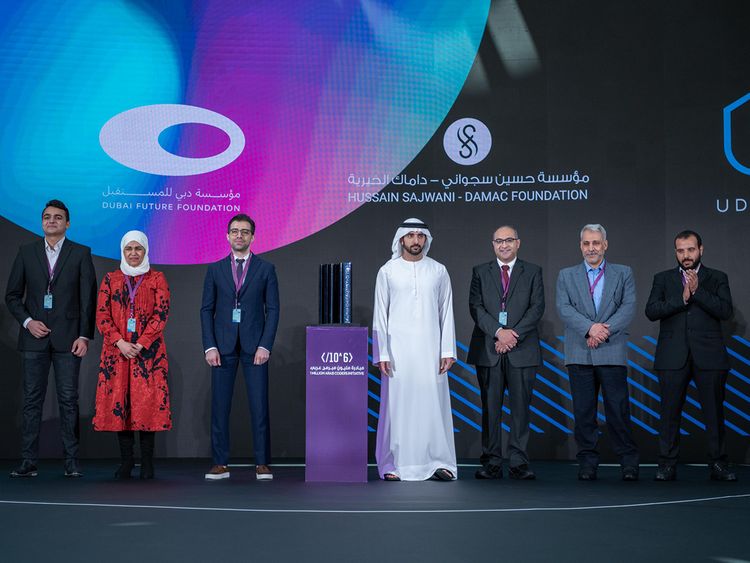
A Syrian coder on Wednesday won $1 million (around Dh3.67 million) in the ‘One Million Arab Coders’ contest during an award ceremony in Dubai facilitated by Sheikh Hamdan bin Mohammed bin Rashid Al Maktoum, Crown Prince of Dubai, Chairman of The Executive Council and Chairman of the Board of Trustees of the Dubai Future Foundation.
Six software projects developed by Arab youth from around the world competed for the grand prize, thanks to the programming skills they acquired during their participation in the initiative’s courses.
On Wednesday, during the closing ceremony held at the Museum of the Future in Dubai, Sheikh Hamdan presented the awards to winners, with Mahmoud Shahoud, a Syrian coder who lives in Turkey, taking home the $1 million top prize.
Sheikh Hamdan tweeted: “Today, we honoured the winners of the ‘One Million Arab Coders’ Challenge, the UAE’s initiative to nurture the development of technology skills among Arab youth. 1.85 million Arab participants from 80 countries took part in the initiative along with 3,600 certified trainers.”
He added: “The Challenge opens fresh opportunities for Arab youth and offers a new path for them to achieve their dreams… Congratulations.”
Sheikh Hamdan added: “The ‘One Million Arab Coders’ initiative provided the opportunity for one million Arabs to enter the digital world. It fulfilled the dreams of tens of thousands of Arab programmers from all over the world. Its outcomes and successes will be the basis for many upcoming Arab achievements in the world of technology and coding. One Million Arab Coders’ has paved the way for Arab youth to broaden their horizons and sparked their innovation and creativity in the field of advanced technology.”
He added that the ‘One Million Arab Coders’ initiative, which was launched in 2017 by His Highness Sheikh Mohammed bin Rashid Al Maktoum, Vice President and Prime Minister of the UAE and Ruler of Dubai, has succeeded in becoming a gateway for many Arab youth to use their programming skills to realise their dreams and aspirations.
“We look forward to our Arab coders continuing their pioneering innovations and expanding their achievements. We expect their names and future accomplishments to light up the sky worldwide.
“His Highness Sheikh Mohammed bin Rashid Al Maktoum’s vision for the region’s future is based on investing in the development of the Arab people. The language of programming is one of the pillars of the knowledge economy and a major bridge to a future in which those who possess scientific excellence will have the upper hand,” Sheikh Hamdan concluded.
Shahoud was adjudged winner for his ‘Habit360’ app that helps users create and maintain good habits, allowing them to achieve long-term goals. Shahoud said half of the prize winning will go towards helping Syrian refugees. The rest will be invested in Dubai as Shahoud plans to shift his base to the emirate and start his own business.
Sahoud is a software engineer from Syria who developed Habit360 that helps people build new habits, track their progress and stay motivated. The application has served more than 200,000 users from around the world.
Beside Shahoud, there were five other winners announced on Wednesday.
About the initiative
The ‘One Million Arab Coders’ initiative is supervised by the Dubai Future Foundation and organised under the umbrella of the Mohammed bin Rashid Al Maktoum Global Initiatives.
The closing ceremony held at Dubai’s Museum of the Future on Wednesday was to honour the best Arab talents in coding, and highlight best coding projects developed by graduates of the initiative to serve their communities and create a better future for humanity.
A total of $1.35 million was given away in prizes during the ceremony.
Mohammed Abdullah Al Gergawi, Minister of Cabinet Affairs, Vice Chairman of the Board of Trustees and Managing Director of the Dubai Future Foundation, said: “The ‘One Million Arab Coders’ initiative embodies the vision of His Highness Sheikh Mohammed bin Rashid Al Maktoum [Vice President and Prime Minister of the UAE and Ruler of Dubai] , to provide new opportunities for Arab youth, empowering their contributions to the advancement of technologies globally, and to put a clear Arab footprint in the future of humanity.”
Aimed at youth
He said the initiative aimed mainly at empowering Arab youth around the world with the tools of the future, and providing them with the opportunity to gain new experiences and skills that would help them turn their dreams into successful projects that benefit their societies and have a positive impact on their lives.
“The initiative was a glimmer of hope for Arab youth around the globe that success is not bound by place, age, or obstacles. Rather, success requires insistence on acquiring the experiences and skills that will be needed in the future,” Al Gergawi said.
He pointed out that the initiative was a cornerstone for countless success stories where coding helped create a positive impact on the future of humanity, and spread hope in the Arab region.
Al Gergawi stressed the importance of the initiative’s role in encouraging Arab coders to innovate and start developing software projects that not only meet the needs of their societies, but also foresee and adapt to its future requirements and changes, pointing to the initiative’s success in developing a leading global experience to teach coding skills in an effective manner, which was adopted in Jordan and Uzbekistan.
Saeed Mohammad Al Gergawi, Director, Dubai Future Academy, said: “We have 400 million Arabs and that is a lot of talent. Our criteria is that they had to be impactful, ready to be implemented and creative.”
Other winners
In addition to the grand prize for the ‘One Million Arab Coders’ challenge, the five best projects will receive prizes of $50,000 each, and four of the best trainers participating in the initiative will be honoured with prizes of $25,000 each. The finalists were chosen by a specialised jury that comprises many experts in the fields of entrepreneurship and future technologies.
Egyptian–Canadian Andrew Makram won $50,000 for his app called ‘Najeeb’, a platform for exams, tests and quizzes. “It is a cross-platform tool for teachers and educators to create and share paperless quizzes online. What the app does is that it allows students to access the quiz remotely, submit answers and receive the result instantly. Realtime submitted data are available to educators for revision and evaluation purposes,” he said.
Makram added that it took him a month to develop the app and it is in prototype form.
Egyptian entrepreuner Eman Magdy was another winner who has developed an app for the benefit of working women in Egypt. She won a prize for her initiative to ease the burden of working women in Egypt.
“The app is called 3lfraza. It is a platform to support homestay women in Egypt. Basically homestay women help working women to prepare vegetable and meat cuts and meals. Currently 9,000 women are registered from Egypt. We hope more women for all over the world use this to help one another. The app supports small vendors, helping busy mums in their day to day lives,” she said.
Meanwhile Mohamed ElEskandarany developed an app called ‘Muaahal’ to help youth to develop new skills. “It is a platform that aims to qualify Arab youth and prepare them well in the fields of their choice to work in suitable jobs or to start their own business. In addition, helping companies to find qualified employees, and to solve the problem of unemployment and increase the productivity of youth,” he said.
Another winner, Ammar Salim, won in the initiative for his app called Qeraaty Alnateqa which helps in speaking-reading program for the deaf and mute. “It is a speaking program to teach reading and writing to deaf and mute children. With a new sign language system and tool for converting the sign of only two fingers from the fingers of the hand to spoken letters and words,” said Salim.
Last but not the least, Hasan Mohamed won the prize for his ‘Chat translation app’.
“It is a mobile app that provides a textual and vocal chat for people of different languages in different places around the world ,to convert people’s speech in different languages into written texts, translate texts from one language to another, and convert translated texts into spoken speech again,” said Mohamed.
Software expertise
Sheikh Mohammed launched the ‘One Million Arab Coders’ challenge in July 2021 with the aim of recognising and honouring the achievements of Arab talents in the field of programming and creating an opportunity for participants in the initiative to showcase their innovative projects, developed using programming skills and the experience gained during their participation.
The challenge saw a total of 257 projects submitted by the initiative’s graduates from 50 different countries in various sectors related to programming, technology and entrepreneurship in the areas of website and mobile application development. In order to qualify for the final stage and compete for the million-dollar prize, the nominees were selected according to a set of main criteria, including the project idea, the innovation quality, and ease of use.
Jury
The jury for the final round included Fadi Ghandour, Chairman of Wamda Capital; Bashar Kilani, Managing Director of Accenture Middle East; Dr. Abdul Latif Al Shamsi, Director of the Higher Colleges of Technology; and Ronaldo Mouchawar, Vice President of Amazon Middle East.
Supervised by the Dubai Future Foundation, the ‘One Million Arab Coders’ initiative has seen 1,058,265 people from around the world participate virtually in millions of hours of study and work, as well as tens of thousands of training workshops. Since its launch, 1,500 “Nano Degree” certificates have been awarded to distinguished participants and promising talents. The initiative featured more than 3,600 certified trainers from around the world.
Serving humanity
Led by the Dubai Future Foundation (DFF) and organised under the umbrella of the Mohammed Bin Rashid Al Maktoum Global Initiatives (MBRGI), ‘One Million Arab Coders’ is the largest initiative of its kind in the world. The initiative aims to teach one million young people from the Arab world to code and enable them to launch exceptional projects and programmes that serve Arab societies, drawing on the science and skills gained from their training.
The initiative embodies Sheikh Mohammed’s vision to empower Arab youth with the tools of the future to serve humanity and build a brighter future for the region. The challenge forms part of the UAE’s continuous efforts make a positive impact on the world.
Partnerships
The ‘One Million Arab Coders’ initiative is supported by the Hussein Sajwani – DAMAC Foundation, which focuses on supporting learning opportunities and developing skills to stimulate profitable social and economic participation, and empowering societies in the Arab world to achieve a sustainable future. The Udacity digital learning platform also supported the initiative by offering educational content and training in necessary skills for future jobs. The list of partners of the initiative also included many international technology companies, including Microsoft, Facebook, Oracle, Careem and others.
The initiative also provides the world with a pioneering model for promoting the development of programming skills. It was adopted in the Hashemite Kingdom of Jordan, which launched the ‘One Million Jordanian Coders’ initiative in May 2019. The initiative was introduced with the aim of making Jordan a world leader in the field of programming. The ‘One Million Uzbek Coders’ initiative, launched through a partnership between the governments of the UAE and the Republic of Uzbekistan, was announced in November 2019, with the aim of providing Uzbek youth with an opportunity to acquire skills in programming, artificial intelligence and emerging technologies, to contribute to the development of innovative technology-based solutions and services.
source/content: gulfnews.com (headline edited)
_____________
Sheikh Hamdan bin Mohammed bin Rashid Al Maktoum (centre) with the winners / Image Credit: Supplied
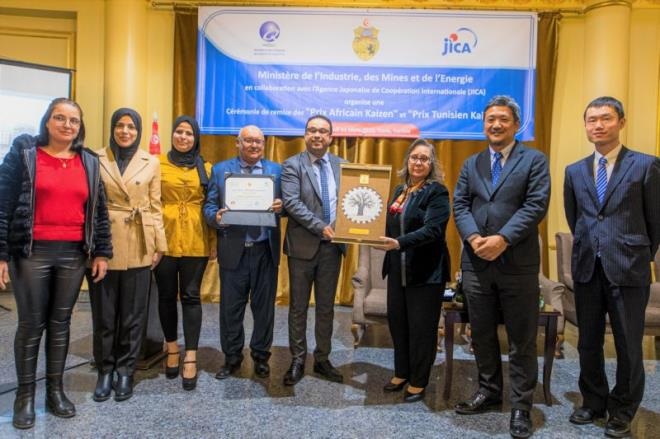
“Phoenix Mecano Elcom,” a Tunisian company specializing in the manufacture and assembly of electromechanical components has just won the Tunisian Kaizen Prize in the “large-Scale Business” category.
The Kaizen prize, awarded at a ceremony in Tunis on Wednesday, is an initiative organized by the Ministry of Industry, Mines and Energy and the Japan International Cooperation Agency (JICA).
Its aim is to reward Tunisian companies operating in the industrial or industry-related services sector that have distinguished themselves through exemplary implementation of the “Kaizen” approach, a concept that promotes a culture of continuous learning, integration and innovation.
“Phoenix Mecano Elcom had already won the African Kaizen Award last October in Yaoundé, Cameroon.
In the large-scale businesses category, international manufacturing company Asteel Flash and the Arab Society for Pharmaceutical Industries (SAIPH) also won awards.
Plastic packaging company Azur Pack also received an award in the Small and Medium Businesses category.
During the ceremony, the Minister of Industry, Neila Gongi, said that there was potential for improvement through the spread of Kaizen in Tunisia.
For his part, the Resident Representative of the JICA Office in Tunisia, Shunei Ueno, stressed that, more than a year after the end of the “Quality and Productivity Improvement Project” in December 2002, this second edition of the Tunisian Kaizen Awards “testifies to the continuity of the momentum of the dissemination of the Kaizen concept in Tunisia, which was initiated within the framework of this project”.
The Kaizen concept offers a systematic approach to improvement that results in cost reduction, improved quality and productivity, and shorter delivery times, JICA said. In 2006, Tunisia became the first country in Africa where JICA introduced the Kaizen approach.