Egypt’s Ahmed Shawky to Chair Cannes Festival’s FIPRESCI Jury

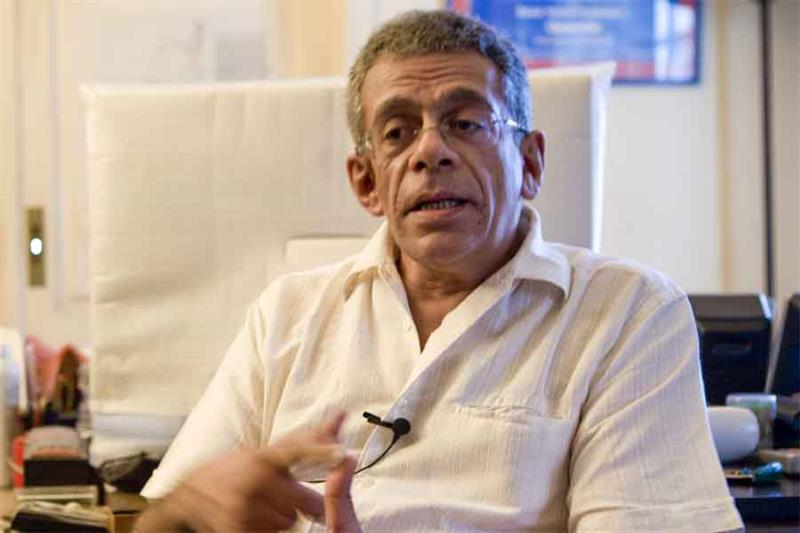
Egyptian film critic Ahmed Shawky was chosen last week to head the jury of the International Federation of Film Critics (FIPRESCI) competition at the 75th Cannes International Film Festival.

Though Egyptians have been part of the FIPRESCI jury panel competition in the past, this is the first time one will chair the panel.

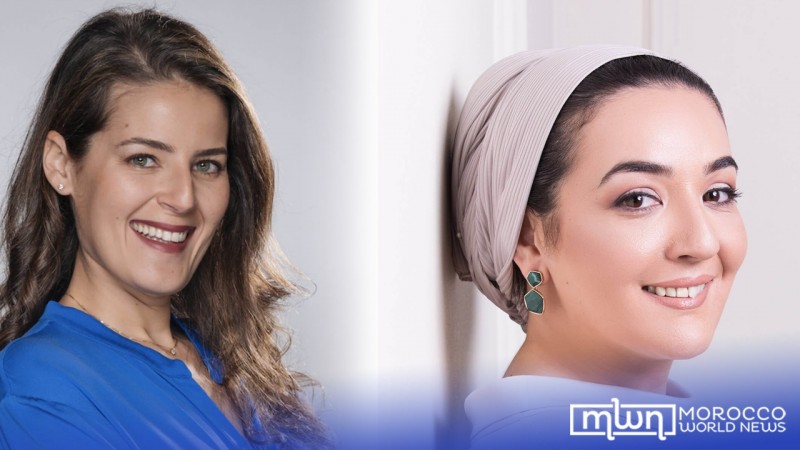
Shawky will head a panel that includes a number of film critics from all across the world: Mariola Wiktor (Poland), Nathalie Chifflet (France), Emanuel Levy (USA), Simone Soranna (Italy), Jihane Bougrine (Morocco), Magali Van Reeth (France) Bidhan Rebeiro (Bangladesh) and Youssoufa Halidou Harouna (Niger).

Launched in the 1920s, the FIPRESCI committee is among the most influential film criticism committees internationally. The committee is responsible for awarding the best film at numerous festivals, including at Cannes since the festival’s launch in 1946.

The upcoming Cannes International Film Festival is scheduled to take place between 13 and 24 May 2022.

Shawky is an Egyptian film critic, programmer and screenwriting developer. He writes about film for numerous Egyptian and regional publications. He has also published six books about Egyptian cinema. 

A FIPRESCI board member and the vice president of the African film critics’ federation (FAAC), Shawky is also as a programmer for many film festivals.

Shawky was appointed an acting artistic director of the Cairo International Film Festival in 2019, and a year later he was appointed its artistic director.

Shawky is also one of two Egyptian names to head the 75th festival’s juries, with the other being Yousry Nasrallah who will chair the Short Film Jury, a panel in charge of selecting one of nine films in competition for Short Film Palme d’Or.

source/content: english.ahram.org.eg (edited)

______________

________

EGYPT

13 Moroccan Groups Among North Africa’s Top 20 Companies

Morocco’s telecom operator Maroc Telecom is the largest company in North Africa with a market valuation of $11.8.

13 Moroccan companies feature among North Africa’s top 20 biggest firms in terms of market capitalization, according to a report by African Business, a pan-African business-oriented business magazine.

Leading the charts is Maroc Telecom, Morocco’s leading telecommunication firm, with an $11.8 billion valuation.

Despite topping the list of North African companies, Maroc Telecom slipped from the list of the top 10 companies on the continental ranking. The Moroccan firm’s market capitalization fell from $13.5 billion to $11.8 billion between 2021 and 2022, according to a report by African Business. 

Maroc Telecom ranked 13th in Africa, down from 8th in 2021, the report noted.

With a market capitalization of $10.3 billion, Attijariwafa Bank, Morocco’s largest bank, came in second place on the list of the top 20 largest companies in North Africa.

On the continental level, Attijariwafa Bank fell from the 15th to the 19th in 2022 even as its capital grew by $0.4 billion in the past year, reflecting strong growth in Africa’s business landscape.

Morocco’s Banque Centrale Populaire ranked as North Africa’s third-largest company; the Moroccan banking group was meanwhile ranked 32nd in Africa, with market capitalization having fallen from $5.652 billion to $5.622 billion in the past year. 

LafargeHolcim Maroc construction group ranked fifth in the North African market and 39th in Africa. The group’s market capitalization stood at $4.623 billion, up from $4.167 billion in 2021

The final Moroccan bank to feature on the list of the top 20 largest companies in North Africa is Bank of Africa in 6th place in North Africa and 42nd across the entire continent. The banking group’s market capitalization in 2022 is valued at $4.238 billion, up from $3.563 billion a year before, the report indicates.

Other Moroccan companies featured in the regional ranking include construction materials manufacturer Ciments du Maroc and energy company TAQA Morocco. The two firms are respectively ranked 7th and 8th in the North African market.

Food manufacturer Cosumar Maroc is ranked as the ninth-largest company in North Africa and 61st in the whole of Africa. Meanwhile, Mining company Managem, and Morocco’s national port operator, Marsa Maroc, ranked in the 11th and 12th ranks respectively.

The final Moroccan companies to appear in the ranking in 13th, 15th, and 17th place are Wafa Assurance, Afriquia Gaz, and Total Maroc respectively.

source/content: moroccoworldnews.com (edited)

__________

13 Moroccan Groups Among North Africa’s Top 20 Companies

_____________

MOROCCO

Arabian Peninsula’s Biggest Catholic Church Opens in Bahrain

The building can accommodate 2,300 worshippers in two-tiered seating

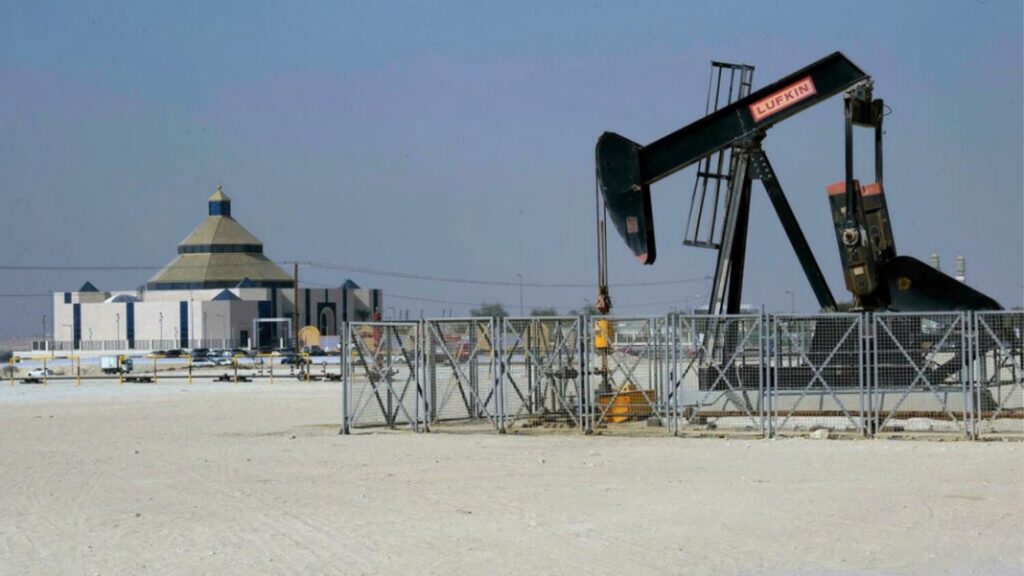
Against the backdrop of mosque minarets and a desert oil field, the biggest Catholic church in the Arabian peninsula opened its doors in Bahrain.

The cavernous Cathedral of Our Lady of Arabia, with seats for 2,300 people, will serve the majority-Muslim Gulf country’s small Catholic community.

“We’re happy for this church,” Bahrain-based priest Father Charbel Fayad told AFP. “It will be for the spiritual needs and spiritual health of all the people.”

The modern-style church, with two tiers of seating, lies about a mile (1.6 kilometres) from a large mosque and a stone’s throw from an oil well, in the south of the state.

The Vatican estimates Bahrain has some 80,000 Catholics, mainly workers from Asia, mostly India and the Philippines.

“Christians and non-Christians, all are children of God and they are all welcome here in this beautiful church,” Father Charbel said.

King Hamad last week invited Pope Francis to visit Bahrain.

source/content: khaleejtimes.com (edited)

______________

____________

BAHRAIN

Egyptian Director Yousry Nasrallah to head 75th Cannes Festival’s Short Film Jury

Egyptian film director Yousry Nasrallah has been proposed as the jury chairman of the Short Films competition of the 75th Cannes Film Festival, which will take place between 17 and 28 May.

“The Jury will be tasked with selecting one of the nine films in Competition for the Short Film Palme d’or, to be awarded at the Festival’s closing ceremony on Saturday 28 May,” the organisers stated on Thursday.

Under the presidency of Nasrallah, the jury also comprises acclaimed Canadian actress and director Monia Chokri, Belgian director and screenwriter Laura Wandel, French actor and director Félix Moati, and French film critic Jean-Claude Raspiengeas.

“The Jury will also award three La Cinef prizes to the best of the 16 films from film schools presented this year. The prizes will be awarded at a ceremony prior to the screening of the award-winning films on Thursday, May 26, 2022.”

Arab filmmakers are well represented at Cannes this year, with the International Federation of Critics selecting veteran Egyptian director Ahmed Shawky to chair the critic’s jury.

Meanwhile, the International Critics Week (La Semaine de la Critique) announced Tunisian director Kaouther Ben Hania as the president of the 61st edition.

Veteran French actor Vincent Lindon will head the main jury which awards the coveted Palme d’Or top prize alongside British actress and director Rebecca Hall, Indian actress Deepika Padukone, Swedish actress Noomi Rapace, Italian actress and director Jasmine Trinca, Iranian director Asghar Farhadi, French director Ladj Ly, American director Jeff Nichols and Norwegian director Joachim Trier.

source/content: english.ahram.org.eg / ahram online

__________

_________

EGYPT

Bahraini Artist AbdulRahim Sharif Awarded the Chevalier dans l’Ordre des Arts et des Lettres, France’s Highest Arts Honour

The renowned painter was recently awarded the Chevalier dans l’Ordre des Arts et des Lettres

If there’s one thing artist AbdulRahim Sharif doesn’t like, it’s adopting a formula in his work.

And it seems that is, in fact, the winning formula, as the Bahraini painter, one of the island’s foremost talents, was recently awarded one of France’s most prestigious honours for people in the arts.

Sharif, 68, who was born in Manama in 1954, was recognised as a Chevalier dans l’Ordre des Arts et des Lettres. The accolade is awarded to a select number of people annually to recognise significant contributions made in the arts and literature, with the likes of Sheikh Dr Sultan bin Muhammad Al Qasimi, Ruler of Sharjah, and actors Mads Mikkelsen, Cate Blanchett and George Clooney having received it in the past.

Who is AbdulRahim Sharif?

Sharif studied at the famous Ecole nationale superieure des Beaux-Arts de Paris under the tutelage of sculptor Marcel Gili in the 1970s, where he won both the Pierre David-Weill and La Grande Masse des Beaux-Arts prizes for drawing.

After a period developing his craft in New York at theParsons School of Design (part of The New School), he returned to Bahrain in 1982, where a health crisis led Sharif to reopen his New York portfolio and re-evaluate his work.

“It took me back to something I’d been interested in from my youth,” he tells The National. “And that was the concept of immortality. This issue has stayed with me since I was painting instinctively as a younger man. It took time for me to realise that immortality was the beating heart of my work.”

He started to incorporate surprising elements into his art, pushing back against conventional practice and even playfully calling one of his exhibitions Who Says It Doesn’t Work?, featuring pieces such as his Bathtub series, toying with viewer expectations.

“I am moving more and more towards works with physical and mental energy,” says Sharif. “This gave me the freedom to paint anything. I am against formula.”

A reputation gone global

Sharif’s reputation has gone far beyond Bahrain and even New York City.

He used to teach students who’d moved to the kingdom from Europe and America. As his students left the Gulf and returned to their home countries, they took the art and name with them.

“The banks were booming at that time and I sold a lot of my work to expats in the industry,” he says. “Then locals started coming to the workshops and getting interesting in paintings. Suddenly, there was a local market that hadn’t been there before.”

As his reputation grew abroad, so it grew at home. Sharif won the Dilmun Award in the late 1970s, as well as the Dana Grand Award twice in the 1990s.

He was also a founder of the Bahrain Art Society, helping to bring a new generation of Bahraini artists into the wider art world.

A lifetime’s reward

Now, after nearly 50 years working in the arts, Sharif has collected perhaps his most prestigious award yet with the Chevalier dans l’Ordre des Arts et des Lettres.

“It means a lot,” says Sharif. “It’s one of the most important awards France can give. Even though I’ve had a lot of appreciation in my life, I’m very proud of this one”.

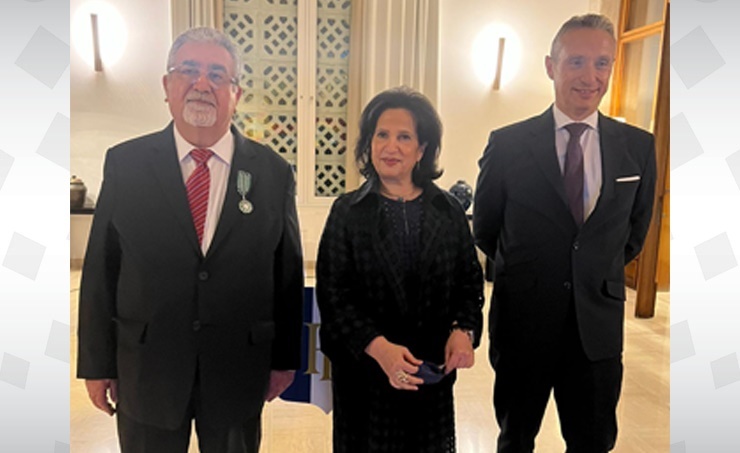
The award was presented in a small-scale ceremony at the French Embassy in Bahrain, attended by a few of Sharif’s family members and Shaikha Mai Bint Mohammed Al Khalifa, president of the Bahrain Authority for Culture and Antiquities.

It was a fitting tribute to Sharif’s lifetime of work and now his mind has turned to his legacy.

Sharif and his son Hisham, also a talented artist, have recently launched a joint exhibition titled Sharif & Sharif, which runs until Wednesday, February 23, at the Bahrain Art Centre. It shows their individual creative journeys and speaking to a “common understanding and concern for humanity, especially in the face of corruption, war and violence, and a common desire for society to start again”.

Sharif also aims to use the knowledge and skill he’s accumulated to help the next generation of artists in the region. “Teaching for me is an addiction. I want to ignite this again,” he explains.

“One of my plans, if God gives me health and long life, is to establish a school where we take care of talented artists from the region.”

source/content: thenationalnews.com

__________

____________

BAHRAIN

Bright Innovations in Saudi Arabia’s Power Sector

Shining a light on bright innovations in Saudi Arabia’s power sector.

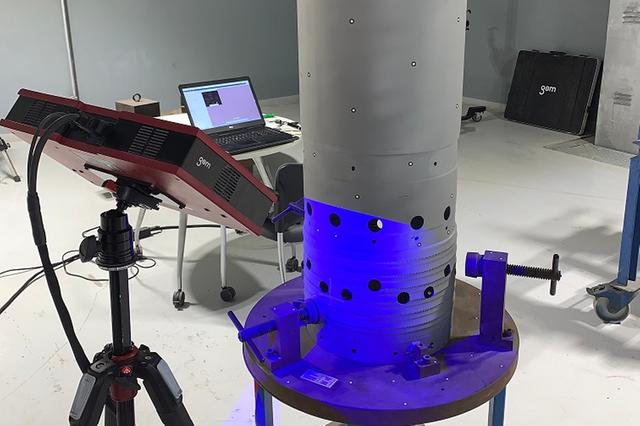
Normally, colored lights flashing around in different directions is something seen at a concert, not in an advanced engineering research lab in Dammam, Saudi Arabia.

Yet, watching the lab’s automated blue-light scanner move around a gas turbine part taking digital images is definitely something to talk about for Kamel Tayebi and his team.

Kamel leads the advanced metrology engineering team at the GE Gas Power Hot & Harsh (H&H) Research & Development (R&D) Center of Excellence, located at the GE Manufacturing & Technology Center (GEMTEC) campus. The site includes one of the largest GE Gas Power turbine service centers in the world.

His team, which includes Saudi nationals, supports the repair center with new and innovative ways to assess the condition of gas turbine components in terms of fitness for use. Their other research work on blade vibration sensors helps to identify cracks or further weaknesses that must be corrected.

The Center’s digital blue-light scanner, mounted on a programmable robotic arm, is the only one in the Middle East and Africa.

The team has also been active in pushing the envelope of the application of manual scanners to initiate new ways of serving repair processes, notably for rotors and fixtures. This pioneering work was selected to be presented at the Advanced Manufacturing & Repair for Gas Turbines conference , one of the most prestigious international mechanical engineering conferences hosted by the American Society of Mechanical Engineers.

An example of the Saudi-based R&D team’s approach was to explore the benefits of mounting the scanner on the robotic arm.

The solution allows GEMTEC technicians to examine more parts faster, while still maintaining the impeccable reliability of the scanning results. This helps the facility reduce turnaround times, which in turn, can contribute to faster deliveries for outages at power plants.

A major contributor to this accomplishment is Badi AlQuzayz, a young Saudi engineer who has used this technology on thousands of turbine parts. Here, he is involved in projects not being done anywhere else,” Tayebi said.

Tayebi, who is Canadian, formed the nucleus of the team with two Saudi engineers – one with a graduate degree from the UK and another fresh graduate from King Saud University. A fourth researcher holds an engineering degree from India.

The Hot & Harsh R&D Center, which houses the advanced metrology research team, was established to address the extreme conditions experienced by gas turbines in regions such as the Middle East, Africa, and other parts of the world.

The work done by the metrology team and, more generally, by the Hot & Harsh R&D Center, supports key goals of Saudi Vision 2030, including fostering homegrown innovation, building Saudi workforce capabilities, and deepening the Kingdom’s industrial sector..

source/content: zawya.com (edited)

___________

Laboratory in Dammam, Saudi Arabia

________________

SAUDI ARABIA

Egypt Begins Restoring Mideast’s Oldest Synagogue

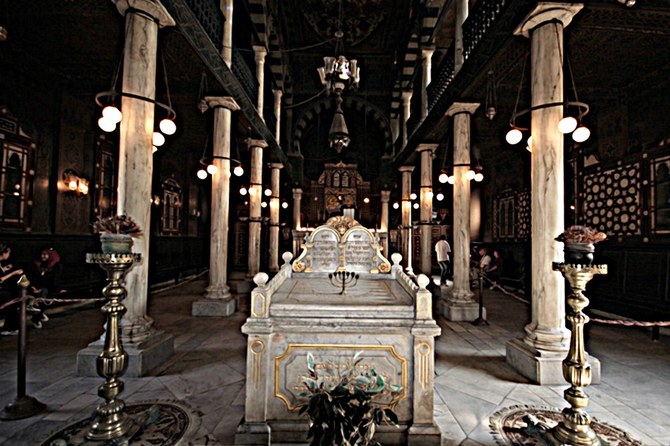
Egypt’s Supreme Council of Antiquities has started a project to restore Cairo’s Temple of Ben Ezra.

“It is of great importance as it is the oldest synagogue in Egypt and the Middle East,” said the council’s Secretary-General Mostafa Waziri.

Osama Talaat, head of the council’s Islamic, Coptic and Jewish Antiquities Sector, said: “The temple was named after Ezra, the religious scholar and Jewish philosopher.”

The restoration work will include cleaning walls, insulating the roof and treating cracks.

The last restoration work was done in 1991.

source/content: arabnews.com (edited)

_________

The restoration work will include cleaning walls, insulating the roof and treating cracks. (Supplied)

________

EGYPT

Saudi Arabia Leads the Arab World in Registered Patents since 2015

The Saudi Ministry of Education joined the international community in celebrating World Creativity and Innovation Day, which takes place on April 21 every year and was established by the United Nations “to raise awareness of the role of creativity and innovation in all aspects of human development.”

According to a report by the SPA, Saudi Arabia registered 1,871 patents between 2015 and 2021 — more than any other country in the Arab world. Eighty-one percent of those patents were registered in the US.

This, according to the SPA, “highlights the creativity and innovation of students, faculty members and researchers in Saudi universities.”

There are 47 centers for innovation and entrepreneurship in Saudi Arabia, and more than 135 centers of excellence and research, all of which have contributed to the country’s drive for innovation.

The Ministry of Education has announced that it is working on a set of initiatives to transform these patents into “investable projects to enhance society and bring about tangible developments for the benefit of the Kingdom,” the SPA reported.

source/content: arabnews.com

___________

_________________

SAUDI ARABIA

Fatima Albanawi, Saudi Actress, Producer and Filmmaker

Fatima Albanawi is an actress, producer, and filmmaker, who has performed in several drama, horror, romance and comedy productions.


Albanawi completed her undergraduate degree at Effat University in psychology in 2011, and received her master’s degree from Harvard University in theological studies in 2015.


In 2016, Albanawi was recognized for her role in the award-winning feature film “Barakah Meets Barakah.” The film won the Prize of the Ecumenical Jury at the Berlin International Film Festival, and was also the Saudi Arabian entry for the Best Foreign Language Film at the 89th Academy Awards.


She has also played a Parisian actress from the seventies in the feature film “Roll’em,” a selfish theater superstar in the “Bashar” series, and appeared in the Netflix series “Paranormal.”


Albanawi has traveled to multiple countries and performed around the world including in Buenos Aires and at the Palais de Tokyo in Paris.


Early on in her career, Albanawi founded “The Other Story” project. This is a book with the raw and unedited stories of Jeddah’s residents and visitors.


The actress had earlier served as a consultant at the Islamic Development Bank for six months, where she worked on developing a policy for the empowerment of women at the bank and its member countries. In 2018, Albanawi was selected as one of Time Magazine’s Young Generation Leaders, a series about the young people impacting the world. She was selected for her work in sharing the stories of people in Saudi society.


In the same year, she narrated and performed in a short film titled “A Blink of an Eye,” which shared the stories of “five normal lives that have changed or would change in a blink of an eye.”


In 2020, she wrote and directed her first short film “Until We See Light,” which became part of the feature “Becoming” in collaboration with the Red Sea International Film Festival.


Albanawi also co-wrote, co-directed, and starred in the “Al-Shak” serial drama, a Shahid.net original. The storyline was shot completely from home during the global pandemic.


In 2021, Albanawi starred in the Egyptian thriller series “60 Minutes,” which premiered on Shahid.net, recording the highest viewership in Egypt.

source/content: arabnews.com

___________

Fatima Albanawi
Fatima Albanawi

__________________

SAUDI ARABIA

Egypt’s Suhayr Al-Qalamawi, FIRST Woman to Obtain a Doctorate in Literature in MENA region

Suhayr al-Qalamawi is an icon of literature and politics in the Arab world in general and in Egypt in particular.

She greatly influenced cultural life in Egypt and the Arab world and it was her idea to establish the Cairo International Book Fair.

Qalamawi was born in Cairo, in a family that focused on educating their daughters. Her father was a surgeon and her mother spoke various languages. This upbringing helped her complete her education, and she graduated from the American College for Girls in 1928.

Her father also played a major role in developing her linguistic and cultural skills. She excelled reading the holy Qur’an with her father. Qalamawi’s father also owned a library where she was able to feed her infinite hunger for reading.

She was able to benefit from her father’s vast library of works at an early age, and it seems that writers such as Taha Hussein, Rifa’a al-Tahtawi and Ibn Iyas greatly contributed to her literary talent and shaped her voice as a writer.

Her father encouraged her to specialize in Arabic literature, and she became the first young girl to attend Cairo University and the first woman among 40 men to study Arabic literature. After obtaining a Master of Arts, she then received a scholarship to conduct research in Paris for her Ph.D. in 1941. After the completion of her doctoral thesis, she became the first woman to obtain a doctorate from Cairo University.

During her educational career, she was influenced by a number of personalities, most notably the dean of Arabic literature Taha Hussein, who was head of the Arabic language department and editor-in-chief of the Cairo University Magazine at the time. He made her assistant editor-in-chief of the magazine in 1932, and Qalamawi became the first woman to obtain a permit to practice journalism in Egypt.

Suhayr al-Qalamawi started her career after graduation as the first female lecturer at Cairo University in 1936. Soon she became a university professor and later the head of the Arabic language department between 1958-1967, in addition to becoming the president of the Egyptian Feminist Union.

She became the president of the Egyptian General Authority for Cinema, Theater and Music in 1967 and the head of the Child Culture Society in 1968. Qalamawi was also the head of the administration of the General Egyptian Book Organization, from 1967 to 1971, and the head of the censorship authority from 1982 to 1985.

In addition, Qalamawi was able to make outstanding contributions within the cultural field. During her tenure as head of the General Egyptian Book Organization, she worked to expand the range of readers, encourage young writers, and advance the book industry in 1967. From here, she established the first book fair in the Middle East, which is the Cairo International Book Fair in 1967.

Suhayr al-Qalamawi’s contributions were not limited to the cultural community, but she also contributed to the struggle of women, in order to preserve their rights through her literary works, in addition to her participation in many conferences on Arab women, and in 1960, she was the president of the International Conference on Women.

Furthermore, Qalamawi’s journey was also full of political work, and the beginning was when she entered politics as a member of Parliament in 1958 , and was nominated again in the period from 1979 to 1984.

Qalamawi’s career was crowned with a number of awards, as she was awarded the Arabic Language Academy Award in 1954 and the State Appreciation Award in Youth Literature. She also received the State Encouragement Award, the State Appreciation Award in Literature, The First Class Order of the Republic, the Medal of Achievement, and an Honorary Doctorate from the American University in Cairo.

After an enriching career, Suhayr al-Qalamawi passed away in 1997.

source/content: egypttoday.com (edited)

________________

_________

EGYPT