Museum in São Paulo, Brazil Celebrates Stories of Arab Immigration

In a partnership with the Arab Brazilian Chamber, the Immigration Museum held an event celebrating the Day of the Arab Community in Brazil on Saturday (26). The program featured a project and a survey presentation and short-film screenings, as well as many tales of immigration.

On Saturday (26) the Immigration Museum in São Paulo was the venue for Arab descendants to look back at the stories of their ancestors. The museum held in partnership with the Arab Brazilian Chamber of Commerce (ABCC) an event celebrating the Day of the Arab Community in Brazil, whose official date is March 25.

The program featured the launch of a link that provides access to records of the history of Arab immigration, the presentation of data from a survey on the Arab presence in Brazil, and the screening of short films. The focus of the event was the recollection of life stories of parents and grandparents. They were present both in documentaries and speeches by the leaders and members of the projects presented.

Unlike the Europeans, who came to Brazil with government subsidies to work in farms, the Arabs moved here on their own, especially in search of opportunities. Most of them worked with commerce. The date of the Day of the Arab Community in Brazil was chosen after the name of the 25 de Março Street in São Paulo, where they established their first shops.

In the event at the museum, ABCC president Osmar Chohfi told a brief story about his two grandfathers who came to Brazil from Syria, where they were peddlers. One of them opened a store, while the other first worked as a traveling salesman. “All of us Syrian and Lebanese and Palestinian descendants have stories similar to my families’,” he said.

ABCC cultural director Silvia Antibas also recalled facts from her own family. Her father’s suitcase from when he was a traveling salesman had been donated to the Immigration Museum. She said that upon arrival, an immigrant would receive instructions on the local currency and goods to sell. “My father did that when he was seven. He was told about the currency and set off to sell balloons. He had landed in Niterói,” she said.

The coordinator of the Digitization Project of the Memory of Arab Immigration in Brazil, Heloisa Dib, called the attendees to help keep the stories of immigration alive by preserving pictures, documents and journals. The materials contain information on how the immigrants traveled, how they lived in their countries of origin, what they did back there. “We only know what they told us, and that was not much,” she says.

The attendees got to learn the size of the Arab community in Brazil. ABCC and H2R Pesquisas Avançadas director Alessandra Frisso said they account for 6% of the Brazilian population and amount to 12 million people. The data comes from a survey carried out by H2R and research firm IBOPE Inteligência commissioned by the ABCC. The Arabs and descendants play a leading role in the Brazilian society, the survey says. Amongst the leaders of associations in Brazil, the Arabs account for 26%.

Launch of project

The event marked the official launch of the access to 100,000 pieces digitized by the Digitization Project of Arab Immigration in Brazil. They are pictures and journal pages created by the first Arab immigrants to Brazil that were digitized by the project. Researchers and interested parties can access the collection catalog on this link and request the materials by sending an email to reference@usek.edu.lb.

The initiative is part of a project by the Holy Spirit University of Kaslik (USEK) in Lebanon aimed at preserving the memory of Arab immigration in Latin America through the Latin American Studies and Cultures Center (CECAL) directed by historian Roberto Khatlab. In Brazil, USEK has partnered up with the ABCC to take the project forward. The access to the collection of materials from other countries in Latin America is open, too.

Films

In the short-film screenings the attendees got to know more about the history of Arab immigration in Brazil. The films brought stories about Arab ancestors and the history of immigration. The films were selected in a contest held by the ABCC. On Sunday, as part of the celebration, the play Cartas libanesas [Lebanese Letters] will stream on the YouTube channel of the Immigration Museum.

Immigration Museum

Immigration Museum executive director Alessandra Almeida said she hopes that the partnership with the ABCC in the celebrations of the Day of the Arab Community in Brazil goes on. “I hope that in the coming years we continue to host this event, given the celebration that the Arabs have given to the development of Brazil,” she said.

The Immigration Museum’s Research, Preservation and Reference Center manager Henrique Trindade Abreu said that the Arabs weren’t so present at the Immigrant Inn – a building in São Paulo that used to welcome the immigrants to São Paulo and now hosts the museum – but hundreds of them stayed there.

Translated by Guilherme Miranda

source/contents: anba.com.br (edited)

___________

Osmar Chohfi, President, ABCC (C) and representatives of the museum

__________

BRAZIL

Saudi Water Agency MEWA Wins ‘Public Water Agency of the Year Award’ at Global Water Summit, Madrid, Spain

The Saudi Ministry of Environment, Water and Agriculture has gained international recognition by winning the Public Water Agency of the Year Award, announced during the Global Water Summit in Madrid.

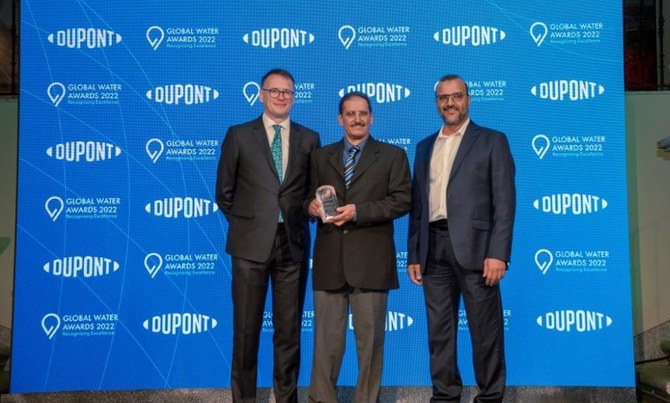
Deputy Minister for Water Abdul Aziz Al-Shaibani and Deputy Minister for Economic Affairs and Privatization Abdulrahman Alzughaibi accepted the award

Al-Shaibani told Arab News that the award was given in recognition of the Kingdom’s efforts in implementing a national water strategy, reforming the sector, enacting a new water law, integrating management of water resources, and engaging the private sector.

The Global Water Summit in Spain allows leaders and decision-makers to exchange ideas, and share information on progress and trends in the industry.

Industry leaders and investors from around the world, as well as government representatives, took part in the forum, considered among the most prominent events for the water industry worldwide.

Since 2006, the UK-based consultancy Global Water Intelligence has presented awards at the summit, recognizing achievements by water companies, high-tech firms, public agencies and project developers.

During the conference, leaders of the Kingdom’s water sector highlighted its initiatives and solutions in support of innovation and development in the industry.

They also discussed the summit themes aimed at achieving zero carbon emissions, ensuring the sustainability and reliability of freshwater resources worldwide, mitigating the impact of climate change, and increasing job opportunities and growth in the industry.

Conference sessions included extensive discussions on global best practices for ensuring efficient water use, the latest technologies for desalinating and reusing water, and the role of artificial intelligence in the sustainability of the water sector.

source/content: arabnews.com (edited)

__________

DM for Economic Affairs and Privatization Abdulrahman Alzughaibi, right, DM for Water Abdul Aziz Al-Shaibani, center, and Global Water Intelligence’s Christopher Gasson. (Supplied/MEWA)

________________

SAUDI ARABIA

Dubai Airport on Right Track, retains Position as ‘World’s Busiest International Airport ‘: Deputy CEO of Dubai Airports

Dubai Airport is on the right track, having retained its position as the world’s busiest international airport with 29.1 million passengers, and just last week, announcing its busiest quarter since 2020, said Jamal al Hai, Deputy CEO of Dubai Airports.

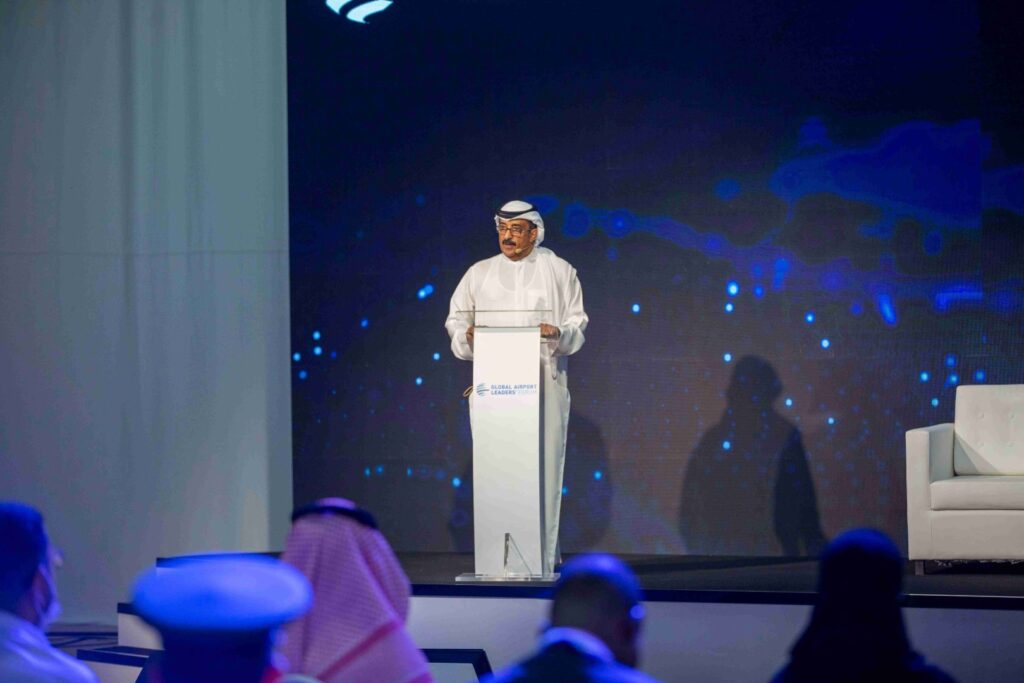
Jamal al Hai made this statement while delivering the welcome address at the Airport Innovation and Development Conference at the Gulf Airport Leaders’ Forum (GALF) held alongside the 21st edition of the Airport Show in Dubai.

Welcoming the delegates, he said the GALF is organised in person after two years of the pandemic, marking a new healed era of aviation.

“This is, in fact, the outcome of a successful handling of the crisis and what you see in Dubai today is the outcome of a flawless response to the pandemic achieved through a balance between protecting the health and well-being of the people while minimising the impact on business and economy.”

Delivering the welcome address, Ibrahim Ahli, Deputy CEO of Dubai Air Navigation Services (dans) said Dubai is galloping in all economic and social sectors, attracting businesses, talents, investors and tourists in hordes. Dubai is fast becoming the Future City of the world, driven by the maximum embrace of technology, relaxed regulations and reforms. All this will result in increased traffic, and it underscores the need for enhancing the safety, capacity and efficiency of the airspace of Dubai, where dans plays a crucial role.

Khalid Aljabir, Senior Vice President, Operations, dans, read out Ahli’s speech in his absence.

“We had proved our mettle when dans efficiently managed more than 1,338 aircraft movements daily through Dubai airports, before the COVID-19 pandemic. dans manages the air traffic through Dubai International, which has ranked first in the world for international passengers since 2014, and it had handled about 1.115 billion passengers on more than 7.47 million flights since the airport started operating in 1960,” he said.

“We take pride in implementing the region’s first procedures for Enhanced Wake Turbulence Separation (eWTS) Minima within the controlled zone. The Dubai RECAT-Enhanced Wake Turbulence Separation is part of the vision to make Dubai the airport for the world, enhance its airspace and the efficiency of airports along with the profitability of carriers.”

In his keynote address titled “Standardising Regulations Regionally and Globally”, Mohammed Faisal al Dossari, Senior Director, Air Navigation and Aerodromes Department, UAE General Civil Aviation Authority (GCAA), said that post-COVID the industry must work across all aspects of aviation to standardize regulations and spur growth.

The UAE is expected to develop draft regulations on Vertiport in the first quarter of 2023 and publish them in the fourth quarter of 2023 to be implemented in the first quarter of 2024.

Al Dossari said the number of GCAA registered commercial drone organisations is increasing. “Up to 2022, we have registered 20,000 private drone users, 870 commercial drones, and 181 commercial drone organisations to operate drones.”

Future developments include Unmanned Traffic Management, Scheduled UA operations, Night Operations, Multiple Unmanned Aircraft Operations, Autonomous Unmanned Aircraft Operations, Urban Air Mobility, Unmanned Aircraft Delivery, High-Speed Unmanned Aircraft and High Altitude Unmanned Aircraft.

Yahya Abdalla Al Hammadi, CEO, Global Air Navigation Services (GANS), in his keynote address “Disrupting ATM to support the recovery of the industry,” said Air Traffic Control could play a huge role in reducing carbon emissions by adopting new technologies that can help airlines plan more efficient routes and work with other stakeholders to help reduce the overall carbon footprint.

The Airport Show, the world’s largest annual airport event, was opened by H.H. Sheikh Ahmed bin Saeed Al Maktoum, President of the Dubai Civil Aviation Authority, Chairman of Dubai Airports, and Chairman and Chief Executive of Emirates Airline and Group, under whose patronage the event is held.

Organised by RX Global, the world’s largest airport industry B2B platform has a sharp focus on sustainability to help the aviation industry achieve a more sustainable airport industry that aims to reduce the carbon footprint year on year.

The Airport Show is supported by Dubai Airports, Dubai Police, Dubai Civil Aviation Authority (DCAA), dnata (part of Emirates Airline and Group), Dubai Aviation Engineering Projects (DAEP), Global Air Navigation Services (GANS), and dans.

source/content: wam.ae

__________

___________________________________________

DUBAI, UNITED ARAB EMIRATES (U.A.E.)

Somalia Elects Hassan Sheikh Mohamud as New President : May 2022

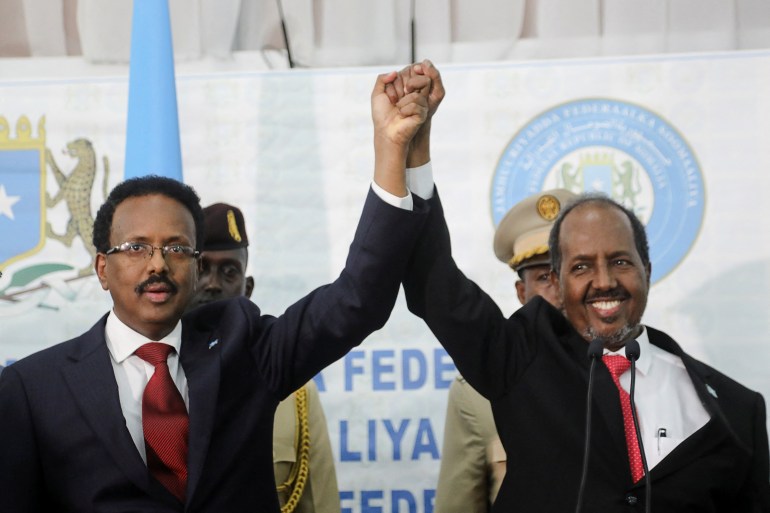
Hassan Sheikh Mohamud elected president for the second time, defeating incumbent President Mohamed Abdullahi Mohamed in a final round.

Somali legislators have elected former leader Hassan Sheikh Mohamud as the country’s next president, following a long-overdue election on Sunday in the troubled Horn of Africa nation.

Hassan Sheikh Mohamud, who served as Somalia’s president between 2012 and 2017, won the contest in the capital, Mogadishu, amid a security lockdown imposed by authorities to prevent deadly rebel attacks.

After a marathon poll, involving 36 candidates, that was broadcast live on state TV, parliamentary officials counted more than 165 votes in favour of Mohamud, more than the number required to defeat incumbent President Mohamed Abdullahi Mohamed.

Supporters of Somalia’s new leader defied the curfew to pour onto the streets of Mogadishu, cheering and firing guns as it became clear that Mohamud had won the vote.

Many hope the election will draw a line under a political crisis that has lasted well over a year, after Mohamed’s term ended in February 2021 without an election.

Mohamed, who is also known as Farmaajo, conceded defeat, and Mohamud was immediately sworn in.

The new president struck a conciliatory tone in his acceptance speech from the airport compound in Mogadishu, which was patrolled by African Union (AU) peacekeepers.

“It is indeed commendable that the president is here standing by my side,” Mohamud said, referring to the former leader, who had sat with him as ballots were counted.

“We have to move ahead, we do not need grudges. No avenging,” he said.

War, drought

The 66-year-old Mohamud is the leader of the Union for Peace and Development party, which commands a majority of seats in both legislative chambers.

A member of the Hawiye clan, one of Somalia’s largest, Mohamud is regarded by some as a statesman with a conciliatory approach. He is also well-known for his work as a civic leader and education promoter, including for his role as one of the founders of Mogadishu’s SIMAD University.

source/content: aljazeera.com (edited)

______________

Somalia's newly elected president Hassan Sheikh Mohamud holds hands with incumbent president Mohamed Abdullahi Mohamed after winning the elections in Mogadishu,
Somalia’s newly elected President Hassan Sheikh Mohamud, right, holds hands with incumbent President Mohamed Abdullahi Mohamed, left after winning the elections in Mogadishu, Somalia, May 16, 2022 [Feisal Omar/ Reuters]

____________

SOMALIA

Jordan’s King Abdullah and Queen Rania Receive Vatican’s ‘2022 Path to Peace Award’

  • Vatican envoy to UN presents royal couple with 2022 Path to Peace award at gala event
  • Queen Rania praised for focus on education, prioritization of young people

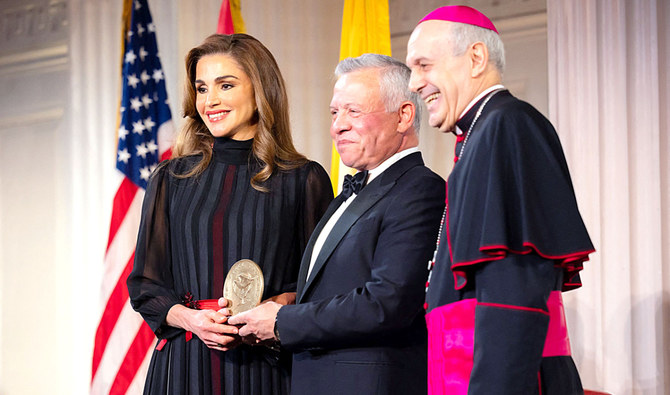
The Vatican’s Path to Peace Foundation has presented Jordan’s King Abdullah and Queen Rania with the 2022 Path to Peace award for their promotion of interfaith harmony and dialogue.

Commending the royal couple for a “years-long effort” in promoting peace and interfaith cooperation in the Middle East, Vatican Ambassador to the UN Archbishop Gabriele Caccia made the presentation at the foundation’s 29th annual gala in New York.

The envoy singled out the queen’s focus on education and the prioritization of young people in her work.

He said: “She has long shown concern for the questions of education, connectivity, and cross-cultural dialogue, as well as sustainability, the environment, and migration, which places young people at the heart of solutions and is imbued with a sense of hope.”

King Abdullah said he accepted the award on behalf of “Jordanians, men and women, young people and elders, Muslims and Christians alike.”

Noting that Jerusalem was also home to many Arab Christians, part of the oldest Christian community in the world, he noted that “our journey to peace must travel through Jerusalem,” describing the city as “key to the future and stability that we all seek.”

He added: “Jerusalem should be an anchor for peace and coexistence, not for fear and violence.

“The (world’s most difficult challenges) will be met by drawing on our faith in God, our common humanity, and our will to jointly defeat poverty and despair, and end occupation and injustice.

“(Also), to help refugees everywhere return home, ready to rebuild shattered communities, and renew the hope that young people everywhere so desperately need.”

The monarch called on the international community to work toward a just and lasting peace in the Holy Land through a two-state solution with East Jerusalem as the capital of an “independent, sovereign, and viable Palestinian state … living side-by-side with Israel.”

source/content: arabnews.com (edited)

_________

Jordan’s King Abdullah and Queen Rania receive the Path to Peace Award in New York for their promotion of interfaith harmony and dialogue. (AFP)

__________

JORDAN

 UAE : Federal Supreme Council elects Mohamed bin Zayed as UAE President: May 14th, 2022

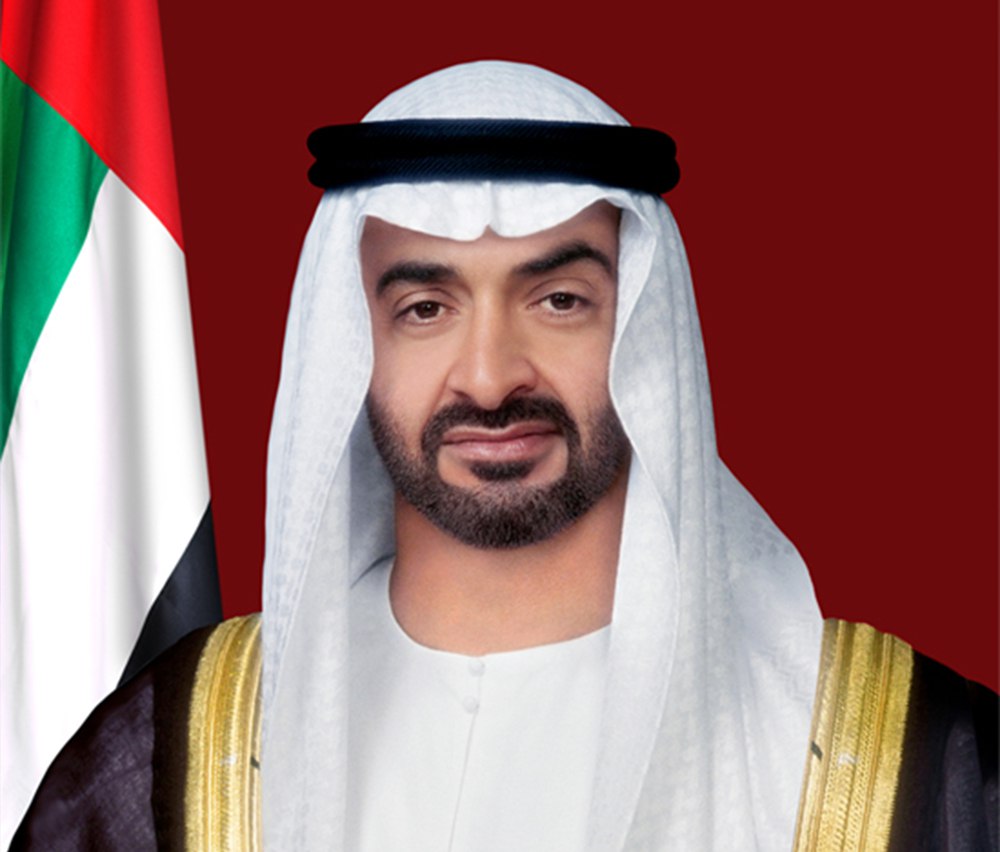
The Federal Supreme Council today unanimously elected His Highness Sheikh Mohamed bin Zayed Al Nahyan as President of the United Arab Emirates.

The Council held a meeting today at Al Mushrif Palace in Abu Dhabi, chaired by Huis Highness Sheikh Mohammed bin Rashid Al Maktoum , Vice President, Prime Minister and Ruler of Dubai.

The meeting was attended by His Highness Sheikh Mohamed bin Zayed Al Nahyan; H.H. Dr. Sheikh Sultan bin Muhammad Al Qasimi, Supreme Council Member and Ruler of Sharjah; H.H. Sheikh Humaid bin Rashid Al Nuaimi, Supreme Council Member and Ruler of Ajman; H.H. Sheikh Hamad bin Mohammed Al Sharqi, Supreme Council Member and Ruler of Fujairah; H.H. Sheikh Saud bin Rashid Al Mu’alla, Supreme Council Member and Ruler of Umm Al Qaiwain; and H.H. Sheikh Saud bin Saqr Al Qasimi, Supreme Council Member and Ruler of Ras Al Khaimah.

A statement issued by the Ministry of Presidential Affairs said that according to Article 51 of the Constitution, His Highness Sheikh Mohamed bin Zayed Al Nahyan was unanimously elected as the President of the UAE to succeed the late Sheikh Khalifa bin Zayed Al Nahyan .

Their Highnesses, the Supreme Council Members and Rulers of the Emirates have reaffirmed their keenness to continue implementing the authentic values and principles laid down by the late deceased, Sheikh Khalifa, following on from the founding father, the late Sheikh Zayed bin Sultan Al Nahyan. These have consolidated the UAE’s status at both regional and global levels.

The Federal Supreme Council expressed its full confidence that the people of the UAE will remain, as Sheikh Zayed and the founders believed, “a faithful guardian of the Union and its gains at all levels”.

Their Highnesses wished H.H. Sheikh Mohamed bin Zayed Al Nahyan success in serving his people and country.

Sheikh Mohamed bin Zayed expressed his appreciation for the precious trust placed in him by his brothers, Their Highnesses the Supreme Council Members and Rulers of the Emirates, praying to the Almighty to guide and help him to bear the responsibility of this great trust and to fulfil its tasks of serving his country and people.

source/content: wam.ae

_________

________________________________________________

ABU DHABI, UNITED ARAB EMIRATES (U.A.E.)

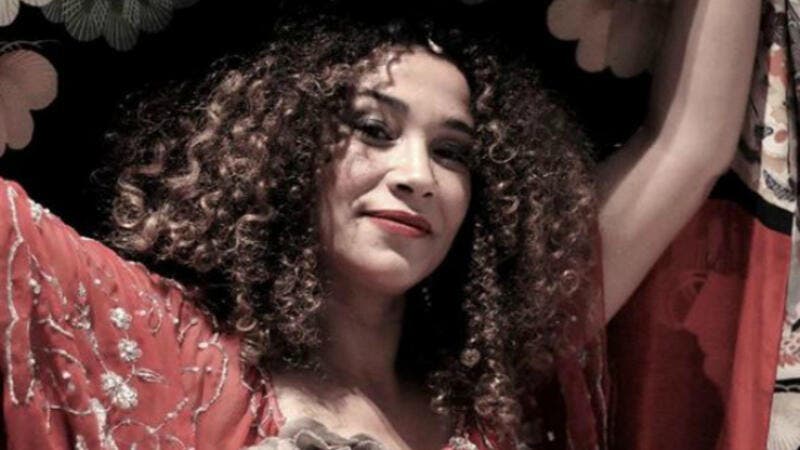
Ghalia Benali: Tunisian Singer, Writer, Graphic Designer & Actress

An electrifying voice.

Ghalia Benali is a Tunisian poet, writer, and songwriter best known for dabbling in multiple music genres, multiculturalism, and defining contemporary Arabic music. She is also an actress and a graphic designer, a talent that goes hand-in-hand with her literature works such as “Romeo and Leila.”

Although born in Brussels in 1968, Benali was raised in Zarzis, in southeastern Tunisia, where she got her early exposure to songs and dances, with her mother being her personal music teacher. Growing up, she was exposed to the world of Egyptian and Indian films, as well as the voices of Arab singers such as Adib AlDayikh, Oum Kalthoum, and Sabah Fakhri, all of which influenced her multicultural style of singing growing up.

By the age of 19, Benali returned to Belgium to study graphic design at the Institut Saint-Luc of Graphic Arts where she would begin to sing and perform professionally. Her early performances would include collaborations with live bands and fellow musicians in 1993, a tour in Portugal in 1994, and a live performance with the band “Timna,” in Brussels, in 1999.

From 2001, she released a number of loved albums such as “Wild Harissa,” “Nada,” and “Romeo and Leila.” However, the very album that put her on the map was “Ghalia Benali Sings Umm Kulthum.” In fact, it was a smashing hit, earning her the title Ambassador of Arab Culture in Europe in 2009. By the following year, Benali would be featured on television across several Arab countries.

Benali is also renowned for her poetry, some of which centered around works by famous poets, Sufism, and Persian mystics. She is also known for her acting, winning an award from Women for Africa Foundation for her role in “As I Open My Eyes” in 2016, and nominated by Les Magrittes du Cinema for “Best Hope Actress” in 2017. She had played recent roles in the films “Fatwa,” and “A Tale of Love and Desire.”

Finally, Benali is credited for launching the Brussels-based MWSOUL Art Foundation. Having had to deal with unorganized management, she took it upon herself to launch her very own platform, a non-profit organization that brings awareness through art. You can follow them on Instagram for featured artworks and photography.

source/content: abouther.com

_________

_______________________

BELGIAN / TUNISIAN

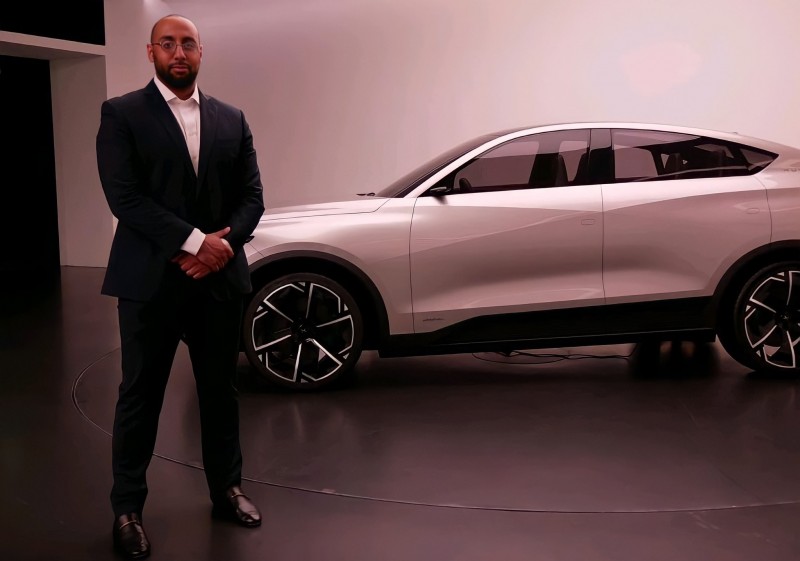
Faouzi Annajah: Moroccan-French Businessman Behind Hydrogen SUV NamX

NamX’s prototype was unveiled earlier this week. Yet the car will not be available in the market until 2025.

Morocco-French businessman Faouzi Annajah, founder of NamX, has co-created the world’s first car partially powered by a patented removable hydrogen tank system.

NamX’s patented technology consists of a fixed hydrogen tank and six removable capsules. 

Set to be released in 2025, NamX responds to the rising demand for hydrogen and hybrid cars amid an increasingly prevailing shift towards clean energy sources and decarbonization worldwide. 

“Our double ambition is to become a new reference in the world of zero-emission cars, and to constantly explore new territories to facilitate mobility of our consumers,” Faouzi ANNAJAH, Founder and President of NAMX said in a press release. “ NAMX is a collective project built with the best industrial and technical partners in Europe and Africa.”

The European-African project gathered the support of renowned stakeholders on both continents including Ibrahima Sissoko, founder of over 30 companies, Pierre-Yves Geels, former VP strategy of Matra automotive, Alain Diboine, former Director of the R&D Division at Renault, Mustapha Mokass, clean energy and carbon finance expert, and Raphaël Schoetgen, former Chairman of Hydrogen Europe and international hydrogen expert. 

NamX was co-designed by Thomas de Lussac, co-founder of NamX, and Kevin Rice, Chief Creative Officer of Italian car design firm Pininfarina. Inspired by science fiction and American designs of the 50s and 60s, Lussac “chose to give the vehicle’s shape the cutting edge of the coming era.”

NamX is the first car designed by Pininfarina that was created from the back to the front with an eye-catching feature, an X-shaped chassis. 

Commenting on the hydrogen SUV, Paolo Pininfarina, President of the Italian design firm, said that “the NAMX HUV [hybrid utility vehicle] is simply at the heart of our DNA: inventing the best driving experience to infinite mobility, with style.” 

Upon its release in the final quarter of 2025, NamX will be marketed in two different versions including an entry-level rear-wheel drive with a regulated top speed of 200 km/h and acceleration from 0 to 100 km/h in 6.5 seconds. The second option provides a four-wheel drive with a regulated top speed of 250 km/h and acceleration from 0 to 100 km/h in 4.5 seconds. 

The two versions will have a price tag ranging between €65,000 and €95,000. 

The NamX prototype was first unveiled on May 11 in the Pininfarina headquarters in Cambiano. The public will have a glimpse of NamX at the upcoming Paris Motor Show scheduled between October  17 and 23, 2022. 

As Annajah’s home country, Morocco might host the production operations of NamX, the founder told a Moroccan news outlet, promising future announcements on the matter. 

As a leading African automotive hub, Morocco has attracted renowned international automotive manufacturers including ones interested in developing hybrid and electric cars. 

source/content: moroccoworldnews.com

________

Faouzi Annajah: Moroccan-French Businessman Behind Hydrogen SUV NamX

________________________

FRENCH / MOROCCAN

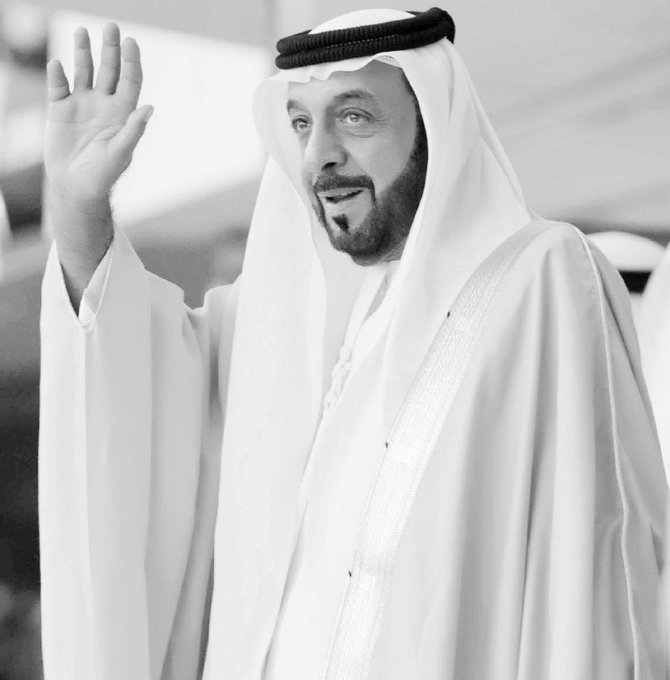
UAE : Khalifa bin Zayed: 18 years of empowerment

 “While people are proud of their achievements, we are proud of being the children of Sheikh Zayed, and while people talk of their history, we speak of the history of giving that began with the formation of the UAE,” said the late His Highness Sheikh Khalifa bin Zayed Al Nahyan, epitomising the nations’s approach from the first day it was established to its phase of empowerment, ushering in the birth of a powerful and successful nation.

On 4th November, 2004, Sheikh Khalifa assumed power and, up until his passing, helped the country, whose track record of achievements spans nearly 35 years, progress from the foundation phase to the empowerment stage.

Over this short period, the UAE has topped international competitiveness indexes and has become the second-largest economy in the Arab region, despite its small area and population.

Moreover, the UAE is the first Arab and Islamic nation to reach the planet Mars and one among few countries with significant achievements in the space sector.

The UAE’s achievements during the empowerment phase are reflected on the lives of its people and business community, making it the dream destination of anyone seeking success, stability, and wellbeing.

After assuming power, the late Sheikh Khalifa launched the first strategic plan of the UAE Government to achieve balanced and sustainable development and ensure the wellbeing of UAE residents.

In 2009, he was re-elected as the President of the country, and thanks to his wise leadership, the UAE overcame the financial crises and political issues facing the region due to his active foreign policy, which also enhanced the regional and international stature of the country.

How did the UAE manage to accomplish significant achievements during the empowerment phase? The Emirates News Agency (WAM) monitors these milestones and challenges in the following report:

1. The Health Sector.

The UAE’s leadership has prioritised the health sector and increased public spending on the sector, amounting at times to seven percent of the federal budget.

This fact is highlighted by the spending on the sector in 2016, 2017, 2018, 2019 and 2020, which amounted to AED3.83 billion, AED4.2 billion, AED4.5 billion, AED4.4 billion and AED4.84 billion, respectively.

This policy also proved successful when the sector faced the coronavirus (COVID-19) pandemic, demonstrating a high level of efficiency supported by the many well-equipped public and private hospitals.

The sector’s efficiency was further supported by the country’s efforts to establish media cities, including Khalifa City in Abu Dhabi, Dubai Medical City and Sharjah City.

Coinciding with these achievements, most Emirati hospitals are internationally accredited, and the country has become a leading medical destination, underpinned by the rising number of hospitals, which increased from 16 in 1975 to 169 in 2020.

These hospitals are managed by highly qualified medical staff, numbering 8,995 in 2020 in the government sector and 17,136 in the private sector, compared to 792 doctors in 1975.

The number of nurses also reached 56,045 working in the government sector in 2020, increasing 252 percent compared to 1975.

The country has prioritised health insurance and provided it to citizens for free, in addition to comprehensive medical coverage for all segments of society, especially the elderly and people of determination.

In 2017, the UAE established the first cancer treatment centre utilising proton technology in the Middle East and Gulf Cooperation Council (GCC) region.

The Emirates was also one of the first countries to use robotics in the pharmaceutical sector.

Smart rooms were established to provide entertainment services to patients and link their medical files with hospitals to provide comprehensive and effective care.

The Ministry of Health and Prevention has been keen to integrate artificial intelligence (AI) in medical services, used in over 100 facilities nationwide.

The UAE ranks first in the world in the number of accredited facilities, and more than 85 percent of Emirati hospitals have international accreditation.

2. Education Sector.

The UAE’s spending on the health and education sectors underscores the leadership’s belief in the importance of these two sectors to achieving sustainable development, with spending from 2016 to 2020 accounting for between 20 percent and 22 percent respectively of the federal budget.

With the budget allocated to the national education sector standing at AED10.41 billion, AED10.46 billion, AED10.40 billion, AED10.2 billion and AED6.536 billion for 2016, 2017, 2018, 2019 and 2020, respectively, the average share of the federal budget is 15 percent.

The UAE believes that the education system is the driver of development and ensures the right to free education for all citizens. From 2012, education became mandatory for everyone over the age of six until secondary education, which was reinforced by issuing the Children’s Rights Law (Wadeema).

The UAE’s education strategy confirms the establishment of an educational system based on the skills of the 21st century. It aims to provide higher education that can compete with the world’s best universities.

The Mohammed bin Rashid Smart Learning Initiative, launched in 2012, is an ideal model covering all schools in the country and creates a new educational environment in schools that includes smart classes.

In 1973, the country had 110 schools with 40,000 students, while in 2007, the percentage of educated citizens reached 88.7 percent of the population.

The UAE Vision 2021 highlighted the need to advance education in the country to the highest in the world and adopt a smart system as a primary goal.

The vision also confirmed that the upcoming years would witness comprehensive transformations in learning and education, led by smart education.

The national education strategy aims to ensure equal education, maintain the quality and efficiency of institutional education, promote scientific research, encourage students to enrol in higher education, achieve innovation, and support smart education.

Subsequently, the National Strategy for Higher Education 2030 affirms the importance of improving the scientific and technical skills of students, to support the growth of the economy.

At the same time, the UAE has kept pace with the latest innovations in the health sector. The government has launched many initiatives that encourage innovation in general and innovation in the medical field in particular.

The UAE is one of the few countries that utilises medical robotics technology when conducting major surgeries.

President Khalifa bin Zayed passed away on Friday, May 13th, 2022

source/content: wam.ae

__________

_________________________________________________

ABU DHABI, UNITED ARAB EMIRATES (U.A.E.)

Two Moroccans Mouna Abbassy and Sophia Alj on Forbes’ ‘Women Behind Middle Eastern Brands’ List

Forbes selected Mouna Abbassy and Sophia Alj for two of its prestigious rankings.

Forbes has featured two Moroccan businesswomen on its “30 Women Behind Middle Eastern Brands 2022” and “20 Women Behind Middle Eastern Tech Brands 2022” lists. The two successful, celebrated business leaders are the Founder of IZIL Mouna Abbassy and the co-Founder of Chari.co Sophia Alj.

This week, Forbes released the two lists simultaneously. The magazine’s list of “30 Women Behind Middle Eastern Brands” featured companies operating in six MENA countries, with the UAE hosting 13 of the successful businesses. 

The list includes 18 nationalities in total, with Egyptian businesswomen topping the list with 11 entries, followed by Lebanese with 4 mentions.

The “20 Women Behind Middle Eastern Tech Brands” list highlighted the achievements of successful female founders and co-founders of tech platforms and apps. This year, 17 nationalities were represented in the list. 

The 20 featured businesses operate in 13 sectors and are prominently based in the UAE (13), Egypt (2), and Saudi Arabia (2). 

Mouna Abbassy

Moroccan businesswoman Mouna Abbassy ranked 10th in the “30 Women Behind Middle Eastern Brands 2022” list. 

In 2012, Abbassy founded IZIL, an “all-natural skincare line.” The brand offers hair, skin, and body products, inspired by old Moroccan beauty recipes. 

IZIL is based in the UAE with clients in Gulf countries, the US, and the UK. The brand’s e-commerce sales to the US and the UK markets recorded a 40% and 50% growth in 2021. 

Last year, IZIL opened new offices in Dubai as it launched a Moroccan Hammam and Spa in the Dubai Mall. In terms of social media outreach, the brand currently counts 346K followers on Instagram and 136K followers on Facebook. 

Sophia Alj 

Sophia Alj ranked 8th in the “20 Women Behind Middle Eastern Tech Brands 2022” list. 

She is the co-founder of Morocco’s popular e-shop and startup Chari.co, which she founded with her husband Ismael Belkhayat in 2020. 

The Chari application connects retailers to fast-moving consumer goods (FMCG) companies.  

In March, the startup acquired Axa Credit for $22 million. A year prior, Chari purchased Moroccan bookkeeping and credit platform Karny.ma which serves roughly 40,000 retailers. The startup concluded the deal after receiving $5 million in seed funding. 

As it continues to expand into Francophone African markets, Chari.co has the potential to obtain unicorn status by reaching a valuation of $1 billion. 

source/content: moroccoworldnews.com

__________

_____________

MOROCCO