QATAR / SAUDI ARABIA : Snoonu joins forces with Saudi’s Jahez Group, becomes Qatar’s first QR 1 billion tech start up

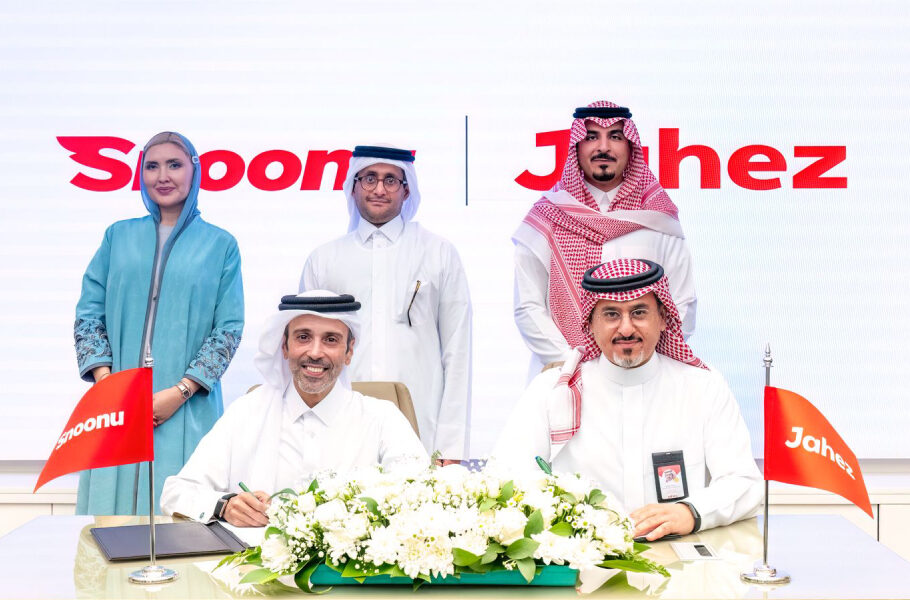
In a groundbreaking move, Qatar’s homegrown tech champion, Snoonu, has joined forces with Jahez Group, a leading integrated ecosystem of on-demand services in Saudi Arabia, setting the stage for a transformative journey in the Gulf’s digital landscape.  

The deal sees Snoonu, Qatar’s fastest-growing technology company, valuing the company at over QR 1 billion, making Snoonu the first Qatari tech startup to cross this milestone. This supports its path to becoming Qatar’s first unicorn and establishing one of the most dynamic technology powerhouses in the GCC. This transaction represents a strong vote of confidence in Snoonu’s growth trajectory and will support the company in regional expansion and enhance innovation across its platforms.  

“This transformative partnership with Jahez marks a defining moment in  Snoonu’s journey,” said Hamad Al Hajri, Founder and CEO of Snoonu. “Together,  we are creating a true regional technology champion built on shared values and a common vision for innovation, excellence, and sustainable growth. By joining forces, we are combining complementary strengths and deep market knowledge to set new benchmarks in the GCC’s digital economy. This partnership also reaffirms our unwavering commitment to Qatar, a thriving and dynamic market with immense potential, and supports Snoonu’s continued growth journey.  Together, we will continue driving technological advancement, creating  meaningful value to our users and merchants, and delivering exceptional  experiences at scale.”  

Key Highlights:  

Empowering Local Innovation: The initiative accelerates Snoonu’s mission to deliver cutting-edge solutions, fostering local talent and attracting bright minds from around the world to contribute to Qatar’s growing tech ecosystem.  

Boosting Qatar’s Digital Economy: The investment signifies a robust vote of confidence in Qatar’s digital infrastructure and its potential to lead in the tech arena.  

Regional Synergy: Combining Snoonu’s dynamic approach with Jahez’s extensive experience creates a powerhouse poised to redefine the digital experience across the GCC. 

This strategic transaction is more than a business deal; it’s a commitment to shaping a future where technology bridges communities, enhances lives, and positions Qatar at the forefront of digital transformation.  

Source and cover image credit: Press release

source/content: iloveqatar.net (headline edited)

_________

_________________________

QATAR / SAUDI ARABIA

SAUDI ARABIA : Madinah wins new WHO ‘healthy city’ accreditation

Middle East’s second-largest ‘healthy city’ after Jeddah

15 other cities in Saudi Arabia included in WHO list

The World Health Organization has renewed its accreditation of Madinah as a “healthy city,” with Islam’s second-holiest location scoring an impressive 80 points, the Saudi Press Agency reported.

Prince Salman bin Sultan, governor of Madinah region, received the WHO accreditation certificate from Minister of Health Fahad AlJalajel during a ceremony on Thursday.

Prince Salman said Madinah’s renewed accreditation exemplifies the leadership’s dedication to enhancing quality of life for the Kingdom’s people in urban centers.

He emphasized Madinah’s ongoing transformation as a leading development model regionally and internationally, aligning with the Kingdom’s Vision 2030 goals.

Madinah has solidified its position as the second-largest healthy city in the Middle East, after Jeddah, the SPA reported.

To win the WHO’s nod, an entrant must meet 80 criteria, including parks, walking areas, and the promotion of health through primary care centers and schools.

The WHO has also recognized 14 other healthy cities in Saudi Arabia. These include Taif, Tabuk, Ad-Diriyah, Unaizah, Jalajel, Al-Mandaq, Al-Jumum, Riyadh Al-Khubra and Sharurah, according to Leaders MENA Magazine.

source/content: arabnews.com (headline edited)

______________

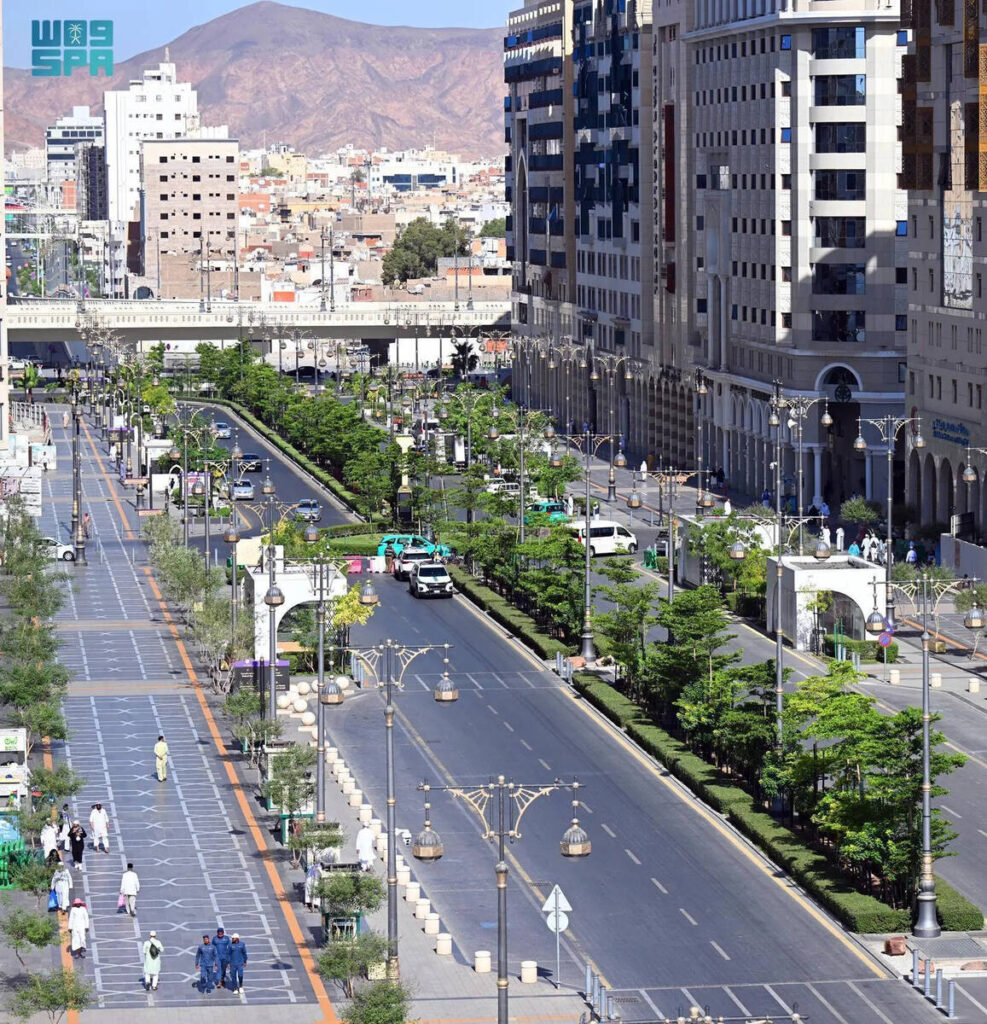
With the new accreditation, Madinah has solidified its position as the second-largest healthy city in the Middle East, next to Jeddah. (SPA photo)

_________________

SAUDI ARABIA

EGYPTIAN Student physicist Kerolos Mousa’s Quantum Breakthrough Featured in Top Science Journal

Egyptian physicist Kerolos Mousa played a role in a Harvard breakthrough using metasurfaces to control light at the photon level, which may pave the way for major advances in quantum technologies.

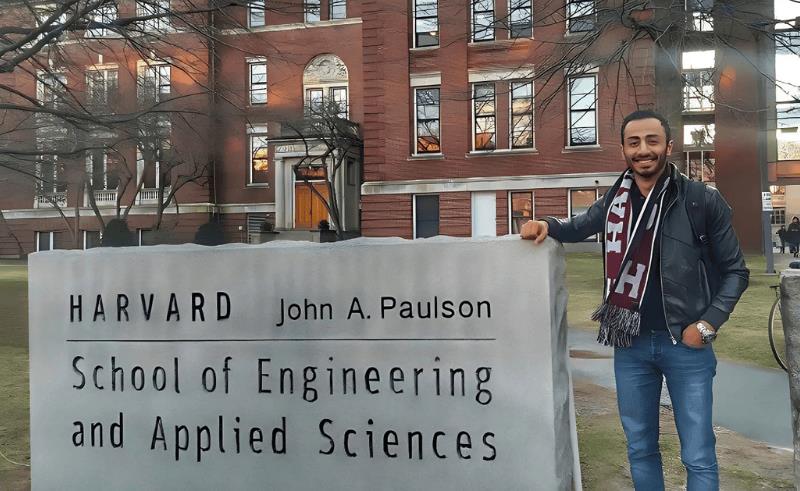
Kerolos Mousa, an Egyptian PhD student who hails from Minya, has contributed to a breakthrough in quantum physics at Harvard University, where a team of physicists developed a device capable of controlling the shape and path of individual photons with unprecedented precision.

The innovation is based on metasurface technology, engineered materials that can manipulate electromagnetic waves, and represents a major advancement in the way light is handled within miniature optical environments. Mousa led efforts to design the nanostructures critical to regulating photon behaviour.

The research, conducted at Harvard’s Applied Physics Lab and supported by leading US scientific institutions, was published in Nature, a top US science journal, and Science, a leading British publications. It was also featured on the university’s official channels.

The advancement is hoped to significantly impact fields such as quantum communication, quantum computing, and the development of next-generation smart optical devices.

source/content: cairoscene.com (headline edited)

_____________

_________

EGYPT

ALGERIAN Connection in the U.S : Small American Town, Big Algerian Legacy

Until last year, 17-year-old Victoria Miller admits she would have had to search online to learn where Algeria is , let alone describe the exploits of one of its most famous heroes.

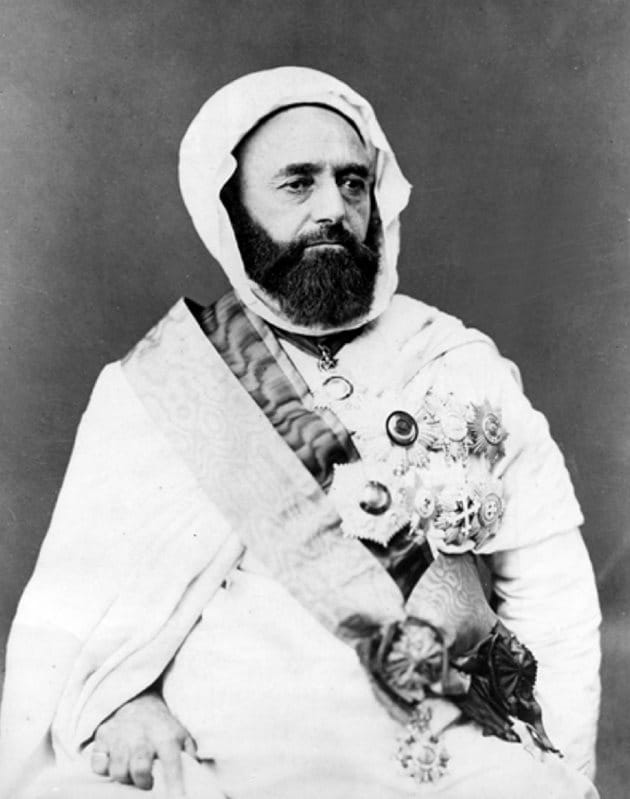
Pictorial Press / ALAMY / Abd el-Kader’s name lives on in Elkader, Iowa, pop. 1,300,  the only US town named after an Arab.

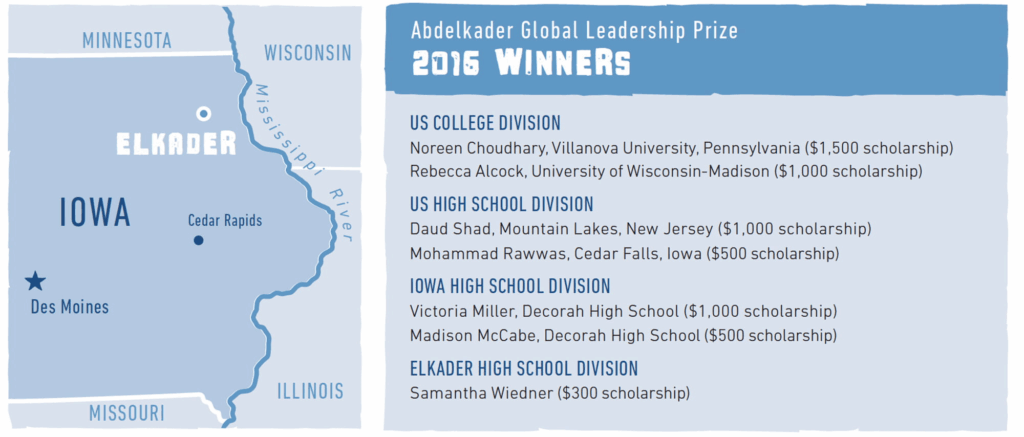
.“I was really taken by Amir Abd el-Kader’s character and how he handled the multiple challenges he faced, including when some of his own people didn’t believe in him,” says Miller, who lives in the northeastern Iowa town of Decorah. On September 19 she was recognized as one of seven winning essayists in the 2016 Abdelkader Global Leadership Prize.

After reading diplomat John W. Kiser’s biography, Commander of the Faithful: The Life and Times of Emir Abd el-Kader (Monkfish, 2008), for a class in human geography at Decorah High School, Miller now says she regards him as an international role model. Her new understandings, she adds, help her feel more comfortable talking to Muslims.

“Abd el-Kader’s legacy deserves to be remembered along with Nelson Mandela, Gandhi and Dr. Martin Luther King Jr.’s,” Miller enthuses, “because they were all pursuing the same dream: to reach peace.”

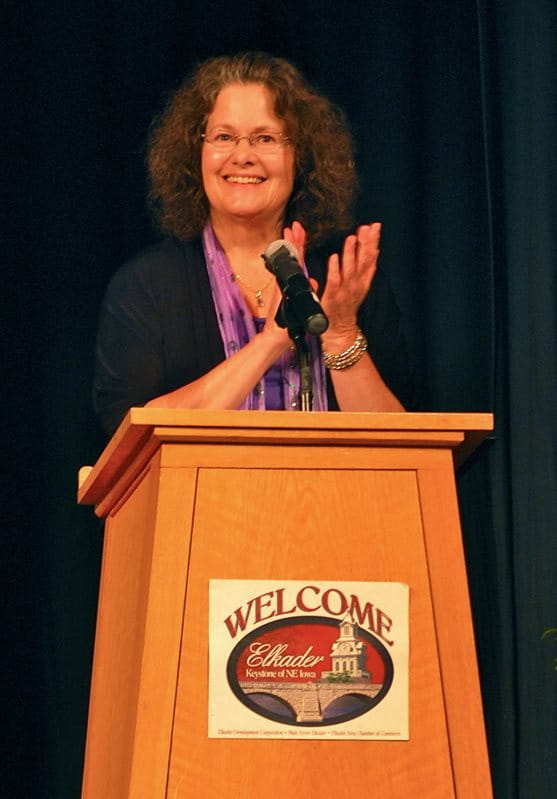
ABDELKADER EDUCATION PROJECT / Abdelkader Education Project co-founder and executive director Kathy Garms opened the group’s seventh annual forum on September 19 in Cedar Rapids. Students competed for scholar-ships in the Abdelkader Global Leadership Prize, and educators explored the legacy of Algerian freedom fighter and peacemaker Amir (Prince) Abd el-Kader.

Indeed, the Algerian prince (amir or emir in Arabic) united tribes in North Africa and fought for independence; later, during the 1860 Mount Lebanon civil war, he helped save thousands of Maronite Christians from massacre—an act for which President Abraham Lincoln lauded him. When the amir passed away in 1883, The New York Times eulogized him as “one of the few great men of the century. The nobility of his character won him the admiration of the world.”

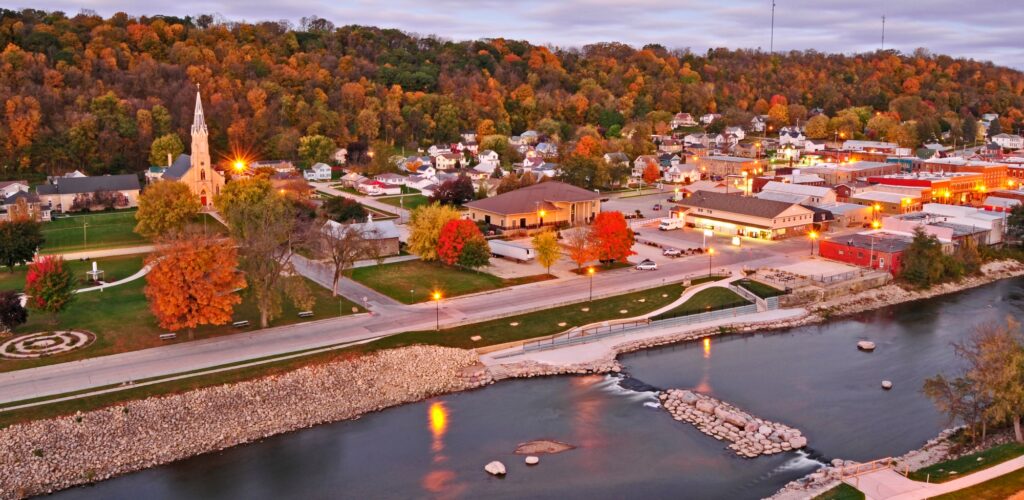
Even decades earlier, in 1846, so widely admired was he that Iowa farmers named their new town after him, and today Elkader, Iowa, is the only us town named for an Arab. Since 2008 it has been reviving his legacy, thanks largely to the eight-year-old nonprofit Abdelkader Education Project (aep).

Kathy Garms, executive director and cofounder with Kiser of the Elkader-based aep, furthers Miller’s sentiment, explaining that the story of the amir “inspires civility, tolerance and understanding” and offers “models of ethical leadership, moral courage and humanitarian conduct.” The aep, Garms continues, works to “shape the minds, hearts, values of the next generation.” And this is where aep’s Abdelkader Global Leadership Prize essay competition comes in.

John W. Kiser, author of Commander of the Faithful: The Life and Times of Emir Abd el-Kader, and forum participant said the students stereotypes have been challenged.

Its award ceremony was held this year about 130 kilometers south of Elkader in Cedar Rapids, where it was nearly cancelled due to rising floodwaters on the Cedar River. But the student writers and their families braved the threats of high water to meet Kiser as well as teachers and leaders of civil-society groups from around the country.

Kiser says he is pleased with the results so far.

“The students’ stereotypes about Muslims and Arabs have been challenged, and their minds opened to the diversity of the Muslim world,” he observes. As a role model, he says, Abd el-Kader “is a unifier … [whose] probing intellect, ethical courage, compassion, depth of knowledge … impress all who learn about him.”

And his advice to the winners was simple: “Treat others as they would want to be treated … and resist stereotyping.”

    Garms affirms the broadening of students’ horizons. “We started this with an essay contest for students, but we’d like to expand our programs and create additional tools to reach a wider audience of police, military and businesses to promote better intercultural understanding,” she says.

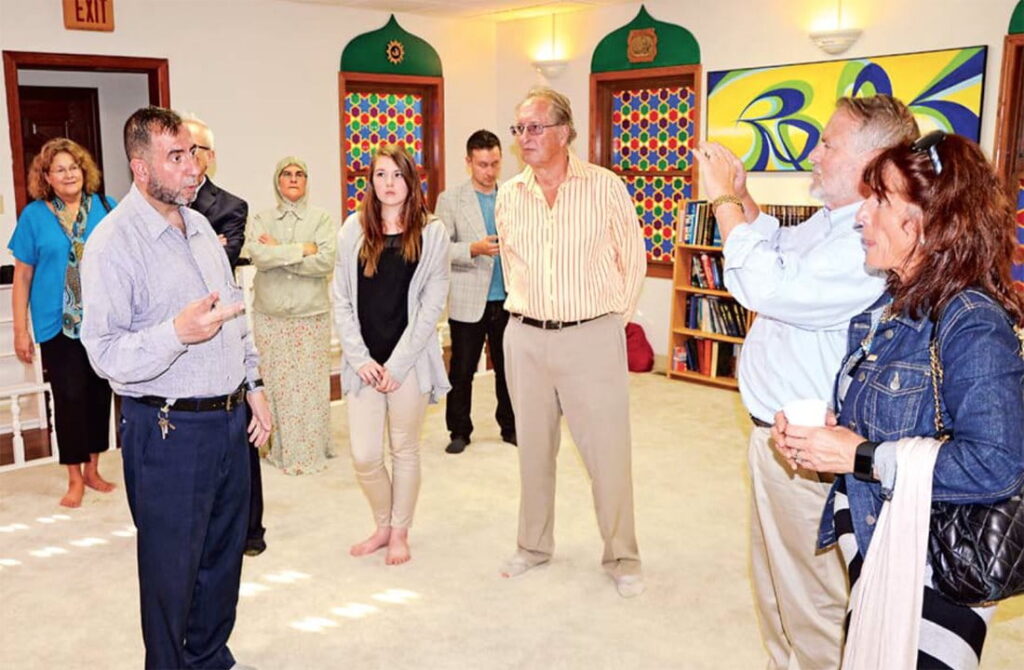
After the awards program, the winners and family members toured the Cedar Rapids Islamic Center and visited one of the city’s historic sites: the oldest standing mosque in the United States, built in 1934.

“Abd El-Kader’s legacy deserves to be remembered along with Nelson Mandela, Gandhi and Dr. Martin Luther King Jr’s because they were all pursuing the same dream : To Reach Peace

‘ – Victoria Miller, Iowa High School Division Winner’

Elkader Mayor Josh Pope hopes the aep inspires young people “to carry on the values of the amir.” In addition to hosting the aep, Elkader is a sister city to Mascara, in northwestern Algeria, where Abd el-Kader was born in 1808. Today Mascara’s population of 150,000 dwarfs Elkader’s 1,300 residents. “Abd el-Kader serves as a great example about how people of different cultures can live together in peace and understanding,” he says

In early September Pope traveled at the invitation of the Algerian government to speak at its own Emir Abd el-Kader Award ceremony, which recognized organizations in the Mediterranean region for work in economic cooperation and interfaith relations.

The interfaith aspect of Abd el-Kader’s life impresses Miller deeply.

“I’m a Christian, and I’ve had my own difficulties—though certainly on a different level—but I know it’s important to stay positive and hopeful,” she says.

Now, she wants to add study of comparative religions and “the psychology of how we learn and react to stereotypes” to her aspirations for a career in medicine.

“Victoria grew a lot in the process of reading about el-Kader and writing her essay,” says Miller’s mother, Yvette Powers, noting diplomatically that her daughter was not always supported by some members of her extended family.

“I believe people need to accept all races and creeds,” she declares. “I hope she was able to open some eyes.”

Brian Miller, Victoria’s father, says he and his daughter talked about the life of Abd el-Kader when she was writing her essay.

“It opened up quite a discussion,” he says. “I believe there are good Muslims and bad Muslims, just like all people.”

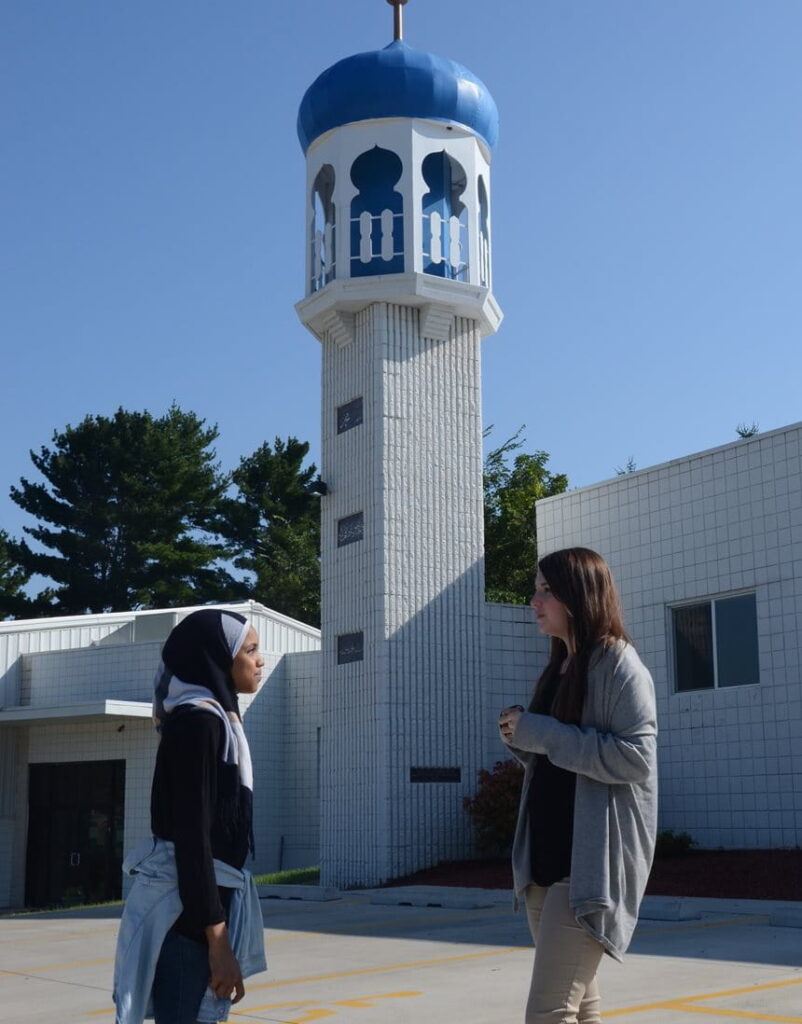
Forum attendees received a tour of the “Mother Mosque of America,” built in 1934 in Cedar Rapids, Iowa, by immigrants from what is now Syria and Lebanon. Although not the first mosque built in the US, it is the oldest standing mosque; its proximity to Elkader, 130 kilometers away, is coincidental.

Abd el-Kader, he says, “was a good guy,” adding that he hadn’t ever really thought much before about why the town was called “Elkader.”

National high school division winner Daud Shad lives far from Iowa, more than 1,600 kilometers east, in New Jersey. He says his elder brother encouraged him to read Kiser’s biography and enter the contest.

“I’d never heard of el-Kader, ‘the George Washington of Algeria,’” says the 17-year-old, whose parents were born in Pakistan. “There need to be more leaders on all sides like el-Kader because he embodied the best of religion and humanity.”

Samantha Wiedner, 18, grew up in Elkader, and she won the high school competition for her town.

“I knew Elkader was named after the emir, and I knew where Algeria was, but that was about it,” says Wiedner, now a freshman studying Russian and international relations at the University of Iowa.

University of Iowa freshman and winner in the contest’s Elkader High School Division, Samantha Wiedner, right, talks with Jefferson High School tenth grader Lena Osman outside of the Islamic Center of Cedar Rapids. “Being intolerant to other cultures and religions isn’t going to get us anywhere,” Wiedner says. “Despite all our differences, we should be able to co-exist.”

She says she learned that “being intolerant to other cultures and religions isn’t going to get us anywhere. Despite all our differences, we should be able to coexist.”

Noureen Choudhary, 20 and a student at Villanova University, learned about the essay contest from her mother, who was born in Algeria.

“I first heard the name Abd el-Kader in a song popularized by Algerian musicians Khaled, Faudel and Rachid Taha,” says Choudhary, who was born and raised in Philadelphia. Though she was only four, she says the memorable tune and appealing lyrics made her wonder who it was about.

“My mother told me he was an Algerian hero,” she continues. “I now realize he is a figure widely heralded as an ideal Muslim, humanitarian, warrior, leader and source of Algerian national pride of the 19th century.”

Choudhary initially thought Abd el-Kader was “too obscure for Westerners to know about.” She was stunned to learn that a small town in Iowa was named for him, and that there is a group devoted to the study and promotion of his life and work.

“Not many people achieve great things like he did,” she says. “He practiced his faith in an exemplary manner.”

source/content: aramcoworld.com (headline edited) / Brian E. Clark

______________

pix: elkader-iowa.com

______________

U. S. A.

SAUDI ARABIA : Robotic-assisted implantation is world’s first performed at King Faisal Specialist Hospital & Research Centre (KFSHRC), Riyadh

Groundbreaking procedure opens new horizons in circulatory support techniques for patients with complex cardiac conditions

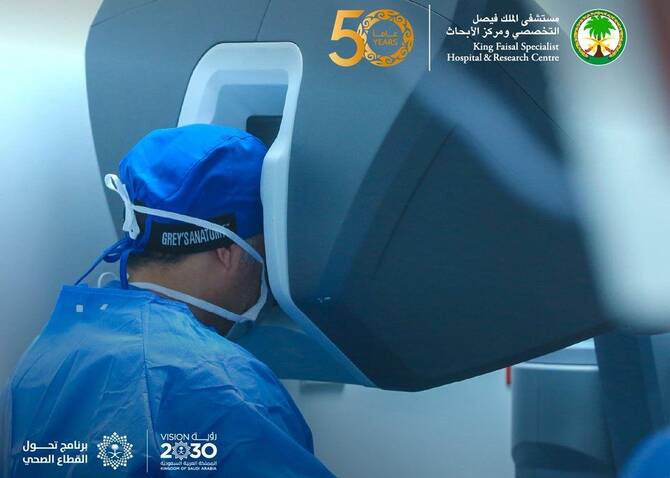
Cardiac surgery team, led by Prof. Feras Khaliel, performed the operation through small incisions using remotely controlled high-precision robotic arms

King Faisal Specialist Hospital and Research Centre in Riyadh has performed the world’s first implantation of two artificial pumps for biventricular support using robotic technology on a patient with advanced heart failure.

The groundbreaking procedure opens new horizons in circulatory support techniques for patients with complex cardiac conditions and marks a medical achievement that culminated in the patient’s recovery within a short period following the surgery.

The procedure represents a major advance in the treatment of bilateral heart failure, which was traditionally performed through full sternotomy, an approach associated with higher surgical risks and prolonged recovery.

However, the cardiac surgery team, led by Prof. Feras Khaliel, performed the operation through small incisions using remotely controlled high-precision robotic arms, resulting in reduced blood loss, lower risk of infection, and faster patient recovery.

The milestone reflects the integration of expertise across multiple departments at the hospital, including cardiac surgery, cardiology, anesthesia, critical care, biomedical engineering, and advanced life support.

The procedure was meticulously planned and benefited from 3D imaging technologies, real-time surgical navigation, and innovative solutions. 

source/content: arabnews.com (headline edited)

_____________

KFSHRC has performed the world’s first implantation of two artificial pumps for biventricular support using robotic technology. (X/@KFSHRC)

________________

SAUDI ARABIA

U.A.E. : EDGE signs agreements with Hungarian company 4iG to develop defense solutions for European and African markets

EDGE, the world’s leading advanced technology and defence group, and 4iG Aerospace, the leading ICT, space and defence industries group in Hungary and the Western Balkans, have signed three Memoranda of Understanding (MoUs) to establish significant and wide-ranging industrial cooperation between the UAE and Hungary.

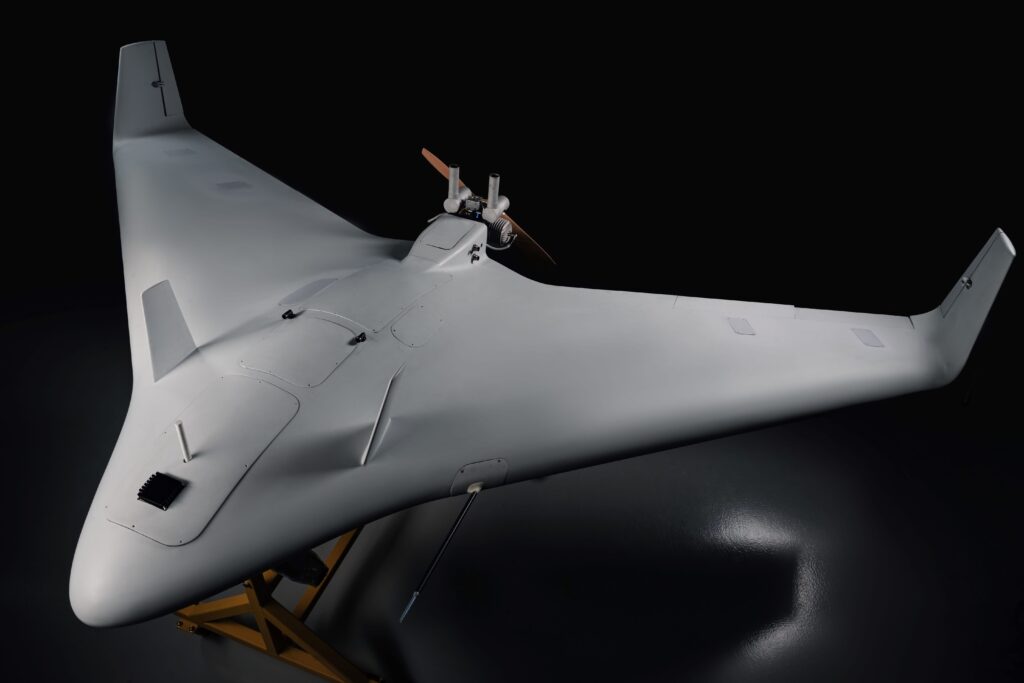
During a state visit by an official UAE delegation to Hungary, EDGE and 4iG signed three memoranda of understanding (MoUs) aimed at enabling a broad technology partnership for the joint development and marketing of advanced defense systems, including EDGE’s Skyknight air defense missile system, Shadow 25 and Shadow 50 cruise munitions, and Vega and Orion autonomous air traffic control solutions.

Hamad Al Marar, Managing Director and CEO of EDGE Group, said: “Our goal, through strengthening partnerships with  partners like 4iG, is to help countries develop and adopt advanced sovereign defense technology and industrial capabilities. The global security landscape calls for renewal programs to leverage the latest autonomous technologies and counter rapidly evolving airborne threats. This collaboration enhances EDGE Group’s ability to continue delivering competitive, NATO-compliant, and export-ready solutions, in support of Hungary’s national objectives and as a gateway to deeper engagement across Europe and NATO member states.

For his part, 4iG CEO Istvan Šarhigyi said: “The agreements signed today represent a significant achievement in 4iG’s international efforts in the defense sector. By partnering with one of the world’s fastest-growing defense technology companies, we can develop systems with strong potential for success in European and African markets on a mutually beneficial basis. EDGE Group’s trust and openness provide Hungary with the opportunity to transform into a strategic player in the global defense innovation ecosystem.

Under the first agreement, the two companies will establish a broad technology partnership to jointly develop and explore cross-market opportunities for next-generation autonomous aerial systems (AAAS), counter-AAAS solutions, and space technologies in Central and Eastern Europe and Africa.

The agreement also covers the possibility of establishing a joint venture. The second agreement focuses on the potential development and production of the Sky Knight domestically deployable air defense missile system and the Shadow high-precision cruise munition series in Hungary.


The third and final agreement aims to provide EDGE’s Vega autonomous air traffic management and Orion drone swarm management systems to the European market, with the potential for joint development of air traffic control solutions. The MoU also includes an evaluation of the possibility of establishing a joint venture as a European development and sales center for the Vega and Orion systems.

source/content: wam.ae (headline edited)

______________

___________________________________

UNITED ARAB EMIRATES (U.A.E)

OMAN: Ministry of Culture, Sports and Youth (MCSY) steps up oral history preservation efforts

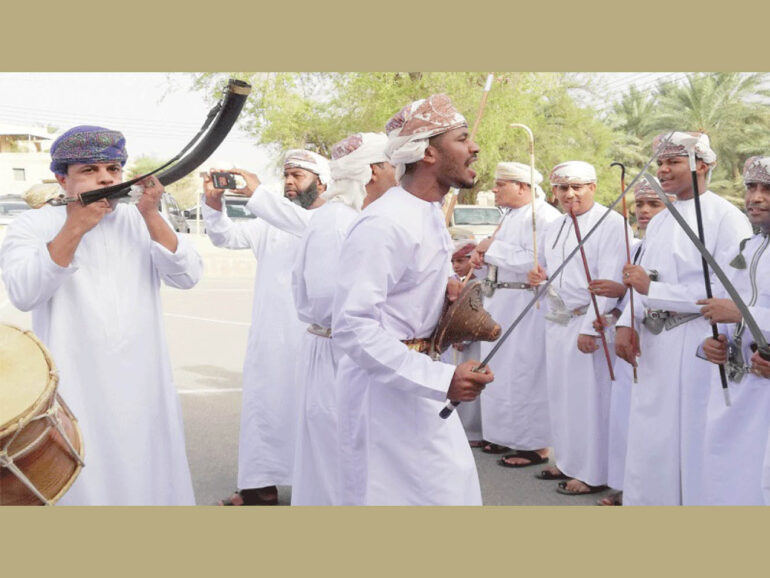
Ministry of Culture, Sports and Youth (MCSY) is intensifying efforts to document and publish the country’s oral history as part of a strategy to preserve intangible cultural heritage and reinforce national identity. The initiative aligns with Oman Vision 2040 and aims to promote Omani culture in global forums.

Fahd bin Mahmoud al Rahbi, Head of Oral History Department at the ministry’s Literary Forum, said the initiative reflects Oman’s commitment to protect its oral traditions and cultural expressions. These include stories, biographies, folk tales, customs, performing arts, traditional crafts and the knowledge systems associated with these.

“Oral history forms an integral part of Oman’s intangible cultural heritage. It is a crucial source of historical knowledge, especially in areas not captured by written records,” Rahbi said. “Our aim is to preserve this history through research, documentation and publication, as well as through public engagement and international cooperation.”

According to Rahbi, Oman’s geographical location has historically made it a crossroads of civilisations. This has contributed to the country’s rich and diverse cultural heritage. Several elements of Oman’s intangible heritage are already inscribed with Unesco, highlighting the global relevance of these preservation efforts.

Since 2006, MCSY has undertaken multiple field projects to record oral history across the governorates and wilayats. Local researchers have worked with elders, artisans and tradition bearers to document narratives, customs and knowledge passed down through generations.

The ministry has published several books as part of this initiative. Notable among these is Omani Traditional Musical Instruments, which documents the styles of Omani music, and Omani Traditional Musical Arts, a comprehensive reference on music and performance arts. Together, these publications offer a detailed record of Omani musical traditions.

Newer works include The Diving Craft in the Popular Traditions of the Batinah Coastal Community by Saeed Abdullah Mubarak al Farsi, which explores the oral traditions associated with coastal livelihoods, and The Craft of Tabsil in South Batinah by Wadha bint Mohammed al Shukaili, which chronicles the history and cultural significance of the palm-based food preservation craft.

MCSY has also supported research on frankincense traditions, culminating in the publication Frankincense and Cultural History, a collaborative project involving multiple Omani scholars.

Another recent work, Radio in the Interior of Oman, by Rana bint Nasser al Abri, explores the development of radio broadcasting in Dakhliyah from the 1940s to the 1980s, viewed through oral narratives. The Bahla Wall: The Wristband of Civilisation by Saeed bin Abdullah al Shaqsi examines the architectural and historical relevance of one of Oman’s iconic defensive structures.

 “Preserving our oral history is not just about protecting the past,” Rahbi said. “It is about shaping national identity, supporting cultural diplomacy and preparing for a future that values heritage.”

source/content: muscatdaily.com (headline edited)

___________

__________

OMAN

ARAB ARTS FESTIVAL (LAAF) : The UK’s longest-running Arab arts festival returns

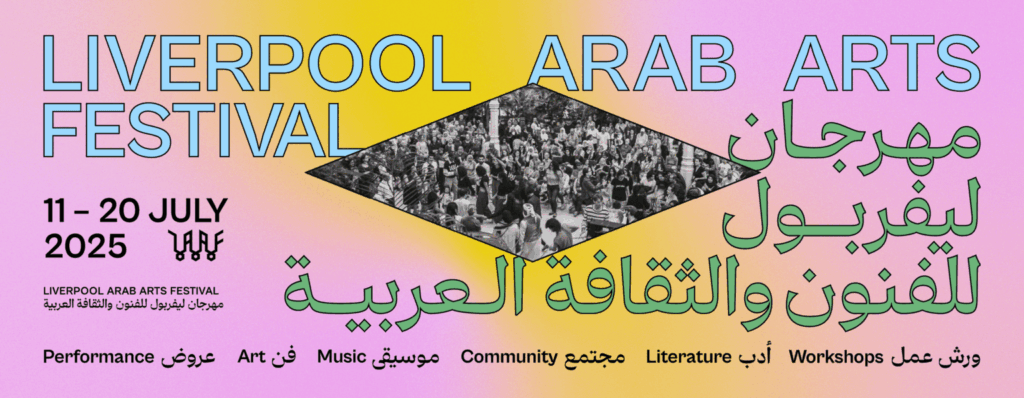
The Liverpool Arab Arts Festival, or LAAF, the UK’s longest-running annual celebration of Arab arts and culture, returns this month with a theme that feels both timely and timeless: “Nostalgia.”

Now two decades in, the festival has grown from grassroots beginnings into an internationally recognized celebration.

Running through to July 20, this year’s program explores how memory, heritage and longing shape artistic expression across the Arab world and its diasporas. 

The dynamic, bilingual line-up spans film, music, literature, performance, food and family activities — all underscored by deeper reflections on identity, loss and cultural continuity.

Arab News spoke with Taher Qassim, originally from Yemen, who founded LAAF in 1998 as a community-led effort to foster cultural pride and preserve Arab identity in Liverpool.

“The theme of ‘nostalgia’ is a reflection of both how far we’ve come and where we began,” Qassim said. “Twenty-three years ago, we set out on a path that was uncertain but filled with excitement and purpose. We knew we wanted to create something that represented the Yemeni and Arab presence in Liverpool, but we didn’t yet know how to express it.”

What began as a handful of cultural activations has since evolved into a platform for Arab artists. “From those humble beginnings … the festival began to blossom,” he said. “Today, we proudly offer a platform to artists from across the Arab world, Europe, the US, and beyond — something we could only have dreamed of.”

Two events stand out for him: ‘Arabs Are Not Funny’ and ‘The Book of Sanaa.’ The former, he says, “directly challenges the long-held stereotype that Arabs lack a sense of humor. It’s refreshing, bold and liberating — exactly what the festival stands for.”

The latter brings together literature, poetry, food, and a model of Yemen’s historic capital.

“The richness of this event would’ve felt like a fantasy to us two decades ago. Now, it’s a reality — something we’ve made possible through years of dedication and community.”

Qassim, who was awarded an MBE (Member of the Order of the British Empire) in 2008 for services to community cohesion, handed over the festival’s leadership to his daughter, Afrah, who now steers LAAF with the same vision and care.

Today, LAAF is no longer seen solely as a festival for the Arab community. “That perception has shifted dramatically,” Qassim said. “People from all backgrounds and ages attend and engage. The festival has become a space for dialogue, curiosity and connection.” As he put it, “Conversations happen naturally — before, during and after events.”

One event he hopes visitors will not miss is the now-iconic “Family Day” at the Palm House in Sefton Park. “It’s become the signature event of the Liverpool Arab Arts Festival — our legacy day,” he said. “Families travel from across the UK, Europe, and even further afield to be part of it. The atmosphere is joyful, welcoming, and truly inclusive … a vibrant, heartwarming celebration of Arab culture at its best.”

Some events require tickets, but “Family Day” — an afternoon of music, crafts, performances and community — is the grand finale and free to all.

source/content: arabnews.com (headline edited)

___________

pix: arabartsfestival.com

_____________________________

ARAB ARTS FESTIVAL – UK

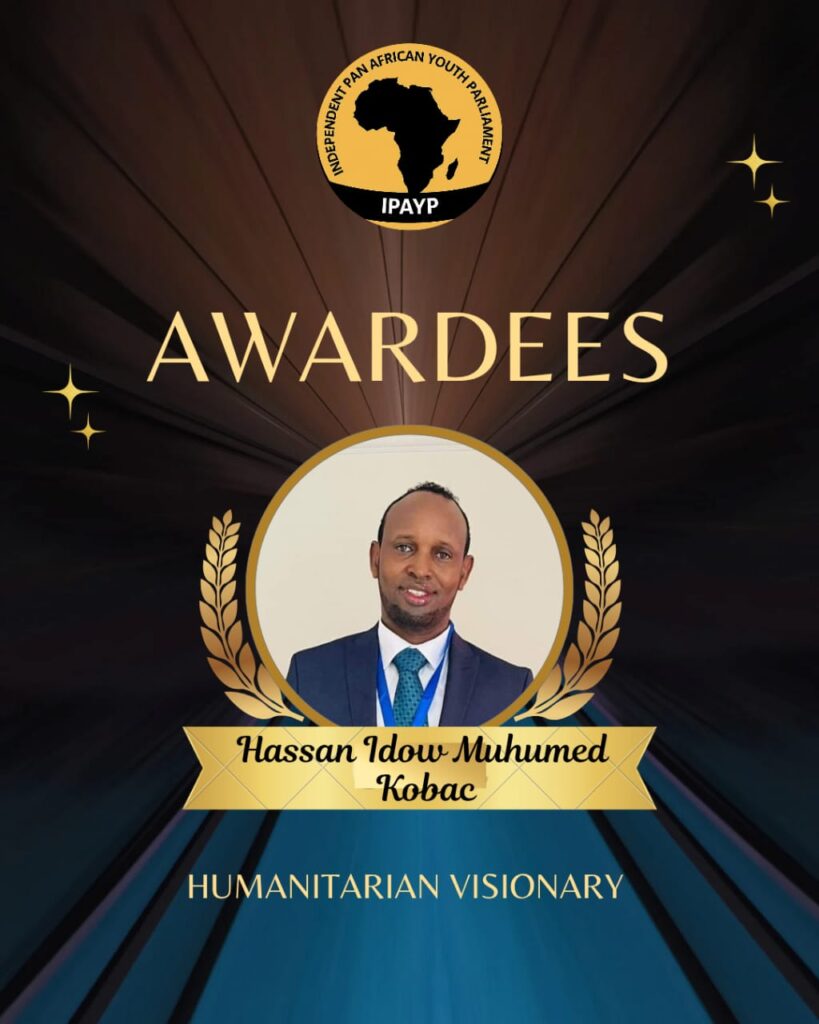
SOMALI Businessman and Senator Hassan Idow Muhumed Kobac receives Independent Pan-African Youth Parliament’s Humanitarian visionary Award

 Independent Pan African Youth Parliament awarded Humanitarian Visionary Award to Hassan Idow Muhumed Kobac – a Senator, a business elite and humanitarian worker among other awardees at the Kenyan capital Nairobi.

The three-day summit gathered over 50 youth leaders, policymakers, academics, and civil society voices from across the continent focusing youth-driven solutions for key challenges including education, employment, leadership, democracy, climate change, and digital innovation.

“I am honoured to receive this important award which is the recognition of the humanitarian work I have been doing in Somalia for more than a decade and all other humanitarian workers” Hassan Idow Muhumed Kobac said, “The Award not only encourages the humanitarian workers, but also boosts the morale of other humanitarian workers.”

“My goal is to create a better life for the Somali people and restore their dignity.” Hassan Kobac who is a true example of honest leadership that stands for progress and compassion said.

Mr. Kobac has dedicated his life to the development of vulnerable communities. Through the Hassan Kobac Foundation (HKF), a foundation he founded himself, has become a source of hope for many people affected by drought, displacement, and poverty.

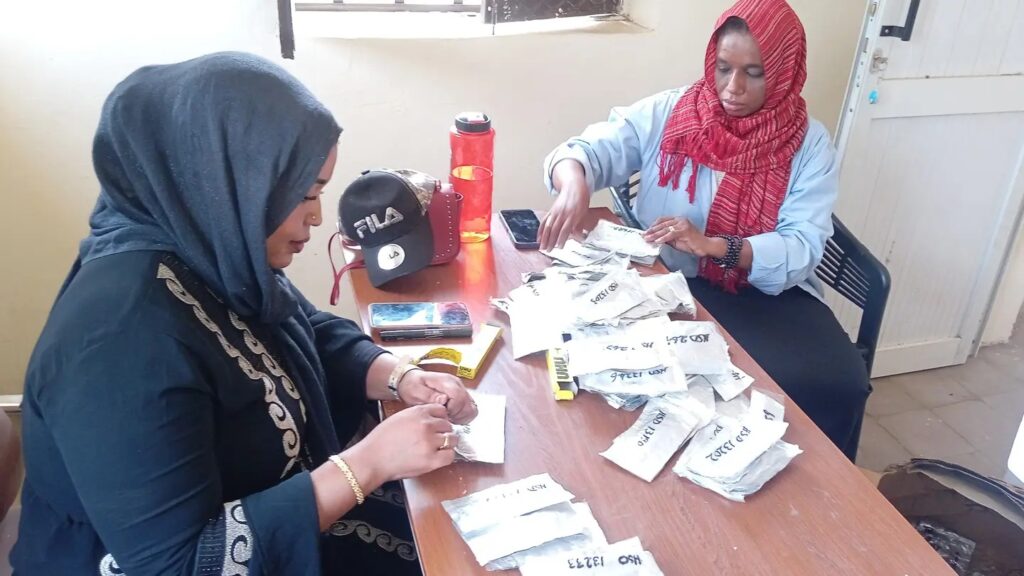
In the face of one of the most severe droughts in recent history, the Hassan Kobac Foundation (HKF) has emerged as a beacon of hope, delivering emergency water trucking assistance and food rations to thousands of families in the Hiiraan region of central Somalia.

In February this year,  Hiiraan Youth Association honored and celebrated the achievements of Senator Hassan Kobac in a grand event held in Beledweyne. The ceremony, attended by various societal groups, intellectuals, and youth, honored Senator Kobac’s four-year tenure in the upper house of the Federal Parliament of Somalia

Hassan Kobac has been described as the true voice of the people of Hirshabelle,  continuously working to defend their rights and improve their well-being. His dedication to youth empowerment and community development has earned him the admiration of and respect of many.

source/content: hornobserver.com (headline edited)

______________

____________

SOMALIA

LIBYA : Three Libyan companies win awards in Athens International Olive Oil Competition ‎

Three Libyan companies won awards at the Athens International Olive Oil Competition , the Libyan Export Promotion Centre (LEPC) announced yesterday.‎

‎’’Once again, Libyan olive oil is in the advanced ranks in the world in terms of quality in the Athens International Competition for the year 2025’’ the LEPC said.

At the competition, the Mishkah and Celine companies won gold medals. The Mountain Olive Company won the bronze medal as the best excellent olive oil. The Mishkat company also won the award for the best Shamlali variety in the same competition.‎

‎This is the tenth edition of the Athens International Competition with the participation of 630 contestants from different countries of the world.‎

source/content: libyaherald.com (headline edited)

___________

Libyan Olive Oil wins medals at Athens competition (Photo : LEPC)

__________

LIBYA