Arabs & Arabian Records Aggregator. Chronicler. Milestones of the 25 Countries of the Arabic Speaking World (official / co-official). AGCC. MENA. Global. Ist's to Top 10's. Records. Read & Enjoy./ www.arabianrecords.org
Arabs are known for having had numerous contributions to civilizations—notably in the fields of Mathematics (Arabs invented Algebra), Astronomy (Al-Biruni discussed the earth’s rotation centuries before it was confirmed by Galileo), and Medicine (Al Razi was one of the first to diagnose diseases like smallpox and measles).
But Arab achievements didn’t end in the Golden Age and have continuously evolved to modern fields, so we’re here to round up some of the lesser-known greatest modern achievements by Arabs..
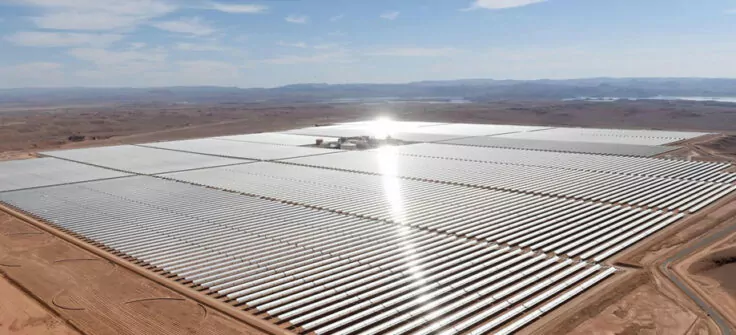
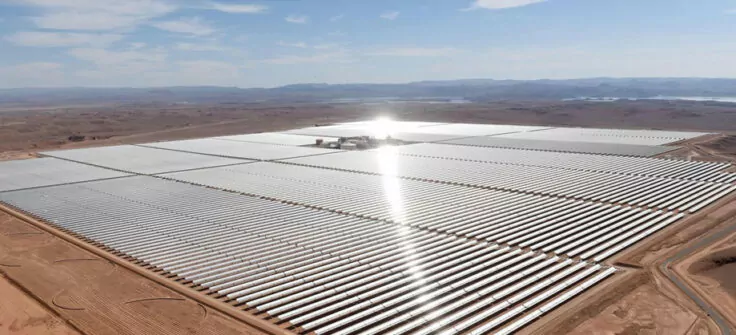
Noor Ouarzazte
Morocco is turning the Sahara Desert into the largest concentrated power complex in the world. The project is currently in progress, due to be complete before the end of 2018.
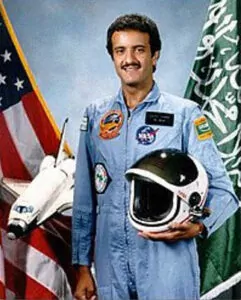
Arabs in Space
Sultan bin Salman Al Saud became the first Arab in space in 1985 – he was also the first royal astronaut ever. Syrian-born Mohammed Ahmed Faris followed in Al Saud’s footsteps in 1987.
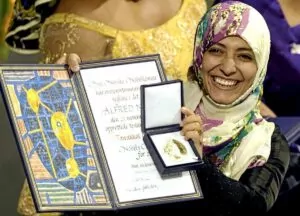
Nobel Peace Prize Winners
Photo credit ODD ANDERSEN/AFP/Getty Images
The Tunisian national dialogue quartet was awarded the Nobel Peace Prize in 2015 for their role in building a democratic state in Tunisia following the Arab Spring.
Yemeni journalist and activist Tawakkol Abdel-Salam Karman preceded the Tunisian National Dialogue Quartet in 2011 as Nobel laureate—she became the first ever Yemini and Arab Woman to win the Peace Prize, as well as the second youngest ever.
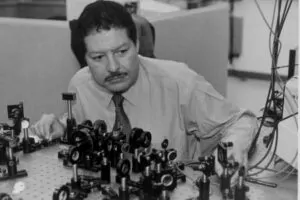
The ‘Father of Femtochemistry”
Femtochemistry is probably something too difficult for most of us to understand—but according to Wikipedia it’s “an area of chemistry that studies chemical reactions on extremely short timescales”. Ahmed Hassan Zewail, and Egyptian-American scientist, is known for pioneering a laser technique that allowed for easier analysis of chemical reactions. He even won a Nobel prize for his work in 1999.
Pritzker Architecture Prize Winners
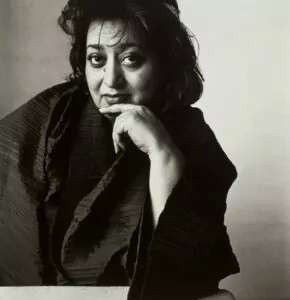
The late Iraqi-British architect Zaha Hadid was an internationally-acclaimed architect, renowned for her sci-fi creations. Having built some of the world’s most innovative spaces. In 2004, she became the first ever woman to win the prestigious Pritzker Architecture Prize—the most prestigious award in architecture.
Alrashid’s inclusion highlights her pioneering leadership and marks a milestone moment for Saudi women on the global stage
Under her leadership, SRMG has redefined how Arab media engages with audiences, while nurturing new generations of talent
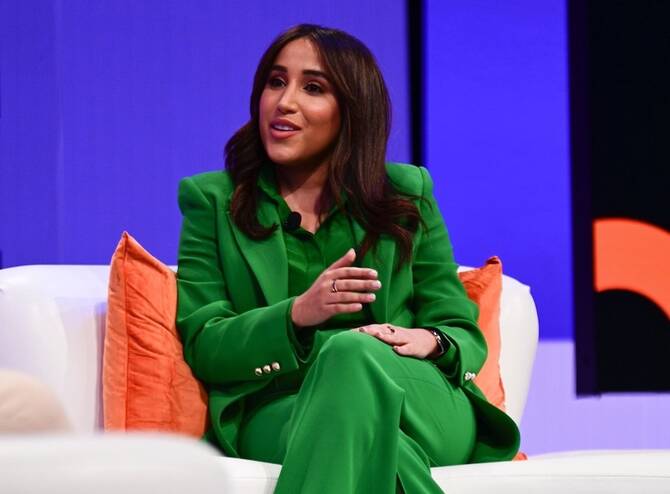
Jomana R. Alrashid, CEO of Saudi Research and Media Group and chairwoman of the Red Sea Film Foundation, has made history as the first Saudi to be recognized on Time magazine’s TIME100 Next list.
An expansion of the iconic TIME100 list of the most influential people in the world, TIME100 Next highlights 100 emerging leaders who are shaping the future of business, entertainment, sports, politics, health, science, activism and more.
Alrashid’s inclusion highlights her pioneering leadership in business and media and marks a milestone moment for Saudi women on the global stage. Alongside Alrashid, the list includes names such as White House Press Secretary Karoline Leavitt, international football phenom Lamine Yamal, Irfaan Ali, the president of Guyana, and many more influential and emerging leaders in their respective fields.
Time magazine described Alrashid as “an architect of the Middle East’s shifting media landscape.” Since her appointment in 2020 as the first female CEO of SRMG, she has spearheaded the company’s comprehensive digital-first transformation, launched innovative media verticals and forged landmark global partnerships. These efforts have been reflected in the rapid growth of SRMG’s stock, signifying extensive trust by investors in her business development and management strategies across the media entertainment and technology sectors. Under her leadership, SRMG has redefined how Arab media engages with audiences, while nurturing new generations of talent.
As chairwoman of the Red Sea Film Foundation, she has championed the growth of the film industry across the Arab world, Africa and Asia, driving initiatives to empower filmmakers and foster international collaboration. This commitment has culminated in an unprecedented achievement, with over 80 supported films premiering and garnering awards and international recognition at the world’s most prestigious festivals, including Cannes, Venice, Berlin, Toronto and Sundance.
These are filmmakers and their stories that once struggled to find a place in the international film industry, now making their mark on the global stage. Today, the Red Sea International Film Festival stands as a premier global destination for cinema, culture and creativity.
Alrashid commented on the recognition: “I am deeply honored to be included in the TIME100 Next list. This recognition reflects the collective efforts of the extraordinary teams I have the privilege to work with at SRMG and the Red Sea Film Foundation. It is also a testament to the vision and leadership that have driven the remarkable transformation taking place across Saudi Arabia and the wider region — a future built on innovation, creativity and storytelling that resonates globally.”
Alrashid’s selection underscores not only her growing global influence but also the pivotal role of Saudi Arabia’s creative and media industries in shaping conversations worldwide. As the Kingdom continues its ambitious cultural and economic transformation, her leadership represents both the spirit of progress and the power of storytelling to inspire and unite communities across the globe.
source/content: arabnews.com (headline edited)
_______________
Jomana R. Alrashid, CEO of Saudi Research and Media Group and chairwoman of the Red Sea Film Foundation. (Supplied)
The World Bank has opened a new regional hub in Riyadh to serve the Middle East, North Africa, Afghanistan, and Pakistan, as the Washington-based lender continues to boost its presence in the region.
According to a press statement, the new Riyadh hub will be co-located with the World Bank Group’s Gulf Cooperation Council regional office, bringing its leadership closer to country teams, clients, and regional partners.
The opening of the new regional hub signals the deepening ties between the World Bank and Saudi Arabia, as in December, the lender signed a strategic agreement to launch a new global knowledge hub in Riyadh to facilitate regional and global knowledge exchange, joint research, and capacity-building initiatives aimed at advancing global development impact.
Commenting on the opening of the new regional hub, Ousmane Dione, vice president of the World Bank for the MENAAP region, said: “Riyadh is not only a gateway to the region’s transformation, but also a powerful platform for global knowledge exchange and policy innovation.”
He added: “It is especially meaningful to mark this relocation on Saudi National Day, a moment that celebrates the Kingdom’s transformation and its growing role as a global convener of development knowledge.”
In the press statement, the lender added that the opening of the new regional hub aligns with the 50th anniversary of technical cooperation between the World Bank and Saudi Arabia.
In recent months, the institution has awarded a $650 million disaster management loan for Turkiye, a $146 million grant to Syria to help restore reliable, affordable electricity, and $930 million in financing to help improve Iraq’s railway performance, boost domestic trade, and diversify the country’s economy away from oil.
The regional hub development aligns with Saudi Arabia’s government-backed regional headquarters program, launched in 2021, which offers incentives such as a 30-year corporate income tax exemption and withholding tax relief, alongside regulatory support for multinationals operating in the Kingdom.
A Saudi Press Agency report in March said that over 600 international companies, including Northern Trust, IHG Hotels & Resorts, and Deloitte, have already established their regional bases in Saudi Arabia.
source/content: arabnews.com (headline edited)
_____________
The new Riyadh hub will be co-located with the World Bank Group’s Gulf Cooperation Council regional office, bringing its leadership closer to country teams, clients, and regional partners. Shutterstock
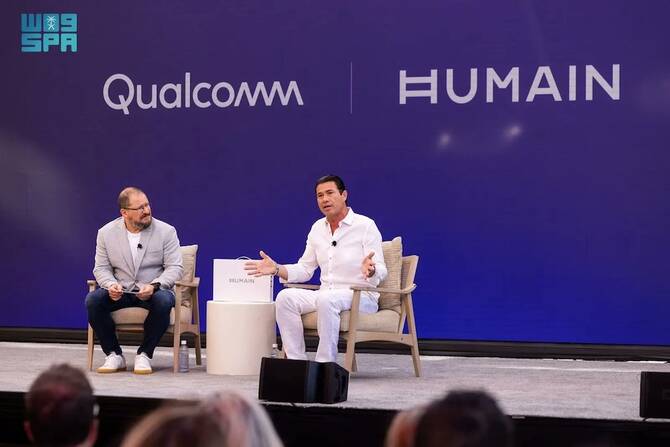
HUMAIN, a Public Investment Fund company has announced the launch of its Horizon Pro PC, billed as “a groundbreaking laptop designed to revolutionize agentic artificial intelligence personal computing.” Agentic AI systems can act independently and with initiative with limited, or no, human oversight.
The launch was announced by HUMAIN CEO Tareq Amin during the Snapdragon Summit in Maui, Hawaii.
According to a press release, the Snapdragon processor family at the core of the HUMAIN Horizon Pro deliver “leading AI performance and a powerful CPU so that the PC can operate up to 100 times faster than human thought.”
It added that the company’s upcoming proprietary HUMAIN ONE operating system “enables users to manage enterprise workflows, communications, and AI applications from a unified, adaptive interface designed to anticipate needs and accelerate decision-making.” It added that the new PC “offers zero-latency wake time, over 18 hours of battery life, a 40-percent reduction in power consumption compared to competing systems, and advanced thermal architecture for sustained, high-performance use across demanding environments.”
HUMAIN’s AI integrates the Arabic-first large language model “ALLaM” and “operates locally for maximum speed and data privacy, with the flexibility of hybrid AI to tap into the cloud when complex processing or broader insights are required, offering enterprise users the ideal blend of performance, control, and scale,” according to the company.
Amin said: “The HUMAIN Horizon Pro represents a paradigm shift in agentic AI personal computing, especially for enterprise environments where AI actively collaborates with users, both locally and in the cloud, to boost productivity.”
Amin also announced that HUMAIN will give away 500 of its PCs to students as part of its launch initiative to “help unlock new potential for learning, creativity, and future leadership in AI-driven fields.”
source/content: arabnews.com (headline edited)
_____________
HUMAIN launched its Horizon Pro PC, a groundbreaking laptop designed to revolutionize agentic AI personal computing. The announcement was made by HUMAIN CEO Tareq Amin during the Snapdragon Summit in Maui, Hawaii. (SPA)
The Safety Wings drone can detect individuals in distress in water, swiftly navigate to their location, and drop inflatable life buoys.
Three Moroccan students from the Faculty of Sciences and Technologies (FST) in Settat have won a gold medal at the Innovation Week (IWA 2025) for their groundbreaking project, Safety Wings.
A drone that saves lives at sea
The winning project introduces a drone designed to revolutionize aquatic rescue operations.
The Safety Wings drone can detect individuals in distress in water, rapidly fly to their position, and deploy inflatable life buoys.
In contrast to existing buoys that sell for around $300 and are typically disposable, the Moroccan designers developed a reusable model that costs under $20. The only recurring expense is replacing compressed air cartridges.
Through the combination of reusability and affordability, the project provides an essential loophole in global rescue missions. The project is an affordable and scalable solution for impoverished communities with fewer resources but frequent aquatic emergency cases.
From Morocco to the world stage
Salah Bouhlal, Moad Es-Sraoui, Mohamed Kerroum, and Aziz Hraiba (supervisor) developed Safety Wings during their days as FST Settat students.
Their success at IWA 2025 places Morocco on the international innovation map and also shows how youthful scientists can convert pressing humanitarian needs into practical technological solutions.
OFEED, the organizer of the Innovation Week, describes the event as both a premier platform for showcasing and fostering cost-effective innovation and a “global community that believes ideas can become impact when courage meets collaboration.”
Innovation with human impact
Safety Wings is one component of a greater movement toward harnessing new technology for the public good. With their provision of life-saving gear, the Moroccan students seek to leave a positive impact on global standards of safety in aquatic environments, from seaside public beaches to remote fishing villages.
In addition to the Safety Wings team, other Moroccan innovators also figured among the winners of IWA 2025. Their projects spanned diverse fields. This collective achievement reinforced Morocco’s reputation as a hub of creativity and problem-solving on the international stage.
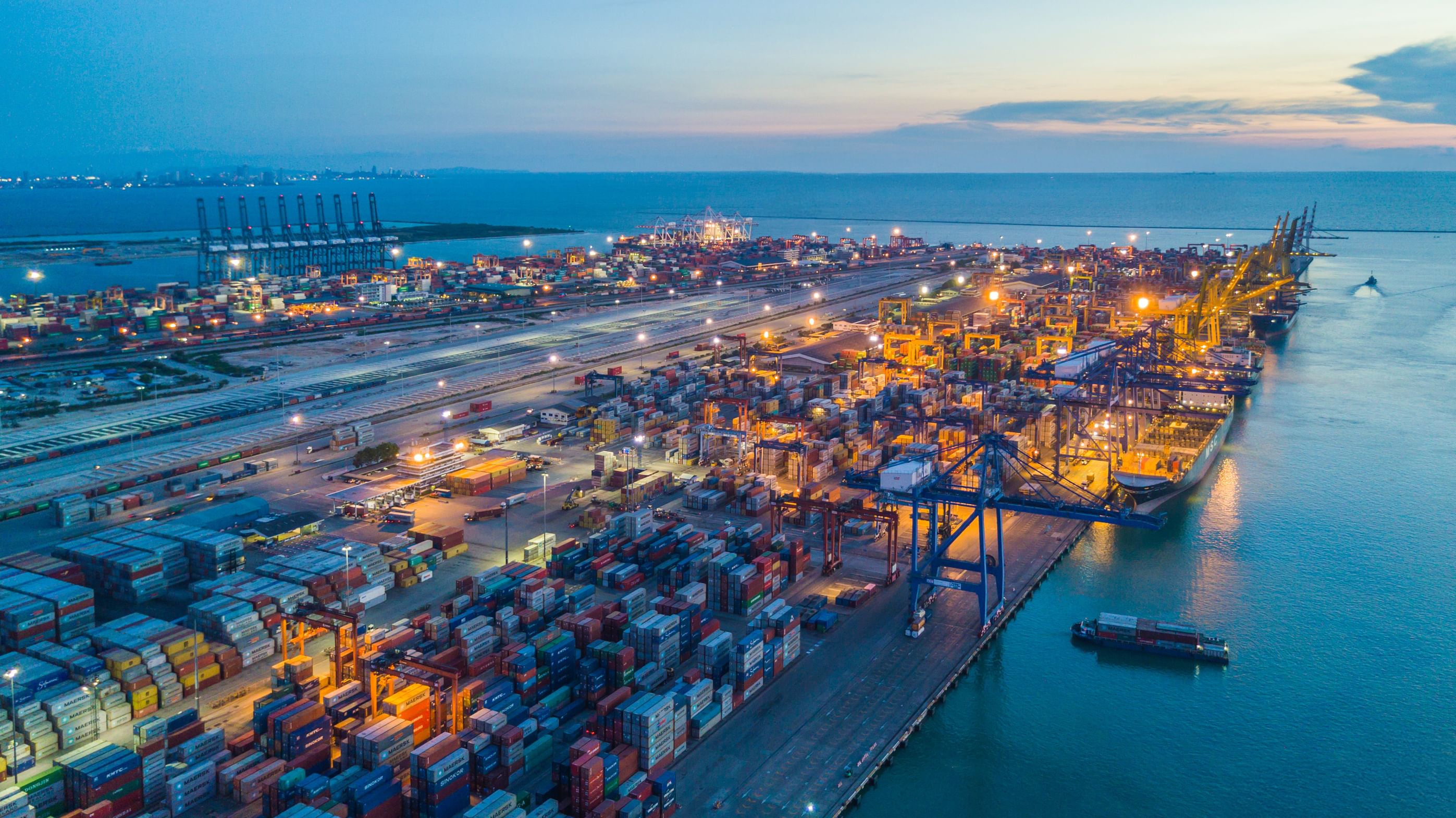
Dubai has reinforced its status as a leading global maritime hub, earning the title of “the crown jewel of the Middle East’s maritime sector,” according to the 2025 International Shipping Centre Development Index report, issued by Xinhua News Agency in collaboration with the Baltic Exchange. The report ranks Dubai among the top five global shipping centres and first in the Arab region.
Sheikh Dr. Saeed bin Ahmed bin Khalifa Al Maktoum, CEO of the Dubai Maritime Authority, part of the Ports, Customs, and Free Zone Corporation, hailed the achievement stating: “Dubai’s ranking as fifth globally and first in the Arab world in the 2025 International Shipping Centre Development Index reflects the vision of our leadership, as well as the effective coordination between strategic partners and maritime sector companies in the emirate.
We remain committed to continuous development, delivering world-class services, adopting global maritime best practices, implementing innovative solutions, updating regulations, and fostering a thriving maritime business environment to position Dubai as an innovative and sustainable global centre for shipping and logistics.”
The report highlights Dubai’s comprehensive maritime ecosystem, offering navigation services, shipbuilding and repair, and capacity to handle the increasing number of vessels. It also emphasised the Dubai Maritime Transport Plan 2030, aligned with the Dubai Economic Agenda D33, which aims to expand maritime transport usage, enhance the network of marine transportation, and develop Dubai Maritime City.
The report specifically praised Jebel Ali Port for its strategic role as a regional shipping hub, underpinned by continuous investment in infrastructure and services. In 2024, the port handled 15.5 million twenty-foot equivalent units (TEUs), the highest since 2015, accounting for 18% of the total 88.3 million TEUs managed by DP World, the port operator.
On sustainability, the report highlighted Jebel Ali Port’s initiatives to reduce emissions, including the provision of biofuel for ships, installation of 50,000 m² of solar panels for renewable energy, and the use of electric vehicles for container handling—contributing to an annual reduction of 2,000 tons of CO₂ emissions.
Captain Ibrahim Al Blooshi, Executive Director of Dubai Ports Authority, commented: “We take pride in this achievement, which underscores Dubai’s strong position as a global maritime hub. Jebel Ali Port, operated by DP World under the Ports, Customs, and Free Zone Corporation, continues to excel at both regional and international levels.
Dubai Ports Authority is committed to proactive measures to enhance the maritime sector’s contribution to the strategic objectives of the Dubai Economic Agenda D33, through its three ports—Jebel Ali, Port Rashid, and Hamriyah—despite global economic challenges and market fluctuations. We are dedicated to preserving the emirate’s marine environment and ensuring the highest operational safety standards in the maritime sector.”
For OCP Africa, the approach is clear: deliver the right product with the right support and finance, then localize manufacturing where demand warrants it – a model already boosting margins and farm productivity.
With its eyes fixed on transforming African farming, OCP Africa has entrusted the leadership of its continental strategy to Hajar Alafifi, who assumes the role of CEO effective September 1. This strategic move brings home one of Morocco’s most accomplished international executives to spearhead the group’s ambitious continental vision.
Born and educated in Casablanca, Alafifi represents the pinnacle of Moroccan talent on the world stage. A graduate of ENCG Casablanca, she embarked on an impressive career trajectory that took her from initial positions at Unilever Morocco to increasingly significant roles across multiple continents.
Over her two-decade journey with the consumer goods giant, Alafifi steadily climbed the corporate ladder, holding key positions in London, the Netherlands, and South Africa before making her mark in Southeast Asia.
Her professional evolution included roles as Regional Brand Manager, Senior Global Brand Manager, Brand Development Director for Europe, and CMO for global brands including Sun, Domestos, and CIF, where she led billion-dollar brands across four continents.
A Moroccan executive with global impact, her international career reached its apex when she was appointed Chairperson and General Manager of Unilever Sri Lanka, becoming the first Moroccan to lead a major subsidiary of this size in the region.
Most recently, she served as GM for Southeast Asia and Indonesia Nutrition at Unilever, further broadening her expertise in emerging markets.
“This designation marks a new stage in the company’s development strategy on the continent,” said OCP Africa in its announcement, stressing the significance of bringing such accomplished talent to lead its African operations.
Leadership philosophy and recognition
Throughout her career, Alafifi has distinguished herself not merely through business results but through transformative leadership. In Sri Lanka, she implemented progressive workplace policies that achieved gender parity and introduced specialized leave provisions, while also launching campaigns against domestic violence.
Her management approach is built on three clear principles: deep cultural understanding to ensure products meet local consumer needs; rapid, responsive innovation; and authentic leadership characterized by clarity and composure, particularly during challenging circumstances.
This distinctive leadership style earned her the Global Leader of the Year Award, a prestigious international recognition celebrating the world’s most inspiring executives.
True to her collaborative philosophy, upon receiving this honor, she remarked, “This is not my success, it’s that of an entire team.”
Taking the helm at OCP Africa
The decision by Mostafa Terrab, President of OCP Group, to bring Alafifi back to Morocco represents a strategic bet on combining global expertise with deep African understanding.
She succeeds Mohamed Hettiti, who had been serving in an interim capacity, successfully maintaining operational continuity and advancing strategic initiatives during the transition period.
With her appointment, OCP Africa gains a leader who brings fresh perspective on emerging markets, having navigated complex economic environments, diverse consumer landscapes, and significant operational challenges while building trusted brands and resilient value chains.
Alafifi brings extensive experience from her tenure at a Fortune 500 international group, and the Board of Directors has expressed confidence that her proven track record in driving transformation projects in complex contexts, coupled with her commitment to sustainability and ESG principles, aligns perfectly with OCP Africa’s evolving vision and strategic priorities.
OCP Group: A global phosphate powerhouse with African ambitions
Alafifi joins OCP Africa at a pivotal moment in the parent company’s development. OCP Group, Morocco’s state-owned phosphate and fertilizer leader, has been delivering impressive financial results while simultaneously implementing ambitious sustainability initiatives.
In 2024, the Group reported revenues of MAD 96.99 billion (approximately US$9.76 billion) with a robust 40% EBITDA margin, representing substantial growth from 2023 as fertilizer sales increased and Triple Super Phosphate (TSP) exports surged by 48%. Fertilizers now comprise 69% of total revenue, showing the strategic importance of this segment.
The foundation of OCP’s global strength lies in its control of what is often cited as 68% of global phosphate rock reserves, providing long-term security of supply for Africa’s fertilizer needs.
This natural advantage underpins the Group’s ambitious “Green Investment Program” for 2023-2027, valued at approximately $12-13 billion, which aims to expand capacity while transitioning toward carbon-neutral operations by 2040.
Major milestones in this sustainability journey include the utilization of 63 million cubic meters of desalinated water in 2024 and the successful injection of the first green kilowatt-hour at Benguerir.
New capacity developments at Jorf Lasfar (sulfuric acid lines, +1 Mt DAP-equivalent unit) and a TSP hub coming online from 2025 position the Group to serve fast-growing African and global demand; in 2024 alone, TSP volumes rose 48% with notable uptake in India and Brazil.
OCP Africa: Transforming continental agriculture
As the dedicated African subsidiary of OCP Group, OCP Africa executes a distinct strategy centered on “localization”: establishing blending and production facilities close to farmers, developing country-specific product formulas, and providing services that reduce adoption risks for smallholders.
The subsidiary’s customization process begins with comprehensive soil mapping, followed by tailoring N-P-K and micronutrient balances to specific agricultural needs, and where feasible, implementing local production.
This approach has led to significant investments across the continent, including the acquisition and operation of blending facilities in Ethiopia and the development of blending units in Nigeria (Ogun, Kaduna, and Sokoto).
A memorandum of understanding and joint venture (MoU/JV) with the Nigeria Sovereign Investment Authority aims to develop an industrial platform for ammonia and fertilizers, while a state-backed complex in Akwa Ibom was announced at $1.5 billion, alongside approximately $43 million allocated for blending plants.
Similar country programs in Ghana, Ethiopia, and other nations are structured around value-chain partnerships with governments, agribusiness, and research organizations to scale the adoption of appropriate fertilizers for local soils.
Farmer services constitute the second pillar of OCP Africa’s strategy. Through the Agribooster program, the company delivers a comprehensive package of inputs (fertilizer, seed, crop protection), training, market off-take, and finance/insurance.
This initiative has reached approximately 600,000 smallholder farmers, achieving average yield increases of 33% across maize, rice, millet, and sorghum value chains.
Complementing this is the mobile “OCP School Lab,” which brings free on-site soil tests and training directly to remote villages, building farmer confidence and promoting proper application practices.
The impact has been measurable: independent reporting shows that in Nigeria, fertilizer use tripled with yields increasing by about 27% since 2016, while in Ethiopia, yields rose by approximately 37% while farmers’ fertilizer expenditure decreased by about one-fifth – demonstrating how customized recommendations can simultaneously enhance productivity and input efficiency.
Financing and strategic alliances form the third component of the strategy. In 2024, OCP launched an international bond roadshow (up to $2 billion) to fund its development plan and subsequently completed a $2 billion Eurobond, later expanding it by an additional $300 million. The Group also issued MAD-denominated bonds to support its capital expenditure program.
On the developmental finance front, OCP partnered with the International Finance Corporation (IFC) to establish an agri-finance platform targeting $800 million in blended capital by 2030 to scale resilient African food systems.
Energy partnerships further extend the decarbonization initiative: OCP and Fortescue announced a joint venture to develop green hydrogen/ammonia and fertilizers (with an R&D hub in Marrakesh), while a separate framework with Engie envisions multi-billion-euro investments in renewables, desalination, and green molecules for OCP’s Moroccan sites.
In West Africa, OCP Africa’s joint venture with Nigeria’s NSIA (within the Presidential Fertilizer Initiative) aims to localize ammonia/fertilizer value chains and improve input affordability at scale.
A forward-looking African strategy
Looking ahead, OCP’s African strategy aligns its industrial expansion directly with continental food-security goals.
The foundation of this approach is greener, more resilient infrastructure – solar phases nearing completion, water pipelines, and desalination to reduce dependence on hydrological conditions – while university-led soil-mapping and agronomy research (conducted through UM6P) extend the data layer into more than ten African countries.
For OCP Africa under Alafifi’s leadership, the path forward is clear: deliver the right product in the right place with appropriate support and financing, then localize manufacturing where demand warrants it. This model has already strengthened OCP Group’s margins while delivering measurable productivity gains for African farmers.
With Hajar Alafifi at the helm, OCP Africa gains not just an executive with global credentials, but a Moroccan leader who understands that performance metrics only matter when they translate to tangible social and environmental impact – a philosophy perfectly aligned with the continental ambitions of one of Africa’s most important agricultural enablers.
The groundbreaking invention aims to aid those with immune deficiencies and provide treatment for chronic infections in intensive care units where antibiotics are ineffective.
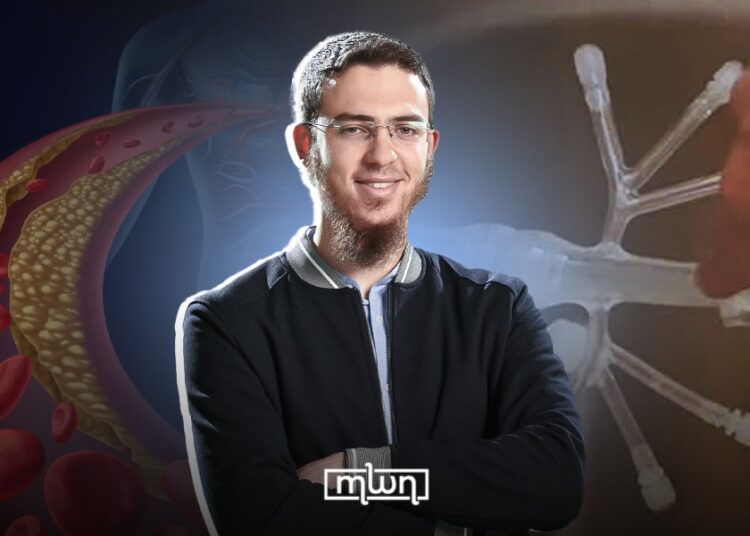
Youssef El Azouzi, a Moroccan neurologist, has announced the successful development of the world’s first device capable of filtering blood from within blood vessels.
The revolutionary invention can direct inflammatory cells and certain white blood cells, potentially helping millions of people suffering from immune deficiencies and improving organ transplant success rates.
In a Facebook post, El Azouzi explained that his device “will contribute to treating tens of millions of people suffering from immune deficiencies and chronic infections in intensive care units where antibiotics are ineffective.” He added that it would “help in organ transplantation without fear of new organ rejection.”
The invention works by redirecting inflammatory cells flowing in the blood away from vessels that nourish newly transplanted organs, preventing rejection.
This mechanism was successfully tested on a 75-kilogram pig in an American laboratory, where the device demonstrated its ability to direct immune cells from the left leg to the right leg without any negative effects on the animal.
“The experiment showed that the device was able to direct immune cells from the left leg to the right leg,” El Azouzi explained in a video documenting his journey to America to register the invention. “This is the first device that controls cell direction from within the vessel itself.”
The scientific experiment involved injecting both thighs of the pig to induce inflammation before placing the device. The device’s role was to direct inflammation-causing cells to only one side, concentrating them there compared to the other side. This would demonstrate the device’s actual control over the pathways of white blood cells flowing in the blood.
El Azouzi revealed that the project cost approximately $250,000 as of March, not including effort and time. “All these resources were provided by benefactors, with no contribution from any public institution or organization,” he noted.
The Moroccan doctor is no stranger to innovation. In 2019, he won the title of best inventor in the Arab world in the 11th season of “Stars of Science” competition in Qatar. His winning invention then was a stent that regulates blood flow for heart patients, offering a potential low-cost alternative to current solutions like heart pumps.
Born in 1991, El Azouzi studied at the American School in Rabat before attending Oxford University for three years. He later moved to Boston University and eventually studied medicine in English at Turkish universities. He is the son of Mustapha El Azouzi, a Moroccan neurosurgeon.
He currently serves as CEO of Aorto Medical Company in the US, where he has been developing this latest invention through three years of hard work, design, and manufacturing.
This Moroccan invention marks a major breakthrough in modern medicine, potentially offering an effective tool for addressing immune deficiency problems and chronic inflammations, while improving the success of organ transplantation procedures.
Youssef El Azouzi, a Moroccan neurologist, has announced the successful development of the world’s first device capable of filtering blood from within blood vessels.
Talal Salman, veteran journalist and founder of the iconic As-Safir newspaper, died on 25 August 2023 aged 85 after a long career in which he championed the rights of the oppressed and made his paper a “voice for the voiceless”.
On Friday 25 August, Talal Salman, the founder and publisher of the iconic Lebanese daily newspaper daily newspaper “As-Safir” passed away aged 85.
Salman remains one of the Arab world’s most prominent journalists and As-Safir, rightly, as a shining beacon of Arab journalism in its modern history
He was one of the few Arab journalists who always aspired for journalism to be a medium where opinions could be freely expressed, and made it a place in which he affirmed his commitment to national, nationalist and social issues.
When his dream of establishing an independent newspaper became reality in 1974, he succeeded in making it a genuine platform for Arab issues and the Palestinian cause, and it quickly became one of the largest Arabic-language independent newspapers.
“Salman remains one of the Arab world’s most prominent journalists and As-Safir, rightly, as a shining beacon of Arab journalism in its modern history”
“As-Safir” became an important laboratory for ideas and opinions. Over more than 40 years, intellectual and political debates flared within its pages, and it became a forum where various intellectual and cultural experiences from the Arab world and Lebanon converged. This made it a rare experiment in Arab journalism, a place where Lebanese, Palestinian, Syrian, Egyptian, Iraqi, Jordanian, and Tunisian voices at various times would come together.
Talal Salman was born in 1938 in the northeastern town of Shmustar. His father was a sergeant in Lebanon’s Internal Security Force (ISF), a job which required him to move with his family to various regions in Lebanon for various postings. Due to this, Salman never settled in one place or attended a fixed school. Perhaps this forced mobility played a role in shaping his political outlook later on, as it allowed him to discover different regions of Lebanon and to develop a broad understanding of Lebanon’s people – their internal divisions and rural nature.
His political awareness began to emerge following Egypt’s 23 July Revolution of 1952, which played a huge role in alerting his attention to politics. Additionally, his presence in the town of Moukhtara in the Chouf district in the early 1950s exposed him to certain aspects of the Lebanese reality.
Moukhtara was the stronghold of the prestigious Jumblatt family, leading figures in Lebanon’s Druze community. While living there he got to know Kamal Jumblatt, who inspired an entire generation of Lebanese youth who aspired for social justice and sought to connect Lebanon with Arab causes, Arab identity, and Palestine.
Salman would become an Arab nationalist without affiliating with any of the nationalist parties, such as the Ba’ath, although later on, he formed close relationships with founders of Arab Nationalist Movement, like George Habash and Hani al-Hindi, in addition to Ghassan Kanafani and Mohsin Ibrahim, who were closely associated with the pan-Arab, left-wing movement.
Salman’s passion for language began in his childhood; he was enchanted by the few books in his parent’s home, and had started writing articles for the magazine al-Anbaa before leaving school. After completing secondary school in 1955, he moved to Beirut with today’s equivalent of $200 from his father and started looking for work at a newspaper.
Passion for language
Salman’s passion for language began in his childhood; he was enchanted by the few books in his parent’s home, and had started writing articles for the magazine al-Anbaa before leaving school. After completing secondary school in 1955, he moved to Beirut with today’s equivalent of $200 from his father and started looking for work at a newspaper.
“Salman would become an Arab nationalist without affiliating with any of the nationalist parties, such as the Ba’ath, although later on, he formed close relationships with founders of Arab Nationalist Movement, like George Habash and Hani al-Hindi”
He initially found a job at Al Sharq newspaper as an unpaid proof reader, before swiftly transitioning to “cutting” – he would cut out stories from other papers in the morning and rewrite them for publishing in Al Sharq in the afternoon.
1956, the year Salman’s journey into the media world began was the year of the Tripartite Aggression against Egypt (the Suez Crisis) – and it was as though this major event was setting the tone for a journalistic career focused on the major Arab issues of the day, such as Arab unity, Palestine, Algeria and social justice.
Nor was it surprising, considering his background living in areas suffering from marginalization, poverty, injustice, and lack of government care, that he developed a clear sensitivity to social injustice and a strong awareness of the need to fight against it.
Talal Salman, founder of Lebanon’s Assafir daily passed away in Beirut. He was a prominent journalist whose legacy won’t be forgotten. pic.twitter.com/EfFt9GNbYg
It wasn’t long before Salman moved to another paper, where he was given the crime and accidents beat. Every day he would walk to the police station, the courts, ambulance centres and fire stations to gather the day’s news. Then, he would walk back to his workplace to provide the summary of his day to the editorial secretary.
In 1958, after protests broke out against the rule of then President Camille Chamoun, renowned journalist Salim Lawzi, editor-in-chief of the pro-Nasser Al Hawadeth magazine at the time, was arrested, and held in Karantina Hospital – as more fortunate prisoners were at that time.
By chance, Salman’s father was chief officer at the hospital guard station, and his son visited regularly. This led to the aspiring young man meeting the veteran journalist who had worked in Palestine and Egypt before returning to Lebanon to set up the weekly magazine.
Following their meeting, Salman joined Al Hawadeth, where he was suddenly the colleague of well-known journalists like Shafiq al Hout, Nabil Khoury, and the artist Niazi Jaloul. He went from proofreading to preparing the readers section, to writing his own column and then moved into the investigations department. It was not long before he was made sub-editor and he wasn’t even 20 – a testimony to both his journalistic talent and his hard work developing the magazine during a period Lawzi was forced into exile.
However, perhaps the most significant event in his professional and personal life was his meeting with President Gamal Abdel Nasser in Damascus in early 1958. His image alongside Nasser remained on proud display in the As-Safir offices for many years afterwards.
Salman’s rapid rise in journalism also saw him become a figure noticed – and targeted – by Lebanon’s authorities. In August 1961 he was arrested, interrogated and held for 20 days by Lebanon’s General Security services, charged with maintaining ties with Ahmed El-Saghir Jaber (representative of the Algerian Liberation Front in Lebanon), smuggling weapons to Algerian revolutionaries, and plotting military coups in some Arab countries.
“Salman’s rapid rise in journalism also saw him become a figure noticed – and targeted – by Lebanon’s authorities”
In the decade before he founded As-Safir, Salman moved between three magazines – Assayad, Al Ahad and Al-Hurriya. He had plenty of opportunity to delve into secrets and the hidden stories and backgrounds of notable figures and events, and became acquainted with many of the most brilliant Arab authors, artists, politicians and activists of the time. All the information he was absorbing would become part of his arsenal when it came to his own project – the As-Safir daily newspaper.
On 26 March 1974 the first issue was published, carrying two slogans: “the newspaper of Lebanon in the Arab world and the newspaper of the Arab world in Lebanon”, and “the voice of the voiceless”.
Almost instantly, the paper was under attack – in its first year 16 lawsuits were raised against it, following a legal challenge mounted by the Banks Association in Lebanon. However, the nature of those targeting the paper only highlighted how effectively it was beginning to champion the rights of the marginalised, and confront the political system and capitalist stakeholders in the country.
Since its early days, As-Safir’s pages carried illustrious names in contemporary Arab thought and literature, and it also opened its pages to myriad intellectual and political trends, such as Nasserism, Baathism, Arab nationalists, Syrian nationalists, secularists, and communists with their various Soviet, Maoist, and Trotskyist tendencies.
When Lebanon’s civil war broke out in 1975, As-Safir adopted an unwavering political stance: a complete rejection of the civil war, and a total distancing from the right-wing political forces who’s destructive policies had led to the outbreak of the fighting.
While it unequivocally rejected the war, As-Safir’s stance of sympathy and solidarity with the programme of the Lebanese National Movement and the Palestinian resistance was staunch. Its writers were made famous for their condemnation of Egyptian President Anwar Sadat’s visit to Jerusalem in November 1977, and its front page on the first day of the visit was headlined: “The Scoundrel visits the Usurper”.
During the civil war that ended over 30 years ago, people have survived shelling and clashes, but they now fear even worse from Lebanon's worst economic crisis in decadeshttps://t.co/3jEvCQySsJ
Both the newspaper and Salman were targeted in terrorist attacks multiple times. In 1981, an attempt to destroy his house with four timed rockets, was foiled just minutes before they were set to launch. Explosive devices were placed near As-Safir’s offices on 28 March and 5 April 1984.
That July, there was an assassination attempt on him in front of his house, resulting in injuries to his jaw and various parts of his body. However, neither As-Safir nor its founder were intimidated, and both continued to be faithful to their nationalist and progressive principles.
During Israel’s invasion of Lebanon in 1982, As-Safir was the only Lebanese newspaper that didn’t cease publication. Its daily headlines were rewritten on Beirut’s walls as a form of the city’s resilience and it became known for headlines like “Beirut burns but doesn’t raise the white flags”.
Talal Salman, RIP The passing of one of Arab journalism's greats By Abdel Bari Atwanhttps://t.co/CzHZ0TDKgS
A shining era in the history of Lebanese journalism came to an end in 2017 with the closure of the pioneering, left-wing, pan-Arab experiment which was embodied for over 40 years by the As-Safir newspaper, as well as the end of the liberal, right-wing An Nahar in 2012 with Ghassan Tueni’s death.
Talal Salman’s contribution, both to journalism in Lebanon, and to the country’s political and cultural history, is huge, and he and As-Safir are owed a debt for the bold stances they took countless times and the brilliant, enlightening and incisive content they provided in its pages.
This was Talal Salman, who never stopped brimming with kindness, humility and generosity; and who burned with pain and grief at what the situation of the Arab world has come to, who spent his twilight years continuing to read, research and write in his never-ending pursuit of an Arab renaissance.
This is an edited and abridged translation from our Arabic edition. To read the original article click here.
Translated by Rose Chacko
This article is taken from our Arabic sister publication, Al-Araby Al Jadeed and mirrors the source’s original editorial guidelines and reporting policies. Any requests for correction or comment will be forwarded to the original authors and editors.
source/content: newarab.com (headline edited)
____________
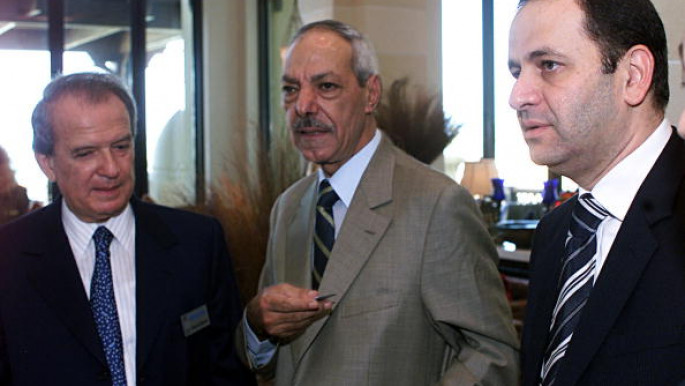
From L to R: Lebanese Minister of Economy and Trade Marwan Hamadeh, Talal Salman and Pierre al-Daher, head of the independent Lebanese Broadcast Corporation (LBC) television attend the opening session of the 2003 Arab Media Summit in Dubai [Nasser Younes/AFP via Getty]
Entrepreneur Yassine Khelifi is hoping to redirect agricultural waste into alternative energy sources to help ease the burden in Tunisia.
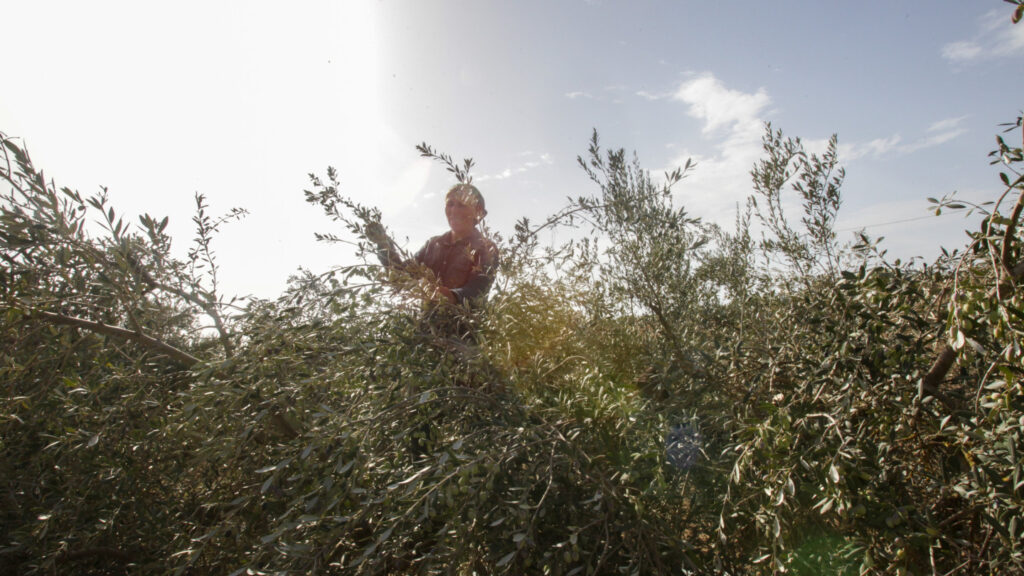
In a northern Tunisian olive grove, Yassine Khelifi’s small workshop hums as a large machine turns olive waste into a valuable energy source in a country heavily reliant on imported fuel.
Holding a handful of compacted olive residue — a thick paste left over from oil extraction — Khelifi said: “This is what we need today. How can we turn something worthless into wealth?”
For generations, rural households in Tunisia have burned olive waste for cooking and heating or used it as animal feed.
The International Olive Council estimated Tunisia will be the world’s third-largest olive oil producer in 2024-2025, with an expected yield of 340,000 tonnes. The waste generated by the oil extraction is staggering.
Khelifi, an engineer who grew up in a family of farmers, founded Bioheat in 2022 to tackle the issue. He recalled watching workers in olive mills use the olive residue as fuel.
“I always wondered how this material could burn for so long without going out,” he said. “That’s when I asked myself: ‘Why not turn it into energy?'”
Beyond profit, Khelifi hopes his startup helps “reduce the use of firewood as the country faces deforestation and climate change”.
Employees transport truckloads of olive waste at his workshop, stacking it high before feeding it into the processing machines.
The material is then compacted into cylindrical briquettes and left to dry for a month under the sun and in greenhouses before being packaged and sold.
The soul of olives
Khelifi began developing his idea in 2018 after he travelled across Europe searching for a machine to turn the olive paste into long-burning fuel.
Unable to find the right technology, he returned to Tunisia and spent four years experimenting with various motors and mechanical parts.
By 2021, he had developed a machine that produced briquettes with just eight percent moisture.
He said this amount significantly reduces carbon emissions compared to firewood, which requires months of drying and often retains more than double the amount of moisture.
Bioheat found a market among Tunisian restaurants, guesthouses, and schools in underdeveloped regions, where winter temperatures at times drop below freezing.
But the majority of its production — about 60 percent — is set for exports to France and Canada, Khelifi said.
The company now employs 10 people and is targeting production of 600 tonnes of briquettes in 2025, he added.
Selim Sahli, 40, who runs a guesthouse, said he replaced traditional firewood with Khelifi’s briquettes for heating and cooking.
“It’s an eco-friendly and cost-effective alternative,” he said. “It’s clean, easy to use, and has reduced my heating costs by a third.”
Mohamed Harrar, the owner of a pizza shop on the outskirts of Tunis, praised the briquettes for reducing smoke emissions, which he said previously irritated his neighbours.
“Besides, this waste carries the soul of Tunisian olives and gives the pizza a special flavour,” he added.
‘Protect the environment’
Given Tunisia’s significant olive oil production, waste byproducts pose both a challenge and an opportunity.
Noureddine Nasr, an agricultural and rural development expert, said around 600,000 tonnes of olive waste is produced annually.
“Harnessing this waste can protect the environment, create jobs, and generate wealth,” he said.
Nasr believes repurposing olive waste could also help alleviate Tunisia’s heavy dependence on imported fuel.
The country imports more than 60 percent of its energy needs, a reliance that widens its trade deficit and strains government subsidies, according to a 2023 World Bank report.
Fuel and gas shortages are common during winter, particularly in Tunisia’s northwestern provinces, where households struggle to keep warm.
Redirecting agricultural waste into alternative energy sources could ease this burden.
Yet for entrepreneurs like Khelifi, launching a startup in Tunisia is fraught with challenges.
“The biggest hurdle was funding,” he said, lamenting high-interest bank loans. “It felt like walking on a road full of potholes.”
But now his goal is “to leave my mark as a key player in Tunisia’s transition to clean energy”, he added. “And hopefully, the world’s, too.”
Climate-induced droughts drying up MENA’s olive oil production
A report on climate change by the World Meteorological Organization had found that “the warming has been more rapid in Africa than the global average,” adding that “increased temperature has contributed to a 34% reduction in agricultural productivity growth in Africa since 1961,” a greater drop “than any other region in the world.”
In an ominous note, the report also observed that “the warming trend for North Africa, around 0.41 °C/decade between 1991 and 2021, was higher than the warming trend for all the other African sub-regions.”
Heat waves pose a serious risk to the production of olive oil in North Africa, which accounts for much of the world’s supply. According top provisional data from the IOC, Morocco produced 160,000 metric tons of olive oil between October 1, 2020, and September 30, 2021, making that country the world’s fifth-biggest producer.
Tunisia, the world’s sixth-largest producer during that period, recorded 140,000 metric tons. Algeria and Egypt together had 100,000 metric tons.
With climate change becoming a more persistent aspect of everyday life, the consequences for olive oil look set to grow worse.
The Tunisian National Observatory for Agriculture predicts that Tunisia’s production of olive oil may drop 35 percent from its 1981-2010 average by 2050 and 70 percent from that average by the turn of the century. Production in Algeria, Egypt, Libya, and Morocco seems unlikely to fare much better in the face of global warming.