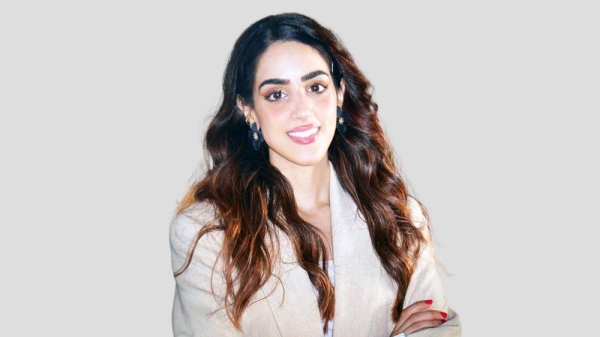
Dr. Samira Daroub – UF/IFAS Scientist Shares How Love for Learning Led to Lifetime of Teaching, International Work

Dr. Samira Daroub Ph.D. Soil & Water Scientist. Director, EREC.FL, USA.

Throughout history, women have played a key role in humanity’s scientific advancements. As mentors, innovators and thought leaders, women in science have inspired and empowered countries, communities, women and young girls with their work and knowledge.

In celebration of National Women’s History Month, Samira Daroub shares how a love for learning inspired a lifetime of teaching and research that has expanded beyond United States borders. Daroub is the second woman in 100-year-old history of UF/IFAS Everglades Research & Education Center (EREC) to take the center’s helm.

Q: What was your early life like?

A: I was born in Beirut, Lebanon. My grandfather was a farmer. One of my uncles also had a farm. I always loved math and had a constant desire to learn. I also wanted to attend a university.

My career in soil and water sciences didn’t really take shape until I was an undergraduate. It is all due to the power of teachers and mentoring, and it goes back to my first semester in college when I took a soil science class. The instructor took time to teach each lesson. I learned how it had practical application, and it was through that mentorship and others that I gained a love for this applied science.

That is a life lesson that I took to heart and have paid that support forward ever since. It is my goal to  serve as a mentor for every student, rising faculty member or researcher who I encounter throughout my career.

Q: Where did you pursue your undergraduate and graduate degrees and in what fields?

A: I earned a bachelor’s degree in agriculture and a diploma in agricultural engineering from The American University of Beirut in Lebanon. I later obtained my master’s degree in soil sciences there. For my Ph.D. in soil chemistry, I attended Michigan State University on a full scholarship awarded by the non-profit Hariri Foundation-Lebanon.

Q: Tell us about your life at UF/IFAS?

A: I arrived at UF/IFAS in 2000 as an assistant professor of soil and water sciences where I conducted research and taught classes both at EREC and at Fort Lauderdale Research and Education Center. I later became a professor and the distance education coordinator in the department of soil and water sciences.

I have been teaching classes in soil sciences, soil chemistry and environmental nutrient management as part of the undergraduate and graduate distance education programs. I also advise distance education students pursing non-thesis master’s degrees in the environmental science track at UF.

As a researcher, I focus on environmental issues related to soil and water quality. I specialize in the development and implementation of best management practices (BMPs) to reduce phosphorus leaching in soils and ultimately prevent it from entering surface waters in the Everglades in south Florida. A second research focus is on the sustainability of organic soils and agriculture in the Everglades Agricultural Area (EAA). A third focus is on international development aimed on building individual and institutional capacity in India and Middle East in soil health and water resources.

I established a nationally recognized research and Extension program for the development of best management practices to improve water quality as part of a comprehensive effort for Everglades’ restoration in Florida. I offer in-person and online best management practices workshops and have always been committed to providing Extension and outreach activities to local area growers

I later became interim center director of EREC, until February this year when I was appointed as center director.

Q: You have conducted extensive international educational and research work. Tell us about it.

A: My journey in international research and education started when I was a postdoctoral fellow at Michigan State University with Dr. Joe Ritchie. I visited national and international research centers in Colombia, Brazil, Syria, Kenya and Hungary for collaboration and data acquisition to be used in crop modelling.

My international education experiences include teaching and mentoring undergraduate and graduate international students. I have mentored interns, visiting scholars and Borlaug fellows from Brazil, Honduras, Costa Rica, India and Iraq. The scholars were trained for laboratory and research techniques and introduced to sustainable practices in South Florida agriculture and water management. I have conducted research in India, as well as educational projects and capacity building workshops in India, Jordan, Syria, Lebanon and Egypt. 

At UF/IFAS, I have always been interested in international research and educational projects to share and gain native knowledge into soil and water management and online learning. I have collaborated with Sandra Russo at the UF International Center on various educational projects in the Middle East. Effective mentoring is a big part of what I do for local and international scholars. I have always taken an approach to advising and mentoring that allows students and postdocs opportunities to strengthen their interpersonal skills and technical competence, while also developing leadership skills and confidence.

Q: What words of inspiration would you give to other women and girls as a mentor and leader in your field?

A: Education is key. Never stop learning. Lean on family, peers, educators and supporters to succeed. A support system is vital. 

The mission of the University of Florida Institute of Food and Agricultural Sciences (UF/IFAS) is to develop knowledge relevant to agricultural, human and natural resources and to make that knowledge available to sustain and enhance the quality of human life. With more than a dozen research facilities, 67 county Extension offices, and award-winning students and faculty in the UF College of Agricultural and Life Sciences, UF/IFAS brings science-based solutions to the state’s agricultural and natural resources industries, and all Florida residents. ifas.ufl.edu  |  @UF_IFAS

source/content : bocaratontribune.com

___________
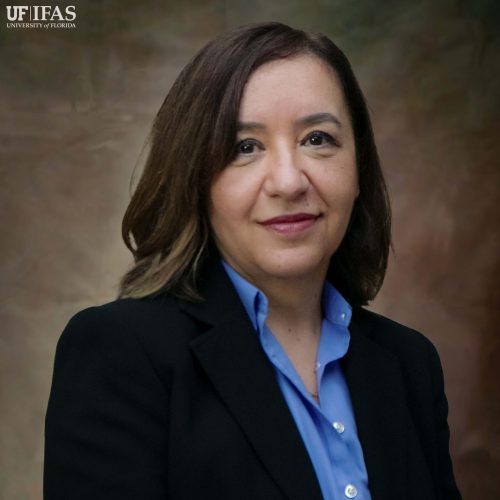
Samira Daroub

_________________________

AMERICAN / LEBANON

13th Makkah Excellence Award Winners Honored – Saudi Arabia, March 2022

The winners’ ceremony for the 13th Makkah Excellence Award took place on Wednesday, with recipients honored by Gov. Prince Khalid Al-Faisal.

The awards were announced earlier in February during the sixth session of the Makkah Cultural Forum, which was held under the theme of “How to be a role model in the digital world.”

In its sixth session, the Makkah Cultural Forum achieved nearly 771 digital initiatives, and the Makkah Excellence Award, since its inauguration, received more than 4,500 initiatives.

The awards covered nine categories.

The Ministry of Sports won the award for administrative excellence, with the prize handed to Sports Minister Prince Abdulaziz bin Turki Al-Faisal.

The scientific and technical excellence award went to the Ministry of Communications and Information Technology.

King Abdulaziz International Airport in Jeddah won the environmental excellence award and this was presented to Abdulaziz Alduailej, president of the General Authority of Civil Aviation.

The Special Forces for Hajj and Umrah Security won the award for Hajj and Umrah services. The prize was presented to Maj. Gen. Mohammed Al-Bassami, commander of the Hajj Security Forces.

Two companies were honored for their economic excellence. The first was Um Al Qura Development Company, with the prize presented to Abdullah Saleh Kamel, chairman of the company’s board of directors. The second was Petro Rabigh Company, and the award was presented to Othman A. Al-Ghamdi, Petro Rabigh’s president and CEO.

The humanitarian excellence award went to the Saudi Red Crescent Authority, with the award given to the authority’s president Jalal Alowaisi. The other winner of this award was Fayez Al-Malki, a Saudi actor known for his humanitarian work. Al-Malki was the only individual winner across all categories.

The cultural excellence award went to the Red Sea International Film Festival, and was presented to Film Commission CEO Abdullah Al-Eyaf.

The urban excellence award was given to the Jeddah dome project, and the prize was presented to Nawaf Abdulkareem, director general of Jeddah season.

The Ehsan charity platform was recognized for its social excellence.

Wednesday’s ceremony also honored and announced the winners of the Makkah Days Challenge for Programming and Artificial Intelligence.

Winners included the University of Jeddah for their “Air Supply Ambulance” initiative in the field of Hajj and Umrah, Taif University for an initiative called “Mustahil” in the field of smart cities, and Um Al Qura University for its “Athar” initiative in the field of tourism and entertainment.

source/content: arabnews.com

___________

Prince Khalid Al-Faisal, the Governor of Makkah region, during his speech. (Supplied)

________________

SAUDI ARABIA

Tunisia’s Dr.Hichem Djait – Historian, Scholar and Prolific Author

Tunisia bid a final farewell on June 1 to the prominent historian and scholar of Islam – Hichem Djait, whose input was seminal to research on critical periods of Islamic history. From sociological, philosophical and anthropological perspectives, Djait’s publications offer insight into key issues facing the interpretation of Islamic history and the interaction of Islam with modernity.

Born in 1935 in Tunis to an erudite family in Islamic jurisprudence, Djait received a conservative education in his immediate milieu before attending the Sadiki high school in Tunis, which opened the gates for him to French and Western culture in general. He received an advanced degree in history in France in 1962. Afterwards, he obtained a Ph.D. in Islamic history from the Sorbonne University in Paris in 1981.

In a comment on his learning journey from Tunis to Paris, he said: “My discovery of philosophy was decisive. It was a conquest and a spiritual awakening, and I do not mean that only in a metaphysical sense, but also at the level of psychology, ethics and logic. It was then that preconceived certainties began to melt away and I discovered biology and the theory of evolution, and all of this amazed me and astonished me at the same time.” (See a related article, “Do Human Evolution and Islam Conflict in the Classroom?”)

Djait, who died at age 86, spent nearly half a century investigating Islamic history and Arab culture. He was an emeritus professor at the University of Tunis and a visiting professor in several renowned higher education institutions, including McGill University, in Montreal, and the University of California at Berkeley. He was also a member of the European Academy of Sciences and Arts, chairman of the Tunisian Academy of Sciences, Letters and Arts, and a member of the International Scientific Committee that produced Unesco’s eight-volume General History of Africa.

His stay in the West inspired him to write Europe and Islam, a book that sheds light on the interplay between Islam and Western civilizationHis magnum opus remains The Great Fitna (La Grande Discorde), a groundbreaking work in the study of a major period of Islamic history in line with a rigorous academic approach.

The Great Fitna answers questions relating to the outbreak of infighting between Muslims right after the death of the Prophet. Other of Djait’s masterpieces include Islamic Culture in CrisisThe Arab-Islamic Personality and the Arab Destiny, and The Founding of the Islamic West.

His focus shifted more towards writing the biography of the Prophet Muhammad using scientific lenses in what has been described as a bold approach to Islamic history that breaks away from the sacralization that permeates the work of many Arab scholars on the subject. His goal was to rewrite prophetic tradition in a scientific way that combines comparative history with anthropological insight.

In this respect, he made it clear that a distinction should be made between historical thought, historiography and the philosophy of history. This book was written in three parts and puts the genesis of Islam in its historical context. (See a related article, “A New Perspective on the Last Days of the Prophet.”)

Djait received a constellation of distinctions and prizes, including being named Arab Cultural Personality of the Year by the Arab Institute for Research and Publishing in Beirut in 2016, and being honored in 2018 by a group of Arab researchers who dedicated to him a book that sheds light on his rich academic and intellectual journey.

source/content: www.al-fanarmedia.org (edited for length)

_____________

Hichem Djait died June 2021 at age 86. The Tunisian scholar spent nearly half a century investigating Islam’s place in history and in the modern world (Photo: from Facebook).

___________

TUNISIA

Arabic Digital Resources of National Library of Israel

In summer 2020, Arab News reported that the National Library of Israel, founded in Jerusalem in 1892, was planning to digitize its large collection of rare Islamic books and manuscripts, as part of a cross-cultural drive to open its digital doors to Arabic speakers in Israel and across the region.

Back in August 2020, Dr. Raquel Ukeles, then curator of the Islam and Middle East Collection at the NLI, said that the library was determined to play a part in eradicating what she saw as the “tremendous amount of ignorance about Islam, about Palestinian culture and Arab culture generally that has real repercussions on the political level.”

It was, she said, “very natural for us to be focusing on and investing in this material, to create space for Muslim culture in Israel and in the broader intellectual life, whether it’s in the Middle East or in the world, to enable greater understanding.” 

The response has been truly impressive.

“The truth is that I’m thrilled to see the massive increase in the use of our Arabic digital resources,” Dr. Ukeles, who is now head of collections at the library, told Arab News a year and a half later.

“It’s so heartening to see that people are willing to cross boundaries in order to gain knowledge.” 

In 2021, more than 650,000 visitors from across the Arab world found their way to the NLI’s Arabic-language website — an increase of 40 percent compared with 2020. There has been a dramatic increase in interest from Saudi Arabia in particular.

Most of the visitors, seeking out not only rare Islamic documents but also other archival treasures including a large collection of historic Arabic-language newspapers, came chiefly from the Palestinian Authority, Egypt, Saudi Arabia, Jordan and Algeria. 

Worldwide, there was a 125 percent increase to 1.5 million visitors to the Arabic site. Within Israel itself, the number of visitors to the site jumped by 250 percent to a total of 620,000 users, while the library’s trilingual Hebrew-Arabic-English site as a whole registered 10 million visits in 2021.

There has been a dramatic increase in interest from Saudi Arabia in particular. In 2021, there was a 30 percent growth in traffic from the Kingdom to the NLI site, with more than 121,000 sessions by nearly 94,000 individual users. About a third of the visitors were women, and 60 percent of the total were aged between 25 and 44.

“When we launched our first digital archive of early Arabic newspapers from Ottoman and Mandatory Palestine in September 2016, we had an annual rate of about 5,000 users for the first few years,” Dr. Ukeles said.

“That number has now increased by about tenfold and, thanks to our talented Arabic digital team, this past year we had 1.5 million total users of our Arabic websites.”

It was, she said, the aim of the National Library of Israel “to allow people to gain access to their own culture and history,” but also “to stimulate curiosity and engender respect about other cultures.”

This seems to be working.

“Users from the Arab world are searching our collections of Arabic newspapers and Islamic manuscripts, but they are also interested in our historical maps and digitized materials about Jewish history and Israel.”

Thanks to technology, the priceless documents at the library are even more accessible online, where they can be seen in exquisite, close-up detail — far better than they would be if viewed in person behind the glass of a display case.

“Technology allows culture and the written word to cross boundaries and reach new places previously inaccessible,” said Yaron Deutscher, head of digital at NLI.

“The fact that so many people from across the Arab world are expressing such a high level of interest in the cultural treasures freely available via the website shows just how relevant these things are, even for the younger generation living in our region.”

Those treasures include some extraordinary documents, including an exquisite copy of Muhammad Al-Busayri’s famous 13th-century poem “Qasidat Al-Burda,” or Ode of the Mantle, written in praise of the Prophet.

Also online are maps, illustrations and photographs, and hundreds of thousands of pages of historic Arabic newspapers from Ottoman and Mandatory Palestine — invaluable “rough first drafts of history” published between 1908 and 1948.

Newspapers and journals from the past “constitute one of the more clear-sighted vantage points for acquainting ourselves with bygone eras,” said a spokesperson for the library. 

“Periodicals are an important resource for scholars as well as a portal for anyone wishing to access history through the words of contemporaries.”

Among the most regularly viewed items are 73 issues of the weekly newspaper Al-Arab, published in Mandatory Palestine between August 1932 and April 1934. Its writers included prominent authors and intellectuals of the day, such as Muhammad ‘Izzat Darwaza, the Palestinian politician and historian whose contributions included the important article, “The Modern Awakening of Arab Nationalism,” and who was interned by the British in 1936.

The 167 issues of the bi-weekly newspaper Al-Jazira, published in Palestine between 1925 and 1927, is another invaluable insight into the politics of the day, while a fascinating snapshot of contemporary art and culture can be found in the rare three issues of the magazine Al-Fajr. Its purpose, as declared in its first edition, published on June 21, 1935, was “to represent all intellectual currents in literature, society, art, and science.”

It was, says the NLI, “a veritable storehouse of knowledge and included diverse writings (and) represented an important stage in the development of Palestinian culture.”

Al-Fajr lasted only two years. Along with many newspapers and magazines, it ceased publishing during the Arab revolt in Palestine between 1936 and 1939, and never returned to print.

One of the oldest periodicals in the digital collection is the daily newspaper Al-Quds. First published in Jerusalem in 1908, the 107 issues in the collection cover the period from then until the end of 1913, offering fascinating insights into the prevailing social and political concerns on the eve of the First World War and the final death throes of the Ottoman Empire.

Social history aside, the most visually breathtaking treasures belong to the more distant past. Many of the documents and books contain unrivaled examples of Arabic and Persian calligraphy and illustrations.

The library attributes the rise in interest in its collections in part to the Abraham Accords, the normalization agreement signed between Bahrain, Israel and the UAE on Sept. 15, 2020, which saw the first Israeli embassy open in Abu Dhabi, and the first embassy of the UAE in Tel Aviv.

In May last year, the NLI signed a historic memorandum of understanding with the National Archives of the UAE in Abu Dhabi, committing the two organizations “to work together in support of mutual and separate goals and for the benefit of the international cultural and documentary heritage sector.”

The NLI said that the collaboration came “amid increased interest in regional collaboration in the wake of the Abraham Accords” and, in a joint communique, the new partners hailed the agreement as “a significant step forward.”

Both organizations, said the NLI, “serve as the central institutions of national memory for their respective countries and broader publics, and in recent years both have launched expansive and diverse efforts to serve scholars and wider audiences domestically and internationally.”

For Dr. Ukeles, the collaboration advanced “our shared goals of preserving and opening access to cultural heritage for the benefit of users of all ages and backgrounds in Israel, the UAE and across the region and the world.”

Dr. Abdulla M. Alraisi, director-general of the UAE’s national archives, said that the collaboration reflects its determination to “spread its wings around the world to reach the most advanced global archives and libraries, to obtain the documents that come at the heart of its interest as it documents the memory of the homeland for generations.”

source/content: arabnews.com

___________

Ottoman Hajj manual. (Supplied/ National Library of Israel)

__________

ISRAEL

MAScIR Develops 100% Moroccan Tuberculosis Diagnostic Test

Researchers from the MAScIR Foundation have developed a 100% Moroccan made molecular test for tuberculosis screening.

The test will provide health professionals with results within 30 minutes.

The test called MAScIR TB SS-LAMP “has the advantage of being precise and fast, delivering results in 30 minutes,” a press release from the foundation said on Friday. 

The foundation, which is part of the Mohammed VI Polytechnic University, said that the Pasteur Institute of Morocco validated the test. It is also registered with the Directorate of the Medicines and Pharmacy under the Ministry of Health and Social Protection.

The test constitutes a solution that facilitates “diagnosis as close as possible to patients at a controlled cost,” the researchers said.

source/content: moroccoworldnews.com

___________

MAScIR Develops 100% Moroccan Tuberculosis Diagnostic Test

____________

MOROCCO

Saudi Female Engineer Dr.Dana Al-Sulaiman Wins International Award for Inventing a Chip that detects Cancer

Dana Al-Sulaiman., Ph.D. Biomedical Engineer. Scientist. Educationist

Saudi engineer Dana Al-Sulaiman won the “Innovators Under 35” award, for her ability to create a chip that detects different types of cancer inside the patient’s body.

Eng. Dana explained to Alekhbariya channel about her innovation, saying, “It is a small chip made of micro needles covered with a substance that is placed on the skin, and it is able to absorb liquid, and detect cancer biomarkers in an easy and non-invasive way.”

The Saudi inventor, who also works as an assistant professor of Material Science and Bioengineering at KAUST, elaborated, “The reason that prompted me to create the slide is the painful and tedious process of the traditional way where a sample is taken from the patient.”

Al-Sulaiman pointed out that the chip she created reveals different types of cancer, adding that innovation saves a lot of effort, money and time.

She added that the innovation was granted an American patent, and the technology is currently being developed and manufactured from sustainable materials at King Abdullah University and then it will be delivered to doctors in all hospitals soon.

The “Innovators Under 35 Award” seeks to honor technical experts, male and female researchers, male and female scientists, whose age does not exceed 35 years.

The conditions for nomination for the award include a wide range of fields, including biomedicine, computing and communications, energy, materials science, software and even transportation, the Internet, and more, where the innovations and research they have accomplished can make a qualitative leap in our contemporary world.

The selected innovators will give a brief presentation on their work of no more than 3 minutes per innovator. Candidates must also be citizens or residents of a country in the Middle East and North Africa region, or of Arab origin.

source/content: saudigazette.com.sa

____________

_________________

SAUDI ARABIA

6 of the Most Fascinating Scientific Findings Within Morocco in 2021

The findings are shifting scientists’ research on early human civilizations to the North African region.

Morocco has been at the center of several recent discoveries that have made headlines, both locally and internationally. The discoveries allowed archeologists to uncover some of the most fascinating secrets of ancient civilizations. Below are 6 of the most recent Moroccan discoveries.

Oldest rock carving in North Africa

Research professors at Moroccan and Spanish universities discovered rock engravings dating back to the Paleolithic age, which was roughly 2.5 million years ago, at the Camel Cave in the province of Berkane.

According to the Department of Culture of the Moroccan Ministry of Culture, Youth, and Communication, the engravings are about 12,000 years old, corresponding to the last ice age, which also affected Morocco’s northern region.

The national discovery was part of a scientific agreement between the National Institute of Archeology and Cultural Heritage (INSAP) and the Mohammed I University of Oujda on a collaboration project regarding the prehistoric human communities in the Orient.

Old Macaque Fossil 

A team of scientists from Moroccan and Spanish universities discovered a macaque fossil in Guefait, a town in the province of Jerada, in the eastern region of Morocco.

According to the Catalonian news outlet Catalan Diari Mes, the fossils, which date back to about 2.5 million years, are assigned to the genus Macaca, a gregarious Old-World monkey of the subfamily Cercopithecinae.

The species is estimated to have lived for 6 or 7 million years and their remains are commonly found in North Africa, but can also be found in Europe, where they migrated due to the Messinian Salinity Crisis over 5.5 million years ago.

Prehistoric community in the Anti-Atlas

The debitage stone, discovered at the rock site Imaoun, located in Southern Morocco, indicates  the existence of a possible prehistoric community.

Levallois lithic material, which represents a sophisticated way of shaping stone tools in prehistoric times, was discovered in the region as a result of excavations carried out there between 2017 and 2018.

As stated in the digital platform for interdisciplinary research on the Canary Islands, Almogaren, the community would have lived about twenty kilometers northeast of the Akka oasis in the Anti-Atlas.

Ancient Marine Lizard

Archeologists in Morocco discovered a new species of Mosasaur, a marine lizard with shark-like cutting teeth, which lived about 72 to 66 million years ago.

Based on two complete skulls and referred jaws, scientists were able to reconstruct the species and reveal some of the unique characteristics.

According to a scientific paper in the Cretaceous Research journal, the marine species measured eight meters in length, unlike most of its relatives, which were unable to grow more than a few meters. It also had “elongate and robust jaws, small teeth, and specialized tooth implantation.”

New artifact suggests Morocco as origin of human culture

Research on ancient jewelry recovered from the Bizmoune cave in the South West of Morocco indicates the ornaments may represent the earliest evidence of advanced human culture.

There have been 33 shell beads recovered, dating back to over 142,000 years, which would place them in the late Middle Pleistocene period, the same geologic time period as the earliest documented emergence of humanity.

An academic paper published by Science Advances stated that the artifacts are considered the first sign of “symbolic behavior” by early Homo sapiens.

Unique dinosaur fossil

Scientists discovered a dinosaur fossil with “bizarre” spikes dating back to about 168 million years ago in Morocco’s Boulahfa in the Middle Atlas Mountains.

The fossil belongs to an Ankylosaurus, a type of herbivore species of dinosaurs that are known for their “ebony armpit that once covered their backs,” according to the Natural History Museum.

The new discovery represents a significant milestone because it is the first time a fossil of this type has been discovered in Africa.

source/content: moroccoworldnews.com

_____________

_____________

MOROCCO

Kuwait’s Mohamed Al-Sharikh and Morocco’s Mohamed Mechbal amongst 5 Winners of ‘The 2021 King Faisal Prize for Service to Islam’

The 2021 King Faisal Prize for Service to Islam has been awarded to Mohamed Al-Sharikh from Kuwait, chairman of Sakhr Software Company.

He is one of five winners chosen by a selection committee led by Prince Khalid Al-Faisal, chairman of the King Faisal Prize Board.


The others are Moroccan Professor Mohamed Mechbal of Abdul-Malik Al-Saadi University in Tétouan, Morrocco (Arabic language and literature); Stephen Mark Strittmatter, an American neurologist at Yale School of Medicine, and British Professor Robin Franklin of the Wellcome Trust-MRC Cambridge Stem Cell Institute (co-winners in medicine), and Professor Stuart Parkin from the UK, an experimental physicist at Stanford University in California (science).

Mechbel was recognized for work that lays the foundations for the creation of modern Arab rhetoric within a vision inspired by the call for renewal.

Previous winners in this category of the King Faisal Prize have included rulers, heads of state, thought leaders and social scientists, as well as many distinguished institutions

source/content: arabnews.com

____________________

_______________________

KUWAIT / MOROCCO

Aziza Chaouni Awarded Bronze for Sustainable Project at 6th Int’l Holcim Awards,Venice : November 13th, 2021

Aziza Chaouni. Architect. Educationist. Teacher.

The Fez-born architect was honored for her project on addressing climate change-induced tribal displacement.

The Moroccan architect earned both the Global Holcim Awards Bronze prize and the Acknowledgement Prize for her project “Cultural Interlude.” The project draws a self-sustaining music school and ecotourism center that aims to preserve the tribal cultural heritage in an oasis located in the town of M’Hamid El Ghizlane, in Zagora province. 

Chaouni is also the co-founder of the Bureau of Ecological Architecture and Systems of Tomorrow (EAST) with Takako Tajima, a renowned landscape architect based in Southern California. Tajima has won many prizes, including The Architectural League Prize from the Architecture League of New York in 2009.

www.azizachaouniprojects.com

source/content: moroccoworldnews.com

__________

Aziza Chaouni awarded at 6th International Holcim Awards / pix: moroccoworldnews.com

____________________

CANADA / MOROCCO

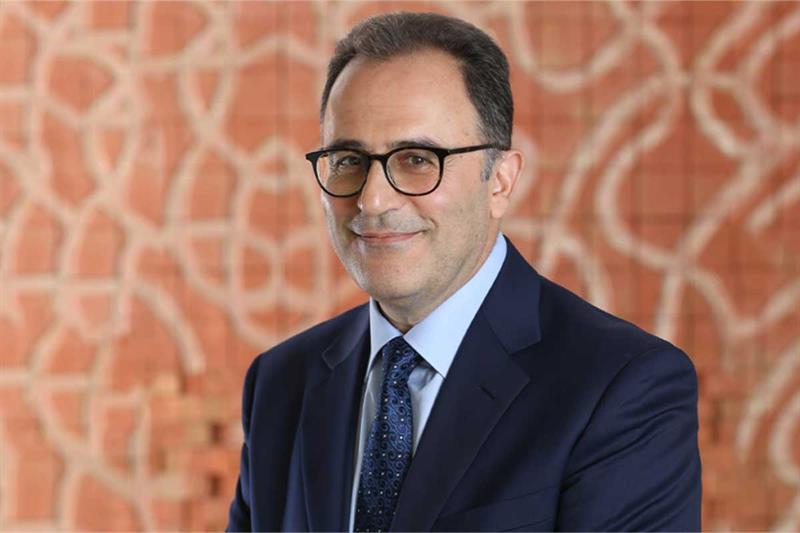
AUC Celebrates Inauguration of its First Ever Arab President Ahmed Dallal : October 25th, 2021

The American University in Cairo (AUC) celebrates the inauguration of Lebanese American scholar Ahmed Dallal as its first Arab president throughout its 102-year-long history.

The AUC named Dallal, a former provost at the American University in Beirut (AUB) and a professor at many universities in the US, as its 13th president.

Dallal is an engineer, a former dean of Georgetown University in Qatar, and also a prominent scholar of Islamic studies, with many publications in this field.

He earned his bachelor’s degree in mechanical engineering from the AUB and his MA, MPhil, and PhD in Islamic studies from Columbia University.

He has written dozens of articles, book chapters, and publications, as well as several books.

Established in 1919, the AUC has been among the top-ranking universities in the Arab World, ranking first in Egypt and second in Africa, according to the 2020 QS World University Rankings.

source/content: english.ahram.org.eg

___________

Ahmad Dallal, the AUC s 13 president (Photo courtesy of Georgetown University)

_________________________

AMERICAN / LEBANON