Arabs & Arabian Records Aggregator. Chronicler. Milestones of the 25 Countries of the Arabic Speaking World (official / co-official). AGCC. MENA. Global. Ist's to Top 10's. Records. Read & Enjoy./ www.arabianrecords.org
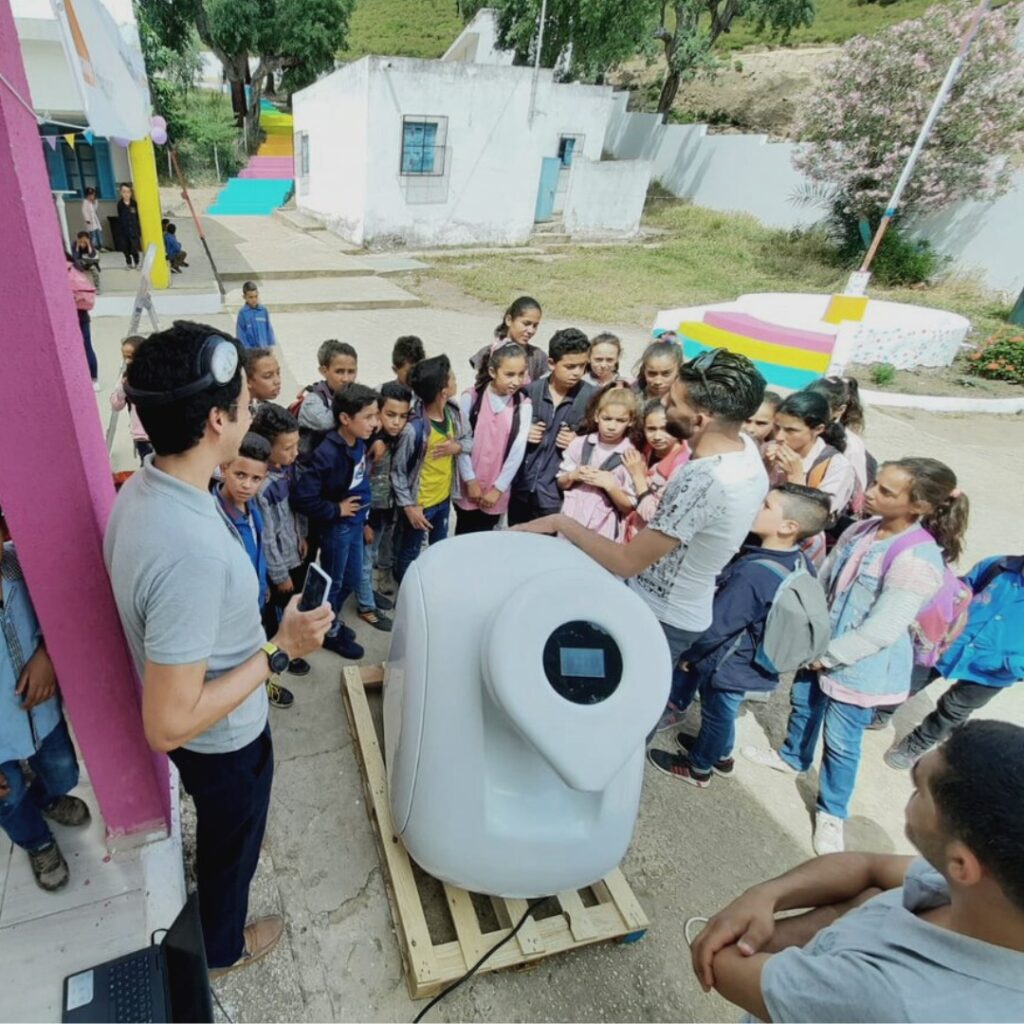
Tunisian start-up “Kumulus Water” has provided assistance to a school deprived of drinking water in Makhtar in the region of Siliana (north-west of Tunisia) through a technical solution “Kumulus 1”, designed to generate water from the ambient air.
It came to support its expertise in water technology, the efforts of the Tunisian NGO “WallahWeCan”, which campaigns for the improvement of living conditions of students in schools and educational environments in Tunisia, especially in disadvantaged areas.
Thanks to atmospheric water generators, each producing 20 to 30 litres of healthy drinking water per day, 570 students of the chosen school will now be able to benefit from a regular supply of drinking water.
Technically, the atmospheric water generator is a device designed to produce water from the ambient air. It sucks in the air and dusts it, then dehumidifies it by lowering its temperature to the dew point to create condensation. The condensed water in the machine then passes through four filters to remove impurities.
The smart machine can fit into a 1m3 cube and can be equipped with a solar pack, making it fully autonomous and independent, the startup says. “It offers mobile control options via a dashboard and an app designed by the six-person team at startup Kumulus Water. It also offers features that ensure water is delivered sustainably and economically,” its creators explain.
According to Kumulus Water, co-founded and led by Iheb Triki, there is 6 times more water in the air than in rivers. This water can be extracted by cooling the air below its dew point and exposing it to moisture absorbers or pressurizing it to make the water drinkable.
Kumulus was also installed at the Bayadha school (Delegation of Ghar Dimaou in the governorate of Jendouba).
According to Regional Commissioner of Education Rim Maaroufi, this is a project developed by a young Tunisian engineer and funded by the Orange Foundation in cooperation with the association “a child, smiles”.
In a statement to TAP, Maaroufi said that Bayadha School, where the Kumulus was installed, suffers from a lack of drinking water due to a lack of connection with the distribution network. Water tanks were installed in advance to provide drinking water to the students and teachers. The machine produces about 20 to 30 litres of drinking water per day.
In Tunisia as in many other countries in the world, access to drinking water is one of the most imminent threats facing humanity. According to the WHO, out of 7 billion people, 2.1 billion do not have satisfactory access to drinking water. The demand for water will increase further with the population growth and the increase in living standards.
In 2021, the co-founder of the Tunisian start-up Iheb Triki was selected by the prestigious Choiseul Institute as one of the 100 Young African Leaders.
Also, the start-up has been selected as the second-best impact investment opportunity in the prestigious competition (MBA Impact Investing Network & Training) “Turner MIINT 2022”.
The young Tunisian company managed to snatch second place among 40 start-ups from the best American business schools, having participated in the global competition Turner MIINT.
The translators of books about culture, physics and data mining are among the latest recipients of the prestigious King Abdullah bin Abdulaziz International Awards for Translation.
This year’s event, covering works published in 2021, marks the 10th anniversary of the awards. There were six categories and the winners, chosen by the event’s board of trustees, were announced on Monday.
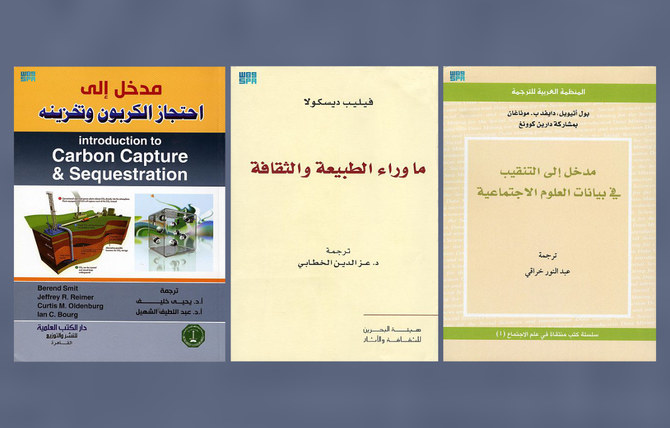
Izz ddeen Khattabi Riffi’s translation from the original French of “Beyond Nature and Culture” by Philippe Descola took the award for works in the humanities category translated into Arabic. It was shared by Abdelnour Kharraki for his translation of “Data Mining for the Social Sciences: An Introduction” by Paul Attewell, David Monaghan and Darren Kwong, originally published in English.
The award for institutions went to the publishing and translation department of Obeikan Company, and to Al-Arabi Publishing & Distribution.
There were also two winners in category for works in the natural sciences translated into Arabic, both for books originally published in English: Dr. Sausan Hassan Al-Sawwaf and Dr. Laila Saleh Babsil for their translation of “Physics in Biology and Medicine” by Paul Davidovits; and Yahya Khlaif and Abdullatif Al-Shuhail for their translation of “Introduction to Carbon Capture and Sequestration” by Berend Smit, Jeffrey A Reimer and Curtis M. Oldenburg.
Three awards were presented in the category of Individual Efforts in Translation, to Hamza Qablan Al-Mozainy from Saudi Arabia, Murtazo Saydumarov from Uzbekistan, and Samir Mina Masoud Greeis, who is of Egyptian-German nationality.
The judges decided to withhold the awards in the two remaining categories, for books about the humanities and natural sciences translated from Arabic into other languages.
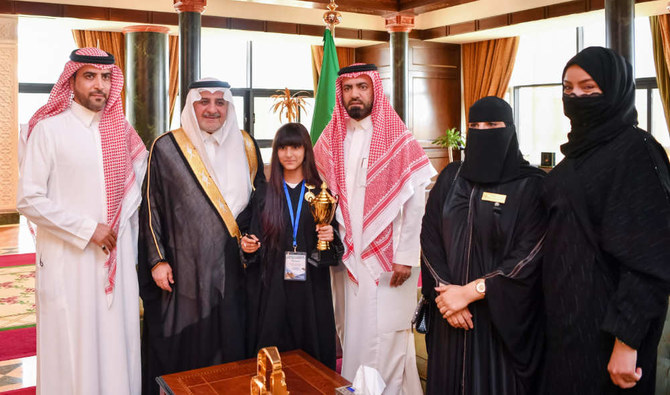
Tabuk Gov. Prince Fahd bin Sultan honored Itizaz Alnefaie, the primary school pupil from Tabuk International Schools who won second place in this year’s Worldwide Mental Arithmetic Competition, recently held in Egypt’s Sharm El-Sheikh.
Alnefaie broke the world record by solving 100 maths problems, testing herself against the clock.
He congratulated Alnefaie for this achievement, wishing her more success, noting the Saudi leadership’s support for outstanding students in all scientific fields.
“I’m pleased to meet you and everyone is proud of your achievement,” Prince Fahd said, praising the efforts made by Alnefaie’s parents and teachers, who created the environment for her to reach excellence, and who supported her talent. He also wished her and all of Tabuk’s students future success.
The prince then offered Alnefaie his personal pen as a gift. The head of Tabuk International Schools, Maram Al-Atwi, praised Prince Fahd for the achievement, which comes as a result of his great support for the education sector in Tabuk, noting that this success is an extension of the local and international achievements made by public school students from all Saudi regions.
Hundreds of talented pupils representing more than 25 countries, including Saudi Arabia, participated in this year’s competition.
Solving a math problem might take most people a few minutes. However, Alnefaie takes just a second or two.
source/content: arabnews.com (edited)
___________
Tabuk Gov. Prince Fahd bin Sultan honors Itizaz Alnefaie, the primary school pupil from Tabuk International Schools. (SPA)
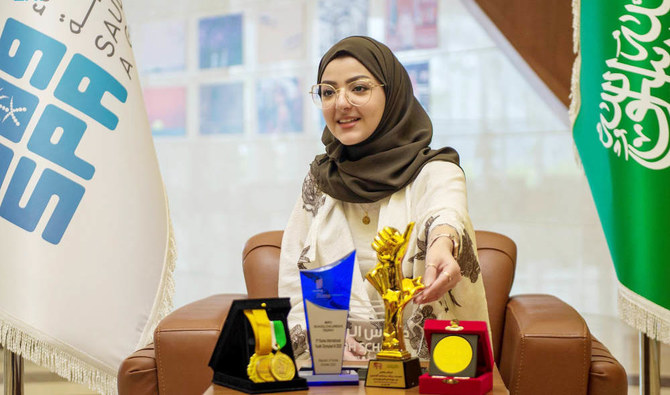
A Saudi medical student has won a string of an international awards for an invention that opens up a new world for hearing impaired or deaf drivers by dramatically improving their safety behind the wheel.
Renad bint Musaed Al-Hussein, a student at the College of Medicine at King Saud University, developed special sensors that operate as soon as they detect sounds outside the vehicle.
Sound frequencies are sent to a device inside the car, which then identifies and displays a description, image and color of the sound source visually, alerting the driver to any possible risk.
Her innovation has won several global awards and medals, including best invention at the World Intellectual Property Organization Cup and a gold award in the international invention competition as part of the Korea International Youth Olympiad.
The awards honor outstanding inventors, creators and innovative firms from around the world.
Al-Hussein said that her invention will reduce the risks facing hearing impaired drivers and may also help to save lives.
“One of the things that prompted me to come up with this invention is that some countries prevent hearing impaired or deaf people from driving because they are unable to hear important sounds. This invention will contribute to reducing the risks they face,” she said.
The Saudi inventor said that her invention could allow more than 466 million deaf people worldwide to drive, while also improving road safety by protecting their lives and the lives of others.
source/content: arabnews.com (edited)
_____________
Renad Al-Hussein said that her invention will improve road safety by protecting the lives of deaf drivers. (SPA)
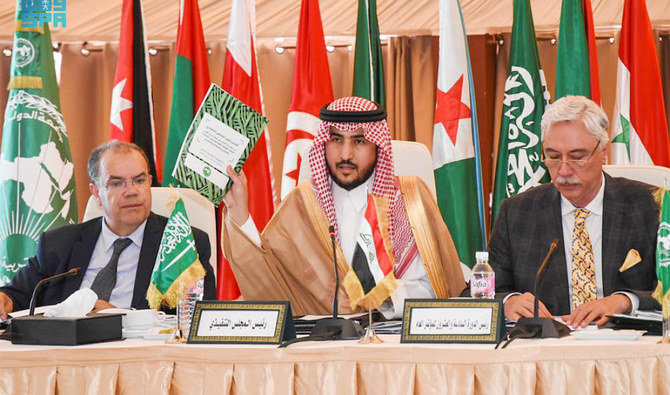
Saudi Arabia has been unanimously re-elected to chair the executive council of the Tunis-based Arab League Educational, Cultural and Scientific Organization until 2024.
The decision was made by members of ALECSO’s executive council after the 26th session of the general conference, which concluded its activities.
Council members expressed their appreciation for the positive results achieved and the complementary work of the executive council during the past 10 months.
The Arab ministers praised the initiative of the Saudi representative and chairman of ALECSO’s executive council, Hani Al-Moqbil, to develop the council’s road map, which was put together with a transparent methodology based on the involvement of countries in building a common Arab vision to support and enable the organization to achieve its goals.
Al-Moqbil extended his appreciation to King Salman and Crown Prince Mohammed bin Salman for their constant support, empowerment, and care, which was reflected in the Saudi role and its presidency of the executive council to contribute to a beneficial impact and supportive action for the development of ALECSO.
He also thanked Culture Minister Prince Badr bin Abdullah bin Farhan, who is also the chairman of the National Committee for Education, Culture, and Science, for his support, guidance, supervision, and harnessing of capabilities which gave direct and significant support throughout the Saudi presidency which helped it in serving its goals with all Arab countries.
Al-Moqbil also thanked the Arab countries and members of the ALECSO executive council for their re-election of the Kingdom and for renewing their confidence in the results that had been achieved during the past 10 months.
Al-Moqbil said: “Saudi Arabia, in its presidency of the executive council, worked to oversee the interests of the countries by listening to their proposals, observations, and visions to ensure that they are reflected on the ground and implemented in stages. The countries will work with greater effort and higher interest in taking care of the organization’s interests.”
source/content: arabnews.com (edited)
___________
The decision to re-elect the Kingdom came after the appreciation of the general conference for the efforts made by the executive council under the Kingdom’s stewardship. (SPA)
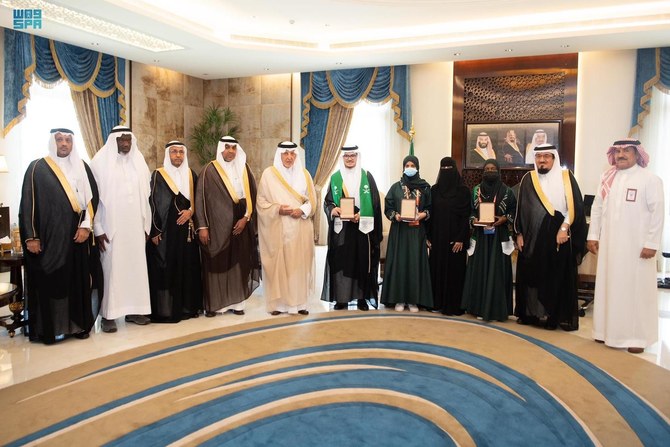
The Governor of Makkah region, Prince Khalid Al-Faisal, has honored successful students from Makkah and Jeddah who attended a science fair in the US earlier this month.
Prince Khalid congratulated three winning students who took prizes at the Regeneron International Science and Engineering Fair (ISEF), which was held from May 7 to 13.
Student Mawaddah Omar, hailing from Makkah, won third place in social and behavioral sciences, Youssef Khoja, from Jeddah, won a special award in embedded systems, and Rafaa Qanash won fourth place in engineering technologies.
The Saudi Embassy in the US tweeted: “Congratulations to our young #Saudi scientists Represented by @mawhiba and @tc_mohe, the student delegation won 6 awards at #ISEF2022, the second time this record is achieved in the Kingdom’s 16th year of participation.”
This year’s ISEF exhibition attracted more than 2,000 students from public education systems in over 85 countries.
The Saudi Center for International Communication tweeted: “Saudi students made history with an impressive success at the Regeneron International Scientific and Engineering Fair 2022 in Georgia, #USA. KSA has won 22 major awards, meaning 62 percent of the total number of prizes. #ISEF_2022.”
Saudi students have won 83 prizes at ISEF events, including 53 major prizes and 30 special prizes. Mawhiba also presented special annual international prizes in the competition for students from 20 countries.
source/content: arabnews.com (edited)
___________
Students Mawaddah Omar, Youssef Khoja, and Rafaa Qanash were honored by Prince Khalid Al-Faisal. (SPA)
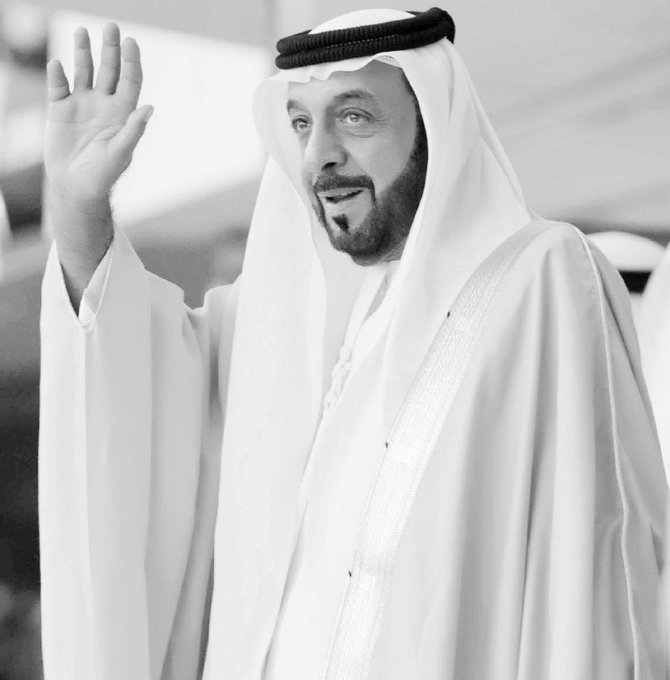
“While people are proud of their achievements, we are proud of being the children of Sheikh Zayed, and while people talk of their history, we speak of the history of giving that began with the formation of the UAE,” said the late His Highness Sheikh Khalifa bin Zayed Al Nahyan, epitomising the nations’s approach from the first day it was established to its phase of empowerment, ushering in the birth of a powerful and successful nation.
On 4th November, 2004, Sheikh Khalifa assumed power and, up until his passing, helped the country, whose track record of achievements spans nearly 35 years, progress from the foundation phase to the empowerment stage.
Over this short period, the UAE has topped international competitiveness indexes and has become the second-largest economy in the Arab region, despite its small area and population.
Moreover, the UAE is the first Arab and Islamic nation to reach the planet Mars and one among few countries with significant achievements in the space sector.
The UAE’s achievements during the empowerment phase are reflected on the lives of its people and business community, making it the dream destination of anyone seeking success, stability, and wellbeing.
After assuming power, the late Sheikh Khalifa launched the first strategic plan of the UAE Government to achieve balanced and sustainable development and ensure the wellbeing of UAE residents.
In 2009, he was re-elected as the President of the country, and thanks to his wise leadership, the UAE overcame the financial crises and political issues facing the region due to his active foreign policy, which also enhanced the regional and international stature of the country.
How did the UAE manage to accomplish significant achievements during the empowerment phase? The Emirates News Agency (WAM) monitors these milestones and challenges in the following report:
1. The Health Sector.
The UAE’s leadership has prioritised the health sector and increased public spending on the sector, amounting at times to seven percent of the federal budget.
This fact is highlighted by the spending on the sector in 2016, 2017, 2018, 2019 and 2020, which amounted to AED3.83 billion, AED4.2 billion, AED4.5 billion, AED4.4 billion and AED4.84 billion, respectively.
This policy also proved successful when the sector faced the coronavirus (COVID-19) pandemic, demonstrating a high level of efficiency supported by the many well-equipped public and private hospitals.
The sector’s efficiency was further supported by the country’s efforts to establish media cities, including Khalifa City in Abu Dhabi, Dubai Medical City and Sharjah City.
Coinciding with these achievements, most Emirati hospitals are internationally accredited, and the country has become a leading medical destination, underpinned by the rising number of hospitals, which increased from 16 in 1975 to 169 in 2020.
These hospitals are managed by highly qualified medical staff, numbering 8,995 in 2020 in the government sector and 17,136 in the private sector, compared to 792 doctors in 1975.
The number of nurses also reached 56,045 working in the government sector in 2020, increasing 252 percent compared to 1975.
The country has prioritised health insurance and provided it to citizens for free, in addition to comprehensive medical coverage for all segments of society, especially the elderly and people of determination.
In 2017, the UAE established the first cancer treatment centre utilising proton technology in the Middle East and Gulf Cooperation Council (GCC) region.
The Emirates was also one of the first countries to use robotics in the pharmaceutical sector.
Smart rooms were established to provide entertainment services to patients and link their medical files with hospitals to provide comprehensive and effective care.
The Ministry of Health and Prevention has been keen to integrate artificial intelligence (AI) in medical services, used in over 100 facilities nationwide.
The UAE ranks first in the world in the number of accredited facilities, and more than 85 percent of Emirati hospitals have international accreditation.
2. Education Sector.
The UAE’s spending on the health and education sectors underscores the leadership’s belief in the importance of these two sectors to achieving sustainable development, with spending from 2016 to 2020 accounting for between 20 percent and 22 percent respectively of the federal budget.
With the budget allocated to the national education sector standing at AED10.41 billion, AED10.46 billion, AED10.40 billion, AED10.2 billion and AED6.536 billion for 2016, 2017, 2018, 2019 and 2020, respectively, the average share of the federal budget is 15 percent.
The UAE believes that the education system is the driver of development and ensures the right to free education for all citizens. From 2012, education became mandatory for everyone over the age of six until secondary education, which was reinforced by issuing the Children’s Rights Law (Wadeema).
The UAE’s education strategy confirms the establishment of an educational system based on the skills of the 21st century. It aims to provide higher education that can compete with the world’s best universities.
The Mohammed bin Rashid Smart Learning Initiative, launched in 2012, is an ideal model covering all schools in the country and creates a new educational environment in schools that includes smart classes.
In 1973, the country had 110 schools with 40,000 students, while in 2007, the percentage of educated citizens reached 88.7 percent of the population.
The UAE Vision 2021 highlighted the need to advance education in the country to the highest in the world and adopt a smart system as a primary goal.
The vision also confirmed that the upcoming years would witness comprehensive transformations in learning and education, led by smart education.
The national education strategy aims to ensure equal education, maintain the quality and efficiency of institutional education, promote scientific research, encourage students to enrol in higher education, achieve innovation, and support smart education.
Subsequently, the National Strategy for Higher Education 2030 affirms the importance of improving the scientific and technical skills of students, to support the growth of the economy.
At the same time, the UAE has kept pace with the latest innovations in the health sector. The government has launched many initiatives that encourage innovation in general and innovation in the medical field in particular.
The UAE is one of the few countries that utilises medical robotics technology when conducting major surgeries.
President Khalifa bin Zayed passed away on Friday, May 13th, 2022
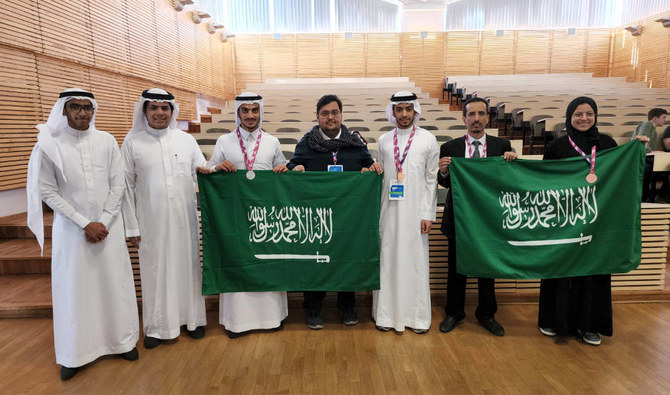
A Saudi team won three medals at an international physics Olympiad on Sunday.
Sadiq Al-Abbad from Riyadh won a silver medal, Jawad Al-Saif from the Eastern Province won a bronze medal, and Lama Al-Ahdal from Jeddah earned a bronze at the Nordic-Baltic Physics Olympiad held at Estonia’s Tallinn University of Technology.
The Olympiad was launched in 1992 with the participation of Estonia and Finland and was called the Estonia and Finland Physics Olympiad.
With Latvia joining in 2014 and Sweden joining in 2016, the name of the competition changed to the Nordic-Baltic Physics Olympiad.
Each main country participates with 20 competitors, while each guest country participates with a specified number.
This year’s Nordic-Baltic Physics Olympiad had four main and four guest countries participating.
The head of the Saudi delegation to the Nordic-Baltic Physics Olympiad, Talal Al-Rashidi, said the physics team had won three gold and silver medals in the GCC Olympiad that was held in March.
The team was participating in the European Physics Olympiad in May with five students and the Asian Physics Olympiad immediately afterward.
“Since 2010, we have achieved 472 medals in many international competitions in mathematics, physics, chemistry, biology, informatics, and sciences. Saudi Arabia is the first in the Arab world and the first third globally in various scientific disciplines.
source/content: arabnews.com (edited)
___________
This success is ‘an extension of the series of achievements in international competitions in which KSA participates.’ (Supplied)
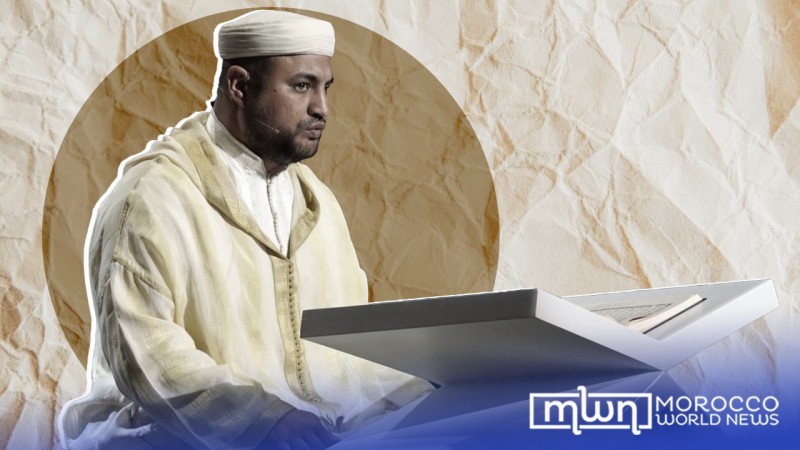
Gharbi is one of a number of Moroccans who have won similar prizes.
Youness Gharbi is the latest in a list of other Moroccans to have claimed a prize for his Quran recitation skills, this time in Saudi Arabia.
Visually impaired Gharbi won the “Otr Elkalam” competition on Wednesday, with a prize of SAR 5 million ($1.3 million).
He received his prize during a ceremony celebrating the completion of the international Quran reciting competition whose name is Arabic for the fragrance of speech.
The Chairman of the board of directors of Saudi’s general entertainment authority , Turki Al-Seikh, delivered the prize to Youness Gharbi and another British contestant Mohamed Ayoub who came in second place.
Mohamed Ayoub received an award of a little over half a million dollars.
In the call to prayer category, a Turkish contestant came in first place, Muhsin Kara, receiving SAR 2 million ($533,200), while another Turkish contestant Albijan Celik came in second place, winning a prize of SAR1 million ($266,600).
Saudi contestant Anas Al-Rahili came in fourth place with a SAR250,000 ($66,650) award.
During the ceremony, the event organizers announced that the “Otr Elkalam” competition will open its doors for international Quran reciters during Ramadan next year.
The “Otr Elkalam” competition was organized by the Saudi government’s General Entertainment Authority this month, to coincide with Ramadan.
Moroccans are no strangers to winning Quran reciting awards. In 2020, Five Moroccans won a Quran reciting competition award in Abu Dhabi during a virtual ceremony.
Nearly all prizewinners of the Abu Dhabi competition were Moroccans.
Moroccan Fatima-Zahrae Mrabet claimed the first place in the women’s “All Nationalities” category, and Moroccan Kaoutar Zribi and Chaimae Lchab trailed behind respectively in second and third place.
Moroccan men equally distinguished themselves at the ceremony, with Anas Mhamdi ranking first in the men’s “All Nationalities” category and Abdellah Bela ranking third within a different category.
Awards made for services to Islam, Arabic language, literature, medicine, and science.
The winners of this year’s King Faisal Prize on Tuesday received their awards at a glittering ceremony staged in Riyadh.
The annual gongs — held under the auspices of King Salman — are the most prestigious in the Muslim world and recognize outstanding achievement in services to Islam, Islamic studies, Arabic language and literature, medicine, and science.
The service to Islam prize was jointly awarded to former Tanzanian President Ali Hassan Mwinyi and Egyptian scholar Prof. Hassan Mahmoud Al-Shafei.
The Arabic language and literature award went to Prof. Suzanne Stetkevych and Prof. Muhsin Al-Musawi from the US.
American Prof. David Liu secured the medicine prize while the science accolade was shared by Prof. Martin Hairer of the UK and Prof. Nader Masmoudi of Tunisia.
The Islamic studies prize, that this year focused on the Islamic heritage of Al-Andalus, was withheld because the nominated works did not meet the necessary criteria.
Mwinyi was honored for actively participating in Islamic advocacy and promoting religious tolerance. He established Islamic schools and translated many resources and references in hadith, jurisprudence, and the Prophet Mohammad’s biography into Swahili, the language spoken by millions of people in East Africa.
Al-Shafei, who was president of the Academy of the Arabic Language in Cairo from 2012 to 2020, held several academic positions and established a series of institutes concerned with Al-Azhar. He also contributed to the establishment of the International Islamic University in the Pakistani capital Islamabad.
The Arabic language and literature prize was jointly presented to Stetkevych, chair of the department of Arabic and Islamic studies at Georgetown University, and Al-Musawi, professor of Arabic and comparative literary studies at Columbia University.
Stetkevych’s extensive research and numerous works have analyzed Arabic literature with unmatched depth from the pre-Islamic period to the Nahda/revivalist period. Her research approach, which is characterized by its application of varied methodologies, resulted in the renewal of the critical perspective and methods of studying classical Arabic poetry.
The research and studies of literary critic and novelist Al-Musawi have had a great impact on Arabic studies students and researchers in the Arab world and the West, through his distinctive methods of presentation, analysis, critical interpretation, and openness to Arab and international creative texts in prose and poetry.
Meanwhile, the medicine prize concentrated on gene-editing technologies. Its winner Liu, director of the Merkin Institute for Transformative Technologies in Healthcare, invented the first so-called base editor to make alterations on DNA and genes by replacing letters in the DNA base.
Hairer, chair in probability and stochastic analysis at Imperial College’s mathematics department, was one of the science prize recipients. His work has been in the general area of probability theory with a focus on the analysis of stochastic partial differential equations. He recently developed the theory of regularity structures which gave a precise mathematical meaning to several equations that were previously outside the scope of mathematical analysis.
The other joint science award winner, Masmoudi, a professor of mathematics at the New York University of Abu Dhabi, unlocked the mystery surrounding many physics problems which have remained unsolved for centuries.
He found a flaw in (Leonhard) Euler’s mathematical equations, which for more than two centuries had described the motions of fluids under any circumstance. Masmoudi discovered that the equations did not apply to all circumstances, as previously thought, and his findings helped to solve a raft of conundrums related to fluid-modeling, such as weather predictions.
Each winner received a $200,000 prize, a 24-carat gold medal, and a certificate written in Arabic calligraphy signed by the Chairman of the prize board, Prince Khalid Al-Faisal.
source/content : arabnews.com (edited)
_____________
Winners of 2022 King Faisal Prize awards honored in Riyadh. (SPA)