TUNISIA / MOROCCO: Fatima Al-Fihri: The Woman who Founded the World’s First University in Fez, Morocco

During her lifetime, Fatima was called the “mother of boys”. According to historian Mohammed Yasser Hilali, “this nickname probably stems from her charity and the fact she took students under her wing”.

When thinking of the oldest universities in the world, probably the first ones that come to most people’s minds are Oxford and Bologna, but according to UNESCO and the Guinness World Records, Al-Qarawiyyin University (also written as Al-Karaouine) is the “oldest existing, and continually operating educational institution in the world.”

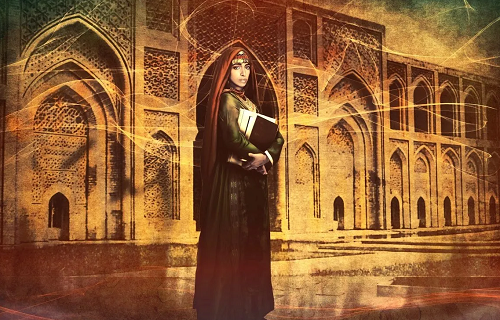
Founded in 859 A.D. by Tunisian-born Fatima al-Fihri in Morocco’s Fez, the university is not only the oldest higher education institution on Earth but also the first to be founded by a Muslim woman. Fatima used her inheritance from her merchant father’s wealth to found the university which started as an associated school – known as a madrasa – and a mosque that eventually grew into a place of higher education. It also introduced the system of awarding degrees according to different levels of study in a range of fields, such as religious studies, grammar and rhetoric. Though the university first focused on religious instruction, its fields of study quickly expanded to include logic, medicine, mathematics and astronomy, among many others.

The University of Al Quaraouiyine became a state university in 1963 and now awards degrees in Islamic, religious and legal sciences with an emphasis on classical Arabic grammar and linguistics and law. 

Interestingly, teaching is still delivered in a very traditional manner, whereby students are seated in a semi-circle around a Sheikh (Islamic scholar), who prompts them to read sections of particular texts, asks them questions on aspects of grammar, law, or interpretation, and explains difficult points. Education at the University of al-Qarawiyyin concentrates on the Islamic religious and legal sciences with a heavy emphasis on, and particular strengths in, Classical Arabic grammar/linguistics and Maliki Sharia, though lessons on non-Islamic subjects are also offered to students. Teaching is still delivered in the traditional methods. The university is attended by students from all over Morocco and Muslim West Africa, with some also coming from further abroad. Women were first admitted to the institution in the 1940s

Fatima al-Fihri was born in 800 A.D. She was the daughter of Mohammed Bnou Abdullah al-Fihri – a rich merchant who settled in Fez with his family during the reign of Idris II. 

Fatima’s family was part of a community called the “Qarawiyyin” (the ones from Qayrawan) whose two thousand families migrated from Qayrawan in Tunisia, to Fez in Morocco which was then under the rule of Idris II, a respected and devout ruler.

After the community was banned by the local ruler. The caravan included Fatima’s father Muhammad bin Abdullah Al-Fihri, and sister Mariam. Fatima was well versed in classical Islamic learning such as fiqh (jurisprudence) and hadith (Islamic traditions based on Prophet’s life). She inherited a large fortune from her merchant father which she used to build the university. She personally supervised the entire gigantic enterprise, from putting up the foundation to the functionalizing of these institutions. When she embarked on her mission, she had lost her father, husband, and brother – all primary sources of support and protection for a woman. Any other woman would have retreated to the backwaters of domestic life. But Fatima appears to have been an extraordinarily inspired and determined woman with steely grooves. All her great achievements came during periods of loneliness and in circumstances when women normally shun the world and seek the company of the home.

During her lifetime, Fatima was called the “mother of boys”. According to historian Mohammed Yasser Hilali, “this nickname probably stems from her charity and the fact she took students under her wing.” Fatima al-Fihri herself is considered a saint and she is much respected among the believers especially in Fez. In 2017, a prize was created in Tunisia in her honor. It rewards initiatives which encourage access to training and professional responsibilities for women. Furthermore, an academic program and a scholarship given to students from Europe and North Africa pay tribute to Fatima al-Fihri.

The University of Al-Qarawiyyin (also Al-Karaouine), which was then just called a madrasa (an institute of religious learning), was 30 m long, with a courtyard, a large library, and several schoolrooms. Although initially only the Qur’an and related religious lessons were taught, many other courses of study, like mathematics, medicine, Arabic grammar, history, geography, astronomy, chemistry, music and logic were soon introduced. Fatima studied there herself, along with her students, and awarded them degrees once they completed the courses: a degree that was chiseled onto a wooden board, which is now displayed in the university’s library. She also conducted debates and symposiums periodically for her students, producing politically-aware individuals.

With these innovative ideas, Fatima al-Fihri had not merely founded the first university but had introduced the concept of awarding degrees that is now an essential part of modern higher education.

In fact, the university produced many celebrated intellectuals and historians who are still known to this day: the Islamic philosopher Ibn Rushd, Andalusi diplomat and geographer, Hassan al-Wazzan and historian and thinker Ibn Khaldun, the famous Jewish philosopher, Moses Ben Maimon and Aka Maimonides.

The Christian scholar, Gerbert of Aurillac, who later became Pope Sylvester II, is believed to have visited the university several times. His visits helped him introduce Arabic numerals and the concept of zero to Europe. The University of Al Qarawiyyin is still considered a leading religious and education institution in the Muslim world. The university has moved away to another part of Fez, but the mosque and the library remain at the ancient complex. The University of Al-Qarawiyyin is the oldest existing, continually operating and the first degree awarding educational institution in the world according to UNESCO and Guinness World Records and is sometimes referred to as the oldest university.

(M Ahmad is a regular writer for this newspaper and can be reached at specialachivers78@gmail.com)

source/content: risingkashmir.com (headline edited)

__________
___________

TUNISIA
SHARJAH, U.AE: Bodour Al Qasimi Wins Prestigious Regional Award ‘Most Creative People in Business 2023’ for creative, problem-solving approach to global issues

 Sheikha Bodour bint Sultan Al Qasimi, the President of the American University of Sharjah (AUS), has been honoured as one of Fast Company Middle East’s Most Creative People in Business 2023, specifically recognised in the “Bringing Good Things to More People” category.

Expressing her gratitude upon receiving the award, Sheikha Bodour humbly acknowledged the recognition, expressing surprise and appreciation. She described creativity as the act of transforming something from nothing and finding innovative solutions to problems. Sheikha Bodour expressed her delight if her creative endeavors have contributed to addressing challenges. Reflecting on the words of Steve Jobs, she emphasised that those who dare to believe they can change the world are the ones who actually do. Sheikha Bodour emphasised the importance of thinking differently to make a meaningful impact, highlighting the shared trait among all the nominees for the award.

In addition to this prestigious accolade, Sheikha Bodour has been recognised for her innovative thinking and leadership in various initiatives for the greater good, with a particular focus on literacy, reading, and culture.

One of her notable accomplishments was the establishment of the Emirates Publishing Association in 2009, a non-profit trade association dedicated to developing and professionalising the UAE’s publishing industry. Sheikha Bodour’s international perspective led the EPA to obtain membership in the International Publishers Association (IPA) in Geneva, a historically Western-led organisation. She also played a pivotal role in piloting IPA committees and initiatives before being elected as its vice-president from 2019 to 2020.

Sheikha Bodour’s commitment to making a difference in the literary world extended beyond the UAE. In 2019, she formed a partnership between the IPA and Dubai Cares, resulting in the Africa Publishing Innovation Fund (APIF). The fund invested $800,000 in 18 projects from 2020 to 2022, promoting indigenous languages, literacy, education, library access, and accessible book publishing for visually impaired readers. The APIF continues to positively impact thousands of people across 20 countries.

During her presidency of the IPA from 2021 to 2022, Sheikha Bodour faced the challenges posed by the COVID-19 pandemic, which significantly impacted the book industry. However, she successfully unified the global publishing community by redefining it as a balanced ecosystem comprising interconnected stakeholders.

Advocacy for women’s representation was a core aspect of Sheikha Bodour’s tenure as IPA president. She actively promoted female inclusion in committees, discussion panels, and meetings. Her efforts resulted in her successors as president and vice-president both being women. In 2025, when the vice-president assumes the top role, she will become the third consecutive woman to lead the organisation.

In 2019, Sheikha Bodour established “PublisHer” in response to the underrepresentation of women in leadership positions within the publishing industry. PublisHer serves as an interactive platform that amplifies the voices of women in the industry and provides practical support to help them advance their careers.

Sheikha Bodour’s long-standing determination led to Sharjah earning the esteemed status of World Book Capital City in 2019. Her innovative year-long program prioritised inclusivity, and as a lasting legacy, she conceptualised the remarkable House of Wisdom, a cultural hub and library that focuses on fostering human interaction and enlightenment.

Furthermore, in 2016, Sheikha Bodour launched the Kalimat Foundation, which aims to provide access to books for Middle Eastern children affected by conflict or visual impairment. The foundation empowers vulnerable young individuals by equipping them with knowledge and ideas by giving them books in accessible formats. So far, it has touched the lives of 162,000 disadvantaged children in 31 countries in Asia, Africa, Europe, and Latin America.

source/contents: wam.ae (headline edited)

__________

______________________________________________

SHARJAH, UNITED ARAB EMIRATES (U.A.E)

SAUDI ARABIA: Saudi Girls Shine at European Girls’ Mathematical Olympiad 2023

  • The EGMO is an international competition in mathematics targeting female high school students whose commitment to mathematics goes beyond the usual school curriculum
  • To participate at the EGMO, students must qualify first at a national competition, after which they, together with their advisors, form their respective national delegations

Two Saudi girls have achieved advanced positions in the European Girls’ Mathematical Olympiad 2023, which is being held in Slovenia from April 13-19.

The EGMO is an international competition in mathematics targeting female high school students whose commitment to mathematics goes beyond the usual school curriculum.

To participate at the EGMO, students must qualify first at a national competition, after which they, together with their advisors, form their respective national delegations.

“Saudi Arabia, represented by King Abdulaziz and his Companions Foundation for Giftedness and Creativity (Mawhiba) and the Ministry of Education won two medals in the EGMO 2023 in Slovenia,” Mawhiba tweeted on Tuesday.

The young talents have raised Saudi Arabia’s medal tally to 26 in all editions of the EGMO, in which 213 students representing 55 countries are currently participating.

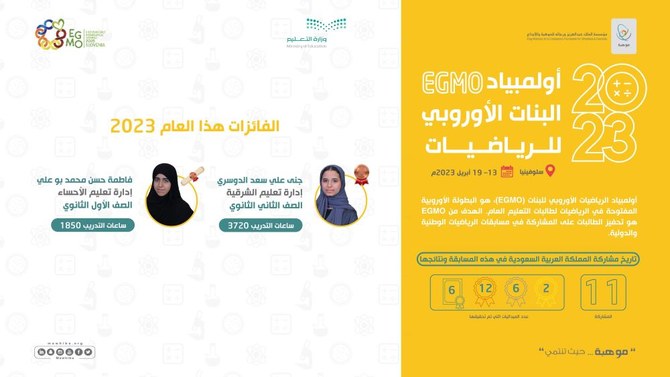
Saudi students Jana Ali Saad Al-Dosar from the Eastern Region and Fatimah Hassan Mohammed Bu Ali from Al-Ahsa won a bronze medal and a certificate of appreciation, respectively.

Mawhiba’s Secretary-General Dr. Amal bint Abdullah Al-Hazzaa congratulated the winners and expressed gratitude to King Salman and Crown Prince Mohammed bin Salman for their support of higher education, which led to these achievements.

Al-Hazzaa noted that the students’ successes embody the integration between Kingdom’s institutions and its commitment to advancing young talents through education and training in line with international standards.

She also praised the cooperation between Mawhiba, the Ministry of Education, and the King Abdullah University of Science and Technology, a partnership that aims to develop Saudi human capital and increase competitiveness in the labor market in line with the National Transformation Program and Saudi Vision 2030.

The Saudi girls participating in the EGMO 2023 have undergone intensive training to develop their scientific skills and were nominated to participate based on the results they achieved in the training forums held by Mawhiba.

The EGMO was initially launched in the UK, which hosted its first edition in April 2012 with 19 participating countries.

The international competition aims to motivate more female students to participate in the International Mathematical Olympiad, where girls currently constitute only 10 percent of the participating students.

This is Saudi Arabia’s 11th participation in the EGMO. The Kingdom has achieved two gold medals, six silver medals, 12 bronze medals, and six certificates of appreciation.

The EGMO 2023 awards are scheduled to be distributed on Wednesday during a final ceremony.

source/content: arabnews.com (headline edited)

____________

Fatimah Hassan Mohammed Bu Ali and Jana Ali Saad Al-Dosar. (Twitter/Mawhiba)

_________________

SAUDI ARABIA

SAUDI ARABIAN Ministry Introduces 3 New Fonts to Celebrate Kingdom’s Culture

The fonts, celebrating the Kingdom’s culture, will be available free of charge.

The Ministry of Culture on Monday launched an initiative creating three new Saudi fonts.

The fonts, celebrating the Kingdom’s culture, will be available free of charge to individuals and organizations wishing to use them in design, artistic, and creative works, the Saudi Press Agency reported.

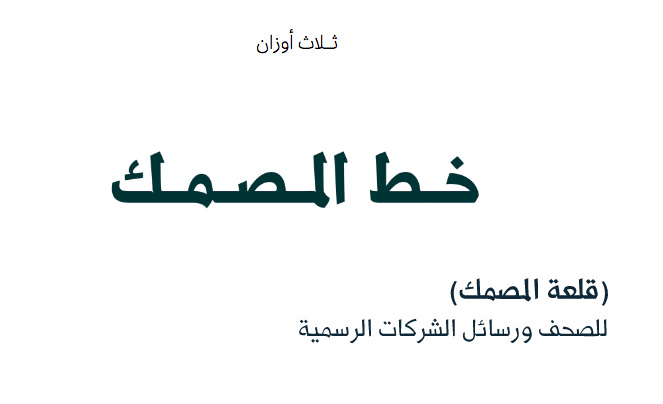
The Masmak font has been named after the historic Masmak Fortress, characterized by its durability and strong structure. The font has been described as clear and easy to read and was developed without reference to traditional calligraphy methods, the SPA said.

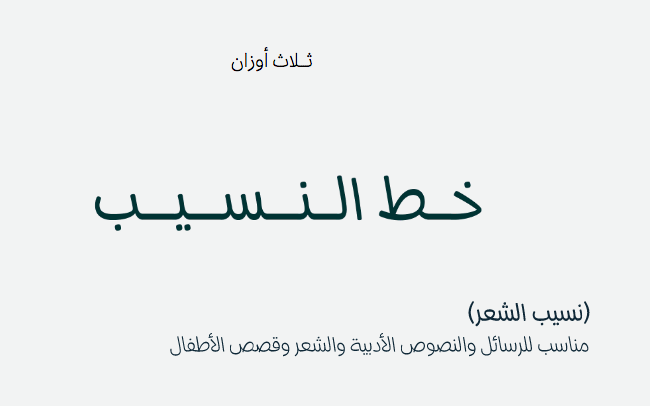
The second new font, Al-Naseeb, resembles handwritten notes, and has been recommended for use in headlines, texts, literary works, poetry, and children’s stories.

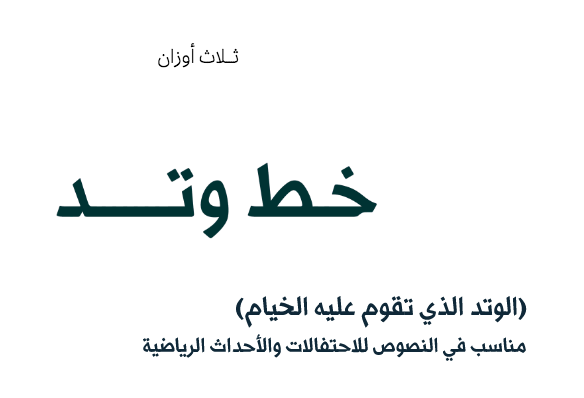
Watad, the third font, was inspired by the tent peg with its letters having curved corners. Its suggested use was for text relating to festivals and sporting events.

The Ministry of Culture launched the initiative in celebration of the Arabic language. In a statement, it said: “It is introducing a unique touch that gives a Saudi identity to Arabic fonts and celebrates Saudi heritage and cultural symbols.”

The fonts can be downloaded at https://engage.moc.gov.sa/fonts.

source/content: arabnews.com (headline edited)

____________

_________________

SAUDI ARABIA

SAUDI ARABIA: Winners of King Faisal Prize 2023 Honored in Riyadh

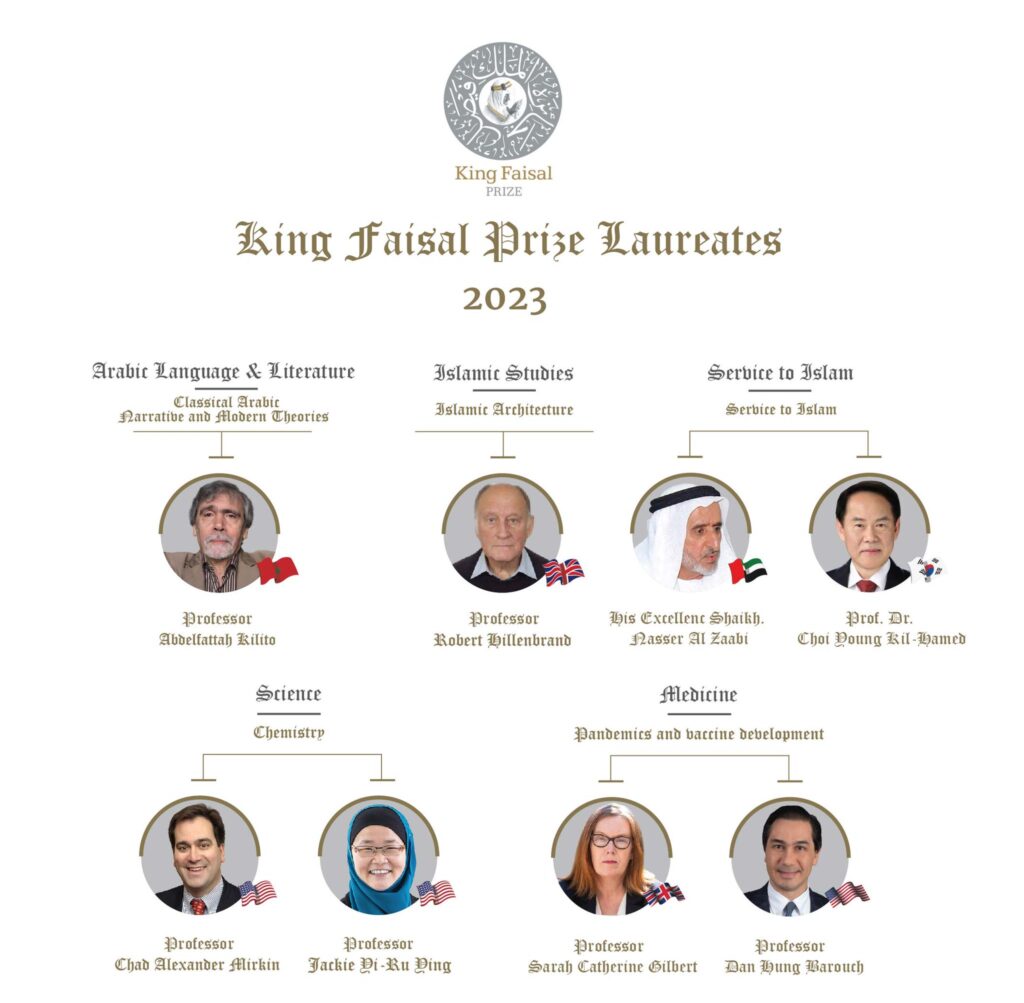
An Emirati, a Moroccan, a South Korean, two Brits and three Americans were honored with the King Faisal Prize 2023.

They served people and enriched humanity with their pioneering work so deserve to be honored and recognized for their distinguished efforts, the King Faisal Foundation said when honoring the winners of the King Faisal Prize 2023.

A glittering award ceremony was held in Riyadh on Monday under the patronage of King Salman, and on his behalf, Prince Faisal bin Bandar, governor of Riyadh Region, attended the ceremony for handing over the King Faisal Prize to the winners this year.

The annual awards are the most prestigious in the Muslim world and recognize outstanding achievement in services to Islam, Islamic studies, Arabic language and literature, medicine and science.

This year an Emirati, a Moroccan, a South Korean, two Brits and three Americans won the prestigious prize, which in its 45th session recognized COVID-19 vaccine developers, nanotechnology scientists and eminent figures in Arabic language and literature, Islamic studies, and service to Islam.

The prize for service to Islam was awarded jointly to Shaikh Nasser bin Abdullah of the UAE and Professor Choi Young Kil-Hamed from South Korea.

The prize for Islamic studies was awarded to Professor Robert Hillenbrand from the UK.

The prize for Arabic language and literature was awarded to Professor Abdelfattah Kilito of Morocco.

The prize for medicine was awarded jointly to Professor Dan Hung Barouch from the US and Professor Sarah Catherine Gilbert from the UK.

In his acceptance speech, Barouch said, “The Ad26 vaccine for COVID-19 demonstrated robust efficacy in humans, even after a single shot, and showed continued protection against virus variants that emerged. This vaccine has been rolled out across the world by the pharmaceutical company Johnson & Johnson, and over 200 million people have received this vaccine, particularly in the developing world.”

Gilbert said that she was “humbled to join the other 2023 laureates, and to follow-in the footsteps of the men and women whose work has been recognized by the foundation for more than four decades. This award is in recognition of my work to co-create a vaccine for COVID-19. A low-cost, accessible, efficacious vaccine that has now been used in more than 180 countries and is estimated to have saved more than six million lives by the start of 2022.”

The prize for science was awarded jointly to Professor Jackie Yi-Ru Ying and Professor Chad Alexander Mirkin, both from the US.

Ying’s research focuses on synthesis of advanced nano materials and systems, and their application in biomedicine, energy conversion and catalysis.

Her inventions have been used to solve challenges in different fields of medicine, chemistry and energy. Her development of stimuli-responsive polymeric nanoparticles led to a technology that can autoregulate the release of insulin, depending on the blood glucose levels in diabetic patients, without the need for external blood glucose monitoring.

“I am deeply honored to be receiving the King Faisal prize in science, especially as the first female recipient of this award,” she said in her acceptance speech.

This year two women scientists have been honored as winners of the King Faisal Prize for medicine and science categories.

The woman behind the Oxford–AstraZeneca COVID-19 vaccine, Professor Sarah Gilbert, the Saïd chair of vaccinology in the Nuffield department of Medicine at Oxford University, was honored with the medicine award.

The other woman scientist honored with the King Faisal Prize in science is Professor Jackie Yi-Ru Ying; the A-star senior fellow and director at NanoBio Lab, Agency for Science, Technology and Research. She is a professor at Massachusetts Institute of Technology, and was chosen for her work on the synthesis of advanced nanomaterials and systems, and their applications in catalysis, energy conversion and biomedicine.

The King Faisal Prize was established in 1977. The prize was granted for the first time in 1979 in three categories: Service to Islam, Islamic studies and Arabic language and literature. Two additional categories were introduced in 1981: Medicine and science. The first medicine prize was awarded in 1982, and in science two years later.

Since 1979, the King Faisal Prize in its different categories has awarded 290 laureates who have made distinguished contributions to different sciences and causes.

Each prize laureate is given $200,000 (SR750,000); a 24-carat gold medal weighing 200 grams, a certificate inscribed with the laureate’s name and a summary of their work that qualified them for the prize, and the certificate signed by chairman of the prize board, Prince Khalid Al-Faisal.

source/content: arabnews.com (headline edited)

___________

______________________________________

MOROCCO / U.A.E. / SAUDI ARABIA

IRAQI BRITISH: King Charles III Awards MBE to Dr. Bnar Talabani an Immunology Scientist who arrived in UK as child refugee from Iraq

Dr Bnar Talabani, who received award for combatting Covid-19 misinformation, says British monarch showed keen interest in her background.

A doctor who arrived in the UK as a child refugee from Iraq has received a top award from King Charles III for her prominent role in combatting Covid-19 misinformation throughout the pandemic.

Dr Bnar Talabani beamed as the monarch, 74, pinned the ribbon of the Member of the Most Excellent Order of the British Empire (MBE) on her dress during a ceremony at Windsor Castle on Thursday.

She said the monarch, 74, was “really interested” to hear about her background.

The immunology scientist shared photos of their meeting on social media.

“Investiture at Windsor Castle: I met His Majesty the King who was really interested in my background as a former refugee and was utterly delightful to talk to,” she wrote.

“Really special day celebrating with my wonderful family.”

The king could be seen shaking Dr Talabani’s hand and pinning a red ribbon on her dress, in the pictures.

As congratulations poured in for the outspoken doctor, she said she felt “really overwhelmed by everyone’s kind responses”.

Dr Talabani was born in 1988 in northern Iraq to a Kurdish family.

As a toddler, she left her homeland for Iran along with her mother and younger brother to escape Saddam Hussein’s regime. Her father and grandfather remained behind to fight against the dictator.

After making their way to Syria, the Talabanis were recognised as refugees and welcomed to the UK.

Dr Talabani went on to graduate from medical school and pursue a career as a kidney and transplant hospital doctor and immunology scientist at Cardiff University.

She also works as a guide for Team Halo, a global group of scientists and healthcare professionals working to dispel misinformation about the coronavirus.

During the height of the public health crisis she made a name for herself on TikTok.

Dr Talabani used her platform on social media to reach followers, many of them young people, to challenge false and inaccurate claims about Covid.

source/content: thenationalnews.com (headline edited)

____________

__________________
BRITISH / IRAQI

ABU DHABI, UAE: NYU Abu Dhabi (NYUAD)-led Researchers Develop Smart Pill to advance Diagnosis, Treatment of Gastrointestinal Disorders

 A group of researchers led by a professor at NYU Abu Dhabi has developed a non-invasive system to aid in the diagnosis and treatment of gastrointestinal motility disorders. 

Researchers have produced 3D magnetic field gradients using high-frequency electromagnetic coils to track the movement of an ingestible smart pill through the gastrointestinal tract, NYUAD said on Tuesday. 

The ingestible wireless device measures and transmits the field magnitude to determine its precise location, which is then sent to a smartphone via Bluetooth technology. 

It reportedly allows for a more accurate evaluation of the movement of food from the mouth through the throat, esophagus, stomach, intestines and out of the body. 

The system has been modeled using the digestive systems of large animals. 

Existing smart pills do not offer the large field-of-view, high spatial resolution and fully wireless operation that the 3D magnetic field gradient developed by the researchers allows for, WAM reported.  

“The smart pill our team has developed represents a more accessible and efficient approach to assessing GI motility that can benefit both patients and medical providers,” Khalil Ramadi, NYUAD assistant professor of bioengineering, said. 

“This is a new frontier for medical diagnosis and evidence-based treatment and has the potential, with further research and refinement, to revolutionize how we can most effectively address health challenges that impact millions of people worldwide,” Ramadi added.

It is estimated that more than one-third of the world’s population suffers from gastrointestinal disorders.

source/content: arabnews.com (headline edited)

_____________

The new non-invasive system aims to aid in the diagnosis and treatment of gastrointestinal motility disorders. (Shutterstock)

________________________________________________

ABU DHABI, UNITED ARAB EMIRATES (U.A.E.)

SAUDI ARABIAN Professor Dr. Yasser Aldhamen at Michigan State University (MSU) Develops Pioneering Cancer Tumors Immunotherapy Strategy

Michigan State University (MSU) faculty member Dr. Yasser Aldhamen created a pioneering cancer immunotherapy strategy that can shrink tumors and increase therapeutic resistance against some types of cancer.

This came during a research he recently published in “Molecular Therapy” Journal, which is classified as one of the best scientific journals specialized in genetic and cellular therapy in the world.

Professor Aldhamen’s research project took about two years, completing 41 scientific papers published in prestigious international journals, as well as 3 previous patents registered with the US Food and Drug Administration.

In a statement to the Saudi Press Agency (SPA), Dr. Aldhamen said, “The whole idea is to treat patients without drugs to eliminate cancer.”

“Based on my previous work, a method was devised to harness the naturally active immune system to control tumor growth by activating the action of specific immune system cells, such as NK cells, and innate immune cells, such as macrophages and dendritic cells, within tumors.”

Dr. Aldhamen occupies, in addition to his duties, the position of Deputy Director of Research in the Faculty of Medicine at Michigan State University, and has supervised 5 students in the doctoral stage, two students in the master’s stage, and more than 15 students in the bachelor’s stage.

He also receives some trainees for 8 weeks from the secondary stage, by virtue of his interest in training future researchers in the laboratory, motivating them that making the world takes a long time.

He also participated in 15 conferences around the world, and membership in a number of advisory committees at the university working on developing research and exchanging experiences with researchers in countries such as Egypt and Peru. — SPA

source/content: saudigazette.com.sa (headline edited)

___________

Facebook.com

________________

SAUDI ARABIA

EGYPTIAN AMERICAN: Columbia University names Egypt-born Minouche Shafik as its next President

New York-based Columbia university announced on Wednesday that Egyptian-born figure Minouche Shafik would become its first-woman president next summer.

“Nemat {Minouche} Shafik, a leading economist whose career has focused on public policy and academia, will become the next president of Columbia University on July 1, 2023.” Columbia University said adding that her election by the board of trustees as the University’s 20th president concluded a wide-ranging and intensive search launched after the University’s Current President Lee C. Bollinger announced that he would step down at the end of the 2022-2023 academic year.

Shafik will become the 20th president of the famous American educational institution.

Minouche Shafik was appointed director of the London School of Economics and Political Science (LSE) in September 2017.

She also served as the Deputy Governor of the Bank of England prior to her appointment as LSE Director in 2017.

She was made a Dame Commander of the British Empire in Queen Elizabeth’s Birthday Honours list in 2015, and in July 2020 was created a baroness, becoming a crossbench peer in the UK’s House of Lords. 

Shafik’s successful portfolio includes leading roles such as Vice President of the World Bank, where she became the youngest VP in the history of the bank, and Permanent Secretary of the UK Department for International Development and Deputy Managing Director of the International Monetary Fund (IMF).

Born in Alexandriam her childhood in Egypt was brief though, as she left the country for the US when she was four. She later returned to the country briefly as a teenager, according to interviews.

She holds a BSc in economics and politics from the University of Massachusetts in Amherst, and an MSc in economics at LSE before completing a PhD in economics at St Antony’s College at the University of Oxford.

Her doctorate thesis was on the role of the private sector and the public sector in Egypt.

source/content: english.ahram.org.eg (headline edited)

__________

_____________________

AMERICAN / EGYPT

SOMALIA Meteorite: Joy as Scientists find Two New Minerals

The official names for the new minerals are elaliite and elkinstantonite.

  • Canadian researchers said the rock was found in rural Somalia two years ago, but locals believe it is much older.
  • They call the stone Nightfall, and say it is documented in poems, songs and dances that stretch back five generations. It is used today to sharpen knives.

A huge meteorite that fell to Earth contains two minerals never seen before on our planet, scientists say.

Canadian researchers said the rock was found in rural Somalia two years ago, but locals believe it is much older.

They call the stone Nightfall, and say it is documented in poems, songs and dances that stretch back five generations. It is used today to sharpen knives.

The official names for the new minerals are elaliite and elkinstantonite.

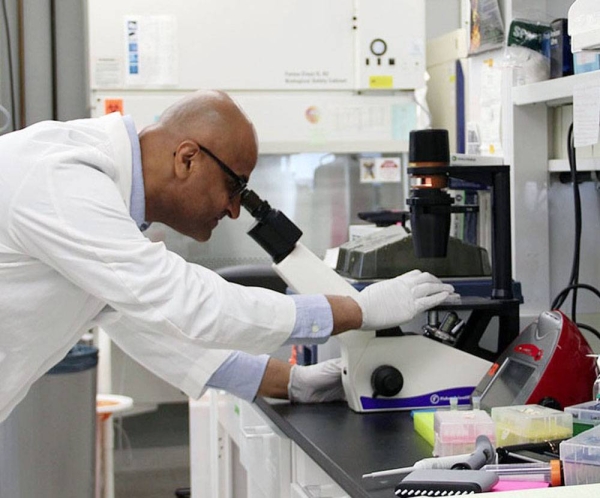
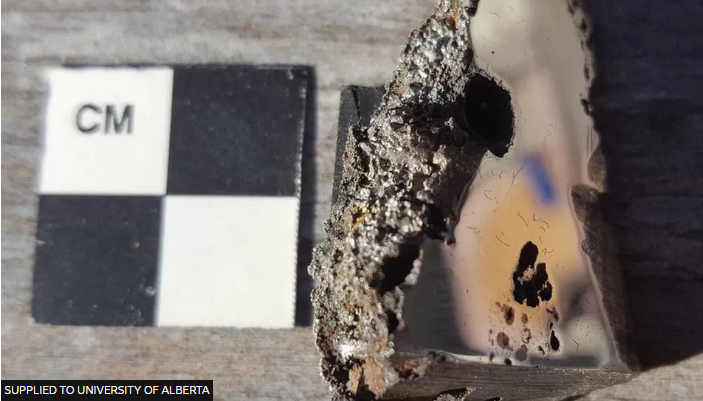
They were identified by scientists at the University of Alberta who looked at a 70g fragment from the 15-tonne meteorite, which is said to be the ninth-biggest to reach our planet and is about 90% iron and nickel.

The name “elaliite” honours the fact that the meteorite was unearthed in the district of El Ali in Somalia, and “elkinstantonite” is named after Nasa expert Lindy Elkins-Tanton.

“Lindy has done a lot of work on how the cores of planets form, how these iron nickel cores form, and the closest analogue we have are iron meteorites. So it made sense to name a mineral after her and recognise her contributions to science,” said Prof Chris Herd who curates the University of Alberta’s meteorite collection.

A third, as-yet unidentified mineral, is being analysed by the university’s researchers who now hope to get their hands on more of the meteorite – not only to see what else they might discover, but also how it could be used on Earth.

“Whenever there’s a new material that’s known, material scientists are interested too because of the potential uses in a wide range of things in society,” Prof Herd said of the “exciting” research.

source/content: the-star.co.ke (Star) / BBC News, Africa (headline edited)

__________

____________

SOMALIA