Arabs & Arabian Records Aggregator. Chronicler. Milestones of the 25 Countries of the Arabic Speaking World (official / co-official). AGCC. MENA. Global. Ist's to Top 10's. Records. Read & Enjoy./ www.arabianrecords.org
The Kuwaitis continued to make many distinguished achievements and achieved results in various fields and at the various local, regional and international levels, which were recorded for their work and creativity, reports Al-Rai daily. The following are the most prominent of these achievements during the year 2022.
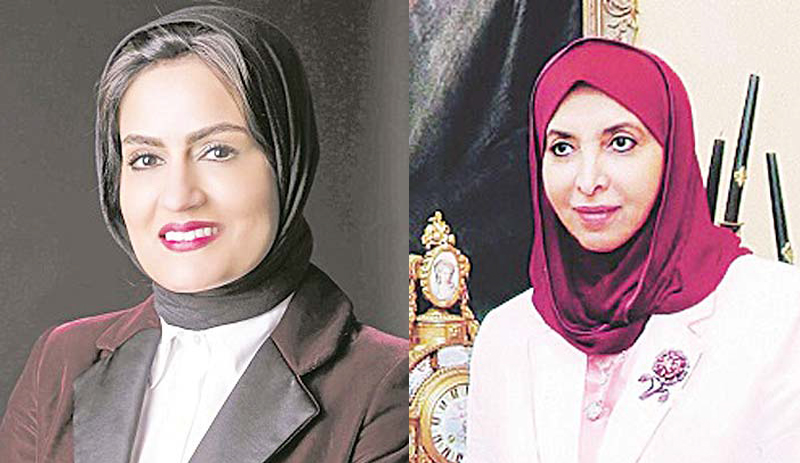
February 10: Dr. Hind Al-Qadri, a researcher at the Dasman Diabetes Institute of the Kuwait Foundation for the Advancement of Sciences, won the 2021 L’Oréal UNESCO Prize for Women in Science within the Middle East Regional Program for Emerging Female Researchers. (see picture below)
February 24: Kuwaiti parachutist Ibrahim Al-Rubaian recorded an unprecedented feat by jumping from a height of 13,000 feet with the biggest fl ag in the sky of Kuwait, with an area of 800 square meters, under the slogan “I raised glory and soared with pride,” coinciding with the national holidays.
February 26: The State of Kuwait entered the Guinness Book of Records by hoisting the country’s largest flag measuring 2,742 square meters and installing it on a mountain peak in the Sultanate of Oman (Jabal Shams), at an altitude of 3,028 meters above sea level, in conjunction with national holidays.
March 21: The Arab Organization for Education, Culture and Science (ALECSO) honored Sheikha Dr. Suad Al-Sabah, in recognition of her brilliant contributions in the literary and cultural fields, at its eighth session of the “Arab Poetry Day” in the Tunisian capital.
April 23: The International Professional Diving Instructors Organization awarded the Kuwait Scientific Club Center for Swimming and Diving a Certificate of Excellence for its contribution to the development of the diving industry inside and outside Kuwait.
June 12: Kuwaiti researchers Dr. Nasser Al-Sayegh and Dr. Ammar Bahman obtained a patent from the US Patent Office, for their invention of a device capable of characterizing the physical state of nanosuspensions dispersed in nanofluids during the dynamic fl ow process.
June 29: Kuwait University announces that Assistant Professor of the Department of Surgical Sciences at the College of Dentistry, Dr. Muhammad Kamal, and the Consultant of Nose and Throat at the Ministry of Health, Dr. Abdul Mohsen Al-Turki, obtained a patent from the United States of America for an alternative medical splint to the nose wicks.
July 2: The International Pharmaceutical Federation selected Dr. Dalal Al-Taweel, Assistant Dean for Student and Academic Affairs at the College of Pharmacy, among 20 rising stars in the field of pharmaceutical research and pharmaceutical education.
August 11: The League of Arab States honors the Kuwaiti youth, Abdullah Al- Shammari, who won the third place for the “Excellence Award for Arab Youth 2022” in the field of “voluntary work” granted by the Council of Arab Ministers of Youth and Sports. The award came about the “Al-Amal Electronic Newspaper” project, which is concerned with the affairs of people with disabilities.
October 2: Plastic artist Munira Al-Qadiri won the prize of the 15th session of the German “Trina Fellbach” exhibition for small sculptures.
October 3: Dr. Badr Al-Enezi, from the Department of Environmental Technology Management at the College of Life Sciences at Kuwait University, obtained a patent on “improving water and solving the problem of environmental pollution in a scientific way” from the United States Patent and Intellectual Property Office.
October 9: Kuwaiti photographer Muhammad Murad won first place in the prestigious international “Mont Photo” competition for photography in the natural world in Spain.
October 12: The European Union of Medical Specialties selected Dr. MuhammadKamal, a Kuwaiti academic, as the first examiner from outside the continent for the Board of Oral, Maxillofacial, and Head and Neck Surgery. The selection was made during the last session held in the Spanish capital, Madrid.
October 12: Lama Fahad Al-Ariman received the “Rising Space Leaders” award presented by the International Astronautical Federation as the representative of the State of Kuwait in this international competition.
October 30: Kuwaiti photographer Muhammad Murad won the top honorary prize in the African “Benjamin Mkapa” competition for developing African wildlife and the American “Nature Best” competition.
Arabic is spoken by more than 400 million people across the Middle East and in diaspora communities across the world.
Spoken by around 400 million people across the globe, the Arabic language in its classical form is also the liturgical language of Islam, the world’s second largest religion with at least 1.6 billion adherents.
Marked every year since 2012, the date was chosen based on when the UN General Assembly recognised Arabic as one of the organisation’s official languages in 1973.
In a statement released ahead of the occasion, Audrey Azoulay, Unesco’s director-general, said: “Throughout the centuries, Arabic has been at the heart of exchanges between continents and across cultures.”
She added the language was “used by so many great poets, thinkers, scientists and scholars”.
To mark the occasion, here are some facts about the language, which you may not have known:
1. There’s no agreement on how old the language is
Depending on who you ask, the earliest records of Arabic appear as far back as the second millenium BCE, around the eighth-century BCE or as late as the fourth-century BCE.
The reason for the debate is establishing what constitutes the Arabic language as we know it today.
Languages spoken today are evolved versions of languages that were spoken thousands of years ago, but determining at what point a language becomes so distinct from its ancestor that it can no longer be considered the same is up for debate.
Languages spoken today are evolved versions of languages that were spoken thousands of years ago, but determining at what point a language becomes so distinct from its ancestor that it can no longer be considered the same is up for debate.
2. The oldest Arabic inscription dates to 470 CE
A 2014 discovery by a French-Saudi-led team unearthed the world’s oldest known inscription written in the Arabic script – “Thawban Ibn Malik” were the three words etched into stone, alongside what is thought to be a Christian cross.
The stone slab was discovered in Najran in Saudi Arabia and is said to date from around 470 CE.
The text is thought to be written in an early version of the Arabic script known as Nabataean-Arabic, which evolved from historic Nabataean and Aramaic scripts.
The Nabataean kingdom lasted from around the 4th-century BCE to 106 CE and is famed for the structures Nabataeans carved out of rock formations, such as the one found at Petra in Jordan.
3. Arabic is related to Hebrew and Amharic
Arabic is a member of the Semitic language family, which itself is a member of the Afro-Asiatic family.
The Semitic family includes languages still spoken today, such as Hebrew in Israel and Amharic in Ethiopia, as well as extinct languages that were once widely spoken, such as Akkadian and Phoenician.
Belonging to a language family means that at some point the languages evolved out of a common dialect.
While there are no records of the original language, there are enough similarities between languages such as Arabic and Hebrew to make it clear that their origin is the same.
One of the most notable features of the Semitic languages is the triliteral root system, in which words are formed out of a combination of three consonants.
4. There are dozens of Arabic dialects
Modern Standard Arabic remains a unifying dialect across the Arab world and is used in formal broadcasts, religious sermons and literature, but in day-to-day life Arabs speak a diverse array of dialects.
Sometimes differences between dialects can be so big that two native Arabic speakers cannot communicate without resorting to formal Arabic or a more commonly understood dialect, such as Egyptian or Levantine Arabic.
There are at least 30 Arabic dialects and the differences between any two are generally more stark the more geographically separated they are.
The biggest split is between the Maghrebi or western dialects found in North Africa and the Mashreq or eastern dialects found in the Levant.
There are many reasons for such dramatic differences in dialects.
As Muslim conquerors took over vast tracts of land between Morocco and Iraq, they encountered people who spoke other languages. As those people interacted with their new rulers, they had an effect on the language the new arrivals spoke.
There are also other factors, such as the influence of subsequent conquests by Turkic and European rulers and the independent evolution of languages separated by geography over long periods of time.
In that sense, the Arabic dialects are similar to the Romance languages, such as French, Spanish and Italian, which developed out of spoken Latin.
5. There’s an EU language closely related to Arabic
Maltese, the national language of Malta, was given official language status when the island joined the European Union in 2004, and is the only Semitic language to have that designation.
The country’s 450,000 natives speak a language that has its roots in Arabic, as it was spoken when the nearby island of Sicily was ruled by North African Muslims.
Although it grew out of North African dialects of Arabic, the Maltese language has taken on a lot of vocabulary from Romance languages, such as Italian, and is considerably distinct from Arabic as it is spoken today.
Nevertheless, the similarities will be obvious to an Arabic speaker. Greetings, such as merhba (welcome)and questions, such as x’jismek? (shi-yismek/what is your name?), will be instantly recognisable to an Arab.
6. Arabic was once spoken as far east as Central Asia
After the founding of Islam, successive Arab empires established control over a territory that spanned from Morocco in the west to the borders of what is now China.
This led to mass movements of people from the interior of the Middle East to areas on the periphery of the Islamic world to work as soldiers, administrators, religious leaders and merchants.
These new migrants brought their language with them and even in areas that did not become fully Arabised, their descendants continued to speak Arabic until very recently.
One such example is in Central Asia, where a variety of Arabic was spoken among some communities until the late 19th-century.
While thought to have numbered in the tens of thousands of speakers in the early Islamic era, today these populations have been assimilated into neighbouring Persian and Turkic-speaking populations.
Many descendants of these Arabic-speaking communities are still aware of their roots despite having forgotten their original language.
7. Arabic loanwords are found in many languages
Alcohol, arsenal, algebra, coffee, gauze, mascarade and safari are just a selection of words used in everyday English that have their roots in Arabic.
Safari for example comes from the Arabic for “journey” or safar, while Arsenal comes from the Arabic dar al-sina’ or “house of production”.
Some languages owe more of their vocabulary to Arabic than others. Turkish and Persian were heavily influenced by Arabic due to geographic proximity and conquest by Arab rulers, as well as the movement of Arabic speakers to areas where those languages are spoken.
Those additions are not always welcomed by nationalists in those countries and efforts have been made at various points to remove Arabic influence.
One of the most intense efforts in that regard was by the founder of the Turkish Republic, Mustafa Kemal Ataturk, who began a process of Turkification to replace Arabic words in the Turkish language with Turkic equivalents.
Nevertheless thousands of Arabic-origin words remain in modern Turkish.
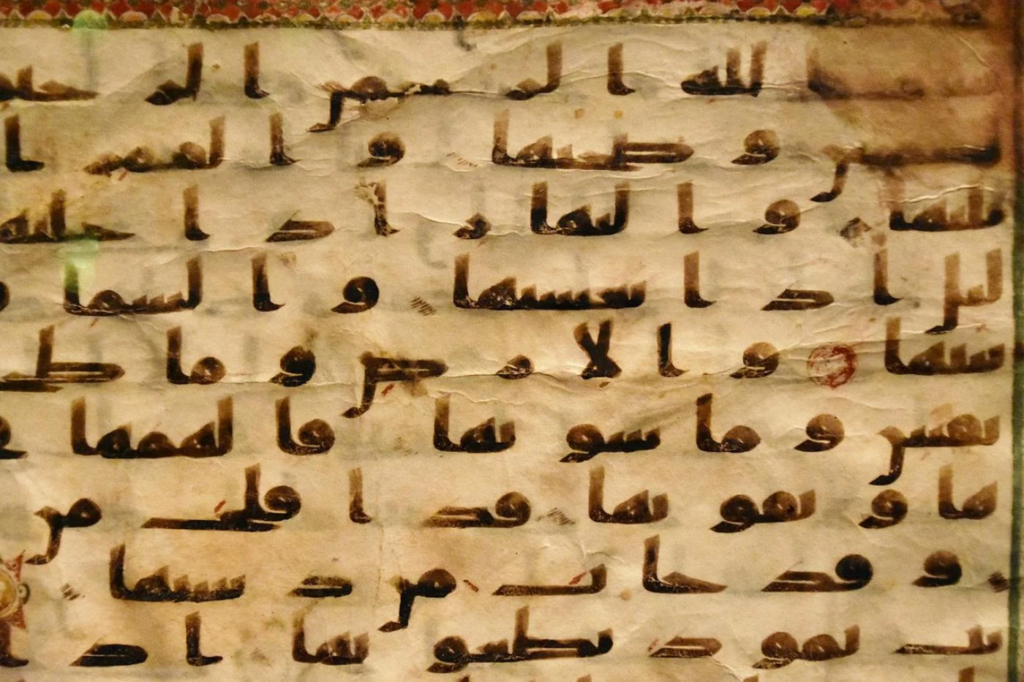
The month-long Pearls of Wisdom exhibition launched this month at Qasr Al-Watan, Abu Dhabi’s Presidential Palace, on the sidelines of the third edition of the Abu Dhabi Manuscripts Conference.
Running until Jan. 6, 2023, it will showcase valuable manuscripts in the fields of literature, heritage, religion, music, philosophy and science.
Split into seven zones, the exhibition will take visitors on a historical journey that deliberates on the influence of Arab culture in generating religious dialogue and contributing to knowledge that paved the way for the European Renaissance.
At the heart of the House of Knowledge, visitors will find themselves in an immersive gallery panel covering the Golden Age of Islamic civilization and two regions that are at the heart of medieval Europe: Al-Andalus in the Iberian Peninsula and Sicily in southern Italy.
Before visitors conclude their visit, they can head to the palace’s library to explore a collection of more than 50,000 books about the UAE’s history and politics along with topics including history, architecture, biology and ethnography.
Organized by the Department of Culture and Tourism – Abu Dhabi, the conference is being held under the theme “Arabic Manuscripts from East to West: Spain and Italy as a Model,” and in coordination with the National Marciana Library of the Italian Ministry of Cultural Heritage, the University Library of Bologna in Italy, the National Library of Spain, and Royal Library of San Lorenzo de El Escorial.
source/content: arabnews.com (headline edited)
_____________
The exhibition will showcase valuable manuscripts in the fields of literature, heritage, religion, music, philosophy and science. (Supplied)
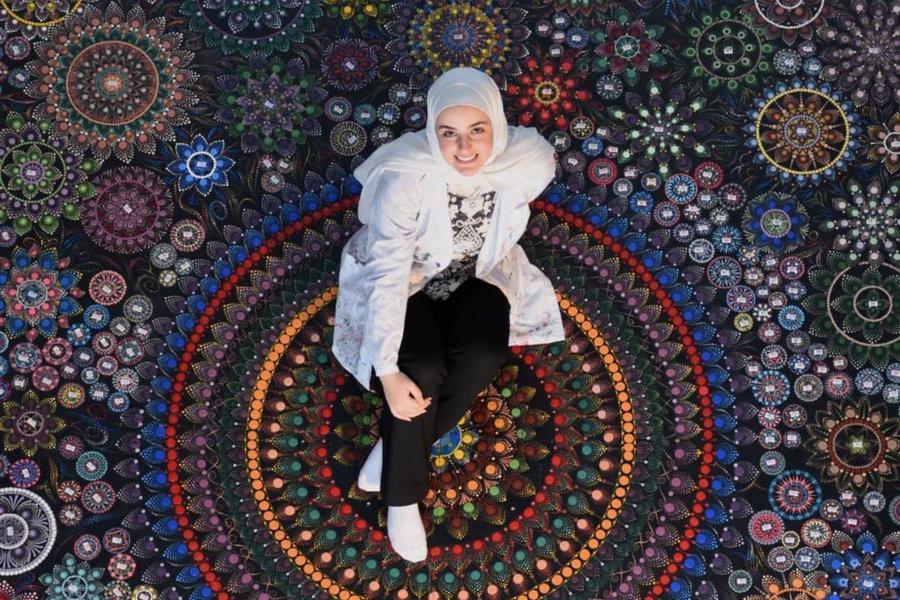
Syrian young artist, Lama Zakaria has recently achieved the first world record in the Guinness World Records for the largest display of mandala in the world, raising the name of Syria high and proving once again the ability of Syrian youth to excel in various scientific and artistic fields.
Lama told SANA’s reporter that she spent two years of continuous and diligent effort for reaching this stage, stressing that she worked with precision and patience to achieve the required symmetry in her painting, which achieved the record for the largest painting of mandala in the world.
She added that the mandala contains 4096 mandala circles of various diameters, colors and various decorations by using special dotting tools and acrylic paints on a 6 mm-thick wooden board.
She pointed out that the painting with dimensions 488 x 488 cm contains a large number of circles overlapping with each other and free circles with flowing lines that enhance cohesion among them.
Zakaria noted that in each quarter of the painting forms a part of a major basic circle that is the center of the painting and its eye-attracting heart, which required work carefully on all colors and various decorative units.
Lama Zakaria, a third-year student at the Faculty of Architecture at al-Baath University, has sought to specialize in mandalas, as she worked individually to learn the origins of this art and master its methods, and participated in several art exhibitions.
source/content: sana.sy (headline edited)
______________
Actress Lama Zakaria – Photo from Lama’s official Instagram page
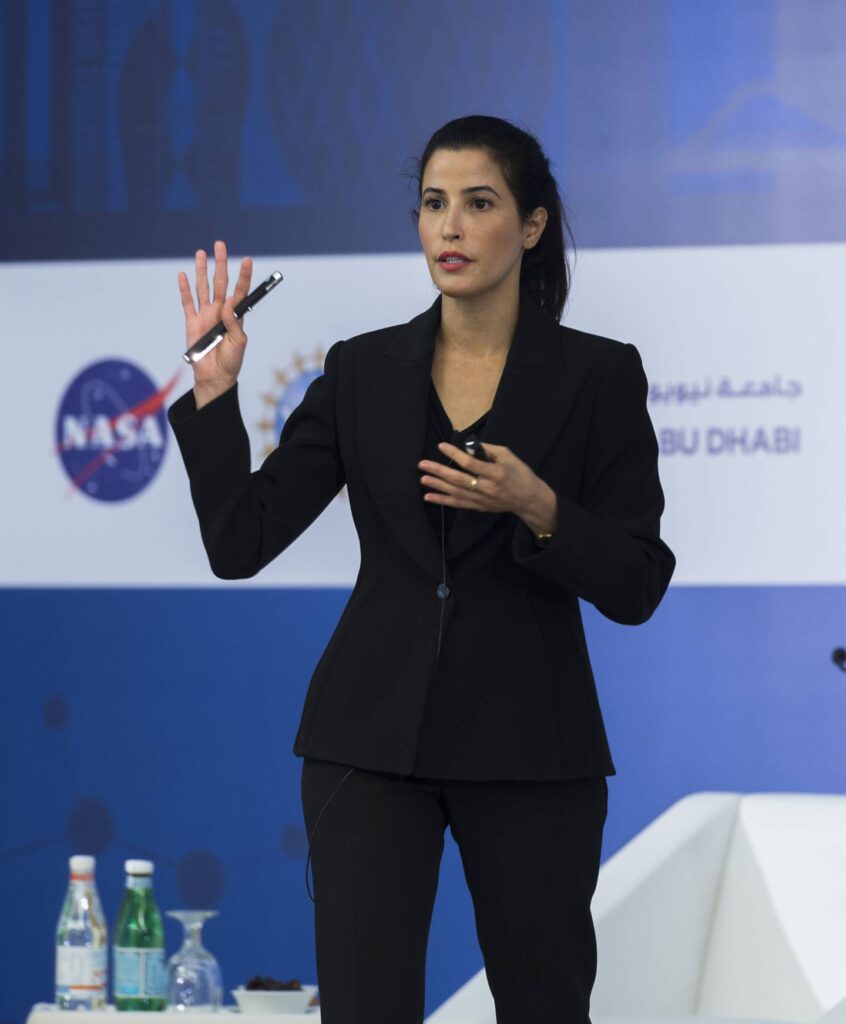
The celebrated pharmaceutical chemist, nano engineer and inventor reveals why she has spent a career focusing her mind over matter.
When the Berlin Wall came down, Adah Almutairi watched the event unfold on a television screen 5,000 kilometres away in the family living room in Jeddah.
Too young at the time to fully understand the implications, 12-year-old Adah could nonetheless tell that the moment was significant, by the reaction of her parents.
Years later, at a conference to mark the 25th anniversary of the reunification of Germany, Ms Almutairi was on a stage in Berlin talking about her ground-breaking achievements in knocking down walls in science.
Back then, public speaking made her nervous. The knowledge that Chancellor Angela Merkel, a fellow chemist revered by Ms Almutairi, was among the 700 top international scientists and guests taking part merely compounded the feeling.
She broke the ice with a quote from the 1967 romantic comedy drama The Graduate, which earned her a laugh from the audience: “I just have one word to say,” she told them. “Just one word. Are you listening? Are you listening? Plastics.”
Ms Almutairi went on to describe herself as a plastics chemist, but she is much more besides. Her wide-ranging work combining materials chemistry with nanotechnology as well as developing tools for the future of biology and medicine makes her in great demand at conferences in the US, Europe, the Middle East and China.
The Saudi-American pharmaceutical chemist and nanomedicine engineer has won all manner of honours and recognition, including the prestigious and lucrative National Institutes of Health director’s new innovator award.
At the Falling Walls event, she gave an engaging, if sometimes faltering, presentation of her life-changing nanoparticle discovery feted in the US Congress as one of the four most important US technology breakthroughs of 2012.
“I used to be a nervous wreck before I gave a talk and would practise for two weeks beforehand,” she tells The National. “Plus, Angela Merkel is such an amazing woman, so meeting her was really special.
“She got elected just as I got my degree in chemistry and the way she spoke at that conference, and later welcomed so many Syrians into Germany, made me really respect her views on being kind citizens.”
With practice, Ms Almutairi, now 45, is much more comfortable as a public speaker. “Preparation,” she says, “is key.”
It was a lesson she learnt as a schoolgirl after a fluffed first gymnastics performance before a crowd left her sobbing on a bench. Determined never to repeat the same mistake, she rose to become the top gymnast on the team as well as the fastest 1,500-metre runner.
Preparedness forms the backbone of her professional life as she puts known scientific truths into practice while always remaining open to unexpected outcomes.
Discoveries and their effects, she and Ms Merkel wholeheartedly agree, can often surprise the scientists and engineers themselves.
“If you decide there is going to be a challenge down the road and that is going to deter you, nothing will happen,” she says. “If you go down that road anyway, you’ll solve the problem when you get there.”
No amount of planning, though, could have readied her for a year when the rug was pulled out from beneath her feet. In 2015, her beloved father died at the age of 65 and her 20-year marriage to a banker she met at university fell apart.
It was, she says, a painful time – not least because Mutlaq bin Abdul Rahman Almutairi, born into a traditional Saudi family, was his daughter’s greatest ambassador, enabling her to break free from what could have all too easily been a restrictive mould.
He was just five years old and still mourning his mother’s death when his own father packed up their goat-hair tent, strapped their few possessions to the back of a camel and made the arduous 100km journey from the Bedouin desert enclave of Al Harra to seek work and a new life in Jeddah.
Desperately poor, the family squatted on land and, when old enough, the enterprising Mutlaq enrolled himself and his younger sister in school.
His conservative father, who could not read or write, was furious and sent his daughter home. Mutlaq stood his ground and continued with his education – a moment that shaped the course of his own future and subsequently that of his five children.
“Sometimes in life, one decision changes everything,” Ms Almutairi says.
Mutlaq’s offspring have flourished in their respective fields of science and medicine. Khalid, 46, a plastic surgeon, Heba, 38, a professor in radiology, and Ahmed, 37, a dentist, still live in Saudi Arabia while Amer, 41, a professor in family medicine, is based in Houston.
Ms Almutairi was named recently on the Forbes list of the world’s Top 10 Influential Female Engineers, and often thinks of the debt owed to a father who championed her right to education.
The stance made him something of an anomaly among the Almutair tribe, whose roots can be traced back to the Quran.
“It still makes me emotional,” she says. “He was enlightened from God.
“No one around him was educated. He was the first in his entire family to learn how to read and write and go to college.
“My father and grandfather got into a lot of fights because my grandfather did not believe women should be educated.”
While she inherited drive and motivation from her father, a love of learning was instilled at a young age by her mother Najat, who, aptly enough, was a teacher.
“My family on my mother’s side were extremely well educated and my mother is very well read,” she says.
Indeed, her parents met because Mutlaq had become besotted with Ms Almutairi’s great-aunt Hilal, an intellectual who was one of the first dentists in Saudi Arabia.
Despite the 20-year age gap, he approached the family to ask for her hand in marriage but was advised instead to wed the daughter of Hilal’s brother, with whom he would build a strong bond.
“My father appreciated a smart woman,” Ms Almutairi says. “He didn’t go after the young, pretty girl. He initially went for the older woman he enjoyed talking to.
“Now when I think back, I realise how special and unique he was, and how much respect he had for women.”
Mutlaq studied criminology and justice administration in Portland, Oregon, where Adah Almutairi was born, before returning to his homeland to become a police investigator.
The young Adah attended international schools in Jeddah and Riyadh, excelling not only at sport but in maths and science.
On leaving school at 16, she was at a loss as to what to do next. Her mother was applying for teaching posts so, on a whim, Ms Almutairi submitted an application to Najd National School in Riyadh – and surprised everyone, including herself, by landing a job teaching English.
“I didn’t have a degree, and when the headmistress realized how young I was, she said: ‘Don’t tell anyone, just put some lipstick on.’
“It was the best job ever. I loved every minute of it. I had such a connection with the girls. I used to take in copies of my mother’s Reader’s Digests and make up writing exercises around them.”
A year later, she began applying to universities. King Abdulaziz University in Jeddah turned her down but she secured a sports scholarship to Occidental College in Los Angeles, Barack Obama’s alma mater.
The opportunity once again put her father at loggerheads with her grandfather and members of the Almutairi clan, who did not think a young woman should travel overseas alone. Unperturbed, Mutlaq sent her anyway, even though he and Najat had doubts about her choice of subject.
The couple wanted her to be a doctor but Ms Almutairi chose maths as her major before switching to chemistry in her second year.
The lightbulb moment came when her tutor, the widely loved chemistry professor Tetsuo Otsuki, told her she was “a diamond in the dirt”.
“He made me feel smart and capable, and worth being taught,” she says.
“I have twice been told the phrase: ‘You remind me of myself’. It is one of the nicest things you can say to a young person if they look up to you. It really sat in my heart.”
Chemistry appealed because it was based on “concepts where once I wrapped my head around them, I could use them in so many ways”.
A scholarship to continue her studies at the University of California, Riverside, led her to create lightweight plastic polymers, or molecules, capable of conducting electrons that had uses in everything from robotics to space research.
“Around that time,” she says, “Hideki Shirakawa was winning the Nobel chemistry prize for his work with conductive polymers, and both Nasa and Walt Disney were funding and supporting that work.”
She may not have become a doctor of medicine as her parents had wished, but Ms Almutairi did turn her attention to the field during postdoctoral studies at the University of California, Berkeley, where she worked with Jean Frechet, a chemist innovating in the area of in-vivo imaging to diagnose disease.
After being turned down for jobs in Saudi Arabia, she took up a post at the University of California, San Diego, going on to lead an interdisciplinary research group at the Centre for Excellence in Nanomedicine and Engineering.
Perhaps one of Ms Almutairi’s proudest moments was collaborating with an ophthalmologist for a decade to come up with a way to regenerate failing retinas and prevent blindness.
“That particular innovation is now commercialised and makes me feel really good about myself,” she says. “I enjoy all sorts of application materials but medicine is especially rewarding. I like to solve problems and have a positive impact on the world.”
Her work with lanthanides – popularly classed as rare earth elements but actually, she says, abundant – involves a chemical reaction that could be applied to the delivery of drugs and diagnostics in medicine but also solar energy harvesting.
She has more than 100 patents registered, including one with her brother Khalid to use gold molecules in liposuction.
“My work is very rewarding,” Ms Almutairi says, “and my father was very proud of me. When I became well known in the US, it was a big moment because the people who were criticising him for sending his daughter away were the same people congratulating him.”
A strong proponent of the “health is wealth” philosophy, she may no longer run, but she does lift weights regularly and spends time in the garden with her 10-year-old son cultivating avocados, figs, and citrus trees, and growing aubergines, tomatoes and cucumbers.
She has visited Saudi Arabia many times to see her family and speak at conferences. One in particular that has stayed with her was a graduation speech at Princess Nourah bint Abdulrahman University in Riyadh.
There was no film quote for these graduates of the largest women’s university in the world. In a clear voice, without a hint of nerves, she instead passed on the words of that staunch defender of her own access to education.
Remain forever curious about the world, she told the audience, and live a meaningful life with impact.
It was clear that the woman of substance standing before them had been shaped by her father’s advice. She didn’t need to ask if they were listening.
The Saudi Arabian-American pharmaceutical chemist and nanomedicine engineer is in great demand at conferences in the US, Europe, the Middle East and China. Photo: Adah Almutairi
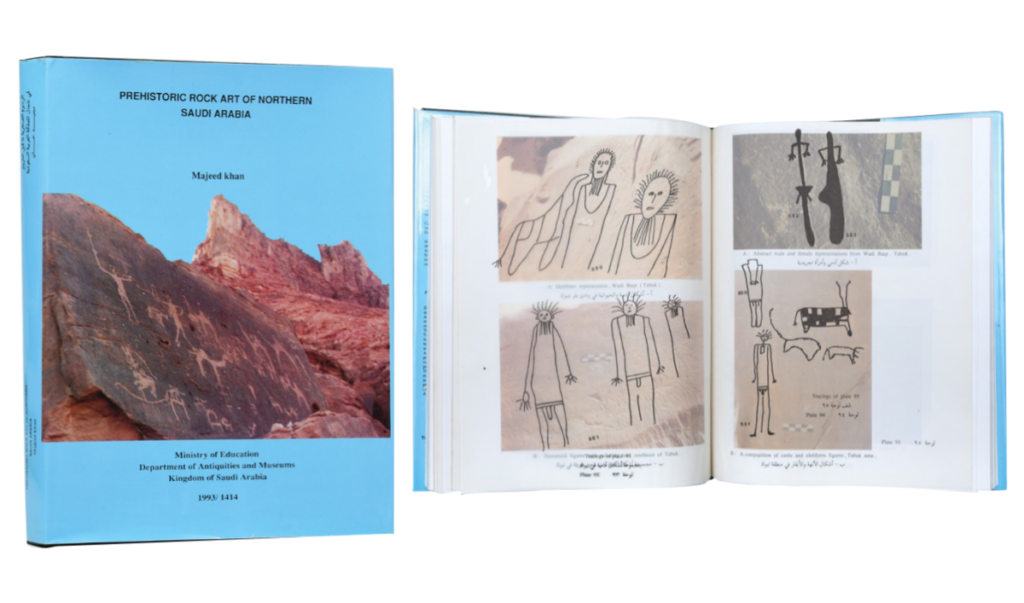
Rare first-edition copy of “Prehistoric Rock Art of Northern Saudi Arabia” was on sale at Sharjah International Book Fair
There was little or no recognition of the Kingdom’s ancient past before Majeed Khan’s book was published in 1993
In May 1976, Majeed Khan, a young graduate of the University of Sindh, Pakistan, traveled to Saudi Arabia to join the Ministry of Tourism as an archaeological consultant, advising on the development of museums and the conduct of archaeological investigations in the country.
It was to prove an inspired appointment.
Back then, with Saudi Arabia riding the wave of the first great oil boom and focused necessarily on its rapidly evolving future, archaeology in the Kingdom was in its infancy.
But in Khan the country had found a champion for one of its greatest heritage treasures — ancient rock art, thousands of examples of which are strewn across the landscape and which attest to a history of human culture that stretches back 10,000 years.
Khan, who lives in Riyadh, and at the age of 80 still works as a consultant to the Ministry of Culture’s Antiquities Department, has devoted his entire working life to a subject that continues to fascinate and surprise him to this day.
He received another surprise last month when he learned that his seminal book, “Prehistoric Rock Art of Northern Saudi Arabia,” published by the Saudi Ministry of Education’s Department of Antiquities and Museums in 1993, was now considered a collector’s item.
A first-edition copy was offered for sale for £1,250 ($1,448) by a specialist London book dealer at the UAE’s Sharjah International Book Fair, which ran from Nov. 2 to 13.
That, Khan felt, was a lot of money. But on the other hand, “it was the first research book on rock art published in any Arab country,” he said. At the time it came out, “there was no rock art taught in any Saudi university and no real rock art research in Saudi Arabia.”
Furthermore, there was little or no recognition in the wider world of Saudi Arabia’s ancient past — a past that is now being embraced enthusiastically as the backbone of major tourism projects, such as AlUla and Diriyah, designed to bring in millions of visitors a year to the Kingdom.
For example, in the supposedly comprehensive 1998 Cambridge Illustrated History of Prehistoric Art, published in 1998, there was not a single mention of Saudi Arabia — an oversight that would be dramatically exposed by Khan’s work.
To describe Khan as a pioneer in his field is to understate the impact he has had on the understanding of the extent and importance of the ancient past of the Kingdom.
Over the past four decades he has published dozens of research papers. The first, which he co-authored, was on “The Lower Miocene Fauna of Assarrar, Eastern Arabia,” published in Atlal, the Journal of Saudi Arabian Archaeology, in 1981.
His first book, which came out in 1993, shortly before his groundbreaking work on the prehistoric rock art of Saudi Arabia, was “The Origin and Evolution of Ancient Arabian Inscriptions,” also published by the Ministry of Education.
But it was to petroglyphs that he would devote the greater part of his energies, an academic commitment that in 2015 culminated in the rock art in the Hail region of Saudi Arabia being inscribed by UNESCO as a World Heritage Site.
Along with two colleagues from the then-named Saudi Commission for Tourism and Antiquities, Jamal Omar and vice-president Prof. Ali Al-Ghabban, it was Khan’s name that appeared on the nomination text that saw the twin sites near Jubbah and Shuwaymis in the northern province of Hail recognized by UNESCO as being of “outstanding universal value.”
As Khan told Arab News in January 2021, “it was for me the most emotional moment of my 40 years of research.”
Not that he is resting on his laurels. Hail is not the only region in Saudi Arabia where rock art can be found, and “these days I am working on the rock-art site of Hima, Najran, to see it, too, placed on the UNESCO World Heritage List.”
There are more than 2,000 rock-art sites around Saudi Arabia. But the greatest concentration of Neolithic petroglyphs, or rock carvings, and the oldest known examples, dating back 10,000 years, is to be found in the north of the country at two sites 300 kilometers apart in the Hail Province.
The ancient forebears of today’s Saudis had no paper, pens, or written language with which to record their time on earth.
But with the rocks of their dramatic landscapes as their canvas, thousands of years ago the ancient peoples of the land that would become Saudi Arabia found a way to leave their mark on history, with an astonishing pictorial representation of a now forgotten world, painstakingly pecked, chiseled and engraved out of the sandstone rocks of the region.
The first of the two Hail sites is at Jabal Umm Sinman, a rocky outcrop to the west of the town of Jubbah, some 90 kilometers northwest of the city of Hail and 680 kilometers from the capital, Riyadh.
The town’s origins date back to the dawn of Arab civilization, when the hills of Umm Sinman overlooked a freshwater lake, which eventually would be lost beneath the sands of the surrounding Nefud desert some 6,000 years ago.
It was on these hills, in the words of the UNESCO nomination document co-authored by Khan, that the ancestors of today’s Saudi Arabians “left the marks of their presence, their religions, social, cultural, intellectual and philosophical perspectives of their beliefs about life and death, metaphysical and cosmological ideologies.”
The rock art of Jubbah, said Khan, “represented all phases of human presence from the Neolithic, 10,000 years before the present, until the recent past,” and reflected a time when the climate and landscape were very different from today.
Etched upon the rocks, often at mysteriously inaccessible heights, are the trappings of a lost world: A parade of dancers, long-forgotten gods and goddesses, mythological figures, half-human, half-beast, and animals including sheep, ibex, camels, horses, wolves, ostriches and — reflecting a time when prey roamed abundant on the once lush plains of Arabia — lions.
“The type of animals (pictured) suggested changes in climate and environment,” said Khan. “Large ox figures indicated a cool and humid climate, while the absence of ox figures and the appearance of camel petroglyphs represented hot and dry conditions..
“Both at Jubbah and Shuwaymis this change in fauna and flora clearly represented gradual but drastic change in society and climate in the prehistoric and pre-Islamic era.”
Importantly, he said, similarities in themes and depictions in other parts of the world, including Africa, India, Australia, Europe and America, showed that “Saudi Arabia was part of world heritage and cultural traditions.”
Like other peoples around the world, “ancient Arab artists were drawing the animals with which they were living and depicting their social activities, like dancing and religious rituals.”
The second of the twin Hail sites is at Jabal Al-Manjor and Raat, 220 kilometers southwest of Jubbah near the village of Shuwaymis. Remarkably, its treasures were discovered only 20 years ago, a remarkable story in which, naturally, Khan played a leading role.
In 2002, Aramco World, the magazine of the Saudi national oil company, reported that in March the previous year a bedouin grazing his camels had stumbled on strange marks on a remote cluster of rocks. He happened to mention his find to a teacher from the local town of Shuwaymis. He alerted the authorities and they called in Khan.
“Yes, the story is correct,” Khan said. “I met both the bedouin and Mr. Saad Rawsan, the director of archaeology in the Hail region, who took us to the sites for further investigations and research.”
Together, he discovered, the twin sites told the story of over 9,000 years of human history, from the earliest pictorial records of hunting to the development of writing, religion and the domestication of animals including cattle, horses and camels.
As the UNESCO documents record, these sites justify their inscription on the World Heritage List because they feature “large numbers of petroglyphs of exceptional quality attributed to between 6,000 and 9,000 years of human history, followed in the last 3,000 years by very early development of writing that reflects the bedouin culture, ending in Qur’anic verses.”
Furthermore, the Jubbah and Shuwaymis sites comprise “the world’s largest and most magnificent surviving corpus of Neolithic petroglyphs.”
Neolithic rock art is found at many locations across Eurasia and North Africa, “but nowhere in such dense concentration or with such consistently high visual quality” as in this remote part of northwestern Saudi Arabia.
Peter Harrington, the London specialist book dealer that brought Khan’s book to Sharjah for the book fair, described it as “a pioneering monograph … the first and sole edition of this seminal work, which addresses a hitherto neglected subject, challenges the received wisdom that influences in rock art in the region originated from Mesopotamia, the Levant, and the Nile Valley, helped to put the Kingdom’s ancient past on the map of modern knowledge, and paved the way to the listing in 2015 of the rock art of the Hail region as a UNESCO World Heritage site.”
“I am extremely surprised to see the cost of my book,” Khan said after Arab News broke the news to him of the price being asked for the out-of-print volume at the Sharjah International Book Fair, although he had some news of his own.
“The ministry is printing it again.”
That, however, is unlikely to prove a deterrent for collectors always keen to snap up rare first editions of books dealing with the region’s history — and there are few histories as fascinating as that of the rock art of Saudi Arabia, and few books as significant in the growing appreciation of the Kingdom’s past as Khan’s 30-year-old volume.
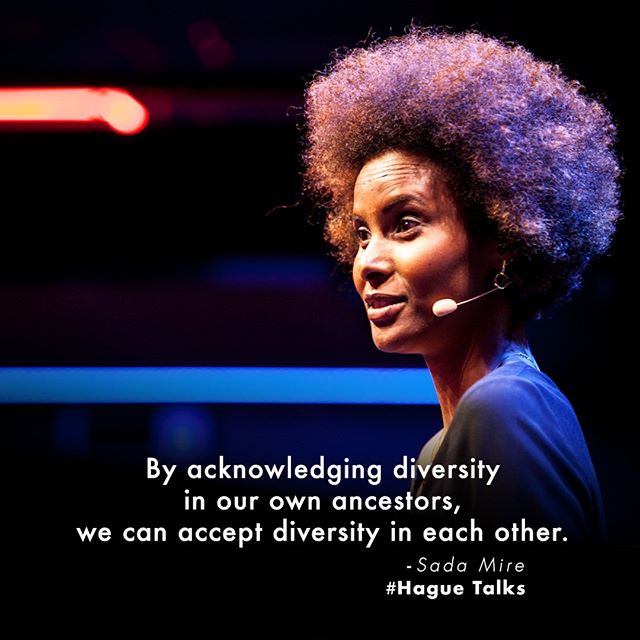
An interview with Sada Mire dives into the difficulties and rewards of preserving history and letting local perspectives guide heritage management in Somalia and Somaliland.
SOMALIA AND SOMALILAND are home to a rich heritage of archaeological treasures. But until recently, there was only one active, formally trained Somali archaeologist working in the region: Sada Mire.
In 1991, Mire was forced to flee Somalia with her family as a teenager after her father was killed by a genocidal government. She gained asylum in Sweden and eventually earned her Ph.D. in archaeology from University College London. During her studies, she learned that some of the significant stone tools that shaped scientists’ views of evolution came from Somaliland but were taken to Europe during the colonial era.
Inspired, Mire returned to her homeland determined to retell the history of the Horn of Africa and preserve its heritage—despite the difficulty of working in a region where religious sects jealously control narratives around Somali history and identity, and political conflict is causing humanitarian crises.
Somaliland is not officially a nation-state. It’s a self-declared country that is considered part of Somalia. A British protectorate since the 1880s, Somaliland became an independent country recognized by the United Nations on June 26, 1960. Less than a week later, it merged with the newly independent country Somalia. Early political tensions worsened in 1969 when Gen. Mohamed Siad Barre staged a coup and installed himself as president, imposing ethnic nationalist policies that favored one of the main Somali clans over the rest.
In the 1980s, civil war broke out between Barre’s dictatorship and the Somali National Movement, primarily composed of the Isaaq clan, the largest in northwest Somalia, including what is today Somaliland. The Barre government committed acts of genocide against the Isaaq clan, reportedly killing 200,000 Isaaq people between 1987 and 1989. Millions fled during the conflict, including Mire and her family, who belong to the Isaaq clan.
In 1991, with Barre ousted, Somaliland reasserted itself by declaring unilateral independence, this time without international recognition. But Mire always refers to Somalia and Somaliland as separate nations because, she says, “as an anthropologist, I call people what they say they are, and I respect that’s the decision of the country and its people.”
Mire has worked tirelessly to create change that fosters heritage preservation in a region with scant infrastructure to support archaeological work. She established the Department of Tourism and Archaeology in Somaliland and is creating a digital museum that features Somali objects and materials. Mire is deliberate about teaching archaeological skills to local people so they may carry out their own work at the community and institutional levels. All these are steps toward sharing the rich legacy of African peoples with African communities and the rest of the world.
Wenner-Gren Foundation project director and anthropologist Eshe Lewis interviewed Mire via Zoom in May. This interview has been edited for length and clarity.
EL:
Can you talk about your background and how you came to be an archaeologist working in Somalia and Somaliland?
SM:
It’s incredible that I am here now, that I have a university degree, that I even went to high school. My father and mother were educated. My brother now teaches in a university in Somaliland. My twin sister is a gynecological oncologist. In my family, it was understood that you got an education or you did what you could to educate yourself. My twin sister and I were very studious.
But because of the political situation in Somalia at the time, our clan became a target. At the age of 12, I lost all my rights to have an education. We were expelled from school, and we never thought we would be able to go back. From then on, I was self-taught. I read books and learned languages at home. The habit of learning and teaching myself has never left me.
EL:
Why is it important to conduct archaeological research in Somaliland and Somalia? And what are the most fulfilling aspects of the work you’re doing?
SM:
Right from the start, it was all about why we have so little representation of African history and African people, who have existed for over 200,000 years on the African continent. We have contributed so much to culture, science, technology, governance, philosophy, and literature, and there is nothing about it in the history books. In 2022, you have people who have no idea about what Africa has done. So, that is the number one reason I do what I do.
Also, I feel I can make the world a better place. I know that sounds like such a cliché, but I really think that if history books are revised, people will understand what others are worth, and they will appreciate their trajectory. Removing African history and experiences and holistic images from books creates a situation where people know nothing about, and hence fear, African people. And the few that live up to the negative stereotypes become the rule for them.
If your classmate doesn’t know your history, they don’t know you. They cannot. I believe that by understanding a nation’s past, a people’s past, a person’s past, we can appreciate them. We may not like what they do, but we understand them. I feel that there is so much work to be done to shed light on the history of Black people, Africans, and people of color.
EL:
What research and heritage protection work do you do in the region?
SM:
One of the longest research projects I’ve been doing is on medicinal and sacred plants through medical anthropology. I’m also a zooarchaeologist and a bone specialist. So, some of what we are preserving is that kind of archaeological material, including massacre sites from the recent genocide. I’m working on another project about astronomy. We found one of the earliest calendars—a whole ancient rock art site with the calendars painted. We are working with local researchers who study folklore and have created the first traditional Somali calendar.
In Somali nomadic culture, we have our own way of preserving heritage and an understanding of heritage that really clashed with [Western] best practices and this notion of monuments and artifacts—the more dogmatic UNESCO formula. UNESCO now covers intangible heritage, but often when Westerners do archaeology in the Horn of Africa—and especially in the Somali region—it’s really extractive. It comes from a tradition of going somewhere with the agenda of getting data out and filling a gap. That scientific and/or, often, Eurocentric gap is not the gap of the people.
Somalis challenged me right from the start when I said, “You don’t protect archaeological sites. The museums are being looted. You don’t care about your heritage!” They said, “No, that’s not our heritage.” I was confused, as a Western-educated student, that we did not care about these objects. I asked, “What is your heritage if you don’t care about this?” And they said, “Ah! Now we’ll tell you.”
EL:
How did you respond?
SM:
I developed something I called the Knowledge-Centered Approach based on what I learned about heritage from them, and this is what guides me. It’s the preservation of knowledge and skill rather than objects and artifacts. Heritage is performance that takes place on different mediums. You know, if you are in a scene, there is a sofa, maybe a chair, the way you are dressed, how you look, speak, and act. That is our heritage! That shows us as living, thinking human beings with logic.
I developed a framework to study this. It is called the ritual set, and I outlined it in my book Divine Fertility. Understanding African peoples’ logic links us with our past. In my own work it’s about an ideology of a sacred kinship and sustainability. This is the whole idea behind my book.
I explore Somalis’ questions about their identity. Who were we? Where do we come from? Why have we been told we are Arabs when we are Africans? Clearly, we are Black, and we are in Africa.
I also have personal questions about my heritage. Somalis are Muslims, but did we ever have any other ideology? Were we at some point something else? Why do we only know Islam?
Why do we think our ancestors were all from Arab countries, when in fact we are genetically the same as the Oromo, who are our neighbors? We have 50 percent lexical similarity. They look like me, I look like them, we practice the same traditional rituals. They may be Christian, and we may be Muslim, but we share Indigenous culture. Those questions have really not been answered by archaeologists or historians working in the Horn of Africa, local or foreign. There is a huge scientific gap, and for that public, I fill that gap.
EL:
Has there been any backlash to your work?
SM:
In 2009, my Ph.D. dissertation was put under restricted access because I was threatened by extremists. As soon as my book was published in 2020, I faced fresh threats from ideologues who are not interested in scientific research or common sense.
EL:
What is the source of this reaction?
SM:
This is misogyny. These are people who hate women and who use anything they can to stop them. They also fear intellectual women—and are afraid that there’s somebody researching and finding diversity in our past. However, this is not only restricted to my region; extremists of all religions have always dogmatically advanced a certain purity and homogeneity. Look at what is happening in India. I wrote my first ever academic article on the Ayodhya conflict in India, and I was prepared when I entered the Horn that I would have to deal with dogmatic views on our past.
There is a plurality of practices, identities, landscape hues, and traditions that link us to our African heritage. And it’s not a bad place to be from if you really open your mind and understand the heritage of this place, the history of food production, the linguistic plurality of Ethiopia, the Nile civilizations of Meroe, Aksum, Nubia, all the way to Upper and Lower Egypt. You have Rwanda and Uganda, with [one of] the earliest iron productions anywhere in the world, an independent invention! The history and heritage are incredible!
EL:
What are some of the challenges you face when doing heritage preservation in a conflict zone?
SM:
Everything I do in this region is soaked in challenges.
This is a post-conflict situation where the country is not officially recognized, where there are no legal instruments and no notion of heritage. My paper in 2007 was the first study of heritage in Somaliland. The heritage work I’ve been doing the past 15 years has involved establishing a law for heritage protection and physically protecting sites through measures like fencing and hiring guardians and custodians, but also preservation so that we have digital documentation and heritage research.
But the lack of understanding of heritage creates more challenges. People see Westerners who have worked there, and without exception, none of them has worked on heritage. Everything has been “go and dig.” This has also led to conflict within the people I train. They say, “Sada, you never do excavations. You’re the odd one because you’re not digging.” And I say, “How can we excavate when we don’t have laws or a single museum?” We dig a grave, and then what? What is protecting that grave? What are the legal instruments that oblige anybody to protect it or to hold others accountable?
The people who are coming here to dig have laws and museums in their countries. The contracts are signed with their laws, even though it’s our country. There’s a knowledge and awareness gap with the locals who don’t understand the way they are being exploited. There’s a sense of archaeology as a White man’s sport, as fun and extractive and magical—all these words that mystify it for local people. If someone comes along and says, “Let’s dig up what’s in there,” it appeals to our human curiosity.
That was the archaeological stance 400 years ago. But in Africa, [some people think] it’s OK for it to be at that level today.
There are so many Africans who are interested in this field, have awareness, and want to change things.
EL:
Can you talk about your efforts to encourage more Africans to get involved in heritage preservation and to collaborate across countries?
SM:
When I was at Leiden University, I created the online course Heritage Under Threat because I knew a lot of people didn’t have the opportunity to come to a place like Leiden to study a world-class course. Over 7,000 people have taken part. This was around 2015, when not many Black people were professors of archaeology and teaching online courses. So, for students it was a free, advanced course taught by a Black woman with a lot of African material that everybody could take part in. From that experience, I realized there are so many Africans who are interested in this field, who have awareness, and who want to change things.
When I created the Horn Heritage Foundation, the idea was to work in Ethiopia, Kenya, Somalia, Somaliland, Eritrea, and to have a regional exchange. And that’s what we’re doing—coordinating on a regional level so we are not isolated in our thinking. This has been one of the colonial goals within Africa: to isolate people from each other so they don’t value each other or each other’s experiences and contributions—to keep them unaware.
Academic divide and rule continues through gatekeeping. For example, funding is allocated through Western institutions by Western, and often White, male panels. Often, those coming to Africa with the funding prefer to work with people who will go along with whatever they are doing. There’s a lot of that going on, unfortunately.That is exactly what I was hinting at in my piece in The Guardian —that African heritage is still very much neglected, and the whole system is rather self-serving. It does not help that in various parts of Africa there are conflicts that limit how much can be done on the ground. So people, including foreign teams, tend to not leave the beaten track—not just physically but also conceptually. This impacts African heritage and its future.
What archaeology analyzes are things we have shed over the generations that come from our bodies, our movement, our intellectual process. When that continuity is denied, we are alienated from our history and then reintroduced to it by someone coming from hundreds of miles away. In this way, archaeological tools have been used to aid the colonial process.
EL:
What can be done to change this, to create a path toward a different future?
SM:
I am one of the few African archaeologists who have worked in several African countries. We need greater interaction and collaboration between African archaeologists in the continent. Africans need to have access to tools so they can do the work themselves. Online courses and free or accessible outlets help to do that.
When we were doing the digital heritage project documenting rock art, we were interested in training people using what they have. You have an iPhone? You can do a lot with an iPhone. You can edit and be the author and present [at a conference]. You can advocate. As Africans, we should have our own organic questions about our own identity and culture, and have the opportunity to explore them.
That’s what I mean when I say “cultural heritage is a basic human need.” It’s not something we should get from somewhere else; it’s already here. We are experienced. We are living that reality. It’s ours.
Syrian girl, 7, who survived horrors of civil war crowned Arab Reading Challenge champion.
Sham Al Bakour named sixth winner of prestigious title at Dubai Opera House awards ceremony.
A Syrian schoolgirl who survived a deadly missile attack during the civil war in her country has been crowned Arab Reading Challenge champion in Dubai.
Sham Al Bakour, 7, was only six months old when her family’s car was struck during violence in Aleppo in December, 2015.
Her father was killed while she and her mother survived the horrific attack.
She has now completed a remarkable journey from tragedy to triumph to win words of praise from Sheikh Mohammed bin Rashid, Vice President and Ruler of Dubai.
In footage released by Dubai Media office, Sheikh Mohammed is seen speaking to Sham as she clutches her winner’s trophy at a ceremony at Dubai Opera House on Thursday.
Her success was met with warm applause by a large audience at the Downtown Dubai culture spot.
“She sustained injuries in the head and at the hospital doctors stitched them,” said Sham’s mother, Manal Matar, 33.
“I have been her support along with my family and her father’s family.
“I noticed she had a passion for memorising texts and Quran verses since she was less than three years old so I supported her.”
A young symbol of hope
She said that Sham has been an inspiration for the children in her family and school.
“Her cousins wait to see what she reads to learn from her.
“Her school mates will certainly be inspired. This challenge will help raise a generation that can rebuild Syria.
“Love of reading must start at a very young age.”
The young literature lover read 70 books to win a competition that attracted 22 million entrants from 44 countries.
When asked about what she would do with the Dh1 million prize money, she said she would give it to her mother.
“We haven’t thought of what to do with the money yet. The focus is on Sham, she is my investment for a better future,” Ms Mattar said.
Sham secured top spot ahead of Adam Al Qasimi from Tunisia in second, and Rashid Al Khateeb from Jordan, in third.
Reading is ‘food for soul and mind’
The young winner said reading offers an opportunity to transport yourself to new places with every turn of a page.
“I’m very happy to win and would like to invite all my friends and all young people to read. Reading is food for soul and mind,” Sham said.
“Reading takes you places, every story introduces you to different people and takes you to a new place.”
The youngster impressed judges with the confidence and clarity with which she expressed her ideas and opinions.
“It was a unanimous decision on Sham, who showed confidence,” said Lailah Al Obaidi, professor in Arabic language and literature at the University of Sharjah, and one of three judges.
“Sham will pave the way for the generation of the future because at this young age, she will be a motivation for more young readers in the Arab world.”
The annual winner is selected based on the pupil’s ability to articulate general knowledge, their critical thinking and communication skills, plus the diversity of books they have selected.
The Arab Reading Challenge was launched by Sheikh Mohammed in 2015 to encourage a million young people to read at least 50 books in a year.
Helping to shape young minds
Noor Aljbour, from Jordan, won Dh300,000, along with the title of Outstanding Supervisor, in recognition of her work guiding and motivating pupils through the challenges of the Covid-19 pandemic.
“The obstacles and the amount of work to prepare for this edition of the reading challenge were huge because its the first to happen after Covid-19,” Ms Aljbour said.
“Pupils returned to schools lacking the passion for reading, this meant that we needed to encourage pupils not only to read but to also pick up on their studies.”
Morocco’s Mukhtar Jasoulet school won the Dh1 million Best School award.
In the category for Arab pupils living in foreign countries, Nada Al Satri from Belgium was named the champion.
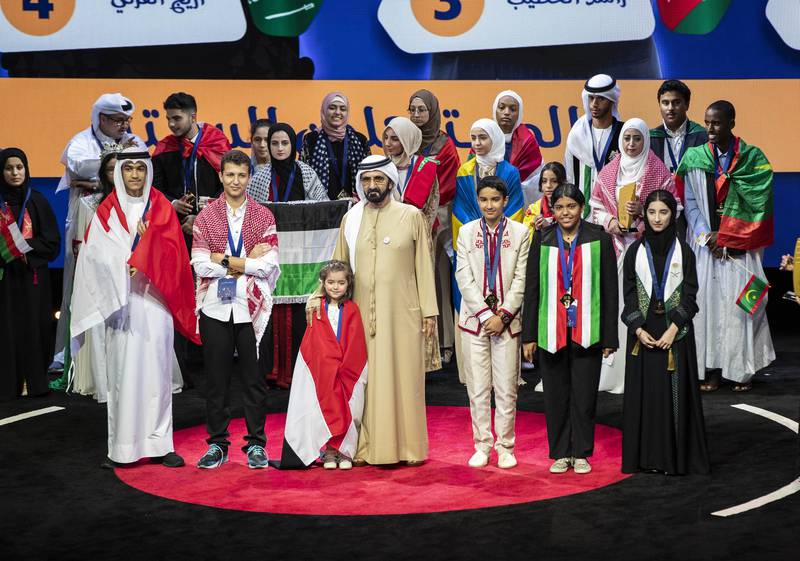
Sheikh Mohammed bin Rashid, Vice President and Ruler of Dubai, with the six finalists at the Arabic Reading competition at Dubai Opera. Left to right, Mohammed Jamil (Bahrain), Rashid Al Khateeb (Jordan), Sham Bakour (Syria), Adam al Qasimi (Tunisia), Ghala Al Enzi (Kuwait) and Areej Al Qarni (Saudi Arabia). All photos: Ruel Pableo for The National
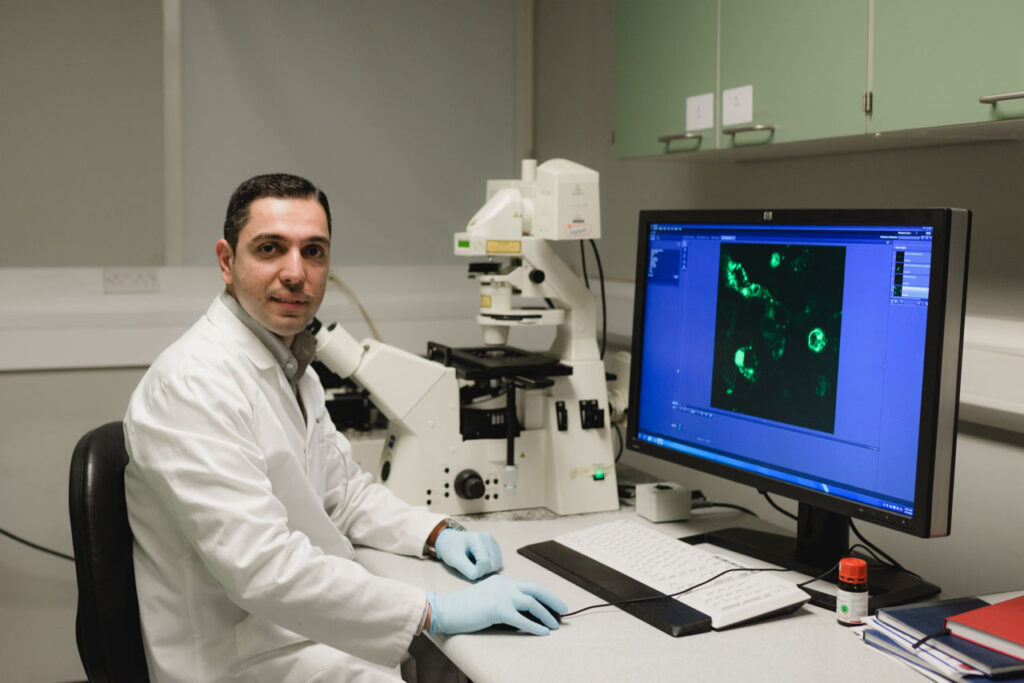
The Iraqi researcher Mootaz Salman has won the “Young Scientist Lectureship Award” for research that involved putting human brain tissue on a microchip and using innovative technology to treat neurodegenerative diseases.
Salman started his academic career at the University of Mosul, where he earned a Bachelor of Pharmacy with Honours, and is now is a senior researcher and lecturer in the department of physiology, anatomy and genetics at the University of Oxford.
He spoke to Al-Fanar Media about his work, which has taken nearly ten years of research, and the experiences that led him to his current post.
The first researcher in Britain to win the award, Salman said the support he received from universities where he had worked in the United States and the United Kingdom had been a key factor.
“I deeply believe that the more a person works, the more fortunate he is,” Salman said.
“From the very beginning, I was aware of the challenges ahead, the double effort I had to make, as an academic from a conflict country, and the responsibility I had to convey a different image of my country and to help humanity provide solutions to brain diseases and stroke, which have risen dramatically.”
Human Brain Tissue on a Microchip
The International Society for Neurochemistry and the and Asian-Pacific Society for Neurochemistry will present Salman with the award in September in Honolulu, Hawaii.
Salman led a research team that used a human brain “microvessel on a chip” to study what happens when drugs cross from the bloodstream into the brain.
The research was part of his ongoing work to understand the cellular physiology of the blood-brain barrier and exploit its mechanisms to improve the effectiveness of therapeutic treatments of neurological diseases such as Alzheimer’s disease, multiple sclerosis, and Parkinson’s disease.
The device the researchers designed for the study allowed them to track the movement of tiny molecular sizes across the blood-brain barrier. Their device is ideal for studies involving biotherapies, as well as being able to employ it in high-resolution imaging methods, such as transmission electron microscopy, Salman said.
Academic Journey
Before moving to the University of Oxford two years ago as an assistant professor and lecturer at Wolfson College, Salman was a postdoctoral fellow at Harvard Medical School and Boston Children’s Hospital in the United States.
Before that, he earned a master’s degree and a Ph.D. from Sheffield Hallam University, in the United Kingdom.
During his doctoral studies, he discovered a new pharmacological framework for developing drugs to treat patients with brain tumours resulting from accidents and strokes.
This research focused on water receptors in the brain. Salman described it as a turning point that helped him recognise the molecular mechanics of brain diseases and think of ways to provide therapeutic solutions rather than surgery, which has major risks and complications.
He said the research led him to discover how cells develop brain tumours and the mechanics that cause these tumours and strokes at the molecular level.
A World Health Organization report says that about 75 million people in the world suffer from strokes annually. About five million of them die and another five million suffer permanent disability.
Salman says the incidence of brain disease in the Arab world is rising because of the dietary and living patterns of the majority of the population, the intake of fats and sugars at “unreasonable” rates, the lack of physical activity, and the pressures of daily life.
Difficulty of Research in Arab Countries
After graduating from the University of Mosul, Salman worked as a teaching assistant in the university’s Faculty of Pharmacy for about two years and experienced firsthand the difficulties of research in the Arab world. He said there was no financial support for conducting research, research laboratories were limited, and the teaching and administrative burdens on professors usually led them to abandon research.
Salman said scientific research should be considered “an investment,” not a “random academic luxury.” Such work only flourishes in a suitable environment where there is stability and financial support, he said.
He believes the political unrest Iraq has experienced in recent years has affected teaching in universities and Iraqi researchers’ chances for professional development. He described government support for Iraqi universities as “very limited” and said most research initiatives were “individual and random” and did not amount to regular institutional work.
A Call for Greater Investment in Research
Salman said Arab countries needed to increase investment in scientific research at the national level and benefit from the experience of wealthy Gulf countries that have attracted foreign and Arab professors from major European and American universities to establish research centres where young researchers can train.
He said he had tried to open communication channels between the University of Oxford and Iraqi universities to reach agreements for cooperation and scientific research, which could provide research fellowships for Iraqi researchers at British universities.
This year, the University of Mosul signed a cooperation agreement with Oxford on a project that uses remote sensing and photographic information systems to study antiquities. The work would preserve the cultural heritage of Nineveh Governorate and other Iraqi provinces, and attract Ph.D. students to training courses at British universities.
Salman said: “These efforts give me a high sense of pride and a greater incentive for hard work and research that benefits all humanity. I feel a sense of responsibility and love towards my country, my city and my mother university, which helped me and paved the way for me at the beginning of my academic journey.”
Mootaz Salman, an Iraqi scientist at the University of Oxford, has won the “Young Scientist Lectureship Award” for his use of innovative technology to treat neurological diseases. (Photo: Mootaz Salman).
British firm Rolls-Royce has fired up the first six Kinetic PowerPacks to provide an energy supply for the Middle East’s largest supercomputer facility located in King Abdullah University for Science and Technology.
The firm has shipped 12 of the huge batteries, known as maximum transmission units, to KAUST from its factory in Liege, Belgium, in order to aid its Scientific Computing Data upgrade and power the supercomputer known as Shaheen III.
A maximum transmission unit sets the amount of data that can be transmitted in bytes over a network.
The devices have a power output of 1.6 MW each, and should a power outage occur, the systems – which are designed for humid conditions and temperatures as much as 50 degrees Celsius – will secure critical load and ensure the starting of the diesel engine via their continuously rotating sturdy kinetic energy accumulators.
The first six are now switched on, with the remaining switch to be activated at a later date.
“The mtu Kinetic PowerPacks are state-of-the-art, uninterruptible electrical power systems that are designed for operating in extreme environments and provide the highest reliability of back-up power for the most critical and essential systems,” the statement said, citing the Vice President of Facilities for KAUST, Matthew Early.
The systems include healthcare facilities, airports, data centers, and Shaheen III.
Projected to be the Middle East’s most powerful supercomputer, Shaheen III will enable KAUST to further enhance its ability for scientific discovery and artificial intelligence innovation, the vice president added.
Shaheen III is set to be operational in 2023, and is set to be 20 times faster than KAUST’s current existing system.
Earlier this year, KAUST partnered with the Saudi Data and Artificial Intelligence Authority to increase human capacity and innovation in the field of AI in Saudi Arabia and the region.
“The SDAIA-KAUST Center of Excellence in Data Science and Artificial Intelligence will focus on educational development and upskilling the new generation of Saudi citizens in AI,” KAUST President Tony Chan said.
source/content: arabnews.com (headline edited)
______________
Rolls-Royce shipped the devices from its factory in Liege, Belgium (Shutterstock)