TUNISIA: Tunisia’s Harissa Gets UNESCO Heritage Status

UNESCO added Tunisia’s spicy and most famous national condiment Harissa to its list of intangible cultural heritage, saying it was part of the North African country’s identity.


UNESCO placed the Tunisian condiment Harissa to its list of intangible cultural heritage, citing its significance to the identity of the North African nation.

The cultural agency of the United Nations is meeting in Morocco to consider proposals for its list of Intangible Cultural Heritage, which strives to safeguard cultural traditions, practices, and knowledge.

It tweeted “Just inscribed on the #IntangibleHeritage List: Harissa, knowledge, skills, and culinary and social practices.”

Tunisia’s Spicy Harissa

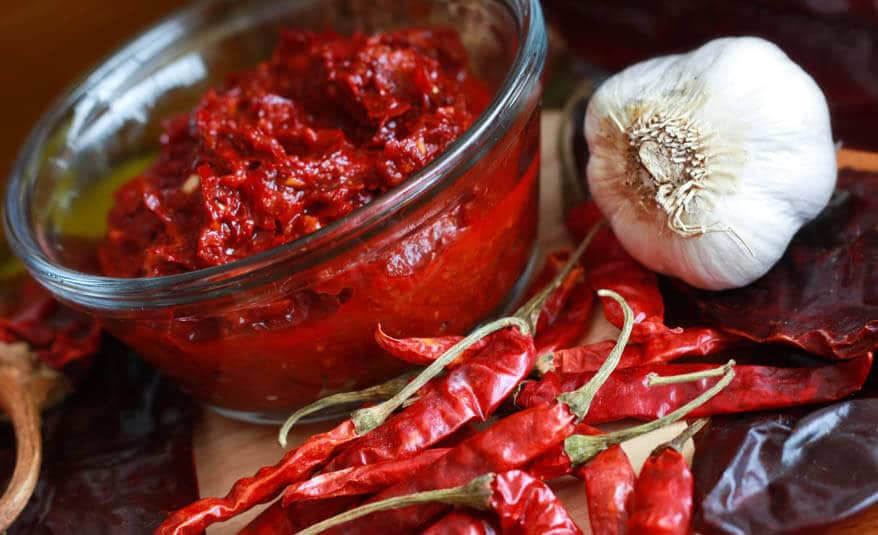
Harissa is a paste made from sun-dried hot peppers, freshly prepared spices, and olive oil, which preserves and slightly tones down its intensity. It is served in nearly every restaurant in Tunisia and is also exported internationally.

The condiment is wonderfully spicy, smoky, and packed with rich, deep flavors. It’s also extremely versatile, as it pairs well with sandwiches, different dishes, and even plain olive oil.

Harissa is “an integral part of domestic provisioning and the everyday culinary and dietary traditions of Tunisian culture,” according to Tunisia’s application for the status. It is typically cooked by families and communities.

“Harissa is used as a condiment, an ingredient, and even as a dish in its own right, and is well-known throughout Tunisia, where it is consumed and manufactured, particularly in the regions where chilli peppers are farmed,” the source explained.

It is regarded as a distinguishing part of national culinary heritage and a role in social cohesiveness.

The 2003 Convention for the Safeguarding of the Intangible Cultural Legacy seeks to protect and increase awareness of the “intangible cultural heritage of the communities, groups, and individuals involved.”

UNESCO emphasizes that the list recognizes traditions, practices, and knowledge as “human treasures” that must be safeguarded.

Wednesday, the organization also recognized French baguettes, bringing the total number of goods on the list to over 530.

source/content: carthagemagazine.com (headline edited)

________

___________

TUNISA


ABU DHABI, UAE: NYU Abu Dhabi (NYUAD)-led Researchers Develop Smart Pill to advance Diagnosis, Treatment of Gastrointestinal Disorders

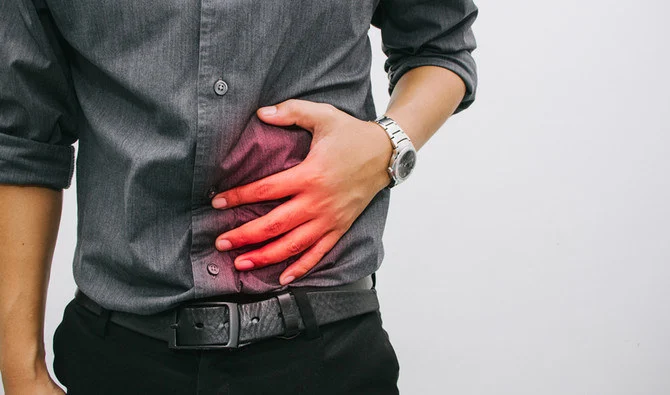
 A group of researchers led by a professor at NYU Abu Dhabi has developed a non-invasive system to aid in the diagnosis and treatment of gastrointestinal motility disorders. 

Researchers have produced 3D magnetic field gradients using high-frequency electromagnetic coils to track the movement of an ingestible smart pill through the gastrointestinal tract, NYUAD said on Tuesday. 

The ingestible wireless device measures and transmits the field magnitude to determine its precise location, which is then sent to a smartphone via Bluetooth technology. 

It reportedly allows for a more accurate evaluation of the movement of food from the mouth through the throat, esophagus, stomach, intestines and out of the body. 

The system has been modeled using the digestive systems of large animals. 

Existing smart pills do not offer the large field-of-view, high spatial resolution and fully wireless operation that the 3D magnetic field gradient developed by the researchers allows for, WAM reported.  

“The smart pill our team has developed represents a more accessible and efficient approach to assessing GI motility that can benefit both patients and medical providers,” Khalil Ramadi, NYUAD assistant professor of bioengineering, said. 

“This is a new frontier for medical diagnosis and evidence-based treatment and has the potential, with further research and refinement, to revolutionize how we can most effectively address health challenges that impact millions of people worldwide,” Ramadi added.

It is estimated that more than one-third of the world’s population suffers from gastrointestinal disorders.

source/content: arabnews.com (headline edited)

_____________
The new non-invasive system aims to aid in the diagnosis and treatment of gastrointestinal motility disorders. (Shutterstock)

________________________________________________

ABU DHABI, UNITED ARAB EMIRATES (U.A.E.)

DUBAI, U.A.E. : DEWA’s R&D Centre Registers its 7th Patent for 3D Printing Adhesive Device

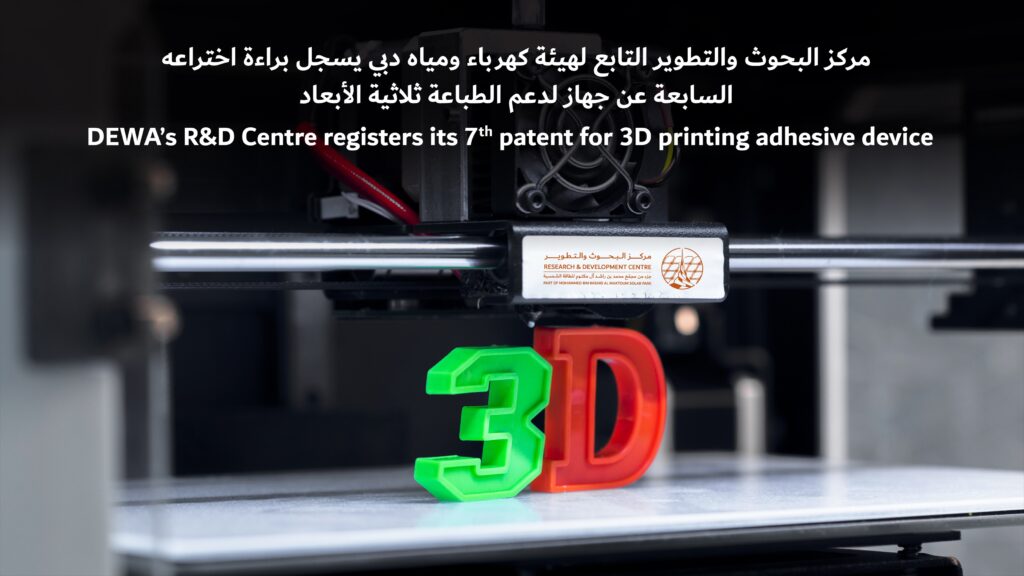
Dubai Electricity and Water Authority (DEWA)’s Research and Development Centre (R&D) has registered a new patent on an adhesive device for 3D printers, which automatically distributes the adhesive material on the 3D printing plate. This ensures that the printed material sticks adequately to the build plate. This is the seventh patent registered by the R&D Centre.

HE Saeed Mohammed Al Tayer, MD & CEO of DEWA, highlighted that this achievement supports DEWA’s efforts to develop advanced infrastructure and specialised software in 3D printing and additive manufacturing, and invest in them to overcome challenges in the energy sector. DEWA uses 3D printers to produce prototypes and spare parts for DEWA’s generation, transmission, and distribution divisions, and to support the digitisation of its inventory.

“The R&D Centre supports innovation in all production and operational areas, becoming a global platform to enhance the operations and services of all utilities’ divisions. It supports DEWA’s efforts in innovation which is a key pillar of its work. 3D printing projects launched by DEWA are widely recognised by utilities worldwide. DEWA works to enhance its production and operational capacity by investing in these technologies. This is through its 3D printing programme, which has been selected as one of the Dubai 10X initiative projects. The initiative was launched by His Highness Sheikh Mohammed bin Rashid Al Maktoum, Vice President and Prime Minister of the UAE and Ruler of Dubai, which mandates the Government of Dubai to be a global leader that is 10 years ahead of all other cities. The programme also supports the Dubai 3D Printing Strategy, which is a unique global initiative to use technology for the service of humanity and promote the status of the UAE and Dubai as a global hub for 3D printing technology, by 2030,” added Al Tayer.

“In addition to the seven patents registered by the R&D centre so far, it has published 134 research papers at international scientific conferences, journals and peer-reviewed publications. It includes 48 researchers, including 31 PhD and master’s degree holders. It enriches the scientific community with specialised research, spreading knowledge and developing the capabilities of the researchers. This enhances Dubai’s position as a global hub for research and development in solar power, smart grids, water and energy efficiency, and capacity building in these areas,” said Waleed Bin Salman, Executive Vice President of Business Development and Excellence at DEWA.

source/content: mediaoffice.ae (headline edited)

___________

____________________________________________

DUBAI, UNITED ARAB EMIRATES (U.A.E.)

BAHRAIN: Cybersecurity – A Historic Achievement: CTM360 the First Arab World Company to be Recognized for Enabling Technology Leadership in the Global DRP Industry

A historic achievement.

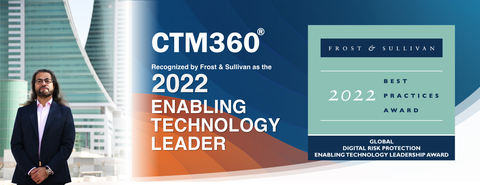
In yet another historic achievement for the Kingdom of Bahrain, Bahrain-based cybersecurity technology provider, CTM360, received Frost & Sullivan’s Best Practices Award for Enabling Technology Leadership in the global Digital Risk Protection (DRP) industry.

Frost & Sullivan Best Practices Awards recognized CTM360 for commercialization success, application diversity, commitment to creativity and customer service experience.

As a leading research and consulting firm, Frost & Sullivan has conducted extensive industry research and analysis to highlight the top companies excelling in Digital Risk Protection (DRP), as well as analysis on companies that combine comprehensive Cyber Threat Intelligence (CTI), Digital Risk Protection (DRP), and External Attack Surface Management (EASM) capabilities into a centralized External Risk Mitigation and Management (ERMM) system. Bahrain-based CTM360 is among the few that originated an integrated approach to consolidate these three technology verticals, now collectively termed ERMM.

Commenting on Frost & Sullivan’s award recognizing CTM360’s leadership in cybersecurity, Mirza Asrar Baig, Chief Executive Officer of CTM360 stated “We are proud to receive Frost & Sullivan’s award which acknowledges our commitment to a consolidated DRP strategy, making CTM360 the first company in the Arab World to be recognized at a global level.

“This Award reflects the efforts and devotion of CTM360’s team in creating and building a world class technology focusing on high data quality and relevance. Making this global mark is a testament to their remarkable design thinking, dedication and agility.” He added.

Mirza lauded Bahrain’s innovation-driven economy founded on Bahrain’s Economic Vision 2030, and the unparalleled extensive focus of the Government of Bahrain on developing and advancing the technology sector, with cyber security as one of the pillars of the Business Friendly Bahrain strategy.

He also commended the tremendous support extended by Bahrain’s various public entities and government agencies, underscoring that “CTM360 has become a technology leader through its consolidated technology platform that allows organizations to do more within one centralized environment and in an extremely cost-effective manner” 

Martin Naydenov, Senior Industry Analyst at Frost & Sullivan, observed, “CTM360 empowers organizations to focus on what they do best: their business. With CTM360’s fully managed services and unlimited takedowns, organizations can save significant time and cost by automating the detection and takedowns of fraudulent sites; this is an advantage that few cybersecurity vendors can replicate.”

Frost & Sullivan Best Practices awards recognize companies in various regional and global markets for demonstrating outstanding achievement and superior performance in leadership, technological innovation, customer service, and strategic product development. Industry analysts compare market participants and measure performance through in-depth interviews, analyses, and extensive secondary research to identify best practices in the industry.

About CTM360

CTM360 is a unified external security platform that integrates External Attack Surface Management, Digital Risk Protection, Cyber Threat Intelligence, Brand Protection & Anti-phishing, Surface, Deep & Dark Web Monitoring, Security Ratings, Third Party Risk Management and Unlimited Takedowns. Seamless and turn-key, CTM360 requires no configurations, installations or inputs from the end-user, with all data pre-populated and specific to your organization. All aspects are managed by CTM360.

source/content: zawya.com (headline edited) / Frost & Sullivan

________

___________

BAHRAIN

ARAB SATELLITES: How Arab Countries like Bahrain, Kuwait and Oman Built their First Satellites

Miniature loads and rideshare missions on rockets have made space affordable.

It has been nearly 40 years since the first Arab satellite, ArabSat-1, was launched into space by a Saudi organisation.

The UAE and Egypt sent satellites — mainly communication ones such as Thuraya-1 and NileSat-101 — in the following years.

But other countries in the region carried out little space activity after that.

Rideshare missions, such as the ones SpaceX offers, and the increasing use of nanosatellites are now giving smaller Arab countries easier access to space.

In the past five years, countries like Bahrain, Kuwait and Jordan have launched satellites and Oman also built its first satellite but was destroyed during a Virgin Orbit launch attempt on Tuesday.

Nanosatellites are miniature satellites developed quickly and at a low cost compared to standard ones.

Rideshare missions allow for multiple nanosatellites to launch on one rocket, bringing down launch costs significantly.

Miniature satellites cost less than Dh2 million to develop and launch, while standard ones can be hundreds of millions of dirhams.

The nanosatellites these Arab countries have launched have mostly been CubeSats — modular satellites that can range from one to multiple units.

Bahrain

Bahrain’s first satellite was a joint project with the UAE Space Agency.

The Light-1 nanosatellite was launched on a SpaceX rocket on December 21, 2021, to study charged particles, known as terrestrial gamma ray flashes.

Students at New York University Abu Dhabi and Khalifa University built the nanosatellite. The team included nine Bahrainis and 14 Emiratis.

“Light-1 marks a milestone in our history as a successful step forward for our kingdom’s space efforts and paving the way for Bahrain’s space ambitions,” said Sheikh Nasser bin Hamad, commander of Bahrain’s Royal Guard and secretary general of the Supreme Defence Council, at the time of the launch.

Kuwait

Kuwait’s first satellite, a miniature one called QMR-KWT, was launched on June 30, 2021 on a SpaceX rocket to help students test software code.

It is unclear whether the nanosatellite, built by the OrbitalSpace company, is still operational.

KuwaitSat-1 was the second Kuwaiti satellite in space and was launched on January 4 on SpaceX Falcon 9.

It was built by students at Kuwait University to test if the on-board camera can be used for attitude determination and control.

Kuwait news agency Kuna said there are plans to develop KuwaitSat-2 for launch in three years.

Oman

Oman’s first satellite, the Aman CubeSat, was destroyed on a Virgin Orbit flight on Tuesday — the first orbital launch from UK soil.

The rocket failed to reach orbit after a take-off from an airport in Cornwall.

The Earth observation nanosatellite would have helped engineers test the possibility of a future satellite constellation.

Oman has ambitious space plans, including building a space research centre for simulation missions and science experiments.

Jordan

In 2018, Jordanian students also built and launched a CubeSat on a SpaceX rocket.

The JY1-Sat was Jordan’s first satellite and carried a video system on board.

However, it is unclear whether the technology is still operational.

UAE

Thuraya-1 was the first satellite launched by the UAE. It was a commercial satellite built by mobile satellite company Thuraya and developed by Boeing.

It was also the Middle East’s first telecoms satellite.

DubaiSat-1 was the first remote sensing satellite built by engineers at the Mohammed bin Rashid Space Centre and in South Korea in 2009.

The first locally-built satellite, however, did not launch until 2018.

Called KhalifaSat, the observation satellite was against built by space centre engineers.

It is a standard, small size satellite that has been sending back high-resolution images of the UAE and other parts of the world.

MBZ-Sat, an 800kg satellite, will be launched by the UAE later this year and is expected to be the region’s most powerful imaging satellite.

Striking image captured by the KhalifaSat satellite — in pictures

source/content: thenationalnews.com (headline edited)

__________

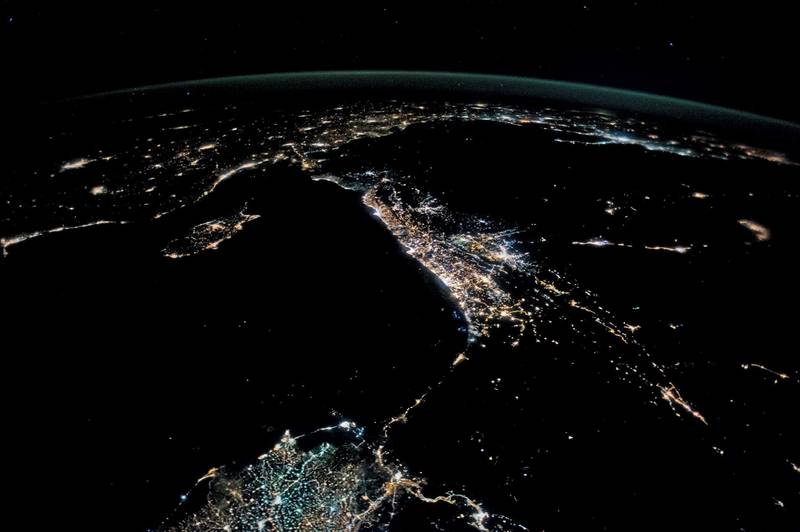
The Levant region captured from space

__________________________________________________________________________

BAHRAIN / JORDAN /KUWAIT / OMAN / UNITED ARAB EMIRATES (UAE)

SOMALI DANISH Mariam Noor PhD Post-Doctoral Researcher Invents a Ring for Leaking Heart Valves

A small ring around the main artery may cure patients with leaking heart valves. Researchers have documented its effect on animals and they hope they will make it possible to use the technology on humans.

A leaking heart valve – or in technical terms, aortic insufficiency – is a condition in which the valve between the left ventricle of the heart and the main artery cannot close completely. The disease can have varying levels of severity and can be caused by congenital malformations or calcification, among other things. 

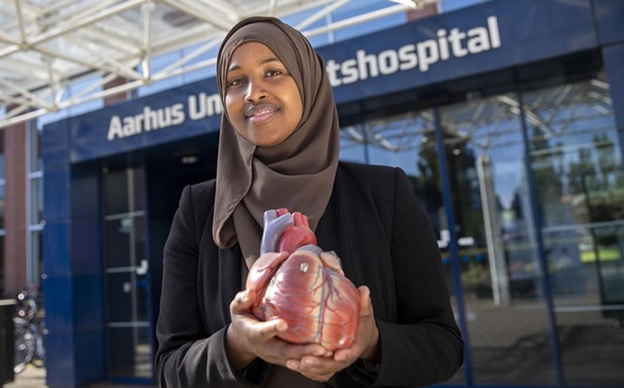
Mariam Noor has developed a small ring that seems to be able to cure leaking heart valves. This can change the way we do cardiovascular surgery. Photo: Lars Kruse, AU Foto.

When the aortic valve leaks, some of the blood returns to the heart, which means the heart has to work harder. In the worst cases, this can lead to heart failure, and this is why it’s important to treat the condition. Doctors usually treat the condition by repairing the diseased heart valve or replacing it with an artificial valve.

Both involve a risk of complications, and therefore engineers from Aarhus University have been working for several years to develop new surgical technology for heart patients.

“A prosthetic heart valve is an effective form of treatment, but it’s also a relatively complicated surgical procedure that brings with it a number of risks and complications in the long term. Now we have found a solution that can make it easier to treat patiens,” says Mariam Noor, a PhD student at the Department of Electrical and Computer Engineering at Aarhus University and the Department of Cardiothoracic and Vascular Surgery at Aarhus University Hospital.

Ring prevents blood from returning to the heart

Mariam Noor has spent the last three years designing and developing a ring that can give patients with aortic insufficiency good treatment results, and she has invented something that may have impact on the world of surgery.

“Instead of replacing the defective valve, my treatment concept is to enclose it in the main artery so it prevents blood from returning to the heart. I’ve developed a new type of ring that tightens around the aortic root to prevent this,” she says.

In fact, for several years now, cardiologists have been using a type of ring to stabilise the function of the heart valves, but this has not been without its disadvantages. 

The traditional ring is round and relatively rigid, and this limits its operation. Furthermore, placing the ring in the body is a challenge because surgeons have to cut the aorta and remove the coronary arteries. 

The new ring developed by Mariam Noor is made of an elastic material that can mould itself to the body’s tissue. It also has an opening, which makes it easy to place it correctly.

“The surgical procedure is significantly less invasive, and with the help of diagnostic imaging and 3D printing, we can adjust the ring’s rigidity and strength to the individual patient’s anatomy. This gives us some fantastic options, and the technology has been promising during animal trials,” says Mariam Noor. 

Lots of physics in the main artery

Mariam Noor has especially focused on the material properties and design of the ring in order to better retain the dynamics in the cardiovascular system.

“I look at surgical issues through the lens of an engineer, because there’s a lot of physics and mathematics in our cardiovascular system. My approach has been to understand how the aorta works and then transfer this knowledge to design a ring that can recreate normal anatomical conditions in patients,” she says. 

The ring consists of a silicone core surrounded by suture-like material. In order to document the effect, in collaboration with her colleagues, Mariam Noor has, carried out her experiments in a heart simulator, whereby it is possible to control the pump function, temperature and flow. 

“We can simulate the action of the heart in a very precise environment that closely resembles the human body. This means we can closely study what happens with the ring in the frequency area of every, single heartbeat. It’s been interesting, and we have obtained an incredibly detailed knowledge base to continue working with,” she says. 

The researchers have subsequently carried out a costly study to see how the ring expands in the body when the heart pumps, and Mariam Noor was positively surprised.

“We looked at the geometric pattern of the main artery in a pig with a ring and in a pig without it, and we could see that we can actually preserve the natural dynamics. These results look really promising,” she says.

She emphasises that there are a few years’ of clinical approval procedures ahead before the heart ring can benefit patients. (source: Aarhus University)

source/contents: wardheernews.com (headline edited)

__________

Mariam Noor has developed a small ring that seems to be able to cure leaking heart valves. This can change the way we do cardiovascular surgery. Photo: Lars Kruse, AU Foto.

_______________________

DANISH / SOMALIAN

SAUDI ARABIAN Professor Dr. Yasser Aldhamen at Michigan State University (MSU) Develops Pioneering Cancer Tumors Immunotherapy Strategy

Michigan State University (MSU) faculty member Dr. Yasser Aldhamen created a pioneering cancer immunotherapy strategy that can shrink tumors and increase therapeutic resistance against some types of cancer.

This came during a research he recently published in “Molecular Therapy” Journal, which is classified as one of the best scientific journals specialized in genetic and cellular therapy in the world.

Professor Aldhamen’s research project took about two years, completing 41 scientific papers published in prestigious international journals, as well as 3 previous patents registered with the US Food and Drug Administration.

In a statement to the Saudi Press Agency (SPA), Dr. Aldhamen said, “The whole idea is to treat patients without drugs to eliminate cancer.”

“Based on my previous work, a method was devised to harness the naturally active immune system to control tumor growth by activating the action of specific immune system cells, such as NK cells, and innate immune cells, such as macrophages and dendritic cells, within tumors.”

Dr. Aldhamen occupies, in addition to his duties, the position of Deputy Director of Research in the Faculty of Medicine at Michigan State University, and has supervised 5 students in the doctoral stage, two students in the master’s stage, and more than 15 students in the bachelor’s stage.

He also receives some trainees for 8 weeks from the secondary stage, by virtue of his interest in training future researchers in the laboratory, motivating them that making the world takes a long time.

He also participated in 15 conferences around the world, and membership in a number of advisory committees at the university working on developing research and exchanging experiences with researchers in countries such as Egypt and Peru. — SPA

source/content: saudigazette.com.sa (headline edited)

___________

Facebook.com

________________

SAUDI ARABIA

SAUDI ARABIA: Saudi Team Win the ‘2022 International Date Palm Innovative Technology Excellence Prize’ for their Special Sensor to Protect Date Palms from Pests

A team from the King Abdullah University of Science and Technology and Al-Hasa-based Palms and Dates Center has been awarded the 2022 International Date Palm Innovative Technology Excellence Prize.

Presented by the National Center for Palm and Dates, the award was made in recognition of the team’s fiber-optic distributed acoustic sensor, which is used in the early detection of red palm weevils in date palm trees.

Tackling infestations of red palm weevils has been a long-standing problem across the Middle East, Southeast Asia, Europe and other parts of the world.

The winning team comprised Dr. Islam Ashry, Dr. Chun Hong Kang and Prof. Boon S. Ooi from the KAUST Photonics Laboratory and Dr. Yousef Alfehaid and Eng. Abdulmonem Alshawaf from the PDC, which operates under the Ministry of Environment, Water and Agriculture.

HIGHLIGHTS

• Infestations of red palm weevils a major problem across the Middle East.

• Researchers from KAUST-PDC collect $53,000 in prize money.

As well as the prestige, the team collected SR200,000 ($53,000) in prize money. The award was announced at the 3rd International Dates Conference and Exhibition, which ran from Dec. 7-10 in Riyadh. Their design beat off the challenge of 65 other submissions for the prize.

Ashry said the team was honored to have won such a prestigious award and paid tribute to his colleagues at the Photonics Laboratory and the PDC who helped in the development, testing and deployment of the technology.

“This recognition motivates us to continue improving, optimizing and advancing this technology to a new level,” he said.

According to the NCPD, the event provided “a unique combination of scientific research and commercial strategy to exchange scientific knowledge and innovative technologies to enhance the safe production and commercialization of these extraordinary super-fruits.”

The Kingdom is home to some 33 million date palm trees, producing about 1 million tons of dates a year, or 20 percent of global production. In the Middle East region alone about $8 million is spent every year fighting infestations of weevils.

“Our RPW-detecting technology uses a fiber-optic distributed acoustic sensor,” Ashry said. “It is the first of its kind and offers a more scalable approach (than) other detection methods, such as microphone probe, computer-based tomography and visual inspection.”

Kang said the team’s system used fiber-optic cables wound around individual tree trunks.

“Acoustic signals generated by the weevil larvae inside a trunk can be picked up by the cable and transmitted back to an interrogator system,” he said.

“The collected signals are then analyzed and processed through a machine learning algorithm to identify each tree’s infestation status.”

Ashry and Kang are now working with various organizations within the Kingdom, including the PDC, MEWA, NEOM, the Royal Commission for AlUla and the Tabuk Agricultural Development Co., on the deployment of their technology.

These test applications will help to improve the sensitivity of the sensor systems so they can be used on large-scale farms.

“Our research efforts align well with … Saudi Vision 2030 in terms of diversifying the economy, especially for the date palm sector,” Ashry said.

Ooi said: “Our technology offers a unique and low-cost solution to protect the large number of date palm trees in the country through early infestation detection.”

source/content: arabnews.com (headline edited)

____________

(L to R): KAUST Research Scientist Dr. Islam Ashry and Prof. Boon S. Ooi receive the 2022 International Date Palm Innovative Technology Excellence Prize from the NCPD on behalf of their team. (Supplied)

________________

SAUDI ARABIA

IRAQI-BRITISH: Inside Architect Zaha Hadid’s Final Masterpiece Built for Sustainability

Sharjah HQ of waste management operator Beeah aims to lay foundations for a greener future.

A striking Sharjah building in the shape of a sand dune is primed to be a beacon of sustainability and serve as a fitting legacy for renowned architect Zaha Hadid.

The headquarters of waste management operator Beeah was the last project designed by Zaha Hadid before her death in 2016.

Her team constructed a modern masterpiece across 9,000 square metres, using sustainable materials to create a building with 40 per cent of its power provided by the sun.

Illuminated, sweeping staircases take visitors up to an art gallery on the first floor, with screens showing a time-lapse video to explain the building’s five year construction.

Now open to full capacity of 500 workers, the building is breaking new ground in how to provide a sustainable working environment.

Green vision

“We aim to operate as sustainably as possible, and used recycled materials in the construction of the building,” said Nada Taryam, managing director of Beeah HQ, which manages waste management across the country.

“Native plants have been used in the landscaping and reduced the amount of water consumption.

“A power pack stores excess energy from the photovoltaic panels, so we have a holistic strategy to achieve sustainability.

“Every project has its own specific requirements when energy comes into play, but the basis on which we have built this design can be learnt from.

“All of these sustainability measures can be taken and applied to other projects.”

The building’s high thermal mass allows heat to be absorbed during the day and dissipated at night to encourage cooling, while its curved structure allows the flow of natural sunlight to reduce the energy required for lighting.

An artificial intelligence system enables the building near the Alsajaa industrial area to learn to become more efficient as more people use it.

Its developers say it conforms to the highest standards of energy efficiency in the world.

Windows are positioned to reduce solar glare, while special glass cuts radiant thermal energy to keep the building cooler during summer.

While the glass limits the entry of infrared and ultraviolet light, solar panels supported by Tesla-made battery packs capture the power of the sun and store it to run the building’s air conditioning system.

The building’s components and management systems are integrated to maintain and improve its efficiencies.

Conference rooms are equipped with technology to automatically transcribe meeting minutes and email them to participants.

The building is the third in the UAE to be designed by Zaha Hadid architects, following the Sheikh Zayed Bridge, opened in Abu Dhabi in 2010, and The Opus hotel and apartments complex opened in Business Bay, Dubai, in 2018.

“As it learns from its occupancy, this building could potentially become one of the most sustainable buildings in the UAE,” said Ms Taryam.

“Certain decisions were taken, such as using glass reinforced panels on the ceiling which refract the sunlight so contribute to its efficiency and temperature control.

Defying convention

“There is a misconception about what these kind of buildings should look like, and we have defied that.

“There isn’t a rule book to say green buildings should be lined with solar panels. We have proved we can integrate architecture as well as sustainability to create something iconic.

“Zaha Hadid has something that distinguishes her from any other architect of her time. Every project of hers has its own context, but her ideas are adapted for each specific project.”

source/content: thenationalnews.com (headline edited)

______________

The headquarters of Sharjah waste management operator Beeah was the last project designed by Iraqi architect Zaha Hadid before her death in 2016. All photos: Andrew Scott / The National

__________________________________

IRAQI / BRITISH/ SHARJAH, UAE

SOMALIA Meteorite: Joy as Scientists find Two New Minerals

The official names for the new minerals are elaliite and elkinstantonite.

  • Canadian researchers said the rock was found in rural Somalia two years ago, but locals believe it is much older.
  • They call the stone Nightfall, and say it is documented in poems, songs and dances that stretch back five generations. It is used today to sharpen knives.

A huge meteorite that fell to Earth contains two minerals never seen before on our planet, scientists say.

Canadian researchers said the rock was found in rural Somalia two years ago, but locals believe it is much older.

They call the stone Nightfall, and say it is documented in poems, songs and dances that stretch back five generations. It is used today to sharpen knives.

The official names for the new minerals are elaliite and elkinstantonite.

They were identified by scientists at the University of Alberta who looked at a 70g fragment from the 15-tonne meteorite, which is said to be the ninth-biggest to reach our planet and is about 90% iron and nickel.

The name “elaliite” honours the fact that the meteorite was unearthed in the district of El Ali in Somalia, and “elkinstantonite” is named after Nasa expert Lindy Elkins-Tanton.

“Lindy has done a lot of work on how the cores of planets form, how these iron nickel cores form, and the closest analogue we have are iron meteorites. So it made sense to name a mineral after her and recognise her contributions to science,” said Prof Chris Herd who curates the University of Alberta’s meteorite collection.

A third, as-yet unidentified mineral, is being analysed by the university’s researchers who now hope to get their hands on more of the meteorite – not only to see what else they might discover, but also how it could be used on Earth.

“Whenever there’s a new material that’s known, material scientists are interested too because of the potential uses in a wide range of things in society,” Prof Herd said of the “exciting” research.

source/content: the-star.co.ke (Star) / BBC News, Africa (headline edited)

__________

____________

SOMALIA