Arabs & Arabian Records Aggregator. Chronicler. Milestones of the 25 Countries of the Arabic Speaking World (official / co-official). AGCC. MENA. Global. Ist's to Top 10's. Records. Read & Enjoy./ www.arabianrecords.org
Category: Inventions, Innovations (wef. Feb 01sy, 2022
The official names for the new minerals are elaliite and elkinstantonite.
Canadian researchers said the rock was found in rural Somalia two years ago, but locals believe it is much older.
They call the stone Nightfall, and say it is documented in poems, songs and dances that stretch back five generations. It is used today to sharpen knives.
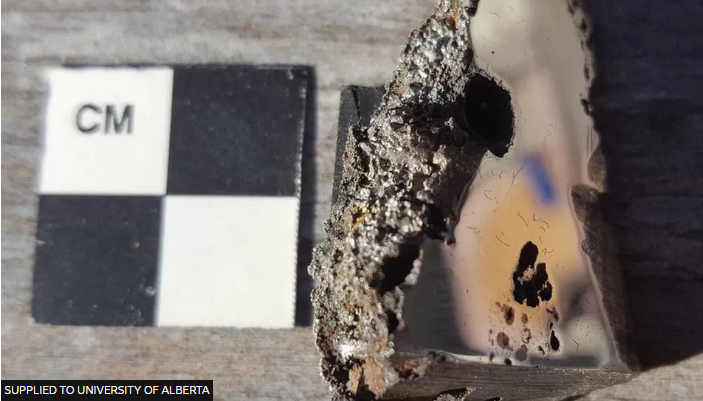
A huge meteorite that fell to Earth contains two minerals never seen before on our planet, scientists say.
Canadian researchers said the rock was found in rural Somalia two years ago, but locals believe it is much older.
They call the stone Nightfall, and say it is documented in poems, songs and dances that stretch back five generations. It is used today to sharpen knives.
The official names for the new minerals are elaliite and elkinstantonite.
They were identified by scientists at the University of Alberta who looked at a 70g fragment from the 15-tonne meteorite, which is said to be the ninth-biggest to reach our planet and is about 90% iron and nickel.
The name “elaliite” honours the fact that the meteorite was unearthed in the district of El Ali in Somalia, and “elkinstantonite” is named after Nasa expert Lindy Elkins-Tanton.
“Lindy has done a lot of work on how the cores of planets form, how these iron nickel cores form, and the closest analogue we have are iron meteorites. So it made sense to name a mineral after her and recognise her contributions to science,” said Prof Chris Herd who curates the University of Alberta’s meteorite collection.
A third, as-yet unidentified mineral, is being analysed by the university’s researchers who now hope to get their hands on more of the meteorite – not only to see what else they might discover, but also how it could be used on Earth.
“Whenever there’s a new material that’s known, material scientists are interested too because of the potential uses in a wide range of things in society,” Prof Herd said of the “exciting” research.
source/content: the-star.co.ke (Star) / BBC News, Africa (headline edited)
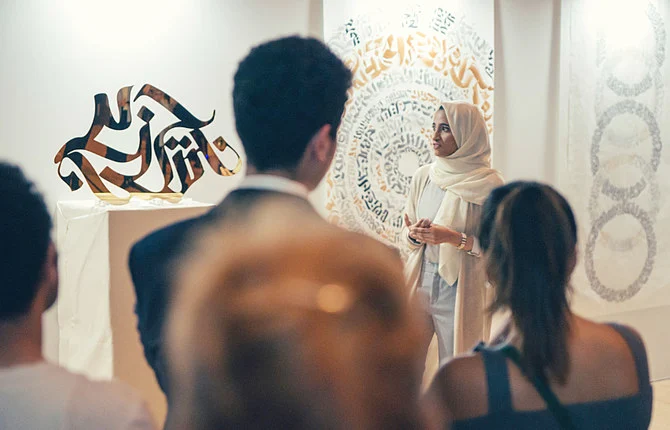
Mawadah Muhtasib, an emerging Saudi artist who reversed the typeface of the Arabic language, is well on her way to becoming a prominent name in the global art scene.
From learning her mother’s technique of writing backward at age 13 to exhibiting in London and New York City, Muhtasib has generated international intrigue in the art of Arabic by creating the first reversed Arabic calligraphy, or calligraffiti, typeface.
Her messages are not only meant to be read, but are also designed to be deciphered. Engaging her audience with the challenge of decoding letters is a large part of experiencing the artwork itself.
“It’s about expanding your human capabilities into creating the impossible. And this is exactly what I have been trying to do,” she told Arab News in an exclusive interview.
FASTFACT
The Arabic language is one of the richest art forms, the artist says, but in modernity, it is difficult to appreciate the depths of something that has become so ordinary.
Born out of a quest to layer the heritage of Arabic letters with innovative graffiti art methods, her work dares to be the first of its kind, granting her Dubai’s Art Bus competition award and a chance to show her work at exclusive showcases.
As graffiti art surged in popularity in 2013, Muhtasib experimented with mural painting alongside a novel group, hoping to develop a boundaryless form of art.
With a vision to modernize the traditional, she created a decorative typeface that mixed Arabic and Latin, written from left to right.
It’s about expanding your human capabilities into creating the impossible.
Mawadah Muhtasib
Muhtasib said: “We are so used to Arabic calligraphy when it comes to Thuluth calligraphy, Al-Kufi, Al-Naskh, and so on, and we just read that way and pass it on.
“When I’m doing my Arabic calligraphy, people sit and stare at my work for hours trying to figure out what these letters are, and the moment they realize it’s Arabic, they start to analyze and see all these letters in a different form that we as Arabic speakers are not used to.”
The Arabic language is one of the richest art forms, the artist says, but in modernity, it is difficult to appreciate the depths of something that has become so ordinary.
The goal is not only to get the viewer to read but to actively reflect on the beauty and form of each stroke and letter within the alphabet.
Muhtasib now passes on her craft through community workshops exclusively for women, most recently at Saudi’s largest light-based festival, Noor Riyadh.
“In my workshops, I do not teach people to write in reverse … I’m basically giving you the key of how to use the tools of starting to practice in the form of Latin calligraphy,” she said.
As soon as students understand the anatomy of the font family, Muhtasib introduces slanted brushes, layering techniques and stroke pressure. From the first session, students are sent home with a new creative form of expression. “The soul of a person is laid out on a page,” she said.
Writing in reverse is not new; the artist’s mother passed down the habit after having to write backward to maintain privacy at work. Alongside that, she passed down her passion for creative innovation.
While most calligraphers in the Kingdom were mimicking Western methods, Muhtasib, at 16 years old, was inspired and encouraged by Tunisian artist eL Seed and Saudi Moroccan artist Shaker Kashgari.
“I took that trick that my mom taught me years ago on how to write and then I changed it into a decorative typeface,” she said.
The concept was designed to preserve the rich heritage of the Arabic language. For foreigners, it offers a chance to engage in the language and learn its history.
“This is Arabic calligraphy in reverse that I took, improved, adjusted and made into a different form. But viewers will also wonder how it actually looked like (originally) and this will make a lot of people go in-depth and learn more about Arabic calligraphy,” Muhtasib said.
The philosophy behind the Typeform has gained interest from international luxury brands such as Louis Vuitton, Carolina Herrera, Montblanc, Sephora and more, resulting in several collaborations.
Muhtasib urges creators to push the boundaries of art and culture.
With calligraphy, “your sky’s the limit,” she said.
source/content: arabnews.com (headline edited)
____________
Mawadah Muhtasib now passes on her craft through community workshops exclusively for women. (Supplied)
The Kuwaitis continued to make many distinguished achievements and achieved results in various fields and at the various local, regional and international levels, which were recorded for their work and creativity, reports Al-Rai daily. The following are the most prominent of these achievements during the year 2022.
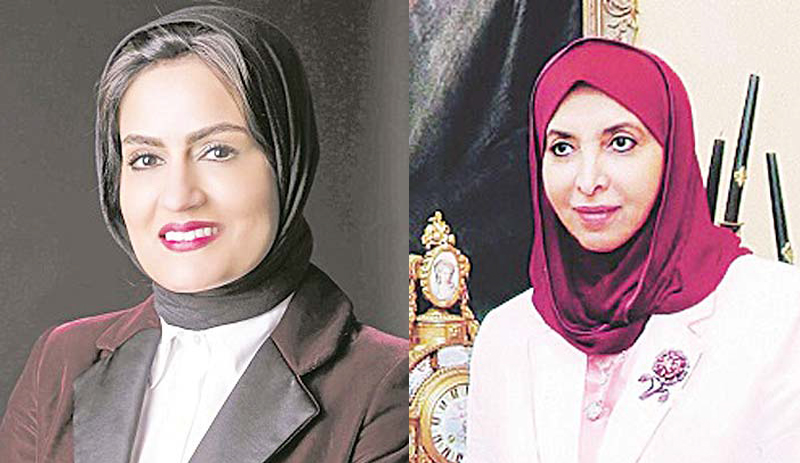
February 10: Dr. Hind Al-Qadri, a researcher at the Dasman Diabetes Institute of the Kuwait Foundation for the Advancement of Sciences, won the 2021 L’Oréal UNESCO Prize for Women in Science within the Middle East Regional Program for Emerging Female Researchers. (see picture below)
February 24: Kuwaiti parachutist Ibrahim Al-Rubaian recorded an unprecedented feat by jumping from a height of 13,000 feet with the biggest fl ag in the sky of Kuwait, with an area of 800 square meters, under the slogan “I raised glory and soared with pride,” coinciding with the national holidays.
February 26: The State of Kuwait entered the Guinness Book of Records by hoisting the country’s largest flag measuring 2,742 square meters and installing it on a mountain peak in the Sultanate of Oman (Jabal Shams), at an altitude of 3,028 meters above sea level, in conjunction with national holidays.
March 21: The Arab Organization for Education, Culture and Science (ALECSO) honored Sheikha Dr. Suad Al-Sabah, in recognition of her brilliant contributions in the literary and cultural fields, at its eighth session of the “Arab Poetry Day” in the Tunisian capital.
April 23: The International Professional Diving Instructors Organization awarded the Kuwait Scientific Club Center for Swimming and Diving a Certificate of Excellence for its contribution to the development of the diving industry inside and outside Kuwait.
June 12: Kuwaiti researchers Dr. Nasser Al-Sayegh and Dr. Ammar Bahman obtained a patent from the US Patent Office, for their invention of a device capable of characterizing the physical state of nanosuspensions dispersed in nanofluids during the dynamic fl ow process.
June 29: Kuwait University announces that Assistant Professor of the Department of Surgical Sciences at the College of Dentistry, Dr. Muhammad Kamal, and the Consultant of Nose and Throat at the Ministry of Health, Dr. Abdul Mohsen Al-Turki, obtained a patent from the United States of America for an alternative medical splint to the nose wicks.
July 2: The International Pharmaceutical Federation selected Dr. Dalal Al-Taweel, Assistant Dean for Student and Academic Affairs at the College of Pharmacy, among 20 rising stars in the field of pharmaceutical research and pharmaceutical education.
August 11: The League of Arab States honors the Kuwaiti youth, Abdullah Al- Shammari, who won the third place for the “Excellence Award for Arab Youth 2022” in the field of “voluntary work” granted by the Council of Arab Ministers of Youth and Sports. The award came about the “Al-Amal Electronic Newspaper” project, which is concerned with the affairs of people with disabilities.
October 2: Plastic artist Munira Al-Qadiri won the prize of the 15th session of the German “Trina Fellbach” exhibition for small sculptures.
October 3: Dr. Badr Al-Enezi, from the Department of Environmental Technology Management at the College of Life Sciences at Kuwait University, obtained a patent on “improving water and solving the problem of environmental pollution in a scientific way” from the United States Patent and Intellectual Property Office.
October 9: Kuwaiti photographer Muhammad Murad won first place in the prestigious international “Mont Photo” competition for photography in the natural world in Spain.
October 12: The European Union of Medical Specialties selected Dr. MuhammadKamal, a Kuwaiti academic, as the first examiner from outside the continent for the Board of Oral, Maxillofacial, and Head and Neck Surgery. The selection was made during the last session held in the Spanish capital, Madrid.
October 12: Lama Fahad Al-Ariman received the “Rising Space Leaders” award presented by the International Astronautical Federation as the representative of the State of Kuwait in this international competition.
October 30: Kuwaiti photographer Muhammad Murad won the top honorary prize in the African “Benjamin Mkapa” competition for developing African wildlife and the American “Nature Best” competition.
A multifunctional snow park was opened at the Mall of Oman. The project Snow Oman is the largest in the Middle East. The snow park was developed by Majid Al Futtaim, who has experience building indoor snow and ski amusements. In 2005 the company unveiled its first project in the flagship Mall Al Futtaim and later realized the mega project Ski Dubai in the Mall of the Emirates.
The total area of Snow Oman is 160 000 square feet. The complex combines a variety of winter attractions, the country’s first colony of penguins, and natural snow. The main decorations are an ice port town and a sunken ship with a lighthouse.
Rides include Mountain Thriller, Snow Bullet, Slide Winder, Cloud Climber, and Zorb Ball, unique attractions such as Cold Town Muscat, and a 5112-square feet ice rink. Admission to the park starts at 12.5 OMR, equivalent to $32.5.
Snow Oman caters to guests of all ages and offers activities for both kids and thrill-seekers. Outside the ski and skate slopes are cafes with hot winter drinks, warm seating, and a photo area.
Majid Al Futtaim is one of the largest mall, retail, and entertainment companies in the Middle East, Africa, and Asia. The company operates 29 malls, 13 hotels, and four mixed-use complexes in the UAE, as well as more than 600 cinemas and several entertainment centers.
The celebrated pharmaceutical chemist, nano engineer and inventor reveals why she has spent a career focusing her mind over matter.
When the Berlin Wall came down, Adah Almutairi watched the event unfold on a television screen 5,000 kilometres away in the family living room in Jeddah.
Too young at the time to fully understand the implications, 12-year-old Adah could nonetheless tell that the moment was significant, by the reaction of her parents.
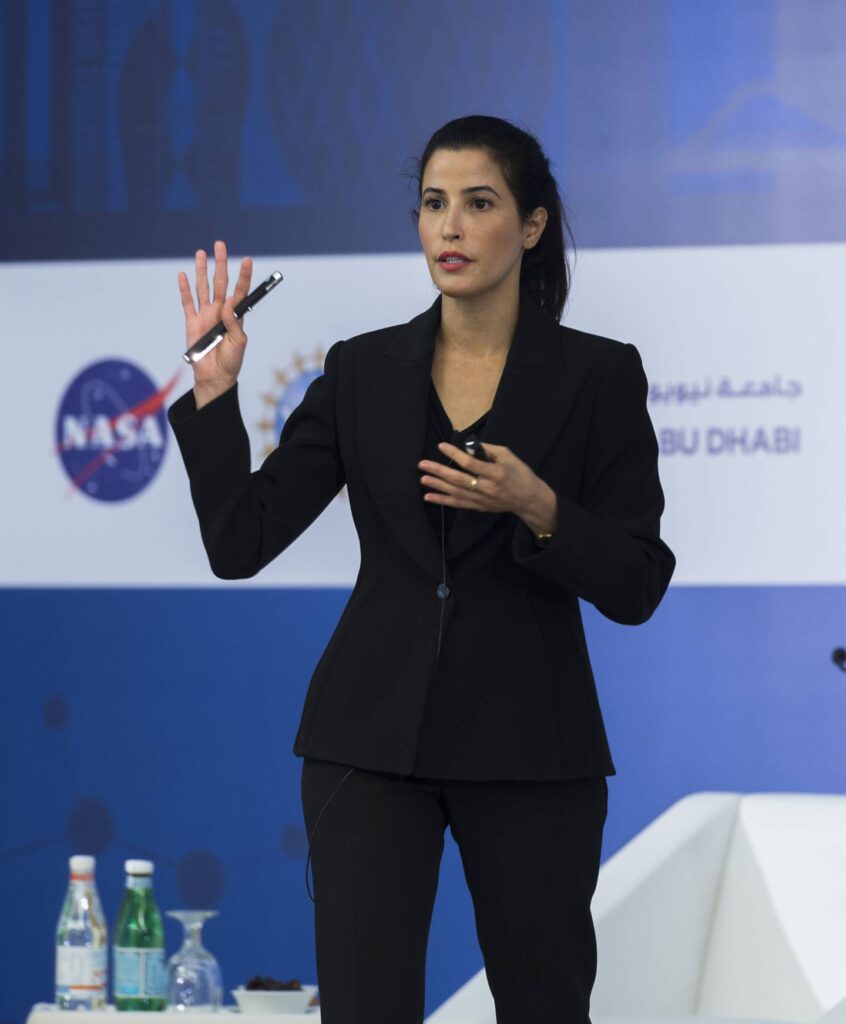
Years later, at a conference to mark the 25th anniversary of the reunification of Germany, Ms Almutairi was on a stage in Berlin talking about her ground-breaking achievements in knocking down walls in science.
Back then, public speaking made her nervous. The knowledge that Chancellor Angela Merkel, a fellow chemist revered by Ms Almutairi, was among the 700 top international scientists and guests taking part merely compounded the feeling.
She broke the ice with a quote from the 1967 romantic comedy drama The Graduate, which earned her a laugh from the audience: “I just have one word to say,” she told them. “Just one word. Are you listening? Are you listening? Plastics.”
Ms Almutairi went on to describe herself as a plastics chemist, but she is much more besides. Her wide-ranging work combining materials chemistry with nanotechnology as well as developing tools for the future of biology and medicine makes her in great demand at conferences in the US, Europe, the Middle East and China.
The Saudi-American pharmaceutical chemist and nanomedicine engineer has won all manner of honours and recognition, including the prestigious and lucrative National Institutes of Health director’s new innovator award.
At the Falling Walls event, she gave an engaging, if sometimes faltering, presentation of her life-changing nanoparticle discovery feted in the US Congress as one of the four most important US technology breakthroughs of 2012.
“I used to be a nervous wreck before I gave a talk and would practise for two weeks beforehand,” she tells The National. “Plus, Angela Merkel is such an amazing woman, so meeting her was really special.
“She got elected just as I got my degree in chemistry and the way she spoke at that conference, and later welcomed so many Syrians into Germany, made me really respect her views on being kind citizens.”
With practice, Ms Almutairi, now 45, is much more comfortable as a public speaker. “Preparation,” she says, “is key.”
It was a lesson she learnt as a schoolgirl after a fluffed first gymnastics performance before a crowd left her sobbing on a bench. Determined never to repeat the same mistake, she rose to become the top gymnast on the team as well as the fastest 1,500-metre runner.
Preparedness forms the backbone of her professional life as she puts known scientific truths into practice while always remaining open to unexpected outcomes.
Discoveries and their effects, she and Ms Merkel wholeheartedly agree, can often surprise the scientists and engineers themselves.
“If you decide there is going to be a challenge down the road and that is going to deter you, nothing will happen,” she says. “If you go down that road anyway, you’ll solve the problem when you get there.”
No amount of planning, though, could have readied her for a year when the rug was pulled out from beneath her feet. In 2015, her beloved father died at the age of 65 and her 20-year marriage to a banker she met at university fell apart.
It was, she says, a painful time – not least because Mutlaq bin Abdul Rahman Almutairi, born into a traditional Saudi family, was his daughter’s greatest ambassador, enabling her to break free from what could have all too easily been a restrictive mould.
He was just five years old and still mourning his mother’s death when his own father packed up their goat-hair tent, strapped their few possessions to the back of a camel and made the arduous 100km journey from the Bedouin desert enclave of Al Harra to seek work and a new life in Jeddah.
Desperately poor, the family squatted on land and, when old enough, the enterprising Mutlaq enrolled himself and his younger sister in school.
His conservative father, who could not read or write, was furious and sent his daughter home. Mutlaq stood his ground and continued with his education – a moment that shaped the course of his own future and subsequently that of his five children.
“Sometimes in life, one decision changes everything,” Ms Almutairi says.
Mutlaq’s offspring have flourished in their respective fields of science and medicine. Khalid, 46, a plastic surgeon, Heba, 38, a professor in radiology, and Ahmed, 37, a dentist, still live in Saudi Arabia while Amer, 41, a professor in family medicine, is based in Houston.
Ms Almutairi was named recently on the Forbes list of the world’s Top 10 Influential Female Engineers, and often thinks of the debt owed to a father who championed her right to education.
The stance made him something of an anomaly among the Almutair tribe, whose roots can be traced back to the Quran.
“It still makes me emotional,” she says. “He was enlightened from God.
“No one around him was educated. He was the first in his entire family to learn how to read and write and go to college.
“My father and grandfather got into a lot of fights because my grandfather did not believe women should be educated.”
While she inherited drive and motivation from her father, a love of learning was instilled at a young age by her mother Najat, who, aptly enough, was a teacher.
“My family on my mother’s side were extremely well educated and my mother is very well read,” she says.
Indeed, her parents met because Mutlaq had become besotted with Ms Almutairi’s great-aunt Hilal, an intellectual who was one of the first dentists in Saudi Arabia.
Despite the 20-year age gap, he approached the family to ask for her hand in marriage but was advised instead to wed the daughter of Hilal’s brother, with whom he would build a strong bond.
“My father appreciated a smart woman,” Ms Almutairi says. “He didn’t go after the young, pretty girl. He initially went for the older woman he enjoyed talking to.
“Now when I think back, I realise how special and unique he was, and how much respect he had for women.”
Mutlaq studied criminology and justice administration in Portland, Oregon, where Adah Almutairi was born, before returning to his homeland to become a police investigator.
The young Adah attended international schools in Jeddah and Riyadh, excelling not only at sport but in maths and science.
On leaving school at 16, she was at a loss as to what to do next. Her mother was applying for teaching posts so, on a whim, Ms Almutairi submitted an application to Najd National School in Riyadh – and surprised everyone, including herself, by landing a job teaching English.
“I didn’t have a degree, and when the headmistress realized how young I was, she said: ‘Don’t tell anyone, just put some lipstick on.’
“It was the best job ever. I loved every minute of it. I had such a connection with the girls. I used to take in copies of my mother’s Reader’s Digests and make up writing exercises around them.”
A year later, she began applying to universities. King Abdulaziz University in Jeddah turned her down but she secured a sports scholarship to Occidental College in Los Angeles, Barack Obama’s alma mater.
The opportunity once again put her father at loggerheads with her grandfather and members of the Almutairi clan, who did not think a young woman should travel overseas alone. Unperturbed, Mutlaq sent her anyway, even though he and Najat had doubts about her choice of subject.
The couple wanted her to be a doctor but Ms Almutairi chose maths as her major before switching to chemistry in her second year.
The lightbulb moment came when her tutor, the widely loved chemistry professor Tetsuo Otsuki, told her she was “a diamond in the dirt”.
“He made me feel smart and capable, and worth being taught,” she says.
“I have twice been told the phrase: ‘You remind me of myself’. It is one of the nicest things you can say to a young person if they look up to you. It really sat in my heart.”
Chemistry appealed because it was based on “concepts where once I wrapped my head around them, I could use them in so many ways”.
A scholarship to continue her studies at the University of California, Riverside, led her to create lightweight plastic polymers, or molecules, capable of conducting electrons that had uses in everything from robotics to space research.
“Around that time,” she says, “Hideki Shirakawa was winning the Nobel chemistry prize for his work with conductive polymers, and both Nasa and Walt Disney were funding and supporting that work.”
She may not have become a doctor of medicine as her parents had wished, but Ms Almutairi did turn her attention to the field during postdoctoral studies at the University of California, Berkeley, where she worked with Jean Frechet, a chemist innovating in the area of in-vivo imaging to diagnose disease.
After being turned down for jobs in Saudi Arabia, she took up a post at the University of California, San Diego, going on to lead an interdisciplinary research group at the Centre for Excellence in Nanomedicine and Engineering.
Perhaps one of Ms Almutairi’s proudest moments was collaborating with an ophthalmologist for a decade to come up with a way to regenerate failing retinas and prevent blindness.
“That particular innovation is now commercialised and makes me feel really good about myself,” she says. “I enjoy all sorts of application materials but medicine is especially rewarding. I like to solve problems and have a positive impact on the world.”
Her work with lanthanides – popularly classed as rare earth elements but actually, she says, abundant – involves a chemical reaction that could be applied to the delivery of drugs and diagnostics in medicine but also solar energy harvesting.
She has more than 100 patents registered, including one with her brother Khalid to use gold molecules in liposuction.
“My work is very rewarding,” Ms Almutairi says, “and my father was very proud of me. When I became well known in the US, it was a big moment because the people who were criticising him for sending his daughter away were the same people congratulating him.”
A strong proponent of the “health is wealth” philosophy, she may no longer run, but she does lift weights regularly and spends time in the garden with her 10-year-old son cultivating avocados, figs, and citrus trees, and growing aubergines, tomatoes and cucumbers.
She has visited Saudi Arabia many times to see her family and speak at conferences. One in particular that has stayed with her was a graduation speech at Princess Nourah bint Abdulrahman University in Riyadh.
There was no film quote for these graduates of the largest women’s university in the world. In a clear voice, without a hint of nerves, she instead passed on the words of that staunch defender of her own access to education.
Remain forever curious about the world, she told the audience, and live a meaningful life with impact.
It was clear that the woman of substance standing before them had been shaped by her father’s advice. She didn’t need to ask if they were listening.
The Saudi Arabian-American pharmaceutical chemist and nanomedicine engineer is in great demand at conferences in the US, Europe, the Middle East and China. Photo: Adah Almutairi
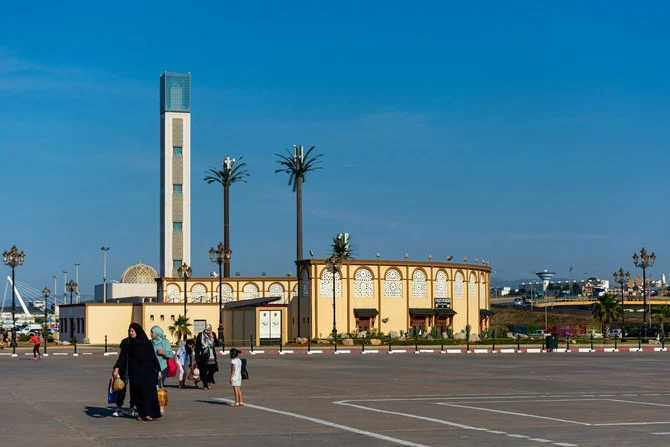
One doesn’t have to be a Muslim to visit the mosque or see the tallest minaret in the world.
Many people who think of a vacation to Africa make plans with Morocco in mind, South Africa at times, maybe Kenya, and definitely Egypt—to see the famous pyramids—or the 4,100-mile-long river that gave birth to that momentous civilization. Yet, as a continent, Africa has 54 countries, almost as many as the number of states in the U.S. Though it may come as a surprise, almost all of these countries are safe and have nearly the same conveniences as those found in many First World countries. Take Algeria, for instance, the biggest country in Africa and more than three times the size of Texas. This northern African country has pyramids, just like Egypt, and several fascinating ruins that would interest any history buff or anyone who’s out for some real adventure.
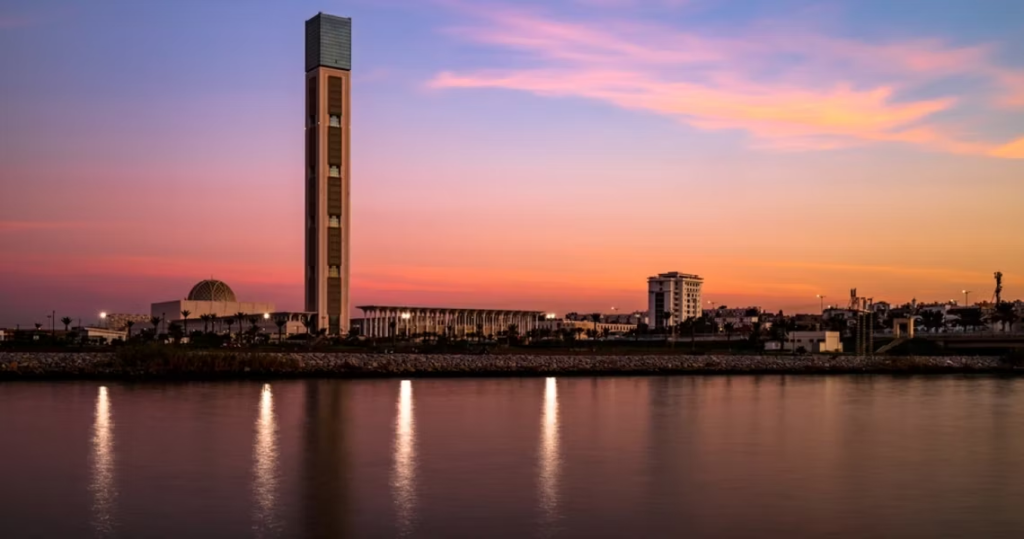
The Great Mosque Of Algiers And Its Record-Breaking Minaret
Also known as Djamaa el Djazaïr, the Great Mosque of Algiers is itself a monumental structure and an architectural marvel in its own right. However, what really puts it in the Guinness Book of World Records is its minaret. The reason is that the Great Mosque of Algiers is noted for having the tallest minaret in the world. For those who may be scratching their heads, a minaret is a tower—or a tower-like structure—built into mosques primarily to project the “Adhan,” the Muslim call to prayer. Of course, today, minarets serve other purposes as well. For instance, they are important landmarks of Islamic presence. Coming to the minaret of the Great Mosque of Algiers, we would not be remiss to expect a structure described as the world’s tallest to answer to that exceptional description. Well, the minaret of the Great Mosque of Algiers is 265 meters tall and hence, by all accounts, impressive.
For perspective, that’s the same height as Truist Plaza, the 60-story skyscraper in downtown Atlanta or the Panorama Tower in Miami, Florida. It’s also about half the height of the One World Trade Center, the tallest building in the United States. Minarets, however, have never been this tall. Before the Great Mosque of Algiers secured a page in the Guinness Book of World Records for its minaret, the tallest minaret was the 670-feet tower of the Hassan II Mosque in Casablanca, Morocco. The Algiers minaret, according to the Guinness Book of World Records, is now not just the tallest minaret in the world but the tallest building in Africa as well. This minaret is designed to withstand a magnitude nine earthquake, the highest earthquake magnitude. This type of earthquake can cause major damage over a region more than 1,000 km across.
Here’s A Brief History Of The Great Mosque Of Algiers And Its Minaret
The government of Algeria launched the construction of the Great Mosque and its record-breaking minaret in 2012. However, according to an adviser to the minister of housing responsible for the construction, the idea of constructing a mega-mosque had been in the cards from way back in 1962 when Algeria got its independence after 132 years of French occupation and after a 7-year brutal war that would send seismic revolutionary waves across the continent. For some reason, the efforts to put up a mega-mosque in Algiers had failed and foundered. However, with the election of Abdelaziz Bouteflika as President of Algeria in 1999, the building efforts would soon receive significant impetus.
Famous for his religious zeal and devotion to Muslim art and culture, Bouteflika would, unsurprisingly, actualize the mega-mosque dream even though his tenure as president would dramatically come to a premature end before the completion of his pet project. The mosque, however, including its record-breaking minaret, was an outstanding architectural masterpiece. According to the Guinness Book of World Records, the Great Mosque of Algiers sits on an expansive area of around 400,000 square meters (about 50 acres). For perspective, the building itself, plus the outside courtyard, can seat up to 120,000 worshipers.
Other Reasons Why The Great Mosque of Algiers Is Worth Visiting (& How To Visit)
The mosque looks towards the scenic Bay of Algiers, which features dazzling white buildings and panoramic views as far as the eye can see. Part of the mosque is a library that can stock more than a million volumes. In addition, the mosque has a Koranic school and a museum of Islamic art and history.
Where Is The Great Mosque of Algiers Located? This mosque is located on the Rue de la Marine in Algeria’s capital city, Algiers.
A crucial travel tip is to get in as a worshiper, probably during worship. Some visitors even carry a prayer mat or wear a scarf, especially women. Of course, one doesn’t have to be a Muslim to visit the mosque or see the tallest minaret in the world.
A consignment of blue ammonia has left Saudi Arabia for South Korea, representing a new milestone in the development of decarbonization solutions.
The development was first announced during the recent Saudi Green Initiative conference in Sharm El-Sheikh, and Vessel Seasurfer, carrying 25,000 metric tons (25 KMT) of low-carbon blue ammonia, is expected to reach its destination between Dec. 9 and 13 in the world’s first commercial shipment of its kind.
The accomplishment, which is an alternative to conventional gray ammonia, is part of a collaboration between Saudi Basic Industries Corporation Agri-Nutrients and Aramco.
Lotte Fine Chemical, which has a long-standing relationship with SABIC AN, will receive the low-carbon “cradle to gate” blue ammonia.
Abdulrahman Shamsaddin, SABIC AN CEO, said: “This shipment is another milestone in our journey toward carbon neutrality.
“We are proud to be a part of this pioneering solution, paving the way for further decarbonization efforts.
“Looking to the future, we are constantly working on breakthrough solutions to decarbonize our assets and deliver low-carbon solutions to our customers.”
Yong Suk Kim, LFC CEO, said: “We are delighted to enter this meaningful agreement with our long-term supplier, SABIC Agri-Nutrients, to receive the world’s first certified blue ammonia cargo.
“Building on our shared history, we are looking forward to moving forward together into a new era for ammonia. We believe that this shipment of blue ammonia will help lay the foundations for a global supply chain.”
Earlier this year, SABIC AN and Aramco received the world’s first independent certifications, recognizing blue ammonia and blue hydrogen production, from TUV Rheinland, a leading independent testing, inspection and certification agency, based in Germany.
The shipment of blue ammonia to South Korea will be the first to capitalize on this major certification achievement.
The new developments are aligned with Saudi Vision 2030, which focuses on low-carbon fuels, products, solutions and clean energy.
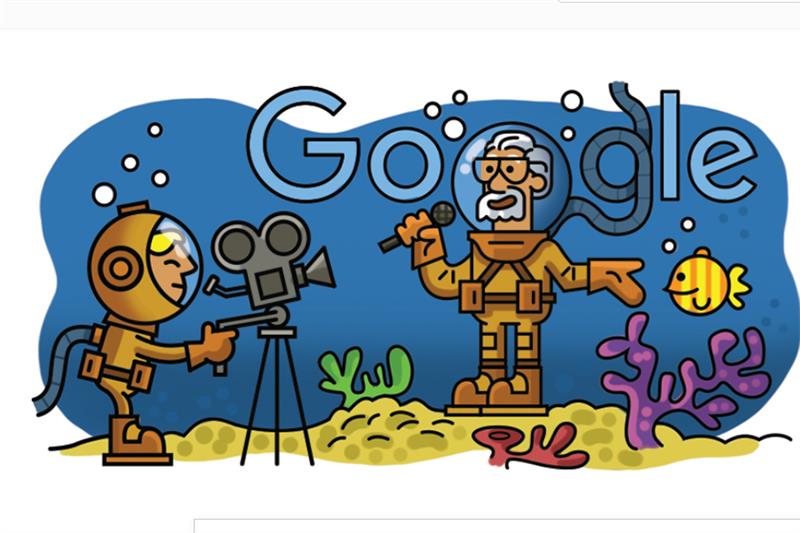
Google search engine celebrated the late Hamed Gohar’s 115th birth anniversary on 15 November with a Google Doodle.
The Egyptian scientist, marine biologist and TV host, Gohar is considered the founding father of oceanography in Egypt and the Arab world.
Born on 15 November 1907, he studied medicine at Cairo University in 1925 before shifting to biology. He then received his master’s degree in oceanography from Cambridge University in 1931.
The note under the doodle adds that “Gohar discovered that dugong, a sea mammal that was thought to be extinct in the region, still existed in the Red Sea. He continued studying underwater life for 25 years at the Hurghada marine biological station.”
He worked with the Arabic Language Academy to create scientific dictionaries in Arabic and served as an adviser to the United Nations’ Secretary General and helped organize the first International Conference on Law of the Sea in Geneva.
The general public knows Gohar for his educational show called “The Sea World” which he hosted on national television for 18 years. The programme highlighted underwater scenery and natural sea life, bringing the viewers closer to marine biology.
1. Al Alam Palace, Muscat One of the country’s most easily identifiable and iconic landmarks, Al Alam Palace is the centrepiece of old Muscat, and one of the residences of the Sultan of Oman. The palace, with its signature gold and blue façade, tapering marble columns and intricately latticed windows, in many ways signifies Omani values and culture: it is simultaneously an edifice of tradition, history, elegance and simplicity…positive qualities that have made the welcoming and hospitable nature of Oman renowned the world over.
2. Royal Opera House Muscat Built to showcase the diversity of artistic creations from the Sultanate, the region and the world and provide a great space for culture, social and economic development and its implications, ROHM is the brainchild of the late His Majesty Sultan Qaboos bin Said bin Taimour, and was opened in 2011. One of the Middle East’s first opera houses, according to the Ministry of Tourism,
1. Al Alam Palace, Muscat One of the country’s most easily identifiable and iconic landmarks, Al Alam Palace is the centrepiece of old Muscat, and one of the residences of the Sultan of Oman. The palace, with its signature gold and blue façade, tapering marble columns and intricately latticed windows, in many ways signifies Omani values and culture: it is simultaneously an edifice of tradition, history, elegance and simplicity…positive qualities that have made the welcoming and hospitable nature of Oman renowned the world over.
2. Royal Opera House Muscat Built to showcase the diversity of artistic creations from the Sultanate, the region and the world and provide a great space for culture, social and economic development and its implications, ROHM is the brainchild of the late His Majesty Sultan Qaboos bin Said bin Taimour, and was opened in 2011. One of the Middle East’s first opera houses, according to the Ministry of Tourism,ix01
3. Muttrah Souq Probably the oldest souq of its kind in the Arab world, Muttrah Souq stands as a symbol of traditional Omani trade.A wide range of curios in silver, gold, precious gems and textiles are displayed in stalls deep inside the souq.Through the centuries, frankincense, oud and other scents prized in the Middle East have been sold and traded here.Silver lamps, urns and even antique Arabic manuscripts in traditional calligraphic script await your discovery.This is also the best place to find khanjars of different designs.
4. Corniches Have a long walk along the Muttrah Corniche from the Fish Roundabout to Riyam Park. The busy walkway is crowded with tourists, expats, and locals enjoying the oceanic views and the proximity to the historic Muttrah Souq. After your walk, you can linger at one of the numerous restaurants and cafes. Al Ghubra Corniche is a lush green stretch situated at Al Izdihar Street, near Al Ghubra lake garden, which is fast becoming a popular destination for family picnics because of its safe, quite ambiance. If you stop in the garden after your stroll, be ready to pack up your stuff before 11pm to avoid getting showered by the water sprinklers. Shatti Corniche is located on Shatti Street, locally known as ‘love street,’ this walkway is in a very happening area. With its beautiful palms, BBQ areas, and plenty of restaurants and cafes, it is perfect for an afternoon chill or for a lively evening watching all the sporty cars in Muscat cruising up and down the lane. Seeb Corniche is a beautifully developed 8-kilometre corniche located between Mabela and the Seeb fish market. It’s been renovated and adorned with trees and flowers along the interlocked walkway which also features a kids’ playground. This quiet place is a must-visit in the cool evenings.
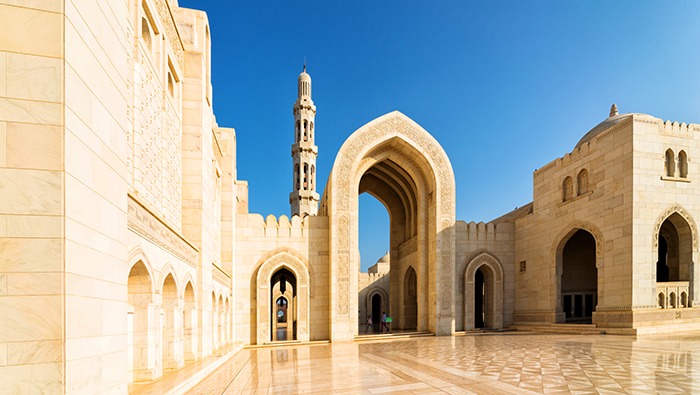
5. Sultan Qaboos Grand Mosque It is one of the largest mosques in the Sultanate of Oman, and is an architectural and artistic marvel that reflects the beauty of Islamic, Oriental and Omani art. According to Oman News Agency (ONA), Sultan Qaboos Grand Mosque is characterised by its square shape, in the centre of which is the main dome, which reaches a height of 50 metres, and is bordered by five minarets which represent the five pillars of Islam. The height of the main minaret reaches 91.5 metres, while the height of other minarets reach 45 metres.
6. Khabourah Castle Khabourah being located on the coast saw much activity through trade and commerce, requiring the need for fortifications against those who would attempt to raid and plunder the area for its wealth. In contrast, though, Khabourah Castle was not used as fortification, but a court where local disputes were brought to light. Renovations to the castle were made in 1994, using materials sourced locally from the surrounding areas.
7. Muscat Gate Museum It is located above Muscat Modern Gate, and tells the story of Oman’s long history, focusing on the history of Muscat. It describes the UNESCO world heritage listed Falaj irrigation system that Oman is famous for, as well as the nation’s distinctive architecture. According to Oman’s Ministry of Tourism, “The Muscat Gate Museum takes the visitor on a journey through the various stages of development and growth of the city over time, from a commercial port to a prosperous modern capital.” Located on Al Saidiya Street, Muscat Gate was earlier an official entrance for the old city of Muscat, which used to be shut after sunset. The museum is located atop the gate, from where you can enjoy the stunning views. Opened in January 2001, the museum contains displays about Oman’s history from the Neolithic times to the present.It has a number of special exhibits on Muscat’s water springs, the ancient wells, underground channels, the souqs, houses, mosques, harbours and forts.
8. Al Minzifah, Ibra The ruins of Al Minzifah, located a short distance from Ibra, the regional capital, provide indication of what life in Oman was like for some in the early 18th century. The houses, many of which date from the period of prosperity, are of two or occasionally three stories, built from local stone, cemented and plastered with local juss. Care should be taken not to move the structures of these fragile buildings.
9.Al Ayn and Bat Tombs Another of Oman’s UNESCO World Heritage Sites, Bat, Al Ayn and Al Khutm constitute a settlement and its accompanying necropolis that remain remarkably well-preserved given they were originally Bronze Age settlements. The tombs of Al Ayn are located some 30km north-east of the settlement of Bat, and feature 21 places of burial which seem to form up in an almost straight line. Built in a rather peculiar beehive-like structure, the tombs were constructed from limestone blocks and assembled with plaster made locally.
10. Duqm Rock Garden Entering the Rock Garden makes you feel as if you’ve fallen off the face of the earth and landed on another planet.The rocks that lend the garden its name have been shaped by millennia of wind-based erosion, and do lend the area a distinctly other-worldly quality which is only enhanced by the quiet surroundings.
11. Sharqiyah Sands Earlier known as Wahiba Sands, extends from North and South Al Sharqiyah Governorate to Al Wusta Governorate. With diverse terrain along with different species of flora and fauna, the golden dunes of the Sharqiyah Sands desert holds a special place in the hearts of those who live in Oman or come here as tourists. It extends over an area of up to about ten thousand square kilometres. According to Oman’s Ministry of Tourism, “The sand colour ranges from red to brown as far as the eye can see. It is the original homeland of the Bedouins. This area attracts many desert adventure fans, and is preferred by visitors owing to its ease of accessibility and availability of nearby services, which make it a first class tourist attraction.”
12. Kumzar, Musandam Travelling to Kumzar involves sailing through Musandam’s stunning fjords, which have earned this region the epithet ‘the Norway of Arabia’.The town overlooks the Straits of Hormuz, one of the world’s busiest shipping lanes, a fact reflected in the unique language spoken by its inhabitants, Kumzari,” says the Ministry of Tourism. “The town’s population currently stands at around five thousand, with its own school, hospital, power station and desalination plant. The inhabitants live largely by fishing for nine months of the year, netting barracuda, tuna, kingfish and hamour.
13. Sultan Qaboos Mosque, Nizwa Built to blend in yet stand out from the surrounding area, the Sultan Qaboos Mosque in Nizwa, the capital of the Dakhiliyah region, was built in 2009, and spans an area of 80,000 square metres.The mosque is capable of accommodating up to 10,500 worshippers, and with Nizwa being an historic centre of learning and knowledge in the Gulf, is a fitting location for the largest mosque in Oman, after the Sultan Qaboos Grand Mosque in Muscat.
14. Ayn Jarziz, Dhofar Travel to Oman’s southern region in the summer, and experiences amazing weather seldom seen elsewhere. While the rest of the Gulf witnesses peak temperatures, the Dhofar’s Khareef season brings with it refreshing rains and cool breezes, which turn the entire landscape green and bring people from across the world.
15. Al Ayjah Bridge, Sur Also known as the Khor Al Batah bridge, and considered to be Oman’s only suspension bridge, this 240 metre long bridge was opened in 2009, and helped link Sur to the neighbouring settlement of Al Ayjah. Travelling to Kumzar involves sailing through Musandam’s stunning fjords, which have earned this region the epithet ‘the Norway of Arabia’. Many visit the country’s northern bastion to enjoy the rugged natural beauty, as well as the clear blue waters that are just begging to be dove into.
16. Mirbat, Dhofar The former capital of the Dhofar region, Mirbat was an important port when it came to trading frankincense, and is a wonderful destination featuring many historical sites, delicious seafood and a lovely, serene landscape. It has many natural tourist sites, historical monuments and buildings of ancient architecture, most notably the castle of Mirbat, which is one of the most important historical and archaeological sites in the wilayat. It overlooks the coast of the ancient port of Mirbat and dates back to the ninth century AD. The castle sits on a cliff and offers superb views of the crashing waves along the coast line.
17.Salut, Ad Dakhiliyah The ruins of Salut are about an hour’s drive from Nizwa, the capital of the Dakhiliyah region, and feature some of the first permanent settlements built in the country. While in the area, also visit Salut Castle, where a number of relics from the archaeological site have been painstakingly restored and installed.
18. Land of Frankincense, Dhofar Located in the south of the country, the Land of Frankincense is a UNESCO World Heritage Site in Salalah that consists of four separate sites.Farmers harvested the nuggets of the frankincense resin from the trees that grew in the groves of Wadi Dawkah, where they would be loaded onto caravans that stopped over at the oasis of Shisr, also known as Wubar. From there, the bags would be transported to the twin ports of Al Baleed and Khor Rori, to be loaded onto ships which would sail onward to destinations such as Egypt, Rome and China.
19. Barr Al Hikman Located about 500 kilometres south of Muscat, Barr Al Hikman in Al Wusta Governorate is considered one of the most important bird migration stations both in Oman and the region. Many birds congregate here, especially water birds coming from as far as Siberia’s northern shores. In addition to being a sanctuary for birds and fish of all kinds, the existence of coral reefs off its shores make it a favourite destination for divers. More than 1 million shorebirds flock to Barr Al Hikman and Masirah Island every year, according to experts.
20. Bilad Sayt Bilad Sayt is a quaint village seated at the foot of towering and dramatic Hajar mountain ranges. With its picture-postcard perfection of terraced fields and sun-baked houses, it’s one of the prettiest villages in Oman. The villagers prefer visitors to park outside and walk in or simply view the village from a distance. A little haze blanketed the village that was built up on a hill with closely clustered homes made of mud and stone. The village is surrounded by date palms within it is terraced green fields making it look like a dream village. Jagged brown mountains surrounded and loomed over Bilad Sayt, dwarfing the whole village.
21. Masirah Island Masirah Island in the Governorate of South A’Sharqiyah is a popular tourist destination. Known for kite-surfing, bird-watching, the uninhabited beaches, the magnificent sea views and rugged terrains, Masirah draws visitors throughout the year. The beaches are home to sea turtles. The tourists are attracted mostly by the turtles scattered along the beaches of Masirah. 22. Bimmah Sinkhole With its emerald-green waters and serene surroundings, the Bimmah sinkhole is located some 120km from Muscat.Tourists who get to see the sinkhole and its pristine waters are more than welcome to descend to the bottom through a concrete staircase that has been erected for just this purpose.
23. Dates Oman is known for its unique hospitality and it is common for visitors to be invited for Omani coffee and dates when travelling through the country. Be it any household or an office, guests are welcomed with home-grown dates and traditionally brewed drinks called ‘Kahwa. One can find many date palm fields across many governorates in the Sultanate and farmers grow more than 250 indigenous varieties of dates. Khalas, Khunaizi, and Fargh are some of the best dates grown in Oman. While Al Khalas is believed to be of the best quality, other varieties like Nagal, Ash Patash, Bunaranja, Mmajdool, Hilali al Hassa, Barni, and Mathloob are quite in demand. 24. Ain Al Thawarah hot springs Close to the Nakhal Fort, along a winding road framed by palm trees as far as the eye can see, are the Ain Al Thawarah hot springs. This spring is used as a trusted water supply, and there is even a small pool to enjoy the therapeutic properties of the mineral water. Beyond the date plantations that surround Nakhal Fort, this hot spring emerges from the wadi walls and is directed into a falaj (irrigation channel) for the irrigation of the surrounding plantations.
25. Bahla Fort Bahla Fort is situated at the foot of the Jebel Akhdar highlands in Oman and is a UNESCO-listed fort.The fort underwent massive restoration efforts and reopened in 2012. According to UNESCO, “ Bahla is an outstanding example of a fortified oasis settlement of the medieval Islamic period, exhibiting the water engineering skill of the early inhabitants for agricultural and domestic purposes. The pre-gunpowder style fort with rounded towers and castellated parapets, together with the perimeter wall of stone and mud brick technology demonstrates the status and influence of the ruling elite.”
26.Jabal Shams About 3,500 metres above sea level, in the Wilayat of Al Hamra in Governorate of Al Dakhiliyah is another tourist attraction. It has a unique temperature ranging between 0 in winter and 25°C to 35°C in summer. It is a part of the Al Hajar Mountains range. Life at the summit is something else. While being there, you can enjoy camping, and watching the sunrise and sunset. You can also visit the historical village of “Goul,” which is entirely built with rocks and mud, uniquely sitting on the edge of Jabal Shams, overlooking vast areas of farms. The village is called “Oman’s Grand Canyon” due to the fact that it overlooks a towering canyon called “Shurfat Al Nakhr.”
27.Wadi Bani Khalid Located some 200 km from Muscat, Wadi Bani Khalid is a traveller’s paradise that encapsulates the unique, sometimes unbelievable, natural beauty of Oman. Often thought to be a harsh, unforgiving desert, Oman is anything but, and areas like Wadi Bani Khalid go a long way in proving that the Sultanate has a diverse and varied natural beauty.
28.Wadi Shab Wadi Shab in Tiwi in the Wilayat of Sur is a famous tourist destination especially in summer. In the midst of awe-inspiring mountains, naturally carved into the most beautiful shapes by the water, there are shallow lakes surrounded by huge boulders, overlooked by narrow rugged trekking pathways attached to the mountains.
29.Wadi Al Hoqain About 150 km from the Governorate of Muscat, is one of the beautiful wadis in the Wilayat of Al Rustaq which runs throughout the year.
30. Wadi Daiqah Dam It is in the Wilayat of Qurayat and is also one of the key tourist attractions.
31. Wadi Al Arbiyeen It is in Rustaq and is considered one of the most spectacular wadis in Oman. The deep pools at the edge of Al Hajar mountains, the palm trees, mango orchards, and banana farms make it a must visit place for visitors. Wadi Al Hawqayn is another picturesque wadi located between Muscat Governorate and Wilayat Rustaq. It had year-round flowing springs and streams, as well as cool waterfalls and palm trees. On the road to Sur from Bidbid lies the lush green Wadi Bani Khalid.
32. Manah The wilayat of Manah is in the Governorate of Al Dakhiliyah, 160km away from Muscat. It is known for its old ruined villages along with the modern houses, mosques, and towers. The wilayat has eight villages: Harat Al Bilad, Mu’ammad, Al Ma’arra, Izz, Al Faiqain, Al Mahiyul, Abu Nakhilah and Mitan. There are several archaeological sites and buildings of which Al Fiqain Castle is the most prominent one.
33. Jabal Akhdar Situated 2,330m above sea level, the temperature is cool here, while the rest of the Gulf experiences scorching heat. You can see beautiful green terraced gardens, and if you love trekking, it’s a paradise for you. Apart from the pomegranates you can see olives, figs, walnuts, and peaches on street stalls and in every house and farm. On the other hand in March and April you can pluck the fresh roses from gardens. You can also see a rose factory where rosewater and perfume is still made using traditional methods.
34. The Land of Frankincense Located in the coastal area of Salalah between Dhariz and Hafa, Al Baleed is one of the ancient cities of Oman and was known to be one of an important commercial port.The Land of Frankincense is one of many UNESCO World Heritage Sites located in Oman and was once the centre of the ancient world’s thriving frankincense trade. Heaps of rubbles can be found scattered all around the main site where the excavation work is still under process. 35. Khareef season The Khareef season is characterised by its cloudy and rainy weather due to the density of clouds and the temperature dropping to less than 30 degrees Celsius in the city of Salalah, while it drops more in the high mountainous areas surrounded by fog associated with light rain. Salalah is transformed into a beautiful oasis due to the light drizzles that cool the air. 36. Bandar Al Khayran Tucked between captivating sandy mountains 21-kilometres up hilly Qantab Road from Muscat, Bandar Al Khayran is an idyllic retreat with crystal clear waters and a soft sand beach that will make you feel a world away. 37. Al Hoota Cave Some 250km away from Muscat is the spectacular Al Hoota Cave amidst plateaus and rugged mountain peaks. Known for its natural formation of stalactites and stalagmites, Al Hoota Cave offers a fascinating insight into the cave that is more than 2 million years old.
38. Ras Al Jinz Turtle Reserve Turtle nesting tours at Ras Al Jinz allow visitors to witness the spectacle in an intimate fashion without fear of interrupting the creatures. The turtle sanctuary at Ras Al Jinz combines an interactive museum with research laboratories and a wide range of amenities for visitors to learn all about the wonders of these ancient creatures in a family-friendly environment. 39. Khor Rori Khawr Rawrī or Khor Rori is a bar-built estuary (or river mouth lagoon) at the mouth of Wādī Darbāt in the Dhofar Governorate, Oman, near Taqah.It is a major breeding ground for birds,and used to act as an important harbour for frankincense trade when it was an open estuary. Khor Rori is best known for the ruins of the ancient fortified port city of Sumhuram on the eastern bank. There are also archeological ruins on the two promontories at the mouth of Khor Rori. It is considered the most attractive to tourists as it contains Khawr Ruri port, famously known as Samharam.
40. Khawr Sham Khawr Sham is located in Khasab and the lagoon covers 20 kilometres. Many villages overlook Khawr Sham, which can be reached only by sea in traditional vessels. Khawr Sham is considered a tourist destination for hiking, camping and watching dolphins. According to Oman’s Ministry of Tourism, “In the middle of Khawr Sham is a small island called Al Telegraph Island, as in 1860 it was used as a base to connect to the telegraph cable.” 41. Daymaniyat Islands Rich in many types of coral reefs, including rare corals, The Daymaniyat Islands Reserve, lies 18 km off the shores of Barka and is 70km west of Muscat. The Ministry of Heritage and Tourism, describing the reserve, said in a statement, “The reserve is a group of nine islands with a total area of 100 hectares. It is distinguished by its beautiful beaches, white sands and clear blue waters. It also includes rare groups of coral reefs and large numbers of sea turtles which take shelter in the islands to lay eggs and nest. There are countless migratory and settlement birds too which can be seen here.” 42. Horse Racing Horse breeding has been a long-treasured passion for Omanis and has always been an interest among Arab nobility. Horse racing is a sport enjoyed by all in Oman. “Interest in horses in Oman is one of the most cherished pastimes for the Omanis,” said the Ministry of Tourism. “Horses symbolise integrity and pride. Because of the horse’s high status and appreciation by Muslims, Oman has been famous since ancient times for raising, breeding, acquiring and caring for horses. Horse racing is a favourite pastime for Omanis. Horse races are held annually, and include the Royal Horse Race, organised by the Royal Stables, and horse racing in the Omani governorates.”
43. Camels Oman has a deep-rooted connection with camels, it is one of the countries in the Gulf region that has accorded a special status for camels. Known as the ‘Ship of the Desert’, camels have an extraordinary ability to withstand thirst and endure long journeys to remote places.
44. Khanjar Of all the symbols and artefacts traditionally associated with Oman’s history, heritage, and culture, few have been so dear to locals and expatriates alike as the khanjar. A classic example of Omani tradition and reputation as one of the jewels of Arabia, the khanjar is a dagger worn for the most exalted and ceremonial of occasions, and residents in the country have not hesitated to express their praise for it.
45. Nizwa Fort Nizwa Fort was recently ranked first in terms of the number of visitors among the castles of the Sultanate. One of the main attractions of the city, Nizwa Fort, an impressive construct under whose shadow the major part of old Nizwa lies. In the olden days, it served as a bastion for noblemen and peasants alike to take shelter from raiders and bandits who attempted to plunder the countryside.
46. Shuwa Shuwa is a traditional Omani meat dish cooked in an underground oven during Eid.
47. Handicraft Oman’s handicrafts that are mostly home-based and done by using simple tools have a huge demand among tourists who buy these artefacts as souvenirs. Showcasing the Sultanate’s rich culture and heritage, these handcrafted products include pottery items, products made of palm fronds, silverware and more. According to Oman’s Ministry of Tourism, “Omani arts and crafts are revered treasures that need to be preserved and popularised. Arts and crafts also serve as the main source of vocation of the citizens in the interior regions of the country. Handicraft industry, if developed properly, can provide huge employment opportunities to artisans that include women and people belonging to interior regions of the country.
48. Wadi Darbat Wadi Darbat is one of the most beautiful wadis in the Governorate of Dhofar due to its stunning views due to greenery, lush orchards, constant flow of water, and seasonal waterfalls. Wadi Darbat is located in the east of the wilayat of Taqah at a distance of 7 kilometers, where Sidr trees and many large shady trees are spread on its sides. Derbat is known to represent a natural park due to its combined elements such as mountains, waterfalls, caves, and flat plains on both the sides, which allows wildlife such as the nests of endemic and migratory birds and various wild animals to exist.
49.Qalhat Once the capital of ancient Oman, the city of Qalhat was recently placed on the UNESCO list of World Heritage Sites for its historical significance and its role in Oman’s evolution between the 11th and 15th centuries. “The Ancient City of Qalhat presents a unique testimony to the Kingdom of Hormuz, as it prospered from the 11th to 16th century CE,” UNESCO informed in a statement. “Ancient Qalhat presents exceptional evidence of a major trade hub, which came under the rule of the Princes of Hormuz and profited from its geo-political position in the region.”
50.Rub Al Khali Home to towering dunes there are many stories of famous explorers having travelled to Rub Al Khali. One of the largest sand deserts in the world, the Rub Al Khali (Empty Quarter) is teeming with wildlife, ranging from reptiles to various birds of prey and smaller mammals. 51. Dolphin Watching Several places in Oman are known for their dolphin habitats. The capital, Muscat, is of course known for dolphin watching, but other areas like the Dimaniyat and Masirah Islands are also popular, as both are great places from which you can spot dolphins, as is Musannah, which is roughly halfway between Muscat and Sohar.
52. Al Hamra Al Hamra is a well-preserved old town in Ad Dakhiliyah, Oman. Walking through its warren of alleys and stone steps is like going back in time. It is home to a number of villages including the mountainside village of Misfat Al Abryeen, with the village of Ghul to the northwest of the town, and Bimah to the north-northeast.The town and province lie on the southern slopes of the Akhdar Mountains.
Guinness World Records, the global authority on record-breaking achievements, announced on Friday that its 2023 edition, available now in stores and online in the Middle East, features 50 records from the Arab world.
Read on for some of the latest achievements from the region.
01. Saudi Arabia
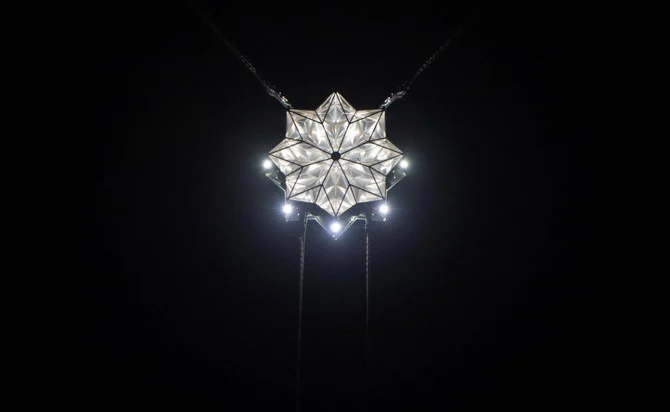
The Kingdom is flexing its muscles with a set of achievements including the largest LED structure and brightest suspended ornament by Noor Riyadh Festival and the largest Lego brick Formula One car by the Saudi Arabia Motor Federation.
02. UAE
wam.ae
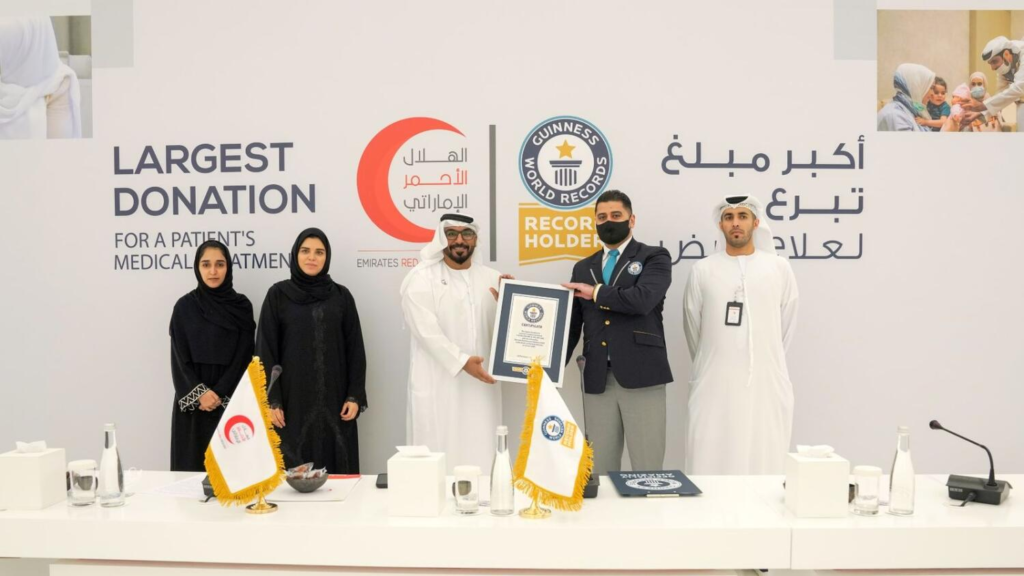
From the UAE, the new book covers a number of humanitarian record-breaking initiatives such as the largest donation for a patient’s medical treatment by the charity organization Emirates Red Crescent and the most awareness ribbons made in one hour by the Emirates Oncology Society, an organization dedicated to promoting multidimensional care for cancer patients.
03. Iraq
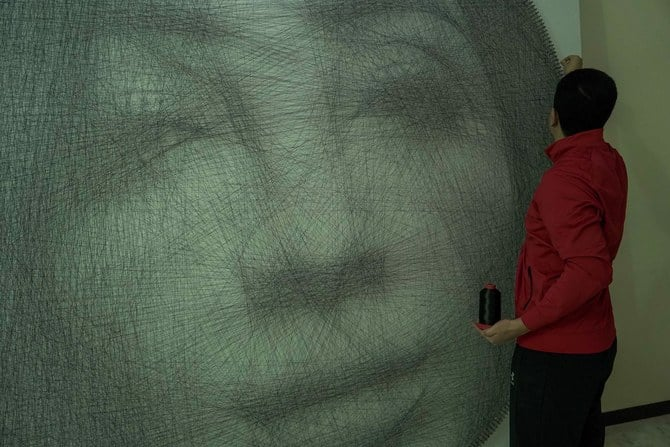
There are three achievements from Iraq: the largest pin-and-thread art by artist Saeed Howidi, the most eggs balanced on the back of a hand (18 eggs) and the tallest stack of M&M’s by Ibrahim Sadeq.
04. Egypt
Mohamed Shehata achieved the widest arm span on a living person (male) and the widest hand span on a living person (male), while Mahmoud Ayoub was featured for achieving the most finger-tip push-ups (one arm) in one minute.
05. Kuwait
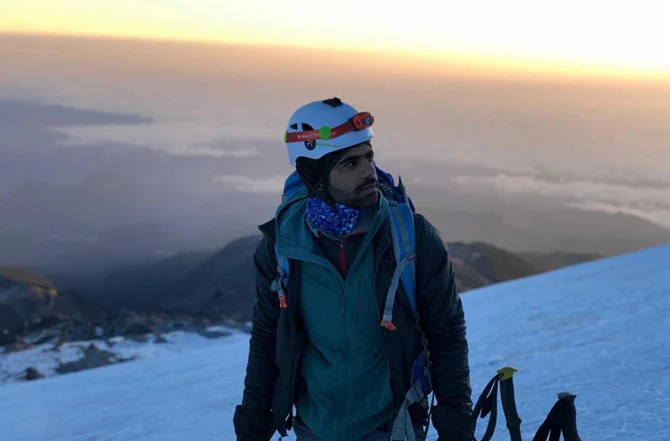
Yousef Al-Refaie became the youngest person to climb the Seven Volcanic Summits (male). Kuwait was also featured for the longest indoor slide achieved by LOOPZ.
06. Algeria
From Algeria, the trade center Algiers International Fair created the largest bowl of couscous, and Djamaa el Djazaïr, also known as the Great Mosque of Algiers, broke the record for the tallest minaret, the tower used to project the Muslim call to prayer.