Arabs & Arabian Records Aggregator. Chronicler. Milestones of the 25 Countries of the Arabic Speaking World (official / co-official). AGCC. MENA. Global. Ist's to Top 10's. Records. Read & Enjoy./ www.arabianrecords.org
Category: Leaders, on the World Stage – All Others
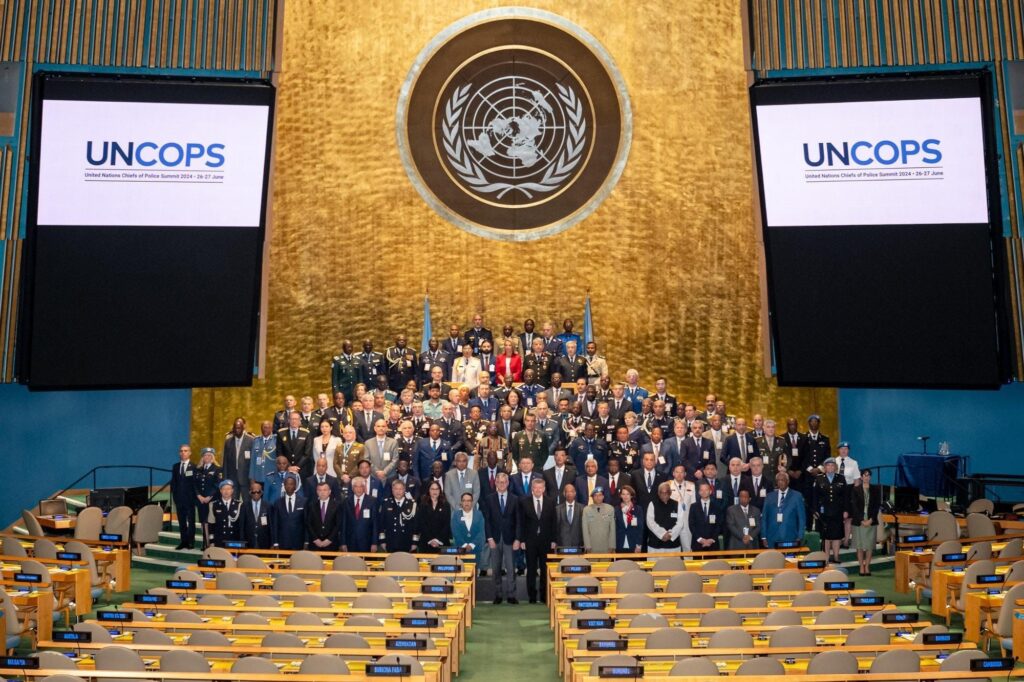
The UAE, represented by the Ministry of Interior, participated in the United Nations Summit of Chiefs of Police (2024), as the sponsoring country of the summit, which was held at the United Nations Headquarters in New York City, USA, on June 26 and 27, as part of its consistent approach and active participation. In strengthening global efforts to enhance security and stability for peoples, and to maintain peace in various regions of the world.
The summit is the largest gathering of ministers, police chiefs and senior representatives of regional police organizations in the world, and a regular event held every two years in the presence of police chiefs from member states to participate and hold bilateral talks, with the aim of promoting peace, security and international development for all, and raising levels of cooperation in the police and security field among member states. .
At the beginning of his speech, the Under-Secretary-General for Peace Operations, Mr. Jean-Pierre Lacroix, expressed his thanks to the UAE for sponsoring the UNCOPS 2024 Summit, as the UAE has contributed to many activities related to the United Nations Police, including hosting a number of conferences to evaluate the performance of United Nations Police Chiefs over the past two years in Abu Dhabi, which has enhanced the country’s contribution and role in strengthening dialogues with international organizations and raising police competencies.
The UAE also hosted a number of training courses to raise the capabilities of United Nations police personnel, and courses to raise the leadership of the female component of the United Nations Police, in addition to accrediting an elite group of Ministry of Interior officers to be certified trainers in various positions with the United Nations Police.
The Ministry of Interior participated in a number of periodic field visits to United Nations peacekeeping missions, including: United Nations missions in South Sudan, the Democratic Republic of the Congo, and the Central African Republic.
The delegation of the Ministry of Interior delivered a state speech during the summit, stressing the keenness of the UAE Ministry of Interior with the vision and support of the wise leadership to continue cooperation with all countries of the world and international organizations and institutions, especially in the security and police fields with the aim of combating crime of all kinds. It also valued the strategic partnership with the United Nations Police and the efforts It is making efforts in the Global Initiative for Law Enforcement for Climate (I2LEC), where the UAE’s harmonious policy, the foundations of which were laid by the late founder of the state, Sheikh Zayed bin Sultan Al Nahyan, may God rest his soul, played a decisive role in resolving many international and regional issues. The Emirati empowerment and construction process continued with the vision, support and follow-up of His Highness Sheikh Mohammed bin Zayed Al Nahyan, President of the State, “may God protect him.”
The delegation stressed the Ministry of Interior’s continued participation in international and regional efforts to establish international security and stability, wishing success and success to the participants in the work of this summit, which will provide a decent life full of prosperity and well-being for all our peoples.
– Guardians of the Earth.
On the sidelines of the United Nations Chiefs of Police Summit (UNCOPS 2024), the International Law Enforcement Initiative for Climate (I2LEC) hosted a panel discussion entitled “Guardians of the Earth: Global Law Enforcement Strategies to Protect the Environment,” in the presence of representatives from the global law enforcement community, with the aim of enhancing awareness of the impact Increase the positive impact of policing on environmental crimes and climate change, showcase best practices and share valuable lessons learned to benefit the global law enforcement community, and promote international cooperation to develop global law enforcement strategies for environmental protection.
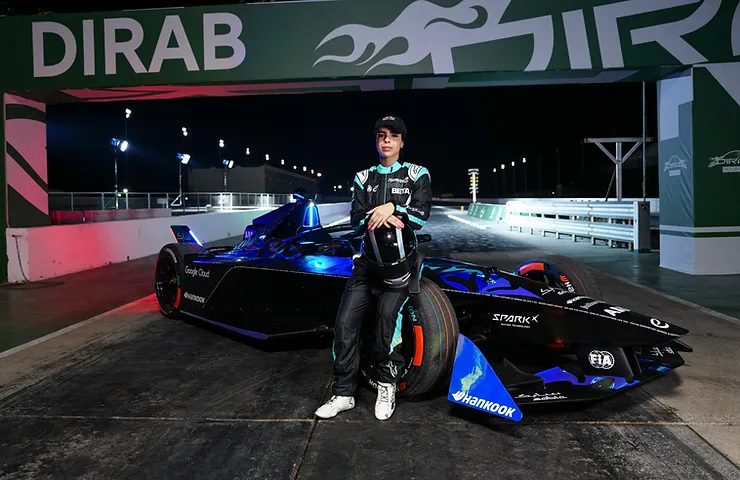
This January, Saudi racer Reem Al Aboud set a new acceleration benchmark for an FIA single-seater by reaching 0-60mph in 2.49 seconds in an ABB FIA Formula E GENBETA car. Ahead of International Women’s Day, we reflect on the implications of this achievement for motorsport.
Every Federation Internationale de l’Automobile-sanctioned single-seater championship race begins with a standing start. The lights at the starting line flash on, and flash off. Idle cars roar to life, accelerating through the straight and into the waiting corner.
How quickly these cars can accelerate depends on the series. F1 Academy goes from zero to 60mph in approximately 3.6 seconds. Formula 3 and Formula 2 manage in 3.1 and 2.9, respectively. Formula E’s GEN3 car takes 2.8. The current Formula 1 car takes 2.64.
But F1’s 2.64 seconds is no longer the benchmark. Now, Formula E’s newly developed GENBETA car holds the title — and with a woman in the cockpit.
Last July, Formula E unveiled its GENBETA prototype at the ExCeL London. While testing the car, World Champion Jake Hughes clinched a top speed of 218.71km/h, smashing the Guinness World Record for fastest speed indoors by more than 50km/h.
Having designated GENBETA as its development platform, Formula E sought to explore the model’s potential and performance further. The series set its sights on setting a second benchmark: the time an FIA single-seater takes to reach 0-60mph.
Yet in chasing after the F1 benchmark, Formula E was not content with breaking only technological and physical barriers. So, to honour its founding commitment to social progress, it added motorsport’s longstanding gender barrier as yet another to break.
Accordingly, Formula E tapped 23-year-old Saudi female racer Reem Al Aboud to take the GENBETA’s driver seat. The 2023 Saudi Toyota Ladies Cup Champion has partnered with the series since 2018, when she became the first Saudi woman to test a Formula E car.
Experienced in driving GEN2 and GEN3 cars — plus breaking barriers across karting, hillclimbing and autocross series — Reem was Formula E’s choice for a 2024 FIA Girls on Track Ambassador. Naturally, she was their choice for the GENBETA test as well.
And that choice certainly paid off. This January at Dirab Motor Park, Reem’s GENBETA car achieved 0-60mph in 2.49 seconds — besting F1’s by 0.15 seconds.
Of course, the technological aspect of the January test is remarkable. Behind GENBETA’s new benchmark is its front powertrain kit, which previous Formula E models (and other road electric vehicles) only use for energy harvesting. However, GENBETA also turns on this kit for greater traction during acceleration, using it to produce 536 horsepower that will launch the car into action. Instant torque allows for instant acceleration and thus a 2.49-second 0-60mph time.
What’s also remarkable is that a woman is the face of this test.
After all, motorsport’s gender barrier is cyclical. Doubt that female drivers can perform on par with their male counterparts dominates the sport. Doubtful investors shy away from funding young female drivers. Underfunded female drivers can’t enter, remain and progress through racing series. Series sorely lack female representation — when representation is what validates the reality that women can indeed perform. That lack of validation perpetuates the doubt about female drivers. And so, the cycle continues.
But Reem’s benchmark throws a wrench into this cycle by tackling the doubt head-on. She reaffirms that when women are given the time on track they are so often denied, they can excel. That when women are included in the conversation, they can contribute to the technological developments that push this sport forward. That when this sport values women, women can bring equal — if not more — value to the sport in turn.
As the face of this test, Reem represents the generations of women who have been denied from motorsport on the basis of their gender. Of women who challenge prejudice in cockpits, paddocks and audiences. Of girls who see Reem on their screens and wonder if they, too, can wrestle state-of-the-art cars at inhuman speeds.
Reem breaks the cycle by showing them that they can, and that they should.
In doing so, she and Formula E bring motorsport a step closer to a new era. One where women are no longer the exception, but the standard.
The governing board voted unanimously to reelect Vice Chairman Munir bin Mahmoud Eldesouki at the body’s 12th annual meeting.
The Kingdom has retained its leadership position in the Global Research Council, the Saudi Press Agency reported on Wednesday.
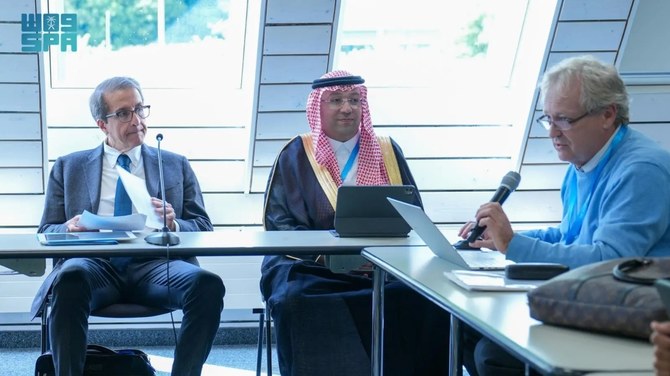
The governing board voted unanimously to reelect Vice Chairman Munir bin Mahmoud Eldesouki at the body’s 12th annual meeting in Interlaken, Switzerland this week.
The reelection to this position, for the second time since the body’s establishment in 2012, confirms the council’s confidence in Saudi Arabia, the SPA reported.
The council highlighted Saudi Arabia’s efforts in promoting research, development and innovation in the Middle East North Africa region, the report added.
The council comprises heads of research institutions that fund projects globally.
source/contents: arabnews.com (headline edited)
__________
The governing board voted unanimously to reelect Vice Chairman Munir bin Mahmoud Eldesouki at the body’s 12th annual meeting. (SPA)
The former Algerian middle-distance runner won her country’s first-ever Olympic gold medal. She navigated a deadly and divisive political crisis within her nation to emerge as “a symbol of victory and defiance”.
Hassiba Boulmerka and her family received death threats, and she was even denounced as anti-Islam at her local mosque.
However, in her home country of Algeria, there was no safe space for her to run.
The world 1500m world champion feared that radical Islamist militants would kill her, and the surrounding atmosphere was equally terrifying.
But despite the risks, the ‘Constantine Gazelle’ continued to train, running even faster and defying the threats to her life.
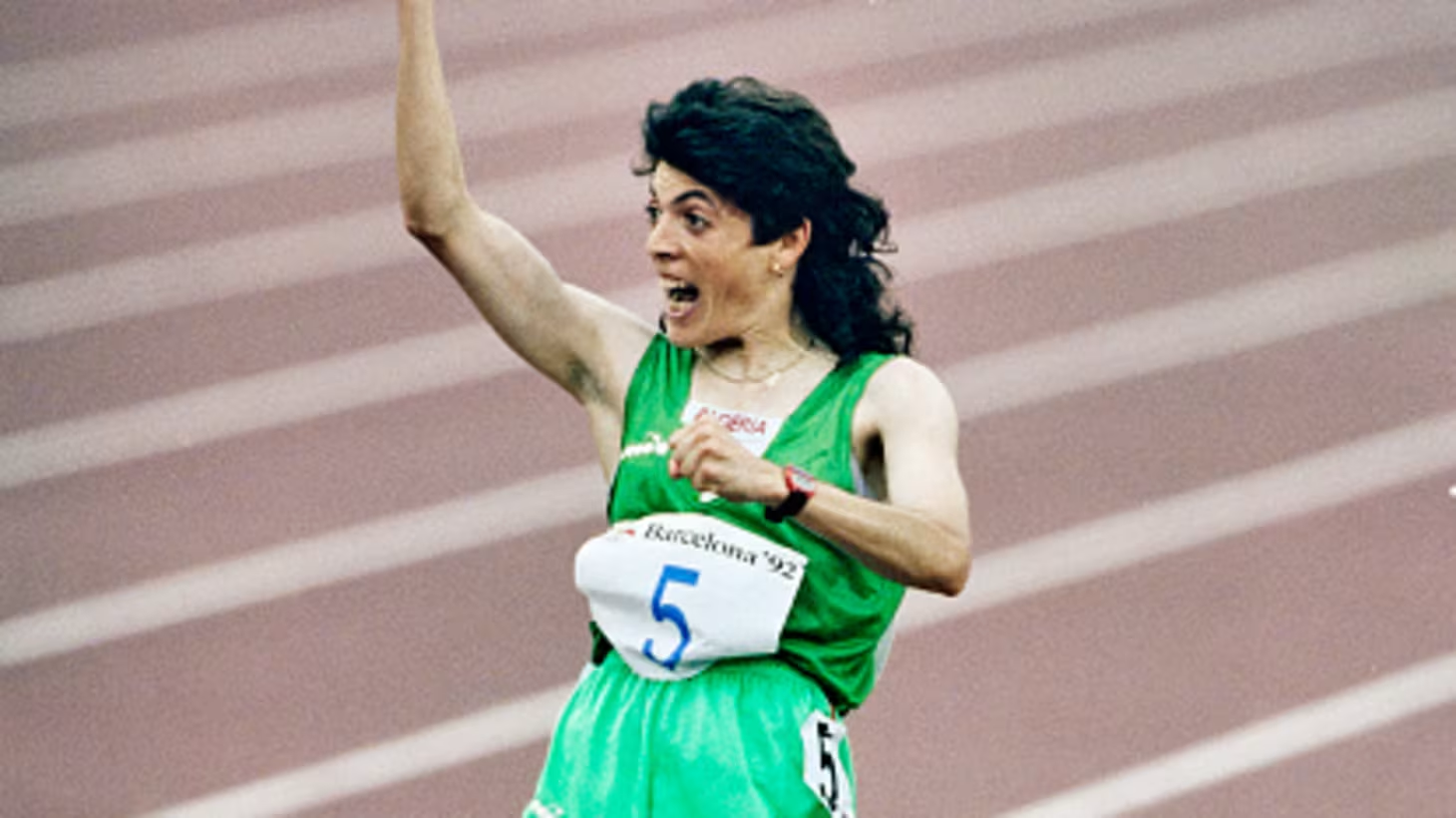
A year after clinching the first of her two world titles, she made history at the Barcelona Olympics in 1992, winning the first Olympic gold for Algeria .
Hassiba Boulmerka: Africa’s first world track champion
Running had been Boulmerka’s way of life since the age of 10.
Growing up in Constantine, in the east of Algeria, she gained recognition for her speed and stamina, which led her to claim four African gold medals in the 800m and 1500m.
Two years after her double triumph at the continental championships, she stunned the field, sprinting to the lead in the homestretch of the 1500m race to clinch the gold.
It was a glorious moment for Boulmerka, as she became the first African woman to earn a World Championships title.
“I screamed for joy and for shock, and for much more,” she said. “I was screaming for Algeria’s pride and Algeria’s history, and still more.”
Her triumph was significant, symbolising progress for Algerian sport and Arab women.
Despite the heroic reception that awaited her and her teammates upon their return from the 1991 World Championships, her running didn’t quite resonate with everyone.
Her sporting endeavours continued to be frowned upon.
Training and competing meant exposing her arms and legs, which was perceived as not adhering to Islam’s code of modesty.
Hassiba Boulmerka was labelled ‘anti-Muslim’ for choosing to run
Boulmerka pressed ahead, enduring the criticism.
She faced hostility, being spat on and having to dodge stones thrown at her while training on Algerian roads.
In a matter of months, her hopes and dreams of participating in the Olympics started to fade as her country was plunged into civil unrest, resulting in over 150,000 lives lost.
Training became not only impossible but also dangerous during the crisis, with Islamist militants seeking to impose oppressive rule.
She was forced to relocate to Berlin to train ahead of the 1992 Olympic Games.
“I remember it well,” she recalled in an interview with the BBC. “It was Friday prayers at our local mosque, and the imam said that I was not a Muslim, because I had run in shorts, shown my arms and my legs. He said I was anti-Muslim.”
When she arrived in Barcelona just before her event, Boulmerka was accompanied by armed escorts into the stadium, highlighting the unprecedented security measures.
“There were police everywhere. In the stadium, in the changing rooms – they even came with me to the bathroom!” she said.
Despite these challenges, the ‘Constantine Gazelle’, as she was affectionately dubbed for her agile and graceful running style, defied the odds and her performance at the Estádio Olímpico was remarkable.
Hassiba Boulmerka: A heroine for women in sport
The Unified Team’s Lyudmila Rogacheva set the pace for most of the 1500m race before the Algerian powered past her with half a lap to go, securing her greatest career victory. Her time of three minutes, 55.30 seconds earned her the Olympic gold medal, marking the second time second time an Arab woman had stood atop the Games podium (after Morocco’s Nawal El-Moutawakel at Los Angeles 1984).
It was a beautiful ending after months of navigating political challenges – an example of ‘courage in defying taboos and pursuing passion’.
“As I crossed the line, I thrust a fist into the air. It was a symbol of victory, of defiance. It was to say: ‘I did it! I won! And now, if you kill me, it’ll be too late. I’ve made history!'”
As Boulmerka stood on the podium, feeling the weight of the medal around her neck, she was overwhelmed by emotions.
“I tried to hold myself together, to be brave…but the tears just started to fall. They were tears of sacrifice, for all the people I loved that I had abandoned for this race.
“It was a triumph for women all over the world to stand up to their enemies. That’s what made me really proud.”
There was no fanfare when the two-time Olympian returned home to reunite with her family.
Algeria was still far away from the end of its dark period, prompting he exile in Cuba before she returned to Algeria after recapturing the gold medal at the 1995 World Championships.
Her medals stand as a testament to her courage, and Hassiba Boulmerka continues to serve as a beacon of inspiration for women in sport.
The 111th session of the IUCN Council meeting began today in the city of Gland, Switzerland, chaired by Her Excellency Razan Al Mubarak, President of the International Union for Conservation of Nature.
The 3-day meeting discusses a group of issues, most notably “Vision.” The strategy for the Union” which extends for 20 years, and the Council is preparing it for review and comment by the members of the Union.
Al-Mubarak said in her speech during the meeting: “The strategic vision, which extends for twenty years, places at the heart of its attention the unprecedented challenges facing the climate and the survival of living species,” noting that in light of the increasing possibility of humanity exceeding the 1.5 degree Celsius target set by the Paris Agreement, Conservationists realize that their work will be more difficult and more important. She stressed the need to address these challenges by strengthening efforts and helping to support justice in the world so that we can all be more appreciative of nature and keen to preserve it.
During this session, the Council is scheduled to review and evaluate the initial draft of the Union’s program for the period 2026-2029, as a first step in the Union’s journey seeking to prepare the final version of the four-year plan, which will be voted on by the members, in preparation for its adoption during the International Union for Conservation of Nature’s World Conference in 2017. 2025, which is scheduled to be held in Abu Dhabi from October 9 to 15 next year, with the participation of representatives of public institutions, civil society, indigenous peoples, academia and the private sector.
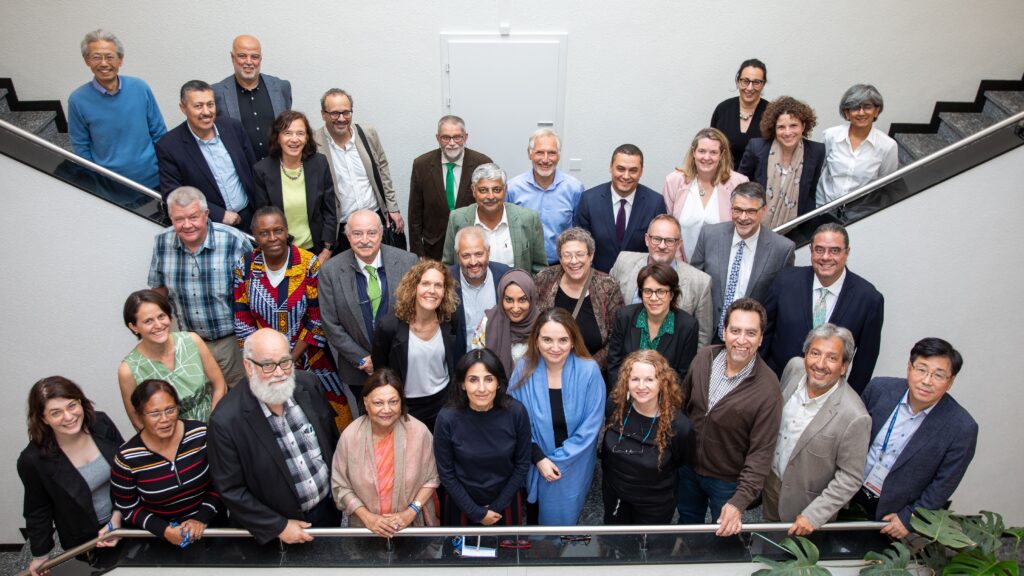
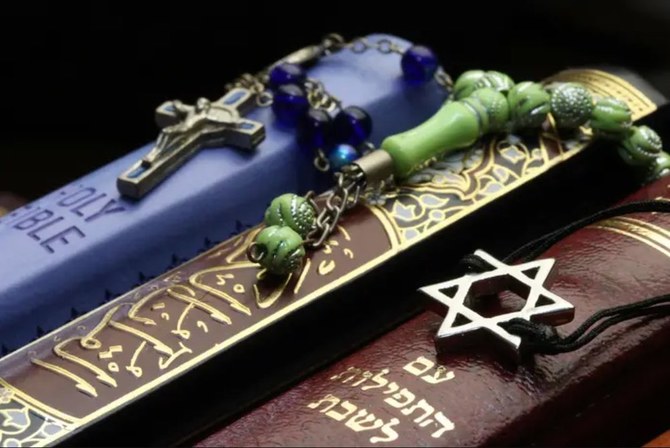
The King Abdullah bin Abdulaziz International Center for Interreligious and Intercultural Dialogue is hosting a global dialogue forum in Lisbon, Portugal, from May 14 to May 16, the Saudi Press Agency reported.
Themed “Transformative Dialogue: Building Alliances for Peace in a Changing World,” this event marks a significant milestone in the center’s decade-long commitment to fostering global change and peace.
Bringing together influential leaders from decision-making institutions, the forum offers an opportunity to forge partnerships addressing today’s complex challenges, the SPA reported.
It serves as a platform for global political figures, intellectual leaders and clerics to tackle issues of peaceful coexistence and sustainable development amid rapid transformations.
Attendees include former French president, Francois Hollande; Sheikh Dr. Saleh bin Abdullah bin Humaid, the imam of the Grand Mosque in Makkah; Ecumenical Patriarch Bartholomew I, the archbishop of Constantinople; Matteo Renzi, former Italian prime minister; and former president of Austria, Heinz Fischer.
Exploring dialogue’s transformative potential, the forum aims to advance human rights, social cohesion, reconciliation and environmental cooperation in line with the center’s mission, the SPA said.
By fostering cooperation among nations, international institutions and civil society, the forum seeks to build understanding between cultures and religions.
With participation from prominent figures across various fields, this forum holds significant potential to shape policies and priorities for peaceful coexistence and societal advancement, the SPA reported.
source/content: arabnews.com (headline edited)
___________
The Lisbon forum marks a significant milestone in the center’s decade-long commitment to fostering global change and peace. (X: @KAICIID)
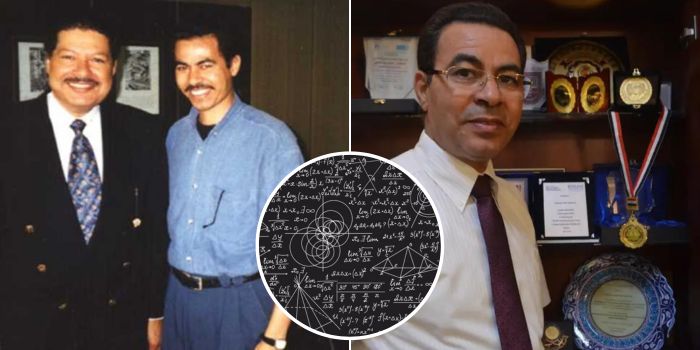
Born in Sohag, Egypt, Mathematician Mahmoud Abdel-Aty was awarded the world’s best mathematician by China for his contribution to quantum algorithms and quantum optics!
The scientist told Sky News Arabia “My name was nominated by a number of scholars from more than one country, and the committee filtered all the applicants and selected the best among them,”
The Chinese award Qin-Jiu-Shao is considered to be one of the most important awards in mathematics in the world will be awarded to winners in November.
The Egyptian scientist, who occupies the position of Chairman of the National Committee for Mathematics, confirmed that through him he was able to explain a large number of problems that had no explanation in the past, especially with the great and amazing progress in the manufacture of computers, especially quantum computers.
He also mentioned how happy he gets whenever he’s awarded saying, “It’s the most beautiful in his life,”
Adding “It gives us confidence that what we are doing is of real value.
The Award represents the great appreciation of our country, and the international awards represent a global appreciation for the name of Egypt and its great scientists.”
For the Palestinian-born Arab International Women’s Forum founder, the laws of economics mean each woman must be heard.
Haifa Al Kaylani moves through the Carlton Tower Jumeriah looking as effortlessly elegant as the recently renovated decor of the landmark hotel in the heart of Knightsbridge, London.
Her hair is coiffed, make-up flawless, and a string of pearls and turquoise brooch accessorise a classic cropped bouclé jacket from a Swiss fashion house.
But she walks straight past the diners socialising over salads or the afternoon tea being served all day in the lounge, and gets down to business at a table in a nearby meeting room.
“I’ve never been one of those ladies who lunch,” the development economist and president of the Arab International Women’s Forum (AIWF) tells The National.
As Al Kaylani talks about her remarkable career, in which she has hosted Queen Rania of Jordan and been honoured herself at a reception by Sarah Brown, wife of former UK prime minister Gordon Brown, at No 10 Downing Street, it’s hard to believe there has ever been time for a midday meal.
On the global stage, she is known as a “high-impact change agent” in every area, from leadership, youth empowerment and diversity to education, sustainability and the environment.
The AIWF was founded in 2001 on two key principles dear to her heart: that no economic, political or social development is possible anywhere without optimising the 50 per cent of the population who are female; and that women from the richly diverse 22 Arab countries need to establish bridges between each other and their counterparts everywhere.
“We broke ground wherever we went,” she says. “We were the first women’s organisation to be hosted by the League of Arab States, the first hosted at the European Parliament, the first invited by the World Bank, the first conference in Madrid between Arab, Spanish and Latin American women, [the then French Minister of the Economy] Madame Lagarde chaired the forum’s annual conference in 2009 in Paris, we were the first to host a conference for business women at the Dubai International Financial Centre.
“And we had key, succinct issues on the table. It was not just about the gatherings, though they were important. Breaking the stereotypes, building knowledge and understanding were very important but we also wanted to ensure we could empower and effect change on the ground … so we walk the walk.’’
In person, Al Kaylani is reserved but warm, overcoming a natural modesty to highlight various successes in the hope of giving them renewed impetus. A story of doing good, she insists, must be told.
Her own is certainly that – a peripatetic life, first as a Lebanese of Palestinian origin and then as the wife of a Jordanian diplomat, fuelled her desire to empower women as “engines of economic growth” to foster development and prosperity in Arab countries.
Both her father, Badr Said Fahoum, the district governor of Acre in Mandatory Palestine whom she credits for her business mind, and mother, Alia Zubi, came from prominent families in Nazareth.
Nakba toddler
They moved, as did hundreds of thousands of others, to Beirut in 1948 during the Nakba when Haifa was a toddler, initially intending to stay only until it was safe to return.
“Nobody knew that they were going to spend the rest of their lives there. They left everything behind.’’
Relatives and friends continued to trickle out of Palestine, some bringing objects from the Fahoum house while those who remained sent letters and news of the events unfolding.
The family was given Lebanese citizenship at the time. An estimated 210,000 Palestinians remain stateless in the country even today, yet Al Kaylani points to how much Beirut owes to these exiled families.
“They made it their home and contributed to the economy, society, culture,” she says.
Haifa’s mother, Alia, was highly educated but took on the responsibility of raising her five daughters. She fostered an appreciation of the siblings’ heritage through stories of their ancestral home before the partition of borders but was keen, too, to ensure that they made the most of life, friends and schooling in Beirut.
Mother’s learning
Apart from her love and devotion as a homemaker, Al Kaylani recalls Alia creating a cultural cocoon full of classical music and literature such as the Abbasid-era poetry of Al-Mutanabbi that she recited by heart.
“She was an avid reader. We would go to the mountains every summer, and before we packed our clothes, we used to pack boxes of books because the vacations were supposed to be spent reading and learning, and on sports and outdoor life.’’
After being a pupil at the British Lebanese Evangelical School for Girls in Beirut, fifteen-year-old Al Kaylani was sent to board at Sherborne School for Girls in Dorset to pursue her English education.
“I loved it,’’ she says, and quotes from her end-of-term reports as testament. “They would say: ‘Haifa’s settled in as if she’s one of us.’ I think this is one of my good traits. I’m adaptable and I’m flexible.’’
The timing of her arrival made it easier not to pine for home despite the pupils having to go out for runs in snow up to their waists. As she explains, the 1962-63 academic year was one “like no other’’, and the pupils eagerly kept up with events on the BBC’s weekly news programme Panorama.
“It was number one, the year of the Big Freeze, the Beatles [with their first hit single Love Me Do], James Bond [Dr No in Sean Connery’s MI6 cinematic debut], the Profumo Affair, the Cuban Missile Crisis, the Vatican Council. I learnt a lot and enjoyed it all,’’ she says.
Al Kaylani chose to study economics at her father’s alma mater, the American University of Beirut, which she calls “that beautiful campus by the sea”, before regrouping with Sherborne friends at Oxford to read the new diploma in development economics.
Next was 12 months as a junior economist at the United Nations Economic and Social Council in Beirut, which enabled her to meet the second of two non-negotiable conditions set for the girls by Badr and Alia.
“We weren’t to get married or focus on a family until first having at least a Bachelor of Arts, if not a Master’s, and we had to work for one year. When you think about it, they are golden rules. So I’m very glad.
“If we had been five boys, our parents would not have done more in terms of empowerment and providing opportunities. Tashji’ [encouragement] non-stop.’’
She set up home in Amman after marrying Wajih Al Kaylani, who used to regale her with vivid tales of walking all over Palestine’s mountains, down hills and into valleys as a boy scout. “This is how you see the place, and get an affinity with the people in the villages,’’ Al Kaylani says.
While giving birth in hospital to her son, Sirri, she heard an announcement on the radio that Wajih had been appointed ambassador to Tunisia by King Hussein of Jordan, “which was a great honour but we asked permission to stay a few more months to allow the baby to grow”.
They immersed themselves in their roles in Tunis and then Delhi where her husband was ambassador to India, Sri Lanka, Nepal and Thailand. “I found myself on another planet. Especially in the evenings, the sounds, the smells were different,” she says, recalling the aroma of firewood burning outside their diplomatic residence.
The couple visited every state in India at the invitation of the governors, and the deep insights gained from travelling as an Arab ambassador’s wife compelled her to take up an MPhil part-time at Jawaharlal Nehru University.
‘I wanted to read more, and Indian economists were the best in economic development at the time.’’
Al Kaylani left the country “with tears in my eyes’’ when Wajih retired from the diplomatic service in a return to the private sector, and London became their base.
After Sirri set off to board at Stowe School in Buckinghamshire, she turned to playing tennis, learning Spanish and Italian, enrolled at London Business School, and began volunteering for Arab and British women’s charitable organisations.
Help was needed for Palestinian refugees, and for Lebanon, which had entered a 15-year civil war. In the 1990s, she was part of a committee raising funds for Iraqi children and recalled the complexities of delivering aid in spite of the UN-led embargo after Saddam Hussein’s invasion of Kuwait. “It was very hard and serious work,” she says.
Among her biggest achievements was raising £250,000 ($318,050) for the Queen Alia Fund for Social Development, with Princess Basma as key speaker at an event in 1994.
Al Kaylani recalls a magical evening that transformed The Dorchester’s ballroom into a showcase of Jordanian culture through a fashion parade of “out of this world” Arab costumes, handicrafts and local produce on the tables, and floral arrangements of emblematic black irises and native herbs.
“It was something that London had not seen – neither before nor after,” she says.
“I’m a good fund-raiser. Why? Because I only commit my time and myself if I really believe in the cause, and believe that I can help the cause.
“I learnt a good lesson early in fund-raising, from an English friend. She told me: ‘You must be able to convince me why I should part with my funds for this cause rather than that one.’ So you need to prepare well.’’
Rebuilding the Balkans
She sat on the committee of a charity supporting Bosnian women during the war that was chaired by former UK Prime Minister Margaret Thatcher of whom she was a great admirer. “She revitalised the British economy and put it on track. She brought prosperity back.”
A few years later, Al Kaylani founded the AIWF with the aim of connecting Arab women from all walks of life as “part and parcel’’ of the international community politically, socially and economically.
As the forum has evolved from initially helping with the set-up of businesses to becoming much broader in scope, her intention has been to approach each project not as a feminist but as an economist first and foremost.
London Climate Week
In January 2017, Al Kaylani was chosen as one of 46 global leaders to become a Fellow of the Advanced Leadership Initiative at Harvard University. The key outcome of her fellowship has been an agriculture project being piloted in Jordan for which she secured World Bank funding.
“Following my pivotal year at Harvard, we have been pursuing a sustainability agenda,” she says.
Recently, the AIWF teamed up with Masdar’s global initiative Women in Sustainability, Environment and Renewable Energy, known as WiSER, to produce a report for Cop28 in Dubai, and will host the forum’s second conference on the same themes in June at London Climate Week.
Asked how she has maintained such motivation for so many decades, Al Kaylani says: “First, I enjoy what I do – otherwise I would not be doing it. This is the key because then it is from your heart, coming from inside, you’re committed. Most of my work is pro bonoand totally voluntary.
“Second, the energy … you need to read, to keep educating yourself. I’m a great believer in lifelong learning. That’s why I went to Harvard. I enjoy my own time like everybody but I love meeting people, and working, learning and connecting with others.”
Arguably the pinnacle of the numerous accolades garnered so far is being appointed an Officer of the Most Excellent Order of the British Empire in King Charles’s New Year’s 2024 Honours List in recognition of services to women, young people and cultural relations between the UK and the countries of the Middle East.
She is thrilled and humbled by the thought of next month’s investiture but says none of it would have been possible without her parents – “I have to pay tribute to them” – and husband Wajih, whose face would beam every time he saw her achieve another milestone.
“My late husband was the best partner in life I could ever have had. Encouraging, loving, empowering. Without him, I promise, I could neither have started nor given so much time to the AIWF to attain what it has and continues to attain now. He was with me every step of the way.”
Al Kaylani goes on to speak of the friends and members from the wider AIWF family, who have all provided invaluable contributions, but soon returns to the source of her own personal impetus.
“Your roots sustain and empower you, those who see you when you are up and down. You know,’’ she says with a small shrug, “all of us are human after all.”
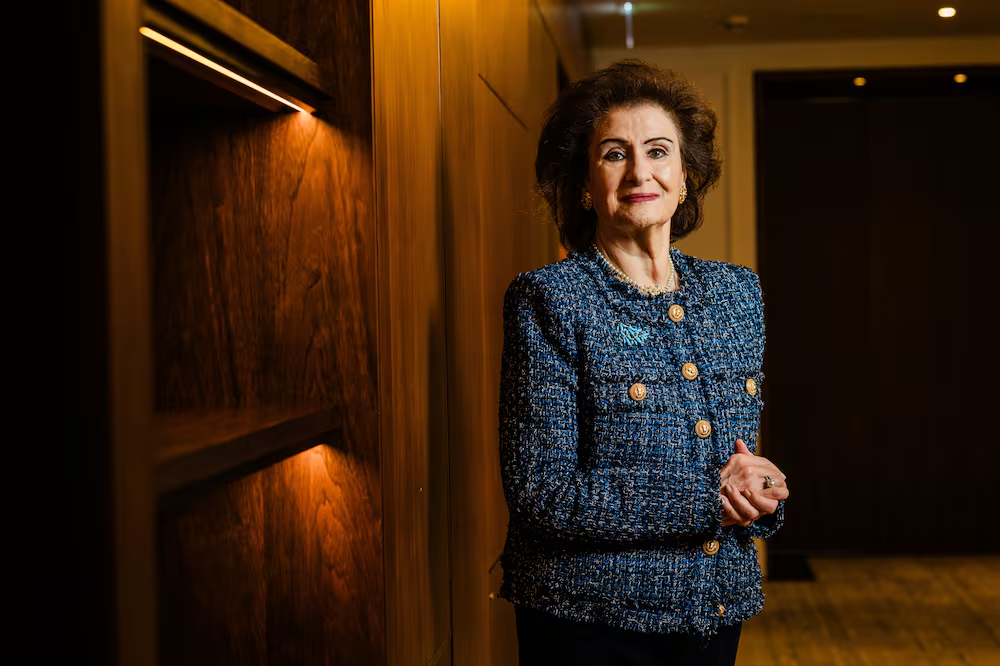
Haifa Al Kaylani OBE, pictured at the Carlton Jumeirah London, is known as a change-maker in areas from leadership and youth empowerment to sustainability and the environment. Photo: Mark Chilvers
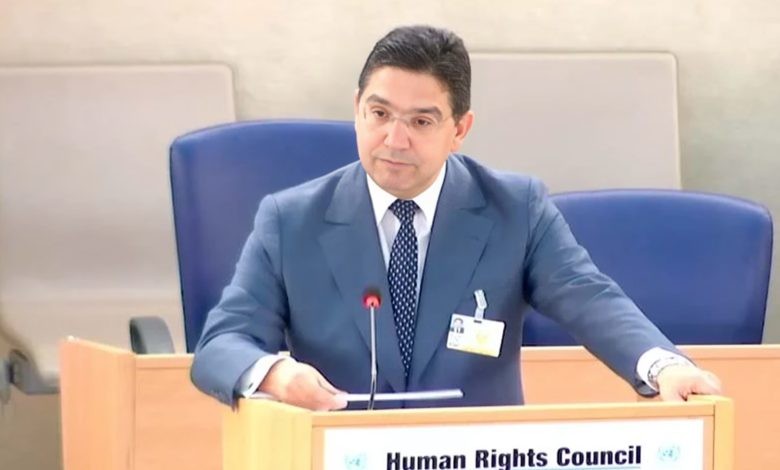
FM Bourita stressed the need to confront attempts to distort human rights issues in favor of unrelated agendas, while launching initiatives to strengthen the Council’s effectiveness.
Morocco’s Minister of Foreign Affairs, Nasser Bourita, affirmed in Geneva that the Kingdom’s tenure leading the Human Rights Council will prioritize “credibility and dynamism,” aiming to foster constructive consensus towards the council’s objectives.
Addressing the high-level segment of the 55th session of the Human Rights Council, chaired by Morocco, Bourita emphasized the adherence to principles synonymous with Moroccan diplomacy.
He highlighted Morocco’s dedication to credibility in action, dynamism in performance, innovation in methods, and the pursuit of constructive consensus.
The election of Morocco to preside over this crucial United Nations body, with 30 out of 47 votes, serves as international validation of the nation’s unwavering dedication to human rights under the leadership of King Mohammed VI.
Surpassing South Africa in the vote, Morocco’s victory signals recognition of its far-sighted vision and commitment to the rule of law and fundamental rights.
Following his election, Morocco’s permanent representative to the UN in Geneva, Omar Zniber, reiterated the kingdom’s pledge to promote, respect, and guarantee universally recognized human rights.
Zniber highlighted Morocco’s role as a unifying leader on key issues such as interreligious dialogue, tolerance, environmental sustainability, migrants’ rights, and the impact of new technologies.
According to Minister Bourita, the Moroccan presidency builds on significant progress in establishing a comprehensive human rights framework.
He noted that despite the challenges posed by a complex international landscape marked by polarization and human rights violations, the country remains committed to advancing the Council’s agenda.
Bourita stressed the need to confront attempts to distort human rights issues in favor of unrelated agendas, while launching initiatives to strengthen the Council’s effectiveness.
In parallel with these efforts, Bourita took part in bilateral discussions with his counterparts from Bahrain, Kazakhstan and the Netherlands, as well as meetings with the UN High Commissioner for Refugees and the UN High Commissioner for Human Rights.
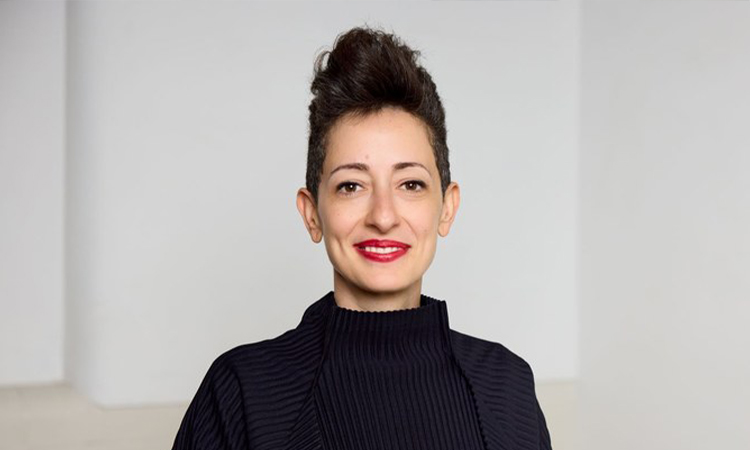
His Highness Sheikh Mohammed bin Rashid Al Maktoum, Vice President, Prime Minister and Ruler of Dubai, has announced Prof. Lina Ghotmeh, architect and professor of architecture, as the winner of the first Great Arab Minds (GAM) award in the architecture and design category, in recognition of her timeless contributions to global architecture.
In a tweet published on his official X account, Sheikh Mohammed congratulated Prof. Ghotmeh on winning the first award in this category of GAM, the Arab world’s largest movement launched in 2022 to search for exceptional Arab talents in various fields. Prof. Ghotmeh’s insightful work and research highlight the intimate relationship between architecture and nature.
His Highness Sheikh Mohammed said that architecture and architectural landmarks are the foundation of the distinguishing features that set cities and communities apart, and the building blocks of their identities and values, making them easily recognised. He added that they are also timeless tales of the creative outputs of humanity and the rise of civilisations.
Prof. Ghotmeh has a remarkable track record in her field. She has overseen the development of over 65 global architectural projects, including renowned museums, exhibitions and cultural buildings. More specifically, Ghotmeh conducts in-depth analyses of environments and meticulously selects materials that are not only suitable for each setting but also capable of withstanding harsh conditions. Her unique approach ensures that all her projects are evolved and practical outcomes of her research on coexisting with nature and the surrounding environment.
Among Prof. Ghotmeh’s most notable works is a building near the industrial port of Beirut, which survived the 2020 Beirut explosion, having been designed using innovative techniques and select local materials.