Winners of 3rd edition ‘ICCROM – Sharjah Award for Good Practices in Cultural Heritage Conservation and Management in Arab Region 2021-22 Award’

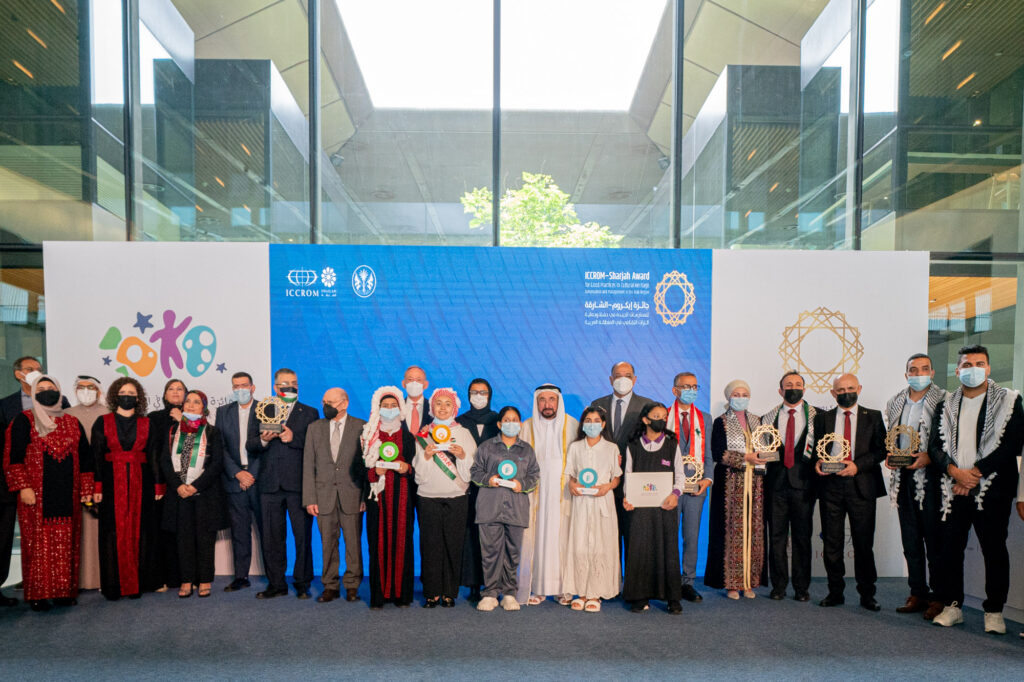
H.H. Sheikh Dr. Sultan bin Muhammad Al Qasimi, Supreme Council Member and Ruler of Sharjah, attended on Thursday an honouring ceremony of the third cycle’s winners of the ICCROM-Sharjah Award for Good Practices in Cultural Heritage Conservation and Management in the Arab Region (2022-2021), and the second cycle of the ICCROM-Sharjah Award The Arab cultural heritage for young people, in the House of Wisdom.

The ceremony began with a speech delivered by Dr. Zaki Aslan, Regional Director of International Centre for the Study of the Preservation and Restoration of Cultural Property (ICCROM) in Sharjah.

Dr. Aslan mentioned the award’s goal to spread the notion of cultural and heritage preservation in the region within international standards through initiatives and events that help exchange knowledge and experience.

Then John Robbins, Chairman of the Executive Board of ICCROM, thanked the Ruler of Sharjah, for sponsoring this event and all other activities in the region.

H.H. the Ruler of Sharjah and the audience watched several visual films about the ICCROM-Sharjah Award and the winning projects.

H.H. honored the winners of the 3rd cycle of the ICCROM-Sharjah Award for Good Practices in Cultural Heritage Conservation and Management in the Arab Region; and the 2nd cycle of the Arab Cultural Heritage Award for the Young.

The grand prize for the 3rd cycle went to Beirut Assist Cultural Heritage (BACH), a project to recover the affected area following the 2020 blast in the Port of Beirut, Lebanon; and the rehabilitation and restoration of residential courtyards and historical buildings in the vicinity of Al Aqsa Mosque, Palestine.

In the Special Excellence category, four projects won: sheltering and protecting Hicham’s Palace’s mosaic floor, Palestine; Collart-Palmyre: a comprehensive project on the Baalsahamîn temple in Palmyra; the revitalization and conservation of the cultural heritage of Al Qarara Village in Gaza, Palestine; and the digital documentation of historical documents in Jerusalem, Palestine.

As for the 2nd cycle of the Award for the Young, the student Sarah Hassan Al Hosani, from the Al Amal School for the Deaf – United Arab Emirates, and the student Al Yasar Al Masry, from the Omar Bin Al Khattab College – Al-Makassed Islamic Charitable Association – Lebanon, won first place.

The student, Ghala Abdel Rahim Mahmoud Al Raheel, from Bayouda Al-Sharqiya Mixed Secondary School – Jordan, won first place in the photography category, while the first place in the folk dance category, Al Takadum School for Basic Education – Libya, won the old street dance, and Qasr Al-Hallabat Al-Gharbi Mixed Secondary School – Jordan won first place in the awareness film category for the movie “A Story of Joy from the Heart of the Badia”.

The honouring ceremony was attended by Sheikh Salem bin Abdulrahman Al Qasimi, Chairman of the Sharjah Ruler’s Office, Sheikh Mohammed bin Humaid bin Mohammed Al Qasimi, Chairman of Department Of Statistics and Community Development, Sheikha Alyazia bint Nahyan bin Mubarak Al Nahyan, Noura bint Mohammed Al Kaabi, Minister of Culture and Youth, and several senior officials, ambassadors and representatives cultural organisations.

source/content: wam.ae (edited)

_______
________________________________________________________________________

SHARJAH, UNITED ARAB EMIRATES(U.A.E) / JORDAN / LIBYA /LEBANON / PALESTINE / SYRIA
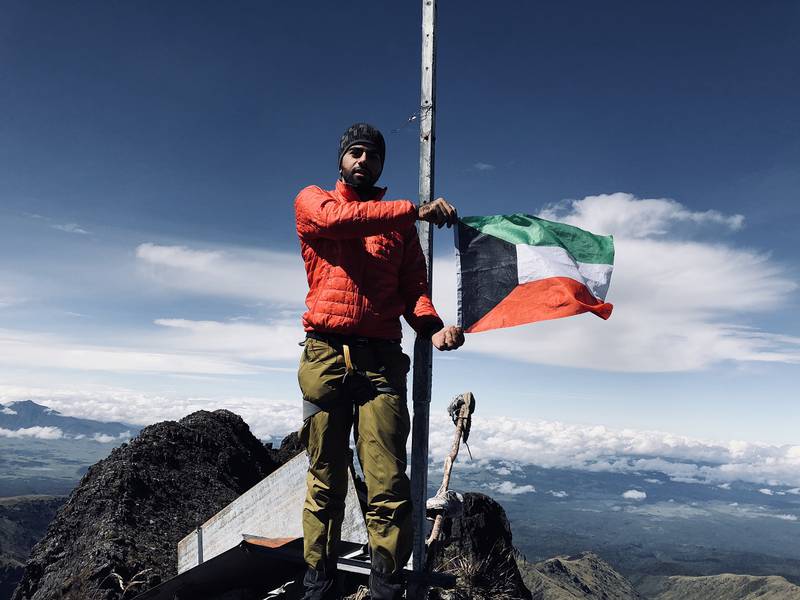
Kuwait’s Yousef Al Refaie Achieves Guinness World Record as the Youngest to Climb Seven Volcanic Summits on 7 Continents.

Yousef Al Refaie sets the record for reaching the top of the highest volcanoes on each of the seven continents.

A Kuwaiti mountaineer has become the youngest person to climb the world’s Seven Volcanic Summits.

Yousef Al Refaie has set a Guinness World Record for reaching the top of the highest volcanoes on each of the seven continents at 24 years and 119 days.

“[If] you came from the desert, I wouldn’t think you [would] be able to climb the highest mountains,” he said of his feat.

Mr Al Refaie, the 24th person to climb the peaks, began his journey as a tourist on December 30 2015 when he climbed Mount Kilimanjaro in Tanzania.

He then climbed Russia’s Mount Elbrus on July 18 2017, Mount Giluwe Mountain in Papua New Guinea on July 21 2018, Pico de Orizaba in Mexico on January 6 2019, Iran’s Mount Damavand on August 11 2019, Ojos Del Salado in the Andes on January 15 2020 and Mount Sidley in the Antarctic on December 22 2021.

He said the toughest was the 4,285m dormant Mount Sidley in Antarctica’s Marie Byrd Land, one of the largest uninhabited areas in the world. It took the team seven hours to push from their camp at 3,000m to the crest of the caldera.

He said he had previously attempted to break the record for the fastest climb of the Arabian Peninsula’s highest peaks, but, as with other challengers, he was not allowed to enter Yemen.

Mr Al Refaie now wants to cross the largest deserts in the world, starting with the Empty Quarter in November.

“When I first asked my mum for the Guinness World Records Book as a kid, she told me she would only buy it if I had something amazing to make my way into it,” he said.

“I really don’t know if she meant it that time, but here we are living the dream.

source/content: thenationalnews.com (edited)

___________

Kuwaiti mountaineer Yousef Al Refaie has become the youngest person to climb the Seven Volcanic Summits, the highest volcano on each continent. Pictures: Guinness World Records

___________

KUWAIT

Morocco’s UM6P Awarded “Climate Hero” at UN Youth Conference

Morocco’s Mohammed VI Polytechnic University (UM6P) has been recognized as a “Climate Hero” by the Youth Constituency of the United Nations Framework Convention on Climate Change (YOUNGO).

The recognition was announced at the UN Youth Conference on Climate Change (COY16).

UM6P is one of two institutions in the world that have obtained the recognition of Climate Hero, the Sustainable Development Department of UM6P said in a statement, noting that it “dedicates this appointment to all Moroccans and foreign residents in Morocco.”

“UM6P Youth Statement” was the only statement letter representing the vision of young people in the Kingdom of Morocco during COY16 in Glasgow, Scotland, UK.

The declaration, which was elaborated by youth representatives from the UM6P and the local region of Rehamna, featured six themes: climate change, clean energy, sustainable cities and communities, ecomobility, social inclusion, and gender equality.

source/content : moroccoworldnews.com

__________

Morocco’s UM6P Awarded “Climate Hero” at UN Youth Conference

_____________

MOROCCO

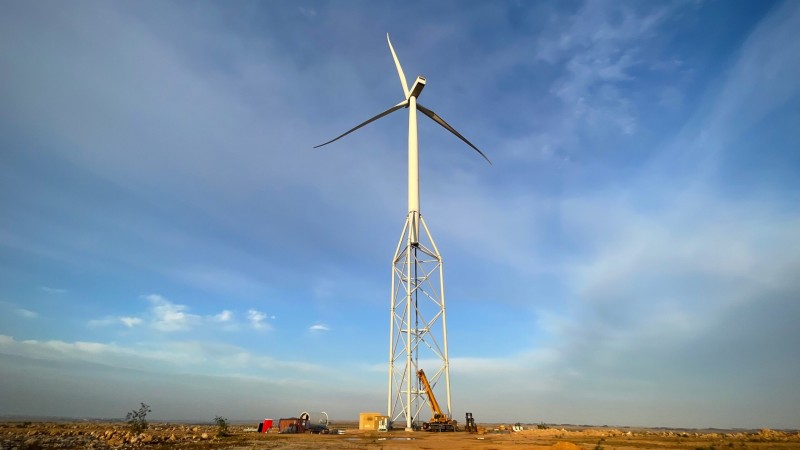
RECORDS : Morocco holds the Record for ‘Africa’s Tallest Turbine’ : February 2022

The state-of-the-art wind turbine in Morocco’s Oualidia is expected to generate an annual average of 2.500 MW/h, reducing CO2 emissions by 2.500 tonnes every year.

The 144-meter tall structure, part of the InnoVent’s Oualidia wind farm, provides a milestone thanks to high production capacity and cost-efficiency.

Construction work for the turbine began in 2019 following a deal between Morocco’s government and Spanish renewable energy company Nabrawind Technologies.

The installation is the first “self-erecting turbine” for Nabrawind Technologies.

Aside from breaking the continental height record for turbines, the Nabralift tower is special on grounds of the innovative construction method. The company used an innovative self-erecting system to construct the tower, without the need for conventional large-size cranes.

Built in collaboration with French developer InnoVent, the turbine additionally breaks the record for the tallest turbine constructed with a self-erecting system.

The innovative construction model was also cost-optimal as the tower only needed 80 square-cubic meters of concrete for its foundation, down from 500 square-cubic meters necessary for structures of such height, lowering cost by 60%.  

source/content: moroccoworldnews.com

___________

____________

MOROCCO

Saudi Arabia Declares ‘Feb. 10th – Arabian Leopard Day’

Saudi Arabia has declared Feb. 10 as “Arabian Leopard Day” in a bid to raise awareness of the endangered big cat.

The move, which was announced by the Council of Ministers last month, is part of the Kingdom’s efforts to protect the species, which is now classed as critically endangered, from extinction.

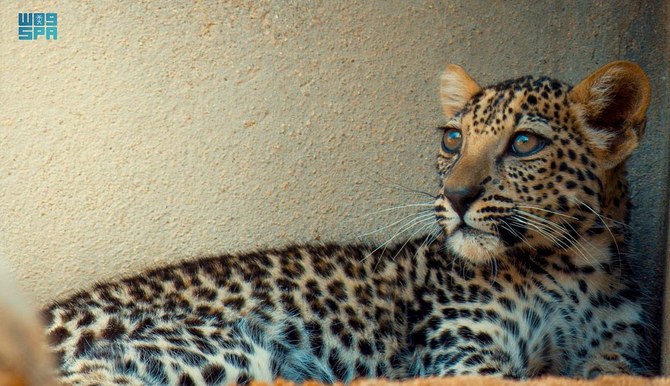
The Arabian leopard is the chief predator in Saudi Arabia and plays a major role in the Kingdom’s culture. But overhunting and a lack of natural prey means there are now fewer than 200 left in the wild.

In December 2020, Prince Badr Bin Farhan, the minister of culture and governor of the Royal Commission for AlUla, established the Global Fund to Protect the Arabian Leopard from Extinction in the Sharaan Nature Reserve. Its aim is to sustain the leopard population and its prey, and protect its natural habitat.

Images of the Arabian Leopard were projected onto buildings and monuments across Saudi Arabia and the UAE on Feb.10.

In recent years, the commission and the National Center for Wildlife have been working on a number of initiatives to protect the big cat. Among these is expanding a breeding program within the Sharaan reserve.

Also, last year, Princess Reema bint Bandar Al-Saud, Saudi Arabia’s ambassador to the US, launched the nonprofit foundation Catmosphere to raise awareness of the many endangered cat species around the world, including the Arabian leopard.

The Kingdom also works closely with Panthera, which is devoted to the conservation of the world’s wild cat species.

The Arabian leopard lives in high mountains and is native to Saudi Arabia, Yemen, Oman and the UAE. Anyone found hunting the animal in the Kingdom faces a fine of SAR400,000 ($106,000) — rising to SAR30 million for repeat offenders — and up to 10 years in prison.

source/content: arabnews.com

______________

The Arabian leopard is the chief predator in Saudi Arabia and plays a major role in the Kingdom’s culture. (SPA)

________________

SAUDI ARABIA

‘Doum’, Moroccan Handbag Brand Founded by Samira and Yasmine Erguibi

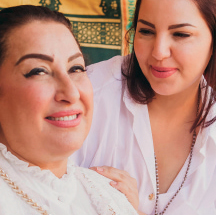
Doum was founded by mother-daughter duo Samira Madrane and Yasmine Erguibi in 2017.

 Samira and Yasmine Erguibi are the Moroccan mother-daughter duo who have made it their mission to make a positive impact in fashion. The designers are playing an active role in promoting sustainability and ethical practices with their accessories label, Doum.

Each design in their bag line is handmade by underprivileged women. The totes, clutches and pouches support fair trade and sustainable practices to preserve local artisanal traditions and invite local women from rural areas around Marrakech to provide for their families via the production of the bags, according to the label’s manifesto.

The brand takes its name from the Moroccan palm leaf, which is collected, pruned and then woven by the artisans. “It is a nod to our culture, heritage and craftsmanship,” explained Yasmine of the decision to name the label Doum.

Today, Doum operates its own cooperative in Morocco, Doum For Women, which currently employs 235 women artisans.

Doum For Women is the first basketry cooperative in Morocco to have obtained SEDEX certification, meaning that the organization ticks all of the boxes of ethical business practices.

source/content: arabnews.com

_________

pix: femmesdumaroc.com

____________

MOROCCO

6 of the Most Fascinating Scientific Findings Within Morocco in 2021

The findings are shifting scientists’ research on early human civilizations to the North African region.

Morocco has been at the center of several recent discoveries that have made headlines, both locally and internationally. The discoveries allowed archeologists to uncover some of the most fascinating secrets of ancient civilizations. Below are 6 of the most recent Moroccan discoveries.

Oldest rock carving in North Africa

Research professors at Moroccan and Spanish universities discovered rock engravings dating back to the Paleolithic age, which was roughly 2.5 million years ago, at the Camel Cave in the province of Berkane.

According to the Department of Culture of the Moroccan Ministry of Culture, Youth, and Communication, the engravings are about 12,000 years old, corresponding to the last ice age, which also affected Morocco’s northern region.

The national discovery was part of a scientific agreement between the National Institute of Archeology and Cultural Heritage (INSAP) and the Mohammed I University of Oujda on a collaboration project regarding the prehistoric human communities in the Orient.

Old Macaque Fossil 

A team of scientists from Moroccan and Spanish universities discovered a macaque fossil in Guefait, a town in the province of Jerada, in the eastern region of Morocco.

According to the Catalonian news outlet Catalan Diari Mes, the fossils, which date back to about 2.5 million years, are assigned to the genus Macaca, a gregarious Old-World monkey of the subfamily Cercopithecinae.

The species is estimated to have lived for 6 or 7 million years and their remains are commonly found in North Africa, but can also be found in Europe, where they migrated due to the Messinian Salinity Crisis over 5.5 million years ago.

Prehistoric community in the Anti-Atlas

The debitage stone, discovered at the rock site Imaoun, located in Southern Morocco, indicates  the existence of a possible prehistoric community.

Levallois lithic material, which represents a sophisticated way of shaping stone tools in prehistoric times, was discovered in the region as a result of excavations carried out there between 2017 and 2018.

As stated in the digital platform for interdisciplinary research on the Canary Islands, Almogaren, the community would have lived about twenty kilometers northeast of the Akka oasis in the Anti-Atlas.

Ancient Marine Lizard

Archeologists in Morocco discovered a new species of Mosasaur, a marine lizard with shark-like cutting teeth, which lived about 72 to 66 million years ago.

Based on two complete skulls and referred jaws, scientists were able to reconstruct the species and reveal some of the unique characteristics.

According to a scientific paper in the Cretaceous Research journal, the marine species measured eight meters in length, unlike most of its relatives, which were unable to grow more than a few meters. It also had “elongate and robust jaws, small teeth, and specialized tooth implantation.”

New artifact suggests Morocco as origin of human culture

Research on ancient jewelry recovered from the Bizmoune cave in the South West of Morocco indicates the ornaments may represent the earliest evidence of advanced human culture.

There have been 33 shell beads recovered, dating back to over 142,000 years, which would place them in the late Middle Pleistocene period, the same geologic time period as the earliest documented emergence of humanity.

An academic paper published by Science Advances stated that the artifacts are considered the first sign of “symbolic behavior” by early Homo sapiens.

Unique dinosaur fossil

Scientists discovered a dinosaur fossil with “bizarre” spikes dating back to about 168 million years ago in Morocco’s Boulahfa in the Middle Atlas Mountains.

The fossil belongs to an Ankylosaurus, a type of herbivore species of dinosaurs that are known for their “ebony armpit that once covered their backs,” according to the Natural History Museum.

The new discovery represents a significant milestone because it is the first time a fossil of this type has been discovered in Africa.

source/content: moroccoworldnews.com

_____________

_____________

MOROCCO

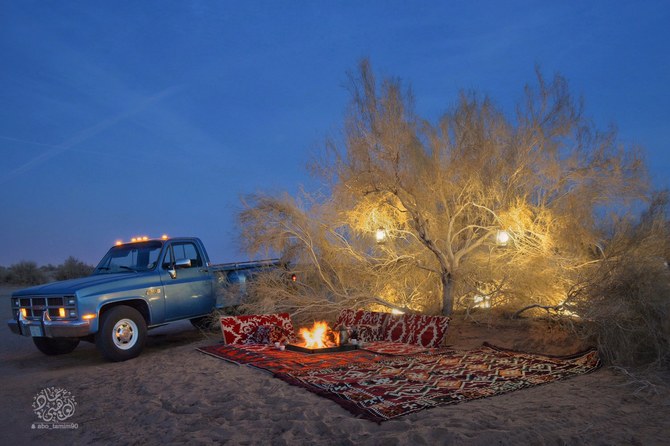
Saudi Arabia sets World Record for ‘Biggest SAXAUL TREE Botanical Garden’ : December 2021

‘Al-Ghadha Park in Unaizah (Makkah), which covers an area of more than 172 million square meters, has earned a Guinness World Record for the largest saxaul tree botanical garden.

“The saxaul trees give the area a unique beauty and magic that draws hikers from the Qassim region and beyond.”

Saleh Al-Waneen, a spokesperson for the Saxaul Association, told Arab News how the trees evolved to withstand the harsh desert climate.

“The tree grows and reproduces without any human intervention, and can go without water for many months,” he said. “In fact, this type of tree flowers, grows and thrives in the hottest temperatures in the summer without any irrigation or rain. It loves the heat and direct sun. Temperatures sometimes reach 58 C.

source/content : arabnews.com

___________

The people of Unaizah, a governorate in Al-Qassim Province, have cared for the indigenous trees for more than five decades, and there are strict laws against cutting them down. (Supplied) / arabnews.com

__________________

SAUDI ARABIA

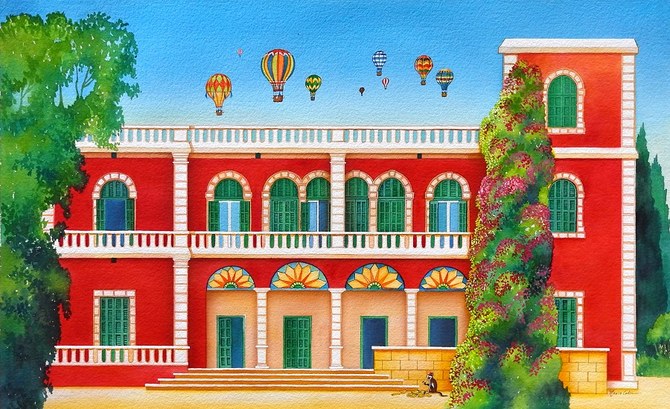
‘The Houses of Beirut’ — Preserving a City’s Architectural Heritage : Republished 2021

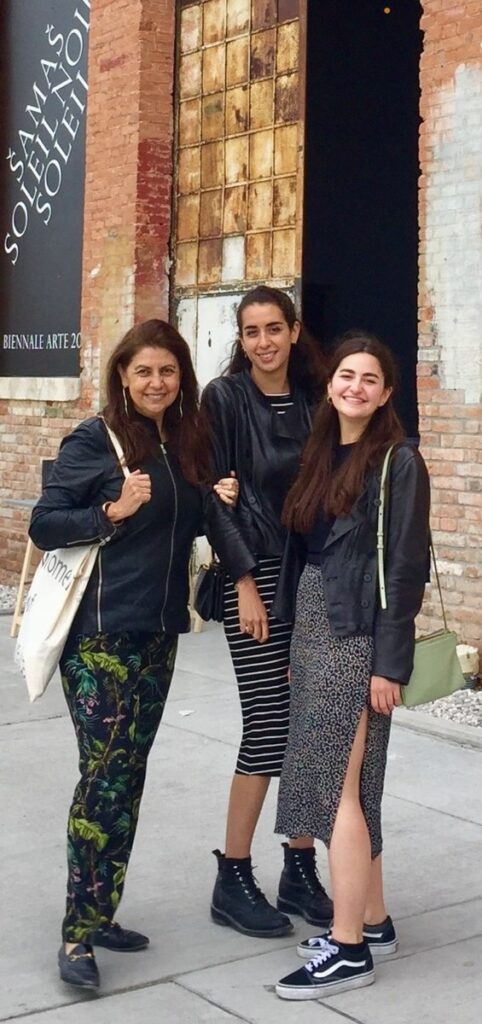
Nayla Audi. Daughters Yasmine Audi and Julie Audi.

Twenty-four years ago, Nayla Audi published her only book: “The Houses of Beirut.” It was created for children — an oversized book in the shape of a house — but at Dubai Design Week last month, adults, too, were opening the ‘doors’ of its cover to reveal the old-school watercolors (created by Audi’s friend, the painter Flavia Codsi) within. 

The book’s current revival was made possible by Audi’s two daughters, Yasmine and Julie, who published a new edition in the wake of the Beirut Port explosion last year, having found a copy of the book — a nostalgic memento of their childhood — that had survived the damage inflicted on their family home in the city’s Gemmayze neighborhood.

“It really affected us personally,” Julie, who lives in London, told Arab News. “We thought we needed to do everything we can to preserve this book — to re-edit and try our best for these houses to stay. We grew up taking all these things for granted. But now, with a bit of maturity and age, we also realize that it’s important for us to continue what our mom started.”

The original version of the book, published in both English and French, was, Julie said, popular among the Lebanese. 

The original version of the book, published in both English and French, was, Julie said, popular among the Lebanese. (Supplied) / arabnews.com

Many of those heritage houses, some of which were built over a century ago, were seriously affected by the explosion and the sisters have stipulated that all proceeds from the sale of the book will be donated to the Beirut Heritage Initiative, launched in 2020 to restore badly damaged historical buildings.

For the reprinting of the hand-bound book, the sisters kept the story as it was, (although they printed the English version only) and even turned to the same family-run printing press — Anis, established in the late 1950s — that published it in the first place. Like many businesses in Beirut, Anis was practically destroyed, so getting things off the ground has been a struggle. 

Both Julie and Yasmine were born in the US, but feel a strong attachment to Lebanon. They flew to Beirut after the explosion and that experience reinforced their belief in the necessity of chronicling the city’s architectural traditions. 

source/content: arabnews.com

__________

Nayla, Yasmine and Julie Audi. (Supplied) / arabnews.com

__________________________

AMERICAN / LEBANESE

Aziza Chaouni Awarded Bronze for Sustainable Project at 6th Int’l Holcim Awards,Venice : November 13th, 2021

Aziza Chaouni. Architect. Educationist. Teacher.

The Fez-born architect was honored for her project on addressing climate change-induced tribal displacement.

The Moroccan architect earned both the Global Holcim Awards Bronze prize and the Acknowledgement Prize for her project “Cultural Interlude.” The project draws a self-sustaining music school and ecotourism center that aims to preserve the tribal cultural heritage in an oasis located in the town of M’Hamid El Ghizlane, in Zagora province. 

Chaouni is also the co-founder of the Bureau of Ecological Architecture and Systems of Tomorrow (EAST) with Takako Tajima, a renowned landscape architect based in Southern California. Tajima has won many prizes, including The Architectural League Prize from the Architecture League of New York in 2009.

www.azizachaouniprojects.com

source/content: moroccoworldnews.com

__________

Aziza Chaouni awarded at 6th International Holcim Awards / pix: moroccoworldnews.com

____________________

CANADA / MOROCCO