Arabs & Arabian Records Aggregator. Chronicler. Milestones of the 25 Countries of the Arabic Speaking World (official / co-official). AGCC. MENA. Global. Ist's to Top 10's. Records. Read & Enjoy./ www.arabianrecords.org
Category: Non-Resident / PAO (Persons of Arab Origin / Descent)
New York-based Columbia university announced on Wednesday that Egyptian-born figure Minouche Shafik would become its first-woman president next summer.
“Nemat {Minouche} Shafik, a leading economist whose career has focused on public policy and academia, will become the next president of Columbia University on July 1, 2023.” Columbia University said adding that her election by the board of trustees as the University’s 20th president concluded a wide-ranging and intensive search launched after the University’s Current President Lee C. Bollinger announced that he would step down at the end of the 2022-2023 academic year.
Shafik will become the 20th president of the famous American educational institution.
Minouche Shafik was appointed director of the London School of Economics and Political Science (LSE) in September 2017.
She also served as the Deputy Governor of the Bank of England prior to her appointment as LSE Director in 2017.
She was made a Dame Commander of the British Empire in Queen Elizabeth’s Birthday Honours list in 2015, and in July 2020 was created a baroness, becoming a crossbench peer in the UK’s House of Lords.
Shafik’s successful portfolio includes leading roles such as Vice President of the World Bank, where she became the youngest VP in the history of the bank, and Permanent Secretary of the UK Department for International Development and Deputy Managing Director of the International Monetary Fund (IMF).
Born in Alexandriam her childhood in Egypt was brief though, as she left the country for the US when she was four. She later returned to the country briefly as a teenager, according to interviews.
She holds a BSc in economics and politics from the University of Massachusetts in Amherst, and an MSc in economics at LSE before completing a PhD in economics at St Antony’s College at the University of Oxford.
Her doctorate thesis was on the role of the private sector and the public sector in Egypt.
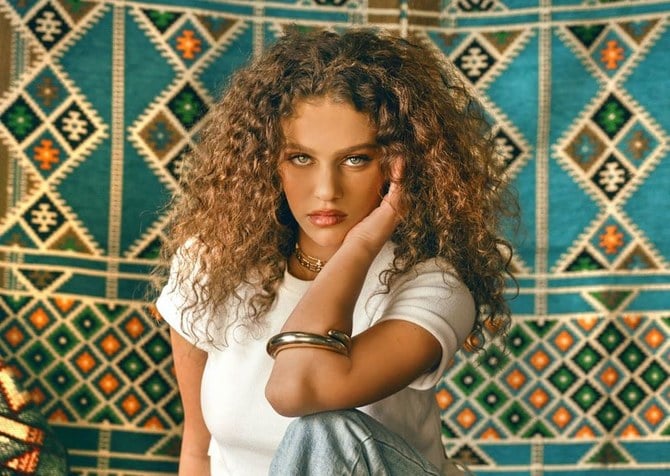
Palestinian Chilean singer Elyanna is set to perform for the first time at Coachella, the popular music festival that is held annually at Indio, California.
The 10-day event will run from April 14 to 23.
Elyanna, who is famous for her songs “Ghareeb Alay,” “Ala Bali” and “Ana Lahale” with Canadian Lebanese singer Massari, will be the first Arab artist to perform on the Coachella stage.
“I am honored and grateful for all the love and support I have received in the past couple days,” she wrote to her 575,000 followers on Instagram. “Last year I attended Coachella, and this year I will be the first Arabic singing artist to perform there. Your wildest dreams will come true, so keep on dreaming! See you in the desert.
“I’m so proud and excited to bring my culture and music to Coachella,” she said in another post.
Elyanna’s celebrity fans, including Massari, Dutch Palestinian supermodel Bella Hadid, US Iraqi beauty mogul Huda Kattan, Egyptian rapper Felukah, Palestinian singer Noel Kharman and Syrian swimmer Yusra Mardini, all took to Instagram to congratulate the star.
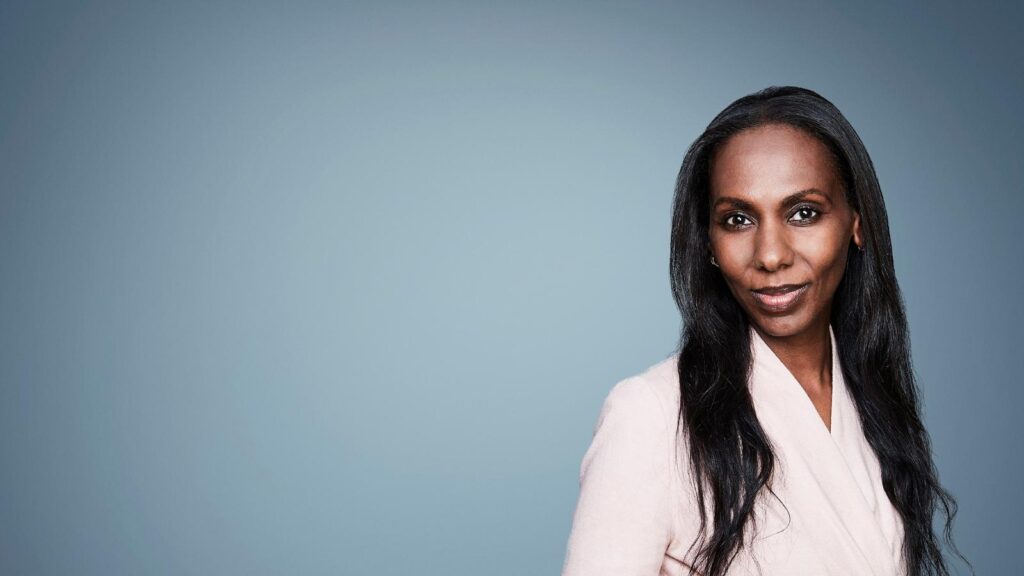
CNN has promoted senior international correspondent Nima Elbagir to the role of chief international investigative correspondent.
A London-based Sudanese journalist, Elbagir has broken countless stories for CNN from war and crisis zones, reporting on human rights abuses in places like Ethiopia’s Tigray region, Libya, Democratic Republic of the Congo, Nigeria and Yemen. In 2017, her undercover reporting exposed migrants being sold at slave auctions in Libya and prompted responses from the government and the United Nations.
Elbagir has scooped up numerous awards in her career, including the Royal Television Society’s Television Journalist of the Year Award in 2020, a duPoint Award, a Polk Award in 2017, the International Center for Journalists 2018 Excellence in International Reporting Award, the 2018 IWMF Courage in Journalism Award, a 2019 Gracie Award, and the LA Press Club’s 2019 Daniel Pearl Award.
Elbagir joined CNN in Feb. 2011 as a full-time reporter based at network’s Johannesburg bureau, before later moving to Nairobi, Kenya. Prior to joining CNN as a freelancer in 2010, Elbagir worked in various capacities for the UK’s Channel 4 for a number of years from 2005: she freelanced from Kabul, Afghanistan for Channel 4 News; reported for the Unreported World documentary strand; and both reported and presented for Channel 4 News and More4 News.
source/content: adweek.com/TVNewser/CNN-Revolving Door (headline edited)
Sharjah HQ of waste management operator Beeah aims to lay foundations for a greener future.
A striking Sharjah building in the shape of a sand dune is primed to be a beacon of sustainability and serve as a fitting legacy for renowned architect Zaha Hadid.
The headquarters of waste management operator Beeah was the last project designed by Zaha Hadid before her death in 2016.
Her team constructed a modern masterpiece across 9,000 square metres, using sustainable materials to create a building with 40 per cent of its power provided by the sun.
Illuminated, sweeping staircases take visitors up to an art gallery on the first floor, with screens showing a time-lapse video to explain the building’s five year construction.
Now open to full capacity of 500 workers, the building is breaking new ground in how to provide a sustainable working environment.
Green vision
“We aim to operate as sustainably as possible, and used recycled materials in the construction of the building,” said Nada Taryam, managing director of Beeah HQ, which manages waste management across the country.
“Native plants have been used in the landscaping and reduced the amount of water consumption.
“A power pack stores excess energy from the photovoltaic panels, so we have a holistic strategy to achieve sustainability.
“Every project has its own specific requirements when energy comes into play, but the basis on which we have built this design can be learnt from.
“All of these sustainability measures can be taken and applied to other projects.”
The building’s high thermal mass allows heat to be absorbed during the day and dissipated at night to encourage cooling, while its curved structure allows the flow of natural sunlight to reduce the energy required for lighting.
An artificial intelligence system enables the building near the Alsajaa industrial area to learn to become more efficient as more people use it.
Its developers say it conforms to the highest standards of energy efficiency in the world.
Windows are positioned to reduce solar glare, while special glass cuts radiant thermal energy to keep the building cooler during summer.
While the glass limits the entry of infrared and ultraviolet light, solar panels supported by Tesla-made battery packs capture the power of the sun and store it to run the building’s air conditioning system.
The building’s components and management systems are integrated to maintain and improve its efficiencies.
Conference rooms are equipped with technology to automatically transcribe meeting minutes and email them to participants.
The building is the third in the UAE to be designed by Zaha Hadid architects, following the Sheikh Zayed Bridge, opened in Abu Dhabi in 2010, and The Opus hotel and apartments complex opened in Business Bay, Dubai, in 2018.
“As it learns from its occupancy, this building could potentially become one of the most sustainable buildings in the UAE,” said Ms Taryam.
“Certain decisions were taken, such as using glass reinforced panels on the ceiling which refract the sunlight so contribute to its efficiency and temperature control.
Defying convention
“There is a misconception about what these kind of buildings should look like, and we have defied that.
“There isn’t a rule book to say green buildings should be lined with solar panels. We have proved we can integrate architecture as well as sustainability to create something iconic.
“Zaha Hadid has something that distinguishes her from any other architect of her time. Every project of hers has its own context, but her ideas are adapted for each specific project.”
The headquarters of Sharjah waste management operator Beeah was the last project designed by Iraqi architect Zaha Hadid before her death in 2016. All photos: Andrew Scott / The National
In our continuing series on inspiring life stories across continents, we learn what made her leave a career in medical science for a ‘cuisine lab called the kitchen’.
When Lamees Ibrahim left Baghdad in the 1970s, certain parts of the city, not least the riverside strip of fish restaurants along Abu Nawas, became a fixed ideal in her memory.
After an interval of three decades, a return to the flat bank of the Tigris in 2004 was an unexpected low point in a thoroughly disturbing homecoming.
The street once the “pomegranate of Baghdad” was no longer filled with diners being entertained by poets and musicians, engulfed in the aroma of arguably Iraq’s national dish, masgouf.
Instead, Dr Ibrahim stood shaken as she took in a rubble-strewn wasteland populated by a handful of struggling fish sellers.
Yet one sense was still powerfully triggered by the fresh carp grilling over the charred wood.
“It was not in very good shape,” she tells The National. “There were only bits of its old self left, but the smell was still amazing. There are certain scents that you smell and you think, ‘Wow, this is Baghdad.’ It is very, very specific. If you enjoy samak masgouf once, you will never forget it.”
Dr Ibrahim had made a long, hazardous journey from her home in London, where she moved decades earlier: marrying, earning a PhD in Pathology, raising four children.
Her husband was with her as she set out from Jordan in a car just after Fajr prayers that day, to “feel” her land, see her extended family, and show her eldest child, Maysa, her ancestral roots.
But the Baghdad conjured up by the smell of the barbecued fish was gone; the deserted, bombed-out streets were not at all familiar to her. They did, however, bring back one particularly strong recollection from childhood.
Sometimes in the summer months, the young Lamees would gather with her three siblings around their father to be regaled by stories about Iraq.
“I remember one day when he said: ‘Look, we built this country, the Iraqis, and we have to keep doing that. If every one of us contributed their own brick then the wall would go up and up, and we should keep on building.’ I never forgot that,” Dr Ibrahim said, “and I felt that we had to add our little brick to the wall. We had to make Iraq keep going.”
She returned to London on a mission to help rebuild Iraq in some way for the younger generations that would never have a chance to experience what it had been in the golden years.
The need to describe the country’s rich history and accomplishments was urgent, but whatever she put down on paper seemed inextricably tied to cooking. So it was that she came to realise it would be through food that she could preserve connections to things past.
“I wanted to write something, I needed to write, I had to write,” she says. “So I started. Eventually, it became a cookbook with a bit of history and anecdotes about culture, about civilisation.
“My background has nothing to do with cooking. It’s not cuisines of any kind, but I have a passion for Iraq. It’s my motherland, my country.”
When the 21-year-old Lamees had come to London in the early 1970s, it was to pursue a postgraduate medical degree at King’s College and then head back to her beloved Baghdad. Soon after arriving, she married and her life, she says, became busy but limited as she immersed herself in studying and research projects.
“You go to college, you study, you attend lectures, you come home, you open the books, read, read, read, have some dinner, and go back to college,” she says.
“I didn’t know that I was homesick until one day during Ramadan I saw an elderly woman going into King’s College Hospital with her black abaya and veil. I said to her ‘marhaba hajji’ and she was shocked. She hugged me, and I went home, crying all the way.
“I cried because I had a goal. I wanted to get a degree, and the sooner I got it, the sooner I could go back home. Unfortunately, that didn’t happen.”
She was haunted by her homeland, by such memories as the heady perfume of jasmine and the days in her youth when the children would pick the flowers and turn them into long necklaces.
But the months turned into years, and years into decades. At first, returning to Baghdad was difficult as the academic successes mounted and her family grew. It became impossible when Saddam Hussein came to power, with Dr Ibrahim fearing that she would be detained were she to attempt a visit, and never see her three daughters and son again.
Her father died and then, on news of the death of her mother, Dr Ibrahim made the fateful trip when she found a country that was “not what I was expecting, of course. It was demolished, devastated.”
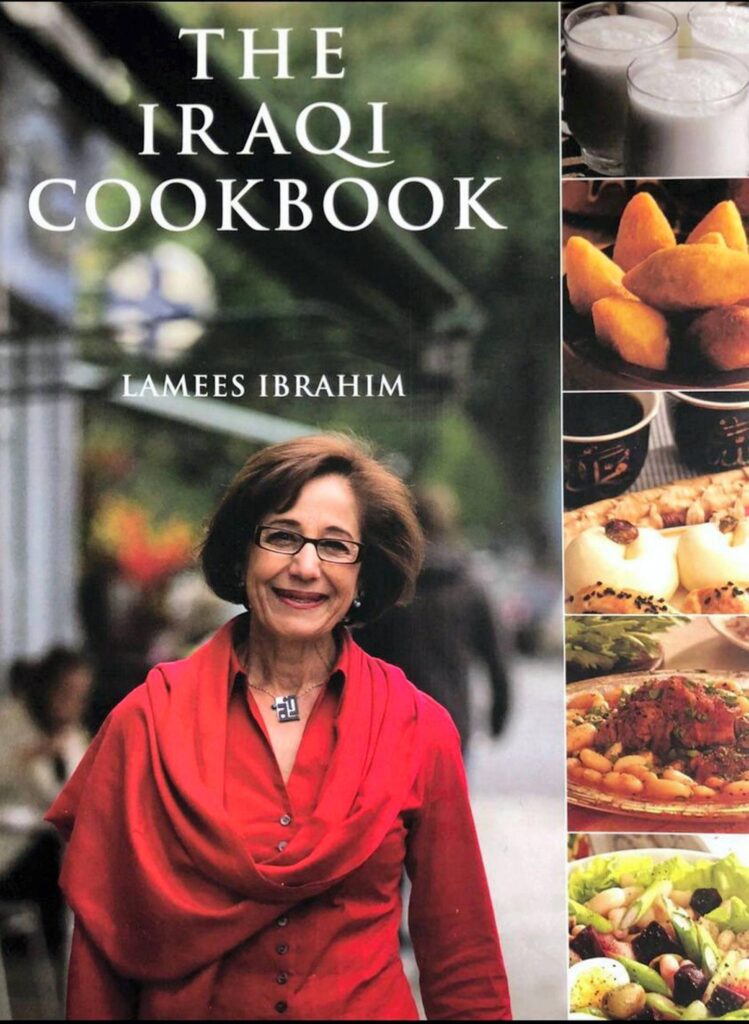
The resulting homage, The Iraqi Cookbook, was published in 2009, a labour of love with the name of each dish painstakingly recorded in Arabic. Samak masgouf, of course, features, and Dr Ibrahim advises in the foreword that all visitors to Iraq should try it in one of the cafes and restaurants on the bank of the Tigris.
“I came back to London with one idea in mind, which is something that as a girl I grew up to learn,” she says. “I must do something for my country. I need to tell my children what my country is like, our history, our culture, our ability to do what we did in the old days.”
She is speaking by Zoom from her home in Richmond-Upon-Thames, her voice at times faltering and cracking with emotion as she talks about dedicating herself to bringing Iraq to the diaspora.
“Iraq to me is very important, very important,” Dr Ibrahim says. “It is in my blood. It’s in my genes. It’s my history.”
The book sold out in the UK and the US, and was reprinted by popular demand. Bit by bit, the time-consuming process of writing and re-writing, working with publishers and photographers, the press interviews had taken Dr Ibrahim away from her career in pathology.
“And I never went back,” she says. “I’m still very interested. I read a lot about Covid. I follow the research, but I’m not going back to that lab. I have a cuisine lab called the kitchen.”
With the emergence of the pandemic, Dr Ibrahim revisited experiments that she had begun as a teenager when she would try to make her mother’s recipes without meat. Sometimes it was successful, she acknowledges, sometimes not.
As a child, though, she had never been as fond of lamb as her siblings were. The family cat adored her, loitering under the table at lunchtimes for the morsels of the daily stew that Lamees would sneak down to her.
During lockdown, her own children became “guinea pigs” for her avant-garde creations as Dr Ibrahim collected together an array of vegan offerings that would appeal to a young audience interested in preserving the planet.
“Dishes don’t need to have meat to have the taste and flavour, for it to smell like an Iraqi dish,” she says. “Iraqi cooking can be vegan, as well as meat and fish-centric.
“If you can preserve the taste of the flavour of the dish, go for it. Many Iraqi dishes are, in fact, vegan but we ate them before ever knowing the word ‘vegan’.”
When one of Dr Ibrahim’s friends called to see how she was faring with the tight coronavirus restrictions in the capital, she told him she had been busily cooking all the recipes to be photographed for The Iraqi Vegan Cookbook. Curious, he wanted to know whether she was including any kubba, knowing that Dr Ibrahim had devoted an entire chapter to its many meaty variants in her first book.
On learning that the new book would contain Kubbet Jeriesh, Kubbet Halab and another recipe that Dr Ibrahim made from lentils, he answered: “Only three?”
His grandmother, he said, had never enjoyed meat in her kubba so the family reinvented the dish to suit her preferences, stuffing the shells with pine nuts, onion, spices and parsley.
“If all these years ago we had vegan Iraqis, we have plenty today,” Dr Ibrahim says, smiling.
The Iraqi Vegan Cookbook had been due out on December 31, but the release has been delayed not least because of the queues of hauliers that built up in Calais and Dover as a result of Brexit and the French shutdown of the border when the new strain of the coronavirus emerged in the UK.
Rescheduled for release at the end of January, Dr Ibrahim hopes that sharing more of the oldest cuisine in the world will counter some of the negative perceptions that persist about Iraq today.
“Iraq is positive,” she says. “Iraq is full of history, full of culture. This is the cradle of civilisation. I don’t like to talk about what’s going on now. I would like to talk about the positivity of all of our achievements.
“I feel nowadays, if I add that little brick, then I have added something which I would be proud of as an Iraqi living in the West. Living in Iraq, we can build from within. We are living in the West – all my children are also living in the West, but we add our bricks from our side, from outside the country.”
Dr Ibrahim is modest about her contribution to the wall that her father told her about all those years ago, hesitating to use the word achievement. If her writing can be described as such, she says, she wants to make clear that it was never about her. It was always for Iraq.
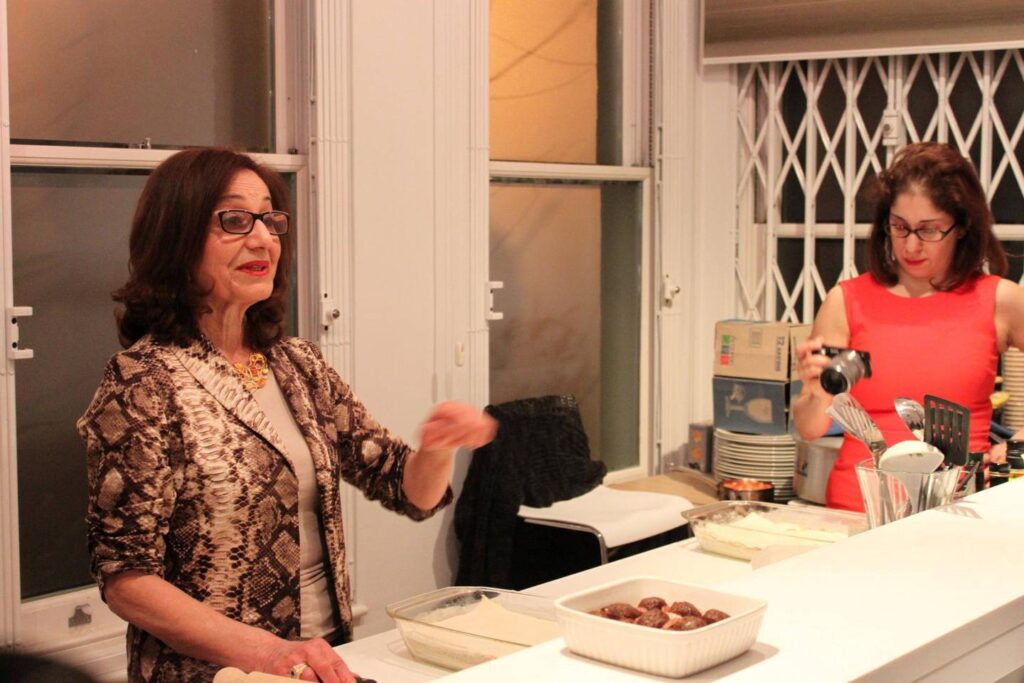
Dr Lamees Ibrahim has dedicated herself to bringing the country of her birth to the diaspora: ‘Iraq is very important to me. It is in my blood. It is in my genes. It is my history,’ she says. Courtesy of The Mosaic RoomsThe homage to Dr Ibrahim’s homeland, ‘The Iraqi Cookbook’, was published in 2009, a labour of love with the name of each dish painstakingly recorded in Arabic. Courtesy Lamees Ibrahim
William Mullally picks the best movies by Arab filmmakers over the past year.
‘Perfect Strangers’
Director: Wissam Smayra
Starring: Mona Zaki, Nadine Labaki, Georges Khabbaz
The original Italian version of “Perfect Strangers” had already been remade across the world before its Arabic-language iteration was released on Netflix. But nowhere else has it caused the stir that it did in the Middle East. The conceit is simple: Seven friends at a dinner party decide to play a game, placing their phones in the center of the table to make their calls and messages known to all. As the night goes on, their secrets are revealed, upending everything they thought they knew about each other. Not only was this the best version of the film so far, with pitch-perfect casting and memorable performances, it was also the bravest: each of its stars pushed themselves in ways they had never been able to in regional film previously, shattering taboos, capturing the world’s attention and changing Arab cinema forever.
The highest grossing film in the history of Egyptian cinema, “Kira & El Gin” is Marwan Hamed at his best. This is a crowd-pleasing historical epic that not only captures the spirit of Egypt past and present, but sets a course for a new future for the country’s film industry. Following two men fighting the British occupation in Egypt during the 1919 revolution, Hamed’s film rarely sags despite its nearly three-hour run time and sprawling cast, structured more as a suspense thriller than a social studies lecture. As Hamed jumps from genre to genre across his films, proving equally adept at each, one wonders how he will top this, should he try. But it would be foolish to bet against him as he continues to notch up career high after career high.
‘Boy From Heaven’
Director: Tarik Saleh
Starring: Fares Fares, Tawfeek Barhom, Mohammad Bakri
Egyptian-Swedish filmmaker Tarik Saleh has a bone to pick. Growing up in Europe, he was always labeled as ‘other’ — an idea reinforced in the books in his school library describing Arabs as “stupid” and “uncivilized.” Now firmly entrenched as a filmmaker, Saleh refuses to make films tailored to the Western gaze, turning his camera deep into the inner workings of Egyptian society and forcing international viewers to accept that they are seeing things through eyes that are not their own. In “Boy from Heaven,” Saleh goes deep into a corruption scandal at the influential Al-Azhar Mosque, following a hero whose strong Muslim faith is unrattled as he uncovers the evils hiding from plain sight, with scenes and images you won’t soon forget.
‘The Alleys’
Director: Bassel Ghandour
Starring: Maisa Abd Elhadi, Nadia Omran, Munther Rayahna
In 2014’s “Theeb,” Jordanian writer Bassel Ghandour crafted perhaps the greatest example of the Bedouin Western in cinema history. With “The Alleys,” Ghandour steps into the director’s chair for the first time and turns the streets of Amman into the setting for a modern noir, in which the darkness hiding in the city’s back streets slowly boils to the surface. The film’s sprawling nature is both benefit and detriment, but it’s a stirring snapshot nonetheless, elevated by star-making performances from Maisa Abd Elhadi and Nadia Omran.
‘You Resemble Me’
Director: Dina Amer
Starring: Dina Amer, Mouna Soualem, Lorenza Grimaudo
Filmmaker Dina Amer is most familiar to global audiences for her fearless journalism in 2013’s “The Square” and various Vice News stories she produced as their foreign correspondent from the front lines of regional conflicts. “You Resemble Me” cements her as a filmmaker to watch, as her harrowing experimental recounting of the life of Hasna Ait Boulahcen, the woman miscredited as Europe’s first suicide bomber, is a deeply affecting dissection of the roots of terrorism and the racism that Arab women face in Europe. One of the most original films released this year.
The story of Yusra and Sara Mardini, two sisters from Syria who risked their lives to escape conflict for a better future only for one of them to become an Olympian, is so powerful that a film capturing their story could not help but be inspirational. El-Hosaini, the Welsh-Egyptian filmmaker behind 2012’s excellent “My Brother the Devil,” made it into something more — a thought-provoking reframing of the refugee experience at a time when Syrians and many others still suffer from that stigma, as well as a chronicle of women’s empowerment as the structures that held them back crumble, all told with a light touch that never alienates the huge global viewership the Netflix film has enjoyed.
‘Mediterranean Fever’
Director: Maha Haj
Starring: Amer Hlehel, Ashraf Farha, Anat Hadid
Palestinian cinema is often, understandably, a no-holds-barred dissection of the plight of its people. But that is by no means its only manifestation, as Maha Haj, a previous collaborator with renowned satirist Elia Suleiman, proves with her latest feature, “Mediterranean Fever,” the follow up to her acclaimed 2016 feature “Personal Affairs.” Haj focuses here on smaller human problems, following an aspiring writer who suffers from depression and befriends a small-time crook living next door. At times comedic, the film drifts into dark territory while always keeping its audience guessing. After winning best screenplay at Cannes in 2022, Haj has confirmed herself as one of the region’s most singular voices.
There is no more versatile actor working in Arab cinema today than Palestinian actor Saleh Bakri, who, with Touzani’s “The Blue Caftan,” has capped off a tremendous run of eight films in the last two years, including Farah Nabulsi’s Oscar-nominated “The Present” and Mohammed Diab’s “Amira.” This is perhaps his best performance yet. He plays Halim, a struggling master tailor in Morocco whose life is turned upside down when he and his wife take in a young apprentice. Stealing the strikingly-filmed show, however, is his co-star Lubna Azabal as his wife Mina, who is quietly enduring her own private battle with breast cancer as she and her husband struggle to communicate. With this and 2019’s “Adam,” Touzani is already one of Morocco’s great chroniclers.
‘Raven Song’
Director: Mohamed Al-Salman
Starring: Asem Alawad, Ibrahim Alkhairallah, Abdullah Aljafal
The singular contemporary Gulf filmmaker Mohamed Al-Salman is not making films so that the world may understand Saudi Arabia — he’s making them so that Saudi Arabia may understand itself. “Raven Song,” his debut feature after years of acclaimed shorts, is a stylish jump back to 2002 in the Kingdom, a formative time for both the filmmaker and his country, in which the fight between traditionalism and modernity was so heated that it manifested prominently even in the world of poetry. At times dream-like, “Raven Song” is a film that defies definition, with interpretations likely to roll in for years to come.
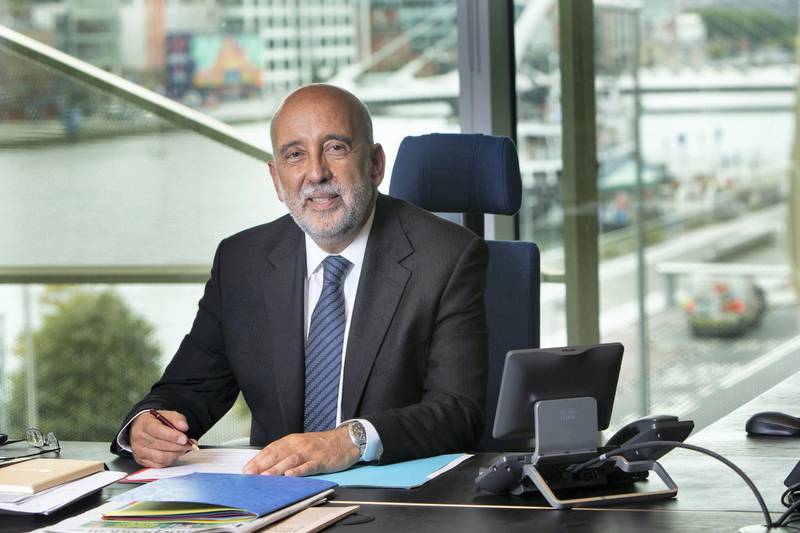
With a Lebanese name and a Cairo birthplace in the background, Gabriel Makhlouf is steering Ireland’s financial recovery.
As governor of the Central Bank of Ireland, Gabriel Makhlouf is much preoccupied by the issue of resilience in a small, open economy challenged by a year of pandemic.
Mr Makhlouf’s own peripatetic life has shown him how precious an asset the quality of adaptability is at a time of change, be it in a person or for a national economic system.
Upheaval and the Makhloufs on the move could be a theme stretching back to when his father’s side of the family travelled across the Mediterranean from their Lebanese homeland to Cyprus.
When the island was part of the Empire, the family became British subjects and Makhlouf Snr ended up working at the embassy in Cairo after the Second World War.
It was in that palatial building near the Nile that he fell for a Greek-Armenian woman whose forebears had fled the historical turmoil of Izmir in 1922. Her family moved to Athens where she has come full circle to live today.
Mr Makhlouf was talking to The National at a time when Ireland’s strict national Level 5 lockdown is both defining his job and providing a perspective on the decades of movement and upheaval that have brought him to where he is now.
At a conference last week, the governor spoke of how the outlook had deteriorated in 2021 with the renewed lockdown. The short-term need to bolster the economy coincided with structural changes from technological innovation and climate policies. Ireland suffered a 7.1 per cent slump in domestic demand last year but is expected to see a 2.9 per cent increase in 2021.
Unemployment is predicted to reach 9.3 per cent this year and for an economy with a high level of property-focused debt, ensuring that households are supported is a priority. Mr Makhlouf points out that growth is not the same as having the capacity to recover quickly.
“We cannot anticipate every type of shock but we can build resilience,” he said in his keynote address. “Resilience is what has prevented the financial system repeating its previous failure. Resilience is what has protected households, businesses and communities against the worst of the damage from the shock of the pandemic.
“Economic resilience is what helps communities to manage the disruption caused by change and to manage the economic transitions we are living in right now.”
In providing leadership during financial strife, it is perhaps a boon to have some sense of dislocation. He describes his mother’s family as refugees. His parents met in a milieu that was the product of worlds with roots as far back as the Phoenicians, ancient Greeks, Romans and Egyptians. And yet the people of Mr Makhlouf’s parents’ generation made their choices and moved to build new lives.
“My mother, who was born in Athens, had spent most of her life outside of Greece, but when my dad retired she came back,” he recalls. “My dad moved on and lived all over the world and settled in Greece at the end, before he passed away.”
Mr Makhlouf was born in Egypt but left at the age of three when his father joined the United Nations and moved to the Congo. Makhlouf pere’s time as an international diplomat exposed the young Gabriel to many cultures.
“My first language was French, because my parents’ mutual tongue was French,” he says. “So I learned English when I was about seven when we went to Bangladesh, and when we got to the Pacific we lived in Samoa.
“I went to school in Samoa. My parents then decided they ought to send me to boarding school if I was going to get a proper education and not one that changed every few years.”
Travelling during the school holidays from the school in England was a regular odyssey in itself. “The trip to get to Samoa and back to England involved stopping in Los Angeles, Honolulu and Pago Pago, an American territory pronounced ‘Pango Pango’,” he recalls.
“But then they moved to the Philippines, they moved to Fiji, they were in Ethiopia and they were in Thailand. So, you know, my brother and I got used to this life.”
It is a puzzle, then, to establish the appeal to the young Mr Makhlouf of embarking on a career as a Whitehall civil servant. He explains it as following his father’s footsteps in to the bureaucracy. Certainly, the career path was more about determination and making opportunities than wanderlust.
“I don’t think I joined the civil service for stability, to be honest, but maybe somewhere deep inside me there might have been that,” he says. “I joined the civil service really for interest. I joined as a tax inspector at the beginning. And it was an interesting career option – it involved law, it involved accountancy and it gave early opportunity to manage.”
Fate intervened to resume the family’s roving tradition when Mr Makhlouf was headhunted in 2010 to run New Zealand’s finance ministry, the Treasury. There, he was responsible for developing a measure of well-being as a replacement for the traditional gross domestic product yardstick.
In one memorable allusion in a speech he compared the role of an economist to that of an artisan, challenged with weaving together different strands of evidence into a structured framework.
Before upping sticks to the southern hemisphere, Mr Makhlouf at one point worked directly with then-UK chancellor Gordon Brown, who became prime minister at the time of the global financial crisis in 2008.
Asked about his former boss and a recent warning that the world now faces another lost decade or perhaps even worse than after that crash, Mr Makhlouf acknowledges how bad it was last time around but disagreed on the dangers now.
“I think that there is one massive difference between the crisis in 2008 and today’s crisis,” he says. “Which is that the crisis in 2008 was a crisis of the financial system, the financial system basically collapsed.
“Today, the financial system is still standing, and it’s the financial system that’s playing a very important role in supporting businesses and households through the pandemic and hopefully into a recovery and out the other end.”
World leaders are proving to be different kinds of players, having recognised that this is an economic crisis caused by a health crisis. “Governments throughout the world have chosen to close down economies for the sake of people’s health. In some respects that is been planned. In comparison to what happened in 2008 where actually events completely overwhelmed us.”
So Mr Brown’s fears are too pessimistic? “A lot of the changes and challenges that are ahead of us, I think if we manage them, then I think they can be managed well,” he says.
Mr Makhlouf takes heart from the rapid adjustment of businesses to home-working and new patterns of demand. “Economies across the world and certainly in the industrialised world have adapted to the restrictions,” he says. “More businesses are set up for that and more consumers were ready and knew how to proceed.”
The scale of “technological adaptation” since he accepted the Irish job in 2019 is something he could well have guessed was just around the corner.
The governor has not been immune to the extraordinary pressures imposed by lockdowns. Even at the outset of the pandemic, the family’s far-flung ways isolated him in Athens just as the 2,000-strong staff of the central bank in Dublin were forced to work from home.
With his mother ill in hospital, Mr Makhlouf was on hand to help her recover. “Effectively, I carried on working like everyone else via laptops and iPads. It’s quite an extraordinary thing that we all seem to have got used to.”
History means that a British citizen running the Irish central bank will always be a talking point. The moment that the UK left the EU put Mr Makhlouf in an invidious spot.
First, there is migration of businesses and banking activity from the City of London to Dublin so that firms remain within the EU umbrella. Is this an opportunity?
“Overall, I think the impact of Brexit is negative. It’s negative for Ireland and for the UK and for the EU,” he says. “We’re most exposed as a country in the agricultural sector, in particular. The fact that there was, at the end of the day, a deal albeit a very slim deal was better than there being no deal.
“On financial services, we have seen post-referendum a move of business from London to Dublin,” he agrees. “I’m not sure I would necessarily call it an opportunity at all. I think from my perspective as a regulator this increases the need for us to manage and ensure the financial system works properly.”
With his son, brother and wife’s relatives living in London, the governor observes that the pandemic has played a greater role than Brexit in cutting off families and friends. But things are different.
“I feel sorry for someone like my son — his opportunities to work in 27 other countries have now been limited. So his generation has lost out,” he says. “Ireland and Irish people have got many connections in the UK, we recognise Brexit has happened but those connections haven’t disappeared, they haven’t been lost.”
As two movie-perfect countries on the periphery of continents with roughly similar populations, one wonders what the biggest change is for Mr Makhlouf in switching from New Zealand to Ireland.
There is the remoteness of the former compared with the latter’s position within the wealthy European market. But the answer, he feels, is the perspective on China. In New Zealand, much time was spent thinking about and visiting that part of east Asia. He himself went at least nine times.
“The role that Asia has been playing and will play in the 21st century usually dominated a lot of thinking. And what’s interesting coming back to Europe, and perhaps now it’s not surprising at one level, but it was noticeable how little of our time was spent thinking about Asia.”
For the well-travelled, there is the unchanging truth that proximity is often the most powerful force in geography.
The lockdown both defines Gabriel Makhlouf’s job as Governor of the Irish central bank and provides a perspective on the decades of movement and upheaval that have brought him where he is today. Courtesy Central Bank of Ireland
As the FIFA World Cup reaches its climactic end, one cannot help but reflect on what an extraordinary political event it has been. Those who argue that sport and politics should be decoupled will have found it hard watching politics as an ever-present from the day Qatar was awarded the event back in 2010 and at every single match since the tournament began on Nov. 20.
But perhaps one of the most fascinating and hopefully impactful thrills at the World Cup has been the rare opportunity to remind the world that, for all its troubles, fissures and rivalries, the peoples of the Arab world do have much in common and that football has highlighted that reality every day in Qatar.
Some might question these signs of togetherness among fellow Arabs. Yet there were copious examples where it shone. Three achievements stood out.
Firstly, for Morocco to beat Spain and then Portugal in the knockout rounds was exceptional, especially following their defeat of Belgium, the second-ranked side in the world, in the group stage. There was more than an element of delight in seeing a former colony defeating, in Spain, its one-time colonial master. Morocco will get the chance to overcome its other colonial power, France, in the semifinals on Wednesday. In fact, star player Achraf Hakimi was born in the poor suburbs of Madrid. Morocco were the only team in the quarterfinals not from Europe or South America. Few in the region were not cheering them on. A sense of collective pride emerged as a result of the North African country’s success in becoming the first Arab and African state to reach the semifinals.
One might have thought that, given the dire state of relations between Morocco and Algeria, that Algerians would have shied away from joining in the festivities. Evidence suggests otherwise. Algerians were out supporting Morocco as enthusiastically as anyone else in the region. A friend was in Paris and told me: “After one of the Morocco victories, there were lots of Algerian supporters and flags joining their Moroccan brothers and sisters in celebration.” The Algerian captain and superstar Riyad Mahrez was quick to praise the Atlas Lions’ achievements.
Secondly, Tunisia beating reigning world champions France in the group stage was also an unforgettable moment. This was the first time they had beaten European opposition in the World Cup. This was every bit as big a win as in 1982, when Algeria beat the mighty West Germany in their first ever World Cup game.
Third, the Saudi victory over Argentina was another huge milestone. In many ways, this ignited the World Cup for the Arab world.
A sense of pride has also broken out that many of the finest players in the world come from this region. Hakim Ziyech for Morocco is one. Mahrez and Mohammed Salah were not in Doha but are still at the top of the sport. Kylian Mbappe, a star of this tournament, has an Algerian mother.
The key players in the Arab teams largely play in Europe. This shows football at its best in terms of breaking down barriers. Fourteen out of the 26-man Morocco squad were born outside of the country, showing how the team relies on the Moroccan diaspora. This includes Ziyech, who opted not to play for the Netherlands. That points to one challenge that countries like Morocco face, as they lack the footballing infrastructure to develop and nurture enough talent at home.
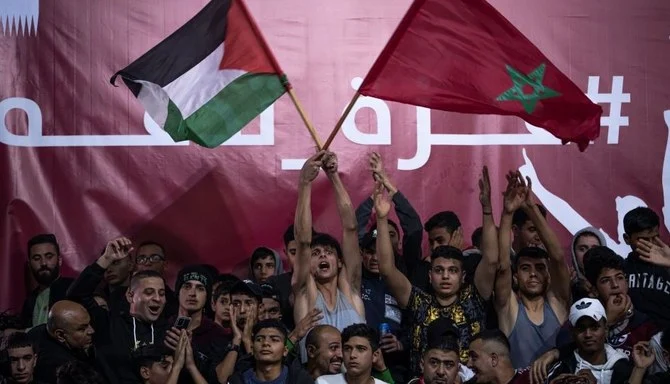
This World Cup has also often been about one country that is not there. At every single game featuring an Arab side, and plenty others beside, the Palestinian flag was there. It is a political symbol and a defiant message that the Arabs will not forget or ignore what is happening to the Palestinians in the diaspora and under occupation. As an even more brutally right-wing coalition is about to take power in Israel, this message should be carefully noted in the US and European capitals. Palestine still matters.
Israeli hasbaristas were also caught out. Having belittled and mocked those who claimed otherwise, they discovered that, despite the normalization deals, Arabs are not willing to gloss over Israel’s crimes and oppression. Time and time again, Israeli journalists, while trying to pretend everything was all lovely and wonderful with their newfound Arab friends, found that “free Palestine” was pushed back in their faces. Many locals snubbed their requests for interviews.
” A World Cup in the Arab world has brought some cheer to a region that has been hit hard by wars and other crises. “
Chris Doyle
Palestinian armbands and keffiyehs were being worn at nearly every match by huge numbers of fans. The sheer arrogance of believing that a state could oppress millions of people and that all would be peace and happiness was exposed as the nonsense it is. The Moroccan players had no hesitation in raising the Palestinian flag after their wins over Spain and Portugal.
Many Arabs also expressed admiration for the courage of the Iranian team after the players refused to sing their national anthem ahead of their opening match against England. This points to the widespread sympathy many Arabs feel toward Iranians, notably currently the women, who are struggling for their freedoms.
The Western media has been quick to point out all that was wrong with this World Cup. It is about time it also highlighted what has gone right. For all the criticisms of Qatar in the run-up to the cup over issues such as workers’ rights, one of the key elements of its bid has been fulfilled. Football in the region has been the winner. The atmosphere has been considerably warmer than many expected, with largely good-natured relations among fans of all countries. It seems that rival fans have not needed to be segregated, showing the festival-like atmosphere. Fan violence does not seem to have featured. The largest numbers of fans, of course, came from the Arab world, with Saudi Arabia providing the largest number from a single country.
Many outside the region were dismissive of the claims that football mattered in the Middle East. One leading commentator contemptuously told me, while on the BBC, that Qatar did not have a footballing heritage. Yet the region should never have been ignored. A World Cup in the Arab world has brought some cheer to a region that has been hit hard by wars and other crises, and whose peoples have not had much to celebrate in recent years.
Chris Doyle is director of the Council for Arab-British Understanding, in London. Twitter: @Doylech
Disclaimer: Views expressed by writers in this section are their own and do not necessarily reflect Arab News’ point of view
source/content: arabnews.com (headline edited)
_____________
Palestinians watch the World Cup quarterfinal between Morocco and Portugal in Gaza City, Saturday, Dec. 10, 2022. (AP Photo)
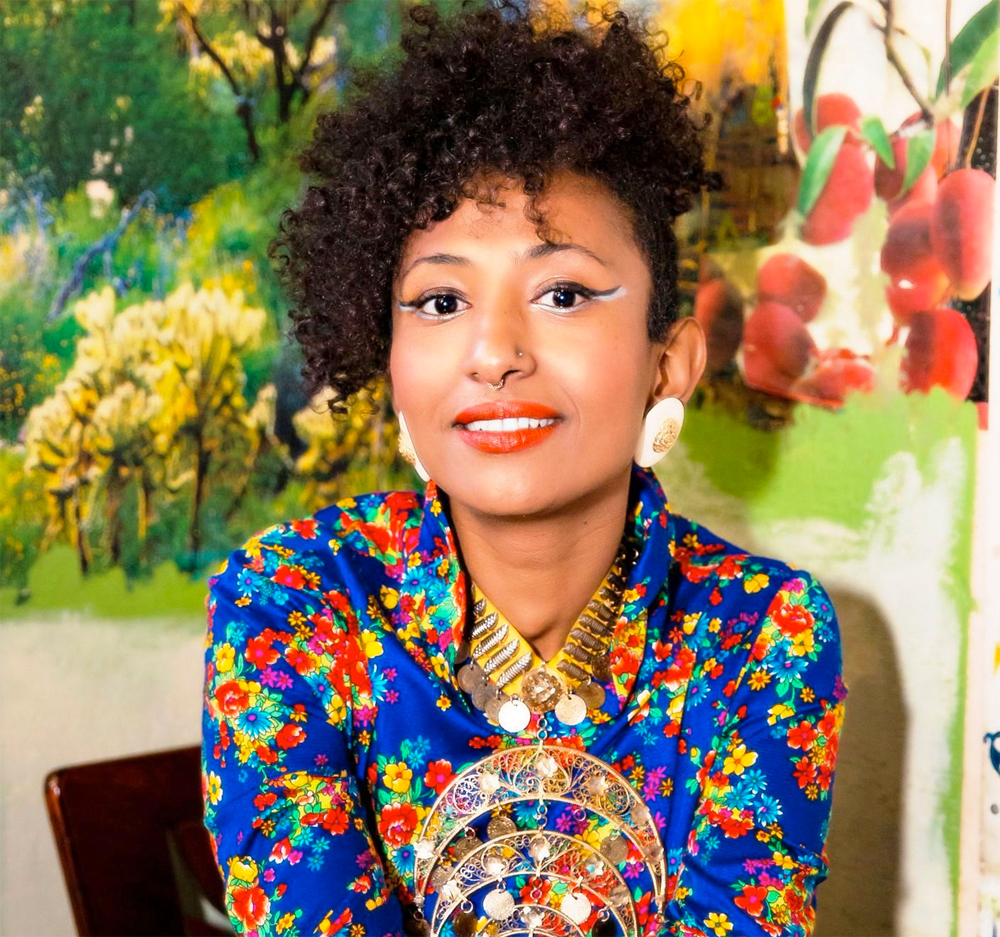
A singer, songwriter, and ethnomusicologist, Alsarah is a self-proclaimed practitioner of East African music, inspired by songs and cultures of Africa and the Middle East. Throughout her career, she performed as a band member of Sounds of Tarab, in addition to producing songs and albums under her stage name, and her band with her sister, Alsarah and the Nubatones. Furthermore, she was also featured in the documentary “Beats of the Antonov” in 2014.
Alsarah was born Khartoum, Sudan in 1982. As a child, her parents worked as activists at a time when many encouraged citizens to vote in the 1986 elections. Following the coup d’etat in 1989, however, her family fled the country to Yemen before the nation’s civil war forced them to relocate to Boston, the United States in 1994.
At this point in life, Alsarah turned to music for solace. In fact, music has been a big part of her childhood, with the very first music that spoke to her being played during her family’s activism in Sudan. Growing up, she studied ethnomusicology at Wesleyan University before relocating to Brooklyn, in New York, where became lead singer of the Zanzibari band Sounds of Tarab.
In 2010, Alsarah and her sister would start a band entitled “Alsarah and the Nubatones” along with band members Haig Manoukian, Kodjovi Mawuena, and Rami El-Aasser. The band released their debut EP, “Soukura,” followed by full-length album “Silt” in 2014, “Manara” in 2016, and “Manara Remixed” in 2017. In addition, Alsarah has also produced songs as a solo artist with albums such as “Aljawal,” “The Crow,” and “Min Ana.”
In general, many of Alsarah’s songs were influenced by artists from Sudan, Zanzibar, and Ethiopia. Her songs are available on Spotify and Deezer.
The celebrated pharmaceutical chemist, nano engineer and inventor reveals why she has spent a career focusing her mind over matter.
When the Berlin Wall came down, Adah Almutairi watched the event unfold on a television screen 5,000 kilometres away in the family living room in Jeddah.
Too young at the time to fully understand the implications, 12-year-old Adah could nonetheless tell that the moment was significant, by the reaction of her parents.
Years later, at a conference to mark the 25th anniversary of the reunification of Germany, Ms Almutairi was on a stage in Berlin talking about her ground-breaking achievements in knocking down walls in science.
Back then, public speaking made her nervous. The knowledge that Chancellor Angela Merkel, a fellow chemist revered by Ms Almutairi, was among the 700 top international scientists and guests taking part merely compounded the feeling.
She broke the ice with a quote from the 1967 romantic comedy drama The Graduate, which earned her a laugh from the audience: “I just have one word to say,” she told them. “Just one word. Are you listening? Are you listening? Plastics.”
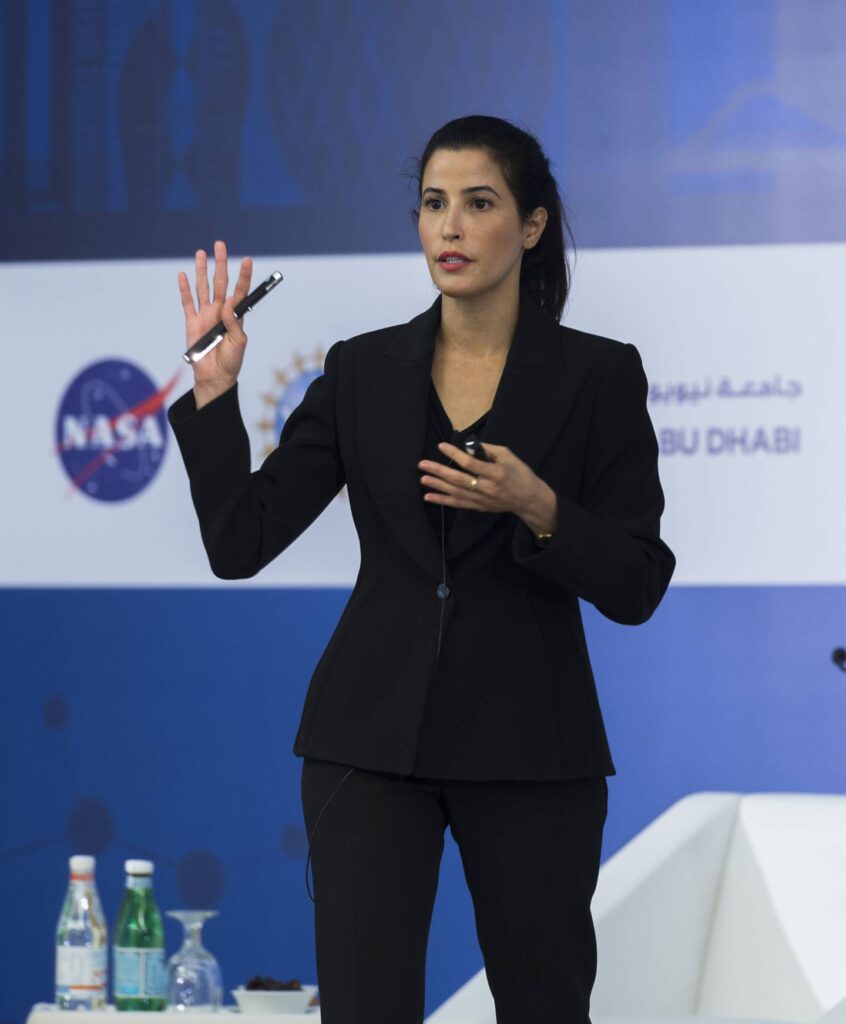
Ms Almutairi went on to describe herself as a plastics chemist, but she is much more besides. Her wide-ranging work combining materials chemistry with nanotechnology as well as developing tools for the future of biology and medicine makes her in great demand at conferences in the US, Europe, the Middle East and China.
The Saudi-American pharmaceutical chemist and nanomedicine engineer has won all manner of honours and recognition, including the prestigious and lucrative National Institutes of Health director’s new innovator award.
At the Falling Walls event, she gave an engaging, if sometimes faltering, presentation of her life-changing nanoparticle discovery feted in the US Congress as one of the four most important US technology breakthroughs of 2012.
“I used to be a nervous wreck before I gave a talk and would practise for two weeks beforehand,” she tells The National. “Plus, Angela Merkel is such an amazing woman, so meeting her was really special.
“She got elected just as I got my degree in chemistry and the way she spoke at that conference, and later welcomed so many Syrians into Germany, made me really respect her views on being kind citizens.”
With practice, Ms Almutairi, now 45, is much more comfortable as a public speaker. “Preparation,” she says, “is key.”
It was a lesson she learnt as a schoolgirl after a fluffed first gymnastics performance before a crowd left her sobbing on a bench. Determined never to repeat the same mistake, she rose to become the top gymnast on the team as well as the fastest 1,500-metre runner.
Preparedness forms the backbone of her professional life as she puts known scientific truths into practice while always remaining open to unexpected outcomes.
Discoveries and their effects, she and Ms Merkel wholeheartedly agree, can often surprise the scientists and engineers themselves.
“If you decide there is going to be a challenge down the road and that is going to deter you, nothing will happen,” she says. “If you go down that road anyway, you’ll solve the problem when you get there.”
No amount of planning, though, could have readied her for a year when the rug was pulled out from beneath her feet. In 2015, her beloved father died at the age of 65 and her 20-year marriage to a banker she met at university fell apart.
It was, she says, a painful time – not least because Mutlaq bin Abdul Rahman Almutairi, born into a traditional Saudi family, was his daughter’s greatest ambassador, enabling her to break free from what could have all too easily been a restrictive mould.
He was just five years old and still mourning his mother’s death when his own father packed up their goat-hair tent, strapped their few possessions to the back of a camel and made the arduous 100km journey from the Bedouin desert enclave of Al Harra to seek work and a new life in Jeddah.
Desperately poor, the family squatted on land and, when old enough, the enterprising Mutlaq enrolled himself and his younger sister in school.
His conservative father, who could not read or write, was furious and sent his daughter home. Mutlaq stood his ground and continued with his education – a moment that shaped the course of his own future and subsequently that of his five children.
“Sometimes in life, one decision changes everything,” Ms Almutairi says.
Mutlaq’s offspring have flourished in their respective fields of science and medicine. Khalid, 46, a plastic surgeon, Heba, 38, a professor in radiology, and Ahmed, 37, a dentist, still live in Saudi Arabia while Amer, 41, a professor in family medicine, is based in Houston.
Ms Almutairi was named recently on the Forbes list of the world’s Top 10 Influential Female Engineers, and often thinks of the debt owed to a father who championed her right to education.
The stance made him something of an anomaly among the Almutair tribe, whose roots can be traced back to the Quran.
“It still makes me emotional,” she says. “He was enlightened from God.
“No one around him was educated. He was the first in his entire family to learn how to read and write and go to college.
“My father and grandfather got into a lot of fights because my grandfather did not believe women should be educated.”
While she inherited drive and motivation from her father, a love of learning was instilled at a young age by her mother Najat, who, aptly enough, was a teacher.
“My family on my mother’s side were extremely well educated and my mother is very well read,” she says.
Indeed, her parents met because Mutlaq had become besotted with Ms Almutairi’s great-aunt Hilal, an intellectual who was one of the first dentists in Saudi Arabia.
Despite the 20-year age gap, he approached the family to ask for her hand in marriage but was advised instead to wed the daughter of Hilal’s brother, with whom he would build a strong bond.
“My father appreciated a smart woman,” Ms Almutairi says. “He didn’t go after the young, pretty girl. He initially went for the older woman he enjoyed talking to.
“Now when I think back, I realise how special and unique he was, and how much respect he had for women.”
Mutlaq studied criminology and justice administration in Portland, Oregon, where Adah Almutairi was born, before returning to his homeland to become a police investigator.
The young Adah attended international schools in Jeddah and Riyadh, excelling not only at sport but in maths and science.
On leaving school at 16, she was at a loss as to what to do next. Her mother was applying for teaching posts so, on a whim, Ms Almutairi submitted an application to Najd National School in Riyadh – and surprised everyone, including herself, by landing a job teaching English.
“I didn’t have a degree, and when the headmistress realized how young I was, she said: ‘Don’t tell anyone, just put some lipstick on.’
“It was the best job ever. I loved every minute of it. I had such a connection with the girls. I used to take in copies of my mother’s Reader’s Digests and make up writing exercises around them.”
A year later, she began applying to universities. King Abdulaziz University in Jeddah turned her down but she secured a sports scholarship to Occidental College in Los Angeles, Barack Obama’s alma mater.
The opportunity once again put her father at loggerheads with her grandfather and members of the Almutairi clan, who did not think a young woman should travel overseas alone. Unperturbed, Mutlaq sent her anyway, even though he and Najat had doubts about her choice of subject.
The couple wanted her to be a doctor but Ms Almutairi chose maths as her major before switching to chemistry in her second year.
The lightbulb moment came when her tutor, the widely loved chemistry professor Tetsuo Otsuki, told her she was “a diamond in the dirt”.
“He made me feel smart and capable, and worth being taught,” she says.
“I have twice been told the phrase: ‘You remind me of myself’. It is one of the nicest things you can say to a young person if they look up to you. It really sat in my heart.”
Chemistry appealed because it was based on “concepts where once I wrapped my head around them, I could use them in so many ways”.
A scholarship to continue her studies at the University of California, Riverside, led her to create lightweight plastic polymers, or molecules, capable of conducting electrons that had uses in everything from robotics to space research.
“Around that time,” she says, “Hideki Shirakawa was winning the Nobel chemistry prize for his work with conductive polymers, and both Nasa and Walt Disney were funding and supporting that work.”
She may not have become a doctor of medicine as her parents had wished, but Ms Almutairi did turn her attention to the field during postdoctoral studies at the University of California, Berkeley, where she worked with Jean Frechet, a chemist innovating in the area of in-vivo imaging to diagnose disease.
After being turned down for jobs in Saudi Arabia, she took up a post at the University of California, San Diego, going on to lead an interdisciplinary research group at the Centre for Excellence in Nanomedicine and Engineering.
Perhaps one of Ms Almutairi’s proudest moments was collaborating with an ophthalmologist for a decade to come up with a way to regenerate failing retinas and prevent blindness.
“That particular innovation is now commercialised and makes me feel really good about myself,” she says. “I enjoy all sorts of application materials but medicine is especially rewarding. I like to solve problems and have a positive impact on the world.”
Her work with lanthanides – popularly classed as rare earth elements but actually, she says, abundant – involves a chemical reaction that could be applied to the delivery of drugs and diagnostics in medicine but also solar energy harvesting.
She has more than 100 patents registered, including one with her brother Khalid to use gold molecules in liposuction.
“My work is very rewarding,” Ms Almutairi says, “and my father was very proud of me. When I became well known in the US, it was a big moment because the people who were criticising him for sending his daughter away were the same people congratulating him.”
A strong proponent of the “health is wealth” philosophy, she may no longer run, but she does lift weights regularly and spends time in the garden with her 10-year-old son cultivating avocados, figs, and citrus trees, and growing aubergines, tomatoes and cucumbers.
She has visited Saudi Arabia many times to see her family and speak at conferences. One in particular that has stayed with her was a graduation speech at Princess Nourah bint Abdulrahman University in Riyadh.
There was no film quote for these graduates of the largest women’s university in the world. In a clear voice, without a hint of nerves, she instead passed on the words of that staunch defender of her own access to education.
Remain forever curious about the world, she told the audience, and live a meaningful life with impact.
It was clear that the woman of substance standing before them had been shaped by her father’s advice. She didn’t need to ask if they were listening.
The Saudi Arabian-American pharmaceutical chemist and nanomedicine engineer is in great demand at conferences in the US, Europe, the Middle East and China. Photo: Adah Almutairi