Arabs & Arabian Records Aggregator. Chronicler. Milestones of the 25 Countries of the Arabic Speaking World (official / co-official). AGCC. MENA. Global. Ist's to Top 10's. Records. Read & Enjoy./ www.arabianrecords.org
Category: Non-Resident / PAO (Persons of Arab Origin / Descent)
His team’s research benefits industries such as automotive, power grids, satellites, military, and healthcare.
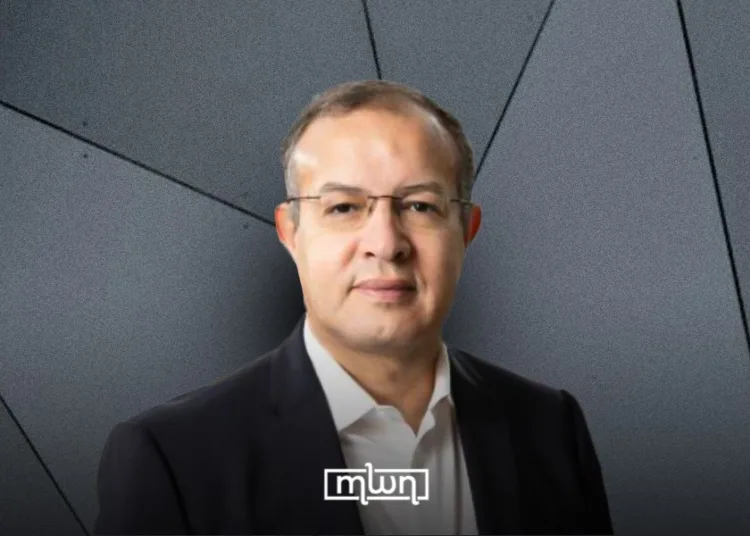
Khalil Amine, a Moroccan materials scientist, has been elected to the National Academy of Engineering of the United States for his contributions to battery and energy storage technologies.
The recognition comes for his leadership in the field of materials science, specifically in the development of batteries and energy storage devices.
Amine, who also serves as a professor at the University of Chicago, is among 128 members and 22 international members inducted into the NAE class of 2025.
“I am very delighted to be selected as a member of the National Academy of Engineering,” said Amine. “This is a recognition not only for me, but also for all my co-workers and collaborators around the world, as well as Argonne, which has provided an unmatched, state-of-the-art capability to do excellent work.”
Amine leads the Advanced Battery Technology team at Argonne, where his research focuses on the development of advanced chemistries, materials, and battery systems. His team’s work spans several industries, including automotive, power grids, satellites, military, and medical applications.
A key focus of Amine’s research is the creation of new cathodes, anodes, solid-state electrolytes, and additives for lithium-ion batteries, as well as exploring “beyond-lithium” batteries that use alternative chemistries for energy storage.
Amine’s significant contributions to the field of battery technology have made him a leading figure in materials science. He holds more than 200 patents or patent applications in the field, and he was for 23 years the most cited scientist in battery technology globally.
His accomplishments have earned him numerous accolades, including the prestigious Global Energy Prize in 2019. Amine is also a member of several prestigious scientific organizations, including the National Academy of Inventors, the European Academy of Sciences, and the Electrochemical Society, among others.
Born in Morocco, Amine earned degrees in chemistry and materials science from the University of Bordeaux. After his academic training, he joined Argonne in 1998, bringing with him experience gained from research positions in Belgium and Japan.
His innovative work has played a pivotal role in advancing energy storage technologies that have far-reaching applications in today’s technological landscape.
The National Academy of Engineering, founded in 1964, provides independent analysis and advice on engineering matters, offering leadership and insight into complex global challenges. Amine, along with other members of the NAE class of 2025, will be formally inducted at the Academy’s annual meeting in October.
Honoring the Rich Heritage, Celebrating the Next Generation
This event is a tribute to our culture, featuring music, dance, comedy, and inspiration, uniting us in pride and resilience”
— Warren David, President, Arab AmericaWASHINGTON, DC, UNITED STATES, March 12, 2025 /EINPresswire.com/ —
On Wednesday, April 9th, the Arab America Foundation will present its ninth annual National Arab American Heritage Month Commemoration at Amazon HQ Theater, “Honoring the past, inspiring the future.”
Each year, we honor the invaluable contributions of Arab Americans and commemorate National Arab American Heritage Month with community leaders, cultural performances, and authentic Arab cuisine.
This year, we honor the legendary Umm Kalthoum, marking 50 years since her passing in 1975. Known as the Nightingale of the Arab World, her iconic voice inspires generations.
Performers include: –Mohanad Elsheiky, a Libyan stand-up comedian based in Queens who is a digital producer on the TBS late-night comedy series Full Frontal with Samantha Bee, has appeared on Conan and Late Night with Stephen Colbert.
-Marwa Morgan, Arab American and Egyptian classic vocalist, will perform a special tribute to the legendary nightingale of the Arab World, Umm Kulthum with the New York Umm Kulthum Ensemble.
–Anas “Andy” Shallal, Iraqi-American artist, activist, philanthropist, entrepreneur, founder and CEO of Busboys and Poets.
–Shirin Rajaee, Emmy-nominated news anchor and MC of the event.
–DJ Basbousa, a DC-based Arab DJ pop culture designer.
–Faris El-Layl Folkloric Dance Troupe will perform traditional Arab dances.
“During this year’s National Arab American Heritage Month, we honor our rich heritage while celebrating the next generation. This event is a tribute to our culture, featuring music, dance, comedy, and inspiration, uniting us in pride and resilience,” said Warren David, president of Arab America.
About National Arab American Heritage Month 2025 Arab America and the Arab America Foundation launched the National Arab American Heritage Month initiative in 2017, but only a handful of states recognized it. Each year, our grass-roots network of over 250 Arab American volunteers in 26 states gathers hundreds of proclamations from their states, counties, municipalities, and local school districts.
If you want to help us mobilize the community for NAAHM, request proclamations, or plan events, please contact Dr. Amal David or call 877-272-2944.
Proclamations Arab America Foundation state teams are acquiring proclamations from governors, state legislators, mayors, and county executives nationwide. New proclamations for 2025 will be announced in the coming months.
Sponsorship of National Arab American Heritage Month 2025 (including Diversity Training Workshops) The Arab America Foundation welcomes corporate participation as a sponsor to celebrate Arab American heritage and enhance the understanding of Arab identity and culture in America through the National Arab American Heritage Month initiative. Sponsorships include the Arab America Foundation’s diversity training workshop designed to help corporations educate their workforce about the Arab American community. Through this workshop, participants can gain insights into the community’s history, immigration, culture, traditions, and other significant issues.
Or call the Arab America Foundation at 877-272-2944 or email info@arabamerica.com
Educator’s Curriculum Kit Arab America Foundation offers The Educator’s Curriculum Kit, which highlights the history of Arab migration to America, geographic understanding of the Arab world, Arab American diversity in faith and language, interesting customs and traditions, issues affecting our community, and our many achievements in business, politics, education, and more. The Kit is available for school educators. For more information, please get in touch with Dr. Amal David.
Resources Arab America Foundation is committed to gathering and promoting the community’s events and stories through https://www.arabamerica.com/resources/ and social media platforms during April. Every week, Arab America will feature cultural events throughout the US on our events page and share compelling success stories of Arab Americans on our blog page. Additionally, Arab America has compiled a resource guide listing resources and content regarding the Arab and Arab American identity and culture.
About the Arab America Foundation The Arab America Foundation (www.arabamericafoundation.org) is a non-profit educational and cultural organization that promotes the Arab heritage in the U.S., educates Americans about the Arab heritage and identity, and connects and empowers Arab Americans
Amer Ghalib and Bill Bazzi were among a number of Muslim leaders from the state who publicly endorsed Trump for the presidency last year
‘It’s a great honor to have the trust of the president,’ Ghalib tells Arab News. ‘I will utilize my skills … to strengthen the relationship between’ the US and Kuwait
_________________
FAST FACTS
• Amer Ghalib, who became mayor of Hamtramck in November 2021, is the first Arab American and Muslim to hold the office in the city.
• Bill Bazzi, who was born in Lebanon, was appointed mayor of Dearborn Heights in January 2021 following the death of the incumbent and won the election for the office in November that year.
___________
Amer Ghalib, the mayor of Hamtramck, Michigan, said on Friday he was “honored” to be nominated by President Donald Trump for the post of US ambassador to Kuwait.
Meanwhile, Bill Bazzi, the mayor of Dearborn Heights, also in Michigan, was nominated by Trump this week to serve as the US envoy to Tunisia. Arab American Muslims Ghalib and Bazzi were among the Michigan officials who publicly endorsed Trump for the presidency last year over Joe Biden and Kamala Harris.
“It’s a great honor to have the trust of the president placed in me to represent our great county and serve as the next ambassador to the State of Kuwait,” Ghalib told Arab News on Friday.
Bazzi did not respond to Arab News when asked to comment on his nomination, but in a message posted on Facebook, he wrote: “I am honored and appreciate President Donald Trump’s appointment to serve as US Ambassador to Tunisia.
“Among the distinct countries I have visited over the years, I hold a great affinity to Tunisia and its honorable parliament, elected officials, educators, and other industry leaders — along with the people I met while touring orphanages, women’s career institutions, schools, and a multitude of companies which distinguish the country’s rising presence in the region.
“With my visits overseas, the cohort’s visits to the US, and the relations we have established over the years, I am excited to return and honorably represent our Country in Tunisia as its US Ambassador. My purpose is to continue serving in capacities which make an impact, promote peace and diplomatic partnerships, which benefit our Country and enhance global relations.”
Trump wrote on social media platform X: “Bazzi is a decorated US Marine, who honorably served our Country for 21 years, collaborating with US Embassy Ambassadors, Diplomats, and Leaders throughout the world.”
Bazzi, who was born in Bint Jbeil, Lebanon, was appointed mayor of Dearborn Heights in January 2021 following the death of the incumbent and won the election for the office in November that year. He had previously served as the temporary chairperson of Dearborn Heights City Council since 2017.
Bishara Bahbah, the founder of Arab Americans for Trump, an organization that worked in several states to rally Arab and Muslim American elected officials and leaders in support of Trump’s presidential campaign, praised the appointments of Ghalib and Bazzi as “a demonstration of the president’s commitment to the Arab and Muslim community.”
He told Arab News: “Arab Americans for Peace, formerly Arab Americans for Trump, is delighted with President Trump’s nomination of two distinguished Arab American mayors from Michigan as the new ambassadors to Kuwait and Tunisia.
“Both men risked their political careers, having been elected as Democrats to their posts. Mayor Bazzi and Mayor Ghalib are outstanding individuals who wanted to see the end of the wars in both Gaza and Lebanon.”
The nominations reflect the growing influence of Arab Americans in US politics, Bahbah said, and are “a testament to the newfound power of Arab Americans in this past US presidential election and future presidential elections.
“We are confident that both mayors will be effective ambassadors representing the best interests of the United States. Their Arab backgrounds will undoubtedly help foster better US-Kuwaiti and US-Tunisian diplomatic relations.”
The nominations must now be considered and approved by a majority vote in the US Senate.
source/content: arabnews.com (headline edited)
____________
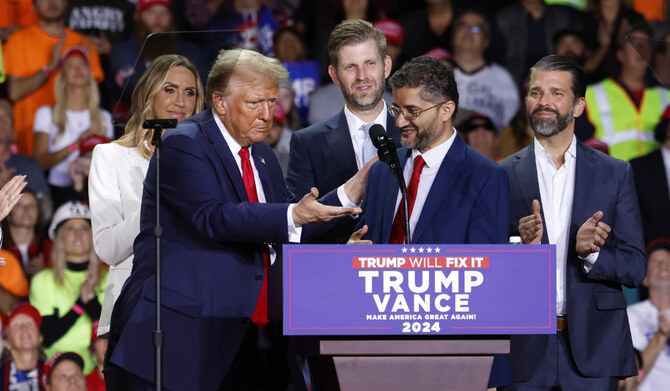
US President Donald Trump introduces Democratic Muslim mayor of Hamtramck Amer Ghalib during his last campaign rally at Van Andel Arena in Grand Rapids, Michigan on November 5, 2024. (AFP file photo)
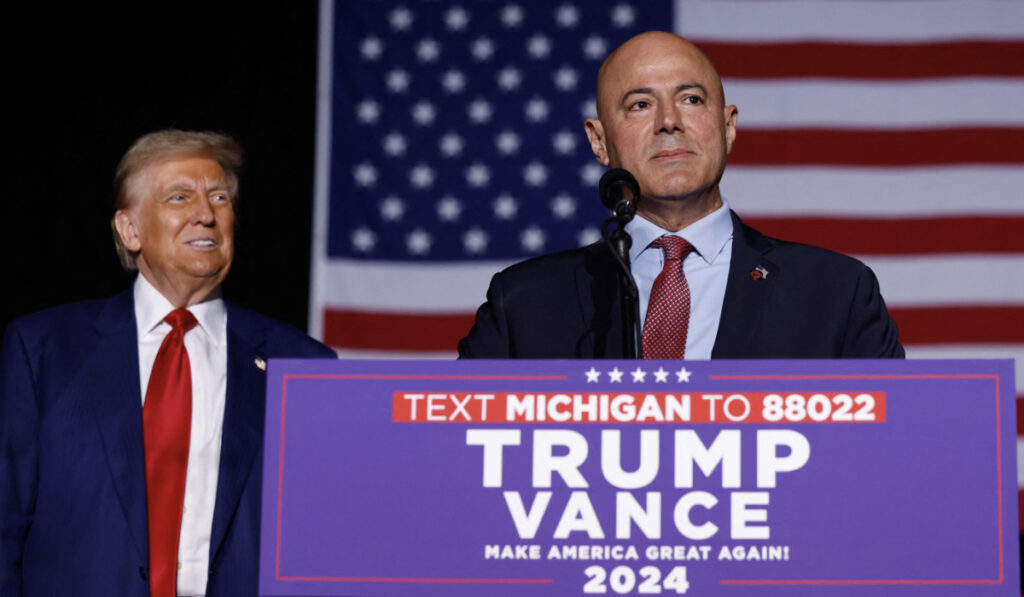
Dearborn Heights, Michigan, Mayor Bill Bazzi†speaks as U.S. President Donald Trump listens during a campaign rally at Suburban Collection Showplace on October 26, 2024 in Novi, Michigan. (AFP file photo)
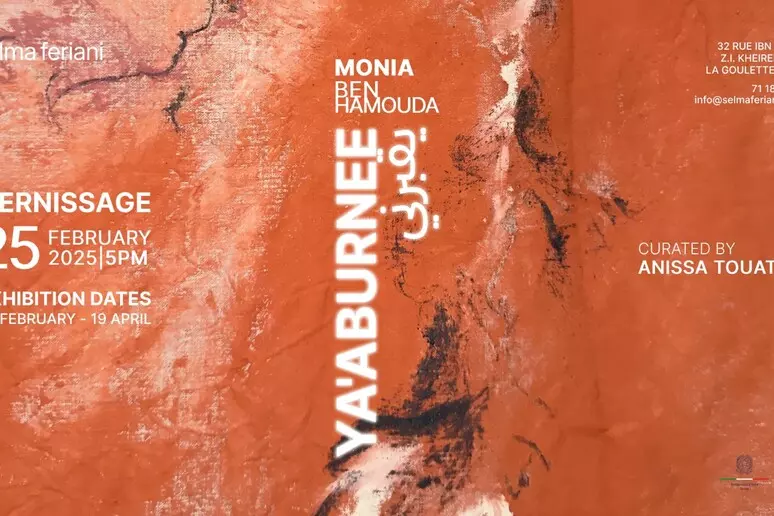
From 26 February next, Monia Ben Hamouda’s exhibition entitled ‘Ya’aburnee’, curated by Anissa Touati, will be open to the public at the Selma Feriani Gallery in Tunis in partnership with the Italian Embassy and the Italian Cultural Institute of Tunis.
The exhibition by the Italian-Tunisian artist, who won the prestigious MAXXI BVLGARI PRIZE 2024 last December, takes its name from the Arabic concept that translates as “you bury me”, reflecting the altruistic desire for a loved one to outlive himself.
Love and sacrifice, omnipresent in the exhibition, explore the complex ideas of language, history and understanding through an installation spanning three floors of the gallery, combining painting, sculpture and sound works, blurring our relationship with space.
Ben Hamouda aims to capture the distinctive soundscape of Arab countries, emphasising how these sounds shape cultural identity and perception.
Imagine owning a camera so powerful it can take freeze-frame photographs of a moving electron – an object traveling so fast it could circle the Earth many times in a matter of a second. Researchers at the University of Arizona have developed the world’s fastest electron microscope that can do just that.
They believe their work will lead to groundbreaking advancements in physics, chemistry, bioengineering, materials sciences and more.
“When you get the latest version of a smartphone, it comes with a better camera,” said Mohammed Hassan, associate professor of physics and optical sciences. “This transmission electron microscope is like a very powerful camera in the latest version of smart phones; it allows us to take pictures of things we were not able to see before – like electrons. With this microscope, we hope the scientific community can understand the quantum physics behind how an electron behaves and how an electron moves.”
Hassan led a team of researchers in the departments of physics and optical sciences that published the research article “Attosecond electron microscopy and diffraction” in the Science Advances journal. Hassan worked alongside Nikolay Golubev, assistant professor of physics; Dandan Hui, co-lead author and former research associate in optics and physics who now works at the Xi’an Institute of Optics and Precision Mechanics, Chinese Academy of Sciences; Husain Alqattan, co-lead author, U of A alumnus and assistant professor of physics at Kuwait University; and Mohamed Sennary, a graduate student studying optics and physics.
A transmission electron microscope is a tool used by scientists and researchers to magnify objects up to millions of times their actual size in order to see details too small for a traditional light microscope to detect. Instead of using visible light, a transmission electron microscope directs beams of electrons through whatever sample is being studied. The interaction between the electrons and the sample is captured by lenses and detected by a camera sensor in order to generate detailed images of the sample.
Ultrafast electron microscopes using these principles were first developed in the 2000’s and use a laser to generate pulsed beams of electrons. This technique greatly increases a microscope’s temporal resolution – its ability to measure and observe changes in a sample over time. In these ultrafast microscopes, instead of relying on the speed of a camera’s shutter to dictate image quality, the resolution of a transmission electron microscope is determined by the duration of electron pulses.
The faster the pulse, the better the image.
Ultrafast electron microscopes previously operated by emitting a train of electron pulses at speeds of a few attoseconds. An attosecond is one quintillionth of a second. Pulses at these speeds create a series of images, like frames in a movie – but scientists were still missing the reactions and changes in an electron that takes place in between those frames as it evolves in real time. In order to see an electron frozen in place, U of A researchers, for the first time, generated a single attosecond electron pulse, which is as fast as electrons moves, thereby enhancing the microscope’s temporal resolution, like a high-speed camera capturing movements that would otherwise be invisible.
Hassan and his colleagues based their work on the Nobel Prize-winning accomplishments of Pierre Agostini, Ferenc Krausz and Anne L’Huilliere, who won the Novel Prize in Physics in 2023 after generating the first extreme ultraviolet radiation pulse so short it could be measured in attoseconds.
Using that work as a steppingstone, U of A researchers developed a microscope in which a powerful laser is split and converted into two parts – a very fast electron pulse and two ultra-short light pulses. The first light pulse, known as the pump pulse, feeds energy into a sample and causes electrons to move or undergo other rapid changes. The second light pulse, also called the “optical gating pulse” acts like a gate by creating a brief window of time in which the gated, single attosecond electron pulse is generated. The speed of the gating pulse therefore dictates the resolution of the image. By carefully synchronizing the two pulses, researchers control when the electron pulses probe the sample to observe ultrafast processes at the atomic level.
“The improvement of the temporal resolution inside of electron microscopes has been long anticipated and the focus of many research groups – because we all want to see the electron motion,” Hassan said. “These movements happen in attoseconds. But now, for the first time, we are able to attain attosecond temporal resolution with our electron transmission microscope – and we coined it ‘attomicroscopy.’ For the first time, we can see pieces of the electron in motion.”
source/content: eurekaalert.org / University of Arizona / (headline edited)
_________
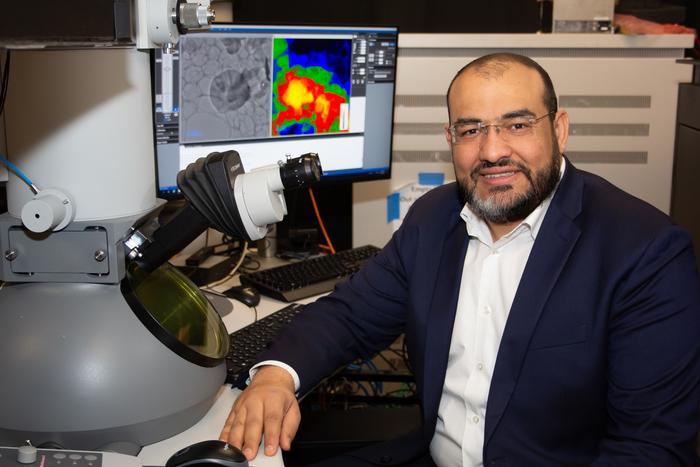
Mohammed Hassan, associate professor of physics and optical sciences, let a group of researchers in developing the first transmission electron microscope powerful enough to capture images of electrons in motion.
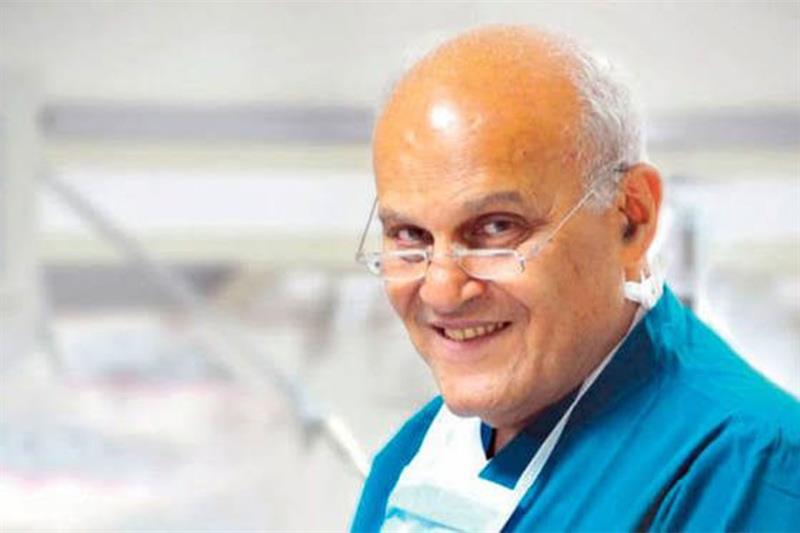
Making history again! Egyptian heart surgeon Sir Magdi Yacoub innovates valves that grow naturally in body.
This pioneering innovation envisions the development of biological heart valves that can grow and be accommodated naturally within the human body. This opens the door to a new era in heart disease treatment.
The prospect of heart valves naturally expanding within the body, a concept once confined to science fiction, is now on the brink of realization, thanks to the remarkable discovery spearheaded by renowned heart surgeon Professor Sir Magdi Yacoub.
While the initial study documenting this breakthrough was unveiled in Nature in 2023, recent media coverage has underscored its practical implications.
Esteemed publications like The Times have pinpointed this cutting-edge innovation’s profound impact on biomedical science and medical engineering. They have recognized it as a monumental leap in the realm of healthcare.
On Monday, Dr. Yacoub discussed the latest developments in this field with Egyptian talk show host Amr Adib.
He explained how his team has engineered temporary heart valve scaffolds composed of surgically implanted fibres into the body.
These scaffolds gradually disintegrate over time, leaving behind a living, fully functional valve crafted from the patient’s tissues, a testament to the marvels of modern medical ingenuity.
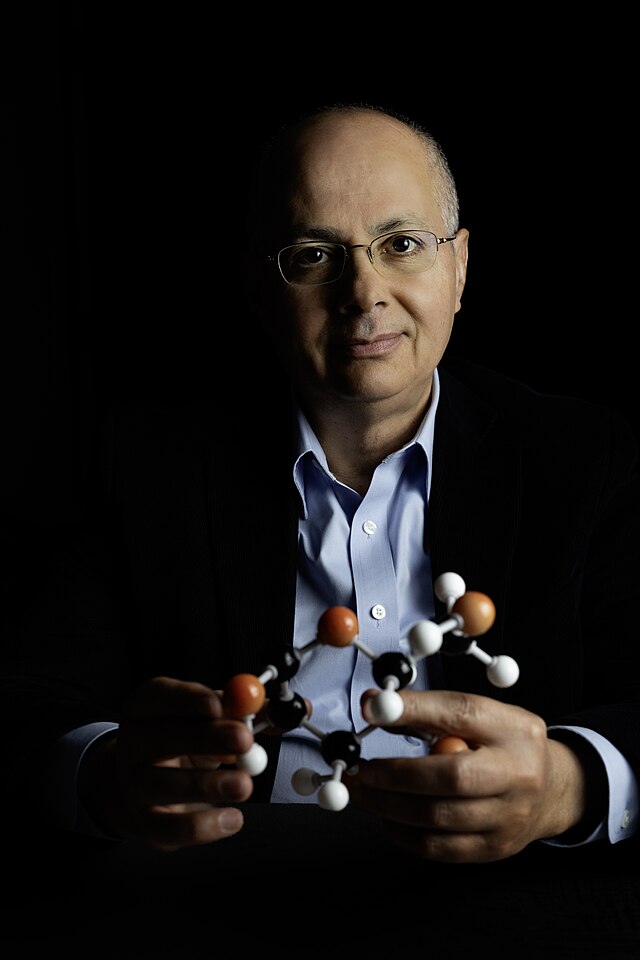
Jordanian academic Omar Yaghi, a chemistry professor at the University of California, Berkeley, has been awarded the 2024 Arab Genius Minds Award in the Natural Sciences category for his pioneering work in reticular chemistry.
Yaghi is celebrated for his transformative innovations in designing and synthesising metal-organic frameworks (MOFs) and covalent organic frameworks (COFs), the Jordan News Agency, Petra, reported.
These frameworks address critical global challenges in energy storage, water harvesting, and environmental sustainability.
His research portfolio includes over 300 peer-reviewed papers, which have collectively garnered more than 250,000 citations, underscoring the “far-reaching” impact of his work.
Since 2012, Yaghi has held the James and Neeltje Tretter Chair in Chemistry at UC Berkeley.
His contributions to reticular chemistry have “revolutionised” the ability to assemble molecular building blocks into highly porous structures with applications in gas storage, catalysis, and drug delivery, among others, yielding significant economic and environmental advancements.
The Arab Genius Minds Award, launched by Sheikh Mohammed Bin Rashid Al Maktoum, Vice President and Prime Minister of the UAE and Ruler of Dubai, honours achievements by Arab scientists and innovators across six key categories essential for the region’s developmental and cultural progress.
After weeks of speculation, Marmoush agrees to a deal with the Premier League champions that runs until 2029.
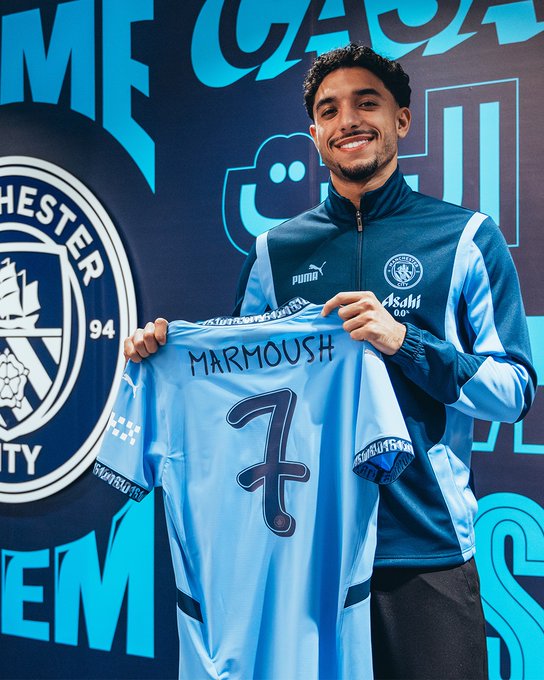
Manchester City have announced the signing of Eintracht Frankfurt forward Omar Marmoush for a reported initial fee of about $72.6m.
“The 25-year-old Egyptian striker has completed a move to the Etihad Stadium on a four-and-a-half-year deal, meaning he will remain at the Club until the summer of 2029,” City said in a statement on Thursday.
“This is a day I will never forget,” Marmoush said after signing up with the English Premier League champions.
“To sign for Manchester City – one of the best teams in the world – is an amazing feeling. I am delighted, my family are so proud, and we are all very happy to be here in Manchester.
“With Pep, his technical staff and the world-class facilities here, players have everything they need to improve. That was really enticing for me when I had the chance to come here.”
Marmoush is City’s third signing of the January transfer window following the arrivals of defenders Abdukodir Khusanov and Vitor Reis.
The former Bundesliga star’s contract is understood to include a potential further $5m in add-ons.
Born in Cairo in 1999, Marmoush stood out early in the academy of club Wadi Degla in the Egyptian Premier League. At just 17, he was promoted to the first team and joined Wolfsburg’s reserves a year later.
At Wolfsburg, Marmoush initially struggled for consistency and game time, resulting in loans to St Pauli and Stuttgart.
The striker moved to Frankfurt on a free transfer before the 2023-2024 season and scored 12 goals in 29 league games.
Marmoush’s development has drawn inevitable comparisons to his compatriot Mohamed Salah, but the Liverpool superstar warned against such correlations.
“Omar has great potential and is an important player for his team and the national team currently, but I hope we stay away from the idea of comparisons because it will put him under pressure,” Salah said in November.
“Do not compare him to me. Do not say the ‘new Mohamed Salah’. Let him live his career. Comparing a player at the beginning of his career with another who has achieved a lot over many years does not help him.”
City’s director of football Txiki Begiristain said Marmoush was an “accomplished and exciting forward”.
“He’s had an outstanding season, and every time we have watched him, he has influenced matches,” he said.
“He has all the attributes a top-class attacker requires. He has outstanding pace and awareness, and he is exceptional in front of goal. He can also play a number of different positions, which is a really valuable asset.”
His arrival at the Etihad Stadium comes during a frustrating season for City.
City, champions for the past four seasons, are currently fifth in the Premier League, 12 points behind leaders Liverpool having played a game more.
Defeat at Paris Saint-Germain on Wednesday has also left Pep Guardiola’s side in danger of missing out on the Champions League knockout stages.
source/content: aljazeera.com/sports (Al Jazeera and News Agencies) / (headline edited)
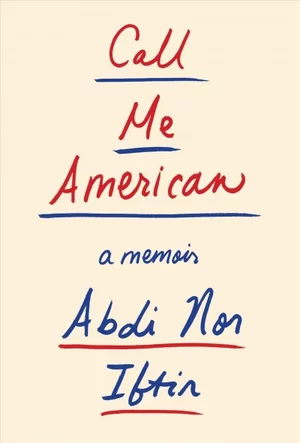
What does it take to become an American? In 2015, This American Life told the story of a Somali refugee who was finally issued a visa to come and live in the United States. “This big smile was on my face. I’ve never had such a big smile,” Abdi Nor Iftin said at the time.
Iftin’s long road to the US began when he was only a child in Mogadishu, watching American movies and teaching himself English, while brutality and war raged around him. In his new memoir, Call Me American, he tells his story from the beginning: with his nomadic parents and their now-unimaginably peaceful, pastoral life.
“She had no idea that the country she was living in was called Somalia,” Iftin says of his mother. “She had always told me, ‘You know, Abdi, there’s only two days: The day that you’re born and the day that you die. Everything else is just grazing and hanging out with the animals.'” Life was so easy, he says, before drought and famine wiped everything out.
Interview Highlights
On his first memories of Somalia’s long-running civil war
I was six years old when the civil war started, militias started pouring into the city, and death and killings and torture, and I just cried. The smell of Mogadishu, it was just the smell of gunpowder. And that had been sticking with me forever … I think this is the most touching memory that I can remember, to have our youngest sister die, and we said, “Good. That is so easy for her,” and then I was jealous. I was jealous because that was the time when our feet were swollen, our bellies were empty. It was a feeling that you could die any time … and I looked at my other sister, and she was just eating sand. And I think that’s the stories that people don’t hear about.
On his encounters with Marines in Mogadishu
I still say they stole my heart, because it was the very first time that I saw people with guns, and the guns were pointed up in the air, not in my face. Then they were coming and giving us sweets — I wanted these people to stick around, I wanted these people to be part of my life.
On being targeted by Islamists because of his nickname, “Abdi the American”
Unfortunately, I still believe that Islamists were born out of the American involvement somewhere in the Middle East, and the phrases that they had used to attract young men of my age was just “America.” They said, “They are the enemies of Islam” … surprisingly, I was out on the streets, defending President Bush, I don’t even know why I did that. But I was defending him, and blaming Osama bin Laden for all the problems. But I thought, to me it was just expressing myself, but then it got me into trouble, and I received a phone call saying, “You got to stop and drop that nickname, or we’re going to kill you.”
On whether Americans know how hard it is to get a visa to come here
I don’t think they do! You know, Americans take so many things for granted. For example, I came to the U.S. through the diversity immigrant visa lottery, which [President Trump] would like to cancel. But if it was not the diversity lottery, I would have never come to America, never. I had been an American since I saw those Marines, and my nickname is going to be my nationality, very soon … When I wake up in the morning, I say, oh, I’m so lucky — I have arrived here before America had turned its back against the rest of the world. If this had happened when I was hiding myself from Islamic terrorists, just trying to come to America and become an American and all that, it would be a disappointment, it would be a betrayal by the United States. Because the way I understand is that America is open to the rest of the world. And I am here to make America great. I did not come here to take anything. I came here to contribute, and to offer and to give.
When Dr. Myriam Khalfallah arrived in Vancouver from Tunisia in 2013, she had just earned a bachelor’s degree as an agronomic engineer specializing in fisheries and environment at the National Agronomic Institute of Tunisia (INAT), the University of Carthage. She visited UBC in hopes of meeting Dr. Daniel Pauly, the internationally recognized fisheries scientist—Dr. Khalfallah had used his methods during her engineering practicum work and wanted to meet one of her research inspirations.
The two met, speaking in French, one of Dr. Pauly’s native tongues, before switching to English. He then asked if Dr. Khalfallah mastered scientific Arabic, as Tunisian universities and research institutions are usually French speaking. She did. It turned out that Dr. Pauly needed someone who spoke all three languages to collect fisheries data from Arabic-speaking countries. Dr. Khalfallah landed the job.
“That was the start of the whole thing,” she recalls. “Daniel said, if you do well on this project, maybe I’ll take you as a student. I went back to Tunisia and applied for a work permit and my whole life changed.”
Similarly to most economically developing countries, fisheries data from North Africa, the southern Mediterranean, and the Arabian Peninsula is not always accessible to the international scientific community, notably due to language barriers, publication costs, and funding. Data does exist, but finding it and leveraging it for research takes language skills and to a certain extent a strong personal network. Dr. Khalfallah had both. Her work went well and Dr. Pauly accepted her as a graduate student.
But there was a problem. During her undergraduate studies in Tunisia, a revolution was ignited against the country’s dictatorship. Dr. Khalfallah had been the elected student representative and ombudsperson at her university.
“Tunisia was living under a strict dictatorship at the time,” Myriam says. “We had no right to speak up. The internet was almost fully censored, as were most of the media. Journalists were jailed. It was really awful”.
“I was involved with the demonstrations and doing my best to defend student and human rights. Some professors didn’t understand the role of the student representative and ombudsperson. When I told my professors about the changes that the students wanted, some thought that I was individually calling for change. Obviously, there can be retaliation—when I applied to UBC, my relationships back home made it difficult for me to get into another university.”
Due to her low grades, notably due to the revolution, UBC rejected Dr. Khalfallah’s initial application to graduate school. So Dr. Pauly stepped in.
“Daniel wrote letters for me, as did the dean of my previous university, and a few Tunisian professors, telling UBC they should give me a chance because what happened in Tunisia made things very difficult for everyone.”
The letters of support had the desired effect. Dr. Khalfallah began work on her Master’s of Science degree at UBC’s Institute for Resources, Environment and Sustainability, where she carried on reconstructing fisheries catch data from Arabic-speaking countries, estimating the amount of unreported catch—fish that are caught and not officially accounted for by official statistics.
“Methods used in Western countries aren’t always applicable in the rest of the world,” Dr. Khalfallah notes. “But now there are increasingly newer methods, such as those we use at our research unit, the Sea Around Us , that makes the most of data that is usually overlooked. An interesting part of this work involves collaborating with scientists from all over the world and bridging the gap between data-rich and data-poor regions.”
As her research progressed, she and Dr. Pauly realized that her initial plan—a 17-nation study—was too big for a master’s thesis. So Dr. Khalfallah applied to fast track her research directly to a PhD which required good grades, publications, and strong references.
She defended her thesis on March 26, 2020—the second week of the COVID lockdown when UBC shifted all defenses to Zoom for the first time—and graduated with a PhD in Natural Resource Management and Environmental Studies. After graduation Dr. Khalfallah followed through with post doctorate research, also at UBC, working online to unravel the effects of foreign fishing fleets and aquaculture on West African fisheries.
“Like many scientists then, I was unable to get funding to extend my postdoc as a lot of science funding was going towards medical research and stopping COVID” she says. “Some friends of mine who knew the author Margaret Atwood kindly told her about my postdoc and asked if she knew of anyone who could fund my research. And she offered to do it! She was amazing.”
Dr. Khalfallah currently works with the NGO FHI360 as a marine climate change specialist on the project Sharing Underutilized Resources with Fishers and Farmers (SURF). This project supports Tunisia’s efforts to adapt fisheries and agriculture to climate change and is one of the first of its kind in North Africa to be funded by the U.S. Department of State.
“Climate change is impacting North Africa at a very fast pace,” she says. “Water is getting scarcer by the day. Fishes are moving from the Red Sea to the Mediterranean, replacing native species. In some regions there are almost no fish anymore because overfishing, climate change, and pollution are a very bad combination.”
“I’m trying to either find other, sustainable livelihoods for artisanal fishers, or find a way for them to fish sustainably. Whatever happens in North Africa due to climate change will happen in the rest of the world at certain points. If we can find a way to help them adapt in one way or another, then those ways could potentially be applied in other places where the climate situation deteriorates.”
Dr. Khalfallah recently became a Canadian citizen and lives in Vancouver when not travelling for work. She was recently selected to be one of the alumni representatives of the Faculty of Science at the 2023 Fall Graduation ceremony, 10 years after she first set foot in Canada and UBC.
“I was quite surprised and honored by the invitation and it was an amazing experience.”
For those who have moved here recently and are starting their research career, she has some advice:
“International students have the stress of surviving, often alone, in new foreign environments, all while successfully completing their studies and research; and sometimes it is very difficult to see the light at the end of the tunnel. But I want to say that the light is there. Be persistent and ask for help when needed. Great things are achieved in small steps. Think about just doing one step at a time, and when you look back, you’ll see that you have actually achieved a lot without even realizing it!”