SUDANESE-EGYPTIAN Marwa Zein, A Multi-identity Film Director, Scriptwriter, & Film Producer

Get to know this brilliant Arab woman !

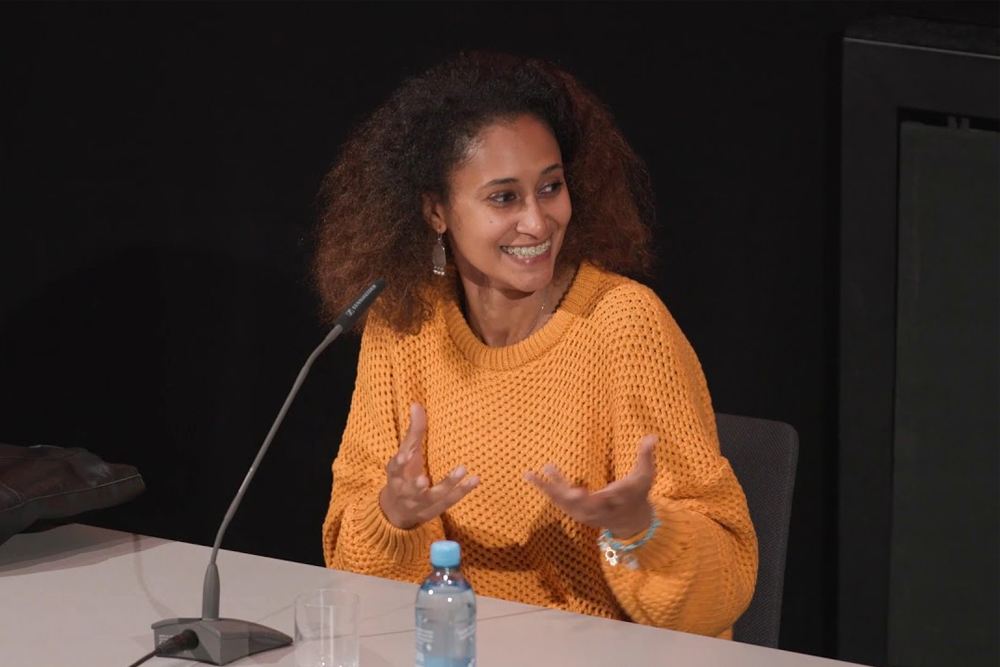
Born in Saudi Arabia and the daughter of a Sudanese father and Egyptian mother, Marwa Zein is a woman that truly embodies multiple identities, and for many it is this that perhaps shines through the most in her work. Even when it comes to her roles, that diversity and multiplicity are frontline and center. An award-winning director, scriptwriter, film producer, women’s rights activist, and founder of ORE Production, a Khartoum-based film production company, Zein is inspiring in every way.

Before setting off on a journey to become a filmmaker, Zein enrolled in Cairo University as a chemical engineering student to please her parents. While studying, she worked and saved up to have the means to leave her degree behind three years later, instead study cinema at the Academy of Arts in Cairo, Egypt in 2005. In 2009, she graduated with honors and moved to Germany to continue her film studies. Her graduation project, “A game,” was an official selection of more dozens of international festivals across the globe and was translated into five languages.

From her inspiring start into the world of film and her academic achievements, Zein moved on to bigger goals, nabbing awards for her short film “One Week, Two Days,” which premiered at the 2016 Dubai International Film Festival. In 2019, she was selected as one of the seven young filmmakers from across to attend the Cannes Film Festival 2019 by the International Emerging Film Talent Association (IEFTA).

Perhaps her most renowned recent work is “Khartoum Offside,” which was awarded Best Documentary for 2019 at the 15th Africa Movie Academy Awards AMAA 2019. The documentary tells the story of women footballers whose dream it is to play for Sudan at a Women’s World Cup hosted by their home country, revealing the challenging social, economic, and political situations they face and inspiring audiences with their tale.

Speaking to Women and Hollywood in 2019, Zein had some inspiring words of advice for other female filmmakers, saying, “There’s no competition. Everyone is unique, and we can’t tell the same story even we have the same idea. You are special, different, and inspiring, and you lead the way for the people coming after you.”

“Take care of your mental, physical, and financial situations. It’s a very challenging and demanding business, so don’t lose your soul in the process. Stay true to who you are, and you will reach the horizon,” she continued.

source/content: abouther.com (headline edited)

________

_________________________

SUDAN / EGYPT

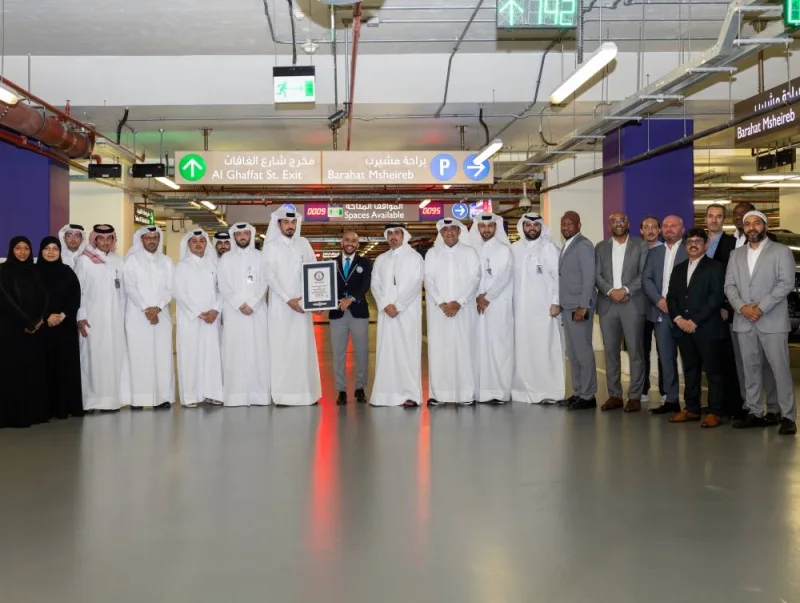
QATAR: Msheireb Downtown Doha wins Guinness World Records title™ for ‘Largest Underground Car Park” in the world

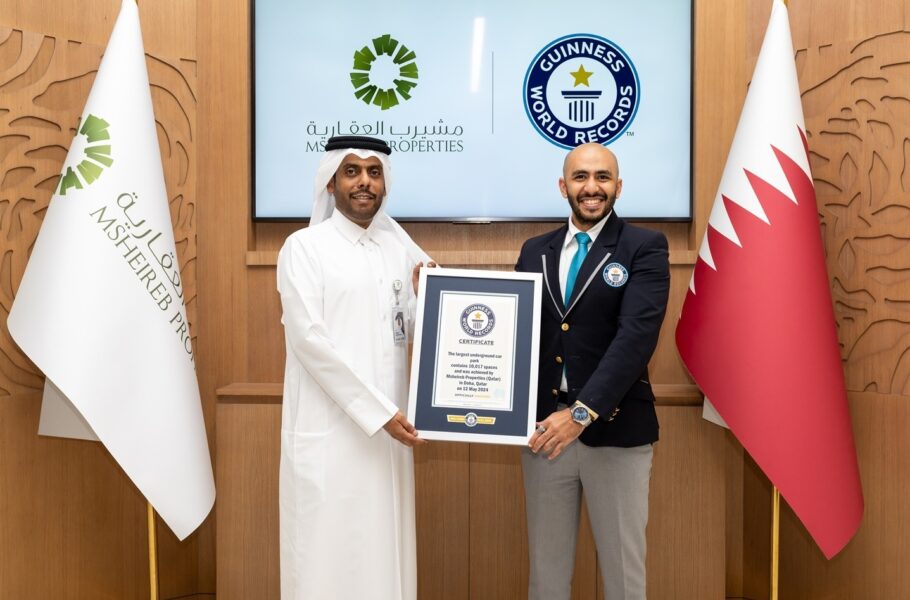
Msheireb Downtown Doha, Qatar’s pioneering sustainable and smart city district, has clinched the Guinness World Records™ title for the “Largest Underground Car Park” with a capacity of 10,017 spaces. The Guinness World Records™ recognition highlights the creative thinking that went into designing Msheireb Downtown Doha to create a sustainable urban district that sets a new benchmark for future smart city projects globally.

Msheireb Downtown Doha was designed for the human scale, which starts from the ground up. Locating car parking and building services underground has allowed the district to keep streets traffic-lite, enabling narrow, pedestrian-friendly walkways. This design improves connectivity across the wider city area, extending underground basements throughout the entire district.

“We wanted to reclaim outdoor spaces for the community by removing vehicles from the streets around Msheireb,” said Msheireb Properties CEO Eng. Ali Al Kuwari. “The Guinness World Records™ for the Largest Underground Car Park is a testament to our dedication to creating a sustainable and innovative city district that prioritizes the well-being of our community. By locating car parking and building services underground, we enabled architects to design attractive buildings with active façades on all sides.”

With an impressive capacity of 10,017 vehicles spread across six levels, Msheireb Downtown Doha’s underground parking system ensures ample space for residents, tenants, and visitors. The cutting-edge facility boasts an intelligent parking system that guides drivers to available spaces, making the parking experience seamless and hassle-free.

The underground parking system also had a significant impact on building design by removing the need for back service entrances which improved street quality and aesthetic cohesion.

As the flagship project of Msheireb Properties, Msheireb Downtown Doha has been designed to revive the historical downtown area with a new architectural language that is modern yet inspired by traditional Qatari heritage. The district incorporates the latest smart city technology and sustainability features, making it a model for future urban development’s worldwide.

Raafat Tawfik, Guinness World Records™ Official Adjudicator, commented, “We are thrilled to recognize Msheireb Downtown Doha for its outstanding achievement in creating the Largest Underground Car Park. This feat showcases the district’s commitment to innovation, sustainability, and enhancing the urban living experience.”

Msheireb Downtown Doha’s underground parking is just one of the many features that make the district a unique and attractive destination. With its pedestrian-friendly streets, diverse mix of residential, commercial, and retail offerings, and cultural attractions such as the Msheireb Museums, the district has become one of Qatar’s go-to destinations for residents and visitors alike.

Source and cover image credit: Press release

source/content: iloveqatar.net (headline edited)

____________

__________

QATAR

LEBANON: Patchi founder and chocolate industry titan Nizar Choucair dies

Founder of the globally recognized Lebanese chocolate brand Patchi, Nizar Choucair, has died, leaving behind a legacy in the industry.

Choucair transformed his childhood love for chocolate into a global brand, boasting more than 200 branches worldwide.

In a message on social media, Patchi announced Choucair’s death, posting: “It is with deep sorrow that we announce the passing of Mr. Nizar Choucair, our beloved founder. Mr. Choucair was a man whose warmth and generosity touched everyone who knew him.”

Patchi added: “His visionary approach transformed chocolate into an art that evokes emotions and creates cherished memories. His legacy lives on through Patchi, a brand that has reached hearts across cultures and celebrations. We honor his memory and the extraordinary heritage he built.” 

Choucair was renowned for saying: “In every piece of chocolate, there is a story to be told and a memory to be made.”

The brand’s story began in 1974 when Choucair, driven by his passion for chocolate since the age of 11, introduced the concept of chocolate gifting.

This approach elevated the food to new dimensions, enhancing customer engagement and brand loyalty.

Born in Beirut, Choucair moved to Kuwait at 18, initially working for a gas manufacturing company before returning to Lebanon to launch Patchi.

In 1990, he received a significant boost when Banque Du Liban gave him an interest-free loan, enabling him to modernize his factory with new machinery.

Starting with a single shop in the Lebanese capital, Beirut, Choucair’s vision and entrepreneurial spirit saw Patchi expand worldwide.

Patchi, now a household name in luxury chocolates, has 203 stores globally, with a strong presence in Lebanon, Saudi Arabia, and Bahrain, as well as Qatar, the UAE, and the UK.

The brand entered the EU market in 1995 with boutiques in Paris and London. By 1999, the company expanded to Africa with a boutique in the Ivory Coast and opened a store in the US in 2000. 

Recognized by Forbes in 2005 as the top luxury brand in the Middle East and the 15th top brand in the region, Patchi continued to grow. 

In 2008, Patchi Silver boutique at Harrods in London was launched, featuring a box of chocolates wrapped in genuine leather and silk, selling for £5,000.

The brand, boasting as many as 62 branches in Saudi Arabia, is celebrated for its premium ingredients and distinctive packaging, all produced in-house. 

In a 2009 interview with The National, Choucair reflected on Patchi’s accessibility: “Our chocolates are not expensive at all. We sell to people who want more expensive, elaborate boxes, but we also sell to the chauffeur who comes to pick it up.”

This inclusive approach helped Patchi become a beloved brand across various demographics, according to Choucair.

The founder’s journey was marked by resilience and adaptability, navigating the challenges of the Lebanese civil war by relocating his family and operations multiple times. Despite these hurdles, his commitment to his brand never wavered. The chocolateries’ expansion continued, with Choucair personally overseeing the opening of new stores worldwide.

Under his leadership, Patchi grew to employ more than 5,000 people, maintaining a family-oriented business ethos. His five children have played active roles in the company, with three of them working alongside him..

Oussama Choucair is currently the CEO of Patchi in the UAE and sits on the board of the company’s conglomerate, which his father founded in Beirut during the 1970s.

Nizar Choucair’s passion for premium chocolate gifting has been passed down to his son, who oversees operations in the crucial UAE market. 

One of Oussama Choucair’s key projects is the construction of a new factory in Dubai Industrial Park, which will become Patchi’s largest manufacturing plant worldwide.

The family remains dedicated to expanding the business into new markets by forming strategic alliances with Armenia, Azerbaijan and Brunei as well as Egypt, Kazakhstan, Kuwait, and East Asia.

In 2012, Patchi launched a new brand identity to refresh its profile and reaffirm its commitment to the values that have made it the top choice for premium chocolate lovers.

The new brand identity was presented in a creative and modern style, reflecting the distinctive and fine quality that Patchi offers through its network of boutiques across Saudi Arabia.

The unveiling event occurred at the Patchi Boutique in Jeddah, attended by Zahid Nuri, then-general manager and co-founder of Patchi in Saudi Arabia.

Nuri stated: “The launch of Patchi’s new identity embodies the company’s dedication to its customers in Saudi Arabia and highlights our commitment to providing the best services, highest quality, and a variety of the most exquisite and finest chocolate gifts. This new identity marks a breakthrough that aligns with Patchi’s significant international expansion, solidifying its position as one of the largest global brands in the chocolate industry.”

source/content: arabnews.com (headline edited)

_________

Nizar Choucair, founder of Lebanese chocolate brand Patchi. Patchi

_____________

LEBANON

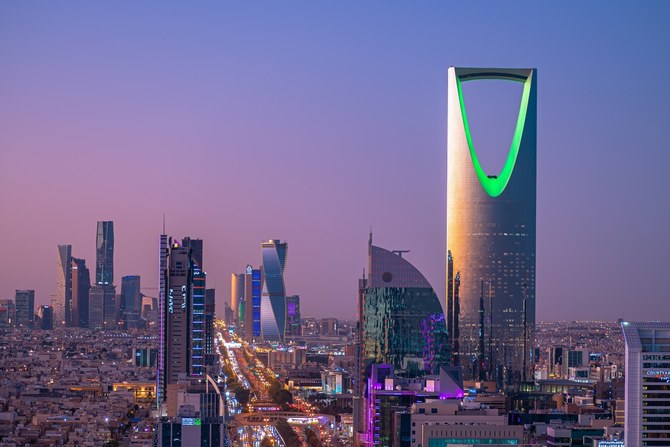
SAUDI ARABIA GDP growth higher than G20 average: OECD

 Saudi Arabia’s economy witnessed growth of 1.4 percent in the first quarter of 2024 – higher than that seen across the G20 as a whole, according to new data.

The Organisation for Economic Co-operation and Development has released its latest gross domestic product report for the G20 countries, noting that the Kingdom bounced back from a contraction of 0.6 percent in the previous three-month period. 

GDP in the G20 area grew by 0.9 percent quarter-on-quarter in the first quarter of 2024, slightly up from 0.7 percent in the previous quarter. 

The economic performance of the G20 area was primarily driven by China and India, with Turkiye, Korea, and Indonesia also recording higher GDP growth than the G20 average. 

Turkiye led with an increase of 2.4 percent, followed by India at 1.9 percent, China at 1.6 percent, Korea at 1.3 percent, and Indonesia at 1.2 percent. 

The report highlighted that while Saudi Arabia experienced a significant recovery, other G20 countries faced varying economic conditions. 

The US saw a slowdown, with GDP growth dropping to 0.3 percent in the first three months of the year from 0.8 percent in the previous quarter. 

Japan’s economy contracted by 0.5 percent, and South Africa saw a contraction of 0.1 percent. 

Conversely, Brazil, the UK, and Germany showed signs of recovery in the first quarter of 2024 after contractions over the previous three month period, with growth reaching 0.8 percent, 0.6 percent, and 0.2 percent, respectively. 

Canada, Mexico, and the EU grew by 0.4 percent, 0.3 percent, and 0.3 percent, respectively, in the three months to the end of March, after zero growth in the final quarter of 2023. 

Year-on-year, GDP in the G20 area grew by 3.3 percent in the first three months of the year, maintaining the same growth rate as the previous quarter. 

Among G20 economies, India recorded the highest year-on-year growth rate at 8.4 percent in the first quarter of 2024, followed by Turkiye at 7.4 percent. 

However, Saudi Arabia recorded the most significant year-on-year decline at a drop of 1.5 percent. 

According to a separate report by the General Authority for Statistics released earlier in June, the Kingdom’s non-oil activities also rose by 0.9 percent in the first three months of this year compared to the previous quarter.  

Additionally, non-oil activities increased by 3.4 percent year-on-year in the first quarter of 2024.  

GASTAT further noted that Saudi Arabia’s GDP amounted to SR1.01 trillion ($270 billion) in the first quarter.  

“Crude oil and natural gas activities achieved the highest contribution to GDP by 23.4 percent, followed by government activities at 15.8 percent, and then wholesale and retail trade, restaurants, and hotels activities with a contribution of 10.4 percent,” said GASTAT in the report.  

Strengthening the non-oil private sector is crucial for Saudi Arabia, as the Kingdom is steadily diversifying its economy to reduce its decades-long dependence on oil.  

The report further noted that government activities in Saudi Arabia rose by 2 percent year-on-year in the first quarter while declining by 1.1 percent on a quarter-on-quarter basis.  

GASTAT added that the Kingdom’s oil activities increased by 1.7 percent in the first quarter compared to the previous quarter.  

However, oil activities dipped by 11.2 percent year-on-year as Saudi Arabia reduced its crude production in line with the decision of the Organization of the Petroleum Exporting Countries and its allies, collectively known as OPEC+.  

To maintain market stability, Saudi Arabia reduced its oil output by 500,000 barrels per day in April 2023, and this cut has now been extended until December 2024.  

In April, the International Monetary Fund projected that Saudi Arabia’s economy would grow by 2.6 percent in 2024 and 6 percent in 2025.  

In the same month, the World Bank also raised the growth prospects of the Kingdom’s economy to 5.9 percent in 2025, up from an earlier projection of 4.2 percent. 

Furthermore, Saudi Arabia’s gross fixed capital formation surged to SR317.5 billion in the first quarter of 2024, marking a significant 7.9 percent increase compared to the same period last year. 

According to a separate report by the Saudi Ministry of Investment released earlier this month, gross fixed capital formation expansion was driven by growth in both the government and non-government sectors.  

GFCF, which represents the net increase in physical assets within an economy, plays a crucial role in gross domestic product as it reflects capital accumulation supporting future production capabilities and economic growth. 

Of the total GFCF, the government sector contributed 7 percent, experiencing a robust growth rate of 18 percent. Meanwhile, the non-government sector, constituting 93 percent, also saw a substantial rise of 7.2 percent. 

Saudi Arabia’s proactive efforts to attract foreign direct investment and bolster bilateral relations have significantly strengthened the Kingdom’s economic trajectory.  

FDI serves as a pivotal catalyst for GFCF development, facilitating funding for investment projects and resource and knowledge transfer across borders, thereby fostering economic expansion and maturation. 

Key initiatives such as the National Investment Strategy, the Regional Headquarters Program, and zero-income tax incentives for foreign entities play a vital role in advancing Vision 2030, which aims to diversify and expand the economy. 

During this quarter, the Ministry of Investment issued 3,157 investment licenses, marking a 93 percent surge compared to the same period last year, excluding licenses issued under the anti-concealment law. 

In its economic and investment monitor released in late May, the ministry revealed that the construction and manufacturing sector dominated with 47 percent of total permits, followed by vocational and educational activities, information and communication technology and accommodation and food services as well as wholesale and retail trade. 

The real estate sector witnessed the most significant year-on-year growth, with a staggering 253.3 percent increase in investment licenses. 

Furthermore, 127 international firms secured permits to relocate their regional headquarters to Saudi Arabia in the first quarter of 2024, reflecting a remarkable 477 percent year-on-year upsurge. 

Leading corporations such as Google, Microsoft and Amazon as well as Northern Trust, Bechtel, IHG Hotels & Resorts, and Deloitte have established operations in the Kingdom under this program. 

The report also highlights that Saudi Arabia processed 445 applications for investor visit visas during the first quarter of this year, enabling overseas businesspersons to explore opportunities in the country. 

source/content: arabnews.com (headline edited)

___________

The report highlighted that while Saudi Arabia experienced a significant recovery, other G20 countries faced varying economic conditions. Shutterstock

__________________

SAUDI ARABIA

SAUDI ARABIA: WORLD RECORD: Breaking Barriers: 23-year old Reem Al Aboud and Formula E Set an FIA Single-Seater Benchmark breaking World Record

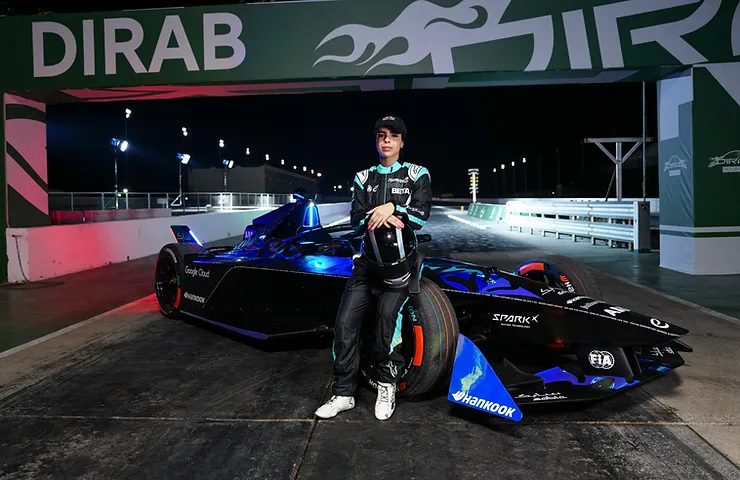
This January, Saudi racer Reem Al Aboud set a new acceleration benchmark for an FIA single-seater by reaching 0-60mph in 2.49 seconds in an ABB FIA Formula E GENBETA car. Ahead of International Women’s Day, we reflect on the implications of this achievement for motorsport.

Every Federation Internationale de l’Automobile-sanctioned single-seater championship race begins with a standing start. The lights at the starting line flash on, and flash off. Idle cars roar to life, accelerating through the straight and into the waiting corner. 

How quickly these cars can accelerate depends on the series. F1 Academy goes from zero to 60mph in approximately 3.6 seconds. Formula 3 and Formula 2 manage in 3.1 and 2.9, respectively. Formula E’s GEN3 car takes 2.8. The current Formula 1 car takes 2.64. 

But F1’s 2.64 seconds is no longer the benchmark. Now, Formula E’s newly developed GENBETA car holds the title — and with a woman in the cockpit.

Last July, Formula E unveiled its GENBETA prototype at the ExCeL London. While testing the car, World Champion Jake Hughes clinched a top speed of 218.71km/h, smashing the Guinness World Record for fastest speed indoors by more than 50km/h. 

Having designated GENBETA as its development platform, Formula E sought to explore the model’s potential and performance further. The series set its sights on setting a second benchmark: the time an FIA single-seater takes to reach 0-60mph. 

Yet in chasing after the F1 benchmark, Formula E was not content with breaking only technological and physical barriers. So, to honour its founding commitment to social progress, it added motorsport’s longstanding gender barrier as yet another to break.

Accordingly, Formula E tapped 23-year-old Saudi female racer Reem Al Aboud to take the GENBETA’s driver seat. The 2023 Saudi Toyota Ladies Cup Champion has partnered with the series since 2018, when she became the first Saudi woman to test a Formula E car. 

Experienced in driving GEN2 and GEN3 cars  — plus breaking barriers across karting, hillclimbing and autocross series — Reem was Formula E’s choice for a 2024 FIA Girls on Track Ambassador. Naturally, she was their choice for the GENBETA test as well. 

And that choice certainly paid off. This January at Dirab Motor Park, Reem’s GENBETA car achieved 0-60mph in 2.49 seconds — besting F1’s by 0.15 seconds. 

Of course, the technological aspect of the January test is remarkable. Behind GENBETA’s new benchmark is its front powertrain kit, which previous Formula E models (and other road electric vehicles) only use for energy harvesting. However, GENBETA also turns on this kit for greater traction during acceleration, using it to produce 536 horsepower that will launch the car into action. Instant torque allows for instant acceleration and thus a 2.49-second 0-60mph time.

What’s also remarkable is that a woman is the face of this test. 

After all, motorsport’s gender barrier is cyclical. Doubt that female drivers can perform on par with their male counterparts dominates the sport. Doubtful investors shy away from funding young female drivers. Underfunded female drivers can’t enter, remain and progress through racing series. Series sorely lack female representation — when representation is what validates the reality that women can indeed perform. That lack of validation perpetuates the doubt about female drivers. And so, the cycle continues.  

But Reem’s benchmark throws a wrench into this cycle by tackling the doubt head-on. She reaffirms that when women are given the time on track they are so often denied, they can excel. That when women are included in the conversation, they can contribute to the technological developments that push this sport forward. That when this sport values women, women can bring equal — if not more — value to the sport in turn. 

As the face of this test, Reem represents the generations of women who have been denied from motorsport on the basis of their gender. Of women who challenge prejudice in cockpits, paddocks and audiences. Of girls who see Reem on their screens and wonder if they, too, can wrestle state-of-the-art cars at inhuman speeds. 

Reem breaks the cycle by showing them that they can, and that they should. 

In doing so, she and Formula E bring motorsport a step closer to a new era. One where women are no longer the exception, but the standard. 

source/content: femalesinmotorsport.com (headline edited)

__________

_________________

SAUDI ARABIA

QATAR: Msheireb Downtown Doha (MDD) in Guinness World Records for ‘Largest Underground Car Park’

Msheireb Downtown Doha (MDD), Qatar’s pioneering sustainable and smart city district, has clinched the Guinness World Records title for the ‘Largest Underground Car Park’ with capacity of 10,017 spaces across six levels.

Locating car parking and building services underground has allowed the district to keep streets traffic-lite, enabling narrow, pedestrian-friendly walkways. This design improves connectivity across the wider city area, with underground basements extending over the entire district.

“We wanted to reclaim outdoor spaces for the community by removing vehicles from the streets around Msheireb,” said Msheireb Properties CEO engineer Ali al-Kuwari.

“The Guinness World Records for the Largest Underground Car Park is a testament to our dedication to creating a sustainable and innovative city district that prioritises the well-being of our community. By locating car parking and building services underground, we enabled architects to design attractive buildings with active façades on all sides.”

The MDD’s underground parking system ensures ample space for residents, tenants, and visitors. The facility boasts an intelligent parking system that guides drivers to available spaces, making the parking experience seamless and hassle-free.

The underground parking system also had a significant impact on building design by removing the need for back service entrances which improved street quality and aesthetic cohesion.

As the flagship project of Msheireb Properties, MDD has been designed to revive the historical downtown area with a new architectural language that is modern yet inspired by traditional Qatari heritage. The district incorporates the latest smart city technology and sustainability features, making it a model for future urban development’s worldwide.

Raafat Tawfik, Guinness World Records Official Adjudicator, said: “We are thrilled to recognise MDD for its outstanding achievement in creating the Largest Underground Car Park. This feat showcases the district’s commitment to innovation, sustainability, and enhancing the urban living experience.”

MDD’s underground parking is just one of the many features that make the district a unique and attractive destination. With its pedestrian-friendly streets, diverse mix of residential, commercial, and retail offerings, and cultural attractions such as the Msheireb Museums, the district has become one of Qatar’s go-to destinations for residents and visitors alike, a statement added.

source/content: gulf-times.com (headline edited)

__________

_________

QATAR

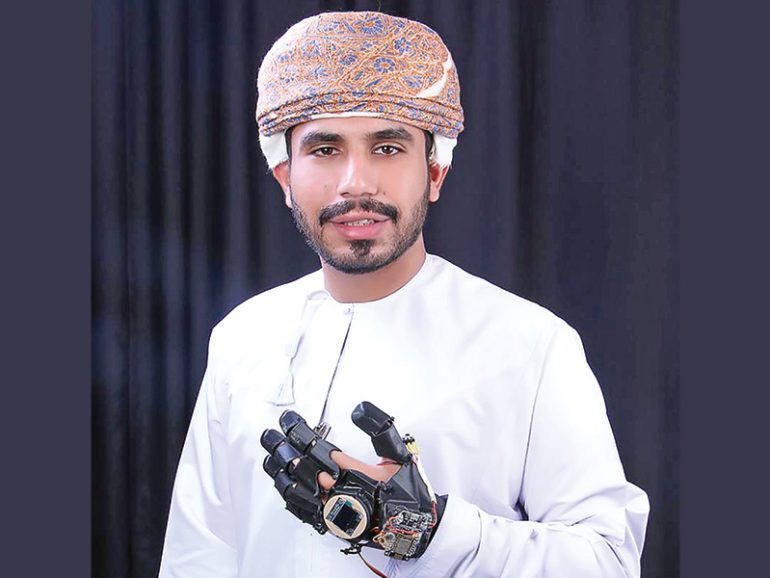
OMANI student Al Azhar Zahir Al Jabri develops Smart Glove for Paralytic Patients

Al Azhar Zahir al Jabri, a 22-year-old Chemical Engineering student from the University of Technology and Applied Sciences in Muscat, has developed a ‘Smart Medical Glove’ to assist patients suffering from hemiplegia – a condition that causes paralysis on one side of the body.

Inspired by the memory of his late mother, who suffered from hemiplegia, Jabri embarked on this project in early 2021. 

“After my mother’s passing, I wanted to do something for those people affected by hemiplegia, and so I started working on this project. It has now reached an advanced stage, and I hope to complete it early next year and introduce the glove for permanent use,” he said.

The Smart Medical Glove has been developed for individuals with hemiplegia, muscular dystrophy, the elderly, and children. 

“The glove aids in rehabilitating the affected hand through pre-programmed specialised movements stored in the device. It also connects to a mobile application that allows patients to communicate with doctors worldwide and displays health sensor readings,” Jabri explained.

The glove includes simple daily movements that help patients perform certain activities independently. 

“I faced several challenges, primarily because I’m not an expert in rehabilitation science. However, through consultations with specialists, I was able to identify the essential movements and ensure their accuracy,” he added.

In 2022, Jabri secured a patent for his invention from the Ministry of Commerce, Industry, and Investment Promotion. He believes the project represents a valuable economic resource for Oman. 

“Projects like these are vital for keeping up with Oman’s ongoing development and vision.”

Jabri recently represented Oman at the TEXPO exhibition in Malaysia, where he reached the final stages. He also collaborated with Khoula Hospital, which provided specialised consultations for the project and will continue to support its success.

“My family has been my primary supporter, and Khoula Hospital’s expertise has been invaluable. I hope my project will soon see the light of day and become available in the market for the benefit of those who need it,” he concluded.

source/content: muscatdaily.com (headline edited)

_________

__________

OMAN

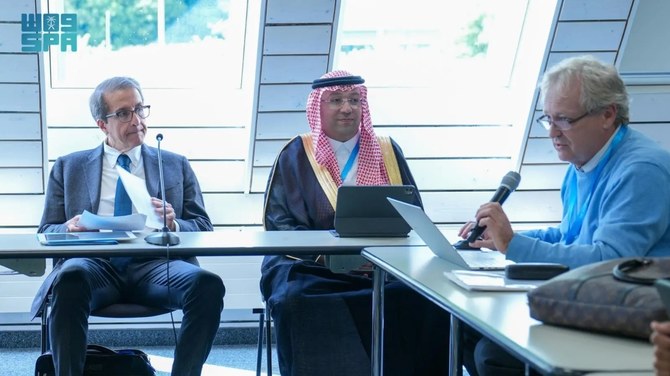
SAUDI ARABIA reelected to ‘Global Research Council’ leadership under the Vice Chairmanship of Munir bin Mahmoud Eldesouk

The governing board voted unanimously to reelect Vice Chairman Munir bin Mahmoud Eldesouki at the body’s 12th annual meeting.

The Kingdom has retained its leadership position in the Global Research Council, the Saudi Press Agency reported on Wednesday.

The governing board voted unanimously to reelect Vice Chairman Munir bin Mahmoud Eldesouki at the body’s 12th annual meeting in Interlaken, Switzerland this week.

The reelection to this position, for the second time since the body’s establishment in 2012, confirms the council’s confidence in Saudi Arabia, the SPA reported.

The council highlighted Saudi Arabia’s efforts in promoting research, development and innovation in the Middle East North Africa region, the report added.

The council comprises heads of research institutions that fund projects globally.

source/contents: arabnews.com (headline edited)

__________

The governing board voted unanimously to reelect Vice Chairman Munir bin Mahmoud Eldesouki at the body’s 12th annual meeting. (SPA)

__________________

SAUDI ARABIA

ALGERIA: Hassiba Boulmerka: The trailblazing Algerian star who defied death threats to win Olympic gold

The former Algerian middle-distance runner won her country’s first-ever Olympic gold medal. She navigated a deadly and divisive political crisis within her nation to emerge as “a symbol of victory and defiance”.

Hassiba Boulmerka and her family received death threats, and she was even denounced as anti-Islam at her local mosque.

However, in her home country of Algeria, there was no safe space for her to run.

The world 1500m world champion feared that radical Islamist militants would kill her, and the surrounding atmosphere was equally terrifying.

But despite the risks, the ‘Constantine Gazelle’ continued to train, running even faster and defying the threats to her life.

A year after clinching the first of her two world titles, she made history at the Barcelona Olympics in 1992, winning the first Olympic gold for Algeria .

Hassiba Boulmerka: Africa’s first world track champion

Running had been Boulmerka’s way of life since the age of 10.

Growing up in Constantine, in the east of Algeria, she gained recognition for her speed and stamina, which led her to claim four African gold medals in the 800m and 1500m.

Two years after her double triumph at the continental championships, she stunned the field, sprinting to the lead in the homestretch of the 1500m race to clinch the gold.

It was a glorious moment for Boulmerka, as she became the first African woman to earn a World Championships title.

“I screamed for joy and for shock, and for much more,” she said. “I was screaming for Algeria’s pride and Algeria’s history, and still more.”

Her triumph was significant, symbolising progress for Algerian sport and Arab women.

Despite the heroic reception that awaited her and her teammates upon their return from the 1991 World Championships, her running didn’t quite resonate with everyone.

Her sporting endeavours continued to be frowned upon.

Training and competing meant exposing her arms and legs, which was perceived as not adhering to Islam’s code of modesty.

Hassiba Boulmerka was labelled ‘anti-Muslim’ for choosing to run

Boulmerka pressed ahead, enduring the criticism.

She faced hostility, being spat on and having to dodge stones thrown at her while training on Algerian roads.

In a matter of months, her hopes and dreams of participating in the Olympics started to fade as her country was plunged into civil unrest, resulting in over 150,000 lives lost.

Training became not only impossible but also dangerous during the crisis, with Islamist militants seeking to impose oppressive rule.

She was forced to relocate to Berlin to train ahead of the 1992 Olympic Games.

“I remember it well,” she recalled in an interview with the BBC. “It was Friday prayers at our local mosque, and the imam said that I was not a Muslim, because I had run in shorts, shown my arms and my legs. He said I was anti-Muslim.”

When she arrived in Barcelona just before her event, Boulmerka was accompanied by armed escorts into the stadium, highlighting the unprecedented security measures.

“There were police everywhere. In the stadium, in the changing rooms – they even came with me to the bathroom!” she said.

Despite these challenges, the ‘Constantine Gazelle’, as she was affectionately dubbed for her agile and graceful running style, defied the odds and her performance at the Estádio Olímpico was remarkable.

Hassiba Boulmerka: A heroine for women in sport

The Unified Team’s Lyudmila Rogacheva set the pace for most of the 1500m race before the Algerian powered past her with half a lap to go, securing her greatest career victory. Her time of three minutes, 55.30 seconds earned her the Olympic gold medal, marking the second time second time an Arab woman had stood atop the Games podium (after Morocco’s Nawal El-Moutawakel at Los Angeles 1984).

It was a beautiful ending after months of navigating political challenges – an example of ‘courage in defying taboos and pursuing passion’.

“As I crossed the line, I thrust a fist into the air. It was a symbol of victory, of defiance. It was to say: ‘I did it! I won! And now, if you kill me, it’ll be too late. I’ve made history!'”

As Boulmerka stood on the podium, feeling the weight of the medal around her neck, she was overwhelmed by emotions.

“I tried to hold myself together, to be brave…but the tears just started to fall. They were tears of sacrifice, for all the people I loved that I had abandoned for this race.

“It was a triumph for women all over the world to stand up to their enemies. That’s what made me really proud.”

There was no fanfare when the two-time Olympian returned home to reunite with her family.

Algeria was still far away from the end of its dark period, prompting he exile in Cuba before she returned to Algeria after recapturing the gold medal at the 1995 World Championships.

Her medals stand as a testament to her courage, and Hassiba Boulmerka continues to serve as a beacon of inspiration for women in sport.

source/content: olympics.com (headline edited)

___________

(Getty Images)

____________

ALGERIA

SAUDI ARABIA: FIRST: ‘I was born a fighter’ — the making of Saudi’s First MMA Female Fighter Hattan Alsaif

The pioneering Riyadh resident knocked out Egypt’s Nada Faheem at the inaugural edition of PFL MENA in Riyadh last week.

As her opponent lay defeated on the floor, the Saudi mixed martial arts fighter marked a landmark victory by waving an imaginary sword in the air.

The celebration was appropriate— Hattan Alsaif’s family name translates directly as “the sword.”

Overnight, Saudi had a new sporting superstar.

On May 10, the 22-year-old made headlines around the world after she knocked out Egypt’s Nada Faheem, delivering a head kick in the second round of their bout at the inaugural Professional Fighters League Middle East and North Africa edition in Riyadh.

Her win, she says, was also a message of love and commitment to her friends, family and fans.

“It [the win] was something I was so proud of,” Alsaif told Arab News. “To make them see how far I reached, and I was doing my best to show them that I will never let them down.”

The future of Saudi women in MMA has been brewing for some time. In February, Alsaif made history when she became the first female from the Kingdom to sign a contract with a major MMA promoter – the PFL, now backed by Saudi’s public investment fund.

Her performance at the Green Halls last week has raised her profile beyond her hometown or even the region. Alsaif is now an international contender.

She said representing Saudi Arabia “meant everything” to her: “I do love my country so much, and I wanted to represent my country in the best way I can.”

But behind the win were three months of relentless training — mental and physical — and even cage-like fights in her gym.

Alsaif is a relative newcomer to the sport. When she first began training in 2021, it was never part of the plan to turn professional.

“First five days I began boxing, I jumped in a championship, and I lost the game,” she said.

Alsaif took the loss as a wake-up call to shift her perspective.

“You have to work hard, you have to work more, so you can have what you want. So I got that point on my mind and I worked on it,” she said.

Alsaif’s appetite for risk and adrenaline rushes dates back to her school days when, she recalls, her late parents received numerous complaints about her behavior.

“They (the school) were always calling my parents. ‘Your kid is jumping from the classes and jumping from the roof and jumping everywhere’,” Alsaif said.

“I was (also) in love with hiking and I was so in love with the desert bikes.”

A fighting spirit feels almost inherited, considering the Kingdom’s own rich history.

“I was born in Saudi Arabia and Saudi Arabia is my country. Saudi Arabia is in my blood,” she told Arab News.

“If I’m a girl from this city (Riyadh), that means I was born a fighter. I’m ready to sacrifice whatever it is for my country and for my people.”  

For Alsaif, sports such as Muay Thai are more than physical battles against an opponent. She feels there is a psychological fight between the inner critic in her mind and the fighter in her heart.

“Your mind will tell you ‘It’s all right. You’re bleeding now. No one will blame you if you quit…just quit’,” she said. “If your mind says that, then your body is going to move as much as your mind told you. If you moved with your heart, courageous heart, then you win it.”

Alsaif’s Islamic faith and spirituality has carried her through life’s hardships, which included losing her parents as a child.

“But I always believe that God is with me, and that I’m never alone,” Alsaif said.

After religion, it’s mixed martial arts that provides solace, resilience and a feeling of belonging for Alsaif.

In the last three years, she has spent months in Muay Thai training camps in Ko Samui and Phuket, relishing even the hardest moments of tears, cuts and bruises.

“It was so amazing visiting Thailand and having a camp (there). That was one of my dreams,” she said.

The sports scene in Saudi Arabia has transformed so rapidly in recent years that a new generation of homegrown stars like Alsaif no longer needs to look beyond their borders or regions for role models.

Her inspiration is Saudi MMA fighter Abdullah Al-Qahtani, with whom she shares a coach.

“I can see how much discipline, motivation he has […] and how much hard work he does,” she said.

Their coach, Feras Sadaa, is “the best,” she said, adding that she frequently reminds herself she has his complete backing: “I always trust him.”

Alsaif’s routine is simple but rigorously disciplined and follows the vital components of sports development and recovery — train, eat, sleep and repeat.

Alsaif says she is focused on taking any opportunity that arrives in her path and hopes to see more Saudis competing in MMA.

“I know my people and I know that my people are good enough to enter that cage and to show us a good fight,” she said.

source/content: arabnews.com (headline edited)

____________

The 22-year-old Hattan Alsaifi made headlines around the world after she knocked out Egypt’s Nada Faheem. (Instagram: @hattanalsaif24)

_________________

SAUDI ARABIA