Arabs & Arabian Records Aggregator. Chronicler. Milestones of the 25 Countries of the Arabic Speaking World (official / co-official). AGCC. MENA. Global. Ist's to Top 10's. Records. Read & Enjoy./ www.arabianrecords.org
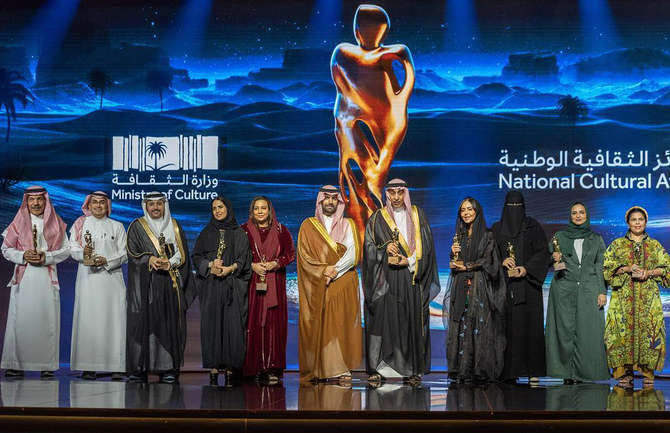
The winners of the third National Cultural Awards were honored in a ceremony held in Riyadh on Saturday. The event was a night dedicated to celebrating cultural creativity and promising ambition.
Minister of Culture Prince Badr bin Abdullah bin Farhan presented the awards to the winners in the presence of Minister of Education Yousef Al-Benyan and Minister of Media Salman Al-Dossary. The ceremony was also attended by a distinguished group of intellectuals, writers and media figures.
The National Cultural Awards, an annual initiative by the Ministry of Culture, aims to recognize and showcase the talents of individuals within the country.
The awards also serve to promote their cultural products both locally and internationally, while providing financial and moral support to encourage their continued growth and success.
The winners were nominated for awards in 16 different categories, covering a range of areas including literature, music, architecture and design, nonprofits and film.
Prince Badr said: “We are happy to honor innovators in our beloved capital,” adding that the initiative aims to “shed light on talents, celebrate achievements, honor innovators and encourage cultural production.”
He said: “The newly launched business owner award for this year reflects the cultural system’s appreciation for the contributions of supporters of cultural activity across all cultural sectors, and acknowledges their vital role as an integral part of the efforts made by the cultural system entities.”
Prince Badr added: “The international cultural excellence award celebrates international cultural personalities and institutions contributing to enriching the contemporary international cultural landscape, in addition to celebrating the significant efforts in the field of international cultural exchange on a global level.”
He concluded by congratulating the winners of the National Cultural Awards for this year, urging them to continue their efforts and wishing everyone a future filled with arts and culture.
Author Abu Abdulrahman Al-Dhaheri received the cultural pioneer award for his extensive contributions to literature and culture. He has produced a diverse collection of publications in languages, literature, philosophy, art, Shariah sciences and history.
Businessman Abdulrahman bin Mahfouz won the business owner award for supporting cultural activity. The International Alliance for the Protection of Heritage in Conflict Areas received the international cultural excellence award.
In addition, Lubna Al-Khamis, a Saudi journalist, won the youth cultural award. The cultural institutions award was given to the Saudi Research and Media Group in the private sector and the Abdulrahman Al-Sudairy Cultural Center in the nonprofit sector.
The ceremony also recognized winners in other cultural sectors. Mohammed Ibrahim Yaacoub, a poet, received the literature award, and Adab Publishing won the publishing award.
Maha Al-Faleh was honored with the translation award, and Charmaleena Jewellery received the fashion award. Dr. Abdullah Al-Masri, a historian, won the national heritage award, and Bateel International was recognized with the culinary arts award.
Artist Manal Al-Dowayan was given the visual arts award, and the Riyadh Band received the theater and performing arts award.
Abdulrahman Mohammed won the music award, while Ibrahim Al-Hsawi won the film award. Kholoud Attar was recognized with the architecture and design award.
source/content: arabnews.com (headline edited)
_____________
/Saudi Minister of Culture Prince Badr bin Abdullah bin Farhan with the winners of the third National Cultural Awards in Riyadh. (SPA)
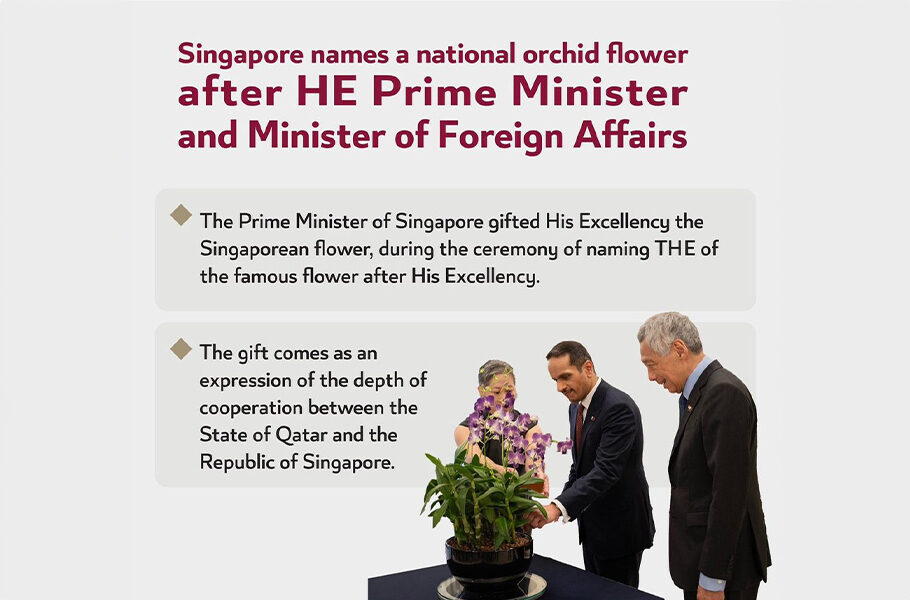
The Singaporean Prime Minister, Lee Hsien Loong, presented His Excellency the Prime Minister and Minister of Foreign Affairs, Mohammed bin Abdulrahman bin Jassim Al Thani, with a flower during the ceremony naming the famous flower after him, showcasing the strong collaboration between the State of Qatar and the Republic of Singapore.
H.E. the Prime Minister and Minister of Foreign Affairs, Mohammed bin Abdulrahman bin Jassim Al Thani, was honored at the 8th meeting of the high-level joint committee in Singapore.
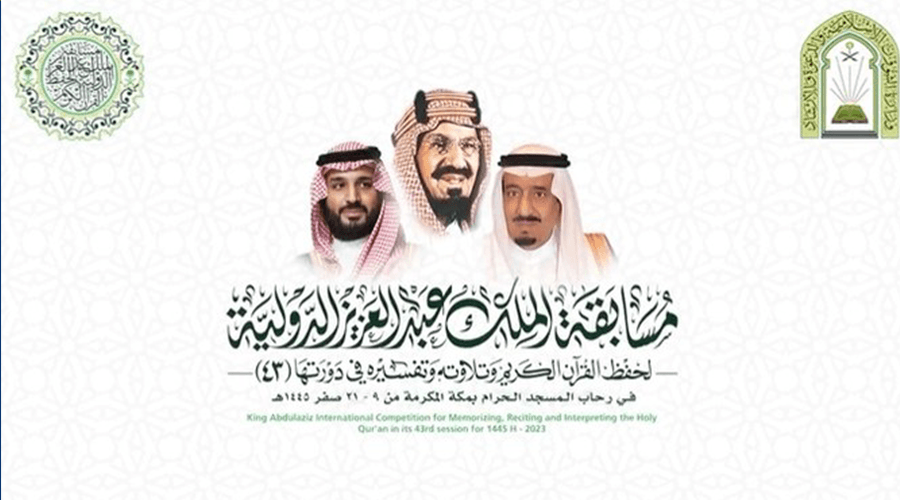
The Minister of Islamic Affairs, Call and Guidance, Sheikh Dr Abdullatif bin Abdulaziz Al Al-Sheikh has approved the results and names of the winners in the 43rd edition of King Abdulaziz International Competition for Memorization, Recitation and Interpretation of the Holy Qur’an.
The competition, held at the Grand Mosque, witnessed the participation of 166 contestants representing 117 countries, competing in all five categories of the competition, with the total prize amount for this edition reaching SAR4,000,000.
In the first category, Ayoub bin Abdulaziz Al-Wahibi from the Kingdom of Saudi Arabia secured first place and received a prize of SAR500,000. Saad bin Saadi Sleim from Algeria came in second place, earning SAR450,000, while Abu Al-Hasan Hassan Najm from Chad achieved the third position, receiving a prize of SAR400,000.
In the second category, Ammar bin Salem Al-Shahri from the Kingdom of Saudi Arabia claimed the first position and was awarded a prize of SAR300,000. Mohammed bin Adnan Al-Omari from Bahrain secured second place, receiving a prize of SAR275,000. The third position went to Abdulaziz bin Malik Atli from Syria, who received a prize of SAR250,000.
In the third category, the winners include Mohammed bin Ibrahim Mohammed from Somalia, who clinched first place and received a prize of SAR200,000. Second place went to Shuaib bin Mohammed Hassan from Sweden, who was awarded SAR190,000 while Faisal Ahmed from Bangladesh secured the third position, earning SAR180,000 Saudi Riyals, and Mohammed Mufid Al-Azza from Indonesia claimed the fourth spot and received SAR170,000. Siraj Al-Din Muammar Kandi from Libya rounded off the top five, receiving a prize of SAR160,000.
Regarding the fourth category, the winners are as follows: Mohammed Ghai from Senegal secured the top position, earning a prize of SAR150,000. Hatem Abdulhamid Falah from Libya claimed the second spot, receiving an award of SAR140,000 and Yassin Abdulrahman from Uganda achieved the third position, with a prize of SAR130,000. Mashfiqur Rahman from Bangladesh attained the fourth position and was granted SAR120,000 while rounding off the top five, Abdulkader Yousef Mohammed from Somalia received a prize of SAR110,000.
As for the fifth category, Elias Abdou from the country of Larionion secured the first position, earning a prize of SAR65,000 while the second place went to Ibrahim Shahbandari from India who was awarded SAR60,000. Marwan bin Shalal from the Netherlands achieved the third position, receiving SAR55,000 and Mustafa Sinnanovic from Bosnia and Herzegovina attained the fourth position and received SAR50,000. Lastly, Hassib Amrullah from North Macedonia took fifth place, earning a prize of SAR45,000.
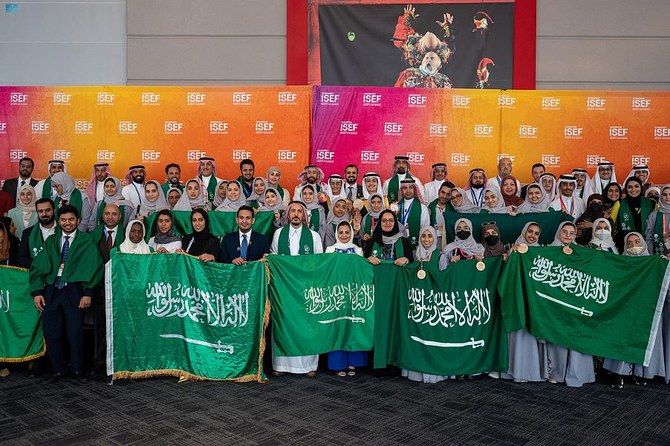
Saudi Arabia, represented by King Abdulaziz and His Companions Foundation for Giftedness and Creativity, or Mawhiba, and the ministry of education, has won 27 prizes — including 23 major and four special prizes — at the Regeneron International Science and Engineering Fair.
More than 1,800 gifted individuals from more than 70 countries participated in the ISEF event, which was held from May 13-19 in the US.
In the major awards, the Saudi team won two first-place prizes, seven second-place prizes, seven third-place prizes and seven fourth-place prizes.
Student Faisal Al-Muhaish won first-place in chemistry for his project titled “Metal-organic framework-based electrocatalyst for a highly efficient and low-cost seawater hydrogen production,” while student Mohammed Al-Arfaj won first prize in environmental engineering for his project titled “Using a contact liquid to capture CO2 found in fuel and air through a highly efficient and low-cost freezing method.”
Second-place prizes went to Taif Al-Hamdi in the field of energy, Latifa Al-Ghannam in energy, Lynn Al-Melhem in energy, Zahra Al-Shabr in biomedicine and health sciences, Fatima Al-Arfaj in chemistry, Wissam Al-Qurshi in biomedical engineering and Dima Marwahi in earth and environmental sciences.
Third-place prizes went to Ritaj Al-Sulami in energy, Fajr Al-Khulaifi in energy, Fares Al-Yami in transitional medicine, Lian Norolli in environmental engineering, Abeer Al-Youssef in materials science, as well as Lian Al-Maliki and Nour Al-Hamad in plant sciences.
Fourth-place prizes went to Maria Al-Qumsani in engineering technologies, Bandar Al-Barahim in robots and smart devices, Hanadi Arif in social and behavioral sciences, Maria Al-Ghamdi in environmental sciences, Tahani Ahmad in materials sciences, Dee Shujaa in earth and environmental sciences and Yazan Al-Fulaih in plant sciences.
This year’s achievements have increased the total number of prizes won by the Kingdom at ISEF to 133 — 92 major and 41 special prizes — since it began participating in 2007.
Amal bint Abdullah Al-Hazaa, secretary general of Mawhiba, congratulated King Salman and Crown Prince Mohammed bin Salman for this new national achievement, which was supported by the leadership. She also congratulated the ministry of education and the students, along with their families, schools and teachers.
Al-Hazaa commended the joint efforts by Mawhiba and the ministry of education, as well as their strategic partners, to continue achieving the objectives and initiatives of the Kingdom’s Vision 2030 by improving students’ capabilities in accordance with the latest scientific methods used for gifted individuals.
Al-Hazaa said that “the complementary partnership between Mawhiba and the ministry of education has contributed to the development of a creative environment, space and system for talented individuals and produced Saudi human capital models that are competent and able to innovate solutions to sustainable development-related problems, contributing to the prosperity of all of humanity.”
The Kingdom, represented by Mawhiba, also took part in ISEF 2023 as an official sponsor and presented 18 special prizes to the best projects participating in the energy category.
ISEF is considered the largest pre-university scientific research and innovation competition fair.
source/content: arabnews.com (headline edited)
___________
This year’s achievements have increased the total number of prizes won by the Kingdom at ISEF to 133 — 92 major and 41 special prizes — since it began participating in 2007.(SPA)
Dubai Electricity and Water Authority (DEWA)’s Research and Development (R&D) Centre has filed a new patent for an innovative method for improving the performance of electrodes in lithium-ion (Li-ion) batteries, sodium–sulfur batteries, and electrolyte distribution batteries.
This is achieved by treating the electrodes chemically using a polymer to increase the number of active groups on the surface of the electrodes, which leads to improving their performance. The low-cost, environmentally friendly method requires low temperatures and ensures stable battery performance. This is part of the centre’s efforts to promote the technologies of energy production and storage.
The patent supports the pilot project for energy storage that DEWA has inaugurated at the Mohammed bin Rashid Al Maktoum Solar Park using Tesla’s lithium-ion battery solution. The project has a power capacity of 1.21 MW and an energy capacity of 8.61 MWh with a life span of up to 10 years. This pilot project is the second battery energy storage pilot project by DEWA at the solar park. The first project was implemented in collaboration with AMPLEX–NGK to install and test a sodium sulphur (NaS) energy solution with a power capacity of 1.2 MW and an energy capacity of 7.5 MWh. This was the first utility-scale energy storage pilot project in the region.
Saeed Mohammed Al Tayer, MD & CEO of DEWA, said, “Our strategies and plans are inspired by the vision and directives of His Highness Sheikh Mohammed bin Rashid Al Maktoum, Vice President, Prime Minister and Ruler of Dubai, to ensure energy security and sustainability, as well as improve energy efficiency. DEWA relies on research and innovation to support the development of energy storage technologies and increase the share of clean and renewable energy. This supports the Dubai Clean Energy Strategy 2050 and the Dubai Net Zero Carbon Emissions Strategy 2050 to provide 100 percent of Dubai’s total power production capacity from clean energy sources by 2050. DEWA is working on other energy storage projects, including using Concentrated Solar Power (CSP) at the 4th phase of the Mohammed bin Rashid Al Maktoum Solar Park, the 250MW hydroelectric power plant in Hatta with a storage capacity of 1,500 megawatt-hours, and the Green Hydrogen project to produce and store hydrogen using solar power.”
“DEWA’s R&D Centre is a global platform that provides innovative solutions and technologies for the operations and services of the utility sector worldwide. This maintains DEWA’s worldwide leadership and enhances Dubai’s position as a global hub for research and development in solar power, smart grids, water, energy efficiency, and capacity building in these sectors. The R&D Centre improves the services provided by DEWA to customers by developing the latest technologies and sustainable solutions for energy and water and conducting applied research,” Al Tayer continued.
“The R&D Centre at the Mohammed bin Rashid Al Maktoum Solar Park enriches the scientific community in the UAE and the world. This is through disseminating knowledge and nurturing the talent of Emirati researchers,” Waleed bin Salman, Executive Vice President of Business Development and Excellence at DEWA, added.
Acquisition marks company’s first foray into UK market.
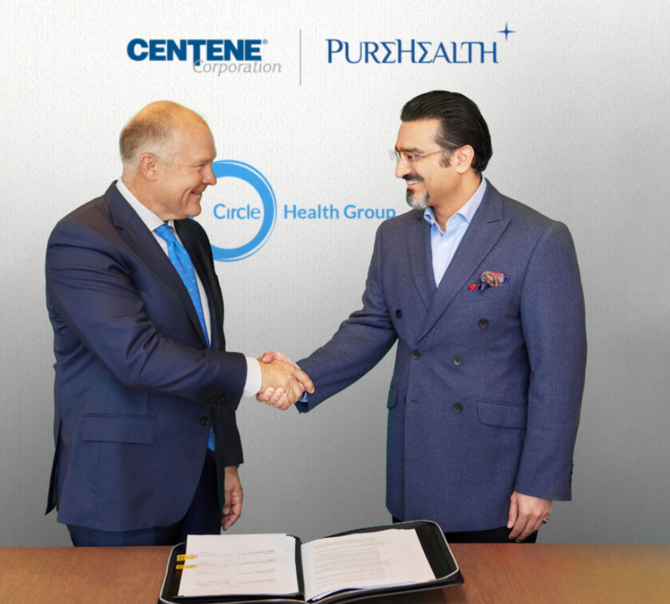
Abu Dhabi-based PureHealth has signed an agreement to buy British hospital operator Circle Health Group for 4.41 billion UAE dirhams ($1.2 billion), Emirates News Agency reported.
PureHealth is the UAE’s largest healthcare provider and the acquisition marks its first foray into the UK market.
According to the report, Circle Health Group has the UK’s largest network of private hospitals and was the first European healthcare provider to enter the Chinese market.
Under the agreement, PureHealth will acquire 100 percent of the group’s portfolio, which includes orthopedics, oncology, cardiothoracic surgery, ophthalmology, neurosurgery and general surgery, as well as the UK’s first purpose-built rehabilitation hospital.
“This acquisition marks an important milestone in our journey toward creating a global healthcare network which revolutionizes patient care,” PureHealth Group CEO Farhan Malik said.
“Our mission at PureHealth is to drive scientific innovation to unlock longevity and greater quality of life for humankind. Through integrating the expertise of both organizations, we positively impact the lives of patients globally.”
Saudi Arabia has stepped up measures to increase the scope of halal foods following the partnership of Saudi Standards, Metrology and Quality Organization, also known as SASO, with several entities, the agency said.
“More than 60 accredited entities from around the world work with us in the halal sector,” Nawaf Al-Shahri, head of the conformity assessment body acceptance department at SASO, told Arab News.
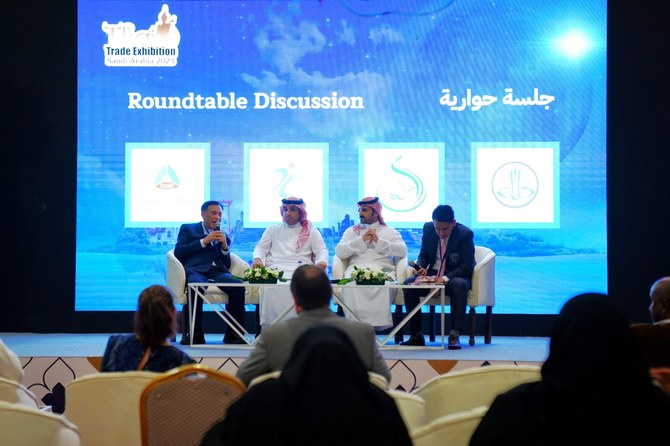
This information was revealed on the sidelines of the Thai Trade Exhibition Riyadh 2023, a four-day event that began on Aug. 27 at the Riyadh International Convention & Exhibition Center.
Al-Shahri further elaborated that SASO’s primary role in this sector involves accrediting entities responsible for issuing certificates for halal products beyond the Kingdom’s borders.
This responsibility complements the Food and Drug Authority’s task of certifying imported products in Saudi Arabia.
The authority is currently assessing the competence of these entities and will subsequently grant them a certificate of acceptance based on their qualifications. The Halal Center will then oversee their operations, both within their offices and in practical settings.
Winai Dahlan, founding director of the Halal Science Center, Chulalongkorn University, highlighted that there has been a noticeable increase in interest in halal meat among Thais in recent decades.
In 2003, the establishment of the cabinet marked a significant milestone in the evolution of halal products in Thailand.
He indicated that the growing interest in halal meat among Thais is fundamentally rooted in religious considerations.
In 1995, he founded the Halal Science Center at Chulalongkorn University to create a hub for the advancement of halal science in Thailand.
The principal duties of the center encompass the research and development of halal science and technology aimed at supporting the expansion of the industry while ensuring the quality and safety of the specialized products.
The halal products sector stands as one of the world’s fastest-growing industries, with a projected 6.1 percent increase in spending on food and beverages, anticipated to reach $1.9 trillion by 2023.
Islamic spending on halal pharmaceuticals was $87 billion in 2017 and is expected to reach $131 billion by 2023. Meanwhile, spending on cosmetics was $61 billion in 2017 and is projected to reach $90 billion by 2023.
Dr. Yousuf Al-Harbi, director of the Halal Center, affirmed that halal meat is a societal norm in Saudi Arabia.
He pointed out that the center aims to meet halal food requirements, adding that they are continually confident that “any local product we guarantee is 100 percent halal.”
“We have several initiatives, especially regarding the reliability of Halal food, from farm to consumer table, confirming that their experience in this area is thriving,” said Al-Harbi.
He said they are committed to ensuring that meats and poultry are slaughtered and stored according to Islamic law.
source/content: arabnews.com (headline edited)
___________
This discussion was held at the Thai Trade Exhibition Riyadh 2023, a four-day event that began on Aug. 27 at the Riyadh International Convention & Exhibition Center. (Huda Bashatah
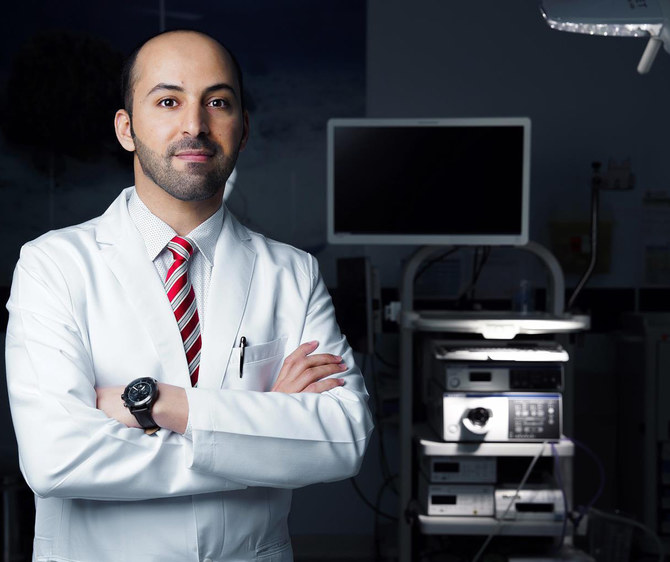
Dr. Abdullah Al-Thiabi claims to have developed a way of controlling the condition, known as gastroesophageal reflux disease.
A Saudi consultant specializing in the digestive system has invented a device that could provide relief for millions of people suffering with acid reflux, the Saudi Press Agency reported on Sunday.
Dr. Abdullah Al-Thiabi claims to have developed a way of controlling the condition, known as gastroesophageal reflux disease.
GERD is a temporary disorder that occurs when stomach acid repeatedly flows back into the tube (esophagus) connecting the mouth and stomach. This backwash, often referred to as acid reflux, can irritate the lining of the esophagus. If left untreated it can develop into a chronic condition with severe and life-threatening implications.
Also an expert in liver conditions and endoscopy, Al-Thiabi’s procedure involves placing a specialized device underneath the esophagus — using upper gastrointestinal endoscopy — which acts as a valve, preventing the backflow of stomach fluids and acids.
The device regulates medication levels and prevents side effects, while also monitoring esophageal tissue to lower the risk of cancer of the esophagus. In addition, it allows for easy sample collection and initial evaluation before laboratory analysis.
Installation time can be as quick as 15 minutes, and the technology reduces reliance on acidity drugs, surgical procedures, and healthcare costs for both institutions and patients.
After four years of rigorous scientific work following approved standards and methodology, the King Abdullah International Medical Research Center at the Ministry of National Guard has officially registered the device with the relevant authorities.
The next step will be to obtain rights and a local patent certificate from the Saudi Authority for Intellectual Property, and globally from the US Office of Innovation and Intellectual Property.
To then bring the product to market, funding from the public and private sectors will be required to support largescale commercial production, manufacturing, storage, shipping, sales, promotion, and marketing.
source/content: arabnews.com (headline edited)
_____________
Dr. Abdullah Al-Thiabi claims to have developed a way of controlling acid reflux, known as gastroesophageal reflux disease. (SPA)
Oral history, which is gradually taking hold as an academic discipline, captures potentially hidden corners of the historical record by listening to those whose voices might otherwise have been ignored.
“Oral history provides a big challenge to the people who are powerful, including historians, who think that they should get to decide whose stories are being told and what counts as evidence,” says Wesley Hogan, director of the Center for Documentary Studies at Duke University, in the United States, perhaps the best-established academic institute in the discipline.
In the Arab world, where official histories often reflect political viewpoints, oral history has taken on an increasingly important role, scholars say. Rosemary Sayigh, a retired faculty member at the American University of Beirut who has used oral history to record the stories of dispossessed Palestinians, says oral history has particular value in recording the status and experiences of women, agricultural and industrial workers, linguistic minorities, colonized societies, immigrants, refugees, and gypsies.
“The most powerful thing oral history does is force the researcher to look the subject in the eye—forcing the historian to be an ethnographer, actually sitting face to face with the narrator, listening to their voice and sensing their emotions and body language,” says Hana Sleiman, a Ph.D. candidate at the University of Cambridge and manager of a Palestinian Oral History Archive at the American University of Beirut. “It puts you in contact with the entire life narrative.”
The U.S.-based Oral History Association describes the field as gathering, preserving, and interpreting the narratives of people, communities, and participants in past events. The discipline is the oldest form of documenting history, dating back to times when sharing stories was the only form of creating a historical record. At the same time, it is one of the most modern means of documenting history, expanding with the use of tape recorders.
“
“The most powerful thing oral history does is force the researcher to look the subject in the eye—forcing the historian to be an ethnographer, actually sitting face to face with the narrator, listening to their voice and sensing their emotions.”Hana Sleiman Manager of the Palestinian Oral History Archive at the American University of Beirut
“
Oral history as an academic sub-discipline was first established in the mid-1960s. “For a long time in the 1940s and 1950s, there was just not enough access to equipment,” says Hogan, at Duke. “We did not have access to portable tape recorders until 1963.”
One of the earliest uses of oral history by scholars was at Spelman College, a historically black institution for women in Atlanta, Georgia. Academics would take portable tape recorders to civil-rights movement meetings in the mid-1960s to record discussions and interview participants. Despite the clear value of having such on-the-spot recordings, many historians at the time viewed them with suspicion.
“Even though historians started to use [portable tape recorders] in the early ’60s, most history departments only started to admit oral history as evidence in the late 1970s, so it took a very long time for historians to be willing to accept oral history as evidence, comparable to evidence material, such as journals or written documentation,” added Hogan.
Oral History and Palestinians
Perhaps the event that has been the most documented by oral historians in the Arab world is the Palestinian Nakba. The 1948 Palestinian exodus, also known as the Nakba, occurred when more than 700,000 Palestinians—which was then more than half of the Palestinian population—were displaced from their homeland by the creation of Israel.
Much of that work has been collected by the Palestinian Oral History Archive, launched in June at the American University of Beirut. The archive contains more than 1,000 hours of video and tape-recorded interviews with Palestinians, made available to the public through a digital archive. Some of the interviews are available on the Internet.
Sleiman, the archive manager, says it “offers a push back in the face of the destruction of the villages and the attempts at erasing the records, and captures an entirely different layer of history that is not captured by written archives, including the most intimate texture of human life.” The collection includes folktales, songs, and the stories of the Palestinian refugees who fled to Lebanon.
Even Palestinian national cultural institutions have been slow to record Nakba experiences, but individual scholars and activists have moved in to fill the gap, says Sayigh.
“History is often written by the victors, and the story of the Nakba has been presented through the accounts of the Zionists and the colonial regimes,” said Lena Jayyusi, a professor emeritus at Zayed University.
“The details of the massacres and how civilians were forced out of their homes [during the Nakba] are very important to understand what happened; a general idea is not enough to build a foundation for the continuity and the remembrance of a certain community,” added Jayyusi.
Jayyusi also said oral history was important to “reconstruct Palestinian life before the Nakba: the social life, the religious life, the relationships between the people.”
Rising Respect for Oral History
Technological advances in managing sound and video files have made oral historians’ lives easier lately and increased the power of the discipline. Scholars can now more easily archive and index sound and video files, search files for particular speakers, and label emotions, as pointed out on the Oral History and Technology website.
Also, the average citizen now has easy access to powerful oral-history tools. “In a world where many people have access to a smartphone and an app that can record, and where data storage is cheap, we have increasing access to creating oral history archives,” says Hogan. “The more information we have from everyday people, people who are on the margins, the more we can understand societies, especially the ones in rapid transition.”
Many resources on the web, such as the International Oral History Organization, are also increasingly providing instructions and encouraging people to start their own oral history projects, filling a gap because universities do not often offer such courses. Archiving social media history is an important complement to oral history, scholars say, especially in societies where governments might delete what is now online.
Oral History and Academia
Oral history, just like any other qualitative research methodology, must be conducted with a critical eye, scholars say. Much of oral history relies on memory and a lot of subjectivity comes into play.
“People’s ideas and perceptions are reflected in oral history, and researchers should be aware of that,” explained Jayyusi.
Jayyusi said that no methodology is straightforward and objective, and researchers must be critical even when dealing with numbers. Methodologies must be triangulated, compared, and assessed, before producing a final report.
If oral history catches on with younger scholars, who fan out and capture the stories of today’s refugees and others whose stories are not being chronicled well in official channels, those scholars will be creating an evidence-rich gift for future historians.
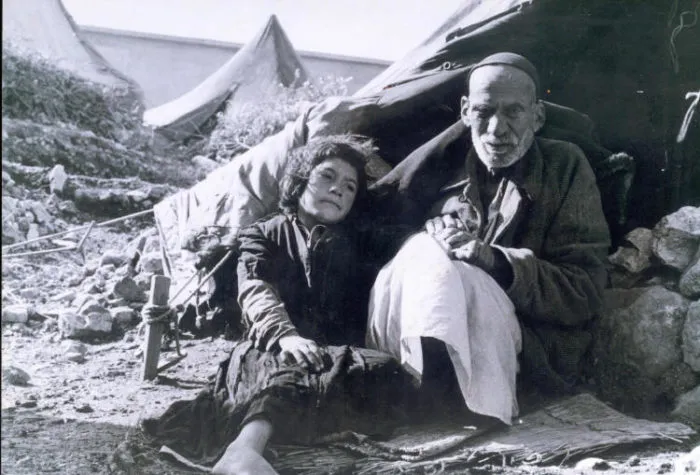
An old man and a young girl were made refugees by the Arab-Israeli war of 1948. Experiences like theirs are being recorded by oral historians, so the story is not told only by the victors (Photo: Creative Commons).
UNESCO chooses theme for World Arabic Language Day 2023
Arabic is one of the most widely spoken languages, used daily by more than 400m people
Language is a main pillar of any society, and a driving force for connecting communities. As one of the six official languages in the UN, and one of the most spoken languages globally, Arabic is an incubator of culture, science and knowledge.
It is also one of the most widely spoken languages in the world, used daily by more than 400 million people.
World Arabic Language Day has been celebrated by UNESCO every year on Dec. 18 since 2012, the date coinciding with the day in 1973 that the UN General Assembly adopted Arabic as the sixth official language.
UNESCO recently chose “Arabic — the Language of Poetry and Arts” as the theme of World Arabic Language Day 2023 to highlight the role Arabic has played in poetry and art for centuries.
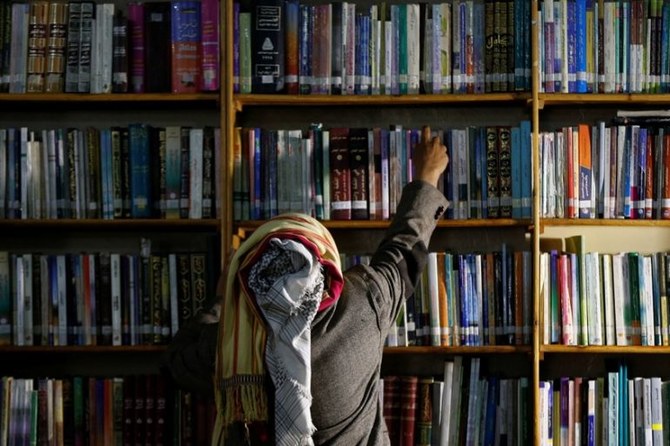
Experts told Arab News that Arabic has many characteristics and aesthetic values, both in written text and spoken discourse.
“Arabic language is very closely linked to the arts, literature and various cultural styles, from poetry to prose, to the rest of the literary genres, such as the story, the novel, the narrative, and poems in various artistic and scientific fields,” Mohammed Alfrih, a member of the board of directors of the Saudi Publishers Association, said.
“We can hardly find another language that mimics the Arabic language in its elegance and its different expressive ability, and it is not surprising that non-native speakers confirmed that, let alone its native speakers,” he said.
Yousef Rabab’ah, a professor of Arabic language and literature at Jordan’s Philadelphia University, said: “The Arabic language is characterized by features and characteristics in derivation, vocabulary, and idiomatic expressions that make it able to keep pace with developments in various fields, and this is proven objectively.”
Rabab’ah, who is editor-in-chief of Afkar Magazine, which is published by the Jordanian Ministry of Culture, said: “The Arabic language has been able throughout its history to influence many arts related to it, for example the arts of decoration, in which the Arabic calligraphy was essential in its formation. Artists were able to adapt the Arabic letters and Arabic calligraphy to produce artistic paintings and beautiful decorations that we see in places of worship, the walls of castles, palaces, and on the covers of books.
“Likewise, Arab voices, and the way they are performed and controlled, have a great role in the arts of singing, music and mirth, and we will not forget the plastic arts that adopt the formations of Arabic calligraphy which enter into the drawings of this type of art,” he said.
According to Hanan Al-Sharnouby, assistant professor of literature and criticism at Alexandria University, the Arabic language has a profound association with various forms of arts, and it is necessary for those seeking to engage in linguistic arts and speech sciences to master the language.
Al-Sharnouby noted that language and art are interconnected, influencing each other. She emphasized that quality content for films, series, and theater necessitates a language that reflects Arab identity effectively and that the rich heritage of Arabic serves as a solid foundation for sophisticated art that fully engages its audience.
Mohammed Daud, a professor of Arabic language and dean of the Faculty of Linguistics at Sudan University of Science and Technology, said: “There are formative and structural characteristics common to natural human languages, in addition to what is specific to each language.
“The Arabic language is distinguished by these formative and structural characteristics without the rest of the languages. It is represented by the fact that Arabic is concerned with the aesthetic values in the written text and spoken discourse, taking into account the semantic differences between words that appear synonymous in different structural contexts, which enabled it to express the same meaning in different ways and with amazing accuracy.
“This is reflected in its illustrative styles and its individual and collective creative arts, and applies to the ways of thinking of its speakers in their keenness to portray the details of artistic situations and the integrity of their creative production,” he said.
Daud said that the future of the Arabic language is bright due to the stability of its morphological, grammatical and semantic systems, and its ability to derive words and generate meanings through these means.
Tha’er Alethari, a professor of criticism and literature at University of Wasit in Iraq, said: “It is important to realize that Arabic is the only language in the world that has been understood for 2,000 continuous years.
“We read pre-Islamic poetry, understand it, and perhaps quote it on a contemporary issue, and this communication has given the language vitality and the ability to adapt to every era.
“There are two linguistic characteristics that helped it in this, the first of which is the abundance of linguistic roots in it, and the second is its etymological nature. Arabic does not depend on antecedents and suffixes in generating connotations, as is the case with most human languages. subject, noun, adverbs, etc,” he said.
source/content: arabnews.com (headline edited)
______________
World Arabic Language Day has been celebrated by UNESCO every year on Dec. 18 since 2012. (Reuters)