KUWAIT : Meet Aseel Shaheen, the first Arab woman to officiate at Wimbledon

Kuwaiti line umpire Aseel Shaheen was one of the 350 people selected to officiate in the main round of the prestigious tournament.

She is making waves at the All England Club this year after becoming the first Arab woman to officiate in the tournament.

Kuwaiti line umpire Aseel Shaheen was one of the 350 people selected to officiate in the main round of the prestigious tournament.

“It’s an indescribable feeling being here. It’s something big, it’s a challenge. I’m the first female from the Arab world to be an umpire at Wimbledon,” Shaheen, who is on the waiting list for the U.S. Open, told UAE sports paper Sport360.

“I was worried that they wouldn’t accept me because I wear a hijab, but on the contrary, they really accepted me,” she said.

“London is quite open towards hijab, but maybe it’s not too common around the tennis world. But me wearing the hijab and working on court during a tennis match at Wimbledon is a sign that the world is starting to accept us more,” the former swimmer and coach added.

Shaheen, who started officiating classes in 2002 said that reaching her position was a “challenge … because they would always nominate the guys and ignore me.”

“I told them I wanted to be an international umpire, I have the qualification and I have the language skills, because I speak good English. So I went to officiating school and I became a white badge in 2011.”

Last year, Shaheen gained experience of working in the Wimbledon qualifiers.

source/content: english.alarabiya.net /(Al Arabiya English)

____________

____________

KUWAIT

U.A.E : Visa: UAE leads the world in mobile shopping

The UAE leads the global market in mobile shopping, according to the results of the Global Digital Shopping Index 2025, a joint study by PYMNTS Intelligence and commissioned by Visa Acceptance Solutions.


The study, which surveyed 1,679 consumers and 329 merchants in the country, showed that 67% of UAE consumers used their smartphones for their most recent purchase, a 23% increase compared to 2022.


The UAE also recorded the highest rate of mobile shopping at 37%, ahead of Singapore, the UK, and Brazil.


The country also recorded an advanced global rate of biometric authentication use (32%) when making online purchases, surpassing the global average of 17%. Fifty-three percent of consumers expressed a desire to shop across multiple channels, while 75% preferred rewards programs, 73% preferred free shipping, and 70% preferred price matching.


The report also indicated that 38% of shoppers in the UAE made their recent purchases using a mobile phone or computer, with the option of home delivery.

 The results confirmed that consumers in the UAE are increasingly adopting a “mobile first” lifestyle, particularly among millennials, with a usage rate of 73%.

Commenting on the study results, Salima Joteva, Vice President and General Manager, Visa UAE, said, “The UAE’s approach reflects the great potential that can be achieved by uniting efforts to build the future of commerce. At Visa, we are working in partnership with the government and private sectors to offer innovative solutions such as Click to Pay to provide secure and seamless digital payment experiences.

These indicators reflect the country’s advanced regulatory environment and its continued support for the digital business ecosystem, enabling retailers to enhance customer experiences and achieve sales growth by offering flexible and secure payment options.

The Global Digital Shopping Index is based on a survey of 18,468 consumers and 3,464 merchants across eight countries, including the UAE, Saudi Arabia, the United States, the United Kingdom, Singapore, Australia, Mexico, and Brazil, during the period from October to December 2024.

source/content: wam.ae (headline edited)

______________

___________________________________

UNITED ARAB EMIRATES (U.A.E)


ARAB : ASBU President honours winners at 24th Arab Radio and Television Festival held in Tunisia

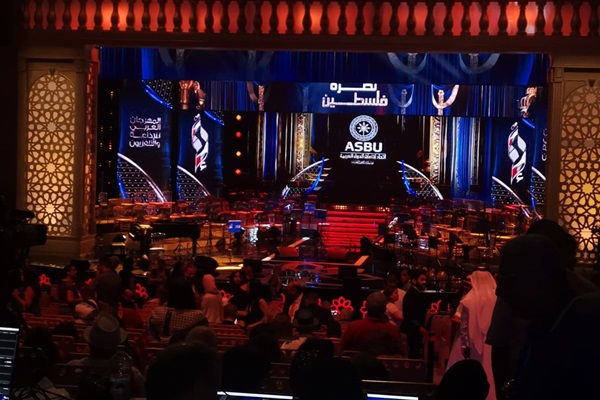
The opening ceremony concluded with a musical performance by Lebanese artist Ragheb Alama, with proceeds dedicated to supporting the people of Palestine.

Abdelrahim Suleiman, Director General of the Arab States Broadcasting Union (ASBU) and Mohammed bin Fahd Al-Harthi, President of ASBU and CEO of Saudi Broadcasting Authority (SBA), presented the awards to the winners of the 24th Arab Radio and Television Festival that was held in Tunis from June 26 to 29.

Part of the Text is Missing, a Kuwaiti TV show won the award for Best Arab TV Programme at the festival.

Saudi Broadcasting Authority (SBA) secured four radio and TV awards, including the second prize in the health programmes category for “Mental Health: Violence in Schools.” In the TV category, Saudi Arabia won three awards, including the second prize in the news category for talk shows, honouring the Saudi street programme on its episode about Vision 2030. Heritage in the Maqam of Hijaz took first prize in the general documentary films and programmes category, while the Saudi social drama series Al-Arbaji 2 secured second place in the social series category.

Additionally, the SBA received the second prize in the 2024 news exchange competition and also, the second prize in the 2024 programme exchange competition. The festival also honoured the judging panels for its radio and television competitions and distributed the exchange awards.

Qatar Media Corporation won three awards. Qatar TV took first prize for the documentary film Museums in Qatar, showcasing the distinctive museums of the country, and secured the second prize for Programme Exchanges of 2023 within the festival’s Arab Radio and Television competition in Tunisia. Qatar Radio won second prize in the “Notable Arab Figures” category.

The Ministry of Information, represented by the Sultanate of Oman Radio and the Sultanate of Oman Television, along with the private media institution Al Wisal, bagged 10 awards. Sultanate of Oman TV won four awards, including the Arab Joint Television Production Award for the documentary Holding Breaths, produced by the Ministry of Information and directed by Issa al Subhi.

Meanwhile, the Palestine Public Broadcasting Corporation (PBC) secured six awards. The radio programme Psychological Counseling in Times of War claimed first prize, while Radio Flash on school violence also earned top honours. Additionally, PBC received first prizes for radio news exchanges and a television report dedicated to the late journalist Mohammad Abu Hattab, a correspondent for Palestine TV killed by Israeli troops in Gaza. Furthermore, PBC was awarded second prize for the cultural programme Sadanat al-Riwaya and another award for the film Noura, produced by Palestine TV.

source/content: broadcastpro.me (headline edited)

__________

_________

ARAB

SAUDI ARABIA : Haifaa Al-Mansour appointed to Academy of Motion Picture Arts and Sciences’ Board of Governors

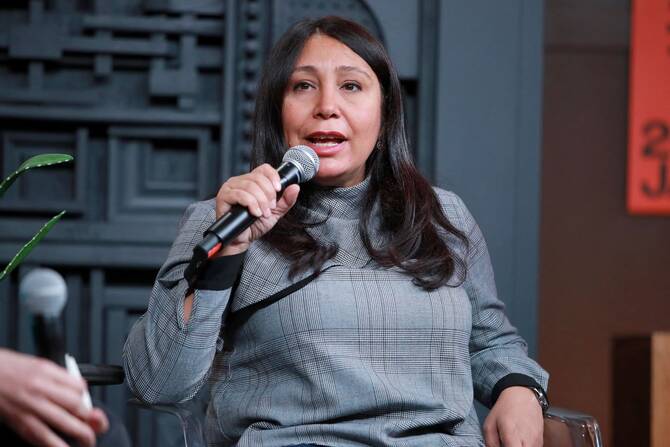
Pioneering Saudi filmmaker Haifaa Al-Mansour has been appointed to the Academy of Motion Picture Arts and Sciences’ Board of Governors, the Red Sea Film Foundation announced on Instagram.

“As one of three newly named governors-at-large, Al-Mansour will represent the Directors Branch and bring her singular voice, vision, and global perspective to the Academy’s leadership for the 2025–2026 term and beyond,” they captioned the post.

“An incredible milestone for one of Saudi Arabia’s most celebrated filmmakers. We’re proud to see her continue shaping the future of cinema on a global stage.”
In 2012, Al-Mansour made history as she released her first feature film “Wadjda.” It was the first feature film shot entirely in the Kingdom and the first feature-length film made by a female Saudi director.

Over the years, Al-Mansour has also become one of the most in-demand television directors in Hollywood, helming episodes of hit series including “Archive 81,” “City of Fire,” “Tales of the Walking Dead,” and “Bosch: Legacy.”

In 2019, Al-Mansour’s feature film “The Perfect Candidate” was submitted as Saudi Arabia’s official entry for the International Feature Film Award at the 92nd Academy Awards, but it was not nominated.

source/content: arabnews.com (headline edited)

_____________

__________________

SAUDI ARABIA

SAUDI ARABIA : Exhibitions at Prophet’s Mosque bring Islamic heritage to life

The Rare Manuscripts exhibition in annex 204 of the southern courtyards, which is open from 8 a.m. to 9 p.m., showcases “historical manuscripts, documents, and inscriptions that trace the evolution of Islamic writing”

The corridors and courtyards of the Prophet’s Mosque feature “unique sites and exhibitions that enrich the visitor experience, offering historical and cultural insights that reflect Islamic heritage and Madinah’s hospitality,” according to an article published by the Saudi Press Agency on Saturday.

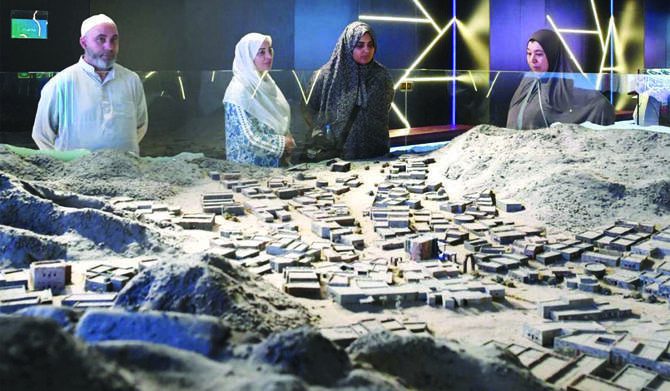
A key attraction is the Architectural Evolution of the Prophet’s Mosque exhibition, located on the southern courtyard opposite exits 308 and 309, which uses interactive displays to highlight the mosque’s architectural development. It is open daily from 4 p.m. to 10 p.m.

Opposite exits 306 and 307 is the International Exhibition of the Prophet’s Biography. Open from 4:30 p.m. to 10:30 p.m. daily, it offers “a contemporary presentation of Prophet Muhammad’s life and teachings.”

The Rare Manuscripts exhibition in annex 204 of the southern courtyards, which is open from 8 a.m. to 9 p.m., showcases “historical manuscripts, documents, and inscriptions that trace the evolution of Islamic writing.”

The mosque’s library, at gate 10 on the western side, is open 24 hours a day and includes sections on manuscripts, rare books, audio archives, and art collections.

Near Uthman Gate, the Manuscripts and Rare Books Department serves researchers and enthusiasts. It houses more than 4,000 original manuscripts, nearly 60,000 digital copies, 4,600 photocopies, and 450 different editions of the Qur’an. It operates in two shifts: 8 a.m.–noon and 4–8 p.m.

“Together, these exhibitions and centers enhance the cultural and educational value of visiting the Prophet’s Mosque, offering pilgrims a more enriching experience,” the SPA stated.

source/content: arabnews.com (headline edited)

_____________

The exhibitions enrich the visitor experience with historical and cultural insights reflecting Islamic heritage. (SPA)

___________________

SAUDI ARABIA

SAUDI ARABIA: Saudi transport chief Rumaih bin Mohammed Al-Rumaih elected MENA president of global body

Rumaih bin Mohammed Al-Rumaih was selected in a vote during the International Association of Public Transport’s summit in Hamburg

Al-Rumaih was selected for his expertise in developing modern transport systems, leading national projects and representing Saudi Arabia in international forums

The acting president of Saudi Arabia’s Public Transport Authority has been elected president of the International Association of Public Transport for the MENA region.

Rumaih bin Mohammed Al-Rumaih was selected in a vote during the association’s summit in Hamburg, Germany, this week. He will occupy the role until 2028.

Al-Rumaih was selected for his expertise in developing modern transport systems, leading national projects and representing Saudi Arabia in international forums, the Saudi Press Agency reported.

Having previously served as CEO of the Saudi Railway Company and president of the Transport General Authority, Al-Rumaih has a track record of working to improve the sustainability and quality of transport in urban settings.

“I am delighted to be with you today, and to start this new phase of work with a distinguished team that brings together a number of leaders and professionals,” he said during the conference.

“I believe that public transport is not just about infrastructure, but about experience, justice, accessibility, and sustainability.

Al-Rumaih highlighted the success of the Riyadh Metro system, which became fully operational earlier this year.

He said that the metro is witnessing high rates of usage and is changing commuter behavior in the capital.

“When we provide appropriate transportation services that are clean, safe, accessible, and reliable, people respond to and adapt to them,” he said.

Al-Rumaih also spoke about how building sustainable and people-centered transport systems requires collaboration between governments, operators, the private sector, and civil society.

“The International Association of Public Transport has always been a driver of this collaboration and will grow in importance in the years to come.”

Al-Rumaih also highlighted the findings of the MENA Transport Report 2025, which assessed trends in the industry in 40 cities across 14 countries in the region.

source/content: arabnews.com (headline edited)

___________

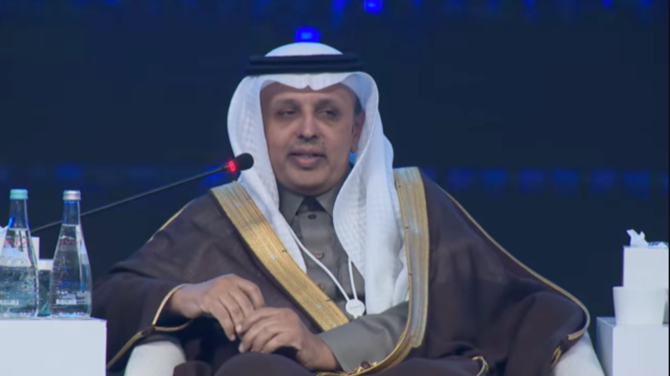
Vice Minister of Transport and Logistic Services Rumaih bin Mohammed Al-Rumaih. (Screengrab)

__________________

SAUDI ARABIA

SAUDI ARABIA : Expert sheds light on historic mosques in Makkah that remain unknown to many

Al-Dahas highlighted the significance of Namirah Mosque in Arafat, where the Prophet delivered his sermon during the Farewell Pilgrimage.

In Makkah, the holiest city in Islam, spiritual significance extends far beyond the Grand Mosque. Scattered throughout the city are historic mosques that witnessed pivotal moments in Islamic history.

Yet, amid the dense crowds and the rapid pace of modern development, many pilgrims and Umrah performers remain unaware of these sacred sites, quietly tucked away within the city’s expanding urban landscape.

Fawaz Al-Dahas, professor of history at Umm Al-Qura University, said that Makkah is home to several mosques of profound historical and religious value, yet they remain largely overlooked, receiving neither the media attention nor the organized religious visits they merit.

Al-Dahas highlighted the significance of Namirah Mosque in Arafat, where the Prophet delivered his sermon during the Farewell Pilgrimage. He said that this mosque was not merely a physical structure, but a sacred site where the foundational principles of Islam were proclaimed. He also referenced the Bay’ah Mosque in Mina, which commemorates the pivotal moment when the Ansar pledged allegiance to the Prophet, paving the way for the Hijrah and the establishment of the Islamic state.

According to Al-Dahas, the importance of these mosques transcends their geographic locations, reflecting their profound political and religious significance in Islamic history.

Al-Dahas shed light on Al-Rayah Mosque: “Located in the Jarwal neighborhood, where the Prophet’s banner was raised on the day of the Conquest of Makkah, a powerful symbol of victory tempered by forgiveness.”

He also drew attention to Al-Hudaibiya Mosque, situated west of Makkah, where the historic Bay’at Al-Ridwan pledge took place, an event referenced in the Holy Qur’an. He said that while the mosque still stands on the original site of the Treaty of Hudaibiya, it remains largely unknown, with few visitors aware of its exact location.

Mohammed Al-Joud, a Hajj and Umrah specialist, said that these mosques were not merely historical structures, but vital educational landmarks that enrich a pilgrim’s understanding of the deeper spiritual dimensions of Hajj. He pointed to Al-Khayf Mosque in Mina, where the Prophet and prophets before him are believed to have prayed, as a powerful symbol of the continuity of prophethood: “Yet, many pilgrims remain unaware of its significance outside the Hajj season.”

Al-Joud also highlighted Al-Mashar Al-Haram Mosque in Muzdalifah, which is mentioned in the Holy Qur’an, emphasizing that awareness of such sacred sites bridges the rituals of Hajj with their Qur’anic and historical roots, enhancing the spiritual journey.

Al-Joud also drew attention to Al-Kabsh Mosque in Mina, linked to the story of the sacrifice of Ismail. He explained that the mosque symbolizes the values of sacrifice and obedience, yet remains largely overlooked in media coverage and excluded from most pilgrimage programs. He described it as an essential part of a broader, interconnected network of sacred sites that trace the prophetic journey — from revelation to migration, and from peace to conquest.

Al-Dahas underscored the importance of launching awareness initiatives to shed light on these mosques and restore their rightful standing. He said that safeguarding Makkah’s Islamic heritage was not limited to preserving its prominent landmarks, but also required reviving these historically significant mosques, which once stood as pivotal markers along the journey of the prophetic message.

He said that reconnecting pilgrims with these sacred sites revived the educational and historical depth of Hajj, enriching the journey with a more profound, informed, and spiritually immersive experience.

source/content: arabnews.com (headline edited)

__________________

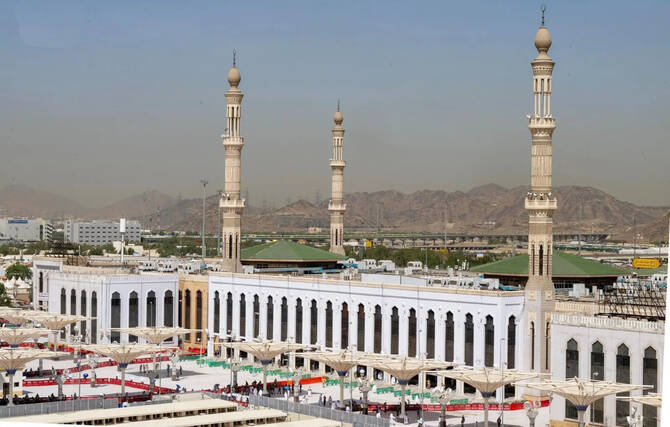
Scattered throughout the city are historic mosques that witnessed pivotal moments in Islamic history. (SPA)

__________________

SAUDI ARABIA

SAUDI ARABIA : Exploring the hidden gems of Saudi Arabia’s sacred heritage

In the holy city of Makkah, pilgrims visit Jabal Al-Nour, whose name means “Mountain of Light”.

 As pilgrims complete the sacred rites of Hajj, many embark on a deeper spiritual journey by exploring historic Islamic sites across Saudi Arabia to connect with the roots of their faith.

In the holy city of Makkah, pilgrims visit Jabal Al-Nour, whose name means “Mountain of Light.” At its peak lies the Cave of Hira, where the first verses of the Qur’an were revealed through the Angel Jibreel.

The mountain’s distinctive camel-hump shape makes it a striking landmark, especially with the nearby Hira Cultural District, where the Revelation Gallery offers pilgrims to learn the story of divine revelation and history.

Ahmed Khan, a private tour guide said: “There’s something unexplainable about standing where it all began. When I take pilgrims to Jabal al-Nour, many of them are moved to tears it’s not just a climb, but it’s a spiritual awakening.”

To the south lies Jabal Thawr, the mountain that cradled the Prophet and his companion Abu Bakr as-Siddiq in its cave during their migration to Madinah. The story of divine protection, where a spider’s web and a dove’s nest concealed their presence from their pursuers, resonates deeply with pilgrims.

Another frequently visited site is Jabal Abu Qubays, believed in some traditions to be the first mountain placed on Earth. As the closest peak to the Grand Mosque, it resonates with the early public da’wah and the great spiritual responsibility.

FAST FACTS

• Al-Qiblatain Mosque, where revelation changed the direction of prayer from Jerusalem to Makkah, remains a must-visit site for pilgrims. 

• Programs like ‘Hala,’ launched by Al-Bait Guests Co., are curating journeys for pilgrims to explore with knowledgeable guides. 

Nearby, the modest yet historically significant Al-Bay’ah Mosque marks the location of the Pledge of Aqabah, where the Ansar of Madinah pledged allegiance to the Prophet Muhammad.

Built during the Abbasid era, it symbolizes early Muslim unity and commitment to the new faith. A short distance away in Al-Hajun district is Jabal Al-Sayyidah, at the base of which lies the revered Al-Ma’la Cemetery, resting place of Khadijah, the Prophet’s beloved wife. Her grave remains a focal point of deep reverence.

“Pilgrims love visiting these places and it helps them to understand the sacrifices of the people who shaped Islam,” Khan added.

Madinah has its own timeless legacy. Al-Qiblatain Mosque, where revelation changed the direction of prayer from Jerusalem to Makkah and marked a defining shift in Muslim identity and remains a must-visit site for pilgrims.

Hussain Rauff, regional director of Madinah Hotels at Elaf Al-Taqwa, said: “We’re planning to organize guided tours across Madinah to help pilgrims explore the city’s rich Islamic heritage. It’s a meaningful way to extend their spiritual journey beyond the rituals of Hajj.”

Further west of the Prophet’s Mosque lies the cluster known as the Seven Mosques, each linked to events from the Battle of the Trench. Among them are Al-Fath Mosque and those named after figures such as Fatimah, Ali ibn Abi Talib, and Salman Al-Farsi. These mosques are rich in historical memory and serve as reminders of hardship during one of Islam’s critical battles.

Mount Uhud rises just north of Madinah city, its slopes reminds of the Battle of Uhud and the place where the Prophet’s uncle, Hamza ibn Abdul Muttalib, and 70 companions were martyred. Today, pilgrims pause at the Uhud Martyrs Cemetery indicating the modesty found in victory and the strength drawn from loss.

Equally powerful is a visit to Baqi’ Al-Gharqad Cemetery, the resting place of many of the Prophet’s family members and companions. Located near the Prophet’s Mosque, the cemetery has long served as a site for prayer and remembrance, offering pilgrims a moment of intimate connection with those who stood beside the Prophet during Islam’s formative years.

Beyond the holy cities, other destinations continue to attract pilgrims in search of spiritual enrichment. Northwest of Madinah lies Khaybar, the site of a pivotal military campaign that showcases both the strategic and ethical dimensions of the Prophet’s leadership. Its volcanic terrain and ancient fortifications tell stories etched in stone.

Fatima Al-Mutairi, a pilgrim from Kuwait: “I am planning to visit these places in Jeddah and Taif after my Hajj. I am planning to visit the Tomb of Hawa in Jeddah and in Taif, I look forward to visiting Masjid Abdullah ibn Abbas, to pay tribute to one of the great scholars whose work in Qur’anic interpretation and Hadith continues to inspire many seekers of knowledge.”

Recognizing the growing desire for such experiences, programs like “Hala,” launched by Al-Bait Guests Co., are curating immersive journeys for pilgrims to explore these sacred sites with knowledgeable guides and spiritual context.

Mohammed Al-Shahrani, experience officer in Hajj and Umrah sector said: “Our aim is to enrich the post-Hajj experience. We want pilgrims to understand that the journey of faith continues, and Saudi Arabia is opening its heritage for those who wish to walk in the footsteps of the Prophet.”

source/content: arabnews.com (headline edited)

______________

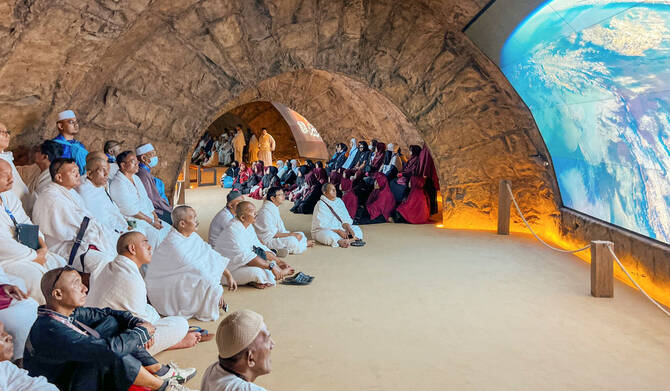
Beyond the holy cities, other sacred destinations continue to attract pilgrims in search of spiritual enrichment. (Supplied/File photo)

_________________

SAUDI ARABIA

MIDDLE EAST airlines to lead global profit margins in 2025, IATA says 

Global airlines are projected to record a net profit of $36 billion, with total industry revenue reaching $979 billion

Saudi Arabia and the UAE continue to bolster the industry as part of their economic diversification efforts

Middle East airlines are forecast to post the world’s highest net profit margin in 2025 of 8.7 percent, outpacing global peers, according to the latest industry report. 

The forecast, released by the International Air Transport Association during its 81st Annual General Meeting in New Delhi, also projects that airlines operating in the Middle East will generate a net profit of $6.2 billion this year — slightly up from $6.1 billion in 2024. The region is also expected to earn $27.20 per passenger.

Globally, airlines are projected to record a net profit of $36 billion, with total industry revenue reaching $979 billion — below IATA’s earlier $1 trillion estimate, due in part to macroeconomic uncertainties and supply constraints. 

The growth of the aviation sector in the Middle East reflects broader regional expansion, as countries such as Saudi Arabia and the UAE continue to bolster the industry as part of their economic diversification efforts. 

source/content: arabnews.com (headline edited)

_____________

_________________

MIDDLE EAST

BAHRAIN elected to UN Security Council for 2026–2027

The Kingdom of Bahrain has secured a non-permanent seat on the United Nations Security Council for the 2026–2027 term, following a vote at the UN General Assembly in New York, where it received an overwhelming 186 out of 187 votes (99.5%).

Dr. Abdullatif bin Rashid Al Zayani, Minister of Foreign Affairs, congratulated His Majesty King Hamad bin Isa Al Khalifa, His Royal Highness Prince Salman bin Hamad Al Khalifa, the Crown Prince and Prime Minister, and the people of Bahrain on this achievement. He noted that the near-unanimous support is a testament to the leadership of His Majesty the King and HRH the Crown Prince and Prime Minister, and a clear recognition of global confidence in Bahrain’s foreign policy and its commitment to peace, cooperation, and international stability.

Dr. Al Zayani emphasised Bahrain’s dedication to upholding the UN Charter, promoting multilateralism, and engaging constructively with Security Council members to address global challenges.

He said that Bahrain’s approach during its Security Council term will be guided by its core values of dialogue, coexistence, mutual respect, and consensus building. He added Bahrain’s intention to serve as a voice for diplomacy, a bridge for understanding, and a champion of solutions that reflect the aspirations of peoples for a future of peace, stability, and prosperity.

Dr. Al Zayani also commended the Kingdom’s Permanent Mission to the UN, led by Ambassador Jamal Al Rowaiei, as well as all officials at the Ministry of Foreign Affairs and members of the Mission, for their dedicated work in the spirit of “Team Bahrain.” He commended their tangible efforts and outstanding diplomatic work that contributed to this significant milestone and expressed gratitude to UN member states for their support.

Bahrain’s election was met with congratulations from Arab and international delegates, who extended best wishes for a successful term on the Council.

source/content: bna.bh (headline edited)

_______________

____________

BAHRAIN