Arabs & Arabian Records Aggregator. Chronicler. Milestones of the 25 Countries of the Arabic Speaking World (official / co-official). AGCC. MENA. Global. Ist's to Top 10's. Records. Read & Enjoy./ www.arabianrecords.org
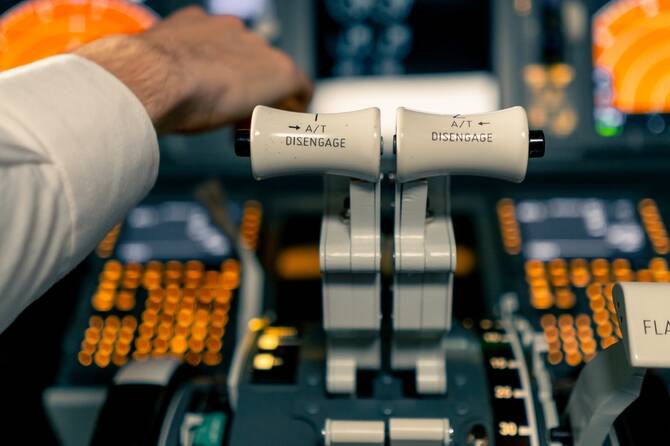
Global airlines are projected to record a net profit of $36 billion, with total industry revenue reaching $979 billion
Saudi Arabia and the UAE continue to bolster the industry as part of their economic diversification efforts
Middle East airlines are forecast to post the world’s highest net profit margin in 2025 of 8.7 percent, outpacing global peers, according to the latest industry report.
The forecast, released by the International Air Transport Association during its 81st Annual General Meeting in New Delhi, also projects that airlines operating in the Middle East will generate a net profit of $6.2 billion this year — slightly up from $6.1 billion in 2024. The region is also expected to earn $27.20 per passenger.
Globally, airlines are projected to record a net profit of $36 billion, with total industry revenue reaching $979 billion — below IATA’s earlier $1 trillion estimate, due in part to macroeconomic uncertainties and supply constraints.
The growth of the aviation sector in the Middle East reflects broader regional expansion, as countries such as Saudi Arabia and the UAE continue to bolster the industry as part of their economic diversification efforts.
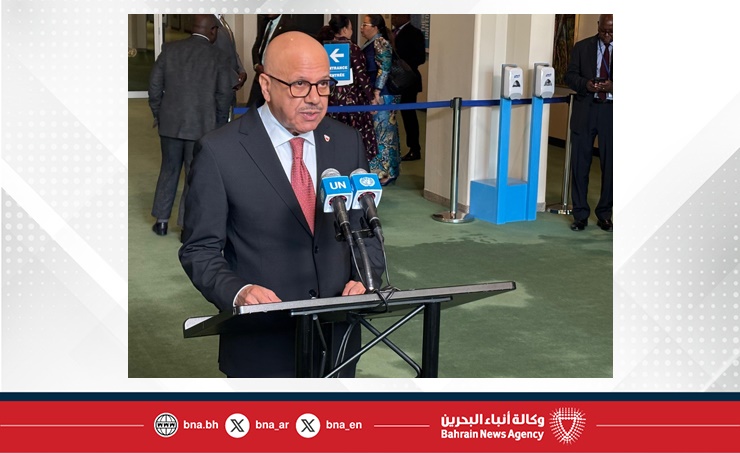
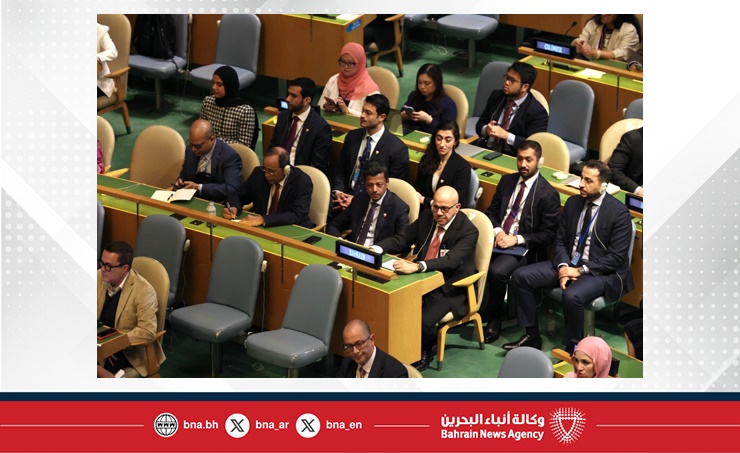
The Kingdom of Bahrain has secured a non-permanent seat on the United Nations Security Council for the 2026–2027 term, following a vote at the UN General Assembly in New York, where it received an overwhelming 186 out of 187 votes (99.5%).
Dr. Abdullatif bin Rashid Al Zayani, Minister of Foreign Affairs, congratulated His Majesty King Hamad bin Isa Al Khalifa, His Royal Highness Prince Salman bin Hamad Al Khalifa, the Crown Prince and Prime Minister, and the people of Bahrain on this achievement. He noted that the near-unanimous support is a testament to the leadership of His Majesty the King and HRH the Crown Prince and Prime Minister, and a clear recognition of global confidence in Bahrain’s foreign policy and its commitment to peace, cooperation, and international stability.
Dr. Al Zayani emphasised Bahrain’s dedication to upholding the UN Charter, promoting multilateralism, and engaging constructively with Security Council members to address global challenges.
He said that Bahrain’s approach during its Security Council term will be guided by its core values of dialogue, coexistence, mutual respect, and consensus building. He added Bahrain’s intention to serve as a voice for diplomacy, a bridge for understanding, and a champion of solutions that reflect the aspirations of peoples for a future of peace, stability, and prosperity.
Dr. Al Zayani also commended the Kingdom’s Permanent Mission to the UN, led by Ambassador Jamal Al Rowaiei, as well as all officials at the Ministry of Foreign Affairs and members of the Mission, for their dedicated work in the spirit of “Team Bahrain.” He commended their tangible efforts and outstanding diplomatic work that contributed to this significant milestone and expressed gratitude to UN member states for their support.
Bahrain’s election was met with congratulations from Arab and international delegates, who extended best wishes for a successful term on the Council.
The UAE maintained its position as the top destination for deals in the Middle East and North Africa (MENA) region during the first quarter of 2025, with a total of 63 deals worth $20.3 billion.
The UAE remains the preferred destination for foreign direct investment (FDI) in the region by 2025, accounting for 53% of the total number of incoming deals and 99% of their total value. Austria was the leading investor, accounting for 94% of the total value of incoming deals, driven primarily by a major deal in the chemicals sector.
This was stated in a report issued by Ernst & Young (EY) on “Mergers and Acquisitions in the Middle East and North Africa”, which indicated that the region recorded an increase in deal activity during the first quarter of 2025, with 225 deals compared to 172 deals in the same period last year, representing a 31% increase in the number of deals year-on-year. The total value of announced deals in the first quarter of this year also increased by 66% to reach US$46 billion, compared to US$27.6 billion in the first quarter of 2024.
role in deal volume and value, with 117 deals recorded, representing 52% of the total number of deals, valued at USD 37.3 billion, or 81% of the total value of announced deals. The first quarter of 2025 saw the highest cross-border deal activity, both in terms of volume and value, compared to the same period in the past five years, as companies increasingly sought to grow and diversify outside their home markets.
“We saw a steady flow of M&A deals in 2025, and the MENA region will continue to experience strong deal flow for the remainder of 2025,” said Brad Watson, MENA Leader, EY-Parthenon. “This strong deal flow is driven by regulatory reforms, policy shifts, and a positive macroeconomic outlook, including easing interest rates and improved investor confidence.”
contributed 48% of the total number of deals in the first quarter of 2025. This growth in local M&A deals is in line with the International Monetary Fund’s forecast of 3.6% GDP growth for the Middle East and North Africa region this year, supported by the strong momentum of M&A activity around the world. Companies are re-aligning their strategies to better meet the needs of diversification, digital transformation, and the integration of emerging technologies.
He stressed that the UAE maintained its position as the top destination in the Middle East and North Africa region in the first quarter of 2025, recording 63 deals worth a total of USD 20.3 billion. Kuwait ranked second in terms of deal revenue, with USD 2.3 billion, driven by two major deals in the diversified industrial products and energy and utilities sectors.
During the first three months of 2025, Canada attracted the highest value of outbound deals from Middle Eastern and North African investors, at US$6.4 billion, while the United States remained the preferred target destination in terms of the number of deals.
number of deals in the first quarter of 2025, while the value of deals increased significantly to USD 8.7 billion, compared to USD 1.69 billion in the first quarter of 2024.
The technology sector led local mergers and acquisitions (M&A) activity in the Middle East and North Africa (MENA) region during the first quarter of 2025, contributing 37% of the total value of local deals and 27% of the total number of deals.
Inter-regional deals involving the UAE, Kuwait, and Saudi Arabia accounted for 83% of the total value of local deals and 56% of the total number, highlighting the strong activity of cross-regional mergers and acquisitions, particularly in the technology, industrial, and real estate sectors.
foreign direct investment (FDI) during the first few months of 2025, with the number of inbound deals increasing by 21% and their value rising to USD 17.6 billion, compared to USD 2.5 billion in the first quarter of 2024.
The report indicated a 63% increase in the number of deals issued during the first three months of 2025 compared to the first quarter of 2024, reaching USD 19.7 billion, contributing 43% of the total deal value. The UAE and Saudi Arabia topped the list of deals issued from the Middle East and North Africa region, accounting for 77% of the total number of deals and 94% of their total value.
Anil Menon, MENA M&A and Capital Markets Leader, EY-Parthenon, said: “The MENA deal market has remained resilient, and the MENA deal pipeline for the rest of 2025 is promising and strong, with increased activity expected in the consumer, technology, and energy sectors. Artificial intelligence will drive fundamental value shifts, as we see significant capital allocation in technology.”
The pact interweaves water security, renewable energy mastery, and industrial sovereignty – binding Morocco’s future with a 1,400 km electricity superhighway, four desalination jewels, and 25,000 employment opportunities in a $14 billion choreography.
The largest private investment in Morocco’s modern history has just been inscribed in the country’s economic annals. Yesterday, the country sealed an extraordinary $14 billion accord with the United Arab Emirates – an injection of unprecedented scale that promises to permanently alter the country’s water and energy equation, while fundamentally reshaping its infrastructure landscape for generations to come.
The ceremonial ink still fresh, the agreement binds Morocco’s government and the National Office of Electricity and Drinking Water (ONEE) with a consortium of financial titans: the Mohammed VI Investment Fund, TAQA Morocco (the local subsidiary of Abu Dhabi’s energy colossus), and Nareva (the energy arm of the royal holding Al Mada).
At MAD 130 billion ($14 billion), this collaboration transcends mere commercial arrangement – it heralds a profound reengineering of critical national infrastructure by 2030.
Central to this ambitious blueprint stands a colossal 1,400-kilometer high-voltage transmission corridor stretching from Western Sahara to Casablanca, complemented by a network of sophisticated seawater desalination facilities.
These projects emerge as the culmination of meticulous diplomatic chess moves, coming just five months after King Mohammed VI’s private visit to Abu Dhabi and 18 months following his official state visit to the Emirati capital, where the groundwork for this Moroccan-Emirati renaissance was carefully laid.
Desert kingdoms understand water’s value. The consortium’s hydric strategy unfolds with architectural precision: a vast network connecting the Sebou and Oum Rabia river basins, engineered to channel 800 million cubic meters annually across thirsty territories.
The first phase of water transfer between the Sebou and Bouregreg basins became operational in August 2023, successfully diverting approximately 350 million cubic meters to the Sidi Mohammed Ben Abdellah dam, critical for supplying drinking water to the Rabat region.
Four jewels in this water crown will rise across Morocco’s map. In Tanger, a 50-million-cubic-meter annual capacity station will quench the industrial thirst of this burgeoning port hub.
Nador’s installation, six times more ambitious at 300 million cubic meters, will transform the eastern region’s hydric calculus. The agricultural heartland of Souss will benefit from Tiznit’s 350-million-cubic-meter facility – the largest of the quartet. Completing this hydraulic network, either Tan-Tan or Guelmim will host a 100-million-cubic-meter operation to serve the arid southern frontier.
These cutting-edge desalination facilities, engineered to operate exclusively on renewable energy, will collectively produce 900 million cubic meters annually.
Notably, they will maintain competitive pricing at or below MAD 4.50 per cubic meter (excluding tax), aligning with national benchmark rates established for ongoing desalination initiatives – all without requiring public subsidies.
The electric heartbeat: Energy sovereignty reimagined
The consortium’s energy infrastructure vision is anchored by a groundbreaking high-voltage direct current (HVDC) transmission network spanning 1,400 kilometers between Morocco’s southern territories and its central economic hub.
This sophisticated “electricity highway” will connect Dakhla to Casablanca with a 3,000 megawatt capacity, dramatically strengthening energy distribution capabilities while catalyzing economic and industrial development throughout the corridor.
This transmission masterpiece will be fed by 1,200 megawatts of fresh renewable capacity, predominantly harvested from the sun-drenched southern provinces. The geographic strategy is to harness the natural abundance of Morocco’s desert regions, translate it into clean energy, and deliver it to industrial centers at competitive rates.
Complementing these renewable ambitions, the Tahaddart complex will undergo a renaissance. This gas-fired installation will see its capacity quadrupled through new combined-cycle units, elevating total output to 1,500 megawatts. This expansion offers crucial ballast to a grid increasingly danced upon by the variable rhythms of wind energy.
The human dividend, capital choreography, and implementation cadence
Beyond pipes and pylons lies perhaps the most valuable yield: people. This grand design promises to spawn over 25,000 employment opportunities through construction and operation, with 10,000 permanent positions taking root after commissioning.
The consortium envisions not merely infrastructure but ecosystem – a fertile soil where technology transfer blooms and local industrial expertise in desalination and renewable energy flourishes. From this terrain will grow new educational pathways and technical specializations, training the standard-bearers of Morocco’s water and energy future.
The financial architecture of this mammoth endeavor will be orchestrated by the consortium, drawing capital from domestic and international financial wellsprings. The urgency is palpable; the project’s partners have pledged to assemble elite technical minds to ensure methodical implementation through 2030.
As with all ventures of this magnitude, regulatory gauntlets must be run, particularly regarding concentration operations. Each project component will be governed by bespoke development agreements between ONEE and the consortium. The first such accord, focusing on Tahaddart’s expansion, has already materialized.
The architects of the alliance
This historic partnership harmonizes complementary strengths. Nareva, Morocco’s private electricity champion, brings 3,200 megawatts of installed capacity producing over 15 terawatt-hours annually. As Africa’s wind energy pioneer, it operates eleven parks totaling 1,810 megawatts alongside the thermal goliath of Safi (1,386 megawatts).
With extensive expertise in electrical transmission infrastructure (exceeding 300 kilometers of high-voltage lines) and advanced water engineering, Nareva currently leads the innovative Amensouss project and is constructing the world’s first exclusively renewable-powered desalination facility in Dakhla.
TAQA Morocco, publicly traded on the Casablanca Stock Exchange since 2013, delivers 34% of Morocco’s national electricity requirements despite representing only 17% of installed capacity.
With a strategic focus on desalination, renewable energy development, low-carbon solutions, and infrastructure networks, the company actively advances national energy transition objectives and water security initiatives.
Its parent organization, Abu Dhabi National Energy Company PJSC (TAQA), operates as a diversified energy and utilities powerhouse with operations spanning 25 countries worldwide.
A diplomatic masterpiece
These accords signal the diplomatic renaissance between Morocco and the Emirates after a period of relative ambiguity. They physically manifest the vision sketched during King Mohammed VI’s December 2023 meeting with Sheikh Mohamed bin Zayed Al Nahyan – a blueprint for collaboration in strategically vital domains.
This official visit established a “renewed partnership” between the Maghreb and Gulf country with announcements of strengthened collaboration in strategic domains including energy and infrastructure development.
The sovereign’s subsequent private voyage proved equally fertile, brokering peace between telecommunications titans Maroc Telecom and Inwi, ending a decade-long legal skirmish and birthing a joint venture to develop 5G infrastructure for international events including the 2025 Africa Cup of Nations and the 2030 World Cup.
For fifteen years, Morocco has methodically invested in renewable energy, which now covers 38% of its electricity needs, with aspirations to reach 52% by 2030. Simultaneously confronting chronic water scarcity, the kingdom has embraced desalination as salvation. This Emirati partnership accelerates both these vital transitions, binding two desert nations in a quest for resource security and sustainable prosperity.
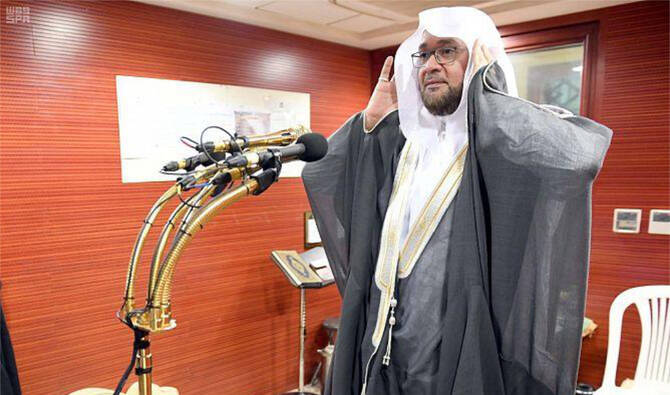
The King Abdulaziz Foundation for Research and Archives, known as Darah, has released a new book on the history of the adhan (call to prayer) and biographies of the muezzins of the Two Holy Mosques throughout the centuries.
The book was authored by Sheikh Dr. Saleh bin Abdullah bin Humaid, member of the Council of Senior Scholars and imam and preacher at the Grand Mosque.
It meticulously examines the adhan ritual in the Two Holy Mosques, covering its origins, virtues, and significance, the Saudi Press Agency reported.
The book is divided into three sections: the adhan’s history, biographies of 95 Grand Mosque muezzins, and 147 Prophet’s Mosque muezzins.
It presents biographies of muezzins who have issued the call to prayer from the time of Prophet Muhammad to the present, the SPA reported.
Drawing on credible historical sources and interviews, the author used a scientific approach to document the evolution of adhan tools and the relationship between the muezzin and the mosque.
The book also highlights the Saudi government’s support in selecting skilled muezzins and using advanced audio technology for local and global broadcasts.
This publication enriches the foundation’s collection, serving as a vital resource for researchers and those interested in the history of the Two Holy Mosques and Islamic rituals.
Trump described crown prince as “very great man like no other” and “greatest representative of his people”
Prince Mohammed said Kingdom looking at $600bn of investment opportunities, hoped this would raise to $1tn
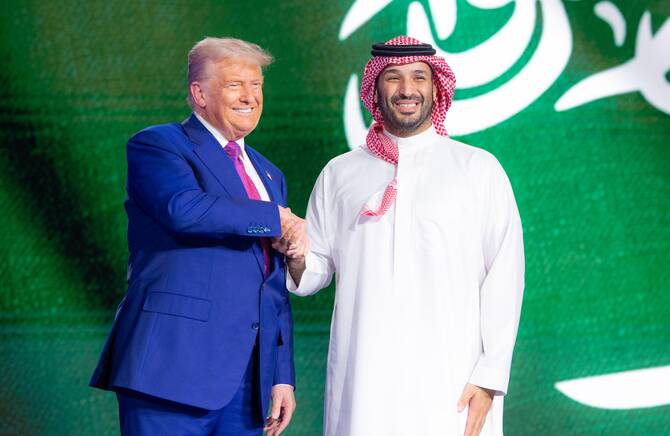
Saudi Arabia has signed deals with the US worth more than $300 billion, Crown Prince Mohammed bin Salman said at the Saudi-US Investment Forum in Riyadh on Tuesday.
During an address at the event, Prince Mohammed said the Kingdom was looking at $600 billion of investment opportunities, adding that he hoped this would raise to $1 trillion.
He noted that the US was among the largest partners of the Saudi Vision 2030 reform agenda, adding that joint investments were one of the most important pillars of the economic relationship between the two countries.
“The US is a major destination for the Public Investment Fund, accounting for approximately 40 percent of the fund’s global investments,” he said.
He also said that cooperation with Washington was not limited to economic cooperation, but also extended to “establishing peace in the region and the world.”
Also speaking at the event, US President Donald Trump praised the transformation underway in Saudi Arabia, as he attributed it to the leadership of King Salman and the crown prince.
Trump described the crown prince as a “very great man like no other” and “the greatest representative of his people,” and highlighted the role of Saudis in driving development in their own country and the region as a whole.
Trump pointed to Riyadh’s rise as a global business hub and noted that the Kingdom’s non-oil sector revenues had now surpassed those of the oil sector.
He said Saudi Arabia deserved praise for preserving its culture and tradition while also embracing its forward-looking, modern Vision 2030 reform agenda.
During his speech, Trump criticized the Biden administration for removing the Houthis from the US terrorist list, calling it a serious mistake.
He contrasted regional developments, stating: “Some (in the Gulf) have turned deserts into farms, while Iran has turned its farms into deserts,” and warned that if Iran rejected Washington’s outreach, the US would be forced to impose maximum pressure.
Condemning Hezbollah for destabilizing the region and looting Lebanon, Trump said: “The biggest and most destructive of these forces is the regime in Iran, which has caused unthinkable suffering in Syria, Lebanon, Gaza, Iraq, Yemen and beyond.”
He described Lebanon as a victim of Hezbollah and Iran and expressed a desire to help the country.
Trump also praised Saudi Arabia’s role in Russia-Ukraine peace talks and affirmed US support for the Kingdom, saying it has “a great future.”
Earlier on Tuesday, the two leaders signed a strategic economic partnership agreement in Riyadh, the first leg of Trump’s regional visit.
The partnership included the signing of Memorandums of Understanding in the energy, mining, and defense sectors.
Defense cooperation between the two countries centered on the modernization of the capabilities of the Saudi armed forces, along with an agreement between the Saudi Space Agency and NASA.
Other agreements included an MoU on mineral resources; an agreement with the Department of Justice; and cooperation on infectious diseases.
Trump arrived in Saudi Arabia Tuesday on what he called a “historic” tour of the Middle East that will mix urgent diplomacy on Gaza with huge business deals.
Saudi Crown Prince Mohammed bin Salman warmly greeted Trump as he stepped off Air Force One at King Khalid International Airport in the Saudi capital and kicked off his Middle East tour.
The two leaders then retreated to a grand hall at the Riyadh airport, where Trump and his aides were served traditional Arabic coffee by waiting attendants wearing ceremonial gun-belts.
Royal Saudi Air Force F-15s provided an honorary escort for Air Force One as it approached the kingdom’s capital. Trump and Prince Mohammed took part in a lunch at the Royal Court, gathering with guests and aides.
* With AFP and AP
source/content: arabnews.com (headline edited)
______________
Saudi Arabia has signed deals with the US worth more than $300 billion, Crown Prince Mohammed bin Salman said at the Saudi-US Investment Forum in Riyadh on Tuesday. (SPA)
The award is in recognition of the professor’s efforts in scientific research, teaching, and online learning.
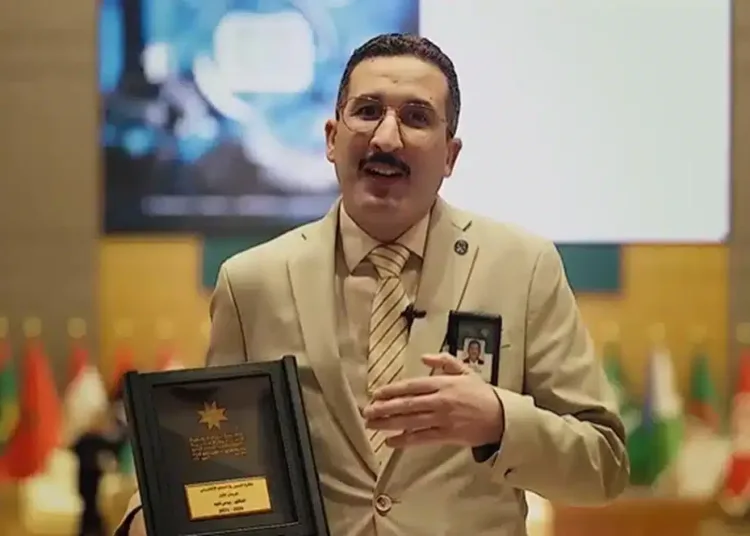
Moroccan scholar and researcher Younes Nafid received this week the Excellence Award in Online Learning from Naif Arab University for Security Sciences in Saudi Arabia.
He received the award on Thursday, recognizing his academic excellence and efforts in scientific research, teaching, and learning.
Nafid is a professor in the Department of Criminal Law at the College of Criminal Justice and Forensic Sciences in Riyadh. He also serves as an advisor for scientific research and innovation at the same university.
The Moroccan scholar authored various books and studies, and also supervised research projects and doctoral theses.
A PhD in Criminal Law and Forensic Sciences from Mohammed First University in Oujda, Nafid previously worked in Moroccan universities as a professor, including Cadi Ayyad University and Chouaib Doukkali University.
At the award ceremony, the Saudi university celebrated the Moroccan professor and his fellows, honoring the “outstanding efforts in the fields of scientific research, teaching, and online learning, in line with the university’s strategic vision to enhance the academic environment and support the Arab security system.”
In addition to Nafid, several Moroccan professors and teachers were honored on an international scale for their efforts, contributing to enhancing research, teaching, and learning.
In January, Messaoud Ariba, a Moroccan teacher, received an award at the Global Teacher Awards in New Delhi.
Ariba was the sole representative of both North Africa and the Arab world at large, earning recognition from thousands of applicants during the ceremony.
“For me, this is not just about personal achievement but about honoring the incredible work of all those shaping education in the country,” Ariba said.
In February, Moroccan professor Anasse Bari received the Dr. Martin Luther King Jr.Faculty Award for 2025 at New York University. The award recognizes leadership work and commitment to justice and fairness.
In a statement to Morocco World News, Bari said he dedicates the award to his fellow Moroccans.
“Every day in my classroom, I encourage my students to use the skills they have learned at New York University to serve the world,” Bari said, noting that his students are finding “new ways” to use AI and data science to improve the world.
The Kingdom of Bahrain’s Heatwave exhibition , curated by architect Andrea Faraguna has been announced as the winner of the Golden Lion for the Best National Participation at the 2025 Venice Architecture Biennale.
The winner has been selected by an international jury comprising of Swiss curator, critic, and art historian Hans Ulrich Obrist as jury chair, South African architect, lecturer, and curator Mpho Matsipa, and Italian curator Paola Antonelli .
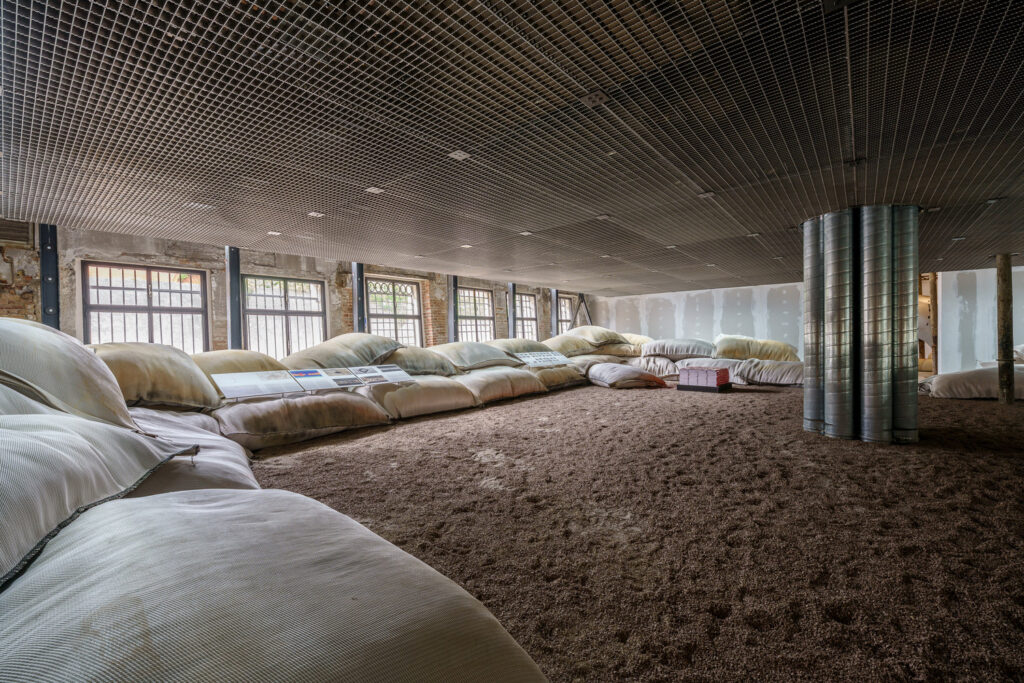
The awards ceremony is broadcast live from the headquarters of the Biennale at Ca’Giustinian. The pavilion stands out for addressing the pressing issue of extreme heat through a site-specific installation that showcases passive cooling strategies rooted in Bahrain’s climatic realities and cultural context.
The design of the pavilion explores passive cooling using geothermal wells and solar chimneys connected via a thermo-hygrometric axis, which links underground conditions to outdoor air. In exhibition settings where excavation isn’t possible, mechanical ventilation mimics this system. The modular structure features a floor and cantilevered ceiling supported by a central column, adaptable for various urban environments. The project highlights low-impact, climate-responsive design for outdoor workspaces in hot climates, emphasizing environmental responsibility, social fairness, and innovative architectural solutions.
The Golden Lion for Lifetime Achievement and the Special Golden Lion for Lifetime Achievement in Memoriam have been previously announced to be awarded to American philosopher Donna Haraway and the late Italian architect and designer Italo Rota (1953–2024), respectively. Donna Haraway is participating via remote connection to highlight the wider implications of this edition’s biennale. “Intelligence is a word that bubbles with meaning of the power of discerning,” she declares. The Golden Lion in Memoriam is awarded in absentia to Italo Rota.
Two special mentions have been awarded to participants in the international exhibition. The first one goes to Alternative Urbanism: The Central Organized Markets of Lagos by Tosin Oshinowo, Oshinowo Studio. “This award is for the Global South,” Oshinowo declares in her acceptance speech. The second special mention for a project of a participant goes to Elephant Chapel by Boonserm Premthada.
For the national pavilions, a special mention is awarded to Opera Aperta, the Holy See’s Pavilion by Paul Tighe of the Department of Education and Culture of the Holy See. The project is a “construction site, an ongoing process, which everyone is invited to collaborate.” The pavilion is curated by Marina Otero Verzier, curator and researcher, and Giovanna Zabotti, artistic director of Fondaco Italia and former curator of the Venice Pavilion, in collaboration with the design studios Tatiana Bilbao Estudio of Mexico City and MAIO Architects of Barcelona.
The other special mention goes to the Pavilion of Great Britain: GBR: Geology of Britannic Repair, commissioned by Sevra Davis of the British Council and curated by Owen Hopkins, Kathryn Yusoff, Kabage Karanja, Stella Mutegi. The selected team of expositors comprises experts from the UK and Kenya, including Nairobi–based Cave _bureau, aiming to open up difficult conversations about interconnected relationships between the two countries, decolonization, and the embedded relationships to the ground.
Golden Lion for Best Participant in the exhibition Intelligens. Natural. Artificial. Collective
Golden Lion for Best Participant in the exhibition Intelligens. Natural. Artificial. Collective is awarded to Canal Café by Diller Scofidio + Renfro, Natural Systems Utilities, SODAI, Aaron Betsky, Davide Oldani. The installation is set up to use natural filtration systems to purify water from the city’s canals and make it info coffee that visitors of the Arsenale can enjoy.
Pilgrims recreating historic 8,000 km route used by Andalusian Muslims
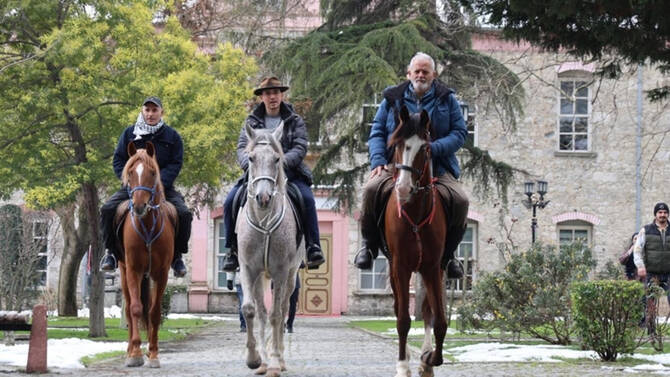
Three friends rode on horseback from Spain to Saudi Arabia to perform the Hajj, reviving a pilgrimage route last used by Andalusian Muslims more than 500 years ago.
They reached Saudi Arabia’s Northern Borders region last week in time for Hajj after travelling through Spain, France, Italy, Slovenia, Croatia, Bosnia, Serbia, Turkiye, Syria and Jordan on a 8,000 km (4,970 miles) journey.
The three Spanish Muslims, Abdelkader Harkassi, Abdallah Hernandez and Tariq Rodriguez, are fulfilling a long-held ambition after embracing Islam 35 years ago.
The three riders are accompanied by Bouchaib Jadil, a construction master living in Spain, who is providing logistical support to the team by leading the way in a car.
It all started when Abdullah Hernandez reverted to Islam 35 years ago.
He told Arab News about how he felt grateful toward Allah for blessing him with guidance — Heidaya — and he promised to complete the Hajj pilgrimage the way his Andalusian ancestors did.
The team practiced for two years before setting off in October 2024 from Al-Monaster Mosque, south of Spain.
After crossing the border of Jordan on May 2, the three Spanish friends arrived in Qurayyat city in Al-Jawf Province, in northern Saudi Arabia on Friday after a remarkable seven-month horseback journey.
During their stop in Qurayyat, the pilgrims were hosted by the head of Al-Haditha Center, Mamdouh Al-Mutairi, who welcomed them to the Kingdom and wished them a pleasant stay and an acceptable and easy Hajj, meeting with students and supporters.
The pilgrims were received with a warm welcome from the residents of Qurayyat, who posed for memorable photos with them.
Hernandez told Arab News: “The team is very excited as we are getting closer to Makkah and Madinah. These holy cities are very special to us, and we have been dreaming of reaching them for a long time. Our hearts feel full of love and hope, and we are looking forward to this moment with deep respect and happiness.
“Through this journey we want to recover a historical Andalusian route from Spain to the Harram of Makkah. It is also a trip of challenges where every step is felt by us and the horses, but also is a journey for the soul,” he added.
One of the Hajj pilgrims, Harkassi, said they were happy to revive a lost tradition. He added that the team saved money and trained for several years for the journey.
He said: “We embarked on this journey with pure intentions to realize the Hajj.”
He added: “We are almost there, and hopefully, the rest of the journey will be easier.”
Their journey, spanning diverse landscapes and extreme weather conditions, is being shared with followers on social media.
“Crossing borders has been the biggest challenge. Some countries were more difficult to cross than others as horses are not considered a mode of transport anymore, but instead they need to be ‘imported’ into each country as livestock, but Alhamdulillah, we have managed to complete all the paperwork so far,” said Hernandez.
Their expedition, known as “Hajj on Horseback,” was warmly welcomed by Muslims and non-Muslims. Hernandez added: “We’ve been received with open arms everywhere we’ve gone — each country has somehow managed to be even more welcoming than the one before, MashAllah.
“Whether in Muslim or non-Muslim countries, people have shown incredible hospitality: Inviting us into their homes, sharing meals with us, listening to our stories and engaging in meaningful conversations about Islam.
“The warmth we’ve experienced in Muslim countries has been especially profound, reflecting the deep sense of unity within our Ummah. This beautiful spirit is clearly visible in our recent videos from Turkiye and Syria.”
The team set off with limited funds, but received support from local Muslims along the way to finance the costs of the unique journey.
source/content: arabnews.com (headline edited)
__________
Abdelkader Harkassi, Abdallah Hernandez and Tariq Rodriguez are fulfilling a long-held ambition by completing a historic Hajj pilgrimage on horseback. (Supplied)
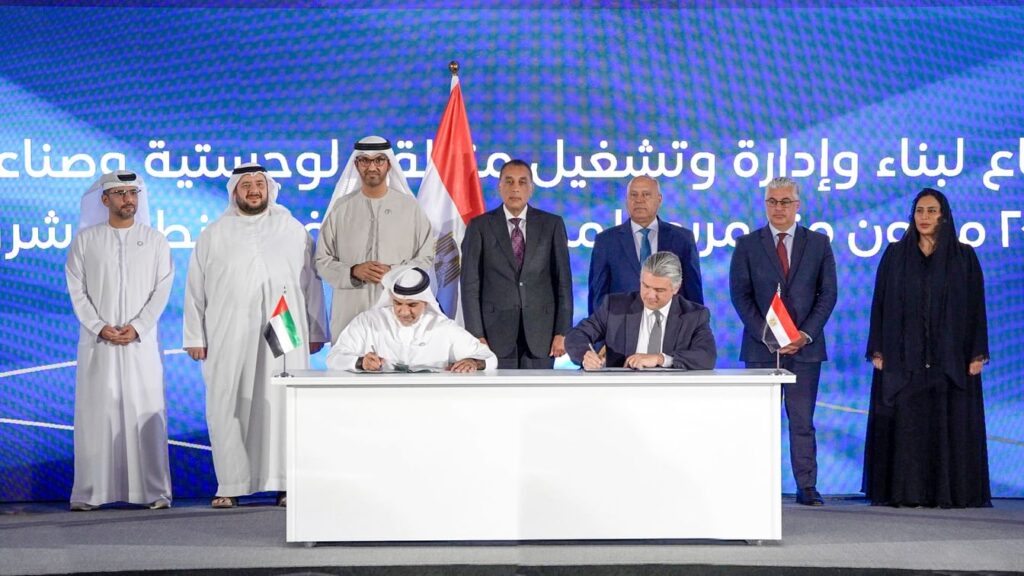
AD Ports Group, and the General Authority for Suez Canal Economic Zone (SCZONE), the integrated investment destination for linking industry and global trade, today signed a 50-year renewable usufruct agreement, to develop and operate a 20 km2 industrial and logistics park near the Egyptian coastal city of Port Said on the Mediterranean Sea.
The East Port Said Industrial Zone provides an opportunity to turn a unique location on the Mediterranean Sea into a key hub for international trade and investments serving the East-West trade routes, right at the entrance of the Suez Canal.
The agreement to develop KEZAD East Port Said Industrial and Logistics Zone was signed in Cairo, and witnessed by Egyptian Prime Minister, Dr. Mostafa Madbouly, in the presence of Dr Sultan Al Jaber, Minister of Industry and Advanced Technology, Mohamed Hassan Alsuwaidi, UAE Minister of Investment, Lieutenant General Engineer Kamel Al Wazir, Deputy Prime Minister for Industrial Affairs Egyptian Minister of Industry and Transport, Mariam Al Kaabi, Ambassador of the UAE to Egypt, Captain Mohamed Juma Al Shamisi, Managing Director and Group CEO of AD Ports Group and Mr. Waleid Gamal El-Dien, Chairman of SCZONE.
The agreement was signed by Ahmed Al Mutawa, Regional CEO of AD Ports Group, and Admiral Mohamed Ahmed Mahmoud, Vice Chairman of SCZONE for the Northern area.
AD Ports Group will develop, construct, finance, operate, and manage the industrial and logistics zone in phases, with a focus on phase 1 to start with, an area covering a total of 2.8 km2. An estimated total investment of $120 million will be allocated to market and technical studies as well as to phase 1 development over the next three years. Construction on the initial 2.8 km2 Phase 1 is expected to start by the end of this year.
The development of Phase 1 will be anchored by key potential clients and partners, including one of the region’s foremost construction and development groups, Hassan Allam Holding.
Captain Mohamed Juma Al Shamisi, Managing Director and Group CEO, AD Ports Group, said: “KEZAD East Port Said is a milestone that highlights the strong economic relations between the UAE and Egypt. In line with the vision of our wise leadership, this strategic cooperation is another sign of our Group’s growing focus on Egypt, where we continue to enhance and develop our integrated trade, transport, and industrial ecosystem, offering clients unparalleled end-to-end solutions and services. This infrastructure investment will provide a long-term source of economic growth for Egypt, while enhancing the Suez Canal role in promoting and supporting the East-West trade corridor.”
Waleid Gamal El Dien, Chairman of the Suez Canal Economic Zone, said: “The launch of this project in the East Port Said Industrial Zone represents an important strategic step that reaffirms the depth of the strong fraternal relations and the growing strategic partnership between the Arab Republic of Egypt and the United Arab Emirates, as well as the prominent position held by SCZONE as a pivotal global trade hub for industrial and logistics activities. This project enhances SCZONE’s ongoing efforts to support global supply chains by providing a competitive and integrated investment environment, underpinned by advanced infrastructure, and a unique geographic location, connecting three continents via one of the world’s most vital maritime routes.”
Gamal El Dien added: “Over the past few years, the SCZONE has become a cornerstone for the investment expansion plans of many leading regional and international companies, thanks to its integrated model of combining industrial zones and affiliated seaports. Among these is the KEZAD East Port Said Industrial and Logistics Zone, which seamlessly connects with East Port Said Port, a key strategic location on the Mediterranean Sea. The port features deep berths for large vessels, efficient operations, and excellent connectivity to advanced road and transportation networks. The expertise of a global organisation such as AD Ports Group will help SCZONE achieve its goals.”
Ahmed Al Mutawa, Regional CEO of AD Ports Group, said: “KEZAD East Port Said is being built to attract investments, promote industrial and logistics growth, create jobs, increase exports, develop skills, and facilitate technological transfer. It will complement AD Ports Group’s growing business ecosystem in Egypt, and capitalise the natural assets of the Suez Canal area for Egypt, while supporting the country’s manufacturing sector, and increasing the ease of doing business in Egypt as a preferred gateway to global markets.”
Admiral Mohamed Ahmed Mahmoud, Vice Chairman of SCZONE for the Northern area, said: “We are working on developing an integrated model that combines industry, maritime transport, and logistics services within a flexible and investment-friendly regulatory environment. East Port Said Industrial Zone stands at the heart of this model due to its strategic location at the northern entrance of the Suez Canal and its direct connection to the modern East Port Said Port, a key hub in global trade, consistently ranked among the top international ports thanks to its operational readiness and advanced capabilities. Furthermore, the integration with West Port Said Port enhances its readiness to offer comprehensive and attractive logistical solutions for investors. Therefore, this project represents a qualitative leap in the development of the northern part of SCZONE, not only in terms of the scale of anticipated investments but also in the advanced industrial and logistical activities to be implemented.”
In addition, AD Ports Group and Hassan Allam Holding, which is one of the Group’s development partners in Egypt, signed a memorandum of understanding (MoU) to develop and invest in the industrial zone and explore other projects.
AD Ports Group in December 2024 appointed Hassan Allam Construction, the construction arm of Hassan Allam Holding and one of the premier engineering and construction companies in the region, to build AD Ports Group’s new multipurpose cargo terminal in Safaga, on Egypt’s Red Sea coast.
The Group in 2023 obtained a concession from Egypt’s Red Sea Ports Authority (RSPA) to build and operate the USD 200 million Safaga multipurpose terminal project, which will be the first internationally operated multipurpose cargo terminal in Upper Egypt.
Since 2022, AD Ports Group has invested significantly in Egypt, acquiring Transmar, a regional shipping company, TCI, a port operator and stevedoring company, and in 2024, Safina B.V., a provider of maritime agency and cargo services. AD Ports Group has also secured long-term concessions to develop and operate three cruise terminals at the Red Sea ports of Safaga, Hurghada, and Sharm El Sheikh. In addition, AD Ports Group has initialled agreements for the right to develop and operate a cruise terminal and a Ro-Ro terminal in Ain Sokhna.
The East Port Said project aligns with long-standing ties between the UAE and Egypt, and the objectives of leadership in both countries to support the commercial and industrial sectors and attract high-quality investments. This project also supports the global trend of establishing regional manufacturing centres, thus shortening and sustaining global supply chains, and enhancing connectivity with major global markets.
AD Ports Group is an integrated trade, transport, logistics, and economic zones group with a presence in more than 50 countries. Based in Abu Dhabi, the Group has a maritime fleet of 247 vessels, 34 terminals, in addition to an economic and industrial land bank of over 550 km2, the largest integrated trade, logistics, and industrial business grouping of its kind in the Middle East. Furthermore, SCZONE offers unique investment potential, making it one of the most prominent destinations on the global investment map. It is supported by a strategic geographical location, advanced infrastructure, and modern ports connected to fully integrated industrial zones. These include four industrial zones, East Port Said Industrial Zone, East Ismailia Industrial Zone, Qantara West Industrial Zone, and Sokhna Industrial Zone, which are seamlessly integrated with six seaports: East Port Said, West Port Said, Al-Arish, Sokhna, Adabiya, and Al-Tor, covering a total area of 455 square kilometers. Over the past 33 months, SCZONE has successfully attracted 274 investment projects from around the world, either through direct agreements with it or via industrial developers, with a total investment value of $8.3 billion. These projects span a wide range of sectors, reflecting strong global investor confidence in SCZONE’s viability as a strategic platform for industry, exports, and logistics services.