Arabs & Arabian Records Aggregator. Chronicler. Milestones of the 25 Countries of the Arabic Speaking World (official / co-official). AGCC. MENA. Global. Ist's to Top 10's. Records. Read & Enjoy./ www.arabianrecords.org
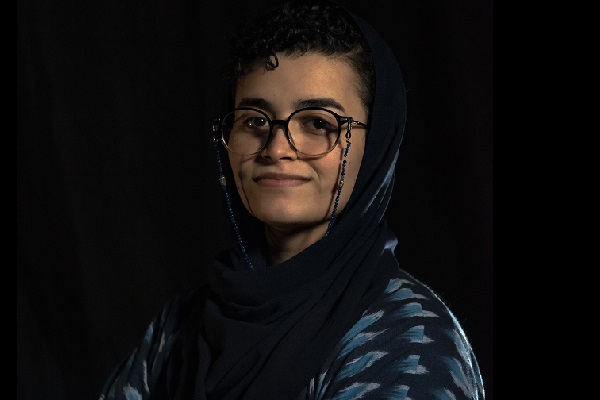
Kalantan has become the first female director, the first non-European to win a BAFTA award in the Gamers category.
Rafif Kalantan has become the first student from Saudi Arabia to win a 2023 Yugo BAFTA Award, picking up the accolade in the Games Category for her submission ‘Eros Xavier’s Love Solutions’.
The Yugo BAFTA Student Awards is an annual event celebrating the works of the next generation of highly skilled and creative storytellers from around the world.
Kalantan, the first female director and the first non-European to win a BAFTA award in this category, was one of the students supported by Neom to attend the National Film and Television School (NFTS), one of the top-ranking schools to join its Master’s programme in Games Design and Development.
Kalantan’s entry ‘Eros Xavier’s Love Solutions’ is the culmination of an intensive two-year Master’s programme of training that provides students with the skills and creative knowledge to design, devise and build games, from inception to delivery.
‘Eros Xavier’s Love Solutions’ is a narrative-driven puzzle-like game. The game follows Eros Xavier, a retired cupid who is cynical about love and has decided to open a private business for hire as a match-breaker.
This year’s Yugo BAFTA Student Awards welcomed 754 submissions from 103 schools across 30 countries, including, Argentina, Belgium, the Czech Republic, Denmark, Hong Kong, India, Mexico, South Africa, and the United Arab Emirates.
Speaking about the award, Rafif Kalantan said: “I am honoured to have been selected as the winner of such a globally renowned award, especially being the first female director and first non-European to win this category. This wonderful achievement also showcases the capabilities of the developers from the Kingdom and the Middle East as a whole, and how the game industry in the region has a lot of potential. I am also grateful for the continued support and investment of Neom, which was an integral part of this achievement. Their continued support for us in the gaming field shows how much Neom believes in growing local talents and allowing them to thrive!”
Jon Wardle, Director of the National Film and Television School, commented: “The School is incredibly proud to be celebrating this achievement with Rafif as we celebrate the 10th anniversary of our Games Design MA. We’re also very grateful to Neom for continuing to help make our courses accessible with life-changing funding opportunities.”
Wayne Borg, Managing Director of Media Industries, Entertainment, and Culture at Neom, added: “On behalf of the entire Neom team, we extend our congratulations to Rafif for the well-deserved honour of receiving this prestigious award from BAFTA. This remarkable accomplishment is a testament to her exceptional talents and marks a momentous beginning for Rafif’s journey, and I’m sure she will achieve great things in the gaming world. We will continue to work closely with the National Film and Television School to nurture and empower more talented individuals as we develop our partnership and offer a unique blend of professional development, mentorship, and growth opportunities for emerging talent in the creative industries.”
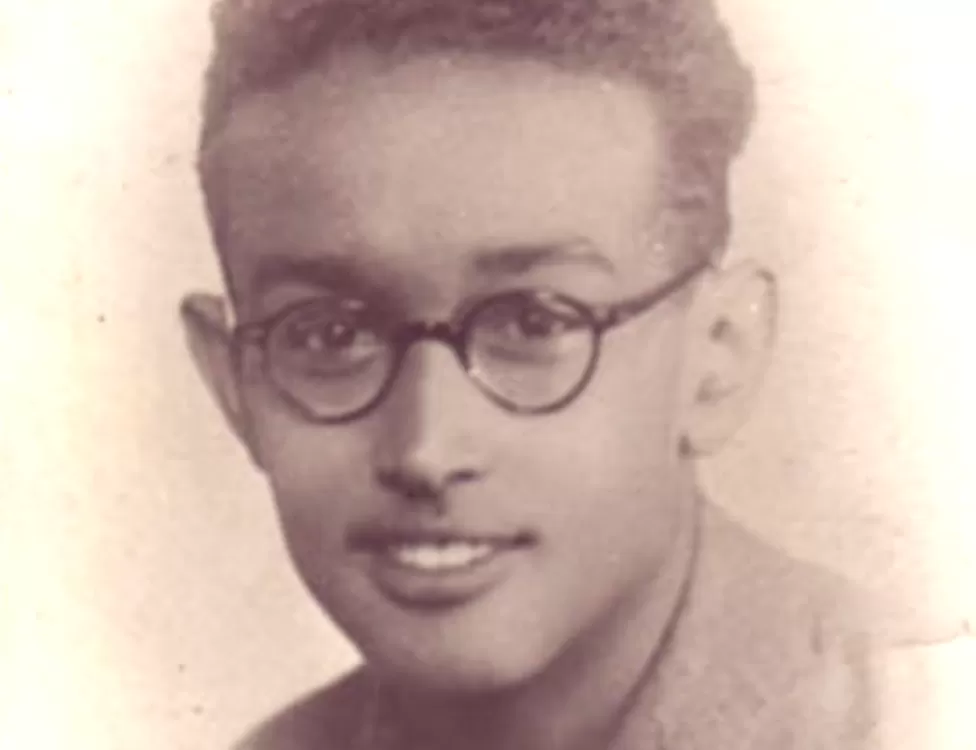
Rome’s city council voted earlier this month to name a future metro station in the Italian capital in honour of Giorgio Marincola, an Italian-Somali who was a member of the Italian resistance.
He was killed at the age of 21 by withdrawing Nazi troops who opened fire at a checkpoint on 4 May 1945, two days after Germany had officially surrendered in Italy at the end of World War Two.
The station, which is currently under construction, was going to be called Amba Aradam-Ipponio – a reference to an Italian campaign in Ethiopia in 1936 when fascist forces brutally unleashed chemical weapons and committed war crimes at the infamous Battle of Amba Aradam.
The name change came after a campaign was launched in June, in the wake of Black Lives Matter protests around the world following the killing of African American George Floyd by US police.
Started by journalist Massimiliano Coccia, he was supported by Black Lives Matter activists, other journalists and Italian-Somali writer Igiabo Scego and Marincola’s nephew, the author Antar Marincola.
The ‘black partisan’
Activists first placed a banner at the metro site stating that no station should be named after “oppression” and pushed for Marincola’s short, but remarkable life to be remembered.
He is known as the “partigiano nero” or “black partisan” and was an active member of the resistance.
In 1953 he was posthumously awarded Italy’s highest military honour, the Medaglia d’Oro al Valor Militare, in recognition of his efforts and the ultimate sacrifice he made.
Marincola was born in 1923 in Mahaday, a town on the Shebelle River, north of Mogadishu, in what was then known as Italian Somaliland.
His mother, Ashkiro Hassan, was Somali and his father an Italian military officer called Giuseppe Marincola.
At the time few Italian colonists acknowledged children born of their unions with Somali women.
But Giuseppe Marincola bucked the trend and later brought his son and daughter, Isabella, to Italy to be raised by his family.
Isabella went on to become an actress, notably appearing in Riso Amaro (Bitter Rice), released in 1949.
Giorgio Marincola too was gifted, excelling at school in Rome and went on to enrol as a medical student.
During his studies he came to be inspired by anti-fascist ideology. He decided to enlist in the resistance in 1943 – at a time his country of birth was still under Italian rule.
He proved a brave fighter, was parachuted into enemy territory and was wounded. At one time he was captured by the SS, who wanted him to speak against the partisans on their radio station. On air he reportedly defied them, saying: “Homeland means freedom and justice for the peoples of the world. This is why I fight the oppressors.”
The broadcast was interrupted – and sounds of a beating could be heard.
‘Collective amnesia’
But anti-racism activists want far more than just the renaming of a metro stop after Marincola – they want to shine the spotlight on Italy’s colonial history.
They want the authorities in Rome to go further and begin a process of decolonising the city.
This happened unilaterally in Milan when, amid the Black Lives Matter protests, the statue of controversial journalist Indro Montanelli, who defended colonialism and admitted to marrying a 12-year-old Eritrean girl during his army service in the 1930’s, was defaced.
Yet to bring about true change there needs to be an awareness about the past.
Italy’s colonial timeline in East Africa:
1890: Kingdom of Italy takes over Eritrea and proclaims it a colony
1895: Italy invades Ethiopia, then called Abyssinia
1896: Italian forces defeated by the Ethiopians at Adwa – and sign a treaty recognising the country’s independence
1889: Italy sets up a protectorate in central Somalia
1935: Fascist Italy invades Ethiopia, accused of war crimes and using chemical weapons during its campaign
1936: Italians capture Addis Ababa. Ethiopia, Eritrea and Italian Somaliland become Italian East Africa
1937: Italian forces in Addis Ababa kill an estimated 19,000 people over three days in February in reprisal for the attempted assassination of the man appointed by Mussolini to govern the colony
1941: British and Commonwealth troops aided by the local resistance defeat the Italians in the region
The trouble at the moment is what seems to be a collective amnesia in Italy over its colonial history.
In the years I have spent reporting from the country I am always struck at how little most Italians seem to know about their colonial history, whether I’m in Rome, Palermo or Venice.
The extent of Italy’s involvement in Eritrea, Somalia, Libya and Albania to Benito Mussolini’s fascist occupation of Ethiopia in the 1930s is not acknowledged.
Somali bolognese
Last month, Somalia celebrated its 60th anniversary of independence.
Reshaped by 30 years of conflict, memories of colonial times have all been lost – except in the kitchen where a staple of Somali cuisine is “suugo suqaar”- a sauce eaten with “baasto” or pasta.
But for this Somali bolognese, we use cubed beef, goat or lamb with our version of the classic Italian soffritto – sautéed carrots, onion and peppers – to which we add heady spices.
I love to cook these dishes and last summer while I was in Palermo did so for Italian friends, serving it with shigni, a spicy hot sauce, and bananas.
It was a strange pairing for Italians, though my friends tucked in with gusto – with only the odd raised eyebrow.
And Somalis have also left their own imprint in Italy – not just through the Marincola siblings – but in the literature, film and sports.
Cristina Ali Farah is a well-known novelist, Amin Nour is an actor and director, Zahra Bani represented Italy as a javelin thrower and Omar Degan is a respected architect.
And today Somalis constitute both some of Italy’s oldest and newest migrants.
In spring 2015 I spent a warm afternoon meandering throughout the backstreets near Rome’s Termini station meeting Somalis who had been in Italy for decades and Somalis who had arrived on dinghies from Libya.
Those new to Italy called the older community “mezze-lira” – meaning “half lira” to denote their dual Somali-Italian identities.
In turn they are called “Titanics” by established Somalis, a reference to the hard times most migrants have faced in making the perilous journey across the Mediterranean to reach Europe, and the lives they will face in Italy with the political rise of anti-migration parties.
The naming of a station after Marincola is an important move for all of them – and a timely reminder for all Italians of the long ties between Italy and Somalia.
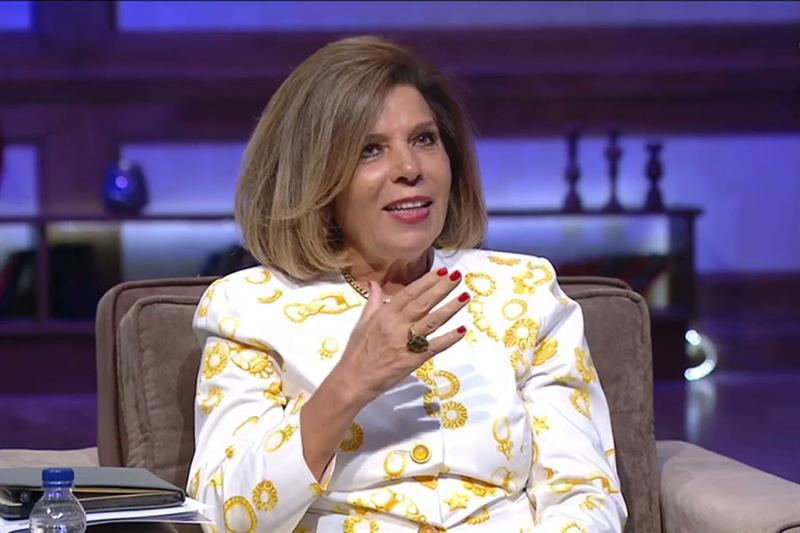
Egypt assumed on Saturday the rotating presidency of the Arab Network for National Human Rights Institutions (ANNHRI) during the convocation of the network’s conference and its 20th General Assembly in Cairo.
Ambassador Moushira Khattab, President of the National Council of Human Rights (NCHR), took over the presidency of the network from Ahmed Bouhoubeyni, president of the National Human Rights Commission (NCDH) in Mauritania and ANNHRI chairman since June 2021.
Egypt previously assumed the presidency of the network in 2018.
The two-day conference represented an opportunity to discuss the main challenges facing national human rights institutions to enhance the role of the networks and the international and regional organisations in promoting national human rights institutions.
The ANNHRI, established in 2011 in Nouakchott, is a regional network of Arab national institutions aiming to protect and promote human rights in the Arab world.
source/content: english.ahram.org.eg/
____________
Ambassador Moushira Khattab, President of the National Council of Human Rights
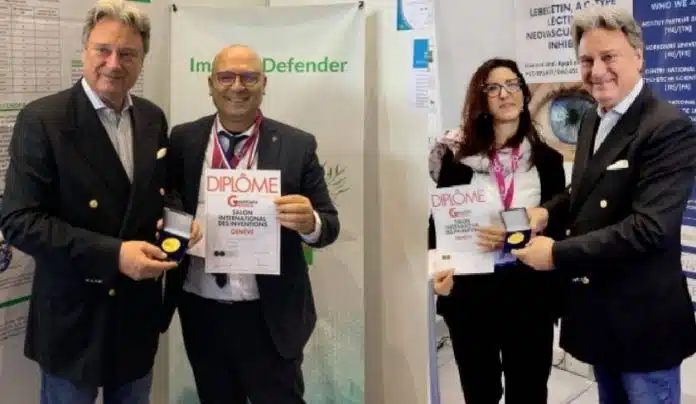
This is a new consecration for Tunisia on an international scale. This is the International Exhibition of Inventions Geneva 2023, one of the largest events dedicated to invention organized by the World Intellectual Property Organization and the Swiss government. Two gold medals were awarded to Erij Messadi, researcher, and Mounir Bezzarga, professor, for their inventions.
Tunisia causes a stir with two revolutionary inventions
The two Tunisian winners were distinguished among a total of 1,000 other inventions from 50 different countries, thanks to the gigantic potential of their projects.
Dr. Erij Messadi, representative of the Institut de Pasteur, presented a one-of-a-kind project at this prestigious event. Baptized “Lebecetine, Lectin type C, as an inhibitor of neovascularization”, it was able to capture the attention of the public and was able to win the gold medal with congratulations from the jury. His innovative invention aims to demonstrate the crucial role of Lebecetine in blocking the formation of new blood vessels, which could slow the progression of several diseases such as cancer.
The ImmunoDefender project won in the Q category. Designed and produced by Dr. Mounir Bezzarga to fight against COVID-19, this winning invention continues to receive awards and shine on an international scale. After winning a prize at TICAD and another at the Euro-Mediterranean Intellectual Property Conference, this plant-based project was on the way to winning the gold medal with congratulations from the jury at the Geneva fair.
Beyond the obstacles, Tunisia continues to shine
Despite the turbulent political scene and the difficult economic situation, Tunisia continues to shine thanks to the exploits of its talents. Indeed, the country is always represented on the podium of international events, especially those dedicated to technologies and inventions. Tunisian inventors like Erij Messadi and Mounir Bezzarga are often awarded for their inventions covering several fields. All this bears witness to remarkable innovation and dynamism on the Tunisian scene.
This immense potential can only be an incomparable asset for our Tunisia. The future therefore looks promising in this area.
Mohamed Helmy led Berlin hospital department, faced persecution under Nazi racial laws
‘It’s unfathomable to me, this type of courage and integrity,’ says artist
An Egyptian doctor who saved a Jewish family in Germany during the Second World War is being celebrated with a Google Doodle, the BBC reported.
Mohamed Helmy was born in Sudan in 1901 to an Egyptian father and German mother. In 1922, he traveled to Germany to take up medicine, and later became the head of a urology department at a Berlin hospital.
Amid the growing persecution of non-Germans in the country, Helmy was arrested twice and prevented from marrying his German fiancee. He also lost his hospital position.
The Egyptian physician aided the family of one of his Jewish patients following the introduction of racial laws, at one point disguising a teenage girl, Anna Boros, in a headscarf, and calling her his niece.
Helmy’s courage was honored in the Google Doodle, which was launched by Berlin-based artist Noa Snir on what would have been the Egyptian’s 122nd birthday. It depicts Helmy, in his doctor’s clothing, sheltering a family with outstretched arms.
Snir said: “I think Helmy’s case is an especially interesting one as he himself suffered persecution due to his background and ethnicity, and that still didn’t stop him from helping as many people as he could. It’s unfathomable to me, this type of courage and integrity.”
Helmy and the Jewish girl he saved stayed in contact long after the war until his death in 1982.
He was posthumously given the Righteous Among the Nations award by Yad Vashem, Israel’s Holocaust memorial site, in 2013
source/content: arabnews.com (headline edited)
___________
Google Doodle honored Dr. Mod Helmy, an Egyptian-German medical doctor who risked his life to rescue Jewish people during the Holocaust. (Google)
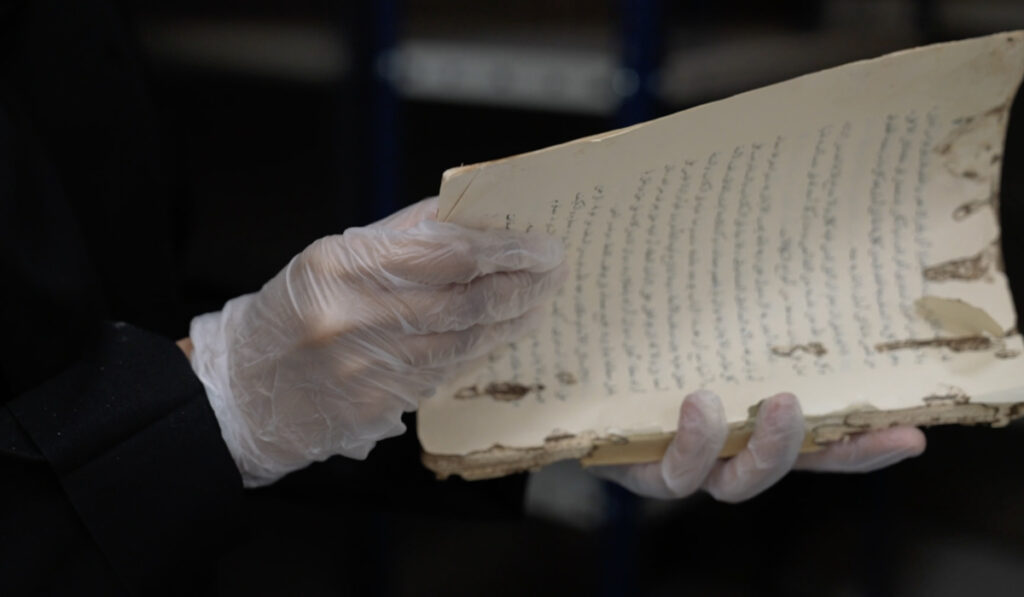
The newly established restoration center at the King Abdulaziz Public Library in Riyadh has succeeded in preserving more than 3,000 rare scientific materials of cultural heritage. This includes photographs, documents, maps and rare books, as well as manuscripts.
The center was able to restore rare images depicting the old city of Diriyah, showcasing its location surrounded by a sea of palm trees.
The center restored 415 rare images of the city of Jeddah. The team of experts were also able to also restore 117 rare books, including their leather covers and internal pages.
In addition, the center restored a group of Saudi currencies, issued on 14 Dhu Al-Qa’da 1372 AH, corresponding to July 25, 1953 AD, when the Saudi Monetary Agency issued what was then known as the “receipts of pilgrims.” These were lightweight banknotes distributed and used during Hajj, starting at ten Riyals, of which 5,000 were printed with phrases in both Arabic and English.
The restoration center rehabilitated more than 615 rare documents and restored a series of rare magazines.
The center also cleaned up 2,235 rare and valuable maps in preparation for their restoration and preservation. The most notable was a map of the continent of Africa and the Arabian peninsula, drawn by Abraham Ortelius in 1570 AD.
The restoration center was inaugurated in late 2022, and has served as a space to handle artifacts carefully. Careful consideration is given to each item to maintain and preserve these pieces of history for future generations.
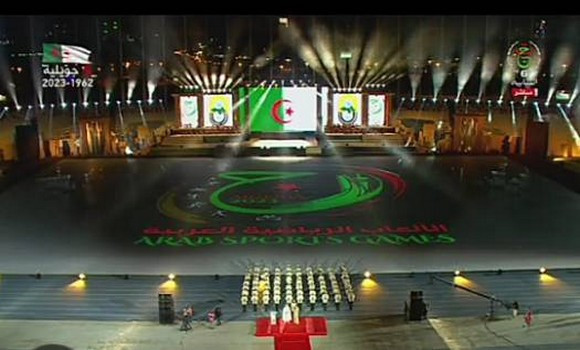
PM chairs opening ceremony of 15th Arab Sports Games.
On behalf of the President of the Republic, Abdelmadjid Tebboune, the Prime Minister, Aimene Benabderrahmane chaired the opening of the 15th Arab Sports Games organized by Algeria from on 5-15 July at Mohamed-Boudiaf Olympic Complex in Algiers, with the participation of nearly 2,000 athletes representing 22 Arab countries.
The opening ceremony of the 15th Arab Sports Games hosted by Algeria (July 5-15) started Wednesday in the Mohamed Boudiaf Olympic Complex in Algiers, in the presence of Prime Minister Aymen Benabderrahmane, members of government and guests from various countries and organizations.
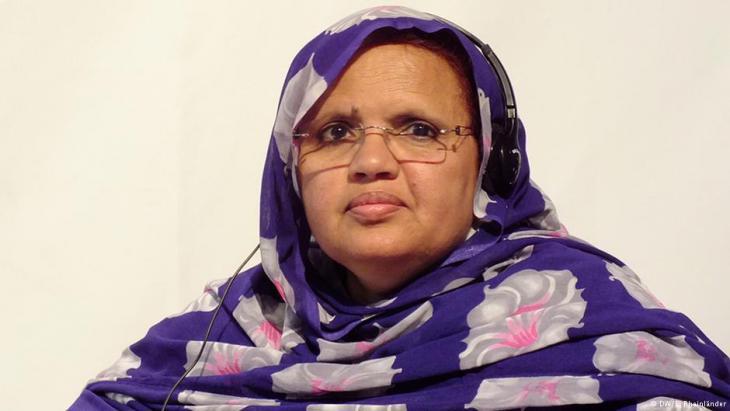
Fatimetou Mint Abdel Malick has been the mayor of a district of the Mauritanian capital Nouakchott for 14 years. She is living proof that women can make it to the top even in conservative Muslim societies. Elisa Rheinheimer introduces a courageous Mauritanian.
Fatimetou Mint Abdel Malick has a warm, maternal demeanour and a firm handshake. Keen eyes sparkle behind her glasses. A petite woman in a traditional flowing robe and a blue headscarf decorated with pink flowers, she doesn’t look like a politician in charge of a 60,000-strong community – at least not to Western eyes.
She is mayor of a district of the Mauritanian capital Nouakchott – and has been for 14 years. That makes her not only a pioneer in her own country, but also a role model for many African women. “I never actually wanted to go into politics,” she says with a laugh, “but I have a very social vein and it was a kind of calling. I wanted to change things in my city for the better.”
Now 57, she originally studied computer science in Belgium. It was during her time there that her eyes were opened to women’s opportunities. Years later, in 2001, she ran for mayor in a district in her home city of Nouakchott – and won at the first attempt. During her first period in office, she was still the only woman mayor in the country. “216 men – and me,” she says, her voice betraying well-earned pride.
Opening the door to politics for other women
In Tevragh-Zeina, the district of the capital of Nouakchott for which she is responsible, everyone knows her. She has achieved a great deal there, improving school education – particularly for girls – reforming the administration, reorganising refuse disposal and investing in infrastructure. Fatimetou Mint Abdel Malick wanted to build car parks, playgrounds and football pitches – and she did.
It sounds so easy when she talks about it now, but it certainly wasn’t quite that simple: “To begin with, I found the responsibility and the expectations people placed on my shoulders a burden,” she says. “After all, I had to be successful so as to open the door for other women and enable them to get into politics.”
She has had some success in this respect. There are now three other women mayors in Mauritania. She herself has never felt uncomfortable in her country’s male-dominated political arena. “Women have a very good status in our society,” she explains, “that made it easier for me.”
Development and religion hand in hand
And religion? What role does faith play in her life? Fatimetou Mint Abdel Malick looks rather perplexed, cocking her head in surprise as if she considers the question superfluous. “A very important one,” she says after a pause, “I am a Muslim.”
Development and religion, she says, are not mutually exclusive but belong together. She rejects the idea that Islam oppresses women and makes it hard for them to have a career of their own. In the Mauritanian religious tradition, she says, Islam virtually demands that women play an active role in society.
A mother of three grown children, Fatimetou Mint Abdel Malick is not only a local politician but also president of the Network for Locally Elected Women of Africa. She is invited to conferences and panel discussions all over the world, flying from one continent to the next. “Being up in the air is perfectly normal for me,” she says. Sometimes 24 hours are not enough to get everything done that she wants to do.
Raising awareness of environmental issues in Mauritania
One reason for that lack of time is that she also feels responsible for environmental protection and catastrophe management in her country. Mauritania has to deal with water shortages, sandstorms and desertification.
She organises workshops in schools, for instance, to raise awareness of environmental issues among children and young people. She has launched campaigns for the protection of dunes, planted date palms in the city with women’s groups, and called on local people to clean up the country’s beaches.
Her calm, relaxed demeanour is certainly part of her recipe for success. Fatimetou Mint Abdel Malick was recently re-elected for her third term in office, and has enough plans and projects in mind for the next 20 years. Mauritania is at No. 158 on the Human Development Index, close to the bottom of the ranking.
This hardworking mayor has a lot of work ahead of her. She currently has more than 3,000 fans on Facebook; in real life, there are no doubt many more than that.
While winning an Olympic medal is a personal goal for thousands of athletes, for 24 nations it is a dream that has only ever come true once. Tokyo2020.org looks at the glorious moment and the impact it had on the lives of the athletes who achieved it.
The background
Sudan made its Olympic debut at Rome 1960 and since then the country has participated in most of the Olympic Games.
Despite its nearly 50 years of participation in the Olympics, Sudan’s first medal on the world’s greatest sporting stage didn’t come until Beijing 2008, when Ismail Ahmed Ismail won silver in the men’s 800m.
Born in a Darfur farming tribe, Ismail was introduced to athletics at school. Surprisingly, instead of 800m, he started as a 3,000m runner and participated in 1,500m races as well. After watching his performance in long-distance races, the then national athletics coach Omer Khalifa advised him to move down to 800m. So he did and went to win the National Junior Championships.
In 2002, Ismail participated in the World Junior Championships in Kingston, Jamaica and finished fifth in a time of 1:47.20. Two years later, he had his first Olympic experience at Athens 2004, where he made to the 800m final after a personal best in the semi-final. But he would go on to finish last in the final.
In an interview with IAAF in 2008, Ismail explained that he was not optimistic at the prospect of winning at the Games and was exhausted in the final.
“I just wanted to do my best,” he said.
History in the making Al though Ismail continued improving his performance in 800m, since Athens he had been troubled by injuries and only took part in a few races throughout 2007. But he did not allow this setback to seize his dreams on the track.
“I knew I was going to come back. My coach (Jama Aden) was the one talking to me. I ran in the African Championships (2008, in Addis) and I was 2nd. I know I can do it again,” he said in the IAAF interview.
Somali-born Jama Aden is an Olympian himself and had coached Abdi Bile to a world title in 1987. He saw great potential in Sudanese runners like Ismail.
Aden’s confidence became a driving force behind the athletes, who trained on a land troubled by conflicts and poverty. According to a report by The Christian Science Monitor back in 2008, Ismail and his teammates had to use old paint cans filled with concrete for weight training and would run at the track at the never-completed athletics stadium surrounded by rubble. They also had to finish training before sunset as there were no floodlights.
Thanks to a rebound in early 2008, Ismail made it to Beijing 2008 together with another home favourite Abubaker Kaki, who ran a world junior 800m record of 1:42.79 at the Oslo Bislett Games in June 2008.
But a small injury stopped Kaki in the 800m semi-final in Beijing with Ismail making the final. This time, he did not let the chance go.
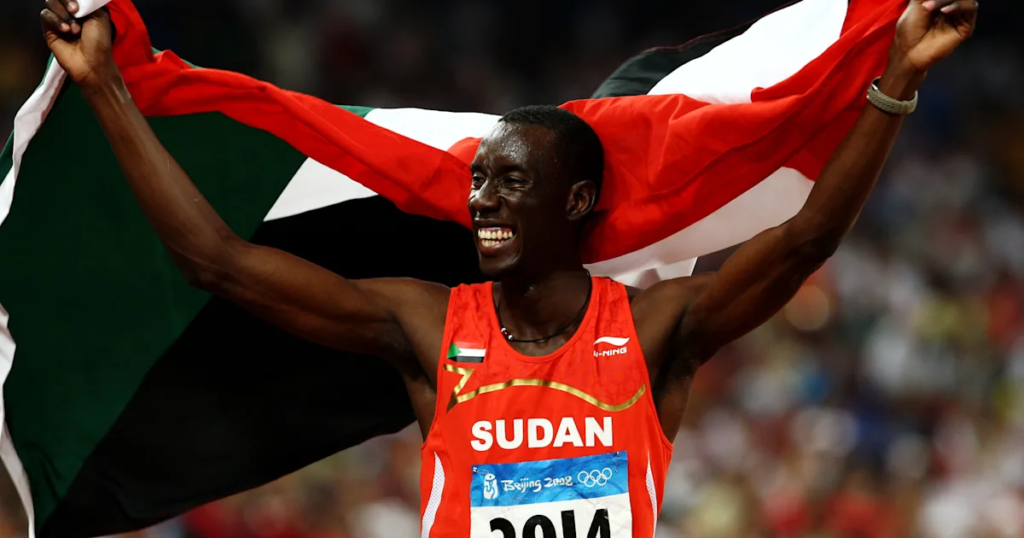
Placed at lane eight, Ismail had a relatively slow start but then he sped up on the second lap to pass reigning world champion Alfred Yego of Kenya. He kept the momentum until the finish line to finish behind Wilfred Bungei of Kenya. Clocking 1:44.70, he won Sudan’s long-awaited Olympic medal, a silver.
Life-changing impact
Ismail’s historic win in Beijing has another huge significance on the world outside sport. His success came in a time when Sudan was facing an unprecedented political crisis. To him and his teammate, Beijing was a chance to show people the positive side of Sudan.
After securing the country’s first Olympic medal, according to AP, people in Sudan hailed Ismail as a national hero and the picture of him wrapped in a Sudanese flag landed him on the front pages of the country’s newspapers.
Quoted by the Sudan Media Centre, Ismail said, “I can’t find words to express my joy. This is an achievement for my country first and then for me. I was able to achieve this honour because of a lot of hard training.”
With his achievement at the Beijing 2008 Games saw Ismail became the flagbearer at the Opening Ceremony of London 2012. However, in London he failed to make the 800m final.
At Rio 2016, no Sudanese athlete participated in the men’s 800m.
Scrolling through Sudan’s Olympic record, one could easily notice that athletics has been their major field of competition. Among the 81 Olympic participants, 33 of them are in athletics, followed by 17 in boxing. With Ismail’s historic breakthrough, there is a fair reason to expect Sudanese athletes to mark another milestone in the future.
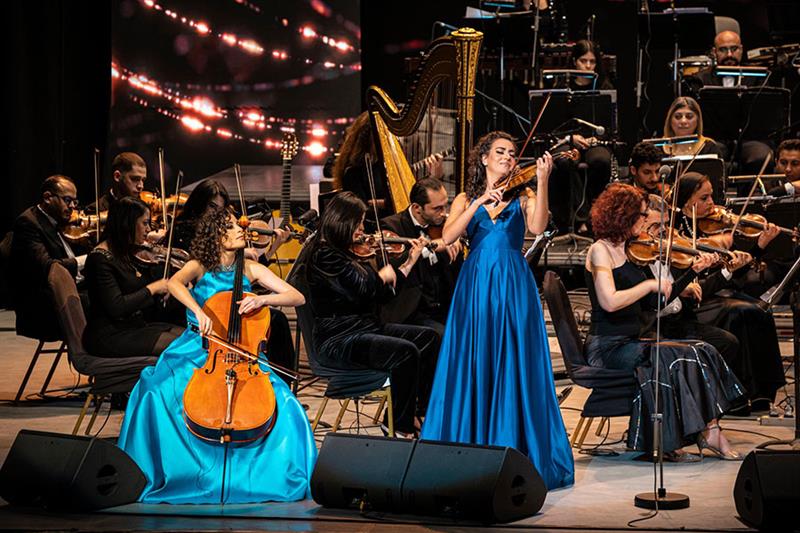
Egyptian-Scottish classical duo the Ayoub Sisters are scheduled to perform at King Charles III’s coronation in Edinburgh on Wednesday.
“We are delighted to share that we have been invited by HM King Charles III to perform at his coronation in Edinburgh next week,” wrote the Ayoub Sisters on Facebook on Saturday.
“The ceremony is part of Royal Week, with the King and Queen undertaking several engagements in Scotland, and will be broadcast live on BBC One. Tune in on Wednesday 5th July at 1:30pm to watch the celebration unfold,” they added.
The Ayoub Sisters have taken the international music scene by storm since their debut at the Royal Albert Hall in 2016. Laura Ayoub plays the violin – performing on an 1810 J. Gagliano – and Sarah Ayoub masters the cello. Both play the piano.
The internationally renowned duo were discovered by producer Mark Ronson.
Their young, albeit sparkling, career has led them to sign a contract with Decca Records, one of the UK’s biggest record labels playing at the BRITS and the BAFTAs. Their album topped the Official Classical Artist Albums Chart.
The duo explore many musical genres, starting from classical music to Scottish traditional repertoire, topping it with captivating arrangements of pop, funk, and world music.
Their virtuosity and creativity have taken them to many prestigious halls in the UK (the Royal Albert Hall, Royal Festival Hall, London Palladium) and the rest of Europe, the Middle East, and Asia.