Arabs & Arabian Records Aggregator. Chronicler. Milestones of the 25 Countries of the Arabic Speaking World (official / co-official). AGCC. MENA. Global. Ist's to Top 10's. Records. Read & Enjoy./ www.arabianrecords.org
Competition also had a new category this year for disabled pupils.
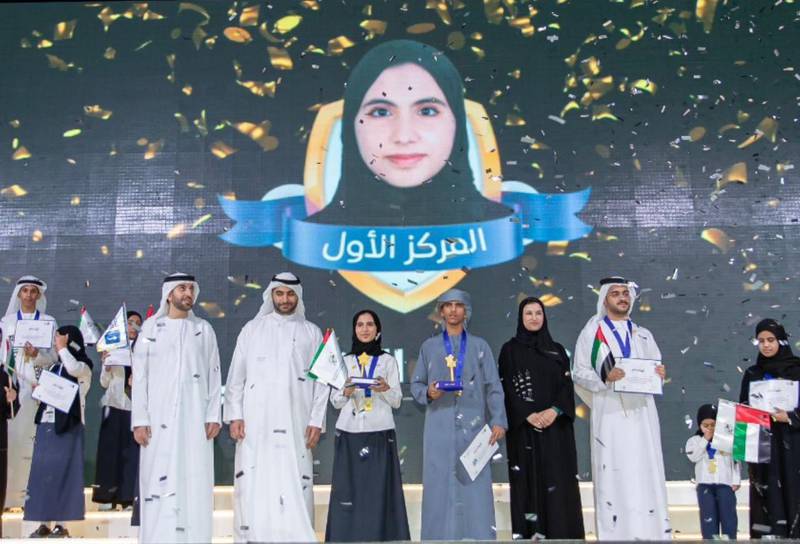
An Abu Dhabi pupil was crowned the winner of the UAE Arab Reading Challenge in Dubai on Friday.
Emirati schoolgirl Amna Al Mansouri, who read 128 books during the academic year, took top spot ahead of more than 500,000 pupils.
Sheikh Mohammed bin Rashid, Vice President and Ruler of Dubai, praised those who took part.
“Today, the UAE celebrated 514,000 students from state schools who participated in the Arab Reading Challenge – whose Arab and international participation reached 24.8 million students,” he said on Twitter.
“I congratulate Amna Mohammed Al Mansouri, and her family, for coming in first place. Amna read 128 books during the academic year.
“Two years ago, Amna lost the ability to walk, but that did not stop her. She soldiered ahead and sailed across the vast ocean of knowledge and literature. The challenge was the beginning of a life-changing experience.
“Today, Amna can walk once again, she has won the Reading Challenge and has authored two stories.
“She will represent the country in a few days at the International Physics Olympiad in Tokyo.”
Amna took the top prize ahead of Mohammed Al Hammadi and Iman Daoud.
The competition had a new category this year for disabled pupils. Emirati pupil, Ghareeb Al Yamahi, won first place, with Ghaya Zainallah coming in second place.
“I also congratulate the student Gharib Al Yamahi who won first place in the reading challenge in the category of people of determination,” Sheikh Mohammed said.
“Gharib is blind in sight but he is not a stranger in the path of achievement.
“Gharib read 130 books during the academic year in Braille. He is a writer of articles, a speaker and an inspiration to all of us. When a blind person reads 130 books, sighted people should review themselves.
“All the best to Gharib who, with his persistence and willpower, represents the saying that ‘nothing is impossible in the UAE’.”
The ceremony was attended by Sarah Al Amiri, Minister of State for Public Education and Advanced Technology.
Largest in the world
In May, Sheikh Mohammed said the annual Arab Reading Challenge had become the largest event of its kind in the world.
He said 24.8 million pupils from 46 countries had taken part in this year’s competition.
It was launched in 2015 to encourage a million young people to read at least 50 books in a year.
The challenge usually starts at the beginning of the academic year, around September, and continues until the end of the academic year.
The Arab Reading champion is selected based on the pupil’s ability to articulate general knowledge, critical thinking and communication skills, plus the diversity of books they have selected.
A Syrian schoolgirl who survived a deadly missile attack during the civil war in her country was crowned the Arab Reading Challenge Champion in November.
Sham Al Bakour, who was seven when she was named winner, was only six months old when her family’s car was struck during violence in Aleppo in December 2015.
Her father was killed while she and her mother survived the horrific attack.
She completed a remarkable journey from tragedy to triumph to win words of praise from Sheikh Mohammed.
The young literature lover read 70 books to win the competition.
When asked about what she would do with the Dh1 million ($270,000) prize money, she said she would give it to her mother.
Hard truths beneath the exuberant arrangements of the Somalian-British singer-songwriter and activist strike a chord for others uprooted from their homeland.
The small stage at the Liverpool Philharmonic Music Room is bathed in lilac light as an acoustic drummer, a conga percussionist, two guitarists and then a saxophonist and keyboard player take their places.
For a few minutes, a laid-back jam session ensues until the lead singer weaves his way towards the microphone, expertly adjusts the stand and, without preamble, begins the set.
It is opening night of the city’s annual Arab arts festival, and the intimate audience, though it’s a decade since Aar Maanta and the Urban Nomads’ debut UK tour, is in for a rare treat: live Somali music played with instrumental accompaniment.
“Always with a band,” Maanta confirms to The National, “because there has been a cultural tendency to sing with playback music. I wanted something a little more genuine. I just thought: ‘I’ll be strict and do live shows.’
“I did playback one time when I was in my home town in Jijiga and I felt like I was cheating people, you know?” he adds, laughing.
Those gathered are making the most of the opportunity, clapping, bobbing their heads, dancing and singing along with Maanta’s soulful voice, the smooth tones of which a reviewer once aptly described as coloured by “the dusty echo of the desert”.
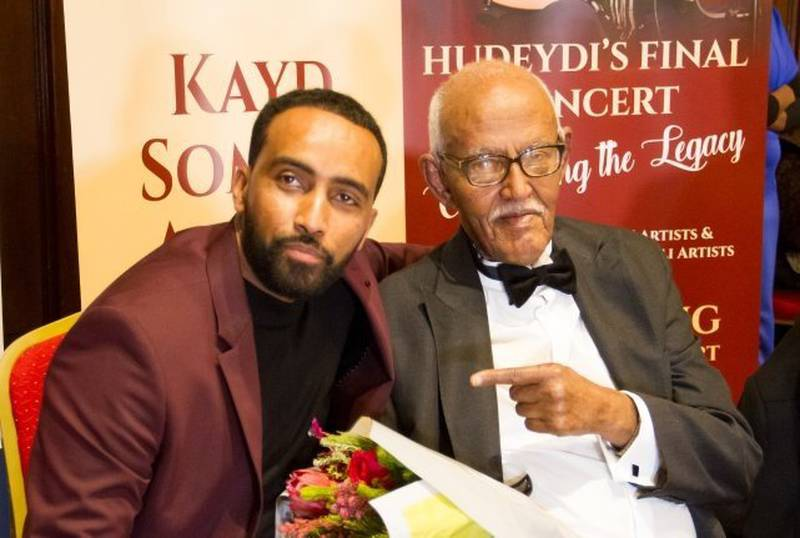
Midway through the live performance, he introduces a song called Uur Hooyo (Mother’s Womb) written by the oud virtuoso and renowned composer Ahmed “Hudeidi” Ismail Hussein.
“Unfortunately, he passed away in 2020 due to Covid in London,” Maanta tells the audience. “He was my teacher and taught me about music and generally about history, the connections between the Horn of Africa, Yemen and this area. There are so many connections here.”
As Maanta tells me, the gig is packed with significance as the port city welcomed the earliest members of the UK’s now 100,000-strong Somali community in the late 19th century.
Some of those mostly seamen and traders arriving by ship from the former British colony of Aden brought ouds – the short-necked, stringed instrument whose earthy notes are the signature of Somali folk music.
Maanta’s body of work across two albums and an EP is a poetic and, at times, urgent soundtrack of that migrant experience.
Finding his voice
Born Hassan-Nour Sayid in the capital of the Somali Regional State in Eastern Ethiopia, his creative journey began in the home of his auntie in Hargeisa, where he and his two siblings were raised.
“It was a good house,” he says. “Altogether, there were 10 children inside and it was fun. I was well cared for and, because there were so many of us there, I felt like I had many older sisters.”
Though his great-grandfather was Mohammed Abdullah Hassan, the Somali nationalist revered as a skilful oral poet, his maternal aunt was the one responsible for encouraging an early love of the arts.
Looking back, Maanta recalls the rhythms and melodies of the Iftin Band and those of Hudeidi himself emanating from an old transistor in the kitchen to intermingle with the aromas of Mandi, the traditional Yemeni dish of meat and richly spiced rice.
“My auntie used to sing these old Somali songs on the radio, and I would always listen and sing along because I loved the music,” he says.
“Now, this was the Eighties, so radio was very limited. Whenever the radio goes off, she would basically ask me to sing some of her favourite songs again and I would. It was beautiful.”
Though Maanta doesn’t much like talking about it now – “It’s a pretty common story and not a good one,” he has said – he was separated from his brother and sister when taken by an uncle to relocate to London in the late 1980s, on the cusp of the civil war.
“When I first arrived in the UK, I remember how strange it all was. We moved from a big house to a small apartment and the corridors were so tiny.”
Those tighter living conditions, however, were offset by the expansive music options afforded by the multicultural society of his adopted home where the rustic tracks favoured by Maanta’s auntie soon made way for hip-hop and R’n’B.
“I lived in Brixton and when you are younger you don’t realise it was the hood in those days. I remember it was a rough area, but I made plenty of Pakistani and West Indian friends,” he says.
“Then, of course, there was the Brixton Academy, a famous music venue. As a child, I wasn’t allowed to go in but I remember the posters outside of some of my favourite groups like Jodeci and Guy.”
For somewhat different reasons, a famous band from Liverpool featured at that time, too. As a newly arrived pupil in an inner-city primary school, the young Hassan could often be found scribbling words such as: “You think you’ve lost your love, well, I saw her yesterday,” into an exercise book.
“I had a teacher for English support who was amazing. He would say: ‘Right, if you like music then listen to these and write them down.’ He was into The Beatles. There was one song in particular: She Loves You.
“Yeah, yeah, yeah,’’ Maanta says with enthusiasm, unconsciously repeating the refrain that took the world by storm in the mid 1960s. “They’re effective. The lyrics show the economy of language and how to structure as well. It’s better, I think, than studying Shakespeare because you learn that sometimes five words are more important than 10 if you know how to use them.
“Literally, music was a weird and easy way of learning.”
Maanta was shy and introverted growing up, which meant a lot of alone time that he used to teach himself the oud and piano in his late teens and early twenties.
His family were disapproving of music as a career so he embarked on a science degree at Sheffield University, but resistance was useless: “If it’s your dream,” he says, “it’s what keeps you alive.”
Averse to the idea of becoming a solo singer, he decided to work with other UK-based Somali artists as a producer and arranger.
But after one artist refused to take part in a function in London in 2001 due to a last-minute financial dispute, Maanta stepped in to perform the planned classic Somali hits.
“I remember how nice it felt to be able to convey a message to an audience from the stage. It gave me the encouragement that I can do this.”
But Maanta, whose professional name combines his nickname (Aar, meaning Lion) and the title of one of his most popular songs (Maanta, or Today), wasn’t planning on being just another vocalist for hire.
Seeking a distinct sound, he composed his own songs for a new generation of Somalis who, seeing live bands from other countries, yearned for the same form of entertainment from their own homeland.
“It’s mostly the same band line-up but, if people are not available, because of logistics and all that, then I go with whatever I can find.
“I just genuinely feel like if you’re gonna perform, you’re gonna perform. If you don’t wanna perform, and you wanna do playback, it’s fine. But live music is meant to be with live instruments.”
Part of the appeal is that expatriates hear their own experiences reflected in the mix. Hiddo & Dahqan, the debut album released under his label Maanta Music, is a revelation for its fluid blend of percolating Somali pop with oud-centred love songs – a genre called Qarami – and the bobbing bass lines of Afro-pop.
Dig beneath the exuberant arrangements, however, and there are some hard truths to be heard. By the time the album came out in 2008, Maanta had been touring regularly across Europe and the US but visa delays and long vetting by immigration officials were making a gruelling schedule more intolerable.
The frustration of being constantly under suspicion is encapsulated brilliantly in the song Deeqa, a popular girls’ name that Maanta translates as “Suffice” but points out that it was also how Somali Airlines, which ceased operating in 1991, became known.
For the music video, a recreation of an interrogation at Heathrow Airport, a tired Maanta is quizzed by officials about his travel plans in scenes that struck a deep chord within and beyond the Somali diaspora.
“I still keep getting messages to this day from all over about how people relate to this song, and it makes me feel so proud of it.
“There was even a barrister in the UK who tweeted how he used that song to train immigration officials on how to not deal with people in this kind of situation,” he says.
Music with purpose
Deeqa proved a turning point for Maanta in harnessing the power of the protest song. He began to infuse more sociopolitical subjects into his lyrics while leveraging his burgeoning profile to raise awareness of issues such as the refugee crisis.
Some of his frustration was particularly channelled into 2016’s Tahriib, or “Dangerous Crossings”, an a cappella piece written after a family member fell victim to human trafficking.
The United Nations High Commissioner for Refugees subsequently reached out to ask him to re-record the song with collaborators including the Somali singer and former refugee Maryam Mursal, the Egyptian musician Hany Adel, and the Ethiopian singer Yeshi Demelash, in a multilingual campaign highlighting the perils of fleeing across the Gulf of Aden and Red Sea from Africa.
Maanta returned to Jijiga in 2015 as a United Nations Goodwill Ambassador and visited two refugee camps. “The environment was not really new to me. Even for some of us Somalis who didn’t go through this, we know our family experienced those situations,” he says.
“But it was tough to see the young people there. Yes, while they have some facilities like schools and food, they need more than that. They have dreams, they want to go out and achieve things, but they are not able to leave those places.”
Three years later, Maanta took his insights right to the top at a meeting with the then Somali president Mohamed Abdullahi Mohamed.
“We spoke about how there are a lot of Somali youths in difficult situations, such as camps in Libya or even forced into slavery,” he recalls.
“I just told him: ‘You guys need to do your job more and help those people.’ ”
No surprises, though, to hear that Maanta’s potent advocacy is not part of a plan to pave a way into the febrile world of Somali political life.
“Absolutely not,” he says. “Politics is generally very toxic and I do feel that African political leaders really don’t have much influence to change things at the moment.”
For the children
It was in Minneapolis rather than Mogadishu where he found an example of inspired leadership. Arriving in the US state of Minnesota in 2021, home to the country’s largest Somali population, Maanta was an artist in residence at The Cedar Cultural Centre for two years.
In a project funded by The Joyce Foundation, the Chicago-based philanthropy organisation, he teamed up with the esteemed poet, playwright and custodian of the Somali language Said Salah to compose and record songs that would become Ubadkaa Mudnaanta Leh (Children Have Priority).
“Myself and Professor Said Saleh didn’t decide to sit there and write the songs – we wanted the kids to share their experiences,” he says of promoting Somali heritage by seeking the lyrics and vocals of children aged five to 15.
“They were so enthusiastic about the whole process mainly because of the Somali language itself. They were curious and excited and that really influenced the way we created the songs.”
Form of creative therapy
The resulting EP is a stirring collection of bilingual offerings from a proud yet sometimes misunderstood community, the centrepiece of which is I Am Part 1 & Welcome to Cedar Riverside, a two-song suite in English that sheds light on the lives of those who live in “Little Mogadishu on the Mississippi”.
Through the album’s recording process, Maanta realised he was providing a form of creative therapy for Somali youth by giving them a platform to voice what they were facing in the West such as being in a minority with a different faith; struggles with their mother tongue; and the politics of the then-President Donald Trump.
“I also met a few kids who were autistic, and I realised how important an issue it was within the Somali community, particularly in the diaspora. One of the songs in the album is sung entirely by an autistic child.”
Some of these compositions were heard live for the first time in The Music Room on Friday, where the 25-degree heat prompted Maanta to half-lament that it’s always “the hottest day” whenever he goes to Liverpool.
After more than three decades in the UK, he has come to prefer the cooler months of autumn to those of summer not least because of their unpredictability.
“It seems like you don’t know what’s to come. Everything’s kind of changing,” he explains.
Maanta seems as mutable as his favourite season, telling The National that he now wants to make working with youth the focus of his future efforts.
“Any artist can make songs with the aim of becoming popular but when you cater for children it leaves a lasting impression, especially when there is a need.
“And when it comes to Somali children, the need is the greatest now because there is nothing really out there to cater for them musically. If your country is struggling, obviously making music for children is not going to be a priority.
“I want to make that change,” he says with a passion that echoes some of the poetry for which Somalia is famed.
As a musician he is already widely regarded as the bridge between the old generation and new, but he just may be about to perform his greatest gig of all.
The Liverpool Arab Arts Festival 2023 continues until July 16. For more information, go to: www.arabartsfestival.com/
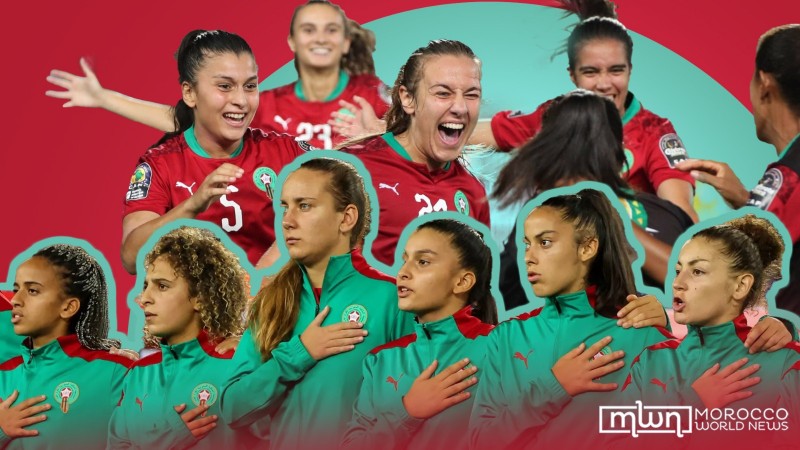
The Atlas Lionesses wrote a page in the history of Women’s football as they became the first Arab nation to play a Women’s Africa Cup of Nations final.
Morocco’s Women National Football (MWNF) team has been making headlines as their popularity has grown since last year’s Wafcon (Women’s Africa Cup of Nations) final, in July 2022.
Hosted by Morocco, the Wafcon tournament marked the rise of the Atlas Lionesses as they became the first Arab nation to play a final for this tournament, when they faced off against South Africa.
As they prepare for this year’s 2023 World Cup in Australia and New Zealand, it is worthwhile to look back on the MWNF team’s great accomplishment last year and what it means for the rest of the world.
The Atlas Lionesses’ Eye-Catching Adventure At Wafcon 2022
With Football having been traditionally viewed as a men’s game in the region, the MWNF team captured the hearts and imagination of girls and women from the Arab region as they achieved a milestone at the 2022 Wafcon.
Although South Africa ended up winning the title, the Atlas Lionesses gained recognition for their impressive skills and outstanding performances, securing the 7th rank in Africa and the 72nd place in the FIFA global ranking.
Before reaching the final, the MWNF team had beaten Botswana and Nigeria in two spectacular football matches, allowing them to secure a ticket to participate in the 2023 Women’s World Cup, which will take place in Australia and New Zealand.
Impressing many football personalities, the team’s remarkable performance also saw the rise of a number of star players in the team as Ghizlane Chebbak, Fatima Tagnaout, and Zineb Redouani were listed among the “best eleven” by the Confederation of African Football (CAF).
In addition to that, Morocco’s captain Chebbak was named the best player of the 2022 Wafcon and received the “Woman of the Tournament” award following the match against South Africa.
Commenting on the Atlas Lionesses’ performance at last year’s Wafcon, MWNF coach Reynald Pedros expressed his eagerness to reach new heights with his team: “We will continue to work. This is just the beginning of a new adventure.”
Recognition by international media
Various local and regional news outlets put the spotlight on the MWNF team’s achievements, acknowledging their contribution to Morocco’s football development, alongside the Atlas Lions’ incredible performance at the last men’s World Cup.
For instance, International football’s governing body FIFA described the year of 2022 as “Morocco’s miracle year of continental and international success” and emphasized the women’s team’s role in paving the way for Moroccan football to become a leading global symbol.
For Africa News, women’s football may be at a turning point as its popularity is growing exponentially, proven by the attendance record of the final Wafcon match which counted around 50,000 supporters at the Prince Moulay-Abdellah Stadium in Rabat. The article also acknowledged Morocco as “the first North African country to host the Women’s Africa Cup of Nations in the 24-year history of the continental competition.”
Earlier this week, the Atlas Lionesses headed to Australia ahead of the 2023 FIFA Women’s World Cup as the only representative of the Middle East and North Africa region in this prestigious global tournament.
Dalila’ will join ‘Mousa’ as part of director Peter Mimi’s action-packed cinematic universe, ‘The Underdogs’.
Actress Yasmine Sabri is suiting up as Egyptian cinema’s first female superhero!
Peter Mimi – the director of famed Ramadan series ‘Al Ikhtiyar’ (The Choice) – is expanding on the superhero cinematic universe he created for his 2021 action film ‘Mousa’ starring Karim Mahmoud Abdelaziz and Eyad Nasser, in which a shy engineering student creates a powerful robot to avenge his father.
Joining ‘Mousa’ as part of Mimi’s ‘The Underdogs’ franchise will be ‘Dalila’, where Yasmine Sabri will star as a badass motorcyclist on a mission for justice. Filming for ‘Dalila’ has already begun, with Sabri currently undergoing intense physical training and motorcycle training to prepare for the film’s intense action sequences (which, if ‘Mousa’ was anything to go by, will be absolutely explosive). The Avengers who?
While Sabri is working on her super stunts, the actress has already wrapped up filming for ‘Bo’ Bo’ starring Ami Karar and ‘Abou Nasab’ starring Mohamed Emam, both of which will come out during the Eid al-Adha holiday.
‘Dalila’ is set to hit movie theatres in 2023, although details on the rest of the cast has yet to be announced.
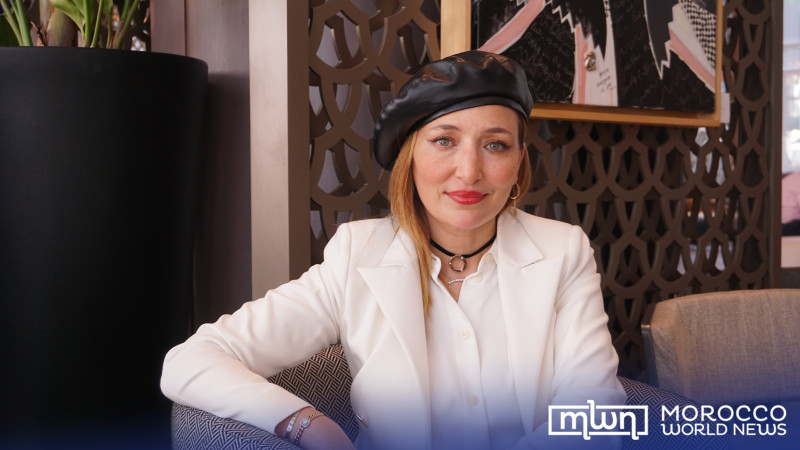
Gueddari’s art portrays the strength, resilience, and beauty of Moroccan women, in addition to advocating for their equal representation and recognition in society.
Houda Gueddari’s exhibition has captivated art enthusiasts at an ongoing art fair in the vibrant and culturally rich city of Rabat, with the artist’s work unveiling the remarkable artistic journey of a prominent Moroccan painter. Entitled “My Art, My Path,” the exhibition tackles pressing special issues as the artist uses her paintbrush as a weapon to create change.
In an exclusive interview with the gifted painter, Morocco World News had the opportunity to delve into her creative journey, discovering the personal anecdotes, challenges, as well as triumphs that have shaped her distinctive artistic style.
Between art and a more conventional career
Pursuing an artistic career, however, has not been easy for Gueddari, as she encountered many obstacles along the way. Faced with the pressure of pursuing a more conventional path, the Moroccan artist made a compromise and chose a paramedical career in dental prosthetics that still incorporated artistic elements.
But her passion for art remained unwavering. “I couldn’t let go of my dream,” she said. “I continued to seek opportunities to refine my skills, attending workshops and joining artist associations. These experiences opened doors to my first exhibitions and invaluable connections within the art community.”
The year 2016 marked a pivotal moment in Gueddafi’s artistic journey. With determination and vision, she founded the first art gallery in Fez, a space that showcased her own creations as well as supported and promoted fellow local artists.
“The gallery became a vibrant hub of artistic expression,” she reminisced, adding that “it was a joy to witness the dialogue and appreciation it fostered among art enthusiasts and collectors.”
When the COVID-19 crisis hit Morocco, it brought about unanticipated challenges, necessitating the temporary closure of the gallery amid a nationwide lockdown.
Yet, Gueddari did not allow this setback to extinguish her artistic spirit. “I adapted to the circumstances … I sought alternative ways to share my work with the world,” she said.
This includes the artist’s active presence on social media, notably her Instagram page with nearly 100k followers. Gueddari’s social media platforms serve as a medium for her to share her paintings, inspirations, and thoughts with art enthusiasts.
International recognition
Gueddari has made a name for herself as a renowned artist in Morocco, especially in the city of Fez where she lives.
In addition, her talent shone on the international stage with various achievements, including being selected as a finalist in a prestigious competition in Dubai. She also received acclaim for her work in Florence in 2022, winning the Leonardo Da Vinci international prize.
She fondly recalled her participation in the renowned Biennale art exhibition in Venice, Italy, and exhibiting at the Museum of Modern Art in Barcelona.
As travel restrictions were imposed worldwide, Gueddari redirected her focus toward promoting art within Morocco. In collaboration with the Marriott Hotel in Rabat, she orchestrated the ongoing “My Art, My Path” exhibition.
Speaking about her artworks, she said that she draws inspiration from various movements, including cubism and surrealism. “A little bit Picasso, a little bit Dali … I was inspired by several artists, but the truth is I really just try to be myself,” she explained.
Gueddari sees herself as a “committed artist.” She said: “When I paint, I paint my emotions, I lose my life, I paint everything that happens around me.”
Through her art, Gueddari tackles various themes and social issues, including women’s rights and the crucial role they play in Moroccan society.
“Women play an integral role in society, and their contributions should never be underestimated or undervalued. It is essential to create an environment where women have equal opportunities to thrive, express themselves, and pursue their dreams,” she said.
The “My Art, My Path” exhibition merges traditional and contemporary expressions, embodying the Moroccan artist’s profound connection to her homeland and its rich artistic heritage. “I am very proud to be Moroccan … I am very proud to represent my country as an artist,” she said.
Art as a constant quest for growth, self-discovery
Discussing the obstacles artists worldwide face, Gueddari acknowledged the challenges they have to endure, saying: “The life of a painter demands unwavering dedication and perseverance.”
“It is a constant quest for growth and self-discovery,” she stressed, underlining that these challenges serve as golden opportunities for artists to achieve personal and artistic growth, as well as push the boundaries of their creativity and inspire others along the way.
Despite the difficulties that artists encounter, Gueddari argued that the artistic journey is extremely rewarding. “The world of art teaches us tolerance, acceptance, openness to the other, and openness to the world.”
Through her work and her online presence, the Fez-based artist actively promotes art in Morocco, seeking to deepen the understanding and appreciation of the artist’s spirit and the nation’s artistic landscape.
Talking about the future of art in Morocco, she said that she is “very optimistic,” especially since the government has been giving more importance to art and culture.
After her exhibition in Rabat comes to an end, Gueddari will embark on another journey, with plans to hold exhibitions in various Moroccan cities, including Marrakech and Agadir.
When asked about her message to aspiring Moroccan artists, Gueddari shared a heartfelt, encouraging piece of advice. “Never settle for what you already know,” she said. “Embrace versatility, expand your knowledge, and explore different artistic domains. Stay true to yourself, and draw inspiration from other artists.”
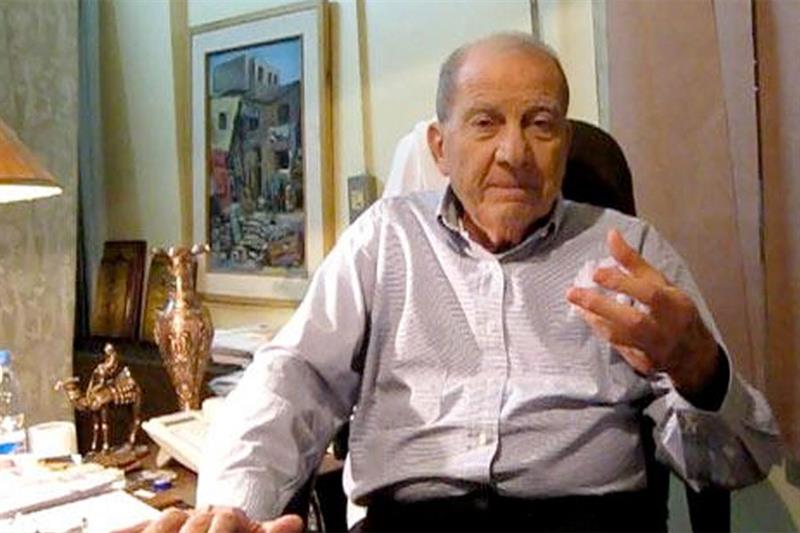
Prominent Egyptian gynaecologist and author Mohamed Abul-Ghar won on Sunday the State Nile Award in Science and Advanced Technological Sciences.
Minister of Higher Education and Head of the Scientific Research and Technology Academy Mohamed Ashour announced that Cairo University’s Professor at the Faculty of Medicine Dr Mohamed Abul-Ghar and Mansoura University’s professor at the Faculty of Medicine Dr Hassan Abul-Enein won the State Nile Award in Science and Advanced Technological Sciences.
“It is the state’s recognition of scientists’ efforts in advancing the nation and building the new republic and knowledge economy,” Ashour said on Sunday in a press conference at the New Administrative Capital.
Abul-Ghar started, with a group of medical doctors, Egypt’s first-ever centre for in vitro fertilisation (IVF).
Abul-Ghar, 82, received the Egyptian National Award for Scientific Excellence in 1999. He also received honourary membership of the European Society for Human Reproduction and Embryology in 2004 and honourary membership in the International Federation of Fertility Societies in 2000.
Abul-Ghar has also been active politically as he established, with other university professors, the 9 March Movement for the Independence of Universities during the rule of the late President Mubarak. He was also among the spokespersons of the National Association of Change.
Following the ouster of Mubarak in February 2011, Abul-Ghar was among the founders of the left-liberal Egyptian Social Democratic Party.
Aside from his medical scientific career and political activism, the prominent gynaecologist established himself in recent years as a bestselling non-fiction author with a special interest in the modern history of Egypt, specifically the pre-1952 liberal era.
Among his bestselling books are Egyptian Jews in the 20th Century, The Egyptian Legion and The Pandemic that Killed 180,000 Egyptians.
The Sudanese filmmaker gave up a comfortable career in Bahrain to make movies that could shed light on his homeland’s deep divides. He’s now a Cannes award-winner .
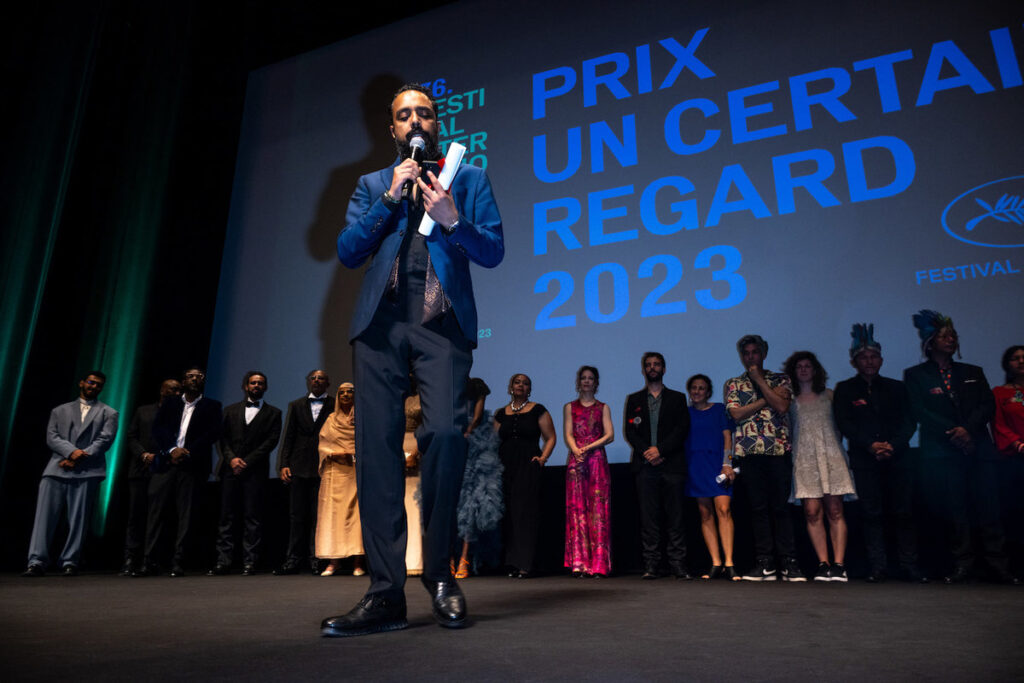
Great art often raises more questions than answers. In the case of “Goodbye Julia,” the Saudi-backed film that won the first-ever Freedom Award at the Cannes Film Festival last month, those questions were born in a single historic moment.
It was February 7, 2011, and Sudanese filmmaker Mohamed Kordofani was sitting with his family in Khartoum as they read out the results to the South Sudanese independence referendum. His country was quite literally split in two and, as his shock turned to shame, a long search for truth began — one that would upend his entire life and turn him into one of the region’s most promising storytellers.
“Something sparked inside of me. Why would 99 percent of a whole nation vote to separate? I couldn’t fathom it, and I began to question everything — about my society, my upbringing, and even myself,” Kordofani tells Arab News.
“I was brought up in a typical Eastern Sudanese household, and the traditions and norms I inherited from previous generations made me think that racism was just a normal part of life. I hadn’t realized the true damage that everyday hate could cause. I had been so confident in my ignorance. I told myself, ‘No more.’ And I’m a better person now because of it,” he continues.
Truth be told, Kordofani had never wanted to be a filmmaker. In fact, at the time of the secession, he was working in Bahrain as an aircraft engineer, settled in a seemingly comfortable life in which he could safely start a family. He was never a cinephile and had no great interest in the artform. But as he wrestled with the deep flaws within himself and his home country, his ideas began to take narrative shape.
“It’s funny to me that I found myself at Cannes when I didn’t come from a cinema background like so many of my peers. I have impostor syndrome about this — wondering why I’m here when so many others are not. Growing up, I watched movies like everyone else, sure, but that was it,” says Kordofani. “I wrote stories for myself in university, but no one would ever read what I wrote. I didn’t know anything about cinema, but I chose filmmaking because I realized it was a tool I could use to tell my stories to biggest audience possible.”
For years, Kordofani led a double life. He would use his annual leave and dip into his savings to make short films, screening them for the local community to great acclaim before traveling back to his workaday life in Manama. By 2020, he realized he had to make a choice: continue with the life that had been prescribed him, or follow what had become his passion. He chose the latter.
“When you’re married and have kids, switching careers can be very scary, but, honestly, I was miserable,” he says. “I said, ‘You only live once’ and, at age 37, I left engineering behind to start a production company at a time when there was no film industry in Sudan. I burned all my bridges, cancelled my engineering license, and put myself on a new path.”
By that time, his efforts to make “Goodbye Julia” were well underway. The idea had come to him at home in Bahrain one night, as he and his wife argued over whether they should get a live-in maid to help around the house. The idea repulsed Kordofani.
“I thought the whole setup was unfair. These people work for a long time, often have no off-days, and it all sounded to me like slavery. It took me back to growing up in Sudan, and the help that we had around the house that wasn’t much different — always made up of people from the south of the country. It made me think back to the separation in 2011, and the plot started forming in my mind,” he explains.
The film follows two women from the north and south of Sudan respectively — Mona, a retired singer racked with guilt for causing a man’s death, and another named Julia, the man’s widow. Mona offers Julia — who doesn’t know about Mona’s involvement in her late husband’s death — a job as her maid in order to atone for her misdeeds, against the wishes of her husband Akram, who is open in his resentment of southerners.
In early drafts, Kordofani was unsatisfied with how one-dimensional all the characters felt. “I was writing with my engineering mentality,” he says. “All of them were binary — zero or one, black or white. It wasn’t until draft three or four that I actually felt I understood that the film wasn’t just about separation. I had to not only delineate their differences, but reconcile them, and reconciliation is about understanding.
“I had to learn to stop judging them, and empathize. That was not hard to do, because they are me,” he continues. “Each of them, from the conservative husband Akram to the socially progressive wife Mona, were a reflection of my own points of view at one time in my life or another, back when I felt I was a victim of my society. And they turned from black-and-white to gray, and that turned them into a good catalyst for dialogue.”
As his script progressed, Kordofani began pitching the film internationally, but found that the predominantly white decisionmakers couldn’t fathom the racial divide of his home nation.
“In one pitch session in Portugal, the first question was, ‘I don’t understand. You are black. And the southerners are black as well. So you’re talking about black-on-black racism? How does that work?’ I responded, ‘Yeah, if this were a comedy, we’d call it “50 Shades of Black,”’ Kordofani says wryly.
The film has found instant success coming off its Cannes debut — it is the first Sudanese film ever to screen at the storied festival — scoring big deals for theatrical releases in countries across the world. Ultimately, though, Kordofani made the film with Sudanese audiences in mind.
After all, part of the reason that he imbued the film with so much complexity — why he asks hard questions without reaching for easy answers — is that he wants to inspire discussion in Sudan, hoping to bridge the divides that continue to plague the country as it verges on a civil war that Kordofani believes is caused by the same underlying social illness as the 2011 secession was.
“We’re a divided people. Political division, ethnic division, and tribal division have always been the root cause of all our problems,” he says.
Kordofani, meanwhile, has begun to accept that he truly is a filmmaker, and a stamp of approval from Cannes could mean he’ll be able to tell stories for the rest of his life. He’s come to terms with the fact that he doesn’t have the answers, whether in politics or his art, and that his journey to find them will continue for years to come. Indeed, accepting his own imperfections may be the big answer he was always looking for.
“When I finished the final scene, I cried so much. We were we were on a bus from Kosti to Khartoum, a five-hour ride, and I think I cried the whole ride,” he says. “It hit me that my intention was to make a film that may change people. And I found out that I was the one who was changed the most by making this film. I feel I finally understood myself.”
source/content: arabnews.com (headline edited)
___________
TKordofani addresses the crowd after receiving the Freedom Award for ‘Goodbye Julia’ at the Cannes Film Festival on May 26. (AFP)
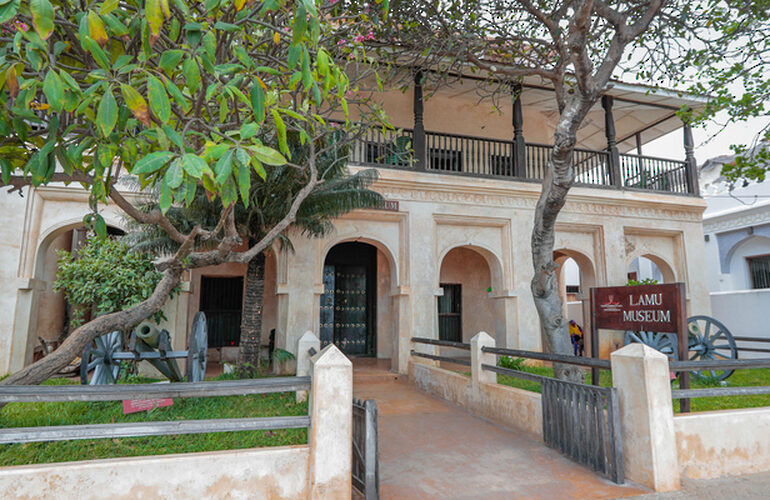
The National Records and Archives Authority (NRAA) will open a permanent museum-cum-exhibition for records and antiques pertaining to Oman’s historical presence in East Africa next on Friday, February 10. The exhibits also highlight the common history shared by Oman and Kenya in the province of Lamu.
Once restoration tasks are completed and final improvements made, the archival exhibition will be inaugurated in coordination with the Embassy of the Sultanate of Oman in Kenya and the Kenyan Ministry of Tourism, Wildlife and Heritage.
The project constitutes one of the archaeological and architectural landmarks, and aims to play a variety of cultural roles.
Besides affirming Omani presence in the province of Lamu and the depth of the two countries’ historical relations, the exhibition consolidates noble Omani values and reflects the sultanate’s keenness to preserve various aspects of its heritage, culture and civilisation.
The permanent exhibition is established within the framework of cooperation between the NRAA and the Kenyan Ministry of Tourism, Wildlife and Heritage, following a Memorandum of Understanding signed earlier by the two countries.
Through the project, the NRAA seeks to spread awareness about Oman’s history and civilisation in East Africa, notably among the local community and visitors to Lamu Island.
In 2017, the NRAA restored some parts of Mombasa Fort in the Republic of Kenya so that the monument could house a permanent museum-cum-exhibition. The facilities are named as follows: ‘Omani House’, ‘Al Mazrouei Hall’ and ‘Fort Museum’. They all serve as testimony to Omani presence in Mombasa.
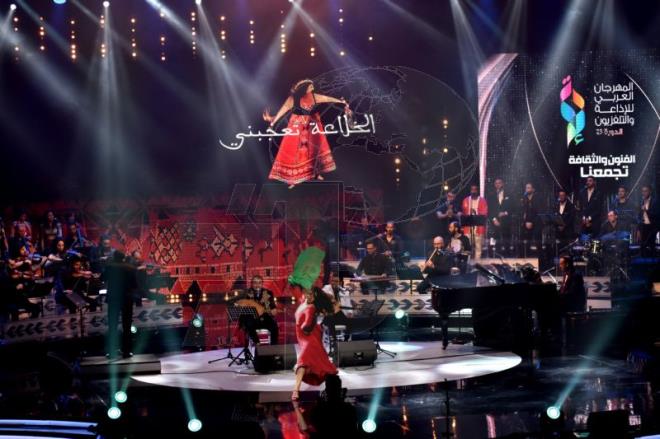
The 23rd Arab Radio and TV Festival kicked off on Monday in Tunis under the slogan of “Celebrating Arts and Culture.”
The opening ceremony was hosted on Monday at the City of Culture under the theme: “Arab Perfumes,” and the closing ceremony will be broadcast live by the various Arab TV channels and radio stations.
The official ceremony was attended by several Arab senior officials, including diplomats, professionals from the festival’s media partners and featured artists.
The official guests included President of the Arab States Broadcasting Union (ASBU) Mohammed bin Fahd Al-Harthi, ASBU Director General Abdelrahim Suleiman, Cultural Affairs Minister Hayet Ketat Guermasi and Syrian Minister of Information Butros al-Hallaq.
A tribute was paid to Egyptian actress Sherine, Lebanese filmmaker Georges Ghabbaz, Emirati actress Fatma Houssani, Libyan filmmaker Hassan Garfel, Moroccan filmmaker Sanaa Akroud, Syrian actor Milad Youssef and actress Rawaa Saadi.
The festival further paid tribute to leading figures from the Arab audiovisual landscape, including former chairman and CEO of the Tunisian radio and television broadcasting corporation (ERTT) Abdel Aziz Kacem, Tunisian actor Moncef Baldi, former Director of Egyptian Radio Iness Jawhar, former ASBU Director of the Administrative and Legal Committee Hani Farraj, Bahraini filmmaker Ines Yacoub and Taki Eddine Soubira from Comoros.
The awards of the 14th edition of the Arab Music and Song Contest were handed over during the ceremony, which was held at the ASBU headquarters in Tunis last May.
The Tunisian Radio won the 2nd award (US$ 3 thousand) in the musical works section for a composition entitled “Tamiarat” by Mohsen Matri.
The winning works were selected by a jury made up of musician Mona Chtorou (Tunisia), artisit Mona Abelghani (Egypt), artist Dhia Eddine Jebbar Faraj (Iraq), academic Achour Fanni (Algeria) and poet Hédi Daniel (Syria).
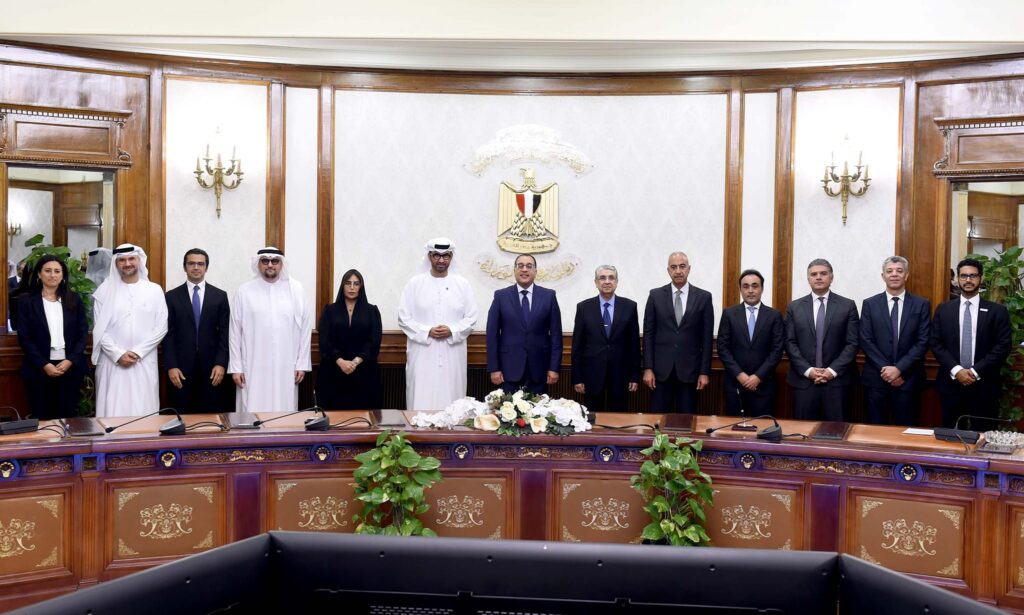
Prime Minister Mostafa Madbouli attended Tuesday evening the signing of an agreement between the Ministry of Electricity and Renewable Energy and the Abu Dhabi Future Energy Company (Masdar) to allocate a land plot for the establishment of a $10-billion wind farm whose capacity will be 10 gigawatts, making it the world’s largest.
Masdar will operate within a consortium that includes Infinity Power and Hassan Allam Utilities. The project is estimated to save $5 billion in natural gas costs per annum, and reduce carbon emissions by 23.8 million tons, which is nine percent of Egypt’s annual emissions.
The farm will produce 47,790 GWh of clean energy every year contributing in Egyptian efforts aimed at making the share of renewables in the energy mix 42 percent by 2035.
The initial agreement was signed on the sidelines of COP 27 held in Sharm El Sheikh in November, so as the signing was attended by President Abdel Fatah al-Sisi and Emirati counterpart Sheikh Mohamed Bin Zayed.