Arabs & Arabian Records Aggregator. Chronicler. Milestones of the 25 Countries of the Arabic Speaking World (official / co-official). AGCC. MENA. Global. Ist's to Top 10's. Records. Read & Enjoy./ www.arabianrecords.org
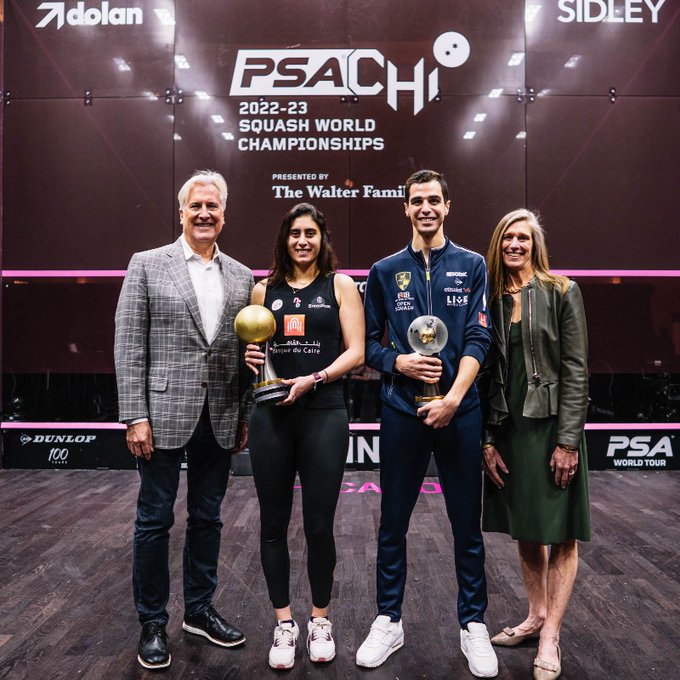
Egyptian duo Nour El Sherbini and Ali Farag retained their respective world titles in Chicago with straight-game wins over Nouran Gohar and Karim Abdel-Gawad early on Friday.
World No.1 Sherbini needed 38 minutes to beat Nouran Gohar 3-0 (11-6, 11-4, 12-10) and clinch her seventh World Championship title.
“I am over the moon to win my seventh World Championship,” El Sherbini was quoted as saying on PSA World Tour after the game.
The 27-year-old El Sherbini was in superb form in Chicago, winning her third World Championship title. She is now just one short of the current women’s record of eight, held by Malaysian legend Nicol David.
Her streak of five women’s World Championship titles in a row is matched only by David.
“It is huge and special for me and I cannot believe I did it, I am so happy,” the Egyptian squash star said.
I am happy that I am closer to Nicol’s [David] record. She is a legend and what she did was amazing and unbelievable,” El-Sherbini said, adding “I have always been looking up to her, so to put my name beside her is something special and huge for me.”
The men’s final saw World No.4 Ali Farag become the second Egyptian ever after Amr Shabana to win four men’s World Championship trophies.
The 31-year-old Farag needed 44 minutes to beat Karim Abdel Gawad 3-0 (12-10, 11-6, 11-6).
“The emotions are so raw, it is so hard to put it into words,” Farag said. “It is so special. No matter how many times you go through it, it is even more special than the time before. Especially against such a champion like Karim, I am super relieved and super happy,” he added.
“Two months ago, we played a practice match and we were limping, and the standard would not have even earned us a place in the World Championship, let alone the final. To come all the way through to reach the final is a very proud achievement for the two of us.”
Farag – like El Sherbini before him – has now won all three World Championships held in Chicago.
The PSA World Championships is the most prestigious tournament in squash, with $1,000,000 in total player compensation split equally between the male and female athletes.
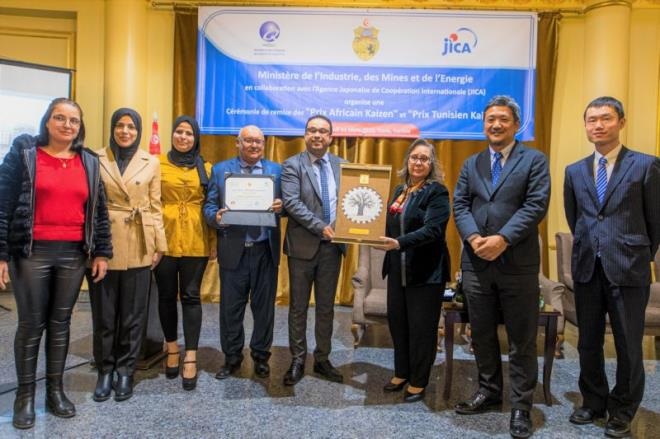
“Phoenix Mecano Elcom,” a Tunisian company specializing in the manufacture and assembly of electromechanical components has just won the Tunisian Kaizen Prize in the “large-Scale Business” category.
The Kaizen prize, awarded at a ceremony in Tunis on Wednesday, is an initiative organized by the Ministry of Industry, Mines and Energy and the Japan International Cooperation Agency (JICA).
Its aim is to reward Tunisian companies operating in the industrial or industry-related services sector that have distinguished themselves through exemplary implementation of the “Kaizen” approach, a concept that promotes a culture of continuous learning, integration and innovation.
“Phoenix Mecano Elcom had already won the African Kaizen Award last October in Yaoundé, Cameroon.
In the large-scale businesses category, international manufacturing company Asteel Flash and the Arab Society for Pharmaceutical Industries (SAIPH) also won awards.
Plastic packaging company Azur Pack also received an award in the Small and Medium Businesses category.
During the ceremony, the Minister of Industry, Neila Gongi, said that there was potential for improvement through the spread of Kaizen in Tunisia.
For his part, the Resident Representative of the JICA Office in Tunisia, Shunei Ueno, stressed that, more than a year after the end of the “Quality and Productivity Improvement Project” in December 2002, this second edition of the Tunisian Kaizen Awards “testifies to the continuity of the momentum of the dissemination of the Kaizen concept in Tunisia, which was initiated within the framework of this project”.
The Kaizen concept offers a systematic approach to improvement that results in cost reduction, improved quality and productivity, and shorter delivery times, JICA said. In 2006, Tunisia became the first country in Africa where JICA introduced the Kaizen approach.
Guinness-accredited arbitrator honours owner of Bisht Al Baghli exhibition.
Guinness Book of Records recognizes Kuwait’s impressive bisht achievement
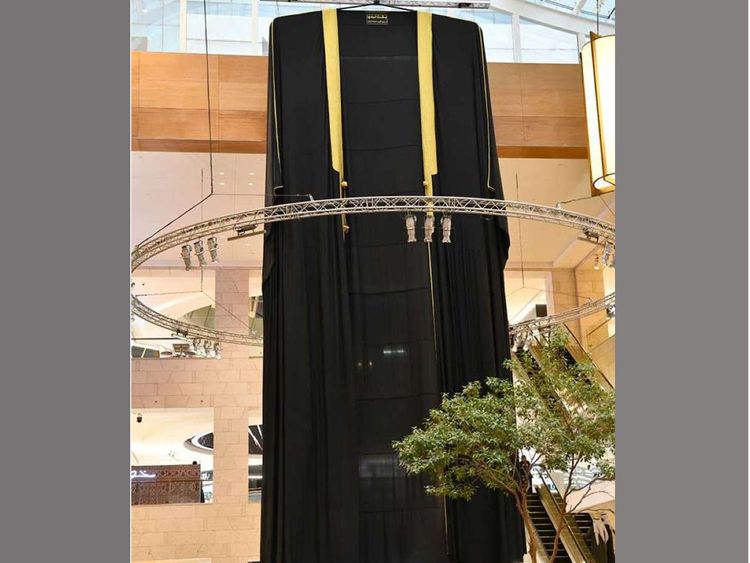
Kuwait has set a new world record for the largest bisht in the world. The impressive garment, measuring 17 by 16 meters, broke the previous record of 17 by 9 meters held by Saudi Arabia, Kuwait News Agency (KUNA) reported.
The bisht was produced under the supervision of the Al Baghli Exhibition for the Bisht Industry, a well-known establishment in Kuwait famous for its high-quality traditional garments. Its sewing took a total of 48 days, with the team of craftsmen working tirelessly to ensure every detail was perfect.
The achievement has been recognized by the Guinness Book of Records, with Guinness-accredited arbitrator Kenzi Al Dafrawi honouring Riyad Al Baghli, owner of the Bisht Al Baghli exhibition.
A bisht is a long cloak traditionally worn over a thobe or kandura at special occasions or celebrations in Middle Eastern countries.
The garments are typically black, but also come in white and brown, and are made from a light, often sheer, material with gold trimming.
Traditionally, they are worn at times of celebration, for weddings, Eid and significant festivals. Historically, they were a winter garment, reserved for keeping the wearer warm on colder nights.
source/content: gulfnews.com (headline edited)
___________
The impressive garment measures 17 by 16 meters. / Image Credit: Kuna
May Elghety, the talented Egyptian actress, has announced her upcoming role in Disney’s animated series “Kizazi Moto: Generation Fire”. This sci-fi series, inspired by Africa’s diverse cultures and histories, promises to bring viewers thrilling stories of advanced technology, aliens, spirits, and monsters from a uniquely African perspective.
Elghety, who has won critical acclaim for her performances in several TV series and films, took to Instagram to express her excitement and honor at being part of the project. The 24-year-old actress is currently filming for the British movie “Due Dating,” which is directed by Daniel Pacquette and written by Jade Asha.
Born to renowned TV presenters and writers Mohamed Elghety and Mona Barouma, May Elghety began her acting career as a child artist. Her outstanding performance in the controversial TV series “El-Kaserat” earned her the Best Upcoming Actress award at the Arab Drama Festival in 2013.
Since then, Elghety has starred in several successful productions, including “Clash” in 2016, “Taye’a” in 2018, and “Every Week Has A Friday” in 2020. Her most recent film, “MAMA,” premiered at the Cairo International Film Festival in 2022.
“Kizazi Moto: Generation Fire” is a 10-part anthology that promises to bring together rising animation talents from six African nations. The series features an impressive production team, with Oscar-winning director Peter Ramsey serving as executive producer and Cape Town-based animation house Triggerfish leading the studio. Egyptian director Ahmed Teilab has also joined the writing and directing team for the series.
The show is set to premiere on Disney+ this year and is sure to delight audiences with its captivating storytelling and stunning visuals. “Kizazi Moto: Generation Fire” is yet another feather in the cap of May Elghety, who continues to prove herself as one of the most talented and versatile actresses of her generation.
The dream of becoming a journalist began for Kiin Hasan Fakat when she was just 10 years old. Her family had joined legions of Somalis displaced by war and hunger and since 2007 had been living across the border in northern Kenya, in one of the largest refugee camps in the world.
Each day, Ms. Fakat listened to her uncle’s small radio, which was powered by AA-sized batteries, and tuned to the Voice of America Somali service.
And each day, she became more aware of – and inspired by – the reporting of Asha Ibrahim Aden, a veteran correspondent who spoke with authority and confidence, and whose example showed Ms. Fakat what a Somali newswoman could achieve.
“I used to say, ‘Maybe I can be like this female journalist. I like her reports,’” recalls Ms. Fakat, who was raised in Kenya’s Dadaab Camp but was originally from the southern Somali town of Buale.
Today it is Ms. Fakat who has herself become a role model for Somalia’s aspiring female journalists, as part of the reporting team of the country’s first all-women news outlet, called Bilan, which means “bright and clear” in the Somali language.
With the aim of reporting powerful human stories often overlooked by Somalia’s male-dominated media – from the personal impact of chronic drought and the local ravages of climate change, to living with HIV and issues of addiction and gender-based violence – the six women of Bilan are expanding the practice of journalism in Somalia like never before.
High among their pioneering achievements in a staunchly patriarchal society: Serving as examples of professional excellence to other Somali women.
“A lot of Somali girls who are journalists contact us to join us, and we support them. Everything we write, they say, ‘You did a great job,’” says Ms. Fakat, clad in typical Somali dress, with head-covering and a long shawl.
“We are encouraging our sisters,” says Fathi Mohamed Ahmed, the chief editor of Bilan, interviewed in Mogadishu. “They call us and say, ‘Fathi, can you help me? I want to join Bilan; I want to do this story, how can you help me?’”
Part of their mission is to “bring taboo subjects into the open,” notes Ms. Ahmed’s Bilan biography. “Our sisters, mothers, and grandmothers will talk to us about issues they never dare speak about with men.”
“A game changer”
Launched last April and supported by the United Nations Development Program (UNDP), Bilan has brought together a half-dozen highly qualified female Somali journalists, each with years of experience writing news or broadcasting on radio stations or local TV.
Jocelyn Mason, the UNDP resident representative in Mogadishu, described the ambitious aims of Bilan at its creation.
“We hope this will be a game changer for the Somali media scene, opening up new opportunities for women journalists and shining a light on new subjects that have been ignored, particularly those that are important for women,” Mr. Mason said at the time.
In interviews conducted in the six months prior to launching Bilan, the UNDP found that Somali women journalists “reported being harassed not just on the streets but even in their own offices.”
“They are often denied training opportunities and promotions, and when a woman does reach a position of authority, she is often ignored while more junior [male] figures get to call the shots,” the UNDP said in a statement. “News coverage reflects this, with a lack of programming on issues that are seen as primarily affecting women, including childcare, domestic abuse, and equal political representation.”
On top of providing stories to local Somali outlets through the broadcast platform of Mogadishu-based Dalson media, Bilan is reaching a global audience by publishing stories in foreign news organizations such as the Guardian and BBC in the United Kingdom and El Pais in Spain.
“Before Bilan, our Somali female journalists were very weak. They were feeling fear for everything, [like] making decisions – they would wait for men, for editors and for the directors,” says Ms. Ahmed.
“But now, after starting this media unit only for female journalists, we have a lot of women who are interested,” she says. Applying for the vacant post of editor were 13 qualified women, which Ms. Ahmed calls an “amazing” number ready to “make decisions in the editor’s room.”
The result is that Bilan stories offer very different fare from what is produced by the country’s other news outlets.
“What is going on in Somali media, they just focus on politics and conflict, nothing else,” says Ms. Ahmed. “But there are so many stories to do on Somali society, especially about Somali people, and what is going on here. We are going to have all those stories.”
Bilan’s journalism sparks action
Bilan reporting has already had an impact. An article last year about the lack of medical facilities for displaced Somalis living in makeshift camps on the outskirts of Mogadishu led to the creation of a small hospital at the site.
One in-depth article in the Guardian last October helped raise an urgent alarm about Somalia’s looming humanitarian crisis and famine. Bilan journalists visiting three different regions of the country warned against repeating the mistakes of 2011, when some 100,000 Somalis died of hunger before there was an official declaration of famine, which ultimately left a total of 260,000 dead.
Finding oft-hidden voices is what Bilan does best. Ms. Fakat says that 80% of her interviews are with women, and Bilan works with civil society activists, especially on issues for women and human rights.
One recent story delved into the challenge faced by HIV-positive Somalis, who are often treated as outcasts, even by their own families. Another television report focused on students at a school with special needs, where the teachers and principal also have special needs, thereby “inspiring the students that they too can have bright, productive futures,” according to Bilan’s description of the report.
Also made for TV, a report showcasing the work and challenges overcome by the only female taxi driver in the northern coastal city of Bosaso.
And Ms. Fakat was in Sharm el-Sheikh, Egypt, in November to report from the COP27 climate summit, as part of her ongoing reporting about how climate change is affecting Somalia. On a recent Friday morning, she was on the Lido Beach in Mogadishu, speaking to volunteers who each week collect trash washed up on the popular beach.
“Absolutely, we see some progress,” says Ms. Ahmed, whose ground-breaking example includes continuing to work, even as a mother with two young children. A third child was born in early December, soon after she was promoted to chief editor of Bilan.
“We talk to the people, and this is good for our [work], for our culture,” says Ms. Ahmed. “We talk to the young ladies, we tell them sometimes: ‘Don’t listen [to detractors], go ahead.’”
A grandmother’s approval
But the female journalists of Bilan are not just challenging local newsroom culture rife with harassment and de facto glass ceilings. They sometimes have to convince their own families that they should pursue their dreams to be professional journalists.
With a smile, Ms. Ahmed says she faced resistance from her own grandmother.
“I love journalism, talking to the people, [and] writing something,” she says.
“My grandmother always said, ‘It’s not good for you, stop! Stop, stop, stop! Please don’t do this job,’” she recalls. “I told her, ‘I love this,’ and I hid my work when I started out, for eight months.”
The success so far of Bilan, and Ms. Ahmed’s career, has now changed her grandmother’s mind.
“Now she is OK, she is happy!” she says, beaming. “She is proud of me.”
source/content: csmonitor.com / The Christian Science Monitor / (Scott Petersen) (headline edited)
_____________
Scott Peterson/Getty Images/The Christian Science Monitor
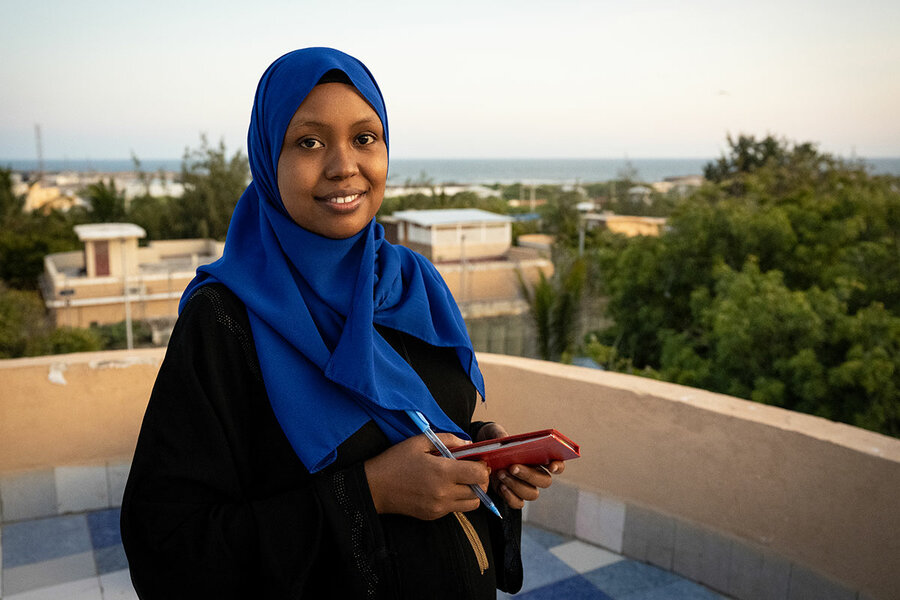
Fathi Mohamed Ahmed, chief editor of Somalia’s first all-women news outlet, Bilan, on a rooftop in Mogadishu, Somalia, Nov. 8, 2022. Her Bilan biography says part of the outlet’s mission is to “bring taboo subjects into the open.”
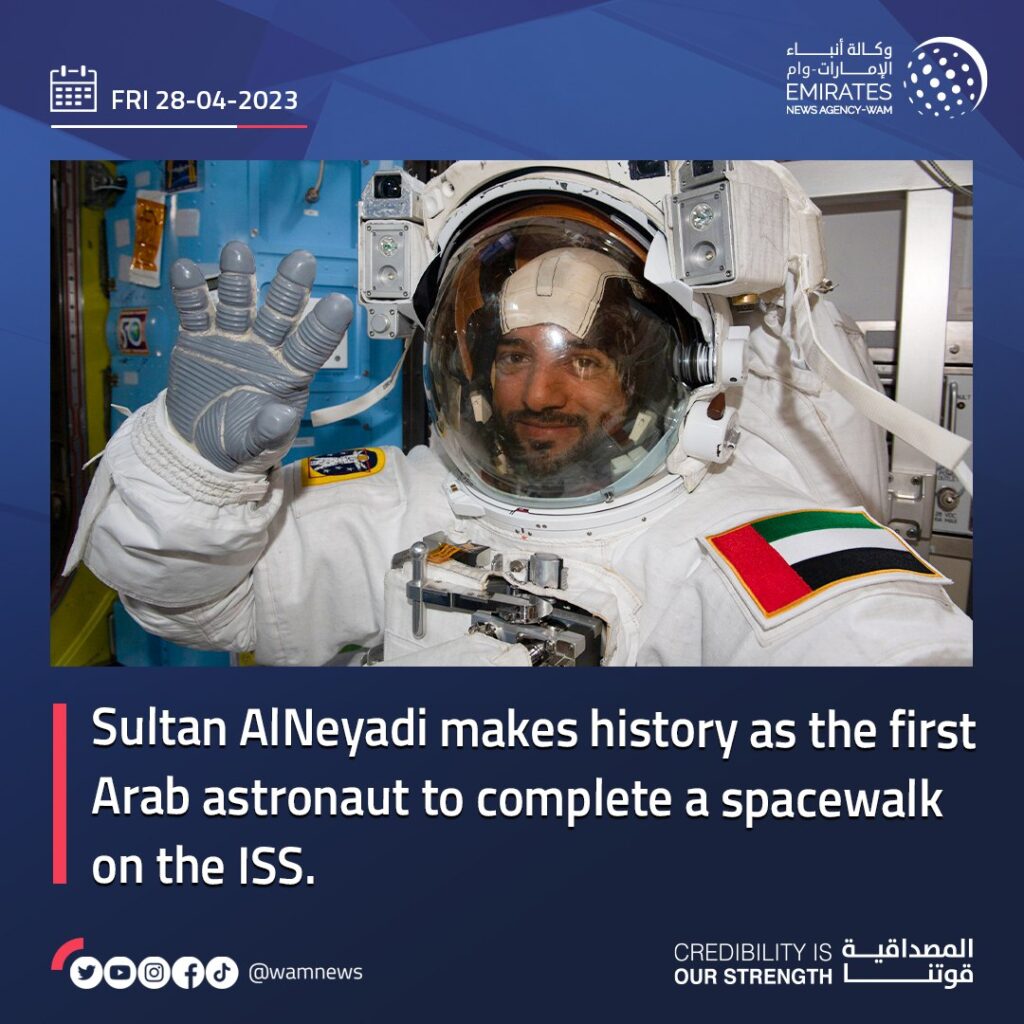
The Mohammed Bin Rashid Space Centre (MBRSC) achieved a new milestone on Friday when astronaut Sultan AlNeyadi ventured out of the International Space Station (ISS) and completed his spacewalk. With the conclusion of the mission task, the UAE commemorates AlNeyadi as the first Arab to undertake a spacewalk during Expedition 69, currently underway on the ISS. This accomplishment marks an important step forward for the Arab world’s participation in space exploration.
His Highness Sheikh Mohammed bin Rashid Al Maktoum, Vice President and Prime Minister of the UAE and Ruler of Dubai, said: “After three years of intensive training, today we see Sultan AlNeyadi on his first spacewalk, carrying out several tasks outside the International Space Station. AlNeyadi is the first ever Emirati, first Arab and first Muslim astronaut to perform a spacewalk.”
His Highness Sheikh Mohammed bin Rashid added: “It is a fact that many stars have Arabic names. Arabs are capable and innovative. Our focus on science and investment in youth will shape our future.”
The historic first Arab spacewalk lasted 7.01 hours in the vacuum of space on the starboard side of the International Space Station’s truss structure, accomplishing two key objectives. One of the objectives of the Extravehicular Activity (EVA), undertaken by AlNeyadi along with NASA Flight Engineer Stephen Bowen, was to work on a series of preparatory tasks which involved routing power cables, which was successfully concluded. These cable works were completed as a precursor to the installation of the Space Station’s fourth roll-out solar array, known as the International Space Station Roll-Out Solar Array (iROSA), which is scheduled to be delivered on the upcoming SpaceX Dragon cargo mission. The next objective was to retrieve a crucial Radio Frequency Group (RFG) unit. This communications antenna, or RFG will stay bolted on the station for now due to the difficulty of removing it.
Prior to embarking on their spacewalk, AlNeyadi and Bowen underwent a two-hour oxygen purge to eliminate nitrogen from their bodies. Following this, Warren Hoburg and Frank Rubio assisted the astronauts in donning their spacesuits – a major operation in itself. It took both AlNeyadi and Bowen an additional hour to put on their spacesuits and safety gear before entering the airlock to gradually reduce the pressure to a safe level for opening the exterior hatch.
Bowen was out of the hatch connecting his cable to the outside of the hull before anchoring AlNeyadi’s line outside as well. AlNeyadi then disconnected from the inside of the airlock and commenced the tasked activities.
AlNeyadi’s progress during the spacewalk was observed by Hazzaa AlMansoori, the Expedition 69 increment lead, from the NASA ground station in Houston.
Key safety checks of Sultan’s spacewalk Prior to the spacewalk, a thorough set of checks were conducted to ensure the safety of the astronauts. During their high-altitude walk outside the ISS, AlNeyadi and Bowen had to contend with two major challenges: radiation and extreme temperatures. The surrounding environment in space can reach scorching temperatures of up to 120 degrees Celsius in the sunlight and drop as low as -150 degrees Celsius when the sun is out of sight. While the spacesuit is geared to handle all this, careful management of the suit during the mission was also a task at hand.
Another pressing concern, even after all the necessary precautions were taken, was the threat of space debris. It is not uncommon for space debris to come dangerously close to the orbital outpost, posing a significant risk to the crew.
Hamad Obaid AlMansoori, Chairman, MBRSC, said, “The UAE Mission 2 is a truly inspiring endeavour that embodies the spirit of Emirati excellence and determination to achieve greatness in all our pursuits. From its inception as the longest Arab space mission to the historic appointment of the first Arab increment lead on an ISS expedition, and now continuing with the groundbreaking achievement of the first Arab spacewalk by Sultan AlNeyadi, this mission has set a new standard for excellence in space exploration. Under the patronage of the wise leadership, this remarkable milestone not only represents the UAE’s unwavering commitment to consolidating its position as a dominant force in space, science, and technology but also serves as a powerful motivator for future generations to strive for knowledge and innovation with boundless enthusiasm and dedication.”
Salem Humaid AlMarri, Director General, MBRSC, said, “Sultan AlNeyadi’s spacewalk has generated an unprecedented level of excitement and interest within the public, underscoring the immense significance of this mission. We are grateful to our visionary leadership for their unwavering support and guidance, which has enabled us to realise this ambitious goal and set the stage for even greater achievements in the future. While Sultan is conducting ground-breaking scientific experiments on the ISS, the addition of the spacewalk showcases yet another dimension of the UAE’s remarkable expertise in space exploration. This milestone achievement will play a critical role in restoring the International Space Station to its full operational capability, cementing the UAE’s position as a leading contributor to the global space community. “
Adnan AlRais, Mission Manager, UAE Astronaut Programme, MBRSC, said, “The historic achievement of the first-ever Arab spacewalk by Sultan AlNeyadi, as part of the longest Arab space mission in history, represents a remarkable milestone for the UAE. From the outset of the UAE Astronaut Programme journey, our astronauts have always set their sights on achieving the extraordinary, and with unparalleled skill and determination, they have risen to the challenge in a way that has captivated the world’s attention. As we celebrate this momentous achievement, we look eagerly to the future with great anticipation, as a new cadre of UAE professionals prepares for future missions that will enable them to further showcase our nation’s growing capabilities in the field of space exploration.”
Two months in space AlNeyadi will soon be completing two months in space after launching from Cape Canaveral in Florida with his Crew-6 team members on 2 March. For his second month aboard the Space Station, AlNeyadi conducted multiple experiments, including several key ones, such as:
• Collecting air samples from the Destiny and Columbus laboratory modules before cleaning the Veggie space botany facility. The samples were analysed for research purposes. • Sending approximately 1,950 kg of valuable scientific experiments and other cargo back to Earth on a Dragon cargo spacecraft, as part of the 27th contracted cargo resupply mission to the International Space Station (ISS). The spacecraft splashed down off the coast of Tampa, Florida in the US earlier this month. • Setting up the hardware for the CapiSorb Visible Systems fluid physics study. This experiment investigates the potential of using a liquid-based carbon dioxide removal system to promote more efficient space-based solutions and advanced Earth-bound applications. • Treating samples In the Kibo laboratory module for the Engineered Heart Tissues-2 experiment using Kibo’s Life Sciences Glovebox. This research may help doctors treat, as well as prevent, space-caused heart conditions and Earth-bound cardiac disorders. • Working on two technology experiments. In the first experiment, AlNeyadi demonstrated the use of a 3D printer to manufacture tools, components, and experiments on the orbital outpost. The second experiment entailed collecting and stowing samples in a science freezer for a study exploring the biomanufacturing of pharmaceuticals in space.
The UAE Astronaut Programme is one of the projects managed by MBRSC under the UAE’s National Space Programme and funded by the ICT Fund of the Telecommunications and Digital Government Regulatory Authority (TDRA), which aims to support research and development in the ICT sector in the UAE and promote the country’s integration on the global stage.
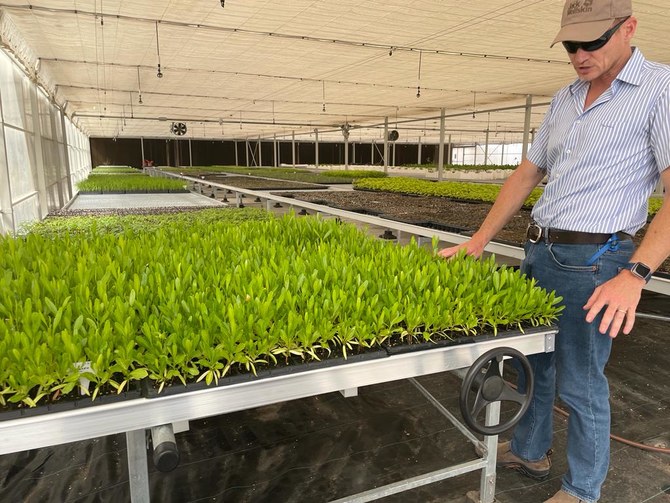
Saudi Arabia’s biodiversity is set to reap huge benefits thanks to Red Sea Global planning the “single most challenging horticultural endeavor ever attempted in human history,” the company has announced.
RSG’s fully operational nursery aims to raise over 25 million plants in the Red Sea Project and the ultra-luxury destination AMAALA by 2030, reducing the Kingdom’s reliance on importing foreign plant species and promoting the growth of native flora.
It will also produce over 30 million seedlings, which according to Grant Shaw, senior nursery director at RSG, is “incredibly exciting for horticulturalists.”
“If you think about 25 million plants in the time frame we’re talking about, it’s never been attempted before. It’s like the single most challenging horticultural endeavor ever attempted in human history in the middle of the desert.”
He added: “With our designers, we’ve looked at what can we use natively and then what can we enhance with some adaptive species.”
“Some of the species you see in this region will never be seen anywhere else in the world because they can’t grow elsewhere,” Shaw concluded.
The Red Sea region’s exceptional year-round climate allows for adding a broad range of plants, including cultivated, adapted and native plants, said Fahd Al-Habely, the company’s assistant director of the environmental program department.
Consequently, the company has implemented two initiatives. One is collecting native seeds across the Kingdom, and the other is transplanting mature trees.
With a mandate to increase biodiversity in the area by 30 percent, the company has a “laser-like focus on sustainability,” he explained.
Though the nursery mainly comprises plants native to Saudi Arabia, the giga-project has also been sourcing desert plant species worldwide, including Australia, where the climate is similar to the Kingdom.
Saudi Arabia has successfully planted over 12 million trees in the past five years through the National Center for Vegetation Development as it moves toward achieving its sustainability goals as part of the Saudi Green Initiative, stated the annual report issued by the National Transformation Program for 2022.
According to the report, more than 22 percent of the treated water in the Kingdom was reused while recording a 35 percent increase in desalinated water production capacity since 2018.
Some of the other achievements include the release of up to 921 endangered animals in national parks and reserves, the first birth of the Arabian oryx at the King Salman Royal Reserve, and the first birth of the Idmi gazelle at the Ibex Reserve.
source/content: arabnews.com (headline edited)
____________
RSG’s fully operational nursery aims to raise over 25 million plants in the Red Sea Project and the ultra-luxury destination AMAALA by 2030, reducing the Kingdom’s reliance on importing foreign plant species and promoting the growth of native flora. (Supplied)
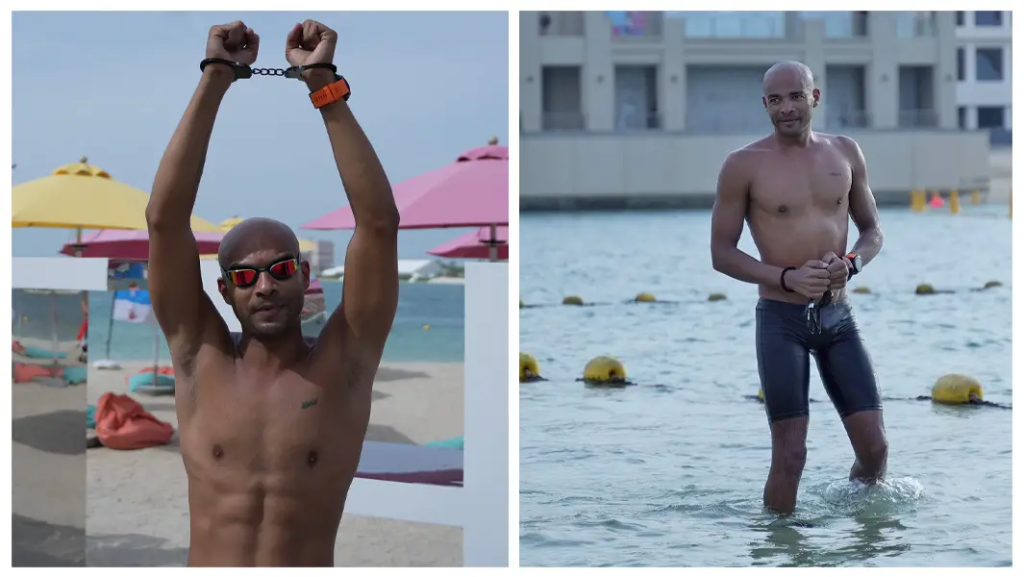
Shehab Allam, a swimmer and coach from Dubai, has broken the Guiness World Record for the longest swim wearing handcuffs by swimming over 11km (6.8 miles) continuously with the cuffs on.
With his swim, Allam broke the record previously held by American Ben Katzman, who set the old record by swimming 8.6km (5.3 miles) in a Virginia swimming pool in February 2022.
Notably, the 31 year-old Allam did not opt to complete his swim in a pool, instead using a marked area of approximately 164 yards in the Arabian Gulf, swimming laps between two buoys. During his attempt, he had an official with him to ensure his recorded distance was accurate.
According to Allam, he hit the 50 lap mark, surpassing the previous record, and made it his goal to hit 70 laps to surpass 11km. He told The National, “At 50 laps I realized I had gone past the record, so kept going. I hit the 10km mark and then felt good so kept on swimming until I had done 70 laps — so it was more than 11km in the end.”
“It feels amazing to be a Guinness Record holder, this is my biggest achievement — and was a longer swim than the Dubai Canal,” said Allam.
This was not Allam’s first attempt at a record-breaking swim, as he previously became the first person to ever swim the length of the 25km Dubai Canal back in 2020.
Of both of his swims, Allam said, “Being In the record books makes me feel like a superhero, and I want to stay there.” He plans to take an attempt at breaking the World Record for the furthest swim in handcuffs and leg chains next, which is currently held by Dolphin Ratheesh, who swam 10km wearing both devices back in November 2020.
Three recent titles on the life and history of the Copts reflect on elements of a complex story.
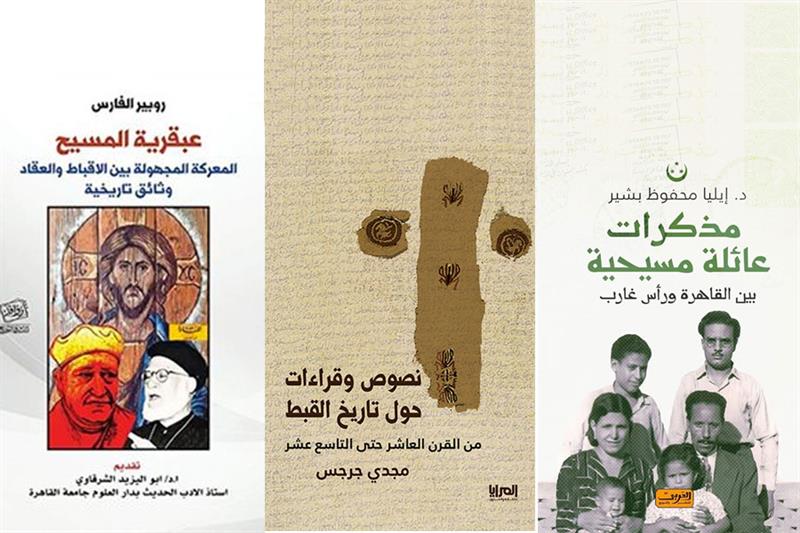
Mozakerat Aaela Masseihiya bein Ras Ghareb wal Qahera (Memoirs of a Christian family between Ras Ghareb and Cairo), by Elia Mahfouz Bashir, Cairo: Al-Arabi Publishing. pp. 196.
“At that time there was a [spontaneous] acceptance of the other; actually, the concept of this other was not really there – not as a fully defined concept any way”.
This is one of very few lines that evokes the “Christian” in the title of the pleasant-to-read 196-page text.
Elia Mahfouz Bashir, now a 65-year-old pathologist, recalls memories of his easy-going and uninhibited childhood in the Red Sea city of Ras Ghareb where his father worked for an oil company.
This is the interesting thing about the choice of the title. It offers a contrast to a sequel of articles where Bashir offers accounts from his time in this city in the late 1950s and early 1960s prior to the retirement of his father that forced the family away from its Red Sea haven to Cairo. Those are accounts of the city, the sea, playmates, school, family gatherings, comparisons between the Red Sea and the Mediterranean and so on.
So, for a while, the reader is left to wonder about the significance of the “Christian” reference. And this is exactly the point. In the childhood of Elia Mahfouz Bashir, his faith and that of his family was not an issue. It only comes up across when he refers to a trip to his maternal family in Upper Egypt where he was escorted by his mother to one of the moulids of the Coptic saints or when he talks about the prayers for healing that a priest performed for he and a playmate of his, who happened to be a Muslim.
As Bashir put it in one of the articles, both the mosque and the church of Ras Ghareb were part of a wider communal ownership. He is attributing this state of mind to the norms that prevailed during the rule of Gamal Abdel-Nasser when the focus was on Egyptian identity and not the affiliation of faith as it later became under the rule of Anwar Sadat.
Bashir had originally started sharing his reflections on his childhood in Ras Ghareb on Facebook before he decided to assemble the pieces into a book that stands as a testimony for his experience.
Abkareit Al-Massih: AlMaaraka AlMaghoula bein AlAqbat wa Al-Akkad – Watheiq Tarikheyah (The Genius of Jesus: The Unknown Battle Between Copts and Al-Akkad – archival documents), by Robert Al-Fares: Rawafd Publishing, 2023. pp. 172.
In line with his head-on and mince-no-words approach, Robert Al-Fares, journalist and author of several titles on Coptic social history, is putting out a book that addresses the strongly established but often averted conflict between the Christian and Muslim creeds over the nature of Jesus Christ. For Christians, Jesus is as divine as human, and as such there is no point in trying to argue his genius as Al-Akkad did in his book that came out in 1953, under the title of “The Genius of Jesus,” to the dismay of the Copts of Egypt and particularly that of the Coptic Church of Egypt. For Muslims, however, Jesus is a prophet just like any other prophet that God had sent prior to Muhammad.
In this 172-page book, El-Farres digs out the archival details of a confrontation that took place when the book was put out by Akhbar Al-Youm Publishing, at the end of a sequel that Al-Akkad dedicated to argue the genius of Prophet Muhammad and the four early rulers of the Muslim state that followed him.
Those include letters and remarks from Coptic commentators and clergy, including Father Sergius, the prominent preacher of 1919 Revolution, who was put under house arrest by the Free Officers regime “for worry over his public influence.”
He also included the remarks and views of Muslim scholars who defended or disagreed with Al-Akkad.
The book also includes the replies that Al-Akkad offered and the remarks he added to the second edition of the book that came out in 1958 under the new title of “The Life of Jesus.”
While zooming in on this particular account of Al-Akkad “The genius of Jesus”, Al-Fares is being open in his criticism of the attempt of some Coptic and Muslim figures to overlook this difference instead of simply accepting ‘the other’ – given that as much as for Muslims, Christ is just a prophet, for Christians, Muhammad is not a prophet.
“We just need to acknowledge that we have different creeds; this is the core of coexistence,” he wrote.
Nossous wa Kerat hawla tarikh Al-Qapt min Al-Qarn Al-Aasher Hattah Al-Qarn Al-Tassaeiaashr (Texts and Narratives on the History of Copts – From the 10thCentury to the 19thCentury), by Magdi Girgus: Al-Maraya Publishing, 2023. pp. 273.
This book is part of the ambitious and really interesting work of historian Magdi Girgis who has been digging out accounts on the history of Copts from the archives to assemble a comprehensive and solid narrative on the lives of Copts in Egypt under the Muslim rule. As Girgus put it in the introduction to his most recent 273-page volume, it is “a free stroll across the history of Copts [during 10 consecutive centuries] through the text of some archival documents.”
The selection of documents, Girgus writes, is designed to address some significant points of Coptic history, and that of Egypt. He notes that his purpose is not just to share and analyse the content of these documents but to put the accounts they address within the wider context of social and political contexts.
Throughout his 10 chapters, with documents and with narratives on the context of the documents, Girgus goes through some of the most interesting accounts of the history of Copts.
These accounts include history of the Coptic Church and the Arabisation of the language of the church.
They also include a history of the sources used to chronicle the Coptic history and the archiving of documents on the Coptic history.
He also examines the relation between Church and State and the Islamic judiciary system as well as relations between Coptic clergy and Coptic notables and the state.
Moreover, he also examines the role of Coptic clergy in the rural areas.
A most controversial part of this book might relate to the argument Girgus offers on the issue of Arabisation.
Traditionally, many Coptic intellectuals have often argued that this was the outcome of the pressure of the Arab rulers of Egypt.
However, according to Girgus, the ‘choice’ of the Coptic Church to adopt the Arabic language was not necessarily about the pressure from Arab rulers but rather about the ‘choice’ of the Church of Egypt to embrace a national line away from the influences of the Church of Rome.
It was also, he argued, about the wish of the clergy to go along with the notables who had been trying to go along with culture of the new rulers in so many ways, including the most peculiar practice of polygamy by some Coptic notables despite the fact that polygamy is strictly forbidden in Christianity.
Actually, the evolution of relations between Church and State is perhaps one of the best explained issues in this book.
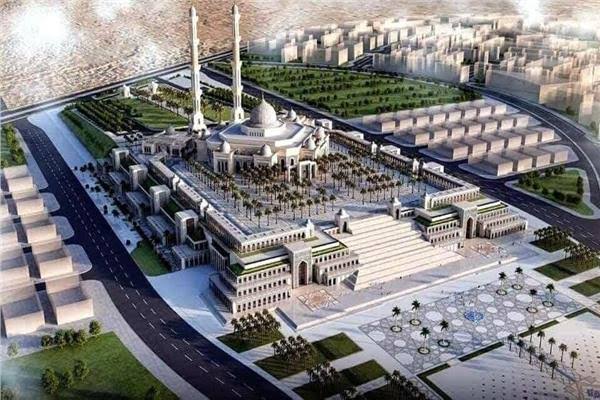
President Abdel-Fattah al-Sisi listened to an explanation of the details of Egypt’s Islamic Cultural Center and the Egypt’s Grand Mosque, during his visit to the New Administrative Capital at dawn, Thursday, to join workers for the first suhoor in the blessed month of Ramadan.
According to the explanation, Egypt’s Grand Mosque obtained three international certificates from the Guinness World Records.
The first was for the largest pulpit in the world with a height of 16.6 meters, handcrafted from the finest types of wood.
The second and third were for the main chandelier of the mosque, being the heaviest chandelier in the world of 50 tons, and it being the largest chandelier with a diameter of 22 meters and four levels.
Egypt’s Islamic Cultural Center in the New Administrative Capital is a great achievement and one of the most important projects established in the New Administrative Capital.
The Islamic Cultural Center was established in the new capital on an area of 15,000 square meters. It has a large place for services, as well as a group of spacious and multi-storey garages, with a capacity of about 4,000 cars.