Arabs & Arabian Records Aggregator. Chronicler. Milestones of the 25 Countries of the Arabic Speaking World (official / co-official). AGCC. MENA. Global. Ist's to Top 10's. Records. Read & Enjoy./ www.arabianrecords.org
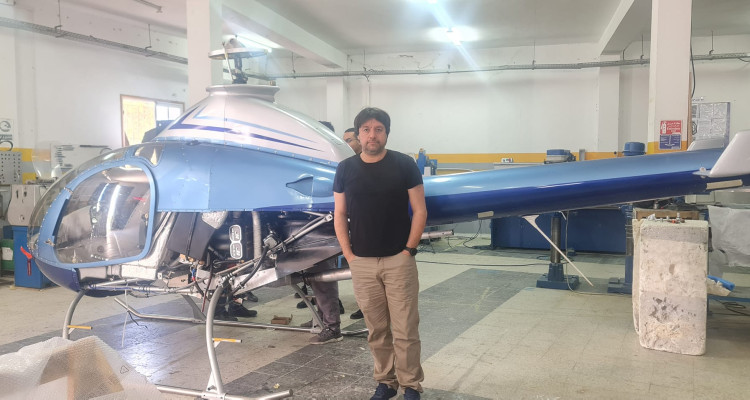
Avionav managed to export the first Tunisian-made helicopter. The Tunisia-based aircraft manufacturer company is gearing up to deliver more helicopters as it has embarked on the manufacturing of light utility helicopters. The company has been exporting its aircrafts to countries throughout Europe, Africa, the Middle East and the Americas.
Avionav is a Tunisian aircraft manufacturer that produces light aircraft for recreational and training purposes. The company was founded in 2007 in Mateur, Bizerte, by two Italian manufacturers. Later, a group of Tunisian engineers acquired it and relocated its main production facility to Sousse, Tunisia.
Avionav currently produces two models of light aircraft: the AV3 and the AV4. The AV3 is a two-seat, low-wing monoplane designed for training and recreational flying. The AV4 is a four-seat, high-wing monoplane that can be used for a variety of purposes including transportation, agricultural, advertising banner transportation, and surveillance. The company does also offer maintenance, repair, and overhaul services for its own aircraft as well as for other aircraft types.
“Since then, we’ve been doing our utmost to provide total customer satisfaction by providing high-quality, top-of-the-line products at 30% lower prices than our competitors,” Kamel said.
More than 1,300 of its models are currently flying, and roughly 40 light aircrafts (two to four passengers) are produced annually.
The company’s market includes the United States, Europe (Belgium, France, Italy, and Spain), Latin America (Brazil and Argentina), Asia/the Middle East (Pakistan, the United Arab Emirates, and Iran), and Africa (Tunisia, Algeria, Senegal). According to Kamel, new markets such as Costa Rica, the Czech Republic, and Qatar are being explored.
“Africa is an extremely lucrative market. We are presently in negotiations with Senegal and Mauritania,” he stated.
Any of the company’s aircraft can be delivered one month after being ordered. Which is “quite rare” in this industry, Kamel says with pride.
Due to its numerous advantages, the company chose carbon fiber for its Rally aircraft with large wings. It has certifications from ultralight aircraft manufacturers (ULM) and light sport aircraft (LSA).
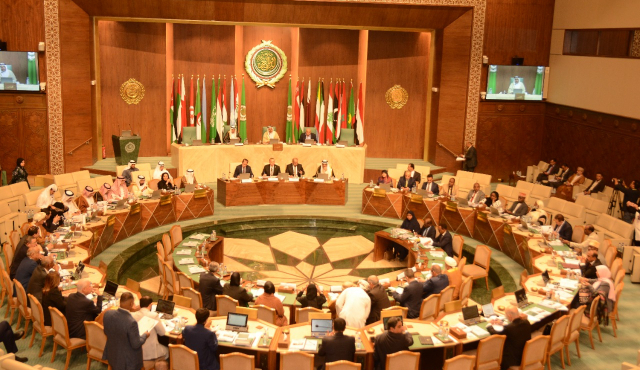
The fifth general session of the Arab Parliament, under Speaker Adel al Asoomi, kicked off on Saturday at the Arab League’s General Secretariat headquarters in Cairo.
The session is set to discuss a number of issues, including political and security developments in the Arab region.
The session will also debate an economic file on a bill to increase renewable and clean energy investments in the Arab world.
The lawmakers are set to discuss preparations for holding the second edition of the Arab forum on strengthening economic integration among Arab countries.
The parliament will consider a report on the social situation in the Arab world and will discuss enacting a law to counter bullying and family violence in the Arab region.
Al-Samaani and Tabbi will serve in their roles for two years.
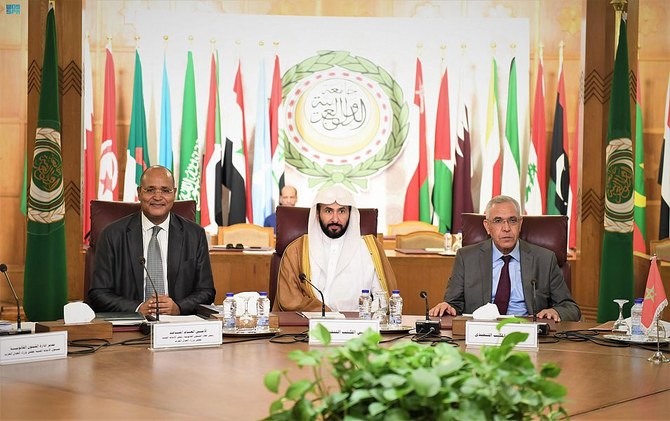
Saudi Justice Minister Waleed Al-Samaani has been elected head of the executive office of the Council of Arab Justice Ministers, the Saudi Press Agency reported.
Abdul Rashid Tabbi of Algeria was elected deputy head. Both will serve in their roles for two years.
The announcement came on Wednesday during the 71st session of the executive office, held at the Arab League’s headquarters in Cairo.
source/content: arabnews.com (headline edited)
__________
Saudi Justice Minister Waleed Al-Samaani attends 71st session of the executive office of the Council of Arab Justice Ministers. (SPA)
While aspiring to become a boxing champion, Taghmaoui’s fascination with cinema eventually led him to pursue a career in acting.
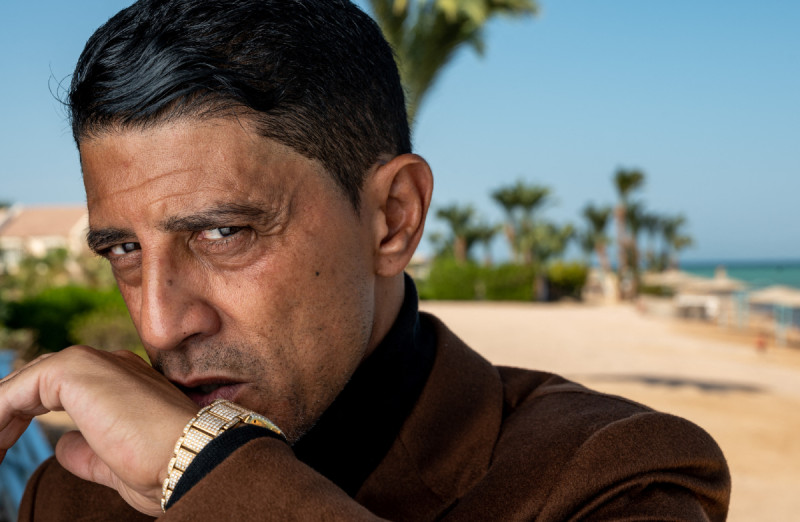
French-Moroccan Actor Said Taghmaoui has solidified his presence in the Hollywood industry, successfully securing various roles alongside renowned stars.
His latest endeavor sees him teaming up with Golden Globe nominee Mark Wahlberg in an upcoming feature film called “The Family Plan,” produced by Apple Original Films and Skydance.
Written by David Coggeshall, “The Family Plan” follows the story of a suburban father who finds himself on the run with his family when his past catches up to him.
The movie is directed by Simon Cellan Jones and produced by Wahlberg, Municipal Pictures’ Stephen Levinson, and Skydance’s David Ellison, Dana Goldberg, and Don Granger.
In addition to “The Family Plan,” Taghmaoui has also landed a role in the action-packed film “Tin Soldier,” which boasts an impressive cast including Oscar winners Jamie Foxx and Robert De Niro, as well as Scott Eastwood.
During a recent interview with French lecturer and essayist Idriss Jamil Aberkane, Taghmaoui opened up about his journey as an actor. He described himself as an “autodidact,” highlighting the fact that he didn’t attend school but instead pursued his passions with unwavering dedication.
Recalling his boxing days, the actor expressed how the sport played a significant role in his personal growth. He believes that either boxing chose him or he chose boxing, emphasizing its complexity and the introspection it demanded.
While aspiring to become a boxing champion, Taghmaoui’s fascination with cinema eventually led him to pursue a career in acting.
Born in France to Moroccan immigrant parents, Taghmaoui became a naturalized US citizen in 2008 and swiftly made a name for himself in the Hollywood industry.
Despite dropping out of school at a young age, his boxing talent propelled him to second place in his category in France. It was during this time that he met Mathieu Kassovitz, with whom he co-wrote the acclaimed French film “La haine” (1995), which earned the Best Director award at Cannes.
Since then, Taghmaoui has become a prominent figure in cinema and has expanded his repertoire to include films from various countries, such as Italy, Germany, the United States, and Morocco.
He has featured in Hollywood productions like “G.I. Joe,” “Wonder Woman,” “Traitor,” “John Wick,” and “The Forgiven,” showcasing his versatility and talent as an actor.
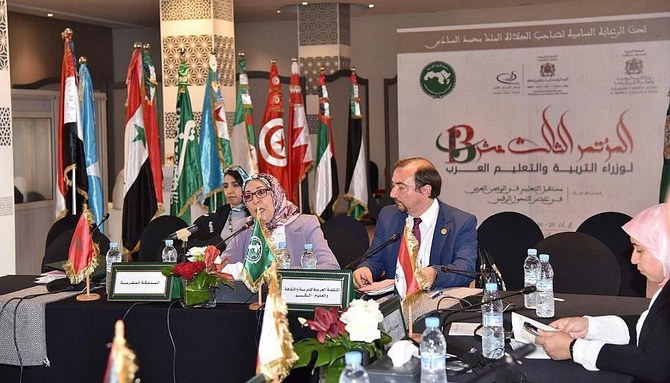
Mawhiba representatives told the 13th Conference of Arab Ministers of Education in Rabat that its ‘Gifted Arabs’ initiative had identified and was supporting people in 16 Arab countries
Secretary-General Dr. Amal bint Abdullah Al-Hazaa said that the program allows Saudi leadership to share their expertise and discover, nurture, and empower talent around the Arab world
More than 600 ‘gifted’ students have been granted support to realize their academic talents under an initiative launched by a Saudi foundation, an education conference has been told.
Leaders from Mawhiba, or the King Abdulaziz and his Companions Foundation for Giftedness and Creativity, Mawhiba, told the 13th Conference of Arab Ministers of Education in Rabat, Morocco, that its ‘Gifted Arabs’ initiative had identified and was supporting people in 16 Arab countries.
Secretary-General Dr. Amal bint Abdullah Al-Hazaa said that the program allows Saudi leadership to share their expertise and discover, nurture, and empower talent around the Arab world.
Dr. Khaled Al-Sharif, director general of Mawhiba’s Center of Excellence, said that 606 students were identified in the first and second rounds of the ‘Gifted Arabs’ initiative’s recruitment.
The initiative has provided the talented students with qualitative enrichment and academic programs to develop their knowledge and capabilities, he added.
Mawhiba said that its efforts were part of its vision to empower talent and creativity to further prosperity.
The conference, “Future of Education in the Arab World in the Digital Transformation Era,” was held on May 29 and 30.
source/contents: arabnews.com (headline edited)
___________
Mawhiba has grant aided 606 students under its ‘Gifted Arabs’ initiative. (SPA)
During her lifetime, Fatima was called the “mother of boys”. According to historian Mohammed Yasser Hilali, “this nickname probably stems from her charity and the fact she took students under her wing”.
When thinking of the oldest universities in the world, probably the first ones that come to most people’s minds are Oxford and Bologna, but according to UNESCO and the Guinness World Records, Al-Qarawiyyin University (also written as Al-Karaouine) is the “oldest existing, and continually operating educational institution in the world.”
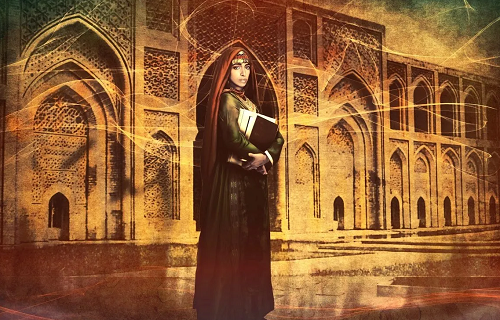
Founded in 859 A.D. by Tunisian-born Fatima al-Fihri in Morocco’s Fez, the university is not only the oldest higher education institution on Earth but also the first to be founded by a Muslim woman. Fatima used her inheritance from her merchant father’s wealth to found the university which started as an associated school – known as a madrasa – and a mosque that eventually grew into a place of higher education. It also introduced the system of awarding degrees according to different levels of study in a range of fields, such as religious studies, grammar and rhetoric. Though the university first focused on religious instruction, its fields of study quickly expanded to include logic, medicine, mathematics and astronomy, among many others.
The University of Al Quaraouiyine became a state university in 1963 and now awards degrees in Islamic, religious and legal sciences with an emphasis on classical Arabic grammar and linguistics and law.
Interestingly, teaching is still delivered in a very traditional manner, whereby students are seated in a semi-circle around a Sheikh (Islamic scholar), who prompts them to read sections of particular texts, asks them questions on aspects of grammar, law, or interpretation, and explains difficult points. Education at the University of al-Qarawiyyin concentrates on the Islamic religious and legal sciences with a heavy emphasis on, and particular strengths in, Classical Arabic grammar/linguistics and Maliki Sharia, though lessons on non-Islamic subjects are also offered to students. Teaching is still delivered in the traditional methods. The university is attended by students from all over Morocco and Muslim West Africa, with some also coming from further abroad. Women were first admitted to the institution in the 1940s
Fatima al-Fihri was born in 800 A.D. She was the daughter of Mohammed Bnou Abdullah al-Fihri – a rich merchant who settled in Fez with his family during the reign of Idris II.
Fatima’s family was part of a community called the “Qarawiyyin” (the ones from Qayrawan) whose two thousand families migrated from Qayrawan in Tunisia, to Fez in Morocco which was then under the rule of Idris II, a respected and devout ruler.
After the community was banned by the local ruler. The caravan included Fatima’s father Muhammad bin Abdullah Al-Fihri, and sister Mariam. Fatima was well versed in classical Islamic learning such as fiqh (jurisprudence) and hadith (Islamic traditions based on Prophet’s life). She inherited a large fortune from her merchant father which she used to build the university. She personally supervised the entire gigantic enterprise, from putting up the foundation to the functionalizing of these institutions. When she embarked on her mission, she had lost her father, husband, and brother – all primary sources of support and protection for a woman. Any other woman would have retreated to the backwaters of domestic life. But Fatima appears to have been an extraordinarily inspired and determined woman with steely grooves. All her great achievements came during periods of loneliness and in circumstances when women normally shun the world and seek the company of the home.
During her lifetime, Fatima was called the “mother of boys”. According to historian Mohammed Yasser Hilali, “this nickname probably stems from her charity and the fact she took students under her wing.” Fatima al-Fihri herself is considered a saint and she is much respected among the believers especially in Fez. In 2017, a prize was created in Tunisia in her honor. It rewards initiatives which encourage access to training and professional responsibilities for women. Furthermore, an academic program and a scholarship given to students from Europe and North Africa pay tribute to Fatima al-Fihri.
The University of Al-Qarawiyyin (also Al-Karaouine), which was then just called a madrasa (an institute of religious learning), was 30 m long, with a courtyard, a large library, and several schoolrooms. Although initially only the Qur’an and related religious lessons were taught, many other courses of study, like mathematics, medicine, Arabic grammar, history, geography, astronomy, chemistry, music and logic were soon introduced. Fatima studied there herself, along with her students, and awarded them degrees once they completed the courses: a degree that was chiseled onto a wooden board, which is now displayed in the university’s library. She also conducted debates and symposiums periodically for her students, producing politically-aware individuals.
With these innovative ideas, Fatima al-Fihri had not merely founded the first university but had introduced the concept of awarding degrees that is now an essential part of modern higher education.
In fact, the university produced many celebrated intellectuals and historians who are still known to this day: the Islamic philosopher Ibn Rushd, Andalusi diplomat and geographer, Hassan al-Wazzan and historian and thinker Ibn Khaldun, the famous Jewish philosopher, Moses Ben Maimon and Aka Maimonides.
The Christian scholar, Gerbert of Aurillac, who later became Pope Sylvester II, is believed to have visited the university several times. His visits helped him introduce Arabic numerals and the concept of zero to Europe. The University of Al Qarawiyyin is still considered a leading religious and education institution in the Muslim world. The university has moved away to another part of Fez, but the mosque and the library remain at the ancient complex. The University of Al-Qarawiyyin is the oldest existing, continually operating and the first degree awarding educational institution in the world according to UNESCO and Guinness World Records and is sometimes referred to as the oldest university.
(M Ahmad is a regular writer for this newspaper and can be reached at specialachivers78@gmail.com)
Egyptian businessman said Rishi Sunak had shown himself to be ‘very capable’.
The Conservative party has received its largest donation in more than two decades from an Egyptian-born, British-based billionaire.
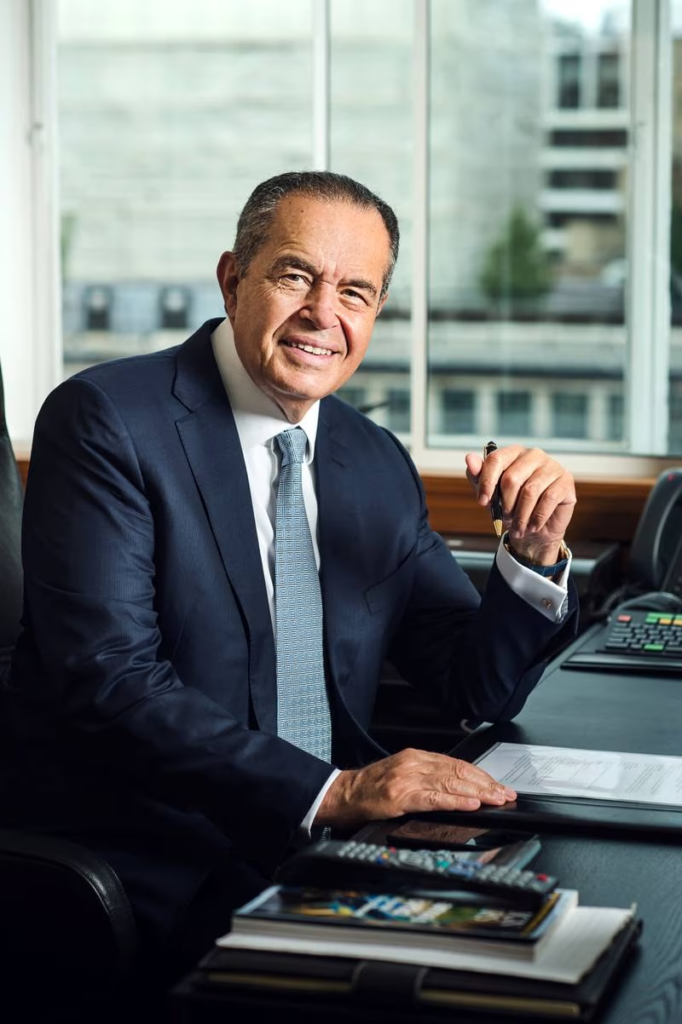
Mohamed Mansour has given the party £5 million ($6.2 million) and thrown his backing behind Prime Minister Rishi Sunak, saying he understands “how growth is generated in the modern economy”.
Writing in The Telegraph on Monday, Mr Mansour, who previously spoke to The National for an Arab Showcase feature, said Mr Sunak had shown himself “to be very capable”.
He wrote: “He gets the importance of technology and innovation. He can make the modern economy work for all UK citizens.”
The £5 million donation is the second largest individual gift on record to a political party, after Lord Sainsbury of Turville gave £8 million to the Liberal Democrats in 2019.
And it matches the £5 million donation to the Conservative Party by Sir Paul Getty in 2001. Mr Mansour’s gift has contributed to one of the party’s most successful first quarters of donations in recent years.
“I believe that this country has a very capable Prime Minister,” he wrote.
“My confidence in the Prime Minister is why I was proud to become a senior treasurer of the Conservative Party last December. I want to give him the best chance of having a full five-year term and so have donated £5 million to the party’s election fighting fund. I look at what he has achieved in his first months in office and think what he could do in five years.”
‘I had to do something in my life’
Mr Mansour has overseen the expansion of his family’s company, which has grown from its early beginnings as a cotton exporter to the global conglomerate it is today, with revenue of more than $7.5 billion.
He told The National in 2021 about how a period of convalescence aged 10 gave him the impetus he needed to go on to succeed in life.
Week after week he lay in plaster recuperating from horrific injuries after a car hit him as he was crossing the street.
The doctors had wanted to amputate his leg, but the headstrong boy refused, vowing to stick it out as long as necessary. It took three years.
Mr Mansour looks back on the episode as a part of his life when his father taught him how to be a good entrepreneur and an honourable man.
“That’s when I developed in me that I had to do something in my life,” he told The National.
The billionaire learnt as a boy the importance of a strong work focus, determination, vision and priorities, but also trust, understanding, empathy and loyalty that goes both ways.
“People who love and respect you will do anything for you, I find, and vice versa,” Mr Mansour said.
They are the qualities he credits for his successful leadership at the helm of the Mansour Group, which has a presence in 100 countries and 60,000 employees.
The Egyptian cotton trading company was founded in 1952 and run by his father, Loutfy Mansour.
“My father always told me: ‘Mohamed, you’re a very special young man because of the strength you showed when everybody was saying that we have to amputate the leg. You’re telling the doctors, ‘No.’
“I said, ‘No’,” Mr Mansour recalls, with an edge to his voice, “and I meant it.”
Family’s home seized
The fortune that his father amassed as a textiles trader was lost in 1963 when the business was nationalised by the Egyptian government.
Mr Mansour’s childhood home, with its 40 rooms and 30 staff was confiscated, and his father went from feted capitalist to persona non grata on a state income of $75 a month.
He explains how his life changed overnight, with his family unable to support him while at university in the US, forcing him to trade in his car and work as a waiter.
Back in Egypt, his father was left trying to support the family on a meagre salary, which left Mr Mansour with a lifelong belief in the importance of political stability, property rights and the rule of law.
Mr Mansour joined the company in 1973 and took it in a new direction, forming a strategic partnership first with the automotive multinational General Motors and then with the construction equipment manufacturer Caterpillar. Other leading brands, such as Philip Morris, Peugeot, MG and McDonald’s would follow.
Mr Mansour and his two brothers continued to steer the company to success after their father’s death in 1976.
In 2005 Mr Mansour stepped back from his business to serve in the Egyptian government, spending almost four years trying to modernise the country’s transport infrastructure.
In the article on Monday he says: “But when I had finished that period of service, I knew there was one country where I wanted to base my business. A place where the rule of law is paramount, property rights are respected and with an enviable record of political stability. This country: the United Kingdom.”
He says he loves and respects the country, which has welcomed himself and his family so warmly.
“It has a proud history and noble traditions. I believe that it has great days ahead of it. I want to do what I can to help this country – the place where I am watching my grandchildren grow up – achieve its great potential,” he adds.
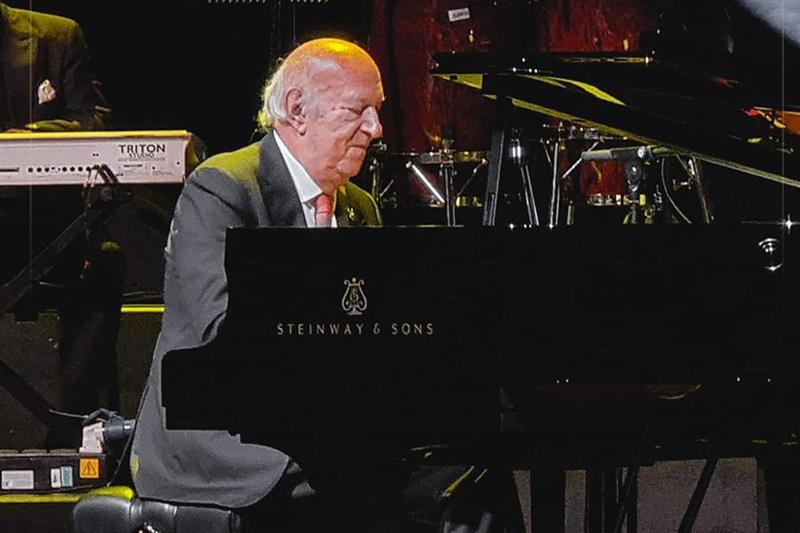
Egyptian acclaimed composer Omar Khairat has been selected as the Cultural Personality of the Year by the organizers of the UAE’s 17th edition of the Sheikh Zayed Book Award (SZBA).
Omar Khairat will be awarded “in honour of an illustrious, decades-long career of timeless musical creations that have contributed to shaping the collective cultural consciousness of the Arab region,” as stated by the SZBA’s official website.
“The SZBA’s Board of Trustees endorsed the Scientific Committee’s decision to choose Khairat as the Cultural Personality of the Year in recognition of his remarkable talent and artistic turnout, which has been tremendously popular in the Arab world and has been featured in musical introductions to films and many dramas.”
The SZBA is organized by the Abu Dhabi Arabic Language Centre (ALC); part of the Department of Culture and Tourism – Abu Dhabi (DCT Abu Dhabi).
Winners of this year’s SZBA also include Iraqi poet Ali Jaafar Alallaq; French author Mathieu Tillier; Algerian author Said Khatibi; Tunisian translator Chokri Al Saadi; Tunisian critic Jalila Al Tritarm, and Egyptian publishing house Dar ElAin.
Excellence and Innovation
Each year, the Cultural Personality of the Year award is given to “a prominent figure who has contributed to the advancement of Arabic culture and promoted peaceful coexistence.”
“This year, we are proud to select Omar Khairat, one of the most renowned and celebrated musicians in the Arab world,” stated Undersecretary of DCT Abu Dhabi Saood Abdulaziz Al Hosani.
“His constant striving for excellence and innovation has seen the artist make an incalculable impact on the music industry and the wider cultural landscape, as well as foster important cross-cultural dialogue. His passion reflects Abu Dhabi’s vision to nurture creativity and harness the power of the arts to build bridges and transcend borders,” he added.
Considerable Career
Born in 1947, the multi-awarded Omar Khairat is one of the top musicians of the Arab world with hundreds of memorized compositions in his repertoire.
Throughout his long successful career, he has written scores for numerous films and television series, including The Sixth Day (1984); The Terrorist (1993); Mafia (2002); Girl’s Love (2003); The Embassy in the Building (2005), and Deer’s Blood (2006), to name but a few.
His concerts are usually fully-booked weeks ahead of time with his wide fan base singing along and humming with compositions like Heya Di El-Hayah; Fi Hawid El Leil; Arabian Rhapsody; Fiha Haga Helwa; Eadam Mayet; El-Khawaga Abdel-Kader; Giran El-Hana; Saber; Arfa; Qadeyet Am Ahmed; Khali Balak Men Aklak, and other classic hits of time-honoured TV and films themes.
Among his upcoming performances is the 3rd of June’s large concert at the Sound and Light Theatre at the Pyramids and Sphinx site in Giza, where half of the tickets have already been sold-out.
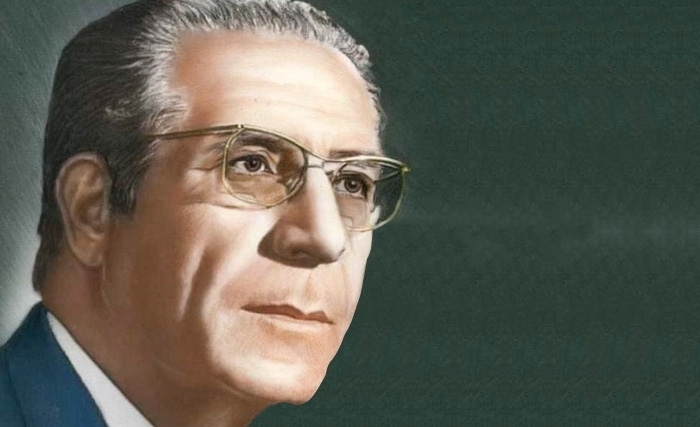
Hedi Amara Nouira was born in Monastir in April 1911 and was trained as a lawyer. In 1934, he assisted Habib Bourguiba establish the Neo-Destour Party, a radical branch of the nationalist Destour Party. In the 1950s, the party campaigned for independence, and Nouira served as its representative in Paris.
After the country gained independence from France in March 1956, he served as Finance Minister and was the first governor of Tunisia’s central bank.
Back then, the newly independent country’s lawmakers appointed Bourguiba prime minister, and he became president after the monarchy was officially abolished the following year. He ruled as a monarch for three decades, securing a 1974 revision of the Constitution that made him president for life and confirmed Nouira as his chosen successor.
Throughout the 1970s, as Habib Bourguiba’s health and mental capacity worsened, he progressively assumed control of the country’s daily operations. Considered the architect of Tunisia’s economic renewal in the 1960s, Nouira was criticized in the 1970s by workers for the government’s harsh labor policies and attacks on labor union headquarters.
During his tenure, the economy thrived, and double-digit growth was achieved, which validated him in his roles and kept him in the prime minister’s office for ten years.
Hédi Nouira was an expert in both international history and modern economics. He had a thorough understanding of the territory and the Tunisians, the vast majority of whom desired central rule and resisted any form of excess. He wanted Tunisia to become the Singapore of Africa. He knew how to build his credibility, his authority, and his leadership. He was rationally liberal, socially-minded, pragmatic, and realistic in his perspective.
He restored confidence in the coutnry economy by his speeches, way of action, and personal commitment. State, employers, and UGTT initiate a session of social discussions every three years in order to provide greater visibility and less uncertainty for businesses and ensure social peace. Salaries and productivity go hand in hand. That was the policy.
Hédi Nouira knew where to lead the country and how to lead reform. He said what he did and did what he said, despite the danger of alienating strong supporters of social and economic progress. It revived the economy in so few years and put it on an Asian-style growth orbit, with yearly growth peaks exceeding 17%. His ten years in office will be remembered as the “ten glorious ones” in the country’s history. He rebuilt the state’s coffers and created more jobs and income than in the previous decade. He sought to bring Tunisia to the top of Africa. This ambition inspired the birth of the Tunisian dream.
After El Hedi Nouira’s stroke in February 1980, he was replaced by then-Education Minister Mohammed Mzali, who practically became the President’s heir apparent. In November 1987, however, Interior Minister Zine al-Abidine Ben Ali overthrew Bourguiba in a coup and claimed the presidency.
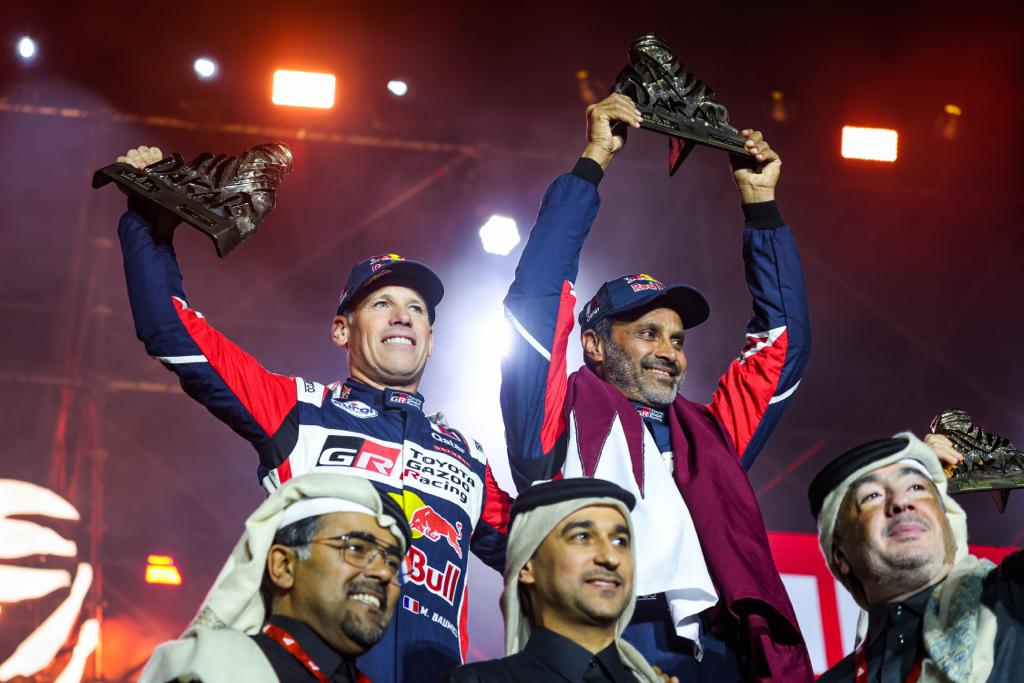
Qatar Motor and Motorcycle Federation (QMMF) President Abdulrahman bin Abdullatif Al Mannai has hailed the continuous successes achieved by Qatari champion Nasser Al Attiyah at the global stage, the latest of which was his Dakar Rally 2023 title victory for a second time in a row and the fifth overall.
Al Mannai said that Al Attiyah winning the Dakar Rally title is a great achievement for Qatar motorsports and sports in general, especially since this is his fifth victory at the tough international event following his earlier wins in 2011, 2015, 2019 and 2022.
Al Mannai explained that such achievements are not strange for the champion driver who has been winning titles and bringing victories to Qatari sports and motorsports in particular, noting that he is used to ascending the podiums in all forums, which makes him the most prominent Qatari sportsperson in the recent years.
Al Mannai stressed that Al Attiyah has become a key figure in the world of desert rallies whether at the global level or in the Middle East, considering that his successive achievements are a great incentive for all Qatari drivers to follow the same path and achieve titles and championships.
The QMMF president congratulated Al Attiyah on this great achievement, which serves as a motivation for him to continue victories this season in various competitions, wishing him success and continuing the same professional approach that he follows in managing his team and its participation in various international tournaments.
Al Mannai also noted that Al Attiyah’s victory this year was due to the strong strategy he followed, as he pressed in the early stages and led the rally by a comfortable margin and then fought the rest of the stages with the aim of maintaining the lead and not taking risks.
Al Mannai also stressed that Al Attiyah is a role model for all Qatari youth, not only for those in motorsports but for all sportpersons, which raises the ceiling of ambitions to achieve many achievements and raise the name of Qatar high at all international forums.
It is noteworthy that Al Attiyah first participated in the Dakar Rally in 2004, and during his presence in twenty editions he was able to win the title five times in 2011, 2015, 2019 and 2022, and occupied the runner-up position on five occassions in 2010, 2016, 2018, 2020 and 2021.
Toyota Gazoo Racing’s Qatari driver Nasser Saleh Al Attiyah celebrates with co-driver Mathieu Baumel of France, Qatar Motor and Motorcycle Federation President Abdulrahman bin Abdullatif Al Mannai and officials after winning his fifth Dakar Rally title in Saudi Arabia, on Sunday. PIC: RED BULL