MOROCCO Outperforms US to Become 4th Largest Blueberry Exporter Worldwide

Morocco’s berry production is one of the country’s key contributors to the agricultural sector.

Morocco has outperformed the US becoming the fourth largest blueberry exporter in the world.

Data from East Fruit said that Morocco exported 53,000 tonnes of blueberries in 2022. Peru was the largest exporter of fresh blueberries last year, with 277,000 tonnes, followed by Chile (105,000 tonnes) and Spain (87,000).

Despite Morocco’s leading position in blueberry exports, the Netherlands exported more blueberries than the North African country in  11 months of last year, the same source said.

“It should be noted that the exports from the Netherlands in 11 months of last year were higher than that of Morocco, having amounted to 104 000 tonnes,” East Fruit reported.

Elaborating on the data, the news outlet said: “However, if we take into account the volume of re-exports, the real result of the Netherlands will be much lower since it imported 130 000 tonnes of fresh blueberries during this period.”

East Fruit also recalled that Morocco ranked seventh place among the largest exporters of cultivated blueberries in 2017.

Berry production in Morocco has contributed to the country’s agricultural sector significantly.

Morocco’s revenues from strawberry exports to the international market are estimated between $40 and $70 million annually.

According to previous data from East Fruit strawberry products are one of the top 10 most exported goods from Morocco.

According to estimates,  Morocco exported 22,400 tonnes of fresh strawberries globally in 2022, representing an increase of 17% compared to a year earlier.

Countries like the UAE, Qatar were key buyers of Moroccan goods. In Europe, the US is one of Morocco’s strawberry importers. In 2022, the US imported almost half of Morocco’s strawberry export supply.

source/content: moroccoworldnews.com (headline edited)

___________

_____________

MOROCCO

EGYPT: Anwar Ibrahim First Arab to Receive Dostoyevsky Medal

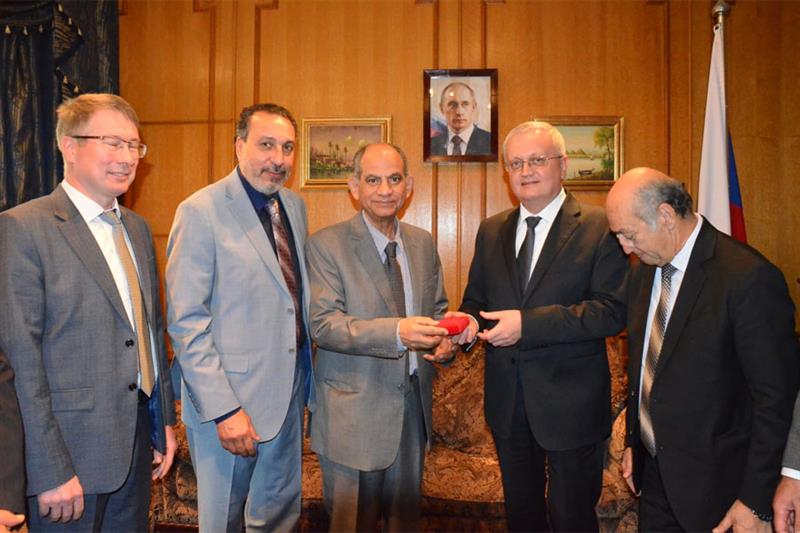
Russian ambassador to Egypt Georgiy Borisenko has awarded the Dostoyevsky Medal to Anwar Ibrahim – the under-secretary of the Ministry of Culture and former head of the ministry’s Foreign Cultural Relations Department – for his work in translating Russian literature into Arabic.

The honouring ceremony took place at the headquarters of the Russian Embassy in Cairo on 6 March. It was attended by a delegation from the Egyptian Association of Graduates of Russian and Soviet Universities headed by Sherif Gad.

Ambassador Borisenko expressed appreciation for Ibrahim’s efforts in translating classic and contemporary Russian literature into Arabic, thereby promoting Russian culture.

“The Arab reader is lucky when he reads translated Russian literature through creative translators like Anwar Ibrahim,” Borisenko said.

Borisenko wished Ibrahim continued success in his literary career, which he described as part of the soft power between Russia and the Arab peoples.

The Dostoyevsky Medal was established by the Russian Writers Union to be awarded to translators on the occasion of the 200th anniversary of the birth of the great Russian writer Fyodor Dostoyevsky, who is one of the most iconic writers of the Russian literary canon.

For his part, Ibrahim said that “this honour is a new birth for me, and I am extremely proud of receiving the Dostoyevsky Medal.”

Toghan, Secretary-General of the Association of Graduates, affirmed that the award for Ibrahim is a tribute to all graduates of the association, especially since Anwar is the first Arab to receive the prestigious medal.

Dostoyevsky, who was born in 1821 in Moscow and died in 1881 in St. Petersburg, gave up an engineering career early in order to write.

In 1849, he was arrested for belonging to a radical discussion group and was sentenced to be shot. He was reprieved at the last moment and sentenced to four years of hard labour in Siberia, where he developed epilepsy and experienced a deepening of his religious faith.

Dostoyevsky’s novels are especially concerned with faith, suffering, and the meaning of life; they are famous for their psychological depth and insight and their near-prophetic treatment of issues in philosophy and politics.

By the end of his life, he was acclaimed as one of his country’s greatest writers, and his works had a profound influence on 20th-century literature.

source/content: english.ahram.org.eg (headline edited)

__________

Marat Gatin, Sherif Gad, Professor Anwar Ibrahim receives his medal from Russian ambassador Georgiy Borisenko, Fathy Toghan

________

EGYPT

ALGERIA: 5 Algerian Multi Millionaires That You Should Know About!

The only billionaire Algeria has is Issad Rebrab, he is the owner of Algeria’s biggest company, Cevital, which is a sugar refinery company that produces about 2 million tons a year, Although, he is alone in his wealth, there are other 5 multibillionaires worthy of recognition.

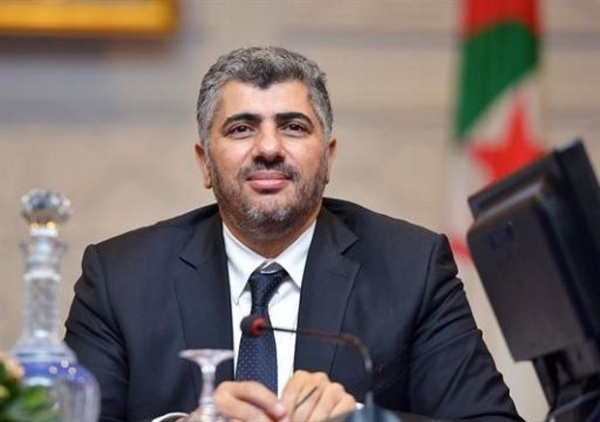
Abdelmadjid Kerrar

via ElWatan

He is the founder of BioPharm which is a large pharmaceutical company that manufactures and distributes drugs, BioPharm employs more than 1,500 people and gets more than $500 million revenues last year.

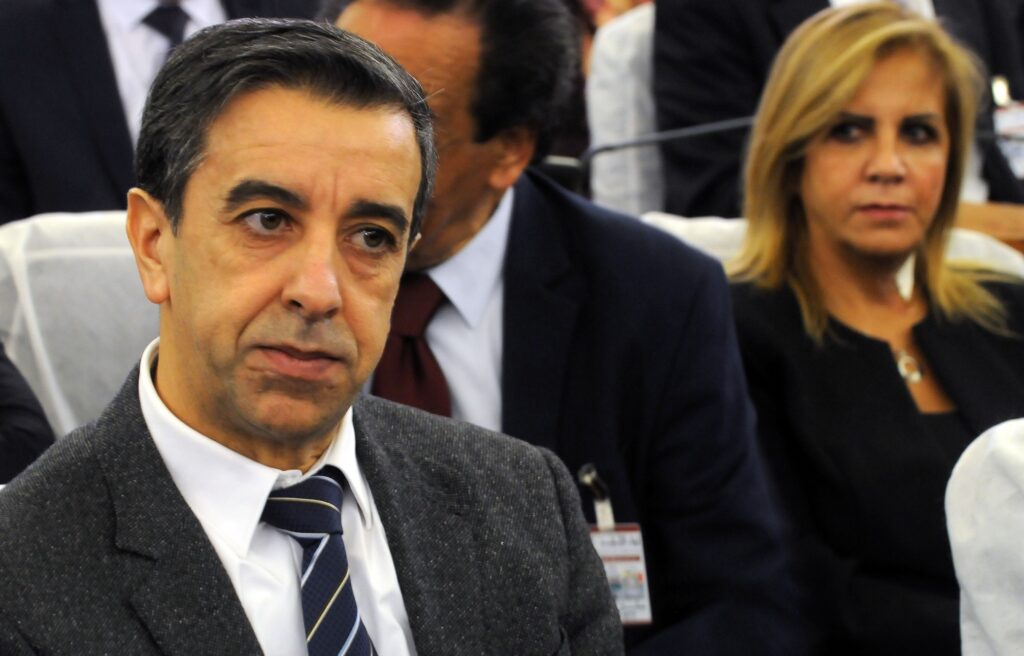
Ali Haddad

via Algerie Patriotique

He is the 52-year-old founder of ETRHB Haddad Group with an annual revenue of $500 million, it’s very impressive that he’d founded this company at the age of 32, he is also the controlling shareholder of the Algerian club USM Alger that plays in the Algerian Premier League.

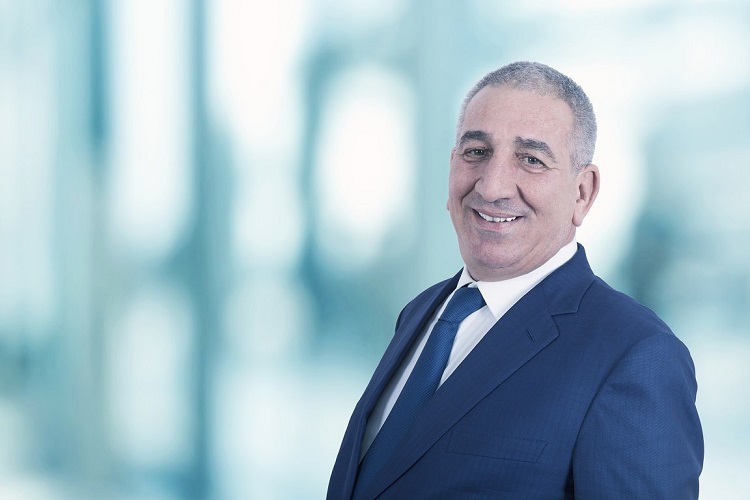
Mohamed Laid Benamor

via DIA

He is the head of the Benamor Group, which is one of the most successful food companies in Algeria. This company makes more than $80 million as an annual revenue.

Abderrahmane Benhamadi

via Algerie Eco

This big guy owns the Condor Group which manufactures and distributes air conditioners, televisions, satellite receivers, washing machines, refrigerators, smartphones, tablets, gas cookers, microwaves, desktops and laptops, with an annual revenue of $700 million.

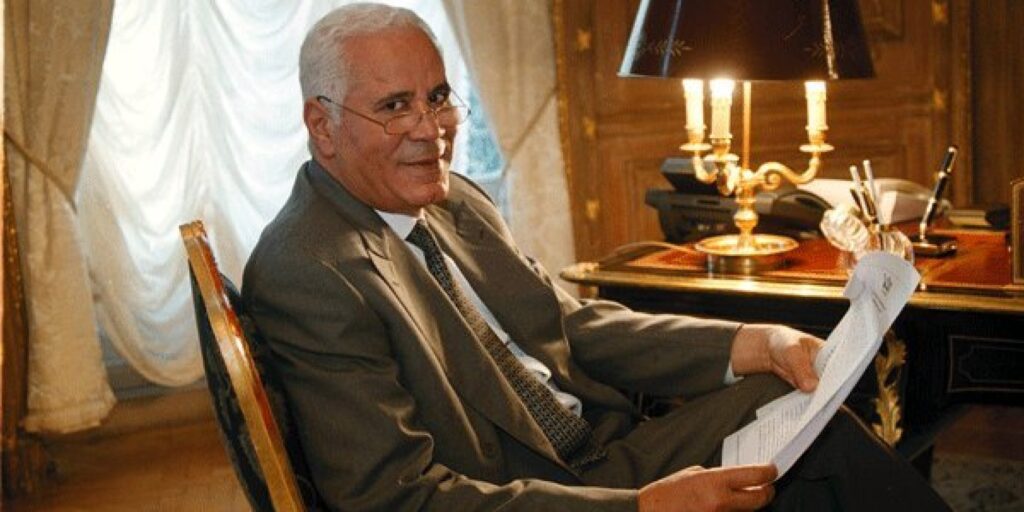
Djilali Mehri

via Algerie part

This 80-year-old guy owns the Mehri Group; the sole bottler of all Pepsi products, and the owner of many luxurious hotels.

source/content: scoopempire.com (headline edited) / Febronia Hanna

____________

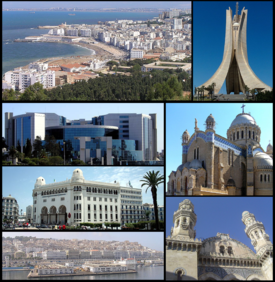
pix: en.wikipedia.org/wiki/Algiers /L to R : Coast, Martyr’s Memorial , Ahmed Francis Building , Basilica of Our Lady of Africa, Central Post Office, Ketchaoua Mosque, Harbour

___________

ALGERIA

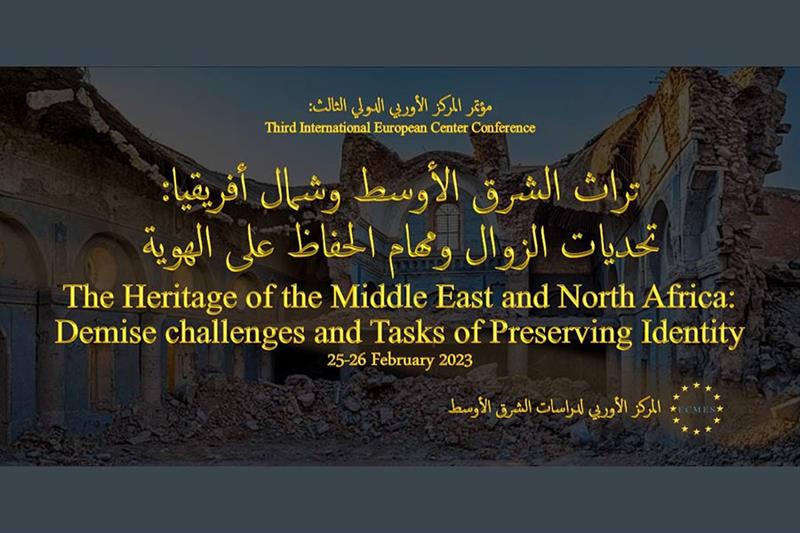
MENA Heritage: 3rd Int’l European Center Conference – “The Heritage of the Middle East and North Africa: Demise Challenges and Tasks of Preserving Identity”, Tunisia – February 25 to 26

The European Centre for Middle East Studies, headquartered in Germany, is organising its third international scientific conference in Tunisia on 25-26 February.

The conference will be held under the title “The Heritage of the Middle East and North Africa: Demise Challenges and Tasks of Preserving Identity.”

Representatives of UNESCO, ICESCO and ALECSO organisations are set to attend the conference.

Sattar Jabbar Rahman, founder and CEO of the European Centre for Middle East Studies and head of the conference, told Ahram Online the conference is meant to not only shed light on heritage but also to find mechanisms to protect it.

He pointed out that heritage, in its tangible and intangible forms, is suffering from neglect. The responsibility of protecting heritage lies not only on the shoulders of official institutions concerned with culture and heritage, but also on organisations concerned with protecting heritage, activists, and research centres, including the European Centre for Middle East Studies, he added.

Rahman confirmed that the heritage of the Middle East and North Africa is under threat, which is why the conference devoted five axes to discuss ways to protect it. These axes are: the impact of struggles and armed conflicts on tangible heritage; the role of civil society and cultural institutions in protecting heritage; national and international legislation to protect heritage; digitisation in the service and preservation of cultural heritage; and the impact of urban expansion on heritage.

Armed conflicts have caused some of the worst disasters on the cultural, urban and architectural fronts, said Hala Asslan, an expert with the International Council on Monuments and Sites and UNESCO and vice chairman of the Scientific Committee at the conference.

Asslan told Ahram Online that several conflicts erupted during the first two decades of the third millennium, causing unprecedented destruction in the region and harming the cultural, architectural, and environmental heritage of several Arab countries, especially those located in the Middle East and North Africa (MENA) region, most notably in Iraq, Syria, Yemen, Lebanon, and Libya. Several sites registered on the World Heritage List were damaged, such as the ancient city of Aleppo, the archaeological site of Palmyra, and the villages of Forgotten Cities in northern Syria, she added.

Chokri Essifi, a researcher in historical and civilisational studies and coordinator of the Office of Academic Relations at the European Centre for Middle East Studies in Germany, told Ahram Online that the local heritage in the Middle East is exposed to several internal and external threats. The most prominent of these is the lack of maintenance, attention, and follow up, their inappropriate use in cultural and tourism development, and the lack of awareness of the importance of this heritage in building national cultural identity.

With regard to external influences on heritage, Essifi revealed that the rapid transformations that the world has been witnessing since the 1990s included a number of influences in the heritage of the Middle East.

The first of these is the continuous attempts to own this heritage. This is in addition to the increase in theft, especially during periods of wars and conflicts that weakened protection measures on heritage and cultural sites.

He stressed that despite the positive aspects of globalisation, the unilateral view in the field of culture and the growing imperialism and one-centric tendency have hindered the trend towards promoting constructive cultural pluralism that does not differentiate between cultures and identities.

source/content: english.ahram.org.eg (headline edited)

\____________

___________________________________________

MIDDLE EAST & NORTH AFRICA (MENA)

MOROCCO :‘Fog Harvesting’ Organisation Also Provides Training and Study Programmes

Famous for its “fog harvesting” project in southern Morocco, the nonprofit Dar Si Hmad for Development, Education and Culture also carries out other projects to build the capacities of local populations and provide educational training projects for young people.

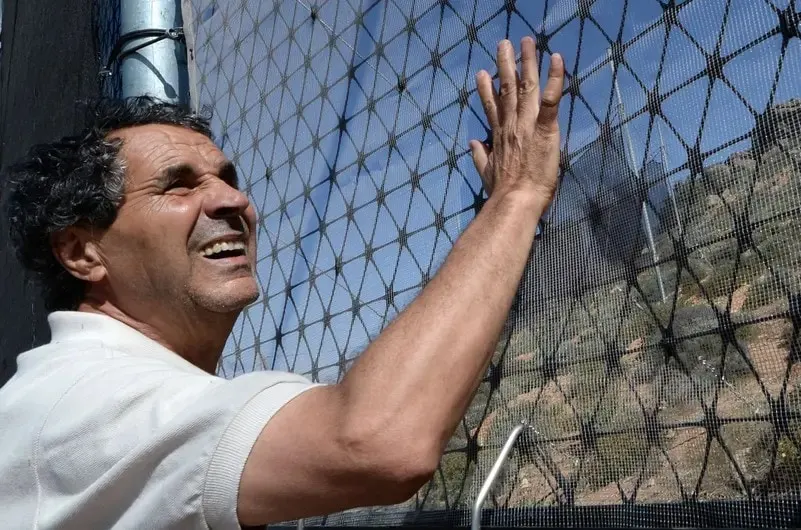
The fog-harvesting project, in the Sidi Ifni region of southern Morocco, uses specially designed nets to capture water droplets suspended in the fog covering mountain peaks. The fog-water drips off the nets and is channeled into a filtration system, thus providing clean water to residents of areas suffering from severe water shortages.

The project is a boon for women in the region because it frees them from having to carry water long distances, and also provides jobs and training for them.

Development Projects

Established in 2010, Dar Si Hmad for Development, Education and Culture is run by Jamila Bargach, a cultural anthropologist, and her husband, Aissa Derham , a mathematician who holds a Ph.D. from Laval University in Canada.

Bargach studied at Mohammed V University in Rabat and obtained a Ph.D. in anthropology from Rice University in the United States. She has worked for several nongovernmental organisations in Morocco and abroad.

In the region, Bargach is nicknamed “The Bride of the Fog” in reference to a local Amazigh legend of a princess named Teslet who did her best to make rain to save her village from drought.

Over the past years, the fog-harvesting project has received numerous international honours, notably an Innovation in Sustainabilty award from the GoAbroad Foundation in 2017 and a Momentum for Change award  presented at the COP22 Climate Summit in Marrakech in 2016.

Programmes for American Students

Fond of southern Morocco, Bargach believes that the region provides unique opportunities for students to learn more about the kingdom, especially in terms of how development projects are accomplished in complex and special contexts.

Many of Dar Si Hmad’s educational programmes center on the fog-harvesting project, Bargach told Al-Fanar Media. “This enables students to learn and develop their abilities through practical and field education.”

She added that the association receives students from American universities who come to southern Morocco. Over the years, it has hosted more than 54 student missions from different American universities.

The organisation provides these students with opportunities to meet with Moroccan students from Ibn Zohr University, in Agadir, and to participate in various educational programmes. These include the RISE Programme, the Ethnographic Field School and the Water School, as well as job programmes targeting women in rural areas.

Environment-Friendly Entrepreneurship

The RISE Programme aims to build capacities and promote environment-friendly entrepreneurship among students of colleges and higher schools in Agadir. The programme is a set of integrated workshops presented by experts, and meetings with employers, with the aim of exchanging experiences and creating opportunities for networking. Each participant is also required to have a project idea that benefits the local environment, besides the need to commit to attending all scheduled events.

The Ethnographic Field School  promotes cross-cultural understanding and exchange through interpersonal interaction with local communities. During their time in southern Morocco, participants learn about local issues like sustainable practices in the argan oil industry , which employs many rural Amazigh women, or languages like darija (Moroccan Arabic) and Tachelhit (the local form of Tamazight).

The Water School programme is directed to students of rural schools in the Aït Baamrane region in southern Morocco. The programme is based on lessons inspired by local reality, with openness to other horizons and cultures. The Water School brings together volunteers, environmental trainers, and other partners. Everyone is committed to building a comprehensive and ethical foundation for the benefit of environmental education, the organisation’s leaders say.

Bargach says that the success of the fog-harvesting project motivated and inspired the educational programmes’ students. She adds that they are working to transfer knowledge to young people who are passionate about more work and innovation in searching for alternative sources of water and serving the environment in southern Morocco.

Skill-Building Experiences 

Nadia El-Aissaoui, who holds a master’s degree in tourism and communication from Ibn Zohr University’s Faculty of Arts and Humanities, worked in Dar Si Hmad’s Ethnographic Field School this year. She said the experience helped her develop professional skills. “I have benefited greatly from this experience,” she said. “I worked as a fixer (‘speaking partner’) for students coming from American universities to work on field research projects.”

The programme transferred her from university halls to field research, she said. “This experience enriched my professional path,” she added. “I learned a lot of things, such as focusing on tasks, time management, documentation, interpretation methods, besides exposing me to the American mentality and working ways.”

source/content: al-fanarmedia.org (headline edited)

__________

Aissa Derham checks a net used in the fog-harvest project. He and Jamila Bargach co-founded the nonprofit Dar Si Hmad for Development, Education and Culture, which runs several capacity-building and educational programmes in southern Morocco. (Photo courtesy of the organisation)

_____________

MOROCCO

TUNISIA: Tunisia’s Harissa Gets UNESCO Heritage Status

UNESCO added Tunisia’s spicy and most famous national condiment Harissa to its list of intangible cultural heritage, saying it was part of the North African country’s identity.


UNESCO placed the Tunisian condiment Harissa to its list of intangible cultural heritage, citing its significance to the identity of the North African nation.

The cultural agency of the United Nations is meeting in Morocco to consider proposals for its list of Intangible Cultural Heritage, which strives to safeguard cultural traditions, practices, and knowledge.

It tweeted “Just inscribed on the #IntangibleHeritage List: Harissa, knowledge, skills, and culinary and social practices.”

Tunisia’s Spicy Harissa

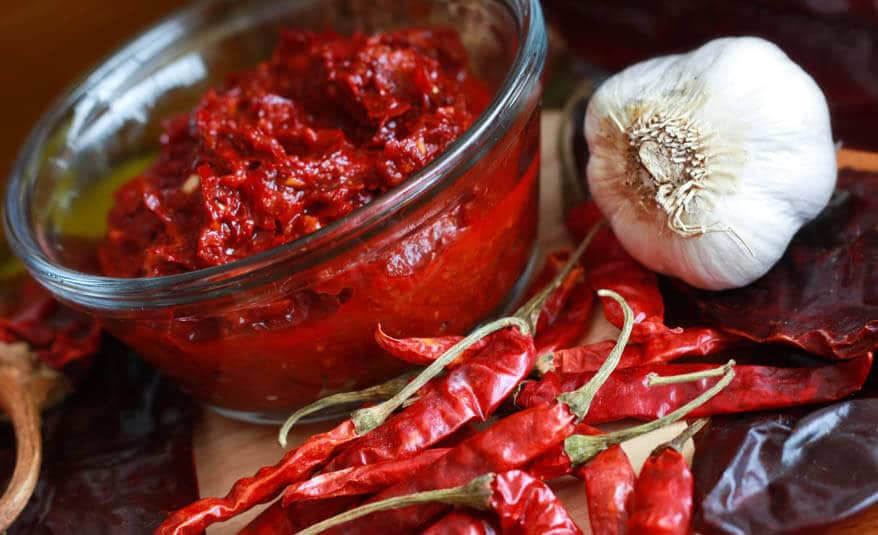
Harissa is a paste made from sun-dried hot peppers, freshly prepared spices, and olive oil, which preserves and slightly tones down its intensity. It is served in nearly every restaurant in Tunisia and is also exported internationally.

The condiment is wonderfully spicy, smoky, and packed with rich, deep flavors. It’s also extremely versatile, as it pairs well with sandwiches, different dishes, and even plain olive oil.

Harissa is “an integral part of domestic provisioning and the everyday culinary and dietary traditions of Tunisian culture,” according to Tunisia’s application for the status. It is typically cooked by families and communities.

“Harissa is used as a condiment, an ingredient, and even as a dish in its own right, and is well-known throughout Tunisia, where it is consumed and manufactured, particularly in the regions where chilli peppers are farmed,” the source explained.

It is regarded as a distinguishing part of national culinary heritage and a role in social cohesiveness.

The 2003 Convention for the Safeguarding of the Intangible Cultural Legacy seeks to protect and increase awareness of the “intangible cultural heritage of the communities, groups, and individuals involved.”

UNESCO emphasizes that the list recognizes traditions, practices, and knowledge as “human treasures” that must be safeguarded.

Wednesday, the organization also recognized French baguettes, bringing the total number of goods on the list to over 530.

source/content: carthagemagazine.com (headline edited)

________

___________

TUNISA


EGYPT: Award-Winning Filmmaker Ayten Amin Joins Berlin Film Festival Jury

Award-winning Egyptian filmmaker Ayten Amin will be part of the GWFF Best First Feature Award’s three-person jury.

Award-winning Egyptian filmmaker Ayten Amin will be a part of the jury line-up during the Berlin Film Festival. Amin is the only Arab and Egyptian artist participating in the acclaimed festival’s jury, and will be one of three people on the panel for the GWFF Best First Feature Award, which was founded in 2006 to support emerging filmmakers.

Ayten Amin is best known for her feminist cinematic works, and for tackling controversial social issues through her storytelling. Her Egyptian series ‘Sabea Gar’ (2017), which she wrote and directed alongside Heba Youssry and Nadine Khan, was praised for its authentic representation of Egyptian family dynamics and its diverse, multidimensional female characters.

More recently, her feature film ‘Souad’ (2020), a coming-of-age story that explored womanhood, social media performance and suicide, won multiple awards and was part of the Cannes Film Festival’s official selection, as well as the Tribeca Film Festival’s International Competition. ‘Souad’ also won the best feature film award at IndieLisboa International Independent Film Festival, and was selected for Berlin Film Festival’s Panorama section.

source/content: cairoscene.com (headline edited)

__________

_________

EGYPT

WORLD RECORD: DUBAI, U.A.E: Hamdan bin Mohammed Inaugurates World’s Largest Solar-Powered Data Centre

H.H. Sheikh Hamdan bin Mohammed bin Rashid Al Maktoum, Crown Prince of Dubai and Chairman of Dubai Executive Council, today inaugurated the green data centre of Data Hub Integrated Solutions LLC (Moro Hub), a subsidiary of Digital DEWA, the digital arm of the Dubai Electricity and Water Authority (DEWA).

Recognised as the world’s largest solar-powered data centre by the Guinness World Records, the facility is located at the Mohammed bin Rashid Al Maktoum Solar Park, the largest single-site solar park in the world.

The opening event featured the signing of agreements between Moro Hub and its key technology partners and customers including Dell Technologies, Microsoft, Huawei, VMWare, Emirates NBD, Digital Dubai Authority, and Dubai Islamic Bank.

Sheikh Hamdan bin Mohammed was welcomed at the site of the green data centre by Saeed Mohammed Al Tayer, Managing Director and CEO of DEWA.

Following the inauguration, Sheikh Hamdan bin Mohammed toured the green data centre. He was briefed by Saeed Mohammed Al Tayer on the facility’s integrated solutions designed to provide next-generation services in the areas of digital transformation, cloud and hosting services, cybersecurity, smart cities, IoT services and professional and managed services, as well as Moro services supported by ChatGPT technology.

“The development of the world’s largest solar-powered data centre was guided by the vision of His Highness Sheikh Mohammed bin Rashid Al Maktoum, Vice President, Prime Minister and Ruler of Dubai, for advancing sustainable development, The new centre is yet another achievement that raises the UAE’s profile as a leading global player in advancing sustainability and the green economy. The centre provides an exceptional model for combining digital technologies with energy technologies. With a world-class low-carbon information technology infrastructure powered by solar energy, the data centre supports the goal of the Dubai Clean Energy Strategy 2050 and the Dubai Net Zero Emissions Strategy 2050 to generate 100 percent of its energy production capacity from clean energy sources by 2050,” Al Tayer said.

“Moro Hub’s solar-powered data centre also supports our efforts to achieve the targets of the Net Zero by 2050 strategic initiative. This initiative is particularly significant since it comes in a year in which the UAE is hosting the largest international climate conference, the Conference of the Parties to the United Nations Framework Convention on Climate Change (COP 28). The new data centre reflects our commitment to support the development of a sustainable economy and our efforts to transform Dubai into a global green economy hub. Moro Hub has always been a frontrunner in promoting digital transformation and sustainability as well as enhancing its integrated solutions to help organisations and companies reach net-zero carbon emissions,” Al Tayer added.

Moro Hub’s green data centre features ground-breaking solutions from Dell Technologies, Microsoft and Huawei including the latest advances in Internet of Things (IoT), Cybersecurity, Digital Twin Technologies, Artificial Intelligence (AI), Cyber Recovery as a Service, Consulting & Professional Services, Managed Services, Residency Services, Network as a Service, Moro Open Cloud and more.

Using 100 percent renewable energy, the Uptime TIER III-Certified data centre, , has a capacity exceeding 100 megawatts (MW). Its area will exceed 16,000 square metres.

Hamad Obaid Al Mansoori, Director-General of Digital Dubai, said, “The launch of the green data centre embodies Dubai and the UAE’s commitment to harness innovation and adopt the principles of sustainability in providing services to citizens and residents. It also reflects the significant role played by public-private partnerships in Dubai’s strategic projects. The project is a bright sign in Dubai’s journey towards a sustainable future that takes into account environmental needs. We at Digital Dubai support this approach as part of our leadership of the digital transformation process in the emirate, which has made the city a global model for adopting creative ideas and projects that contribute to a bright future for humanity.”

“We are glad to sign strategic cooperation with Moro Hub to jointly provide solutions that will elevate and accelerate the region towards digital transformation. Dell Technologies has always been at the forefront of intelligent solutions, and we are confident that our ground-breaking solutions will continue to create opportunities for customers to adapt to digital transformation easily,” Walid Yehia, General Manager, UAE at Dell Technologies, stated.

An exemplary model for combining cutting-edge digital and power electronic technologies to create an advanced green ICT infrastructure powered by renewable energy, the green data centre offers digital products and services using Fourth Industrial Revolution technologies, such as cloud services, the Internet of Things (IoT) and Artificial Intelligence (AI), among others.

“Microsoft remains committed to leading the march towards sustainable digital transformation. Our partnership with Moro Hub is another endeavour to accelerate the growth of sustainable digitisation in the country, driven by our best-in-class technologies. Our digital solutions will enable businesses to avail greater flexibility for managing their operations and strengthen their infrastructure, thereby protecting them from any potential risks that arise from cyber threats,” Naim Yazbeck, General Manager, Microsoft UAE, added.

The introduction of Moro Hub’s new solar-powered data centre will further drive the digital transformation of government and private organisations in the UAE, reinforcing their efforts to upgrade their infrastructure to keep pace with new Fourth Industrial Revolution trends.
“Huawei has always been committed to supporting its partners with innovative solutions that will help them accelerate digital transformation across sectors. Our longstanding partnership with Moro Hub is an effort to enhance the experience for their customers, offer higher reliability and help contribute effectively to their vision of transforming the UAE business landscape into a sustainable digital model,” Jiawei Liu, CEO of Huawei UAE, commented.

Moro Hub’s solar-powered data centre aims to establish a global benchmark for energy efficiency and use of green technologies. By using smart and eco-friendly technologies, the facility will enable business enterprises in the region to unlock new efficiencies.

“It is a pleasure to collaborate with Moro Hub’s solar-powered data centre. At Emirates NBD, sustainable digitisation is the core of our operations, and by utilising the state-of-the-art technology available at the data centre, we will not only be able to enhance our operations, but also manage our customer expectations well. This also gets us a step closer to accelerating the UAE’s goals of net zero carbon by 2050,” Hesham Abdulla Al Qassem, Vice Chairman and Managing Director, Emirates NBD Group, said.

The new solar-powered data centre will help organisations in the country accelerate the pace of its progress and create innovative and productive work environments while ensuring high levels of productivity.

“We are glad to associate with Moro Hub’s largest solar powered data centre to host our IT workloads. As a leading provider of transformative digital solutions, this partnership will certainly fortify our drive to achieving sustainability, as well as position us a step ahead in the financial industry. We look forward to working together with them and are optimistic that this will be a new chapter that will bring positive results to both parties in the long run,” Yahya Saeed Ahmed Nasser Lootah, Vice Chairman, Board of Directors, Dubai Islamic Bank, explained.

Ahmed Auda, Vice President and General Manager, Middle East, Turkey and North Africa, VMware, said, “Through this collaboration with Moro Hub, VMware will help empower young talent with the cloud skills and training they need to support digitisation across the UAE in line with initiatives including UAE Digital Government Strategy 2025 and the Dubai Economic Agenda D33, which aims to double the size of Dubai’s economy over the next decade and strengthen its position as one of the top three global cities. As the UAE cements its position as a global technology leader, VMware and Moro Hub will give young people access to the technical skills they need to support the transformation plans of both public and private sector organisations.”

The solar-powered data centre will play a major role in developing a new sustainable ecosystem featuring the latest solar energy and storage technologies, AI systems, and sustainability practices. It will also enable global hyper-scalers to access carbon-free computing and help organisations reduce their carbon footprint.

source/content: wam.ae (headline edited)

_____________

___________________________________________

DUBAI, UNITED ARAB EMIRATES (U.A.E)

QATAR: Guinness World Record for Largest Padel Championship in the World, Feb 14th, 2023

Qatar Rail has announced that MD & CEO H.E Dr. Abdulla Al-Subaie received the Guinness Records certificate for the Largest Padel Championship in the World.

The achievement was announced on the day of Qatar’s National Sport Day, 14 February 2023.

The event was organized by Qatar Rail in partnership with Padel In Qatar and witnessed the participation of 800 players.

Source and cover image credit: Qatar Rail

source/content: iloveqatar.net (headline edited)

___________

_________

QATAR

EGYPT: Luxor African Film Festival (LAFF) launches 12th edition, Feb 04 – 10, 2023

The 12th edition of the Luxor African Film Festival (LAFF) kicked off on Saturday in the great southern Egyptian city of Luxor with the attendance of dozens of celebrities, filmmakers and critics.

Running until 10 February, the LAFF will host screenings of over 50 films from 31 countries participating in its various competitions and parallel programs, as well as a number of talks and seminars.

During the opening, the festival’s organisers honoured Egyptian actors Mohamed Ramadan and Hala Sedky, Egyptian composer Hesham Nazih, Senegalese director Mansour Sora Wade, and Mozambican producer Pedro Pimenta.

A number of late artists were also celebrated, including Egyptian actor Salah Mansour, Algerian actress Chafia Boudraa, and Tunisian actor Hichem Rostom.

LAFF will pay tribute to Senegalese cinema and its filmmakers, as Senegal is the country guest of honour for this edition.

Under the helm of the LAFF founder, scriptwriter Sayed Fouad, the festival is hosting 10 cinema workshops in different disciplines.

Many prominent African filmmakers and actors are members of the various juries.

With 12 films competing, the long narrative and documentary film jury committee comprises Senegalese director Mansour Sora Wade, Tunisian director Sonia Chamkhi, Moroccan actress Amal Ayouch, Egyptian screenwriter Abdel-Rahim Kamal, and Egyptian producer Mohamed Hefzy.

The slogan of LAFF’s 12th edition is ‘Cinema is the Quest of Immortality’. This slogan is reflected in the festival’s poster design by Mahmoud Ismail Abou Al-Enin, which depicts boats sailing towards the sun and to the Nile’s West bank of Luxor, where funerary temples and tombs are filled with inscriptions representing ancient beliefs in eternal life after death.

With Filmmaker Azza Elhosseiny as LAFF’s co-founder and executive director, star Mahmoud Hemeida continues as the honorary president in this edition.

Since its founding, the festival has aimed “to spread awareness about the importance of cinema in Africa and the world.”

In its eleventh edition, the LAFF screened 45 films from 35 countries in the competitive segments.

The LAFF is organised by the Independent Shabab Foundation with the support of the Egyptian ministries of culture, tourism and antiquities. LAFF also takes place in cooperation with Luxor governorate, the Film Syndicate, and numerous sponsors.

source/content: english.ahram.org.eg (headline edited)

____________

__________________

EGYPT /AFRICA