Arabs & Arabian Records Aggregator. Chronicler. Milestones of the 25 Countries of the Arabic Speaking World (official / co-official). AGCC. MENA. Global. Ist's to Top 10's. Records. Read & Enjoy./ www.arabianrecords.org
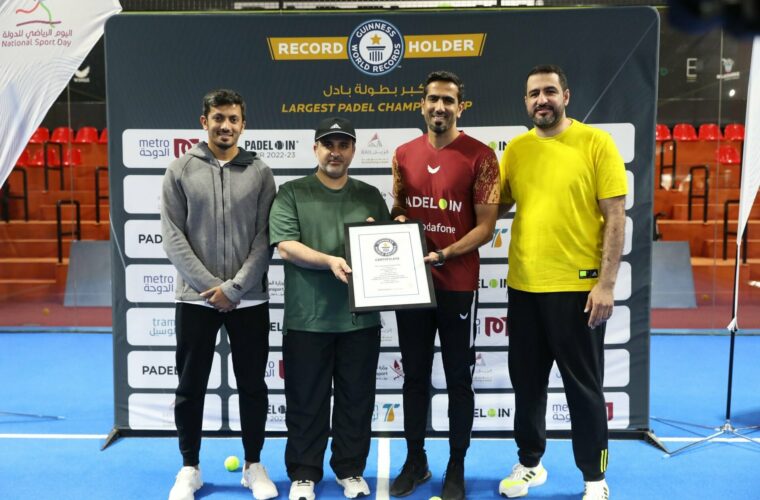
Qatar Rail has announced that MD & CEO H.E Dr. Abdulla Al-Subaie received the Guinness Records certificate for the Largest Padel Championship in the World.
The achievement was announced on the day of Qatar’s National Sport Day, 14 February 2023.
The event was organized by Qatar Rail in partnership with Padel In Qatar and witnessed the participation of 800 players.
The 12th edition of the Luxor African Film Festival (LAFF) kicked off on Saturday in the great southern Egyptian city of Luxor with the attendance of dozens of celebrities, filmmakers and critics.
Running until 10 February, the LAFF will host screenings of over 50 films from 31 countries participating in its various competitions and parallel programs, as well as a number of talks and seminars.
During the opening, the festival’s organisers honoured Egyptian actors Mohamed Ramadan and Hala Sedky, Egyptian composer Hesham Nazih, Senegalese director Mansour Sora Wade, and Mozambican producer Pedro Pimenta.
A number of late artists were also celebrated, including Egyptian actor Salah Mansour, Algerian actress Chafia Boudraa, and Tunisian actor Hichem Rostom.
LAFF will pay tribute to Senegalese cinema and its filmmakers, as Senegal is the country guest of honour for this edition.
Under the helm of the LAFF founder, scriptwriter Sayed Fouad, the festival is hosting 10 cinema workshops in different disciplines.
Many prominent African filmmakers and actors are members of the various juries.
With 12 films competing, the long narrative and documentary film jury committee comprises Senegalese director Mansour Sora Wade, Tunisian director Sonia Chamkhi, Moroccan actress Amal Ayouch, Egyptian screenwriter Abdel-Rahim Kamal, and Egyptian producer Mohamed Hefzy.
The slogan of LAFF’s 12th edition is ‘Cinema is the Quest of Immortality’. This slogan is reflected in the festival’s poster design by Mahmoud Ismail Abou Al-Enin, which depicts boats sailing towards the sun and to the Nile’s West bank of Luxor, where funerary temples and tombs are filled with inscriptions representing ancient beliefs in eternal life after death.
With Filmmaker Azza Elhosseiny as LAFF’s co-founder and executive director, star Mahmoud Hemeida continues as the honorary president in this edition.
Since its founding, the festival has aimed “to spread awareness about the importance of cinema in Africa and the world.”
In its eleventh edition, the LAFF screened 45 films from 35 countries in the competitive segments.
The LAFF is organised by the Independent Shabab Foundation with the support of the Egyptian ministries of culture, tourism and antiquities. LAFF also takes place in cooperation with Luxor governorate, the Film Syndicate, and numerous sponsors.
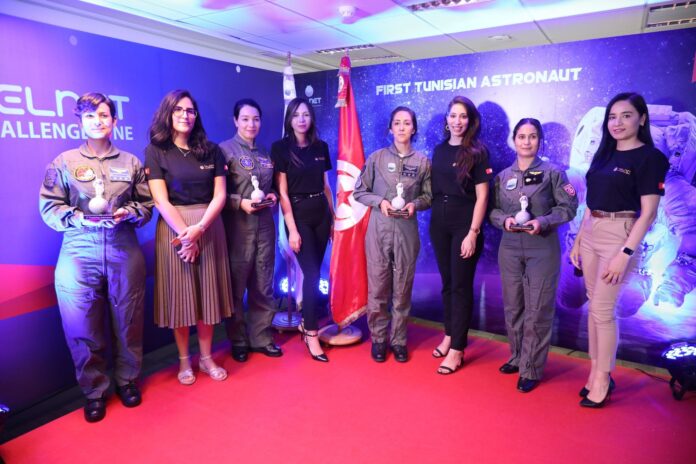
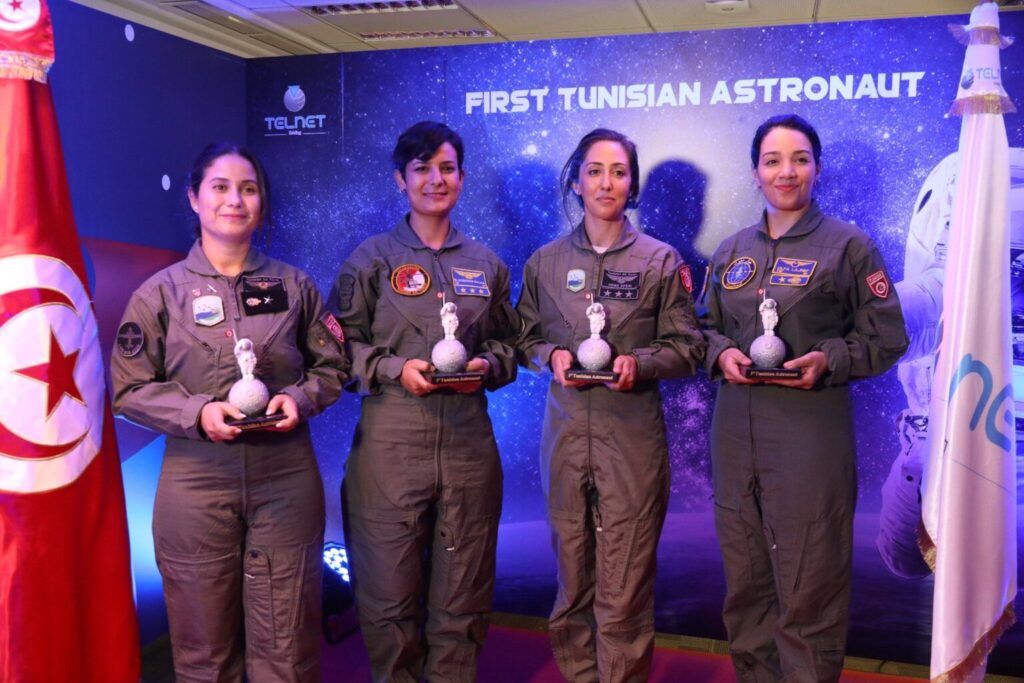
Eight Tunisian women have been selected as candidates for the first Tunisian and African female astronaut project. This selection came at Telnet’s Headquarters as Tunisia celebrated Women’s day. It is as a result of a partnership in August 2021 between Tunisia and Roscosmos to launch a Tunisian female citizen to the International Space Station (ISS) in the foreseeable future. As a result, according to Telnet’s Director-General, the ISS mission will be in 2024.
All the selected women are fighter pilots who graduated from the Borj Al-Amri Aviation School. Furthermore, they are Tunisian Air Force Corps members and have extensive experience in several challenging missions as a result. This is because the selection process requires strict conditions in terms of scientific, physiological and physical demands.
Among those names are: Hala Awassa, Ibtihal Youssef, Wafa El-Baldi-El-Yomna Dalali, Olfa Lajnef, Rahma Trabelsi, Hind Safferi and Malika Mabrouk.
During the unveiling, the current occupants of the ISS sent a message to the Tunisian candidates, expressing their support for the project and their expectations to welcome the first Tunisian astronaut in her upcoming mission. The female candidates also expressed their willingness to take up this historic challenge, raise the Tunisian national flag on the ISS and contribute to scientific advances in the service of humanity.
The candidates will subsequently undergo extensive physical and medical tests in Tunisia and abroad, from which two of the candidates will further travel to Russia. The candidates who travel to Russia will then undergo specific space-related training at one of the Russian Space agency’s training centres. This training will last for a year, after which will come the mission to the International Space Station.
Mohamed Frikha noted that all the candidates are the pride of the Tunisian woman and represent her in the best way. He added that their candidacy for this mission is a testament to their courage and willingness to honour the country and make history in a field as complicated as Space. Frikha also added that the astronauts will handle a scientific mission in Physics and Medicine and that the mission will contribute to the service of humanity. Finally, Frikha stated that the project received the support and encouragement of Tunisia at the highest level.
Tunisia is a party to and has ratified the Agreement on the Rescue of Astronauts, the Return of Astronauts and the Return of Objects Launched into Outer Space (Rescue and Return Agreement). The country is also a party to the Outer Space Treaty and the Liability Convention.
A small ring around the main artery may cure patients with leaking heart valves. Researchers have documented its effect on animals and they hope they will make it possible to use the technology on humans.
A leaking heart valve – or in technical terms, aortic insufficiency – is a condition in which the valve between the left ventricle of the heart and the main artery cannot close completely. The disease can have varying levels of severity and can be caused by congenital malformations or calcification, among other things.
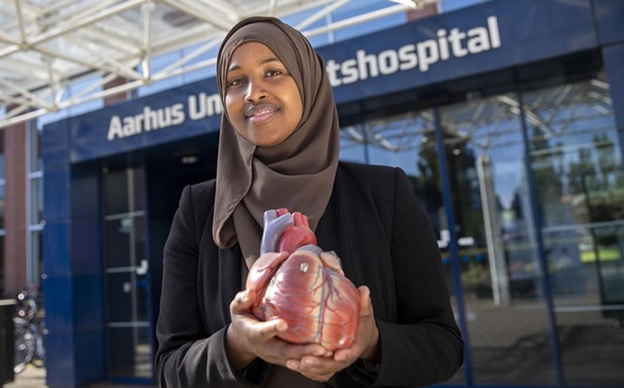
Mariam Noor has developed a small ring that seems to be able to cure leaking heart valves. This can change the way we do cardiovascular surgery. Photo: Lars Kruse, AU Foto.
When the aortic valve leaks, some of the blood returns to the heart, which means the heart has to work harder. In the worst cases, this can lead to heart failure, and this is why it’s important to treat the condition. Doctors usually treat the condition by repairing the diseased heart valve or replacing it with an artificial valve.
Both involve a risk of complications, and therefore engineers from Aarhus University have been working for several years to develop new surgical technology for heart patients.
“A prosthetic heart valve is an effective form of treatment, but it’s also a relatively complicated surgical procedure that brings with it a number of risks and complications in the long term. Now we have found a solution that can make it easier to treat patiens,” says Mariam Noor, a PhD student at the Department of Electrical and Computer Engineering at Aarhus University and the Department of Cardiothoracic and Vascular Surgery at Aarhus University Hospital.
Ring prevents blood from returning to the heart
Mariam Noor has spent the last three years designing and developing a ring that can give patients with aortic insufficiency good treatment results, and she has invented something that may have impact on the world of surgery.
“Instead of replacing the defective valve, my treatment concept is to enclose it in the main artery so it prevents blood from returning to the heart. I’ve developed a new type of ring that tightens around the aortic root to prevent this,” she says.
In fact, for several years now, cardiologists have been using a type of ring to stabilise the function of the heart valves, but this has not been without its disadvantages.
The traditional ring is round and relatively rigid, and this limits its operation. Furthermore, placing the ring in the body is a challenge because surgeons have to cut the aorta and remove the coronary arteries.
The new ring developed by Mariam Noor is made of an elastic material that can mould itself to the body’s tissue. It also has an opening, which makes it easy to place it correctly.
“The surgical procedure is significantly less invasive, and with the help of diagnostic imaging and 3D printing, we can adjust the ring’s rigidity and strength to the individual patient’s anatomy. This gives us some fantastic options, and the technology has been promising during animal trials,” says Mariam Noor.
Lots of physics in the main artery
Mariam Noor has especially focused on the material properties and design of the ring in order to better retain the dynamics in the cardiovascular system.
“I look at surgical issues through the lens of an engineer, because there’s a lot of physics and mathematics in our cardiovascular system. My approach has been to understand how the aorta works and then transfer this knowledge to design a ring that can recreate normal anatomical conditions in patients,” she says.
The ring consists of a silicone core surrounded by suture-like material. In order to document the effect, in collaboration with her colleagues, Mariam Noor has, carried out her experiments in a heart simulator, whereby it is possible to control the pump function, temperature and flow.
“We can simulate the action of the heart in a very precise environment that closely resembles the human body. This means we can closely study what happens with the ring in the frequency area of every, single heartbeat. It’s been interesting, and we have obtained an incredibly detailed knowledge base to continue working with,” she says.
The researchers have subsequently carried out a costly study to see how the ring expands in the body when the heart pumps, and Mariam Noor was positively surprised.
“We looked at the geometric pattern of the main artery in a pig with a ring and in a pig without it, and we could see that we can actually preserve the natural dynamics. These results look really promising,” she says.
She emphasises that there are a few years’ of clinical approval procedures ahead before the heart ring can benefit patients. (source: Aarhus University)
Mariam Noor has developed a small ring that seems to be able to cure leaking heart valves. This can change the way we do cardiovascular surgery. Photo: Lars Kruse, AU Foto.
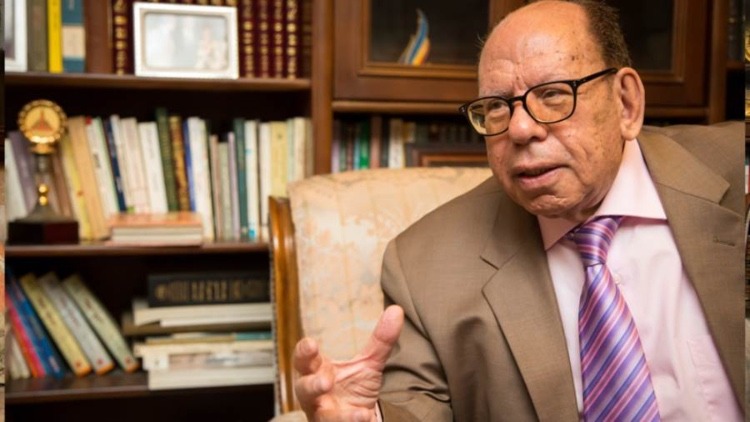
The renowned Egyptian literary critic Salah Fadl, who was 84 years old, passed away yesterday after a battle with illness. He was described by the Arabic Language Academy as a “major figure in Arabic and literature” and “had a march full of dedication and accomplishment as he was a literary critic well-versed in arts of Arabic literature and comparative literature.” To commemorate his long life of accomplishments, we will shed light on some of his greatest achievements throughout his career.
Early Life
Fadl was born in an Egyptian Delta village called Shabas Al Shuhadaa in March 1938 and majored in Arabic language and literature at Cairo University where he graduated in 1962. From 1962 to 1965, he was hired as a researcher at Cairo University. Fadl then sought new horizons away from Egypt as he traveled to Spain on a scholarship to earn a doctorate in literature from the Central University of Madrid.
Life Abroad
During his study period abroad, he taught Arabic literature and translation at the Faculty of Philosophy and Arts at Madrid University from 1968 to 1972. At the same time, he worked with the Supreme Council for Scientific Research in Spain on a project aiming to revive and promote the philosophical legacy of Ibn Rushd (a jurist who wrote on many subjects, including philosophy).
Fadl then returned to Egypt to become a Professor of Literature and Criticism at the Faculty of Arabic Language and Girls College at Al Azhar University. His stay in Egypt didn’t last too long as he then went to Mexico to serve as a visiting Professor at Mexico College for higher studies from 1974 to 1977. There, Fadl established an Arabic language and art department. Additionally, he taught in numerous universities in Egypt and abroad, including Bahrain, Yemen, and Mexico.
Books
The scholar was an exceptional writer who wrote numerous publications in the fields of criticism, comparative literature, theatre, novels, and poetry. Amongst his most famous works was “Medieval Spanish Poetry: A Study and Examples” (1974), “The Realistic Approach in Literary Innovation” (1978), and “Structuralist Theory in Literary Criticism” (1978). Through these publications, Fadl helped enrich Arab literature by producing books that are used as a source of knowledge today.
Just before his death, he applauded the Abu Dhabi Centre for choosing Taha Hussein as the face of the Book Fair while serving as president of the Cairo Academy of the Arabic Language. He explained that this initiative strengthens ties between Egypt and the UAE and their desire to value the two nations’ icons in various spheres of creativity and culture.
Fadl had success in a variety of disciplines before taking on the role of Egypt’s cultural attaché, where he worked to strengthen ties with the countries he visited. His legacy will remain as he contributed to the Arab world through his interesting perspectives and rich knowledge in several fields.
New York-based Columbia university announced on Wednesday that Egyptian-born figure Minouche Shafik would become its first-woman president next summer.
“Nemat {Minouche} Shafik, a leading economist whose career has focused on public policy and academia, will become the next president of Columbia University on July 1, 2023.” Columbia University said adding that her election by the board of trustees as the University’s 20th president concluded a wide-ranging and intensive search launched after the University’s Current President Lee C. Bollinger announced that he would step down at the end of the 2022-2023 academic year.
Shafik will become the 20th president of the famous American educational institution.
Minouche Shafik was appointed director of the London School of Economics and Political Science (LSE) in September 2017.
She also served as the Deputy Governor of the Bank of England prior to her appointment as LSE Director in 2017.
She was made a Dame Commander of the British Empire in Queen Elizabeth’s Birthday Honours list in 2015, and in July 2020 was created a baroness, becoming a crossbench peer in the UK’s House of Lords.
Shafik’s successful portfolio includes leading roles such as Vice President of the World Bank, where she became the youngest VP in the history of the bank, and Permanent Secretary of the UK Department for International Development and Deputy Managing Director of the International Monetary Fund (IMF).
Born in Alexandriam her childhood in Egypt was brief though, as she left the country for the US when she was four. She later returned to the country briefly as a teenager, according to interviews.
She holds a BSc in economics and politics from the University of Massachusetts in Amherst, and an MSc in economics at LSE before completing a PhD in economics at St Antony’s College at the University of Oxford.
Her doctorate thesis was on the role of the private sector and the public sector in Egypt.
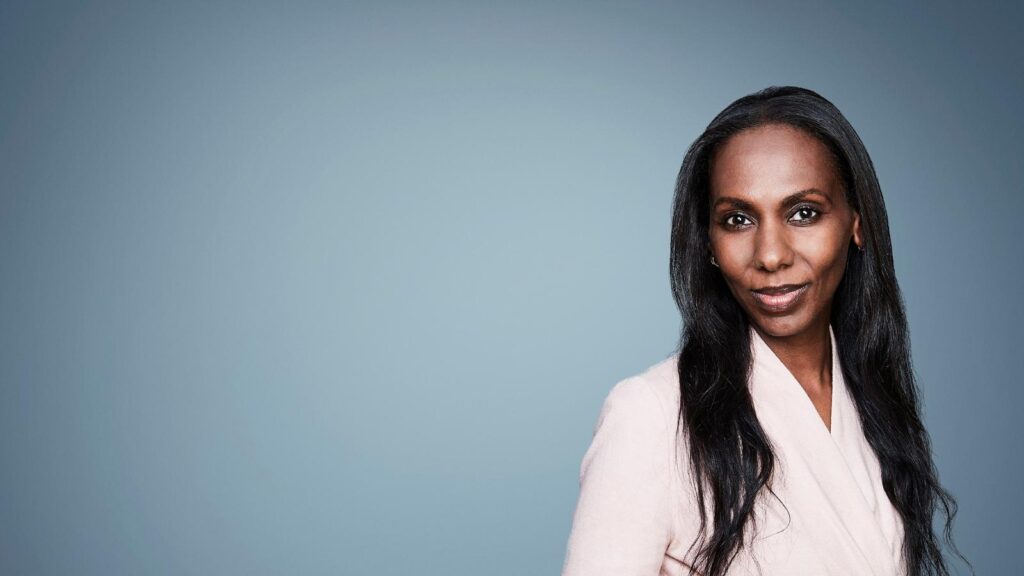
CNN has promoted senior international correspondent Nima Elbagir to the role of chief international investigative correspondent.
A London-based Sudanese journalist, Elbagir has broken countless stories for CNN from war and crisis zones, reporting on human rights abuses in places like Ethiopia’s Tigray region, Libya, Democratic Republic of the Congo, Nigeria and Yemen. In 2017, her undercover reporting exposed migrants being sold at slave auctions in Libya and prompted responses from the government and the United Nations.
Elbagir has scooped up numerous awards in her career, including the Royal Television Society’s Television Journalist of the Year Award in 2020, a duPoint Award, a Polk Award in 2017, the International Center for Journalists 2018 Excellence in International Reporting Award, the 2018 IWMF Courage in Journalism Award, a 2019 Gracie Award, and the LA Press Club’s 2019 Daniel Pearl Award.
Elbagir joined CNN in Feb. 2011 as a full-time reporter based at network’s Johannesburg bureau, before later moving to Nairobi, Kenya. Prior to joining CNN as a freelancer in 2010, Elbagir worked in various capacities for the UK’s Channel 4 for a number of years from 2005: she freelanced from Kabul, Afghanistan for Channel 4 News; reported for the Unreported World documentary strand; and both reported and presented for Channel 4 News and More4 News.
source/content: adweek.com/TVNewser/CNN-Revolving Door (headline edited)
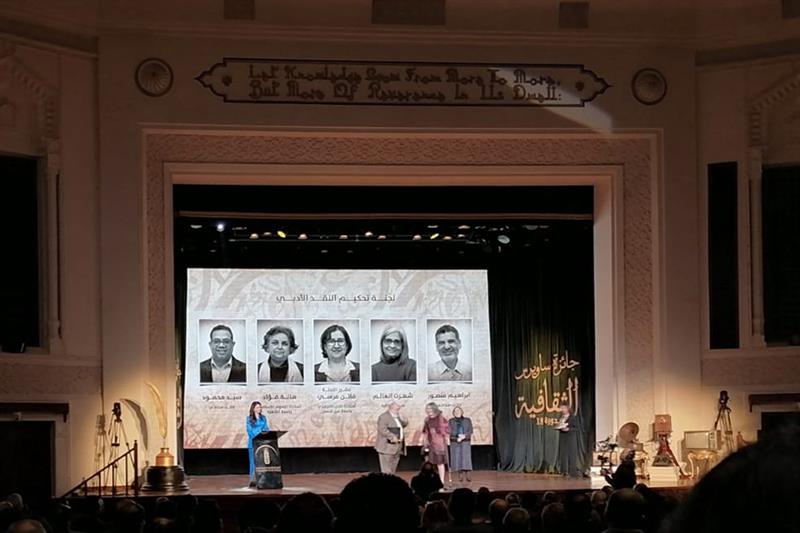
Why doesn’t the crocodile fly? : Meet the winners of Sawiris’ 18th Cultural Award, celebrated on 08th January 2023.
The annual event was held at Ewart Memorial Hall of the Tahrir Cultural Center, downtown Cairo.
The event was attended by many cultural and literature figures and artists and included a performance by the popular musical troupe Masar Igbari.
A New Prize
The event kicked off at 7 pm with a short speech by movie star Mahmoud Hemeda, followed by a mini-documentary celebrating 20 years of Sawiris Foundation’s contribution to social development through influencing the lives of about 700,000 people throughout Egypt.
Renowned Doctor and scholar Mohamed Abul-Ghar, member of the award’s board of trustees, introduced a special prize that went to the posthumously released book of late journalist Mohamed Abul-Gheit, titled ” I am Coming, Light”. Prominent writer Mohamed Shoeir, deputy of Akhbar El-Adab magazine, was the one who suggested that the prize go to Abul-Gheit’s book even though it hadn’t been on the list of entries for the competition. Abul-Gheit had been a celebrated journalist who passed away this December after a battle with cancer. The prize, which is worth EPG 150,000, will be given to his wife and child.
Children Books
The prize for Best Children’s book under 12 years old was a tie between writer Ahmed Korany’s book Lemaza La yateer Al Timsah (Why Doesn’t the Crocodile Fly?), illustrated by Nemma Zidan, and writer Ashraf Abul-Yazid’s book Qetati Toalef Ketaba ( My Cat Writes a Book).
Critic and Narrative books
The prize for Best Critic and Narrative writings was also a tie between renowned poet Bahaa Jaheen, for his book Al Molk Wal Malek (The Creation and Creator), and writer Magdy Gergis for his book Al-Moalem Ibrahim Al-Gohary.
Play Script
The first prize for best play script went to playwright Ahmed Nabih for his play Nozhet El-Sindbad fi Dawayer Baghdad (Sinbad’s Voyage in the Circles of Baghdad). The second prize for best play script went to playwright Emad Motawaa for his play Mosiqa Hadiaa (Soft Music).
Screen Play
The prize for Best Screenplay, youth section, went to screenwriter Mohamed Al-Samman for his script Ardioon (Earth People).
The prize for Best Screenplay, older generation, went to screenwriters Ahmed Hawari and Ibrahim Al-Battout for their script Hekayet Risha w Samaka (The Story of a Feather and a Fish)
Best Novel and Short stories
The first prize for best Novel and Short stories, youth section, went to writer Mohamed Sorour for his short stories Thalath Fekhakh le Zeab Awar (Three Traps for a One Eyed Wolf). The second prize for best Novel and Short stories, youth section, went to writer Mohamed El-Barmy for his short stories Lel Mohebein Wal Awghad wa Qotaa Al Toroq ( For the Lovers, the Bastards and the Villains)
The first Prize for best Novel, youth section, went to novelist Sharl Aql for his novel Ahmar Lareng (Larenge Red ).
The second Prize for best Novel, youth section, went to novelist Ahmed Ibrahim Ismail for his novel Abu Gamea.
The first prize for Novel and Short stories, older generation, went to novelist Shady Louis for his novel Tarikh Mogaz lel Khalifa wa Sharq Al Qahera (A Brief History of Al Khalifa District and East Cairo). The novelist, however, announced later last night that although grateful for winning such an award, he will give it back.
The second prize for Novel and Short stories, older generation, went to writer Ahmed Abdel-Latif for his short stories The Kingdom of Mark Zuckerberg and his Fictional Birds.
The official names for the new minerals are elaliite and elkinstantonite.
Canadian researchers said the rock was found in rural Somalia two years ago, but locals believe it is much older.
They call the stone Nightfall, and say it is documented in poems, songs and dances that stretch back five generations. It is used today to sharpen knives.
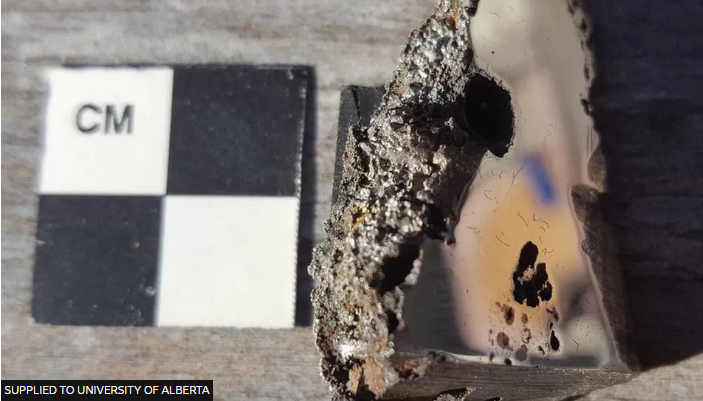
A huge meteorite that fell to Earth contains two minerals never seen before on our planet, scientists say.
Canadian researchers said the rock was found in rural Somalia two years ago, but locals believe it is much older.
They call the stone Nightfall, and say it is documented in poems, songs and dances that stretch back five generations. It is used today to sharpen knives.
The official names for the new minerals are elaliite and elkinstantonite.
They were identified by scientists at the University of Alberta who looked at a 70g fragment from the 15-tonne meteorite, which is said to be the ninth-biggest to reach our planet and is about 90% iron and nickel.
The name “elaliite” honours the fact that the meteorite was unearthed in the district of El Ali in Somalia, and “elkinstantonite” is named after Nasa expert Lindy Elkins-Tanton.
“Lindy has done a lot of work on how the cores of planets form, how these iron nickel cores form, and the closest analogue we have are iron meteorites. So it made sense to name a mineral after her and recognise her contributions to science,” said Prof Chris Herd who curates the University of Alberta’s meteorite collection.
A third, as-yet unidentified mineral, is being analysed by the university’s researchers who now hope to get their hands on more of the meteorite – not only to see what else they might discover, but also how it could be used on Earth.
“Whenever there’s a new material that’s known, material scientists are interested too because of the potential uses in a wide range of things in society,” Prof Herd said of the “exciting” research.
source/content: the-star.co.ke (Star) / BBC News, Africa (headline edited)