Arabs & Arabian Records Aggregator. Chronicler. Milestones of the 25 Countries of the Arabic Speaking World (official / co-official). AGCC. MENA. Global. Ist's to Top 10's. Records. Read & Enjoy./ www.arabianrecords.org
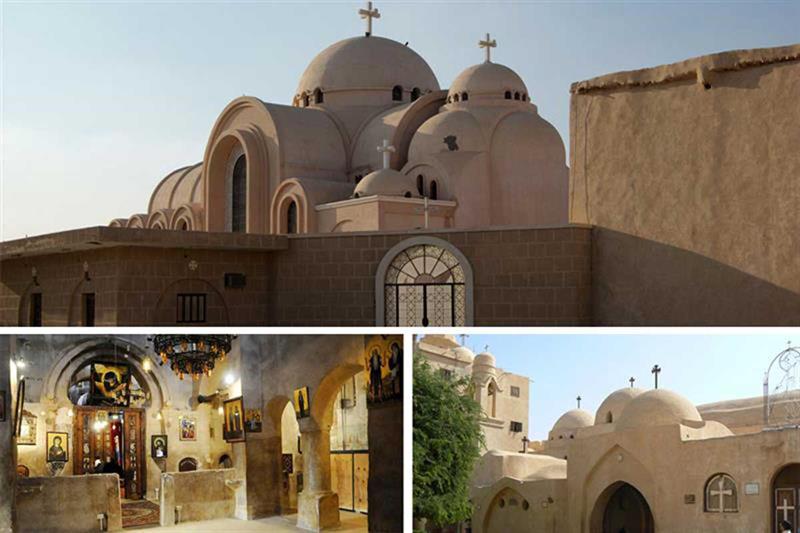
“Festivities and celebrations affiliated with the Journey of the Holy Family in Egypt are now on UNESCO’s Representative List of Intangible Cultural Heritage of Humanity,” professor Nahla Imam, heritage consultant at the Egyptian Ministry of Culture and country representative of Egypt at the 2003 Convention of Safeguarding the Intangible Heritage of UNESCO, told Ahram Online on Wednesday.
Imam credited the move to the efforts of the Egyptian ministries of culture and foreign affairs, adding that Egypt’s efforts were almost unanimously supported by UNESCO’s Inter-Governmental Committee.
This is the seventh intangible cultural heritage element that Egypt enlists in UNESCO. Prior to the Journey of the Holy Family, the Egyptian manual-textile industry in Upper Egypt was put on the UNESCO List of Intangible Cultural Heritage Sites in Need of Urgent Preservation.
Egypt first enlisted El-Sirah El-Helalya (The Epic of Beni Helal) in 2008, Tahteeb(Stick Art) in 2016, the Aragouz Puppet in 2018, and the knowledge and traditions affiliated with palm trees in 2019.
According to the accounts of historians, the Holy Family spent around four years in Egypt.
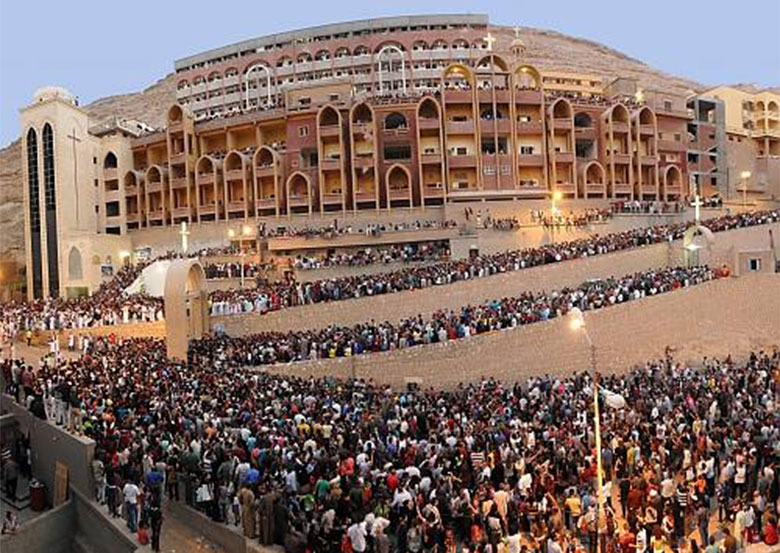
Their trip started in the Sinai at Al-Farma, on the border with Gaza, where they arrived after fleeing Jerusalem. Their trip ended in Durnaka, Assiut, venue of the famous Monastery where the feast of Virgin Mary is celebrated in August each year.
As the FIFA World Cup reaches its climactic end, one cannot help but reflect on what an extraordinary political event it has been. Those who argue that sport and politics should be decoupled will have found it hard watching politics as an ever-present from the day Qatar was awarded the event back in 2010 and at every single match since the tournament began on Nov. 20.
But perhaps one of the most fascinating and hopefully impactful thrills at the World Cup has been the rare opportunity to remind the world that, for all its troubles, fissures and rivalries, the peoples of the Arab world do have much in common and that football has highlighted that reality every day in Qatar.
Some might question these signs of togetherness among fellow Arabs. Yet there were copious examples where it shone. Three achievements stood out.
Firstly, for Morocco to beat Spain and then Portugal in the knockout rounds was exceptional, especially following their defeat of Belgium, the second-ranked side in the world, in the group stage. There was more than an element of delight in seeing a former colony defeating, in Spain, its one-time colonial master. Morocco will get the chance to overcome its other colonial power, France, in the semifinals on Wednesday. In fact, star player Achraf Hakimi was born in the poor suburbs of Madrid. Morocco were the only team in the quarterfinals not from Europe or South America. Few in the region were not cheering them on. A sense of collective pride emerged as a result of the North African country’s success in becoming the first Arab and African state to reach the semifinals.
One might have thought that, given the dire state of relations between Morocco and Algeria, that Algerians would have shied away from joining in the festivities. Evidence suggests otherwise. Algerians were out supporting Morocco as enthusiastically as anyone else in the region. A friend was in Paris and told me: “After one of the Morocco victories, there were lots of Algerian supporters and flags joining their Moroccan brothers and sisters in celebration.” The Algerian captain and superstar Riyad Mahrez was quick to praise the Atlas Lions’ achievements.
Secondly, Tunisia beating reigning world champions France in the group stage was also an unforgettable moment. This was the first time they had beaten European opposition in the World Cup. This was every bit as big a win as in 1982, when Algeria beat the mighty West Germany in their first ever World Cup game.
Third, the Saudi victory over Argentina was another huge milestone. In many ways, this ignited the World Cup for the Arab world.
A sense of pride has also broken out that many of the finest players in the world come from this region. Hakim Ziyech for Morocco is one. Mahrez and Mohammed Salah were not in Doha but are still at the top of the sport. Kylian Mbappe, a star of this tournament, has an Algerian mother.
The key players in the Arab teams largely play in Europe. This shows football at its best in terms of breaking down barriers. Fourteen out of the 26-man Morocco squad were born outside of the country, showing how the team relies on the Moroccan diaspora. This includes Ziyech, who opted not to play for the Netherlands. That points to one challenge that countries like Morocco face, as they lack the footballing infrastructure to develop and nurture enough talent at home.
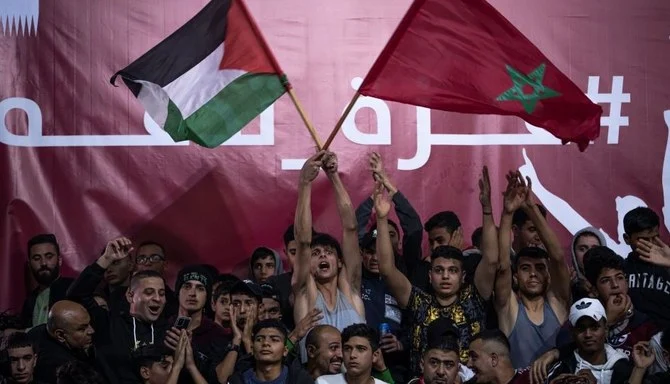
This World Cup has also often been about one country that is not there. At every single game featuring an Arab side, and plenty others beside, the Palestinian flag was there. It is a political symbol and a defiant message that the Arabs will not forget or ignore what is happening to the Palestinians in the diaspora and under occupation. As an even more brutally right-wing coalition is about to take power in Israel, this message should be carefully noted in the US and European capitals. Palestine still matters.
Israeli hasbaristas were also caught out. Having belittled and mocked those who claimed otherwise, they discovered that, despite the normalization deals, Arabs are not willing to gloss over Israel’s crimes and oppression. Time and time again, Israeli journalists, while trying to pretend everything was all lovely and wonderful with their newfound Arab friends, found that “free Palestine” was pushed back in their faces. Many locals snubbed their requests for interviews.
” A World Cup in the Arab world has brought some cheer to a region that has been hit hard by wars and other crises. “
Chris Doyle
Palestinian armbands and keffiyehs were being worn at nearly every match by huge numbers of fans. The sheer arrogance of believing that a state could oppress millions of people and that all would be peace and happiness was exposed as the nonsense it is. The Moroccan players had no hesitation in raising the Palestinian flag after their wins over Spain and Portugal.
Many Arabs also expressed admiration for the courage of the Iranian team after the players refused to sing their national anthem ahead of their opening match against England. This points to the widespread sympathy many Arabs feel toward Iranians, notably currently the women, who are struggling for their freedoms.
The Western media has been quick to point out all that was wrong with this World Cup. It is about time it also highlighted what has gone right. For all the criticisms of Qatar in the run-up to the cup over issues such as workers’ rights, one of the key elements of its bid has been fulfilled. Football in the region has been the winner. The atmosphere has been considerably warmer than many expected, with largely good-natured relations among fans of all countries. It seems that rival fans have not needed to be segregated, showing the festival-like atmosphere. Fan violence does not seem to have featured. The largest numbers of fans, of course, came from the Arab world, with Saudi Arabia providing the largest number from a single country.
Many outside the region were dismissive of the claims that football mattered in the Middle East. One leading commentator contemptuously told me, while on the BBC, that Qatar did not have a footballing heritage. Yet the region should never have been ignored. A World Cup in the Arab world has brought some cheer to a region that has been hit hard by wars and other crises, and whose peoples have not had much to celebrate in recent years.
Chris Doyle is director of the Council for Arab-British Understanding, in London. Twitter: @Doylech
Disclaimer: Views expressed by writers in this section are their own and do not necessarily reflect Arab News’ point of view
source/content: arabnews.com (headline edited)
_____________
Palestinians watch the World Cup quarterfinal between Morocco and Portugal in Gaza City, Saturday, Dec. 10, 2022. (AP Photo)
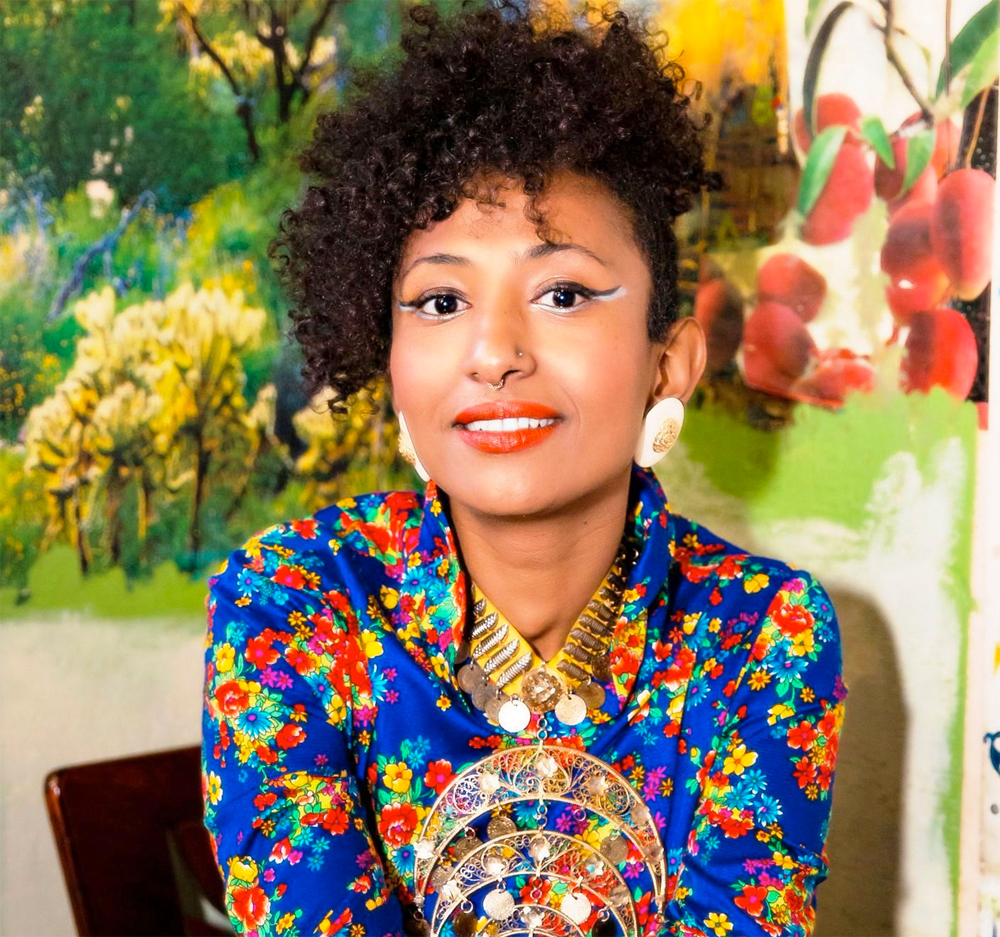
A singer, songwriter, and ethnomusicologist, Alsarah is a self-proclaimed practitioner of East African music, inspired by songs and cultures of Africa and the Middle East. Throughout her career, she performed as a band member of Sounds of Tarab, in addition to producing songs and albums under her stage name, and her band with her sister, Alsarah and the Nubatones. Furthermore, she was also featured in the documentary “Beats of the Antonov” in 2014.
Alsarah was born Khartoum, Sudan in 1982. As a child, her parents worked as activists at a time when many encouraged citizens to vote in the 1986 elections. Following the coup d’etat in 1989, however, her family fled the country to Yemen before the nation’s civil war forced them to relocate to Boston, the United States in 1994.
At this point in life, Alsarah turned to music for solace. In fact, music has been a big part of her childhood, with the very first music that spoke to her being played during her family’s activism in Sudan. Growing up, she studied ethnomusicology at Wesleyan University before relocating to Brooklyn, in New York, where became lead singer of the Zanzibari band Sounds of Tarab.
In 2010, Alsarah and her sister would start a band entitled “Alsarah and the Nubatones” along with band members Haig Manoukian, Kodjovi Mawuena, and Rami El-Aasser. The band released their debut EP, “Soukura,” followed by full-length album “Silt” in 2014, “Manara” in 2016, and “Manara Remixed” in 2017. In addition, Alsarah has also produced songs as a solo artist with albums such as “Aljawal,” “The Crow,” and “Min Ana.”
In general, many of Alsarah’s songs were influenced by artists from Sudan, Zanzibar, and Ethiopia. Her songs are available on Spotify and Deezer.
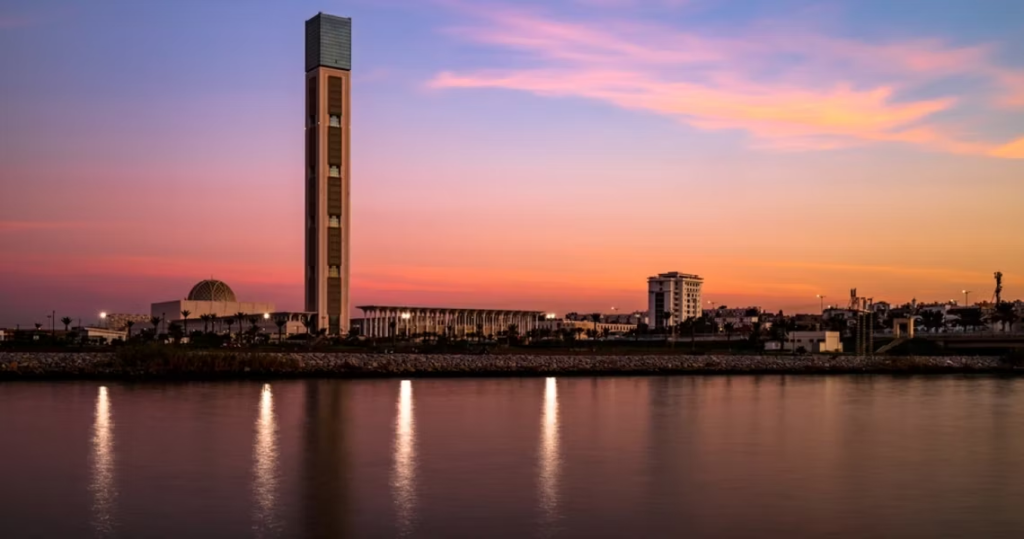
One doesn’t have to be a Muslim to visit the mosque or see the tallest minaret in the world.
Many people who think of a vacation to Africa make plans with Morocco in mind, South Africa at times, maybe Kenya, and definitely Egypt—to see the famous pyramids—or the 4,100-mile-long river that gave birth to that momentous civilization. Yet, as a continent, Africa has 54 countries, almost as many as the number of states in the U.S. Though it may come as a surprise, almost all of these countries are safe and have nearly the same conveniences as those found in many First World countries. Take Algeria, for instance, the biggest country in Africa and more than three times the size of Texas. This northern African country has pyramids, just like Egypt, and several fascinating ruins that would interest any history buff or anyone who’s out for some real adventure.
The Great Mosque Of Algiers And Its Record-Breaking Minaret
Also known as Djamaa el Djazaïr, the Great Mosque of Algiers is itself a monumental structure and an architectural marvel in its own right. However, what really puts it in the Guinness Book of World Records is its minaret. The reason is that the Great Mosque of Algiers is noted for having the tallest minaret in the world. For those who may be scratching their heads, a minaret is a tower—or a tower-like structure—built into mosques primarily to project the “Adhan,” the Muslim call to prayer. Of course, today, minarets serve other purposes as well. For instance, they are important landmarks of Islamic presence. Coming to the minaret of the Great Mosque of Algiers, we would not be remiss to expect a structure described as the world’s tallest to answer to that exceptional description. Well, the minaret of the Great Mosque of Algiers is 265 meters tall and hence, by all accounts, impressive.
For perspective, that’s the same height as Truist Plaza, the 60-story skyscraper in downtown Atlanta or the Panorama Tower in Miami, Florida. It’s also about half the height of the One World Trade Center, the tallest building in the United States. Minarets, however, have never been this tall. Before the Great Mosque of Algiers secured a page in the Guinness Book of World Records for its minaret, the tallest minaret was the 670-feet tower of the Hassan II Mosque in Casablanca, Morocco. The Algiers minaret, according to the Guinness Book of World Records, is now not just the tallest minaret in the world but the tallest building in Africa as well. This minaret is designed to withstand a magnitude nine earthquake, the highest earthquake magnitude. This type of earthquake can cause major damage over a region more than 1,000 km across.
Here’s A Brief History Of The Great Mosque Of Algiers And Its Minaret
The government of Algeria launched the construction of the Great Mosque and its record-breaking minaret in 2012. However, according to an adviser to the minister of housing responsible for the construction, the idea of constructing a mega-mosque had been in the cards from way back in 1962 when Algeria got its independence after 132 years of French occupation and after a 7-year brutal war that would send seismic revolutionary waves across the continent. For some reason, the efforts to put up a mega-mosque in Algiers had failed and foundered. However, with the election of Abdelaziz Bouteflika as President of Algeria in 1999, the building efforts would soon receive significant impetus.
Famous for his religious zeal and devotion to Muslim art and culture, Bouteflika would, unsurprisingly, actualize the mega-mosque dream even though his tenure as president would dramatically come to a premature end before the completion of his pet project. The mosque, however, including its record-breaking minaret, was an outstanding architectural masterpiece. According to the Guinness Book of World Records, the Great Mosque of Algiers sits on an expansive area of around 400,000 square meters (about 50 acres). For perspective, the building itself, plus the outside courtyard, can seat up to 120,000 worshipers.
Other Reasons Why The Great Mosque of Algiers Is Worth Visiting (& How To Visit)
The mosque looks towards the scenic Bay of Algiers, which features dazzling white buildings and panoramic views as far as the eye can see. Part of the mosque is a library that can stock more than a million volumes. In addition, the mosque has a Koranic school and a museum of Islamic art and history.
Where Is The Great Mosque of Algiers Located? This mosque is located on the Rue de la Marine in Algeria’s capital city, Algiers.
A crucial travel tip is to get in as a worshiper, probably during worship. Some visitors even carry a prayer mat or wear a scarf, especially women. Of course, one doesn’t have to be a Muslim to visit the mosque or see the tallest minaret in the world.
Tunisia’s prestigious industry event enjoys another successful year, helping spread a love of culture across the country.
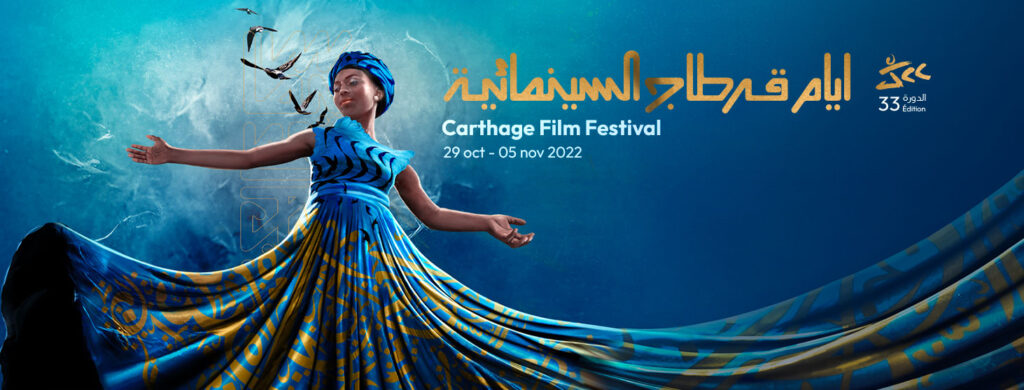
Another week of movie magic, street art and music has come to an end following the 33rd edition of the International Carthage Film Festival in Tunisia.
Titled “Hel Thneya”, which means “Open the Path” in Tunisian dialect, the festival once again cemented its status as a major cultural attraction for visitors of all ages, who flocked to cinemas and filled the streets en masse.
The festival, one of the eldest and most prestigious in the Mena region, ended on Sunday.
As is tradition, the capital Tuniswas transformed into an open celebration of not only cinema but all forms of arts, with independent young painters getting the chance to show their artworks to the public for the first time and musicians performing every evening to audiences in the middle of Avenue Habib Bourguiba. For many, it was an opportunity to watch films that they don’t usually have the means or the opportunity to see.
Speaking outside the Theatre de Region Cinema, Downtown Tunis, Amina told The National she had been waiting for the festival to introduce her two children to the world of the cinema.
“As a family, we always discuss films together but we never find the time nor age-appropriate films to watch. This is a great opportunity to let them discover the big screen,” Amina said.
Amina’s daughter Ritej, who is in the sixth grade, was grinning with happiness as she prepared to enter the cinema hall. “I’m excited, I’m sure I’m going to enjoy this and tell my friends about it,” Ritej said.
Amina said that she often encourages her children to value the arts, with Ritej currently rehearsing for a school play, and she wishes there were more events like it in Tunisia.
This year’s International festival was an opportunity to revive the city. According to organisers, the festival aimed to showcase both new cinema productions and also timeless films that the younger generations needed to be introduced to.
This year, 72 countries participated with Saudi Arabia being the guest of honour and special emphasis placed on Palestinian and Spanish Cinema — a choice that organisers said highlighted the intersection between north and south, placing migration under an artistic lens.
The festival also paid tribute to Arab filmmakers, both living and dead, namely the Moroccan director Mohamed Abderrahmen Tazi and Egyptian director Daoud Abdel Sayed, as well as the late Algerian director Yamina Chouikh and late Tunisian director Kalthoum Bornaz.
“Through this 33rd edition, we continued to foster cultural decentralisation by bringing new sections to the festival and programming screenings in different parts of the country,” journalist and cinema critic Yosra Chikhaoui told The National.
“This year marks the first edition of JCC for kids. We are bringing more screenings as part of our “street cinema” section as well as continuing the special screenings for prisoners and members of the Tunisian army inside military bases,” Chikhaoui, who is a member of the festival’s media committee, added.
JCC in Prisons, now in its eighth year,is the fruit of a partnership between the Tunisian Ministries of Culture and Justice and the International Organisation Against Torture. This year, 12 films were showcased in three prison facilities, while juvenile detainees were transferred to Tunis for a special showcase in a cinema.
According to Ridha Behi, general director of this year’s festival, film screenings in prisons serve as a reminder of the right all people have to access and experience culture.
Awards, meanwhile, highlighted the multitude and variety on show, with a focus on filmmakers whose work depicts the struggles of their respective societies.
The Tanit d’Or award for best feature film was given to Tug of War, directed by Amil Shivji — marking the first time a film from Tanzania has won the award. Meanwhile, the Tanit d’Argent and Tanit de Bronze were respectively awarded to the films Under the Fig Trees by Erige Sehiri from Tunisia and Sharaf by Samir Nasr from Egypt
A consignment of blue ammonia has left Saudi Arabia for South Korea, representing a new milestone in the development of decarbonization solutions.
The development was first announced during the recent Saudi Green Initiative conference in Sharm El-Sheikh, and Vessel Seasurfer, carrying 25,000 metric tons (25 KMT) of low-carbon blue ammonia, is expected to reach its destination between Dec. 9 and 13 in the world’s first commercial shipment of its kind.
The accomplishment, which is an alternative to conventional gray ammonia, is part of a collaboration between Saudi Basic Industries Corporation Agri-Nutrients and Aramco.
Lotte Fine Chemical, which has a long-standing relationship with SABIC AN, will receive the low-carbon “cradle to gate” blue ammonia.
Abdulrahman Shamsaddin, SABIC AN CEO, said: “This shipment is another milestone in our journey toward carbon neutrality.
“We are proud to be a part of this pioneering solution, paving the way for further decarbonization efforts.
“Looking to the future, we are constantly working on breakthrough solutions to decarbonize our assets and deliver low-carbon solutions to our customers.”
Yong Suk Kim, LFC CEO, said: “We are delighted to enter this meaningful agreement with our long-term supplier, SABIC Agri-Nutrients, to receive the world’s first certified blue ammonia cargo.
“Building on our shared history, we are looking forward to moving forward together into a new era for ammonia. We believe that this shipment of blue ammonia will help lay the foundations for a global supply chain.”
Earlier this year, SABIC AN and Aramco received the world’s first independent certifications, recognizing blue ammonia and blue hydrogen production, from TUV Rheinland, a leading independent testing, inspection and certification agency, based in Germany.
The shipment of blue ammonia to South Korea will be the first to capitalize on this major certification achievement.
The new developments are aligned with Saudi Vision 2030, which focuses on low-carbon fuels, products, solutions and clean energy.
Over 1,200 years old, and after facing extreme neglect for decades, the Basatin Jewish Cemetery finally reopens.
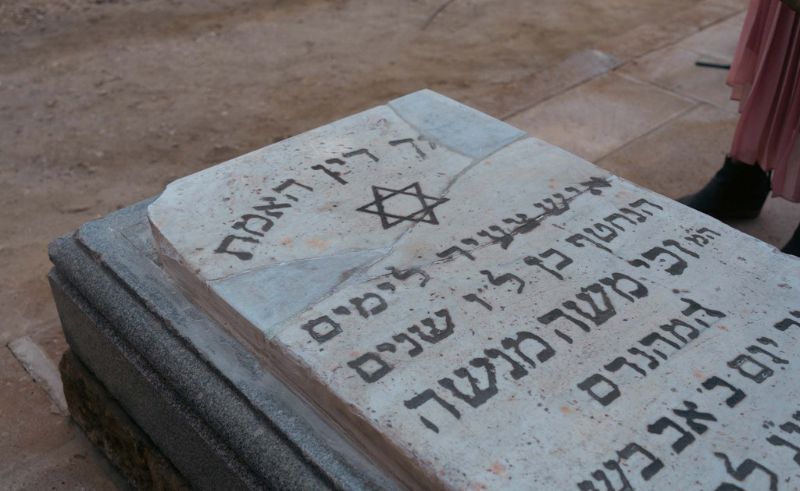
The Basatin Jewish Cemetery – the second oldest Jewish cemetery in the world, and one of Cairo’s few remaining Jewish cemeteries – has undergone extensive renovations and opened its doors once more.
With a foundation dating to the 9th century during Egypt’s Tulunid Dynasty, the 147 acres of land designated for the cemetery at the time included separate areas for Rabbanite and Karaite Jews and extended beyond the Tulunid capital of Egypt.
In more recent times, allegedly during the reign of Mamluk Sultan Qaitbay in 1482, the cemetery was divided into separate pieces of property totaling roughly 27 acres. These plots include the Basatin graveyard’s common burial grounds, the private Mosseri family cemetery, Rav Haim Capusi’s grave, the private Moise Cattaui Pasha cemetery, and the remaining Karaite section of the original cemetery.
Over the past three years, the American Research Centre in Egypt and the United States’ Ambassadors Fund for Cultural Preservation and Drop of Milk Foundation have been working to restore the neglected cultural and religious heritage site.
After the completion of the conservation project, members of the Karaite Jewish community – known for exclusively respecting the principles of the Torah and disowning oral traditions like the Talmud and other writings of the Rabbis – from various nations attended the ribbon-cutting ceremony, and were able to revisit their families’ graves for the first time in decades.
Saudi Arabia was first vice-chair of the executive council for 2022.
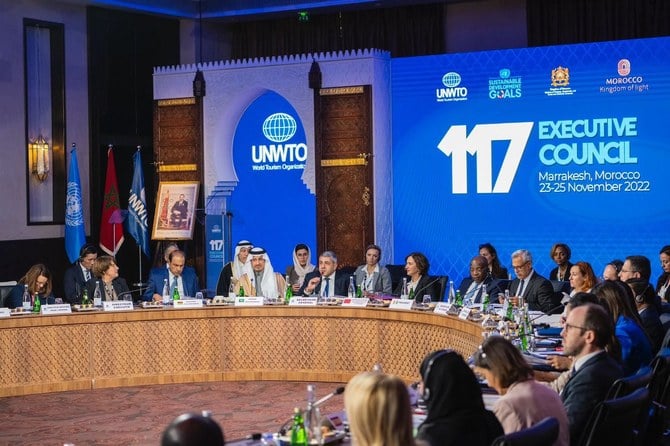
Saudi Arabia’s Ministry of Tourism has announced the election of the Kingdom as chair of the executive council of the United Nations World Tourism Organization for 2023.
The announcement was made at the 117th session of the organisation’s executive council being held in Marrakesh, making the Kingdom the first Gulf country to hold the post.
“The Kingdom is honored to be elected as chair of the World Tourism Organization’s executive council and we believe in the importance of the organization’s pioneering role. We look forward to cooperating with all countries to support and develop the global tourism sector,” the Minister of Tourism Ahmed Al-Khateeb said.
He added that the Kingdom has been an active member of the organization by launching initiatives, supporting new ideas, and opening the organization’s first regional office in Saudi Arabia to promote its agenda and work in the Middle East and beyond.
“At the heart of the UNWTO is a desire to promote tourism as a catalyst of economic development, which Saudi Arabia wholeheartedly supports. We have committed $800 billion of government investment into the Saudi tourism industry by 2030.
“Our imperative is that the development we seek, both as a nation and globally, is sustainable, inclusive and resilient. That’s how we will address the fast-changing needs of businesses, communities and the planet,” Al-Khateeb said.
As chair, Saudi Arabia will set the agenda for all meetings, ensuring that it captures the most pressing issues and concerns for the tourism industry. It will facilitate and moderate meetings effectively, chair dialogue and encourage actionable outcomes.
With a strong determination to help women’s inclusion in the mining industry, Bensetti has a strong belief in women’s ability to defy norms and pursue a career in any industry.
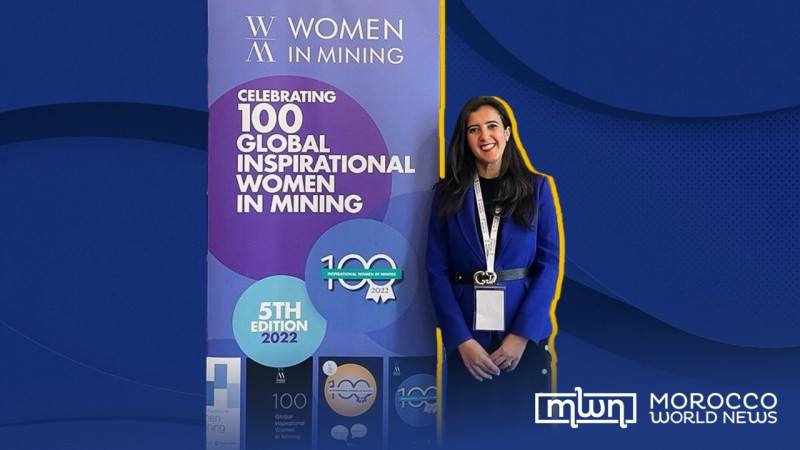
Women in Mining UK, an NGO dedicated to supporting women in the mining sector, selected CEO of OCP subsidiary DOOC Ibtissam Bensetti to feature in the 2022 “100 Global Inspirational Women in Mining” (WIM100) in recognition of her contributions to the global mining industry.
With this nomination, Bensetti became the first OCP personnel and Moroccan national to feature in the 100 Global Inspirational Women in Mining.
The NGO’s global top 100 list celebrates women’s contribution to the mining industry at all levels. The biennial publication stresses women’s skills and expertise in the global mining industry and celebrates role models for future generations.
Women inclusion in mining
The organization selects nominees based on different criteria, including creative innovation and sustainable working.
“A WIM100 woman offers proactive advocacy to those working in the mining industry and beyond. She empowers her colleagues to ensure everyone feels heard, welcomed, and respected,” the NGO said.
Bensetti has been able to take her place in the WIM100 for her leadership in OCP as a CEO at the group’s subsidiary DOOC, which specializes in industrial operations consulting, safety, and sustainability.
Having joined OCP in 2012, Bensetti has more than a decade of experience in the mining industry at different levels, particularly in sustainability roles in mining and chemical industrial operations, as well as corporate development.
Carrying the spirit of women’s empowerment during her journey, Bensetti has been working on spreading that spirit among her team members, particularly women, through supporting OCP’s female talent as well as increasing the number of women in management.
Delighted to be part of the WIM100 list, Bensetti stressed her emphasis and belief in women’s talents.
“In my mind, there is no impenetrable fortress for women, women can defy the norms and pursue a career in any industry,” she said, conveying her encouragement and endorsement for the inclusion of women in the mining industry.
The CEO acknowledged that the industry might have been a male-dominated industry but claimed that that’s in the past thanks to global efforts seeking to ensure gender equality at different levels. Women make up between 8% and 17 % of the global mining workforce, a McKinsey report has found.
The report also identified, however, several reasons and challenges that prompt women’s exit from the industry.
“The top reasons for leaving the industry are feeling that work is no longer intellectually challenging and having the perception that there are fewer advancement opportunities than there are for their male colleagues,” the report stressed.
Appointment and education
Bensetti was appointed as CEO of DOOC in June 2021 to replace Hamid El Mahfoudi, who retired.
She joined OCP a decade ago, filling positions related to strategy, corporate development, and industrial operations.
Graduating from Telecom Paris in 2004, Bensetti amassed 18 years of experience in management consulting, industry managing, coaching, and leading teams in transformation journeys.
Bensetti is also a graduate of The World Business Council for Sustainable Development’s LEAP Program, a one-year sustainability training program that seeks to empower women and help advance their positions and careers.
Having gender equality as a center of focus during her career, Bensetti is determined to continue her battle to help empower women in the mining industry.
“Being a woman engineer in industry, I have been fighting this battle all my life,” she wrote on her LinkedIn bio.
The Sheikh Zayed Book Award (SZBA) of the Abu Dhabi Arabic Language Centre (ALC), part of the Department of Culture and Tourism – Abu Dhabi (DCT Abu Dhabi), has revealed the longlists for its 17th edition (2022/2023) in the Literature, Children’s Literature, and Young Author categories.
The announcement was made as the SZBA judging committees begin the evaluation process for all the longlisted entries.
The Young Author category saw 954 submissions this year, an increase of more than 8 percent from the 881 received last year. The Young Author recorded the highest growth in number of submissions among all categories, and now accounts for 30 percent of total nominations across all categories.
The Literature category received 688 submissions this year, ranking second in terms of submissions, while the Children’s Literature category saw 386 participations, up nearly 63 percent from the 236 submissions registered last year.
The Children’s Literature category received 12 submissions from nine Arab countries: UAE, Saudi Arabia, Egypt, Lebanon, Syria, Jordan, Bahrain, Kuwait, and Iraq. These included:
“La Ahad Yal’ab Ma’ai” (No One Plays With Me) by Mohammed Alohaly from Saudi Arabia, issued by Al Hudhud Publishing and Distribution in 2022.
“Lu’bat al-Nujoom” (The Star Game) by Afra Mahmood from the UAE, issued by Al Hudhud Publishing and Distribution in 2022.
“Min al-Fajr ila al-Ghuroob maa’ Toyour Ghabat Alkharuwb” (From Dawn to Dusk with the Birds of the Carob Forest) by Flora Majdalawi from Jordan, issued by Majdalawi Masterpieces Books in 2022.
“Mala Narah” (What We Don’t See) by Shaima Alwatani from Bahrain, issued by Afkar for Culture & Publishing in 2021.
“Aba’at Abi” (My Father’s Gown) by Basemah Alwazzan from Kuwait, issued by National Council for Culture, Arts and Literature in 2022.
“Jaddi wa al WhatsApp” (My Grandfather and WhatsApp) by Parween Habib from Bahrain, issued by Dar Al Saqi in 2022.
“lastu Wahedan” (I Am Not Alone) by Rami Tawil from Syria, issued by Dar Al Saqi in 2021.
“Rabieon Samet” (Silent Spring) by Razan Al Naeemy from Iraq, issued by Qindeel printing, publishing & distribution in 2022.
“Abhathu an Shai’”(I Am Looking for Something) by Sahar Naja Mahfouz from Lebanon, issued by Dar Kiwi Stories in 2022.
” Einstein: Asrar Alkoutaa 99” (Einstein and the Secrets of the 99th Element) by Sharif Saleh from Egypt, issued by Wow for Publishing & Educational Services in 2022.
“Rehla Dafeaa Molawana” (A Colourful Warm Journey) by Doha Jawad from Syria, issued by Dar Ashjar Publishing & Distribution in 2020.
“Al Sorra Al Ajeebah” (The Wonder Bundle) by Nadia AlNajjar from the UAE, issued by Alfulk Translation & Publishing in 2022.
The longlist for the Young Author category ranged from theses to literary works and included 12 titles, submitted from eight Arab countries: Tunisia, Egypt, Algeria, UAE, Iraq, Oman, Lebanon, and Saudi Arabia. The works on the longlist are:
“Madeeh Al Ikhtilaf: Derasat fi Falsafat Al Ketabawa Siasat Alhawiya ” (Praise of Difference: Studies in the Philosophy of Writing and Identity Politics) by Mohamed Bekkaye from Algeria, issued by Al Rawafed Culture and Nadim Edition in 2022.
“Al Khetab Al Kasasi fi Ayyam Al Arab fi Al Jahileya: Kiraah Tadawouleyah Hijajeyah (Narrative Discourse in the Days of Arabs in the Pre-Islamic Era: A Pragmatic and Argumentative Examination) by Dr. Abdessattar Al Jamai from Tunisia, issued by Dar Kunouz Al-Marefa Publishing & Distribution in 2021.
“Al Badawi Al Abiad” (The White Nomad) by Mutaz Albader from Saudi Arabia, issued by Dar Al Tanweer Publishing & Printing in 2021.
“Aroos Al Kamar, Hekayat Al Holm Al Afriki” (The Comoros Bride: An African Dream Tale) by Mohammad Tarazi from Lebanon, issued by Arab Scientific Publishers Inc. in 2021.
“Al Wahl wa Al Noujoom” (Dirt and Stars) by Ahmad Lutfi from Egypt, issued by Aseer AlKotb in 2022.
“Al Tajreeb fi Al Khetab Al Sheary Al Emarati Al Mouaaser” (Experimentation in Contemporary Emirati Poetic Discourse) by Dr. Hessa Abdulla Al Ketbi from the UAE, issued by Sharjah Department of Culture in 2021.
“Haraket Alfadh Al Hadarh Al Arabieyah min Bayan Al Jahedh to Aked iben Abd Rabbeh” (The Movement of Words in the Arab Civilization: From the Statement of Al Jahiz to the Unique Contract of Ibn Abd Rabbeh) by Dr. Ali bin Hamad Al Riyami from the Sultanate of Oman, issued by Alaan Publishers & Distributors & The Omani Society for Writers & Literati in 2022.
“Nehayat Al Sahra’a” (The End of the Desert) by Said Khatibi from Algeria, issued by Hachette Antoine / Nofal in 2022.
“Fawka Jisr Al Joumhoureyah” (Over the Republic Bridge) by Shahid Alrawi from Iraq, issued by Dar Alhikma Publishing & Distribution in 2020.
“Al Belad Al Tounnouseaya fi Oyoun Al Rahhalah Al Alman” (Tunisia in the Eyes of German Travelers (1535-1881 AD) by Dr. Atef Salem from Tunisia, issued by Editions Arabesques in 2021.
“Naqd Al Naqd Wa Tajalleyatoh Fi Al Tourath Al Nakdi Wa Al Balaghi Al Arabi” (Criticism of Criticism and Its Manifestations in the Arabic Rhetoric and Critical Heritage) by Dr. Issam Benchellel from Algeria, issued by Difaf Publishing & El-lkhtilef Publishing in 2021.
“Fareedah Wa Sedi Al Mathloum” (Farida and My Oppressed Master) by Heba Ahmad Hassab from Egypt, issued by Al Mahrousa Center for Publishing, Press Service, and Information in 2021.
As for the Literature category, 12 titles made it onto the longlist by novelists, writers and poets representing eight countries: Egypt, Morocco, Syria, Tunisia, Saudi Arabia, Lebanon, Sudan and Iraq. The titles are:
“Almer: Akhtam Al Madeenah Al Fadelah: (Almer: Seals of the Utopian City) by Abdelillah Benarafa from Morocco, issued by Dar Al Adab Publishing & Distribution in 2022.
“Hijab Al Saher” (A Magician’s Veil) by Ahmed Al Shahawi from Egypt, issued by Al-Dar Al-Masriah Al-Lubnaniah in 2022.
“Aseer Nish: Rakan bin Falah bin Hethlain” (Prisoner of Nish: Rakan bin Falah bin Hethlain) by Ahmed Hamad AlSubait from Saudi Arabia, issued by United Takween Group Press, Publishing & Distribution in 2022.
“Rasasa fi Al Raas” (A Bullet in the Head) by Ibrahim Issa from Egypt, issued by AlKarma Books in 2021.
“Hourrass Al Houzn” (Guardians of Sadness) by Amir Tag Elsir from Sudan, issued by Hachette Antoine / Nofal in 2022.
“Al-Qata’i: Thoulatheyat Ibn Tulun” (Al-Qata’i: Ibn Tulun’s Trilogy) by Reem Bassiouney from Egypt, issued by Nahdet Misr Publishing in 2022.
“Abnaa Hura” (The Sons of Hura) by Abdelrahim Kamal from Egypt, issued by AlKarma Books in 2021.
“Ifrah ya Qulbi” (Rejoice, My Heart) by Alawiya Sobh from Lebanon, issued by Dar Al Adab Publishing & Distribution in 2022.
“Ila Ayn Ayyathouha Al Kaseedah” (Whereto, O Poem? An Autobiography) by Ali Jaafar Alallaq from Iraq, issued by Alaan Publishing in 2022.
“Antakia Wa Molouk Al Khafaa” (Antioch and the Kings of Secrecy) by Lina Hawyan Alhasan from Syria, issued by Dar Al Tanweer Publishing & Distribution in 2021.
“ Moujazafat Al Aref” (Knowledgeable Risk) (Poetic Work) by Mohammed Ibrahim Yaghob from Saudi Arabia, issued by Tashkeel Publishing & Distribution in 2022.
“Kullo Aoushbaten Sawtouha wa Kullo Ghaimaten Kathalek” (To Every Grass Leave Its Sound, and to Every Cloud as Well) (Poetic Work) by Mohamed Ghozi from Tunisia, issued by Contraste Editions in 2022.
The Sheikh Zayed Book Award will soon be announcing the longlisted titles for the remaining categories in the 17th edition.