Arabs & Arabian Records Aggregator. Chronicler. Milestones of the 25 Countries of the Arabic Speaking World (official / co-official). AGCC. MENA. Global. Ist's to Top 10's. Records. Read & Enjoy./ www.arabianrecords.org
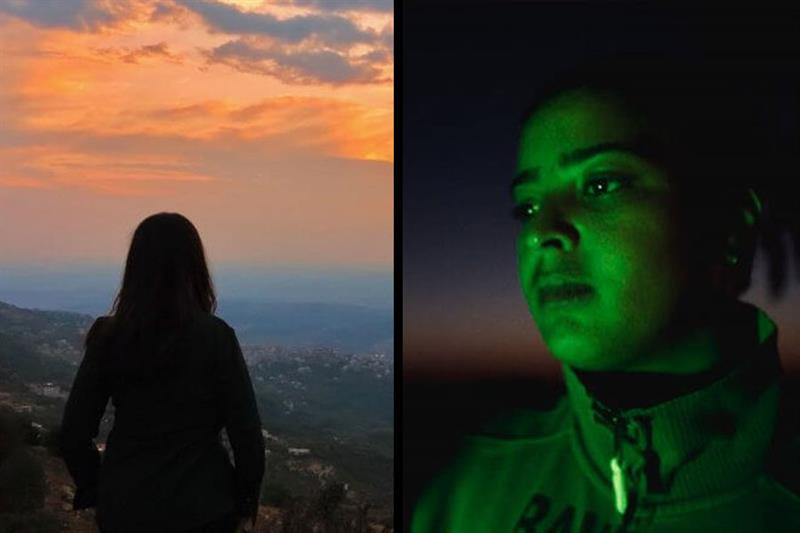
A number of Arab films are being screened at the ongoing 60th New York Film Festival.
The films include titles from Lebanon and Morocco.
With its screening in the New York Festival, the Lebanese feature narrative film Tales of the Purple House by Abbas Fahdel makes its North American Premiere.
The film will be screened on 11 October, followed by a Q&A with the director.
Another Lebanese film, Beirut the Encounter, will screen on 7 and 16 October.
Directed by Borhane Alaouié, this 1981 production went through a new restoration, allowing the US audiences to view it in an improved condition.
Morocco is represented with Life on the CAPS by Meriem Bennani. The film will be screened on 7 and 9 October, as part of the Currents Program 5: After Utopia segment of the festival.
The New York Film Festival opened on 30 September and runs until 16 October.
As the festival is ongoing, two other Arab films are currently being screened in New York’s cinemas: Casablanca Beats by Moroccan director Nabil Ayouch and Lebanese documentary Sirens by Rita Baghdadi. Both films had their US premiere on 16 and 30 September respectively.
Morocco recently has stepped up efforts to restore and protect its cultural heritage.
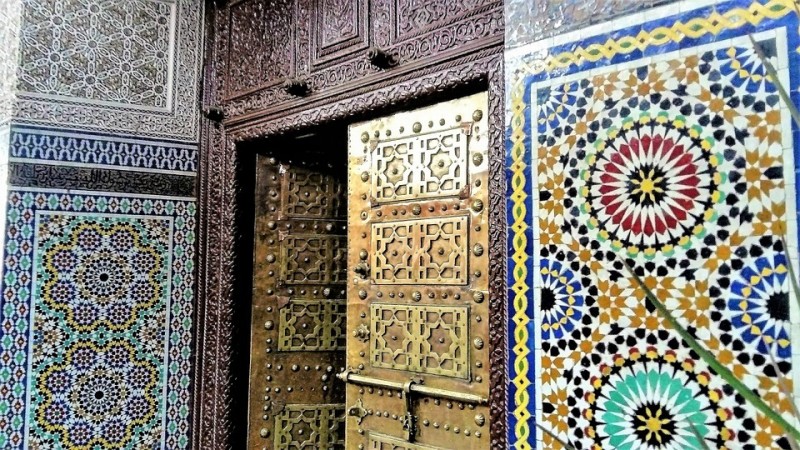
Following a series of complaints about the cultural appropriation of Moroccan Zellige (mosaic), on Friday, Morocco’s Ministry of Culture announced the official patenting of Zellige of Fez by the World Intellectual Property Organization.
In 2015, Morocco registered the Zellige of Fez in the Vienna Classification of Figurative Elements of the World Intellectual Property Organization in an effort to preserve its national heritage.
Celebrating the new patent, the Moroccan ministry took to social media to share the news, stating “Zellij is one of the most artistic forms that express the originality of Moroccan architecture.”
The ministry’s post added that the Zellige “industry dates back to the tenth century AD, when it flourished during the Marinid era in the honorable Kingdom before moving to neighboring tribes during the following centuries.”
Given the global popularity of Zellige of Fez due to its quality, originality, and multicolored feature, the Moroccan ministry says that “the city of Fez [is] the owner of this art and the main center for its production and industry due to its special clay that is not found in other places.”
In addition to gaining global appeal among designers, interior architects, celebrities, and even international organizations , Moroccan Zellige has been studied by Moroccan and foreign experts in the fields of engineering, arts, social sciences, and mathematics including Rushita Choksey and Jean Constant.
Despite the existence of an extensive literature body asserting the Moroccan origin of the Zellige, the clay artwork remains subject to external claims.
Earlier this week, Morocco filed a complaint against Adidas for producing and promoting new Algerian jerseys with Zellige patterns. Adidas claimed that the patterns were inspired by El Mechouar palace in Tlemcen.
Soon after Moroccan social media users learned about Adidas’ news, the brand’s post was flooded with comments from Moroccan users who denounced the company’s act. Moroccan users added social media hashtags such as #Moroccan culture, #Moroccan Zellige, and #No theft of Moroccan heritage to spread the word.
Some internet users also stressed the Moroccan origin of the El Mechouar’s architecture stating that the Algerian-based palace was built by Sultan Youssef Ibn Tachfin during the Almoravid dynasty and renovated in 2010 with Moroccan calligraphy, mosaic, and plaster art.
In response to the social media backlash between Moroccan and Algerian users, Morocco’s Ministry of Culture filed a complaint against the multinational firm, condemning the “cultural appropriation [and the] attempted robbery of a form of traditional Moroccan cultural heritage.”
Still, Moroccan-Algerian clashes over the origins of popular products such as couscous, caftan, and mosaics are likely to persist after the patenting of the Zellige of Fez. These debates, which mostly take place in the digital space, reflect the decades-long tensions between Rabat and Algiers centered on the Western Sahara dispute.
The rising diplomatic tensions and small-scale online clashes between the North African neighbors, however, do not fully reflect the relations between the two nations’ peoples, as many Moroccan and Algerian families have shared history and lineage.
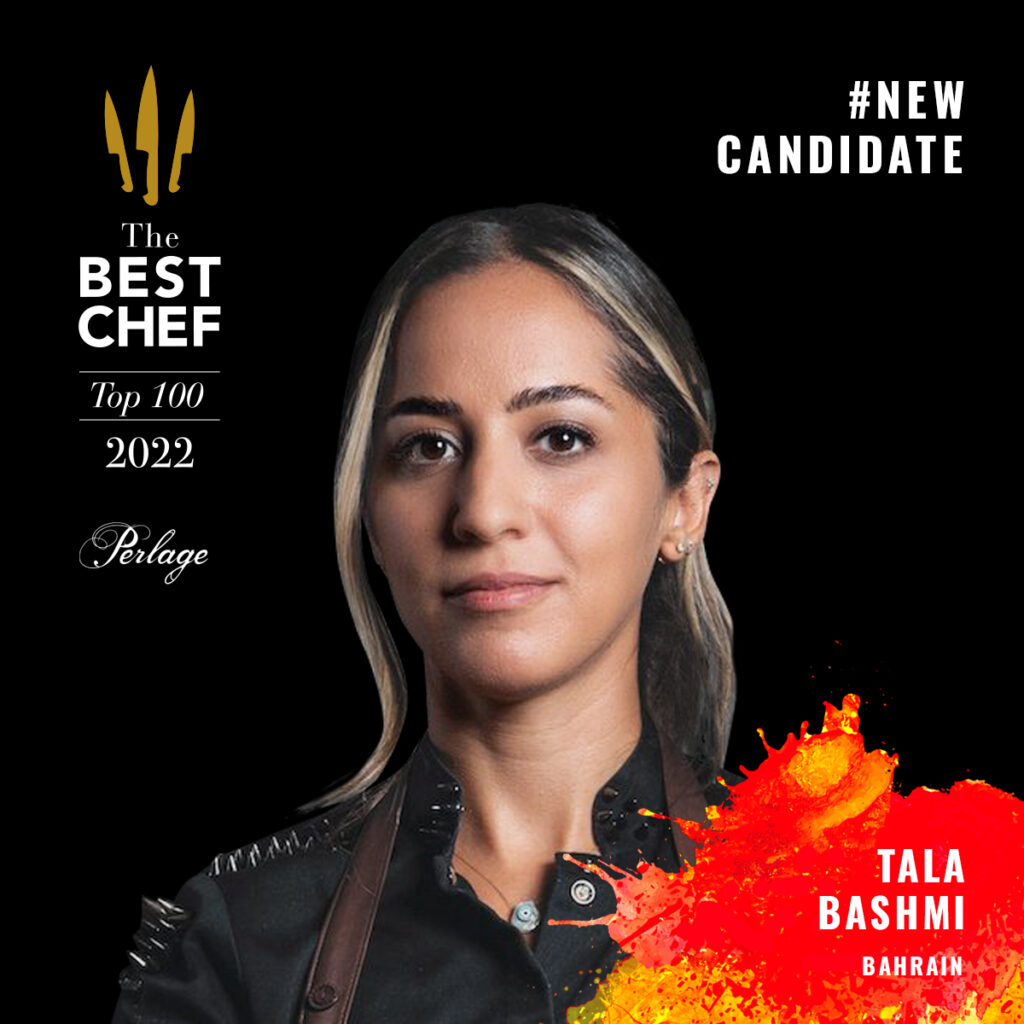
Massimo Bottura, Niko Romito, Yannick Alleno, Heston Blumenthal, Clare Smyth and Anne-Sophie Pic are the big culinary names she’s ranked alongside on the top 100 list for this year’s The Best Chef Awards.
“The people on this list are actual living legends in the culinary field, so for me to be on it at all is amazing,” she tells The National.
“What I’m currently doing is trying to put Middle Eastern cuisine on a global scale, so for me to be the only Arab on this list means I’m taking one step forward to doing that and to give our cuisine its moment in the spotlight and its culinary renaissance.”
Not only is Bashmi the only Arab, she’s also one of only 18 women who have made it on to this list of 100 culinary talents across the globe.
She ranked 93rd, but says the number didn’t “really matter” to her. “Going into this, I had no idea if I was going to make this list,” she says. “I’m from a small island that doesn’t get much exposure, so for me to get this is amazing.”
At the event, which was held at the Crystal Gallery of the Palacio de Cibeles, in Spain’s capital, she met some of her all-time heroes. This includes Andoni Luis Aduriz, a Spanish chef who ranked number five and picked up the award for The Best Science Chef Award. Bashmi describes him as “humble, down to earth and very focused on what matters in this industry rather than distractions around, which I really admire”.
Spain’s Dabiz Munoz picked up the top accolade of The Best Chef for a second consecutive year for his work at DiverXO restaurant in Madrid. Noma’s Rene Redzepi came second, while Spain’s Joan Roca i Fontane rounded out the top three.
Bashmi, who heads The Gulf Hotel Bahrain’s well-regarded restaurant Fusions by Tala, is no stranger to culinary accolades, having picked up her award for Best Female Chef in the region in Abu Dhabi this February. Her restaurant also ranked 39th on the first list of Mena’s 50 Best Restaurants.
She inherited an interest in cuisine and cultural identity from her father through his in-depth knowledge of the ingredients used. She then used this interest to launch Baked by T, before joining the Culinary Arts Academy in Lucerne, Switzerland.
Staying in the central European country, she had roles at the Grand Hotel Les Trois Rois in Basel and the Michelin-starred restaurant Prisma in Vitznau, where she learnt more about restaurant operations, as well as working in fast-paced kitchen environments.
Since returning to the Mena region, Bashmi has competed on MBC’s Top Chef Middle East television show in 2020, where she reached the finals.
In 2017, she took over the helm at Fusions by Tala, where she makes modern interpretations of Bahraini dishes, including the standout bamia, a traditional okra and meat stew, for which she uses Wagyu beef cheek, crispy okra glass and tomato broth rice.
“I try to appeal to every audience from every country, in a sense of bringing them back to a state of nostalgia,” she has previously said of her approach. Bashmi might do this through any of our senses, such as when she adds a campfire aroma to the Saudi-Bahraini dessert aseeda to evoke memories of camping, whether in the desert or the forest.
“I feel like this is still the beginning for me,” she says of her latest achievement. “People haven’t seen what came before, what led to today, so every time something is achieved, it’s a new beginning and opens new doors to opportunities I hadn’t even thought of.
Mohammad Abdullah Al Gergawi, Minister of Cabinet Affairs, Chairman of the Committee leading Great Arab Minds, and Secretary-General of the Mohammed Bin Rashid Al Maktoum Global Initiatives (MBRGI), highlighted the details of “The Great Arab Minds” initiative.
Launched by His Highness Sheikh Mohammed bin Rashid Al Maktoum, Vice President, Prime Minister and Ruler of Dubai, in January 2022, the initiative is the Arab world’s largest movement designed to search for exceptional talents among Arab scientists, thinkers, and innovators across key fields.
The Great Arab Minds initiative, under the MBRGI, aims to identify, support and acknowledge leading thinkers in the region, amplify their impact and inspire future generations. One of its main purposes is to reduce the emigration of Arab scientists, specialists, intellectuals, doctors, and engineers.
He affirmed that “The Great Arab Minds” initiative reflect His Highness’ vision in reigniting the Arab World’s Civilisation Drive, support great Arab minds and acknowledge their work and achievements, in service of humanity.
Mohammad Al Gergawi pointed out the importance of the Arab Reading Challenge initiative launched by His Highness Sheikh Mohammed bin Rashid Al Maktoum, among many other development projects, serving more than 91 million beneficiaries.
A study conducted by KPMG, showed that ignorance costs the Arab world more than US$2 trillion. The Great Arab Minds initiative aims to change this reality and contribute to shaping a brighter future for Arab generations.
During an event organised in the Museum of the Future to announce the details of the initiative, Mohammad Al Gergawi witnessed the signing of four partnerships between “The Great Arab Minds” initiative and KPMG, LinkedIn, Meta, and Majarra.
The initiative’s mission is to search for exceptional talents among Arab scientists, thinkers, and innovators across key fields, aiming to identify, support and acknowledge leading thinkers in the region, amplify their impact and inspire future generations.
Over a 5-year period, “The Great Arab Minds” will reward scientists, thought leaders, scholars, and innovators across 6 categories: Natural Sciences (Physics and Chemistry), Medicine, Literature and Arts, Economics, Technology and Engineering, and Architecture & Design.
The initiative includes the “Mohammed bin Rashid Medal for Great Arab Minds”, which will be awarded to 6 winners of six categories each year.
The Great Arab Minds initiative aims to facilitate the recognition of Arab thought leaders, scholars, scientists, geniuses, and transforming their ideas to real-life breakthroughs and solutions. It also aims at empowering cluster of Arab scientists and thinkers and building a network of Arab thinkers, scientists, and exceptional talents in various fields to work as one team to drive the Arab world’s intellectual renaissance.
Winner of the Audience Award at Venice Film Festival’s Orizzonti Extra Section, ‘Nezouh’ follows a Syrian family on the verge of becoming refugees.
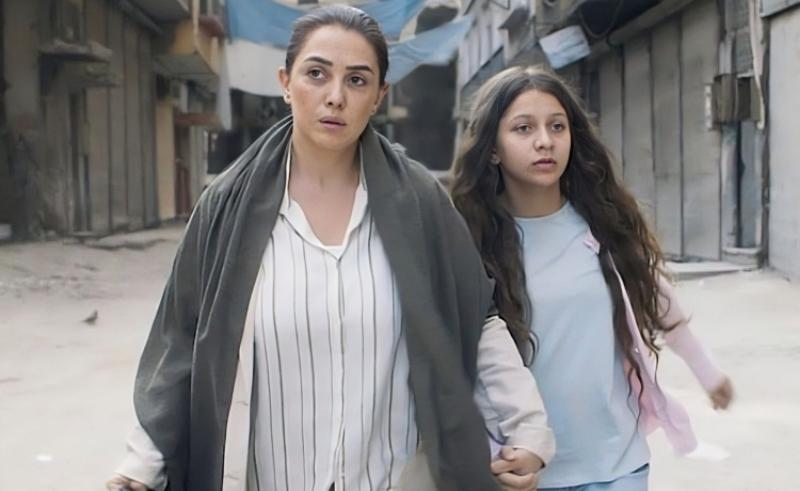
Syrian film ‘Nezouh’ starring Kinda Alloush and Samer Al Masri, and directed by Syrian filmmaker Soudade Kaadan, won the Audience Award at Venice Film Festival’s Orizzonti Extra Section, supported by Armani Beauty. This is Kaadan’s second win at the festival after ‘The Day I Lost My Shadow’ (2018), her first feature-length film and the winner of Best Debut Film.
The film stars the Cairo-based Syrian actress Alloush, known for her roles in Egyptian and Syrian dramas. She was first introduced to Egyptian audiences in 2009 with her role in ‘Welad El A’am’ and has since starred in multiple films and series including ‘El Maslaha’ (2012), and ‘El Asliyyin (2017). She’s also part of the cast of ‘The Swimmers’ (2022) which debuted at Toronto Film Festival.
‘Nezouh’ is set in war-torn Damascus and tells the story of a Syrian family at a crossroads choosing between fleeing or clinging on to their home. The father, played by Samer Al Masri, refuses to become a refugee while his fourteen-year-old daughter yearns for freedom. The film is inspired by the filmmaker’s personal journey away from Damascus and the effect of the conflict on Syrian women’s social reality.
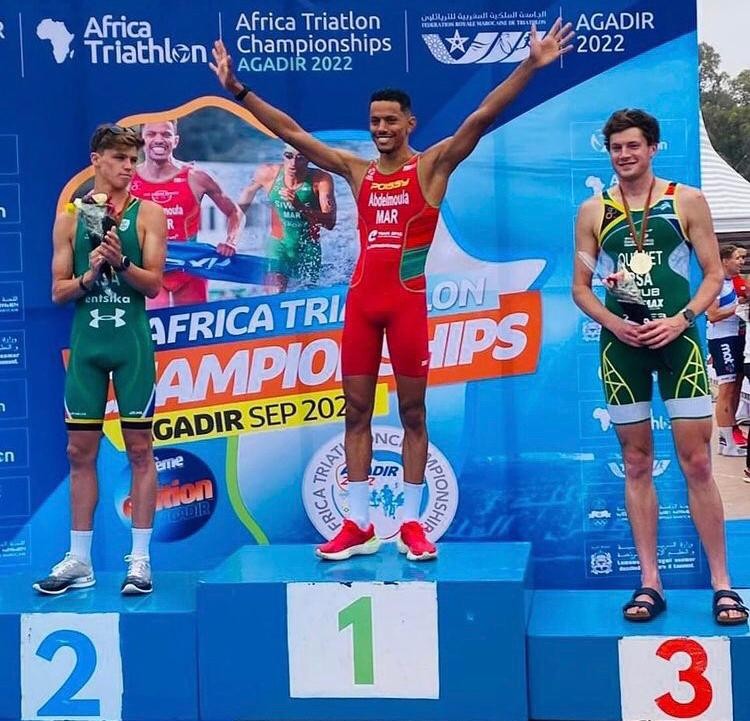
Jawad Abdelmoula is currently the best African and Arab triathlete, according to the World Triathlon Individual Olympic Qualification Ranking for Paris 2024.
Despite enduring an injury, Morocco’s Jamal Abdelmoula won the African title in the Elite category of the third Africa Triathlon Championship this weekend.
Hosted in Agadir, the Moroccan athlete said that he was honored to win the championship at home, adding that he took a risk to participate in the race given his health conditions.
Grateful for his team, coaches, fans, and mother Saharah El Khemmar, Abdelmoula shared on social media: “Thank you also to all those who support me and follow me in my adventure!”
The African champion completed the triathlon in a record of 1:49:25, just 34 seconds ahead of South Africa’s Jamie Riddle. Nick Quenet, another South African competitor, secured the bronze medal with a time of 1:51:56.
As Abdelmoulacelebrated his second consecutive victory in the African Triathlon Championship, five of his Moroccan teammates also participated in the Elite race.
Morocco’s Nabil Kouzkouz notably ranked 5th in the same category with a time of 1:52:59, while Badr Siwane followed in 7th with a time of 1:53:37.
Meanwhile, Mohamed Nemsi completed the race in 1:54:12, securing the 9th position just 13 seconds ahead of Tunisia’s Seifeddine Selmi. The latter succeeded in outperforming Morocco’s Youssef El Moutaouakil, who ranked 11th. As for Yasser Mohassine, the 22-year-old athlete took over 2 hours to reach the finish line, placing him second to last.
Besides dominating the elite category, Morocco ranked second in the mixed relay, followed by Egypt, Algeria, Tunisia, Mauritius, and Zimbabwe. South Africa, however, topped the category with a record of 1:37:33 for 4 legs.
According to the Royal Moroccan Triathlon Federation, thirty triathletes represented Morocco in the Elite, U23, U19, U17, U15, U13, and para-games of the African championship hosted in Agadir from September 23 to 25.
African delegations from South Africa, Zimbabwe, Egypt, Kenya, Mauritius, Tunisia, and Algeria also took part in the regional championship.
Dr. Abdullah Al-Rabeeah, supervisor general of the King Salman Humanitarian Aid and Relief Center, recently represented the Kingdom at the launch ceremony of the Global Islamic Fund for Refugees.
The fund is supported by UNHCR and the Islamic Development Bank’s Islamic Solidarity Fund for Development, with an initial amount of $100 million, on the sidelines of the 77th session of the UN General Assembly in New York.
In his speech, Al-Rabeeah expressed his happiness about the fruitful partnership between UNHCR and IDB to help millions of people around the world who are forcibly displaced, by offering constant support for refugees and displaced persons and their host communities.
He noted the importance of strengthening collective action and partnership to better respond and develop innovative, sustainable and comprehensive solutions, in line with the 17th sustainable development goal.
Al-Rabeeah said that the Kingdom was optimistic about UNHCR and IDB’s partnership, which embodies the values of humanity, justice and equality in developing innovative solutions for the refugee crisis.
Al-Rabeeah said: “Amid an increasing number of crises around the world, the Organization of Islamic Cooperation region accommodates the largest number of refugees in the world; we are all aware and fulfill our responsibility by providing all the refugees and displaced people’s needs to lead a safe, healthy and decent life.”
He said that the Global Islamic Fund for Refugees “would help us achieve this humanitarian objective, and given the significant economic challenges the world is facing and due to the limited donor base, this is the best time to present innovative ways to increase the funding modalities.”
Al-Rabeeah said that Islam encourages charitable work, that zakat is the duty of all Muslims who are capable of donating, and that this was the best time to establish the Global Islamic Fund for Refugees. He indicated that the success of this fund relies on the participation of authorized partners and project-based funding, with a transparent monitoring process.
Addressing the needs of refugees and displaced people in the OIC region is an example of zakat and charitable funding, he said, wishing the Global Islamic Fund for Refugees success.
The Global Islamic Fund for Refugees is to be a financing tool for refugees, in compliance with the provisions and principles of Islamic Shariah.
This fund consists of an endowment and nonendowment account to receive and invest donations, in accordance with Islamic financing’s principles. The revenue is deposited in a trust account to fund the response programs for refugees, displaced people and their host communities in the IDB member states.
The Islamic Solidarity Fund for Development has donated $50 million to the endowment account, while the UNHCR has donated $50 million to the nonendowment account, as an initial capital to launch this initiative with $100 million.
The fund also aims to raise additional capital of $400 million as a minimum target by allowing donations from people wishing to contribute.
source/content: arabnews.com
____________
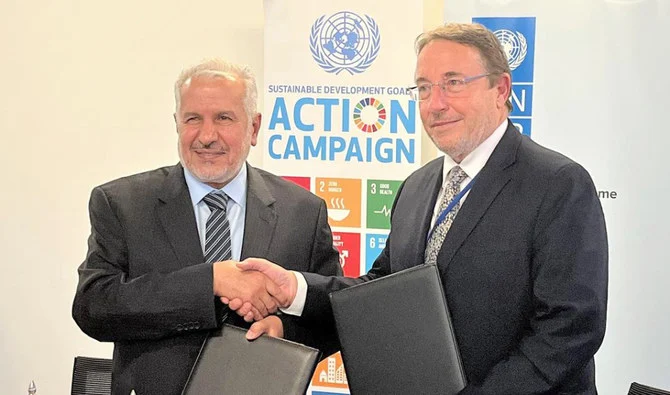
KSrelief Supervisor General Dr. Abdullah Al-Rabeeah and UNDP Administrator Achim Steiner sign an a cooperation agreement. (SPA)
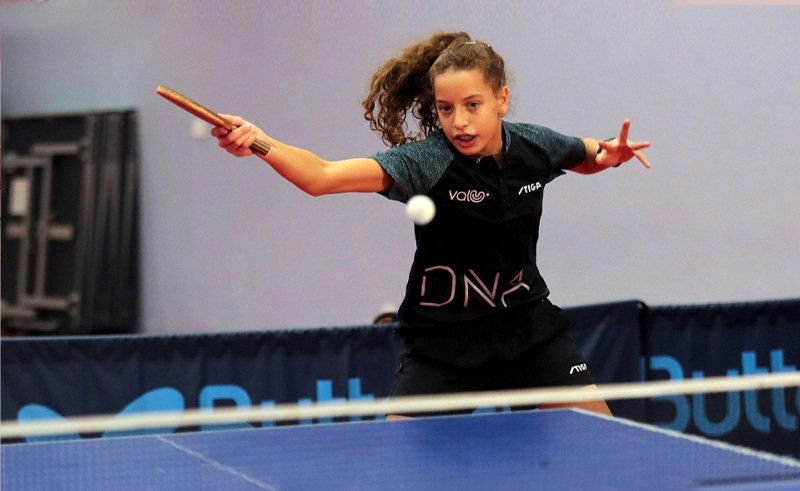
At only 14 years old, Egyptian athlete Hana Goda holds the number one rank in the International Table Tennis Federation’s (ITTF) U19 Girls’ Singles list for the first time.
Egyptian table tennis champion Hana Goda has cemented her legacy as the first person to hold the number one rank in the International Table Tennis Federation’s (ITTF) U19 Girls’ Singles list at only 14 years old.
After an exceptional performance at the 2022 ITTFA, the long-standing national champion and Africa Cup senior champion also stands at 43 in the International Table Tennis Federation’s Women’s Singles ranking worldwide.
Sibaha is the director of the “Atlas Lionesses: Hear Them Roar!” documentary that honored Morocco’s Women’s Football Team.
The Moroccan journalist Aziza Nait Sibaha has won the sixth “Fatima Bint Mubarak” Women Sports Award, crowning her as the Arab world’s “best sports journalist.”
Presented on September 17 in Abu Dhabi, the award is the region’s first of its kind aimed at empowering women and celebrating their sports achievements.
The “Fatima Bint Mubarak” Prize was awarded to different winners in several categories, including sports management, training, research, sports sponsorship, and women of determination.
The value of the prizes totaled AED 1,700,000 ($462,824).
Different trophies were awarded to nine competitors, individuals and teams, including Egypt’s Giana Farouk Mahmoud, who was named the “best Arab sportswoman,” and Shamma Yousef Al Kalbani, who won the “best Emirati athlete” award.
Egyptian Ahmed Gouda won the prize for the “best young athlete,” while his compatriot Rehab Ahmed Radwan was awarded the prize for the “best Paralympic athlete.”
The “best coach” award went to Faris Al-Assaf from Jordan, while the Jordanian Women’s Football Association took the award in the “ Youth Development Programs” category.
The Egyptian Weightlifting Federation won the award for “best team,” while the “Emirates International Endurance Village” earned the prize for “best innovative sports initiative.”
The celebrated Tunisian tennis player Ons Jaber won the award for “Sports Personality of the Year in the Arab World.”
In her speech at the award ceremony, the representative of Fatima Bint Mubarak Ladies Sports Academy, Maryam Al-Mansouri, said that all categories of the award have seen strong competitiveness in recent months. This proves the talent, willingness, and ambition of Arab sportswomen, she stressed.
Al-Mansouri concluded: “We hope to see Arab women continue to take the lead in local and international sports events, and this award will contribute to the birth of new achievements in the Arab women’s sports career.”
Architect Omar Degan reflects on the experience of designing a restaurant that celebrates local identity and cultural tradition in the Somali capital.
Think back to your childhood. Even if the memories are blurred, many of the flavours and aromas remain. The time we spent with parents and grandparents is often remembered in scents and spices — returning us to those moments, even after many years. Passed down through the generations, dishes and cuisines are vessels of culture and tradition and embodiments of the world’s diversity. Think of a plate of tagliatelle in Bologna, a freshly baked naan in New Delhi, the sweet taste of a chai bought in the streets of Mogadishu, or a mate tea savoured in Buenos Aires. Each is a powerful reflection of its place and people.
I think about architecture in the same way. Just as culture and tradition is conveyed through gastronomy, the built environment can be a physical representation of local knowledge, passed down through the generations. Like food, buildings can convey ways of knowing, rooted in working with local materials and resources, and adapting to climate and culture. In this way, architecture should celebrate and enhance the places it transforms. It’s a paradigm few would disagree with — yet one that’s rarely reflected in how we build.
A neo-colonial conception of modernity still shapes buildings around the world. It’s a flat, globalized approach in which a tower in Toronto is similar to one in Shanghai, and in which the glass used for a New York skyscraper can be nearly indistinguishable from the cladding of a residential building in Mombasa. This is an architecture that does not earnestly strive to understand places, people and traditions, but seeks to pursue a vision of universal modernity which finds its expression in a detachment from local knowledge.
So how can architecture celebrate cultural diversity? As a Somali practitioner — and principal of Mogadishu-based DO Architecture Group — my answer is always rooted in the local community. And appropriately enough, it’s reflected in a recent project that brought together food and architecture: In 2019, I designed a restaurant called Salsabiil in the outskirts of Mogadishu.
From outside, Salsabiil’s façade appears modest and simple — almost private and introverted. But like an old book cover with layers of dust on its surface, a surprise awaits inside. Crisp white walls, ceilings and floors greet visitors as they enter, with the room framed by plantings that hint at the once-abundant local greenery that’s been lost through decades of deforestation.
Mogadishu was once known as “The White Pearl of the Indian Ocean” for its white buildings, beautiful palm trees and stunning blue coastal waters. As a reminder of the city before the civil war, the restaurant interior is pure and clean, white and simple. Decorating this crisp white canvas, traditional Somali fabrics adorn the pillows and upholstery, including the textiles traditionally used for women’s dresses (a fabric called Halindi) and men’s macawiis sarongs.
The motif also extends to the ground floor restrooms, where fabric patterns traditionally associated with men’s and women’s clothing are used as door coverings. In lieu of formal signage — and the western gender binary that it reflects — the restrooms are rooted in the culture and tradition of Somalia. Regardless of age or social background, the designs are a signifier that every local person knows.
Throughout the restaurant, photos portraying scenes of daily life in pre-war Mogadishu guiding visitors through a visual journey of stories and nostalgia. Designing Salsabiil was also a personal journey through my own culture and identity. I explored and studied things that I’d never had the possibility to experience — from discussing old ways of building furniture with community elders to finding the appropriate pictures to frame, the creation of this space was an adventure.
As a resident of Mogadishu, my hope is that Salsabiil continues to serve as a local landmark and a meeting place for the community — and as a representation of the cultural identity of Somalia. As an architect, I hope it offers a modest case study of integrating architecture and culture, demonstrating the power of weaving cultural identity and social fabric into the built environment. I didn’t want to impose a design vision on the community; I wanted the community’s culture to become the main protagonist of the space. It’s a contemporary environment, but one strongly rooted in tradition.
Salsabiil’s case is not unique in the world. It doesn’t matter if you are in Somalia, New York City or the mountains of Peru. If we understand the knowledge embedded in culture, community and history, then we also understand how to make a humble but substantial architecture — an architecture that embraces its environment. On a global level, it translates to an embrace of the world’s cultural diversity. Like local cuisines, local designs are something to celebrate.
On Twitter, I’ve documented the tremendous variety of African architecture, chronicling how vernacular building styles offer a culturally rich and climate-sensitive response to local conditions. From humble residential interiors to major cultural landmarks, traditional structures across the continent present diverse alternatives to the ubiquitous — and carbon-intensive — concrete, glass and steel design introduced in the colonial period. And today, globally renowned African practitioners like Diébédo Francis Keré and Mariam Kamara are introducing traditional methods into contemporary practice, nourishing richer and more culturally responsive new architectural traditions.
My own practice follows the same principles. To me, designing for a better future means embracing locality and diversity. In this way, I hope the design process itself can — directly or indirectly — become a means to fight climate change, racism, inequality, poverty and much more. Of course, these are large and intractable problems, and their solutions lie far beyond the drafting table alone. But I know this much for a start: The architecture of the future is not made of glass and steel, but of community, culture and diversity.
Omar Degan is a Somali Architect, Principal and founder of DO Architecture Group, an office specialized in post-conflict reconstruction and cultural diversity. Born in 1990, Omar has dedicated his career in the study of emergency contexts and developing countries, focusing on the interactions between culture and architecture. In 2021, he was selected as one of the African Leaders by the Obama Foundation, recognizing his work in the post-conflict reconstruction of Somalia.