Arabs & Arabian Records Aggregator. Chronicler. Milestones of the 25 Countries of the Arabic Speaking World (official / co-official). AGCC. MENA. Global. Ist's to Top 10's. Records. Read & Enjoy./ www.arabianrecords.org
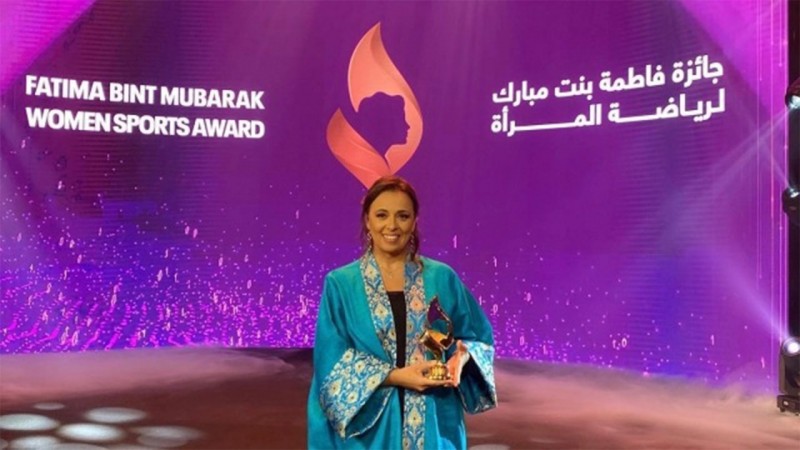
Sibaha is the director of the “Atlas Lionesses: Hear Them Roar!” documentary that honored Morocco’s Women’s Football Team.
The Moroccan journalist Aziza Nait Sibaha has won the sixth “Fatima Bint Mubarak” Women Sports Award, crowning her as the Arab world’s “best sports journalist.”
Presented on September 17 in Abu Dhabi, the award is the region’s first of its kind aimed at empowering women and celebrating their sports achievements.
The “Fatima Bint Mubarak” Prize was awarded to different winners in several categories, including sports management, training, research, sports sponsorship, and women of determination.
The value of the prizes totaled AED 1,700,000 ($462,824).
Different trophies were awarded to nine competitors, individuals and teams, including Egypt’s Giana Farouk Mahmoud, who was named the “best Arab sportswoman,” and Shamma Yousef Al Kalbani, who won the “best Emirati athlete” award.
Egyptian Ahmed Gouda won the prize for the “best young athlete,” while his compatriot Rehab Ahmed Radwan was awarded the prize for the “best Paralympic athlete.”
The “best coach” award went to Faris Al-Assaf from Jordan, while the Jordanian Women’s Football Association took the award in the “ Youth Development Programs” category.
The Egyptian Weightlifting Federation won the award for “best team,” while the “Emirates International Endurance Village” earned the prize for “best innovative sports initiative.”
The celebrated Tunisian tennis player Ons Jaber won the award for “Sports Personality of the Year in the Arab World.”
In her speech at the award ceremony, the representative of Fatima Bint Mubarak Ladies Sports Academy, Maryam Al-Mansouri, said that all categories of the award have seen strong competitiveness in recent months. This proves the talent, willingness, and ambition of Arab sportswomen, she stressed.
Al-Mansouri concluded: “We hope to see Arab women continue to take the lead in local and international sports events, and this award will contribute to the birth of new achievements in the Arab women’s sports career.”
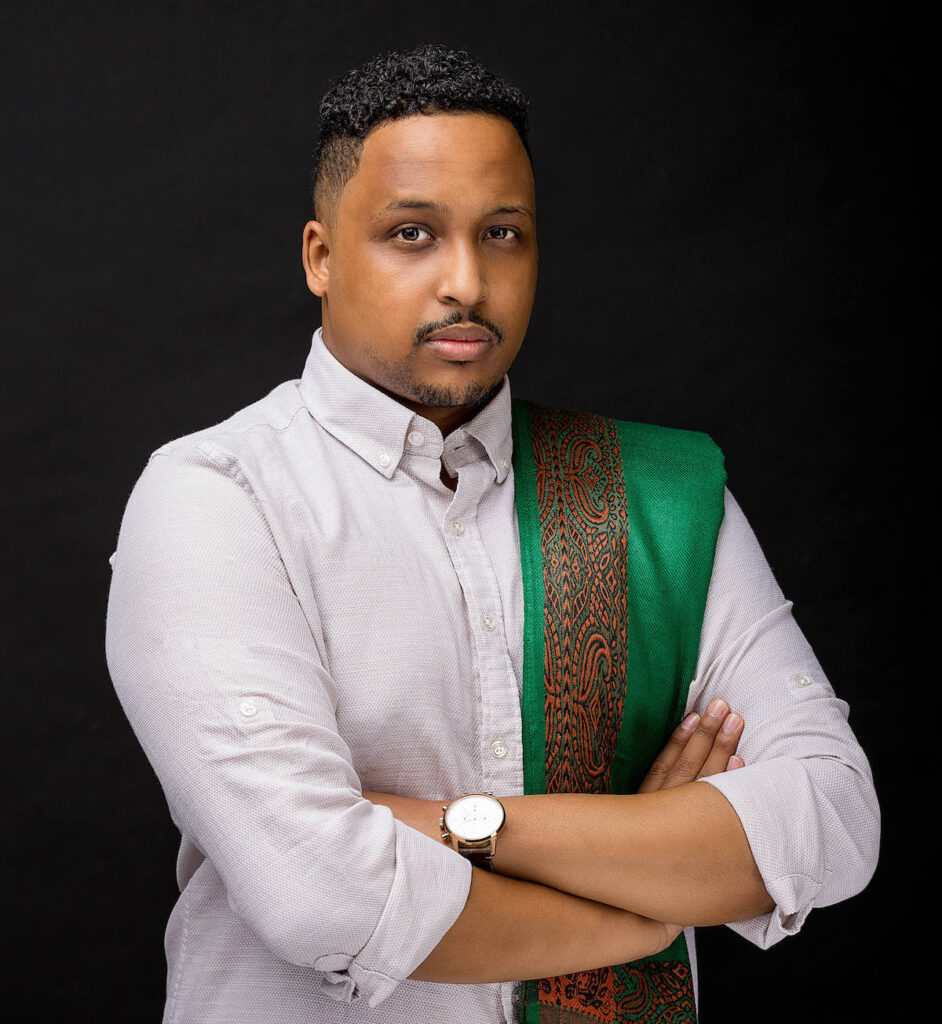
Architect Omar Degan reflects on the experience of designing a restaurant that celebrates local identity and cultural tradition in the Somali capital.
Think back to your childhood. Even if the memories are blurred, many of the flavours and aromas remain. The time we spent with parents and grandparents is often remembered in scents and spices — returning us to those moments, even after many years. Passed down through the generations, dishes and cuisines are vessels of culture and tradition and embodiments of the world’s diversity. Think of a plate of tagliatelle in Bologna, a freshly baked naan in New Delhi, the sweet taste of a chai bought in the streets of Mogadishu, or a mate tea savoured in Buenos Aires. Each is a powerful reflection of its place and people.
I think about architecture in the same way. Just as culture and tradition is conveyed through gastronomy, the built environment can be a physical representation of local knowledge, passed down through the generations. Like food, buildings can convey ways of knowing, rooted in working with local materials and resources, and adapting to climate and culture. In this way, architecture should celebrate and enhance the places it transforms. It’s a paradigm few would disagree with — yet one that’s rarely reflected in how we build.
A neo-colonial conception of modernity still shapes buildings around the world. It’s a flat, globalized approach in which a tower in Toronto is similar to one in Shanghai, and in which the glass used for a New York skyscraper can be nearly indistinguishable from the cladding of a residential building in Mombasa. This is an architecture that does not earnestly strive to understand places, people and traditions, but seeks to pursue a vision of universal modernity which finds its expression in a detachment from local knowledge.
So how can architecture celebrate cultural diversity? As a Somali practitioner — and principal of Mogadishu-based DO Architecture Group — my answer is always rooted in the local community. And appropriately enough, it’s reflected in a recent project that brought together food and architecture: In 2019, I designed a restaurant called Salsabiil in the outskirts of Mogadishu.
From outside, Salsabiil’s façade appears modest and simple — almost private and introverted. But like an old book cover with layers of dust on its surface, a surprise awaits inside. Crisp white walls, ceilings and floors greet visitors as they enter, with the room framed by plantings that hint at the once-abundant local greenery that’s been lost through decades of deforestation.
Mogadishu was once known as “The White Pearl of the Indian Ocean” for its white buildings, beautiful palm trees and stunning blue coastal waters. As a reminder of the city before the civil war, the restaurant interior is pure and clean, white and simple. Decorating this crisp white canvas, traditional Somali fabrics adorn the pillows and upholstery, including the textiles traditionally used for women’s dresses (a fabric called Halindi) and men’s macawiis sarongs.
The motif also extends to the ground floor restrooms, where fabric patterns traditionally associated with men’s and women’s clothing are used as door coverings. In lieu of formal signage — and the western gender binary that it reflects — the restrooms are rooted in the culture and tradition of Somalia. Regardless of age or social background, the designs are a signifier that every local person knows.
Throughout the restaurant, photos portraying scenes of daily life in pre-war Mogadishu guiding visitors through a visual journey of stories and nostalgia. Designing Salsabiil was also a personal journey through my own culture and identity. I explored and studied things that I’d never had the possibility to experience — from discussing old ways of building furniture with community elders to finding the appropriate pictures to frame, the creation of this space was an adventure.
As a resident of Mogadishu, my hope is that Salsabiil continues to serve as a local landmark and a meeting place for the community — and as a representation of the cultural identity of Somalia. As an architect, I hope it offers a modest case study of integrating architecture and culture, demonstrating the power of weaving cultural identity and social fabric into the built environment. I didn’t want to impose a design vision on the community; I wanted the community’s culture to become the main protagonist of the space. It’s a contemporary environment, but one strongly rooted in tradition.
Salsabiil’s case is not unique in the world. It doesn’t matter if you are in Somalia, New York City or the mountains of Peru. If we understand the knowledge embedded in culture, community and history, then we also understand how to make a humble but substantial architecture — an architecture that embraces its environment. On a global level, it translates to an embrace of the world’s cultural diversity. Like local cuisines, local designs are something to celebrate.
On Twitter, I’ve documented the tremendous variety of African architecture, chronicling how vernacular building styles offer a culturally rich and climate-sensitive response to local conditions. From humble residential interiors to major cultural landmarks, traditional structures across the continent present diverse alternatives to the ubiquitous — and carbon-intensive — concrete, glass and steel design introduced in the colonial period. And today, globally renowned African practitioners like Diébédo Francis Keré and Mariam Kamara are introducing traditional methods into contemporary practice, nourishing richer and more culturally responsive new architectural traditions.
My own practice follows the same principles. To me, designing for a better future means embracing locality and diversity. In this way, I hope the design process itself can — directly or indirectly — become a means to fight climate change, racism, inequality, poverty and much more. Of course, these are large and intractable problems, and their solutions lie far beyond the drafting table alone. But I know this much for a start: The architecture of the future is not made of glass and steel, but of community, culture and diversity.
Omar Degan is a Somali Architect, Principal and founder of DO Architecture Group, an office specialized in post-conflict reconstruction and cultural diversity. Born in 1990, Omar has dedicated his career in the study of emergency contexts and developing countries, focusing on the interactions between culture and architecture. In 2021, he was selected as one of the African Leaders by the Obama Foundation, recognizing his work in the post-conflict reconstruction of Somalia.
As Egypt promotes the trail of the Holy Family as a major tourist experience, Ahram Online republishes an account of stops and cities where the Virgin Mary, Joseph and Jesus found safety and shelter in the country.
“Now when Jesus was born in Bethlehem of Judaea in the days of Herod the King, behold, there came wise men from the east to Jerusalem, saying, Where is he that is born King of the Jews? For we have seen his star in the east, and are come to worship him.”
(Matthew 2:1-2)
———-
The story of the holy family’s journey from Palestine to Egypt has long been recorded with dedication by historians and authors around the world. Many look upon the journey as a mark in the history of Egypt, not merely a religious event. Egyptians look with fondness and pride on the passage of the holy mother and her child through the land of Egypt, and the fact that they found solace here.
The flight to Egypt
The Virgin Mary gave birth to Jesus in Bethlehem of Judaea in Palestine. Upon his birth, wise men preached to the people of the city, declaring that Jesus was the chosen one, and that, “according to prophecies” they had seen in the stars, he would become the next king of the Jews. Upon hearing the news, King Herod was overcome by terror at the possibility of losing his throne. He decided that killing Jesus was the only way to protect his royal status.
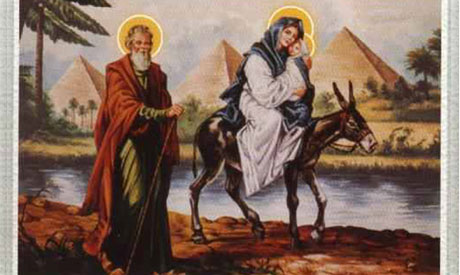
In a dream, Joseph, the carpenter, was ordered by God to escort Jesus and his mother to Egypt, where they would find refuge. Both Western and Eastern traditions agree that the method of transport most likely used by the holy family on their journey to Egypt would have been a donkey. In this situation, the Virgin Mary would have been seated on the donkey, holding the child Jesus in her arms and Joseph would have walked by their side, leading the way.
The holy family in Sinai
Keller writes in his book, The Bible as History (1955): “A day’s journey from Gaza brought the holy family to the ancient township of Jenysos, which is mentioned by Herodotus, the Greek historian.” Today, this village, which is part of the Gaza Strip, is known as Khan Younis. “The next town on the holy family’s route would have been Raphia (Rafah), the frontier town between the Gaza Strip and the province of Egypt.”
Continuing for another 44 kilometres, beyond Raphia, and after almost two days of traveling, the mother and child reach Wadi Al-Arish, a point at which they are safe enough to obtain food and shelter. The holy family passes by other towns in Sinai such as Al-Muhammadia and Al-Farma, located 35 kilometres east of El-Qantara City. Churches from the 5th and 6th century have recently been discovered in Al-Farma.
Route to the Nile Delta
The holy family continued on its trip to the Nile Delta, stopping at the city of Musturod, only 10 kilometres from Cairo. “The Virgin Lady”, a 12th century church, was found in the city.
Keller adds in his book: “The city of Musturod was again visited by the holy family on their return journey to Palestine.” After leaving Musturod and passing by Belbes, the holy family travel west to the Valley of Natroun, crossing the western branch of the Nile (the Rasheed branch).
The holy family in Cairo
The movie Journey of the Holy Family portrays the settlement of the blessed family in Al-Mataraya district near Ein Shams (Old Heliopolis). They find shade under a sycamore tree that came to be known as “Mariam’s Tree,” which has evolved into an engrossing attraction for religious tourists. The holy “Mayron oil,” or the “Chrism,” is nowadays prepared from the oil of the tree.
An ancient church was built in the area by the name of “The Virgin Mary” and is visited by people to this day. Paintings can be found inside the church, including maps of the holy family’s journey, as well as a statue of Jesus and his blessed mother guarded by Joseph the Carpenter.
In his book The Geography of Coptic Egypt (1989), French historian Amelenio narrates some of the stories passed down about the miracles of “Mariam’s Tree.”
One such story tells how “the French army sat by the tree, drank from its well and wrote their names on its stems.” It is believed that some of the wounded soldiers were healed by its oil. Amelenio adds: “Al-Matarya district became the most popular shrine in Egypt; a place where people flooded to for blessings and spiritual remedies.”
The second district visited by the holy family in Cairo was Al-Zeitun, where a church by the name “The Virgin Mary” was constructed in Toman Bey Street. It is said that appearances of the blessed lady were witnessed around the domes of the church up until recent years.
Another spot visited by the holy family was Zowela Avenue on at Been El-Soreen Street in El-Gamaleya district. An ancient church is found there with the same name, “The Virgin Mary”. It is considered one of the largest churches in Egypt and is distinguished by its basaltic style.
The holy family moved on to “Old Egypt” (Al-Fustaat) where they dwelled for a short time in a cave in Abi Serja’s Church, within the walls of the Roman Babylon fortress. “The cave is about 20 feet tall, 15 feet wide and does not have any windows,” as described by Amelenio, who believes the holy family’s stay in the cave did not exceed a week. After leaving Al-Fustaat, they moved to Maadi district and settled at the location where the Virgin Mary Monastery and church were later built by the Nile.
Amelenio explains that during Ottoman rule in Egypt, the church had a marina for boats allocated for the transport of people and soldiers traveling to and from Egypt. Some villages in Upper Egypt were visited by the holy family such as Assiut and Minya. In the book History of the Coptic Nation, author Samy Saleh records that the holy family took the same route on their journey back to Palestine. They first go to Maadi, passing through Old Egypt, then follow the road to Ein Shams, back to the city of Mustorod, and finally El-Arish, and from there to Gaza.
The trail of the blessed
At present, many Egyptian historians and archeologists are calling for a project to track each town or city visited by the holy family, so as to make it easier for tourists to visit the blessed spots, thus reviving the symbolism of the holy journey and its message of peace and goodwill to all men.
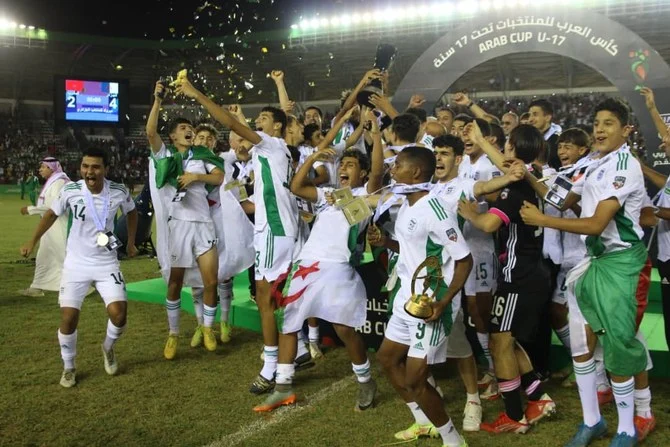
Algeria won the 2022 U-17 Arab Cup after beating Morocco on penalties in the final at Abdelkrim Kerroum Stadium in Sig on Thursday night, September 08th..
The match had ended 1-1 in front of 20,000 people, and extra time brought no further goals, before the host nation won 4-2 in the deciding shootout.
Morocco took the lead on 51 minutes through Mohammed Rachidi and were within seconds of winning the trophy, but Ismael Chehima scored a 90th minute equalizer.
In the shootout, Morocco missed twice to Algeria’s one, much to the delight of the large home crowd in attendance.
Algeria had reached the final by beating Saudi Arabia 5-4 on penalties after their semifinal clash had finished 0-0, while Morocco overcame Yemen 2-0.
source/content: arabnews.com (headline edited)
___________
Hosts Algeria have won the 2022 Arab Cup U-17. (Twitter: @UAFAAC)
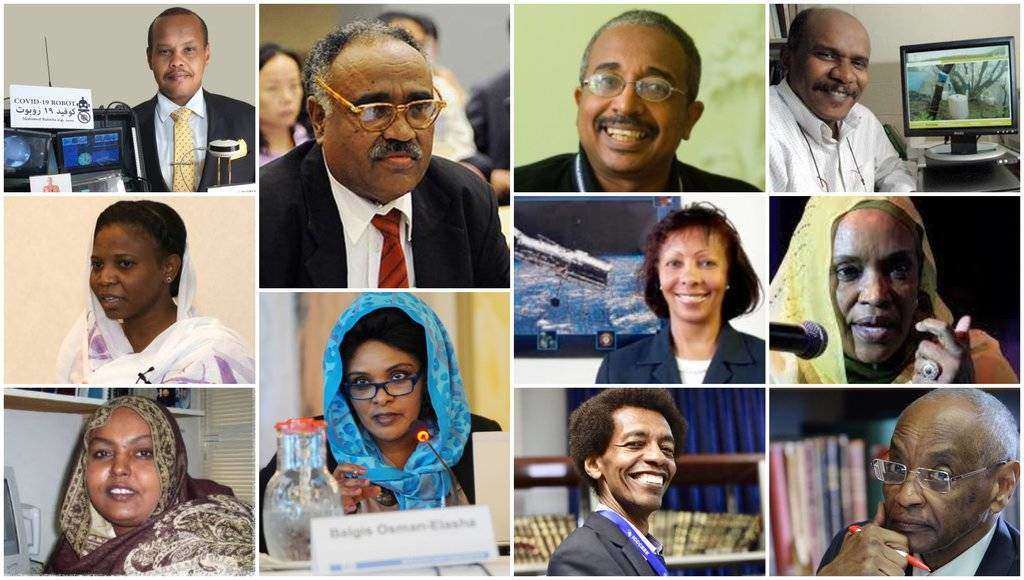
Scientists play one of the most significant roles in our world, most importantly today as we deal with a pandemic that has taken the lives of more than 300,000 people. Throughout history, there have been many accomplished and inspiring Sudanese scientists who have changed our understanding of the world around us with their research, discoveries and tangible impact.
Here are some internationally acclaimed Sudanese scientists in Sudan and across the world that you should know about:
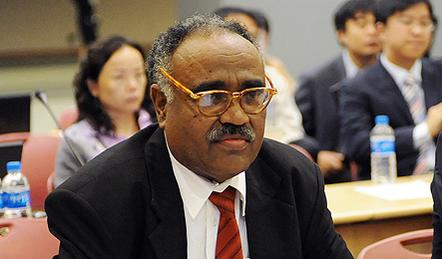
Ismail Abdel Rahim El Gizouli
Image source: Ismail El Gizouli
Ismail Abdel Rahim El Gizouli is an energy and environment specialist. He was member of the bureau of the Intergovernmental Panel on Climate Change (IPCC) from 2002 to 2008 and was re-elected for another term from 2008 to 2015. He then acted as interim chairman of the IPCC in 2015. In addition, he was the vice-chair of the Facilitative Branch of the Compliance Committee of the UNFCCC from 2005 to 2007 and was the Chair of the Facilitative Branch and Co-Chair of the Compliance Committee of UNFCCC from 2007 to 2009.
He received a Bachelor of Science in Mathematic and Physics from the University of Khartoum in 1971 and a Master of Science in Operation Research & Statistics from the University of Aston in Birmingham, UK in 1980.
El Gizouli worked as a freelancer and conducted many consultancies for the African Development Bank, World Bank, UNEP, FAO and African Energy Policy Research Network (AFREPRN). In 1998, he joined The Higher Council for Environment and Natural Resources in Sudan as a consultant on all UNDP-Government joint climate change projects.
He has participated in many international, regional and national conferences, meetings and symposiums in industry planning, sustainable development, energy, environment and climate change. In addition, he published many papers and is one of four authors of two energy-related books published by ZED Books England. He also contributed as Review Editor to many IPCC Reports including Safeguarding the Ozone Layer and the Global Climate System, Carbon Dioxide Capture and Storage (Main Report and Technical Summary), Working Group III contribution to the Fourth Assessment Report (Mitigation of Climate Change) and Fourth Assessment Synthesis Report.
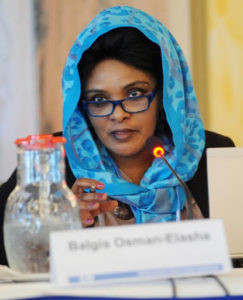
Dr Balgis Osman Elasha
Dr Balgis Osman-Elashais senior scientist at the forefront of global research on climate change. She has been a climate change expert at the Compliance and Safeguards Division at the African Development Bank (AfDB) since 2009. She holds a PhD in Forestry Science, a master’s degree in Environmental Science, and a Bachelor of Science with honour in Forestry and Agricultural Science. She has more than 17 years of experience in the field of climate change with a special focus on vulnerability and adaptation assessment related to African countries and the Middle East, emphasising the human dimension of global environmental changes.
Dr Osman-Elasha has reviewed a number of scientific papers to Elsevier and other highly reputable journals as well as a guest editor to a number of scientific publications. Before joining the African Development Bank, she was a senior researcher at the Higher Council for Environment and Natural Resources (HCENR)-Sudan. Her research focuses on vulnerability and adaptation assessment in drought-prone in Africa.
Dr Osman-Elasha is the winner of the UNEP Champions of the Earth Award for outstanding environmentalists and the winner of Lead Authors-Nobel Peace Prize. She is also a member of the International Panel on Climate Change (IPCC).
Professor Elfatih Eltahir
Professor Elfatih Eltahir is the Breene M Kerr Professor of Hydrology and Climate at Massachusetts Institute of Technology (MIT) with a focus on sustainable development in Africa. Elfatih earned a Bachelor of Science in civil engineering from the University of Khartoum, a Master of Science in hydrology from the National University of Ireland, and a Master of Science in meteorology and a Doctor of Science (Sc.D) in Hydroclimatology from MIT.
Professor Eltahir received the US Presidential Early Career Award in 1997. He is an elected fellow of the American Geophysical Union, and a member of the Sudanese National Academy of Science. He is a member of the Scientific Council of the International Center of Theoretical Physics in Trieste, Italy. In 1999, Professor Eltahir received the Kuwait Prize in Applied Sciences for his work on Climate Change, making him the youngest person to receive this prestigious prize, offered to scientists from Arab countries. In 2017, Professor Eltahir received the Hydrologic Sciences Award from the American Geophysical Union.
Dr Hiba Salah-Eldin Mohamed
Image source: iend.org
Dr Hiba Salah-Eldin Mohamed is a molecular biologist at the University of Khartoum. She studied zoology at the university, earning a bachelor’s degree in 1993, followed by a master’s degree in 1998. She then received her PhD from the University of Cambridge Institute for Medical Research (CIMR) in Cambridge, the UK in 2002. Her doctoral research, “The Role of Host Genetics in Susceptibility to Kala-azar in Sudan”, was under the supervision of Jenefer Blackwell, a well-known Professor of Molecular Parasitology. Mohamed remained at the CIMR as a postdoctoral fellow. She, along with Professor Blackwell, were later awarded the Wellcome Trust Research Development Award (2004-2007). She then moved back to Sudan and joined the University of Khartoum to be a professor in the Department of Molecular Biology.
Mohamed was awarded the 2007 Royal Society Pfizer Award for her research on understanding the genetics of kala-azar, which is also known as Visceral Leishmaniasis (VL). In 2010, Mohamed was appointed a Fellow of the Global Young Academy.
Dr Abdel Rahman’s breakthrough in growing sugar cane method involved taking cells from plant leaves, shoots or roots and growing them in a liquid culture to produce artificial seeds able to germinate. Her results and patented techniques garnered global attention and attracted interest from huge research and production companies across the world. The breakthrough led to cheaper and more productive cultivation in developing countries.
Dr Abdel Rahman passed away in 2015 at the age 59 in the UK after a fight against cancer.
Professor Mohamed H A Hassan
Image source: TWAS
Professor Mohamed H A Hassan is co-chair of the InterAcademy Partnership (IAP), a global network of science academies, and Chairman of the Council of the United Nations University (UNU).
He received his higher education in the UK from Newcastle University and University of Oxford. After obtaining his Doctor of Philosophy in Mathematics from the University of Oxford, he returned to Sudan to lecture at the University of Khartoum. He later became the Dean of the School of Mathematical Sciences at the university.
Professor Hassan has published several articles in Theoretical Plasma Physics and Fusion Energy; Wind Erosion, Dust and Sand Transport in Dry Lands; and Science and Technology in the Developing World.
He was the founding Executive Director of The World Academy of Sciences (TWAS), President of the African Academy of Sciences, and Chairman of the Honorary Presidential Advisory Council for Science and Technology in Nigeria.
He also serves on a number of boards of international organisations worldwide, including Global Change System for Analysis, Research and Training (START) in the USA; Bibliotheca in Alexandrina in Egypt; the Council of Science and Technology in Society (STS) Forum in Japan; the International Science Programme in Sweden; the Science Initiative Group (SIG) in the USA; and the Centre for International Development (ZEF) in Germany. He is a member of several merit-based academies of science, including TWAS; the African Academy of Sciences; Islamic World Academy of Sciences; Academia Colombiana deCiencias Exactas, ísicas y Naturales; AcadémieRoyale des Sciences d’Outre-Mer, Belgium; Pakistan Academy of Sciences; Academy of Sciences of Lebanon; Cuban Academy of Sciences; and Academy of Sciences of South Africa.
Mohamed Osman Baloola
Image source: Mohamed Osman Baloola’s Facebook page
Engineer Mohammed Osman Baloola is a Sudanese scientist and inventor who was named among The World’s 500 Most influential Arabs in 2012 and 2013 for his work on diabetes ‘remote monitoring and control system for diabetes symptoms’. He has been a Teaching Assistant of Biomedical Engineering at the Ajman University of Science and Technology since 2010. Baloola won a science and innovation award at the Arabian Business Awards 2011 in Dubai. In addition, he won AED40,000 (USD11,000) during a Sharjah Television competition for his invention of a remote monitoring and control system for diabetes patients via mobile phone.
Baloola received a Bachelor of Science in Biomedical Engineering from Ajman University of Science and Technology in 2009. He later joined Ajman University as a Teaching Assistant in the faculty of Engineering.
Dr Muntaser Ibrahim
Image source: Research Gate
Dr Muntaseer Ibrahim is a Sudanese geneticist and professor of molecular biology at the University of Khartoum, where he leads its Institute of Endemic Diseases, a research and training centre on endemic diseases in the university. His research focuses on human genetic diversity in Africa. Dr Ibrahim is a founding member of the African Society of Human Genetics and co-founded the Sudanese National Academy of Science (SNAS). He is also a member of The World Academy of Sciences. He has co-authored more than 180 original peer-reviewed research publications, including work published in Science, Proceedings of the National Academy of Sciences, Nature, Nature Genetics, and other major journals.
Dr Nashwa Abo Alhassan Eassa
Image source: Picuki
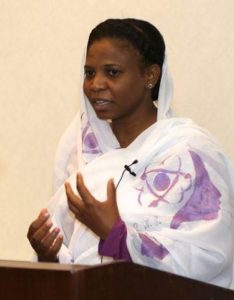
Dr Nashwa Abo Alhassan Eassa is an assistant professor of physics at Al-Neelain University in Khartoum. She received a Bachelor of Science in physics from the University of Khartoum, a Master of Science in nanotechnology and materials physics from Sweden’s Linköping University, followed by a PhD from Nelson Mandela Metropolitan University (NMMU) in South Africa.
Dr Eassa founded the non-governmental organisation ‘Sudanese Women in Sciences’ and is a member of Organization for Women in Science for the Developing World’s South African Institute of Physics. In 2015, Dr Eassa won the Elsevier Foundation Award for Early Career Women Scientists in the Developing World. She has been a candidate as Arab Countries Vice-President for Organization for Women in Science for the Developing World.
Professor Widad Ibrahim Elmahboub
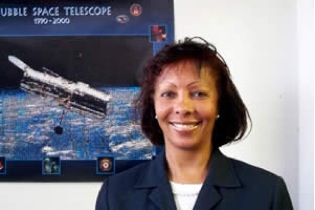
Professor Widad Ibrahim Elmahboub is a great scientist and astrophysicist. She has proved herself as a distinguished and competent scholar and scientist in her field. Having finished her college studies in applied mathematics and astrophysics in Sudan and Egypt, she was received a master’s degree in Engineering Physics by Wisconsin-Madison University, followed by a doctorate degree in astrophysical engineering.
Prof Elmahboub started her scientific career as a professor of astrophysics and remote sensing systems at Hampton University. Then she moved on to the research and analysis of planetary components at NASA with the main focus on enhancing the accuracy of satellite-based remote sensing imaging and data. Prof. Elmahboub has introduced a highly accurate computer-simulated mathematical model followed by the implementation of the algorithm and atmospheric correction method which enabled scientists and astrophysicists to obtain much more accurate and refined satellite images of Mars surface. Additionally, Prof Elmahboub has authored, co-authored and edited many articles in scientific journals and periodicals on remote sensing imaging technology, spectroscopy and simulated mathematical modelling.
Professor Sharief Babiker
Image source: ICCEEE’s Facebook page
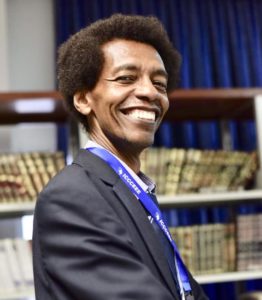
Professor Sharief Babiker is a professor in the Electronics Department at the University of Khartoum and a Chairman of the world’s largest professional association dedicated to advancing technological innovation and excellence for the benefit of humanities ‘IEEE_sudan’ Subsection.
Prof Babiker received his bachelor’s degree in electrical and electronic engineering at the University of Khartoum, a master’s degree in telecommunications and information systems obtained in Essex University, the UK, followed by a nanoelectronics PhD degree at Glasgow University, Scotland. By the end of 2000, Prof Babiker was working on submicron semiconductor devices research at the Nanoelectronics Research Centre, University of Glasgow as well as on aerospace projects at Thales Avionics, the UK.
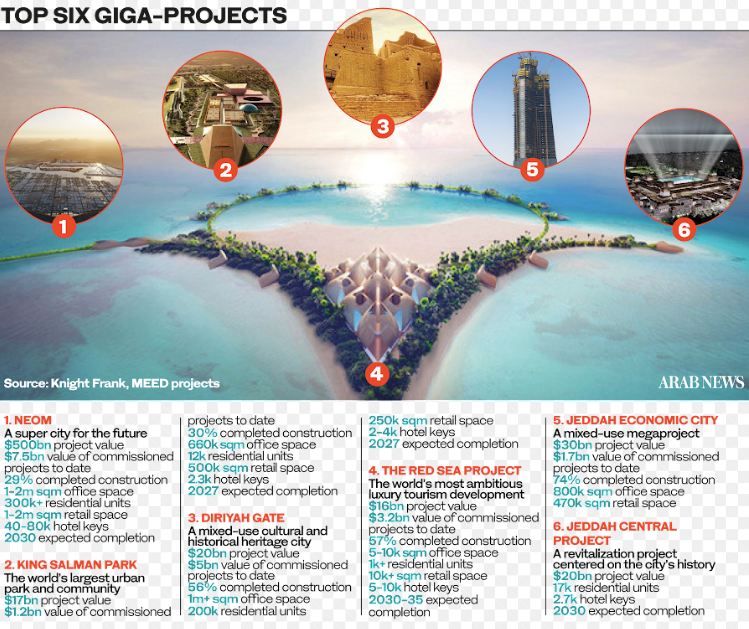
Following the launch of Saudi Arabia’s Vision 2030 in 2016, the Kingdom is on its way to becoming the world’s biggest construction site with a total investment of SR4.13 trillion ($1.1 trillion) in infrastructure and real estate projects, according to global real estate consultancy Knight Frank.
The real estate firm projected that Riyadh’s population will reach 17 million by 2030, up from about 7.5 million today. The city has unveiled real estate projects worth $104 billion since the Kingdom’s National Transformation Plan launch in 2016.
“Vision 2030 has lit the embers of excitement across the Kingdom, and with NEOM positioned as a crown jewel in the transformative plans, people are eager to be part of history,” Faisal Durrani, partner and head of Middle East research, Knight Frank told Arab News.
Saudi Arabia will easily become the largest construction site in history, with planned construction projects in the Kingdom being over 555,000 residential units, over 275,000 hotel keys, over 4.3 million square meters of retail space, and over 6.1 million square meters of office space, Durrani said.
The consultancy firm is currently monitoring 15 giga-projects in the Kingdom, many of them new standalone supercities, said Harmen de Jong, partner and head of real estate, Strategy& Consulting in the Kingdom.
NEOM is expected to house 9 million residents across 300,000 new homes once completed, making it the largest giga-project announced to date, Jong added.
Among 1,000 Saudi households surveyed, Diriyah Gate came third in popularity as a place to own a home, behind NEOM and The Red Sea Project.
NEOM is radically redefining urban living in resource-poor regions, Durrani said. At the same time, sub-cities like the Octagon, Trojena and the Line will set new benchmarks for luxury living in the area.
Around 30 percent of Saudi homeowners are prepared to spend more than $800,000 on a second home at NEOM. “Developers have their work cut out to satisfy this pent-up demand,” Durrani added.
De Jong said that the construction progress of part of the projects stands at 29 percent, with only $7.5 billion of subprojects being commissioned.
Riyadh’s rebirth
Another head-turning giga-project is the $20 billion Diriyah Gate which will give Riyadh 20,000 homes when it is completed in 2027, creating a city-sized historic district.
Knight Frank estimated that about $2.3 billion had been spent on Diriyah Gate’s construction.
“Not to be outdone, Riyadh’s repositioning as a commercial nerve center of the Kingdom is well underway. And businesses from the world over are already clamoring to be at the center of the Middle East’s second and much-needed global hub,” Durrani said.
Durrani added that the planned development of 2.8 million square meters of world-class office space could not come at a better time with Grade A office occupancy levels hovering around 97 percent across the city.
According to Knight Frank, an international airport worth $147 billion is also set to open shortly. Nearly 74 percent of the $200 billion national infrastructure investment goes toward the new airport.
“The city is also attracting a huge number of internal migrants, and with readily available support to get on the housing ladder, house prices are rising rapidly and currently stand some 26 percent higher than this time last year,” he said.
Well-being hub
The Kingdom is also improving and providing world-class urban environments for its residents with the $500 million Riyadh Sports Boulevard and the $23 billion Green Riyadh, planting 7.5 million trees in the Saudi capital to transform it into a green, vibrant metropolis.
It also extends to the 19,000 hospital beds planned for $13.8 billion, of which $8.6 billion will be spent in Riyadh Province alone.
According to de Jong, over 80 new educational institutions are being constructed for $82 billion.
“What’s more, healthcare, education and well-being sit at the core of the transformative plans, which will contribute to an extraordinary evolution in the Kingdom’s physical realm, making it unrecognizable from what we see today by the end of the decade,” Durrani said.
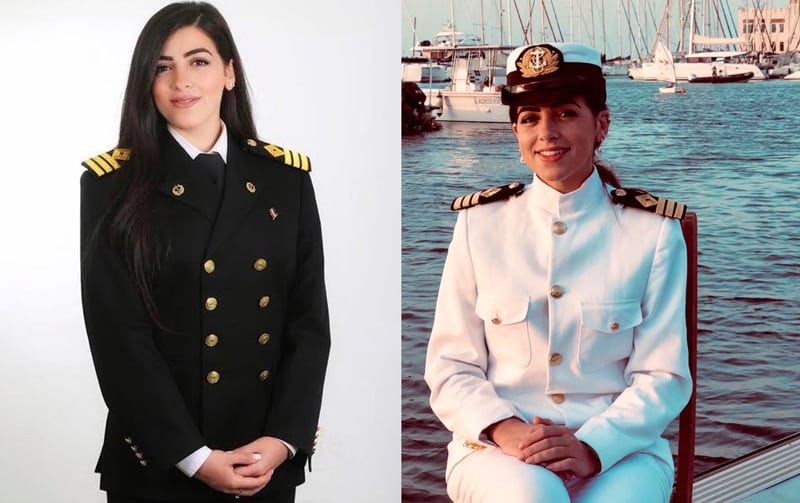
Navigating AIDA IV through new Suez Canal on opening day: Meet Egypt’s 1st female shipmaster.
Marwa El-Selehdar reveals how she became Egypt’s first female shipmaster and her journey to be part of the new Suez Canal celebrations.
As the government promoted the new Suez Canal as “Egypt’s gift to the world,” Marwa El-Selehdar, the country’s first and youngest female shipmaster, received the good news.
The 24-year-old would assist in navigating a naval vessel through the new waterway during the opening celebrations on 6 August, she was recently informed.
“I never thought that my dream would finally come true. I am going to be part of the inauguration as a second naval officer on the deck of the training ship AIDA IV,” El Selhdar told Al-Ahram newspaper.
El-Selehdar believes that her participation as the youngest and first Egyptian and Arab female shipmaster would bolster the image of the “civilised Egyptian women.”
“I was filled with joyous fear when I first learned about my participation.”
A 2012 graduate of the Arab Academy of Science, Technology and Maritime Transport (AASTMT) in the coastal city of Alexandria, El-Selehdar said that becoming a shipmaster was a childhood dream.
“In my first time ever training on board a ship, [My] Captain Abdel Hamid El-Qady and the rest of the crew made me feel at home,” El-Selehdar recalled.
Initially enrolled as a student in the maritime transport department at AASTMT, El-Selehdar was later encouraged to move to the marine navigation department at the school when she found out that there were no rules that prohibit females from studying to become shipmasters, she said in a television interview back in 2010.
Her determination to join the marine navigation department was further fuelled when she heard that a female student from the African Island of Djibouti won a scholarship to study at the department.
“I challenged myself and asked for a transfer from the maritime transport department to the marine navigation department. Amid a wave of refusals, this was the battle I had to fight in order to achieve my dream,” El-Selehdar said.
As she joined a male-dominated profession, El-Selehdar says that her mother encouraged her [as a woman] to continue on the path she chose.
Egypt has been preparing for grand celebrations for the opening ceremony of the new Suez Canal waterway on Thursday.
On Tuesday, nine swimmers who belong to the Egyptian Paralympics team – set to compete in the 2016 Rio de Janeiro Paralympics — crossed the new waterway holding a huge Egyptian flag.
Incoming visitors to the country had their passports stamped with “Egypt’s gift to the world” by Customs authorities.
After fulfilling her first dream of becoming a shipmaster, El-Selehdar is ready to achieve her second dream of living through the opening of the new canal.
“I always thought this project was a major one, but I never realised we would actually witness this remarkable and extraordinary event,” El-Selehdar said.
source/content: english.ahram.org.eg (headline edited) text / pix: marineinsight.com
Abu Dhabi National Oil Company (ADNOC) announced, today (September 01) that its first shipment of low-carbon ammonia has left the United Arab Emirates (UAE) bound for Hamburg, Germany. This is the first ever cargo of low-carbon ammonia to be shipped to Germany.
The demonstration cargo will be delivered to Aurubis, a leading global provider of non-ferrous metals and one of the largest copper recyclers worldwide, that has its headquarters in Hamburg. On arrival in Germany, Hamburger Hafen und Logistik AG (HHLA), one of Europe’s leading logistics companies will handle the cargo.
Produced by Fertiglobe, a partnership between ADNOC and OCI, at its Fertil plant in Abu Dhabi’s Ruwais industrial complex, the demonstration cargo is the first of several test cargoes sold to customers in Germany as ADNOC expands its strategic energy partnership across the hydrogen value chain. The cargo follows a number of similar low-carbon ammonia sales that have been made to customers in Asia. Aurubis plans to utilize the low-carbon ammonia as a feedstock in its wire rod plant, testing its application as an additional, lower-carbon energy source for industial ulilization. The hydrogen it contains has the potential to be a low-carbon energy alternative for the energy-intensive processes in multi-metal production.
This is another important milestone in the planned scale-up of hydrogen and low-carbon ammonia production capabilities in Abu Dhabi, where ADNOC is developing a new world-scale 1 million tons per annum low-carbon ammonia plant at TA’ZIZ, the chemicals, industrial services and logistics hub in the Ruwais Industrial Complex.
His Excellency Dr. Sultan Ahmed Al Jaber, UAE Minister of Industry and Advanced Technology and ADNOC Managing Director and Group CEO, said: “This demonstration cargo of low-carbon ammonia builds upon the longstanding bilateral relationship between the UAE and Germany and our growing partnership in clean energy. It highlights ADNOC’s expanding role as a trusted exporter of low-carbon fuels, as the UAE focuses on the industrial growth opportunities within the energy transition.
“Our collaboration with customers in Germany also underlines ADNOC’s ambitious growth plans for the production of clean hydrogen, and its carrier fuels such as ammonia, which will play a critical role in decarbonizing hard-to-abate industrial sectors. We are committed to accelerating and deepening private and public sector collaboration in clean hydrogen projects that will reduce carbon emissions and the carbon intensity of the energy that supports our everyday lives.”
Roland Harings, CEO of Aurubis, said: “As the most efficient and sustainable smelter network in the world, Aurubis provides metals that are key for megatrends such as renewable energies, electric mobility and digitalization and hence for decarbonization. To guarantee stable processes at our sites, we are expanding our portfolio of reliable energy sources and thus investing in the decarbonization of our production at the same time. This first trial shipment of low-carbon ammonia from ADNOC represents an important milestone in our long-term vision for hydrogen solutions that will help meet our decarbonization goals.”
Angela Titzrath, CEO of HHLA, said: “With its experience in port handling and logistic of containerized dangerous goods, its vast network of seaport terminals, hinterland connections and intermodal hubs across Europe, HHLA is pleased to facilitate the import of hydrogen and its derivates to Germany and Europe as part of the strategic energy partnership.”
H.E. Michael Westhagemann, Hamburg Senator for Economy and Innovation, said: “I very much welcome the fact that our international and national partners in business and the port are leading the way with these real-world trials for decarbonizing industry. We need these real-world findings and commitment to support the ramp-up of a Green Hydrogen Economy. Hamburg as an industrial location and as a European distribution port is a blueprint for this transformation and is therefore also in the German focus.”
During the visit of H.E. Dr. Robert Habeck, Germany’s Vice Chancellor and Federal Minister for Economic Affairs and Climate Action to the UAE in March 2021, ADNOC signed agreements with a number of German companies to explore opportunities for collaboration in low-carbon and renewable hydrogen derivatives.
Building on its position as an early mover in the production of hydrogen, ADNOC plans to significantly grow its hydrogen production in support of the UAE’s ambition to supply up to 25% of imported hydrogen in key global markets. Germany’s national hydrogen strategy expects an import demand for clean hydrogen of approximately 3 million tons per annum (mtpa) by 2030 and up to 15 mtpa by 2050 when, according to research from the Hydrogen Council, hydrogen could meet up to 18% of the world’s energy demand.
Low-carbon ammonia is the most promising at-scale hydrogen carrier and potential clean fuel for a wide range of applications, including transportation, power generation and industrial, including steel, cement, and fertilizer production. It is made from nitrogen and clean hydrogen derived from natural gas feedstocks, with the carbon dioxide by-product from hydrogen production captured and stored.
Collaboration with end-user Aurubis and logistics company HHLA underscores expanding role of ADNOC as a trusted exporter of low-carbon fuels as the UAE focuses on industrial growth opportunities within the energy transition
ADNOC plans to significantly grow its hydrogen production in support of the UAE’s ambition to supply up to 25 per cent of hydrogen demand in key global markets.
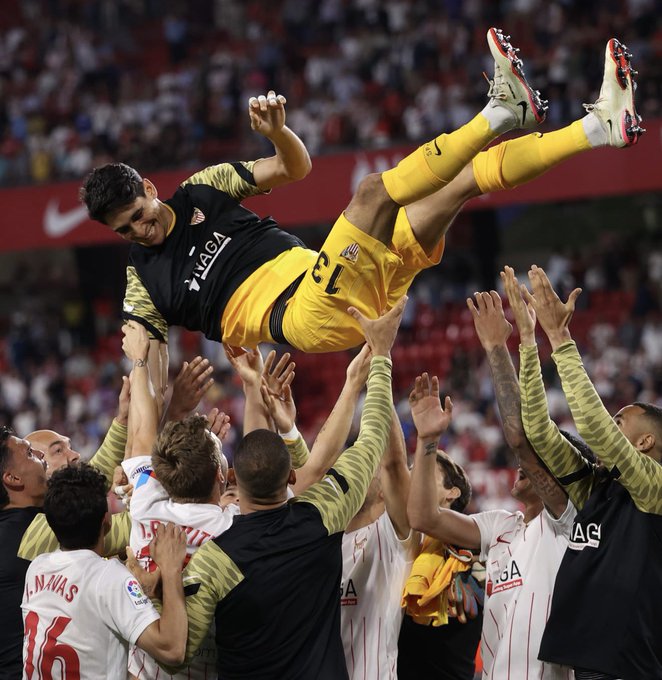
Moroccan goalkeeper Yassine Bounou, who plays for Sevilla FC, has become the first ever Arab goalkeeper to win the Spanish football league’s best goalkeeper award, the Ricardo Zamora Trophy.
Morocco and Sevilla FC goalkeeper Yassine Bounou has made history as the first Arab goalkeeper to win the Ricardo Zamora Trophy, which is awarded to the Spanish football league’s best goalkeeper of the season.
The coveted trophy, which has been awarded since 1958, is handed to the La Liga keeper with the lowest goals-to-games ratio, having played a minimum of 60 minutes in at least 28 matches.
Bounou, who has played for Sevilla since 2019, conceded 24 goals in 31 matches during the 2021-2022 season, finishing ahead of Real Madrid and Belgium goalkeeper Thibaut Courtois who conceded 29 goals, while 32 goals were scored against Real Sociedad’s Alex Remiro. Bounou also received 13 clean sheets, meaning that no goal was conceded in those matches.
The Morocco international first joined Sevilla on loan for a year, before signing a permanent four-year contract with the Andalusian giants in 2020.
The goalkeeper, who is nicknamed ‘Bono’ by football fans, is also the first ever Sevilla player to win the award.
He also became the second African to win the prize after Cameroonian Jacques Songo’o, who played for Deportivo La Coruna and was awarded the trophy in 1997.
Bounou’s efforts also lead to Sevilla’s fourth-place finish in La Liga, enabling the team to qualify for next season’s UEFA Champions League, alongside Spanish heavyweights Real Madrid, Atletico Madrid and Barcelona.
Canada-born Bounou, who has earned 40 caps for the Moroccan national team, will be one of the Arab players to watch in this year’s FIFA World Cup in Qatar, where the Atlas Lions will be making their sixth appearance.
source/content: english.alaraby.co.uk (The New Arab) (headline edited)
QatarEnergy will build the world’s largest “blue” ammonia plant, which is expected to come online in the first quarter of 2026 and to produce 1.2 million tons per year, Saad Al-Kaabi, chief executive and state minister for energy, said .
While conventional ammonia production emits CO2 if it is made with fossil fuel, during the production of blue ammonia any carbon dioxide generated is captured and stored.
The facility, the Ammonia-7 project, will cost $1.156 billion to build and capture and sequester 1.5 million tons of carbon dioxide a year through the manufacturing process, he added.
“We see an increasing interest in using ammonia as fuel, driven by the need to reduce CO2 emissions in the energy ecosystem,” Al-Kaabi said.
Ammonia is mainly made from hydrogen produced from natural gas and nitrogen from the air. It does not emit CO2 when burned.
It is principally used as a raw material for fertilizer and chemicals, but it can also be used as a low-carbon fuel in power stations.
Thyssenkrupp and Consolidated Contractors Co. are the contractors of the project.
source/content: arabnews.com
___________
While conventional ammonia production emits CO2 if it is made with fossil fuel, during the production of blue ammonia any carbon dioxide generated is captured and stored.