Egyptian Filmmaker Marianne Khoury Awarded France’s Legion of Honour : January 2022

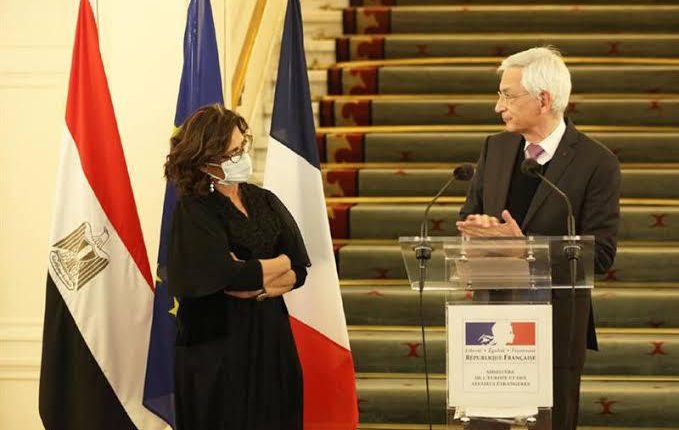
Egyptian Producer and director Marianne Khoury was awarded France’s Legion of Honour in the degree of Chevalier (Knight).

The award was given to Khoury by the Ambassador of France to Egypt in Cairo Marc Baréty. The Legion of Honour is the highest French decoration and one of the most famous in the world. For two centuries, it has been presented on behalf of the Head of State to reward the most deserving citizens in all fields of activity.

It is highest French decoration, one of most famous in world.

Born in 1958, Khoury is a graduate of economics from both Cairo and Oxford Universities. She has directed and produced films on controversial issues such as identity, memory, and social exclusion. Khoury, who is the niece of late great Egyptian director Youssef Chahine, is a managing partner in prominent Cairo-based Misr International, one of Egypt’s production companies, which Chahine founded.

She is also a co-founder of the Panorama of The European Film. She directed her first documentary, ‘The Times of Laura’ in 1999. She then worked on ‘Women Who Loved Cinema’ in 2002 and ‘Shadows’, which tackles personal and social perceptions of the mentally ill.

Shadows premiered at the Opening of the Venice Film Festival in 2010 and won the FIPRESCI award at the Dubai Film Festival of the same year and the Italian television Rai Award in 2011 at the International Festival of Mediterranean Documentary and Current Affairs Films.

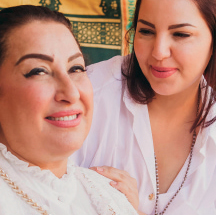
She also produced and directed ‘Let’s Talk’ in 2019, which received the Audience Award at the 41st Cairo International Film Festival. Very personal in character, the film is a conversation between her and her daughter about ordinary things in life: Death, life, illness, identity, marriage, etc.

source/content : dailynewsegypt.com

__________

________

EGYPT

Dubai Bags Record for World’s Largest Inflatable Water Park : January 2022

AquaFun, anchored in the Gulf waters alongside the JBR beach, has received a Guinness World Record certificate for being the world’s largest inflatable water park.

Launched for the first time in 2016, AquaFun has now expanded to three times its original size to reach 42,400 square metres. It currently forms the words ‘I love (heart symbol) Expo 2020 Dubai’, which can be seen from aircraft flying into Dubai.

It features over 72 obstacles and operates all year round. Prices start from Dh155 for an all-day pass ticket.

Ahmed Al Khaja, CEO of Dubai Festivals and Retail Establishment (DFRE), said: “To secure another world record for Dubai during such an important event in our calendar, the Dubai Shopping Festival, is a moment of real pride for the city.

Ahmed Ben Chaibah, CEO & Founder of AquaFun, said the aim with the project five years ago was to enrich the Dubai Marina and JBR areas’ offerings.

Emirate bagged yet another world record in the final week of its shopping festival.

source/content: khaleejtimes.com

____________

___________________________________________

DUBAI, UNITED ARAB EMIRATES (U.A.E)

‘Doum’, Moroccan Handbag Brand Founded by Samira and Yasmine Erguibi

Doum was founded by mother-daughter duo Samira Madrane and Yasmine Erguibi in 2017.

 Samira and Yasmine Erguibi are the Moroccan mother-daughter duo who have made it their mission to make a positive impact in fashion. The designers are playing an active role in promoting sustainability and ethical practices with their accessories label, Doum.

Each design in their bag line is handmade by underprivileged women. The totes, clutches and pouches support fair trade and sustainable practices to preserve local artisanal traditions and invite local women from rural areas around Marrakech to provide for their families via the production of the bags, according to the label’s manifesto.

The brand takes its name from the Moroccan palm leaf, which is collected, pruned and then woven by the artisans. “It is a nod to our culture, heritage and craftsmanship,” explained Yasmine of the decision to name the label Doum.

Today, Doum operates its own cooperative in Morocco, Doum For Women, which currently employs 235 women artisans.

Doum For Women is the first basketry cooperative in Morocco to have obtained SEDEX certification, meaning that the organization ticks all of the boxes of ethical business practices.

source/content: arabnews.com

_________

pix: femmesdumaroc.com

____________

MOROCCO

International Prize for Arabic Fiction 2021: Jordanian Writer Jalal Barjas named Winner

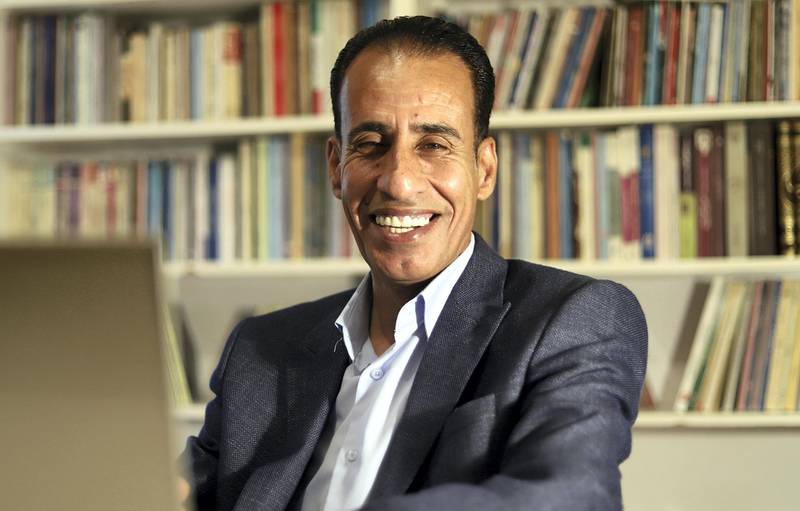
Jalal Barjas (aka) Jalal Barjes. Author. Writer. Poet. Novelist

Jordanian writer Jalal Barjas has won the International Prize for Arabic Fiction for his work Notebooks of the Bookseller.

The novel, published by The Arabic Institute for Research and Publishing, was named this year’s winner of the prize during an online ceremony.

Besides receiving a monetary prize of $50,000, Barjas will also be given funding towards securing an English translation of his novel.

Notebooks of the Bookseller is set in Jordan and Moscow between 1947 and 2019. It tells the story of Ibrahim, a bookseller and voracious reader, who loses his shop and finds himself homeless and diagnosed with schizophrenia. He begins to assume the identity of the protagonists of the novels he loved and commits a series of crimes, including burglary, theft and murder. He then attempts suicide before meeting a woman who changes his perspective on life.

Born in 1970, Barjas is a Jordanian poet and novelist who worked in the field of aeronautical engineering for several years. He is currently head of the Jordanian Narrative Laboratory and presents a radio programme called House of the Novel. He has also written articles for Jordanian newspapers and headed several other cultural organisations.

Barjas’s published work includes two poetry collections and four novels. His 2012 short story The Earthquakes won the Jordanian Rukus ibn Za’id ʻUzayzi Prize.

His 2013 novel Guillotine of the Dreamer won the Jordanian Rifqa Doudin Prize for Narrative Creativity in 2014. His Snakes of Hell won the 2015 Katara Prize for the Arabic Novel in the unpublished novel category, and was published by Katara in 2016. His third novel, Women of the Five Senses, was longlisted for the Ipaf in 2019.

Notebooks of the Bookseller was chosen by the Ipaf judges from a shortlist of six novels by authors from Algeria, Iraq, Jordan, Morocco and Tunisia.

The shortlisted works were all published between July 2019 and August 2020 and included The Eye of Hammurabi by Abdulatif Ould Abdullah, The Calamity of the Nobility by Amira Ghneim, The Bird Tattoo by Dunya Mikhail, File 42 by Abdelmajid Sabbath and Longing for the Woman Next Door by Habib Selmi.

The shortlisted authors will receive $10,000 each.

source/content: thenationalnews.com

___________

Jordanian writer Jalal Barjas has been named the winner of this year’s International Prize for Arabic Fiction 2021. Courtesy Shaama Oubayda Mahfoud / pix: thenationalnews.com

__________

JORDAN

Arab Superstar Latifa El Arfaou to Lead Spotify’s First-Ever Female-Only Masterclass

Latifa Bint Alaya El Arfaou. Singer. Actress.

Music industry hopefuls, it’s time to update your calendar because Spotify is presenting its first-ever Sawtik female-only masterclass.

And Arab superstar and Godmother of Sawtik, Latifa Bint Alaya El Arfaoui, is set to host a special guest spot to share her story. The special installment, which supports the region’s emerging female artists as part of the Sawtik initiative.

The Tunisian superstar, who has partnered with the world’s most popular audio streaming service to be a mentor to exceptional up-and-coming talents from countries like UAE, KSA, Lebanon, Syria, Palestine, Egypt, Tunisia, Algeria and Morocco, will be offering creators valuable tips and advice.

Latifa, who started her career in the 80s, told “Vogue Arabia.” “My journey hasn’t happened without its challenges and while I enjoy a successful career, there are many others still waiting for the right opportunity to shine.”

The singer and actress added Sawtik offers female artists an effective platform to reveal their talent and build a connection with audiences who will love their music across all genres.

Sawtik, which means “your voice” in Arabic, was launched as Spotify’s inaugural women-in-music initiative for the Middle East and North Africa region. The initiative, unveiled with 16 emerging talents including Almas, Jarra and Feluka, is also backed by other influential women in the music business. Introduced the same week that Apple launched its New Artists: Middle East playlist.

source/content: abouther.com

___________

pix: abouther.com

___________

TUNISIA

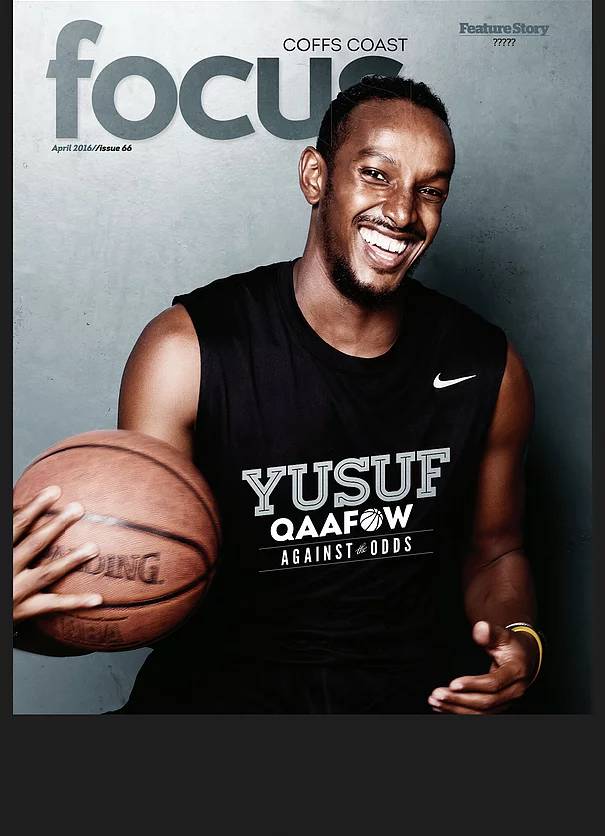
Yusuf Qaafow, Somali-Australian Pro Basketball Player

Yusuf Qaafow (born June 19, 1987) is a Somali professional basketball player.

At a professional level, he played for the Melbourne Tigers and then the Brisbane Spartans from 2009 until 2017, and has since been a basketball coach running his own academy called the Hard Knockz Academy.

Abdi was born in Somalia and moved to Australia where he began playing basketball at the age of 12.

He opted to represent his country of birth, Somalia national basketball team where he was born in 1987.

As a captain of the Somalia national football team throughout the 2010s, he has served as the nations longest served team captain thus far.

 Qaafow has claimed that he aims to take Somalia back to its team high of 1981 when it won the bronze medal at FIBA Africa, or its stable period in 1992 when Somalia last took part at FIBA Africa before the imminent absent spell for many years thereafter.

source/content: en.wikipedia.org

___________

pix: hardknockzacademy.com.au

_________________________

AUSTRALIAN / SOMALI

Dr.Sara Hegy Ahmed Awarded for Cancer Research in Germany

Sara Hegy Ahmed, Ph.D

Researcher Sara Hegy Ahmed was awarded for her study on sex hormone signalling, and how they can influence the regenerative capacity of intenstinal cells.

Egyptian scholar Sara Hegy Ahmed has been awarded the Rictzenhain Doctoral Prize in recognition for her achievements in cancer research in Germany.

The prize is given out every two years to researchers with exceptional dissertations in cancer research at the University of Heidelberg, or at a research institute in the town of Heidelberg.

Motivated by the loss of a young relative to cancer, Ahmed knuckled down to receive her bachelor’s degree in pharmacy and biological sciences at the German University in Cairo, before completing her graduate studies in cancer research at the University of Heidelberg.

During her PhD research at the German Cancer Research Center, Ahmed studied the way sex hormones signalling can influence the regenerative capacity of intenstinal cells. According to her research, stem cells of non-sex organs can be affected by sex hormones – drawing a link between high concentrations of sex hormones and the development of tumors in the digestive system.

Ahmed currently works as a Transformational Coach, helping others achieve their own life goals.

source/content: cairoscene.com

__________

________________________

GERMAN / EGYPTIAN

Sudanese Artist Mubarak Hemoudi Depicts the Heritage of Sudan From the U.S.

The Sudanese artist Mubarak Hemoudi, who is 77, works in the United States, but his paintings reflect his experiences in Sudan, including scenes of violence he witnessed in his youth and the daily suffering of residents, and especially women, of Sudan’s Darfur region.

Born in Sudan’s North Kordofan state in 1944, Hemoudi moved between the country’s southern and northern regions during his youth and now divides his time between the United States and Sudan. “I get inspired by images from Khartoum and come to America to paint,” he said.

Hemoudi recently displayed a series of his paintings in Northern Virginia in an exhibition titled “African Art and Tales from Sudan.”

Through 38 images of Darfuri women—some from the Baggara tribes in western Sudan, some from the Dinka tribes in the south and other groups—the exhibition takes visitors on a time journey to the past of Sudan’s rural regions.

Art as a Call for Freedom.

His art is influenced not only by the violence he witnessed during his youth and the tyranny of tribal leaders over peoples’ lives, but also by his experience of the patterns of daily life and interactions among the residents of Sudan’s various regions.

He explained that Sudanese art exists more in the natural environment than in urban areas such as Khartoum, which was influenced by imported European cubist and abstract art movements. All regions of Sudan are saturated with African art with an Arabic touch as a result of the first Arab immigration to Sudan’s western and northern regions, he said.

The Influence of Kushite Art

Hemoudi studied fine arts at the Faculty of Fine Arts at the University of Khartoum, which was established in the mid-1940s, before moving to Germany twice to study textile printing and color science. These skills later helped him improve his paintings’ aesthetics and master the use of lines.

In most of his works, Hemoudi draws on elements of Kushite art, one of the most famous types of African design and calligraphy used in drawings and decorations in many African countries.

The history of Kushite art goes back to Kush, a rich African civilization that originated in northern Sudan near the border with Egypt, nearly 5,000 years ago.

Kushite art is an art that stands on its own, Hemoudi said. “It is the origin of the existing arts and styles. It is hard to find an analogue of it in any other region,” he said. Its styles, he added, are characterized by a mix of simplicity, sophistication, and complexity.

The plastic arts in Sudan are a very old practice, according to Issam Abdel-Hafeez, a professor at the College of Fine and Applied Arts at Sudan University of Science and Technology.

“It was affected by the local scenery-rich environment, as well as the presence of Arab and African culture in its regions, which was reflected in the diversity of artists’ use of tools, such as the presence of fifty-one written languages other than Arabic,” Abdel-Hafeez said in a telephone interview.

source/content: al-fanarmedia.org

_________

_________

SUDAN

Mounia Aram, Moroccan-French Animator Wins Cultural Innovator Award : January 2022

Moroccan-French animator Mounia Aram won the Cultural Innovator Award at the 2022 Black in Animation Awards Show.

The award testifies to Aram’s work in further developing animation media across the African continent while using experimental methods and concepts in her work to tell a unique story.

Aram received her award from a juried committee of professionals from Disney, Netflix, and Nickelodeon.

The Black in Animation Awards state  “The Cultural Innovator Award is given to the person who has centered the voices of black people in animation in an innovative way as a content creator or influencer.”

Born in Casablanca and raised in France, Aram studied oriental languages at the National Institute for Oriental Languages and Civilizations (INALCO) in Paris before joining ShoPro Entertainment, a company specializing in Japanese animation-based in San Francisco. 

The animation specialist founded the Mounia Aram Company in 2019, a distribution and production company specializing in animation and African culture. Aram has accumulated nearly 20 years of experience in the animation field.

Her work also consists of advising companies in their distribution and development strategies across the African continent as well as mentoring young African talents  in animation.

In 2020, Aram was elected a member of the International Academy of Television Arts and Sciences in charge of the Emmy Awards. She also joined the Geena Davis Institute last year as Africa council chair.

source/content: moroccoworldnews.com

_______________

________________________

FRENCH / MOROCCAN

Winners of 16th Sawiris Cultural Awards, Egypt : January 2022

The Sawiris Foundation for Social Development announced the winners of the 16th Sawiris Cultural Award.

This Edition is considered the largest in the history of the award in terms of the number of submitted works.

A total of 1263 literary works were submitted to various fields of the award.  

This year, 12 young and established writers received awards for their distinguished work in the fields including novel, short story, screenplay, playwriting, and literary criticism. 

Dr. Iman Yahya won the best novel award – under the established writers’ contest – for her novel ‘Al-Zawga Al-Mexicia’ (The Mexican Wife), published by Dar Al-Shorouk.

Meanwhile, the award for best short story collection, written by an established writer, went to Samir El-Fil for his collection ‘Autobis 77’ (Bus Line 77) that was published by the Egyptian General Book Authority. 

The award for best novel written by a young writer went to Ahmed Al-Fakharany for his novel ‘Bayasat Al-Shawam’ published by Dar Al-Ain. The same novel also won the translation award, which was added to the award’s branches this year in an attempt to encourage contemporary literary excellence and introduce creative young writers to readers outside the borders of the Arab region.

As for second-place in the young writers’ novel contest, the award went to Ahmed Al-Morsi for his novel ‘What Remains of the Sun’ published by Dar Al-Bashir. 

The first-place prize for best short story collection made by a young writer went to Gilan Al-Shamsi for her short story collection ‘As if the story is missing’ published by Al-Ain Publishing House.

In second-place, Muhammad Faraj won with his short story collection ‘Long Term Plans’ published by Dar Al-Ain. 

Regarding the best screenplay award, established writer Samar Taher won for her screenplay of the movie ‘Al-Nazeel’ (The Inmate), while Paula Tadros Thabet won the young writers’ contest for his screenplay of ‘Abdullah’. 

In the field of playwriting, the first-place award went to Faisal Rizk for his play ‘Hakawy Al-Aragouz’ (Tales of the puppet), while second-place went to Mina Bebbawy for his play ‘Bernatanya’. 

As for the award for best submitted work in the field of literary criticism, it was awarded ex aequo to Sameh Fayez for his book ‘Stories about Reading’ published by the Egyptian-Lebanese House and to Professor Abdel-Nasser Hilal for his book ‘The Visual Turn – from Text to Speech” published by the Egyptian General Book Authority. 

In order to encourage young writers, financial rewards are also granted for the shortlisted nominated work. 

Granted in the novel contest: ‘Random Arrangements’ by Dunya Kamal Al-Qalash, ‘Ahmar Larang’ (Blood Oranges) by Charles Akl, and ‘Camelia’s Ghosts’ By Nora Naji. 

With regard to the short story collection, the grants went to: ‘Sleep Thieves’ by Amjad Al-Sabban, ‘Visions of the Holy City’ by Omaima Subhy, and ‘A Report on Al-Refaeia’ by Muhammad Al-Fuly. 

In the screenplay category: ‘The Ghazala who fled the schoolyard’ by Ahmed Ihab Abdel-Warith, ‘Where Did Shaker Abaza Go?’ by Mahmoud Hassan Abdel-Alim, ‘Hamlet’ by Al-Sayed Abdel-Nabi, ‘Kilo 35’ by Mahmoud Ahmed Abd-Rahman. 

source/content: english.ahram.org.eg

__________

________

EGYPT