Arabs & Arabian Records Aggregator. Chronicler. Milestones of the 25 Countries of the Arabic Speaking World (official / co-official). AGCC. MENA. Global. Ist's to Top 10's. Records. Read & Enjoy./ www.arabianrecords.org
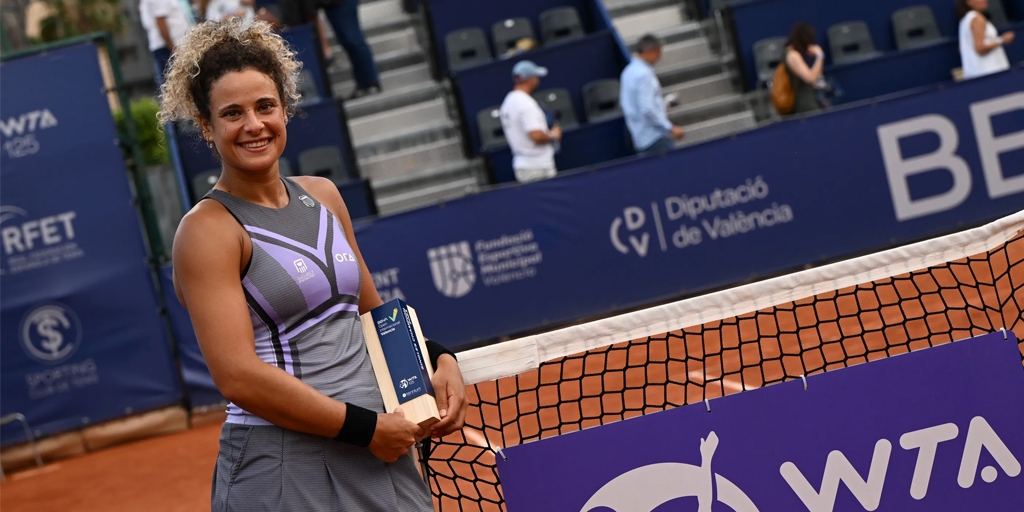
Egypt’s Mayar Sherif continued her dominant rise in the tennis world at the BBVA Open Internacional de Valencia in Spain, winning the Women’s Tennis Association (WTA) 125 title and leaping into the Top 35 world singles ranking for the first time.
This is also the tennis champion’s second consecutive WTA 125 title, having clinched the WTA 125 Makarska Open trophy in Croatia on 11 June.
Sherif enjoyed a winning streak throughout the tournament, eventually defeating Spain’s Marina Bassols Ribera 6-3, 6-3. With this victory, Sherif, now ranked 31st in the world, maintained her remarkable record in WTA 125 finals, extending it to 6-0.
“I came into this tournament with great momentum from Makarska, and I wanted to capitalize on it,” expressed Sherif after her dominant display. “Right from the beginning of the tournament, I felt very comfortable, and I believe that reflected in my straight-set victories throughout.”
With an astounding 9-place leap to 31st place in the singles world ranking, Sherif is now the highest-ranked Egyptian tennis player in history – surpassing the legendary Ismail El Shafei’s career-high of 34th place.
We are excited to announce the winners of the 2023 edition of the BCI Middle East Awards.
The BCI Middle East Awards recognise the outstanding contributions of Business Continuity, Risk and Resilience professionals and organizations living and operating within the Middle East region. All winners will be automatically shortlisted for the BCI Global Awards 2023, which will be held at BCI World Hybrid 2023.
Most Original Exercise Programme:
Crisis Management and Business Continuity Team, ADNOC Offshore
Continuity and Resilience Professional (Private Sector):
Abdulla Mohammed Naqi MBCI
Continuity and Resilience Professional (Public Sector):
Khaled Hassan Abouzeid
Most Effective Recovery:
e& Group
Continuity and Resilience Newcomer:
Hassan Abdulameer Ali Yusuf
Continuity and Resilience Team:
Bank ABC
Continuity and Resilience Provider (Service/ Product):
Mohamed Al-Fayed had waged a war of words with the British royal family after his son was killed in a car accident alongside Diana, Princess of Wales.
Mohamed Al-Fayed was an outspoken and successful Egyptian business tycoon. His death comes almost 26 years to the day after the car crash in Paris that killed his eldest son, Dodi, and Diana, Princess of Wales, on August 31, 1997.
Here are five points on the self-made billionaire:
1.Far from being the scion of a dynasty of cotton and shipping barons he made himself out to be, Fayed was the son of a poor Alexandrian schoolteacher who, after an early venture flogging lemonade, set out in business selling sewing machines.
2.He later had the good fortune to start working for the arms dealer Adnan Khashoggi, who recognised his business abilities and employed him in his furniture export business in Saudi Arabia. He became an advisor to the Sultan of Brunei in the mid-1960s and moved to Britain in the 1970s.
3.Fayed lived most of his life in Britain, where for decades he was never far from the headlines. But to his frustration, he was never granted UK citizenship or admitted into the upper echelons of British society.
4.The defining tragedy of Fayed’s life came in August 1997, when Dodi and Princess Diana died when a car driven by one of Fayed’s employees, chauffeur Henri Paul, crashed in a Paris road tunnel. For years afterwards, Fayed refused to accept that the deaths were the result of speeding and intoxication by Paul, who also died. The distraught Fayed accused the royal family of being behind the deaths and commissioned two memorials to the couple at Harrods.
5.According to Forbes list of the world’s billionaires, Fayed was worth $1.9 billion in November 2022. With a business empire encompassing shipping, property, banking, oil, retail, and construction, Fayed was also a philanthropist whose foundation helped children in the UK, Thailand, and Mongolia.
source/content: ndtv.com (headline edited)
_______________
Mohamed Al-Fayed was born in Alexandria and was the son of a schoolteacher.
Acquisition marks company’s first foray into UK market.
Abu Dhabi-based PureHealth has signed an agreement to buy British hospital operator Circle Health Group for 4.41 billion UAE dirhams ($1.2 billion), Emirates News Agency reported.
PureHealth is the UAE’s largest healthcare provider and the acquisition marks its first foray into the UK market.
According to the report, Circle Health Group has the UK’s largest network of private hospitals and was the first European healthcare provider to enter the Chinese market.
Under the agreement, PureHealth will acquire 100 percent of the group’s portfolio, which includes orthopedics, oncology, cardiothoracic surgery, ophthalmology, neurosurgery and general surgery, as well as the UK’s first purpose-built rehabilitation hospital.
“This acquisition marks an important milestone in our journey toward creating a global healthcare network which revolutionizes patient care,” PureHealth Group CEO Farhan Malik said.
“Our mission at PureHealth is to drive scientific innovation to unlock longevity and greater quality of life for humankind. Through integrating the expertise of both organizations, we positively impact the lives of patients globally.”
Egypt’s Grand Mosque in the New Administrative Capital
According to the explanation, Egypt’s Grand Mosque obtained three international certificates from the Guinness World Records.
The first was for the largest pulpit in the world with a height of 16.6 meters, handcrafted from the finest types of wood.
The second and third were for the main chandelier of the mosque, being the heaviest chandelier in the world of 50 tons, and it being the largest chandelier with a diameter of 22 meters and four levels.
Egypt’s Islamic Cultural Center in the New Administrative Capital
Egypt’s Islamic Cultural Center in the New Administrative Capital is a great achievement and one of the most important projects established in the New Administrative Capital.
The Islamic Cultural Center was established in the new capital on an area of 15,000 square meters. It has a large place for services, as well as a group of spacious and multi-storey garages, with a capacity of about 4,000 cars.
Saudi Arabia has stepped up measures to increase the scope of halal foods following the partnership of Saudi Standards, Metrology and Quality Organization, also known as SASO, with several entities, the agency said.
“More than 60 accredited entities from around the world work with us in the halal sector,” Nawaf Al-Shahri, head of the conformity assessment body acceptance department at SASO, told Arab News.
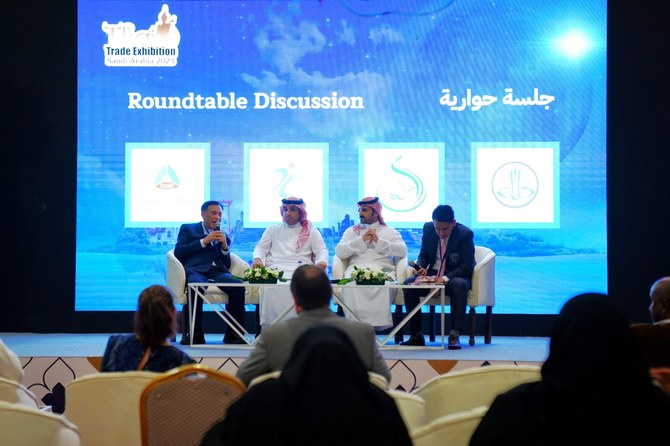
This information was revealed on the sidelines of the Thai Trade Exhibition Riyadh 2023, a four-day event that began on Aug. 27 at the Riyadh International Convention & Exhibition Center.
Al-Shahri further elaborated that SASO’s primary role in this sector involves accrediting entities responsible for issuing certificates for halal products beyond the Kingdom’s borders.
This responsibility complements the Food and Drug Authority’s task of certifying imported products in Saudi Arabia.
The authority is currently assessing the competence of these entities and will subsequently grant them a certificate of acceptance based on their qualifications. The Halal Center will then oversee their operations, both within their offices and in practical settings.
Winai Dahlan, founding director of the Halal Science Center, Chulalongkorn University, highlighted that there has been a noticeable increase in interest in halal meat among Thais in recent decades.
In 2003, the establishment of the cabinet marked a significant milestone in the evolution of halal products in Thailand.
He indicated that the growing interest in halal meat among Thais is fundamentally rooted in religious considerations.
In 1995, he founded the Halal Science Center at Chulalongkorn University to create a hub for the advancement of halal science in Thailand.
The principal duties of the center encompass the research and development of halal science and technology aimed at supporting the expansion of the industry while ensuring the quality and safety of the specialized products.
The halal products sector stands as one of the world’s fastest-growing industries, with a projected 6.1 percent increase in spending on food and beverages, anticipated to reach $1.9 trillion by 2023.
Islamic spending on halal pharmaceuticals was $87 billion in 2017 and is expected to reach $131 billion by 2023. Meanwhile, spending on cosmetics was $61 billion in 2017 and is projected to reach $90 billion by 2023.
Dr. Yousuf Al-Harbi, director of the Halal Center, affirmed that halal meat is a societal norm in Saudi Arabia.
He pointed out that the center aims to meet halal food requirements, adding that they are continually confident that “any local product we guarantee is 100 percent halal.”
“We have several initiatives, especially regarding the reliability of Halal food, from farm to consumer table, confirming that their experience in this area is thriving,” said Al-Harbi.
He said they are committed to ensuring that meats and poultry are slaughtered and stored according to Islamic law.
source/content: arabnews.com (headline edited)
___________
This discussion was held at the Thai Trade Exhibition Riyadh 2023, a four-day event that began on Aug. 27 at the Riyadh International Convention & Exhibition Center. (Huda Bashatah
Last week’s Arabian Flavour Festival in the Dutch capital celebrated Arab culture, cuisine, crafts
‘It’s all about sharing love, identity and culture,’ organizer tells Arab News
The first edition of the Arabian Flavour Festival took place in Amsterdam last Saturday.
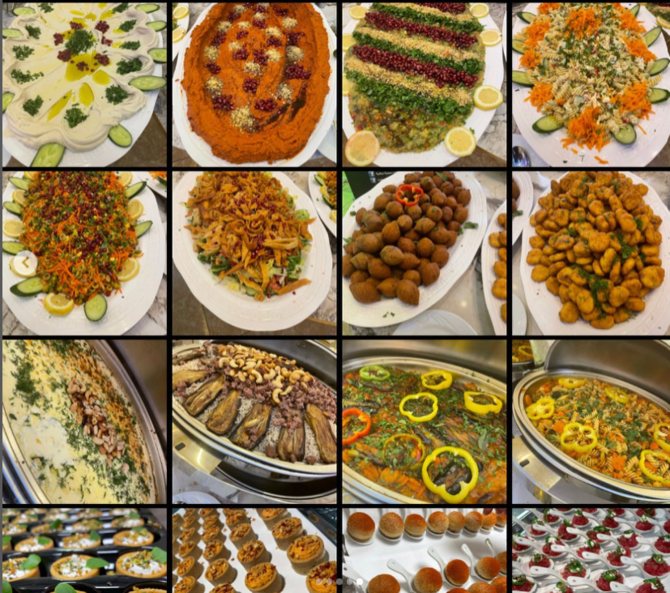
In an intimate outdoor setting, the festival celebrated the diversity and richness of Arab culture, cuisine and crafts.
Organizer Shadow, originally from Syria, said his aim is to create a platform for promoting both international and Middle Eastern artists, for people to mingle and to share their cultures through storytelling and arts.
Set in the idyllic Tolhuis garden, a cultural and culinary meeting place in Amsterdam, the one-day event welcomed over 1,000 visitors from different backgrounds.
Organized by The Shadow Projects, the festival featured two stages with performances by dancers, singers and poets, along with a dabke workshop, pop-up food and merchandise, all within an Arabian atmosphere.
“It’s called Arabian Flavour because there’s a flavor of Arabic culture, but at the same time it’s an opportunity for people to integrate,” Shadow told Arab News.
“There’s always a performance other than Arabic to let people understand that this isn’t an Arabic party (but) just an Arabian Flavour.”
The idea started after Shadow starred in the documentary “The Story Won’t Die” about Syrian artists in Europe and America, from award-winning filmmaker David Henry Gerso.
In 2021, because of Shadow’s efforts, the documentary was showcased at the International Documentary Film Festival Amsterdam, whereafter the concept gained more and more traction.
Initially, it began as a gathering showcasing talents at home, but expanded to various stages throughout Amsterdam, and now the Arabian Flavour Festival is the biggest such festival in Europe, according to Shadow.
The organization places significant emphasis on diversity and inclusion. “If you’re an Arabic singer who isn’t well known, you don’t have work anymore if you move to Europe,” he said, adding that Bottom of Form the festival is open to whoever wants to perform.
The organizers state: “It is magical to see people who share their passion, and it is most important that they express themselves authentically.”
Among the performers was DJ Maherrie, a Syrian DJ who amazed the audience with a fusion of Middle Eastern melodies and modern European rhythms to raise awareness of his heritage.
Dutch singer-songwriter Maxine Zain shared her hopes of inspiring people with her heartfelt songs, and specifically highlighted her enjoyment in seeing traditional Arabic music connecting well with the artistry of Dutch artists like herself.
Pauline Koning, a passionate self-taught Dutch musician and belly dancer, made an impact with her performance of her own song “Kefaya Ghyab.”
In her music, she blends Arabic, Western, and Yemeni musical elements, drawing inspiration from her nostalgic love for Umm Kulthum, and praises the language’s poetic nature and rich emotional vocabulary.
The Arab tradition of belly dancing, Koning said, “represents a powerful symbol of empowerment for all women, not only embodying archetypes but also having the power to transfer certain emotions.”
Shadow earned his name for his ability to bring subcultures from the shadow into the light, and the event lived up to this name as confirmed by visitors’ reviews. “I’m very curious about Arab culture. It’s a refreshing perspective opposite Dutch traditions,” said one visitor.
Another visitor attended the festival as an opportunity to connect with language partners and practice Arabic.
Three friends from Yemen were interested to meet Dutch people and exchange stories about their respective cultures.
Aside from the Arabian Flavour Festival, they also host monthly Arabian Flavour Nights. “The dream is to, in the next year or so, organize a three-day festival,” but in the end “it’s all about sharing love, identity and culture,” Shadow said.
All the projects are funded by the Amsterdam Fund for the Arts.
source/content: arabnews.com (headline edited)
_____________
The first edition of the Arabian Flavour Festival took place in Amsterdam last Saturday. (Instagram/@theshadow.amsterdam)
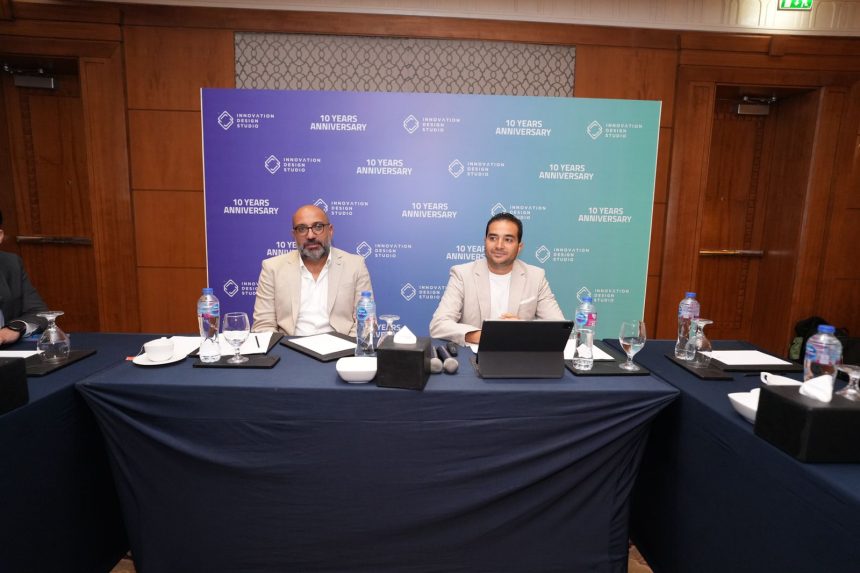
Innovation Design Studio, an award-winning architecture and design firm, has designed more than 400 projects in Egypt, Saudi Arabia, and Oman over the past 10 years. The company was recently awarded the A’ Design Golden Award for its design of a business district in Egypt.
Mahmoud Farouk, chief of design and co-founder of Innovation Design Studio, said the company started in 2014 with one project worth $4m. In 2023, the company is working on a project worth $400m.
Farouk added, “Our work encompasses the local market to include key regional projects in Oman and Saudi Arabia with an envisioned global expansion plan.”
Alaa Abdel Hameed, CEO and co-founder of Innovation Design Studio said the company is committed to using local materials and products.
“We believe that designers play a crucial role in directing developers’ projects towards more reliance on materials localization,” Abdel Hameed said. “This is in line with the Egyptian government’s direction of limiting importation and preserving foreign currency.”
Abdel Hameed also praised the efforts of Egyptian manufacturers in developing solutions and products that meet international standards.
“The local producers are becoming the preferred option and partner for developers and designers,” he said.
Brazilian Henrique Tabchoury has listened to Arabic music records with his Lebanese father since he was a child and saw him get emotional with the songs of his homeland. Jamil Abrão Tabchoury was born in Tripoli, Lebanon, in 1917 and came to Brazil with his family in 1927 when he was nine.
After he died in 1988, Henrique inherited around 300 Arabic records from his father. Since then, he has dedicated his free time to rescuing, collecting, and cataloging Arab music material, many of them recorded in Brazil, as a way of honoring his father and the Arab colony that came to Brazil in the first diaspora in the late 19th century and early 20th.
A trained agronomist, Tabchoury works in agribusiness and, since the 2000s, started buying Arabic records for his collection, which today has around 4,000 pieces – some are not Arabic. He recently received a donation of 22 albums by Arab and Brazilian artists from the Arab Brazilian Chamber of Commerce (ABCC).
Tabchoury searches for Arabic music records in advertisements, used bookstores, antique shops, and websites. He collects Arab discography produced in Brazil and already has around 60 albums by Arab artists who lived and recorded in the country for labels such as Continental, Odeon, Arte-fone, and RCA Victor. The recordings were made between 1927 and 1935, and the collection includes records by artists such as Nagib Hankash and Nagib Mubarak.
“It’s a retrieval of the history of the Arab colony in Brazil; these artists were of fundamental importance for the community; they were an encouragement for the Arabs who came to Brazil,” said Tabchoury to ANBA.
The albums are mainly from Syrian and Lebanese artists. “I guess most are Lebanese artists as many sing odes to Lebanon, and 90% to 95% are Christian Arabs,” said Tabchoury. In his assessment, over half of these are Orthodox Christians, and less than half are Maronite Christians.
Of the 4,000 discs in his collection, he has already cataloged and digitalized around 580, and nearly 400 are Arabic music. “Cataloged, including private and serial recordings, we have 390 Arab 78rpm records produced in Brazil, apart from LP albums (vinyl), compact, and 10-inch records,” he informed. He intends to digitalize his entire collection and later launch a website with the music catalog and information about the artists.
One of his goals is to find all Arabic records of private recordings made in Brazil until the 1970s. After the 1970s, recordings from abroad began to arrive here,” he said. He also wants to find more old Arabic records, whether recorded in Brazil or not.
“Many people keep records for sentimental value, and some don’t know what to do and throw them in the trash. I’m looking for these records in my spare time; I go to other cities and talk to families. I have no commercial interest; my collection has a historical background and is a source of homage to the Arabs in Brazil,” he declared.
Tabchoury has already been to Araxá, Barretos, Uberaba, Goiânia, Curitiba, Porto Alegre, and Pindamonhangaba, among other Brazilian municipalities with Arab communities. “I want people to know I’m building this collection,” he said. He accepts donations and also buys records.
Oral history, which is gradually taking hold as an academic discipline, captures potentially hidden corners of the historical record by listening to those whose voices might otherwise have been ignored.
“Oral history provides a big challenge to the people who are powerful, including historians, who think that they should get to decide whose stories are being told and what counts as evidence,” says Wesley Hogan, director of the Center for Documentary Studies at Duke University, in the United States, perhaps the best-established academic institute in the discipline.
In the Arab world, where official histories often reflect political viewpoints, oral history has taken on an increasingly important role, scholars say. Rosemary Sayigh, a retired faculty member at the American University of Beirut who has used oral history to record the stories of dispossessed Palestinians, says oral history has particular value in recording the status and experiences of women, agricultural and industrial workers, linguistic minorities, colonized societies, immigrants, refugees, and gypsies.
“The most powerful thing oral history does is force the researcher to look the subject in the eye—forcing the historian to be an ethnographer, actually sitting face to face with the narrator, listening to their voice and sensing their emotions and body language,” says Hana Sleiman, a Ph.D. candidate at the University of Cambridge and manager of a Palestinian Oral History Archive at the American University of Beirut. “It puts you in contact with the entire life narrative.”
The U.S.-based Oral History Association describes the field as gathering, preserving, and interpreting the narratives of people, communities, and participants in past events. The discipline is the oldest form of documenting history, dating back to times when sharing stories was the only form of creating a historical record. At the same time, it is one of the most modern means of documenting history, expanding with the use of tape recorders.
“
“The most powerful thing oral history does is force the researcher to look the subject in the eye—forcing the historian to be an ethnographer, actually sitting face to face with the narrator, listening to their voice and sensing their emotions.”Hana Sleiman Manager of the Palestinian Oral History Archive at the American University of Beirut
“
Oral history as an academic sub-discipline was first established in the mid-1960s. “For a long time in the 1940s and 1950s, there was just not enough access to equipment,” says Hogan, at Duke. “We did not have access to portable tape recorders until 1963.”
One of the earliest uses of oral history by scholars was at Spelman College, a historically black institution for women in Atlanta, Georgia. Academics would take portable tape recorders to civil-rights movement meetings in the mid-1960s to record discussions and interview participants. Despite the clear value of having such on-the-spot recordings, many historians at the time viewed them with suspicion.
“Even though historians started to use [portable tape recorders] in the early ’60s, most history departments only started to admit oral history as evidence in the late 1970s, so it took a very long time for historians to be willing to accept oral history as evidence, comparable to evidence material, such as journals or written documentation,” added Hogan.
Oral History and Palestinians
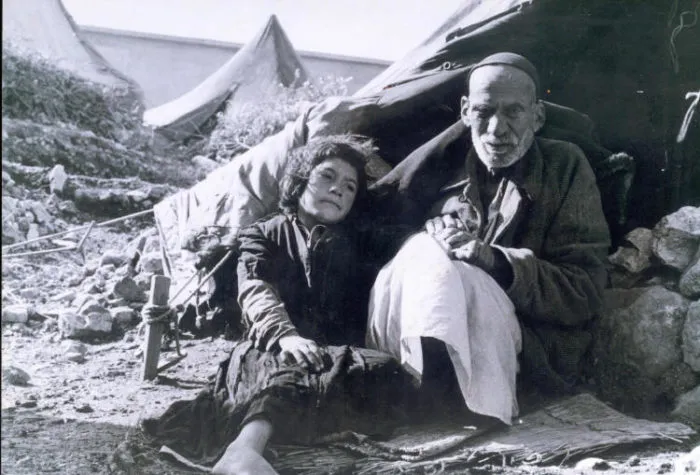
Perhaps the event that has been the most documented by oral historians in the Arab world is the Palestinian Nakba. The 1948 Palestinian exodus, also known as the Nakba, occurred when more than 700,000 Palestinians—which was then more than half of the Palestinian population—were displaced from their homeland by the creation of Israel.
Much of that work has been collected by the Palestinian Oral History Archive, launched in June at the American University of Beirut. The archive contains more than 1,000 hours of video and tape-recorded interviews with Palestinians, made available to the public through a digital archive. Some of the interviews are available on the Internet.
Sleiman, the archive manager, says it “offers a push back in the face of the destruction of the villages and the attempts at erasing the records, and captures an entirely different layer of history that is not captured by written archives, including the most intimate texture of human life.” The collection includes folktales, songs, and the stories of the Palestinian refugees who fled to Lebanon.
Even Palestinian national cultural institutions have been slow to record Nakba experiences, but individual scholars and activists have moved in to fill the gap, says Sayigh.
“History is often written by the victors, and the story of the Nakba has been presented through the accounts of the Zionists and the colonial regimes,” said Lena Jayyusi, a professor emeritus at Zayed University.
“The details of the massacres and how civilians were forced out of their homes [during the Nakba] are very important to understand what happened; a general idea is not enough to build a foundation for the continuity and the remembrance of a certain community,” added Jayyusi.
Jayyusi also said oral history was important to “reconstruct Palestinian life before the Nakba: the social life, the religious life, the relationships between the people.”
Rising Respect for Oral History
Technological advances in managing sound and video files have made oral historians’ lives easier lately and increased the power of the discipline. Scholars can now more easily archive and index sound and video files, search files for particular speakers, and label emotions, as pointed out on the Oral History and Technology website.
Also, the average citizen now has easy access to powerful oral-history tools. “In a world where many people have access to a smartphone and an app that can record, and where data storage is cheap, we have increasing access to creating oral history archives,” says Hogan. “The more information we have from everyday people, people who are on the margins, the more we can understand societies, especially the ones in rapid transition.”
Many resources on the web, such as the International Oral History Organization, are also increasingly providing instructions and encouraging people to start their own oral history projects, filling a gap because universities do not often offer such courses. Archiving social media history is an important complement to oral history, scholars say, especially in societies where governments might delete what is now online.
Oral History and Academia
Oral history, just like any other qualitative research methodology, must be conducted with a critical eye, scholars say. Much of oral history relies on memory and a lot of subjectivity comes into play.
“People’s ideas and perceptions are reflected in oral history, and researchers should be aware of that,” explained Jayyusi.
Jayyusi said that no methodology is straightforward and objective, and researchers must be critical even when dealing with numbers. Methodologies must be triangulated, compared, and assessed, before producing a final report.
If oral history catches on with younger scholars, who fan out and capture the stories of today’s refugees and others whose stories are not being chronicled well in official channels, those scholars will be creating an evidence-rich gift for future historians.
An old man and a young girl were made refugees by the Arab-Israeli war of 1948. Experiences like theirs are being recorded by oral historians, so the story is not told only by the victors (Photo: Creative Commons).