Arabs & Arabian Records Aggregator. Chronicler. Milestones of the 25 Countries of the Arabic Speaking World (official / co-official). AGCC. MENA. Global. Ist's to Top 10's. Records. Read & Enjoy./ www.arabianrecords.org
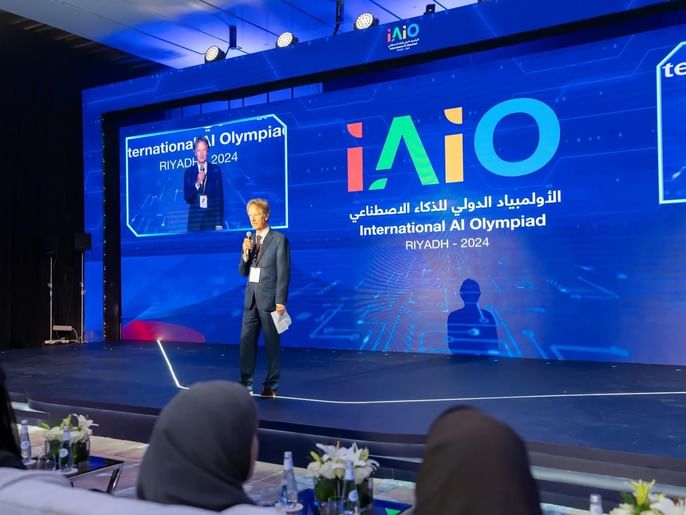
The first activities of the International Artificial Intelligence Olympiad (IAIO) began yesterday, Sunday, which is organized by the Kingdom of Saudi Arabia, represented by the Saudi Data and Artificial Intelligence Authority (SDAIA), for the first time in the world, in cooperation with the International Center for Research and Ethics in Artificial Intelligence (ICAIRE) and the International Research Center for Artificial Intelligence in Slovenia, and under the auspices of the United Nations Educational, Scientific and Cultural Organization (UNESCO), with the participation of more than 25 countries.
The Saudi Press Agency (SPA) reported that the Olympiad, which will continue until September 12, 2024, contributes to strengthening friendly international relations between technology and software experts and artificial intelligence teachers in various countries, drawing the attention of young people to these modern technologies, and encouraging other countries to organize similar competitions in the future.
The Olympiad aims to motivate participants to engage in active discussions to explore the various applications of artificial intelligence, and encourage exceptionally talented young people in this field, which is of increasing global interest.
It also contributes to enhancing the organization of artificial intelligence competitions for secondary school students, and motivating them to find smart solutions by designing algorithms based on learning, data structuring, and programming.
The Olympiad enables male and female students, artificial intelligence specialists, and influencers in the world to delve into the future landscape of artificial intelligence, keep pace with the rapid changes the world is witnessing in this field, and provide young cadres with modern technical skills
Multiple area and national records broken in men’s 10,000m event at World Athletics U20 Championships 2024.
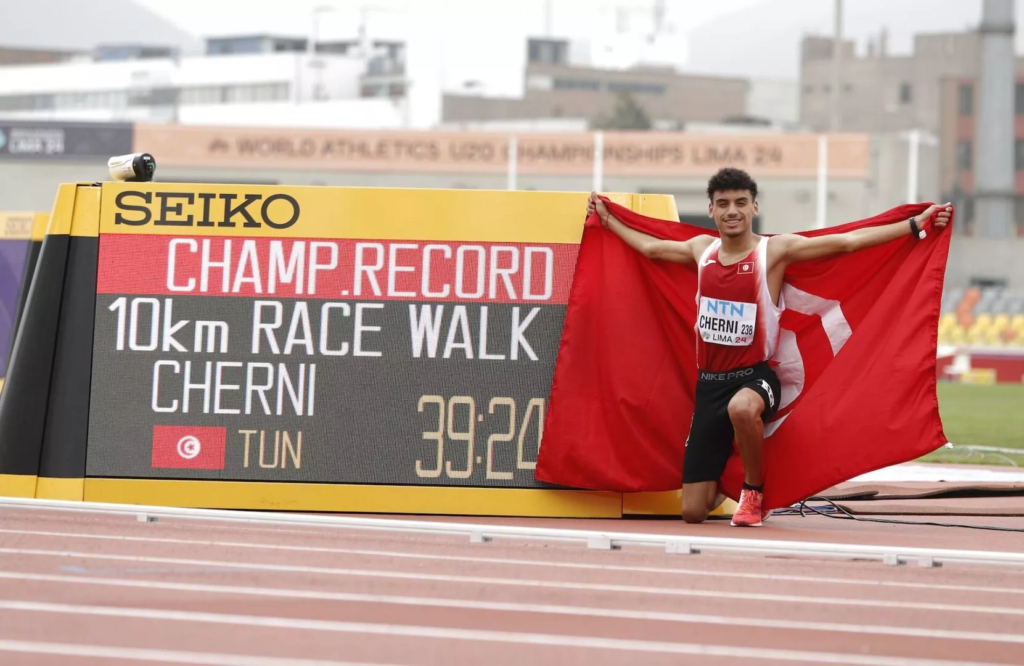
Rayen Cherni set a championship record in the men’s 10,000m race walk to win the first ever gold medal for Tunisia at the World Athletics U20 Championships 2024, while China’s Baima Zhuoma dominated the women’s race during the final morning session of action in Lima on Friday.
In a hard-fought men’s race, the top 17 all set area or national U20 records, or achieved PBs, with Cherni winning in an African U20 record of 39:24.85, Mexico’s Emiliano Barba securing silver in a North and Central American U20 record of 39:27.10 and Italy’s Giuseppe Disabato gaining bronze in a national U20 record of 39:31.25.
Australia’s Isaac Beacroft, who won the U20 title on the roads at the World Race Walking Team Championships in Antalya in April, finished fourth on the track in Lima, setting an Oceanian U20 record of 39:36.39, while Japan’s Sohtaroh Osaka finished fifth in a PB of 39:39.36.
It was Germany’s Frederick Weigel who had taken the early lead, but Osaka, Beacroft and Kenya’s Stephen Ndangiri Kihu took control by the halfway point, passed in 20:05.03.
As the pace gradually picked up, the lead pack whittled down, and Barba, Disabato and Cherni made their break. Six athletes remained in contention with four laps to go and eventually 17-year-old Cherni left his rivals behind to win by more than two seconds.
China’s Baima Zhuoma claims gold with personal best in women’s 10,000m race walk at World Athletics U20 Championships 2024
In the women’s race, Baima looked calm and in control throughout. The field quickly spaced out and the 19-year-old, who claimed Asian U20 silver in April, was well clear as she passed the 5000m mark in 21:47.33.
She was followed by India’s Aarti and her Chinese teammate Chen Meiling, last year’s Asian U20 champion, with Romania’s 17-year-old Alessia Cristina Pop, the European U18 silver medallist, looking determined behind them.
While Baima was never under threat, Aarti seemed to be moving away from Chen, but with two red cards Aarti had to be cautious and Chen made her move, passing her rival with three and a half laps to go.
Baima maintained her lead to cruise to victory in a world U20 lead and big PB of 43:26.60, as Chen held on for silver to complete a 1-2 for China in a PB of 44:30.67. Aarti claimed bronze in an Indian U20 record of 44:39.39, while Pop also set a national U20 record of 44:54.32 in fourth. Similar to the men’s race, the top 16 all set national records or PBs.
Al-Kaabi also announced that QatarEnergy will more than double the local solar energy production by adding new power plants in Dukhan, to become “one of the largest” of their kind in the world.
QatarEnergy is set to become the world’s largest exporter of urea by building a new production complex, a move that is set to ramp up production from a current six MTPA (million tonnes per annum) to 12.4 MTPA by 2030, marking a 106 percent spike.
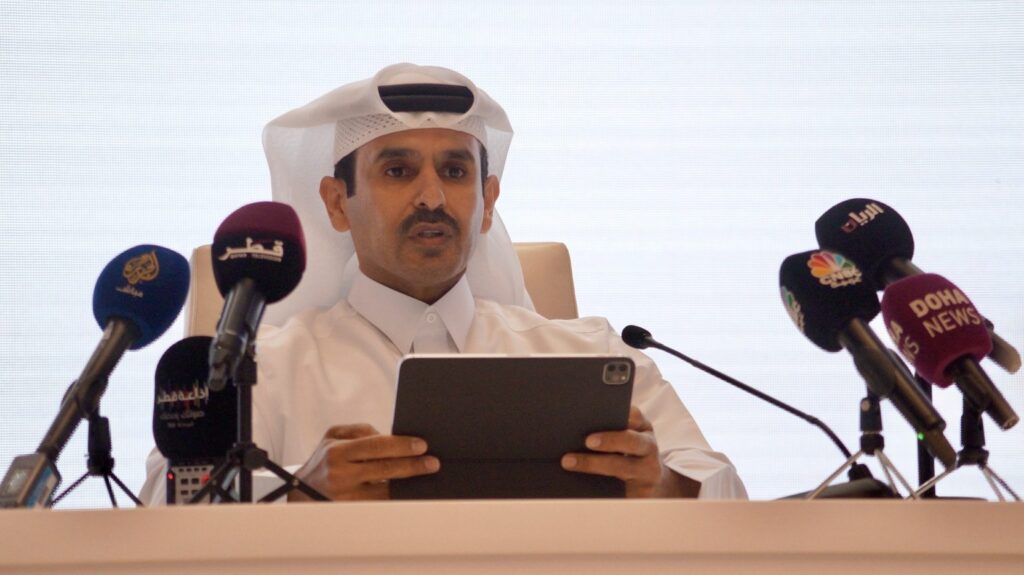
QatarEnergy’s President and CEO Saad Sherida Al-Kaabi announced the mega project in a press conference on Sunday at the Qatari company’s headquarters in Doha.
In response to the press, Al-Kaabi said the new facility will more than double Qatar’s urea, or fertilizer, production while supporting global food production and security. He noted that the production from the project’s first urea train is expected before the end of this decade.
“When we look at the future market of urea with the growth of humanity[…]the urea requirement for food production will be exponentially increased,” Al-Kaabi told the press.
The expansion process will take place by building three ammonia production lines that will in turn provide feedstock to four new mega urea production trains in Mesaieed Industrial City.
The announcement also came against the backdrop of Qatar’s growing ammonia and urea production over the past 50 years.
In 2022, QatarEnergy Renewable Solutions and the Qatar Fertilizer Company (QAFCO), inked a major agreement over the development of the Blue Ammonia project, the largest of its kind in the world, in Mesaieed Industrial City.
Production is expected to commence in the first quarter of 2026.
Qatar to more than double solar power production
Al-Kaabi also announced that QatarEnergy will more than double the local solar energy production by adding new power plants in Dukhan, which will become “one of the largest” of their kind in the world.
The new plant will have a production capacity of 2,000 megawatts, doubling Qatar’s solar power production capacity from existing projects and those still under construction. Some of the projects include the Al-Kharsaah solar power plant, inaugurated in 2022 with the capacity of 800 megawatts.
Others include two solar power plants under construction in Ras Laffan and Mesaieed with a total production capacity of 875 megawatts. According to Al-Kaabi, the production will commence before the end of this year.
“By adding the Dukhan solar power plant to these three plants, we will achieve our Sustainability Strategy objective of about 4,000 megawatts of electricity from solar power by 2030, which makes up 30 percent of Qatar’s total electric power production,” he explained.
Al-Kaabi described the latest announcement as a “continuation” of Qatar’s efforts to provide the world with energy products and meet global needs.
“QatarEnergy’s specialised technical teams will immediately begin the necessary detailed engineering studies to implement these mega projects in accordance with the highest safety, health and environmental standards,” Al-Kaabi said.
The films tell stories of hopes, dreams, and challenges from the Arab world.
Arab cinema is about to make waves as the 81st Venice Film Festival rolls out the red carpet.
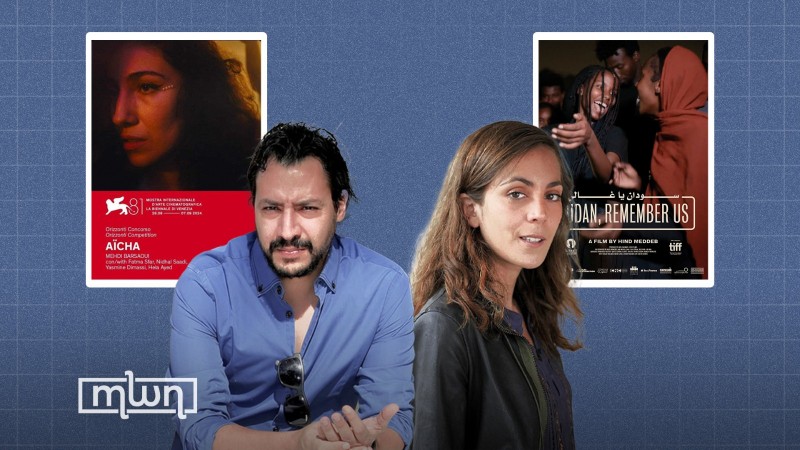
Running from August 28 to September 7, this year’s Venice International Film Festival will feature 12 Arab films backed by the Doha Film Institute.
These movies will light up key sections of the festival, including Orrizonti and Orrizonti Shorts, and make waves at Critics Week, Giornate degli Autori, Final Cut, and the Venice Gap-Financing Market.
These selections showcase the rich diversity of the region, bringing unique stories from Egypt, Jordan, Lebanon, Morocco, Palestine, Tunisia, and Yemen into the spotlight.
Highlights include “My Father’s Scent” by Mohamed Siam, featuring Egyptian star Ahmed Malek, “Aïcha” by Mehdi Barsaoui, and “Sudan, Remember Us” by Hind Meddeb, which offers a powerful portrayal of a generation’s fight for freedom through words, poems, and chants.
“We are proud to continue a successful festival season with a strong showcase of films by Arab talent at Venice,” stated Fatma Hassan Alremaihi, chief executive officer of the Doha Film Institute.
“Our mission is to support independent creators in cinema, and the compelling selection at Venice is a testament to our commitment to shed light on stories that transcend borders and present unique perspectives. We hope these films receive the acclaim and attention they deserve,” she added.
The 2024 Venice International Film Festival is set to showcase a diverse array of Arab cinema.
In the Orizzonti category, the festival will present “Aïcha” directed by Mehdi Barsaoui and “Happy Holidays” by Scandar Copti. The Orizzonti Shorts category will meanwhile include “Shadows” by Rand Beiruty.
“Sudan, Remember Us,” directed by Hind Meddeb, will be showcased in the Giornate degli Autori section. Critics’ Week will highlight “Perfumed with Mint” by Muhammed Hamdy.
The Final Cut section will present several notable films, including “Aisha Can’t Fly Away” by Morad Mostafa, “In This Darkness I See You” by Nadim Tabet, “My Father’s Scent” by Mohamed Siam, and “Those Who Watch Over” by Karima Saidi.
Finally, the Venice Gap-Financing Market will feature “Marie & Jolie” by Erige Sehiri, “The Station” by Sara Ishaq, and “Theft Of Fire” by Amer Shomali.
With a lineup that promises to dazzle and surprise, these films are set to turn heads and set new standards.
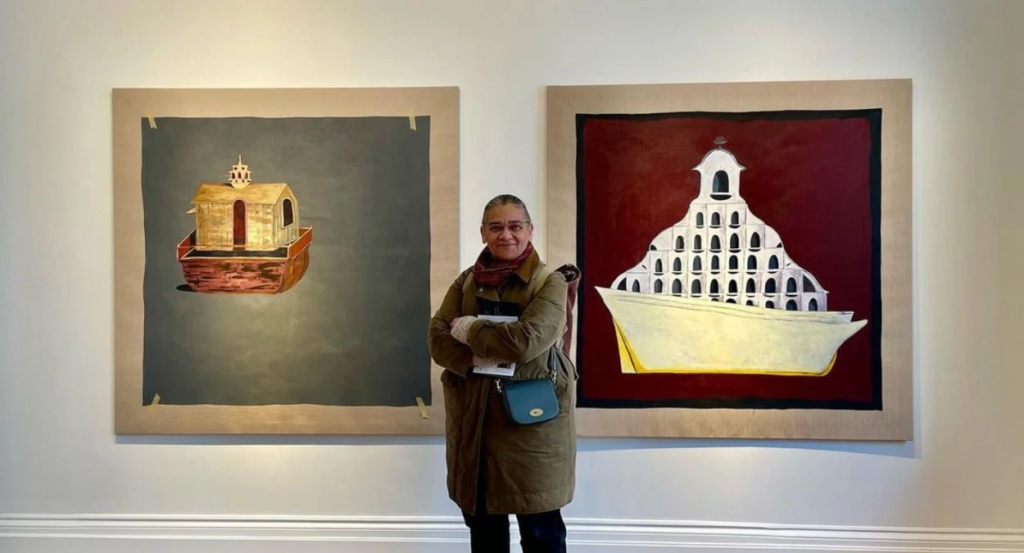
The artist, also a guest editor of ‘Bazaar Art’ praises communal creative practice and refutes the notion of the lone genius.
Some people imagine that making art, being a visual artist, is best accomplished and performed alone; I’m pretty certain they are wrong. My own experience has been exactly the opposite from the beginning.
I am an only child, the daughter of an English textile designer and a Comorian college lecturer; I was born in Zanzibar. As a little girl in the early 1960s, I played in the streets and back gardens of Maida Vale in London with two boys who lived nearby. Together we dug an enormous hole, without our parents’ knowledge or permission, to prepare for a swimming pool.
At school, in the art room, the teacher asked us to design the costumes and sets for Cyrano de Bergerac, a play in which it took two men, via poetry and letters, to court a young woman. As head girl, I joined others going out on strike to protest about democracy and freedom of speech.
At art college, which I hated almost as much as school, it was clear that the young women students were being educated to be assistants to the men. We outnumbered, out-lifted and outperformed them at every available opportunity. I learned that to succeed in theatre design you needed to be a team player—but not a woman.
As a waitress in Covent Garden in the mid-1970s, it was obvious that without the chefs, the washing-up staff and each other, we could never have survived the disdain, the flirting, and the exhaustion inflicted upon us by the customers.
The early days of organising, making and showing with other Black women artists in London were, for me, the real beginnings of my collaborative practice. We worked alongside each other in domestic studios and spoke frankly about funding and the need for studio space, as well as our doubts and fears for the future of our creative endeavours. Some women worked with each other on groundbreaking community print projects and then alongside me to make an exhibition happen. We functioned on the very outer edges of a pretty unfriendly art world for which we had huge expectation of change but an infinitesimal amount of experience as to how this could be done.
During the 40 years since those early showing days of the 1980s, my desire to work with others has grown stronger. Without the collaborative experience of working with a studio team; talking and testing, exchanging ideas, being challenged and having to rethink and compromise (in a good way), my work would be totally different: less daring, less exciting for me and more introspective (in a bad way).
There have been art historians who asked serious and intense questions about the process and curators who enabled me to be myself by taking care of me. Importantly, they dealt with the practicalities and the administrative complexities, so that the only thing I had to worry about was the making and developing or ‘how to push everything I could to the limit’.
Close friends—all artists—have in the past been invaluable partners in my work, constantly questioning, offering expertise or supporting a series of seemingly illogical projects with practical help, money, or by cooking comforting meals, making endless cups of tea or providing favourite biscuits.
During the years I spent preparing full-time art students for the challenging years ahead, which I knew would be filled with unexpected opportunities and inevitable setbacks, my advice to them was always to work with other artists who had different areas of expertise from themselves to make pop-up shows, workshops, group performance projects, homemade ’zines and moving-image productions. I tried to persuade them that it is impossible to do everything yourself, and that their own work would suffer, as would that of their fellow artists, unless they worked for an agreed common goal. Their paintings and films, installations and prints would be stronger, still individual, but part of a wider conversation.
Recently, I have learned how to listen more carefully to the sounds in my head and begun to understand how to make this real in my paintings and installations by working with Magda StawarskaBeavan, an artist who makes screen prints, paintings, and drawings as well as moving-image and sound-composition projects.
For a few years on and off we made screen prints, Magda leading and printing, then gradually worked on sound pieces—mostly hers and occasionally mine. As part of a recent show at Wiels contemporary art centre in Brussels called ‘Risquons-Tout’, we worked for several months during the fiercest lockdowns in the North West of England on an installation called ‘The Blue Grid Test’, combining a 25-metre blue painting on found objects with a six-channel sound work. We talked extensively about codes and patterns, language and love, colour and rhythm, and worked alongside each other, wandering in and out of her studio and mine. All the while, as we built layers of understanding and multiple connections through music and language using invented texts in French, English and Flemish, Magda developed a composition piece that wraps and envelops the audience. I painted a long thin line in many shades of blue. It became a room in which 64 global patterns on numerous items found neglected in cupboards, basements and on shelves in the house, spoke and sang in and out of harmony with the words and music. I felt this could be the beginning of a determination to add to our previous collaborations during the past 10 years by making real more experimental projects, in print and with sound, in between working on our own exhibitions.
If you can find someone who will listen to you as intently as you are prepared to listen to them, you have probably found the perfect collaborative partner. Be willing to say what you want and then have that idea bettered, and you may have the solution to creating artwork that really could make a difference.
This piece originally appeared in the November 2021 print edition of Harper’s Bazaar UK
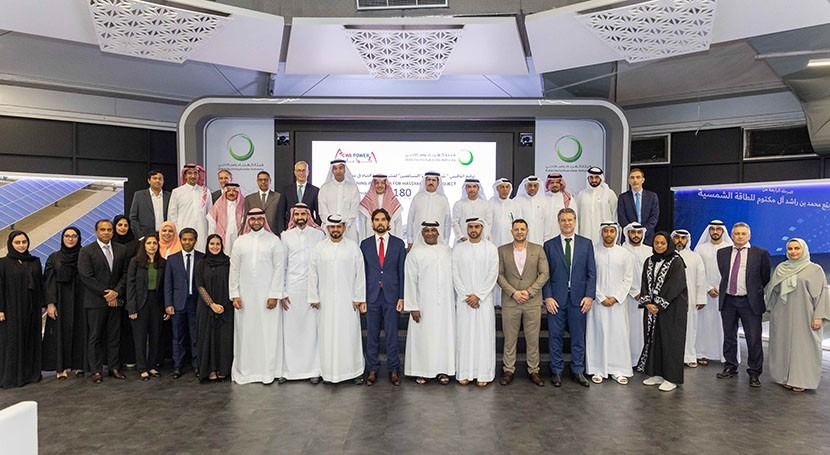
Dubai Electricity and Water Authority (DEWA), signed a 30-year water purchaser agreement with Saudi Arabia’s ACWA Power for phase 1 of the Hassyan sea water desalination project using solar power. The project is part of DEWA’s efforts to increase its water desalination capacity to 730 MIGD by 2030, from 490 MIGD at present. The project aligns with Dubai’s unparalleled economic growth and the Emirate’s thriving construction sector. This complements the Dubai 2040 Urban Master Plan, addresses the substantial population growth, and meets the steadily increasing demand for water in domestic, commercial, and other consumer sectors.
The agreement was signed by HE Saeed Mohammed Al Tayer, MD & CEO of DEWA; and Mr. Mohammad Abunayyan, Chairman and Founder of ACWA Power. Officials from both entities were present.
Last August, DEWA announced ACWA Power as the ‘Preferred Bidder’ for the construction and operation of the 180 Million Imperial Gallon per Day (MIGD) Sea Water Reverse Osmosis Hassyan Phase 1 Independent Water Producer (IWP) project, with an investment of AED 3.357 billion (USD 914 million). The allocated land area for the project is 252,300 square metres. DEWA achieved a world record by receiving the lowest bid of 0.36536 USD/m³ of desalinated water. This project is the largest of its kind in the world for water production based on Sea Water Reverse Osmosis (SWRO) technology using solar energy. It is DEWA’s first Independent Water Producer (IWP) model project. The water desalination capacity in Dubai is currently 490 MIGD. This capacity will increase to 670 MIGD in 2026 with the completion of this project.
Dubai Electricity and Water Authority (DEWA) signed a 30-year water purchaser agreement with Saudi Arabia’s ACWA Power for phase 1 of the Hassyan sea water desalination project using solar power
“We are pleased to sign the agreement with ACWA Power. This project supports the vision of His Highness Sheikh Mohammed bin Rashid Al Maktoum, Vice President and Prime Minister of the UAE and Ruler of Dubai, to enhance water supplies in Dubai from sustainable sources and achieve the Dubai Clean Energy Strategy 2050 and the Dubai Net Zero Carbon Emissions Strategy 2050 to provide 100% of Dubai’s total power capacity from clean energy sources by 2050. We are building water production plants based on Sea Water Reverse Osmosis (SWRO) technology which require less energy than Multi-Stage Flash distillation (MSF) plants, making it a more sustainable choice for water desalination. By 2030, DEWA aims to produce 100% of desalinated water by a mix of clean energy and waste heat,” said HE Saeed Mohammed Al Tayer, MD & CEO of DEWA.
HE Saeed Mohammed Al Tayer, MD & CEO of DEWA, said: “We ensure the continuation of the 100% availability of DEWA’s services according to the world’s highest levels of availability, reliability, and efficiency thanks to our state-of-the-art infrastructure and advanced technologies. This is based on innovation and sound scientific planning so that we contribute to making the UAE the world’s leading nation by its centennial in 2071.”
Mohammad A. Abunayyan, Chairman of the Board of Directors, ACWA Power, said: “This agreement between ACWA Power and DEWA is another example of the strong collaboration between ourselves and our valued partners in the United Arab Emirates. The Hassyan IWP will be the largest plant of its kind in the world, and we have set a new record for the lowest levelised water tariff. The plant will be highly efficient, desalinating water through reverse osmosis powered by solar energy. With our years of experience in the industry, ACWA Power has ambitious aims and we are proud of continually breaking records through innovation and using new technologies to enhance water security. With this project, we are reaffirming our commitment with our partners towards achieving the Dubai Clean Energy Strategy 2050.”
From weightlifting to gymnastics and boxing, Arab athletes made the nation proud at the Olympics.
Meet the Olympics winners here
The 2024 Olympics concluded last night in Paris, and have marked a very special season for Arab athletes.
Despite controversy and a few ups and downs over the past 17 days, the best sportswomen and sportsmen from the region did their nations proud, earning a total of 17 medals. Overall, the medals were won by athletes from seven countries: Qatar, Jordan, Egypt, Morocco, Tunisia, Bahrain and Algeria. Bahrain won the highest number of medals this time with four major wins (two gold, one silver, and one bronze). In second place was Algeria, bringing home three medals (two gold, one bronze).
Tied in third place, Egypt and Tunisia earned three medals each (one gold, one silver, one bronze), followed by Morocco, which also won three medals (two gold, one bronze). Jordan came in fifth with one silver medal, and Qatar completed the seventeen wins with a bronze medal.
It’s no easy feat earning an Olympics medal, and while 2024 has marked a proud moment for the region, it’s also important to note that this isn’t the first time our athletes have brought home this number of wins. Back in 2020, the Tokyo Olympics saw Arab athletes earn a total of 18 medals!
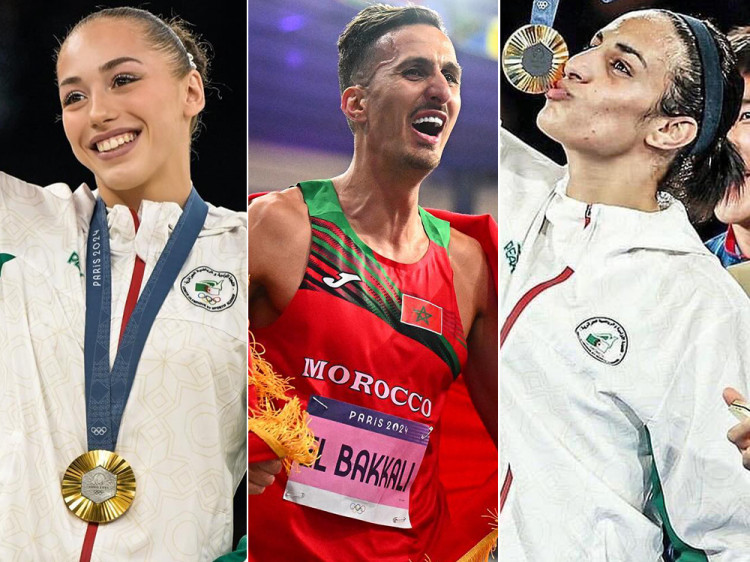
Among this year’s winners, some of the most talked about athletes were the ones that went through the biggest hardships. Algeria’s Imane Kheliff faced speculation and bullying at a global level, but remained undeterred in her pursuit for gold. Winning her medal last week, she said, “I sent them a message with this gold medal, and I say my dignity has been restored and my honor is above anything else.”
Days prior to Khelif’s proud moment, France-born Algerian athlete Kaylia Nemour (who be made history when she became the first-ever African gold medalist in gymnastics. The win was twice as special given Nemour’s past dispute with the French gymnastics federation, which led to her switching from competing for France to competing for Algeria in 2023.
Also in the list of noteworthy names is Tunisia’s Firas Katoussi, who won a gold medal in 80kg taekwondo, Morocco’s Soufiane El Bakkali, who brought hold gold in 3,000m steeplechase, and Egypt’s Ahmed Elgendy, who set a world record with 1,555 points in modern pentathlon. Congratulations to all the athletes who represented the region and did their nations proud. Below, a complete list of all the Olympics winners from the region.
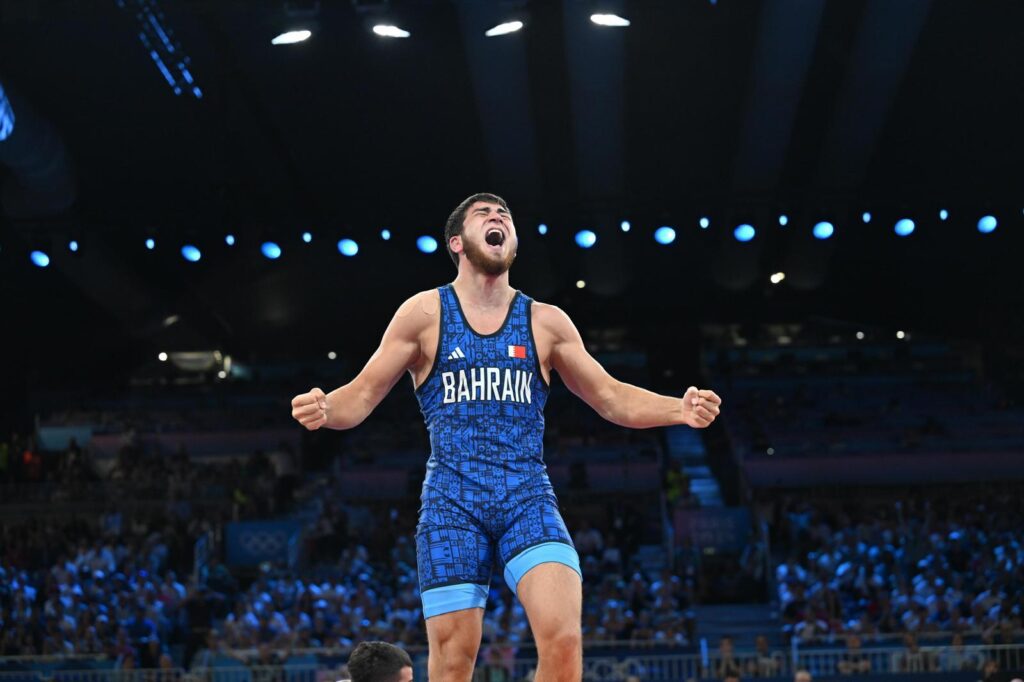
Wrestler Akhmed Tazhudinov secured the second gold medal for Bahrain at the Paris Olympics after defeating the Georgian Givi Matcharashvili.
His victory secured Bahrain’s fourth medal at the Paris Olympics and the first ever in wrestling at the Olympic Games. This is Bahrain’s first-ever medal outside of athletics.
The 21-year-old wrestler won in the men’s 97kg freestyle wrestling. Georgia’s Givi Matcharashvili won silver, while Azerbaijan’s Magomedkhan Magomedov and Iran’s Amirali Azarpira took bronze.
Yavi jumped for joy after crossing the line, having overtaken Chemutai with an explosive final sprint that left the Ugandan who had led most of the race unable to respond.
Bahrain’s Winfred Yavi won the women’s Olympic 3,000m steeplechase gold medal on Tuesday, dethroning Uganda’s Peruth Chemutai who had to settle for silver.
Yavi jumped for joy after crossing the line, having overtaken Chemutai with an explosive final sprint that left the Ugandan who had led most of the race unable to respond.
Chemutai was in shock after Yavi, 24, stole the finish to add the Olympic title to last year’s world championship, setting an Olympic record time of 8 minutes 52.76 seconds. “This is like a dream come true. It’s something special,” Yavi told reporters. “It means a lot to me and also to the country.”
Kenyan 20-year-old Faith Cherotich, ranked third in the world, claimed bronze on her Olympic debut.
On Wednesday, American Quincy Hall dug deep in the final metres to overhaul Briton Matthew Hudson-Smith and take the 400m gold. Hall ran a personal best of 43.40s and give the US their first triumph since LaShawn Merritt in 2008.
Hudson-Smith bettered his own European record with 43.44 for silver and Zambia’s 21-year-old Muzala Samukonga set his second successive national record with 43.74 to take bronze.
Emulating Lewis
Miltiadis Tentoglou flexed his biceps, draped the Greek flag over his shoulders and stared up into the clear night sky above the packed Stade de France.
It was a moment to savor: Tentoglou became only the second man after Carl Lewis to win two consecutive Olympic long jump titles, adding the gold on Tuesday night to the one he claimed at Tokyo three years ago.
“It’s a great achievement,” said Tentoglou, who also claimed the world title last year. “Not bad.” His gold was the first for Greece in any sport at the Paris Games.
Tentoglou’s second jump of 8.48 meters (27 feet, 10 inches) won it. Wayne Pinnock, a 23-year-old Jamaican, got the silver with a leap of 8.36 (27-5 1/4), and Mattia Furlani, a 19-year-old Italian, finished third with a best effort of 8.34 (27 4 1/2).
Upset win
The men’s 1,500 was billed as a bar brawl between the two strongest 1,500m runners in the world. Nobody figured the little-known American guy would steal the show.
Cole Hocker beat Jakob Ingebrigtsen and Josh Kerr to pull the upset of the Games with an unexpected victory. He wonin an Olympic-record 3 minutes, 27.65 seconds.