Arabs & Arabian Records Aggregator. Chronicler. Milestones of the 25 Countries of the Arabic Speaking World (official / co-official). AGCC. MENA. Global. Ist's to Top 10's. Records. Read & Enjoy./ www.arabianrecords.org
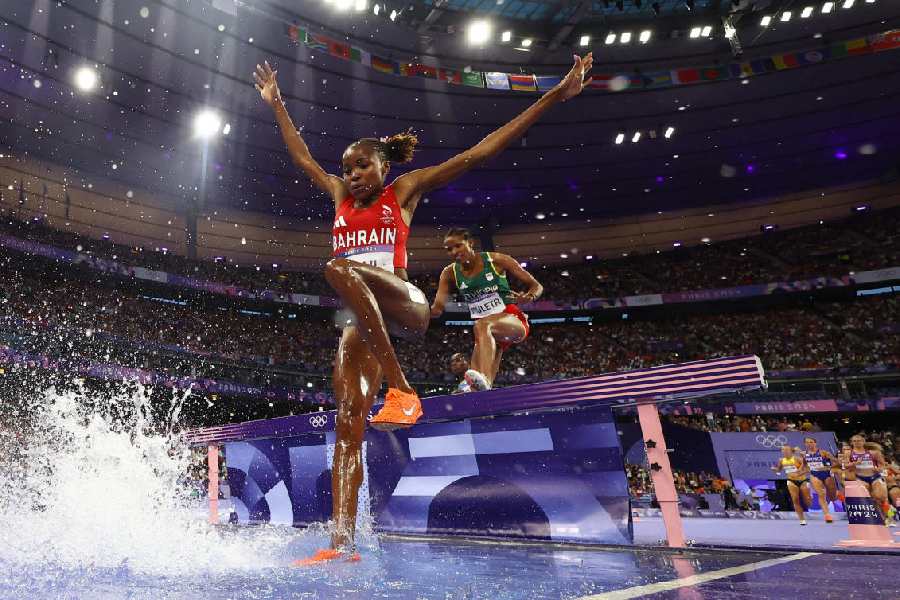
Yavi jumped for joy after crossing the line, having overtaken Chemutai with an explosive final sprint that left the Ugandan who had led most of the race unable to respond.
Bahrain’s Winfred Yavi won the women’s Olympic 3,000m steeplechase gold medal on Tuesday, dethroning Uganda’s Peruth Chemutai who had to settle for silver.
Yavi jumped for joy after crossing the line, having overtaken Chemutai with an explosive final sprint that left the Ugandan who had led most of the race unable to respond.
Chemutai was in shock after Yavi, 24, stole the finish to add the Olympic title to last year’s world championship, setting an Olympic record time of 8 minutes 52.76 seconds. “This is like a dream come true. It’s something special,” Yavi told reporters. “It means a lot to me and also to the country.”
Kenyan 20-year-old Faith Cherotich, ranked third in the world, claimed bronze on her Olympic debut.
On Wednesday, American Quincy Hall dug deep in the final metres to overhaul Briton Matthew Hudson-Smith and take the 400m gold. Hall ran a personal best of 43.40s and give the US their first triumph since LaShawn Merritt in 2008.
Hudson-Smith bettered his own European record with 43.44 for silver and Zambia’s 21-year-old Muzala Samukonga set his second successive national record with 43.74 to take bronze.
Emulating Lewis
Miltiadis Tentoglou flexed his biceps, draped the Greek flag over his shoulders and stared up into the clear night sky above the packed Stade de France.
It was a moment to savor: Tentoglou became only the second man after Carl Lewis to win two consecutive Olympic long jump titles, adding the gold on Tuesday night to the one he claimed at Tokyo three years ago.
“It’s a great achievement,” said Tentoglou, who also claimed the world title last year. “Not bad.” His gold was the first for Greece in any sport at the Paris Games.
Tentoglou’s second jump of 8.48 meters (27 feet, 10 inches) won it. Wayne Pinnock, a 23-year-old Jamaican, got the silver with a leap of 8.36 (27-5 1/4), and Mattia Furlani, a 19-year-old Italian, finished third with a best effort of 8.34 (27 4 1/2).
Upset win
The men’s 1,500 was billed as a bar brawl between the two strongest 1,500m runners in the world. Nobody figured the little-known American guy would steal the show.
Cole Hocker beat Jakob Ingebrigtsen and Josh Kerr to pull the upset of the Games with an unexpected victory. He wonin an Olympic-record 3 minutes, 27.65 seconds.
Ezzalzouli opened the scoring with a superb shot into the top corner after 23 minutes, before the tournament’s top scorer Rahimi doubled the lead three minutes later.
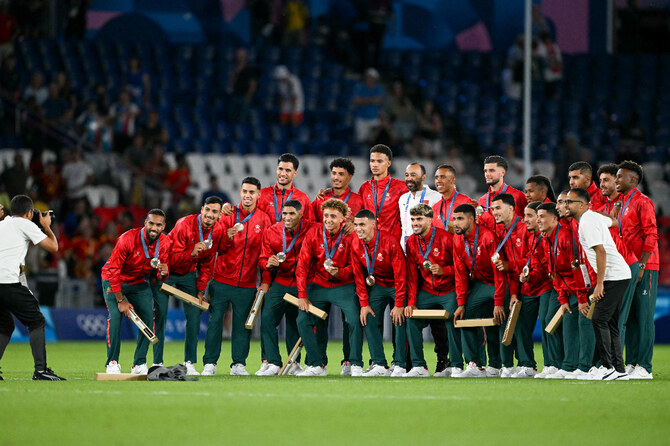
Morocco claimed the bronze medal at the Olympic men’s football tournament with a crushing 6-0 win over Egypt in Nantes on Thursday.
Morocco, which lost 2-1 to Spain in the semifinals, bounced back with the biggest win in the tournament to reach an Olympic podium for the first time thanks two a Soufiane Rahimi double, and strikes from Abde Ezzalzouli, Bilal El Khannouss, Akram Nakach and Achraf Hakimi.
Ezzalzouli opened the scoring with a superb shot into the top corner after 23 minutes, before the tournament’s top scorer Rahimi doubled the lead three minutes later with a fine header from Ezzalzouli’s cross.
El Khannouss got on the scoresheet six minutes into the second half with a great low finish after a solo run into the centre of the box and Rahimi netted his eighth Olympic goal to make it 4-0.
Defender Nakach tapped in from Rahimi’s pass and captain Hakimi completed the rout with a terrific free kick three minutes from time.
Morocco’s bronze medallists pose for a photograph with their medals after the men’s final football match between France and Spain during the Paris 2024 Olympic Games at the Parc des Princes in Paris. (File/AFP)
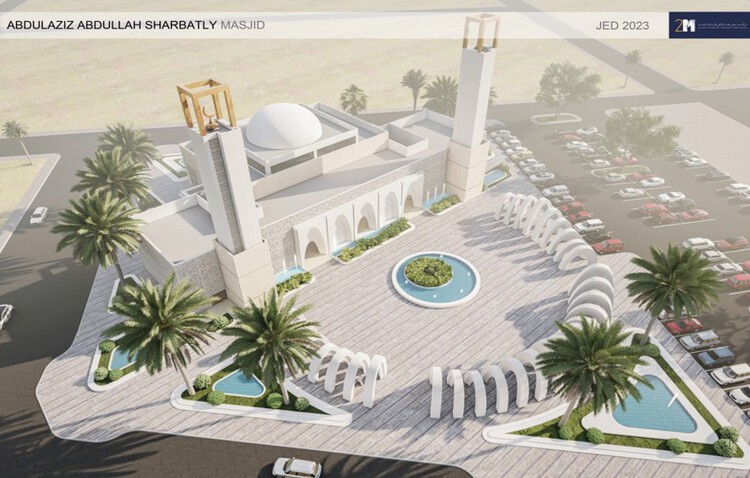
The Kingdom of Saudi Arabia is now home to the world’s first 3-D-printed mosque, spanning an area of 5,600 sqm. Located within the Al-Jawhara suburb of Jeddah, the mosque stands as a tribute to the late equestrian Abdulaziz Abdullah Sharbatly. The project by Forsan Real Estate utilizes cutting-edge 3D printing technology from Guanli.
The mosque’s construction was completed within six months and spearheaded by Wajnat Abdulwahed, the spouse of the late Abdulaziz Abdullah Sharbatly. Aimed at fostering serenity amongst worshipers while integrating natural light, the mosque also features distinctive minarets, creating a landmark within the neighborhood.
The inauguration of the mosque positions Saudi Arabia as a technological hub, surpassing the United Arab Emirates’ projected timeline for a similar endeavor. Dubai announced an initiative to construct the world’s first 3D-printed mosque last May. As a new and complex technique, the successful completion of the world’s 3D-printed religious infrastructure holds potential for the future of architecture and design.
The project has garnered global attention, showcasing the limitless possibilities of 3D printing technology in construction. In an interview with Arab News, Abdulwahed stressed the importance of “not losing the essence that mosques must embody, while also adhering to general conditions such as emphasizing the values of the King Salman Urban charter, the architectural details in the cultural heritage of Hejazi architecture and presenting them in a contemporary format.”
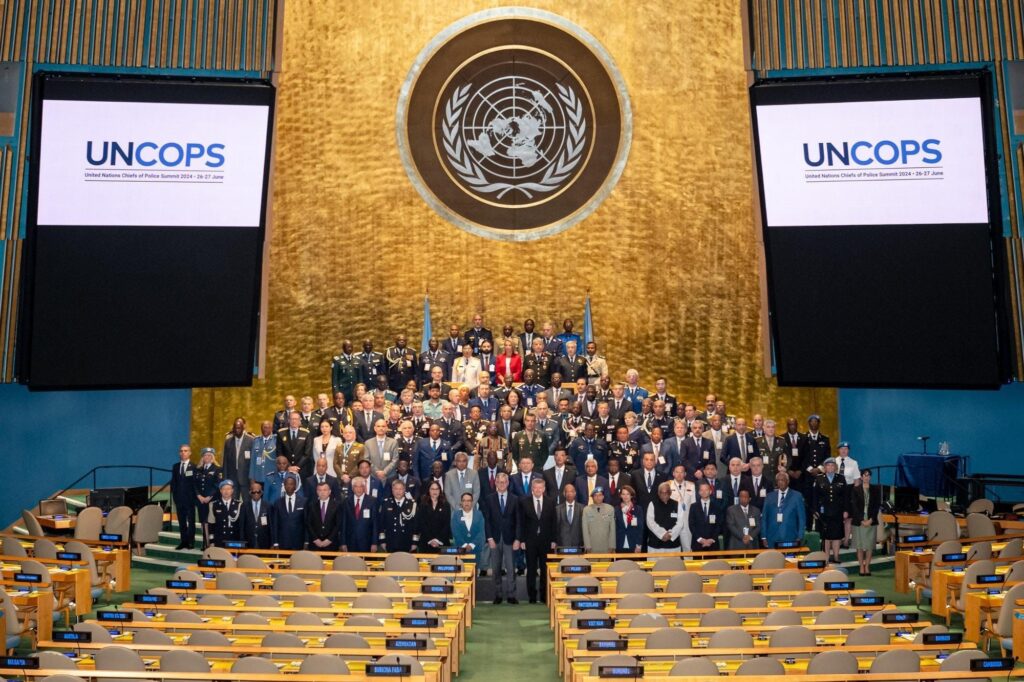
The UAE, represented by the Ministry of Interior, participated in the United Nations Summit of Chiefs of Police (2024), as the sponsoring country of the summit, which was held at the United Nations Headquarters in New York City, USA, on June 26 and 27, as part of its consistent approach and active participation. In strengthening global efforts to enhance security and stability for peoples, and to maintain peace in various regions of the world.
The summit is the largest gathering of ministers, police chiefs and senior representatives of regional police organizations in the world, and a regular event held every two years in the presence of police chiefs from member states to participate and hold bilateral talks, with the aim of promoting peace, security and international development for all, and raising levels of cooperation in the police and security field among member states. .
At the beginning of his speech, the Under-Secretary-General for Peace Operations, Mr. Jean-Pierre Lacroix, expressed his thanks to the UAE for sponsoring the UNCOPS 2024 Summit, as the UAE has contributed to many activities related to the United Nations Police, including hosting a number of conferences to evaluate the performance of United Nations Police Chiefs over the past two years in Abu Dhabi, which has enhanced the country’s contribution and role in strengthening dialogues with international organizations and raising police competencies.
The UAE also hosted a number of training courses to raise the capabilities of United Nations police personnel, and courses to raise the leadership of the female component of the United Nations Police, in addition to accrediting an elite group of Ministry of Interior officers to be certified trainers in various positions with the United Nations Police.
The Ministry of Interior participated in a number of periodic field visits to United Nations peacekeeping missions, including: United Nations missions in South Sudan, the Democratic Republic of the Congo, and the Central African Republic.
The delegation of the Ministry of Interior delivered a state speech during the summit, stressing the keenness of the UAE Ministry of Interior with the vision and support of the wise leadership to continue cooperation with all countries of the world and international organizations and institutions, especially in the security and police fields with the aim of combating crime of all kinds. It also valued the strategic partnership with the United Nations Police and the efforts It is making efforts in the Global Initiative for Law Enforcement for Climate (I2LEC), where the UAE’s harmonious policy, the foundations of which were laid by the late founder of the state, Sheikh Zayed bin Sultan Al Nahyan, may God rest his soul, played a decisive role in resolving many international and regional issues. The Emirati empowerment and construction process continued with the vision, support and follow-up of His Highness Sheikh Mohammed bin Zayed Al Nahyan, President of the State, “may God protect him.”
The delegation stressed the Ministry of Interior’s continued participation in international and regional efforts to establish international security and stability, wishing success and success to the participants in the work of this summit, which will provide a decent life full of prosperity and well-being for all our peoples.
– Guardians of the Earth.
On the sidelines of the United Nations Chiefs of Police Summit (UNCOPS 2024), the International Law Enforcement Initiative for Climate (I2LEC) hosted a panel discussion entitled “Guardians of the Earth: Global Law Enforcement Strategies to Protect the Environment,” in the presence of representatives from the global law enforcement community, with the aim of enhancing awareness of the impact Increase the positive impact of policing on environmental crimes and climate change, showcase best practices and share valuable lessons learned to benefit the global law enforcement community, and promote international cooperation to develop global law enforcement strategies for environmental protection.
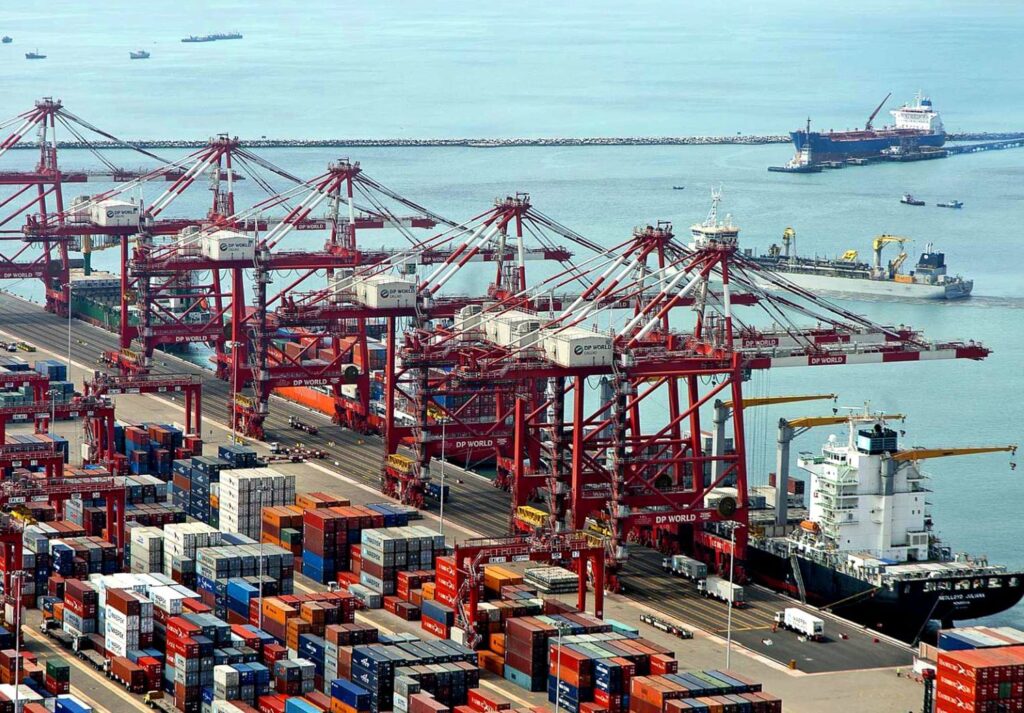
DP World announced today the completion of a $400 million expansion project at the Port of Callao in the Republic of Peru, to enhance the container handling capacity of the port’s southern terminal by 80%.
The Bicentennial Pier expansion project focused on increasing the length of the berth from 650 meters to 1,050 metres, making Callao one of the few ports in South America capable of accommodating three ships, or two mega ships, at the same time.
On the other hand, the project increased the handling capacity from 1.5 million TEUs (twenty-foot containers) to 2.7 million TEUs annually, and the container yard was also expanded to reach a total area of 40 hectares.
According to DP World, the Callao Port expansion project comes within the framework of ambitions to expand in Latin America, which were announced last month.
His Excellency Sultan Ahmed bin Sulayem, Chairman and CEO of DP World Group, said: “We are proud to contribute to a more sustainable future for Peru and for global trade.”
He added: “This investment confirms our firm commitment to supporting economic growth in the region and strengthening Callao’s leading logistics position, as a commercial center that sets new standards for sustainable port operations in South America.”
For his part, Carlos Merino, CEO of DP World in Peru and Ecuador, said that the completion of the Bicentennial Pier expansion project represents a turning point for the economy in Peru, which considers the port of Callao its economic center, through which more than 90 passengers are handled. % of the goods transported by containers in the country, and 60% of those goods are transported through the southern terminal.
In addition to expanding the quay and container handling capabilities, the project also adds state-of-the-art electrical powered equipment to the southern terminal at Callao Port. Including 15 cranes and 20 internal transport vehicles, making it the first port terminal in the world to have an equipment fleet of this size.
Merino added: “With the introduction of the latest electrically powered equipment and the application of sustainable practices, we are paving the way for a more efficient and sustainable future of global trade.”
To promote the transition towards sustainable energy in Peru, the southern terminal in the port of Callao now has the first electric vehicle charging station in Latin America with a capacity of 2 megawatts, to support DP World’s fleet of electric internal transportation vehicles, and contribute to reducing more than 2,000 tons of emissions. carbon dioxide annually.
Kilito has won several accolades, with his most recent being the International Prize of King Faisal for Arabic Language and Literature in 2023.
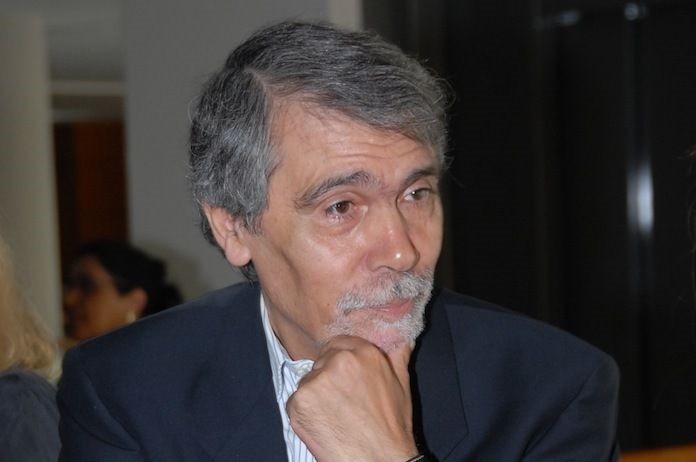
The renowned Moroccan writer Abdelfattah Kilito has been awarded the 2024 Grand Prix de la Francophonie by the French Academy.
Since its establishment in 1986, the Grand Prix of the French Academy has been dedicated to acknowledging Francophone individuals whose impactful efforts, whether locally or globally, have greatly supported the maintenance and propagation of the French language.
The French Academy revealed its roster of 2024 honorees on Thursday evening, recognizing 67 individuals across diverse domains such as literature, poetry, criticism, philosophy, history, cinema, theater, and French music.
Born in 1945, Kilito is a professor emeritus in the French department at Mohammed V University in Rabat. He has also taught in Paris, Princeton, and Harvard.
He has authored numerous works in both Arabic and French, in addition to publishing studies and research in Moroccan and Arab journals and scientific reviews.
Kilito has been recognized with numerous accolades, most notably the 2023 International Prize of King Faisal for Arabic Language and Literature.
Among his other awards, Kilito has received the Great Moroccan Award in 1989, the Atlas Award in 1996, the French Academy Award in 1996, and the Sultan Al Owais Prize for Criticism and Literature Studies in 2006.
The Grand Prix represents a pinnacle of achievement in celebrating Kilito’s profound influence on the French language and culture, both in his homeland and on a global scale.
As his scholarly contributions and literary talent continue to resonate globally, this latest award is another resounding acknowledgement of Kilito’s enduring legacy and his dedication to advancing intercultural dialogue within the global francophone community.
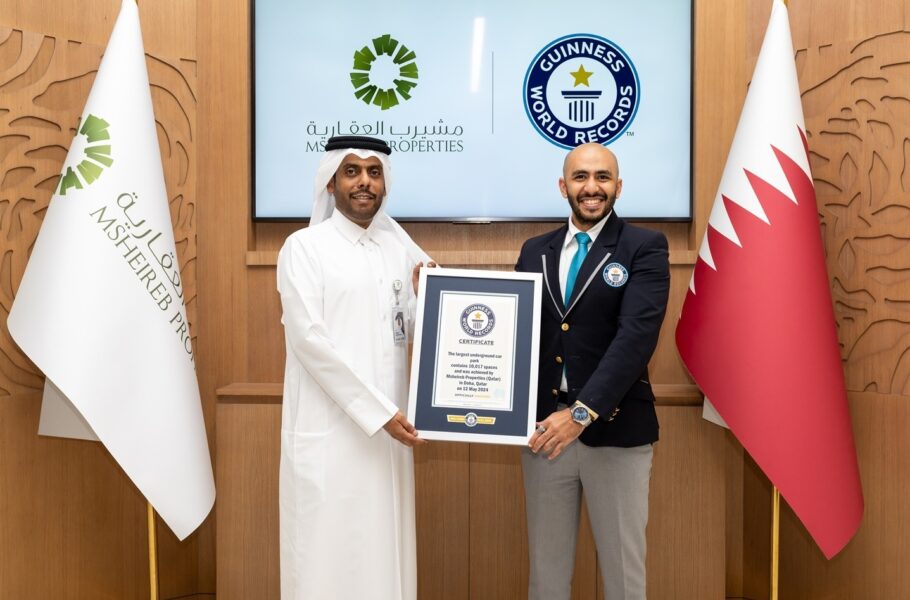
Msheireb Downtown Doha, Qatar’s pioneering sustainable and smart city district, has clinched the Guinness World Records™ title for the “Largest Underground Car Park” with a capacity of 10,017 spaces. The Guinness World Records™ recognition highlights the creative thinking that went into designing Msheireb Downtown Doha to create a sustainable urban district that sets a new benchmark for future smart city projects globally.
Msheireb Downtown Doha was designed for the human scale, which starts from the ground up. Locating car parking and building services underground has allowed the district to keep streets traffic-lite, enabling narrow, pedestrian-friendly walkways. This design improves connectivity across the wider city area, extending underground basements throughout the entire district.
“We wanted to reclaim outdoor spaces for the community by removing vehicles from the streets around Msheireb,” said Msheireb Properties CEO Eng. Ali Al Kuwari. “The Guinness World Records™ for the Largest Underground Car Park is a testament to our dedication to creating a sustainable and innovative city district that prioritizes the well-being of our community. By locating car parking and building services underground, we enabled architects to design attractive buildings with active façades on all sides.”
With an impressive capacity of 10,017 vehicles spread across six levels, Msheireb Downtown Doha’s underground parking system ensures ample space for residents, tenants, and visitors. The cutting-edge facility boasts an intelligent parking system that guides drivers to available spaces, making the parking experience seamless and hassle-free.
The underground parking system also had a significant impact on building design by removing the need for back service entrances which improved street quality and aesthetic cohesion.
As the flagship project of Msheireb Properties, Msheireb Downtown Doha has been designed to revive the historical downtown area with a new architectural language that is modern yet inspired by traditional Qatari heritage. The district incorporates the latest smart city technology and sustainability features, making it a model for future urban development’s worldwide.
Raafat Tawfik, Guinness World Records™ Official Adjudicator, commented, “We are thrilled to recognize Msheireb Downtown Doha for its outstanding achievement in creating the Largest Underground Car Park. This feat showcases the district’s commitment to innovation, sustainability, and enhancing the urban living experience.”
Msheireb Downtown Doha’s underground parking is just one of the many features that make the district a unique and attractive destination. With its pedestrian-friendly streets, diverse mix of residential, commercial, and retail offerings, and cultural attractions such as the Msheireb Museums, the district has become one of Qatar’s go-to destinations for residents and visitors alike.
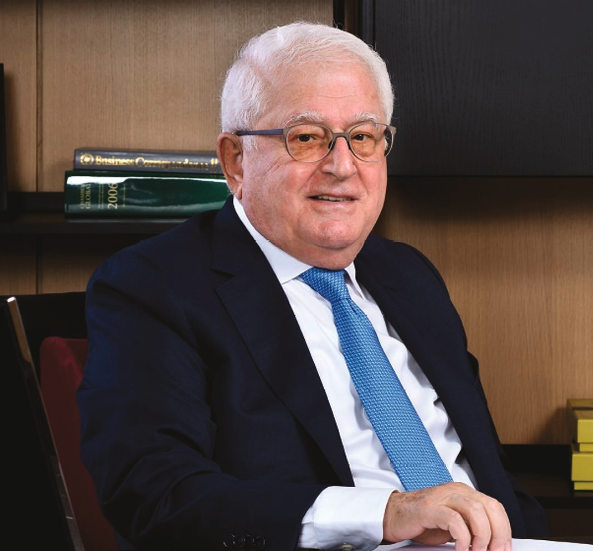
Founder of the globally recognized Lebanese chocolate brand Patchi, Nizar Choucair, has died, leaving behind a legacy in the industry.
Choucair transformed his childhood love for chocolate into a global brand, boasting more than 200 branches worldwide.
In a message on social media, Patchi announced Choucair’s death, posting: “It is with deep sorrow that we announce the passing of Mr. Nizar Choucair, our beloved founder. Mr. Choucair was a man whose warmth and generosity touched everyone who knew him.”
Patchi added: “His visionary approach transformed chocolate into an art that evokes emotions and creates cherished memories. His legacy lives on through Patchi, a brand that has reached hearts across cultures and celebrations. We honor his memory and the extraordinary heritage he built.”
Choucair was renowned for saying: “In every piece of chocolate, there is a story to be told and a memory to be made.”
The brand’s story began in 1974 when Choucair, driven by his passion for chocolate since the age of 11, introduced the concept of chocolate gifting.
This approach elevated the food to new dimensions, enhancing customer engagement and brand loyalty.
Born in Beirut, Choucair moved to Kuwait at 18, initially working for a gas manufacturing company before returning to Lebanon to launch Patchi.
In 1990, he received a significant boost when Banque Du Liban gave him an interest-free loan, enabling him to modernize his factory with new machinery.
Starting with a single shop in the Lebanese capital, Beirut, Choucair’s vision and entrepreneurial spirit saw Patchi expand worldwide.
Patchi, now a household name in luxury chocolates, has 203 stores globally, with a strong presence in Lebanon, Saudi Arabia, and Bahrain, as well as Qatar, the UAE, and the UK.
The brand entered the EU market in 1995 with boutiques in Paris and London. By 1999, the company expanded to Africa with a boutique in the Ivory Coast and opened a store in the US in 2000.
Recognized by Forbes in 2005 as the top luxury brand in the Middle East and the 15th top brand in the region, Patchi continued to grow.
In 2008, Patchi Silver boutique at Harrods in London was launched, featuring a box of chocolates wrapped in genuine leather and silk, selling for £5,000.
The brand, boasting as many as 62 branches in Saudi Arabia, is celebrated for its premium ingredients and distinctive packaging, all produced in-house.
In a 2009 interview with The National, Choucair reflected on Patchi’s accessibility: “Our chocolates are not expensive at all. We sell to people who want more expensive, elaborate boxes, but we also sell to the chauffeur who comes to pick it up.”
This inclusive approach helped Patchi become a beloved brand across various demographics, according to Choucair.
The founder’s journey was marked by resilience and adaptability, navigating the challenges of the Lebanese civil war by relocating his family and operations multiple times. Despite these hurdles, his commitment to his brand never wavered. The chocolateries’ expansion continued, with Choucair personally overseeing the opening of new stores worldwide.
Under his leadership, Patchi grew to employ more than 5,000 people, maintaining a family-oriented business ethos. His five children have played active roles in the company, with three of them working alongside him..
Oussama Choucair is currently the CEO of Patchi in the UAE and sits on the board of the company’s conglomerate, which his father founded in Beirut during the 1970s.
Nizar Choucair’s passion for premium chocolate gifting has been passed down to his son, who oversees operations in the crucial UAE market.
One of Oussama Choucair’s key projects is the construction of a new factory in Dubai Industrial Park, which will become Patchi’s largest manufacturing plant worldwide.
The family remains dedicated to expanding the business into new markets by forming strategic alliances with Armenia, Azerbaijan and Brunei as well as Egypt, Kazakhstan, Kuwait, and East Asia.
In 2012, Patchi launched a new brand identity to refresh its profile and reaffirm its commitment to the values that have made it the top choice for premium chocolate lovers.
The new brand identity was presented in a creative and modern style, reflecting the distinctive and fine quality that Patchi offers through its network of boutiques across Saudi Arabia.
The unveiling event occurred at the Patchi Boutique in Jeddah, attended by Zahid Nuri, then-general manager and co-founder of Patchi in Saudi Arabia.
Nuri stated: “The launch of Patchi’s new identity embodies the company’s dedication to its customers in Saudi Arabia and highlights our commitment to providing the best services, highest quality, and a variety of the most exquisite and finest chocolate gifts. This new identity marks a breakthrough that aligns with Patchi’s significant international expansion, solidifying its position as one of the largest global brands in the chocolate industry.”
source/content: arabnews.com (headline edited)
_________
Nizar Choucair, founder of Lebanese chocolate brand Patchi. Patchi
A fascinating new exhibit in Beirut is showcasing 108 original movie posters advertising Western films set in the Arab world.
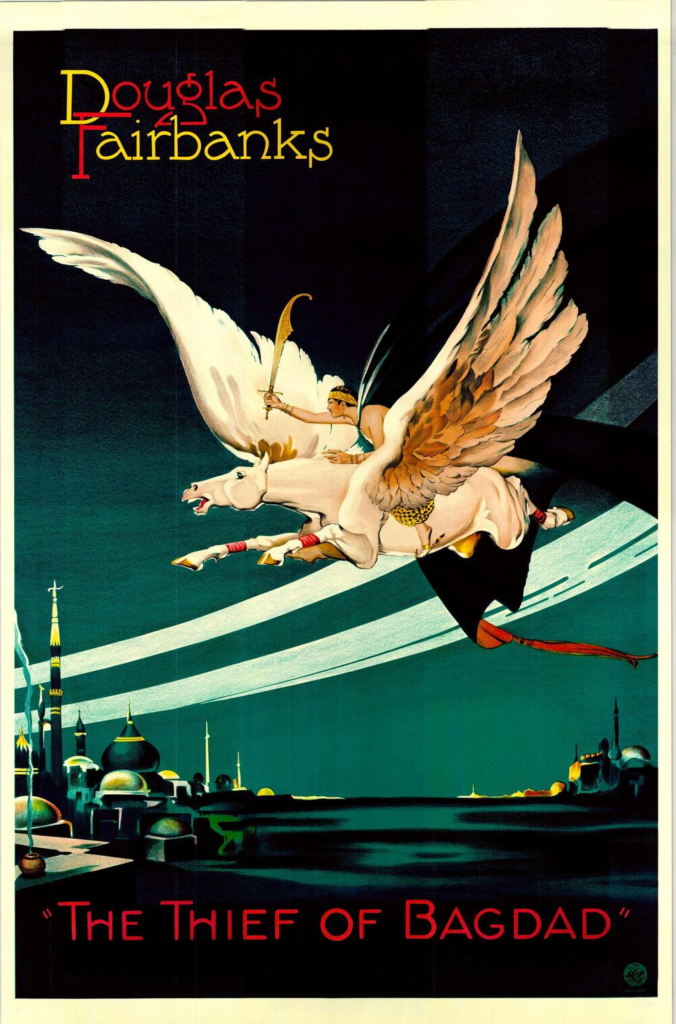
The original poster for the 1924 American film ‘Thief of Baghdad’. Courtesy Abboudi Abou Jaoude
The original poster for the 1924 American film Thief of Baghdad hangs on the wall of Dar El-Nimer for Arts and Culture in Beirut. Based on a story from One Thousand and One Nights, a collection of Middle Eastern folk tales, the film tells the story of a robber who pretends to be a prince after falling in love with a princess.
It features a young black-haired man flying through the night sky on a winged steed, above a city of domes and spires that looks more like Istanbul than the capital of Iraq. He clutches a gold scimitar with a wicked curved blade in one hand.
It is one of 10 posters, all advertising adaptations of the film in different languages. The silent swashbuckler was so popular that it was remade three times, in 1940, 1961 and 1978. The French poster for the 1940 version is particularly beautiful and lurid, featuring a procession of robed figures and elephants making their way through a marketplace in front of an orange palace. In the foreground, a boy in a large turban looks shiftily to one side as he bites into a piece of fruit, presumably stolen from a market stall. In the sky, another turbaned figure stands on a flying carpet.
The collection
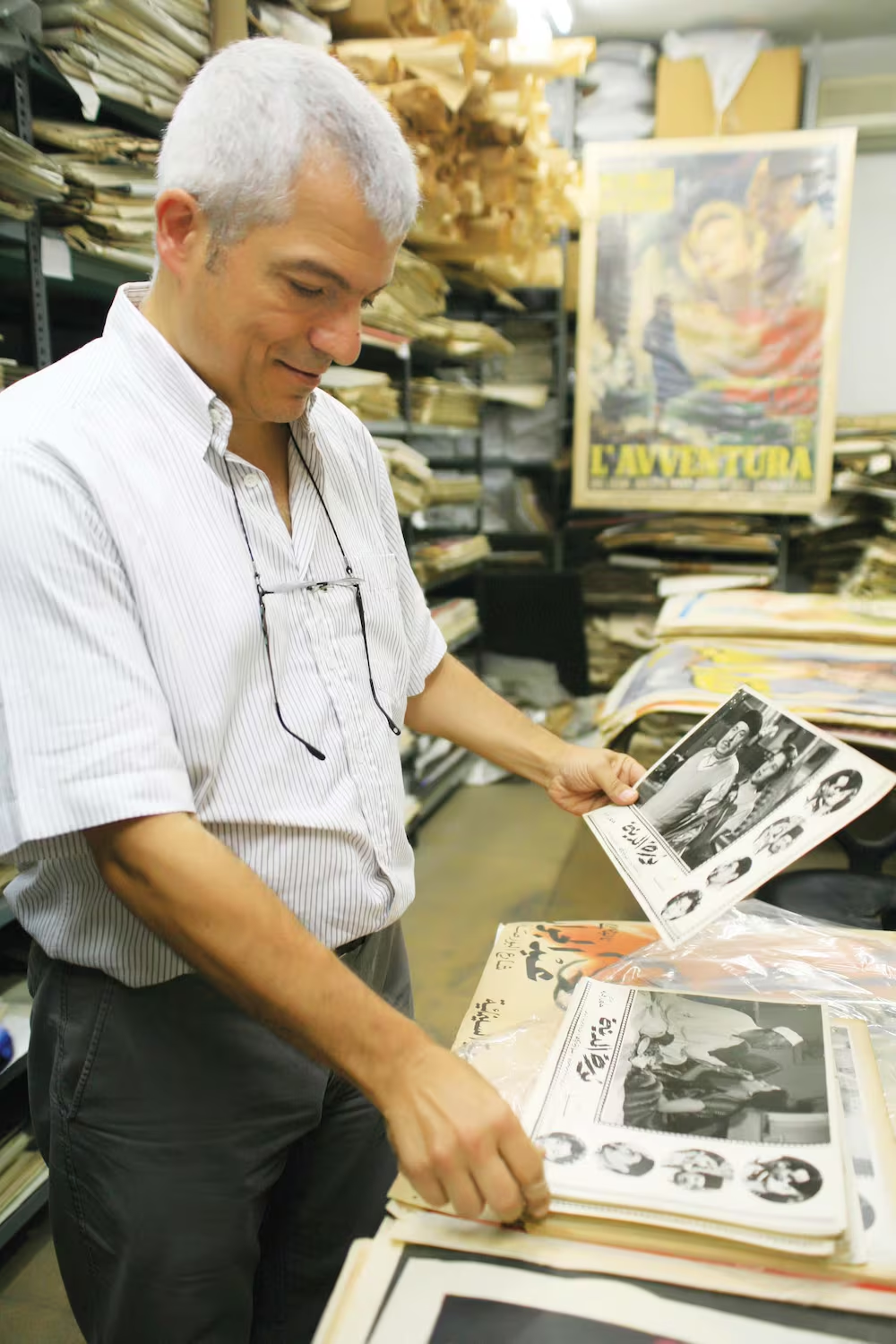
The pieces are part of a selection of 108 original posters advertising western films set in the Arab world and are on loan from private collector Abboudi Abou Jaoude, the curator of the show. “I have about 550 posters and about 300 pictures in my collection,” he says, strolling through the exhibition, which is organised by genres designated by neon signs. He stops frequently to point out a detail that makes him laugh or to delve into the facets of a particular film. “I started collecting because my favourite actors were Steve McQueen and Clint Eastwood,” he says. “Bullitt was the first poster I collected. Then For a Few Dollars More, a Spaghetti Western from Eastwood. But afterwards my interest changed and I started collecting foreign posters.”
Jaoude chose to name the exhibition Thief of Bagdad, not only because the film was so popular, but because it inspired so many others. “Baghdad is the most popular city at the beginning of the movies. There are around 55 films made in the 20th century with Baghdad in the name,” he says.
Most of them were shot in studios in America or Europe and bear no resemblance to reality. Thanks to the Orientalist fascination with One Thousand and One Nights, the Baghdad of these films is a place of total fantasy, filled with camels and elephants, flying carpets and genies, as well as heroes, villains and damsels waiting to be rescued or wooed.
The posters are hand-drawn in riotous colours and often show several different scenes. Many feature white actors playing Arab characters and reinforce Orientalist tropes such as dashing desert sheikhs and feisty dancing girls, or enslaved beauties who await rescue by a civilised foreign hero.
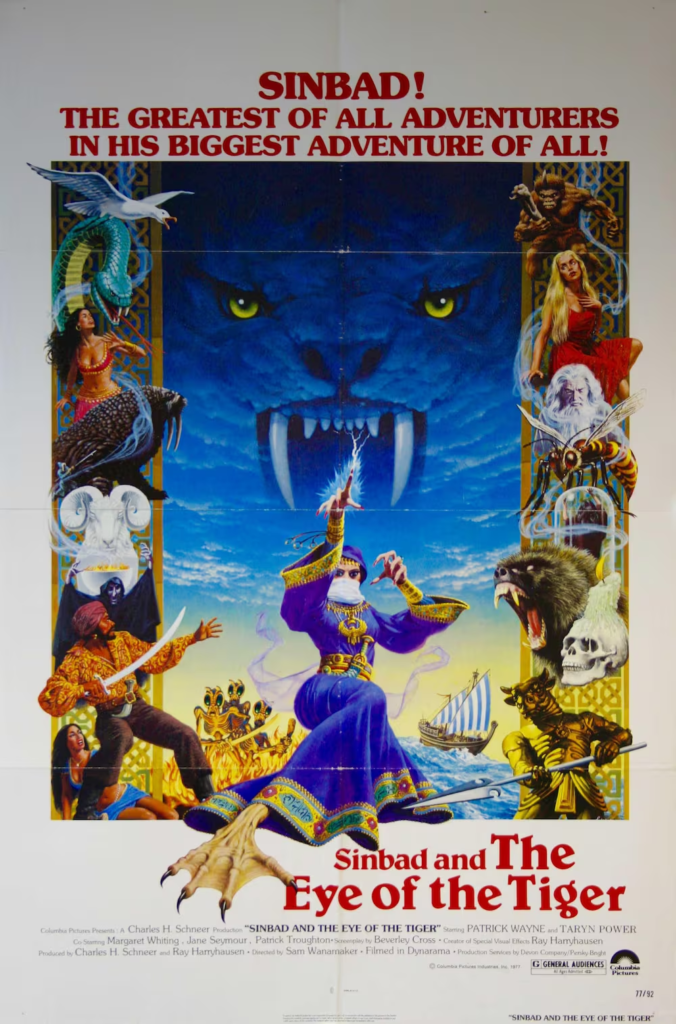
Like the Orientalist painters of the 19th century, the filmmakers and poster artists are fascinated by the idea of the harem. Many of the posters feature statuesque, white women posing evocatively. Others are simply bizarre. A 1977 poster for Sinbad and the Eye of the Tiger features a woman in a niqab and a bejewelled purple and gold robe, who shoots lightning from her hand as she kicks towards the viewer with a giant foot that resembles an eagle’s talon.
‘It’s about imagination’
Jaoude has divided the exhibition into four sections: love, fantasy, adventure and comedy. A fifth section features the posters of films shot on location in the Middle East. Beirut and Cairo were particularly popular filming locations in the 1960s and early 1970s, he explains, because shooting costs were low. That they were shot in the Arab world didn’t make the films – or their posters – any more accurate or realistic, however. Many of them are espionage themed and feature gun-toting spies and Soviet villains in Lebanon, running around the ruins of Baalbeck or fighting on top of the crusader castle in Saida.
The artists had sometimes not even seen the films they were advertising, so they based the posters on their own ideas about the Middle East, explains Jaoude. “It’s about imagination. They take the story from Arabian Nights. You can see in the posters that it’s a continuation of Orientalism,” he says.
Because viewers would not have a chance to see trailers for the films, the posters were intended to excite audiences and convince them the film was worth their time and money. “The shapes that shook a Harem Empire!” is the excited legend on the poster for the 1952 British film Babes in Bagdad, positioned beside images of fair-skinned women in belly dancer costumes and chains. The poster promises: “All its spectacle captured in exotic colour.”
An Italian poster for the 1961 adaptation of Thief of Bagdad advertises “The fantastic deeds … the incredible daring of the thief who defied an empire!” At the bottom of the poster, the artist lists a series of features that viewers can expect in the film: “Adventure! Trees that become monsters! Adventure! Flying horses soar! Adventure! The faceless fighters! Adventure! Army created by magic! Adventure! Gigantic killer crab! Adventure! Men turned into stone!”
Jaoude has spent decades building up his collection, visiting cinemas in Morocco, Syria, Egypt and across the region. “Whenever I visit these countries, most days I go to the old cinemas, the ones around the city, not in the centre, because they leave these posters in the theatres for re-issues,” he says. “Every five or six years they show the films again because people like these kinds of movies. After 20 years we find it funny, but at the time we found it very nice. People like the hero, the way he fights with the villain. It was popular.”
The films featured in the exhibition, which date from the 1920s to the 1970s, were intended to make money and entertain, rather than provide commentary on the Arab world. That changed after 1967 and the Arab-Israeli conflict, he says. “After 1967 there are many political movies about the Arabs, but before that I think it wasn’t political,” Jaoude explains.
“I think there are three eras. The first one is about imagination and the Arab world. In the second, there are many films with singing and dancing set in the Arab world and lots of films about the First and Second World Wars, set in Arab countries. After 1967, it changes. It’s the Arabs as villains.”
Despite their Orientalist attitudes, garish colours and an overabundance of cliches, the posters are often beautiful and always entertaining. For Jaoude, they are artefacts that are more important than the films they represent. “What stays in my mind is the posters. I forget the movies,” he says with a smile.
Thief of Baghdad is at Dar El-Nimer for Arts and Culture in Beirut
Saudi Arabia’s economy witnessed growth of 1.4 percent in the first quarter of 2024 – higher than that seen across the G20 as a whole, according to new data.
The Organisation for Economic Co-operation and Development has released its latest gross domestic product report for the G20 countries, noting that the Kingdom bounced back from a contraction of 0.6 percent in the previous three-month period.
GDP in the G20 area grew by 0.9 percent quarter-on-quarter in the first quarter of 2024, slightly up from 0.7 percent in the previous quarter.
The economic performance of the G20 area was primarily driven by China and India, with Turkiye, Korea, and Indonesia also recording higher GDP growth than the G20 average.
Turkiye led with an increase of 2.4 percent, followed by India at 1.9 percent, China at 1.6 percent, Korea at 1.3 percent, and Indonesia at 1.2 percent.
The report highlighted that while Saudi Arabia experienced a significant recovery, other G20 countries faced varying economic conditions.
The US saw a slowdown, with GDP growth dropping to 0.3 percent in the first three months of the year from 0.8 percent in the previous quarter.
Japan’s economy contracted by 0.5 percent, and South Africa saw a contraction of 0.1 percent.
Conversely, Brazil, the UK, and Germany showed signs of recovery in the first quarter of 2024 after contractions over the previous three month period, with growth reaching 0.8 percent, 0.6 percent, and 0.2 percent, respectively.
Canada, Mexico, and the EU grew by 0.4 percent, 0.3 percent, and 0.3 percent, respectively, in the three months to the end of March, after zero growth in the final quarter of 2023.
Year-on-year, GDP in the G20 area grew by 3.3 percent in the first three months of the year, maintaining the same growth rate as the previous quarter.
Among G20 economies, India recorded the highest year-on-year growth rate at 8.4 percent in the first quarter of 2024, followed by Turkiye at 7.4 percent.
However, Saudi Arabia recorded the most significant year-on-year decline at a drop of 1.5 percent.
According to a separate report by the General Authority for Statistics released earlier in June, the Kingdom’s non-oil activities also rose by 0.9 percent in the first three months of this year compared to the previous quarter.
Additionally, non-oil activities increased by 3.4 percent year-on-year in the first quarter of 2024.
GASTAT further noted that Saudi Arabia’s GDP amounted to SR1.01 trillion ($270 billion) in the first quarter.
“Crude oil and natural gas activities achieved the highest contribution to GDP by 23.4 percent, followed by government activities at 15.8 percent, and then wholesale and retail trade, restaurants, and hotels activities with a contribution of 10.4 percent,” said GASTAT in the report.
Strengthening the non-oil private sector is crucial for Saudi Arabia, as the Kingdom is steadily diversifying its economy to reduce its decades-long dependence on oil.
The report further noted that government activities in Saudi Arabia rose by 2 percent year-on-year in the first quarter while declining by 1.1 percent on a quarter-on-quarter basis.
GASTAT added that the Kingdom’s oil activities increased by 1.7 percent in the first quarter compared to the previous quarter.
However, oil activities dipped by 11.2 percent year-on-year as Saudi Arabia reduced its crude production in line with the decision of the Organization of the Petroleum Exporting Countries and its allies, collectively known as OPEC+.
To maintain market stability, Saudi Arabia reduced its oil output by 500,000 barrels per day in April 2023, and this cut has now been extended until December 2024.
In April, the International Monetary Fund projected that Saudi Arabia’s economy would grow by 2.6 percent in 2024 and 6 percent in 2025.
In the same month, the World Bank also raised the growth prospects of the Kingdom’s economy to 5.9 percent in 2025, up from an earlier projection of 4.2 percent.
Furthermore, Saudi Arabia’s gross fixed capital formation surged to SR317.5 billion in the first quarter of 2024, marking a significant 7.9 percent increase compared to the same period last year.
According to a separate report by the Saudi Ministry of Investment released earlier this month, gross fixed capital formation expansion was driven by growth in both the government and non-government sectors.
GFCF, which represents the net increase in physical assets within an economy, plays a crucial role in gross domestic product as it reflects capital accumulation supporting future production capabilities and economic growth.
Of the total GFCF, the government sector contributed 7 percent, experiencing a robust growth rate of 18 percent. Meanwhile, the non-government sector, constituting 93 percent, also saw a substantial rise of 7.2 percent.
Saudi Arabia’s proactive efforts to attract foreign direct investment and bolster bilateral relations have significantly strengthened the Kingdom’s economic trajectory.
FDI serves as a pivotal catalyst for GFCF development, facilitating funding for investment projects and resource and knowledge transfer across borders, thereby fostering economic expansion and maturation.
Key initiatives such as the National Investment Strategy, the Regional Headquarters Program, and zero-income tax incentives for foreign entities play a vital role in advancing Vision 2030, which aims to diversify and expand the economy.
During this quarter, the Ministry of Investment issued 3,157 investment licenses, marking a 93 percent surge compared to the same period last year, excluding licenses issued under the anti-concealment law.
In its economic and investment monitor released in late May, the ministry revealed that the construction and manufacturing sector dominated with 47 percent of total permits, followed by vocational and educational activities, information and communication technology and accommodation and food services as well as wholesale and retail trade.
The real estate sector witnessed the most significant year-on-year growth, with a staggering 253.3 percent increase in investment licenses.
Furthermore, 127 international firms secured permits to relocate their regional headquarters to Saudi Arabia in the first quarter of 2024, reflecting a remarkable 477 percent year-on-year upsurge.
Leading corporations such as Google, Microsoft and Amazon as well as Northern Trust, Bechtel, IHG Hotels & Resorts, and Deloitte have established operations in the Kingdom under this program.
The report also highlights that Saudi Arabia processed 445 applications for investor visit visas during the first quarter of this year, enabling overseas businesspersons to explore opportunities in the country.
source/content: arabnews.com (headline edited)
___________
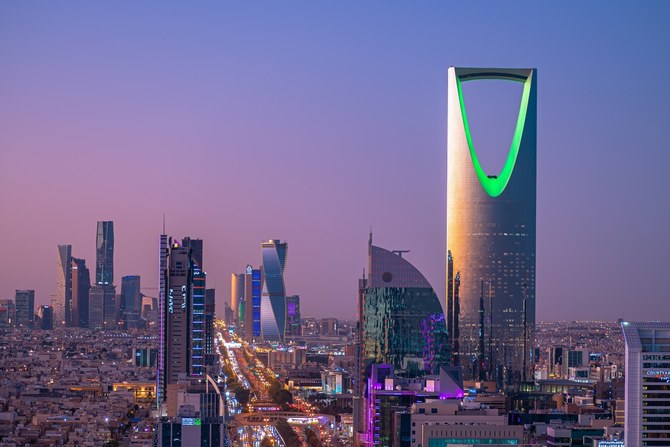
The report highlighted that while Saudi Arabia experienced a significant recovery, other G20 countries faced varying economic conditions. Shutterstock