Arabs & Arabian Records Aggregator. Chronicler. Milestones of the 25 Countries of the Arabic Speaking World (official / co-official). AGCC. MENA. Global. Ist's to Top 10's. Records. Read & Enjoy./ www.arabianrecords.org
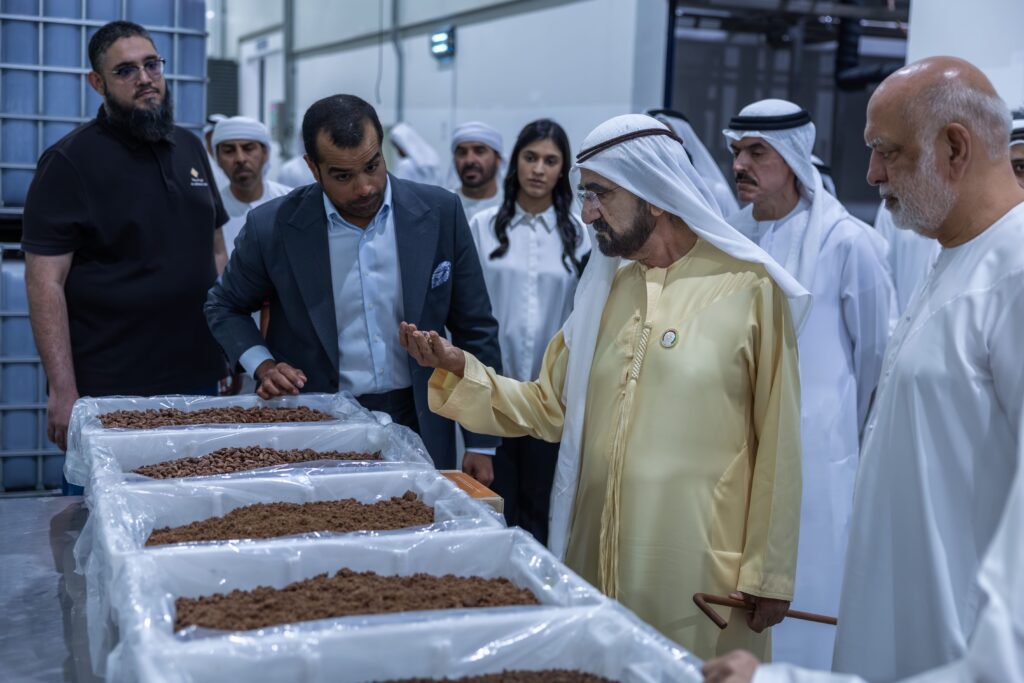
His Highness Sheikh Mohammed bin Rashid Al Maktoum, Vice President, Prime Minister and Ruler of Dubai, visited Al Barakah Dates Factory, the world’s largest privately-owned dates factory located in Dubai Industrial City.
The facility spans over 800,000 square feet, with an annual production capacity of 100,000 tonnes, one of the market leaders for packaging and processing dates in the world.
During the visit, H.H. Sheikh Mohammed said that the UAE continues to strengthen its position as a global hub for advanced food industries through innovation, stronger production chains, and boosting the competitiveness of national products. He noted that the dates industry is a successful example of turning the country’s agricultural heritage into a modern, high-value-added sector that supports the economy and enhances food security.
H.H. Sheikh Mohammed said that the UAE continues to invest in key sectors that impact people’s lives, especially the food sector, and is developing its national industries to be more globally competitive through advanced technologies, higher production efficiency, and expanded access to international markets.
H.H. Sheikh Mohammed added that the dates industry is part of the UAE’s identity and heritage, and its development reflects a vision of turning resources into sustainable opportunities.
He also said humanitarian initiatives in the sector, including efforts to combat malnutrition, reflect the UAE’s commitment to improving lives and addressing global food security challenges.
During the visit, H.H. Sheikh Mohammed, accompanied by Malek Al Malek, Chairman of TECOM Group, was briefed by the factory founder Saleem Mohammed and his son Yousuf Saleem Mohammed, Managing Director, on production lines, manufacturing and packaging stages, as well as the factory’s range of products.
H.H. Sheikh Mohammed also reviewed the global reach of the factory’s products, which are exported to 97 countries, with the US, the UK, and EU among the key markets.
The factory is located in Dubai Industrial City, part of TECOM Group’s industrial parks, which was launched in 2004. The Dubai Industrial City hosts over 350 factories and more than 17,000 employees, and is strategically located near Jebel Ali Port, Al Maktoum International Airport, and Etihad Rail’s freight terminal, ensuring strong logistics connectivity. The factory reflects private sector success in the food industry, and was founded by businessman Saleem Mohammed, who began his career in Dubai in 1983 before moving into dates trading and processing in the 1990s.
Landmark study bridges history and modern scholarship
Project highlights Kingdom’s preservation of Islamic heritage
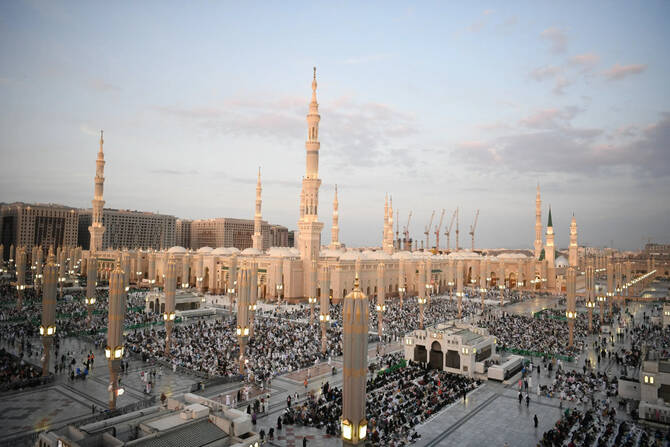
A new scholarly encyclopedia documenting the architectural evolution of the Prophet’s Mosque has emerged as a major reference work, charting the development of one of Islam’s most significant landmarks across centuries.
Published by the Al-Madinah al-Munawwarah Research and Studies Center, the project forms part of broader efforts to systematically record the mosque’s history and features through a rigorous academic framework enhanced by modern research tools, a review by the Saudi Press Agency (SPA) said.
The encyclopedia traces the mosque’s transformation from its foundation during the Prophetic era through successive expansions across Islamic history, culminating in large-scale Saudi-era developments that have expanded capacity while preserving its architectural and spiritual identity.
Beyond historical documentation, the work provides analytical insight into key structural elements — such as arcades, domes, and minarets — examining their functional and aesthetic evolution, alongside associated landmarks that underscore the mosque’s enduring religious and civilizational role.
The initiative reflects Saudi Arabia’s continued commitment to serving the Two Holy Mosques and safeguarding Islamic heritage through specialized knowledge projects, the review said.
By preserving and systematizing the architectural memory of the Prophet’s Mosque, the encyclopedia is expected to fill a critical gap in scholarly research, offering a valuable resource for academics, students, and those interested in the cultural and human dimensions embedded in the mosque’s design,
source/content: arabnews.com (headline edited)
_______________
General view of the Prophet’s Mosque in Madinah. (SPA file photo)
The commission is headquartered in Beirut and brings together 21 member states across the Middle East and North Africa.
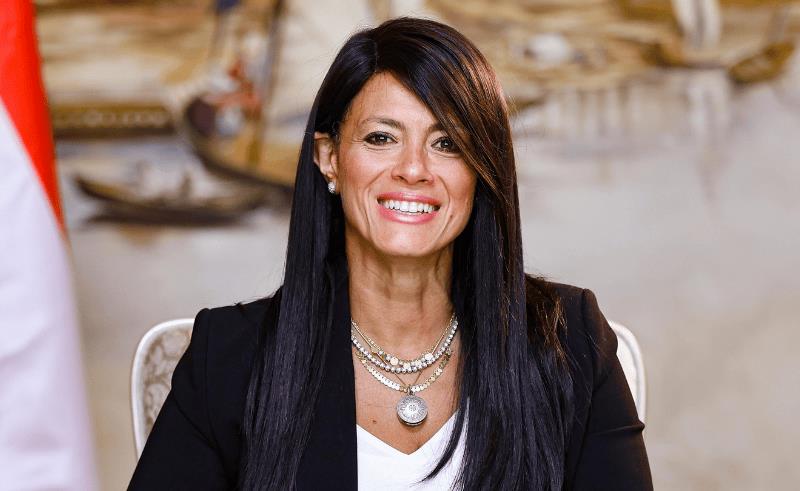
Rania Al-Mashat has been appointed Under-Secretary-General of the United Nations and Executive Secretary of the Economic and Social Commission for Western Asia, following an announcement by Secretary-General António Guterres.
Al-Mashat brings more than 25 years of experience in macroeconomic policy, central banking and international development. Between 2018 and 2026, she served in Egypt’s government across multiple portfolios, including tourism, international cooperation, and planning and economic development, becoming the country’s first female minister of tourism.
Prior to her ministerial roles, she served as sub-governor for monetary policy at the Central Bank of Egypt and worked as an adviser to the chief economist at the International Monetary Fund in Washington.
The Economic and Social Commission for Western Asia, headquartered in Beirut, is one of the UN’s five regional commissions, serving 21 countries across the Middle East and North Africa. Its mandate includes supporting economic integration, policy coordination and sustainable development across the region.
Al-Mashat holds a PhD and MA in economics from the University of Maryland, College Park and a BA in economics from the American University in Cairo. She has also completed executive programmes in leadership and public policy at Harvard and Oxford.
Leo XIV’s upcoming visit will honour Saint Augustine’s roots and a small Catholic community that shared the nation’s suffering.
For the first time in Catholic history, a pope will make an official visit to Algeria.
From 13 to 15 April, Pope Leo XIV will begin an African tour in the Maghreb country, which will then take him to Cameroon, Angola and Equatorial Guinea.
His trip to Algeria will include two stops: the capital, Algiers, and Annaba, the city of Saint Augustine. The fourth century thinker is a key figure in the pope’s life and in the meaning given to this unprecedented visit.
“I am an Augustinian, a son of Saint Augustine, who once said: ‘With you I am a Christian, and for you I am a bishop’,” Leo said in his first address as Pope to the crowd gathered in St Peter’s Square in Rome in May last year to celebrate his election.
These words sparked enthusiasm in the Algerian media, which emphasised the new Pope’s attachment to the cleric and theologian born in 354 in Thagaste, an Amazigh-Roman city known today as Souk Ahras, in northeastern Algeria.
As bishop of Hippo, the ancient name for the city of Annaba, he profoundly influenced Christian thought.
“Saint Augustine is important to the Pope because he entered the Augustinian Order at a very young age,” Cardinal Jean-Paul Vesco, Archbishop of Algiers, told Middle East Eye.
“From the age of 13, Leo attended a school in the United States [where he was born] run by the Augustinians,” he added.
After studying mathematics and philosophy in Philadelphia, the man then known as Robert Francis Prevost joined the Augustinian order at the age of 22 and rose through the ranks to become prior general of the order.
It was in this capacity that he made his first visit to Algeria, in 2001, to participate in the first international symposium on Saint Augustine at the University of Annaba.
Cardinal Vesco says he convinced the new Pope to visit Algeria in the early days of his pontificate.
On the agenda for his upcoming visit is a public address at the Martyrs’ Monument, erected on the heights of the capital in memory of those killed during the Algerian war of independence, followed by a meeting with the country’s highest authorities at the conference centre of the Great Mosque.
Augustine ‘was born here’
The Algerian authorities are attaching particular importance to this visit, the preparations for which are being personally overseen by President Abdelmadjid Tebboune.
Annaba, in particular, has been transformed into a vast construction site, with asphalting, painting and cleaning of the streets along the road leading to the Basilica of Saint Augustine, which is also undergoing maintenance work.
‘Augustine is a figure rooted in North African geography and culture. Yet, this essential dimension has long been obscured’
– Abdenasser Smail, historian
For historian Abdenasser Smail, who recently published Saint-Augustin, un Nord-Africain universel (Saint Augustine, a Universal North African), the Pope is visiting Algeria and Annaba to pay homage to the philosopher of antiquity but also “because Augustine is not just a Christian figure.
A key element of Augustine’s thought was how he radically internalised the relationship with God in the depths of the self, what he calls the “inner trinity”: memory, intelligence and will.
“He is one of the major thinkers in the history of humanity. Europe embraced him. The Vatican drew inspiration from him. But he was born here,” Smail told MEE.
The pope’s visit, he added, is not only religious: “It is about historical memory.”
According to him, the tribute Leo is paying to Saint Augustine is a way of righting a historical wrong that has long obscured the theologian’s true origins.
“Augustine is a figure rooted in North African geography and culture. Yet, this essential dimension has long been obscured, both in Western representations and in contemporary Algerian national narratives,” Smail said.
In a country with an overwhelming Muslim majority, “an Algerian Muslim can be proud of this,” he added.
“Because being proud of one’s history doesn’t mean adopting another faith. It means recognising that this land has produced multiple great figures. To deny this is not to defend Islam. It is to impoverish our own memory,” he said.
An Algerian Church
Beyond the very symbolism of Saint Augustine, Pope Leo XIV’s visit to Algeria is also a tribute to, and support for, the Algerian Church, “a very small Church in a Muslim world”, as Vesco described it.
“This is the church of that people, the Algerians,” added the archbishop of Algiers, who has lived in the country for nearly 20 years and was naturalised as an Algerian citizen in 2023.
The Catholic Church in Algeria is one of the smallest in the world: barely 4,200 faithful spread across four dioceses – Algiers, Oran, Constantine and Laghouat – out of a population of 46 million.
It has about 60 priests and 100 nuns and monks, primarily from Europe, Africa and Latin America. Its most striking characteristic is its composition: the faithful are overwhelmingly foreign and of sub-Saharan origin, a reality now visible in every parish.
Native Algerian Catholics number only a few hundred; no official figures are available. The number of faithful plummeted dramatically with Algeria’s independence in 1962 and the mass exodus of Europeans from the country.
“Of course, the Church returned to Algeria with [French] colonisation, because it had practically disappeared [after the Arab-Islamic conquest of North Africa in the 7th century],” Vesco said.
However, this Church has become Algerian, he explained, emphasising the essential role of the archbishop of Algiers from 1954 to 1988, Leon-Etienne Duval, in the process.
As early as 1955, a year after the start of the War of Independence that pitted Algerians against the French occupiers, Duval denounced the socio-economic injustices of the colonial system and the torture and massacres of Algerians committed by the French army, while supporting their self-determination.
Naturalised Algerian in 1964 and promoted to cardinal, Duval succeeded in transforming the church in Algeria from a colonial institution into a church officially recognised and supported by a newly independent state where Islam was proclaimed the state religion.
“Our church remains marked by Cardinal Duval’s appeal in 1962 to priests to stay in Algeria [at the end of the war],” Cardinal Vesco said.
‘It is a church that truly serves Algerian society’
– Cardinal Jean-Paul Vesco, archbishop of Algiers
“This is how we kept schools, dispensaries, etc open from independence onward, because it is a church that truly serves Algerian society.”
The position defended by Duval, inherited from decades of struggle by liberal Catholics in Algeria, was supported by the Vatican and contributed to the Catholic Church’s dialogue with the Muslim world.
“By bringing the problems of the ‘Third World’ to the forefront, the Algerian experience also contributed to a profound shift in the Church’s theological and political stance toward Islam,” writes researcher Uriel Gadessaud in the journal Outre-Mers.
“It was during the Second Vatican Council (1962–1965) that the Holy See underwent a true aggiornamento, under the influence of the Algerian War,” he added, referring to the Vatican’s new opening to the world and other religions.
In addition to aspirations for independence, members of the Catholic Church in Algeria shared with local Muslims the sufferings of the “black decade”, the civil war that ravaged the country between 1992 and 2002.
Triggered by the army’s halt to the electoral process in January 1992 after the Islamic Salvation Front (FIS) won the first round of parliamentary elections, the conflict between armed Islamist groups and security forces killed an estimated 200,000 people.
Among them were 19 Christian religious figures killed between 1994 and 1996, including the Bishop of Oran, Pierre Claverie, and the seven monks of Tibhirine, whose abduction and murder in 1996 remain shrouded in mystery.
Declared martyrs by former Pope Francis, they were beatified in December 2018 in Oran – the first beatification ceremony held in a Muslim country. During his upcoming visit to Algiers, Pope Leo is scheduled to pray in the chapel of these 19 “martyrs of Algeria”.
Calls to address human rights
Today, the small Catholic community lives in harmony with a predominantly Muslim Algerian society, and the faith is officially protected and recognised by the authorities, even if non-Muslim religious practices remain confined to specific spaces.
“I live my faith discreetly, as required by the fact that I live in a Muslim society, but I have never received a single derogatory remark,” Simon, an Ivorian student who has been living in Algiers for three years, told MEE.
Every Sunday, he attends mass at the Diocesan Centre in Hydra, an upscale neighbourhood of the capital.
‘I live my faith discreetly, as required by the fact that I live in a Muslim society, but I have never received a single derogatory remark’
– Simon, Ivorian student in Algiers
“Beyond prayer and communion, we meet to organise charitable activities, classes for disadvantaged Algerian children and book clubs,” added Simon, who said he is “proud and happy about the Pope’s visit”.
“It’s a gift, a grace, for our little flock here in Algeria.”
However, the Christian presence in Algeria also has a dark side: the restrictions targeting Protestant worship and its evangelical branch, although freedom of worship is enshrined in the constitution.
Since 2006, a decree “establishing the conditions and rules for the practice of religions other than Islam” requires authorisation for the creation of religious associations, their practices and their use of buildings.
While the Catholic Church in Algeria enjoys the status of an approved association, and its sermons are even broadcast on public radio, this is not the case for the Protestant Church of Algeria, officially recognised since 2011 but whose activities are only authorised within its main headquarters in Algiers.
There are no longer any legally open Protestant places of worship in the country. The authorities closed them because they suspect evangelicals of conducting conversions, which is prohibited by Algerian law. Some pastors are even facing legal action.
Several Christians contacted by MEE declined to express themselves for fear that the authorities would suspect them of being converted evangelicals.
This situation is regularly denounced in the US State Department’s report on religious freedom and by human rights groups.
On Tuesday, three international NGOs urged Pope Leo XIV to raise issues of human rights and religious freedom with the Algerian authorities during his visit to Algeria.
“We ask you to call on the authorities to end discrimination against religious minorities and to respect their right to freedom of religion or belief, including the right to practice their religion freely,” EuroMed Rights, Human Rights Watch and MENA Rights Group said in a letter addressed to the pontiff.
According to the groups, religious minorities “face discriminatory legal and administrative restrictions that limit their ability to practice, organise and express their faith openly”.
In addition to Protestants, they cite Ahmadis, followers of a faith originating in India who consider themselves Muslim but are regarded as heretics by the Sunni majority in Algeria.
The NGOs also urged the Pope to call on Algerian authorities to “release those arbitrarily detained for exercising their human rights”.
“Hundreds of protesters, activists, journalists and human rights defenders have been arbitrarily detained, unjustly prosecuted and sentenced to prison terms for exercising their rights to freedom of expression and peaceful assembly,” they said.
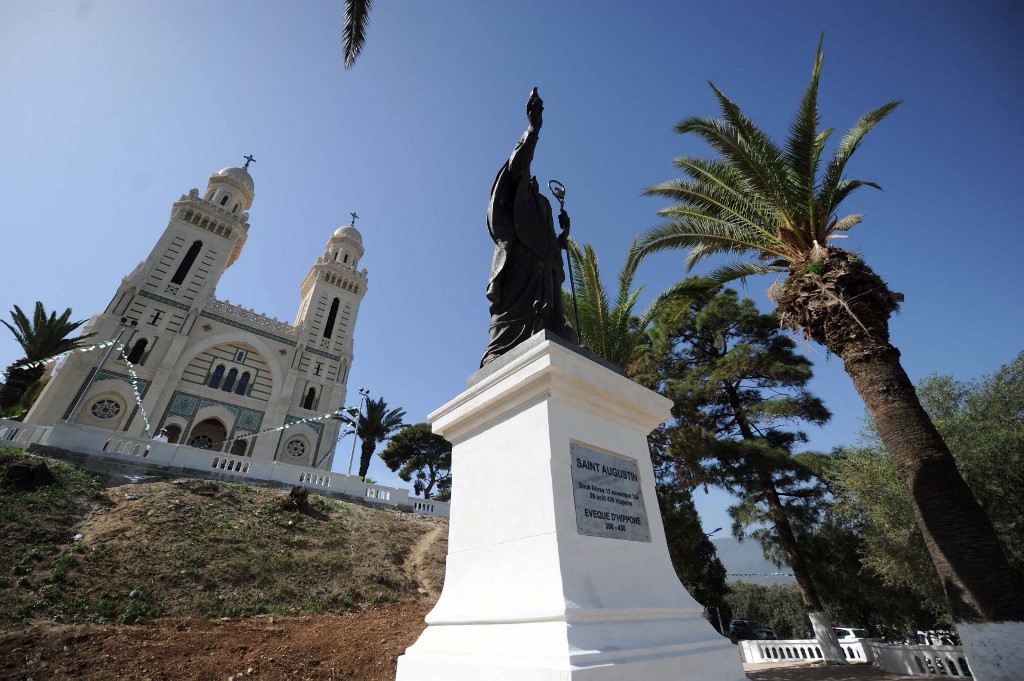
A picture taken on October 19, 2013 shows a statue of Saint-Augustin in front of the Saint-Augustin basilica after its reopening in the Algeria’s eastern city of Annaba. The basilica, built in 1909 during the colonial period, fell into disrepair before being reopened after major restoration works. AFP PHOTO / FAROUK BATICHE (Photo by FAROUK BATICHE / AFP)
Riyadh-based academics’ findings on broad beans being tested in US.
At the same time when the Fifa World Cup is being held in South Africa, another fascinating tournament of sorts has been held in Singapore — a “medical championship”, so to speak, on broad beans.
Tens of scientists from all over the world presented and discussed research and papers in the first international conference titled: “Neuro Talk 2010: from Nervous Functions to Treatment”, held from June 25-28.
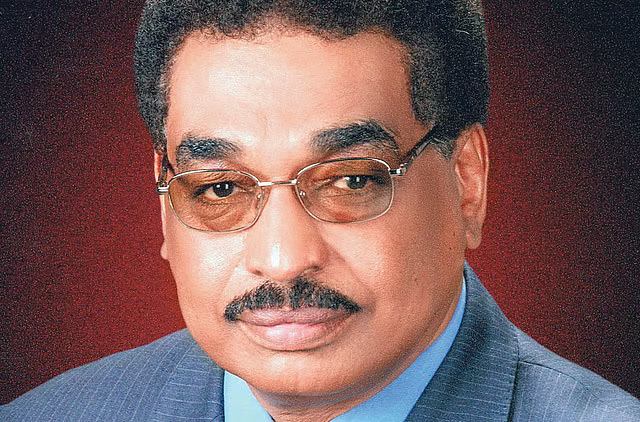
Scientists and doctors from 30 countries discussed brain and nervous system malfunctions and diseases, Professor Mustafa Abdullah Mohammad Saleh, consultant neurologist at the College of Medicine at King Saud University in Riyadh, who attended the conference, told Gulf News.
He said the conference discussed the latest methods of treatment by gene and stem cell therapy.
“The conference discussed a paper on the scientific discovery we have recently made and which was published in the US medical journal about the therapeutic potential of broad beans in preventing epileptic fits,” he said. Western news reports had earlier said that professor Saleh and his countryman, Ali Ahmad Mustafa, professor of pharmacology at the College of Medicine at King Saud University, had discovered that broad beans have a positive effect on epilepsy treatment.
Plant extracts
The two Sudanese scientists agreed in research on the treatment of epilepsy using plant extracts, to conduct joint research to decide the anti-convulsant substance in broad beans that prevents convulsions.
Professor Saleh’s discovery about the characteristics of broad beans in treating epilepsy is currently being tested in the labs of Harvard University.
He said his discovery was sparked by his observation that epilepsy cases among schoolchildren in Sudan who eat foul (broad beans) for breakfast (and sometimes dinner) rated between 0.9 per cent and one per cent per 1,000.
This figure is remarkably lower than that in countries which do not eat broad beans like North and South America which was about 2.6 per cent per 1,000 students and other African countries which was two to three times higher than that of the Americas.
“This is how I got the idea that broad beans must contain a substance that protects against epileptic convulsions. I immediately started the research work with my colleague, Professor Ali Mustafa,” he said.
Professor Saleh said they injected a group of mice with strychnine and picrotoxin, two drugs which cause convulsions leading to death, while they fed another group of mice with a fluid made of foul before giving them the two drugs.
“Convulsions and deaths from strychnine were decreased by about 66 per cent in the group of mice which were pre-treated with foul,” he said.
Professor Saleh said the rate of protection was 100 per cent in the mice which were given both foul and valium before they were injected with strychnine.
He explained that following this and other experiments, a drop of broad bean concentrate was examined by a form of chemical analysis (chromatography) and compared with drops of phenobarbitone (anticonvulsant drug), valium and glycine substance.
“The drop of foul had the same speed as that of glycine,” he concluded.
Professor Saleh had earlier discovered, along with other scientists, a new inherited gene which causes muscular myopathy. This gene has been named after him as ‘Salih myopathy’.
Should scientists look into people’s lifestyle around the world for treatments on different diseases? Is this discovery proof that people should start eating less processed food and more whole food?
Regional Director for the Guinness World Records in the Middle East and North Africa region Ahmed Bakr Meklad said Bahr Al Baqr wastewater treatment plant has received a Guinness World Records’ certificate for being the largest water plant in the world with a capacity of 64.8 cubic meters per second along with the use of ozone in the wastewater treatment process.
Speaking to “Good Morning Egypt”, Meklad said the plant has been established with the highest and best international standards.
The plant was inspected by Guinness World Records team of judges over a period of one year during which data were exchanged to review the plant’s competitiveness with similar projects.
The cost of this massive project is LE20 billion, and its daily capacity is 5.6 million cubic meters to be used in the reclamation of 400 acres in Sinai, he said.
Considered one of Egypt’s most important projects, the plant treats more than 2 billion cubic meters of wastewater per year which will be used to irrigate 1,400 sq km of land in Sinai. It is located east of the Nile Delta in the town of Bahr El-Baqar, about 35 km south of Port Said.
The project is set to improve water security, provide jobs, support communities, and reduce pollution for decades to come.
The plant comprises the pumping building of the water intake – rapid mixing basins – slow mixing basins – sedimentation basins – filters with discs – ozone basins – chloride tanks, treated water, sludge condensing basins – mechanical drying buildings – solar units for sludge drying and an administrative area which includes (headquarter building – employers building – mosque – generators – workshops – chemicals – chloride – ozone) – interior roads networks and landscaping.
Fully electric tugs have quickly emerged from a novelty in the industry and now Damen Shipyards Group and its client SAFEEN Group, part of AD Ports Group’s Maritime & Shipping Cluster, have set a Guinness World Record as the Most Powerful Electric Tugboat. The vessel delivered earlier this year demonstrated what the companies are calling “unprecedented for a fully electric tug” and further the growth of this sector of the industry.
The record was set by measuring the bollard pull of Damen RSD-E Tug 2513 Bu Tinah, which achieved an average high peak pull of 78.2 tonnes. It is the first fully electric tug to operate in the Middle East and now has the unique distinction of the unique honor by a world-recognized body for record keeping. Launched in 1954 as a promotional idea for the Guinness Brewery, the Guinness Book of Records (today Guinness World Records) is an often-quoted source of data.
“This Guinness World Record achievement demonstrates that the transition to alternative energy does not come at the cost of performance,” said Captain Ammar Mubarak Al Shaiba, CEO – Maritime & Shipping Cluster, AD Ports Group. “We are very proud that the first electric tug in the Middle East is also making waves on a global level with this accolade and the fact that in parallel it is improving the sustainability of our operations alongside cost efficiencies in terms of overall fuel saving is extremely important.”
The record-breaking performance took place at Khalifa Port, AD Ports Group’s flagship facility where the tug is a key component of AD Ports Group’s Marine Services fleet and its electrification strategy.
The RSD-E Tug 2513 according to Damen is designed with a focus on sustainability. It offers zero emissions from tank to wake playing a significant role in reducing emissions.
The RSD-E Tug 2513 builds on the already efficient design of the diesel propulsion RSD Tug 2513. The spec sheet highlights a 320 gross ton tug with a length of 24.73 meters (81 feet). It is designed to operate at a speed of up to 12 knots and can be recharged in two hours.
The vessel can operate with a crew of just two or three persons or a maximum of up to sic and can be customized with options for oil and pollution control or fire fighting.
The electric version according to its spec sheet is very similar to the earlier diesel version which has a maximum bollard pull of 80 tonnes. It operates at a speed of 12.6 knots.
Damen has been at the forefront of electric tug development, including delivering the world’s first electric harbor tug, aptly named Sparky, in 2022 to Ports of Auckland. It won the prestigious “Tug of the Year” at the 2022 International Tug and Salvage Awards ceremony and pioneered the growing deployment of electric tugs in ports around the world.
source/content: maritime-executive.com
__________
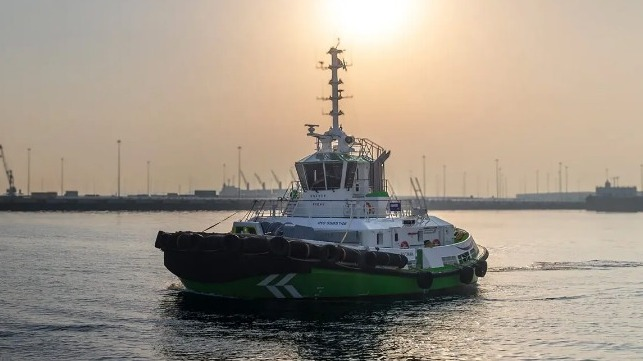
Damen’s electric tug delivered to AD Ports set a new record for pull power for electric tugs (Damen) / Published Nov 12, 2024 7:44 PM by The Maritime Executive ________________________________________________
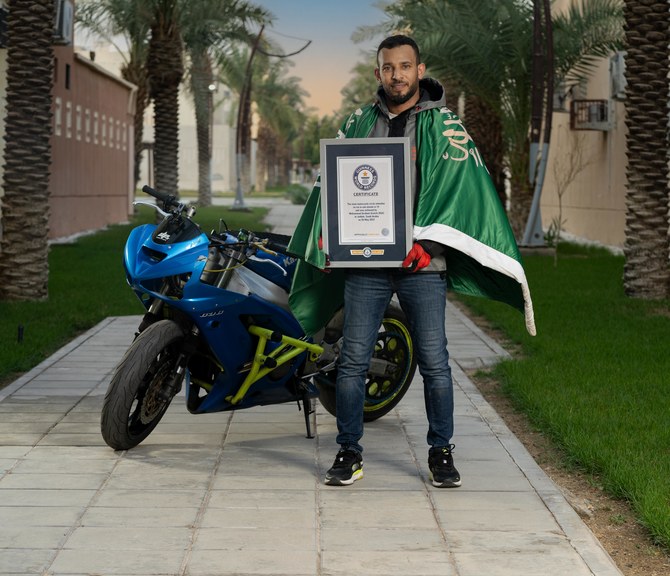
Riding on one wheel of his Kawasaki ZX-6R, he completed 14 circles in one minute.
Saudi stunt rider Mohammed Ibrahim Scotch kept his cool to set a new world record for a motorcycle wheelie — on ice.
Riding on one wheel of his Kawasaki ZX-6R, he completed 14 circles in one minute, a feat that has earned him entry into the Guinness World Records 2023 edition.
Scotch, 39, told Arab News that he had been preparing for around two years for the record attempt, which took place at an ice hall in Jeddah.
He said: “I’m proud of achieving this new record because it carries the name of Saudi Arabia, my country. I didn’t break the record, but I achieved a new world record that no one had done before.
“In 2017, to deviate from the norm and at the same time to have fun, the idea stuck in my mind, and I tried it first in a skating rink in Makkah.
“(In 2022), after researching and communicating with officials (from Guinness World Records), they informed me that no one in the world had achieved this record, so I decided to do it.
“I began the journey of rebuilding the project from scratch after obtaining approval from Guinness World Records. I searched for a private ice rink to execute this experiment,” he added.
Scotch designed studded tires and worked out the variables for his motorbike.
“When I received the official email from Guinness World Records congratulating me as a new world record holder, I could not believe it or comprehend it.
“I read the email more than once, and I told my mother, my family, and all my friends who stood with me in obtaining this record, and their joy was unbelievable,” he said.
Scotch has been riding and doing stunts since the age of 16 and turned professional in 2013. He has participated in several international stunt competitions including in Bulgaria, Egypt, and the UAE.
At the beginning of last year, he became a certified trainer with the Saudi Automobile and Motorcycle Federation.
“I am glad that I could raise the name of Saudi Arabia to new levels with my latest achievement and my international appearances,” he added.
Scotch, whose achievements were recently acknowledged by the federation’s chairman, Prince Khalid bin Sultan Al-Abdullah Al-Faisal, aims to set more records.
source/content: arabnews.com (headline edited)
____________
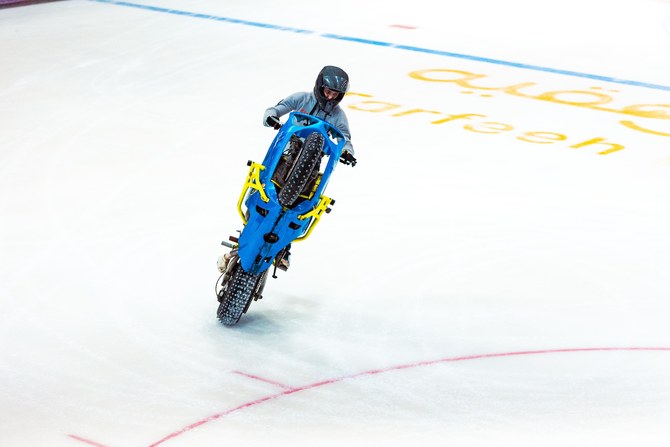
Saudi stunt rider in Jeddah recently set new world record as he popped a wheelie on his motorcycle then drove in 14 circles on ice for one minute. (Supplied)
Melliti, 23, plays a 17-year-old in a coming-of-age tale centred on a teenage Muslim girl in Paris who faces a struggle with her identity and religion.
French artist of Maghrebi descent Nadia Melliti won the best actress award at the Cannes film festival for her first-ever performance in a film, “The Little Sister” by Hafsia Herzi.
Melliti, 23, plays a 17-year-old in a coming-of-age tale centred on a teenage Muslim girl in Paris who faces a struggle with her identity and religion.
She beat Hollywood star Jennifer Lawrence in “Die My Love” by Lynne Ramsay, Japanese child revelation Yui Suzuki in “Renoir” by Chie Hayakawa and Elle Fanning in “Sentimental Value” by Joachim Trier.
“It’s a huge honour to be here tonight and to have been able to take part in this very beautiful project,” she said clutching her award on stage.
“I have such a feeling gushing through me right now. I can’t describe it but it’s really incredible,” she said as the director sobbed in the audience.
“Thank you Mum. I know you’re watching and I hope you are very proud and happy,” she said.
Melliti is a French student and amateur football player who was spotted in the street.
Before walking the red carpet for the premiere of Hafsia Herzi’s “The Little Sister”, she was preparing for exams.
In the coming-of-age tale, she plays 17-year-old Fatima, a Muslim girl in Paris struggling with her identity and religion as she explores her sexuality.
“I’ve never done any theatre or cinema,” she said.
But she said she immediately empathised with the character when she read the script, based on a partly autobiographical novel of the same name by French writer Fatima Daas.
“I identified hugely with Fatima, her surroundings and origins. My mother hails from an immigrant background,” she said.
“My roots are Algerian. I also have sisters.”
Melliti said she specifically related to the film’s theme of “emancipation” in the film.
“When I was younger I wanted to play football. I still do today,” said the actor. “I wanted to take up the sport, one people say is masculine and in which men are over-represented.
“And when I took that home, there was this emancipation, even if for Fatima it was different, more linked to her intellect and sexuality,” she added.
Melliti said she could not believe her luck when she was spotted by a casting agent in the street near a large shopping mall in central Paris.
“I was walking in the street and (she) called out to me,” she said.
At first “I thought she was a tourist and I wondered if my English would be up to scratch.”
Nadia Melliti, winner of the Best Actress award for her role in the film La petite dernière (The Little Sister), poses during a photocall after the closing ceremony of the 78th Cannes Film Festival in Cannes, France, May 24, 2025. REUTERS
The Holy Qur’an Museum at the Hira Cultural District in Makkah is showcasing a monumental handwritten copy of the Holy Qur’an, recognized as the largest Qur’an of its kind in the world.
The manuscript measures 312 cm by 220 cm and comprises 700 pages, earning the museum recognition from Guinness World Records for displaying the world’s largest Qur’an, the Saudi Press Agency reported.
The manuscript is a magnified reproduction of a historic Qur’an dating back to the 16th century, the SPA stated.
The original copy measures 45 cm by 30 cm, with the chapters written primarily in Thuluth script, while Surah Al-Fatiha was penned in Naskh, reflecting the refined artistic choices and calligraphic diversity of the era.
The Qur’an is a unique example of Arabic calligraphy, gilding and bookbinding, showcasing Islamic art through intricate decorations, sun-shaped motifs on the opening folio, and elaborately designed frontispiece and title pages that reflect a high level of artistic mastery.
The manuscript was endowed as a waqf in 1883. Its original version is currently preserved at the King Abdulaziz Complex for Endowment Libraries, serving as a lasting testament to Muslims’ enduring reverence for the Qur’an and the richness of Islamic arts across the centuries.