Arabs & Arabian Records Aggregator. Chronicler. Milestones of the 25 Countries of the Arabic Speaking World (official / co-official). AGCC. MENA. Global. Ist's to Top 10's. Records. Read & Enjoy./ www.arabianrecords.org
The Holy Qur’an Museum at the Hira Cultural District in Makkah is showcasing a monumental handwritten copy of the Holy Qur’an, recognized as the largest Qur’an of its kind in the world.
The manuscript measures 312 cm by 220 cm and comprises 700 pages, earning the museum recognition from Guinness World Records for displaying the world’s largest Qur’an, the Saudi Press Agency reported.
The manuscript is a magnified reproduction of a historic Qur’an dating back to the 16th century, the SPA stated.
The original copy measures 45 cm by 30 cm, with the chapters written primarily in Thuluth script, while Surah Al-Fatiha was penned in Naskh, reflecting the refined artistic choices and calligraphic diversity of the era.
The Qur’an is a unique example of Arabic calligraphy, gilding and bookbinding, showcasing Islamic art through intricate decorations, sun-shaped motifs on the opening folio, and elaborately designed frontispiece and title pages that reflect a high level of artistic mastery.
The manuscript was endowed as a waqf in 1883. Its original version is currently preserved at the King Abdulaziz Complex for Endowment Libraries, serving as a lasting testament to Muslims’ enduring reverence for the Qur’an and the richness of Islamic arts across the centuries.
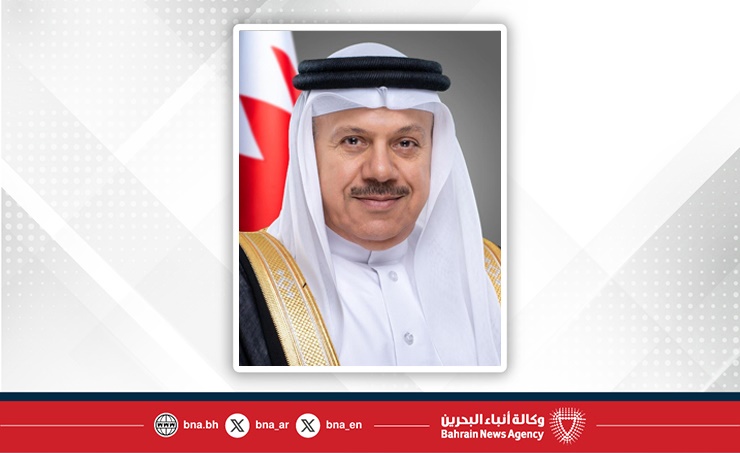
Dr. Abdullatif bin Rashid Al Zayani, Minister of Foreign Affairs and Chairman of the National Human Rights Committee, said that the Kingdom of Bahrain’s official inclusion in the Guinness World Records as the country with the highest density of places of worship for different religions represents international recognition of Bahrain’s established approach to religious tolerance, peaceful coexistence, and respect for human rights and religious, cultural, and civil freedoms.
The minister said that the achievement reflects the vision of His Majesty King Hamad bin Isa Al Khalifa and Bahrain’s national approach to coexistence, which is grounded in the rule of law, justice, and constitutional institutions, and supported by consistent government policies that have made tolerance and coexistence an integral part of national practice.
Dr. Al Zayani extended congratulations to His Majesty the King and to His Royal Highness Prince Salman bin Hamad Al Khalifa, the Crown Prince and Prime Minister, on the achievement, noting that it reflects Bahrain’s longstanding commitment to religious and cultural diversity.
The minister noted that the global achievement coincides with the international observance of the International Day of Peaceful Coexistence, adopted by the United Nations General Assembly following a Bahraini initiative, as well as with the national observance of the Year of Isa Al Kabeer. He said this alignment highlights Bahrain’s historical standing as a society rooted in religious and cultural coexistence, and its role in promoting dialogue and peace, drawing on a legacy shaped by the leadership of His Highness Isa Al Kabeer, founder of the modern Bahraini state, and carried forward under the current national approach led by His Majesty the King.
Dr. Al Zayani explained that Bahrain’s ranking in the Guinness World Records, with an average of 2.577 places of worship per square kilometre, reflects the Kingdom’s long-established practice of accommodating places of worship for different religions and denominations. These include mosques and “grand mosques” (congregational mosques), alongside churches, a Jewish synagogue, one of the oldest churches in the region, and a Hindu temple established in Manama more than two centuries ago.
He said that this diversity reflects social cohesion, equal citizenship, and respect for freedom of religion and belief, and represents a practical expression of Bahrain’s values of coexistence and peace.
The minister highlighted Bahrain’s efforts to share its experience in religious coexistence and dialogue at regional and international forums through initiatives launched under the leadership of His Majesty the King. These include the declaration on freedom of religion and belief, international conferences on intercultural dialogue, the King Hamad Award for Coexistence and Tolerance, and other initiatives aimed at serving humanity, empowering women and youth, and promoting a culture of peace.
Dr. Al Zayani reiterated that the Kingdom of Bahrain, under the leadership of His Majesty the King and the directives of His Royal Highness the Crown Prince and Prime Minister, continues its human rights and development efforts, as well as its diplomatic and humanitarian role through its non-permanent membership of the United Nations Security Council, in support of regional and international peace, dialogue among religions and cultures, the National Human Rights Plan, and the Sustainable Development Goals.
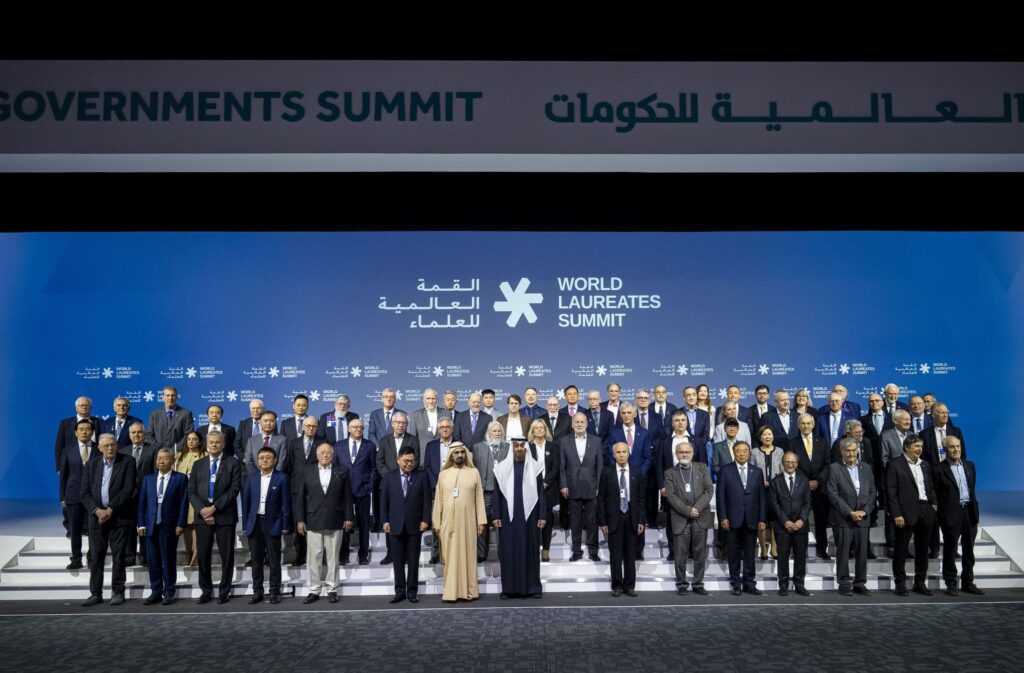
President His Highness Sheikh Mohamed bin Zayed Al Nahyan, and His Highness Sheikh Mohammed bin Rashid Al Maktoum, Vice President, Prime Minister, and Ruler of Dubai, inaugurated the World Laureates Summit, the largest global gathering of Nobel Prize winners and recipients of other prestigious scientific awards.
Also present at the inauguration were His Highness Sheikh Mansour bin Zayed Al Nahyan, Vice President, Deputy Prime Minister and Chairman of the Presidential Court, and His Highness Sheikh Hamdan bin Mohammed bin Rashid Al Maktoum, Crown Prince of Dubai, Deputy Prime Minister and Minister of Defence.
The World Laureates Summit, which commenced today and runs for three days, brings together more than 100 scientists and participants, including Nobel laureates, recipients of major international scientific awards, and leaders of research institutions.
It coincides with the World Governments Summit 2026, taking place from 3 to 5 February, with 3 February designated as a joint day that brings laureates together with heads of state and government, ministers, and leaders of international organisations and institutions participating in the World Governments Summit.
During the summit, Their Highnesses were briefed on key discussions involving a distinguished group of Nobel laureates and researchers from various vital disciplines, affirming the summit’s role as an international scientific platform for dialogue focused on long-term strategic thinking and multidisciplinary cooperation. The summit supports the role of basic sciences in addressing global challenges at a time of mounting economic, social, and political pressures and an urgent need for innovative solutions to sustain development efforts and ensure the continuity of humanity’s civilisational progress.
His Highness Sheikh Mohamed bin Zayed Al Nahyan highlighted that scientists are essential partners in shaping the future and that investing in knowledge and scientific research is the key to navigating global challenges. His Highness stated that the UAE will remain a global platform that brings visionaries and thinkers together and supports innovation in service of all of humanity.
His Highness Sheikh Mohamed bin Zayed continued by stating that science and scientists are at the core of the UAE’s vision for the future, extending from the belief that countries that make knowledge a national priority are the ones capable of leading global transformations and shaping a better tomorrow.
His Highness added that the World Laureates Summit reflects the UAE’s efforts and unwavering commitment to building a comprehensive scientific ecosystem that enhances quality of life and lays the foundations for sustainable prosperity rooted in solid scientific principles.
His Highness remarked that the world today faces major challenges that require unconventional solutions, underscoring the importance of this major scientific gathering. His Highness stated that the responsibility of scientists today extends beyond the confines of research centres, as they must become active partners in decision-making and in shaping development-focused policies.
His Highness expressed his hope that this scientific dialogue would contribute creative solutions to global challenges, ensuring the sustainability of resources for future generations. He added that the UAE will continue to strengthen its role as a bridge connecting scientific outputs with the needs of societies while supporting scientific research and the development of emerging technologies in service of peace and development.
Science is the Wealth of Nations
His Highness Sheikh Mohammed bin Rashid Al Maktoum affirmed that the UAE has been, and will continue to be, a nexus for visionaries and bold ideas. “Convening 100 scientists and Nobel Prize laureates in the World Laureates Summit is our way of saying: Civilisation happens when we appreciate science and scientists. Our goal is to open the doors wide for innovators so they can turn the impossible into tangible reality.”
His Highness added: “Science is the true wealth of nations, and scientists are the architects of humanity’s future. The UAE embraces bright minds, empowers researchers and offers the space to turn ideas into accomplishments.
His Highness stated: “People are our greatest asset. Through science, we can forge a better future for all. The UAE continues to establish itself as a global hub for science and knowledge and a magnet for talent and creative minds from around the world, driven by our belief that investing in people is key to achieving sustainable development and shaping the future.”
Investing in Knowledge and Science
His Excellency Mohammad Al Gergawi, Minister of Cabinet Affairs and Chairman of the World Governments Summit, said in his opening remarks at the World Laureates Summit that the vision of UAE President His Highness Sheikh Mohamed bin Zayed Al Nahyan has made the UAE an incubator for intellect and a meeting point for global thought leaders, praising His Highness’ continued support for science and scientists.
His Excellency Al Gergawi said the UAE believes that building a nation cannot be achieved by relying solely on resources, but also on people, and that the greatest investment in the future is an investment in knowledge and science. His Excellency noted that a nation that prioritises science and believes strongly in knowledge as the shortest path to prosperity and in research and openness as integral to its foundations is a strong nation capable of achieving and sustaining excellence.
His Excellency added that humanity’s journey of knowledge is undergoing a fundamental transformation. The rapid evolution of artificial intelligence and the aspiration for longer, healthier lives require new scientific approaches. He pointed out that conventional boundaries separating physicists, computer scientists, and biologists are beginning to dissolve, stressing that, where such boundaries continue to exist, society must overcome and redefine them.
His Excellency Al Gergawi affirmed that the World Laureates Summit draws its value and historical significance from being held at a pivotal time marked by political shifts, rapid technological acceleration, and unprecedented economic pressures amid growing concern about humanity’s future. In such moments, he said, the role of scientists is not secondary, but critical.
His Excellency concluded: “Our gathering today sends a message of hope to humanity: Despite the negative noise filling the world, human beings are still capable of choosing the path of reason and of working to improve this world. This is where the spirit of the UAE echoes the spirit of this scientific gathering, as neither sees the past as a ceiling or finish line but the future as a responsibility. Both believe that hope is not awaited but created, and that progress does not happen by chance, but as the result of collective action, clear vision, and faith in human potential.”
His Excellency Al Gergawi thanked the attending scientists, whose presence makes them part of a future that is more humane, just, and knowledgeable. He concluded: “Your being in the UAE today, in the presence of our leadership, will help shape a better future for humans and a healthier, more advanced planet.”
New WLA base in the UAE
Professor Roger Kornberg, President of the World Laureates Association (WLA), Nobel Laureate in Chemistry (2006) and Professor of Medicine, Stanford University, revealed WLA plans to launch a new base in the UAE, bringing together scientists from around the world and positioning the UAE as a global hub for scientific collaboration, research, and innovation.
Prof Kornberg stated: “The UAE is not following the future of science—it is setting its direction.”
Delivering the opening remarks for the World Laureates Summit, Kornberg described the event as a remarkable and unprecedented gathering in its scope, diversity and breadth.
Kornberg said: “This joint summit is also unprecedented in another way: it places science alongside government, industry, and finance. Scientists rarely have the opportunity to engage directly with policymakers at this level and on this scale. Here, we create a space where discovery and decision-making meet.”
Kornberg added: “In organising this summit, our goal was not only to explain science, but to address questions of broad societal importance. This is reflected in the sessions you will see over the coming days: Can AI actually discover anything? Can science save the Earth? Are we approaching the end of disease? These questions help ensure that science is not only understood but heard far beyond these halls.”
He added: “This is where the partnership with the World Governments Summit is so important. By convening the world’s leaders, the WGS ensures that the voice of science reaches decision-makers at the highest level.”
Knowledge as a driver of progress
Wang Hou, Executive Director and Secretary-General of the World Laureates Association, stated that the UAE’s deep appreciation for science and of its people’s belief in knowledge as a driver of progress are the reasons that helped the World Laureates Summit convene with great success.
He expressed his sincere thanks to members of the World Laureates Association for joining the summit, noting that their work has shaped human understanding of the world and continues to advance humanity in profound and lasting ways.
Hou stressed that the world stands at a pivotal moment that demands joint efforts for the future of humanity and the advancement of modern science. He highlighted the UAE’s hosting of the World Laureates Summit as a major step on this path, stating: “From the UAE, the future of science is not observed—it is shaped. Here, knowledge leads policy, and discovery is translated into global progress.”
The World Laureates Summit, organised in partnership between the World Governments Summit and the World Laureates Association, is the largest scientific gathering of its kind. It brings together an elite group of laureates who are recipients of the Nobel Prize, Turing Award, the Wolf Prize, the Lasker Award, the Fields Medal, and the Breakthrough Prize, alongside other recipients of prestigious international scientific awards.
The World Laureates Association comprises 187 leading scientists, including 78 Nobel laureates, as well as recipients of the prestigious scientific honours.
The summit’s agenda features a high-level programme centred on the theme “Basic Sciences: Scientific Consensus for Addressing the Challenges of Humanity” and includes keynote addresses, plenary sessions, specialised forums, strategic roundtables, and extended dialogues spanning a wide range of fields – most notably artificial intelligence and machine learning, quantum science and nanotechnology, biotechnology and genomics, data science and cryptography, and neurotechnology.
Discussions focus on how fundamental sciences contribute to governance and economic systems, how emerging technologies can be developed responsibly, and how international scientific cooperation can be strengthened in an increasingly complex geopolitical environment.
The first day’s agenda, in addition to the opening ceremony, included the AI Sciences Forum, the forum titled “AI Science Forum: Can AI Discover Anything?” and the Disruptive Technologies Forum, the New Energy Forum, and the Scientific Discovery Forum.
The second day’s agenda includes nine forums: “Six Senses and The Brain Forum”, “Genetic Science Forum”, “Life Sciences Forum”, “Physics Forum”, “Hospital Leaders Forum”, “Blockchain Science Forum”, “Carbon Materials Forum”, “Nuclear Physics Forum”, and “University Leaders Forum”.
The third day features the Young Scientists Forum, as well as joint sessions between the World Governments Summit and the World Laureates Summit.
Nelly Attar has made history by becoming the first Lebanese person to summit the five tallest mountains on Earth, including Everest and the notoriously deadly K2. She has completed over 40 climbs across five continents. A two-time Guinness World Record holder, extreme sports athlete, and former psychotherapist, Nelly blends athletic grit with a community-driven mission: to get people moving, especially across the Middle East.
From founding Saudi Arabia’s first dance studio to training for high-altitude ascents in desert heat, Nelly’s journey is as much about resilience and purpose as it is about summits. Cosmopolitan Middle East sits down with her to reflect on the climbs that changed her, the lessons learned at the edge of endurance, and her vision for making movement and adventure more accessible to all.
CosmoME: What first drew you to mountaineering?
Nelly: My dad took me on my first multi day hike when I was 17. I was going to university soon, so I was moving countries, and we were living in Kenya at the time. Mount Kenya is the second highest peak in Africa. We didn’t know what it was gonna entail. We actually didn’t summit the mountain. My dad got hypothermia, but there was something about the climb or the hike, and just being in nature for two or three days that I was like, this is just amazing. I want to do this when I’m older. I also want to do sports because I was raised in Saudi, and we didn’t really have access to outdoor sports.
CosmoME: Did you feel a calling towards the mountains?
Nelly: No, I felt a pull. A calling is more gentle. It sits at the back of your mind; a pull may feel like swimming against the current, but you can’t let go of the pull. I think I don’t want to do this anymore. It has very high risk and opportunity costs. But then, I feel this same pull, and then I find myself up in the mountain area.
CosmoME: Could you share some details about the mountains you have climbed?
Nelly: When I was 25, I had the summer off, so I went to Mount Kilimanjaro. I fell in love with hiking and climbing. K2 is the second most dangerous. It’s a lot steeper, so avalanches do happen, but not that severe as Annapurna. There is a 33% chance you won’t come back from that mountain. I went to clean up a lot of the waste and we cleaned up about 400 KGs of waste. Annapurna has a very high risk of avalanche. So no matter where you are on the mountain, you’re constantly hearing avalanches break out around you. It’s because of the angle of the mountain, where it sits in a position where just a bit of snow accumulates, and then it slides off. Apart from the altitude, you also have this added layer of constantly being so scared. We don’t know if we’re going to die up there; it just feels like a Russian roulette.
CosmoME: How do you navigate making high pressure decisions in extreme conditions?
Nelly: We were 500 meters away from the summit of Annapurna after being there for one month, and we turned around. I made the call because I was with the team of eight men and most of the guys were from the production team. We got to a point where there was little rope left, not enough for all of us. I was like, if we all made it up together to this point, it doesn’t make sense for three of us to continue and the five to turn around. We either all turn around together, or we all climb up together. It would be another four or five hours to the summit with little or no rope. So if anyone slips, they will slip to their death. And if you’re in doubt, if there’s this much risk on a mountain, you turn around. Climbing is considered the noble art of retreat. You have to know when to turn around. If you want to stay in this game, you have to know when to turn around. My whole team made it down alive and this is what counts.
CosmoME: Which was harder—training your body for extreme altitudes or training your mind to endure the isolation and risk?
Nelly: When you’re training your body, you train your mind. I don’t see them as individuals. I train even when it’s 40 degrees with a heavy pack and that’s a lot of mental training. That discipline and mind/body go hand in hand. The times that I want to give up and I don’t give up is when I train my mind to grow stronger. I always try remind myself that I have so much within me.
CosmoME: Does climbing bring you closer to a sense of God, nature, or something beyond yourself?
Nelly: I think it always makes me feel stronger to God, because it’s almost like I’m stripped away from civilisation. No comfortable beds or showers. I’m left with connecting with my family every now and then through a satellite device, but then it’s just Allah. There’s so much uncertainty. We don’t know what the day is gonna look like. We don’t know who from the team might get hurt. We don’t know who’s not going to come back. I don’t even know if I will come back. God forbid. What keeps me calm is feeling that God is always with me. God is always protecting us. God always chooses what’s best for us. And if we don’t get the summit, that’s God protecting us. If we get to summit, God made that accessible to us. During the times that I’m really really scared, the only thing that gives me calm or peace is thinking: we’re in the safety of Allah. It’s like a mantra I keep repeating. And honestly, it keeps me so calm.
My dad took me on my first hike and he passed away almost five years ago. Climbing connects me to him. When I’m on a mountain, my grief is amplified. I have days on a mountain where I wake up and I start crying uncontrollably.
CosmoME: How does it feel to carry your country’s name on summits?
Nelly: I was born and raised in Saudi, but I started to feel more and more connected to Lebanon when I started to make history around these climbs. Beyond Lebanon, I feel very proud of my Arab heritage. I’ve always been happy about my identity, but I think even more so now, because I have this responsibility to show what Arab woman can do anything. When I started to see how people responded and starting to see how it inspired Arab woman and Muslim woman, I want to continue. I want to pave the way for other Arab women in sports.
CosmoME: What would you like to say to Arab girls and to our readers?
Nelly: I want people to see that if I can, they can too. I’ve done things that were unconventional, creating a job, a career, and a life that are so different from the standard. I managed to excel in it and inspire others. I never imagined I’d make it onto the cover of a magazine for climbing K2. Most people here don’t even know what K2 is. But you have to believe in your dream so strongly that others start to believe in it too. Then it’s no longer just your dream—it becomes everyone’s success.
If I can do this in a career as niche as mountaineering, a sport dominated by men and barely recognized in our region, then they can too. I hope I inspire girls to take the unconventional road, to follow the path that makes sense to them. They will face challenges, resistance from others, and doubt from themselves. But those obstacles will make them stronger. The ups and downs are what make the journey meaningful. When you persevere, lean into your gifts, and live your purpose, that’s when you make the greatest contribution to the world.
CosmoME: Could you share more about the business side of mountaineering?
Nelly: Initially, it was all self-funded. But as it started to take up more of my time and energy, I thought—why not turn this into a job? I was already creating content, so whenever I worked with brands, I’d try to merge it with my climbs. Instead of doing a standard campaign here, I’d say, ‘Why not make it unique and create the campaign up there?’
Over the years, through sponsorships, I’ve partnered with a range of brands—from apparel companies to climbing operators to even medication brands. After a decade, the variety is wide, but sponsorships are what make this possible. Sometimes, it’s still my own savings. Even now, I pay for some climbs myself, funding them through other work and setting money aside for the mountains.
CosmoME: Mountaineering has long been a male-dominated space. What challenges did you face as a woman in that world?
Nelly: I was often the least technically experienced climber on the team. I didn’t grow up with snow, and I didn’t have a climbing background. There was a lot to catch up on. Gear was another challenge. Being petite, I could never find equipment that fit—everything from summit suits to sleeping bags would swallow me whole.
Thankfully, as more women have joined the sport, more brands have started catering to women’s sizes. Now, I don’t see my size or the fact that I’m an Arab woman as a challenge. It’s my strength. I love it when people are surprised and say ‘Oh, you’re a climber?’ and I get to let my performance speak for itself. Training in the extreme heat back home has given me an edge.
CosmoME: What is recovery like? How does coming back to everyday life feel after climbing?
Nelly: It usually takes me two weeks (sometimes a month) to feel like myself again after a climb. My nervous system, my sleep, my training… everything needs time to reset before my body feels strong again. I ease my way back into everything. I don’t like to stop training entirely, but I’m gentle with myself and very aware I’m still recovering.
Even my concentration takes a hit. That first week, I find it hard to focus at work, so I give myself that two-week buffer to slowly re-engage. Psychologically, there’s often a dip too. After so much adrenaline and constant movement in nature with my team, coming back to the noise and overstimulation of the city can feel jarring. That adjustment period, both physically and mentally, is part of the process.
CosmoME: You’ve made history. What is next for you?
Nelly: I’d love to keep climbing, but there’s so much more to life than just summits. For me, sports have always been about community—that’s why I started in the first place. It feels good to be back, training with friends and moving alongside others.
Over the next six months, my focus is on enabling as many people as possible to get active. My background is in therapy, and when I began, sports weren’t widely accessible to women in Saudi. Creating spaces for women to move together changed my life, and I saw firsthand how it transformed theirs. I want to return to that mission.
I have a few adventurous trips planned across the region, coaching sessions, speaking engagements, and an initiative in the works aimed at making movement more accessible to everyone. That’s my goal for now. Then, maybe in six or seven months, I’ll be ready to climb again.
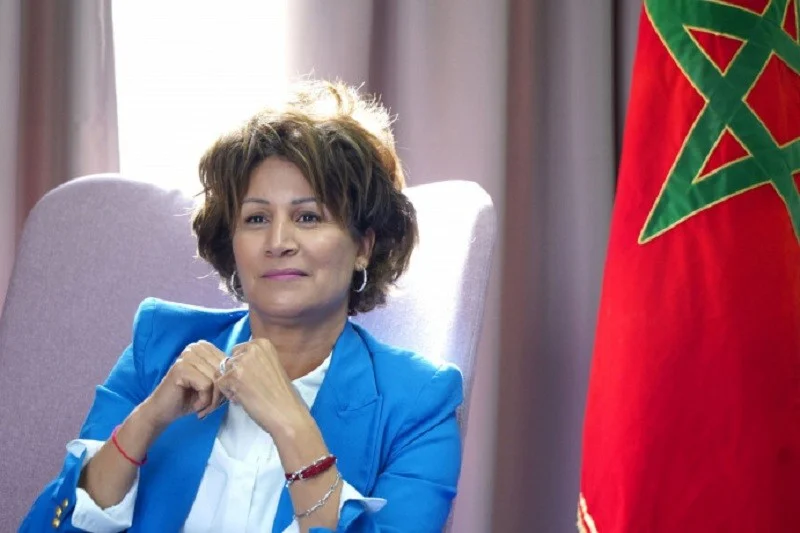
Nezha Bidouane has been granted a new four-year term on the governing board of the International Sport for All Federation (FISPT) following elections held during the organization’s general congress in central Italy.
The Moroccan sports official, who serves as President of the Royal Moroccan Federation for Sport for All, retained her seat as delegates from dozens of countries convened on January 24 and 25 to determine the federation’s future leadership.
Bidouane’s renewed mandate reinforces Morocco’s representation within global sports governance at a time when the country continues to expand its engagement on the international sports stage. Her role reflects sustained efforts to promote wider access to sport, emphasizing community participation and inclusivity beyond elite-level competition.
A former world-class athlete, Bidouane built a distinguished career in athletics, securing multiple international titles in the 400-meter hurdles and earning a bronze medal at the 2000 Sydney Olympic Games. She has since transitioned into sports administration, where she remains actively involved in advancing inclusive and developmental sporting initiatives worldwide.
501 vehicles drive through the dunes of scenic Tuwaren.
Hail entered the Guinness World Records at the weekend after producing the largest-ever off-road production car convoy.
The previous record, some 449 vehicles in Australia, was smashed with 501 vehicles driving through the dunes of the scenic Tuwaren area, 42 km northwest of Hail and a location surrounded by the Aja Mountains.
A large number of people from various regions of the Kingdom, Gulf and Arab countries gathered to navigate an unpaved desert trail of 7 km, showcasing their spirit of adventure and the diversity of the region’s terrain.
The event was open to both seasoned off-road drivers and newcomers looking for a unique winter entertainment. This made it suitable for individuals, groups of friends, and families.
The convoy was accompanied by a variety of cultural and entertainment activities that contributed to enhancing the experience for visitors and participants.
Prince Abdulaziz bin Saad bin Abdulaziz, the governor of Hail Province and the chairman of the board of the Development Authority, thanked the Saudi leadership for supporting the development of the Kingdom’s regions. He also praised Hail’s youngsters for taking part in breaking the world record.
Omar Abdullah Al-Abdul-Jabbar, the CEO of Hail Region Development Authority, told Arab News that Hail’s entry into the Guinness World Records was a national achievement.
He said: “Hail’s achievement of this Guinness world record for organizing the largest off-road rally further solidifies its position as a leading destination for desert adventures and activities, and strengthens its presence on the local and regional tourism map.”
The event was organized by the Saudi Tourism Authority and Hail Region Development Authority, with sponsorship from the King Salman bin Abdulaziz Royal Reserve Development Authority, and Culture House.
In addition, 14 government entities supported the event, including the Principality of Hail Region, and the Saudi Automobile and Motorcycle Federation.
source/content: arabnews.com (headline edited)
______________
501 vehicles took part in an off-road drive in Hail over the weekend, smashing the previous world record. (Supplied)
A former Iraqi president, Barham Salih, 65, at the start of the year became the first former head of state to run the UNHCR.
Barham Salih has known torture and the wrenching loss of exile. Four decades after his own ordeal, he has taken the helm of the UN refugee agency as it grapples with a funding shortfall and ever-rising needs.
A former Iraqi president, Salih, 65, at the start of the year became the first former head of state to run the United Nations High Commission for Refugees (UNHCR).
“It is a profound moral and legal responsibility,” Salih said during his first trip in the new role, to Kakuma refugee camp in Kenya.
“I know the pain of losing a home, losing your friends,” he said.
The Kakuma refugee camp, which Salih visited on Sunday, is east Africa’s second largest, hosting roughly 300,000 people from South Sudan, Somalia, Uganda and Burundi. It has been in place since 1992.
The world “should not allow this to continue”, Salih said, praising a new initiative by Kenya to turn its camps into economic hubs.
“We should not only protect refugees … but also enable them to have more durable solutions,” he said, while adding, “The better way is to have peace established in their own countries … nowhere is nicer than home.”
The son of a judge and a women’s rights activist, Salih was born in 1960 in Sulaymaniyah, a stronghold of the Patriotic Union of Kurdistan (PUK), which sought self-determination for Iraq’s Kurds.
He went into exile in Iran in 1974, spending a year at a school for refugees. As a teenager in 1979, back in Iraq and already a member of the PUK, he was arrested twice by former President Saddam Hussein’s regime.
“I was released after 43 days after having suffered torture, electric shocks, beating,” he said.
Upon release, he still managed to rank among Iraq’s top three high school students, according to a former colleague, before fleeing with his family to Britain where he earned a degree in computer engineering and a doctorate.
Salih has “real experience of exile … He brings a personal perspective of displacement, which is very important,” Filippo Grandi, his predecessor at UNHCR, said last month.
Salih went on to a successful career in Iraqi Kurdistan and Iraq’s federal government after Saddam Hussein’s overthrow in 2003, holding the largely ceremonial role of president from 2018 to 2022.
Refugee numbers have doubled to 117 million in the past decade, the UNHCR said in June, but funding has dropped sharply, especially since Donald Trump returned to the White House.
UN Secretary-General Antonio Guterres recently praised Salih’s experience as a “crisis negotiator and architect of national reforms” at a time when the agency faces “very serious challenges”.
“We have had very serious budget cuts last year. A lot of staff have been reduced,” Salih said.
“But we have to understand, we have to adapt,” he said, calling for “more efficiency and accountability” while also insisting the international community meets its “legal and moral obligations to help”.
Ibn Khaldoun, in full Abou Zeid Abdelrahman Ibn Mohammed Ibn Khaldoun Al-Hadrami, was born in May 27, 1332, Tunis, Tunisia — died March 17, 1406, in Cairo, Egypt. He is the greatest Arab historian and social scientist. Ibn Khaldoun has been described as the founder of the modern disciplines of historiography, sociology, economics, and demography.
He who finds a new path is a pathfinder, even if the trail has to be found again by others; and he who walks far ahead of his contemporaries is a leader, even though centuries pass before he is recognized as such.
Ibn Khaldoun.
Who is Ibn Khaldoun?
Multiple sources, such as Niccolò Machiavelli of the Renaissance and the 19th-century European scholars widely acknowledged the significance of his achievements and considered Ibn Khaldoun to be one of the greatest philosophers of the Middle Ages.
He is actually the one who developed one of the earliest nonreligious philosophies of history, contained in his masterpiece, the Muqaddimah (“Introduction”). He also wrote a definitive history of Muslim North Africa.
The past resembles the future more than one drop of water resembles another. Ibn Khaldoun
The easiest method of acquiring the habit of scholarship is through acquiring the ability to express oneself clearly in discussing and disputing scholarly problems. This is what clarifies their import and makes them understandable. Some students spend most of their lives attending scholarly sessions. Still, one finds them silent. They do not talk and do not discuss matters. More than is necessary, they are concerned with memorizing. Thus, they do not obtain much of a habit in the practice of scholarship and scholarly instruction
Ibn Khaldoun.
Ibn Khaldoun — Early Life
Ibn-Khaldoun was born in Tunis, Tunisia in 1332; the house where he believed to have been born is in the Khaldounia, a quarter in Tunis that still stands almost unchanged and well-preserved.
In his autobiography, Ibn Khaldoun mentioned that the family claimed descent from Khaldoun, who was of South Arabian origin, and had come to Spain in the early years of the Arab conquest. The family then moved to Sevilla, played an important part in the civil wars of the 9th century, and was long considered among the three leading families of that city.
During the following 4 centuries, the Ibn-Khaldouns successively held high administrative and political positions under the Umayyad, Almoravid, and Almohad dynasties; other members of the family served in the army, and several were killed at wars, mostly at the Battle of Al-Zallaqah (1086), which temporarily halted the Christian reconquest of Spain. But the respite thus won proved short, and in 1248, just before the fall of Sevilla and Córdoba, the Ibn-Khaldouns and many of their countrymen judged it prudent to cross the Straits of Gibraltar and landed at Sabtah (now Ceuta, a Spanish exclave), on the northern coast of Morocco.
Ove there, the refugees that came in from Spain were of a much higher level of socio-economic status than the local North Africans, and the Khaldoun family was soon called to occupy the leading administrative positions in Tunis. The Ibn Khaldoun’s father also became an administrator and soldier but soon abandoned his career to devote himself to the study of theology, law, and letters. In Ibn Khaldoun’s words:
He was outstanding in his knowledge of Arabic and had an understanding of poetry in its different forms and I can well remember how the men of letters sought his opinion in matters of dispute and submitted their works to him.
Ibn Khaldoun.
In 1349, however, the Black Death struck Tunis and took away both his parents.
Ibn Khaldoun — Education & Career
Ibn Khaldoun gives a detailed recap of his education, listing the main books he read and describing the life and works of his teachers. He memorized the Quran, studied its principal commentaries, had a good grounding in Muslim law, familiarized himself with the masterpieces of Arabic literature, and acquired a clear style for writing fluent verse that was to serve him well in later life when addressing eulogistic or supplicatory poems to several rulers back then.
At age 20, when he was given a post at the court of Tunis, followed 3 years later by a secretaryship to the Sultan of Morocco in Fes. By then he got married. After two years of service, however, he was suspected of participation in a rebellion and was imprisoned. Released after nearly two years and promoted by a new ruler, he again fell into disfavor, decided to leave Morocco, and crossed over to Granada, for whose Muslim ruler he had done some service in Fes and whose prime minister, the brilliant writer Ibn al-Khaṭib, was a good friend. Ibn Khaldoun was then 32 years old.
The following year Ibn Khaldoun was sent to Sevilla, Spain to conclude a peace treaty with Pedro I of Castile. There he saw “the monuments of my ancestors.” Pedro “treated me with the utmost generosity, expressed his satisfaction at my presence and showed awareness of the preeminence of our ancestors in Sevilla.” Pedro even offered him a post in his service, promising to restore his ancestral estates, but Ibn Khaldoun politely declined. He gladly accepted the village that the sultan of Granada bestowed on him, however, and, feeling once more secure, brought over his family, whom he had left in safety in Constantine.
But, to quote him once more, “enemies and intriguers” turned the all-powerful prime minister, Ibn al-Khaṭib, against him and raised suspicions regarding his loyalty; it can be conjectured that the task of these enemies must have been greatly facilitated by the apparent jealousy between the two most brilliant Arab intellectuals of the age. Once more, Ibn Khaldoun found it necessary to take his leave, and he returned to Africa. The following 10 years saw him change employers and employment with disconcerting rapidity and move from Bejaïa to Tlemcen, Biskra, Fes, and once more to Granada, where he made an unsuccessful effort to save his old rival and friend, Ibn al-Khaṭib, from being killed by order of its ruler.
During this period Ibn Khaldoun served as prime minister and in several other administrative capacities, led a punitive expedition, was robbed and stripped by nomads, and spent some time “studying and teaching.” This extreme mobility is partly explained by the instability of the times. The Almohad Empire, which had embraced the whole of North Africa and Muslim Spain, had broken down in the middle of the 13th century, and the convulsive process from which Morocco, Algeria, and Tunisia were subsequently to emerge was under way; wars, rebellions, and intrigues were endemic, and no man’s life or employment was secure. But in Ibn Khaldoun’s case two additional factors might be suspected—a certain restlessness and a capacity to make enemies, which may account for his constant complaints about the “intriguers” who turned his employers against him.
The Muqaddimah of Ibn Khaldoun
In 1375, craving solitude from the exhausting business of politics, Ibn Khaldoun sought refugee in Algeria for about four years, “free from all preoccupations,” and wrote his massive masterpiece, the Muqaddimah, an introduction to history.
His original intention, which he subsequently achieved, was to write a universal history of the Arabs and Berbers, but before doing so he judged it necessary to discuss historical method, with the aim of providing the criteria necessary for distinguishing historical truth from error. This led him to formulate what the 20th-century English historian Arnold Toynbee has described as “a philosophy of history which is undoubtedly the greatest work of its kind that has ever yet been created by any mind in any time or place,” a statement that goes even beyond the earlier eulogy by Robert Flint:
As a theorist on history he had no equal in any age or country until Vico appeared, more than three hundred years later. Plato, Aristotle and Augustine were not his peers . . . .Robert Flint.
Ibn Khaldoun went even further with the Muqaddimah. His study of the nature of society and social change led him to evolve what he clearly saw was a new sciences, such as for example what he called “the science of culture” and which he defined thus:
This science . . . has its own subject, viz., human society, and its own problems, viz., the social transformations that succeed each other in the nature of society. Ibn Khaldoun.
Obviously, for Ibn Khaldoun, history was an endless cycle of flowering and decay, with no evolution or progress except for that from primitive to civilized society. But, in brief descriptions of his own age, which have not received as much attention as they deserve, he showed that he could both visualize the existence of sharp turning points in history and recognize that he was witnessing one of them: “When there is a general change of conditions . . . as if it were a new and repeated creation, a world brought into existence anew.” The main cause he gives for this great change is the Black Death, with its profound effect on Muslim society, but he was fully aware of the impact of the Mongol invasions, and he may also have been impressed by the development of Europe, the merchants and ships of which thronged the seaports of North Africa and some of the soldiers of which served as mercenaries in the Muslim armies.
Ibn Khaldoun’s Journey to Egypt
After have completed the first draft of the Muqaddimah, nostalgia for the more active world of politics, drew him back to seek city life. A severe illness finally convinced him to leave his refuge; he secured permission to return to Tunis, where he “engaged exclusively in scholarly work,” completing much of his history. But once more he aroused both the jealousy of a prominent scholar and the suspicion of the ruler, and in 1382, at age 50, he received permission to sail to Egypt, ostensibly for the purpose of performing the pilgrimage to Mecca.
After 40 days Ibn Khaldoun landed in Alexandria and shortly afterward was in Cairo, then, as now, by far the largest and most opulent city in the Arab world. Its impact on him was profound: “I saw the metropolis of the ear, the garden of the world, the gathering place of the nations . . . the palace of Islam, the seat of dominion . . . .” His curiosity about Cairo was evidently of long duration, for he quotes the replies several eminent North Africans had made to his enquiries on their return from that city, including: “He who has not seen it does not know the power of Islam.”
Within a few days “scholars thronged on me, seeking profit in spite of the scarcity of merchandise and would not accept my excuses, so I started teaching at Al-Azhar,” the famous Islamic university. Shortly afterward, the new Mamluk ruler of Egypt, Barquq, with whom he was to remain on good terms except for one or two brief periods of misunderstanding, appointed him to a professorship of jurisprudence at the Quamḥiyyah college and, within five months, made him chief judge of the Mālikī rite, one of the four recognized rites of Sunnite Islam. Barqūq also successfully interceded with the ruler of Tunis to allow Ibn Khaldoun’s family to rejoin him, but the ship carrying them foundered in the port of Alexandria, drowning all on board.
Significance
Ibn Khaldount did make a big impact and he was, as described by many sources, such as Niccolò Machiavelli of the Renaissance and the 19th-century European scholars, to be one of the greatest philosophers of the Middle Ages. Indeed, it is perhaps not too fanciful to attribute to Ibn Khaldun’s influence the remarkable revival of historical writing in 15th-century Egypt and North Africa.
Later, several distinguished 16th- and 17th-century Ottoman scholars and statesmen took a keen interest in Ibn Khaldoun’s work, and a partial translation of the Muqaddimah into Turkish was made in the 18th century. But it was only after the 1860s, when a complete French translation of the Muqaddimah appeared, that Ibn Khaldun found the worldwide audience his incomparable genius deserved.
We often come across news reports about Egyptians abroad who have attained prominent leadership positions, yet we rarely give them a second thought – unless, of course, they are movie stars like Rami Malek or football legends like Mohamed Salah.
During a recent visit to Canada, I was struck by how many university presidents and faculty deans were of Egyptian origin of whom, for the most part, we have never heard.
A couple of days ago, my attention was caught by two items that were headline news everywhere, while we barely paid them any heed. The first is the appointment of the Egyptian-American Sherif Soliman as the New York City budget director. This is in the global capital of finance, home to Wall Street and the New York Stock Exchange, the largest stock exchange in the world. Soliman is a highly regarded economist with more than thirty years of financial experience. In the course of his career, he has rescued several major commercial institutions from bankruptcy and succeeded in reducing the debt of others by record proportions.
The recently elected New York mayor, Zohran Mamdani, said that Soliman far surpassed rival candidates for budget direct. Soliman, for his part, said, “I feel a deep sense of pride joining the administration of the first Muslim mayor of the city of New York.” He will be managing a budget of approximately $121 billion – one of the largest municipal budgets in the world.
Soliman was born to Egyptian parents who emigrated to New York 45 years ago. He is married to the Egyptian Hanan Thabet. They have two children, Lina and Ziad.
At around the same time, on the other side of the Atlantic, the British Muslim Laila Cunningham announced her intent to run for Mayor of London in the British capital’s 2028 mayoral race. She will be the first candidate of Egyptian origin to seek the post. Born in London to parents who emigrated from Egypt in the 1960s, she studied law and joined the Conservative Party, then switched to Reform UK. A controversial figure, she advocates empowering and increasing the police force to curb crime, which she claims has turned London into an unsafe city. She also calls for combating what she terms “Islamic terrorism.” She is married to an American and is the mother of seven children.
* A version of this article appears in print in the 15 January, 2026 edition of Al-Ahram
His Highness Sheikh Mohammed bin Rashid Al Maktoum, Vice President, Prime Minister and Ruler of Dubai, honoured the six winners of the Great Arab Minds 2025 edition at the Museum of the Future in Dubai.
Great Arab Minds is the largest Arab initiative dedicated to celebrating outstanding Arab achievement, highlighting contributions to advance human civilisation, support the expansion of scientific and knowledge-based endeavours, and showcasing the creative impact of Arab talent across the region and globally.
His Highness affirmed that the Great Arab Minds initiative was designed to expand the horizons for established and emerging Arab talent, nurturing and investing in their potential; recognise Arab achievement across research, development, innovation, technology, culture, and architecture; and to reinforce a culture of pride and sustained support for Arab individuals who have inspired significant progress in key fields.
His Highness Sheikh Mohammed said, “Today, we honour Great Arab Minds in recognition of achievements that advance civilisation and build societies. From the Museum of the Future in Dubai, we reaffirm our support for Arab talent committed to innovation, creativity, and excellence.”
His Highness further said, “We congratulate the winners of the Great Arab Minds 2025: Professor Abbas El Gamal in the Engineering and Technology category, Dr. Nabil Seidah in the Medicine category, Professor Badi Hani in the Economics category, Professor Majed Chergui in the Natural Sciences category, Dr. Suad Amiry in the Architecture and Design category, and Professor Charbel Dagher in the Literature and Arts category. We encourage them to continue their journey of achievement and contribution, serving as true role models for younger generations in our region and around the world, inspiring them to shape a better future through science and knowledge.”
His Highness expressed his confidence in the ability of Arab talent to drive progress in scientific research, knowledge creation, and the cultural sector, supported by expertise, institutional support, and the ambition of young people across the region.
Focused on a better future
Sheikh Mohammed noted that the Great Arab Minds initiative will continue to highlight the achievements of Arab individuals who look to the future with optimism and pursue ambitions that recognise no limits.
The awards ceremony was attended by H.H. Sheikh Maktoum bin Mohammed bin Rashid Al Maktoum, First Deputy Ruler of Dubai, Deputy Prime Minister and Minister of Finance of the UAE; H.H. Sheikh Ahmed bin Mohammed bin Rashid Al Maktoum, Second Deputy Ruler of Dubai and Chairman of the Dubai Media Council; H.H. Sheikh Ahmed bin Saeed Al Maktoum, President of the Dubai Civil Aviation Authority, Chairman of Dubai Airports, and Chairman and Chief Executive of Emirates Airline and Group; His Highness Sheikh Mansoor bin Mohammed bin Rashid Al Maktoum, President of the UAE National Olympic Committee; H.H. Sheikha Latifa bint Mohammed bin Rashid Al Maktoum, Chairperson of the Dubai Culture and Arts Authority (Dubai Culture); and H.H. Sheikh Mohammed bin Rashid bin Mohammed bin Rashid.
Mohammed bin Abdullah Al Gergawi, Minister of Cabinet Affairs and Chair of the Higher Committee for the Great Arab Minds initiative, was among numerous ministers and senior officials in attendance along with scientists, academics and diplomats.
His Excellency Al Gergawi stated that the Great Arab Minds initiative launched by His Highness Sheikh Mohammed represents a profound recognition of Arab achievement across disciplines, and a significant strategic investment in empowering talent and encouraging renewed contributions to Arab intellectual and scientific progress.
He added that the Great Arab Minds initiative embodies Sheikh Mohammed’s vision to inspire confidence in Arab capabilities and motivate individuals to take an active role in shaping their societies and the future of a region that has long contributed to human civilisation through science, literature, thought, and architecture.
‘Powerful message’
He praised the achievements of the Great Arab Minds awardees across medicine, engineering, technology, sciences, architecture, arts, and literature, saying, “Your presence today on the Great Arab Minds 2025 platform at the Museum of the Future sends a powerful message to hundreds of millions of young people to pursue excellence, achievement, and leadership in research, innovation, creativity, and knowledge, and to help shape a brighter future for Arab and human civilisation.”
The award recognised one winner in each of its six categories: Medicine, Economics, Engineering and Technology, Natural Sciences, Architecture and Design, and Literature and Arts.
In Medicine, Dr. Nabil Seidah was honoured for his medical and research achievements in cardiovascular health and cholesterol regulation.
In Economics, Professor Badi Hani was awarded for his pioneering contributions to econometrics and the development of economic analysis tools, particularly in panel data analysis. His work enabled more accurate and in-depth analysis by combining data across multiple time periods and sources.
In Engineering and Technology, Professor Abbas El Gamal was awarded for his pioneering contributions to network information theory.
In Natural Sciences, Professor Majed Chergui was honoured for his contributions to understanding light-matter interactions, developing techniques and applications that enable the study of ultrafast molecular and material dynamics at the atomic level.
In Architecture and Design, Dr. Suad Amiry was honoured for her contributions to preserving Palestinian architectural heritage through documentation, restoration, and adaptive reuse of historical buildings.
In Literature and Arts, Professor Charbel Dagher was honoured for a body of work that constitutes a key reference in the study of Arab and Islamic arts, Arabic calligraphy, and modern visual arts.
Professor Abbas El Gamal said, “I extend my sincere gratitude to His Highness Sheikh Mohammed bin Rashid Al Maktoum for his vision in launching Great Arab Minds. Being honoured in this way is deeply meaningful to me.”
Professor Majed Chergui said, “I am Algerian of Syrian origin, born in Morocco and raised in Algeria and Lebanon. In this way, the Arab world comes together in who I am. For me personally, this award is not only the highest recognition of my achievements; it touches me deeply because it comes from an Arab country.”
Dr. Suad Amiry said, “In 1981, when I decided to live in the city of Ramallah, my aim was to study traditional architecture in rural Palestine. Ten years later, I founded the Riwaq Centre, which since then has been dedicated to documenting, restoring, and rehabilitating architectural heritage in Palestine. Winning this award is a great honour for me and for the Riwaq Centre.”
Professor Badi Hani said: “This award recognises not only my work, but also the people and places that shaped me, my family, my mentors, my city, and the Arab world that nurtured my earliest aspirations.”
Dr. Nabil Seidah said, “My father’s adage, that knowledge is something no one can ever take away from you, has been the principle that guided me throughout my journey. Your trust represents a powerful motivation for Arab scientists to serve as role models for future generations, and I pledge to continue serving science with the same passion that has always driven me.”
Professor Charbel Dagher said: “Commitment to the Arabic language has remained a defining hallmark of everything I have done: teaching, writing, and research, to the point that I live within Arabic itself. We cannot exist outside our language or our culture. Allow me to share this award with those who supported me, and my gratitude extends to everyone who has worked and continues to work to ensure that Arabic remains a living language of science, knowledge, and culture.”
The awardees were chosen by six high-level specialised committees, one for each category. Abdulla bin Touq Al Marri, Minister of Economy and Tourism, chaired the Economics Committee; Sarah Al Amiri, Minister of Education, chaired the Engineering and Technology Committee; Mohammed Ahmed Al Murr, Chairman of the Board of Directors of the Mohammed bin Rashid Al Maktoum Library Foundation, chaired the Literature and Arts Committee; Dr. Amer Sharif, Chief Executive Officer of Dubai Health and President of the Mohammed Bin Rashid University of Medicine and Health Sciences headed the Medicine Committee; Professor Sehamuddin Galadari, Senior Vice Provost-Research and Managing Director of the Research Institute at New York University Abu Dhabi chaired the Natural Sciences Committee; Professor Hashim Sarkis, Dean of the School of Architecture and Planning at the Massachusetts Institute of Technology chaired the Architecture and Design Committee.
In addition to the committee chairs, the specialised committees also included Essa Kazim, Governor of the Dubai International Financial Center; Dr Mohammed Madhi, Dean of the College of Business and Economics at UAE University; Dr Rabah Arezki, Chief Economist for the Middle East and North Africa (MENA) region at the World Bank and Senior Fellow at Harvard University’s John F. Kennedy School of Government; Ferid Belhaj, Fellow at the Policy Center for the New South; and Dr Jihad Azour, Director of the Middle East and Central Asia Department at the International Monetary Fund.
The committees also included Professor Ismael Al Hinti, President of Al Hussein Technical University; Adel Darwish, Regional Director of the International Telecommunication Union; Dr Ahmed Zayed, Director of the Bibliotheca Alexandria; His Excellency Dr. Alawi Alsheikh-Ali, Director General of Dubai Health Authority; Professor Elias Zerhouni, Professor Emeritus at Johns Hopkins University; Dr Noureddine Melikechi Dean of the Kennedy College of Sciences and Professor of Physics at the University of Massachusetts Lowell; Professor Nader Masmoudi, Professor at the Courant Institute of Mathematical Sciences at New York University Abu Dhabi; Dr Latifa Elouadrhiri Laboratory Directed Research Staff Scientist at the Thomas Jefferson National Accelerator Facility; and Professor Dr Jehane Ragai, Emeritus Professor of Chemistry at The American University in Cairo.
The specialised committees also included Dr Adrian Lahoud, Dean of the School of Architecture at the Royal College of Art; and Professor Ali Malkawi, Professor of Architectural Technology, Director of the Doctor of Design Studies Program, and Founding Director of the Harvard Center for Green Buildings and Cities.
The Nominations Committee included Huda Al Hashimi, Deputy Minister of Cabinet Affairs for Strategic Affairs; Chucrallah Haddad, Partner and Head of Advisory at KPMG Lower Gulf; Abdulsalam Haykal, President and Founder of Majarra Company; Ali Matar, Head of LinkedIn Middle East and North Africa and Emerging Markets in Africa and Europe; and Saeed Al Nazari, Secretary-General of the Great Arab Minds Initiative.
Widely known as the ‘Arab Nobel,’ the Great Arab Minds initiative recognises distinguished Arab achievement and highlights extraordinary contributions that reflect the region’s historic role in advancing knowledge and human progress globally. For a third consecutive edition, the initiative continues to strengthen its position as a platform for celebrating Arab creators and as a point of reference for promising Arab talent, by highlighting achievements that inspire young people and contribute to expanding Arab participation in global knowledge and civilisational advancement.