Arabs & Arabian Records Aggregator. Chronicler. Milestones of the 25 Countries of the Arabic Speaking World (official / co-official). AGCC. MENA. Global. Ist's to Top 10's. Records. Read & Enjoy./ www.arabianrecords.org
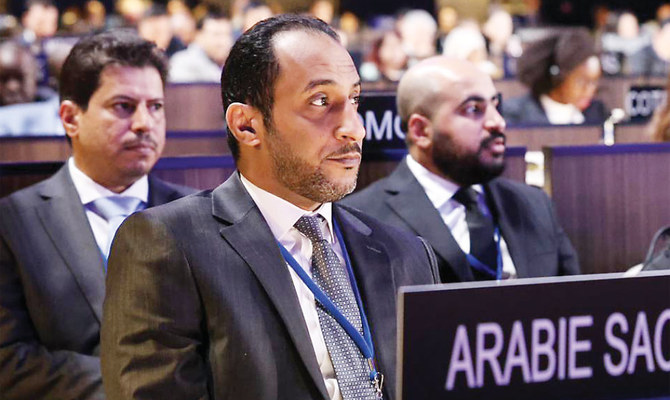
Saudi Arabia was elected vice president of the UNESCO International Convention Against Doping in Sport through 2025 during a meeting at the UN Educational, Scientific, and Cultural Organization headquarters in Paris on Friday.
The meeting was attended by representatives from 191 countries.
Abdulaziz Al-Massaad, undersecretary of the Saudi Ministry of Sports and Youth Affairs, who will fill the UNESCO post, praised the unlimited support of sports offered by the Saudi leadership, and highlighted the directives of Minister of Sports and President of the Saudi Olympic and Paralympic Committee Prince Abdulaziz bin Turki Al-Faisal.
Al-Massaad emphasized that the Saudi leadership is keen to ensure the Kingdom’s participation in various international sporting forums and events.
Al-Massaad thanked the Kingdom’s ambassador to France, Fahd bin Mayouf Al-Ruwaili; the secretary-general of the Saudi National Commission for Education, Culture, and Science Ahmed bin Abdulaziz Al-Bulahid; and the staff of the Kingdom’s permanent delegation to UNESCO for their efforts.
Emirati doctor Mona Tahlak, Executive Director of Medical Affairs at Dubai Academic Health Corporation (DHC), Vice Chancellor for Medical Affairs and Executive Director of Mohammed Bin Rashid University of Medicine and Health Sciences (MBRU) for Medical Affairs and Executive Director of Latifa Hospital for Women and Children, was elected President of the International Hospital Federation (IHF) during the World Hospital Congress held in Lisbon, to be the first Arab woman to hold this high international position in the International Hospital Federation since its inception, in a new achievement added to the record of achievements of Emirati women thanks to The support provided by the wise leadership in all sectors.
Dr. Mona Tahlak expressed her gratitude for the support of the wise leadership and her happiness at being chosen as the President of the International Hospital Federation and extended her sincere thanks and appreciation to the wise leadership for its firm commitment to empowering Emirati women, who have excelled in high-level roles in various fields, thanks to the great confidence and opportunities given to them to enhance their progress and excellence in various sectors, especially in the medical sector.
She said that her election in this position not only highlights the progress achieved by Emirati women, but also reflects the distinguished position of the health sector in the UAE, and I am honored to represent the UAE in this great international forum, and to continue the development of the International Hospital Federation with our global expertise.”
During her tenure with the International Hospital Federation (IHF) over the past seven years, Tahlak has highlighted the excellence and success of the UAE’s hospital sector, showcasing the experience and contributions of Emirati women in this field on a global scale.
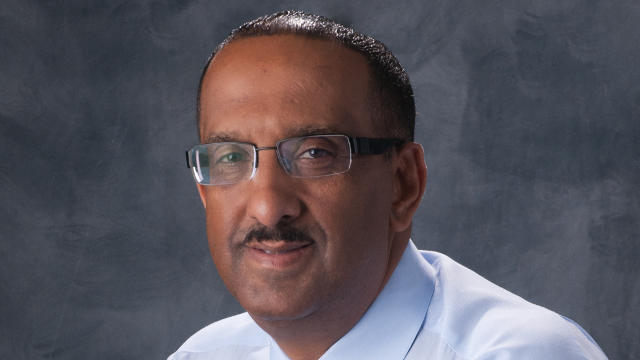
Dr. Amer Sharif, CEO of Dubai Academic Health Corporation, congratulated Mona Tahlak on her well-deserved selection as President of the International Hospital Federation, noting her exceptional leadership, experience and valuable contributions to the healthcare system in Dubai and beyond.
He expressed his pride in her achievements in particular, and his appreciation for the exceptional talents of Emirati women on the global stage, in general. Sharif added that this selection is a great success for all workers within the health sector at the level of the UAE, and a new evidence of the distinguished position reached by Emirati women, and their ability to excel in all fields, especially the medical field, and their responsibility side by side with men in building the renaissance of the UAE.
The IHF’s Board of Directors elects Dr. Mona Tahlak as the new President of the Federation, ending her term as President-designate and starting her two-year term as President-elect of the Federation, succeeding Deborah J. Bowen, CEO of the American College of Healthcare Executives.
source/content: wam.ae (headline edited)
__________
دبي في 27 أكتوبر/وام/ تم انتخاب الطبيبة الإماراتية منى تهلك، المدير التنفيذي للشؤون الطبية في مؤسسة دبي الصحية الأكاديمية نائب مدير جامعة محمد بن راشد للطب والعلوم الصحية للشؤون الطبية المدير التنفيذي لمستشفى لطيفة للنساء والأطفال، رئيساً للاتحاد الدولي للمستشفيات خلال المؤتمر العالمي للمستشفيات الذي عقد في لشبونة، لتكون أول إمرأة عربية تتولى هذا المنصب الدولي الرفيع في الاتحاد الدولي للمستشفيات منذ تأسيسه وذلك في إنجاز جديد يضاف إلى سجل إنجازات المرأة الإماراتية بفضل الدعم الذي توفره لها القيادة الرشيدة في القطاعات كافة.
وعبرت الدكتورة منى تهلك عن امتنانها لدعم القيادة الرشيدة وسعادتها باختيارها لرئاسة للاتحاد الدولي للمستشفيات وتقدمت بجزيل الشكر والتقدير للقيادة الرشيدة على التزامها الراسخ بتمكين المرأة الإماراتية التي تفوقت في أدوار رفيعة المستوى في مختلف المجالات وذلك بفضل الثقة الكبيرة والفرص التي منحتها إياها لتعزيز تقدمها وتفوقها ضمن مختلف القطاعات، لا سيما في القطاع الطبي”.
وقالت إن انتخابها بهذا المنصب لا يسلط الضوء على التقدم الذي حققته المرأة الإماراتية فحسب، بل يعكس أيضاً المكانة المتميزة للقطاع الصحي في دولة الإمارات، ويشرفني أنا وزميلاتي الإماراتيات أن نمثل دولة الإمارات في هذا المحفل الدولي الكبير، والعمل على مواصلة مسيرة تطوير الاتحاد الدولي للمستشفيات بما نتمتع به من خبرات عالمية “.
وخلال فترة عملها مع الاتحاد الدولي للمستشفيات على مدى السنوات السبع الماضية سلّطت تهلك الضوء على تميز ونجاح قطاع المستشفيات في دولة الإمارات، وعرض تجربة ومساهمات المرأة الإماراتية في هذا المجال على نطاق عالمي.
وهنأ الدكتورعامر شريف، المدير التنفيذي لمؤسسة دبي الصحية الأكاديمية منى تهلك باختيارها المستحق رئيساً للاتحاد الدولي للمستشفيات، منوهاً بقيادتها الاستثنائية وخبرتها ومساهماتها القيمة في منظومة الرعاية الصحية في دبي وخارجها.
وعبر عن فخره واعتزازه بما قدمته من إنجازات بشكل خاص، وتقديره للمواهب الاستثنائية للمرأة الإماراتية على الساحة العالمية، بشكل عام.
وأضاف شريف أن هذا الاختيار يُعد نجاحاً كبيراً لجميع العاملين ضمن القطاع الصحي على مستوى دولة الإمارات، ودليلاً جديداً على المكانة المتميزة التي وصلت إليها المرأة الإماراتية، وقدرتها على التميز في جميع المجالات، لاسيما المجال الطبي، وتحملها المسؤولية جنباً إلى جنب مع الرجل في بناء نهضة الإمارات.
وبانتخاب مجلس إدارة الاتحاد الدولي للمستشفيات للدكتورة منى تهلك رئيساً جديداً للاتحاد، تنهي بذلك فترة رئاستها كرئيسة معيّنة للاتحاد وتبدأ فترة ولايتها لمدة عامين رئيسة منتخبة للاتحاد خلفًا لديبورا ج بوين، الرئيس التنفيذي للكلية الأمريكية للمديرين التنفيذيين في الرعاية الصحية.
Saudi Arabia imports about 80 percent of its fruit. But a sustainable farm in Wadi bin Hashbal, in the southwest Asir region, is setting out to reduce that figure by producing up to 60 tons of fruit, field crops and fodder each year.
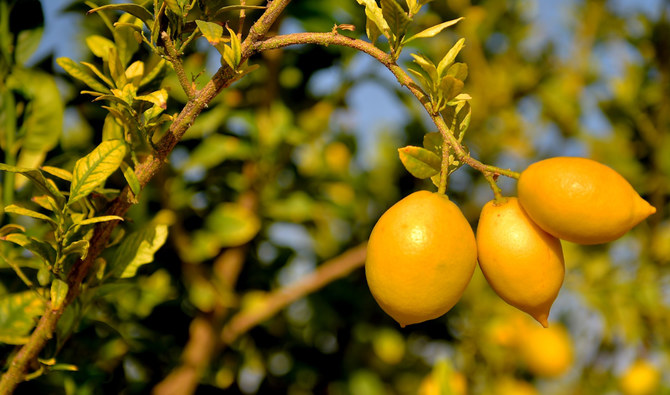
The sustainable farm, recently recognized by the Guinness World Records as the largest in the world, uses treated water to irrigate crops planted across a 3.2 million square meter area.
Irrigation operations are overseen by specialists and carried out in several stages, minimizing the impact on freshwater resources, and promoting responsible water management practices.
This approach aligns with the Kingdom’s efforts to address water scarcity and ensure the long-term viability of agricultural activities.
The model farm has more than 14,000 trees and houses five air-conditioned greenhouses along with several other structures. It also includes 50 fields designated for growing fruit trees, in addition to plans to reclaim and cultivate 20 additional fields in the future.
A wide range of crops and fruit trees, including lemons, oranges, tangerines, pomegranates, grapes and figs, highlight the Kingdom’s agricultural diversity.
Speaking to Arab News, Ahmed bin Mohammed Al-Mujthal, director-general of the Ministry of Environment and Water’s Asir branch, described the research farm as “a new achievement in the name of the nation.”
“It marks a significant milestone in Saudi Arabia toward sustainable farming. This remarkable achievement also showcases the Kingdom’s commitment to agriculture and environmental conservation,” he said.
The farm also shows that “with the right combination of innovation and commitment, a sustainable future is within our reach.”
Al-Mujthal added: “When you’re talking about something this large, the economics work out well. So, it turns out to be a very profitable farm.”
Model farms display modern irrigation systems, as well as the latest cultivation and animal-rearing techniques, acquainting farmers in the region with the best agricultural practices, he said.
The approach is important to provide food for local communities and reduce reliance on imported products.
“Food security is a matter of national security,” he said.
Al-Mujthal said that the sustainable farm expects to produce 10,700 kg of lemons, 3,500 kg of tangerines, 4,200 kg of oranges and 16,000 kg of pomegranate, among other crops.
According to World Wide Fund for Nature, agriculture is the world’s largest industry, employing more than 1 billion people and generating over $1.3 trillion of food annually. Pasture and cropland occupy about half of the planet’s habitable land, and provide habitat and food for a host of species.
Food security is a priority in Saudi Arabia and sustainable agriculture is gaining widespread attention.
Agricultural operations that are sustainably managed can preserve and restore critical habitats, help protect watersheds, and improve soil health and water quality, while unsustainable practices can have serious impacts on people and the environment.
Sustainable development that aims to capitalize on renewable natural resources is one of Saudi Arabia’s main objectives. The Kingdom also seeks to maintain a stable balance of natural resources through safe and effective management methods.
Resource management is becoming more important as the Saudi population grows, driving up demand for agricultural commodities.
As part of Vision 2030, the Kingdom has formulated plans to increase the use of technology, promote organic farming and increase the use of water-saving methods.
source/content: arabnews.com (headline edited)
__________
The sustainable farm was recently recognized by the Guinness World Records as the largest in the world. (Supplied)
Saudi Arabia will also host UNWTO General Assembly in 2025.
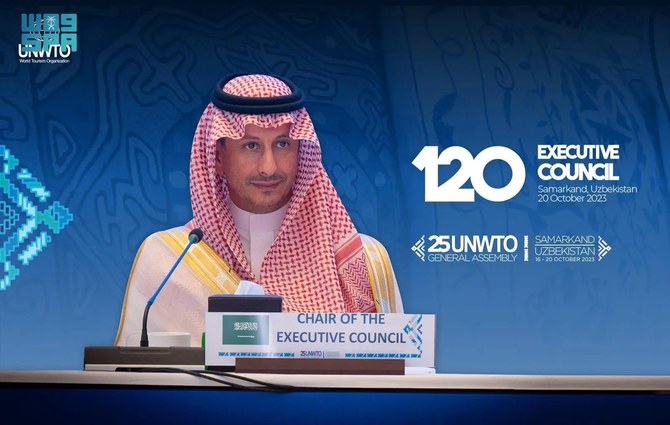
The Executive Council of the UN World Tourism Organization has endorsed the re-election of Saudi Arabia as its president for 2024.
The decision was taken during the council’s meeting in Samarkand, Uzbekistan, this week.
Saudi Minister of Tourism and Chairman of the Executive Council Ahmed Al-Khateeb said: “During the period of the first presidency of the Kingdom in 2023, plenty of initiatives that comprised partnership, innovation, and progress were launched, and the achievements during that period were based on a common vision, cooperation and firm commitment among all members of the organization.
“We have all paved the way to build a vision for a resilient tourism sector, and we look forward to continuing our leadership role in 2024.
“We recall the aspirations and hopes of all member states, and we will strive to implement the goals in a way that ensures the tourism sector continues to achieve economic exchange and cultural and humanitarian rapprochement between countries,” Al-Khateeb added.
He noted the unlimited support of the tourism sector from the Kingdom’s leadership, including the provision of “important international initiatives aimed at promoting sustainable development,” such as the establishment of the Sustainable Tourism Global Center announced by Crown Prince Mohammed bin Salman during the Saudi Green Initiative in October 2021.
Al-Khateeb explained that the center had recently announced the launch of an international research center, intended to be a high-level reference body to help accelerate the tourism sector’s transition to climate neutrality.
The minister said that, in alignment with the Kingdom’s vision and commitment to shaping the future of global travel, it had, during its presidency of the Executive Council in 2023, taken a “pioneering role in the tourism sector,” based on a carefully implemented plan. This vision gave priority to global cooperation and formed the basis for “pioneering initiatives that aim to reimagine the tourism sector.” He cited the outline of “a clear and comprehensive roadmap aimed at supporting global cooperation and pioneering initiatives” as an example.
The UNWTO also announced that Saudi Arabia has been selected to host the 26th session of its General Assembly in 2025. It will be the first UN General Assembly to be held in the Kingdom.
That announcement came during Al-Khateeb’s participation in the 25th session in Samarkand, which ran from Oct. 16 to 20.
Saudi Arabia is “determined to reshape the global tourism scene,” Al-Khateeb said. The General Assembly’s session in Saudi Arabia will feature a variety of activities aimed at raising awareness of the role of tourism in promoting sustainable development and peace in the world, he added, and will also provide an opportunity for the Kingdom to showcase its tourism and cultural developments and “enhance international cooperation in this important sector.”
On his official X account, Al-Khateeb wrote: “It’s my upmost honor to announce that the Kingdom of Saudi Arabia has been selected to host the 26th General Assembly of the UNWTO in 2025. We will continue to ascend and positively impact the tourism sector in order to achieve the global needs and aspirations.”
In another post, the minister said: “The election of Saudi Arabia to chair the Executive Council of the UN World Tourism Organization for a second term is an affirmation of our commitment to the world to empower the tourism sector globally, and support the ambitious development plans to create promising opportunities.”
Princess Haifa bint Mohammed Al-Saud, Saudi Arabia’s vice minister for tourism, also posted on X, saying: “As we continue to move forward with vision and purpose, the Kingdom proudly steps into the global spotlight once again. Happy to share that Riyadh will host the 26th session of the UN World Tourism Organization General Assembly in 2025.”
source/content: arabnews.com (headline edited)
________
The Executive Council of the UN World Tourism Organization has endorsed the re-election of Saudi Arabia as its president for 2024. (SPA)
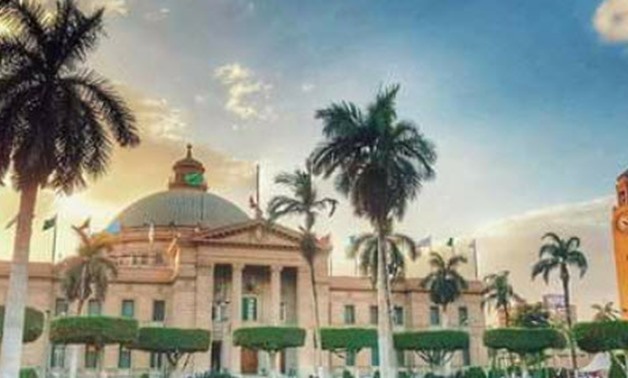
A total of 79 scientists from Cairo University are among a list of 160,000 scientists whose practical opinions are cited in various specializations with a (2 percent).
President of Cairo University Dr. Mohamed Othman Elkhosht received a report on Stanford University’s announcement of a list of scientists whose practical opinions are cited in various specializations with a (2 percent), featuring about 160,000 scientists from 149 countries, based on the Scopus database, in 22 scientific specializations, and 176 sub-specialization for distinguished researchers.
Dr. Elkhosht announced that the Stanford list included a large number of Cairo University scientists, with a total of 79 scientists on the two lists, whether the total from 2011 to 2022, or the latest version 2023, as this year’s list included scientists from 11 colleges (an increase of 8% over the previous year).
Number of scholars featured from Cairo University in the report’s 2022 edition was 73 scholars, representing 9 of the university’s faculties, and compared to the number of 74 and 55 scholars during the previous years (2021 and 2020, respectively), Cairo University thus leads all Egyptian universities and research centers in all years from 2020 until now.
Dr. ElKhosht explained that the annual Stanford University report is an objective, external indicator of the progress of scientific research at Cairo University.
It is also a quantitative indicator for the university to identify the number of distinguished faculty members in research and a reflection of the university’s methodology, plan, applied practices, and the support that the university provides to its employees from the various colleges and institutes affiliated with it.
Dr. Mahmoud Al-Saeed, Vice President of the University for Postgraduate Studies and Research, pointed out that the report reflects the strengthening of the confidence of the international scientific and research community in our scientists in all fields and specializations, and that the results of the classification this year included two lists, the first of which is specific to the list of the total practical years 2011 – 2022 (with a total of 417 scientists), While the second included the list of last year, 2022, with a total of 817 scientists, adding that this year’s list (2023 edition) contained 926 Egyptian scientists, while last year’s list (2022 edition) included 680 Egyptian scientists from various universities and research centers, compared to 605 and 396 during the years 2021 and 2020, respectively.
Stanford University used the Scopus database of the international publisher Elsevier to extract various indicators in this list, including global scientific publishing, the number of citations, the H index, and co-authorship, all the way to the composite citation index.
source/content: egypttoday.com (headline edited)
_________
Image processed by CodeCarvings Piczard ### FREE Community Edition ### on 2019-05-12 11:20:32Z | http://piczard.com | http://codecarvings.com
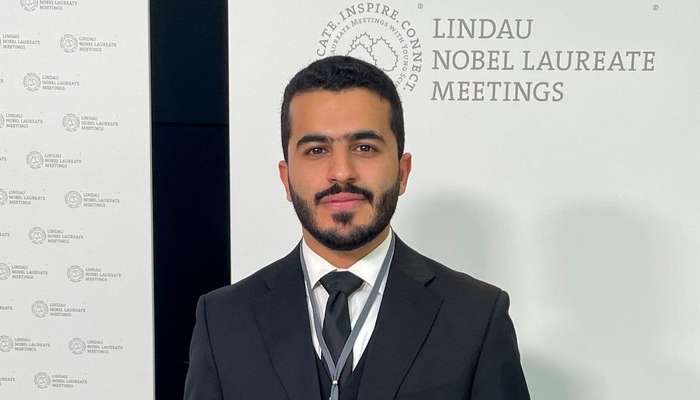
Dr. Fares bin Abdullah Al-Farsi, with his team, won the prize for the best innovative research project in a science marathon, in which more than 27 teams from various countries participated, during the Lindau Nobel Laureate Meeting.
Dr. Al-Farsi explained to Oman News Agency (ONA) that the winning project is concerned with using smart biochips to identify and resist bacteria that cause infections in chronic wounds, indicating that these slides contain microscopic antibodies manufactured in a laboratory, and linked to enzymes and sensors that help identify and eliminate bacteria as they approach the wound site.
He pointed out that the winning project was part of a research team consisting of young scientists from several disciplines, with the support of the “Max Planck” Foundation in the Federal Republic of Germany, adding that the participating research projects were evaluated by a scientific committee consisting of a number Nobel Prize-winning scientists, as well as global investors in the field of developing scientific research.
Dr. Al-Farsi pointed out that his participation in the 72nd Lindau Nobel laureate Meeting, which was held last June in the Federal Republic of Germany, came with the support of the Ministry of Higher Education, Scientific Research and Innovation to represent the Sultanate of Oman among the top 600 young scientists in the medical field, with the participation of more than 40 Nobel Prize-winning scientists.
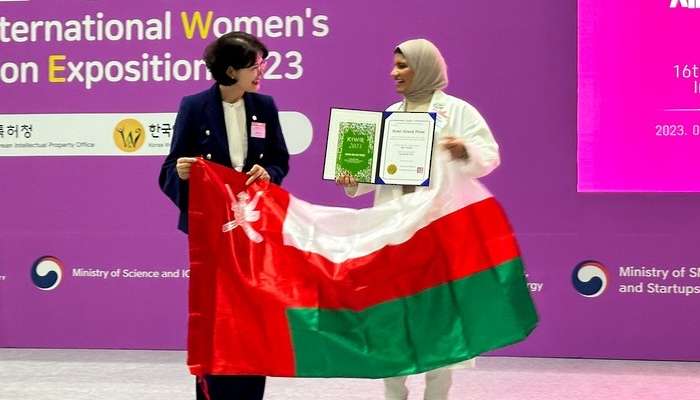
An Omani innovator has won the Grand Prize in an international competition in South Korea among 353 innovations from more than 18 countries around the world, Oman News Agency (ONA) announced.
Omani innovator Razan bint Hamad Al Kalbani won the Grand Prize in the Korea International Women’s Innovations Exhibition and Competition (KIWIE) for her innovation “X-ray absorbing coating from a natural ingredient”, among 353 innovations from more than 18 countries around the world.
Razan Al-Kalbani told Oman News Agency that her scientific innovation is a coating that absorbs X-rays from a natural ingredient (lycopene), which is the red pigment found in tomatoes, watermelons, red fruits and vegetables in general.
She added “After extracting the lycopene, I carried out laboratory tests and mixed it with a coating with unique properties and techniques to ensure that the properties of the lycopene were not affected.”
She pointed out that the scientific innovation is the first of its kind in the world using a natural compound to shield rays, indicating that the paint absorbs rays by 97%, and is characterized by being 100% water and moisture resistant, and 95% heat resistant, and prevents the formation of mold and bacteria, and is non-flammable.
She pointed out that one of the most prominent features of this scientific innovation is the possibility of using tomato mold to extract lycopene, and in terms of mechanical advantage, it is less expensive than the lead currently used.
She stated that her participation in the Korea International Women’s Innovations Competition and Exhibition (KIWIE) came with the support of the Ministry of Culture, Sports and Youth.
She stated that her scientific innovation achieved many achievements at all levels, whether global, regional and local, most notably her winning the first place in the Falling Walls Lab competition in November 2020, the silver medal at the Challenge and Innovation Forum in the State of Qatar, the gold medal at the Second Beirut International Innovation Exhibition.
She also won the silver medal at the level of the Middle East in the Mabaret Fayda Al-Saad competition in the State of Kuwait.
The University of Rhode Island neurotoxicologist and dean came to the U.S. for college in the 1980s.
Nasser Zawia hails from Al Bayda, a town in the south of Yemen, a country that has long been affected by war and is currently experiencing widespread famine. Zawia traveled to the U.S. in the 1980s to earn an undergraduate degree from the University of Massachusetts Amherst. He stayed in America, obtaining a PhD in pharmacology and toxicology from the University of California, Irvine. But Zawia never planned to stay on in the U.S. permanently. “Like many students who came here in the 80s, the objective was to come to go to school and go back to your home country and serve there,” he told The Scientist. “However, I married an American citizen.”
In 1990, Zawia and his wife moved to Yemen, where he planned to take a job at Sana’a University’s medical school. But the first Gulf War broke out in 1991. “The war was between Kuwait and Iraq,” he said. “But at that time, the position of the Yemeni government was supportive of Iraq. The connections with the U.S. were being threatened. I left during a climate where there was a lot of uncertainty and fear and insecurity as to what might happen.”
Returning to the U.S. in 1991, Zawia used connections he had made in US universities to secure postdoctoral positions at the University of South Florida and then at the National Institutes of Health’s National Institute for Environmental Health Sciences (NIEHS) in Research Triangle Park, North Carolina. After studying environmental toxicology at NIEHS, Zawia landed a faculty position at Meharry Medical College, a historically black college in Nashville, Tennessee, where he studied the developmental effects of lead exposure in minority populations. “I found that to be something where I could serve the underserved,” he said. “I stayed there for five years and then moved to the University of Rhode Island.”
Although he was successfully navigating the halls of academia and earning his citizenship in the early ’90s, life in the U.S. was not easy for Zawia. “The U.S. was not very receptive to people from the Middle East at that time because of the first Gulf War,” he recalled. “Those of us from that region of the world, our life is always punctuated by all kinds of events involving war. Every 10 years it seems like something big happens, which impacts us in many ways.”
The next big event that would have an effect on Zawia and countless other Americans happened on September 11, 2001. “Those of us who are Arab Americans/Muslim Americans in this country have always been dealing with wars and difficulties in our ancestral homes. But we didn’t ever think or expect that someone would come to the U.S. and cause such a catastrophe. And it changed our lives a lot. And everybody else’s,” he said. “But still we were Muslims in the U.S., and we had to deal with the Patriot Act and then the NSEERS [National Security Entry-Exit Registration System] registration for citizens coming from Muslim countries.”
Despite anti-Muslim sentiment spawned by the terrorist attacks of 9/11, Zawia chose to stay. Since setting up his University of Rhode Island (URI) lab in 2000, he’s made seminal discoveries, including research that pointed to a developmental basis for Alzheimer’s disease. He and his colleagues found that early exposure to lead increased the risk of developing Alzheimer’s disease–related pathologies later in life. Zawia is now working on the epigenetics involved in this phenomenon, and said that his team is pursuing clinical trials of a repurposed drug to treat rare types of neurodegenerative disorders in Europe.
Although the Trump administration’s executive orders on immigration have restricted some travel for people from several countries in the Middle East, including Yemen, the policy has not directly affected Zawia, a naturalized US citizen. But both as a scientist who attends international conferences and as an administrator who seeks to entice talented students from all corners of the world to come to URI, he said he is seeing the damage the restrictions are having. “It is a concern for faculty here that were born in one of those seven countries,” he said. “Even though the law might be clear, how it’s applied may have an impact on our mobility.”
Zawia noted that the effects of the new immigration policies appear to be restricting the flow of students to URI and other US academic institutions. “In graduate education—especially in the STEM disciplines . . . we’re very heavily dependent on international students—it looks like huge drops in applications, a lot of concerns among our students on campus,” he said. “It just sends the wrong message. Graduate education is a strategic asset for the United States. Having the best minds come for an education here, staying, and interacting with our faculty and researchers is the secret to us always maintaining our leadership position.”
On top of the uncertainty surrounding his life as an immigrant researcher and administrator in the U.S., Zawia is grappling with an increasingly unstable situation in his home country, where some of his family still live: 19 million Yemenis are on the brink of a catastrophic famine in a country besieged by civil war. “My personal life and my connections to the country and my family have been upside down, to say the least,” he said.
With all that Zawia has witnessed in the U.S. as a Muslim Arab-American, he views the current political and social climate as the most damaging he’s seen. “I feel the impact of what’s going on now is much greater than what we experienced in the ’90s, with first war in Iraq or 9/11,” he says. “What’s going on right now is really very unsettling and very worrisome. Past events and past wars had more of a selective impact on us as Middle Eastern people and Muslim Americans. But the changes this administration is bringing about in many different facets of life is really . . . disrupting a lot.”
source/content: the-scientist.com / bob grant (headline edited)
Dubai holds lots of Guinness World Records from being home to the world’s tallest tower, the world’s deepest swimming pool and the world’s tallest landmark sign.
And now, the city can add another accolade to its impressive list of world records as Expo City’s Al Wasl Plaza has secured a Guinness World Record.
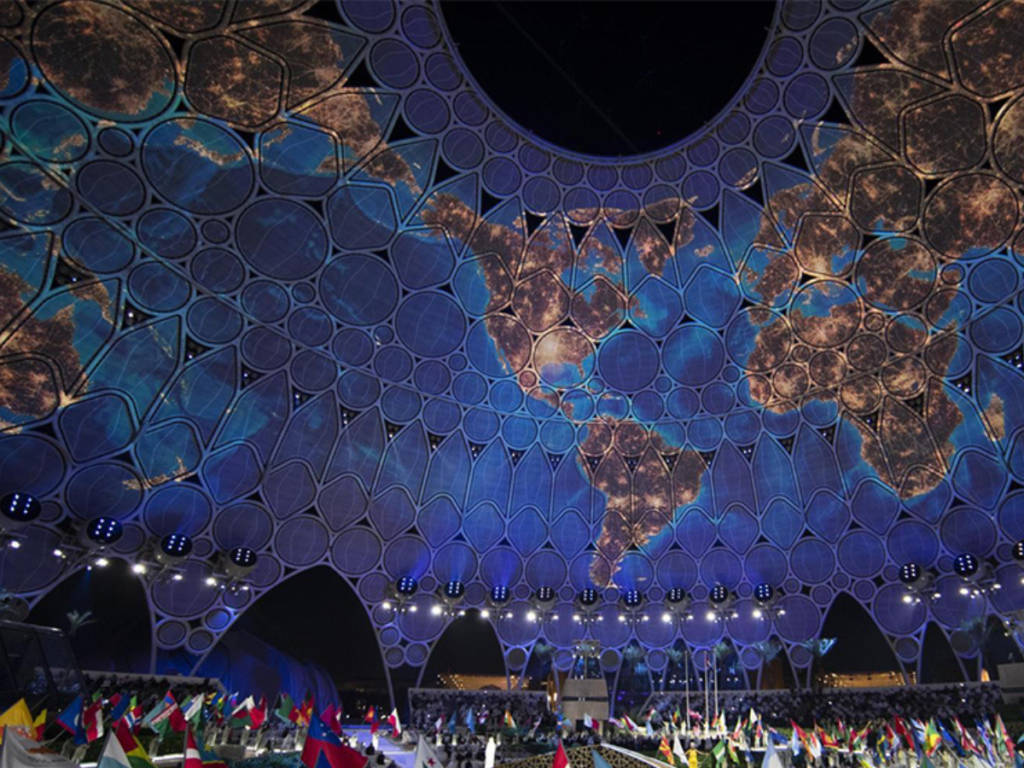
Al Wasl Plaza – Expo City’s dome – has won the Guinness World Record title for the largest interactive immersive dome.
Alwaleed Osman, Official Adjudicator at Guinness World Records, said on the unveiling of the award: “Al Wasl Plaza stands as a testament to architectural excellence and a distinguished structure that resonates with those who have had the privilege of experiencing it.
“Its recognition in Guinness World Records underscores the commitment of Expo 2020, and the subsequent Expo City Dubai, to innovation and excellence.”
The beating heart of Expo City, it’s 130 metres in diameter and over 67 metres tall (that’s big enough to fit the Leaning Tower of Pisa beneath it) and visitors can see immersive 360° videos projected onto the surface of the dome.
Up to 252 laser projectors are used to put images on the architecture that can be viewed from inside or outside of the dome.
Designed by Adrian Smith + Gordon Gill Architecture, Al Wasl Plaza has been built using unique materials that ensure it can be used year-round.
The semi-outdoor space has a trellis framework made out of steel and the pattern is inspired by the logo of the Expo 2020 exhibition. Fun fact: The logo is fully visible at the apex of the dome.
During Expo 2020 Dubai, Al Wasl Plaza was a hub for events from concerts to performances and, next year, it will host the UNTOLD music festival.
Al Wasl Plaza hosts daily projection shows and, upon news of its latest award, has opened the new Al Wasl Plaza Café – a homegrown brand that offers Arabic fusion cuisine.
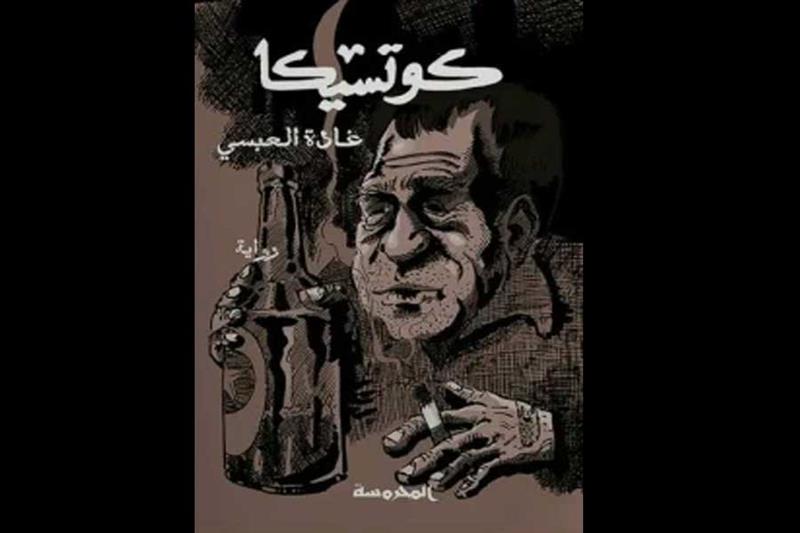
In her historical novel Cotissica, Ghada El-Absy depicts the story of the Greek adventurer and entrepreneur Theochari Kozzika (Egyptians pronounce the name in an Italian manner) and – in contrast – the life of a working-class Egyptian family.
Overwhelmed with dreams of wealth and prestige, Theochari arrives in Alexandria just after the Orabi Revolution (1879-1882) to live with his uncle Yanni and his wife.
Yanni does not help Theochari much except to give him advice, the most prominent is “middlemen are the new [Greek] gods.”
Theochari’s insatiable desire for money is evident when he allocates his uncle’s ships to repatriate Greeks from Alexandria during the bloody civil strife that erupted between foreigners and Egyptians in 1882 that culminated in the British bombardment of Alexandria and their ensuing conquest of Egypt.
El-Absy describes in detail an incident in which the British Consul’s Maltese servant, Francisco Zamit, starts a fight with an Egyptian coachman, stabbing him and taking shelter with the Maltese and the Greeks.
This is followed by fighting between the foreign communities in Alexandria, armed with pistols and guns, and Egyptians, carrying cudgels and sticks. The foreigners were driven by hatred and arrogance towards Egyptians, who in turn, felt humiliated in their own land until the Orabi Revolution awakened their wounded dignity.
One of the most unforgettable scenes in the novel is when a brave Egyptian man kills one of his countrymen who menaces a group of female Greek swimmers. The man leads the girls to safety, only to be shot by both the father and brother of one of the girls, who think that he is the one threatening them! One of the girls he saves, Angeliki, becomes Theochari’s wife later on and does charity, hoping to compensate the countrymen of this unknown hero.
Following the British occupation of Egypt, Theochari is joined by his younger brother, Polichronis.
Soon, Polichronis proved to be an indispensable partner for his elder brother through his exceptional skills in influencing and persuading people. Thus, Theochari decided to lay the plans and leave the execution of them to his younger brother.
Theochari took charge of providing the British troops with supplies during their Sudan campaign (1881-1899). He leaves Alexandria, establishing two factories in Tora, Cairo. One is for making alcohol for medical uses and the other is a brewery for making beer.
He makes the decision to move to Tora in order to be far away from both the greedy eyes of the British, who insist on taking a cut from every big business, and from the big Greek competitors, such as Gianaclis, owner of the famous wine factory.
El-Absy also provides a narrative from another universe, that of the family of Abdel-Alim, an Egyptian who works in Kozzika’s brewery.
This profession is a source of conflict within Abdel-Alim’s family. Whenever a male baby dies, his wife, Sabra, pours curses on him due to his profession, which is prohibited by Islam. In order to appease her, he gives her false promises that he will stop working in the brewery. He swings between staying and leaving until his best friend and co-worker takes him to hear a budding songstress, none other than Oum Kalthoum!
Abdel-Alim’s family is mired in superstitions and ignorance. For instance, Sabra asks a young man to put alms money, which she begged for, in a bundle and throw it in the street after walking for a while in order to make her son Talaat live, unlike his previous brothers.
El-Absy, who is a medical doctor, narrates an unbelievable story in which the jealous mother-in-law of Shawqia, Sabra’s most intimate friend and midwife, pays another midwife to let Shawqia’s baby die during delivery and then inserts a weasel into her womb to make her bleed and give her a hysterectomy.
Theochari and his brother begin to accumulate wealth, and all the while Abdel-Alim and his family are in a state of misery.
This misery is compounded by the inexplicable death of the husband of Abdel-Alim’s eldest daughter, Wedad, just ten days following the marriage. Following this calamity, Wedad resigns herself to sit beside the window for decades to become a clairvoyant. The rest of the daughters feel that their house is damned and join their mother in asking Abdel-Alim to stop working in the brewery so they can get married.
Throughout the novel, the author excessively merges Greek mythology with the minds, ideas, and words of Greek characters. For instance, after two and a half pages of engaging with and projecting mythological figures, the author says that Theochari was not that romantic!
El-Absy provides two friends and co-workers for Abdel-Alim: the Christian Anton and Samaan the Jew (this name is actually an error, as the Jewish name for Samaan is Sham’oon). These three characters are meant to convey the multi-confessional character of Egypt, with the three different religions working in the brewery in spite of it being taboo, at least for Muslims and Jews.
El-Absy, who is also a singer, devotes pages to Oum Kalthoum’s singing and the lyrics of her songs. It is this music that helps Abdel-Alim enter a phase of transcending intoxication and overcome his marital troubles.
However, one unconvincing scene is when Abdel-Alim, who is apparently illiterate, compares the establishment of the Tora Prison to the big prison in which Egypt is incarcerated.
The story of the Kozzika brothers continues through Theodore, Polichronis’ son. Theodore proves more than capable of managing the family business. He also has a much-publicized romantic affair with the American silent star Pearl White for the last ten years of her life.
Meanwhile, two of Abdel-Alim’s daughters marry, while the youngest, Set Abooha, shuns marriage, pursuing her studies and becoming a medical doctor. However, the only surviving son grows up, becomes a drug addict, kills one of his sisters, and steals her jewelry.
There are two scenes that were absolutely unnecessary. The first depicts Saad Zaghloul, the leader of the 1919 Revolution, in a dialogue with Sir Reginald Wingate, the British high commissioner. The second depicts Ahmed Aboud Pasha, the prominent Egyptian industrialist, talking to an unseen interlocutor about his career and his ambitions to seize the Kozzika brewery.
By this time, the winds had changed and the majority of foreigners had left Egypt after selling their businesses. This includes Theodore Kozzika, who sells his brewery and alcohol factory to Abboud Pasha, who converts them into a starch and glucose factory.
The novel consists of 35 chapters that are devoted either to the Kozzika or Abdel-Alim families, except in the final chapter where both families are mentioned together.
From the very first page, the author focuses on the mania of giving birth to male offspring among the Egyptian working classes represented by Sabra and her husband Abdel-Alim.
Ironically, the same tendency was also found in the Greek upper classes, albeit for totally different reasons, namely because the bride’s father paid the dowry.
This is demonstrated in a scene where Theochari’s wife, Angeliki, boils with jealousy when she learns that Polichronis’ French wife has given birth to a boy, while she gave birth to a girl.