Arabs & Arabian Records Aggregator. Chronicler. Milestones of the 25 Countries of the Arabic Speaking World (official / co-official). AGCC. MENA. Global. Ist's to Top 10's. Records. Read & Enjoy./ www.arabianrecords.org
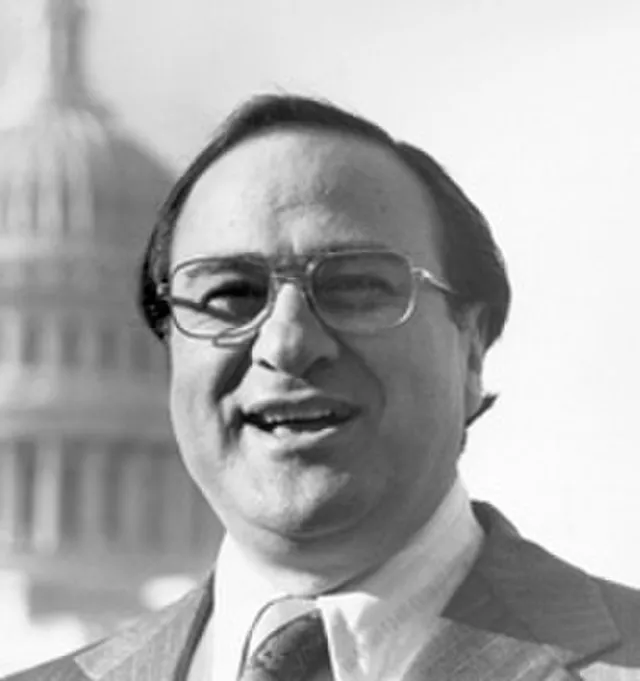
James Abourezk, 1st Arab American US senator, dies at 92.
James Abourezk, attorney and Democratic politician who served as a United States senator and United States representative from South Dakota and co-founder of the American-Arab Anti-Discrimination Committee(ADC), died today on his 92nd birthday.
He was born in Wood, South Dakota, the son of Lena (Mickel), a homemaker, and Charles Abourezk, an owner of two general stores. Both of his parents were Lebanese immigrants. He grew up near Wood on the Rosebud Reservation and has lived in South Dakota most of his life.
Abourezk represented South Dakota in the United States Senate from 1973 until 1979. He was the author of the Indian Child Welfare Act, passed by Congress in 1978 to try to preserve Indian families and tribal culture.
He was instrumental in the creation of both the American Indian Policy Review Commission and the Select Committee on Indian Affairs. He became chairman of the Indian Affairs Committee from its creation in 1977 to 1979.
Abourezk was elected in 1970 as a Democrat to the United States House of Representatives and served from 1971 to 1973. In 1972 he was elected to the U.S. Senate, where he served from 1973 to 1979.
Abourezk was an outspoken critic of Israel and U.S. foreign policy in the Middle East after touring the region and visiting his parents’ hometown in Lebanon as a senator. The position lost him many political allies, and he decided to retire from the Senate after a single term.
In 1980, Abourezk co-founded the American-Arab Anti-Discrimination Committee and traveled throughout the U.S. organizing Arab Americans in the wake of the “Abscam” debacle. Abscam was an FBI sting operation where agents dressed up as “oil-rich sheiks” in the late 1970s and early 1980s that led to the convictions of seven members of the United States Congress, among others, for bribery and corruption.
Abourezk’s marriages to Mary Ann Houlton and Margaret Bethea ended in divorce. In 1991, he married Sanaa Dieb, a restaurateur. They moved to Sioux Falls where she opened an award-winning Arab restaurant.
Survivors include his wife; children Charles Abourezk, Nikki Pipe On Head, and Paul Abourezk from his marriage to Houlton; daughter Alya Abourezk from his third marriage; a stepdaughter; and many grandchildren and great-grandchildren.
Warren David, president of Arab America and a former national president of the American-Arab Anti-Discrimination Committee said, “during a time when discourse regarding the negative portrayal of Arabs and the injustice faced by Palestinians were scarce, he (Abourezk) acted as a pioneer who instilled a sense of immediacy in the Arab American community–he was a trailblazer in that regard.”
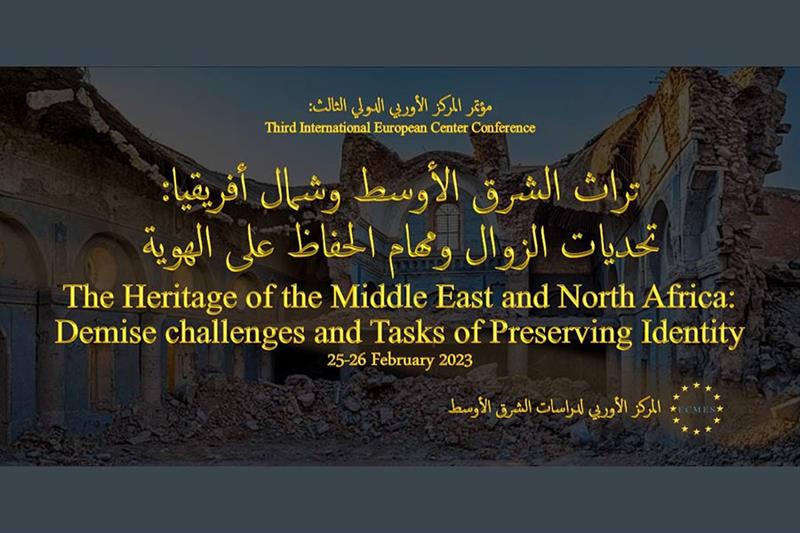
The European Centre for Middle East Studies, headquartered in Germany, is organising its third international scientific conference in Tunisia on 25-26 February.
The conference will be held under the title “The Heritage of the Middle East and North Africa: Demise Challenges and Tasks of Preserving Identity.”
Representatives of UNESCO, ICESCO and ALECSO organisations are set to attend the conference.
Sattar Jabbar Rahman, founder and CEO of the European Centre for Middle East Studies and head of the conference, told Ahram Online the conference is meant to not only shed light on heritage but also to find mechanisms to protect it.
He pointed out that heritage, in its tangible and intangible forms, is suffering from neglect. The responsibility of protecting heritage lies not only on the shoulders of official institutions concerned with culture and heritage, but also on organisations concerned with protecting heritage, activists, and research centres, including the European Centre for Middle East Studies, he added.
Rahman confirmed that the heritage of the Middle East and North Africa is under threat, which is why the conference devoted five axes to discuss ways to protect it. These axes are: the impact of struggles and armed conflicts on tangible heritage; the role of civil society and cultural institutions in protecting heritage; national and international legislation to protect heritage; digitisation in the service and preservation of cultural heritage; and the impact of urban expansion on heritage.
Armed conflicts have caused some of the worst disasters on the cultural, urban and architectural fronts, said Hala Asslan, an expert with the International Council on Monuments and Sites and UNESCO and vice chairman of the Scientific Committee at the conference.
Asslan told Ahram Online that several conflicts erupted during the first two decades of the third millennium, causing unprecedented destruction in the region and harming the cultural, architectural, and environmental heritage of several Arab countries, especially those located in the Middle East and North Africa (MENA) region, most notably in Iraq, Syria, Yemen, Lebanon, and Libya. Several sites registered on the World Heritage List were damaged, such as the ancient city of Aleppo, the archaeological site of Palmyra, and the villages of Forgotten Cities in northern Syria, she added.
Chokri Essifi, a researcher in historical and civilisational studies and coordinator of the Office of Academic Relations at the European Centre for Middle East Studies in Germany, told Ahram Online that the local heritage in the Middle East is exposed to several internal and external threats. The most prominent of these is the lack of maintenance, attention, and follow up, their inappropriate use in cultural and tourism development, and the lack of awareness of the importance of this heritage in building national cultural identity.
With regard to external influences on heritage, Essifi revealed that the rapid transformations that the world has been witnessing since the 1990s included a number of influences in the heritage of the Middle East.
The first of these is the continuous attempts to own this heritage. This is in addition to the increase in theft, especially during periods of wars and conflicts that weakened protection measures on heritage and cultural sites.
He stressed that despite the positive aspects of globalisation, the unilateral view in the field of culture and the growing imperialism and one-centric tendency have hindered the trend towards promoting constructive cultural pluralism that does not differentiate between cultures and identities.
Three carbon storage facilities in Saudi Arabia, the UAE and Qatar capture 10 percent of the world’s carbon dioxide annually, according to an Arab Monetary Fund official.
Abdul Rahman Al-Hamidi, director general and chairman of the organization, revealed that the facilities captured around 40 million tons in 2020.
The announcement was made during the conference on enhancing the transition to a circular carbon economy to support sustainable development currently taking place in Abu Dhabi.
Al-Hamidi noted that the circular carbon economy approach can enable the reduction of greenhouse emissions, improve resource efficiency, and promote sustainable economic development in Arab countries.
The circular carbon economy is a framework for managing and reducing carbon emissions through 4Rs — reduce, reuse, recycle, and remove.
With numerous challenges of energy security, the circular carbon economy provides an opportunity not only to reduce carbon emissions, but also to drive economic growth and create new job opportunities, Al-Hamidi added.
Carbon dioxide emissions that come from coal consumption surged to reach 15.3 gigatons in 2021. Coal alone represents 40 percent of the total growth in emissions at the global level.
Al-Hamidi said: “With the expansion of the uses of energy sources and the fluctuation of their prices, attention is directed directly to fossil fuel sources, especially oil and gas, to classify them as primarily responsible for emissions of greenhouse gases harmful to the environment, especially carbon dioxide, in light of what the globe has been witnessing in recent years.”
The Arab region has performed well in terms of energy efficiency through the provision of affordable energy, according to data revealed by the World Energy Council.
As for energy security, it fell below expectations. The region contains nearly 50 percent of the world’s oil reserves, and around 40 percent of the world’s natural gas reserves.
Al-Hamidi further noted that the Arab world has the resources and experience to transition into a circular carbon economy.
“We have abundant natural resources, such as solar and wind energy, to create low-carbon energy systems, so we can develop innovative technologies and business models that support the transition to a circular economy and create new job opportunities in areas such as renewable energy, emissions management, and recycling,” added Al-Hamidi.
Numerous Arab countries have set ambitious goals for renewable energies in the medium and long term, to be achieved in the horizons of 2030 and 2050 while also committing to reducing fossil energy sector emissions.
source/content: arabnews.com (headline edited)
___________
Coal alone represents 40 percent of the total growth in emissions at the global level (Shutterstock)
Trailblazing Jordanian-British research fellow reveals that her prescription for success requires dispensing – but only with tradition.
Most Damascene moments are dramatic by definition but few occur, as Atheer Awad’s did, on an actual road that leads to the Syrian capital.
Her own turning point came when the vehicle she was travelling in with her family to register for university in Amman blew a tyre, hit an electricity pole and flipped several times.
The accident meant that Awad ended up in hospital and missed the window to sign up to study medicine. By the time she was discharged, the only degree option still open to her was pharmacy.
Though bitterly disappointed at the time, she has come to believe that there were greater forces at work on the day of the crash on Jordan Street.
“Let’s just say we put our car to the test,” Awad tells The National. “It was a complete wreck. We are lucky to be alive.
“But it wasn’t meant to be that I should study medicine. I took the car accident as a sign that the future held better things for me.”
As a result, she was steered into an unexpected career in which the eventualresearch fellow at University College London would amass numerous accolades: the Journal of Clinical Medicine‘s 2021 PhD Thesis award; an appearance on the Forbes 30 Under 30 list for Europe; reaching the finals in the Women of the Future awards 2022 in the science category; named as an International Pharmaceutical Federation FIPWise Rising Star for 2022 as well as one of the top 15 outstanding innovators under the age of 35 by the MIT Technology Review.
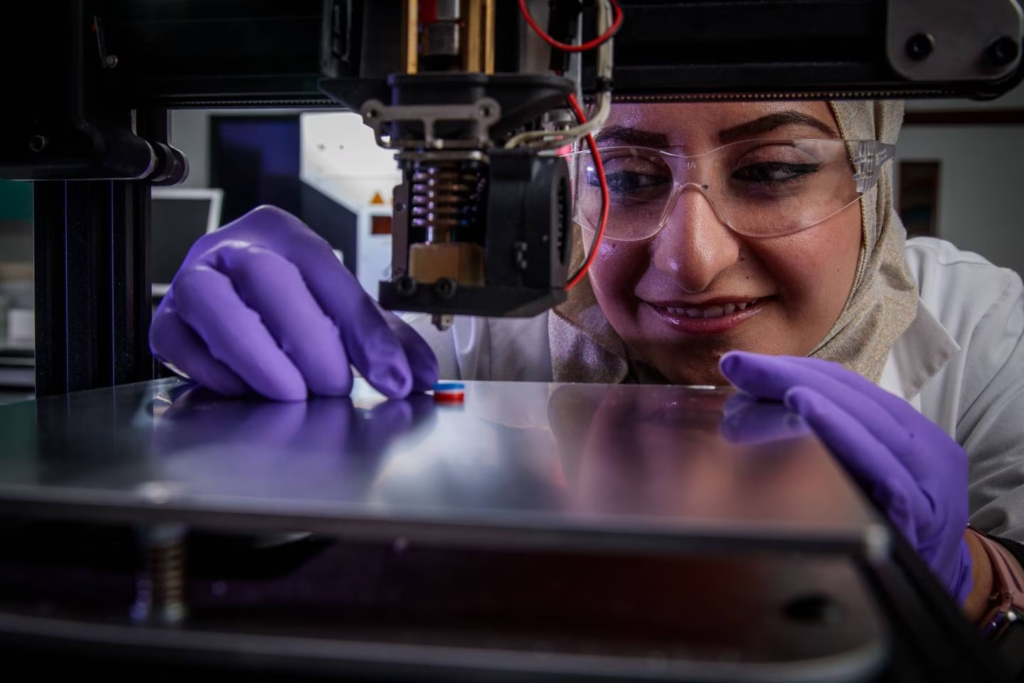
Her groundbreaking research is paving the way towards the creation of personalised medication that can be 3D-printed in patients’ homes via smartphone — a potentially transformative innovation for those who find it hard to gain access to health care or don’t suit a one-size-fits-all service.
Born in Abu Dhabi and raised in Dubai by Jordanian parents, her hand was always first in the air in class when volunteers were sought to dissect animals at Al Mawakeb School in Garhoud.
It was an early display of Awad’s enthusiasm for the sciences, particularly biology, and a prelude to her ambition of becoming a heart surgeon.
“I was so determined to make a difference and medicine is one of those industries that has a greater impact when it comes to changing people’s lives,” she says.
“There is never a boring day with science because every day is a new learning experience.
“You come across things that you haven’t discovered before or create new stuff by just playing around with things in the lab and mixing them together. It’s that sort of curiosity that motivates me.”
Back then, holidays were regularly spent visiting Jordan — trips that Awad still makes annually to catch up with extended family, go to weddings and indulge a soft spot for the local food.
“I love those traditional connections,” she says, “and still follow as many of these practices as I can, wherever I am.
“My faith helps a lot. But it isn’t easy trying to keep a balance between sticking to faith and being able to live in a foreign country.”
Moving to England wasn’t as daunting as it might have been without the unwavering support of her parents and four older siblings — a pharmacist, a consultant with whom she lived until recently, an IT specialist and a doctor.
“It is rare for all of us to be in the same country at the same time,” she says, laughing. “We travel between the three countries and there is always at least one of us living in each of the three. That makes it interesting for my parents, who get to travel everywhere.”
Awad herself, now 29, is a keen traveller and has put on her bucket list the wish to visit every country in Europe before turning her sights to other continents.
She fell in love with Turkey after a trip to Cappadocia, the semi-arid central region known for its “fairy chimney” rock formations, and particularly enjoys explorations on foot.
London, however, holds a special place in her heart, where there is, she points out, a big Jordanian community.
“I have a lot of friends I consider my second family. They’re a mixture of scientists, people outside work, and others with Jordanian or Arab heritage. That keeps me connected to my roots and it is one of the beauties of London — it’s international.”
But she calls Dubai home and makes many happy returns to Living Legends, a newly developed 14 million-square-foot community on the outskirts of the city where her parents still live.
Part of the appeal of the emirate, it should be said, is the chance to hit the luxury shops. Dior and Prada are favourites — her handbag collection alone extends to “about 40 or 50 … I’ve lost count” — and the Swarovski-encrusted mobile phone she takes everywhere is a particularly prized purchase.
Invariably, though, one of the first stops is to fill up on luqaimat, known as awama in the Levant. She has sampled the sugary doughnuts wherever she finds them but maintains that the ones whipped up for as long as Awad can remember by her mum, Hanan Swais, “are the best”.
They were an abiding taste of a childhood in which the extroverted Awad, left to explore her own interests by her father, Jamal, an electronics retailer, and Hanan, a homemaker, played the piano exuberantly if not with any notable proficiency and went on Scouting expeditions.
There was never an expectation that she would follow in the footsteps of any of her siblings but the desire to pursue medicine was strong nonetheless.
“It wasn’t until we were discharged from hospital [after the car accident] that I realised I had missed the deadline,” she says. “There was no going back in time. I just thought: ‘What’s the next best option?’
“That’s why I always say I did not choose pharmacy — it chose me.”
Despite a reluctant start, Awad’s enthusiasm grew throughout a five-year degree at the private Applied Science University in Amman as she gained insight into the extent of what pharmacists could actually do.
“I started looking at pharmacy as having a bigger impact than I had previously thought,” she says.
“People sometimes look at pharmacists as if they are beneath or less important than doctors when, in fact, they do most of the work behind the scenes.”
Little by little, with the consolidation of hours of satisfying sessions spent researching in laboratories or learning about the differences in the properties of various drugs, it dawned on Awad that she had stumbled across her calling.
Which is not to say that she appreciated being treated as little more than a saleswoman while doing work experience in a community pharmacy during the degree course.
“People assume that the pharmacist just takes the prescription and gets the medication without doing anything else,” she says. “There is a misconception.”
The experience hardened Awad’s resolve to focus on research rather than the direct, community-facing side of the profession.
After graduation in 2015, she embarked on a master’s in pharmaceutics and drug design at UCL, where she learnt about 3D printing during an end-of-year project with her professor, Abdul Basit.
She was inspired to keep working with the Basit Research Group within the School of Pharmacy to undertake a doctorate specialising in using the drug-delivery technology in the manufacture of medicines.
“I’ve always been interested in technology so it grabbed my interest immediately,” says Awad, who is still a research fellow with the group.
Weekends when she is not working are spent dining with friends, indulging her obsession for Harry Potter — “I’ve watched all the films multiple times” — and baking. Coffee cake is her speciality and made a well-received appearance at her professor’s 50th birthday.
“I do like experimenting with baking and cooking. I think there are similarities between baking and science.”
She doesn’t rule out applying to appear on The Great British Bake Off television show but, for now, Awad’s ambitions are confined to the lab.
“I want to make a change,” she says. “I don’t want 3D printing to stay a theory. I want to see it being implemented and taken up by healthcare agencies.”
Most recently, Awad has been printing tablets with Braille and moon patterns on their surfaces for visually impaired patients, or changing their shape, size and colour so that children or those with limited capacity find them easier to take. She has also been researching how to combine several medications into a single pill.
One of her team’s successes has been in creating tablets that can be swallowed without water. Manufactured in partnership with pharmaceutical 3D-printing specialist FabRx by melting powder particles with a laser beam and using heat, the porous product dissolves on the tongue.
She talks about how 3D printing allows alterations of a fraction of a milligram, making medication much more tailored and precise than the standard variety available off the shelf.
“Every person is different and our bodies do not react the same,” Awad says. “The requirements when it comes to medication differ, and sometimes they differ within the same person, depending on the disease progression.
“We can also take patients’ preferences into consideration. That’s important when it comes to children or elderly patients. Often children refuse to take medicine because they don’t like the taste, the shape isn’t appealing or the pill might be too big.”
While 3D printing for customised pharmaceuticals has yet to be introduced commercially in the UK, Awad’s UCL team has managed to convert a smartphone into an on-demand 3D drug printer with an app that could be used in remote GP surgeries and even at home.
“We’re not far from the industry adopting 3D printing, probably in the next two to five years,” she says. “Approval will have to be on a medication-by-medication basis because each medicine could behave differently to the same technology, depending on its properties, and the 3D-printing technologies themselves differ.”
Awad’s passion for her work is tangible. The British-American analytics company Clarivate clearly thought so when last month listing her on its influential Highly Cited 2022. It was a remarkable achievement for such a young scientist to appear among fewer than 0.1 per cent of the world’s researchers across 21 fields.
Such recognition is welcome but, she says, the many “titles are more of an assurance that I am on the right track and that my work is important”.
“That’s the driving force to keep me moving forward and become even more ambitious to try new things,” she says.
One of her guiding principles is that researchers should be brave and adopt different approaches because even the most “ridiculous” ideas can be turned into brilliant inventions or innovations.
As she has been known to opine, not all scientific breakthroughs happen through planned research: “Sometimes, you come across things by accident.”
Given the route into her career in pharmaceuticals, it could be said that Awad started very much as she meant to continue.
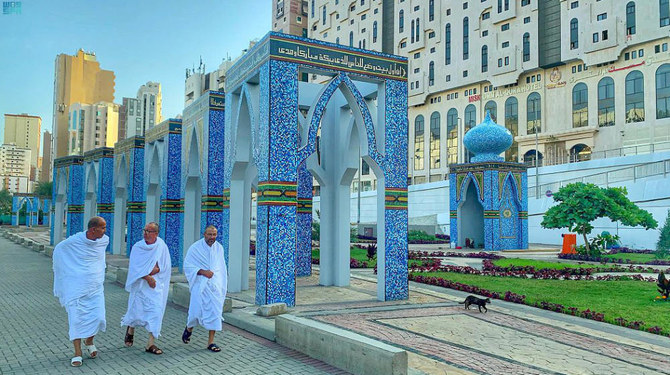
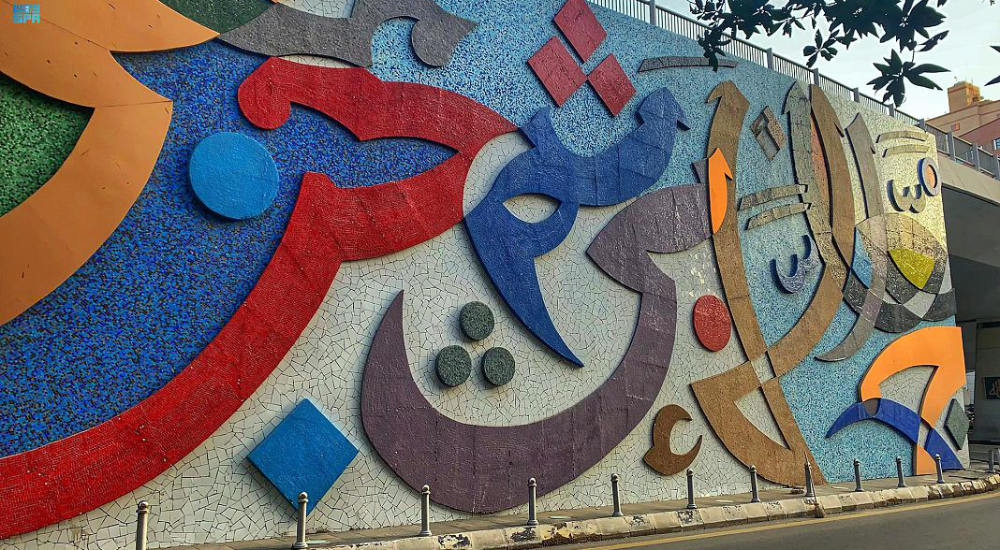
The world’s longest calligraphic mural has been installed on the road leading to Makkah’s Grand Mosque, in the latest beautification of the holy city.
The 75-meter mural, designed by artist Amal Felemban, joins a host of sculptures and installations already adorning Makkah in a project run by local authorities to boost its visual appeal and depict Saudi heritage and culture for pilgrims.
Felemban told Arab News that it was important to retain and promote the ancient art of mural painting, as it portrays Saudi culture and aesthetics and links the old world with the modern.
“In the modern era, they brighten up streets and cover some of the ugliness of the gray buildings,” she said, adding that murals and sculptures reflected the true spirit of the city.
“My mural tells the story of the urban heritage in the holy capital, as it received a wonderful echo of this authentic Hijazi art, and it is different from the rest of the murals near large mosques,” she said.
HIGHLIGHTS
• The Municipality of Makkah installed the longest calligraphic mural in the world on King Abdul Aziz Street, the road that leads to the Grand Mosque.
• Artist Amal Felemban shared that murals are one of the oldest forms of art that can beautify the streets and show local culture and heritage to pilgrims and visitors.
“Mine are not letters or poetic verses, but were rather inspired by the authentic urban culture of this country.
“Many pilgrims do not have a sufficient knowledge about Saudi Arabia, nor about our culture and civilization, so we need to show it through arts, murals and sculptures.”
Felemban said that the municipalities in all Saudi regions must pay great attention to this form of art, which reflects Saudi culture and attracts more tourists.
“Millions of visitors from all over the world will flock to our beloved Kingdom, which requires us to show our heritage and culture properly.”
My mural tells the story of urban heritage in the holy capital.
Amal Felemban, Artist
Artist Badr Al-Sulaimani said that the murals and sculptures in the holy city bring joy and pleasure to the hearts of pilgrims from all over the world.
He added that they helped highlight many creative artists from inside and outside the Kingdom in various competitions and bring a historical dimension to contemporary art.
“This proves the importance of employing arts and creating an attractive artistic environment, using all the techniques that contribute to providing a cultural and artistic dose for passers-by,” Al-Sulaimani said.
The Municipality of Makkah organizes competitions for painting murals and drawing Arabic calligraphy, which it describes as one of the most significant written and visual arts which is associated with the Holy Quran.
A team from Umm Al-Qura University’s Department of Visual Arts is also participating in improving the city’s landscape.
source/content: arabnews.com (headline edited)
_____________
The beautification of Makkah continues with new murals adorning street walls on the way to the Grand Mosque. (SPA photos)The murals feature Arabic calligraphy, a pillar of Islamic art. (SPA)
UNESCO added Tunisia’s spicy and most famous national condiment Harissa to its list of intangible cultural heritage, saying it was part of the North African country’s identity.
UNESCO placed the Tunisian condiment Harissa to its list of intangible cultural heritage, citing its significance to the identity of the North African nation.
The cultural agency of the United Nations is meeting in Morocco to consider proposals for its list of Intangible Cultural Heritage, which strives to safeguard cultural traditions, practices, and knowledge.
It tweeted “Just inscribed on the #IntangibleHeritage List: Harissa, knowledge, skills, and culinary and social practices.”
Tunisia’s Spicy Harissa
Harissa is a paste made from sun-dried hot peppers, freshly prepared spices, and olive oil, which preserves and slightly tones down its intensity. It is served in nearly every restaurant in Tunisia and is also exported internationally.
The condiment is wonderfully spicy, smoky, and packed with rich, deep flavors. It’s also extremely versatile, as it pairs well with sandwiches, different dishes, and even plain olive oil.
Harissa is “an integral part of domestic provisioning and the everyday culinary and dietary traditions of Tunisian culture,” according to Tunisia’s application for the status. It is typically cooked by families and communities.
“Harissa is used as a condiment, an ingredient, and even as a dish in its own right, and is well-known throughout Tunisia, where it is consumed and manufactured, particularly in the regions where chilli peppers are farmed,” the source explained.
It is regarded as a distinguishing part of national culinary heritage and a role in social cohesiveness.
The 2003 Convention for the Safeguarding of the Intangible Cultural Legacy seeks to protect and increase awareness of the “intangible cultural heritage of the communities, groups, and individuals involved.”
UNESCO emphasizes that the list recognizes traditions, practices, and knowledge as “human treasures” that must be safeguarded.
Wednesday, the organization also recognized French baguettes, bringing the total number of goods on the list to over 530.
H.H. Sheikh Hamdan bin Mohammed bin Rashid Al Maktoum, Crown Prince of Dubai and Chairman of Dubai Executive Council, today inaugurated the green data centre of Data Hub Integrated Solutions LLC (Moro Hub), a subsidiary of Digital DEWA, the digital arm of the Dubai Electricity and Water Authority (DEWA).
Recognised as the world’s largest solar-powered data centre by the Guinness World Records, the facility is located at the Mohammed bin Rashid Al Maktoum Solar Park, the largest single-site solar park in the world.
The opening event featured the signing of agreements between Moro Hub and its key technology partners and customers including Dell Technologies, Microsoft, Huawei, VMWare, Emirates NBD, Digital Dubai Authority, and Dubai Islamic Bank.
Sheikh Hamdan bin Mohammed was welcomed at the site of the green data centre by Saeed Mohammed Al Tayer, Managing Director and CEO of DEWA.
Following the inauguration, Sheikh Hamdan bin Mohammed toured the green data centre. He was briefed by Saeed Mohammed Al Tayer on the facility’s integrated solutions designed to provide next-generation services in the areas of digital transformation, cloud and hosting services, cybersecurity, smart cities, IoT services and professional and managed services, as well as Moro services supported by ChatGPT technology.
“The development of the world’s largest solar-powered data centre was guided by the vision of His Highness Sheikh Mohammed bin Rashid Al Maktoum, Vice President, Prime Minister and Ruler of Dubai, for advancing sustainable development, The new centre is yet another achievement that raises the UAE’s profile as a leading global player in advancing sustainability and the green economy. The centre provides an exceptional model for combining digital technologies with energy technologies. With a world-class low-carbon information technology infrastructure powered by solar energy, the data centre supports the goal of the Dubai Clean Energy Strategy 2050 and the Dubai Net Zero Emissions Strategy 2050 to generate 100 percent of its energy production capacity from clean energy sources by 2050,” Al Tayer said.
“Moro Hub’s solar-powered data centre also supports our efforts to achieve the targets of the Net Zero by 2050 strategic initiative. This initiative is particularly significant since it comes in a year in which the UAE is hosting the largest international climate conference, the Conference of the Parties to the United Nations Framework Convention on Climate Change (COP 28). The new data centre reflects our commitment to support the development of a sustainable economy and our efforts to transform Dubai into a global green economy hub. Moro Hub has always been a frontrunner in promoting digital transformation and sustainability as well as enhancing its integrated solutions to help organisations and companies reach net-zero carbon emissions,” Al Tayer added.
Moro Hub’s green data centre features ground-breaking solutions from Dell Technologies, Microsoft and Huawei including the latest advances in Internet of Things (IoT), Cybersecurity, Digital Twin Technologies, Artificial Intelligence (AI), Cyber Recovery as a Service, Consulting & Professional Services, Managed Services, Residency Services, Network as a Service, Moro Open Cloud and more.
Using 100 percent renewable energy, the Uptime TIER III-Certified data centre, , has a capacity exceeding 100 megawatts (MW). Its area will exceed 16,000 square metres.
Hamad Obaid Al Mansoori, Director-General of Digital Dubai, said, “The launch of the green data centre embodies Dubai and the UAE’s commitment to harness innovation and adopt the principles of sustainability in providing services to citizens and residents. It also reflects the significant role played by public-private partnerships in Dubai’s strategic projects. The project is a bright sign in Dubai’s journey towards a sustainable future that takes into account environmental needs. We at Digital Dubai support this approach as part of our leadership of the digital transformation process in the emirate, which has made the city a global model for adopting creative ideas and projects that contribute to a bright future for humanity.”
“We are glad to sign strategic cooperation with Moro Hub to jointly provide solutions that will elevate and accelerate the region towards digital transformation. Dell Technologies has always been at the forefront of intelligent solutions, and we are confident that our ground-breaking solutions will continue to create opportunities for customers to adapt to digital transformation easily,” Walid Yehia, General Manager, UAE at Dell Technologies, stated.
An exemplary model for combining cutting-edge digital and power electronic technologies to create an advanced green ICT infrastructure powered by renewable energy, the green data centre offers digital products and services using Fourth Industrial Revolution technologies, such as cloud services, the Internet of Things (IoT) and Artificial Intelligence (AI), among others.
“Microsoft remains committed to leading the march towards sustainable digital transformation. Our partnership with Moro Hub is another endeavour to accelerate the growth of sustainable digitisation in the country, driven by our best-in-class technologies. Our digital solutions will enable businesses to avail greater flexibility for managing their operations and strengthen their infrastructure, thereby protecting them from any potential risks that arise from cyber threats,” Naim Yazbeck, General Manager, Microsoft UAE, added.
The introduction of Moro Hub’s new solar-powered data centre will further drive the digital transformation of government and private organisations in the UAE, reinforcing their efforts to upgrade their infrastructure to keep pace with new Fourth Industrial Revolution trends. “Huawei has always been committed to supporting its partners with innovative solutions that will help them accelerate digital transformation across sectors. Our longstanding partnership with Moro Hub is an effort to enhance the experience for their customers, offer higher reliability and help contribute effectively to their vision of transforming the UAE business landscape into a sustainable digital model,” Jiawei Liu, CEO of Huawei UAE, commented.
Moro Hub’s solar-powered data centre aims to establish a global benchmark for energy efficiency and use of green technologies. By using smart and eco-friendly technologies, the facility will enable business enterprises in the region to unlock new efficiencies.
“It is a pleasure to collaborate with Moro Hub’s solar-powered data centre. At Emirates NBD, sustainable digitisation is the core of our operations, and by utilising the state-of-the-art technology available at the data centre, we will not only be able to enhance our operations, but also manage our customer expectations well. This also gets us a step closer to accelerating the UAE’s goals of net zero carbon by 2050,” Hesham Abdulla Al Qassem, Vice Chairman and Managing Director, Emirates NBD Group, said.
The new solar-powered data centre will help organisations in the country accelerate the pace of its progress and create innovative and productive work environments while ensuring high levels of productivity.
“We are glad to associate with Moro Hub’s largest solar powered data centre to host our IT workloads. As a leading provider of transformative digital solutions, this partnership will certainly fortify our drive to achieving sustainability, as well as position us a step ahead in the financial industry. We look forward to working together with them and are optimistic that this will be a new chapter that will bring positive results to both parties in the long run,” Yahya Saeed Ahmed Nasser Lootah, Vice Chairman, Board of Directors, Dubai Islamic Bank, explained.
Ahmed Auda, Vice President and General Manager, Middle East, Turkey and North Africa, VMware, said, “Through this collaboration with Moro Hub, VMware will help empower young talent with the cloud skills and training they need to support digitisation across the UAE in line with initiatives including UAE Digital Government Strategy 2025 and the Dubai Economic Agenda D33, which aims to double the size of Dubai’s economy over the next decade and strengthen its position as one of the top three global cities. As the UAE cements its position as a global technology leader, VMware and Moro Hub will give young people access to the technical skills they need to support the transformation plans of both public and private sector organisations.”
The solar-powered data centre will play a major role in developing a new sustainable ecosystem featuring the latest solar energy and storage technologies, AI systems, and sustainability practices. It will also enable global hyper-scalers to access carbon-free computing and help organisations reduce their carbon footprint.
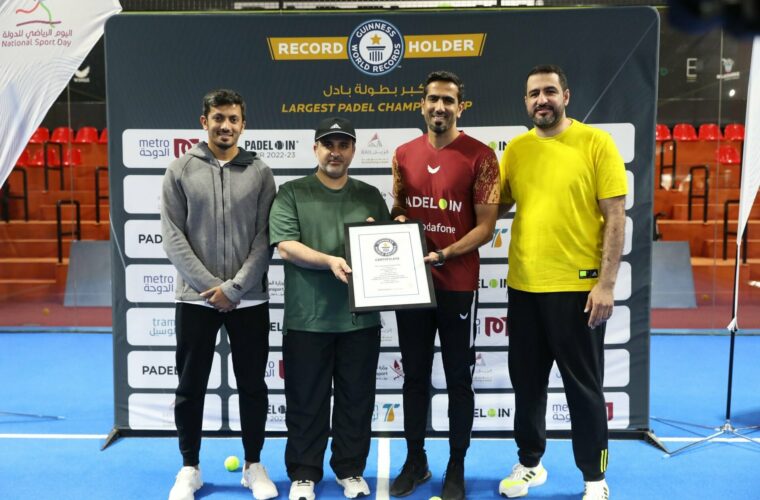
Qatar Rail has announced that MD & CEO H.E Dr. Abdulla Al-Subaie received the Guinness Records certificate for the Largest Padel Championship in the World.
The achievement was announced on the day of Qatar’s National Sport Day, 14 February 2023.
The event was organized by Qatar Rail in partnership with Padel In Qatar and witnessed the participation of 800 players.
A small ring around the main artery may cure patients with leaking heart valves. Researchers have documented its effect on animals and they hope they will make it possible to use the technology on humans.
A leaking heart valve – or in technical terms, aortic insufficiency – is a condition in which the valve between the left ventricle of the heart and the main artery cannot close completely. The disease can have varying levels of severity and can be caused by congenital malformations or calcification, among other things.
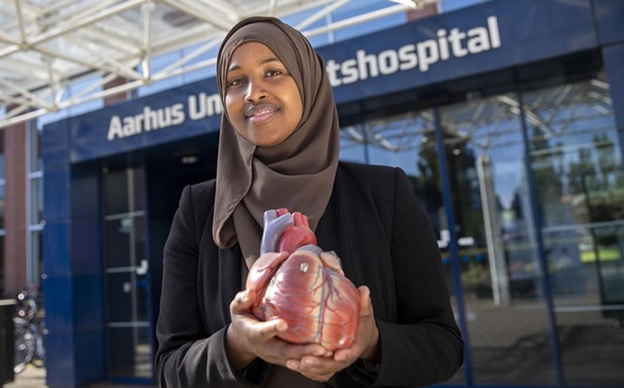
Mariam Noor has developed a small ring that seems to be able to cure leaking heart valves. This can change the way we do cardiovascular surgery. Photo: Lars Kruse, AU Foto.
When the aortic valve leaks, some of the blood returns to the heart, which means the heart has to work harder. In the worst cases, this can lead to heart failure, and this is why it’s important to treat the condition. Doctors usually treat the condition by repairing the diseased heart valve or replacing it with an artificial valve.
Both involve a risk of complications, and therefore engineers from Aarhus University have been working for several years to develop new surgical technology for heart patients.
“A prosthetic heart valve is an effective form of treatment, but it’s also a relatively complicated surgical procedure that brings with it a number of risks and complications in the long term. Now we have found a solution that can make it easier to treat patiens,” says Mariam Noor, a PhD student at the Department of Electrical and Computer Engineering at Aarhus University and the Department of Cardiothoracic and Vascular Surgery at Aarhus University Hospital.
Ring prevents blood from returning to the heart
Mariam Noor has spent the last three years designing and developing a ring that can give patients with aortic insufficiency good treatment results, and she has invented something that may have impact on the world of surgery.
“Instead of replacing the defective valve, my treatment concept is to enclose it in the main artery so it prevents blood from returning to the heart. I’ve developed a new type of ring that tightens around the aortic root to prevent this,” she says.
In fact, for several years now, cardiologists have been using a type of ring to stabilise the function of the heart valves, but this has not been without its disadvantages.
The traditional ring is round and relatively rigid, and this limits its operation. Furthermore, placing the ring in the body is a challenge because surgeons have to cut the aorta and remove the coronary arteries.
The new ring developed by Mariam Noor is made of an elastic material that can mould itself to the body’s tissue. It also has an opening, which makes it easy to place it correctly.
“The surgical procedure is significantly less invasive, and with the help of diagnostic imaging and 3D printing, we can adjust the ring’s rigidity and strength to the individual patient’s anatomy. This gives us some fantastic options, and the technology has been promising during animal trials,” says Mariam Noor.
Lots of physics in the main artery
Mariam Noor has especially focused on the material properties and design of the ring in order to better retain the dynamics in the cardiovascular system.
“I look at surgical issues through the lens of an engineer, because there’s a lot of physics and mathematics in our cardiovascular system. My approach has been to understand how the aorta works and then transfer this knowledge to design a ring that can recreate normal anatomical conditions in patients,” she says.
The ring consists of a silicone core surrounded by suture-like material. In order to document the effect, in collaboration with her colleagues, Mariam Noor has, carried out her experiments in a heart simulator, whereby it is possible to control the pump function, temperature and flow.
“We can simulate the action of the heart in a very precise environment that closely resembles the human body. This means we can closely study what happens with the ring in the frequency area of every, single heartbeat. It’s been interesting, and we have obtained an incredibly detailed knowledge base to continue working with,” she says.
The researchers have subsequently carried out a costly study to see how the ring expands in the body when the heart pumps, and Mariam Noor was positively surprised.
“We looked at the geometric pattern of the main artery in a pig with a ring and in a pig without it, and we could see that we can actually preserve the natural dynamics. These results look really promising,” she says.
She emphasises that there are a few years’ of clinical approval procedures ahead before the heart ring can benefit patients. (source: Aarhus University)
Mariam Noor has developed a small ring that seems to be able to cure leaking heart valves. This can change the way we do cardiovascular surgery. Photo: Lars Kruse, AU Foto.
Moussa Abadi and his French wife Odette hid hundreds of children from the Nazis in homes, convents and orphanages across southern France.
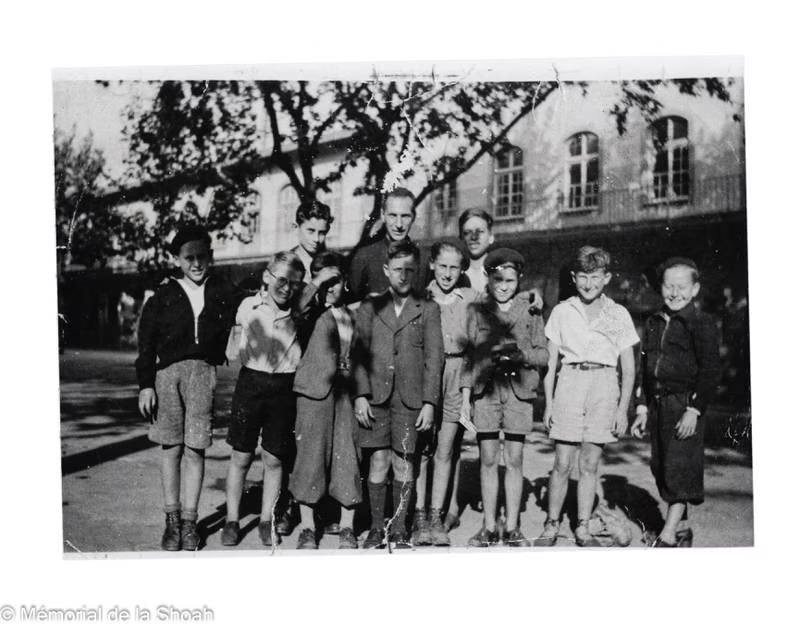
A group of Jewish boys hidden at the Don Bosco school in Nice pictured with their teacher in September 1943. Memorial de la Shoah/Coll.Serge Klarsfeld
Andree Poch-Karsenti was not even three years old when her parents were rounded up at their home in the southern French city of Nice, on a quiet street above the Mediterranean Sea.
She escaped the clutches of the Gestapo, playing obliviously with her neighbour Jacques on the other side of the street.
Her parents and aunts would not survive the war, after being sent to concentration camps in Drancy and then Auschwitz.
But thanks to a clandestine network set up by a brave Jewish couple — a French doctor and a Syrian man from Damascus — Andree avoided the Gestapo.
Moussa Abadi was born to a religious family in the Jewish Quarter of Damascus in 1910. He attended a school run by French priests, which would fuel his eventual move to Paris in the 1920s.
When the Nazis invaded Paris in 1940, Moussa fled south, leaving the capital on a bike with one change of clothes.
He arrived in Nice, later to be occupied by the Italians, where thousands of Jewish families sought refuge. Damascus urged him to return home but he refused.
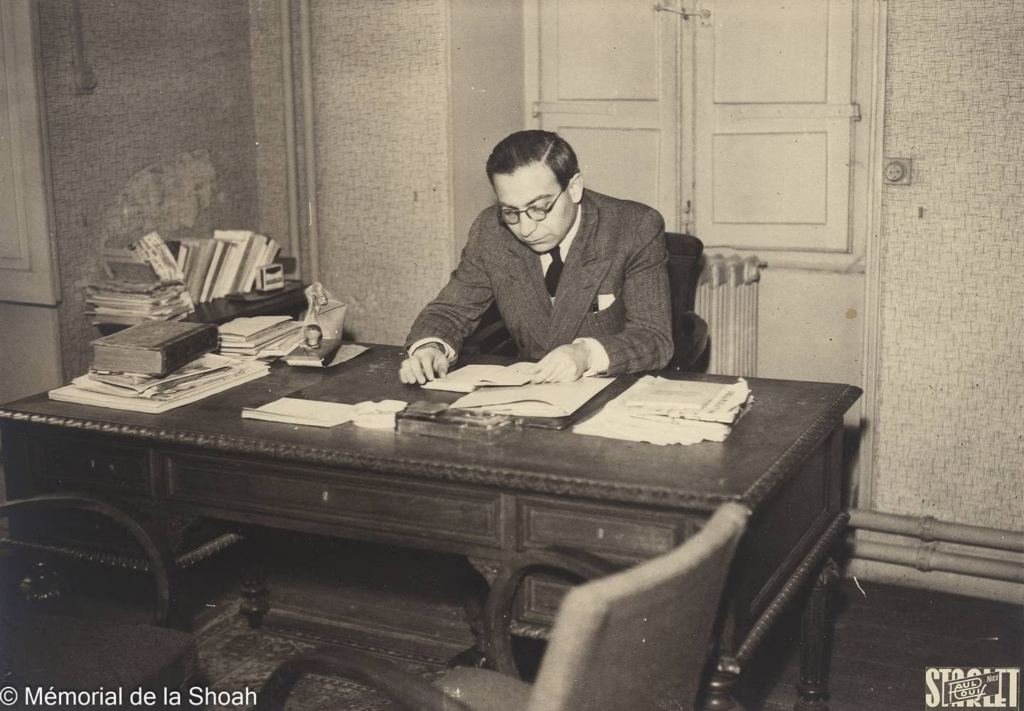
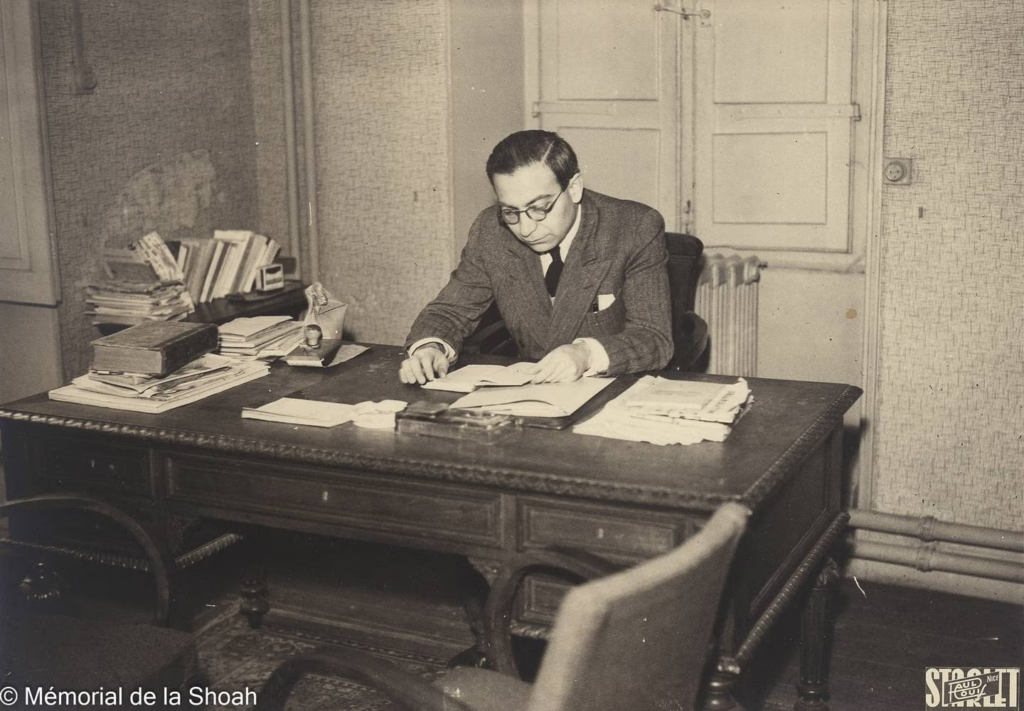
Moussa Abadi at his office in Nice in 1947. Memorial de la Shoah/Coll.Odette Abadi
One day, under a “postcard-blue sky”, Moussa saw a young Jewish woman being beaten to death by a French policeman on the seafront promenade.
While the Nazis ruled the north, the Italians kept the Jewish population relatively safe ― for a time.
But Moussa knew the Germans could push south. Even under the French authorities, round-ups in early 1942 sent thousands of Jewish families to their deaths.
Moussa later met an Italian priest who told him of Jewish children being massacred by the Nazis.
These two encounters pushed him to take the biggest risk of his life, alongside the woman who would later become his wife, Odette Rosenstock.
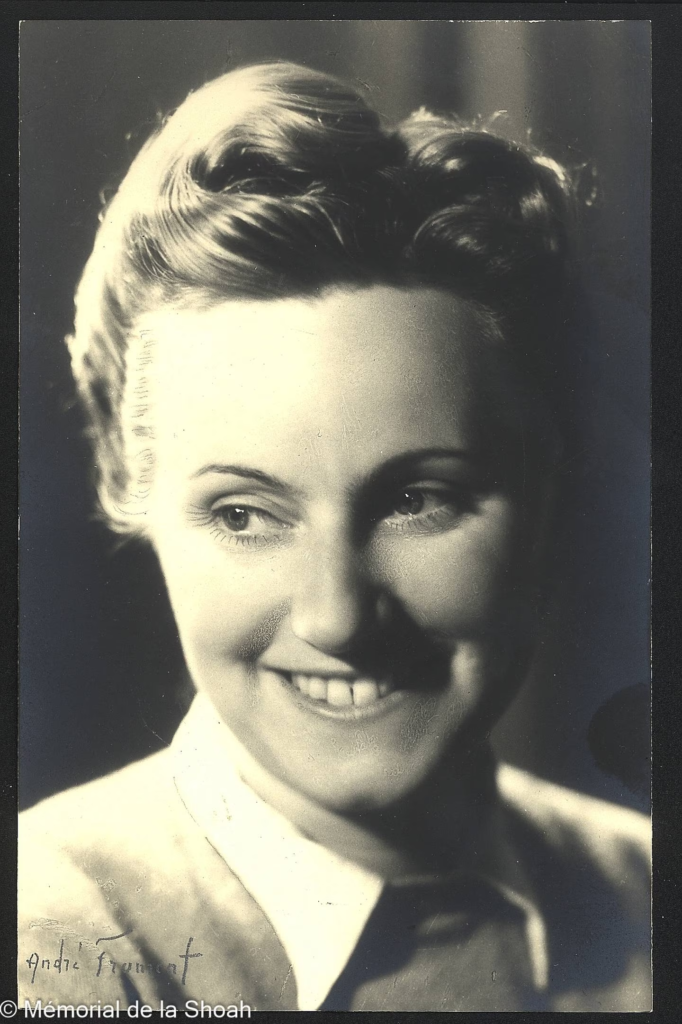
Odette Abadi pictured in 1947 or 1948. Memorial de la Shoah / Collection Odette Abadi.
Andree was one of the hundreds of children who were hidden by Moussa and Odette as part of the Marcel Network, established by the couple in 1943 after the German invasion of Nice.
Within a year, they saved 527 Jewish children with the aid of local families, Christian clergy and children’s homes. Many of them would be later honoured by Israel as one of the “Righteous Among the Nations” for their bravery.
Andree is now 82, and lives near Paris. But for decades, she knew nothing of the couple who helped her escape the Nazis.
“I knew that I was hidden with the Rous [family] and that my parents were deported, but I didn’t know the rest of the story. No one had spoken to me about it,” she tells The National.
Andree was taken in by her neighbours, the Rous, and hidden in a mountain village until the spring of 1944, when the Gestapo arrived to take on resistance members.
She was then taken back to Nice and put in a children’s home by Odette and Moussa.
It wasn’t until 1995 that fate would bring them together, when her brother came across a list of children hidden during the war.
Odette was looking for them. Andree called Odette and found the couple living not far from her home in Vincennes.
“They were an extraordinary couple, who led an extraordinary life,” she says.
“They could have gone into hiding but they decided to risk their lives to save children condemned to death. They are courage personified.”
The couple would meet with some of the hidden children later in life, gathering at restaurants in Paris and meeting their grandchildren.
On rare occasions, they would invite them to their modest apartment in the 12th arrondissement.
Odette, a French doctor from Paris, had met Moussa in 1939. After fleeing to Nice, she began working at a clinic for Jewish children on the Boulevard Dubouchage, where she would tell families: “If the Germans come, we can hide your children.”
They had no money and no connections. Both Jewish, they were at risk of deportation and death.
“Every morning when I drank my coffee with Odette, I didn’t know whether I would find her safe that evening, or even whether I would be alive,” Moussa later wrote.
He met the Bishop of Nice, Paul Remond, imploring him to help save children from the Nazis.
The bishop gave Moussa an office in his home, on the ground floor so he could escape if and when the Germans came.
It was here that Moussa made thousands of fake documents, baptism certificates and ration cards. In the garden, he buried files that would help reunite the children with their families at the end of the war.
Odette enlisted the help of local children’s homes and Protestant priests near the synagogue on Rue Dubouchage, who appealed to local families for help.
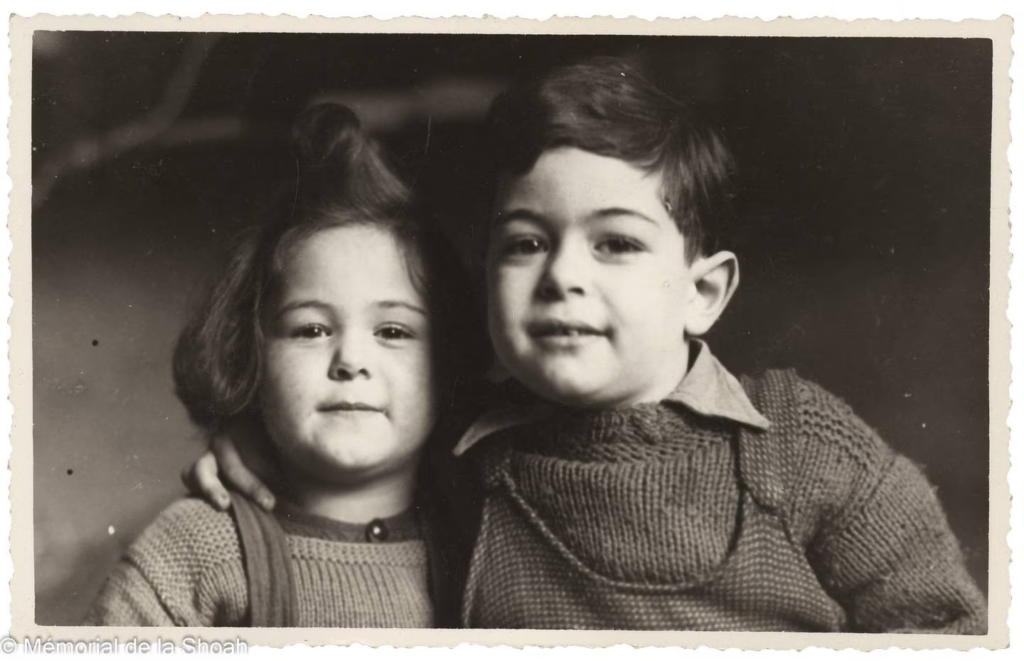
Armand and Eve Herscovici, hidden by the Marcel Network, pictured in 1943 or 1944. Memorial de la Shoah / Collection Odette Abadi
Children were taken to a “depersonalisation” house where they learnt their new identities, drummed into them before they were sent into hiding.
Some of them were so small they couldn’t speak French or understand why their names had changed.
Some children hidden together would take turns sleeping, terrified they would reveal their real identities as they slept.
“We had to teach them 10 times,” Odette recalled in an interview.
“They carried secrets that were too heavy for children,” Moussa said.
Daniel Czerwona-Jagoda was one child hidden by the network, placed in a convent at the age of five.
When the war ended, his father searched Nice for weeks by bike, looking for his son at each convent in the city.
He finally found his son thanks to a Polish nun.
“Yes, Daniel is here, but his name is now Daniel Blanchi,” she told him.
Now 84, Daniel wrote poetry later in life and signed it with three surnames — Czerwona-Jagoda, Blanchi and Chervonaz. The last he chose as an adult, fearing another war may break out.
“Odette and Moussa, I was really touched by what they did,” his daughter Sarah told The National.
She paid tribute to the couple and her father in a show inspired by his life and childhood memories, where “small children had to act like grown-ups. Little, by little, they had to change who they were because their lives were on the line”.
Despite his experience, her father has taught her to be positive, that you must always move forward, but his experience has stayed with him.
“There were little flashes,” Sarah says. “If we had to be quiet, we had to be completely quiet and still. It was as if it could endanger the whole family, that there might be a knock at the door.
“But there was always a reason, never a complaint. It was never negative.”
‘You owe us nothing’
The Catholic church gave Odette and Moussa false titles to allow them to escape arrest and visit children hidden across the diocese.
Odette would call on the children, posing as a social worker, while Moussa remained at the bishop’s office making documents.
Only two children hidden by the network were arrested, after their hiding place was betrayed.
Odette saw them on a bus, and was shooed away by one of the children when she realised they were surrounded by plain-clothes police.
She was arrested two days later and deported to Auschwitz.
As a doctor, she worked at the camp clinic and was privy to many horrors out of reach of other inmates, trying to save sick prisoners from being chosen by Josef Mengele, who was known as the “Angel of Death” for his experiments on prisoners.
Odette was later sent to Bergen-Belsen until the liberation.
Moussa was left in Nice to run the network alone, also evading capture by the Nazis. He started going to Catholic Mass at a different church every few hours to try to stay under the radar.
After the war, Odette would confess she fared better than Moussa, saying it was sometimes harder for those who were not deported.
Moussa and Odette told almost no one of their heroic efforts that earned them several of France’s highest honours.
Moussa went on to become a renowned theatre radio critic and wrote two books on Jewish life in a Damascene ghetto, while Odette rose up the ranks in medicine and later worked at a school for deaf children.
They refused to speak publicly until they were in their 80s, when the stirrings of Holocaust denial began in France.
“When we meet hidden children again, the question they ask most often is, ‘How can we thank you?’” Moussa told the French Senate in 1995.
“My response will be brief. You have nothing to thank us for, because you owe us nothing. It is we who are in your debt.”
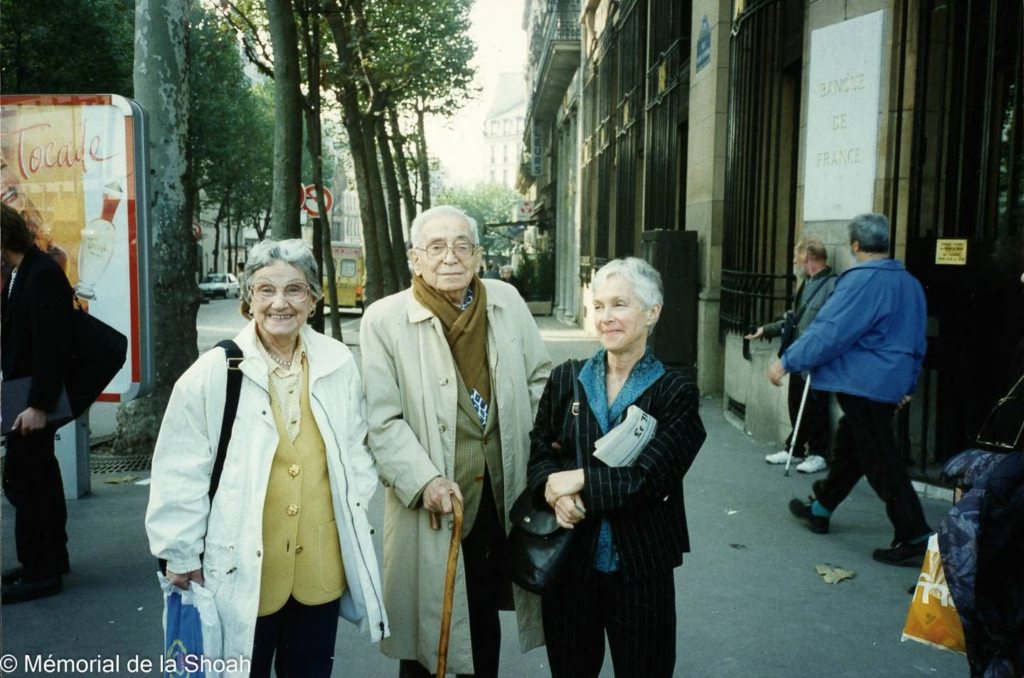
Odette Abadi, left, Moussa Abadi and friend Betty Saville in Paris in 1994. Memorial de la Shoah / Collection Odette Abadi
Moussa kept in contact with his family from Syria, visiting his cousin in Argentina where he confided in some family members of his wartime past but swore them to secrecy.
“I felt as impressed in the way one would if they spoke to Clark Kent. He was a superhero, a real superhero,” his cousin’s grandson Carlos told The National.
“They only spoke about it because they felt they had to. He wanted to take it with him to his grave.”
Moussa’s health declined in the last years of his life, until he was almost blind. He died of stomach cancer in 1997.
Odette spent the last two years of her life collecting all of the documents, finishing the transcription of a book he dictated to her as his eyesight failed.
She died by suicide in 1999, writing that she had died along with Moussa.
“They were a couple of the kind we don’t see today,“ says Andree. “They loved each other. She did everything she could so his memory would endure. She always put him first.”
Andree now runs the “Friends and Children of Abadi” association, which serves to tell the story of the Marcel Network.
“Because Odette and Moussa had never said anything, no one knew about them. We want to continue their memory and that of the Holocaust. As long as I’m able, this is what I will do.”