SAUDI ARABIAN Professor Dr. Yasser Aldhamen at Michigan State University (MSU) Develops Pioneering Cancer Tumors Immunotherapy Strategy

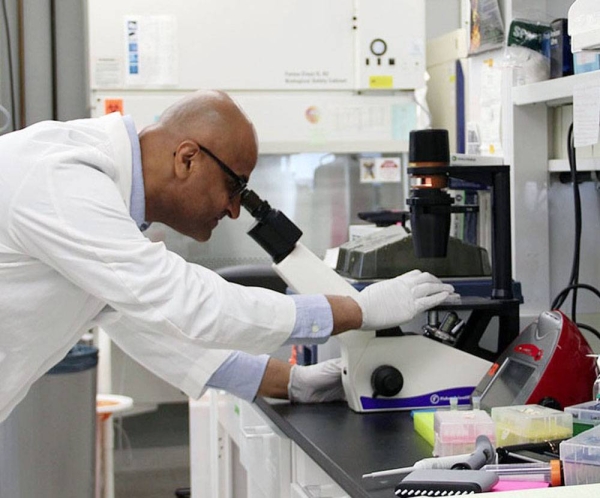
Michigan State University (MSU) faculty member Dr. Yasser Aldhamen created a pioneering cancer immunotherapy strategy that can shrink tumors and increase therapeutic resistance against some types of cancer.

This came during a research he recently published in “Molecular Therapy” Journal, which is classified as one of the best scientific journals specialized in genetic and cellular therapy in the world.

Professor Aldhamen’s research project took about two years, completing 41 scientific papers published in prestigious international journals, as well as 3 previous patents registered with the US Food and Drug Administration.

In a statement to the Saudi Press Agency (SPA), Dr. Aldhamen said, “The whole idea is to treat patients without drugs to eliminate cancer.”

“Based on my previous work, a method was devised to harness the naturally active immune system to control tumor growth by activating the action of specific immune system cells, such as NK cells, and innate immune cells, such as macrophages and dendritic cells, within tumors.”

Dr. Aldhamen occupies, in addition to his duties, the position of Deputy Director of Research in the Faculty of Medicine at Michigan State University, and has supervised 5 students in the doctoral stage, two students in the master’s stage, and more than 15 students in the bachelor’s stage.

He also receives some trainees for 8 weeks from the secondary stage, by virtue of his interest in training future researchers in the laboratory, motivating them that making the world takes a long time.

He also participated in 15 conferences around the world, and membership in a number of advisory committees at the university working on developing research and exchanging experiences with researchers in countries such as Egypt and Peru. — SPA

source/content: saudigazette.com.sa (headline edited)

___________

Facebook.com

________________

SAUDI ARABIA

EGYPTIAN AMERICAN: Columbia University names Egypt-born Minouche Shafik as its next President

New York-based Columbia university announced on Wednesday that Egyptian-born figure Minouche Shafik would become its first-woman president next summer.

“Nemat {Minouche} Shafik, a leading economist whose career has focused on public policy and academia, will become the next president of Columbia University on July 1, 2023.” Columbia University said adding that her election by the board of trustees as the University’s 20th president concluded a wide-ranging and intensive search launched after the University’s Current President Lee C. Bollinger announced that he would step down at the end of the 2022-2023 academic year.

Shafik will become the 20th president of the famous American educational institution.

Minouche Shafik was appointed director of the London School of Economics and Political Science (LSE) in September 2017.

She also served as the Deputy Governor of the Bank of England prior to her appointment as LSE Director in 2017.

She was made a Dame Commander of the British Empire in Queen Elizabeth’s Birthday Honours list in 2015, and in July 2020 was created a baroness, becoming a crossbench peer in the UK’s House of Lords. 

Shafik’s successful portfolio includes leading roles such as Vice President of the World Bank, where she became the youngest VP in the history of the bank, and Permanent Secretary of the UK Department for International Development and Deputy Managing Director of the International Monetary Fund (IMF).

Born in Alexandriam her childhood in Egypt was brief though, as she left the country for the US when she was four. She later returned to the country briefly as a teenager, according to interviews.

She holds a BSc in economics and politics from the University of Massachusetts in Amherst, and an MSc in economics at LSE before completing a PhD in economics at St Antony’s College at the University of Oxford.

Her doctorate thesis was on the role of the private sector and the public sector in Egypt.

source/content: english.ahram.org.eg (headline edited)

__________

_____________________

AMERICAN / EGYPT

PALESTINIAN CHILEAN Singer Elyanna to Perform at Coachella Festival in US

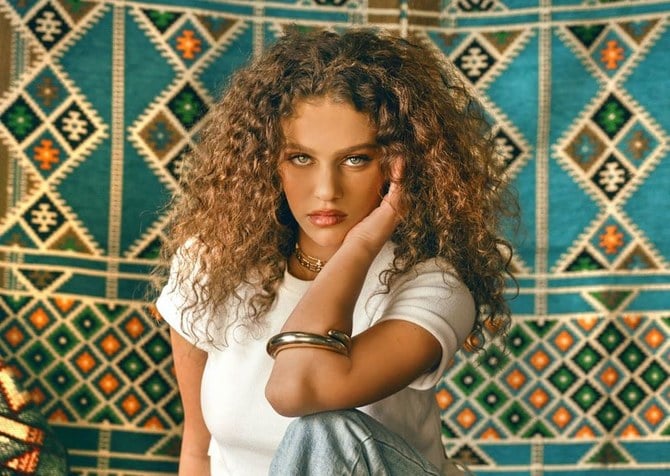
Palestinian Chilean singer Elyanna is set to perform for the first time at Coachella, the popular music festival that is held annually at Indio, California.

The 10-day event will run from April 14 to 23.

Elyanna, who is famous for her songs “Ghareeb Alay,” “Ala Bali” and “Ana Lahale” with Canadian Lebanese singer Massari, will be the first Arab artist to perform on the Coachella stage.

“I am honored and grateful for all the love and support I have received in the past couple days,” she wrote to her 575,000 followers on Instagram. “Last year I attended Coachella, and this year I will be the first Arabic singing artist to perform there. Your wildest dreams will come true, so keep on dreaming! See you in the desert.

“I’m so proud and excited to bring my culture and music to Coachella,” she said in another post.

Elyanna’s celebrity fans, including Massari, Dutch Palestinian supermodel Bella Hadid, US Iraqi beauty mogul Huda Kattan, Egyptian rapper Felukah, Palestinian singer Noel Kharman and Syrian swimmer Yusra Mardini, all took to Instagram to congratulate the star.

source/content: arabnews.com (headline edited)

__________

__________________________
PALESTINIAN / CHILEAN

SUDAN: Nima Elbagir, Journalist and Award-Winning International Television Correspondent

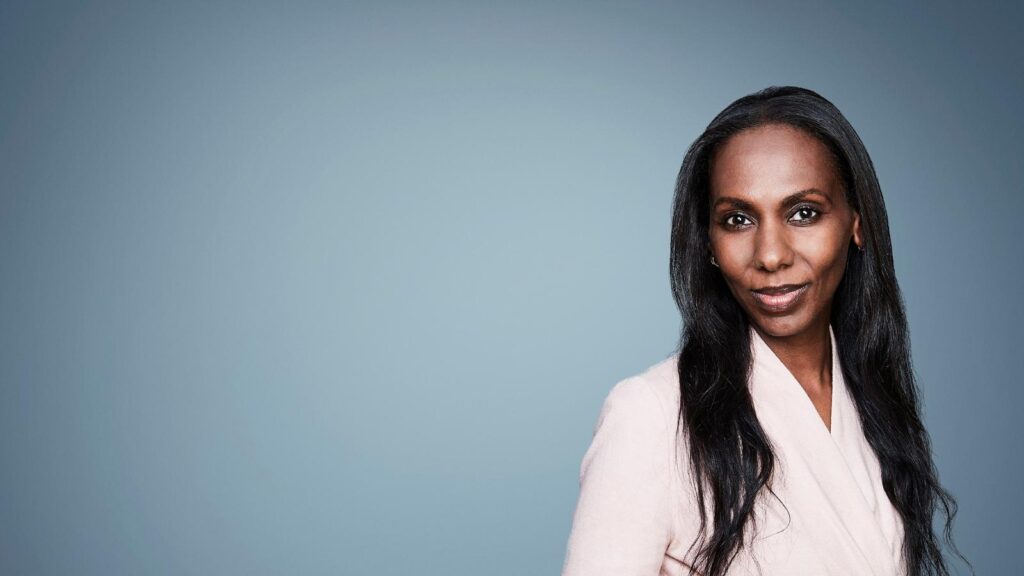
CNN has promoted senior international correspondent Nima Elbagir to the role of chief international investigative correspondent.

A London-based Sudanese journalist, Elbagir has broken countless stories for CNN from war and crisis zones, reporting on human rights abuses in places like Ethiopia’s Tigray region, Libya, Democratic Republic of the Congo, Nigeria and Yemen. In 2017, her undercover reporting exposed migrants being sold at slave auctions in Libya and prompted responses from the government and the United Nations.

Elbagir has scooped up numerous awards in her career, including the Royal Television Society’s Television Journalist of the Year Award in 2020, a duPoint Award, a Polk Award in 2017, the International Center for Journalists 2018 Excellence in International Reporting Award, the 2018 IWMF Courage in Journalism Award, a 2019 Gracie Award, and the LA Press Club’s 2019 Daniel Pearl Award.

Elbagir joined CNN in Feb. 2011 as a full-time reporter based at network’s Johannesburg bureau, before later moving to Nairobi, Kenya. Prior to joining CNN as a freelancer in 2010, Elbagir worked in various capacities for the UK’s Channel 4 for a number of years from 2005: she freelanced from Kabul, Afghanistan for Channel 4 News; reported for the Unreported World documentary strand; and both reported and presented for Channel 4 News and More4 News.

source/content: adweek.com/TVNewser/CNN-Revolving Door (headline edited)

___________

pix: cnn.com

_________

SUDAN

SAUDI ARABIA: Saudi Team Win the ‘2022 International Date Palm Innovative Technology Excellence Prize’ for their Special Sensor to Protect Date Palms from Pests

A team from the King Abdullah University of Science and Technology and Al-Hasa-based Palms and Dates Center has been awarded the 2022 International Date Palm Innovative Technology Excellence Prize.

Presented by the National Center for Palm and Dates, the award was made in recognition of the team’s fiber-optic distributed acoustic sensor, which is used in the early detection of red palm weevils in date palm trees.

Tackling infestations of red palm weevils has been a long-standing problem across the Middle East, Southeast Asia, Europe and other parts of the world.

The winning team comprised Dr. Islam Ashry, Dr. Chun Hong Kang and Prof. Boon S. Ooi from the KAUST Photonics Laboratory and Dr. Yousef Alfehaid and Eng. Abdulmonem Alshawaf from the PDC, which operates under the Ministry of Environment, Water and Agriculture.

HIGHLIGHTS

• Infestations of red palm weevils a major problem across the Middle East.

• Researchers from KAUST-PDC collect $53,000 in prize money.

As well as the prestige, the team collected SR200,000 ($53,000) in prize money. The award was announced at the 3rd International Dates Conference and Exhibition, which ran from Dec. 7-10 in Riyadh. Their design beat off the challenge of 65 other submissions for the prize.

Ashry said the team was honored to have won such a prestigious award and paid tribute to his colleagues at the Photonics Laboratory and the PDC who helped in the development, testing and deployment of the technology.

“This recognition motivates us to continue improving, optimizing and advancing this technology to a new level,” he said.

According to the NCPD, the event provided “a unique combination of scientific research and commercial strategy to exchange scientific knowledge and innovative technologies to enhance the safe production and commercialization of these extraordinary super-fruits.”

The Kingdom is home to some 33 million date palm trees, producing about 1 million tons of dates a year, or 20 percent of global production. In the Middle East region alone about $8 million is spent every year fighting infestations of weevils.

“Our RPW-detecting technology uses a fiber-optic distributed acoustic sensor,” Ashry said. “It is the first of its kind and offers a more scalable approach (than) other detection methods, such as microphone probe, computer-based tomography and visual inspection.”

Kang said the team’s system used fiber-optic cables wound around individual tree trunks.

“Acoustic signals generated by the weevil larvae inside a trunk can be picked up by the cable and transmitted back to an interrogator system,” he said.

“The collected signals are then analyzed and processed through a machine learning algorithm to identify each tree’s infestation status.”

Ashry and Kang are now working with various organizations within the Kingdom, including the PDC, MEWA, NEOM, the Royal Commission for AlUla and the Tabuk Agricultural Development Co., on the deployment of their technology.

These test applications will help to improve the sensitivity of the sensor systems so they can be used on large-scale farms.

“Our research efforts align well with … Saudi Vision 2030 in terms of diversifying the economy, especially for the date palm sector,” Ashry said.

Ooi said: “Our technology offers a unique and low-cost solution to protect the large number of date palm trees in the country through early infestation detection.”

source/content: arabnews.com (headline edited)

____________

(L to R): KAUST Research Scientist Dr. Islam Ashry and Prof. Boon S. Ooi receive the 2022 International Date Palm Innovative Technology Excellence Prize from the NCPD on behalf of their team. (Supplied)

________________

SAUDI ARABIA

IRAQI-BRITISH: Inside Architect Zaha Hadid’s Final Masterpiece Built for Sustainability

Sharjah HQ of waste management operator Beeah aims to lay foundations for a greener future.

A striking Sharjah building in the shape of a sand dune is primed to be a beacon of sustainability and serve as a fitting legacy for renowned architect Zaha Hadid.

The headquarters of waste management operator Beeah was the last project designed by Zaha Hadid before her death in 2016.

Her team constructed a modern masterpiece across 9,000 square metres, using sustainable materials to create a building with 40 per cent of its power provided by the sun.

Illuminated, sweeping staircases take visitors up to an art gallery on the first floor, with screens showing a time-lapse video to explain the building’s five year construction.

Now open to full capacity of 500 workers, the building is breaking new ground in how to provide a sustainable working environment.

Green vision

“We aim to operate as sustainably as possible, and used recycled materials in the construction of the building,” said Nada Taryam, managing director of Beeah HQ, which manages waste management across the country.

“Native plants have been used in the landscaping and reduced the amount of water consumption.

“A power pack stores excess energy from the photovoltaic panels, so we have a holistic strategy to achieve sustainability.

“Every project has its own specific requirements when energy comes into play, but the basis on which we have built this design can be learnt from.

“All of these sustainability measures can be taken and applied to other projects.”

The building’s high thermal mass allows heat to be absorbed during the day and dissipated at night to encourage cooling, while its curved structure allows the flow of natural sunlight to reduce the energy required for lighting.

An artificial intelligence system enables the building near the Alsajaa industrial area to learn to become more efficient as more people use it.

Its developers say it conforms to the highest standards of energy efficiency in the world.

Windows are positioned to reduce solar glare, while special glass cuts radiant thermal energy to keep the building cooler during summer.

While the glass limits the entry of infrared and ultraviolet light, solar panels supported by Tesla-made battery packs capture the power of the sun and store it to run the building’s air conditioning system.

The building’s components and management systems are integrated to maintain and improve its efficiencies.

Conference rooms are equipped with technology to automatically transcribe meeting minutes and email them to participants.

The building is the third in the UAE to be designed by Zaha Hadid architects, following the Sheikh Zayed Bridge, opened in Abu Dhabi in 2010, and The Opus hotel and apartments complex opened in Business Bay, Dubai, in 2018.

“As it learns from its occupancy, this building could potentially become one of the most sustainable buildings in the UAE,” said Ms Taryam.

“Certain decisions were taken, such as using glass reinforced panels on the ceiling which refract the sunlight so contribute to its efficiency and temperature control.

Defying convention

“There is a misconception about what these kind of buildings should look like, and we have defied that.

“There isn’t a rule book to say green buildings should be lined with solar panels. We have proved we can integrate architecture as well as sustainability to create something iconic.

“Zaha Hadid has something that distinguishes her from any other architect of her time. Every project of hers has its own context, but her ideas are adapted for each specific project.”

source/content: thenationalnews.com (headline edited)

______________

The headquarters of Sharjah waste management operator Beeah was the last project designed by Iraqi architect Zaha Hadid before her death in 2016. All photos: Andrew Scott / The National

__________________________________

IRAQI / BRITISH/ SHARJAH, UAE

SOMALIA Meteorite: Joy as Scientists find Two New Minerals

The official names for the new minerals are elaliite and elkinstantonite.

  • Canadian researchers said the rock was found in rural Somalia two years ago, but locals believe it is much older.
  • They call the stone Nightfall, and say it is documented in poems, songs and dances that stretch back five generations. It is used today to sharpen knives.

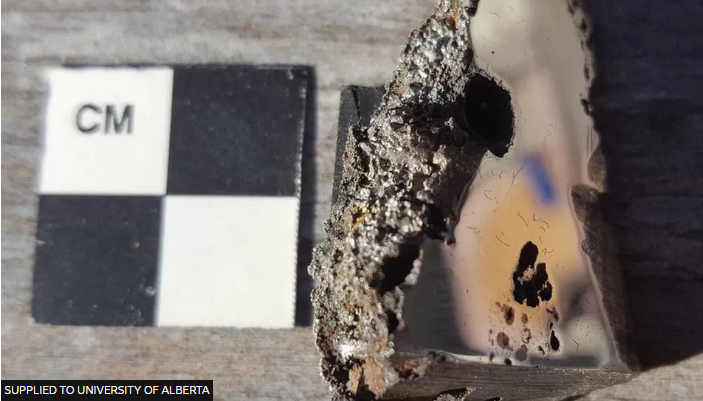
A huge meteorite that fell to Earth contains two minerals never seen before on our planet, scientists say.

Canadian researchers said the rock was found in rural Somalia two years ago, but locals believe it is much older.

They call the stone Nightfall, and say it is documented in poems, songs and dances that stretch back five generations. It is used today to sharpen knives.

The official names for the new minerals are elaliite and elkinstantonite.

They were identified by scientists at the University of Alberta who looked at a 70g fragment from the 15-tonne meteorite, which is said to be the ninth-biggest to reach our planet and is about 90% iron and nickel.

The name “elaliite” honours the fact that the meteorite was unearthed in the district of El Ali in Somalia, and “elkinstantonite” is named after Nasa expert Lindy Elkins-Tanton.

“Lindy has done a lot of work on how the cores of planets form, how these iron nickel cores form, and the closest analogue we have are iron meteorites. So it made sense to name a mineral after her and recognise her contributions to science,” said Prof Chris Herd who curates the University of Alberta’s meteorite collection.

A third, as-yet unidentified mineral, is being analysed by the university’s researchers who now hope to get their hands on more of the meteorite – not only to see what else they might discover, but also how it could be used on Earth.

“Whenever there’s a new material that’s known, material scientists are interested too because of the potential uses in a wide range of things in society,” Prof Herd said of the “exciting” research.

source/content: the-star.co.ke (Star) / BBC News, Africa (headline edited)

__________

____________

SOMALIA

SAUDI ARABIA: Meet Mawadah Muhtasib, the Saudi Woman Artist behind ‘1st Reversed Arabic Calligraphy Typeface’

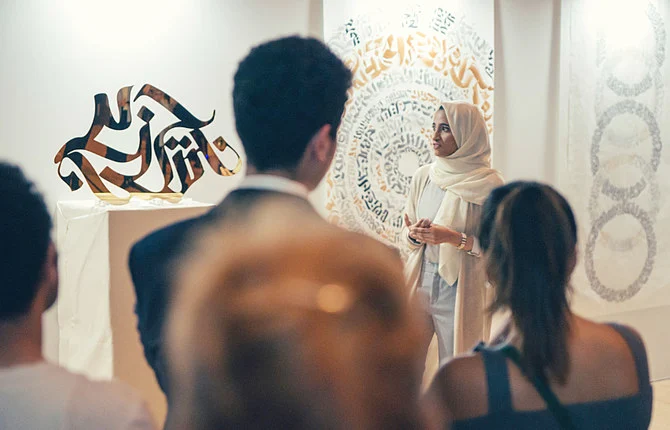
Mawadah Muhtasib, an emerging Saudi artist who reversed the typeface of the Arabic language, is well on her way to becoming a prominent name in the global art scene.

From learning her mother’s technique of writing backward at age 13 to exhibiting in London and New York City, Muhtasib has generated international intrigue in the art of Arabic by creating the first reversed Arabic calligraphy, or calligraffiti, typeface.

Her messages are not only meant to be read, but are also designed to be deciphered. Engaging her audience with the challenge of decoding letters is a large part of experiencing the artwork itself.

“It’s about expanding your human capabilities into creating the impossible. And this is exactly what I have been trying to do,” she told Arab News in an exclusive interview.

FASTFACT

The Arabic language is one of the richest art forms, the artist says, but in modernity, it is difficult to appreciate the depths of something that has become so ordinary.

Born out of a quest to layer the heritage of Arabic letters with innovative graffiti art methods, her work dares to be the first of its kind, granting her Dubai’s Art Bus competition award and a chance to show her work at exclusive showcases.

As graffiti art surged in popularity in 2013, Muhtasib experimented with mural painting alongside a novel group, hoping to develop a boundaryless form of art.

With a vision to modernize the traditional, she created a decorative typeface that mixed Arabic and Latin, written from left to right.

It’s about expanding your human capabilities into creating the impossible.

Mawadah Muhtasib

Muhtasib said: “We are so used to Arabic calligraphy when it comes to Thuluth calligraphy, Al-Kufi, Al-Naskh, and so on, and we just read that way and pass it on.

“When I’m doing my Arabic calligraphy, people sit and stare at my work for hours trying to figure out what these letters are, and the moment they realize it’s Arabic, they start to analyze and see all these letters in a different form that we as Arabic speakers are not used to.”

The Arabic language is one of the richest art forms, the artist says, but in modernity, it is difficult to appreciate the depths of something that has become so ordinary.

The goal is not only to get the viewer to read but to actively reflect on the beauty and form of each stroke and letter within the alphabet.

Muhtasib now passes on her craft through community workshops exclusively for women, most recently at Saudi’s largest light-based festival, Noor Riyadh.

“In my workshops, I do not teach people to write in reverse … I’m basically giving you the key of how to use the tools of starting to practice in the form of Latin calligraphy,” she said.

As soon as students understand the anatomy of the font family, Muhtasib introduces slanted brushes, layering techniques and stroke pressure. From the first session, students are sent home with a new creative form of expression. “The soul of a person is laid out on a page,” she said.

Writing in reverse is not new; the artist’s mother passed down the habit after having to write backward to maintain privacy at work. Alongside that, she passed down her passion for creative innovation.

While most calligraphers in the Kingdom were mimicking Western methods, Muhtasib, at 16 years old, was inspired and encouraged by Tunisian artist eL Seed and Saudi Moroccan artist Shaker Kashgari.

“I took that trick that my mom taught me years ago on how to write and then I changed it into a decorative typeface,” she said.

The concept was designed to preserve the rich heritage of the Arabic language. For foreigners, it offers a chance to engage in the language and learn its history.

“This is Arabic calligraphy in reverse that I took, improved, adjusted and made into a different form. But viewers will also wonder how it actually looked like (originally) and this will make a lot of people go in-depth and learn more about Arabic calligraphy,” Muhtasib said.

The philosophy behind the Typeform has gained interest from international luxury brands such as Louis Vuitton, Carolina Herrera, Montblanc, Sephora and more, resulting in several collaborations.

Muhtasib urges creators to push the boundaries of art and culture.

With calligraphy, “your sky’s the limit,” she said.

source/content: arabnews.com (headline edited)

____________

Mawadah Muhtasib now passes on her craft through community workshops exclusively for women. (Supplied)

_________________

SAUDI ARABIA

UNITED ARAB EMIRATES, ABU DHABI: Sheikh Zayed Festival Breaks 4 Guinness World Records Welcoming the New Year 2023

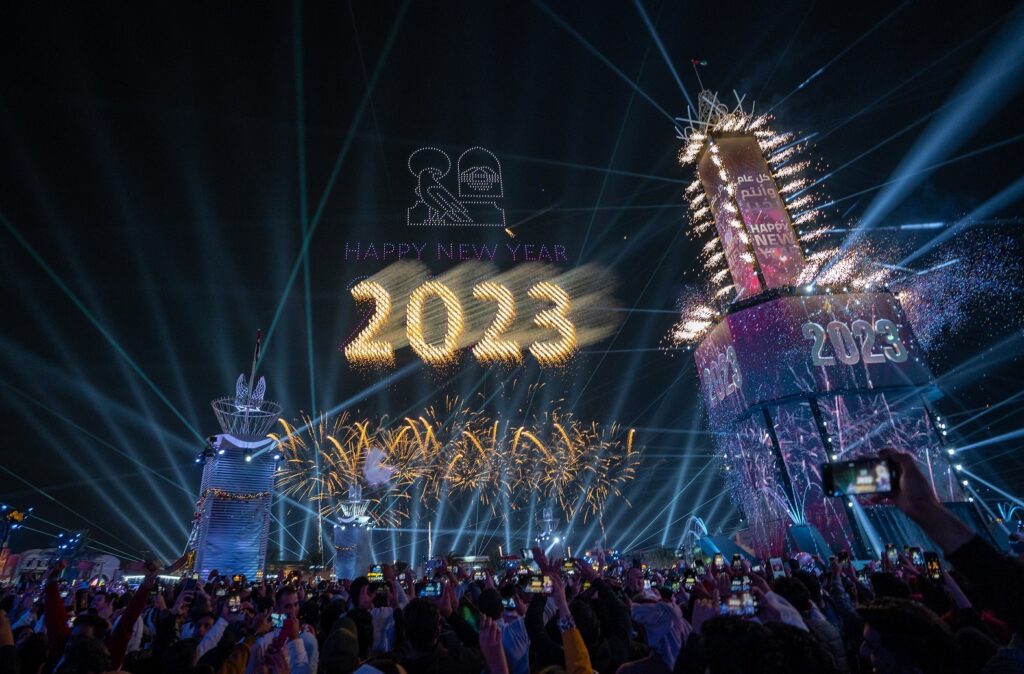
The Sheikh Zayed Festival witnessed an intense public turnout that exceeded the barrier of one million visitors, followers and viewers of the festival, who gathered in the Al Wathba area, coming from inside and outside the country, to celebrate the welcome of the New Year 2023.

The various events attracted visitors, especially the huge fireworks and drone shows, where 4 records were broken in the Guinness Book of Records.

The festival squares were crowded with crowds, and the Al Wathba area was filled with followers and viewers of the drone shows and fireworks, which lasted for about 60 minutes for the first time, for the Guinness Book of Records to record this great achievement.

Amid feelings of happiness and joy, the largest fireworks display and the largest drone show lit up the sky of Al Wathba. The largest fireworks display, which lasted for more than 40 continuous minutes and broke three records in the Guinness Book of Records in terms of quantity, time and shape, won the admiration of visitors. In addition to the largest display of “Drones”, using more than 3,000 drones, a message was drawn in the sky of Al Wathba, welcoming the New Year at the end of its interesting show.

Al-Waleed Othman, an arbitrator of the Guinness Book of Records, confirmed that the Sheikh Zayed Festival was able to break 4 records at the same time, 3 of which are related to fireworks and a new record related to “Drones”, explaining that the most number of helicopter fireworks thrown in 30 seconds or more was recorded. The number of fireworks launched in 30 seconds (wheels), the most repeated fireworks in 30 seconds, in addition to the largest formation of a quick response code by drones.

Othman said: We are pleased to be present at the Sheikh Zayed Festival in the New Year’s celebrations, and we extend our congratulations to the organizers of the festival, who used to break records annually in order to please the audience.

The festival’s audience was keen to document the wonderful moments of the various shows on their mobile phones and share them on social media. The impressive performances were also broadcasted on the festival’s social media.

The Emirates Fountain and laser performances won the admiration of the festival-goers, young and old, with their dazzling musical and laser shows.

The Pavilions of World Civilizations also allocated a lot of international artistic and folklore shows, turning the festival into a global artistic carnival in celebration of New Year’s Eve, whether by holding concerts on the stages of the Pavilions of Civilizations or by participating in the march of world civilizations that roamed all parts of the festival, presenting popular performances in traditional clothes of countries. participation.

Visitors to the Sheikh Zayed Festival expressed their happiness with the international and diverse folklore and artistic events and performances, including the activities of the Heritage Village, the city of recreational games, the children’s city, the arts area, go-karting competitions, Crazy Cars, the Garden of Lights and Flowers, in addition to the Selfie Street area, the Museum of Sweets and many others.

source/content: wam.ae (headline edited)

__________

_______________________________________________

ABU DHABI, UNITED ARAB EMIRATES (U.A.E)

ARAB FILMS 2022: Year in Review: The Best Arab Films of 2022

William Mullally picks the best movies by Arab filmmakers over the past year.

‘Perfect Strangers’

Director: Wissam Smayra

Starring: Mona Zaki, Nadine Labaki, Georges Khabbaz

The original Italian version of “Perfect Strangers” had already been remade across the world before its Arabic-language iteration was released on Netflix. But nowhere else has it caused the stir that it did in the Middle East. The conceit is simple: Seven friends at a dinner party decide to play a game, placing their phones in the center of the table to make their calls and messages known to all. As the night goes on, their secrets are revealed, upending everything they thought they knew about each other. Not only was this the best version of the film so far, with pitch-perfect casting and memorable performances, it was also the bravest: each of its stars pushed themselves in ways they had never been able to in regional film previously, shattering taboos, capturing the world’s attention and changing Arab cinema forever.

‘Kira & El Gin’

Director: Marwan Hamed

Starring: Karim Abdel Aziz, Hend Sabri, Razane Jammal

The highest grossing film in the history of Egyptian cinema, “Kira & El Gin” is Marwan Hamed at his best. This is a crowd-pleasing historical epic that not only captures the spirit of Egypt past and present, but sets a course for a new future for the country’s film industry. Following two men fighting the British occupation in Egypt during the 1919 revolution, Hamed’s film rarely sags despite its nearly three-hour run time and sprawling cast, structured more as a suspense thriller than a social studies lecture. As Hamed jumps from genre to genre across his films, proving equally adept at each, one wonders how he will top this, should he try. But it would be foolish to bet against him as he continues to notch up career high after career high.

‘Boy From Heaven’

Director: Tarik Saleh

Starring: Fares Fares, Tawfeek Barhom, Mohammad Bakri

Egyptian-Swedish filmmaker Tarik Saleh has a bone to pick. Growing up in Europe, he was always labeled as ‘other’ — an idea reinforced in the books in his school library describing Arabs as “stupid” and “uncivilized.” Now firmly entrenched as a filmmaker, Saleh refuses to make films tailored to the Western gaze, turning his camera deep into the inner workings of Egyptian society and forcing international viewers to accept that they are seeing things through eyes that are not their own. In “Boy from Heaven,” Saleh goes deep into a corruption scandal at the influential Al-Azhar Mosque, following a hero whose strong Muslim faith is unrattled as he uncovers the evils hiding from plain sight, with scenes and images you won’t soon forget.

‘The Alleys’

Director: Bassel Ghandour

Starring: Maisa Abd Elhadi, Nadia Omran, Munther Rayahna

In 2014’s “Theeb,” Jordanian writer Bassel Ghandour crafted perhaps the greatest example of the Bedouin Western in cinema history. With “The Alleys,” Ghandour steps into the director’s chair for the first time and turns the streets of Amman into the setting for a modern noir, in which the darkness hiding in the city’s back streets slowly boils to the surface. The film’s sprawling nature is both benefit and detriment, but it’s a stirring snapshot nonetheless, elevated by star-making performances from Maisa Abd Elhadi and Nadia Omran.

‘You Resemble Me’

Director: Dina Amer

Starring: Dina Amer, Mouna Soualem, Lorenza Grimaudo

Filmmaker Dina Amer is most familiar to global audiences for her fearless journalism in 2013’s “The Square” and various Vice News stories she produced as their foreign correspondent from the front lines of regional conflicts. “You Resemble Me” cements her as a filmmaker to watch, as her harrowing experimental recounting of the life of Hasna Ait Boulahcen, the woman miscredited as Europe’s first suicide bomber, is a deeply affecting dissection of the roots of terrorism and the racism that Arab women face in Europe. One of the most original films released this year.

‘The Swimmers’

Director: Sally El-Hosaini

Starring: Nathalie Issa, Manal Issa, Kinda Alloush

The story of Yusra and Sara Mardini, two sisters from Syria who risked their lives to escape conflict for a better future only for one of them to become an Olympian, is so powerful that a film capturing their story could not help but be inspirational. El-Hosaini, the Welsh-Egyptian filmmaker behind 2012’s excellent “My Brother the Devil,” made it into something more — a thought-provoking reframing of the refugee experience at a time when Syrians and many others still suffer from that stigma, as well as a chronicle of women’s empowerment as the structures that held them back crumble, all told with a light touch that never alienates the huge global viewership the Netflix film has enjoyed.

‘Mediterranean Fever’

Director: Maha Haj

Starring: Amer Hlehel, Ashraf Farha, Anat Hadid

Palestinian cinema is often, understandably, a no-holds-barred dissection of the plight of its people. But that is by no means its only manifestation, as Maha Haj, a previous collaborator with renowned satirist Elia Suleiman, proves with her latest feature, “Mediterranean Fever,” the follow up to her acclaimed 2016 feature “Personal Affairs.” Haj focuses here on smaller human problems, following an aspiring writer who suffers from depression and befriends a small-time crook living next door. At times comedic, the film drifts into dark territory while always keeping its audience guessing. After winning best screenplay at Cannes in 2022, Haj has confirmed herself as one of the region’s most singular voices.

‘The Blue Caftan’

Director: Maryam Touzani

Starring: Saleh Bakri, Lubna Azabal, Ayoub Missioui

There is no more versatile actor working in Arab cinema today than Palestinian actor Saleh Bakri, who, with Touzani’s “The Blue Caftan,” has capped off a tremendous run of eight films in the last two years, including Farah Nabulsi’s Oscar-nominated “The Present” and Mohammed Diab’s “Amira.” This is perhaps his best performance yet. He plays Halim, a struggling master tailor in Morocco whose life is turned upside down when he and his wife take in a young apprentice. Stealing the strikingly-filmed show, however, is his co-star Lubna Azabal as his wife Mina, who is quietly enduring her own private battle with breast cancer as she and her husband struggle to communicate.  With this and 2019’s “Adam,” Touzani is already one of Morocco’s great chroniclers.   

‘Raven Song’

Director: Mohamed Al-Salman

Starring: Asem Alawad, Ibrahim Alkhairallah, Abdullah Aljafal

The singular contemporary Gulf filmmaker Mohamed Al-Salman is not making films so that the world may understand Saudi Arabia — he’s making them so that Saudi Arabia may understand itself. “Raven Song,” his debut feature after years of acclaimed shorts, is a stylish jump back to 2002 in the Kingdom, a formative time for both the filmmaker and his country, in which the fight between traditionalism and modernity was so heated that it manifested prominently even in the world of poetry. At times dream-like, “Raven Song” is a film that defies definition, with interpretations likely to roll in for years to come.

source/content: arabnews.com (headline edited)

__________

________________

ARABIC FILMS