Arabs & Arabian Records Aggregator. Chronicler. Milestones of the 25 Countries of the Arabic Speaking World (official / co-official). AGCC. MENA. Global. Ist's to Top 10's. Records. Read & Enjoy./ www.arabianrecords.org
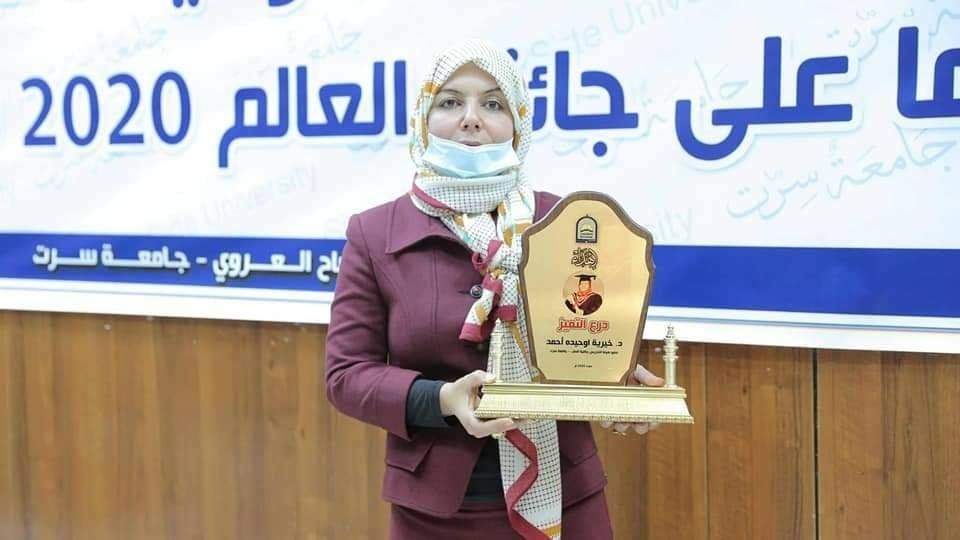
Libyan doctor Khairiya Ohaida has been awarded the title “Scientist of the Year 2020” in the “Medical and Health Sciences/ Clinical Medicine/ Oncology” category from the US International Achievement Research Center (IARC) for her scientific research on breast cancer medicine.
Dr.Khairiya, a Ph.D. in Tumor biology breast cancer and a faculty member at The Sirte University, told The Libya Observer that her research has been ranked as one of the world’s top 20 scientific papers in oncology.
Dr. Ohaida explained that her project was about discovering a primary breast cancer gene scientifically called galectin-7 in Ductal Carcinoma in-situ (DCIS) and its role in preventing cancer from spreading.
On the basis of her findings, Dr. Ohaida proposed a multi-step hypothesis for the progression of DCIS to invasive breast cancer, which could be used in the clinic to predict how likely an individual’s DCIS is to progress.
Her findings were considered a “very exciting and entirely novel finding” as it has the potential to stratify patients for a more tailored management of their disease, according to the (IARC).
“Research can make important contributions to scientists’ efforts in controlling oncologic diseases and finding new treatments, Dr. Ohaida said.
She expressed her desire to continue her scientific work, but this would require the interest of the authorities, and in this context, she called on stakeholders to support her in developing her research.
“There is a need to establish research centers throughout Libya, and my hope is to see such a facility in my hometown, Dr. Ohaida added.
It may be important to note that Dr. Khairiya Ohaida Ahmed is a medical graduate from the Department of Human Medicine of Sirte University. She obtained her master’s and doctorate degrees from the Queen Mary University of London in 2015.
Dr. Ohaida had also received an award from the Breast Cancer Conference held in Belgium in 2012, as her project was ranked among the world’s top 20 scientific papers on breast cancer.
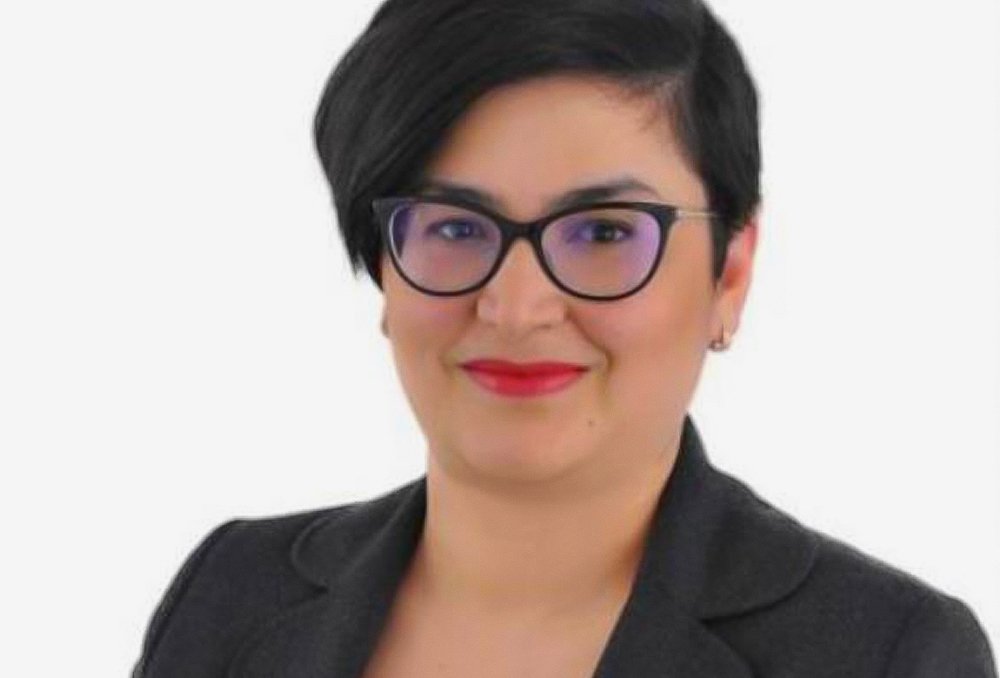
Ines Zaidi, Professor of Immunology at the Higher Institute of Medical Technologies at the University of Tunis El Manar, received the science and technology award of the Francophone University Agency during her participation in the ninth edition of the Francophone Award for Young Researchers.
Dr. Inas, a specialist in blood cell biology, excelled in the competition which included 113 candidates from different continents, such as America, Asia and Africa.
Thanks to her immensely advanced research, which demonstrates intelligence, scientific and cognitive abilities. The scholar’s work has also been published in more than 40 international medical articles, which have provided many additions to humanity, health and medicine in general. Zaidi has been awarded the Sadiq Bessour scientific prize for research excellence in 2017, supported by the Sadiq Foundation in collaboration with the University of Montreal and the Ministry of Higher Education and Research in Tunisia.
Regarding the nature and importance of Ines Zaidi’s research, the piece of work highlights the inclusion and regulation of HASH-1 molecules in public health diseases, as an added value in the follow-up of pathological conditions, as well as in proposing new therapeutic strategies.
Only three other researchers in the world received the Francophone award from universities in Canada and Morocco, making them 4 international researchers with scientific recognition and utterly significant achievements.
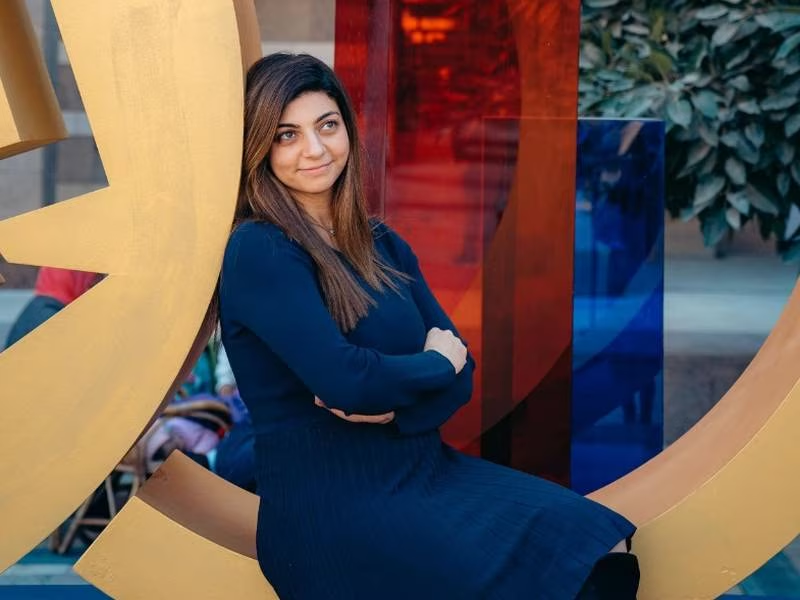
Egyptian-American founder of Affectiva is on a mission to revolutionise the way we connect with our digital devices, and each other, by building in emotional intelligence.
The earliest memory that Rana El Kaliouby can conjure is of standing on a tiny blue plastic chair in a romper suit confidently declaring whatever was on her toddler mind at the time.
She is about three years old, revelling in her father’s attention as he dispenses tips – “look at the audience, enunciate your words” – and records the ramblings for posterity with the first commercially available home video camera.
These regular living room sessions led to El Kaliouby going on to give many accomplished public-speaking performances around the world as an artificial intelligence scientist and entrepreneur, most recently this month at the CogX Festival Deep Tech Summit in London.
Her big message after decades working in technology is that the final frontier lies at the point where AI can be immersed in emotional intelligence , or EI, to revolutionise the human-to-computer experience.
But it’s obvious that the first seeds of that life-fulfilling mission were sown more than 40 years ago in her childhood home in Kuwait where she was first encouraged to get to grips with ideas and machines.
“Our family is really big on education, the thing my parents invested in me and my sisters,” El Kaliouby, 45, tells The National.
“And because they were both in tech, we were always exposed to the latest and greatest gadgets. I was a big Atari game player,” she adds, laughing.
El Kaliouby looks back fondly on those clunky old VHS cassettes and hours the family spent playing Pac-Man as examples of the positive way in which electronic devices can bring loved ones together.
Less happy interactions with latter-day technology, however, brought about the realisation that something was missing – all the rich communication signals provided by non-verbal cues were being lost.
An enterprising mission
Her focus ever since has been on developing artificial intelligence that recognises facial expressions so that people can have better connections with their laptops, and, crucially, with each other.
Born in Egypt after her tech guru father, Ayman, met his future wife, Randa Sabry, on a university campus, it seems almost inevitable that El Kaliouby grew up to be a proud geek pursuing a career in computer science.
“It’s a cute story,” she says. “My dad was teaching COBOL programming, this obsolete language that nobody uses any more but was the programming language in the 70s.
“My mum, who was a business major, decided to explore this thing called computer science, and he was kind of interested in going out with her. She said, ‘I don’t do that. No dating allowed.’ And he was like: ‘Ok, then I’ll propose.’”
Soon after, the newlyweds moved to Kuwait, and her mother became one of the first female computer programmers in the Middle East, until having to flee when Saddam Hussein invaded.
Aiming for the stars
Next stop was Abu Dhabi, where El Kaliouby’s Muslim-Arab upbringing was conventional in many ways, bounded by “lots and lots” of rules that included not making any boy friends while at school.
“I always imagined walking around with a gold star on my forehead. I was a very nice, rule-abiding daughter. I stuck to the strict curfews. I never dated through high school or college and I think, by and large, I was always an A student.
“But, at the same time, it was very empowering. I have two younger sisters and the message was always: ‘You can do anything you want in the world.’”
She continued to meet these expectations into her early 20s, earning undergraduate and master’s degrees in Computer Science at the American University in Cairo, and marrying the founder of a start-up, Wael Amin.
Within a year, though, El Kaliouby was undertaking a PhD 5,000km away at Cambridge University despite both sets of parents saying: “Wait a second, you’re married now and you can’t leave.”
Amin, she says, deserves the credit for supporting her daring dream and agreeing to a long-distance relationship.
“It was really unheard of. I did break rules more as an adult as I explored my passions and my quest for being a researcher and an entrepreneur.
“That’s how I think I pushed the boundaries and definitely made my parents uncomfortable.”
And then? “I like the wording that my life went off the rails. I think that kind of encapsulates it.
“Cambridge opened my horizons. It’s like I discovered the world and it was hard to unlearn that.”
The enthusiasm for her life’s work comes across even through the medium of our Zoom interview, but it’s also clear that this was not an easy time.
El Kaliouby arrived in England a few days after the September 11, 2001 attack in America, a young Arab woman then wearing a hijab.
“I was visibly Muslim. My parents were very concerned about my safety.”
The perpetual smile she adopted by way of a peace offering was also something of a mask, hiding the loneliness and separation from those she loved.
Back then, the technological means for staying in contact across the distance was largely restricted to the kind of messaging that proved a barrier to expressing true feelings, making El Kaliouby all the more determined to humanise technology.
“My PhD was centred around building a machine with emotional artificial intelligence, and I recognised at the time that a lot of the ways I was communicating with my family back home, and especially my husband, was through chat.
“We didn’t have video communication and it was certainly very expensive to make phone calls so we would use texting.
“I often felt I could hide my emotions behind the machine. There were many days where I would be homesick or even in tears, but I’d never communicate that. The best I could do was send a sad face emoji.”
The personal hardships became a driving force for her work. In a career paved with “what if” moments, El Kaliouby began to ask: “What if we could teach technology to understand us in the same way that we understand each other?”
“It’s not even in the choice of words we use. It’s our vocal intonations, our facial expressions, our body posture – and all of that was just getting lost via digitally mediated communications.”
Life was about to take another decisive twist as she received an email that the scientist, inventor and entrepreneur Professor Rosalind Picard was coming to give a talk on campus.
El Kaliouby had long been an admirer of this trailblazing woman in an almost overwhelmingly male-led field, whose book on designing computers to recognise human emotions she read while still in Cairo.
Life-changing encounter
“I often say this is the moment that changed the trajectory of my life,” she says of Picard’s request to meet some of the students.
So impressed was Picard by this intense young woman that she offered El Kaliouby a post-doctorate place on the Affective Computing Research Group at the Massachusetts Institute of Technology Media Lab before their first 20-minute conversation had ended.
“I remember thinking, ‘But I need to go back to Egypt. I have this husband waiting for me.’ And she basically said, ‘Just commute from Cairo. Show up whenever you want to.’’’
By then, El Kaliouby had a daughter, Jana, born in the UK, and a son, Adam, arrived in that other Cambridge in the US, but the constant round trips were becoming unsustainable.
“I was just doing that crazy back and forth. I would say it was OK until it went insanely chaotic when I started the company.”
The company was Affectiva, founded with Picard in 2009 with the goal of creating a commercial applications of emotion-sensing AI.
Growth was fast and it was an exciting time but there was another, darker side. “I was travelling so much, there was very little presence in anything I did,” El Kaliouby says.
Big lesson learnt
“I feel like I was out of balance. I didn’t make any time to sleep well. I would wake up at three in the morning almost every day and fire all these emails to my team. And so these poor people would wake up at six or seven in the morning with a whole slew of notes from me.
“I would go on vacation with my husband and my two young kids, and I’d just be on call all the time. There were zero boundaries, zero balance, and that was a big lesson learnt. There’s always time for self-care. There should always be time to spend with family and loved ones and friends. And, I didn’t do that, you know?”
By 2016, she was a divorced mother of two young children living full-time in America, and decided to bare that vulnerability in her role as chief executive of Affectiva.
Staff could see on El Kaliouby’s calendar that 3.30pm was demarcated to collect her son from school, and she explained to them that a Zumba class each Friday ensured a happier, healthier leader.
“I think it made for a much more authentic environment,” she says.
The family now lives in what El Kaliouby describes as a charming New England home filled with distinctive Middle Eastern touches and often by the aroma of molokhia soup made to her mother’s recipe.
Love for Egypt
“It’s very modern but with a lot of Egyptian things, Arab and Islamic inscriptions. I think of myself as Egyptian American, and very Egyptian in a lot of ways. I love Egypt. A lot of qualities – the Arab warmth, generosity and even intimacy – that’s very much who I am and I would say it’s the same for my kids.
“But I also have embraced what people would call American values. I’m very ambitious, very driven, very globally minded.”
That ambition and drive has taken her far. Affectiva is employed by brands in about 90 countries for market research, but also helps children with developmental difficulties, such as autism , to better interact with those around them.
More recently, the company has developed technology to make driving safer by enabling cars to detect if a motorist is becoming drowsy or distracted.
It was acquired in 2021 by the Swedish AI giant SmartEye for what was said to be about $73 million, with El Kaliouby becoming deputy chief executive.
She has long predicted that the day will come when all devices have an emotion chip and we won’t remember what it was like before screens could comprehend the meaning of us frowning at them.
“When we first started doing this work, we always said this will become ubiquitous and ingrained in every technology. Now, I think it’s more true than ever because AI is becoming a lot more conversational and perceptual.
“You can imagine that the final frontier is this emotional and social intelligence. Initially, my work was very much around human-to-computer interaction, making machines more intelligent, and how they communicate with humans.
“Now it’s back to the human connection. How are AI assistants and AI technologies going to make us better humans, especially better at connecting with each other?”
Along the way, she has learnt that daily affirmations are as integral to life as algorithms, and celebrating the small achievements, such as growing her own tulips, is as important as publishing a best-selling memoir, Girl Decoded.
Among the accolades amassed, El Kaliouby can cite becoming a World Economic Forum Young Global Leader, being listed on the Forbes Top 50 Women in Tech, and receiving the Smithsonian Magazine’s American Ingenuity Award in Technology. Earlier this year, she was invited to ring the opening bell on New York’s Nasdaq exchange as a female pioneer in AI, and was recently made a 2023 Eisenhower Fellow.
None of this seems to have gone to her head, however, perhaps because her family does a good job of keeping her grounded.
When El Kaliouby gave a TED Talk some years ago, she explained that in emotion science all facial muscle movements are measured as action units with specific numbers for each.
Words from the wise
In a throwback to those early guided sessions in the family living room in Kuwait, the night before she walked on stage, her daughter Jana, 12 at the time, helpfully texted: “Good luck mummy!! I’m sure your gonna do awesome. Remember: don’t play with your hair, connect with audience, give them a present, gesture on words, gesture to emphasise.”
The response sent in live time was the old-school 🙂 emoticon but the algorithm that is El Kaliouby’s labour of love would have strongly detected action unit 12, the main component of, in this particular case, a very indulgent smile.
From her parting message to readers of The National, it is clear that she won’t rest until the technology responds just as accurately across the whole gamut of social and emotional states irrespective of people’s age, gender or ethnicity. Going forward, El Kaliouby insists, the watchword has to be inclusivity.
“I’m on this mission to diversify the face of AI. So it’s a call to action to get involved. It’s super exciting and we need a lot of diverse people being part of it.”
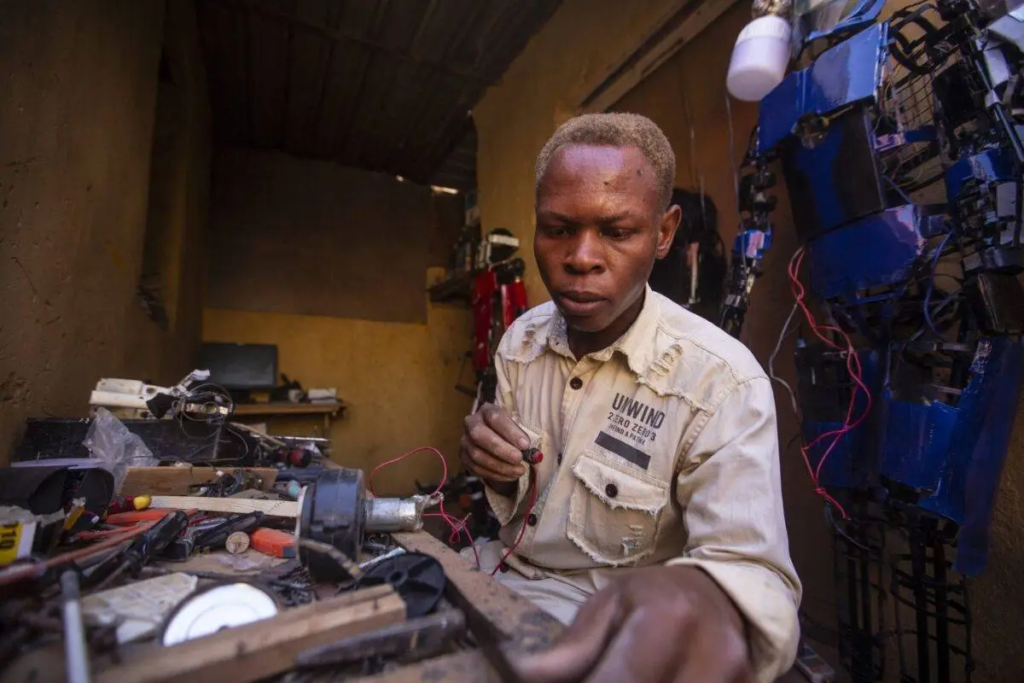
Moatasem Jibril, a young man from Sudan, is realising his dream of conducting technological experiments to manufacture robots by using recycled electronic waste.
Despite modest capabilities and living in a mud house in the city of Omdurman, west of the capital, Khartoum, Jibril did not give up on his dream of making a robot, even after having to quit university due to the deteriorating economic conditions of his family.
For about ten years, Jibril has been trying to create robots in a narrow space inside his family house, and he challenges poverty by working daily in the market to earn money to purchase the materials he needs for his project. He hopes that his dream will be funded by any businessman or institution.
Sudan is suffering from many crises, starting with a shortage of basic and imported commodities, as well as the depreciation of the local currency, in addition to the government’s measures to lift fuel subsidies at the request of the International Monetary Fund in 2021.
Childhood dream
Jibril’s dream of making robots arose from his childhood, inspired by cartoons.
“Making robots is a dream that has been in my mind since childhood, and I try hard to turn my dream into reality,” he said.
He started making robots nine years ago, after watching many movies that talk about inventors.
The young man mainly relies on the electronic waste that he obtains at a low price from local markets to build his robots, since the basic components exceed his financial ability.
He is searching continuously and painstakingly in electronic markets on the internet for any electronic parts offered for sale that are suitable for his industry, to buy them at reasonable prices.
Sudan is witnessing fluctuations in the abundance of foreign exchange, which raises the cost of imports and bears the final consumer the exchange rate differences, in addition to the rise in global prices, especially fuel and food.
Economic conditions
“In the initial stages, I moved more freely after studying and saving some money from my daily allowances,” Jibril said.
He was studying electronics engineering at the International University of Sudan. He often worked while studying, to save money to pay tuition fees and sit for exams. However, due to financial weakness of his parents, he missed many exams and eventually found himself dismissed from the University.
Jibril did not pay attention to the ridicule of his school and neighbourhood friends, and continued to implement his idea day and night.
“I still suffer from the mockery of colleagues and friends at the University when I begin to explain my project related to the manufacture of robots,” he said. “They consider it mere triviality, despite my continuous explanation of the idea of the project using engineering methods and three-dimensional designs.”
Jibril hopes that his economic conditions will improve, so he can return to the University to complete his academic studies in engineering and software fields.
He aspires to complete a project in building robots on a scientific basis and then start selling them.
As for his big dream, it is to go beyond the robotics industry and reach the stage of manufacturing micro-precision missiles and apply his motto that says: “Everything is possible with determination and persistence.”
He is looking forward to the future by completing his academic studies and hopes to find sponsorship from local or international institutions that will adopt his project to crown his success story and reach the world.
Sudanese Moatasem Jibril, who dropped out of his electronics engineering course for economic reasons, works on a robot in his house using waste products in Khartoum, Sudan on 2 March 2023 [Mahmoud Hjaj/ Anadolu Agency]
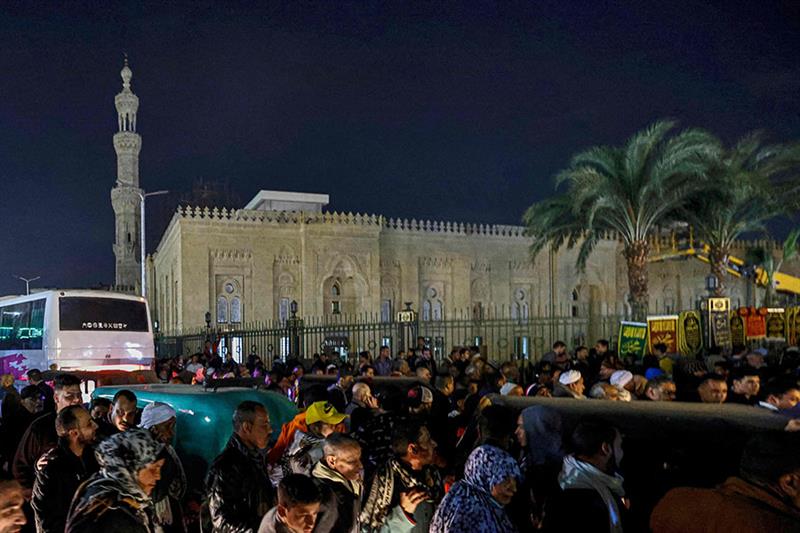
In the heart of Historic Cairo, the mausoleum and mosque of Sayeda Zeinab (6-62 hijri), the granddaughter of the Prophet Muhammad, centres the square and district that holds her name.
Sayeda Zeinab is known among Egyptians as Om Hashim (Hashim’s mother) since she was the one who took care of the wounded and martyred members of her tribe during the battle of Karbala. She is also known as El-Tahra (The Pure) and as ” Om El-Awagez” (mother of the disabled) because she attended to elderly and disabled women. Egyptians also know her by the title El-Mushira (The One to Consult) and Raeisat El-Diwan (The chief of diwan) because she opened her house for the people who sought her guidance and proclaimed her the head of her diwan of spiritual guidance.
Born in the sixth year of Hijra in Madina, this bright and beautiful girl was known for her sound mind and intellect and was often referred to as Aqilat Bani Hashem (The sound mind of the tribe of Bani Hashim).
She got married and had four boys and two girls. She became known for her gatherings on Islamic jurisprudence, where she shared her knowledge. She lived a simple, pious life until she witnessed the harshest moments in Islamic History.
In Aisha Abdel-Rahman’s book titled Al-Saida Zeinab Aqilat Bani Hashim, published in 1985 by Dar El-Ketab El-Araby, she was described as the hero of the famous Karbala battle, which occurred between the party of Al-Hussien Ibn Ali, grandson of the prophet Muhammed and Yazid Ibn Umayya. Sayeda Zeinab was spotted protecting the women, soothing the injured, and protecting the bodies of the dead. She lost her brother Al-Hussien in this battle but managed to spare the life of his son Ali Zein Al-Abdein, a child back then.
After losing this battle, her staying in Al-Madina became a real threat to the Umayyads after they seized the caliphate and killed Al-Hussien and almost all of Prophet Muhammed’s descendants (Ahl al-Bayt). Consequently, Sayeda Zeinab, the representative of the Ahl al-Bayt had to choose their exile. She chose Egypt, arriving in modern-day Cairo in year 61 of Hijra.
When she came to Egypt with her family, almost all Egyptians came out to greet her. She was greatly honoured by the Egyptian people who visited her and consulted her constantly on her premises at Qanater Al-Sibaa (The Lions Barrages ), approximately the current location of El-Sayeda Zeinab’s mosque and mausoleum.
According to Ali Pasha Mubarak’s series Al-Khetat Al-Tawfiqia, ” Sayeda Zeinab Street was named after Sayeda Zeinab, daughter of Imam Ali, bless be upon him, because this is where her mausoleum is situated in a golden copper compartment with an embroidery silk cover underneath a high dome that is situated inside Al-Zainabi mosque near Qanater Al-Sibaa. The mosque was renovated by Prince Ali Pasha Al-Wazir in 955. Then, it was renovated and enlarged during the reign of Prince Abdel-Rahman Katkhuda in 1173. The mosque is always full of visitors. A Hadra (Sufi ritual of praising God’s presence) is held every Sunday night, and a Maqraa ( A night of reading the Quran) is held every Wednesday night. The mosque also witnesses the celebration of her Moulid (her ascension) every year,” reads the book.
Touched by the emotions of Egyptians, Sayeda Zeinab is said to have blessed Egypt, saying: ” O People of Egypt, you stood by us, may God stand by you, you were our refuge, may God be yours, you helped us, may God always help you out of all difficulties. “
She died in year 62 of Hijra, with conflicting stories surrounding her burial. Some say she was buried in Madina. Others say she was buried in Egypt. But the fact remains that she came to Egypt and that her presence is still felt, appreciated and celebrated. People still refer to her for spiritual guidance.
Her annual moulid, one of the largest and most iconic, takes place on the 28th of Ragab in the Hijri year.
Egyptians walk outside Cairo’s Sayeda Zainab mosque during celebrations marking the birthday of Prophet Mohamed s granddaughter Zeinab, late on February 14, 2023. AFP
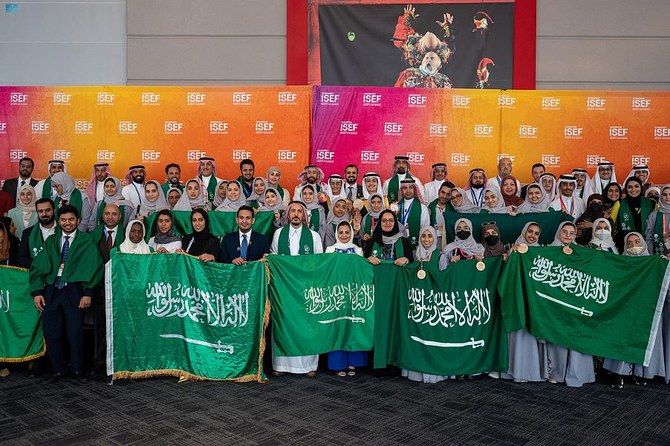
Saudi Arabia, represented by King Abdulaziz and His Companions Foundation for Giftedness and Creativity, or Mawhiba, and the ministry of education, has won 27 prizes — including 23 major and four special prizes — at the Regeneron International Science and Engineering Fair.
More than 1,800 gifted individuals from more than 70 countries participated in the ISEF event, which was held from May 13-19 in the US.
In the major awards, the Saudi team won two first-place prizes, seven second-place prizes, seven third-place prizes and seven fourth-place prizes.
Student Faisal Al-Muhaish won first-place in chemistry for his project titled “Metal-organic framework-based electrocatalyst for a highly efficient and low-cost seawater hydrogen production,” while student Mohammed Al-Arfaj won first prize in environmental engineering for his project titled “Using a contact liquid to capture CO2 found in fuel and air through a highly efficient and low-cost freezing method.”
Second-place prizes went to Taif Al-Hamdi in the field of energy, Latifa Al-Ghannam in energy, Lynn Al-Melhem in energy, Zahra Al-Shabr in biomedicine and health sciences, Fatima Al-Arfaj in chemistry, Wissam Al-Qurshi in biomedical engineering and Dima Marwahi in earth and environmental sciences.
Third-place prizes went to Ritaj Al-Sulami in energy, Fajr Al-Khulaifi in energy, Fares Al-Yami in transitional medicine, Lian Norolli in environmental engineering, Abeer Al-Youssef in materials science, as well as Lian Al-Maliki and Nour Al-Hamad in plant sciences.
Fourth-place prizes went to Maria Al-Qumsani in engineering technologies, Bandar Al-Barahim in robots and smart devices, Hanadi Arif in social and behavioral sciences, Maria Al-Ghamdi in environmental sciences, Tahani Ahmad in materials sciences, Dee Shujaa in earth and environmental sciences and Yazan Al-Fulaih in plant sciences.
This year’s achievements have increased the total number of prizes won by the Kingdom at ISEF to 133 — 92 major and 41 special prizes — since it began participating in 2007.
Amal bint Abdullah Al-Hazaa, secretary general of Mawhiba, congratulated King Salman and Crown Prince Mohammed bin Salman for this new national achievement, which was supported by the leadership. She also congratulated the ministry of education and the students, along with their families, schools and teachers.
Al-Hazaa commended the joint efforts by Mawhiba and the ministry of education, as well as their strategic partners, to continue achieving the objectives and initiatives of the Kingdom’s Vision 2030 by improving students’ capabilities in accordance with the latest scientific methods used for gifted individuals.
Al-Hazaa said that “the complementary partnership between Mawhiba and the ministry of education has contributed to the development of a creative environment, space and system for talented individuals and produced Saudi human capital models that are competent and able to innovate solutions to sustainable development-related problems, contributing to the prosperity of all of humanity.”
The Kingdom, represented by Mawhiba, also took part in ISEF 2023 as an official sponsor and presented 18 special prizes to the best projects participating in the energy category.
ISEF is considered the largest pre-university scientific research and innovation competition fair.
source/content: arabnews.com (headline edited)
___________
This year’s achievements have increased the total number of prizes won by the Kingdom at ISEF to 133 — 92 major and 41 special prizes — since it began participating in 2007.(SPA)
Moroccan Engineering Lab won two prestigious awards at the International Innovation Salon in Toronto, Canada.
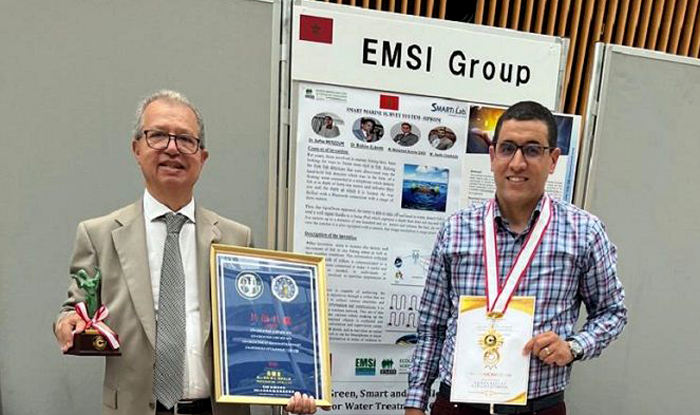
Smarti Lab, a research laboratory affiliated with the Moroccan School of Engineering Sciences (EMSI), claimed two gold medals and two prestigious awards at the iCAN 2023 International Innovation Exhibition held in Toronto, Canada.
The lab’s winning invention is called the “Smart Wastewater Treatment Station” (SGWT), which is a “green, and mobile” wastewater treatment station.
According to a statement from EMSI, the innovation addresses a critical global issue and represents a “significant leap forward” in sustainable water management.
The smart wastewater treatment station was in response to the current global water crisis, EMSI said in the statement.
The second medal went to the “Meat Quality Verification System” (SMT), a system that offers a “simple and rapid solution for assessing the quality of various types of meat.”
The solution relies on mechanisms that analyze meat quality using specialized integrated units. The system addresses critical health and safety concerns related to meat consumption, the statement explains.
Over the years, EMSI secured a number of awards for innovation. The engineering school has won a total of 85 awards and medals on both national and international fronts.
Engineers from the school previously participated in international innovation competitions such as ICAN in Canada, Silicon Valley in the United States, the International Innovation Exhibition in China, ISIF in Turkey, Intarg in Poland, and EuroInvent in Romania, among others.
The Canada exhibition was held from August 23 to 26, and it featured participants from 50 countries with over 800 inventions.
Dubai Electricity and Water Authority (DEWA)’s Research and Development (R&D) Centre has filed a new patent for an innovative method for improving the performance of electrodes in lithium-ion (Li-ion) batteries, sodium–sulfur batteries, and electrolyte distribution batteries.
This is achieved by treating the electrodes chemically using a polymer to increase the number of active groups on the surface of the electrodes, which leads to improving their performance. The low-cost, environmentally friendly method requires low temperatures and ensures stable battery performance. This is part of the centre’s efforts to promote the technologies of energy production and storage.
The patent supports the pilot project for energy storage that DEWA has inaugurated at the Mohammed bin Rashid Al Maktoum Solar Park using Tesla’s lithium-ion battery solution. The project has a power capacity of 1.21 MW and an energy capacity of 8.61 MWh with a life span of up to 10 years. This pilot project is the second battery energy storage pilot project by DEWA at the solar park. The first project was implemented in collaboration with AMPLEX–NGK to install and test a sodium sulphur (NaS) energy solution with a power capacity of 1.2 MW and an energy capacity of 7.5 MWh. This was the first utility-scale energy storage pilot project in the region.
Saeed Mohammed Al Tayer, MD & CEO of DEWA, said, “Our strategies and plans are inspired by the vision and directives of His Highness Sheikh Mohammed bin Rashid Al Maktoum, Vice President, Prime Minister and Ruler of Dubai, to ensure energy security and sustainability, as well as improve energy efficiency. DEWA relies on research and innovation to support the development of energy storage technologies and increase the share of clean and renewable energy. This supports the Dubai Clean Energy Strategy 2050 and the Dubai Net Zero Carbon Emissions Strategy 2050 to provide 100 percent of Dubai’s total power production capacity from clean energy sources by 2050. DEWA is working on other energy storage projects, including using Concentrated Solar Power (CSP) at the 4th phase of the Mohammed bin Rashid Al Maktoum Solar Park, the 250MW hydroelectric power plant in Hatta with a storage capacity of 1,500 megawatt-hours, and the Green Hydrogen project to produce and store hydrogen using solar power.”
“DEWA’s R&D Centre is a global platform that provides innovative solutions and technologies for the operations and services of the utility sector worldwide. This maintains DEWA’s worldwide leadership and enhances Dubai’s position as a global hub for research and development in solar power, smart grids, water, energy efficiency, and capacity building in these sectors. The R&D Centre improves the services provided by DEWA to customers by developing the latest technologies and sustainable solutions for energy and water and conducting applied research,” Al Tayer continued.
“The R&D Centre at the Mohammed bin Rashid Al Maktoum Solar Park enriches the scientific community in the UAE and the world. This is through disseminating knowledge and nurturing the talent of Emirati researchers,” Waleed bin Salman, Executive Vice President of Business Development and Excellence at DEWA, added.
Acquisition marks company’s first foray into UK market.
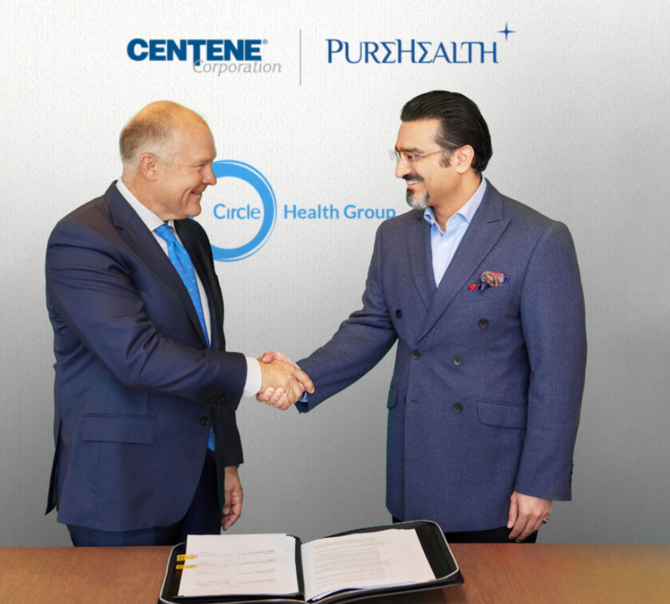
Abu Dhabi-based PureHealth has signed an agreement to buy British hospital operator Circle Health Group for 4.41 billion UAE dirhams ($1.2 billion), Emirates News Agency reported.
PureHealth is the UAE’s largest healthcare provider and the acquisition marks its first foray into the UK market.
According to the report, Circle Health Group has the UK’s largest network of private hospitals and was the first European healthcare provider to enter the Chinese market.
Under the agreement, PureHealth will acquire 100 percent of the group’s portfolio, which includes orthopedics, oncology, cardiothoracic surgery, ophthalmology, neurosurgery and general surgery, as well as the UK’s first purpose-built rehabilitation hospital.
“This acquisition marks an important milestone in our journey toward creating a global healthcare network which revolutionizes patient care,” PureHealth Group CEO Farhan Malik said.
“Our mission at PureHealth is to drive scientific innovation to unlock longevity and greater quality of life for humankind. Through integrating the expertise of both organizations, we positively impact the lives of patients globally.”
How do you use tech/data to tackle important issues? Tell us about your work.
Data, specifically qualitative research methods, is important to apply a systems lens of work as a means to connect the dots between the various solutions I’ve been mapping. Looking at a portfolio of solutions rather than stand-alone silver bullets creates evidence to better understand complex problems that are in nature wicked and interlinked. This method of starting with the solution and portfolio of solutions becomes a proxy indicator of a need and blind spot in a system or system of systems and/or a signal of change taking place.
I work with ordinary people who create extraordinary things to adapt to change quickly. My work is then to analyse that to share with the UNDP network and government counterparts for better decision making.
Solutions mapping is like pointillism. A series of dots may not make much sense but when it begins to connect and harmonise, you step back and see a picture. An example of that was during Covid-19 and how micro enterprises were forced to figure out ways to continue work under limitations of social and safe distancing. Observing a pattern of cashless solutions and connecting these with similar solutions both in Sudan, regionally and across the globe underlined the need but also an accelerated shift to a cashless economy as result of this new normal.
What was the most impactful project you worked on in the past year?
One of the ways to support a thriving local innovation ecosystem is one that facilitates this very ecosystem to see itself and its diverse and often unusual stakeholders.
If I were to liken the current ecosystem in Sudan, I would describe it as a map of islands with few bridges in between. When you start to ‘see’ solutions, as a mapper, you can see in all the ways they connect, align and interlink in this bigger and collective effort to create impact.
Everywhere I go, I cannot stop emphasising the ripple effect of the Solutions Fair held in early 2020. Whereby for the first time, stakeholders from different groups spanning academia, private and public sectors where in the same giant hall as Giulio Quaggiotto, Head the UNDP Strategic Innovations Unit has coined, the development mutants. A social experiment of sorts, of what takes place when the traditional development actors meet the unusual and unexpected.
The organic connections, knowledge sharing and diffusion that begin to form from which a community of solution holders emerged. With the first Covid-19 case reported in March and subsequent lockdown, it was this very community network that I was able to tap into to understand how they were responding, pivoting with Covid-19. The socio-economic impact but also the incredible resilience to reconfigure and do things differently under this immense and limiting challenge. How this network was connecting, working and collaborating with other networks. From university labs shifting to production of hand-sanitizers for students to distribute for free in the urban centres, to a social enterprise supporting highly affected street tailors into an organised collective to mass produce re-usable masks. The power of connections and compound impact that bridge the usual with the unusual.
What are some innovations from the pandemic that have caught your eye?
Indigenous Sound Bites. This completely grassroot effort was carried out by Dr. Hiba Abdelrahim of Sudan Unity Networking who first noticed the glaring gap in inclusive Covid-19 communication available in local and indigenous languages. She started to reach out to a network of Sudanese polyglots on Facebook to record sound bites of Covid-19 WHO guidelines and safety precautions. Through networks and network of networks on social media from Telegram, Whatsapp, Youtube, a collective distribution approach was used to share and reshare these sound bites to ensure this reaches volunteers on the ground in rural and hard to reach areas to share this vital and critical health information.
What is one unexpected learning from 2020?
2020 was a year of personal growth and learning forced by being cut off from the usual pace and external stimuli of everyday life and way of work. Facing a collective and shared challenge caused by the Covid-19 pandemic, the uncertainty of this new reality and what that means at a personal and professional level created a space to pause for much needed reflection on what really matters. Family and well-being, particularly mental well-being, and health have always been important. But what was unexpected was how much that really is a priority at the core of the choices I make and should and ought to be making.
In a way, the great re-set of this year was a wider ripple effect for social solidarity which emphasised the need for better support for care work and care economies. An integral support system that was consistently undervalued but came to the forefront with the pandemic in the welfare of, for and by communities.
What are your priorities for 2021?
Balance. Solutions mapping, and I am biased for obvious reasons, is an important protocol that introduces mixed research methods and approaches to development practice. The importance of constant and consistent engagement with the systems outside the work of UNDP, and connecting to those closest to the problem in the context of development challenges, allows solutions mappers to be a bridge to share, diffuse and shine light on context responsive knowledge with decision makers at UNDP and government counterparts that may influence programming, policy or inform better partnerships and possibly open unexpected pipelines in the market.
All the while, it is imperative to embed the practice and protocols of solutions mapping within UNDP thereby creating movements and networks of UNDP mappers in the country office to re-learn to see, observe and engage with ecosystems through this new lens. This is akin to having one foot out with one foot in, a balancing act to ensure that I am not leaning heavily on one foot at the expense of the other.
What tool or technique particularly interests you for 2021?
Ethnographic cartography (EC) is a method I am particularly keen to explore its possible applications in the context of Indigenous Knowledge Systems (IKS) in Sudan. EC inspired by Everyday Geographies and Personal Geographies, is a multi-sensory approach combining two activities.
The first, MyWalks is an activity that is intended to reawaken the senses to look for the unexpected. A simple premise of walking through a familiar route, re-walked or a new route walked for the first time. The experience of the journey starting at A is more important by engaging the senses and observing rather than reaching the destination at B.
The second, MessyMaps is the technique to record this multi-sensory experience through images, sound and notes. The outcome of this supports better understanding and engagement of the ecosystem in which I am mapping solutions and how these solutions exist, interlink and engage with the environment it operates out of and with.
I first came across an application of this method through the amazing work “Other Maps” undertaken by a fellow Solution Mapper, Paulina Jimenez at UNDP Ecuador. In academia, this emerging method was used to produce qualitative GIS representations of resilience. In this use case, Dr Faith Evans incorporated emotion, social connections and experience to present an experimental map visualisation of informal settlements in Kenya.
Which other countries inspire you and why?
India. As I onboarded to the Accelerator Lab, the cohort of AccLab mappers had the unique opportunity to get first-hand knowledge and support from the Accelerator Lab Network knowledge partner, the Honey Bee Network and GIAN. Virtual classes led by Prof Anil Gupta and Dr Animika Dey on mapping inclusive grassroots innovation was an eye opener to the work led by India over the last two decades to recognise, incorporate and support grassroots innovations in the National Innovation Policy. As one publication describes it, propositioning grassroots innovations in the S&T policies of India created a space for “the innovation agenda [to] shift from presenting grassroots innovation as a divider of the national innovation wealth to a provider of it”. (1)
The kind of effort India has spearheaded is one I would hope can be galvanised for Sudan to learn from and emulate.
Who do you admire? Who is your hero?
My grandfather. A food scientist, teacher, researcher, former FAO and fierce advocate for R&D turned entrepreneur and thought leader in the F&B industry of Sudan.
I remember once asking him why he did not invest in better advertising for his products or fancier packaging. His response was that his responsibility and priority is to ensure accessibility for the everyday Sudanese informed by the forefront of sustainable food production research. In which the everyday consumer not only benefits from the product itself but is able to re-use and repurpose the packaging for domestic needs.
The value system he has abided by until his retirement almost a decade ago is one I admire and have grown to appreciate even more as a development practitioner. The principles he went by still ring true and relevant in industrial innovation and sustainable consumption and production today.
(1) Jain, A., & Verloop, J. (2012). Repositioning grassroots innovation in India’s S&T policy: From divider to provider. Current Science, 103(3), 282-285. Retrieved March 16, 2021, from http://www.jstor.org/stable/24085031