Arabs & Arabian Records Aggregator. Chronicler. Milestones of the 25 Countries of the Arabic Speaking World (official / co-official). AGCC. MENA. Global. Ist's to Top 10's. Records. Read & Enjoy./ www.arabianrecords.org
Dr. Hanan bint Abdulrahim Al-Ahmadi was awarded the International Award for Exceptional Achievement during the Tulane Alumni Awards Gala, hosted by Tulane School of Public Health and Tropical Medicine on April 9.
Al-Ahmadi, an academic who specializes in economics and health management and who also serves as the assistant speaker of the Saudi Shura Council, was honored for the contributions of her legacy of excellence at Tulane University.
The award is given to alumni who represent the highest standards of excellence and community service locally and internationally.
During her acceptance speech, Al-Ahmadi said that the scholarships to study abroad provided by Saudi Arabia are pillars of educational strategy in contributing to distinguishing the Kingdom as a global educational institution.
Al-Ahmadi highlighted that all this is due to the great investment in women’s education in Saudi Arabia. She emphasized that the leadership’s support of Saudi women contributed to elevating her to international and regional forums and representing the Kingdom abroad.
Two other doctors, Dr. Neil Meltzer and Dr. Joseph Kanter were also honored for different achievements alongside Al-Ahmadi.
Awards made for services to Islam, Arabic language, literature, medicine, and science.
The winners of this year’s King Faisal Prize on Tuesday received their awards at a glittering ceremony staged in Riyadh.
The annual gongs — held under the auspices of King Salman — are the most prestigious in the Muslim world and recognize outstanding achievement in services to Islam, Islamic studies, Arabic language and literature, medicine, and science.
The service to Islam prize was jointly awarded to former Tanzanian President Ali Hassan Mwinyi and Egyptian scholar Prof. Hassan Mahmoud Al-Shafei.
The Arabic language and literature award went to Prof. Suzanne Stetkevych and Prof. Muhsin Al-Musawi from the US.
American Prof. David Liu secured the medicine prize while the science accolade was shared by Prof. Martin Hairer of the UK and Prof. Nader Masmoudi of Tunisia.
The Islamic studies prize, that this year focused on the Islamic heritage of Al-Andalus, was withheld because the nominated works did not meet the necessary criteria.
Mwinyi was honored for actively participating in Islamic advocacy and promoting religious tolerance. He established Islamic schools and translated many resources and references in hadith, jurisprudence, and the Prophet Mohammad’s biography into Swahili, the language spoken by millions of people in East Africa.
Al-Shafei, who was president of the Academy of the Arabic Language in Cairo from 2012 to 2020, held several academic positions and established a series of institutes concerned with Al-Azhar. He also contributed to the establishment of the International Islamic University in the Pakistani capital Islamabad.
The Arabic language and literature prize was jointly presented to Stetkevych, chair of the department of Arabic and Islamic studies at Georgetown University, and Al-Musawi, professor of Arabic and comparative literary studies at Columbia University.
Stetkevych’s extensive research and numerous works have analyzed Arabic literature with unmatched depth from the pre-Islamic period to the Nahda/revivalist period. Her research approach, which is characterized by its application of varied methodologies, resulted in the renewal of the critical perspective and methods of studying classical Arabic poetry.
The research and studies of literary critic and novelist Al-Musawi have had a great impact on Arabic studies students and researchers in the Arab world and the West, through his distinctive methods of presentation, analysis, critical interpretation, and openness to Arab and international creative texts in prose and poetry.
Meanwhile, the medicine prize concentrated on gene-editing technologies. Its winner Liu, director of the Merkin Institute for Transformative Technologies in Healthcare, invented the first so-called base editor to make alterations on DNA and genes by replacing letters in the DNA base.
Hairer, chair in probability and stochastic analysis at Imperial College’s mathematics department, was one of the science prize recipients. His work has been in the general area of probability theory with a focus on the analysis of stochastic partial differential equations. He recently developed the theory of regularity structures which gave a precise mathematical meaning to several equations that were previously outside the scope of mathematical analysis.
The other joint science award winner, Masmoudi, a professor of mathematics at the New York University of Abu Dhabi, unlocked the mystery surrounding many physics problems which have remained unsolved for centuries.
He found a flaw in (Leonhard) Euler’s mathematical equations, which for more than two centuries had described the motions of fluids under any circumstance. Masmoudi discovered that the equations did not apply to all circumstances, as previously thought, and his findings helped to solve a raft of conundrums related to fluid-modeling, such as weather predictions.
Each winner received a $200,000 prize, a 24-carat gold medal, and a certificate written in Arabic calligraphy signed by the Chairman of the prize board, Prince Khalid Al-Faisal.
source/content : arabnews.com (edited)
_____________
Winners of 2022 King Faisal Prize awards honored in Riyadh. (SPA)
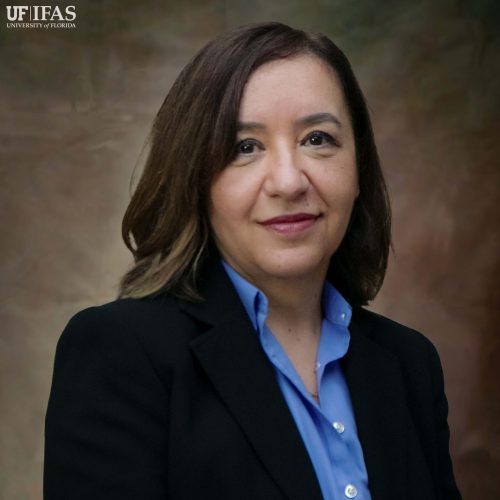
Dr. Samira Daroub Ph.D. Soil & Water Scientist. Director, EREC.FL, USA.
Throughout history, women have played a key role in humanity’s scientific advancements. As mentors, innovators and thought leaders, women in science have inspired and empowered countries, communities, women and young girls with their work and knowledge.
In celebration of National Women’s History Month, Samira Daroub shares how a love for learning inspired a lifetime of teaching and research that has expanded beyond United States borders. Daroub is the second woman in 100-year-old history of UF/IFAS Everglades Research & Education Center (EREC) to take the center’s helm.
Q: What was your early life like?
A: I was born in Beirut, Lebanon. My grandfather was a farmer. One of my uncles also had a farm. I always loved math and had a constant desire to learn. I also wanted to attend a university.
My career in soil and water sciences didn’t really take shape until I was an undergraduate. It is all due to the power of teachers and mentoring, and it goes back to my first semester in college when I took a soil science class. The instructor took time to teach each lesson. I learned how it had practical application, and it was through that mentorship and others that I gained a love for this applied science.
That is a life lesson that I took to heart and have paid that support forward ever since. It is my goal to serve as a mentor for every student, rising faculty member or researcher who I encounter throughout my career.
Q: Where did you pursue your undergraduate and graduate degrees and in what fields?
A: I earned a bachelor’s degree in agriculture and a diploma in agricultural engineering from The American University of Beirut in Lebanon. I later obtained my master’s degree in soil sciences there. For my Ph.D. in soil chemistry, I attended Michigan State University on a full scholarship awarded by the non-profit Hariri Foundation-Lebanon.
Q: Tell us about your life at UF/IFAS?
A: I arrived at UF/IFAS in 2000 as an assistant professor of soil and water sciences where I conducted research and taught classes both at EREC and at Fort Lauderdale Research and Education Center. I later became a professor and the distance education coordinator in the department of soil and water sciences.
I have been teaching classes in soil sciences, soil chemistry and environmental nutrient management as part of the undergraduate and graduate distance education programs. I also advise distance education students pursing non-thesis master’s degrees in the environmental science track at UF.
As a researcher, I focus on environmental issues related to soil and water quality. I specialize in the development and implementation of best management practices (BMPs) to reduce phosphorus leaching in soils and ultimately prevent it from entering surface waters in the Everglades in south Florida. A second research focus is on the sustainability of organic soils and agriculture in the Everglades Agricultural Area (EAA). A third focus is on international development aimed on building individual and institutional capacity in India and Middle East in soil health and water resources.
I established a nationally recognized research and Extension program for the development of best management practices to improve water quality as part of a comprehensive effort for Everglades’ restoration in Florida. I offer in-person and online best management practices workshops and have always been committed to providing Extension and outreach activities to local area growers
I later became interim center director of EREC, until February this year when I was appointed as center director.
Q: You have conducted extensive international educational and research work. Tell us about it.
A: My journey in international research and education started when I was a postdoctoral fellow at Michigan State University with Dr. Joe Ritchie. I visited national and international research centers in Colombia, Brazil, Syria, Kenya and Hungary for collaboration and data acquisition to be used in crop modelling.
My international education experiences include teaching and mentoring undergraduate and graduate international students. I have mentored interns, visiting scholars and Borlaug fellows from Brazil, Honduras, Costa Rica, India and Iraq. The scholars were trained for laboratory and research techniques and introduced to sustainable practices in South Florida agriculture and water management. I have conducted research in India, as well as educational projects and capacity building workshops in India, Jordan, Syria, Lebanon and Egypt.
At UF/IFAS, I have always been interested in international research and educational projects to share and gain native knowledge into soil and water management and online learning. I have collaborated with Sandra Russo at the UF International Center on various educational projects in the Middle East. Effective mentoring is a big part of what I do for local and international scholars. I have always taken an approach to advising and mentoring that allows students and postdocs opportunities to strengthen their interpersonal skills and technical competence, while also developing leadership skills and confidence.
Q: What words of inspiration would you give to other women and girls as a mentor and leader in your field?
A: Education is key. Never stop learning. Lean on family, peers, educators and supporters to succeed. A support system is vital.
The mission of the University of Florida Institute of Food and Agricultural Sciences (UF/IFAS) is to develop knowledge relevant to agricultural, human and natural resources and to make that knowledge available to sustain and enhance the quality of human life. With more than a dozen research facilities, 67 county Extension offices, and award-winning students and faculty in the UF College of Agricultural and Life Sciences, UF/IFAS brings science-based solutions to the state’s agricultural and natural resources industries, and all Florida residents. ifas.ufl.edu| @UF_IFAS
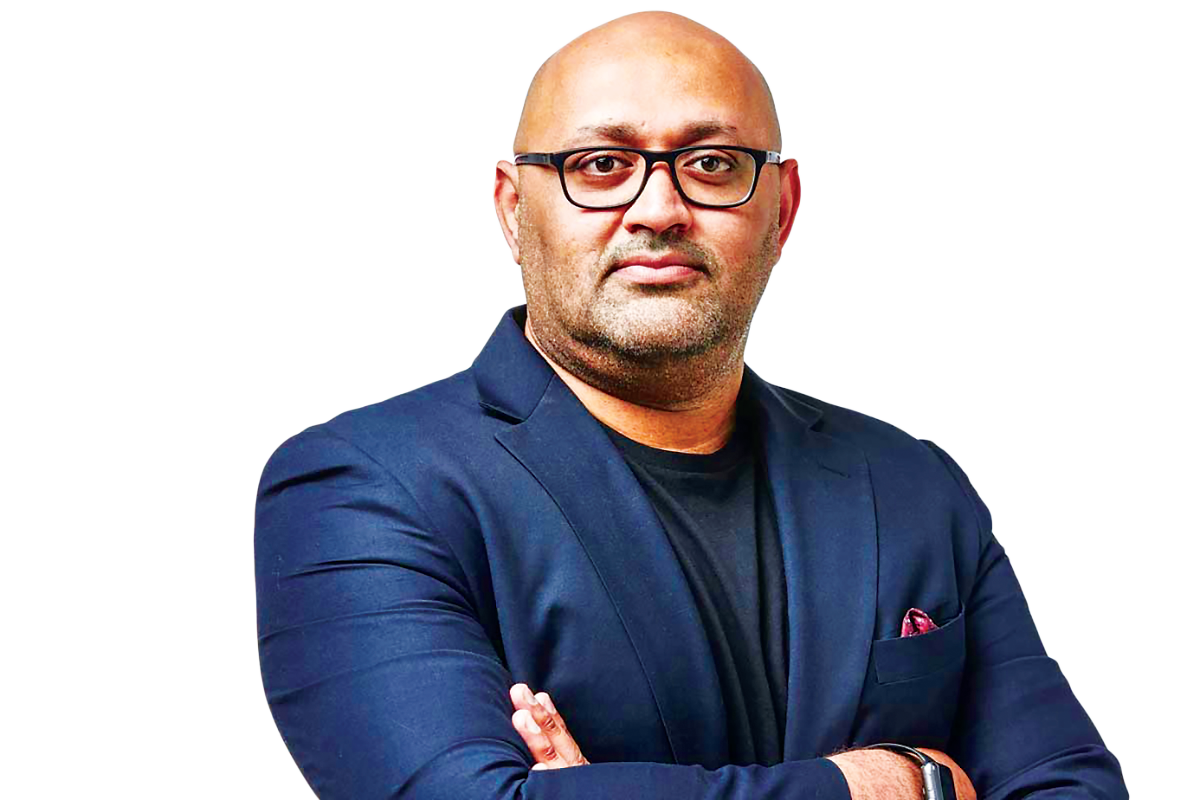
Abdulaziz Fahad Al-Jouf is the founder and CEO of PayTabs, a payment processing company founded in Saudi Arabia in January 2014 and now based in Bahrain.
He graduated from Riyadh’s Imam Muhammad Ibn Saud Islamic University in 1999 with a bachelor’s degree in Islamic business and subsequently obtained a bachelor’s degree in information technology from the University of Nebraska-Omaha and a master’s degree in e-business from the New York Institute of Technology.
PayTabs was founded in 2013 after Al-Jouf “faced problems finding a suitable payments gateway for one of his business startups … and figured there would be many others with the same issues.”
PayTabs was, according to Al-Jouf, “taken under the wing” of Saudi Aramco’s entrepreneurship scheme “Wa’ed” and made headlines in August 2017 when it raised $20 million investment from unnamed sources.
In 2018 PayTabs was recognized by Forbes Middle East as No. 1 among “the top 20 Fintech startups to watch.”
In the same year, Al-Jouf was featured on the cover of Arabian Business magazine, and PayTabs was named “Fintech Company of the Year” at the Arabian Business Achievement Awards.
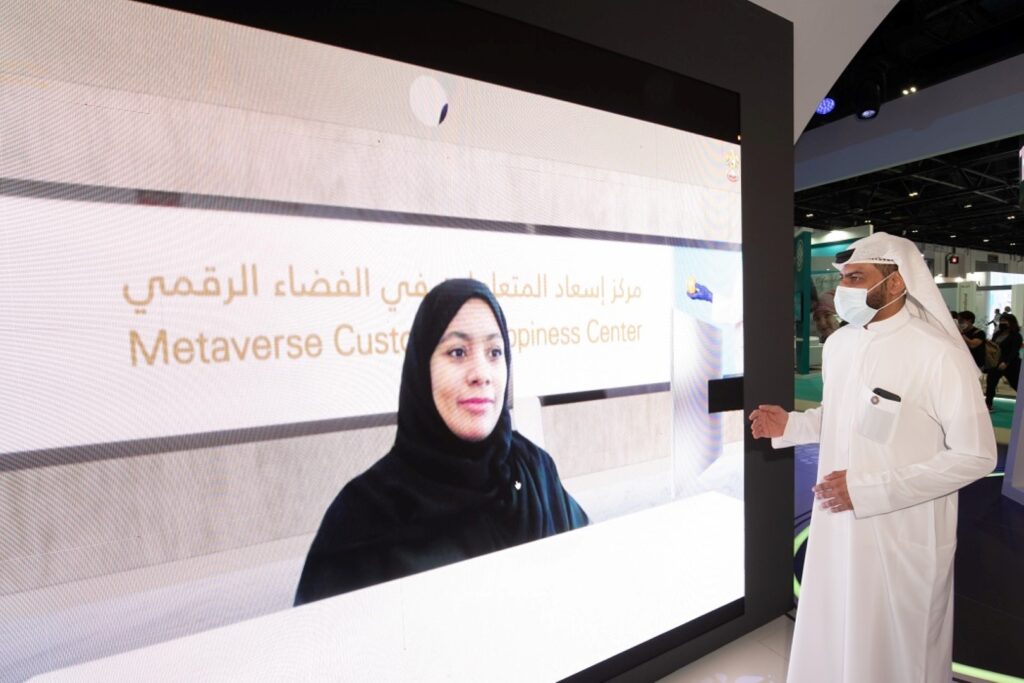
The Ministry of Health and Prevention (MoHAP) has launched the world’s first Metaverse customer happiness service center at the Arab Health 2022, the first experience of its kind in a health exhibition in the world.
The step ushers in a new era of digital reality and human-computer interaction in government health care services, by enhancing the integration of the real, virtual and digital world.
The Ministry’s stand at the Arab Health being held at the Dubai Trade Centre from 24th to 27th January, will be a unique stage to showcase this unique technology and test the performance of virtual activities that provide real experiences in one of the most innovative and future initiatives launched by the ministry.
Although the full version of the MoHAP MetaHealth platform is expected to be launched by mid-2022, visitors to Arab Health 2022 will have the opportunity to instantly teleport into the world of MetaHealth and choose to speak with a real employee from the Customer Happiness Center in a must-try experience.
he new technology also provides an opportunity for customers to join the MetaHealth space and move from their current location to the Ministry’s virtual Customer Happiness Center, without actually crossing the distance between the two areas. Customers, then, can request information, submit documents, pay fees and more, with the actual faces of users being displayed in the virtual room instead of avatars.
The new service also provides a tangible solution for the people of determination who are unable to move physically from their homes to one of the Ministry’s customer happiness centers and finish their transactions smoothly.
Al Owais added, “Today, we are experiencing the world of “Metaverse”, with the launch of the world’s first virtual customer happiness center in the three-dimensional digital space, in the first experience of its kind, in preparation for a new and promising future health sector through Arab Health, one of the largest international exhibitions.”
The UAE health minister asserted that Virtual Reality technology will play a more important role in the future of the UAE during the next fifty years, especially in light of the development of advanced digital infrastructure, which is one of the best in the world.
“The flourishing of digital transformation in the government sector pushes us forward to continue achieving the goals and aspirations of the UAE to lead the artificial intelligence and virtual reality sector, which places the country in a perfect position to attract and use advanced technologies, especially Metaverse,” said Dr. Muhammad Salim Al Olama, Under-Secretary of the Ministry and Chairman of the Board of Directors of the Emirates Health Services.
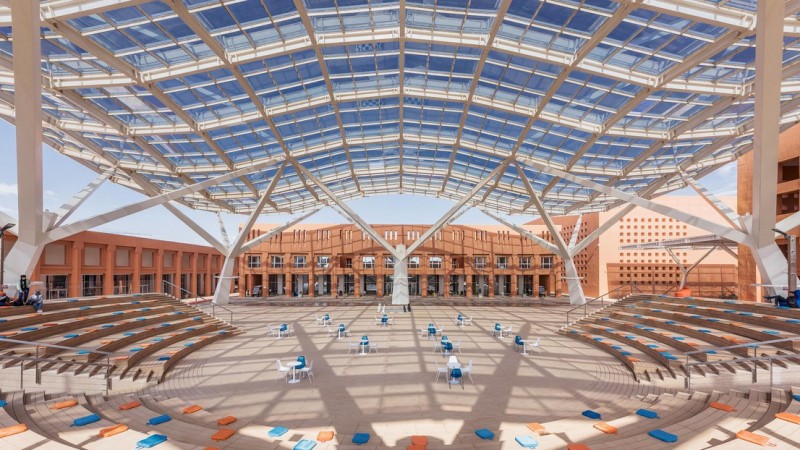
Morocco’s Mohammed VI Polytechnic University (UM6P) has been recognized as a “Climate Hero” by the Youth Constituency of the United Nations Framework Convention on Climate Change (YOUNGO).
The recognition was announced at the UN Youth Conference on Climate Change (COY16).
UM6P is one of two institutions in the world that have obtained the recognition of Climate Hero, the Sustainable Development Department of UM6P said in a statement, noting that it “dedicates this appointment to all Moroccans and foreign residents in Morocco.”
“UM6P Youth Statement” was the only statement letter representing the vision of young people in the Kingdom of Morocco during COY16 in Glasgow, Scotland, UK.
The declaration, which was elaborated by youth representatives from the UM6Pand the local region of Rehamna, featured six themes: climate change, clean energy, sustainable cities and communities, ecomobility, social inclusion, and gender equality.
source/content : moroccoworldnews.com
__________
Morocco’s UM6P Awarded “Climate Hero” at UN Youth Conference
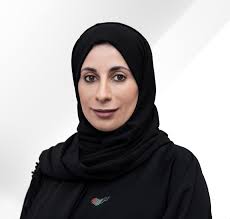
AbuDhabi Public Health Centre, the region’s first dedicated centre protecting the physical, mental and social wellbeing of Abu Dhabi’s population by raising public and preventative healthcare awareness, is pleased to announce that H.E. Dr Farida Al Hosani, Infectious Disease Expert and Executive Director of Infectious Diseases and Official Spokesperson for the United Arab Emirates (UAE) Health Sector, has joined the World Health Organisation’s (WHO) Pandemic Influenza Preparedness Framework (PIP Framework) Advisory Group as a Member for the period 2022-2024.
Members of the Advisory Group are appointed by the Director-General of the World Health Organisation and serve, in their personal, expert capacity, for a period of three years. The key goal of the framework is to improve and strengthen the sharing of information about influenza viruses with human pandemic potential, and to increase the access to vaccines and other pandemic related supplies for developing countries.
The PIP Framework is focused on the sharing of information around influenza viruses and promoting the access to vaccines and other benefits. It was adopted in May 2011 by the 64th World Health Assembly which comprises 18 members drawn from three Member States in each WHO Region.
The state-of-the-art wind turbine in Morocco’s Oualidia is expected to generate an annual average of 2.500 MW/h, reducing CO2 emissions by 2.500 tonnes every year.
The 144-meter tall structure, part of the InnoVent’s Oualidia wind farm, provides a milestone thanks to high production capacity and cost-efficiency.
Construction work for the turbine began in 2019 following a deal between Morocco’s government and Spanish renewable energy company Nabrawind Technologies.
The installation is the first “self-erecting turbine” for Nabrawind Technologies.
Aside from breaking the continental height record for turbines, the Nabralift tower is special on grounds of the innovative construction method. The company used an innovative self-erecting system to construct the tower, without the need for conventional large-size cranes.
Built in collaboration with French developer InnoVent, the turbine additionally breaks the record for the tallest turbine constructed with a self-erecting system.
The innovative construction model was also cost-optimal as the tower only needed 80 square-cubic meters of concrete for its foundation, down from 500 square-cubic meters necessary for structures of such height, lowering cost by 60%.
The Fiber Connect Council MENA has announced the appointment of Eng. Ahmed Mekky, Chairman and CEO of Benya Group, as Chairman of the council for a two-year term, succeeding Mr. Juan Colina. His appointment for this esteemed role, marks the first time an Egyptian assumes this position.
Eng. Mekky has been involved with the council in his capacity as a member of the Board of Directors since 2011, and was nominated for his role as Chairman of the council, in light of his endless contributions to the ICT industry on a global level and particularly for his extensive experience in the field of optical fibers.
Benya Cables, a subsidiary of Benya Group, began with ambitious plans to build the region’s largest optical fiber factory, and is now months away from materializing that reality.
Fiber Connect Council MENA has a mandate to exponentially increase the deployment of high-speed fiber networks, to connect consumers, businesses, governments and organizations, with the products and services needed to enhance quality of life, make a sustainable impact on the environment, boost business competition and develop apps to ultimately transform the way people live and businesses operate.
The Council’s Board of Directors is comprised of a notable cohort of member organizations such as Corning, Prysmian MEFC, OFS, Etisalat, and Oman Broadband. The board was formed in 2011 as an initiative launched by the founding members, and since inception, now boasts a member and partner count over 50 prominent industry leaders.
Kholoud Al-Dergham, Director General of Fiber Optic Connect Council MENA, welcomed the appointment of Eng. Ahmed Mekky as the Council’s new Chairman, highlighting “his expert record and experience in this field as invaluable assets to the Council, as well as a unique opportunity to invest that kind of experience, to accomplish the council’s objectives to expand the use of fiber optics”.
Eng. Ahmed Mekky is one of the most influential and prominent leaders in the ICT sector. In 2017, he founded Benya Group, formerly known as “Fiber Misr Systems,” and its affiliates with the goal of accelerating the Middle East and Africa’s digital transformation.
Prior to that, he launched Gulf Bridge International (GBI) in 2008 to build and operate the first underwater cable network, stretching over 40,000 kilometers and connecting 25 nations.
In 2011, he was appointed to the SAMENA Council’s Telecommunications Committee, and was selected on the Board of Governors (PTC).
Eng. Mekky has received various honors in recent years, including the “Telecom Review” award for best CEO in the area of enterprises offering services in telecom infrastructure for three consecutive years (2019, 2020 and 2021)
The first Egyptian aviator set out to fly from Berlin to Cairo on 25 January 1930 and arrived one day later on 26 January, now celebrated as Egypt’s National Civil Aviation Day.
Mohamed Sedki the Egyptian pilot who took off from Berlin, and went from one place to Europe with another plane until he arrived in Cairo on January 26, 1930 / pix: egyptian-gazette.com
One of the most intriguing chapters in Egyptian history records early attempts by the country’s aviators to fly solo from Mohamed Sedki the Egyptian pilot who took off from Berlin, and went from one place to Europe with another plane until he arrived in Cairo on January 26, 1930Europe to Egypt, with 26 January, Egypt’s National Civil Aviation Day, marking the first successful flight of Egyptian pilot Mohamed Sedki from Berlin to Cairo in 1930.
Sedki’s success and earlier attempts earned the support of former king Fouad, always interested in supporting exploration and discoveries whether in the air or on land. But how much do we know today about these attempts and of the Egyptian pioneers who courageously flew these planes, sometimes risking their lives?
The successful attempt by Sedki in January 1930 to fly from Europe to Egypt was preceded by other unforgettable attempts.
There were those by Ahmed Hassanein Pasha, a legendary figure in the history of aviation. Better known for his exploration of the Western Desert, he was one of the most powerful men in various governments under king Fouad and king Farouk and an adventurer at heart, attempting to fly from Europe to Egypt several times before 1930.
His wish was to fly from Egypt to London in a small plane across the Mediterranean. On his first attempt, he succeeded in flying over the Mediterranean, but a few hours later his plane crashed in southern France and was destroyed. However, Hassanein survived to continue to pursue his obsession, and he bought another small plane to fly again.
This time, the plane fell in Switzerland, but Hassanein once again escaped death and decided to buy a third plane and try again. On his third attempt, the plane fell in Italy, and Hassanein was so seriously injured that the Italian doctors that rescued him considered he had died. But according to the story told in celebrated journalist Mustafa Amin’s book Unforgotten Figures, Hassanein recalled the words of Egyptian poet laureate Ahmed Shawki and described himself as a layth or lion.
He started repeating the words “courage lion” to himself at the hospital in an attempt to defeat death. The words seemed to work magic, and he surprised his doctors with a speedy recovery despite his condition.
Whether true or not, the story speaks of Hassanein’s unrelenting spirit. Rather than give up on further attempts at flying after his near death, Hassanein made a fourth endeavour to fly to Europe. A few days after leaving the hospital, he bought a fourth plane. But half an hour before flying, one of the technicians boarded the plane to do a final check, and five minutes later the plane turned into a ball of fire, with Hassanein watching in disbelief.
This was the fourth and last attempt that sealed Hassanein’s flying adventures and put an end to his aspirations.
The Egyptian Eagle
Hassanein’s plane was named Faiza after one of king Fouad’s daughters, also the name of the first plane that successfully crossed the Mediterranean to land in Egypt in 1930 piloted by “Egyptian Eagle” Mohamed Sedki.
The plane Sedki flew was a small one-seater that weighed 250 kg and had a 40 horsepower engine. Sedki used it to fly from Berlin to Alexandria, where he landed at the Abu Kir airport on 25 January. He had started his epic flight across Europe on 12 January, passing through the former Czechoslovakia, the former Yugoslavia, and Italy all the way to Egypt in unfavourable weather. Governor of Alexandria Hassan Sabry Pasha welcomed him at the Airport, before he flew again to Heliopolis Airport in Cairo, arriving on 26 January.
Sedki’s successful flight caused a sensation at the time, as thousands of people cheered him on at Heliopolis Airport, where a model plane made of flowers awaited him. Captain Goldsmith, in charge of the Abu Kir Airport at the time, exclaimed that Sedki’s was the smallest airplane he had ever set his eyes on. In Cairo, Sedki’s feat was celebrated at a formal ceremony that included representatives of king Fouad, such as Yehia Pasha, as well as prince Abbas Halim, prime minister Mustafa Al-Nahhas Pasha, minister of transport Mahmoud Al-Nokrashi, and the delegated German minister.
Kamal Elwi, another Egyptian pilot who had learned to fly before Sedki and whose private plane was the first registered plane in Egypt, was also present during the ceremony. It was graced by the presence of poet laureate Ahmed Shawki, the same poet who had earlier called Hassanein the lion. Sedki, Shawki said, was like a young Egyptian leader coming back from battle crowned with victory, adding that he saw in Sedki’s face the lines of a true ancient Egyptian, with this being the secret behind his courage.
His words chimed with the rising sense of Egyptian nationalism and pride in Egypt’s roots at a time of British colonisation, a pride that manifested itself in the literary sphere with works dedicated to Egypt’s past like Shawki’s own magnificent play The Death of Cleopatra.
The royal reception Sedki received was complemented by king Fouad’s awarding him the Gold Medal of Excellence and a gift of LE1,000 for his services to the nation. His successful flight also resulted in the establishment of the first club for Egyptian aviation in Cairo, which held another celebration for Sedki as Egypt’s first international pilot on 29 January 1930. Sedki was awarded a share in the club to the value of LE50.
Together with Kamal Elwy, and Talaat Harb, founder of the first Egyptian bank, Sedki called for the establishment of EgyptAir, Egypt’s first airline company. His success was considered a national feat at a time when the British were reluctant to allow Egypt to enter the field of aviation, since Britain had its own airline company operating in Egypt and did not want the competition.
One obstacle that Sedki encountered when trying to realise his dream was obtaining the approval of the British to fly to Egypt from abroad, an approval that he only obtained after long weeks of anticipation. Harb said during the celebration that before Sedki’s success, Egypt had been deprived of having its own pilots and its own national airports, but now that Sedki had debunked British claims that the Egyptians were unable to act as pilots, there was hope that they could be equal to other nations in the field of aviation.
A series of domestic flights followed Sedki’s international flight as he flew to Upper Egypt, first to Luxor and then to Aswan before flying back to Luxor. From there, he flew to Minya and Assiut on 27 March. Yet, for all this, Sedki did not stay in the limelight for long, and on 27 June that same year he flew back to Germany, claiming that the government in Egypt had not given him the proper appreciation, offering him a minor post with a meagre salary and barely enough to look after his plane.
He rejected the job offer and left Egypt from Heliopolis Airport, the same one where he had received a hearty welcome on his successful arrival earlier the same year.
Graduate Number 34
Al-Nadi /pix: english.ahram.org.eg
Between Sedki’s solo flight in 1930 and 1933, 33 male pilots graduated from Egypt’s School of Aviation. But graduate number 34 was certainly different, as this time the graduate was Lotfia Al-Nadi, the first Egyptian and African woman aviator to earn a pilot’s licence after US pilot Amelia Earhart with whom she exchanged letters.
In a later interview explaining her decision to train as a pilot, Al-Nady said that “I was young, eager to learn things and to accomplish something, but there were few directions that I could pursue. I read about a programme for flying that was being established,” and this was invitation enough for her to join. She was 26 when she flew her first plane from Alexandria to Cairo after training for just 67 days.
However, Al-Nadi’s career as a pilot was not an easy one. She had a reluctant mother and an initially unsupportive father, and she had to find a way to afford her flying lessons and to take them secretly. Kamal Elwy, the then director of EgyptAir, offered her a job as a telephone operator and secretary with the company, and Al-Nadi used her salary to pay for flying classes. Her secret was later revealed when her father saw a picture of her in the international press.
She was finally able to appease her father and earn his support when she took him as her first passenger on a ride above Cairo and around the Pyramids. “I took my father for a flight,” she later said. “At first, he sat stiffly, but then I noticed that his head was swiveling to the right and left. I asked him about it after we landed, and he told me he had been frightened, but then he had decided that he was in the hands of his daughter. He knew that if we crashed, we would crash together, so he relaxed and began to enjoy the flight.”
Al-Nadi’s singular career was undertaken at a moment that overlapped with the fight for women’s rights in Egypt and for women’s rights to education. Not surprisingly, Hoda Shaarawi, the famous Egyptian feminist leader of the time, honoured Al-Nadi and held a fundraising drive for her so that she could buy a plane of her own.
Among her adventures, Al-Nadi recalls how on one occasion her engine failed and she had to land in the desert where she was helped by Bedouin and given a bony mule to ride on her way back to Cairo. “I often laughed that the mule was more dependable than my Moth airplane,” she said.
Sadly, Al-Nadi’s remarkable aviation career ended abruptly in the early 1950s when she had a tragic accident while landing that left her with a broken spine. She left Egypt for Switzerland for a long period of treatment, remaining in the country for many years. Eventually, she was awarded Swiss nationality.
In 1989, Al-Nady was given the Order of Merit, the highest distinction of the Egyptian Aerospace Education Organisation. She returned to Egypt permanently, dying in the country in 2002 at the age of 95. Today, she is considered to have opened the way for other women pilots, among them Linda Masoud, the first female pilot coach, and Aziza Moharram, the first female director of the Aviation Academy, not to mention other pilots like Dina Al-Sawy, Hasnaa Taymour, and Heba Darwish.
Less well known than Al-Nadi, yet equally important to the history of Egyptian aviation is Esmat Ahmed Fouad, another woman who learnt to fly but did not obtain a pilot’s license.
Esmat’s story remains inspiring because she joined the School of Aviation and was flying at the age of just 14. Her two sisters, Kadreya and Aisha, followed suit and also learnt to fly. But the three sisters could not obtain pilot’s licenses as they were under the age of 17. They did not pursue flying careers, which is why in his book Civil Aviation in Egypt author Abdel-Latif Al-Sabbagh considers Al-Nadi to be the real pioneer of Egypt’s women aviators.
EgyptAir
The stories of individual endeavours to fly solo internationally interweave with the story of commercial flights in Egypt and the attempt to establish the national airline Egypt Air.
In 1924, the Ministry of Transportation formed a committee to launch commercial flights in Egypt, and this suggested the establishment of the Egyptian Civil Aviation Authority (ECAA), whose mission would be to oversee air navigation and the country’s newly established airports. The project was highly acclaimed at the time, as it was needed to organise the arrival and departure of international planes. It was planned to establish the ECAA within five years.
In the same year, a group of Egyptian businessmen headed by Hassan Anis Pasha started to establish a company for commercial flights in Egypt. After much searching for the right types of plane, they recommended one made entirely of metal with three engines and the capacity to carry 12 passengers and two tons of merchandise. This project signalled the establishment of EgyptAir, Egypt’s national airline. In 1927, the government established the ECAA, and between 1927 and 1929 it sent three missions to train abroad.
EgyptAir was not formally established until 1931, when, thanks to the Egyptian young people who had received their training abroad, the idea of civil aviation eventually saw a revival after years of stagnation. Almaza Airport, the country’s first, was established in the same year — the earlier Heliopolis Airport mainly served the British air force, and other flights were not allowed to use it.
The history of civil aviation in Egypt is an inspiring one, a story of persistence, hope, and freedom for a whole country to have the right to fly. Stories of Egypt’s early aviators cannot fail to make future flights with EgyptAir more meaningful, and they deserve to be commemorated in a national museum dedicated to civil aviation, something which at present does not exist.
It is perhaps high time we thought of establishing such a museum in order to remind ourselves of the meaning of National Civil Aviation Day and to keep the day alive.
*A version of this article appears in print in the 3 February, 2022 edition of Al-Ahram Weekly.