Arabs & Arabian Records Aggregator. Chronicler. Milestones of the 25 Countries of the Arabic Speaking World (official / co-official). AGCC. MENA. Global. Ist's to Top 10's. Records. Read & Enjoy./ www.arabianrecords.org
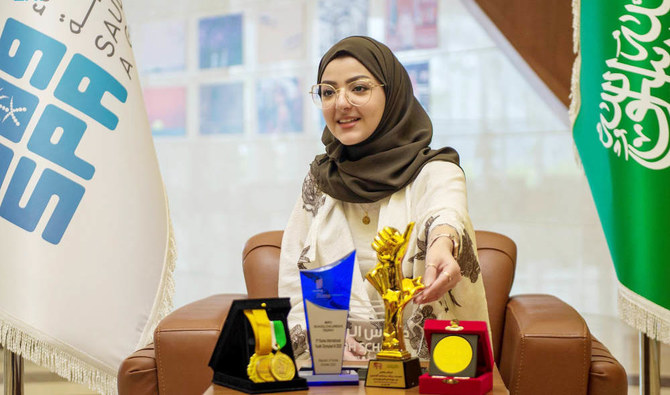
A Saudi medical student has won a string of an international awards for an invention that opens up a new world for hearing impaired or deaf drivers by dramatically improving their safety behind the wheel.
Renad bint Musaed Al-Hussein, a student at the College of Medicine at King Saud University, developed special sensors that operate as soon as they detect sounds outside the vehicle.
Sound frequencies are sent to a device inside the car, which then identifies and displays a description, image and color of the sound source visually, alerting the driver to any possible risk.
Her innovation has won several global awards and medals, including best invention at the World Intellectual Property Organization Cup and a gold award in the international invention competition as part of the Korea International Youth Olympiad.
The awards honor outstanding inventors, creators and innovative firms from around the world.
Al-Hussein said that her invention will reduce the risks facing hearing impaired drivers and may also help to save lives.
“One of the things that prompted me to come up with this invention is that some countries prevent hearing impaired or deaf people from driving because they are unable to hear important sounds. This invention will contribute to reducing the risks they face,” she said.
The Saudi inventor said that her invention could allow more than 466 million deaf people worldwide to drive, while also improving road safety by protecting their lives and the lives of others.
source/content: arabnews.com (edited)
_____________
Renad Al-Hussein said that her invention will improve road safety by protecting the lives of deaf drivers. (SPA)
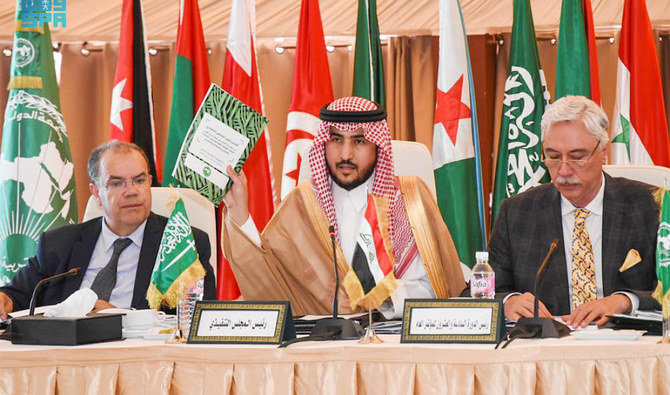
Saudi Arabia has been unanimously re-elected to chair the executive council of the Tunis-based Arab League Educational, Cultural and Scientific Organization until 2024.
The decision was made by members of ALECSO’s executive council after the 26th session of the general conference, which concluded its activities.
Council members expressed their appreciation for the positive results achieved and the complementary work of the executive council during the past 10 months.
The Arab ministers praised the initiative of the Saudi representative and chairman of ALECSO’s executive council, Hani Al-Moqbil, to develop the council’s road map, which was put together with a transparent methodology based on the involvement of countries in building a common Arab vision to support and enable the organization to achieve its goals.
Al-Moqbil extended his appreciation to King Salman and Crown Prince Mohammed bin Salman for their constant support, empowerment, and care, which was reflected in the Saudi role and its presidency of the executive council to contribute to a beneficial impact and supportive action for the development of ALECSO.
He also thanked Culture Minister Prince Badr bin Abdullah bin Farhan, who is also the chairman of the National Committee for Education, Culture, and Science, for his support, guidance, supervision, and harnessing of capabilities which gave direct and significant support throughout the Saudi presidency which helped it in serving its goals with all Arab countries.
Al-Moqbil also thanked the Arab countries and members of the ALECSO executive council for their re-election of the Kingdom and for renewing their confidence in the results that had been achieved during the past 10 months.
Al-Moqbil said: “Saudi Arabia, in its presidency of the executive council, worked to oversee the interests of the countries by listening to their proposals, observations, and visions to ensure that they are reflected on the ground and implemented in stages. The countries will work with greater effort and higher interest in taking care of the organization’s interests.”
source/content: arabnews.com (edited)
___________
The decision to re-elect the Kingdom came after the appreciation of the general conference for the efforts made by the executive council under the Kingdom’s stewardship. (SPA)
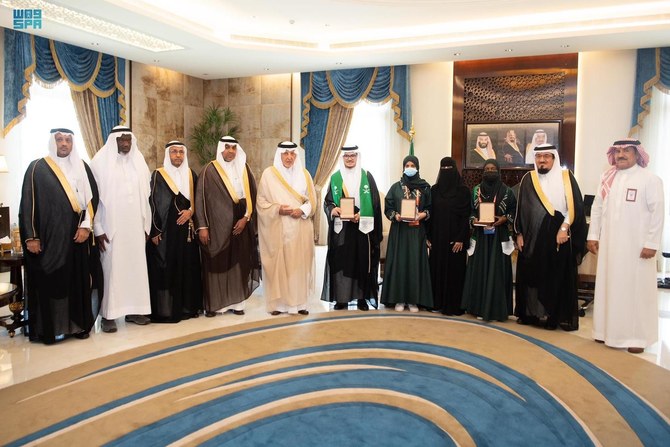
The Governor of Makkah region, Prince Khalid Al-Faisal, has honored successful students from Makkah and Jeddah who attended a science fair in the US earlier this month.
Prince Khalid congratulated three winning students who took prizes at the Regeneron International Science and Engineering Fair (ISEF), which was held from May 7 to 13.
Student Mawaddah Omar, hailing from Makkah, won third place in social and behavioral sciences, Youssef Khoja, from Jeddah, won a special award in embedded systems, and Rafaa Qanash won fourth place in engineering technologies.
The Saudi Embassy in the US tweeted: “Congratulations to our young #Saudi scientists Represented by @mawhiba and @tc_mohe, the student delegation won 6 awards at #ISEF2022, the second time this record is achieved in the Kingdom’s 16th year of participation.”
This year’s ISEF exhibition attracted more than 2,000 students from public education systems in over 85 countries.
The Saudi Center for International Communication tweeted: “Saudi students made history with an impressive success at the Regeneron International Scientific and Engineering Fair 2022 in Georgia, #USA. KSA has won 22 major awards, meaning 62 percent of the total number of prizes. #ISEF_2022.”
Saudi students have won 83 prizes at ISEF events, including 53 major prizes and 30 special prizes. Mawhiba also presented special annual international prizes in the competition for students from 20 countries.
source/content: arabnews.com (edited)
___________
Students Mawaddah Omar, Youssef Khoja, and Rafaa Qanash were honored by Prince Khalid Al-Faisal. (SPA)
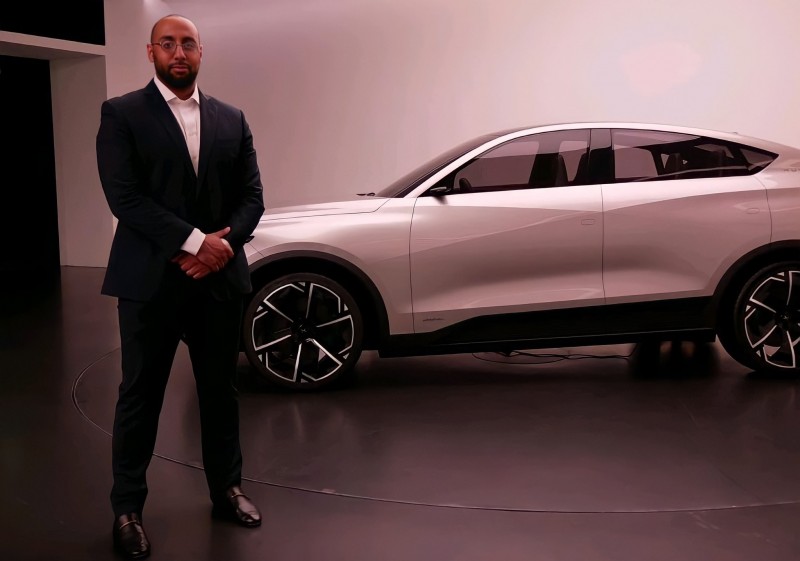
NamX’s prototype was unveiled earlier this week. Yet the car will not be available in the market until 2025.
Morocco-French businessman Faouzi Annajah, founder of NamX, has co-created the world’s first car partially powered by a patented removable hydrogen tank system.
NamX’s patented technology consists of a fixed hydrogen tank and six removable capsules.
Set to be released in 2025, NamX responds to the rising demand for hydrogen and hybrid cars amid an increasingly prevailing shift towards clean energy sources and decarbonization worldwide.
“Our double ambition is to become a new reference in the world of zero-emission cars, and to constantly explore new territories to facilitate mobility of our consumers,” Faouzi ANNAJAH, Founder and President of NAMX said in a press release. “ NAMX is a collective project built with the best industrial and technical partners in Europe and Africa.”
The European-African project gathered the support of renowned stakeholders on both continents including Ibrahima Sissoko, founder of over 30 companies, Pierre-Yves Geels, former VP strategy of Matra automotive, Alain Diboine, former Director of the R&D Division at Renault, Mustapha Mokass, clean energy and carbon finance expert, and Raphaël Schoetgen, former Chairman of Hydrogen Europe and international hydrogen expert.
NamX was co-designed by Thomas de Lussac, co-founder of NamX, and Kevin Rice, Chief Creative Officer of Italian car design firm Pininfarina. Inspired by science fiction and American designs of the 50s and 60s, Lussac “chose to give the vehicle’s shape the cutting edge of the coming era.”
NamX is the first car designed by Pininfarina that was created from the back to the front with an eye-catching feature, an X-shaped chassis.
Commenting on the hydrogen SUV, Paolo Pininfarina, President of the Italian design firm, said that “the NAMX HUV [hybrid utility vehicle] is simply at the heart of our DNA: inventing the best driving experience to infinite mobility, with style.”
Upon its release in the final quarter of 2025, NamX will be marketed in two different versions including an entry-level rear-wheel drive with a regulated top speed of 200 km/h and acceleration from 0 to 100 km/h in 6.5 seconds. The second option provides a four-wheel drive with a regulated top speed of 250 km/h and acceleration from 0 to 100 km/h in 4.5 seconds.
The two versions will have a price tag ranging between €65,000 and €95,000.
The NamX prototype was first unveiled on May 11 in the Pininfarina headquarters in Cambiano. The public will have a glimpse of NamX at the upcoming Paris Motor Show scheduled between October 17 and 23, 2022.
As Annajah’s home country, Morocco might host the production operations of NamX, the founder told a Moroccan news outlet, promising future announcements on the matter.
As a leading African automotive hub, Morocco has attracted renowned international automotive manufacturers including ones interested in developing hybrid and electric cars.
source/content: moroccoworldnews.com
________
Faouzi Annajah: Moroccan-French Businessman Behind Hydrogen SUV NamX
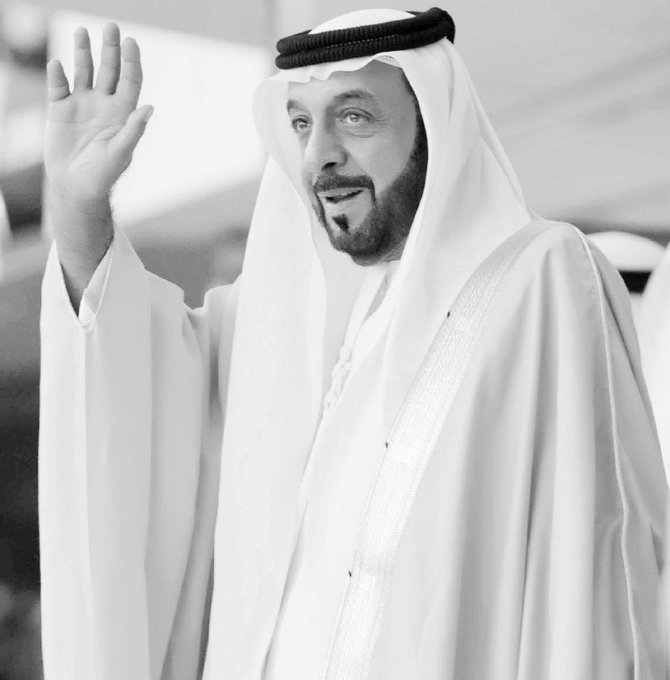
“While people are proud of their achievements, we are proud of being the children of Sheikh Zayed, and while people talk of their history, we speak of the history of giving that began with the formation of the UAE,” said the late His Highness Sheikh Khalifa bin Zayed Al Nahyan, epitomising the nations’s approach from the first day it was established to its phase of empowerment, ushering in the birth of a powerful and successful nation.
On 4th November, 2004, Sheikh Khalifa assumed power and, up until his passing, helped the country, whose track record of achievements spans nearly 35 years, progress from the foundation phase to the empowerment stage.
Over this short period, the UAE has topped international competitiveness indexes and has become the second-largest economy in the Arab region, despite its small area and population.
Moreover, the UAE is the first Arab and Islamic nation to reach the planet Mars and one among few countries with significant achievements in the space sector.
The UAE’s achievements during the empowerment phase are reflected on the lives of its people and business community, making it the dream destination of anyone seeking success, stability, and wellbeing.
After assuming power, the late Sheikh Khalifa launched the first strategic plan of the UAE Government to achieve balanced and sustainable development and ensure the wellbeing of UAE residents.
In 2009, he was re-elected as the President of the country, and thanks to his wise leadership, the UAE overcame the financial crises and political issues facing the region due to his active foreign policy, which also enhanced the regional and international stature of the country.
How did the UAE manage to accomplish significant achievements during the empowerment phase? The Emirates News Agency (WAM) monitors these milestones and challenges in the following report:
1. The Health Sector.
The UAE’s leadership has prioritised the health sector and increased public spending on the sector, amounting at times to seven percent of the federal budget.
This fact is highlighted by the spending on the sector in 2016, 2017, 2018, 2019 and 2020, which amounted to AED3.83 billion, AED4.2 billion, AED4.5 billion, AED4.4 billion and AED4.84 billion, respectively.
This policy also proved successful when the sector faced the coronavirus (COVID-19) pandemic, demonstrating a high level of efficiency supported by the many well-equipped public and private hospitals.
The sector’s efficiency was further supported by the country’s efforts to establish media cities, including Khalifa City in Abu Dhabi, Dubai Medical City and Sharjah City.
Coinciding with these achievements, most Emirati hospitals are internationally accredited, and the country has become a leading medical destination, underpinned by the rising number of hospitals, which increased from 16 in 1975 to 169 in 2020.
These hospitals are managed by highly qualified medical staff, numbering 8,995 in 2020 in the government sector and 17,136 in the private sector, compared to 792 doctors in 1975.
The number of nurses also reached 56,045 working in the government sector in 2020, increasing 252 percent compared to 1975.
The country has prioritised health insurance and provided it to citizens for free, in addition to comprehensive medical coverage for all segments of society, especially the elderly and people of determination.
In 2017, the UAE established the first cancer treatment centre utilising proton technology in the Middle East and Gulf Cooperation Council (GCC) region.
The Emirates was also one of the first countries to use robotics in the pharmaceutical sector.
Smart rooms were established to provide entertainment services to patients and link their medical files with hospitals to provide comprehensive and effective care.
The Ministry of Health and Prevention has been keen to integrate artificial intelligence (AI) in medical services, used in over 100 facilities nationwide.
The UAE ranks first in the world in the number of accredited facilities, and more than 85 percent of Emirati hospitals have international accreditation.
2. Education Sector.
The UAE’s spending on the health and education sectors underscores the leadership’s belief in the importance of these two sectors to achieving sustainable development, with spending from 2016 to 2020 accounting for between 20 percent and 22 percent respectively of the federal budget.
With the budget allocated to the national education sector standing at AED10.41 billion, AED10.46 billion, AED10.40 billion, AED10.2 billion and AED6.536 billion for 2016, 2017, 2018, 2019 and 2020, respectively, the average share of the federal budget is 15 percent.
The UAE believes that the education system is the driver of development and ensures the right to free education for all citizens. From 2012, education became mandatory for everyone over the age of six until secondary education, which was reinforced by issuing the Children’s Rights Law (Wadeema).
The UAE’s education strategy confirms the establishment of an educational system based on the skills of the 21st century. It aims to provide higher education that can compete with the world’s best universities.
The Mohammed bin Rashid Smart Learning Initiative, launched in 2012, is an ideal model covering all schools in the country and creates a new educational environment in schools that includes smart classes.
In 1973, the country had 110 schools with 40,000 students, while in 2007, the percentage of educated citizens reached 88.7 percent of the population.
The UAE Vision 2021 highlighted the need to advance education in the country to the highest in the world and adopt a smart system as a primary goal.
The vision also confirmed that the upcoming years would witness comprehensive transformations in learning and education, led by smart education.
The national education strategy aims to ensure equal education, maintain the quality and efficiency of institutional education, promote scientific research, encourage students to enrol in higher education, achieve innovation, and support smart education.
Subsequently, the National Strategy for Higher Education 2030 affirms the importance of improving the scientific and technical skills of students, to support the growth of the economy.
At the same time, the UAE has kept pace with the latest innovations in the health sector. The government has launched many initiatives that encourage innovation in general and innovation in the medical field in particular.
The UAE is one of the few countries that utilises medical robotics technology when conducting major surgeries.
President Khalifa bin Zayed passed away on Friday, May 13th, 2022
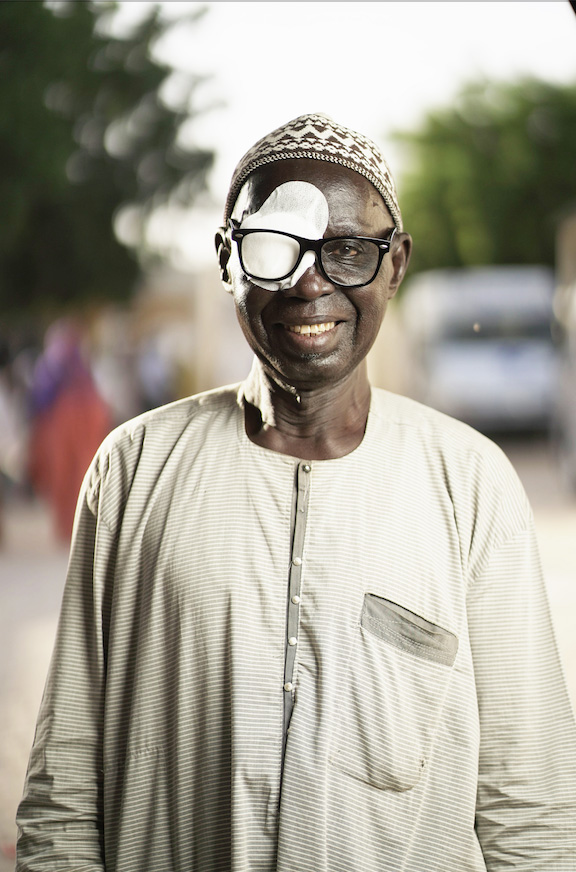
Noor Dubai Foundation, one of the Mohammed bin Rashid Al Maktoum Global Initiatives, succeeded in benefitting 33 million people around the world, through its treatment, preventive and awareness programmes specialised in the prevention of blindness.
This was reported during the Mohammed bin Rashid Al Maktoum Global Initiatives Foundation Annual Meeting , in which an inspiring patient story was shared also documenting Noor Dubai’s journey since its launch in 2008.
Sheikh Mohammed bin Rashid Al Maktoum , Vice President, Prime Minister and Ruler of Dubai, tweeted on his personal account yesterday expressing his pride in that 145,000 volunteers joined the initiatives in 2021, while H.H. also tweeted, “proud of Noor Dubai which reached 33 million beneficiaries.”
Since its launch as an initiative by His Highness Sheikh Mohammed bin Rashid Al Maktoum in 2008, Noor Dubai has contributed to treating those in need in 22 countries around the world, supporting humanitarian efforts and the prosperity of communities. After the success of the initiative in its first year, H.H. launched Noor Dubai as a Foundation in 2010.
Despite the progress achieved by Noor Dubai and other institutions in this field, there is still a need to provide eye care services to those in need. According to the statistics published by World Health Organisation, 295 million people worldwide suffer from visual impairment, 80% of them can be treated or prevented from developing visual impairment and 90% of people with visual impairment reside in developing countries.
Despite the challenges faced by the world, especially the humanitarian sector, due to the spread of the Covid-19 pandemic globally, Noor Dubai was able to overcome all challenges within a year and exceed its targeted beneficiaries to reach 33 million beneficiaries in a short period of time.
Noor Dubai Foundation’s programmes focus on supporting the acceleration of the UN sustainable development goals No. 1, 3, 4, 5, 17 by developing programs and strategies for eye health in Africa and Asia that aim to empower the local community to control the disease, which will have a positive impact on the economic development of the countries where the treatment has taken place.
At a national level, the Foundation provides free eye screenings and consultations to the UAE community through the Mobile Eye Clinic program, which has benefited 30,050 patients since its launch of the program in 2014.
The campaigns mostly focus on public transport drivers, community schools, and labour accommodations to ensure that eye examination services are accessible to all members of the community.
The Foundation also provides treatment to UAE residents who suffer from eye critical diseases through the UAE treatment programme, which has succeeded in providing treatment to 245 patients since its launch in 2016.
Globally, Noor Dubai Foundation organises Mobile Eye Camps in remote areas of Asia and Africa, where the absence of healthcare infrastructure and health resources in these remote areas in addition to the extreme poverty make it challenging for patients to access the services required. 319,280 patients have benefitted from the programme through diagnostic and treatment services.
Noor Dubai Foundation also continues its journey in combating neglected tropical diseases through the Trachoma Eradication Programme in Northern Ethiopia. The Foundation succeeded in the elimination of trachoma as a public health problem in 29 percent of the Amhara region and treated 18 million people.
Trachoma is a leading cause of blindness worldwide, with more than 1.9 million people suffering from visual impairment as a result of complications from trachoma. As a member of the Neglected Tropical Disease NGO Network (NNN) and the International Coalition for Trachoma Control (ICTC), Noor Dubai Foundation is involved in policy-making to combat neglected tropical diseases that affect one billion people around the world.
In line with its strategic direction for comprehensive, long-term programs, in 2019 Noor Dubai launched an eye care program in the Katsina State of Nigeria, where all programme activities were integrated into the public health system including the development of local, human, material, and infrastructure capacities and resources.
The programme aims to improve the quality of life and socio-economic status of the residents of Katsina State and will contribute to reducing blindness and visual impairment in the state by at least 30 percent – 40 percent. To date, more than 24,000 patients have benefited from medical and diagnostic services and 7.5 million people have benefited from public health programs aimed to educate about diseases that lead to visual impairment.
In 2021, Noor Dubai launched a 5-year programme in partnership with the Fred Hollows Foundation, to reduce avoidable blindness through strengthening the eye healthcare system to deliver a more comprehensive and sustainable approach in addition to delivering gender-equitable and disability-inclusive eye care services in the Barishal division of Bangladesh.
The programme focuses on providing effective and affordable prevention, treatment and management of refractive error and diabetic retinopathy, the leading causes of blindness in Barishal.
This programme is expected to benefit 25,000 children, 50,000 adults, and raise awareness and educate nearly 4 million people in Barisal.
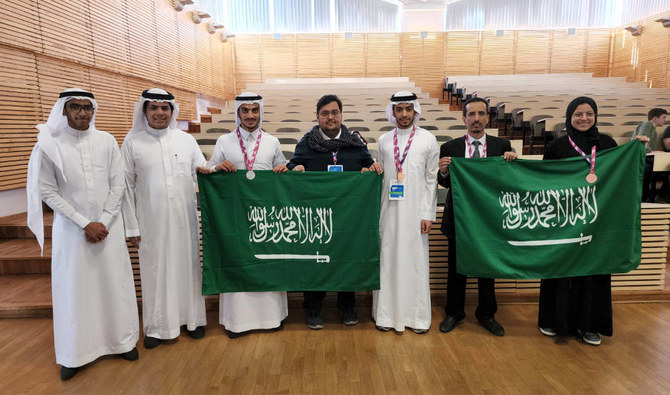
A Saudi team won three medals at an international physics Olympiad on Sunday.
Sadiq Al-Abbad from Riyadh won a silver medal, Jawad Al-Saif from the Eastern Province won a bronze medal, and Lama Al-Ahdal from Jeddah earned a bronze at the Nordic-Baltic Physics Olympiad held at Estonia’s Tallinn University of Technology.
The Olympiad was launched in 1992 with the participation of Estonia and Finland and was called the Estonia and Finland Physics Olympiad.
With Latvia joining in 2014 and Sweden joining in 2016, the name of the competition changed to the Nordic-Baltic Physics Olympiad.
Each main country participates with 20 competitors, while each guest country participates with a specified number.
This year’s Nordic-Baltic Physics Olympiad had four main and four guest countries participating.
The head of the Saudi delegation to the Nordic-Baltic Physics Olympiad, Talal Al-Rashidi, said the physics team had won three gold and silver medals in the GCC Olympiad that was held in March.
The team was participating in the European Physics Olympiad in May with five students and the Asian Physics Olympiad immediately afterward.
“Since 2010, we have achieved 472 medals in many international competitions in mathematics, physics, chemistry, biology, informatics, and sciences. Saudi Arabia is the first in the Arab world and the first third globally in various scientific disciplines.
source/content: arabnews.com (edited)
___________
This success is ‘an extension of the series of achievements in international competitions in which KSA participates.’ (Supplied)
Shining a light on bright innovations in Saudi Arabia’s power sector.
Normally, colored lights flashing around in different directions is something seen at a concert, not in an advanced engineering research lab in Dammam, Saudi Arabia.
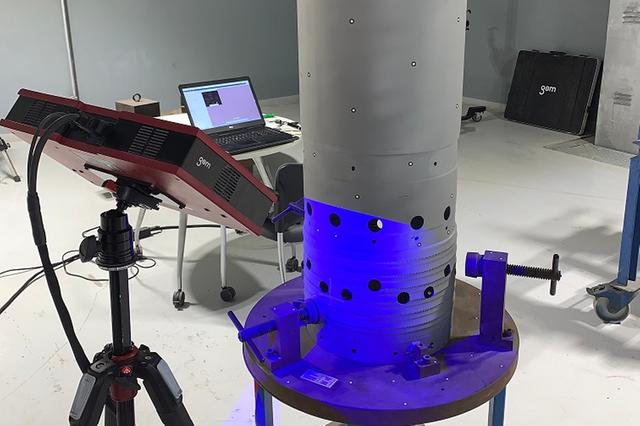
Yet, watching the lab’s automated blue-light scanner move around a gas turbine part taking digital images is definitely something to talk about for Kamel Tayebi and his team.
Kamel leads the advanced metrology engineering team at the GE Gas Power Hot & Harsh (H&H) Research & Development (R&D) Center of Excellence, located at the GE Manufacturing & Technology Center (GEMTEC) campus. The site includes one of the largest GE Gas Power turbine service centers in the world.
His team, which includes Saudi nationals, supports the repair center with new and innovative ways to assess the condition of gas turbine components in terms of fitness for use. Their other research work on blade vibration sensors helps to identify cracks or further weaknesses that must be corrected.
The Center’s digital blue-light scanner, mounted on a programmable robotic arm, is the only one in the Middle East and Africa.
The team has also been active in pushing the envelope of the application of manual scanners to initiate new ways of serving repair processes, notably for rotors and fixtures. This pioneering work was selected to be presented at the Advanced Manufacturing & Repair for Gas Turbines conference , one of the most prestigious international mechanical engineering conferences hosted by the American Society of Mechanical Engineers.
An example of the Saudi-based R&D team’s approach was to explore the benefits of mounting the scanner on the robotic arm.
The solution allows GEMTEC technicians to examine more parts faster, while still maintaining the impeccable reliability of the scanning results. This helps the facility reduce turnaround times, which in turn, can contribute to faster deliveries for outages at power plants.
A major contributor to this accomplishment is Badi AlQuzayz, a young Saudi engineer who has used this technology on thousands of turbine parts. Here, he is involved in projects not being done anywhere else,” Tayebi said.
Tayebi, who is Canadian, formed the nucleus of the team with two Saudi engineers – one with a graduate degree from the UK and another fresh graduate from King Saud University. A fourth researcher holds an engineering degree from India.
The Hot & Harsh R&D Center, which houses the advanced metrology research team, was established to address the extreme conditions experienced by gas turbines in regions such as the Middle East, Africa, and other parts of the world.
The work done by the metrology team and, more generally, by the Hot & Harsh R&D Center, supports key goals of Saudi Vision 2030, including fostering homegrown innovation, building Saudi workforce capabilities, and deepening the Kingdom’s industrial sector..
The Saudi Ministry of Education joined the international community in celebrating World Creativity and Innovation Day, which takes place on April 21 every year and was established by the United Nations “to raise awareness of the role of creativity and innovation in all aspects of human development.”
According to a report by the SPA, Saudi Arabia registered 1,871 patents between 2015 and 2021 — more than any other country in the Arab world. Eighty-one percent of those patents were registered in the US.
This, according to the SPA, “highlights the creativity and innovation of students, faculty members and researchers in Saudi universities.”
There are 47 centers for innovation and entrepreneurship in Saudi Arabia, and more than 135 centers of excellence and research, all of which have contributed to the country’s drive for innovation.
The Ministry of Education has announced that it is working on a set of initiatives to transform these patents into “investable projects to enhance society and bring about tangible developments for the benefit of the Kingdom,” the SPA reported.
Dubai Electricity and Water Authority (DEWA) continued its journey of excellence and global leadership during 2021 and strengthened its position as one of the most distinguished utilities in the world in all fields.
It has won 59 prestigious local, regional, and international awards, and set two world records in the Guinness World Records. In light of its new achievements, DEWA has accrued 383 awards (67 local, 67 regional, 249 global) since 2015 to the end of 2021.
One of DEWA’s most notable successes was achieving the Sheikh Khalifa Excellence Award (SKEA) in the Elite Category in 2021. DEWA scored 850 in the evaluation, the highest score in the Award’s history since its launch in 1999, with 200 local and regional organisations taking part in this round.
HH Sheikh Mohammed bin Rashid Al Maktoum, Vice President and Prime Minister of the UAE and Ruler of Dubai, honoured DEWA with five awards at the Dubai Government Excellence Program (DGEP) Awards in 2021. The most prominent award is the Elite Award, which is awarded to government entities that score 600 points or more.
Other awards include the Best Entity in the Emiratisation Field, Dubai Medal for Specialised Employee, Dubai Medal for Young Employee, and special recognition for the Unknown Soldier.
DEWA won the 2020 Hamdan Bin Mohammed Program for Government Services Flag for its Smart Living initiative.
During 2021, Guinness World Records recorded two world records by DEWA. Guinness World Records confirmed DEWA’s Jebel Ali Power Generation & Water Production Complex is the largest single-site natural gas power generation facility in the world. The Complex has an electricity generation capacity of 9,547 MW. The second record was for the first 3D-printed laboratory in the world. The record was awarded for DEWA’s Robotics & Drone laboratory, housed within the Research & Development (R&D) Centre at the Mohammed bin Rashid Al Maktoum Solar Park.
DEWA seeks to set two new records for the tallest solar tower in the world at 262.44 metres and the largest 700-megawatt Concentrated Solar Power (CSP) plant in the fourth phase of the Solar Park.
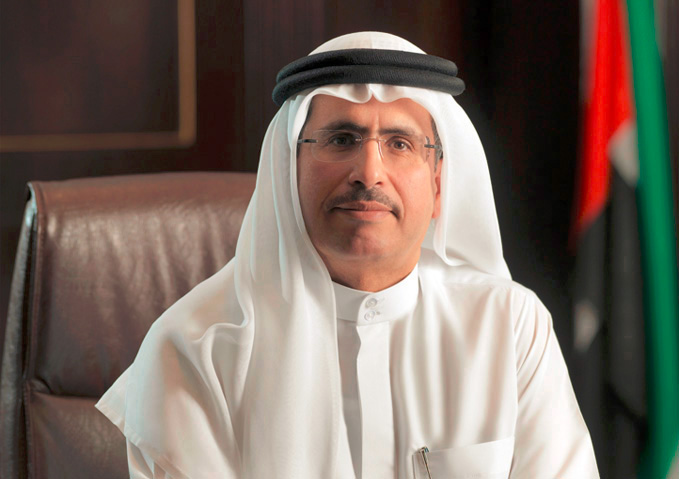
Lowest electricity and water network losses Saeed Mohammed Al Tayer, MD & CEO of DEWA, expressed his proud of DEWA’s achievements.
Al Tayer noted that the DEWA’s record of prestigious awards is a translation of its relentless efforts that aspire to reach the top rank in all fields, and support Dubai’s efforts to become the city of the future.