WORLD RECORD: SAUDI ARABIA: The Longest Calligraphic Mural in the World. Murals Beautify Makkah and Depict Saudi Heritage and Culture for pilgrims

The world’s longest calligraphic mural has been installed on the road leading to Makkah’s Grand Mosque, in the latest beautification of the holy city.

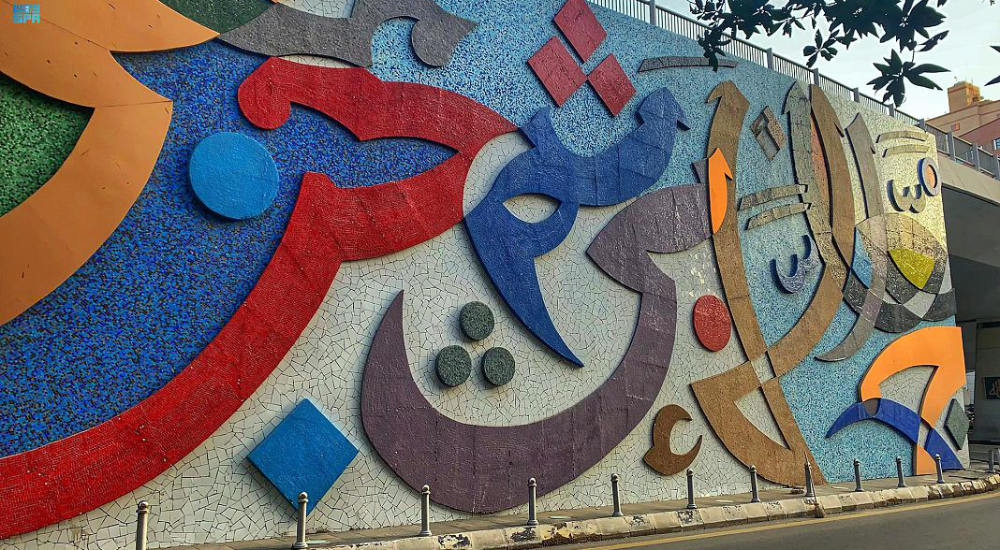
The 75-meter mural, designed by artist Amal Felemban, joins a host of sculptures and installations already adorning Makkah in a project run by local authorities to boost its visual appeal and depict Saudi heritage and culture for pilgrims.

Felemban told Arab News that it was important to retain and promote the ancient art of mural painting, as it portrays Saudi culture and aesthetics and links the old world with the modern.

“In the modern era, they brighten up streets and cover some of the ugliness of the gray buildings,” she said, adding that murals and sculptures reflected the true spirit of the city.

“My mural tells the story of the urban heritage in the holy capital, as it received a wonderful echo of this authentic Hijazi art, and it is different from the rest of the murals near large mosques,” she said.

HIGHLIGHTS

• The Municipality of Makkah installed the longest calligraphic mural in the world on King Abdul Aziz Street, the road that leads to the Grand Mosque.

• Artist Amal Felemban shared that murals are one of the oldest forms of art that can beautify the streets and show local culture and heritage to pilgrims and visitors.

“Mine are not letters or poetic verses, but were rather inspired by the authentic urban culture of this country.

“Many pilgrims do not have a sufficient knowledge about Saudi Arabia, nor about our culture and civilization, so we need to show it through arts, murals and sculptures.”

Felemban said that the municipalities in all Saudi regions must pay great attention to this form of art, which reflects Saudi culture and attracts more tourists.

“Millions of visitors from all over the world will flock to our beloved Kingdom, which requires us to show our heritage and culture properly.”

My mural tells the story of urban heritage in the holy capital.

Amal Felemban, Artist

Artist Badr Al-Sulaimani said that the murals and sculptures in the holy city bring joy and pleasure to the hearts of pilgrims from all over the world.

He added that they helped highlight many creative artists from inside and outside the Kingdom in various competitions and bring a historical dimension to contemporary art.

“This proves the importance of employing arts and creating an attractive artistic environment, using all the techniques that contribute to providing a cultural and artistic dose for passers-by,” Al-Sulaimani said.

The Municipality of Makkah organizes competitions for painting murals and drawing Arabic calligraphy, which it describes as one of the most significant written and visual arts which is associated with the Holy Quran.

A team from Umm Al-Qura University’s Department of Visual Arts is also participating in improving the city’s landscape.

source/content: arabnews.com (headline edited)

_____________

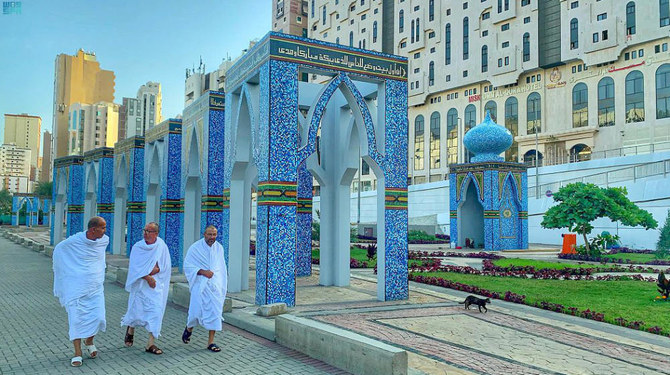
The beautification of Makkah continues with new murals adorning street walls on the way to the Grand Mosque. (SPA photos)
The murals feature Arabic calligraphy, a pillar of Islamic art. (SPA)

_________________

SAUDI ARABIA
ARAB SATELLITES: How Arab Countries like Bahrain, Kuwait and Oman Built their First Satellites

Miniature loads and rideshare missions on rockets have made space affordable.

It has been nearly 40 years since the first Arab satellite, ArabSat-1, was launched into space by a Saudi organisation.

The UAE and Egypt sent satellites — mainly communication ones such as Thuraya-1 and NileSat-101 — in the following years.

But other countries in the region carried out little space activity after that.

Rideshare missions, such as the ones SpaceX offers, and the increasing use of nanosatellites are now giving smaller Arab countries easier access to space.

In the past five years, countries like Bahrain, Kuwait and Jordan have launched satellites and Oman also built its first satellite but was destroyed during a Virgin Orbit launch attempt on Tuesday.

Nanosatellites are miniature satellites developed quickly and at a low cost compared to standard ones.

Rideshare missions allow for multiple nanosatellites to launch on one rocket, bringing down launch costs significantly.

Miniature satellites cost less than Dh2 million to develop and launch, while standard ones can be hundreds of millions of dirhams.

The nanosatellites these Arab countries have launched have mostly been CubeSats — modular satellites that can range from one to multiple units.

Bahrain

Bahrain’s first satellite was a joint project with the UAE Space Agency.

The Light-1 nanosatellite was launched on a SpaceX rocket on December 21, 2021, to study charged particles, known as terrestrial gamma ray flashes.

Students at New York University Abu Dhabi and Khalifa University built the nanosatellite. The team included nine Bahrainis and 14 Emiratis.

“Light-1 marks a milestone in our history as a successful step forward for our kingdom’s space efforts and paving the way for Bahrain’s space ambitions,” said Sheikh Nasser bin Hamad, commander of Bahrain’s Royal Guard and secretary general of the Supreme Defence Council, at the time of the launch.

Kuwait

Kuwait’s first satellite, a miniature one called QMR-KWT, was launched on June 30, 2021 on a SpaceX rocket to help students test software code.

It is unclear whether the nanosatellite, built by the OrbitalSpace company, is still operational.

KuwaitSat-1 was the second Kuwaiti satellite in space and was launched on January 4 on SpaceX Falcon 9.

It was built by students at Kuwait University to test if the on-board camera can be used for attitude determination and control.

Kuwait news agency Kuna said there are plans to develop KuwaitSat-2 for launch in three years.

Oman

Oman’s first satellite, the Aman CubeSat, was destroyed on a Virgin Orbit flight on Tuesday — the first orbital launch from UK soil.

The rocket failed to reach orbit after a take-off from an airport in Cornwall.

The Earth observation nanosatellite would have helped engineers test the possibility of a future satellite constellation.

Oman has ambitious space plans, including building a space research centre for simulation missions and science experiments.

Jordan

In 2018, Jordanian students also built and launched a CubeSat on a SpaceX rocket.

The JY1-Sat was Jordan’s first satellite and carried a video system on board.

However, it is unclear whether the technology is still operational.

UAE

Thuraya-1 was the first satellite launched by the UAE. It was a commercial satellite built by mobile satellite company Thuraya and developed by Boeing.

It was also the Middle East’s first telecoms satellite.

DubaiSat-1 was the first remote sensing satellite built by engineers at the Mohammed bin Rashid Space Centre and in South Korea in 2009.

The first locally-built satellite, however, did not launch until 2018.

Called KhalifaSat, the observation satellite was against built by space centre engineers.

It is a standard, small size satellite that has been sending back high-resolution images of the UAE and other parts of the world.

MBZ-Sat, an 800kg satellite, will be launched by the UAE later this year and is expected to be the region’s most powerful imaging satellite.

Striking image captured by the KhalifaSat satellite — in pictures

source/content: thenationalnews.com (headline edited)

__________

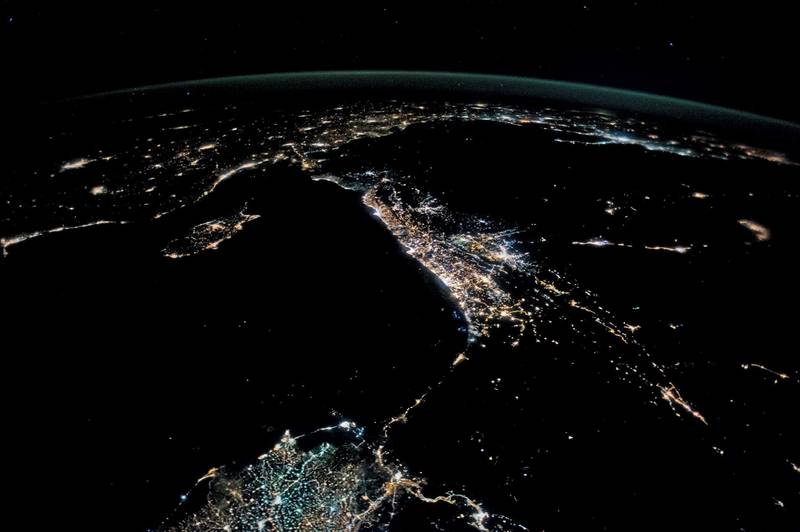
The Levant region captured from space

__________________________________________________________________________

BAHRAIN / JORDAN /KUWAIT / OMAN / UNITED ARAB EMIRATES (UAE)

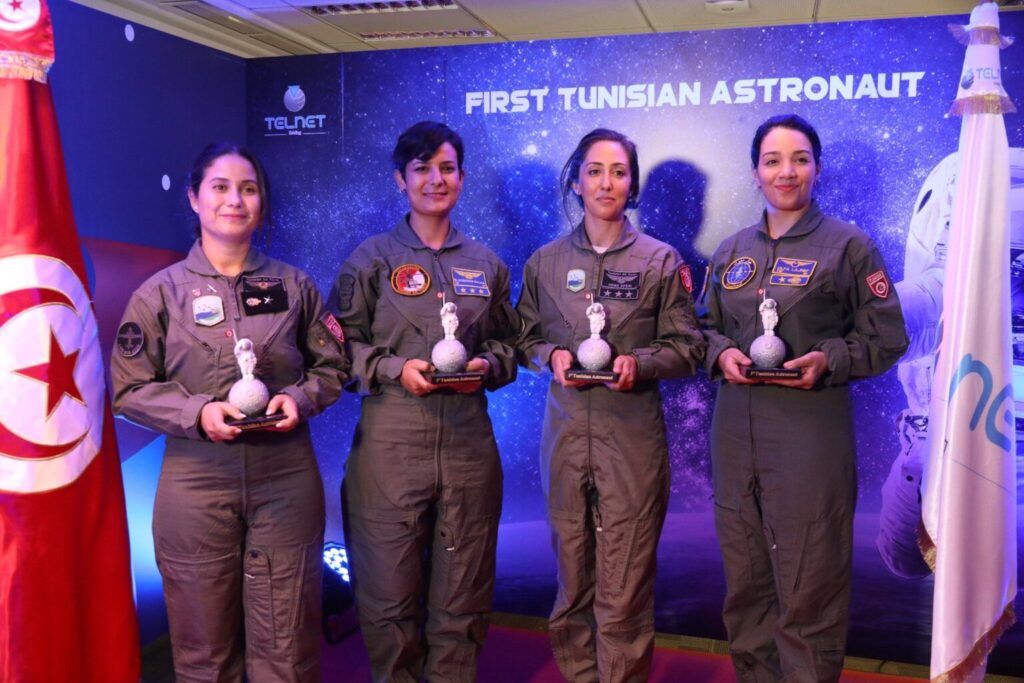
TUNISIA : 8 Women Selected for First Tunisian and African Female Astronaut Project

Eight Tunisian women have been selected as candidates for the first Tunisian and African female astronaut project. This selection came at Telnet’s Headquarters as Tunisia celebrated Women’s day. It is as a result of a partnership in August 2021 between Tunisia and Roscosmos to launch a Tunisian female citizen to the International Space Station (ISS) in the foreseeable future. As a result, according to Telnet’s Director-General, the ISS mission will be in 2024.

All the selected women are fighter pilots who graduated from the Borj Al-Amri Aviation School. Furthermore, they are Tunisian Air Force Corps members and have extensive experience in several challenging missions as a result. This is because the selection process requires strict conditions in terms of scientific, physiological and physical demands.

Among those names are: Hala Awassa, Ibtihal Youssef, Wafa El-Baldi-El-Yomna Dalali, Olfa Lajnef, Rahma Trabelsi, Hind Safferi and Malika Mabrouk.

During the unveiling, the current occupants of the ISS sent a message to the Tunisian candidates, expressing their support for the project and their expectations to welcome the first Tunisian astronaut in her upcoming mission. The female candidates also expressed their willingness to take up this historic challenge, raise the Tunisian national flag on the ISS and contribute to scientific advances in the service of humanity.

The candidates will subsequently undergo extensive physical and medical tests in Tunisia and abroad, from which two of the candidates will further travel to Russia. The candidates who travel to Russia will then undergo specific space-related training at one of the Russian Space agency’s training centres. This training will last for a year, after which will come the mission to the International Space Station.

Mohamed Frikha noted that all the candidates are the pride of the Tunisian woman and represent her in the best way. He added that their candidacy for this mission is a testament to their courage and willingness to honour the country and make history in a field as complicated as Space. Frikha also added that the astronauts will handle a scientific mission in Physics and Medicine and that the mission will contribute to the service of humanity. Finally, Frikha stated that the project received the support and encouragement of Tunisia at the highest level.

Tunisia is a party to and has ratified the Agreement on the Rescue of Astronauts, the Return of Astronauts and the Return of Objects Launched into Outer Space (Rescue and Return Agreement). The country is also a party to the Outer Space Treaty and the Liability Convention.

source/contents: africanews.space (headline & edited) / Joshua Faleti

___________

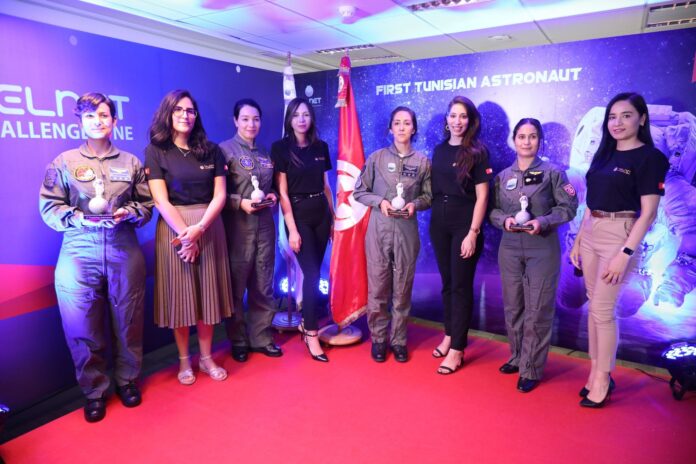
The candidates for the first Tunisia and Africa female Astronaut Project
Some of the Candidates for the Tunisia Astronaut Programme

___________

TUNISIA

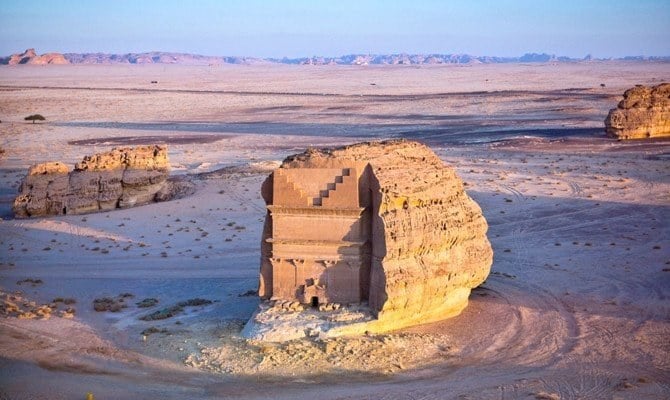
SAUDI ARABIA Elected Chair of UNESCO World Heritage Committee

Unanimous vote ‘opens new chapter in Kingdom’s evolving history’.

Saudi Arabia will chair UNESCO’s World Heritage Committee following a unanimous decision at the organization’s headquarters in Paris.

The committee will be chaired by Princess Haifa bint Abdulaziz Al-Mogrin, the Kingdom’s permanent representative to UNESCO, and chairperson of the organization’s programs and external relations committee.

The Paris meeting also agreed that Saudi Arabia will host the committee’s 45th session, which will be held in Riyadh from Sept. 10-25.

The selection was approved during the 18th session of the World Heritage Committee, which was held in the presence of all member states of the committee.

Princess Haifa tweeted: “In completion of the Kingdom’s prominent role in supporting and preserving human heritage, I am proud today of accrediting Saudi Arabia as chairman of the UNESCO World Heritage Committee, and for hosting of the 45th session of the World Heritage Committee for the first time in September.”

The permanent delegation of the Kingdom to UNESCO tweeted: “Saudi Arabia is home to 6 millennial world heritage sites and 11 intangible heritage elements, Saudi Arabia will proudly host the 45th session of UNESCO’s World Heritage Committee in September— it’s a new chapter in our evolving history.”

The decision is the culmination of efforts led by the Kingdom in UNESCO, in light of unlimited support to the cultural sector by King Salman and Crown Prince Mohammed bin Salman, as well as the support and directives of Culture Minister Prince Badr bin Abdullah bin Farhan.

Princess Haifa praised the decision and said that it is simply the result of the Kingdom’s prominent role in supporting heritage, and its extended endeavors toward documenting human heritage alongside the member states of the committee, as well as achieving the goals of UNESCO in general, and the goals of the World Heritage Committee in particular.

The UNESCO World Heritage Committee, composed of representatives of 21 states elected by the General Assembly, examines the proposals of states wishing to place their sites on the World Heritage List, assists experts to report on the sites, and provides the final assessment of the decision of the proposed sites on the list.

The Kingdom has two other members of UNESCO’s main committees, as well as its membership in the World Heritage Committee: membership of the Executive Council and membership of the Intergovernmental Committee for the Safeguarding of the Intangible Cultural Heritage, which highlights the Kingdom’s role as a pivotal and international center of action in the organization’s decision-making.

source/content: arabnews.com (headline edited)

_________

Madain Saleh became Saudi Arabia’s first UNESCO World Heritage Site in 2008. (SPA)

________________

SAUDI ARABIA

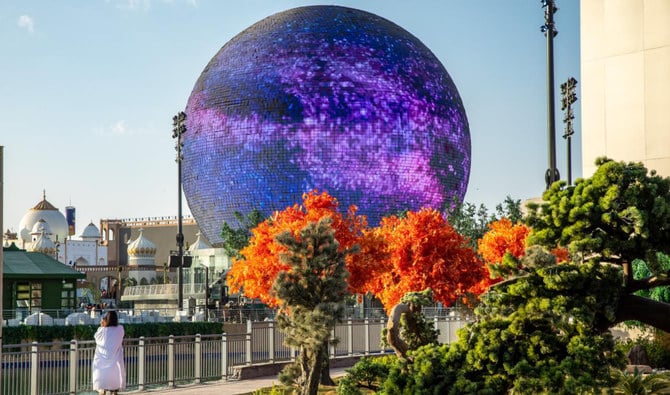
SAUDI ARABIA: World’s Largest Light Ball illuminates Riyadh Season 2022

A new modern landmark in the capital of the Kingdom, the Light Ball, has been named by Guinness World Records as the largest illuminated LED ball in the world, with an estimated height of 35 meters.

Located at Boulevard World, the exterior of the ball emanates bright lighting that flickers in different patterns, while the interior boasts a 220-seat theater equipped with state-of-the-art features.

Guests can recline in their seats facing a 360-degree circular screen. The short films presented in the theater are five minutes long, with varying genres suitable for families to enjoy. The shows run every 30 minutes daily from 3:30 p.m. to 10:30 p.m.

In addition to cultural experiences, Boulevard World includes the largest artificial lake in the world. Visitors can take part in boat and submarine rides in the lake — a first for Riyadh Season.

There are also distinctive entertainment options, such as Combat Village, Super Hero, the largest sphere in the world and cable car trips between Boulevard World and its neighboring zone, Boulevard Riyadh City.

The zone offers visitors other entertainment experiences as well, such as Boulevard Pier, Discovery, Realistic Monopoly, The Mountain, Area 15, Ninja Warriors and Fun Zone for children.

source/contents: arabnews.com (headline edited)

___________

Located at Boulevard World, the exterior of the ball emanates bright lighting that flickers in different patterns, while the interior boasts a 220-seat theater equipped with state-of-the-art features. (Supplied)

_________________

SAUDI ARABIA

OMAN: The Mall of Oman opens ‘Snow Oman’ the Region’s Largest Snow Park

A multifunctional snow park was opened at the Mall of Oman. The project Snow Oman is the largest in the Middle East. The snow park was developed by Majid Al Futtaim, who has experience building indoor snow and ski amusements. In 2005 the company unveiled its first project in the flagship Mall Al Futtaim and later realized the mega project Ski Dubai in the Mall of the Emirates.

The total area of Snow Oman is 160 000 square feet. The complex combines a variety of winter attractions, the country’s first colony of penguins, and natural snow. The main decorations are an ice port town and a sunken ship with a lighthouse.

Rides include Mountain Thriller, Snow Bullet, Slide Winder, Cloud Climber, and Zorb Ball, unique attractions such as Cold Town Muscat, and a 5112-square feet ice rink. Admission to the park starts at 12.5 OMR, equivalent to $32.5.

Snow Oman caters to guests of all ages and offers activities for both kids and thrill-seekers. Outside the ski and skate slopes are cafes with hot winter drinks, warm seating, and a photo area.

Majid Al Futtaim is one of the largest mall, retail, and entertainment companies in the Middle East, Africa, and Asia. The company operates 29 malls, 13 hotels, and four mixed-use complexes in the UAE, as well as more than 600 cinemas and several entertainment centers.

source/content: malls.com (headline edited0

____________

_________

OMAN

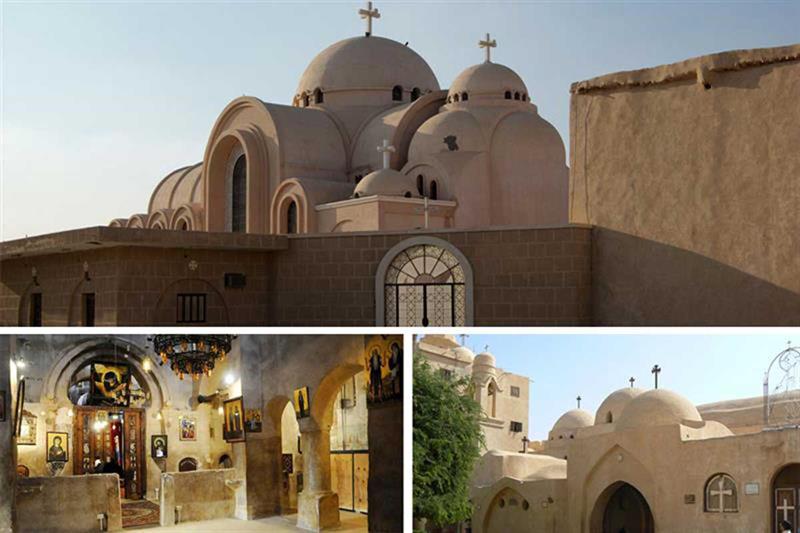
EGYPT enlists ‘Journey of the Holy Family Festivals’ on UNESCO List of Intangible Cultural Heritage of Humanity

“Festivities and celebrations affiliated with the Journey of the Holy Family in Egypt are now on UNESCO’s Representative List of Intangible Cultural Heritage of Humanity,” professor Nahla Imam, heritage consultant at the Egyptian Ministry of Culture and country representative of Egypt at the 2003 Convention of Safeguarding the Intangible Heritage of UNESCO, told Ahram Online on Wednesday.

Imam credited the move to the efforts of the Egyptian ministries of culture and foreign affairs, adding that Egypt’s efforts were almost unanimously supported by UNESCO’s Inter-Governmental Committee.

This is the seventh intangible cultural heritage element that Egypt enlists in UNESCO. Prior to the Journey of the Holy Family, the Egyptian manual-textile industry in Upper Egypt was put on the UNESCO List of Intangible Cultural Heritage Sites in Need of Urgent Preservation.

Egypt first enlisted El-Sirah El-Helalya (The Epic of Beni Helal) in 2008, Tahteeb (Stick Art) in 2016, the Aragouz Puppet in 2018, and the knowledge and traditions affiliated with palm trees in 2019.

According to the accounts of historians, the Holy Family spent around four years in Egypt.

Their trip started in the Sinai at Al-Farma, on the border with Gaza, where they arrived after fleeing Jerusalem. Their trip ended in Durnaka, Assiut, venue of the famous Monastery where the feast of Virgin Mary is celebrated in August each year. ​

source/content: english.ahram.org.eg (headline edited)

___________

__________

EGYPT

Arab World the Winner in Memorable World Cup

As the FIFA World Cup reaches its climactic end, one cannot help but reflect on what an extraordinary political event it has been. Those who argue that sport and politics should be decoupled will have found it hard watching politics as an ever-present from the day Qatar was awarded the event back in 2010 and at every single match since the tournament began on Nov. 20.


But perhaps one of the most fascinating and hopefully impactful thrills at the World Cup has been the rare opportunity to remind the world that, for all its troubles, fissures and rivalries, the peoples of the Arab world do have much in common and that football has highlighted that reality every day in Qatar.

Some might question these signs of togetherness among fellow Arabs. Yet there were copious examples where it shone. Three achievements stood out.


Firstly, for Morocco to beat Spain and then Portugal in the knockout rounds was exceptional, especially following their defeat of Belgium, the second-ranked side in the world, in the group stage. There was more than an element of delight in seeing a former colony defeating, in Spain, its one-time colonial master. Morocco will get the chance to overcome its other colonial power, France, in the semifinals on Wednesday. In fact, star player Achraf Hakimi was born in the poor suburbs of Madrid. Morocco were the only team in the quarterfinals not from Europe or South America. Few in the region were not cheering them on. A sense of collective pride emerged as a result of the North African country’s success in becoming the first Arab and African state to reach the semifinals.

One might have thought that, given the dire state of relations between Morocco and Algeria, that Algerians would have shied away from joining in the festivities. Evidence suggests otherwise. Algerians were out supporting Morocco as enthusiastically as anyone else in the region. A friend was in Paris and told me: “After one of the Morocco victories, there were lots of Algerian supporters and flags joining their Moroccan brothers and sisters in celebration.” The Algerian captain and superstar Riyad Mahrez was quick to praise the Atlas Lions’ achievements.


Secondly, Tunisia beating reigning world champions France in the group stage was also an unforgettable moment. This was the first time they had beaten European opposition in the World Cup. This was every bit as big a win as in 1982, when Algeria beat the mighty West Germany in their first ever World Cup game.

Third, the Saudi victory over Argentina was another huge milestone. In many ways, this ignited the World Cup for the Arab world.


A sense of pride has also broken out that many of the finest players in the world come from this region. Hakim Ziyech for Morocco is one. Mahrez and Mohammed Salah were not in Doha but are still at the top of the sport. Kylian Mbappe, a star of this tournament, has an Algerian mother.


The key players in the Arab teams largely play in Europe. This shows football at its best in terms of breaking down barriers. Fourteen out of the 26-man Morocco squad were born outside of the country, showing how the team relies on the Moroccan diaspora. This includes Ziyech, who opted not to play for the Netherlands. That points to one challenge that countries like Morocco face, as they lack the footballing infrastructure to develop and nurture enough talent at home.

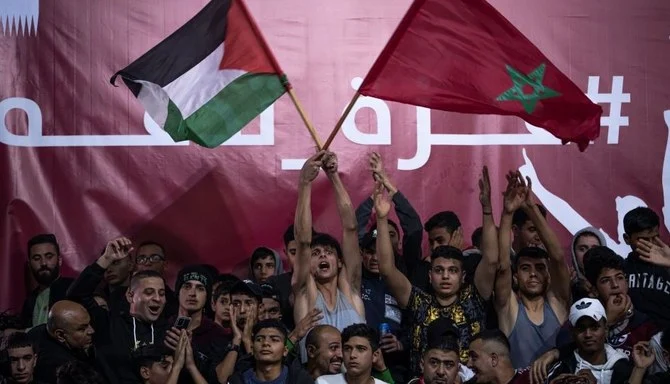
This World Cup has also often been about one country that is not there. At every single game featuring an Arab side, and plenty others beside, the Palestinian flag was there. It is a political symbol and a defiant message that the Arabs will not forget or ignore what is happening to the Palestinians in the diaspora and under occupation. As an even more brutally right-wing coalition is about to take power in Israel, this message should be carefully noted in the US and European capitals. Palestine still matters.


Israeli hasbaristas were also caught out. Having belittled and mocked those who claimed otherwise, they discovered that, despite the normalization deals, Arabs are not willing to gloss over Israel’s crimes and oppression. Time and time again, Israeli journalists, while trying to pretend everything was all lovely and wonderful with their newfound Arab friends, found that “free Palestine” was pushed back in their faces. Many locals snubbed their requests for interviews.

A World Cup in the Arab world has brought some cheer to a region that has been hit hard by wars and other crises.

Chris Doyle

Palestinian armbands and keffiyehs were being worn at nearly every match by huge numbers of fans. The sheer arrogance of believing that a state could oppress millions of people and that all would be peace and happiness was exposed as the nonsense it is. The Moroccan players had no hesitation in raising the Palestinian flag after their wins over Spain and Portugal.


Many Arabs also expressed admiration for the courage of the Iranian team after the players refused to sing their national anthem ahead of their opening match against England. This points to the widespread sympathy many Arabs feel toward Iranians, notably currently the women, who are struggling for their freedoms.

The Western media has been quick to point out all that was wrong with this World Cup. It is about time it also highlighted what has gone right. For all the criticisms of Qatar in the run-up to the cup over issues such as workers’ rights, one of the key elements of its bid has been fulfilled. Football in the region has been the winner. The atmosphere has been considerably warmer than many expected, with largely good-natured relations among fans of all countries. It seems that rival fans have not needed to be segregated, showing the festival-like atmosphere. Fan violence does not seem to have featured. The largest numbers of fans, of course, came from the Arab world, with Saudi Arabia providing the largest number from a single country.

Many outside the region were dismissive of the claims that football mattered in the Middle East. One leading commentator contemptuously told me, while on the BBC, that Qatar did not have a footballing heritage. Yet the region should never have been ignored. A World Cup in the Arab world has brought some cheer to a region that has been hit hard by wars and other crises, and whose peoples have not had much to celebrate in recent years.

Chris Doyle is director of the Council for Arab-British Understanding, in London. Twitter: @Doylech

Disclaimer: Views expressed by writers in this section are their own and do not necessarily reflect Arab News’ point of view

source/content: arabnews.com (headline edited)

_____________

Palestinians watch the World Cup quarterfinal between Morocco and Portugal in Gaza City, Saturday, Dec. 10, 2022. (AP Photo)

________________

ARAB WORLD

WORLD RECORDS: ALGERIA: The Mosque that has the Record-Breaking 265m Tallest Minaret In The World. The Great Mosque of Algiers (aka) Djamaa el Djazair’ an Architectural Marvel & Monumental Wonder

One doesn’t have to be a Muslim to visit the mosque or see the tallest minaret in the world.

Many people who think of a vacation to Africa make plans with Morocco in mind, South Africa at times, maybe Kenya, and definitely Egypt—to see the famous pyramids—or the 4,100-mile-long river that gave birth to that momentous civilization. Yet, as a continent, Africa has 54 countries, almost as many as the number of states in the U.S. Though it may come as a surprise, almost all of these countries are safe and have nearly the same conveniences as those found in many First World countries. Take Algeria, for instance, the biggest country in Africa and more than three times the size of Texas. This northern African country has pyramids, just like Egypt, and several fascinating ruins that would interest any history buff or anyone who’s out for some real adventure.

The Great Mosque Of Algiers And Its Record-Breaking Minaret

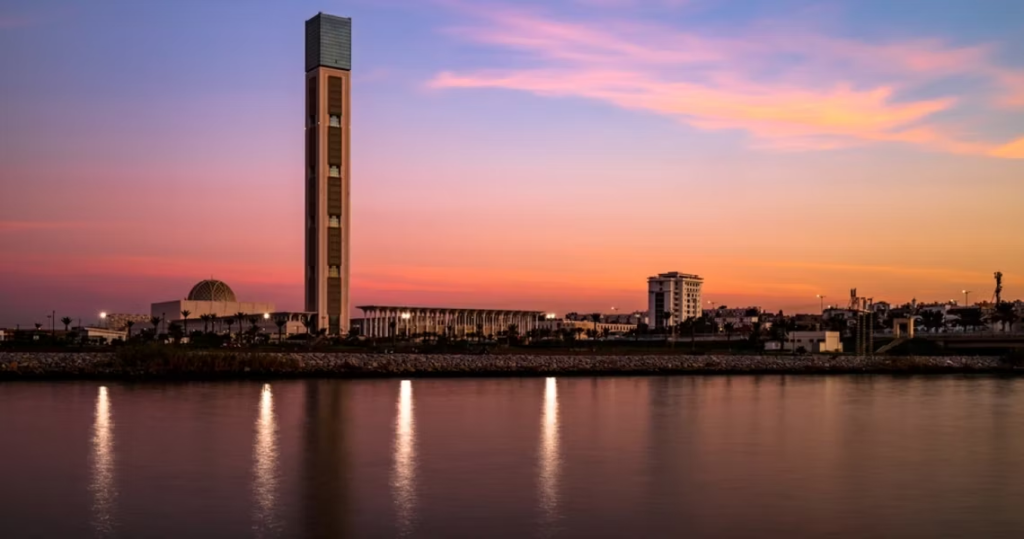
Also known as Djamaa el Djazaïr, the Great Mosque of Algiers is itself a monumental structure and an architectural marvel in its own right. However, what really puts it in the Guinness Book of World Records is its minaret. The reason is that the Great Mosque of Algiers is noted for having the tallest minaret in the world. For those who may be scratching their heads, a minaret is a tower—or a tower-like structure—built into mosques primarily to project the “Adhan,” the Muslim call to prayer. Of course, today, minarets serve other purposes as well. For instance, they are important landmarks of Islamic presence. Coming to the minaret of the Great Mosque of Algiers, we would not be remiss to expect a structure described as the world’s tallest to answer to that exceptional description. Well, the minaret of the Great Mosque of Algiers is 265 meters tall and hence, by all accounts, impressive.

For perspective, that’s the same height as Truist Plaza, the 60-story skyscraper in downtown Atlanta or the Panorama Tower in Miami, Florida. It’s also about half the height of the One World Trade Center, the tallest building in the United States. Minarets, however, have never been this tall. Before the Great Mosque of Algiers secured a page in the Guinness Book of World Records for its minaret, the tallest minaret was the 670-feet tower of the Hassan II Mosque in Casablanca, Morocco. The Algiers minaret, according to the Guinness Book of World Records, is now not just the tallest minaret in the world but the tallest building in Africa as well. This minaret is designed to withstand a magnitude nine earthquake, the highest earthquake magnitude. This type of earthquake can cause major damage over a region more than 1,000 km across.

Here’s A Brief History Of The Great Mosque Of Algiers And Its Minaret

The government of Algeria launched the construction of the Great Mosque and its record-breaking minaret in 2012. However, according to an adviser to the minister of housing responsible for the construction, the idea of constructing a mega-mosque had been in the cards from way back in 1962 when Algeria got its independence after 132 years of French occupation and after a 7-year brutal war that would send seismic revolutionary waves across the continent. For some reason, the efforts to put up a mega-mosque in Algiers had failed and foundered. However, with the election of Abdelaziz Bouteflika as President of Algeria in 1999, the building efforts would soon receive significant impetus.

Famous for his religious zeal and devotion to Muslim art and culture, Bouteflika would, unsurprisingly, actualize the mega-mosque dream even though his tenure as president would dramatically come to a premature end before the completion of his pet project. The mosque, however, including its record-breaking minaret, was an outstanding architectural masterpiece. According to the Guinness Book of World Records, the Great Mosque of Algiers sits on an expansive area of around 400,000 square meters (about 50 acres). For perspective, the building itself, plus the outside courtyard, can seat up to 120,000 worshipers.

Other Reasons Why The Great Mosque of Algiers Is Worth Visiting (& How To Visit)

The mosque looks towards the scenic Bay of Algiers, which features dazzling white buildings and panoramic views as far as the eye can see. Part of the mosque is a library that can stock more than a million volumes. In addition, the mosque has a Koranic school and a museum of Islamic art and history.

  • Where Is The Great Mosque of Algiers Located? This mosque is located on the Rue de la Marine in Algeria’s capital city, Algiers.

A crucial travel tip is to get in as a worshiper, probably during worship. Some visitors even carry a prayer mat or wear a scarf, especially women. Of course, one doesn’t have to be a Muslim to visit the mosque or see the tallest minaret in the world.

source/content: thetravel.com (jeff oganga) (headline edited)

____________

The New Great Mosque in Algiers

___________

ALGERIA

EGYPT: World’s Second Oldest, 1,200 Years-Old Jewish Cemetery Restored & Reopened in Basatin, Cairo

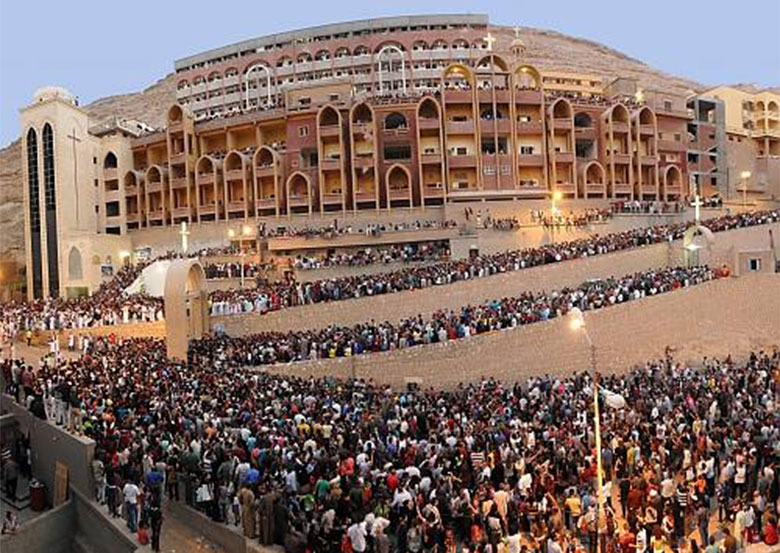
Over 1,200 years old, and after facing extreme neglect for decades, the Basatin Jewish Cemetery finally reopens.

The Basatin Jewish Cemetery – the second oldest Jewish cemetery in the world, and one of Cairo’s few remaining Jewish cemeteries – has undergone extensive renovations and opened its doors once more.  

With a foundation dating to the 9th century during Egypt’s Tulunid Dynasty, the 147 acres of land designated for the cemetery at the time included separate areas for Rabbanite and Karaite Jews and extended beyond the Tulunid capital of Egypt.

In more recent times, allegedly during the reign of Mamluk Sultan Qaitbay in 1482, the cemetery was divided into separate pieces of property totaling roughly 27 acres. These plots include the Basatin graveyard’s common burial grounds, the private Mosseri family cemetery, Rav Haim Capusi’s grave, the private Moise Cattaui Pasha cemetery, and the remaining Karaite section of the original cemetery.

Over the past three years, the American Research Centre in Egypt and the United States’ Ambassadors Fund for Cultural Preservation and Drop of Milk Foundation have been working to restore the neglected cultural and religious heritage site.

After the completion of the conservation project, members of the Karaite Jewish community –  known for exclusively respecting the principles of the Torah and disowning oral traditions like the Talmud and other writings of the Rabbis – from various nations attended the ribbon-cutting ceremony, and were able to revisit their families’ graves for the first time in decades.

source/content: cairoscene.com (headline edited)

____________

_________

EGYPT