Arabs & Arabian Records Aggregator. Chronicler. Milestones of the 25 Countries of the Arabic Speaking World (official / co-official). AGCC. MENA. Global. Ist's to Top 10's. Records. Read & Enjoy./ www.arabianrecords.org
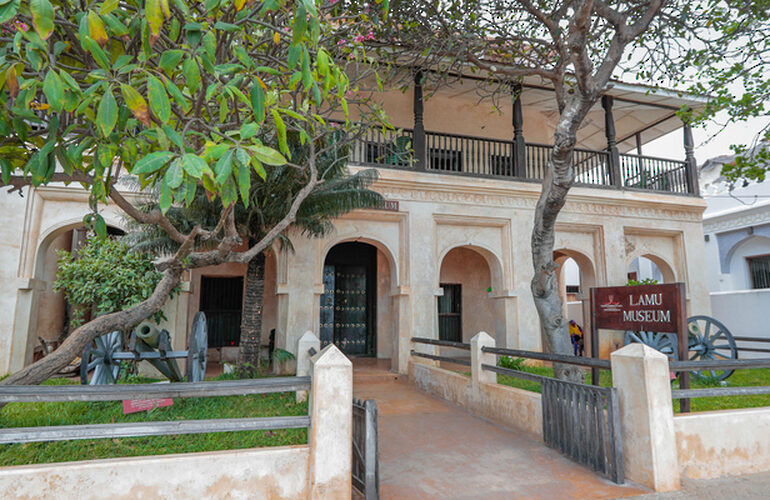
The National Records and Archives Authority (NRAA) will open a permanent museum-cum-exhibition for records and antiques pertaining to Oman’s historical presence in East Africa next on Friday, February 10. The exhibits also highlight the common history shared by Oman and Kenya in the province of Lamu.
Once restoration tasks are completed and final improvements made, the archival exhibition will be inaugurated in coordination with the Embassy of the Sultanate of Oman in Kenya and the Kenyan Ministry of Tourism, Wildlife and Heritage.
The project constitutes one of the archaeological and architectural landmarks, and aims to play a variety of cultural roles.
Besides affirming Omani presence in the province of Lamu and the depth of the two countries’ historical relations, the exhibition consolidates noble Omani values and reflects the sultanate’s keenness to preserve various aspects of its heritage, culture and civilisation.
The permanent exhibition is established within the framework of cooperation between the NRAA and the Kenyan Ministry of Tourism, Wildlife and Heritage, following a Memorandum of Understanding signed earlier by the two countries.
Through the project, the NRAA seeks to spread awareness about Oman’s history and civilisation in East Africa, notably among the local community and visitors to Lamu Island.
In 2017, the NRAA restored some parts of Mombasa Fort in the Republic of Kenya so that the monument could house a permanent museum-cum-exhibition. The facilities are named as follows: ‘Omani House’, ‘Al Mazrouei Hall’ and ‘Fort Museum’. They all serve as testimony to Omani presence in Mombasa.
Elizabeth Kassis has turned her Palestinian father’s house into a hotel, nearly 80 years after he emigrated
‘I want everyone in the diaspora to work for Palestine,’ Kassis tells Arab News
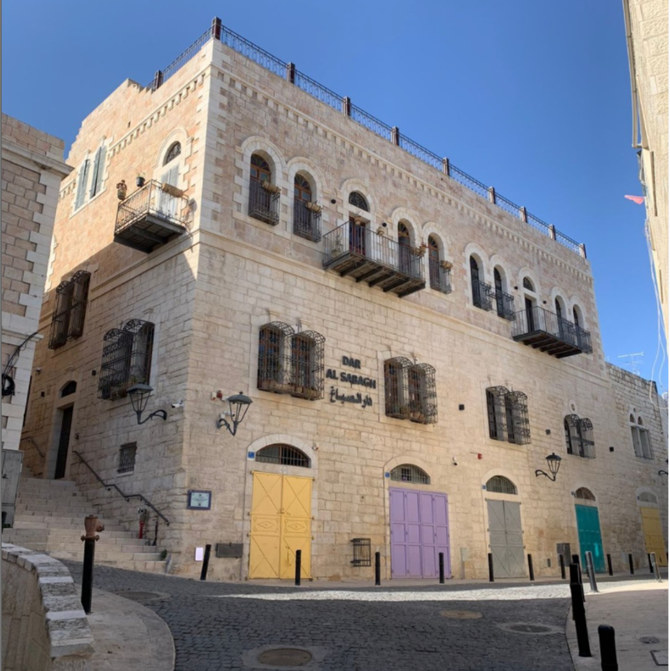
Chilean businesswoman Elizabeth Kassis has turned her ancestral home in Bethlehem’s Old City into a heritage hotel nearly 80 years after her father emigrated to Chile.
The Kassis Kassa Hotel is the Old City’s first heritage hotel, reflecting both the city’s traditional architecture and its long-standing association with the South American country.
The Palestinian community in Chile is reportedly the oldest outside the Arab world, with around half a million Palestinians moving there since the mid-19th century.
The hotel was officially opened on June 1, and the first group reservation was received on June 8.
“It was an exciting and challenging project that took years to implement,” Kassis, who was born in Chile, told Arab News. “It is rich in cultural history and has been carefully restored to preserve its original beauty and traditional Palestinian architecture.”
The project “will contribute to raising the level of tourism services in Palestine, as it is being implemented in cooperation with Bethlehem Municipality,” Kassis said.
We wanted the guests to get the full experience of what it means to live in a Palestinian house with real neighbors.
Elizabeth Kassis
“I think the experience of being a guest in a Palestinian house is a unique one. We wanted the guests to get the full experience of what it means to live in a Palestinian house with real neighbors.”
Kassis’ father visited Palestine in 1999, looking for ways to boost Bethlehem’s economy. Along with a group of Palestinian businessmen, he implemented a number of small projects at the turn of the century. He returned in 2015 and purchased his old family home. The restoration project began in 2016, led by his daughter.
Kassis said that setting up the hotel has been one of the most rewarding projects she has ever been involved in. In Chile, she managed her family’s farm and bred Arabian and Chilean horses. She has also worked as a TV presenter and is a talented visual artist who has participated in numerous exhibitions, as well as the co-founder of a band called Three Diaspora, which, she explained, “reshapes old songs that arrived in Chile with the first Palestinian immigrants.” The band has released several albums recorded with musicians from the Edward Said National Conservatory of Music.
Kassis has traveled extensively, but “found herself” in Palestine. “I want everyone in the diaspora to work for Palestine. I want people to feel, smell, eat, and live Palestine. This is my duty toward Palestine,” she said.
Engineer Raed Othman, who worked with Kassis on the project, told Arab News that Kassis loves Bethlehem and Palestinian heritage in general, and has devoted herself to promoting it to the world.
Bethlehem’s mayor, Hanna Hanania, told Arab News that, through her hotel and other efforts, Kassis is “building bridges” between Palestinian expats and their national heritage, especially the tens of thousands of expatriates from Bethlehem in South America.
He added that, as part of its attempts to attract investors to the city, the municipality plans to develop Al-Najma Street, where the hotel is located.
“The fact that Kassis Hotel is on this street will contribute to enhancing our vision regarding activating the location,” Hanania said.
Fadi Qattan, co-founder of the Kassis project, said the hotel promotes Palestinian heritage and culture through its food and its “beautiful location,” adding that he hoped journalists would visit the hotel and write about Palestinian food to “promote an accurate picture of the life and heritage of Palestinians.”
He continued: “The hotel is the first project wholly owned by an expatriate Palestinian family, which will encourage expatriate Palestinian families to return and invest in Bethlehem.”
source/content: arabnews.com (headline edited)
____________
Kassis said that setting up the hotel has been one of the most rewarding projects she has ever been involved in. (Supplied)
Baghdad hosted the transport ministers of GCC states, Iran, Turkey, Syria and Jordan to discuss the initiative.
Iraq unveiled on Saturday an ambitious transport project that will connect Asia to Europe, and enhance regional co-operation and economic opportunities.
The one-day conference in Baghdad brought together transport ministers and officials from the GCC, Iran, Turkey, Syria and Jordan to discuss the establishment of the Development Road initiative.
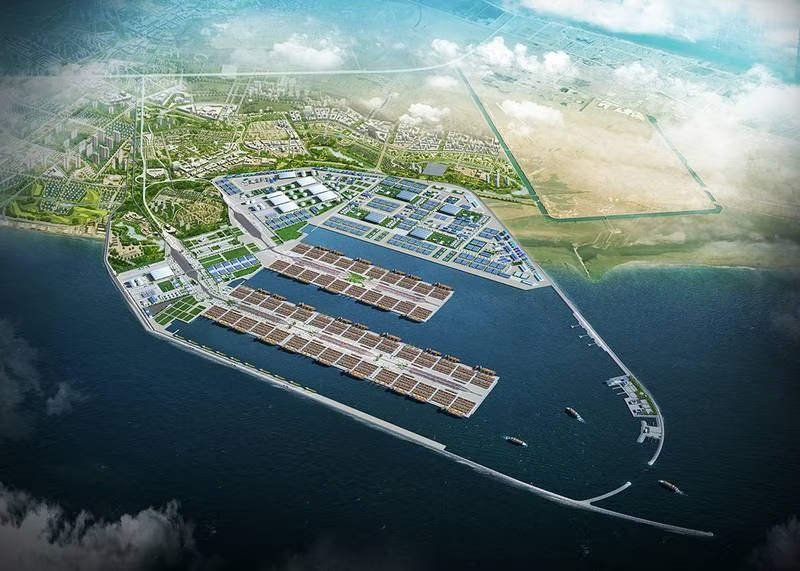
The huge infrastructure project will link southern Iraq to the border with Turkey, from where it will connect to rail and road networks in Europe.
Addressing the conference, Iraqi Prime Minister Mohammed Shia Al Sudani said the project would provide an “economic artery and a promising opportunity to bring interests, history and cultures together to make our region a destination for anyone seeking successful investment”.
“Your presence today in stable and secure Baghdad, loaded with opportunities and aspirations, is part of the process of finding solutions,” Mr Al Sudani said.
“The Development Road is an ambitious and well-studied plan towards a strong and successful economy. We see it as a cornerstone for a sustainable non-oil economy, serving Iraq’s neighbours and the region and contributing to efforts for economic integration,” he said.
“It will take all the peoples of the region to an unprecedented stage of communication and integration and that means more stability and capability to face challenges.”
The project involves the construction of about 1,200km of two-way rail networks and a new motorway for passengers and goods originating from Al Faw port, which is being built along the Arabian Gulf in Basra province.
The Iraqi government envisions high-speed trains moving goods and passengers at up to 300 kilometres per hour. Logistic centres and industrial cities are also planned along the network and it could include oil and gas pipelines.
It estimates that the project will cost up to $17 billion, generate $4 billion annually and create at least 100,000 jobs.
“As Iraq [has] recovered and retrieved its pivotal political role in the region, becoming a political convergence point, the time has come for [it] to retrieve its economic role,” Transport Minister Razzaq Al Saadawi told a local TV station on Thursday.
He said the project would transform the economy.
Saturday’s conference “will be a consultative meeting to explain the Development Road project and Al Faw Port, and to listen to the points of view of the participating delegations”, Mr Al Saadawi said.
The participants will discuss a number of proposals with regards to finance – from government funds to investment to the creation of a sovereign fund, with the money coming from the government, investors and loans, he said.
The co-operation between the countries involved in the project is expected to boost the “security and stability of the region and preserve its economy, therefore we are determined to carry out this project”, Mr Al Saadawi said.
At the end of the meeting, Mr Al Saadawi said joint legal, technical, financial and management committees would be formed to discuss financing and implementation.
The project offers an alternative to traditional sea routes, with reduced transport costs and shorter transit times. It will benefit not only the participating countries but also the broader global trade network.
Iraq is keen to join China’s Belt and Road Initiative – a global development strategy involving infrastructure development and investments in about 70 countries in Asia, Africa and Europe – through the Development Road and Al Faw port.
Despite its oil wealth, with about 145 billion barrels of proven reserves, Iraq lags behind neighbouring economies due to decades of war since the 1980s, UN economic sanctions imposed in the ’90s and political and security instability that followed the 2003 US-led invasion that toppled Saddam Hussein.
The World Bank’s country representative, Richard Abdulnour, said building infrastructure was a must for “unleashing the geographical potential of Iraq” and expressed the bank’s readiness to support the Development Road project.
Iraq needs to invest more than $21 billion in the coming five years on transportation alone, Mr Abdulnour told the conference.
He said the transportation sector contributed 9 per cent to Iraq’s gross domestic product, and that its annual growth has been 7.4 per cent over the past 10 years.
Iraq has a chequered history of rail transport, reflecting the country’s ups and downs.
A modest form of railway was introduced during the reign of the Ottoman governor to Baghdad Midhat Pasha between 1869 and 1872.
With financial support from wealthy Baghdadi merchants, Midhat Pasha established a horse-drawn tram linking central Baghdad to its northern district of Kadhimiyah.
Decades later, Britain and Germany raced to build railway lines in Iraq to not only transport troops and military equipment but also to establish a connection point linking their colonies.
A railway line linking Iraq to Berlin through Turkey was proposed in 1903 but opened only in 1940. Known as the BBBor the “Three Bs” — for Baghdad, Byzantium (now Istanbul) and Berlin — the line served travellers and was also used to transport commodities, mainly cereals and oil products.
Local rail networks also flourished thanks to oil revenue, with the number of daily train services rising to more than 50.
The BBB line was closed in the late 1970s, shortly before Iraq’s gruelling war with Iran that lasted from 1980 to 1988 and also affected rail operations inside Iraq.
In late 1990s, amid the UN-imposed economic sanctions on Iraq following the 1991 Gulf War, Iraq reactivated the BBB line after restoring relations with Syria and Turkey. Demand was high from both travellers, mainly pilgrims from and to Syria, and also from merchants transporting goods.
But the revival was short-lived — Turkey asked Iraq to stop services only days before the 2003 US-led invasion that toppled Iraqi dictator Saddam Hussein.
The poor security situation in much of northern Iraq after the invasion hindered plans to reactivate the line. Then came the 2014 ISIS onslaught in large areas in the north and west, and the military operations to drive the militants out. The war left railway stations and other infrastructure heavily damaged, with plans for repairs hindered by a lack of funds.
Now, only a few passengers trickle through the once bustling Baghdad Railway Central Station, which was built by the British and inaugurated in 1952 to expand the old station from which the BBB line started. Only two passenger services operate each day, taking commuters between Baghdad and the southern city of Basra, with stops in the cities of Hillah, Diwaniyah, Samawah and Nasiriyah.
During their eight-day stay on the ISS, the team will aim to conduct 20 research projects.
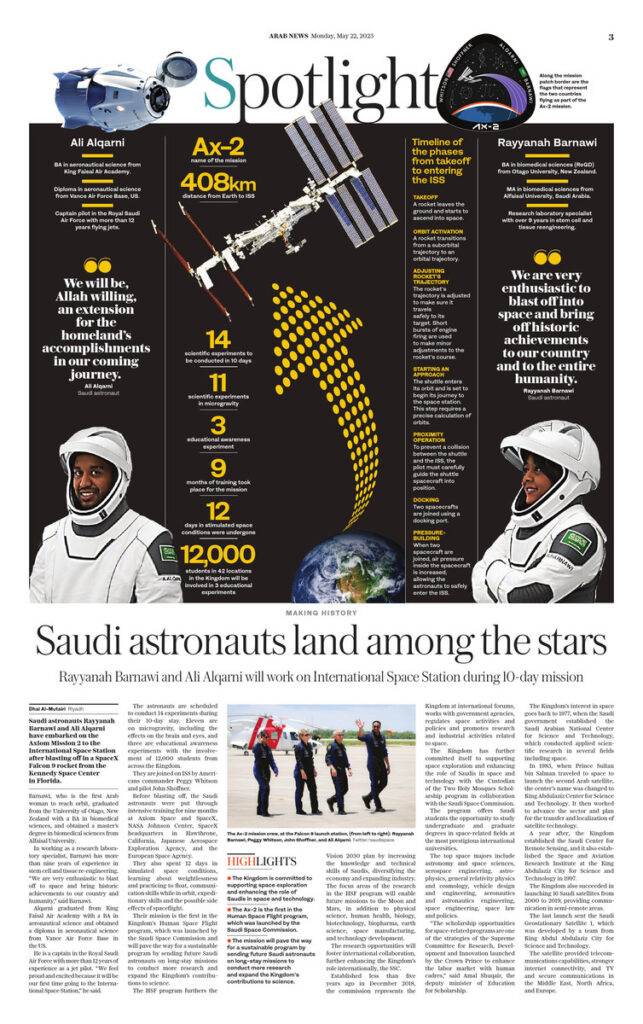
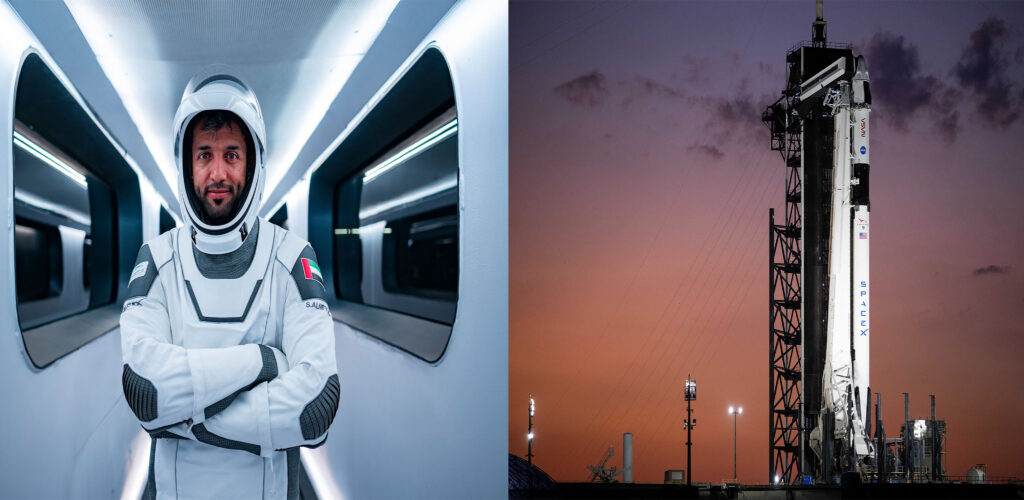
Saudi Arabia made history on Sunday as its first female astronaut, Rayyanah Barnawi, and her colleague Ali Al-Qarni launched toward the International Space Station (ISS).
The duo were on board the Axiom Space 2 mission, which launched at 5:37 p.m. (EDT time). Astronaut Peggy Whitson and business pioneer and pilot John Shoffner are also part of the mission.
Before the launch, Barnawi, a breast cancer researcher, expressed her excitement and honor at representing Saudi Arabia and the Saudi Space Commission as the country’s first female astronaut. She highlighted her passion for research and described the opportunity as a dream come true for everyone involved.
During their eight-day stay on the ISS, Whitson, Shoffner, Al-Qarni, and Barnawi aim to conduct 20 research projects. Among them are 14 projects developed by Saudi scientists, covering various areas such as human physiology, cell biology, and technology development.
The launch was with a SpaceX Falcon 9 rocket, and had a backup launch opportunity scheduled on Monday at 5:14 p.m in case of a launch failure.
It’s the same spot where Saudi Arabia’s first astronaut, Prince Sultan bin Salman, soared in 1985.
On Saturday astronaut Al-Qarni shared pictures on his Twitter account the contents of his space travel bag.
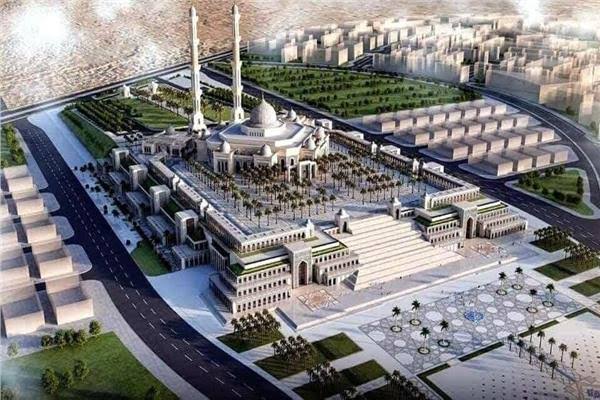
President Abdel-Fattah al-Sisi listened to an explanation of the details of Egypt’s Islamic Cultural Center and the Egypt’s Grand Mosque, during his visit to the New Administrative Capital at dawn, Thursday, to join workers for the first suhoor in the blessed month of Ramadan.
According to the explanation, Egypt’s Grand Mosque obtained three international certificates from the Guinness World Records.
The first was for the largest pulpit in the world with a height of 16.6 meters, handcrafted from the finest types of wood.
The second and third were for the main chandelier of the mosque, being the heaviest chandelier in the world of 50 tons, and it being the largest chandelier with a diameter of 22 meters and four levels.
Egypt’s Islamic Cultural Center in the New Administrative Capital is a great achievement and one of the most important projects established in the New Administrative Capital.
The Islamic Cultural Center was established in the new capital on an area of 15,000 square meters. It has a large place for services, as well as a group of spacious and multi-storey garages, with a capacity of about 4,000 cars.
The organisers and sponsors of the Third Libyan Couscous Day 2023 reported that the event succeeded in breaking the world record for the largest couscous dish. They reported that a dish was prepared weighting over 2,500 kgs.
The event was held on Friday in the historic city of Sabrata and is organised by the Libyan Intangible Heritage and Cultural Organization (NGO). It aims to inform the world that couscous is a national Libyan dish and is part of its heritage – along with Tunisia, Algeria and Morocco.
The event was sponsored by a leading Libyan couscous manufacturer.
Dubai – Dubai is the also the most record-breaking city not just within the country but also across the Mena region.
The UAE is far ahead in achieving the Guinness World Records regionally as the country boasts 425 GWRs with 34 of them were achieved in 2020 alone.
Dubai is the also the most record-breaking city not just within the country but also across the Middle East and North Africa (Mena) region.
“The UAE is currently home to 425 Guinness World Records titles, making it the biggest record-breaking country in the Mena region… Dubai has the lion share of titles in the country with around 60 per cent of the overall number,” said Danny Hickson, senior events production manager at Guinness World Records Ltd in Dubai.
Global Village, a multicultural family entertainment destination, achieved two records in November alone. The first record was set by having the most LED lights ever on a car. The vehicle had 36,676 LED lights. The feat began two weeks ago as the park achieved the record for the most videos in a music medley video following the Rockin’1000 Season 25 opening concert.
Global Village aims to break 25 records this season as part of its Silver Jubilee anniversary celebrations.
Emirati shipbuilder Obaid Jumaa bin Majid Al Falasi also made it into the history by building the world’s largest dhow, a wooden Arabic boat, measuring 91.47-metre long and 20.41-metre wide. That is equal to the length and almost half the width of a standard American football field floating over the Indian Ocean.
Dubai’s Nakheel Mall, too, recently broke the record for the world’s largest fountain, measuring a whole 7,327 m2. The record breaking fountain named The Palm Fountain was designed a with tricks including colour and brightness controls.
The emirate is also home to the world’s tallest hotel – 75-storey Gevora Hotel, measuring 356.33 metres tall from the group level to the top.
Danny Hickson said Saudi Arabia comes second with 96 Guinness World Records titles, while Egypt is not far in the third place with 93 titles.
On September 23, Saudi Arabia achieved the Guinness World Record for the largest fireworks display in multiple cities as the display consisted of 962,168 fireworks.
“What’s brilliant about breaking world records with brands in the UAE is that there is almost a chance to do something different with the heritage. Brands and individuals think it is impossible to be break world records, but we believe everyone is amazing in his own way, and we are here to make their achievement Officially Amazing!,” said Hickson.
“We have seen the tallest house of cards build in 12 hours, sat on top of a washing machine, to demonstrate its reduced vibrations and noise levels; and an iconic car brand celebrated its 80th anniversary by breaking the record for the largest loop the loop in a car! Would we find amazing talents among Khaleej Times readers?,” concluded Hickson.
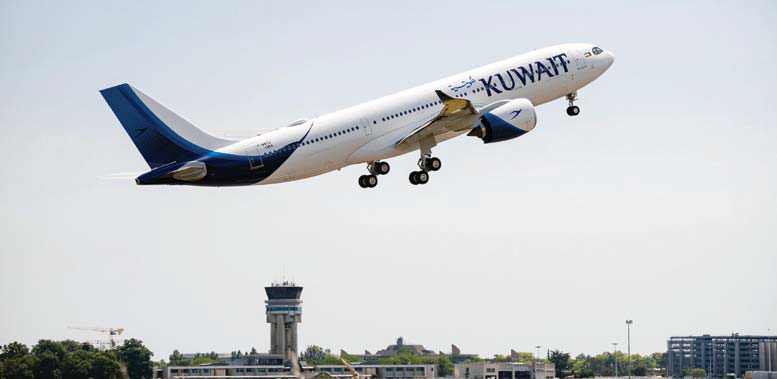
In line with the airline’s strategy to match capacity with demand, optimize performance with the best in on board experiences for its customers, Kuwait Airways launched its first inaugural flight to New York John F Kennedy Airport utilizing the Airbus A330neo and in setting the record for the longest flight flown by the A330-800 neo in 13 hours.
The award winning Airspace cabin is equipped with a two-class configuration comprising of 32 full flat business class seats and 203 economy class cabin seats on a 2-4-2 configuration. Thus offering passengers state of the art flying experience with more personal space, quietest cabin in its market and the latest generation of in-flight entertainment system and connectivity.
Sustainability From a sustainability and efficiency standpoint, the A330neo offers benefits to both the airline and the traveling public. With double-digit fuel savings and CO2 emissions compared to other aircraft in its category, the A330- 800 allows significantly lower operational cost and therefore competitive ticket pricing. Captain Ali Al Dukhan, Chairman Kuwait Airways said.
“This flight marks a new era in our strategy to right-fit the best of customer experiences while balancing cost efficiencies and sustainability in our operational decisions. The utilization of this aircraft’s long-range capability will also bring double-digit savings, which coincidentally means less harm to the environment, matching closely to our ESG goals. We are proud to take the next step forward in reaching the corporate strategy goals in reducing costs and enhancing marginal performance”.
Mikail Houari, President, Airbus Africa Middle East said: “We are proud that Kuwait Airways has chosen to deploy the A330-800 on John F Kennedy Airport, a key route for the airline. We are confident that the aircraft will provide passengers with exceptional flying experience while providing the airline with unbeatable economics, efficiency and environmental performance.
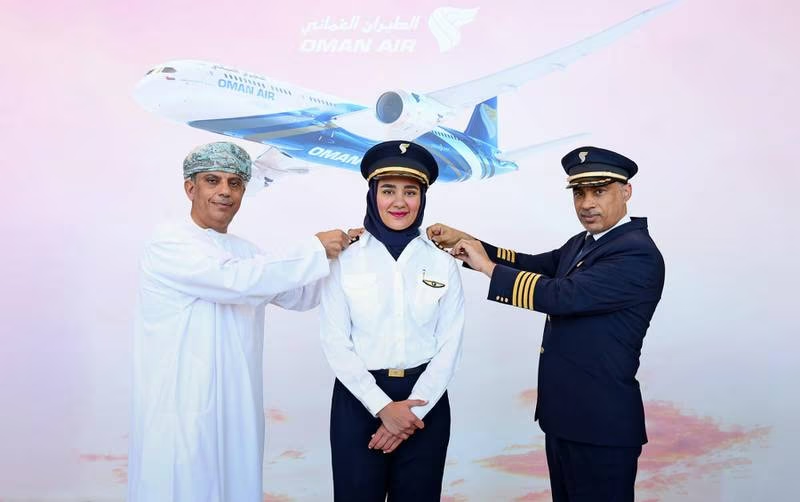
The airline promoted Maha Al Balushi who has been with the company since 2010.
Oman Air, the national airline of the sultanate, has announced pilot Maha Al Balushi as the first female Omani captain.
Ms Al Balushi officially received her new rank during a ceremony held at Oman Air’s headquarters in Muscat.
She has been with the airline since 2010 after graduating from the cadet programme at the Royal Melbourne Institute of Technology, in Australia.
Ms Al Balushi was the only woman enrolled in the programme at the time.
She became the first female Omani to be awarded the rank of first officer in 2013.
“My dream has always been to become a captain. It hasn’t been easy but thanks to the support I have around me, from my family to my training team and the airline,” said Ms Al Balushi in a statement by Oman Air.
“I have accomplished what I set out to do. It is an honour to hold this role and I hope that I will inspire other Omani women to choose such a rewarding career in the skies.”
Oman Air said that 1,230 Omani female employees contribute to the airline’s strength, occupying a range of roles including cabin crew, flight operations, engineering, airport services, marketing, customer services, sales and communications.
The airline has so far achieved an Omanisation rate of 94 per cent — excluding female cabin crew.