Arabs & Arabian Records Aggregator. Chronicler. Milestones of the 25 Countries of the Arabic Speaking World (official / co-official). AGCC. MENA. Global. Ist's to Top 10's. Records. Read & Enjoy./ www.arabianrecords.org
SDAIA unveils official logo after it was approved by the Cabinet
Saudi Arabia has designated 2026 as the Year of Artificial Intelligence, underscoring the Kingdom’s growing leadership in global AI adoption, and reaffirming AI as a top priority by supporting the nation’s AI ambitions in line with Saudi Vision 2030.
With the Kingdom emerging as a global hub for data and AI, driven by the support of Crown Prince Mohammed bin Salman, the move was underscored by the Saudi Cabinet’s approval on Tuesday.
The Saudi Data and Artificial Intelligence Authority, meanwhile, launched the official logo for the Year of Artificial Intelligence, Saudi Press Agency reported Wednesday.
The logo integrates symbolism in its elements: a palm tree signifies the national emblem and the Kingdom’s cultural heritage, while the letters “AI” highlight the technological and innovative aspects central to promoting digital inclusion as part of Vision 2030.
The palm tree’s green color symbolizes the Saudi flag and the Kingdom’s national identity, while the accompanying blue color represents digital technology and progression toward advanced technological development.
The logo is accompanied by the official hashtag for the Year of Artificial Intelligence: #SaudiAIYear.
Muhammad Khurram Khan, a professor of cybersecurity at King Saud University, told Arab News: “Saudi Arabia’s decision to designate 2026 as the Year of Artificial Intelligence represents a strategic milestone in the Kingdom’s digital transformation under Vision 2030.
“Over the past several years, SDAIA has successfully moved the national AI agenda from planning to large-scale implementation. The progress is visible in the Kingdom’s rapid rise in global AI rankings, its significant investment in emerging technologies, and the development of advanced infrastructure such as national data platforms and large-scale data centers,” he said.
The Kingdom ranked 14th in the 2025 Global AI Index and holds a leading position in the Arab world for AI model development.
Investment in the sector has grown significantly, with government spending on emerging technologies rising by more than 56 percent in 2024 and AI companies securing $9.1 billion in funding.
“The newly unveiled logo effectively reflects this vision. The logo thoughtfully blends Saudi Arabia’s heritage with its technological ambitions, reflecting the Kingdom’s forward-looking vision for a technology-driven future,” said the professor.
“What distinguishes Saudi Arabia’s approach is its holistic strategy. Rather than focusing solely on technology deployment, the Kingdom has invested heavily in talent development, regulatory frameworks, and ecosystem building. Training thousands of specialists and engaging more than a million participants through national AI initiatives demonstrates a long-term commitment to building a sustainable knowledge economy. Equally important is the Kingdom’s emphasis on responsible AI governance, reflected in its participation in international AI partnerships focused on ethics,” he added.
Welcoming the Cabinet’s decision to designate 2026 as the Year of Artificial Intelligence, Abdullah bin Sharaf Al-Ghamdi, SDAIA president, said on Tuesday the decision reflects the crown prince’s vision to strengthen the Kingdom’s global standing in advanced technologies.
He described it as an important step toward creating national momentum around innovation and the role of artificial intelligence in shaping a smarter and more sustainable future.
Since its establishment in 2019, SDAIA has led the National Strategy for Data and Artificial Intelligence, which focuses on six pillars: ambition, competencies, policies, investment, innovation, and ecosystem.
These efforts have moved the Kingdom from strategic planning to implementation, including regulating AI sectors and developing advanced digital infrastructure.
Infrastructure has expanded with the launch of the Shaheen III supercomputer and the Hexagon data center, the world’s largest government data facility with a capacity of 480 megawatts.
The Kingdom has also established a National Data Lake integrating more than 430 government systems.
Human capital development remains a priority. More than 11,000 specialists have been trained, and the SAMAI program has reached over one million participants.
Internationally, Saudi Arabia has strengthened its presence in the AI sector. It became the first Arab nation to join the Global Partnership on AI and hosts the UNESCO-sponsored International Center for Artificial Intelligence Research and Ethics in Riyadh.
These initiatives reflect the Kingdom’s commitment to the responsible and ethical use of artificial intelligence to support economic diversification and serve humanity globally.
source/content: arabnews.com (headline edited)
____________
Emerging as AI Powerhouse under Vision 2030 Saudi Arabia designates 2026 the Year of Artificial Intelligence. (SPA)
Across the Arab world, Stars of Science is demonstrating how to innovate, transforming experimentally novel ideas into tangible solutions while inspiring millions of young minds.
Since its inception in 2009, Stars of Science, hosted at Qatar Science and Technology Park (QSTP), a member of Qatar Foundation, has become a catalyst for innovation across the Arab world.
Over 313 episodes have been aired across 17 seasons for purposeful broadcasting towards a productive culture, building a network of 175 role models from 18 Arab countries and helping to launch more than 55 alumni-founded businesses across diverse sectors.
“Stars of Science is not just a television programme but a reflection of a real and thriving innovation ecosystem. It provides a unique platform that bridges the gap between scientific research and technological innovation, transforming ideas especially academically proven into demonstrated prototypes within a 12-week period,” explained Innovation Consultant and Jury Member Professor Fouad Mrad.
Participants benefit from expert mentorship, access to world-class facilities, and exposure to diverse jury members, ranging from academics and scientists to entrepreneurs and startup founders.
Beyond technical hands-on skills, they acquire entrepreneurial lessons that prepare them to bring solutions to market as founders, mentors, or thought leaders. “The programme has inspired millions by making science accessible, practical, purposeful, and engaging, especially for Arab youth,” Mrad added.
Rigorous selection and mentorship
Selection for the programme follows a thorough process. Candidates submit applications online, which are sorted based on specialization, dispatched to and reviewed by a pool of relevant experts across scientific, technical, and professional domains.
Projects are evaluated on novelty and soundness of a scientifically based concept, feasibility of producing a functional prototype within two months, and relevancy to society and market.
Selected candidates are invited to pitch their ideas and implementation in front of a diverse jury that includes academics, and practitioners.
“The cohorts gain access to mentorship from QF and Qatar’s wider R&D ecosystem, QSTP’s incubation and acceleration programs, world-class facilities, advanced prototyping labs, and access to funding. Mentorship goes beyond technical refinement, equipping candidates with entrepreneurial know-how and guiding them to turn early-stage concepts into minimum viable products (MVPs). It is this backbone of mentorship and partnerships that transforms raw ideas into real, practical, and ready solutions,” said Mrad.
Season 17: Innovations for a changing world
Season 17 of Stars of Science highlights a renewed focus on addressing pressing challenges, covering a wide range of fields. These include medical and surgical innovation, with real-time guidance systems and 3D simulation platforms, as well as wellbeing technologies, such as wearables and gamified rehabilitation tools. The season also sheds light on environmental sustainability and marine protection through eco-friendly solutions and AI systems supporting green energy.
The mentorship structure has also been strengthened, offering more personalized guidance and access to QSTP’s advanced facilities, allowing candidates to refine their concepts into minimum viable products.
Each finalist brings a unique vision: some aim to enhance healthcare precision and rehabilitation, others focus on renewable energy and environmental protection, and some draw inspiration from nature to solve complex problems.
For example, Mohamed Kahna from Tunisia is developing a real-time surgical guidance system that mimics GPS in the operating room, enhancing laparoscopic surgery. “I want this system to ensure surgeons have clear guidance in their most critical moments,” he said.
Khaldoun Megdady from Jordan is developing a 3D coronary artery simulation platform. The invention enables surgeons to rehearse bypass procedures using AI-generated anatomical models. “This is rehearsal before reality, it gives surgeons a chance to prepare in detail, which can mean safer and more precise procedures,” he explained.
Beyond the technical aspects, this season encourages candidates to consider the broader societal value of their innovations, fostering a culture of responsible innovation and entrepreneurship.
Environmental sustainability also features prominently. Mohammed Al Mur Al Salmi from Oman developed an enzyme-based spray to prevent bacterial buildup on underwater marine surfaces and structures, offering an eco-friendly alternative to toxic coatings.
“Our economy depends on the ocean. I wanted to protect what gives us life,” he said.
Health and human wellbeing are central to other projects. Saudi contestant Razan Bahabri focuses on gamified stroke rehabilitation therapy, enabling engaging exercises with remote monitoring by clinicians. “Rehabilitation therapy doesn’t have to be repetitive,” she noted.
Beyond the cameras: Sustaining innovation
Unlike many competitions, Stars of Science extends support long after cameras stop rolling by showcasing the success of its alumni and giving them visibility and international recognition. Some innovators are mentioned in national curriculum textbooks as modern times inventors.
Winners of the first and second prizes receive USD 300,000 and USD 100,000 respectively, providing substantial seed funding to advance their innovations beyond the prototype stage.
Alumni remain connected to QSTP and Qatar Foundation’s broader R&D ecosystem, accessing mentorship, incubation, funding, partnership and media opportunities.
“This is what makes the programme an illustrative launchpad rather than just a show. It celebrates STEM champions, and equips innovators with visibility, confidence, and recognition to contribute as capable ambassadors and impactful drivers of change across communities in the Arab countries,” Mrad explained.
Several alumni exemplify the programme’s mission:
Ahmad Nabeel (S9, Kuwait) developed KLENS, a self-cleaning laparoscopic camera system, now recognised globally by partnering with Mayo clinic, and serves as a guest juror on the programme.
Yaman Tayyar (S16, Syria) advanced his gene-therapy assist device, being incubated at QSTP and now mentors Season 17 candidates.
Majed Lababidi (S3, Syria) launched multiple startups in Qatar and is now Director of Ecosystem Integration at Alchemist Accelerator Doha.
Hassan Al-Balawi (S7, KSA) saw his AI-based workplace safety startup, WakeCap Technologies across the GCC construction landscape, secured major funding and international partnerships.
Eiman Al-Hamad (S12, Qatar) created an Arabic voice-phishing detection tool that gained international recognition and now mentors participants in Season 17.
Nada El-Kharashi (S16, Egypt), a biotech designer in Qatar, recognized for her entrepreneurial journey and featured on the Forbes 30 Under 30 list, underscoring the caliber of alumni the programme produces.
“These journeys showcase how Stars of Science program continues to inspire young Arabs, spark creative ideas, apply their knowledge, harness available resources, kick-start successful products, and demonstrate that Arab innovators can produce locally and market globally,” said Mrad.
Shaping national and regional innovation
Connecting university to local industry has been a lasting objective of every economy. “Learn to Earn” has been a motto for all societies, but it is essential for Arab countries suffering from youth unemployment especially among the educated generations, and modest production added value.
Mrad highlighted that Stars of Science demonstrated experimentally the promising potential embedded within our society, education landscape, innovation ecosystem and indirectly promoted the impactful interface and partnerships among public policy making, education, and industry.
It aligns with Qatar National Vision 2030 by promoting STEM education, youth empowerment, and a knowledge-based economy, while reinforcing Qatar’s role as a hub for research and innovation.
Through collaborations with academia, industry, and the private sector, the programme creates pathways for prototypes to grow into viable products and scalable startups.
Mrad added, “The long-term legacy will be generations of Arab innovators who credit the programme as their first inspiration, shifting the region’s culture from consumption to production.”
The “Brmajan” Digital Transformation Hackathon, organised by the Ministry of Culture, Sports, and Youth, has achieved a global milestone by entering the Guinness World Records as the longest government-led digital transformation hackathon and the largest multi-site hackathon lesson worldwide.
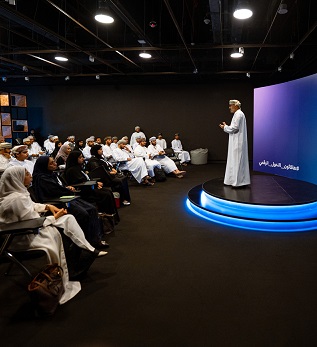
The main venues for the event included the National Museum and the main hall at the Sultan Qaboos Sports Complex in Bausher, with over 250 young participants, in the presence of Sayyid Said Sultan Al Busaidi, Undersecretary of the Ministry of Culture, Sports and Youth for Culture.
Sultan Mohsen Al Subhi, Project Manager of the Hackathon, stated that this achievement documents the Ministry’s efforts in advancing digital transformation across its services and serves as a marketing tool to promote government digital initiatives. He emphasised that the international recognition would help spread positive messages about the importance of digital transformation for governments.
Through “Brmajan,” the Ministry aims to showcase the capabilities of Omani youth in developing innovative digital solutions, empower them to leverage their creativity in the field of digital transformation, and engage the community in creating solutions that enhance the performance of government institutions.
Launched on 21 July, the hackathon features a series of technical challenges and training sessions designed to help participants develop practical solutions for various sectors. It brings together elite developers, programmers, user experience designers, and business analysts from across the Sultanate of Oman.
Is Arabic really one language – or 28? Can Moroccan Darija stand as a language of its own? What if Arabic, as we think of it, has no native speakers at all?
The title of this article might seem absurd at first glance. After all, Arabic is spoken by hundreds of millions of people – by some estimates around 300-400 million native speakers – and it is an official language in about 24 countries. It’s one of the six official languages of the United Nations (celebrated with a UN Arabic Language Day every December 18), and it boasts a rich literary and religious heritage. How could anyone claim that “Arabic” has zero speakers, or even ask if Arabic is really a language? Yet this provocative question touches on a deep linguistic puzzle: what do we actually mean by “Arabic” as a language?
The crux of the issue is that Arabic is not a single monolithic language in the way, say, French or Japanese is. Instead, it is more accurate to think of Arabic as a family or continuum of many spoken dialects – some of which differ from each other as much as separate languages do. When we talk about “Arabic speakers” in everyday terms, we are grouping together people from Morocco to Iraq who all identify with the Arabic language. However, the actual dialects they speak natively are often not mutually intelligible across long distances.
To understand this concept, one can give the example of American and British English: despite developing thousands of kilometers apart, they remain mutually intelligible because they shared an early common standard and stayed connected through institutions, print, and later mass media.
Linguists describe Arabic as a classic example of a dialect continuum: neighboring varieties of Arabic are similar enough to converse, but as you travel across the Arab world, differences accumulate. A Syrian and a Lebanese, for example, communicate with relative ease; a Syrian and an Egyptian might have to slow down but can generally understand one another. But if you take speakers at opposite ends of the Arabophone world – say, a Moroccan and an Iraqi – direct understanding in their colloquial speech is very difficult without one or both adapting their language.
In fact, even within this broad continuum, experts note that speakers from distant areas, across national borders, within countries and even between cities and villages, can struggle to understand each other’s dialects. An Egyptian Arabic speaker often finds the dialect of Algeria or Morocco nearly incomprehensible at first, and Maghrebi (North African) Arabs in turn say they have trouble understanding some Eastern Arab dialects – a gap partially bridged in modern times by the popularity of Egyptian and Levantine films and TV, which give listeners exposure to those dialects.
Language or dialect: A false binary
This raises a classic question in linguistics: when is something a “dialect” and when is it a completely separate “language”? A common rule of thumb is mutual intelligibility – if two speech varieties can’t be understood by each other’s speakers, they might be considered different languages. By that criterion, many spoken Arabic dialects are not a single language at all, since, as we’ve seen, a fluent native speaker of one variety may not grasp another variety spoken elsewhere.
On the other hand, the continuum and close cultural ties mean there’s no clear point where one language “ends” and another “begins.” Neighbors understand each other, and identities are shared – an Egyptian and a Syrian will both say they speak Arabic, even though each might find the other’s everyday dialect a bit foreign. In practice, the line between language and dialect is notoriously blurry, not just for Arabic but in general. Spanish and Portuguese remain mutually intelligible yet are treated as separate languages, while Scandinavian languages are often more intelligible than Arabic varieties.
There is a well-known tongue-in-cheek saying: “a language is a dialect with an army and a navy,” highlighting that the distinction often has as much to do with politics and national identity as with purely linguistic differences. With Arabic, all the diverse regional varieties share a unifying historical identity (and a sacred status due to Classical Arabic of the Qur’an), so culturally and politically they are treated as one language.
When Morocco gained independence in 1956, it faced not just the end of the protectorate but a post-colonial full-blown identity crisis. Caught between its indigenous Amazigh roots, colonial French legacy, and the sweeping tide of pan-Arabism coming from Cairo – driven by Gamal Abdel Nasser’s revolutionary rhetoric – Morocco’s leaders leaned hard into the Arab nationalist project. Modern Standard Arabic, though spoken by no one natively in Morocco – or anywhere in the Arab world – was declared the official language in the constitution.
This wasn’t a linguistic choice; it was ideological. It was about grouping Moroccans – mainly Amazigh – under a new Arab identity that wasn’t theirs to begin with. It was the same across the region: Kurds, Amazigh, Assyrians, and others were rebranded as “Arabs” to serve a pan-Arab dream that would never survive reality. That’s why today, many say the Arab world looks divided – because from the beginning, it wasn’t unified. It was forced into a mold, and that mold eventually cracked.
Linguistically, however, Arabic is a cluster of distinct spoken languages – a situation not unlike Chinese, where “Mandarin” and “Cantonese” are popularly called dialects of one Chinese language but are not mutually intelligible.
Linguistically, however, Arabic is a cluster of distinct spoken languages – a situation not unlike Chinese, where “Mandarin” and “Cantonese” are popularly called dialects of one Chinese language but are not mutually intelligible.
Can Moroccan Darija be a language?
Because there is no strict scientific definition of what counts as a language versus a dialect, how Arabic is classified depends on who you ask. Some scholars and institutions insist that all these variants are “dialects of Arabic,” while others classify many of them as separate languages under an Arabic umbrella. Tellingly, the International Organization for Standardization (ISO) has taken the latter approach. According to the ISO 639-3 standard (maintained by SIL International’s Ethnologue), Arabic is not a single language at all but rather what they call a macrolanguage – essentially a collection of related languages.
Under this system, there are currently 28 distinct language codes corresponding to the major varieties of Arabic. In other words, ISO formally recognizes 28 different “Arabic languages” such as Egyptian Arabic, Moroccan Arabic, Syrian (Levantine) Arabic, Gulf Arabic, and so on, all under the overarching label of the Arabic macrolanguage.
This doesn’t even account for outliers like Maltese, a Semitic language that evolved from medieval Arabic but developed its own standardized form and Latin script; Cypriot Arabic, a highly divergent and endangered Arabic variety spoken by Maronite communities in Cyprus; or Judeo-Arabic dialects historically spoken by Jewish communities (which ISO classifies separately as a group of their own). The core 28 Arabic varieties acknowledged by ISO are essentially the major regional dialects that linguists have identified as having limited mutual intelligibility with each other.
If Arabic is classified as a macrolanguage with 28 languages, where did that number come from? Interestingly, it has changed over time as linguists refine their understanding. When ISO 639-3 was first adopted in 2007, Arabic was broken down into 30 languages under the macrolanguage. However, it turned out that one of those 30 “languages” was included by mistake – it was something called “Babalia Creole Arabic” that later research found to be non-existent as a distinct language. It took 13 years to sort out that error, and that spurious entry was finally removed from the list in January 2020.
This brought the count down to 29. Even then, some of the splits were questionable. For example, the Levantine Arabic dialect continuum (covering Syria, Lebanon, Jordan, Palestine, etc.) had been arbitrarily split into “North Levantine Arabic” versus “South Levantine Arabic” with separate codes, despite the fact that speakers from the north and south Levant communicate easily and consider themselves to speak essentially the same language.
Linguists petitioned the ISO authorities to merge these, and in 2023 the two were officially unified into a single Levantine Arabic category. Technically, that means that until 2023, an Arab from Damascus and an Arab from Amman were listed as speaking two different “languages” in the ISO standard – a notion that would surely surprise those people in real life. These adjustments underscore how artificial and “fuzzy” such classifications can be. What one expert might call mere dialects, another cataloguer will list as distinct languages – and those decisions can be revised as our knowledge improves.
If we go by linguistic – not ideological – criteria, many Arabic “dialects” are really separate languages. They differ in phonology, verb systems, syntax, sentence structure, and core vocabulary, with mutual intelligibility often low or nonexistent across regions. Take Moroccan Darija: morphologically, it’s heavily Amazigh at its core. That’s why some linguists argue it shouldn’t even be called “Moroccan Arabic.” From this perspective, Arabic wasn’t the foundation; it was just an influence layered onto an older structure.
Standard Arabic lives on paper, not streets
All this points to the fact that the “Arabic language” can be understood in two senses. In the everyday and official sense, Arabic is a language: it is spoken in many nations and boasts a standardized formal form (Modern Standard Arabic) and a proud cultural identity. But in the nitty-gritty linguistic sense, Arabic is not one spoken language but many. As a modern codification based on Classical Arabic and adapted for administration, media, and writing, MSA remains trapped in that role. It is elevated, formal, and detached from the rhythms of spontaneous, lived speech. Ultimately, it was never meant for casual conversation.
Arabic is thus a language with users, but no native speakers. In fact, linguists often compare the Arabic situation to Sanskrit or how Latin evolved: for centuries Latin existed as a classical written language alongside popular spoken vernaculars across the Roman world; eventually those vernaculars diverged into wholly new languages like Spanish, French, Italian and so on.
By analogy, the numerous local forms of Arabic today could be seen as akin to the early stages of French or Spanish – distinct spoken languages descended from a common source, even if a classical standard (fuṣḥā or MSA) still ties them together in writing and formal speech. It’s noteworthy that no child grows up speaking “Modern Standard Arabic” on the playground; everyone learns a colloquial variant as their mother tongue, whether it’s Moroccan Darija, Iraqi Arabic, or Yemeni Arabic.
The formal Arabic taught in schools is essentially a second language for all Arab children, used in writing and high-level discourse. In a sense, then, no one is a native speaker of Arabic if by “Arabic” we mean the standardized language – there are only native speakers of particular Arabic dialects.
This is especially evident in Morocco, where many people speak Darija fluently yet struggle to express themselves in standardized Arabic. More foreigners now skip MSA and learn dialects directly. One of the most common experiences among Arabic learners is this: they study MSA for months or even years, yet still find it hard to understand or respond when speaking with Arabs – because the latter simply don’t speak it. This is another way one could justify the dramatic phrasing that Arabic proper has “zero” native speakers.
Does this mean we should start saying there are 28 (or more) separate languages instead of one Arabic? Not necessarily in everyday contexts. The answer to “is Arabic a language?” depends on context and perspective. From a sociopolitical and cultural perspective, Arabic is one language – a unifying symbol of Arab identity reinforced by a shared literary history and the role of Classical Arabic in religion and education. From a linguistic and practical communication perspective, Arabic is many languages – a continuum of varieties, some as divergent as English is from Dutch or more.
MSA functions as the high (H) variety in a diglossic system. American linguist Charles Ferguson famously identified this in 1959, naming Arabic as the textbook example of diglossia, where a formal written language coexists with everyday low (L) spoken varieties.
In practice, therefore, Arabs navigate this complexity through diglossia and code-switching: they might use their local dialect at home, switch to a more broadly understood regional form or the formal MSA when talking to someone from another country, and everyone can fall back on the standard language for clarity if needed. The existence of a standard form (understood by the educated across the Arab world) is a big reason the Arabic speech community hangs together as one large community rather than splintering completely. It’s a fascinating balance between unity and diversity.
The statement “Arabic has zero speakers” is a provocative way to highlight a real linguistic insight: Arabic isn’t a single spoken language in the ordinary sense. What we call “Arabic” is more like a collection of languages, or at least highly divergent dialects, bound by a common historical thread and a standard written form. Official classifications can swing one way or the other – for administrative purposes, technology, and linguistic cataloguing, it can make sense to list many Arabic varieties separately. But in day-to-day life, this distinction usually doesn’t concern people. Arabs will continue to say they speak “Arabic,” and they seamlessly juggle its forms in conversation as they’ve done for generations.
In the end, whether we call it one language or many, Arabic remains a remarkable and complex linguistic continuum. It defies our neat labels, yet richly deserves its place among the world’s major languages. The debate about “language or dialect” may be academically intriguing (and even a bit “silly” in its extremes), but it doesn’t change the lived reality of how Arabic is spoken and cherished by its people. As an expert might say: linguistically, Arabic is 28 languages; culturally, it’s one. And that paradox is exactly what makes Arabic so special.
Ciel Dubai Marina debuts as the world’s tallest hotel, standing 377 meters with 82 floors, emphasizing luxurious and unique experiences within IHG’s Vignette Collection. It features one of the highest infinity pools globally, diverse dining options, and wellness amenities. The hotel aims to enhance guest experiences while highlighting Dubai’s vibrant tourism scene.
Ciel Dubai Marina is now officially open within IHG’s Vignette Collection. Setting a new global benchmark as the world’s tallest hotel, the ambitious project – led by Dubai developer The First Group – underscores Vignette Collection’s vision to offer one-of-a-kind stays in destinations to remember. The architectural marvel spans 82 floors which collectively rise 377 meters above Dubai and is home to one of the world’s highest infinity pools.
Ciel Dubai Marina is both an architectural and experiential landmark – a place where every stay unfolds as a story. A striking expression of contrasts – east meets west, city meets sea, scale meets intimacy — Ciel Dubai Marina embodies the Vignette Collection spirit of discovery and individuality. From one of the world’s highest infinity pools to its vibrant dining destinations, each detail is crafted with purpose, balancing drama with depth. Within flowing lines, serene tones, and natural textures create a rhythm that feels alive — calm yet energised, luxurious yet grounded. The result is a stay that connects guests not just to the destination, but to something more meaningful: a sense of place, perspective, and belonging.
Ciel Dubai Marina stands tall alongside some of the world’s most extraordinary examples in hospitality encompassed within IHG’s Vignette Collection – a growing family of distinctly different hotels, each with their own outlook and story to tell.
“We are delighted to welcome guests to Ciel Dubai Marina, Vignette Collection, a visionary landmark that redefines innovation, luxury, and creativity at every level,” said Heinrich Morio, Managing Director of Ciel Dubai Marina. “This extraordinary hotel reflects Dubai’s status as a global destination for tourism and business, offering an experience that is as elevated as it is unforgettable. Our team of dedicated professionals are ready to welcome guests with genuine warmth and care, creating an atmosphere of heartfelt hospitality from the moment they arrive.”
The hotel is home to a collection of destination dining venues, each designed to deliver exceptional culinary journeys:
Tattu: The acclaimed UK-born Asian restaurant concept has opened a dramatic multi-level destination. The Tattu Dubai story begins on level 74, where the restaurant welcomes guests into a dramatic world of ancient mythology, modern mastery and contemporary Chinese and Japanese cuisine. On level 76, the Tattu Sky Pool rises as the world’s highest infinity pool and a must-visit destination, offering plush daybeds, Japanese-fusion bites and an energy that evolves from daytime relaxation to sunset DJ sets. The crescendo of the Tattu Dubai experience is on level 81, where the Sky Lounge & Terrace combines sophistication, music, cocktails and breathtaking 360° views to create an unforgettable rooftop experience.
West 13: celebrates the vibrant flavours of the Mediterranean, with dishes inspired by Italy, Greece, Spain, and France. Expect handmade pastas, Greek gyros, and fresh bakery items.
East 14: Offering a buffet-style journey through Asia, this venue will include live ramen and pho stations, sushi and dim sum counters, and various Indian curries.
Risen Café and Artisanal Bakery: A popular local concept, Risen will serve breakfast, lunch, and all-day menus featuring pastries, cafe dishes, and locally sourced coffee.
From February 2026, guests can rejuvenate at the spa on Level 61, where advanced beauty rituals meet time-honoured traditions. The hotel’s 24-hour state-of-the-art gym offers inspiring skyline views for an energizing workout. Guests can also enjoy seamless access to Soluna Beach Club on Palm Jumeirah, where they can unwind by the private pool or relax along the pristine shoreline.
Families are warmly welcomed, with dedicated spaces and activities for children, including a Splash Pad, Kids Club, child-friendly menus, and thoughtful amenities at check-in. For business travellers and Executive Club guests, Nest located on Level 16 offers refreshments, skyline views, and stylish meeting spaces equipped with cutting-edge technology and personalized service.
Memorable Rituals – bespoke to each Vignette Collection property – connect guests with each hotel’s unique identity, locality and cultural landscape. Ciel Dubai Marina’s Morning Hydration Ritual blends vitality and elevated hospitality. Each morning guests can enjoy OneShot-blended waters at the pool and gym, a simple yet uplifting gesture reflecting the hotel’s commitment to wellness and vibrant living in Dubai Marina.
A Means for Good sees each Vignette Collection hotel partner with a chosen non-profit organisation.Ciel Dubai Marina reinforces its dedication to nurturing future talent through a strategic partnership with the International Centre for Culinary Arts (ICCA). This collaboration focusing on training and developing the next generation of culinary professionals. From hosting monthly training workshops led by the hotel’s expert team to providing essential career opportunities for aspiring chefs, the initiative enables students to achieve their full potential and drive innovation in the hospitality industry.
Managed by The First Group Hospitality, the property offers immediate access to Dubai Marina with world-class dining, shopping, stunning beaches, and renowned attractions. Just minutes from Palm Jumeirah and Uptown Dubai, it serves as the perfect starting point to experience the city’s vibrant spirit and sophistication. Nearby, the bustling JBR beachfront and the dynamic Bluewaters lifestyle destination, home to iconic landmarks such as The Walk and Ain Dubai, the world’s tallest observation wheel, provide even more opportunities for discovery. The hotel also features direct access to the Marina boardwalk with its water taxis, as well as convenient connections to Dubai Marina Mall and the city’s tram and metro services.
Vignette Collection is IHG’s first collection brand and newest addition to its luxury and lifestyle portfolio. Since its launch in 2021, the brand has grown beyond expectation to surpass the halfway point in its 10-year target to reach 100 hotels. Currently there are 27 hotels within Vignette Collection and a further 41 in the pipeline.
From boutique bolt holes and hotels with history, to dynamic destinations and pioneering properties such as Ciel Dubai Marina, no two Vignette Collection stays are the same. Each hotel is unique in its identity, yet united by the vision to offer a more authentic way to travel.
Vignette Collection was launched to offer owners of world-class independent hotels the ability to benefit from IHG’s powerful enterprise offering and global scale whilst retaining their hotel’s unique character, style, and name. For Luxury & Lifestyle travellers, the brand meets an increasing appetite for one-of-a-kind stays, backed by the reassurance of IHG’s trusted reputation and leading loyalty offer.
The majority of the world’s Arabic speakers inhabit Africa and its diasporas. So why is much of continental Africa absent in Arabic language curricula?
In “Beyond Timbuktu: An Intellectual History of Muslim West Africa,” historian Ousmane Omar Kane opens with a mesmerizing account of his childhood in Dakar, Senegal. In telling this story, Kane’s aim is to counter simplistic accounts of Islam in West Africa that focus solely on the spread of jihadism or the predominance of slavery and anti-Black racism. By contrast, yet without diminishing these realities, Kane sketches a cosmopolitan world of multidirectional migration across the Sahara characterized by hospitality and learned discourse, by cultural hybridity and interethnic marriage, and by reciprocal (if often asymmetrical) exchange. For Kane, the Arabic language — which he champions in Africa over the continued use of European colonial languages — has provided a versatile, powerful medium of expression and scholarship that fuses creatively with local African practices and connects the continent with the wider world. For more than a millennium, Arabic in Africa facilitated intellectual innovation in fields from mathematics and numerology and astronomy to poetry, theology and jurisprudence. Canvassing this wide Trans-Saharan world, historian John Hunwick calls Arabic “the Latin of Africa.”
My desire to study the Arabic language — relatively late in life, beginning in my mid-30s — was inspired in part by my encounter, over the years, with snippets of such histories as conjured by Kane and other writers. How could I access this esoteric knowledge and historical experience, some of which enslaved Africans carried with them into the Americas during the Atlantic slave trade? As a scholar of the African Diaspora, but trained in English and Anglophone literature, I found this intellectual history imaginatively, even viscerally important, but somewhat obscure — present and growing in the academic literature, true, but absent from the more modest enterprise of formal language study.
And for me, language study was the place to begin. Like most beginning learners, I plunged into standardized al-fuṣḥā, or fus-ha, the modern version of classical Arabic taught in institutional contexts and used in media, education and formal situations. It is common knowledge that fus-ha is not spoken in any home or on any street, anywhere, and for that reason its utility is often questioned. As Hossam Abouzahr argues recently, the postcolonial effort by Arabophone countries to valorize and institutionalize fus-ha at the expense of spoken forms is riddled with contradictions: not only does this mode of pedagogy inhibit access to higher education and labor markets, but it also alienates speakers from their living language and linguistic inheritance.
That said, the capacity of fus-ha to unite an exceedingly heterogeneous array of speakers, to say nothing of its economy and elegance, cannot be denied. But, to the extent that Arabic pedagogy in fus-ha incorporates spoken varieties at all, these digressions typically include only Egyptian and Lebanese; occasionally Iraqi or Syrian penetrates the curriculum. Even in the context of instruction in fus-ha, there is at least some opportunity to engage with spoken Arabic from Egypt or the Levant. With the exception of Egyptian, however, the same is not true of African vernaculars, which are also excluded in advanced courses in spoken Arabic.
Quick, which country does not belong to the Arab League: Djibouti, Comoros, or Somalia? Trick question, because each is a member state, though it’s easy to forget in this pedagogical context. My point is not that African vernaculars merit instruction on par with others — though some representation is essential — but rather that the continent remains inert, a blank space in the geography of Arabic curricula.
Like the disparate histories of African-descended peoples in the region, these languages are hidden from view in Arabic language curricula: a disconcerting fact if for no other reason than that the majority of the nearly half a billion speakers of Arabic today inhabit the African continent and its diasporas. Textbooks, recordings, news broadcasts, language apps, multimedia materials — all the conventional instruments in a language learner’s toolkit — may well incorporate any dialect except those of African provenance, especially south of the Sahara.
Some observers lament the marginalization of Maghrebi or North African vernaculars in today’s curricula, but these remain at least peripheral in comparison, say, to the pedagogically invisible Hassaniya or Saharan Arabic spoken by 3 million people mostly in Mauritania and Morocco but also along the Sahel from Senegal to Mali and Algeria and beyond.
Likewise, Sudanese Arabic is seldom heard or invoked unless it is spoken by a student, whose voice is often the only classroom point of entry. I suspect the same is generally true of Libyan and Chadian Arabic or Algerian Darija.
Or consider Omani Arabic, a vernacular inflected with Swahili that before the 1970s was a major tongue of Zanzibar, an island once the imperial headquarters of Oman and now an extension of mainland Tanzania. This dynamic is similar in West Africa. Arabic pedagogy gives no hint that in Nigeria, for instance, a significant body of literature written in Arabic and composed in a distinctive tradition of Bornu calligraphy has flourished for 800 years.
On social media, these African languages are seldom regarded as Arabic; the Arabic classroom corroborates this impression.
By no means is Arabic unique in its center-periphery approach to language instruction, particularly where Africa occupies the margins. Similar disproportions shape curricula in European and other languages. Yet there’s an important difference, attributable in some measure to Arabic’s diglossia (the use of two varieties of the same language within a community). Aspiring students of Arabic who want to be both literate and conversant in the language will, unlike learners of French or Spanish, have to learn at least two languages: Standard Arabic and a national or regional vernacular. If they choose only a spoken language, they will be unable to read a novel or understand the news. If they choose only Standard Arabic, they will be unable to have anything more than a stilted conversation. Students who want to have a more intimate conversation than communication in Standard Arabic allows will therefore need to study a spoken version. That means they must choose a vernacular — and this decision-making process is itself an intriguing aspect of Arabic learning — and the state of the curriculum (in addition to perhaps more decisive economic, personal and geopolitical factors) invariably shapes what students perceive as viable and attractive paths of Arabic study.
Defenders of the status quo in Arabic curricula can point to the historic cultural capital of Cairo, Beirut, and Baghdad — and increasingly Doha and Riyadh — as a self-evident justification for their prominence in the classroom setting. But a pedagogy of prestige, even one bolstered by an instrumental rationale such as workplace preparedness, is out of step with today’s ethos and only perpetuates the invisibility of African Arabic.
Students in search of a glimpse into the urbane African world depicted by Kane and lived by millions of speakers worldwide will have to look elsewhere.
So, I am looking elsewhere, approaching this subject with trepidation and great humility — not as a scholar of the language but as a humble talib, or student.
I underscore my humility, which the majestic Arabic language has deepened within me. Years ago, after enrolling in an Arabic intensive summer course at Berkeley, I nearly quit after failing the mid-term. Encouraged by my wife, Tatyana — who texted me a picture of our then-infant son holding a sign: DON’T GIVE UP DADA! — I stayed and squeaked out a passing grade. But that wouldn’t be my last hurdle.
After the summer course, I continued my studies in Morocco.
Moroccans will tell you that whereas no one in the Arab world understands Maghrebi Arabic, Moroccans understand all the Arabic vernaculars, a claim that is largely accurate. That must have to do with the enormously complex linguistic situation in the Maghreb. When asked about intellectual life at the University of Rabat in the 1960s, writer Abdelfattah Kilito recalls how “everyone wanted to be on the cutting edge of the modern. If you didn’t know linguistics, everybody agreed, there was no help for you.” Today one might add, if you don’t speak multiple languages, there is no hope for you, either.
But the problem runs deeper. As the writer and visual artist Youssouf Elalamy explained in an interview published in 2019 in the Bulletin of Francophone Postcolonial Studies: “You cannot think, cannot even imagine that a people has got a native language that is not used in writing, and not used in literature. It is a kind of schizophrenia. And no wonder so many Moroccans are schizophrenic. It comes from language.” And this linguistic malady, as we will see, is but one legacy of French colonialism in North Africa.
Morocco’s national language is Standard Arabic, which, as in other Arabic-speaking countries, many understand but no one speaks. In everyday conversation, Moroccans speak Darija. Hassaniya is spoken in southern Morocco and the Western Sahara (though my friend in Rabat, a young linguist named Zack Wadghiri, told me that he rejects the term “Hassaniya.” “Why name a language after a single person? Nobody speaks of Moliérien French.” Instead, he refers to Saharan Arabic, privileging the region where the language evolved).
Urban Moroccans speak French and residents in the northern coastal cities understand Spanish — they code-switch in both languages — although young people are pushing for English to supplant French as a language of primary education. Large segments of the Moroccan population speak a version of Tamazight, an indigenous language family across North Africa with an ancient script and written tradition that predates Arabic on the continent by centuries.
What does all this celebrated linguistic pluralism mean in practice, in the social life of individuals striving for position in a warped economic order?
A student who attends public school in Morocco will receive instruction in standard Arabic, even as Darija or Tamazight or both are spoken at home. If a student excels academically and applies to study at a university, however, proficiency in French will be expected in many subjects, and without it there is little chance of success.
Only students who have attended private schools, where French is the medium of instruction, or those who can afford private lessons, will possess this level of proficiency. But the masses without French instruction are rerouted away from university and denied entry into North Africa’s professional classes. Meanwhile, the Francophone elite — including some proponents of standard Arabic education — reproduces itself as its children join the higher echelons of the national and global economy.
To compound matters, as anthropologist Charis Boutieri observes in her book “Learning in Morocco,” Darija- or Tamazight-speaking students and their families often blame themselves for not prioritizing French competency; either the parents didn’t tuck away money for their children’s French lessons or the students didn’t read enough Flaubert on the side. Rather than ask why the public education system places young people in an impossible linguistic situation, working-class students and their families wonder why they were unable to achieve a level of multilingualism that puts the world to shame. That’s one way the logic of late capitalism operates in Africa.
These questions were on my mind when I talked with people, awkwardly but with conviction. Abdelkebir, who drove my taxi from Rabat to Marrakech, pursued a Quranic education. He wore steel-rimmed glasses, a humble aspect, and a scholarly mien. It was easy to picture Abdelkebir as a university professor or a learned imam. When I told him that I was studying Arabic and visiting Rabat to attend an August 2018 mu’tamar (conference) on linguistics in Africa, his eyes lit up. Thanks to his training in classical Arabic, he spoke a mellifluous fus-ha, slowly and in a way that I could understand.
I told him about my amateur interest in African Arabic, and he replied that I came to the right country: Morocco was the most African of Maghrebi countries. Even more than Algeria and Tunisia, he explained, Morocco has intimate historical, religious, cultural, and economic ties with West Africa. Abdelkebir spoke of the Tijaniyya Sufi order spanning Senegal and Morocco, Algeria and Mali, whose disciples have for centuries crisscrossed the Sahara to exchange ideas and practices. Moroccan Arabic, I would hear often, is the vernacular most deeply inflected by Tamazight.
In “Black Morocco,” author and historian Chouki El Hamel constructs the history of Gnawa music, which exerted “a profound influence on the religion, rituals, and music of the greater Arabo-Berber culture.” Fusing elements of jazz and the blues, and with a trancelike element known to exorcise evil spirits, Gnawa is a sonic and spiritual ensemble created by West Africans and their descendants displaced by the Trans-Saharan Slave Trade. The annual Gnawa music festival in the coastal town of Essouaira is a major tourist attraction, but many of the kingdom’s cultural institutions point to a pluralistic African conception of Maghrebi identity. In Rabat, Morocco hosts an Institut des études africaines that supports the study of African languages, civilizations and “the common Moroccan-African cultural heritage.”
The visual street art throughout Morocco’s cities — the graffiti in Casablanca of Saharan men in Adidas sweat suits with turbans and shades, flanked by riyads and palm trees; or the murals in Meknes of jazzmen on keyboards overlooking the medina — evokes a distinctive style of Africanité captured by what anthropologist E. Ann McDougall describes as “being Saharan.”
Even the Royal Air Maroc 747 I flew in was emblazoned with a Basquiat-style banner draping its fuselage.
Because of this shared history, and I would say aesthetic, Abdelkebir ventured further: West African countries would do well to claim Arabic as a national or official language, like some East African countries have done.
As I understood him, he wasn’t saying that Arabic ought to supplant the variety of languages spoken in West Africa. But Arabic is already studied and highly valued as a sacred language in much of West Africa and is spoken throughout the Sahel. About 20,000 West Africans study in Moroccan universities on scholarship. That’s a remarkable number, as Mohammed Chtatou, a professor at Mohammed V University in Rabat, pointed out to me, given the modest (but rapidly growing) percentage of Moroccan youth who manage to pursue higher education in the Kingdom.
Senegal, Mali, Guinea — all are umbilically connected to the Maghreb, and vice versa. So why not solidify this ancient kinship through the Arabic language?
Thoughtful, Abdelkebir didn’t frame this notion as a reciprocal endeavor. What West African languages, I might have asked, ought Moroccans to study? Linguists have produced a substantial body of research analyzing Arabic’s influence on Swahili, for example, but seldom study the influence of the latter on the former, though some Omanis speak Swahili.
Without reciprocity on this score, would not the propagation of Arabic cement a patron/client relationship between the Maghreb and Bilad-as-Sudan (or Land of the Blacks)? Wouldn’t such measures establish Arabic as a hegemonic language and reduce the linguistic diversity of the continent?
Maybe not. As Kane argues, Arabic over the centuries has tended to preserve West African languages such as Wolof, Hausa and Fulani, among several others, and contributed to the history of publication and intellectual exchange in Africa. Literature in African languages composed in the Arabic script, known as Ajami, constitutes an antique library spanning a variety of subjects. Without the historical role of Arabic, Kane asserts, African writers would have been compelled to write in former colonial languages, chiefly English and French, or been denied an opportunity to publish at all.
But it’s important not to fetishize African Arabic as the proof of African intellection and literacy: The Black Orientalist’s rebuttal to Hegel’s philosophy of history. A racist corollary to this view is the assumption that anything magnificent on the continent must have originated elsewhere. Moreover, and contrary to a widespread and pernicious misconception, Africans devised many indigenous systems of writing, from the Ge’ez language and script in Ethiopia to the ancient Punic languages to the Kongo graphic writing system meticulously documented by art historian Bárbaro Martínez-Ruiz. And in any case, as medievalist D. Paul Vance notes, the pervasive idea that literacy constitutes “the supreme cognitive and cultural achievement” of humanity is itself Eurocentric and wrongheaded.
If Arabic is unquestionably an African language, however, it is not seen as an indigenous one. At the landmark 1962 conference on “African Writers of English Expression” at Makerere University, the acclaimed Nigerian novelist Chinua Achebe asked if literature in independent Africa should “embrace the whole continent or South of the Sahara, or just Black Africa? And then the question of language. Should it be in indigenous African languages, or should it include Arabic, English, French, Portuguese, Afrikaans, etc.?” By lumping Arabic together with European colonial languages, Achebe voiced, perhaps inadvertently, a widespread perception about the language as foreign — or worse, as a medium of the Trans-Saharan slave trade, which predates Trans-Atlantic slavery by centuries and placed millions of Africans in bondage.
And what is the status of this Arabic phrase, Bilad-as-Sudan? Whatever it is, the phrase is not a geographical or ethnological descriptor. Though some historians object to it, Bilad-as-Sudan — which has become more or less synonymous with “Sub-Saharan” or “Black” Africa — nonetheless abounds in Anglophone scholarship. Some scholars reject the term as at bottom a racial construction; others view it as untenable in light of historical and archaeological evidence. Yet many more employ the phrase merely as a matter of convention. And because it draws a crude color division between Africans, the common use of “Bilad-as-Sudan” appears to support Achebe’s argument about the inclusion of Arabic among colonial languages.
Compare Achebe’s remark with a more recent commentary by fellow Nigerian novelist Wole Soyinka, writing in celebration of a 2010 exhibition of African art held in Dubai. In contemporary Africa, the “colonial cords remain as effective as ever – Francophone, Lusophone, Anglophone or Hispanophone,” he writes. “And yet a powerful ‘external’ creative language exists on the continent itself – the Arab/Islamic, beckoning towards the larger Arab world.” On this view, Arabic and the Arab world are “external” but not colonial, intimately close if not indigenously African.
Some scholars view this perception of externality as consequential for determining what counts as African literature. The tendency to see Arabic and its literature as foreign to Africa, writes literary scholar Wendy Belcher, “is tantamount to dismissing British literature as Italian because of the Roman invasion 2000 years ago.” By this criterion, perhaps Greek would also count as (once) an African language since it, too, was a medium of prestige and key to privilege in Egypt and Nubia for over a millennium, from roughly the third century B.C. until the 15th century A.D.
When — or rather how — does a foreign language become indigenous, and an indigenous language foreign?
Binary arguments may miss the complex liminality of African Arabic, one that marks the work of South Sudanese novelist Stella Gaitano, whose family originates from Juba but who grew up in Khartoum. At home, she spoke Latuka, a South Sudanese language; Juba Arabic with others from the South; Sudanese Arabic in Khartoum; and classical Arabic in school. Whereas many South Sudanese writers choose to write in English, Gaitano writes in Arabic. In a profile for The New York Times, she explains why: “Language for me is the soul of the text,” she said. “I love the Arabic language, and I adore writing in it. It is the linguistic mold that I want to fill my personal stories and culture in, distinguished from that of Arabs.”
It is an irony of colonial history that Arabic, at least in South Sudan, is considered more of a colonial tongue than English.
She also admitted that some of her South Sudanese colleagues, many of whom write in English, “have criticized her privately for writing in Arabic, a language they deem a ‘colonial tool.’” It is an irony of colonial history that Arabic, at least in South Sudan, is considered more of a colonial tongue than English.
I was struck that Abdelkebir’s argument was nearly identical to a keynote address I’d heard a few days earlier at the linguistics conference. This talk, presented by the director of culture and communication for the Islamic World Educational, Scientific and Cultural Organization (ICESCO) — an affiliate of the intergovernmental Organization of Islamic Cooperation — was titled “Historical ties between Arabs and Africa and the Phenomenon of Arabisation in Tropical Africa.” I initially tried to listen to his presentation in Arabic, but swiftly put on the headphones transmitting a live English translation.
The speaker, a scholarly Sudanese man, presented a brief linguistic history that underscored how Arabic, along with other Semitic tongues such as Amharic and Tigrinya, evolved through the ancient traffic between Western Asia and Northeastern Africa, and over time influenced major languages from Hausa and Wolof in the west to Swahili and Somali in the east. The takeaway was clear: it is erroneous to regard Arabic in any way as foreign to Africa.
Then he transitioned to a thornier argument about the high value of Arabic language pedagogy in Africa, especially in predominantly Muslim countries, and the steps his organization had taken in that effort.
During the discussion session, an audience member from Kenya seized the microphone. The Arabization of Africa, he asked — who is it for? And toward what end? Over the course of history, he reminded us, foreign powers have invaded the continent and installed their languages for exploitative ends. He might have added that Arabization and Islamization policies led to strife in Sudan and elsewhere. Why, the Kenyan scholar asked, would Arabization be any different? And did the scholar’s organization have some hidden agenda by promoting Arabic?
The keynote speaker responded by reiterating his linguistic argument about the Afro-Asian sources of Arabic and then adding, curtly, that involvement with his organization was entirely voluntary. African dignitaries solicited his organization’s attention, he said, not the other way around.
Next question.
Nodding heads and sharp glances signaled African hermeneutics of suspicion at work. Perhaps to avoid awkwardness, some audience members rerouted the conversation, but the conference hall was already buzzing like a beehive.
Was this scholar’s keynote a subtle argument for linguistic hegemony, or a case for completing the project of decolonization initiated by Arab nationalists?
Decolonization unleashed many ironic and unintended effects in the postcolonial states. Arabization is one such example. Here, “Arabization” refers to the phenomenon of language rationalization, in which the state imposes a single, dominant language for education, administration, and cultural life. This policy developed during the era of decolonization as a way to promote pan-Arab and pan-Islamic solidarity and to rectify colonial-missionary restrictions placed on Arabic communication and pedagogy.
To be sure, language rationalization policies extended beyond the Arabic-speaking world and were a fixture of numerous decolonizing nation-states in Asia and Africa. A prime example is India, which imposed a dominant national language, Hindi, on a country with hundreds of languages. Such initiatives and their consequences reverberated throughout South Asia. When “the Islamic Republic of Pakistan tried to impose Urdu on its Bengali-speaking citizens in East Pakistan,” novelist Arundhati Roy writes in her book “Azadi: Freedom. Fascism. Fiction,” “it ended up losing half of itself. Sri Lanka tried to impose Sinhala on its Tamil citizens, and paid with decades of bloody civil war.” For Roy, if there is an enemy of the novel and literature generally, it is the idea of “one nation, one religion, one language.”
But the idea of national linguistic unity remains seductive. Since independence in 1962, the leaders of postcolonial Algeria, as elsewhere in the region adopted, to varying degrees, Arabization language policies. Because there were few teachers in Algeria with proficiency in standard Arabic, the Algerian state imported teachers from Egypt who were said to be better religious zealots than language instructors. In schools, teachers punished children who were caught speaking Kabyle by forcing them to kneel for hours without relief.
In Algeria, colonizers sought to repress Arabic, which they equated with Islam, while predicating the benefits of citizenship on mimicry of French culture. The Algerian revolutionaries, in turn, tried to extinguish French and liberate the country from all vestiges of colonialism. After independence, the attempt to eradicate French went hand in hand with the restoration of national pride in Arabic — but this effort came at the expense of the region’s native languages, which had coexisted peacefully with Arabic prior to colonization.
The tension between Arabic and Amazigh identity harkens back to colonial divide-and-conquer strategies. Drawing on extant anthropological and archaeological research, French colonizers, according to American historian Heather Sharkey, cultivated a “Kabyle Myth,” which “held that Berbers were less fanatical, more authentic, and more civilizable than Arabs.” One irony of this mythology is that its 19th century French exponents produced a corpus of Orientalist scholarship that, as Sharkey observes, would inspire the Berber movement a century later.
Language often functioned as a proxy for class conflict.
If it is generally true that languages splinter and combine with others, and that an imposed language can morph into a native language over time, and so on, it is also true that linguistic rationalization can reduce these complexities and thereby revive old schisms and exacerbate present resentments. Language often functioned as a proxy for class conflict. Arguably, the policy of Arabization-as-decolonization precipitated a bloody civil war in Algeria in the 1990s that was difficult to explain in strictly political terms. For historians, in some measure the conflict was about national identity — what it means to be an Algerian — and that question hinged on what languages one speaks, and in what context.
Algeria’s pro-Arabization leaders, meanwhile, were far more fluent in French. Though they compelled the Algerian masses to attend Arabic-language schools, they sent their own children to French schools. Such hypocrisy discredited these leaders in the eyes of the people, who remained disillusioned about their own and the nation’s prospects.
At the same time, for many Algerians these language policies, reinforced by flourishing Arabic newspaper and publishing industries, evoked a collective dream world and assuaged the humiliations of colonial rule.
During the 2011 uprisings in North Africa misnamed as the Arab Spring, the role of language politics in these revolts escaped the notice of Western commentators. Most reportage also tended to overlook North Africa’s native Imazighen, whose struggles constitute a response to Arabization policies that suppressed their languages. Often referred to as “Berbers” (derived from the Greek and Latin word for barbarian), many prefer to be known as Imazighen (plural of Amazigh, meaning “free man”) and their languages as Tamazight. Both are umbrella terms for a variety of geographically disparate ethnic groups and languages, from the Tuaregs across the Sahara to the Kabyle in northern Algeria along the Atlas Mountains.
Increasingly, Indigenous activists are casting a light on their transnational movement for political, economic and linguistic recognition throughout the region — a movement distinct from the Arab Spring’s emphasis on human rights, democracy and economic reform. In the years following these uprisings, public signs began to feature Tamazight writing in the revived Tifinagh script, when a decade prior, only Arabic and French were present; there’s a burgeoning Tamazight publishing industry, and schools are expanding curricula to include Tamazight pedagogy. But the movement on behalf of Tamazight is not purely about linguistic or minority recognition. It is also about claims for land sovereignty and, more generally, about the articulation of a vocabulary adequate to indigenous political agendas that have been suppressed by the state in the name of national unity. It’s not clear yet whether public recognition of Tamazight is meant to carve out a genuine space for Berber identity and politics — some contend that current Tamazight pedagogy actually underwrites the teaching of Arabic — or to pacify activists with prominent symbolism instead of economic and political enfranchisement.
On my last trip to Morocco, in the spring of 2019, there were aftershocks of these earlier uprisings, especially in Algeria and Sudan, where protesters succeeded in overthrowing long-reigning presidents Abdelaziz Bouteflika and Omar al-Bashir, respectively. One Algerian protester gained the spotlight during an interview with a journalist for the Emirati channel Sky News Arabia during a protest in Algiers in March 2019. When the interviewer asked him to respond in Standard Arabic, the young man fired back: “I don’t speak Arabic, this is our Darija!” His interruption of the journalist’s inaccurate reportage — which framed the protests as an expression of joy — also implied a judgment about her use of Standard Arabic to describe the events. The protester’s proclamation in Darija, “Yetnahaw gaa’” (throw them all out), went viral on social media and became a rallying cry in Algeria.
By contrast, unrest in Morocco was evident in the streets but characteristically muted. Protesters called for reform but did not challenge the King or the monarchical institution: a sign of the monarchy’s canny ability, as Moroccan journalist Ahmed Benchemsi puts it, to manage discontent and outfox the opposition.
As protesters in 2019 were toppling governments in Sudan and Algeria, I tried to focus on my Arabic studies even as doing so took on a slightly surreal dimension. For the oral component of my final exam in Rabat, I delivered, before an audience larger than I expected, a tremulous survey of Morocco’s big cities. For the written exam, I thought I’d done well but came up just short.
Here’s the story I would like to tell of what happened next: After some setbacks, I eventually graduated to advanced studies, and thanks to hard work and determination, I’m presently scrutinizing ancient manuscripts from Mauritania and Mali.
That’s not what happened.
After years of uneven study, my proficiency is still modest, my memory a sieve. I burn through pencil erasers. Obsessively, and rather cartoonishly, I still practice the letter ع (“ein”), the correct pronunciation of which is the hallmark of any Arabic speaker.
But the language is in me.
And I continue my pursuit of Arabic in Africa. In his study “Language, Identity, Modernity: The Arabic Study Circle of Durban,” historian Shamil Jeppie tells the story of a group of South Asian-descended Muslims in 1950s South Africa who gathered to study the language of the Quran and the heritage of Islam in an informed way. These men were mostly native speakers of Gujarati and Urdu, but they saw Arabic study as crucial to their enterprise — especially their ambition to harmonize Islam with modernity.
I read this book with interest but was surprised to see the following sentence tucked away in the second chapter: “The great feat of the Circle [of South African Arabic learners],” Jeppie writes, “was its consistent effort to see Arabic taught at all levels of the South African educational system. However, none of its leadership became either fluent Arabic speakers or capable readers of any serious Arabic literature, secular or religious.” Wait — these men who studied and championed Arabic for decades achieved neither fluency nor literacy? And yet they never gave up proselytizing for the language.
They are my inspiration.
What kind of African-Arabic curriculum might these South African Muslims have established, if they’d had their way? Would it have followed the path of classical Arabic or adapted to the complex racial dynamics of South African society? Would it have anything to offer interracial and religious violence in that country and elsewhere? Who knows, but surely these questions for Arabic study are more than academic.
For centuries, the two communities exchanged populations, cultures and traditions that have left an imprint on both shores.
It’s a blistering late summer afternoon in Marsala, a city in western Sicily known for its windmills and cotton candy-pink sunsets over its salt pans. In narrow alleyways, the smell of fish broth drifts into the hot air, mingling with the clinking of terracotta plates and the murmurs of women’s voices coming from the balconies as they peel and chop vegetables, scale fish and rub soft, moist grains of semolina between their palms to aerate them. It is Friday afternoon, which in Marsala means only one thing: couscous.
The dish is a tradition and an aberration — the national dish of Tunisia is as common in Marsala as it is in Mahdia, just across the short stretch of the Mediterranean that divides Italy’s southern island and the African continent. “I always wondered how no one ever questioned why couscous is as common as pasta here,” Rosa Maria Pugliese told New Lines as she worked the semolina by hand in her sunlit kitchen. “But it’s important to remember why that is, so people can be aware we were once the poor ones looking for a better life in the opposite direction.”
Pugliese, 71, may carry an Italian name, but she is one of tens of thousands of Italians born and raised on the opposite side of the Mediterranean, in Tunisia.
In the past decade, as Sicily has become the “Gateway to Europe” and the front line of Mediterranean migration, the narrative of foreigners flooding into Europe has become fodder for far-right governments — including that of Giorgia Meloni, Italy’s prime minister. Indeed, in that time, some half a million migrants, many seeking asylum, have landed on Sicily’s shores, according to data from the International Organization for Migration. Since its election in 2022, Meloni’s right-wing government has taken a particularly hard stance toward Tunisians, after a record 97,306 so-called irregular arrivals (that is, those who cross the sea in small boats and rafts and do not enter via passport control) were recorded in 2023 alone. Now, it rejects thousands of visa-seekers from its southern neighbor every year, including many students admitted to Italian universities. Yet the government’s position overlooks an inconvenient, unacknowledged sliver of history: A little over a century ago, it was Sicilians navigating those same migration routes — in reverse.
For millennia, the Mediterranean was the maritime highway of the old world, and Sicily sat right at its center. Travelers from east and west passed by or through it, leaving their mark. Long before European borders were drawn, the cultures, languages and genetics of the Mediterranean basin mixed, creating communities and subgroups that defy easy categories today. And so it is no surprise that fluid movement between Sicily and Tunisia has been a core part of Mediterranean history, extending far beyond the long-simmering rivalry between ancient Carthage and Rome, or the conquest of Sicily in 827 that saw the North African Aghlabid, Fatimid and Kalbid dynasties rule the island for over 200 years. (Their influence is still felt in the architecture of Palermo’s great monuments, including its cathedral.)
Even after the expulsion of Muslims by European Christian armies in 1071, the exchange of people between the northern and southern coasts didn’t stop. If anything, it grew stronger throughout the 15th and 16th centuries, after the Berber sultan Mulay Ahmad gave the island of Tabarka, off modern-day Tunisia’s northwest coast, to a Genoese family to fish for red coral, a highly sought-after commodity that had been the object of bitterly disputed fishing privileges in the western Mediterranean. The coral trade soon linked the northern and southern Mediterranean even more closely.
Through more intense trade exchanges and piracy, the socioeconomic ties between the two shores continued. Those trade relations made Tunisia a prime destination for Sephardic Jewish merchants from the Tuscan city of Livorno, who were seeking safe shelter after expulsion campaigns in the 16th and 17th centuries. Those exiles sought refuge in the Ottoman Empire and eventually settled in Tunis, where they formally established a flourishing, well-integrated community in 1685.
“Tunisians like to say that Italians are their Mediterranean cousins, sharing geographical proximity, similarities in food, gestures and physical features,” William Granara, a professor at Harvard University whose research focuses on Arab Sicily, told New Lines. “But there’s also a shared history that continued well after medieval times, and has mutually influenced local societies.”
One of the strands of that history that has almost disappeared from memory happened at the end of the 19th century, when Italians, particularly Sicilians, headed to Tunisia in waves. Their influence would be felt for generations in the cuisine, architecture and even language of the nation that welcomed them.
The majority were artisans, farmers and mechanics fleeing Sicily to escape the mounting poverty and the rule of the Mafia after Italy’s unification — which began when Giuseppe Garibaldi, the Italian general considered one of the “fathers” of the state, took the city of Marsala. The consolidation left a political void in the south, leading to unemployment, criminality, land grabbing from the government and extremely high taxes that triggered a mass emigration toward what was, at the time, the richer and developing southern shore of the Mediterranean.
By 1925, almost 80,000 of about 130,000 Italians in Tunisia were Sicilians, coming mainly from the western provinces of Trapani and Palermo.
The generations of touchpoints leading up to the migration made for a soft landing. Decades before, Tunisia’s ruler Ahmed Bey, whose mother was a Sicilian Christian, allocated land for the building of a church for the tens of thousands of Sicilians, as well as smaller numbers of Maltese, Greek and Spanish Christian worshippers who had begun to settle in the welcoming, cosmopolitan Tunisia toward the middle of the 19th century. But it was the Church of Saint Augustin and Saint Fidèle, erected in the late 1880s in La Goulette, the port district on the edge of Tunis where thousands of Sicilians had settled, that became the Italian cultural hub. To this day, the entire enclave shuts down every Aug. 15 for the procession in honor of Our Lady of Trapani, a patron saint of fishers whom the Sicilians coming from Trapani, a port town on the western side of the island, brought with them.
“What we remember the most after so many years is the peaceful coexistence among various ethnicities. Jews, Muslims, Europeans, we all celebrated each other’s festivals or collective defeats,” Marinette Pendola, a Sicilian novelist who was born in Tunisia, told New Lines. “It wasn’t ‘Tunisians and the others.’ We were all together.”
According to Granara, the Harvard professor, the history of the Italian minority in Tunisia has largely been neglected — by communities in both countries as well as in academia. He believes that is because, despite the size of the migration wave, the Italian presence wasn’t a colonial occupation, but sat somewhere closer to a migratory workforce, thanks to a geopolitical mishap for Italy at the beginning of the 20th century.
With the gradual crumbling of the Ottoman Empire, Rome had eyed Tunisia as it plotted a Greater Italy, and identified the Sicilian settlers as a potential aid to overseas expansion. But then France took control over Tunisia without Italy’s approval, in a move remembered by Italians as “the slap of Tunis,” and Rome’s plans fell apart. The French occupation became a symbol of Italians’ colonial inferiority and brought Sicilians closer to the Tunisians, as victims of the same higher power.
Mohamed Ben Ahmed, the founder and president of the Tunis-based association La Piccola Sicilia (an Italian name meaning “Little Sicily”), explains that, unlike the French, who imposed themselves through a military occupation in Tunisia, the Italians were perceived to be of similar social and economic status, working humble jobs side by side with locals and integrating within Tunisian society, learning the local dialect and living in poorer neighborhoods. “They were like the Tunisian immigrants in Europe today,” Ben Ahmed said with a knowing laugh. He spent much of his adult life as one of the 120,000 Tunisians living in Paris. “We Tunisians like to joke that our country was an Italian colony managed by the French. That’s because the Italian population was larger than the French, but they were well-integrated and not acting as a superior ethnicity pretending to dominate us.”
Ben Ahmed moved from downtown Tunis to the suburban neighborhood of La Goulette — also often called “Little Sicily” — in 2017, because he wanted to act against the mounting gentrification that was wiping out the Italian architecture of the area in favor of modern condos and updated, streamlined storefronts. “This is also part of our heritage, and I feel sorry we’re not doing enough to preserve it,” he said. That’s why in 2021 he founded La Piccola Sicilia, with the hope that spreading knowledge about this forgotten history would help preserve the neighborhood’s fading urban gems through preservation projects.
On a wall along a side street in La Goulette, the great Italian actress Claudia Cardinale is immortalized in a mural. Cardinale, who became a breakout star with her turn in Luchino Visconte’s 1963 film adaptation of “The Leopard,” the historical novel by Giuseppe Tomasi di Lampedusa that chronicles 19th-century Sicilian life, was born and raised in Tunisia, the daughter of Sicilian immigrants. In fact, when she was cast for “The Leopard,” she had to be dubbed, because at the time she only spoke Tunisian Arabic and Sicilian, not Italian.
“Perhaps because of nationalism, the stories of European minorities in Tunisia haven’t found much echo,” Ben Ahmed said. “But they’re part of our cosmopolitan past, and it’s a disservice against our own society to obliterate that history, because it would’ve been beneficial to prove how we were once the ones welcoming immigrants running away from poverty and giving them a home and job opportunities, while today we don’t get that same treatment.”
A few years earlier, and on the other side of the Mediterranean, Francesco Tranchida, a local Marsalese with no blood ties to Tunisia, founded the Marsalese Memory Bank, an association collecting oral history accounts of local citizens. That included Sicilians of Tunisia, hundreds of whom began to return in the 1960s.
“I began digging into archives and data, and that’s how I found out that by 1901, 7,000 of my fellow citizens were living on the southern shore of our sea. I thought it was fascinating and had the motivation to try and map this phenomenon to fill a knowledge gap,” Tranchida told New Lines. For three years, Tranchida collected oral histories from Sicilians of Tunisia who had returned to Marsala, like Pugliese. The project snowballed, and Tranchida sought out ways to revive the community more concretely, rather than just preserve its memory. It has now morphed into an annual gathering that brings together Sicilians of Tunisia scattered around Europe. The event, which had its fourth iteration in September, took the name of “Matabbia,” which in Tunisian-inflected Sicilian means “hopefully,” similar to the Arabic “inshallah.” Tranchida explained that the word refers to a hopeful message, tackling the collective amnesia of their past, but also celebrating the future of Sicilian-Tunisian relations.
When Tunisia gained independence from France in 1956, local nationalist movements portrayed all Europeans as a foreign presence deserving of hostility. Even though Sicilians had long been largely considered of the same social and political milieu as the Tunisians under French rule, many soon felt a creeping sense of being shown the door as Tunisians were given priority in public jobs and landownership. The independent government forbade any forms of “Italianness,” even going so far as to suspend the Virgin of Trapani procession, which was only reinstated in 2017.
“Young nations can be very jealous of their own history,” said Pendola, who left her hometown of Zaghouan at age 13 and returned to her ancestral homeland with her family. “Even though we were part of that history, we felt the pressure to leave.”
Within five years of independence, most Italians had left in a self-imposed exile, and many artisanal jobs they dominated — from typography to upholstering — were largely lost or greatly diminished.
Ironically, around the same time, a demand for skilled fishers, caused by a shortage of Italian labor in the south due to emigration toward northern Europe, pushed a mass influx of Tunisians from the coastal towns of Chebba and Mahdia toward Mazara del Vallo, in the province of Trapani in Sicily. Mazara, the site of the initial battles of the Arab conquest, had deep ties to Tunisia, because many Sicilian immigrants had set off from there for Tunisia a century earlier.
The unprecedented influx created the oldest Tunisian community in Italy, and a mirror image of the Sicilians in Tunisia of 100 years before: migrants deeply enmeshed in local life, but guarding their own traditions and identities. Of the 100,000 Tunisianswho now reside in Italy, around a quarter live in Sicily.
Pugliese returned to her ancestral homeland around the same time, but the landing was far from soft. Much like the Italians expelled from Moammar Gadhafi’s Libya, who ended up in refugee camps in Italy, the reception of those returning from Tunisia was decidedly frosty.
“Not only were we eradicated by circumstances from what we rightfully considered our homeland, but in Sicily we were seen as Tunisian immigrants stealing jobs,” Pugliese lamented. She said that for years she nursed an identity crisis that made her feel a sense of belonging to both sides and neither at the same time. She felt alienated at school, and she never quite fit in socially in Italy.
“Not everyone is aware of this history, so initially I encountered lots of curiosity when I came back. People would ask me about my family’s past,” she said. “But after a while, you find yourself alone with your memories, because we have such an odd status, it’s hard to relate to. Some identified us as Arabs, and therefore Muslims, others with a shameful colonial past we didn’t even experience.”
Pendola also experienced a similar shock at the age of 13, when the land her family had farmed for three generations in Zaghouan was given over to Tunisians, and the family returned to a homeland she had never set foot in.
“We chose not to go to Sicily. We had no more relatives there, and in terms of employment, the island couldn’t offer us a future,” Pendola recalled. “We spent three months in a refugee camp. I remember not being able to explain my origins to my classmates, of whom I was jealous because they had always stayed in only one place. Only now that I’m old can I see my past in between two shores as a strength rather than a handicap.”
It took her several decades to process the grief of her lost homeland. Much of her healing came through writing a series of partly autobiographical novels about the Sicilians of Tunisia. They, along with Tranchida’s oral history archive and the documentary “Italians of the Other Shore” by Giuseppe Favaloro, make up the bulk of the record of this fading history that isn’t taught on either side of the sea.
Abdelkarim Benabdallah was born in 1975 and says that his whole generation grew up with the sounds of Italian newscasts floating through their living rooms if the satellite signal was strong enough. “Almost everyone in Tunisia speaks at least some Italian,” he told me, in Italian with a soft Sicilian accent. “At school, though, we never learned about Sicilian, and Italian, immigration to Tunisia. We only focused on the Muslim conquest of Sicily, which departed from Tunisia, or Tunisian resistance against the French colonizers, a narrative that put us in a powerful role in history.” He said he dug into the history of the Sicilian community by himself, when he moved from the countryside to Tunis in 2001. It’s a pity, he added, because despite the recent crackdown on Tunisian migration to Italy, Tunisians have always perceived Sicilians as brothers — and still do — and learning about this shared humble past would only increase empathy toward each other.
“The ones who do make it to the other side and settle in Sicily tell us they have no problems integrating. We know that the rejections come from a bigger Fortress Europe plan, that it’s nothing personal,” Benabdallah said.
Three years ago, Pendola returned to her native Zaghouan, where Benabdallah also grew up, for the first time since she left some 60 years earlier. She saw the remnants of her former home in the Tunisian countryside. An old neighbor recognized her as “Bint Mariano” — Mariano’s daughter. It brought her to tears.
She feels deeply the current unfairness of borders and the restricted movement between two shores that, until 100 years ago, freely exchanged people and traditions. Pendola believes that the history of her community could help change perspectives. “In the current antimigration climate, it’s particularly important to keep these stories on the radar of ordinary people,” she said, “to understand the reasons behind those who cross the Mediterranean by boat in search of a better life.”
Built for socialite and philanthropist Doris Duke, once ‘the richest girl in the world’, the Shangri La houses over 4,000 artefacts from across the Islamic world.
Perched on the water’s edge in the middle of the Pacific Ocean is the unlikely home of centuries-old artefacts picked from among the bazaars of Egypt and the wider Muslim world: The Shangri La Museum of Islamic Art, Culture, and Design. When it opened to the public in 2002, the Shangri La was the only museum dedicated exclusively to Islamic art in the United States – but its story goes way back.
The Shangri La was built as the Hawaiian wintering spot of billionaire socialite and philanthropist Doris Duke, a woman who inherited her father’s tobacco fortune at the age of 12 (landing her the title of the richest girl in the world in the 1920s) and spent the rest of her life living by her own rules, whims, and passions. Among the many directions life took her in was working in a canteen for sailors in Egypt during World War II for a salary of USD 1 a year—and amassing one of the largest private collections of Islamic art in the world.
When Duke got married in 1935 (to a politician whose biography nearly a century later still lists among his achievements being the one-time husband of Doris Duke), the newlywed couple embarked on a honeymoon tour of the world. It was during this honeymoon that 22-year-old Duke was introduced to the art and architecture of the Islamic world. Travelling through North Africa and West and South Asia, Duke began purchasing the pieces she was drawn to, from textiles to metalwork, ceramics and wood carvings.
Duke’s honeymoon ended on the tropical shores of Hawaii. By that point, she had collected enough artworks and artefacts to fill entire rooms, and so she did what only a woman of her wealth could afford: she chose an empty spot in Hawaii and built a house for her art in a prime, oceanfront setting.
Located on a 20,000 square mettre lot of land, the Shangri La was built for Duke between 1935 and 1937 by Marion Sims Wyeth, a Gilded Age American architect who dabbled in everything from Art Deco and Mediterranean Revival to classical French and Georgian architecture. The home he built for Duke was a one-story residence with sprawling gardens and courtyards full of fountains, combining traditional Islamic motifs and design with modernist architecture.
It’s a paradoxical treasure: the tropical Pacific waters, the Polynesian cultural context of Hawaii, the jazz age decadence. On warm Hawaiian nights, partying between wooden wall panels inscribed with Persian poetry and dancing atop Moroccan ceramic tiles beneath the hot glow of metal lanterns, Duke’s guests at the Shangri La included the likes of Elvis Presley, Andy Warhol, First Lady Jackie Kennedy, and jazz legend Joe Castro.
Guided by Duke’s vision in the subsequent decades, the property was transformed into an unlikely fusion of landscape, architecture, and history. Although Duke owned four other palatial homes across America, she dedicated the most creative energy to the Shangri La and added more than 4,000 artefacts to its collection throughout the rest of her life, including masterpieces from the medieval Islamic world.
As a private collector, Duke’s curatorial vision was also ahead of its time. She threaded hallways and rooms full of centuries-old artefacts with contemporary works by (at the time) living artists from the Middle East and Asia, creating a through-line between the past and present of Islamic artistic and cultural traditions.
Before she died in 1993, Duke instructed that the home be turned into a museum, writing in her will that the space should be “available to scholars, students and others interested in the furtherance and preservation of Islamic art.” The Doris Duke Foundation took on this mission after her death, and in 2002, the Shangri La Museum of Islamic Art, Culture, and Design opened to the world. Today, the museum is accessible through weekly guided tours that begin at the Honolulu Museum of Art, with tickets released four times a year and selling out fast. The opening, which took place shortly after the events of 9/11, created a new way for American audiences to engage with Islam at a tenuous time for anything having to do with Islam in America.
Design-wise, the Shangri La also stands as a relic of a bygone era: it deified aesthetics, and relegated meaning-making and cultural context as secondary. In Islamic art, Duke saw something aesthetically beautiful. She collected it and built for it a home to match its grandeur. There may be many issues inherent in her mode of art collection and design, not least among them accusations of Orientalism and appropriation, but Duke’s philanthropic mission goes beyond what many other private collectors have managed, by building a home worthy of the Islamic art it houses on the shores of the Pacific Ocean.
An emergency virtual meeting led by Bahrain to discuss recent Iranian attacks.
The Ministerial Council of the Gulf Cooperation Council (GCC) held its 50th extraordinary meeting via video conference on Sunday, March 1, 2026, chaired by Dr. Abdullatif bin Rashid Al Zayani, Minister of Foreign Affairs of the Kingdom of Bahrain and current Chairman of the GCC Ministerial Council.
The meeting discussed Iranian missile and drone attacks on the United Arab Emirates, Kingdom of Bahrain, Kingdom of Saudi Arabia, Sultanate of Oman, State of Qatar, and State of Kuwait, which began on Saturday, February 28, 2026.
The Council expressed its rejection and strongest condemnation of these heinous Iranian attacks targeting GCC countries, as well as the Hashemite Kingdom of Jordan, in a serious violation of these countries’ sovereignty, good neighborly principles, and a clear breach of international law and the UN Charter, regardless of pretexts and justifications. Targeting civilians and civilian objects constitutes a serious violation of international humanitarian law.
The Council expressed complete solidarity among GCC countries, standing united against these attacks, emphasizing that the security of its states is indivisible, and any aggression against a member state is a direct attack on all GCC countries, in accordance with the GCC Charter and Joint Defense Agreement. The Council affirmed the GCC countries’ legal right to respond, in accordance with Article 51 of the UN Charter, which guarantees the right to self-defense individually and collectively in case of aggression, and to take all measures to preserve their sovereignty, security, and stability.
The Ministerial Council emphasized that in light of this unjustified Iranian aggression against GCC countries, they will take all necessary measures to defend their security, stability, and protect their territories, citizens, and residents, including the option to respond to the aggression.
Despite numerous diplomatic efforts by GCC countries to avoid escalation and their confirmation that their territories will not be used to launch any attack on the Islamic Republic of Iran, Iran continued to carry out military operations against GCC countries, targeting many civilian and residential facilities.
The Ministerial Council stressed the need for an immediate halt to these attacks to restore security, peace, and stability in the region, emphasizing the importance of preserving air, sea, and waterway security in the region, the safety of supply chains, and ensuring the stability of global energy markets. The stability of the Gulf region is not only a regional issue but a fundamental pillar for global economic stability and maritime navigation.
The Ministerial Council called on the international community to strongly condemn these attacks and urged the Security Council to assume its responsibilities by taking an immediate and firm stance to prevent these violations that endanger the lives of inhabitants and prevent their recurrence, due to their serious implications for regional and international peace.