Arabs & Arabian Records Aggregator. Chronicler. Milestones of the 25 Countries of the Arabic Speaking World (official / co-official). AGCC. MENA. Global. Ist's to Top 10's. Records. Read & Enjoy./ www.arabianrecords.org
The New York Ivy League school’s Moroccan alumni community welcomes Bazir for her seasoned expertise in public policy and social work, aiming to continue to leverage connections for local development.
The Columbia University Alumni Association in Morocco has officially elected Lamia Bazir as its new president, marking a significant milestone for the organization and signaling renewed momentum in its mission.
Columbia University, an Ivy League institution based in New York, is globally renowned for its academic excellence, research rigor, and the far-reaching influence of its alumni network.
The alumni association in Morocco plays a pivotal role in fostering connections between Columbia alumni and local initiatives, acting as a bridge that channels global knowledge, expertise, and best practices into Morocco’s economic, social, and cultural development priorities.
Bazir’s election represents a new chapter, the association asserted in a press statement, as her expertise brings a clear vision to strengthen its role as a strategic platform for mobilizing talent, knowledge, and global expertise from the Columbia University community to support Morocco’s development goals.
From 2018 to 2023, Bazir served as Executive Director of the National Observatory for Children’s Rights under the presidency of Princess Lalla Meryem, where she championed initiatives to protect and promote the rights of children across the country.
She has also held senior positions within the Office of the Head of Government of Morocco, contributed to the development of the Millennium Challenge Corporation program in collaboration with the US, and served at the United Nations Department of Economic and Social Affairs in New York, reinforcing her background in domestic and global policy.
In 2016, Bazir founded “Empowering Women in the Atlas”, an initiative dedicated to promoting women’s leadership and advancing social and economic inclusion in rural communities, particularly in the Middle Atlas region and beyond.
The initiative’s core mission is to break the isolation of rural women and girls, unlock their full human and economic potential, and promote women’s leadership as a catalyst for sustainable development.
The association lauded Bazir’s professional achievements to date, saying that she has demonstrated distinguished expertise in public policy, institutional leadership, and social impact, exemplifying a career defined by strategic vision, public service, and international engagement.
Under her leadership, the Columbia University Alumni Association states that it aims to strengthen professional, academic, and human engagement among its members, while leveraging Columbia’s global network and academic excellence to support Morocco’s innovation, governance, and development ecosystem.
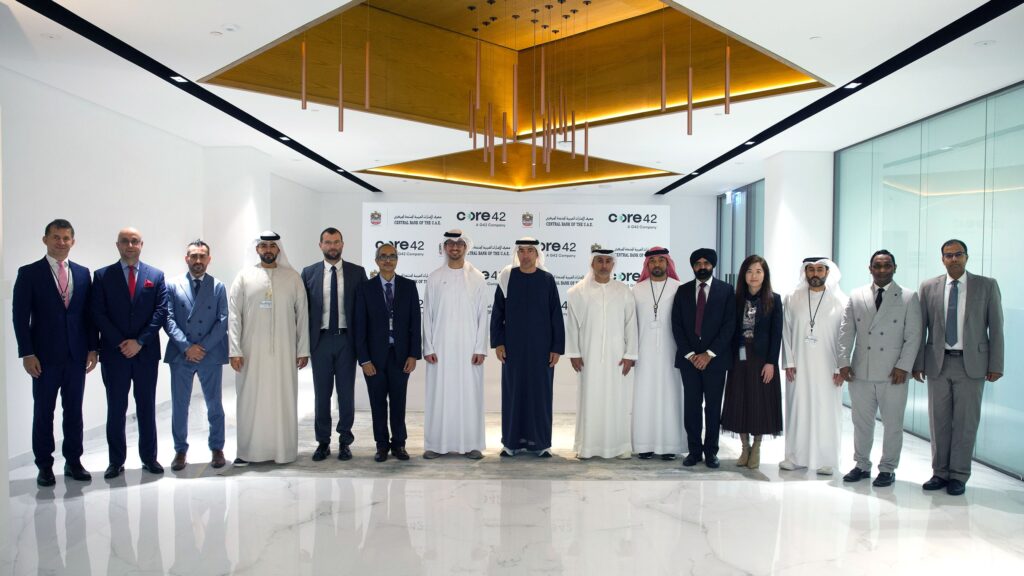
The Central Bank of the UAE (CBUAE) has partnered with Core42, a G42 company and full-spectrum AI enablement solutions provider, to build a sovereign financial cloud services infrastructure, the world’s first dedicated financial cloud ecosystem.
Built on the latest financial technology, the sovereign financial cloud service infrastructure (SFCSI) is part of CBUAE’s Financial Infrastructure Transformation programme, which aims to position the UAE as a global leading hub for secure and innovative financial services.
The SFCSI is supported by a centralised, highly secure, dedicated and isolated infrastructure that ensures data sovereignty, enhances operational agility and provides robust protection against cyber threats, while enabling the continuous availability of critical financial services for the entire UAE financial sector.
Powered by advanced AI and analytics, the SFCSI will enhance operational efficiency across the financial sector. Through intelligent automation and real‑time data analysis, financial institutions will gain deeper insights and make more informed decisions, ultimately improving the overall customer experience.
In addition, the platform will provide a comprehensive environment for the management of multi‑cloud services within a unified framework, thereby enabling LFIs to administer all their services seamlessly and with high efficiency.
The signing ceremony was witnessed by Khaled Mohamed Balama, Governor of the CBUAE, during which the agreement was signed by Saif Humaid Al Dhaheri, Assistant Governor for Banking Operations and Support Services at the CBUAE, and Talal M. Al Kaissi, Chief Executive Officer (Interim) of Core42. The ceremony was also attended by assistant governors, along with senior officials from both institutions.
“The national sovereign financial cloud services infrastructure marks a strategic step in strengthening the UAE’s financial resilience and technological leadership,” Al Dhaheri said. “It provides a secure, scalable and future‑ready foundation that enhances data protection and accelerates innovation, enabling the CBUAE together with licensed financial institutions to deliver next‑generation digital services with confidence.”
He added that with integrated AI and advanced analytics, the platform empowers the CBUAE to leverage intelligent automation and data‑driven insights, reinforcing the UAE’s global competitiveness and supporting sustainable economic growth.
Al Kaissi stated, “Finance runs on digital infrastructure; hence, it must be sovereign. The sovereign financial cloud services infrastructure embeds governance and real-time oversight directly into the financial backbone of the country.
“Developed in close partnership with the CBUAE, it reflects a shared commitment to building infrastructure that is engineered for regulatory clarity and national resilience. It allows regulated institutions to scale advanced sovereign cloud and AI capabilities without compromising national control.”
Combined fleet to total 1,029 aircraft across 79 countries
Acquisition adds 37 airline customers, expands into seven new countries
Deal expected to close in H2 2026, subject to regulatory approval
Dubai Aerospace Enterprise said on Thursday it will buy aircraft leasing firm Macquarie AirFinance for an enterprise value of about $7 billion, creating a combined fleet of 1,029 planes and one of the world’s biggest lessors.
The sale, which followed a competitive bidding process, underscores strong investor appetite for aircraft assets as Boeing and Airbus struggle to ramp up production to meet airline demand.
The global aircraft leasing market is dominated by AerCap Holdings N.V. and SMBC Aviation Capital, both based in Ireland.
The Macquarie AirFinance deal would lift DAE into the top tier, analysts said.
“(It) … fast tracks Dubai Aerospace Enterprise to the forefront of global aircraft leasing,” said Tim Waterer, chief market analyst at KCM Trade, adding that the deal also diversifies the Dubai state-owned lessor’s customer base and increases exposure to newer aircraft, even as supply constraints at major manufacturers persist.
The combined fleet will serve 191 airlines in 79 countries, with narrowbody jets accounting for about 70 percent of the portfolio, DAE said.
The acquisition, which adds 37 airline customers including carriers in seven countries where DAE has no presence, will be funded through a mix of debt and equity.
DAE CEO Firoz Tarapore said the deal would create a “bigger, stronger, more diversified and well-capitalized” company, adding that the combined entity’s scale would support more competitive pricing and a broader customer offering.
DAE is owned by the Investment Corporation of Dubai, the main investment arm for the government of the emirate. The company acquired Dublin-based AWAS, the world’s tenth biggest aircraft lessor, in 2017.
Macquarie AirFinance is owned by Australia’s diversified investment service provider Macquarie Group.
The deal has been approved by DAE’s board and is subject to regulatory approvals, DAE said in a statement.
It is expected to close in the second half of 2026.
Two films by Arab filmmakers won top prizes at the 76th edition of the Berlin International Film Festival, where filmmakers used their time on stage to advocate for a free Palestine.
Lebanese director Marie-Rose Osta, accepting the Golden Bear for best short film for “Someday, a child,” denounced Israeli bombings in her home country and what she described as a “collapse of international law” in the region.
“In reality children in Gaza, in all of Palestine, and in my Lebanon do not have superpowers to protect them from Israeli bombs,” she said. “No child should need superpowers to survive a genocide empowered by veto powers and the collapse of international law … If this Golden Bear means anything, let it mean that Lebanese and Palestinian children are not negotiable,” she said.
Abdallah Al-Khatib, winner of the best documentary prize for “Chronicles from a Siege,” brought a Palestinian flag on stage, and called out the German government for what he called its “complicity” in Israeli “genocide” in Gaza.
“We will remember everyone who stood with us, and we will remember everyone who stood against us, against our right to live with dignity, or those who chose to be silent. Free Palestine from now until the end of the world,” he said.
Opening the awards ceremony, Berlinale director Tricia Tuttle addressed the controversy surrounding this year’s festival, as artists called out Berlinale for not taking a stance on Palestine. She described this year’s festival as having “felt raw and fractured,” with many attendees arriving in Berlin “with grief and anger and urgency about the world that takes place outside the cinema walls.
“That grief, that anger and that urgency is real and belongs in our community. We hear you,” Tuttle said.
source/content : arabnews.com (headline edited)
________________
Lebanese director Marie-Rose Osta, accepting the Golden Bear for best short film for “Someday, a child.” (AFP)
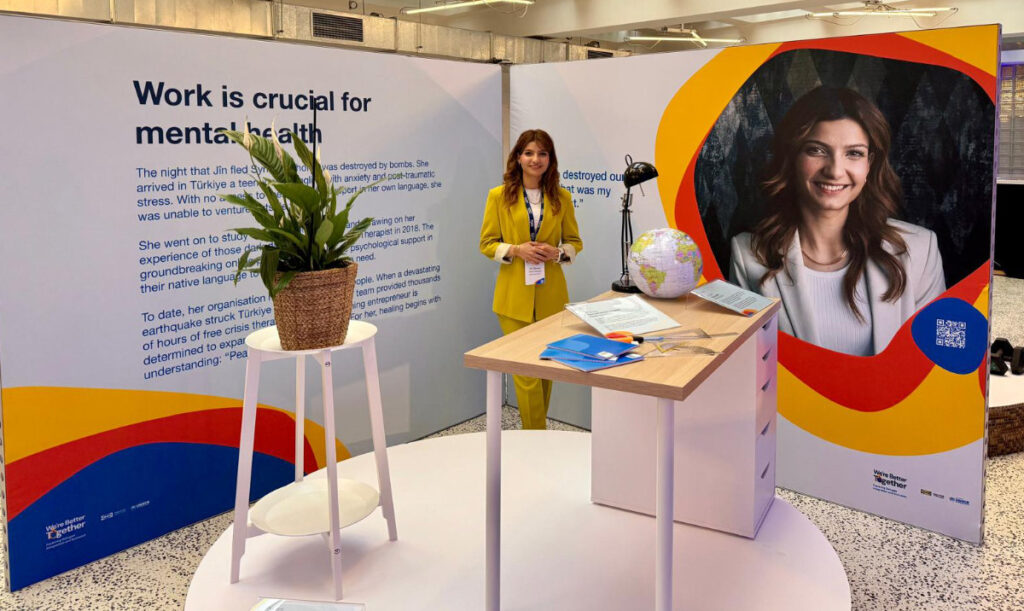
Jin Dawod created Peace Therapist to deliver anonymous, culturally sensitive therapy to refugees in four languages worldwide
Self-funded platform has provided 70,000 sessions across Turkiye, Syria and Europe, partnering with UN agencies after disasters
When Jin Dawod fled the Syrian civil war as a teenager and sought refuge in Turkiye, she carried with her the invisible weight of displacement — fear, uncertainty and isolation.
Years later that experience would shape Peace Therapist, a digital psychological support platform she founded in 2018 to provide accessible mental health care in four languages to refugees.
Dawod told Arab News that while adjusting to life in Turkiye, she realized there was little support available in Arabic for refugees struggling with their mental well-being.
During her second year studying computer engineering, she decided to build a solution: an online therapy platform connecting refugees with psychologists in their mother tongue.
“After the civil war in Syria and my personal experience with it, I found out most of the refugees don’t have space to feel, to express, to talk, or even to ask questions,” she told Arab News.
Since its launch, Dawod said the social enterprise has delivered more than 70,000 sessions across Turkiye, Syria and Europe, helping thousands begin the process of healing.
“I wanted to make a solution that is accessible, anonymous, and in the mother language for the people who are reaching out for help,” she said.
The need is stark. According to the World Health Organization, refugees and migrants exposed to adversity are at greater risk of depression, anxiety, post-traumatic stress disorder and psychoses, sometimes leading to suicide.
In some countries, psychoses are more prevalent among migrants, linked to cumulative social disadvantage throughout their journey.
The WHO reports that 22 percent of people who have experienced war or conflict in the previous decade will suffer from depression, anxiety, PTSD, bipolar disorder or schizophrenia.
Yet refugees and migrants often face barriers that limit both access to and acceptance of mental health services, including discrimination, language gaps and concerns over confidentiality.
Peace Therapist operates through three models. The first provides direct support to individuals, no matter where they are.
“Anyone anywhere can reach out to these therapists from anywhere in the world, if they are speaking the four languages that we are supporting we can give them psychological support and mental health services needed,” Dawod said.
The second model focuses on partnerships with organizations, including UN agencies and nonprofits. After the devastating Syria-Turkiye earthquake in 2023, Dawod shared a helpline on social media for those affected.
Within hours, she said, 200 requests for support poured in from refugees and Turkish nationals traumatized by the 7.8 magnitude quake and its aftershocks.
“We worked with ILO and we supported six survivors in Syria and Turkiye and we later matched them with job opportunities. Also, we worked with UNHCR and with the SPARK organization,” she said.
SPARK, an independent non-governmental organization, partners with UN agencies to help young people, women and refugees in fragile states access education, employment and entrepreneurship.
The third model — and, Dawod insists, the most important — is the social plan, which offers free sessions to refugees and disadvantaged groups.
“Our social plan is the heart of Peace Therapist,” Dawod said. “That is why Peace Therapist was born in the first place. And we don’t want to forget why it was born in the first place — to support refugees.”
Sustaining that free support is also the greatest challenge; the platform is self-funded.
“We don’t have a specific government or organization that is sponsoring Peace Therapist. We are independent and we are self-managing,” Dawod said, calling on the international community to collaborate and expand access to mental health services.
Her work has earned global recognition, including the 2024 UNHCR Nansen Refugee Award for Europe and the Youth Leadership and Innovation Award by the Global Forum on Migration and Development, bringing her to platforms such as the UN and the European Parliament.
“We are so happy to be recognized globally. We have many global awards like the Nansen Refugee Award and the UN Action Award … we are honored to have these amazing awards,” she said.
But the accolades are secondary.
“We want to always be there in the field and always be touching the people who are reaching out for us. Because the biggest award for us is the feedback that we are having from the people who are reaching out,” she said.
The UN reports that by the end of April 2025, around 122 million people were forcibly displaced worldwide — the highest level on record. UNHCR said that as of 2025, 1.2 million mental health consultations and psychosocial support services had been provided globally.
The WHO stresses that effective mental health care for displaced populations requires culturally sensitive, multidisciplinary approaches that integrate social support, legal assistance and community engagement.
Peace Therapist’s team now includes more than 150 psychologists from diverse cultural backgrounds.
“That is so important, to be able to support the people with the cultural, culturally sensitive services,” said Dawod. “We have psychologists from Lebanon, Iraq, Palestine, Syria, of course, Turkiye and many other Arab countries, and also international experts.”
The platform also uses artificial intelligence to match users with therapists based on their needs and the psychologist’s expertise.
“When we are providing psychological support, it’s really important to match with the right psychologist because it could be also harmful more than it can be useful when you are matched to the wrong person,” Dawod said.
For many refugees, stigma, racism and discrimination further delay seeking help, the WHO notes, worsening mental health outcomes.
“There is already a lot of stigma on mental health, and we don’t want people to lose the encouragement of having and asking for help,” Dawod added.
As displacement reaches record levels, digital platforms like Peace Therapist are increasingly viewed by humanitarian organizations as scalable solutions in conflict and post-conflict settings.
WHO’s Comprehensive Mental Health Action Plan 2013-2030 emphasizes promoting mental wellbeing and addressing disparities in access to care, particularly for refugees and migrants.
For Dawod, however, the mission remains deeply personal.
“Peace Therapist was born because of war, so our mission is always to build peace — inner peace and peace in the world. It all starts from inside of us.”
source/content: arabnews.com (headline edited)
___________
Jin Dawod, a refugee from Syria, created Peace Therapist to deliver online therapy to displaced people in four languages. (Supplied)
Partnership with Huawei enables fast, secure, and reliable connectivity for travelers across airports.
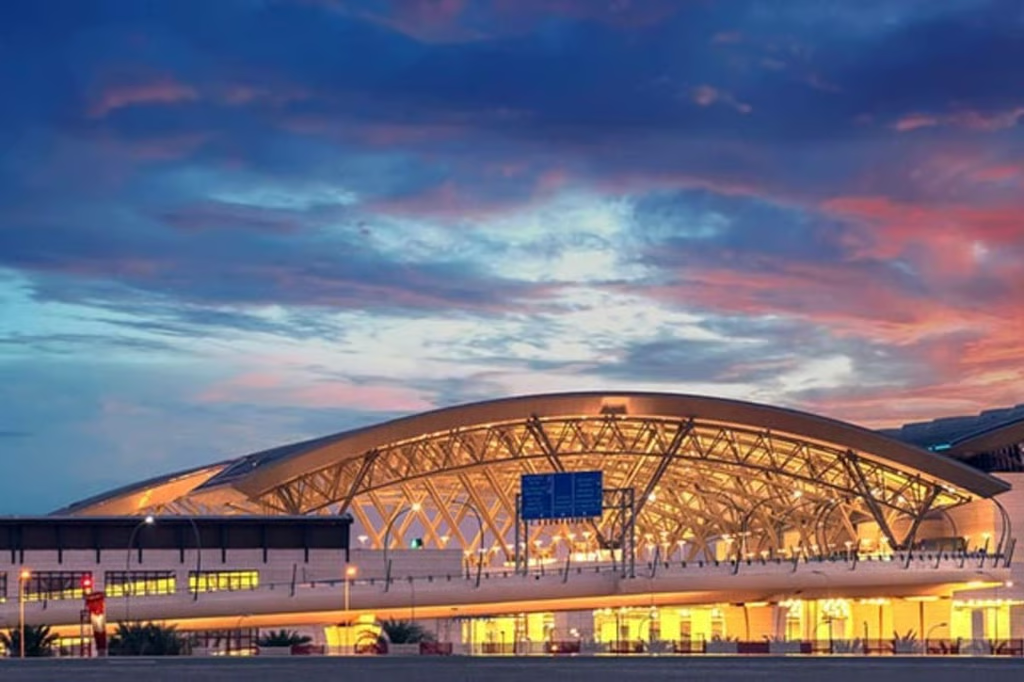
Oman Airports has set a global precedent by becoming the first airport operator worldwide to deploy Wi-Fi 7 technology across its facilities. The rollout of this next-generation wireless technology, implemented in partnership with Huawei, is now fully operational at Oman’s airports, including the flagship Muscat International Airport. This technological advancement promises travelers faster speeds, stronger security, ultra-reliable connectivity, and a seamless digital experience tailored to meet the needs of modern passengers.
Supporting high traffic at airports
Wi-Fi 7 represents a significant leap forward in wireless networking, offering up to five times the speed of its predecessor Wi-Fi 6E, with maximum theoretical speeds soaring from 9.6 Gbps to 46 Gbps. Moreover, Wi-Fi 7 enhances network capacity by supporting a dramatically larger number of simultaneous users, essential for busy airport environments where thousands of travelers and operational systems require stable and high-speed internet access concurrently.
At Muscat International Airport alone, Wi-Fi 7 supports connectivity for over 40,000 daily travelers. Deployment extends throughout departure halls, check-in counters, retail spaces, and dining areas, ensuring consistent quality connectivity for passengers and critical airport services alike. Passengers can now enjoy ultra-smooth streaming, rapid downloads, and reliable video calls, which greatly elevate comfort and convenience during their travels.
Importantly, this upgrade also benefits airport operations by enabling faster, more secure data transmission for essential systems such as biometric identification, e-gates, and identity verification platforms. These systems are crucial for Oman and the broader Gulf region, especially with the upcoming rollout of the Gulf Cooperation Council’s (GCC) ‘one-stop’ travel system—an initiative allowing citizens to complete immigration and security procedures at their departure airport, bypassing formalities at arrival destinations.
Enhancing operational efficiency
Oman Airports’ move to pioneer Wi-Fi 7 aligns with the country’s Vision 2040, which emphasizes smart infrastructure and world-class digital services. By adopting cutting-edge technology, Oman Airports is modernizing its services and demonstrating the Sultanate’s commitment to innovation in the aviation sector. This deployment not only improves passenger experience but also significantly boosts operational efficiency—a critical factor in sustaining high standards of airport management amidst growing travel demands.
Ahmed Al Amri, CEO of Oman Airports, remarked that the Wi-Fi 7 launch “is an important milestone in our journey to upgrade the passenger experience and enhance operational efficiency,” reaffirming Oman Airports’ commitment to innovation and positioning it as a leader in digital advancement.
The upgrade was achieved through a close partnership with Huawei, which provided its innovative Wi-Fi 7 solution. Huawei’s technology offers unprecedented bandwidth, low latency, and superior concurrency capabilities, ensuring that even during peak times, passengers and staff experience seamless connectivity. This is particularly important given the challenge of servicing tens of thousands of passengers daily, who increasingly rely on digital connectivity for everything from online check-ins to streaming entertainment and real-time communications.
Wi-Fi 7 devices can operate simultaneously across the 2.4 GHz, 5 GHz, and 6 GHz frequency bands, switching dynamically to optimize performance and minimize network congestion. This feature significantly reduces latency and enhances connection stability, which is vital in crowded airport zones and in supporting high-data-demand applications.
source/content: economymiddleeast.com / Middle East Economy (headline edited0
______________
The upgrade facilitates biometric systems, aiding smooth immigration processing for travelers in the region
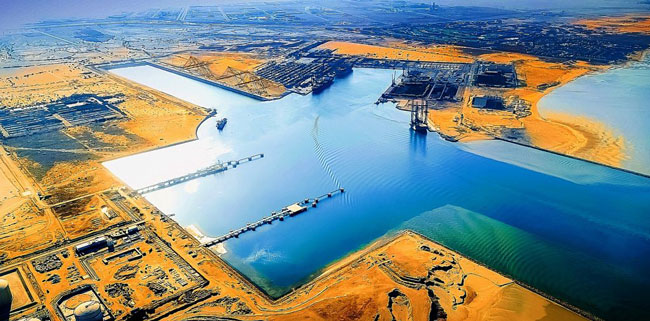
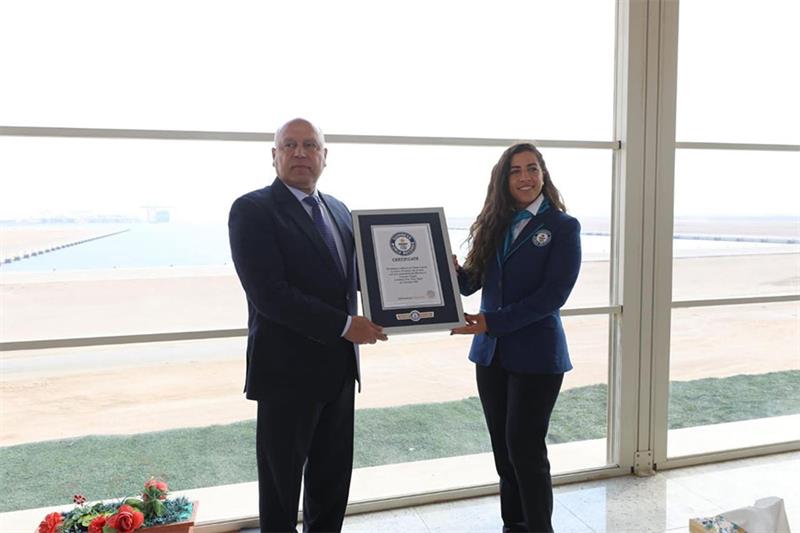
Egypt’s Ain Sokhna Port has been recognized by Guinness World Records as the deepest man-made port basin constructed on land, with a depth of 19 metres, the Ministry of Industry and Transport said on Monday.
Deputy Prime Minister for Industrial Development and Minister of Industry and Transport Kamel Al-Wazir received the certificate, which the ministry said reflects recent expansion works at the Red Sea port, a key hub within the Suez Canal Economic Zone (SCZone).
Ain Sokhna is being developed as a major logistics and transit centre serving Egypt’s eastern coastline and the Gulf of Suez, with the government aiming to boost export and import flows and strengthen Egypt’s role in global supply chains.
The ministry said ongoing development plans include the excavation of five additional port basins, each with a depth of 19 metres, with a total excavation volume of 120 million cubic metres. Dredging operations are underway, with planned dredging volumes reduced from an initial 70 million cubic metres by 25 million cubic metres following technical reviews.
The port has also been linked to a multimodal transport network through a 30-kilometre internal railway system connecting it to national rail lines, road networks, dry ports, and logistics zones.
As part of Egypt’s Vision 2030 transport strategy, the ministry plans to construct 70 kilometres of new quays with depths ranging from 18 to 25 metres, bringing the total quay length across Egyptian seaports to more than 100 kilometres. The strategy also targets expanding the national maritime fleet to 40 vessels capable of transporting up to 25 million tonnes of cargo annually.
Egypt has stepped up investment in port infrastructure nationwide. At Alexandria Port, a second floating storage and regasification unit (FSRU), Energos Power, with a liquefied natural gas storage capacity of 174,000 cubic metres, has recently entered service under a lease agreement with US-based New Fortress Energy.
The Egyptian Holding Company for Maritime and Land Transport has also signed a memorandum of understanding with Abu Dhabi Ports Group to develop logistics areas at Alexandria Port, including storage, customs warehousing, and re-export services.
At Ain Sokhna and Dekheila ports, Egypt has partnered with global shipping and terminal operators —including CMA CGM, COSCO Shipping, and Hutchison Ports—in projects valued at $1.6 billion to build, operate, and manage container terminals. Dubai-based DP World is also operating three major projects at Ain Sokhna Port, with the first phase of its logistics zone completed earlier this year .
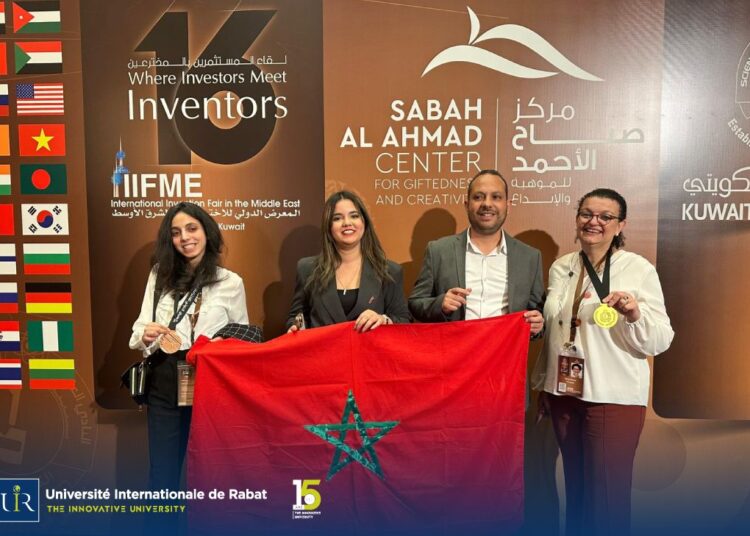
In addition to individual distinctions, UIR received an institutional Gold Medal in recognition of its academic excellence and strong commitment to innovation and research development.
The International University of Rabat (UIR) has once again gained international recognition after winning major awards at the International Fair in the Middle East
The event, held with the support of the World Intellectual Property Organization (WIPO) and the International Federation of Inventors’ Associations (IFIA), brought together innovators from around the world, highlighting cutting-edge research and technological advancements.
The fair highlighted two health-related innovations developed at UIR. The first received a Gold Medal for an innovative endodontic instrument designed by Professor Sonia Ghoul and Professor Abdelwahed Barkaoui from the university’s CRESS and LERMA laboratories.
The dental tool is designed to recover itself in case of fracture during a root canal procedure, a complication that can create serious challenges in dental practice. The innovation reduces risks for patients, lowers stress during procedures, and limits the need for invasive interventions by integrating a recovery mechanism directly into the instrument.
It introduces a new approach in endodontics by addressing potential technical failure as part of the solution itself, according to a statement from UIR.
The second award, a Bronze Medal, was granted to iRespire, a smart asthma monitoring system developed by Nouhaila Fraihi and Professor Ouassim Karrakchou at UIR’s TIC Lab.
The system relies on Edge AI technology to provide continuous and personalized monitoring for asthma patients. It combines a smart inhaler, an electronic stethoscope, environmental sensors, and a connected watch to analyze real-time physiological and environmental data.
Its goal is to predict asthma attacks before they occur and improve medical management through data-driven insights. The project represents a step toward more predictive and connected healthcare, UIR said.
In addition to these individual distinctions, UIR also received an institutional Gold Medal in recognition of its academic excellence and strong commitment to innovation and research development.
Founded in 2010, UIR has quickly positioned itself as one of Morocco’s leading higher education institutions. The university has strengthened its international reputation in recent years through global rankings and research achievements.
UIR entered the top 1,000 universities worldwide in the Times Higher Education World University Rankings and has ranked first nationally in the Impact Rankings, which measure universities’ contributions to the United Nations Sustainable Development Goals.
The university has also expanded its global academic partnerships, including a strategic collaboration with Mississippi State University in the United States to promote joint research and student exchange programs.
Meanwhile, its flagship Rabat Business School has earned international recognition in global management rankings, ranking 20th worldwide in the 2025 Financial Times Masters in Management (MiM) ranking.
The UIR’s leadership has celebrated the university’s achievement during its 15th anniversary in November, including the high employability rate of 93% one year after graduation.
Almigdad Hassan describes his journey covering killings, hunger and disease
RSF continues onslaught as world fails to stop Sudan war
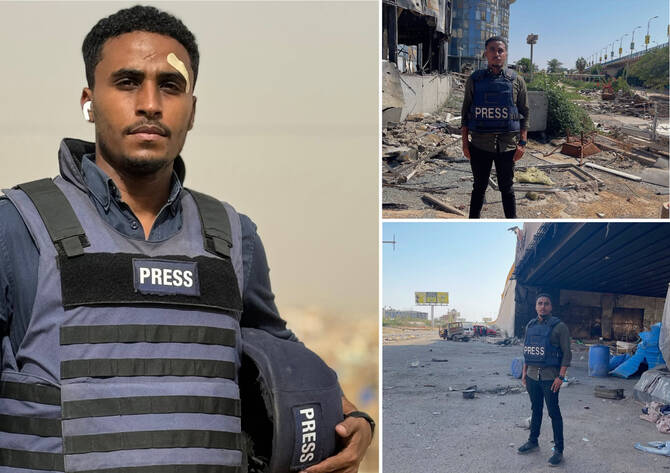
When war erupted in Sudan in April 2023, Almigdad Hassan, a 27-year-old pharmacy graduate from the University of Khartoum, had just begun his first job at a pharmaceutical company.
Within days, the explosions that trapped him in the capital pushed him into frontline war reporting for Saudi Arabia broadcasters Al Arabiya and Al Hadath.
It was a decision that would later earn him an international free press award for courageous coverage of one of the world’s most underreported and inaccessible humanitarian catastrophes.
As most residents fled Khartoum, Hassan said he felt compelled to stay.
“Something inside me was driving me to stay, but I didn’t know what it was,” Hassan told Arab News after winning the Newcomer of the Year award from Free Press Unlimited, a Netherlands-based international press freedom organization.
“I just felt that this was my chance to use my talent in media to do something for my people and humanity.”
At the time, he took three days to accept Al Arabiya’s offer to become an official war correspondent, following a previous internship with the network.
He did not anticipate that the power struggle between the Sudanese Armed Forces and the Abu Dhabi-backed Rapid Support Forces would spiral into a protracted war — now nearing its third anniversary and widely described as the world’s worst humanitarian crisis.
“Things escalated so quickly in Khartoum. Main roads and bridges were blocked, armored vehicles and military checkpoints were seen everywhere,” Hassan said, referring to the RSF’s seizure of Khartoum International Airport, the presidential palace, and several military bases in April 2023.
“Every time I carried my equipment and stepped outside to report, I did not know whether I would reach my assignment or make it back home. Every decision put my life at risk.”
He shared harrowing testimonies from survivors in displacement camps in El-Obeid, North Kordofan, where residents had fled violence in the RSF-controlled towns of Kadugli and Dilling in South Kordofan before their liberation during a major SAF army breakthrough last fortnight.
“I heard more than 10 accounts of grave human rights violations, including mass killings, torture, widespread gang rape, and arbitrary imprisonment,” Hassan said of his reporting last December.
Hassan recounted 15 months of reporting from RSF-controlled Khartoum before the SAF retook the capital last March, describing it as “the darkest time of my life”.
“Khartoum was hell back then. It was the worst place in the world in terms of security and the violation of every basic human right to a level no one can imagine,” Hassan said.
He recalled that the most harrowing scenes he witnessed came within the first week of the war, when “bodies of residents lay decomposing in the streets and were eaten by dogs.”
“This was the moment I realized our humanity was being erased, just as those bodies were slowly vanishing,” Hassan said, “but it reinforced my belief that documenting these horrors was my mission, no matter the risks.”
He reported attacks involving killings, rape, and arbitrary kidnappings carried out inside private homes. He also pointed to unofficial mass graves hastily dug into residential streets to bury the dead, while some bodies were left to decompose inside houses.
“The armed men would celebrate killing residents because anyone living in army-controlled areas was seen as supportive of the army,” Hassan said.
“These are not only media narratives. It is a reality people lived.”
Since the war began, both the RSF and SAF have been accused of committing atrocities. However, the RSF has been accused of genocide against non-Arab groups such as the Masalit, Fur, and Zaghawa tribes in West Darfur. Abu Dhabi has been accused of backing the RSF.
Last year, a detailed report produced by Amnesty International provides evidence for the presence of UAE armored personnel carriers and infantry fighting vehicles in Sudan being used by the RSF in particular. Amnesty also accuses the RSF of war crimes.
In August 2024, 15 months into the war, the UN-backed Famine Review Committee of the Integrated Food Security Phase Classification declared famine in North Darfur’s Zamzam displacement camp, which had been under RSF blockade — the committee’s first such determination in more than seven years.
Last November, the UN declared famine in RSF-controlled Al-Fasher, the capital of North Darfur, and Kadugli, the capital of South Kordofan, warning that a further 20 areas across Darfur and Greater Kordofan were at risk in what it described as “the world’s largest hunger crisis.”
Last fortnight, the global hunger monitor issued an alert saying famine thresholds for acute malnutrition had been surpassed in the contested North Darfur localities of Um Baru and Kernoi.
Hassan pointed to the lack of safety and severe movement restrictions in RSF-controlled areas, describing neighborhoods as “largely emptied of residents” and cut off, with no services or medical supplies.
By autumn 2024, months before Khartoum was reclaimed by the army, residents in some neighborhoods were dying from diseases such as dengue fever, with no access to basic medical supplies or care.
Hospitals, he said, were reporting at least four deaths a day.
During the outbreak, which also infected some of his fellow journalists, Hassan said he relied on his training as a pharmacist to assess the risks but was still “scared for my life, knowing the risk was high and there was little protection.”
He said he felt a responsibility to document both the military and humanitarian dimensions of the war, particularly in the absence of any rule of law or effective security presence.
People, he noted, were entirely dependent on humanitarian support at a time when aid organizations were denied access.
“It was hard to witness this as a human being, let alone document it as a journalist,” he said. “Even enemies have basic human rights that need to be maintained, but unfortunately, what I saw was that fighters and armed militia got used to the act of killing in a horrific manner.”
The RSF, he said, engaged in direct clashes that killed civilians while also burning entire villages and looting livestock, shops, and property. Once-bustling roads in Khartoum had become deserted, unrecognizable corridors of destruction.
According to UN figures, the conflict has displaced roughly 14 million people and killed hundreds of thousands.
Hassan said his work as a journalist allowed limited movement around Khartoum after complex security arrangements with both sides — a privilege unavailable to most civilians.
“Yet, we were often caught in crossfire and at risk of being killed by the other warring party, which viewed us as siding with the enemy,” he said.
“As journalists, we relied on solar power to charge our equipment and stay connected, which gave us more access than ordinary citizens. Even then, once we left our office — often our only safe space — we were completely isolated. If something happened to you in the streets, no one would know.”
Beyond the devastating loss of human life, Hassan said the violations extended to Sudan’s cultural heritage and national history.
Reporting from the aftermath of attacks on the presidential palace and the national museum, he said he witnessed the destruction and looting of artifacts tracing the country’s history since independence.
“I watched the country’s history being erased in front of my eyes,” he said, referring to damaged artifacts, gifts from earlier eras, and the destruction of classic cars once used by former presidents.
“I realized the brutality of this war when I saw people killing their own countrymen and destroying their own culture, heritage and history.”
Hassan described residents’ “hysterical happiness” in every area retaken by the army. Many, he said, likened life under RSF rule to “colonialism,” saying they were treated like foreigners rather than Sudanese.
Though both sides have been accused of violations, Hassan said people want a ruling authority that restores the basic dignity and human rights they lost.
In announcing the award, Free Press Unlimited said Hassan was recognized for his “dedication, courage, and ability to deliver compelling, accurate reporting under extreme conditions.”
Hassan said the recognition deepened his sense of responsibility toward humanity and strengthened his determination to continue reporting on the devastating war.
“With time, I understood the importance of what I do,” he said. “I realized how journalism can protect lives and deliver voices that would otherwise go unheard.”
He described the award as a shared responsibility with the international community. With his work now recognized globally, Hassan said his reach — and his mission — has only grown.
“It is no longer a job. It is my mission.”
source/content: arabnews.com (headline edited)
______________
Almigdad Hassan recounted 15 months of reporting from paramilitaries controlled Khartoum before the Sudan Armed Forces retook the capital last March, describing it as “the darkest time of my life.” (Supplied photos)
The Ministry of Culture has announced the inscription of five UAE heritage sites on the Islamic World Educational, Scientific and Cultural Organisation’s (ICESCO) List of Islamic World Tangible Heritage.
The announcement was made during the 13th session of the meeting of the Islamic World Heritage Committee (IWHC), held in Uzbekistan.
The newly inscribed UAE sites include Saruq Al Hadid in Dubai, alongside four sites in Sharjah – Al Faya site in the central region, the historic towers and forts of Khorfakkan, the Al Nahwa, and Wadi Al Helo.
Sheikh Salem bin Khalid Al Qassimi, Minister of Culture and Chairperson of the National Commission for Education, Culture and Science, said, “The inscription of these new sites on the List of Islamic World Tangible Cultural Heritage marks a significant milestone that reflects the depth and richness of the UAE’s cultural heritage, as well as the country’s commitment to protecting and preserving its historical sites. This recognition further underscores the UAE’s position as an active and effective member in the efforts led by ICESCO to preserve heritage across the Islamic world.”
He added, “We will continue to strengthen the presence of Emirati heritage on international heritage lists by documenting our historical sites and supporting initiatives that promote heritage sustainability and ensure its protection for future generations.”
The Minister of Culture also commended the efforts of the Ministry’s working teams, including the National Commission for Education, Culture and Science, for their pivotal role in coordination and follow-up with ICESCO. He lauded the contributions of the Ministry’s partners, including the Dubai Culture and Arts Authority and the Sharjah Archaeology Authority.
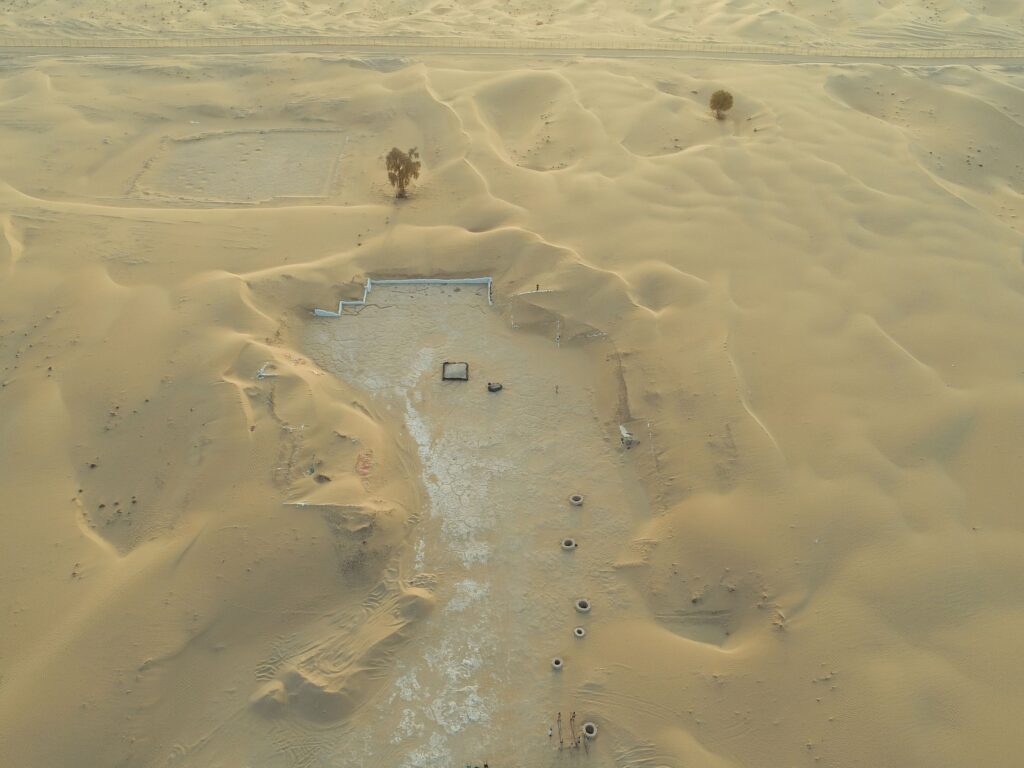
Located approximately 95 kilometres from the city, Saruq Al Hadid is one of the Dubai’s most remarkable archaeological sites. Discovered in 2002 after His Highness Sheikh Mohammed bin Rashid Al Maktoum, Vice President, Prime Minister and Ruler of Dubai, noticed dark patches in the sand dunes during a flight, the site was later identified as remnants of metallurgical slag from ancient smelting activities. Archaeological studies indicate that the site dates back to the Early Bronze Age (2600 BCE) and remained active until the Late Iron Age (550 BCE), making it one of the richest mining and metal production sites in the south-eastern Arabian Peninsula.
Excavations have uncovered thousands of historical artefacts, including bronze, pottery, and stone tools, a variety of weapons, gold and silver ornaments, seals, beads, and metal snake figures. These findings reaffirm the site’s standing as an advanced industrial hub for metal smelting during the Iron Age.
In the emirate of Sharjah, ICESCO inscribed the “Faya Palaeolandscape,” one of the region’s most significant heritage sites and an exceptional testament to early human settlement. Additionally, the inscription included Wadi Al Helo in the Eastern Region, recognised as the most ancient testimony of copper mining in the Arabian Peninsula during the transitional period from the Neolithic period.
The site stands as a comprehensive testament of the local development of copper mining techniques, reflecting the ancient relations between the valley’s inhabitants and the environment by adapting to its geological and geographical factors. Al Wadi contains rock carvings that date back to the Bronze Age as well as the remains of historic villages, making it living example of the integration between natural and cultural heritage and an ideal destination for ecotourism such as hiking and camping.
ICESCO also inscribed the historic towers and forts of Khor Fakkan, which form an integrated defensive system reflecting the city’s strategic importance over the centuries. These include the Portuguese Fort and Al Adwani Tower. These fortresses have played a pivotal role in protecting the harbour, standing as a living testament to the advancement of fortress architecture from the 14th century to the 20th century. The significance of the Portuguese Fort lies in being the only surviving triangular-shaped fort that remains standing in the eastern Arabian Peninsula to this day.
Located south of Khor Fakkan, the Al Nahwa was inscribed on ICESCO’s List for its unique archaeological and cultural value. The area features rock carvings from various historical periods, ranging from the Bronze Age to modern times. These carvings have been documented by using cutting-edge three-dimensional digital technologies as part of scientific efforts to preserve this human heritage and its endurance.
This new inscription builds on the UAE’s efforts to strengthen its presence on the Islamic World heritage lists. Previously inscribed sites include the Settlement and Cemetery of Umm An-Nar Island in Abu Dhabi, Abu Dhabi Sabkha, Khor Dubai, Sharjah: the Gate to the Trucial States, Sir Bu Nair Island, Sharjah’s Cultural Landscape of the Central Region, Ed-Dur Site in Umm Al Quwain, Al Bidya Mosque in Fujairah, as well as Dibba Al Hisn Fort, Fili Fort, and Wadi Shees in Sharjah.