Arabs & Arabian Records Aggregator. Chronicler. Milestones of the 25 Countries of the Arabic Speaking World (official / co-official). AGCC. MENA. Global. Ist's to Top 10's. Records. Read & Enjoy./ www.arabianrecords.org
El-Enany highlighted the importance of the partnership between UNESCO and the foundation, which he said allows the organization to increase the scale of its ambition in the work it does.
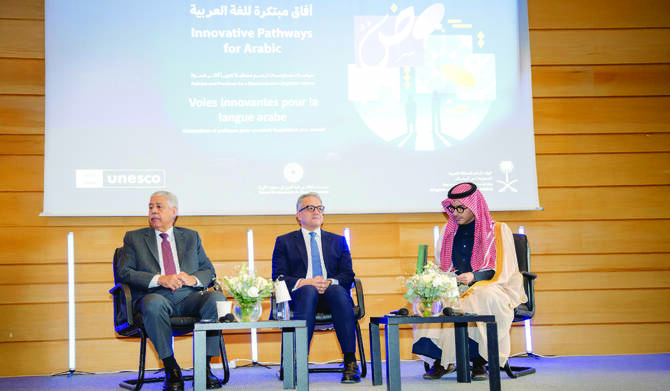
The charitable Sultan bin Abdulaziz Al-Saud Foundation and the UN Educational, Scientific and Cultural Organization celebrated World Arabic Language Day with an event in Paris this week under the theme “Innovative Pathways for Arabic: Policies and Practices for a More Inclusive Linguistic Future.”
Organized in collaboration with the Kingdom’s permanent delegation to UNESCO, it brought together a distinguished group of international leaders, policymakers, experts, intellectuals and specialists in linguistic and cultural affairs from around the globe, organizers said, to underscore the global standing of the Arabic language and its pivotal role in promoting cultural diversity and dialogue among civilizations.
The participants included Khaled Ahmed El-Enany, director general of UNESCO; Abdulelah Altokhais, Saudi Arabia’s permanent delegate to the organization; and Saleh Ibrahim Al-Kholaifi, the foundation’s director general.
In his speech at the event, El-Enany highlighted the importance of the partnership between UNESCO and the foundation, which he said allows the organization to increase the scale of its ambition in the work it does. A number of key projects are planned as part of the collaboration, he added.
source/content: arabnews.com (headline edited)
________________
The participants included Khaled Ahmed El-Enany, director general of UNESCO; Abdulelah Altokhais, Saudi Arabia’s permanent delegate to the organization; and Saleh Ibrahim Al-Kholaifi, the foundation’s director general. (Supplied)
Across the GCC, water towers represent rare cases where infrastructure becomes architecture, fusing modernist design and urban symbolism to create landmarks that shape skylines and cultural memory.
Throughout the Gulf region, water towers represent special cases where infrastructure becomes engaging architecture. These towers push beyond their practical purpose, using different forms and public programming to create visual landmarks and destinations.
Rather than treating water storage as an invisible utility, governments snatched an opportunity to signal ambition and modernity, marking their emerging architectural identity. Spherical forms, inverted cones, and futuristic silhouettes turned practical structures into symbols, shaping how cities present themselves.
Together, these towers reveal how functional engineering can become urban character…
Burj al‑Khazzan — Saudi Arabia
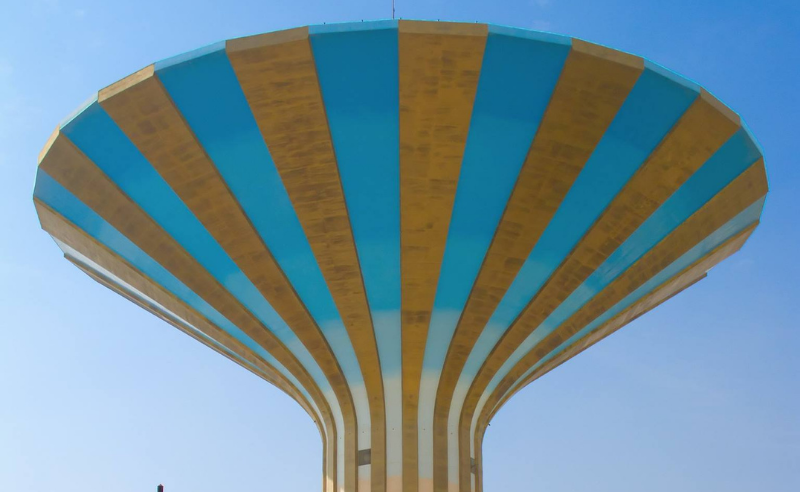
This tower, designed by Swedish architect Sune Lindstrom, is an early example of transforming infrastructure into a city landmark. Upon its completion in 1971, it was the tallest structure in Saudi Arabia standing at 61 metres. Its mushroom-shaped structure featuring an inverted cone top reflects iconic modernist silhouettes, solidifying its place as one of the memorable water towers of the region.
Al-Khobar — Saudi Arabia
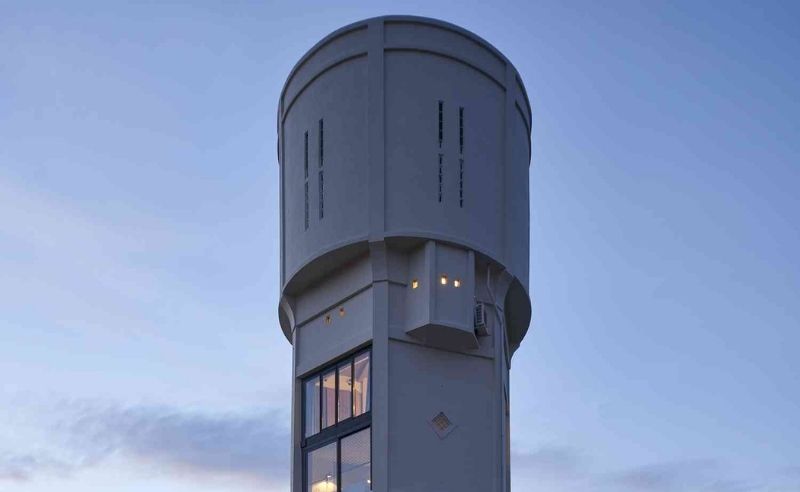
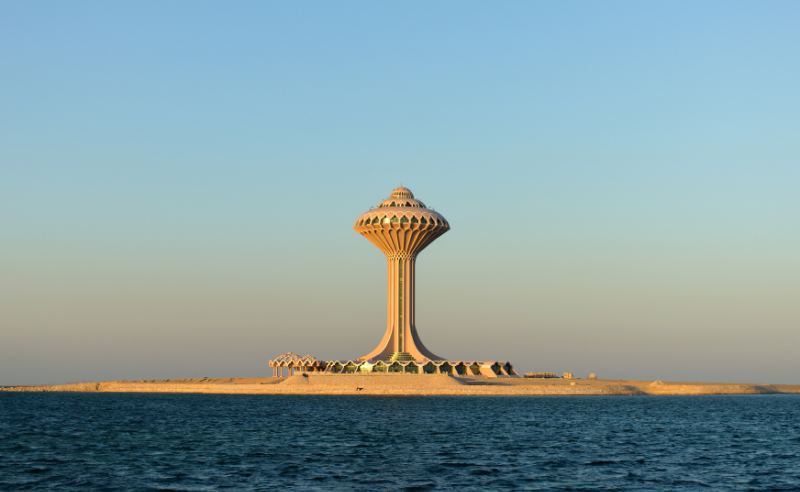
Originally a 90 meter water storage tower on an island off the Khobar’s corniche, this tower was designed using modernist and utilitarian architecture — standard of late 20th century Gulf infrastructure. The cylindrical concrete tower features simple geometric forms emphasising efficiency over ornamentation.
Currently, Al Khobar Water Tower is undergoing redevelopment employing fluid, wave-like futurist architecture. With plans to open green spaces, restaurants, and other leisure facilities, the tower transforms from functional infrastructure into a civic landmark.
Kuwait Towers — Kuwait
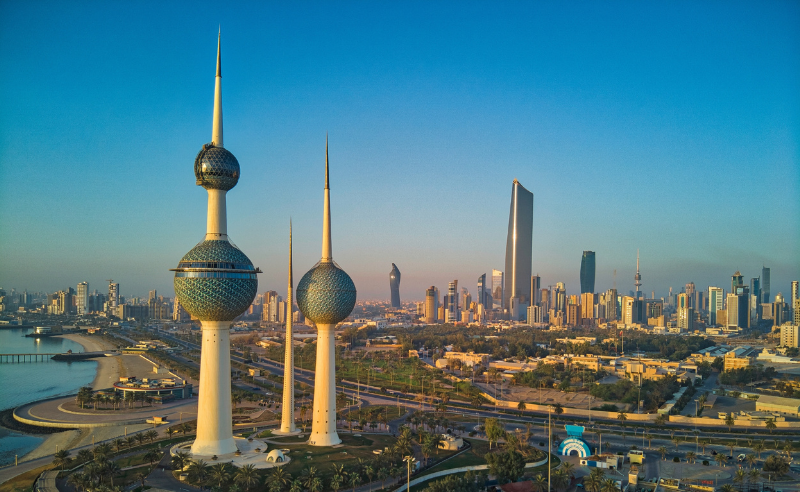
Featuring three towers with spherical water tanks, the Kuwait Towers use modernist-futuristic design to blend utility with sculptural elegance. Designed by Swedish architect Malene Bjørn, its spherical forms, clad in blue, green, and grey tiles, make them a defining element of the city’s skyline and a symbol of Kuwait’s modernisation. Representing the key integration of civic identity with tourism, the towers fuse functional storage with a revolving restaurant and rotating observation deck.
Buraidah Water Tower — Saudi Arabia
Rising above the city of Buraidah, the water tower doubles as a regional landmark. Completed in the late 20th century, it reaches 66 meters and features a cylindrical form with a public restaurant encircling the water tank. Its design balances utilitarian purpose with subtle modernist touches, ensuring its position as one of the city’s most distinctive buildings.
Burj Al Kharj — Saudi Arabia
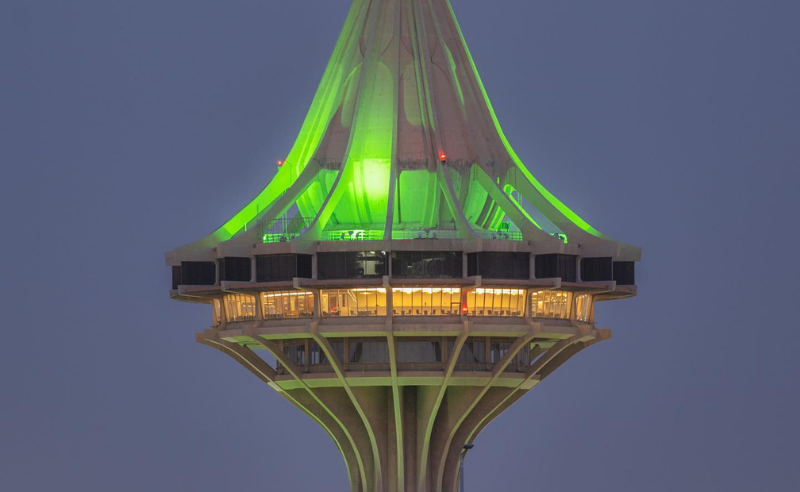
Dominating the skyline of Al Kharj, this tower is the pinnacle of utility, public engagement, and civic identity. This 105 meter tower features a revolving restaurant, auditorium, exhibition hall, and landscaped park. Its cylindrical form and modernist design reflect 20th century Gulf architecture alongside multiuse infrastructure. The towers’ clean lines, geometric shapes, and integration of public spaces reflect an approach to design that treats infrastructure as both utilitarian and as a civic landmark.
Mushroom Towers — Kuwait
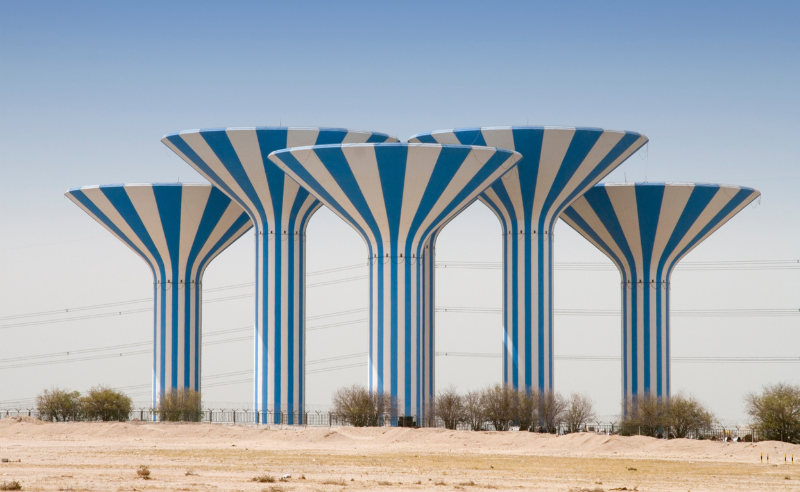
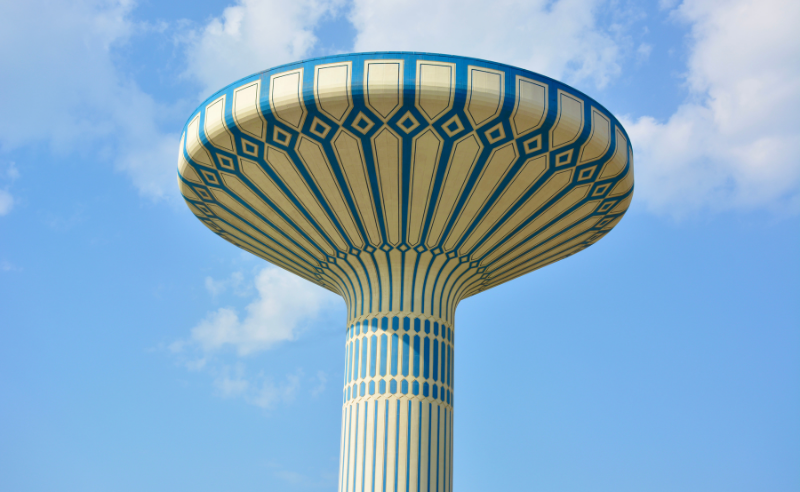
Including a distinctive network of 31 total water towers, the Mushroom Towers combine functional engineering with visually striking silhouettes. Each tower features a slender cylindrical shaft topped by a flaring, mushroom shaped tank, creating a recognisable profile. While primarily functional, their repeated form and unmistakable blue strips transform standard, necessary infrastructure into an architectural statement, illustrating whose systematic design can contribute to the development of urban identity and aesthetics.
Al Khazzan Park Tower — UAE
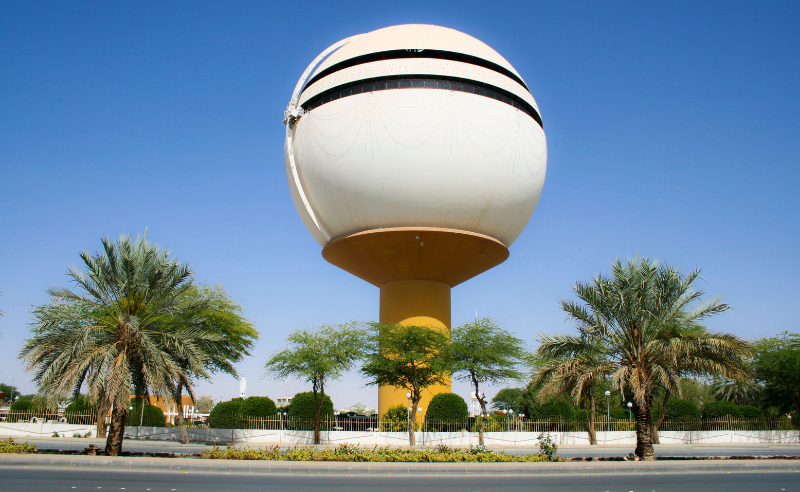
This water tower, the defining landmark of Al Khazzan Park, features a blue and white patterned tank standing about 40 meters high. Dubai Municipality rehabilitated the site as Al Khazzan Park, keeping the tower as a focal point while adding shaded lawns, a children’s play area, a small café-library and a ground-mounted photovoltaic array so the park operates as a zero-energy public space.
The project was framed as both an urban-greening and heritage-conservation effort, restoring an older community park from the 1970s–1980s era and preserving the tower as one of the neighbourhood’s most recognisable civic monuments.
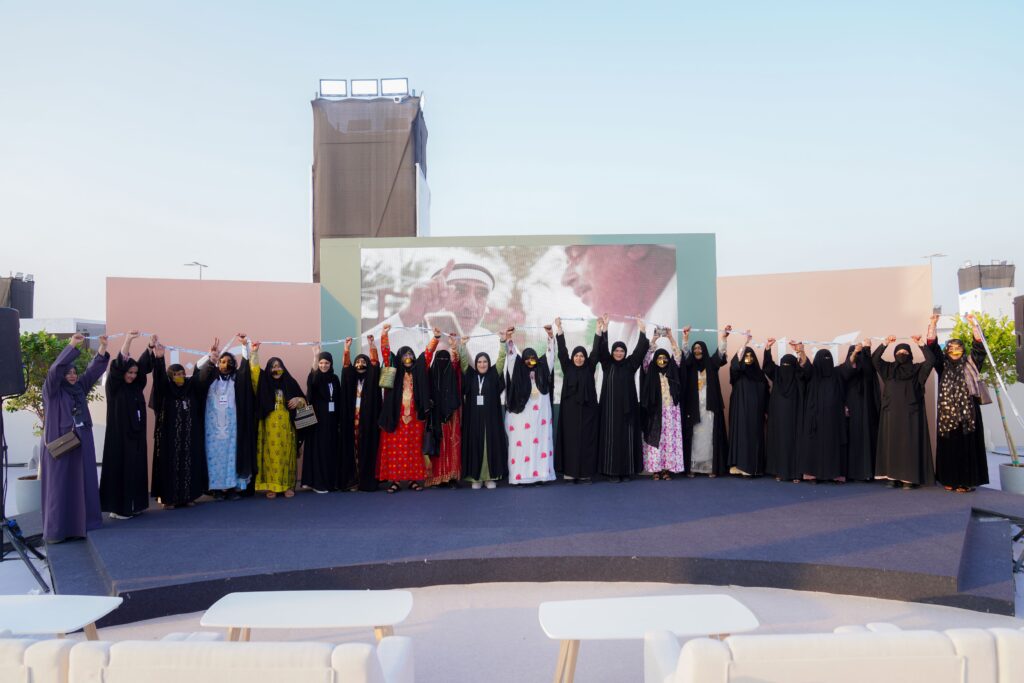
Zayed Authority for People of Determination has added a new achievement to the UAE’s international record, following the official recognition by Guinness World Records of the world’s longest chain of lanyards, measuring 663.53 metres.
The record-breaking chain consists of 1,300 lanyards, handcrafted by people of determination, with the participation of 13 national entities that contributed to turning the idea into reality.
This symbolic initiative carries a global message to raise awareness of hidden disabilities, reflecting the Authority’s ongoing commitment to enhancing community understanding of the needs of this group and fostering more inclusive and empathetic environments. The official announcement of the record took place during the Fifth Abu Dhabi Family Forum, in the presence of an international adjudicator from Guinness World Records, and was witnessed by families, institutions, and participating entities.
The project was implemented at the Authority’s Innovation Centre, where people of determination took part in designing, assembling, and coordinating the lanyards, supported by forum partners from national entities. These included: Sheikha Fatima Programme for Excellence and Artificial Intelligence; the Office of the Minister of Tolerance and Coexistence; Khalifa bin Zayed Al Awwal School; the Khalifa Empowerment Programme Team “Aqdar”; the National Archives and Library; the Emirates Red Crescent; Little Smarty Nursery; the Emirates Businesswomen Council; Air Arabia; Abu Dhabi Sports Council; the Family Care Authority; Hemaya Schools for Education – Dubai Police; and the Department of Culture and Tourism – Abu Dhabi. The efforts of these entities were integrated across the stages of production, printing, and community support to deliver this unique achievement.
Abdullah Abdulali Al Humaidan, Director General of Zayed Authority for People of Determination, affirmed that this global record reflects the vision of the wise leadership in establishing an inclusive and sustainable society. He noted that the participation of people of determination in executing the project embodies their creative capabilities and provides them with broader opportunities to excel and contribute to national achievements.
His Excellency added, “This record is not merely a new certificate in the UAE’s achievements register; it is a message that embodies the values of empowerment, respect, and humanity. It affirms that achievements are realised when efforts come together, and that people of determination are capable of achieving the impossible when provided with a supportive environment and committed partners.”
He further emphasised the Authority’s continued commitment to launching high-impact initiatives that highlight the capabilities of people of determination, strengthen their role in the UAE’s development journey, and contribute to new global achievements that reflect national competence and the spirit of determination and perseverance.
The sunflower lanyard is recognised globally as a symbol for raising awareness of hidden disabilities, aiming to enhance community awareness and encourage institutions to provide more understanding and supportive environments for this group.
The forum witnessed strong engagement from families and community members, who followed the moment the record was officially validated in the Guinness World Records registry—an event that reflects the scale of the work accomplished by the Authority and its partners, and highlights the vital role they play in raising community awareness of hidden disabilities.
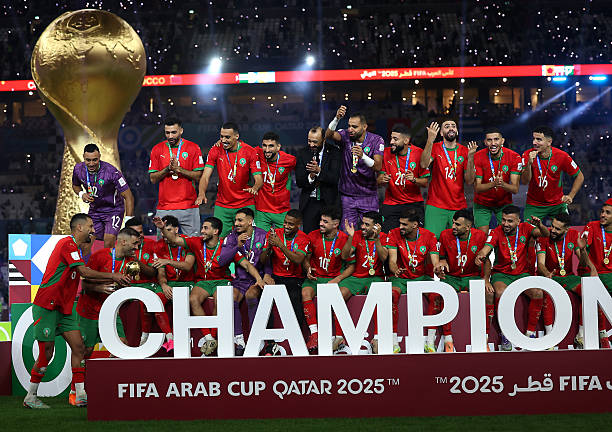
Morocco won the 11th edition of the FIFA Arab Cup with an action-packed 3–2 victory over Jordan in the final.
Exactly three years on from the unforgettable 2022 FIFA World Cup final, Lusail Stadium once again hosted the coronation of a champion. This time, it was the Arab world that came together in Qatar for the FIFA Arab Cup.
After 29 matches over 18 days, Morocco and Jordan were the last two teams left in contention for the title. The Atlas Lions had previously won the tournament in 2012, while Jordan were appearing in their first Arab Cup final, just a few years after losing the Asian Cup final at the same venue.
Before kick-off, there were concerns that the match would not go ahead at all. An unusually heavy downpour in Doha led to the suspension of the third-place match between the UAE and Saudi Arabia, raising doubts about the final. While several events were cancelled due to the weather, the showpiece match proceeded as planned.
Tens of thousands of fans braved thunderstorms to pack Lusail Stadium, and they were rewarded just minutes into the game. Oussama Tannane opened the scoring with a stunning long-range effort from inside Morocco’s own half, giving the Atlas Lions an early lead.
Jordan were unable to find an equaliser before the break, but tournament top scorer Ali Olwan levelled the match just two minutes into the second half with a powerful header. He then put Jordan ahead from the penalty spot in the 68th minute, setting up a dramatic finish.
Morocco’s pressure paid off late on when substitute Abderrazak Hamdallah turned the ball in from close range just three minutes before full time, sending the match into extra time. The veteran striker struck again in the 100th minute, restoring Morocco’s lead. This time, the Atlas Lions held firm to seal a memorable victory.
source/content: dohanews.co (headline edited)
___________
LUSAIL CITY, QATAR – DECEMBER 18: Morocco celebrate with the trophy after winning the FIFA Arab Cup 2025 Final match between Jordan and Morocco at Lusail Stadium on December 18, 2025 in Lusail City, Qatar. (Photo by Mohamed Farag – FIFA/FIFA via Getty Images)
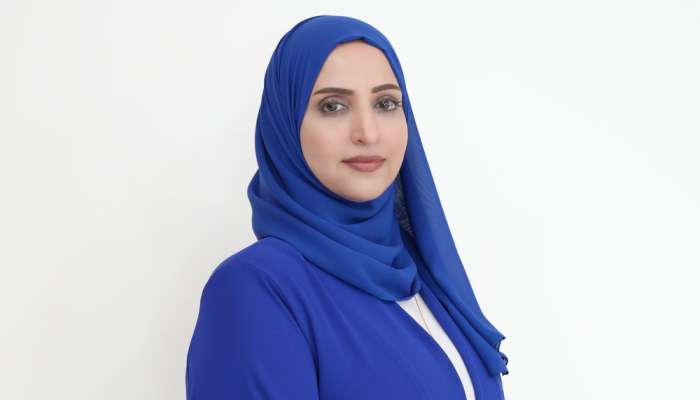
Dr. Jokha Abdullah Al Shukaili, CEO of Oman Authority for Academic Accreditation and Quality Assurance of Education, was on Wednesday elected head of the “Arab Network for Quality Assurance in Higher Education”, with effect from 1 January 2026, for a period of four years.
Dr. Jokha’s election caps up a professional career full of accomplishments in developing policies and standards of educational quality and academic accreditation, both locally and regionally.
Dr. Jokha takes credit for significantly enhancing the status of the Sultanate of Oman at international forums, thanks an aptitude to espouse the best global practices in ensuring top quality in higher education.
Dr. Jokha also played a major role in consolidating regional and international cooperation through active participation in specialized networks and authorities, in addition to promoting the exchange of experiences with leading global institutions.
Dr. Jokha’s election to the position reflects the great confidence attached to the Sultanate of Oman, represented by Oman Authority for Academic Accreditation and Quality Assurance of Education. It also affirms the prestigious status of national competencies and their ability to lead regional and international initiatives.
The accomplishment also contributes to the realization of the objectives of Oman Vision 2040, which focuses on building an advanced educational system that supports innovation and scholarly research.
The election of Dr. Jokha to the position constitutes an indicator of the progress made by the Sultanate of Oman in the field of higher education. It reflects Oman’s commitment to apply the best international practices in educational quality assurance and academic accreditation, making Oman’s competitive educational system up-to-date at regional and international levels.
The performance served as a link connecting the region’s past, present, and future, highlighting its profound civilisational heritage.
The FIFA Arab Cup Qatar 2025 kicked off on Monday evening at the Al Bayt Stadium with a stellar opening ceremony that placed great emphasis on the region’s rich culture with various prominent artists.
Loud chants and applause from 61,475 fans echoed across the stadium when Qatar’s Amir Sheikh Tamim bin Hamad Al Thani entered the venue to inaugurate the major ceremony ahead of the Qatar vs Palestine game.
The 15-minute show then started with the narration of Syrian artist Rashid Assaf and scenes of Jerusalem as well as two doves of peace, echoing Qatar’s support for the Palestinian cause especially in mega events.
The pitch dazzled with Arab patterns and vibrant lights reflecting the region’s culture as the performers came in with the traditional clothes of their home countries. The ceremony told the stories of Arab generations, where each performer from a different country shared a piece of their homeland.
The greater emphasis was still on the region’s united support for the Palestinian cause even in sports, highlighting it as one of the Arab Cup’s key themes. The performance served as a link connecting the region’s past, present, and future, highlighting its profound civilisational heritage.
The appearance of Palestinian singer Rola Azar in her traditional thobe, or embroidered dress, as she stood under the spotlight further emboldened the message of solidarity.
The joint performance of all the Arab countries’ national anthems, an iconic moment reminiscent of the 2021 FIFA Arab Cup in Qatar, was the part that the audience waited for. Azar alongside Lebanese artist Mohamed Chaker made the moment more memorable.
The three-dimensional light shows made the evening more magical as the stadium’s heartbeats pounded louder for the faceoff between Qatar and Palestine—both of which share a strong sense of unity.
Spectators who spoke to Doha News ahead of the match echoed their joint support for both teams, with many carrying the Palestinian and Qatari flags or wearing the keffiyeh and the Qatari football jersey at the same time.
The game later ended with Palestine’s 1-0 victory over Qatar, but celebrations were seen on both sides of the pitch.
Qatar’s Amir also took to his social media to congratulate Palestine’s national team on their win in the opening game.
“We in the State of Qatar are pleased to welcome our Arab brothers to the Arab Cup[…] Congratulations to the Palestinian national team on its victory in today’s opening match,” Sheikh Tamim said on X.
Sydney resident Ahmed Al-Ahmed seized rifle from one of the gunmen
Ahmed was shot in hand and arm his family says
PM said Ahmed showed ‘best of humanity’
Donations for a Sydney man who wrestled a gun from one of the alleged attackers during a mass shooting at Bondi Beach have surged past A$1.1 million ($744,000), as he recovers in hospital after surgery for bullet wounds.
Forty-three-year-old Ahmed Al-Ahmed, a Muslim father-of-two, hid behind parked cars before charging at one of the gunmen from behind, seizing his rifle and knocking him to the ground.
Prime Minister Anthony Albanese said Ahmed’s bravery saved lives.
“What we’ve seen in the last 24 hours was the worst of humanity in a terrorist act. But we also saw an example of the best of humanity in Ahmed Al Ahmed running toward danger, putting his own life at risk,” Albanese told state broadcaster ABC News.
He was shot twice by a second perpetrator, Albanese said. Ahmed’s family said he was hit in the hand and arm.
Australian police on Monday said a 50-year-old father and his 24-year-old son carried out the attack at a Jewish celebration on Sunday afternoon, killing 15 people in the country’s worst mass shooting in almost 30 years.
HAILED A HERO FOR DISARMING THE GUNMAN
Ahmed’s father, Mohamed Fateh al Ahmed, told ABC News in an interview that his son was an Australian citizen and sells fruits and vegetables.
“My son is a hero. He served in the police, he has the passion to defend people.”
“When he saw people lying on the ground and the blood, quickly his conscience pushed him to attack one of the terrorists and take away his weapon,” Mohamed Fateh said.
Jozay Alkanji, Ahmed’s cousin, said he had had initial surgery and may need more.
AHMED PICTURED IN HOSPITAL
Tributes have poured in from leaders both abroad and at home.
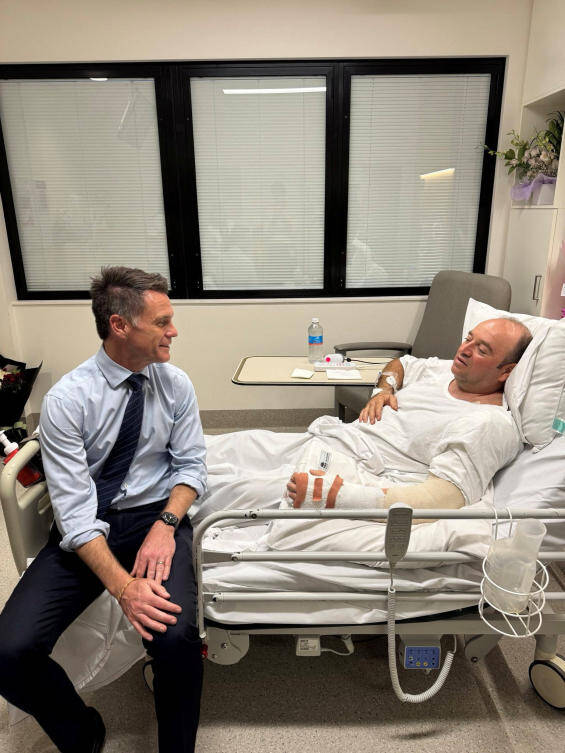
Chris Minns, the premier of New South Wales, where Sydney is located, said in a social media post he visited Ahmed at St. George Hospital and conveyed the gratitude of people across the state.
Ahmed is a real-life hero. Last night, his incredible bravery no doubt saved countless lives when he disarmed a terrorist at enormous personal risk.
It was an honour to spend time with him just now and to pass on the thanks of people across NSW. pic.twitter.com/3xNBW8vxvZ
“Ahmed is a real-life hero,” his post said. “Thank you, Ahmed.” A photo showed Minns at his bedside, and Ahmed propped on pillows with his left arm in a cast.
US President Donald Trump called Ahmed “a very, very brave person” who saved many lives.
A GoFundMe campaign set up for Ahmed has raised more than A$1.1 million within one day. Billionaire hedge fund manager Bill Ackman was the largest donor, contributing A$99,999 and sharing the fundraiser on his X account.
SUPPORTERS THANK AHMED FOR SAVING LIVES
Outside St. George Hospital, strangers came to show their support.
Misha and Veronica Pochuev left flowers for Ahmed with their seven-year-old daughter, Miroslava.
“My husband is Russian, my father is Jewish, my grandpa is Muslim. This is not only about Bondi, this is about every person,” Veronica said.
Yomna Touni, 43, stayed at the hospital for hours to offer assistance on behalf of a Muslim-run charity also raising funds for Ahmed.
“The intention is to raise as much money as possible for his speedy recovery,” she said. ($1 = 1.5047 Australian dollars) (Writing by Praveen Menon; Editing by Michael Perry, Saad Sayeed, Alexandra Hudson)
source/content: arabnews.com (headline edited0
___________
New South Wales Premier Chris Minns visits Ahmed Al-Ahmed, who was identified on social media as the bystander who hid behind parked cars and seized a rifle from one of the gunmen during the deadly shooting at Bondi Beach on Sunday, at a hospital in Sydney, Australia, December 15, 2025, in this picture obtained from social media. (@ChrisMinnsMP via X/via Reuters)
Sheikh Mohammed bin Rashid praises novelist’s insights into intricacies of Arab societies.
His Highness Sheikh Mohammed bin Rashid Al Maktoum, Vice President and Prime Minister of the UAE and Ruler of Dubai, congratulated Algerian Professor Waciny Laredj on winning the Great Arab Minds Award in Literature and Arts.
The novelist, short story writer and academic is one of the Arab world’s most prominent literary figures and well-known throughout the Arabic-French speaking countries.
“We congratulate Professor Waciny Laredj on winning the Great Arab Minds Award in Literature and Arts, honouring his exceptional literary contributions. Professor Waciny has presented over 30 novels that delve into the intricacies of Arab societies, culture, and the environment. His impactful works have been translated into more than 20 languages and endorsed by numerous universities worldwide,” Sheikh Mohammed said in a congratulatory message posted on his official X account.
نبارك للبروفيسور واسيني الأعرج فوزه بجائزة نوابغ العرب فئة الأدب والفنون تقديراً لإسهاماته الأدبية الكبيرة .. حيث قدم البرفيسور واسيني أكثر من 30 رواية ترتبط بالمجتمعات العربية وثقافتها وبيئتها .. وتم ترجمة رواياته لأكثر من 20 لغة واعتماد دراستها في عدد من جامعات العالم .. ويشغل… pic.twitter.com/e4FPpAQJkg
“Holding the esteemed position of Chair Professor at the Central University of Algiers and the Sorbonne University in Paris, Professor Waciny’s achievement is a testament to his remarkable dedication to literature. We commend his efforts and deeply appreciate his profound contributions to Arabic literature, enriching the global readership.”
source/content: gulfnews.com (headline edited)
______________
Laredj’s works have been translated into over 20 languages and endorsed by numerous universities worldwideX/@HHShkMohd
AlUla has strengthened its reputation as a global hotspot after being named the World’s Leading Cultural Tourism Project 2025 at this year’s World Travel Awards.
The award, one of the most respected in the travel industry, was decided by votes from international experts, senior executives, buyers, tour operators, and agents, according to a recent Saudi Press Agency report.
Founded in 1993, the World Travel Awards recognize achievements across tourism and hospitality, covering categories from hotels and airlines to experiences and events.
This recognition follows a series of recent accolades for AlUla. The region’s honors include the Middle East’s Leading Cultural Tourism Project 2025, Middle East’s Leading Festival and Event Destination 2025, and Saudi Arabia’s Leading Cultural Tourism Project 2025 at the regional edition of the awards.
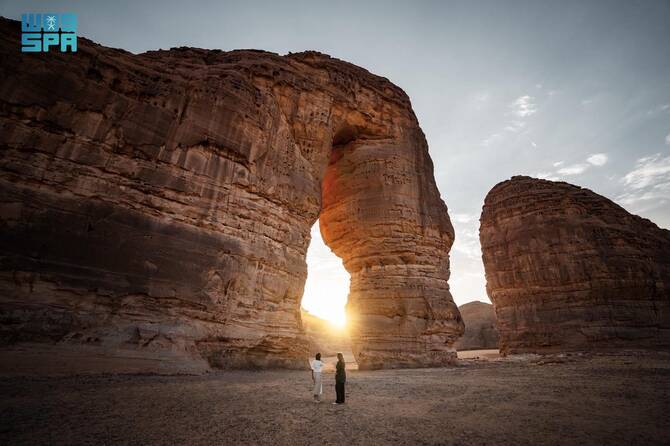
Known for its dramatic desert landscapes and rich history, AlUla is home to major cultural sites including Hegra, Saudi Arabia’s first UNESCO World Heritage Site, famous for its well-preserved Nabataean tombs.
With a history stretching back 200,000 years, and 7,000 years of continuous civilization, the region’s story is brought to life through the Royal Commission for AlUla’s year-round immersive experiences.
______________
Known for its dramatic desert landscapes and rich heritage, AlUla is home to major cultural sites such as Hegra, Saudi Arabia’s first UNESCO World Heritage Site, famous for its well-preserved Nabataean tombs. (SPA)
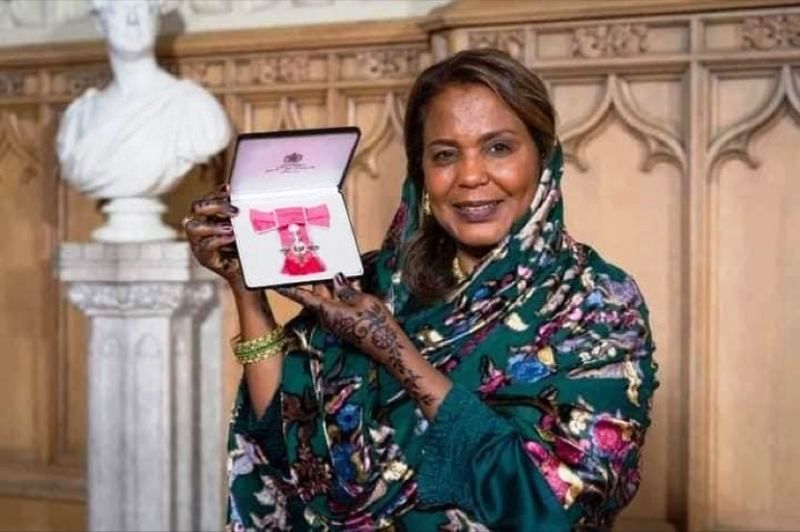
Following the official ceremony of her receiving the Order of the British Empire (OBE) from King Charles III, Sudanese born, UK national, artist Omeima Osman Khalid Mudawe has been on the spotlight, not only within her country of birth, the Sudan, but globally.
When she moved to live in the UK, Omeima had carried her first country Sudan in her heart. Her work there as a crafts and visual artist was influenced by her Sudanese heritage. She was nominated for the award thanks to her significant services with and for people with special needs, namely deaf, within the arts field.
Omeima spoke to Altaghyeer about the OBE and other topics. Following are excerpts from theinterview:
Khartoum, Altaghyeer: Abdallah Berair
1/ did you expect to win the award?
When I received the news from Buckingham Palace informing me of the award, it arrived in an envelope marked CONFIDENTIAL. I wondered what it was, opened it up, saw the Buckingham Palace logo and decided that it was my husband playing a practical joke on me. I had no idea!
2/ how did you feel when you got the news that you were awarded an MBE?
I was in shock and confused – why had I been awarded it? What did it mean? I confess that I didn’t really know what an MBE was, so I had to look it up. My nomination was for services to deaf and disabled people in the Arts but I didn’t know who had nominated me for it. Eventually I discovered that the Crafts Council had nominated me for the award, in recognition of the 25 years I have spent working to be a positive role model and develop projects that bring hearing and Deaf artists together. I had conducted some work with the Craft Council, specifically looking at Access and Equality policies, and helping to ensure that crafters and artists who are also Deaf have equitable opportunities and access to the work that they do.
I kept my award confidential but on 1 January 2022, it was announced in the Queen’s New Year’s Honours list. I was overwhelmed by the response I received from people getting in touch to congratulate me and from various news outlets and organisations to interview me. I even received a personal letter from my local MP. The public recognition of my life’s passion and work is what has moved me the most, and from that time on I have gradually adjusted to feeling proud to be a role model for aspiring artists and craft-makers who are also Deaf. I also want to show wider society that once Deaf people have our communication needs recognised and accommodated, we can achieve anything. The sky’s the limit! I am proud to be a Muslim woman of colour who has been recognised first for her work as an artist and then for her Deafness. This is what this honour means to me – that other young artists from diverse cultural backgrounds, but who also happen to be Deaf, can see that it is possible to achieve their dreams because their work comes first and their deafness/disability second, not the other way round.
3/ did the Qatar trip and visit affect your career in any way?
The trip to Qatar happened when my daughter was 3 – it was the first time I had been away from her for so long, so it was difficult, but it really helped to open doors to new networks that have sustained my working career. The relationship I developed with the British Council led to me making connections at the Arab British Centre, and later I had my first solo exhibition with their support. This led me to meeting many other mainstream hearing artists which helped to develop my confidence and self-belief. Ultimately, because of the networks I have developed since that time, I received a runner-up prize from the Arab British Centre in 2019 (for cultural achievements), the same year I became a Clore Fellow: another life-changing, career-defining moment.
4/ what did you take from your Sudanese culture that is present in your work?
The shapes and recurring motifs that are present in my work are directly influenced by my Sudanese heritage. Shapes are influenced by things like the cowrie shells and the beads of a prayer bracelet, and the sweeping lines of Arabic calligraphy and architecture. Colour plays an important part in my work, particularly colours that represent the heat of the Sudanese landscape that I remember so well, like reds, browns and oranges. I like to contrast these with the colours of my adopted country, the UK, to reflect the integrated nature of my identity. My memories as a child in Sudan have formed the inspiration for several of my exhibitions, for example A River Runs Through where I worked with several members of the Sudanese ex-pat community in the town where I now live, Brighton and Hove, to explore what the River Nile means to them and how it influence their journeys to the UK. I carry Sudan in my heart through everything that I do.
5/ your time in Saudi, do you remember it?
I remember it as a very lonely time as there was no access to the education there – there was very little understanding of what a deaf child needed in order to access what the teacher was saying and so it was a frustrating experience. I felt like I was the only deaf child in the world as I didn’t see any other deaf children or adults. That was when the decision to move to the UK was made. You can see more here about my brother’s experience that mentions this time: https://www.bslzone.co.uk/watch/found-uk
6/ are you going to have a art exhibit in Khartoum?
I had a solo exhibition in Khartoum at the Hilton Hotel in 2002 – a long time ago! Even though it wasn’t at a proper gallery, I did manage to sell a few pieces of work but it was a challenge to organise. There was not a good understanding around the needs of an artist who was also Deaf which meant that barriers were not easily overcome. I would love to organise an event that celebrates art work made by people that happen to be disabled or deaf but without that being the main focus.
7/how do you feel when you see the revolution in Sudan on the TV?
It was shocked to see this news and obviously I was worried for my father, siblings and other family who were living in Khartoum. Later, when it became clearer what was happening, I was inspired to see women taking a lead in the demonstrations, especially the woman who stood above the crowds, whose image became famous around the world.
8/ how was the support from the family during your upbringing?
I had a lot of support at home as a child, but it reached a point where it seemed the best thing was for myself and my deaf brother Ahmed to receive our education in the UK and get other kinds of support that would help us to be independent later in life. It meant a lot of upheaval for all my family and from that time on my mother spent much of her time in the UK to be with us, separating her from Sudanese life and friends. Sadly, my MBE investiture was delayed due to covid, and my mother passed away before my ceremony was due to be held. Losing her and my father in such a short space of time meant that the day of my award investiture was emotionally charged; their absences were keenly felt. But I am grateful that, although my father passed before I received news of the award, my mother was alive for me to share the news with her. We both cried a lot that day as we recognised that this honour was only possible because of her incredible sacrifice. Because of her selflessness, I am who I am today and have achieved what I have. My mother asked me to remember my heritage as a Sudanese woman by wearing a traditional Sudanese sari on the day and I was so proud to wear the outfit that my sister had brought for me and the necklace that my mother had gifted to me when she died.