Arabs & Arabian Records Aggregator. Chronicler. Milestones of the 25 Countries of the Arabic Speaking World (official / co-official). AGCC. MENA. Global. Ist's to Top 10's. Records. Read & Enjoy./ www.arabianrecords.org
On her 50th anniversary, We proudly present episode 1 Fathiya Ahmed, the singer of the two regions.
After featuring the Sultana of Tarab Music, the Prince of Arabic Violin, the Master of Buzuq, Hajja Zeinab El Mansouria, the rich music of Yemen, Arab songs of Satire and Resistance, and the Music of Tunis, we proudly introduce Fathiya Ahmed, the singer of two regions – Egypt and Bilad Asham.
Music is a powerful force for healing and reconnecting us with our roots and shared humanity in a world of numerous challenges.
‘From Ocean to Gulf: Heritage Music of the Arab World’ is a new series by Ahram Online, in partnership with the AMAR Foundation (Foundation for Arab Music Archiving and Research). Focusing on the early years of recording in our region, which reflected a modern cosmopolitan repertoire and coincided with the Renaissance era that flourished in Egypt between the mid-19th century and the 30s of the twentieth century, this initiative aims to introduce our audience to the iconic figures of Arab music whose contributions have enriched our intangible cultural heritage and inspired generations worldwide.
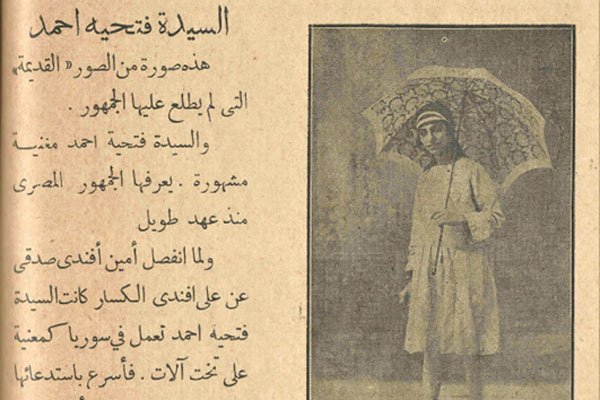
Archive: Young Fatheyia. Photo courtesy of Akram Rayess
Child prodigy female performer
Fathiya Ahmed (1898-1975) was one of three daughters of a Qur’an reciter, Sheikh Ahmed El-Hamzawi. Each of her two sisters, Ratiba and Mufida, had a singing career. She was born in the Kharanfash Alley of Historic Cairo and began her career as a young girl in musical theatres.
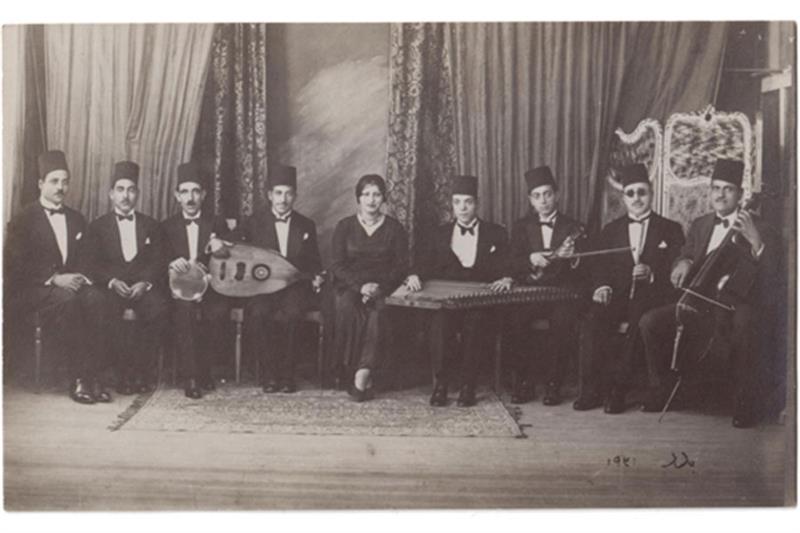
She joined the well-known theatre companies until 1927, when she decided to sing solo. She became an important mutriba (Chanter) with takht in the tradition of awâlim. She was one of the singers who carried the practice of wasla into the 20th century. Fathiya also made numerous annual commercial recordings and toured Syria, Lebanon, and Palestine, where she developed a large audience. Because of this, she was named “Mutribat al Qutrayn” (the singer of two regions – Egypt and Bilad Asham).
Dr Sayed Ali Ismail’s book “The Journey of Theatre in Egypt” (2003) states that Fathiya’s first steps took place as a young child when directors of theatrical troupes competed to hire her to sing between acts. This occurred at a time when women started to become active participants in the musical scene in Cairo at the turn of the 20th century. Her theatrical singing brilliance reached its peak in 1918 when she joined Naguib Al-Rihani’s troupe at the Egyptian Theatre (Tiyatro Al-Egbsiyaneh). In 1919, she joined the troupe of Amin Sedqi and Ali Al-Kassar, singing and acting in the play “Rahat Theyk”. In 1921, she performed leading roles in the plays of Munira El-Mahdiyya’s troupe, replacing Munira after she left due to conflicts with her husband, Mahmoud Gaber. Among these plays were “Kalam Fi Sirrak”, “Adha”, “ El-Talata Tabta”, and “Al-Caporal Simon.”
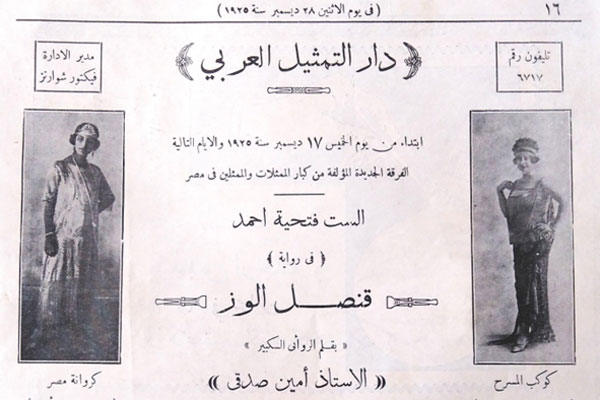
In 1925, Fathiya joined the troupe of Amin Sedqi and Naguib Al-Rihani, where she starred in the plays “Qunsul Al-Wiz”, “Merati fi Al-Gihadiyya”, and “Bint Al-Shabandar”. In 1926, she sang in the play “Laylat Cleopatra” with the Oqasha troupe.
In 1927, she played the role of Cleopatra in the play Cleopatra and Mark Antony by Munira El-Mahdiyya’s troupe, and she also sang between the acts of the play The Emperor with the musical ensemble of Fatma Roshdi’s troupe. The musical composers included Daoud Hosni, Kamel El-Khoula’i, and Ibrahim Fawzi.
When reading the issue of Rose Al-Yusuf magazine dated 2 June 1926, it can be seen that three female singers reached stardom during that period: Fathiya Ahmed, Munira El-Mahdiyya, and Um Kulthoum, with this order being the ranking preference of the public.
This was her final phase of acting and theatrical singing during that period, as she later shifted to singing in casinos and night venues in late 1927, including the Bosphorus Casino and Badia Masabni’s venue. In these performances, she demonstrated her mastery of the art of the Maqam accompanied by a “takht” of selected musicians.
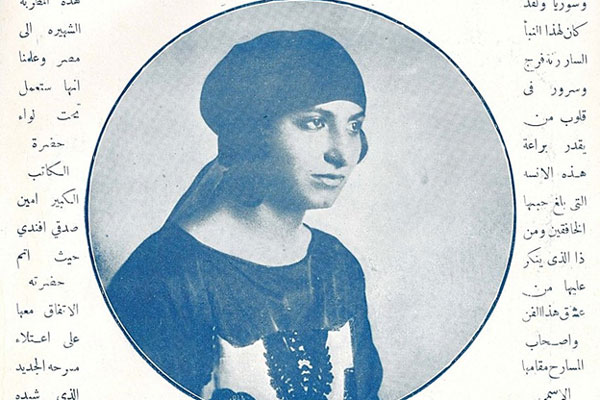
Archive: A news piece informing about Fatheyia’s return to Cairo from Lebanon. Photo courtesy of Dr Sayed Ali Ismail.
Bilad Asham
During this busy period, Fathiya found the time to visit the Levant. In 1921, she set off for the first time to the Levant, where she spent about five years. She felt at home there, and during those years she learned the secrets of musical modes, blending Turkish and Persian modes with the Arab musical tradition. Her performances were met with great enthusiasm. Amer Nadrous, a writer and a record collector from Syria, brings forth some of what she said about her experience in Aleppo: “Singing before its people is an exam that renews itself every night… their ears never miss, and they can always distinguish between what is trivial and what is precious.”
Crowds of thousands would rush to reserve seats in Aleppo’s Luna Park and Al-Shahbandar gardens to hear that unique voice. In Damascus, she performed in Hadikat Al-Umma, enchanting its people while singing adwar, qasā’id, and mawwāl without microphones or any amplifiers. This is in addition to her tours and performances in Jerusalem, Beirut, Nablus, and Tripoli, where audiences welcomed her warmly, and she rivalled the great masters of classical singing. Nadrous adds that the poet Amin ‘Izzat al-Hajin, among many others, praised her in a poem whose opening line says: “Songbird of the East, come back… return the songs of eternity to my ears.”
Travelling with her husband to the Levant to perform became an annual event during that phase of her career. Fathiya even received a special invitation from the King of the Hejaz and Sultan of Najd, Ibn Saud, to sing in his presence. Nadrous informs that her husband provided her with Bedouin poetry quartets to sing at this occasion. Moreover, she took the opportunity to go on pilgrimage while there.
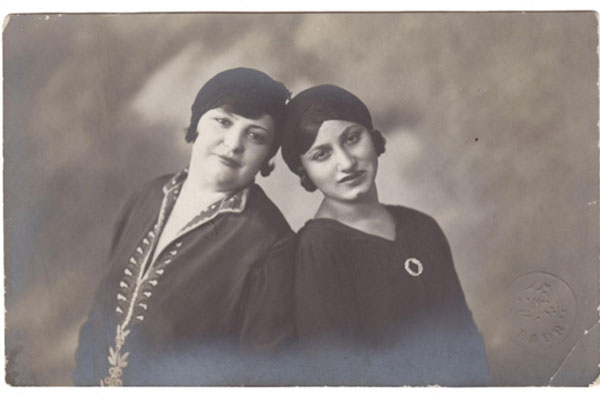
Archive: Fatheyia and her sister Ratiba. Photo courtesy of Dr Ahmad AlSalhi.
Vigorous Years
Dr Fahd El-Faras is a music researcher who was previously the head of the Music Education Department at the Faculty of Education in Kuwait. He is a keen enthusiast of Fathiya’s songs and an avid collector of her original recordings. El-Faras discusses the significance of musical theatre, which he considers to be the setting of her artistic beginnings that shaped her talent and artistic personality. It is an important phase of Touha’s artistic career, spanning three decades from the 1920s to the 1940s, which provided her with the creative space to affirm her artistic status as a leading figure and to demonstrate her unique vocal abilities.
El-Faras adds that through her collaboration with Sayyid Drawiche, Fathiya learned how to sing on stage, face an audience, and master the expressive style of theatrical singing. Moreover, Naguib El Rihani recognised Fathiya’s talent and understood her artistic abilities, which in turn greatly benefited his musical theatre, empowering her to enter the creative scene as both a singer and stage actress. She gives credit to Rihani and indicates that she had learned a great deal from him, including how to handle stage movement, performance techniques, and delivery, from vocal pitch and theatrical singing in connection with the play’s narrative, and how to perform comedy. She also participated with several other theatrical troupes, which gave her an accumulation of extensive experience and confidence in combining acting and singing, making her highly sought after by audiences for musical plays.
Archive: An Announcement of a play starring Fatheyia Ahmad and Badi’a Masabni. Photo courtesy Amer Nadrous.
Fathiya’s Garden
In 1933, after a long absence from the art scene in which she dedicated her time to raising her children, Fathiya Ahmed formed a musical theatre troupe and established an outdoor venue which she named “Fathiya’s Garden”. Dr Sayid Ali Ismael indicates that she produced and starred in several plays composed by Ibrahim Fawzi in her new space, some of which had nationalistic sentiments consistent with the prevailing political circumstances of that time. In 1934, Fathiya left her own “Garden” and returned once again to singing in other venues and theatres, such as the Ramses Theatre, where she sang in the plays Sondouq Al-Dunya, Awlad Al-Fuqara, and Al-Fajiʿa for Youssef Wahbi’s troupe. Although short-lived, Fathiya’s Garden marks her multiple roles as a female performer: leading a troupe, managing a venue, presenting original shows, and commissioning music. This illustrates Fathiya’s active agency against preset cliches and stereotypes of passive participation despite aggressive competition and changing musical aesthetics and business practices.
During the 1940s, Fathiya participated in the play “Youm elqiyama”, where she performed her famous song “Ya Halawet Eddunia” composed by Sheikh Zakariya Ahmed. This decade also witnessed Fathiya’s transition to musical films, following the dominant trend at that time. Her most important film was “Hanan” (1944), in which she starred alongside Bishara Wakim and Tahia Carioca, directed by Kamal Selim. It featured the landmark song “Ya tara” composed by Qasabji. The other two remaining film participations were limited to providing vocals that were lip-synced by other actors in “Ahlam Ashabab”, starring Farid El-Attrache and directed by Kamel Selim (1942), and “Aida” starring Um Kulthoum and directed by Ahmed Badrakhan (1944).
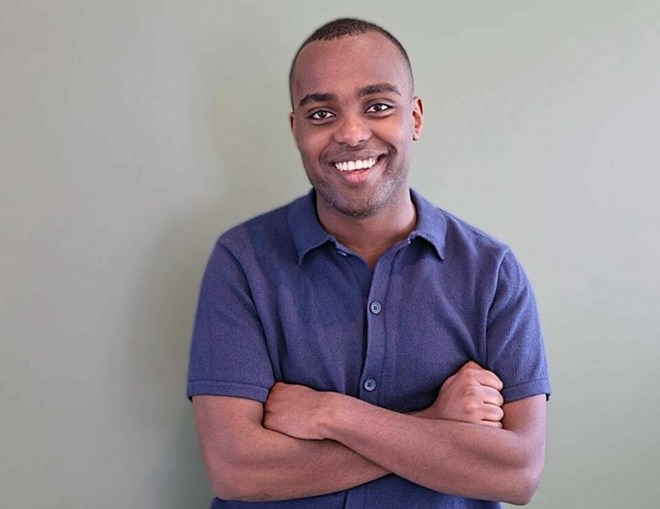
On election night in Fredrikstad, 20-year-old Hashim Abdi broke down in tears as the results flashed on television screens. He clutched his phone to call his mother, the only parent he has left, telling her she was the first person who came to mind when it became clear he had won a seat in Norway’s parliament.
My parents came to Norway with nothing but hope. Mom is the only parent I have left, and she deserves everything in the world.”
Abdi’s tears captured the weight of his journey. The son of Somali refugees, raised in a working-class neighbourhood, is now among the youngest lawmakers in the Storting, Norway’s national legislature. His campaign rested on issues that reflected his own experiences: better schools, opportunities for young people, and tackling poverty in Østfold, a county where inequality has become increasingly stark.
“It’s completely insane. It’s the story of Norway, that a boy from Trara can go from a small neighbourhood to the corridors of power.”
He joins Marian Abdi Hussein, a Socialist Left Party politician re-elected from Oslo. First entering parliament in 2021, she was the first lawmaker of African descent to take a permanent seat in the Storting. Hussein, who worked for years in Oslo’s social services, has become a national figure for her advocacy on women’s rights and health policy. In 2023, she was elected deputy leader of her party.
Together, Hussein and Abdi now symbolize both continuity and change for Somali Norwegians. Hussein broke barriers three years ago; Abdi is part of a younger generation determined to make its presence felt in politics.
Their victories reflect shifts in Norwegian society. Labour finished first in Østfold with roughly 30 percent of the vote, anchoring Abdi’s win even as the Progress Party posted strong gains locally. Nationally, Labour’s result keeps Prime Minister Jonas Gahr Støre in office, and he is expected to rely on a broader left-leaning bloc to govern. Energy policy, living costs and foreign affairs were central campaign issues and now shape the new government’s agenda.
But it is the human stories behind the statistics that resonate in Norway’s Somali community. Abdi’s father, Mohodin, once drove a taxi and sat on the Fredrikstad city council before he passed away. He instilled in his son a belief in civic duty and justice. Abdi joined the Labour youth wing at 14 and climbed steadily through local politics.
Abu Dhabi marks landmark achievement in becoming the first in the world to deliver ITVISMA (onasemnogene abeparvovec) for the treatment of spinal muscular atrophy (SMA), reinforcing the emirates position a leading global healthcare destination and demonstrating its commitment to patient care through genomics and precision medicine.
Under the supervision of the Department of Health – Abu Dhabi (DoH), the regulator of the healthcare sector in the emirate, Sheikh Khalifa Medical City (SKMC), part of SEHA, a subsidiary of PureHealth, successfully administered this groundbreaking gene therapy developed by Novartis.
ITVISMA is a one-time gene therapy specifically designed to target the underlying genetic cause of SMA in patients aged 2 years and older with a confirmed SMN1 gene mutation.
This groundbreaking therapy received accelerated approval in the UAE on 25th November 2025, positioning the UAE among the first countries globally – after the USA to endorse this pioneering treatment. This underscores Abu Dhabi’s commitment to bringing cutting-edge innovations to patients across the region.
Designed for simplicity long-term impact, ITVISMA replaces the missing SMN1 gene to improve motor function, reducing the need for continuous treatments required by other therapies.
Dr. Noura Khamis Al Ghaithi, Under-Secretary of DoH, said, “This milestone reflects Abu Dhabi’s commitment to delivering worldclass care and strengthening its position as a global leader in healthcare driven by genomics and precision medicine. By administering ITVISMA, we are proud to be among the first to provide this innovative treatment, further reinforcing our role as a leader and accelerator in advanced and innovative healthcare. Our priority remains safeguarding the health of our community members and beyond ensuring access to cutting-edge therapies for rare diseases, supporting the emirate’s standing as a leading destination for medical tourism. This achievement is just one of many as we remain dedicated to accelerating treatment to life-changing therapies and providing patients with access to the latest advancements in healthcare.”
Bader Al Qubaisi, Chief Executive Officer at SKMC, said, “Delivering the world’s first ITVISMA treatment at SKMC is a testament to Abu Dhabi’s integrated healthcare ecosystem under the leadership of the Department of Health – Abu Dhabi. In line with PureHealth’s vision and DoH’s guidance in defining seamless care pathways, , and facilitating collaboration with partners such as Novartis has enabled us to bring this life-changing therapy to our patients safely and efficiently.”
Mohamed Ezz Eldin, Head of GCC Cluster at Novartis, added, “Today’s milestone is ultimately about patients and families. By working closely with the Department of Health – Abu Dhabi, and SKMC, we are proud to support accelerated access to breakthrough therapies such as ITVISMA, and to contribute to Abu Dhabi’s growing role as a regional and global reference for advanced neuromuscular care.”
Egyptian Minister of Culture Ahmed Hanno announced that UNESCO has added the popular dish Koshary, a staple of daily life in Egypt, to its Representative List of the Intangible Cultural Heritage of Humanity, making it the country’s 11th recognized element.
Nahla Emam, heritage consultant to the minister of culture, called the recognition a major achievement resulting from long-term efforts.
She noted that the process was initiated by Koshary makers themselves and praised Egyptian women who preserved the traditional preparation methods, passing this knowledge to future generations.
“Everyone contributed to this international acknowledgement,” Emam said.
Koshary is a filling and budget-friendly meal made from simple ingredients such as rice, pasta, black lentils, and fried onions, with condiments like vinegar, garlic, and hot sauce added to taste. It is prepared both at home and served in restaurants and street carts, the UNESCO official website said.
With Koshary’s recognition, Egypt now has 11 elements on UNESCO’s Intangible Cultural Heritage List.
Previous inscriptions include Al-Sirah Al-Helalya (The Epic of Beni Helal) in 2008; Tahteeb (Stick Art) in 2016, Aragouz puppetry in 2018; knowledge and traditions affiliated with palm trees in 2019; manual-textile industry in Upper Egypt in 2020; Arabic calligraphy knowledge, skills, and practice (joint file with other Arab countries) in 2021; knowledge, skills, traditions, and practices related to the palm tree (joint file) in 2021; and Journey of the Holy Family Festival in 2022.
This year’s edition has drawn falconers from nine nations, including the GCC states, Italy, Ireland and Syria.
The 2025 King Abdulaziz Falconry Festival, which started on Thursday at the Saudi Falcons Club’s Malham facility north of the capital, has attracted falconers from the Kingdom and around the world.
The first day of the event, running until Jan. 10, featured six qualifying heats for local competitors in multiple classifications: Gyr Pure Fledgling and Passage, Peregrine, and Saker varieties in Fledgling (Farkh) and Passage (Qarnas).
Participants will vie over 139 rounds for 1,012 prizes worth over SR38 million ($10 million). There are two primary disciplines, the Milwah lure racing trials over 400 meters, and Mazayen beauty contests.
The racing has four skill levels — owners, amateurs, professionals, and elite — with separate divisions for Saudi and international competitors. The beauty competitions have exacting aesthetic criteria.
This year’s edition has drawn falconers from nine nations, including the GCC states, Italy, Ireland and Syria. The festival holds three Guinness World Records for the planet’s largest falcon event based on bird participation.
Walid Al-Taweel, spokesman of the Saudi Falcons Club, said the festival remains committed to cultivating next-generation interest in the sport.
source/content: arabnews.com (headline edited)
______________
The 2025 King Abdulaziz Falconry Festival, which started on Thursday in Riyadh. (SPA)
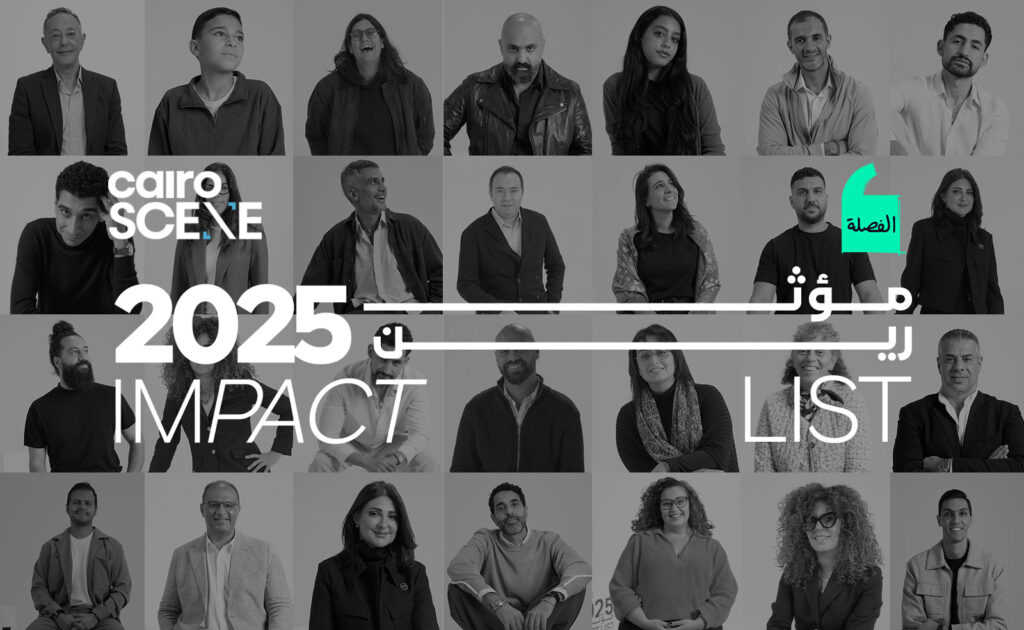
The extraordinary Egyptians who made an impact in their industries, communities and culture in 2025.
“Impact,” like “success,” is a slippery word. It is defined by its definers. It’s history written by the victors. Stretch the term far enough, and it starts to mean everything and nothing at once, warped by subjectivity, ego, and luck.
Every year, the CairoScene and El Fasla teams huddle, usually far too late, and try to define it anyway. We attempt the audacious task of picking the people who made the most impact. For the sake of honesty, transparency, and abandoning any illusion of objectivity, we also disagree every year.
We argue over semantics until they blur. What does it mean to change a country versus changing an industry? Is saving lives comparable to changing nights, scenes, or mindsets? Can someone throwing life-altering parties sit on the same list as someone reshaping policy, art, or access? We interrogate every name: why them, why now, and why not someone else entirely.
And yet, every year, we land somewhere familiar. A list as diverse, varied, and opinionated as the team behind it. One that reflects what we’ve always stood for: the people, places, and movements shaping Egypt today.
To “shape Egypt” is a bold claim. Which Egypt, and whose Egypt? Still, we pride ourselves on the humility to define that “shaping” as inclusively as possible: ministers and chefs, filmmakers and architects, philanthropists and founders of boba tea spots. To shape is to mould a community, no matter how minuscule or grand, from grand museums to homegrown talent, from bets that paid off to voices singular in their spaces. The misfits, the winners, and those paving paths for others to win too.
This is impact, as we see it. Debatable. Imperfect. Entirely Egyptian.
And with that, we present the 2025 CairoScene & El Fasla Impact List, in its ninth edition.
AHMED GHONEIM | CEO of the Grand Egyptian Museum | For Ushering the World’s Most Ambitious Museum onto the Global Stage
As the CEO of the Grand Egyptian Museum, Ahmed Ghoneim led its long-awaited opening in 2025. Under his stewardship, the world’s most ambitious museum moved from vision to public reality, placing Egypt’s civilisation firmly in global view and redefining how the country presents its heritage to the world.
“We’re talking about an idea that began in the 1990s,” Ghoneim reflects. “Many governments and ministries played roles so this museum could become what we see today. This is a national project, backed by political will.”
A professor of economics at Cairo University, Ghoneim’s career spans government advisory, international diplomacy, and leading the National Museum of Egyptian Civilisation before becoming GEM’s first CEO. From state-of-the-art labs and immersive display technologies to expertly trained staff in artefacts and hospitality, GEM is a showcase of capability and ambition. It’s an institution that asserts Egypt’s place on the world stage, proving, as Ghoneim insists, that no other country in the world can do it like Egypt.
MERETTE ELSAYED | CEO of Legacy Development and Management, a Subsidiary of Hassan Allam Holding & Operator of the Grand Egyptian Museum | For Stewarding a Living Legacy at the Grand Egyptian Museum
Overseeing operations, visitor experience, and long-term strategy, she has shaped how the Grand Egyptian Museum exists beyond its walls, as a contemporary cultural destination engaging Egypt and the world.
El Sayed did not come from tourism or antiquities. She trained as an engineer, with a career rooted in business and development. For years, she asked herself the same question others asked her: “What qualifies me to be here?” The answer emerged through rigorous research, sustained dialogue with museum leaders worldwide, and a clear-eyed understanding of what many major museums continue to struggle with: financial sustainability and relevance at scale.
Her conclusion was that the Grand Egyptian Museum needed to set its own precedent. Its scale, ambition, and symbolic weight demanded a different operating model. The challenge lay in balance: safeguarding the artefact as the undisputed hero, while rethinking everything around it. Not a place to pass through, but a living cultural ecosystem where exhibitions coexist with contemporary art, digital experiences sit alongside ancient relics, and restaurants, performances, learning programmes, and public life unfold around history without compromising it.
MOSTAFA SALEM | Architect | For Making Urban Conservation a Viral Conversation
In a city layered with overlooked history, Mostafa Salem’s work has pushed architecture out of expert circles and into public consciousness. It asks people to notice what they have learned to ignore: ageing façades, forgotten details, and entire neighbourhoods slipping from view.
Through clear, engaging storytelling on social media, Salem reframes heritage as something living, fragile, and worth attention. Widely shared posts and videos have turned individual buildings into starting points for broader conversation, encouraging people to look more closely at the city they move through every day.
His work on the Tiring Building in Downtown Cairo restored both its physical structure and its place in the area’s collective memory. That effort was formally recognised with the State Encouragement Award, reflecting how his approach resonates beyond public interest and into institutional acknowledgment. Salem was also appointed as a member of the National Committee for the Development and Protection of Historic Cairo, giving him a role in shaping how the city’s heritage is approached and preserved.
Beyond individual projects, Salem’s impact lies in renewing public curiosity. By making architecture visible, accessible, and relevant, he has helped reconnect people with the histories embedded in their streets.
SARAH GOHER | Director | For Garnering Global Acclaim with Her Directorial Debut
Sarah Goher turned a birthday into a metaphor for “first existence”, the moment a child declares themselves to the world. In her debut, that same birthday becomes Goher’s own directorial first existence: a clear declaration of vision.
Born and raised in the US, Goher has long lived in the in-between, moving between New York and Qasr Al Qobba. What once felt like a fracture has become her edge. That diasporic tension now fuels a voice that travels, speaking through film to audiences from India to Japan, Egypt to Latin America, and an ever-expanding festival circuit.
When she made ‘Happy Birthday’, she thought the next step was waiting for Letterboxd reviews. Instead, the film premiered at Tribeca. Goher skipped the awards ceremony, convinced there was no chance, only to wake up to news that she’d won three awards: the Nora Ephron Award for Best Female Director, Best International Narrative Feature, and Best Screenplay in an International Narrative. She found out in bed, next to her son. It took a week for the moment to fully land.
Then Happy Birthday went on to screen at festivals around the world, including El Gouna Film Festival for its regional premiere, where Goher was also named one of the festival’s Rising Stars. Most recently, she became the only Egyptian filmmaker selected for Variety’s 2026 Directors to Watch, listed alongside Kristen Stewart, Dave Green, and others shaping the next wave of cinema.
Happy Birthday began as an idea in 2018, before being paused while Goher worked alongside her partner (on screen and in life) acclaimed filmmaker Mohamed Diab on Marvel’s Moon Knight (2022), where she served as a consulting producer. She had previously collaborated with Diab on Cairo 678 (2010), Clash (2016), and Amira (2021).
The film draws directly from Goher’s childhood in Cairo, shaped by a girl her age who lived in the same house, except she was a maid. They shared age, gender, and proximity, yet were destined for entirely different lives. The girl stayed with Goher as both a friend and a persistent reminder of class difference. It’s that guilt, and that uncomfortable clarity, that fuels the film. Goher believes it’s precisely in that discomfort that the most honest cinema is made, and it’s how the story resonated far beyond Egypt.
DR. HEBA ELSEWEDY | Founder & Chairwoman Ahl Masr Foundation & Burn Hospital | For Pioneering Burn Treatment in Egypt
Heba Elsewedy led a landmark year for the Ahl Masr Foundation, convening the region’s first specialised burn treatment conference and achieving a medical first with the introduction of natural skin implants. Together, these milestones reflect her sustained commitment to advancing burn care in Egypt while restoring dignity, long-term recovery, and social reintegration for survivors.
Burn injuries in Egypt have long existed in the margins of the healthcare system, with survivors often facing gaps not only in medical treatment but in long-term recovery, dignity, and reintegration. Heba Elsewedy changed that. As founder and Chairwoman of the Ahl Masr Foundation and Ahl Masr Hospital, she established Egypt’s first and only hospital dedicated exclusively to burn treatment, reframing how burn care is delivered and understood.
Ahl Masr’s approach extends far beyond emergency intervention. Under Elsewedy’s leadership, the hospital operates on a holistic model that integrates surgery, rehabilitation, psychological support, and social reintegration, recognising that burn recovery is as much emotional and social as it is physical.
In 2025, that vision reached a new level of regional leadership. Ahl Masr organised the first conference in Egypt and the Middle East dedicated entirely to burn treatment, bringing together leading international specialists and setting a new benchmark for medical knowledge exchange. The hospital also achieved a medical first for Egypt and the region by importing and successfully using natural skin implants to treat complex burn cases.
Elsewedy’s work has been recognised internationally, including with the Mother Teresa Memorial Award. More importantly, it has reshaped the landscape of burn care in Egypt, ensuring survivors are met with expertise, compassion, and the possibility of rebuilding their lives with dignity.
MOSTAFA EL-BELTAGY | CEO of Nawy | For Making Real Estate Investment a Real Possibility
For decades, the Egyptian real estate market operated behind a wall of complexity and friction. Buyers and sellers were consistently challenged by decentralised information, fragmented data, and a lack of tools for easy comparison and decision-making. This environment was ripe for disruption.
As part of a five-man founding team, Mostafa El-Beltagy, CEO of Nawy, stepped into this vacuum. Launched in 2016 as a listings platform, Nawy has since developed a sophisticated proptech ecosystem designed to bring transparency and unlock property value for every consumer. His core mission is to make property ownership and investment seamless and accessible, actively dismantling the traditional obstacles that once governed the sector. This vision recently secured a massive endorsement, drawing $52 million in Series A equity funding and an additional $23 million in debt.
Under El Beltagy’s direction, Nawy is leveraging its full-stack approach to tackle friction points and actively democratise investment opportunities, particularly through strategic launches in 2025. This push includes the launch of Nawy Shares, Egypt’s first off-plan fractional ownership product, which lowers the capital requirement to invest in premium real estate, making it attainable for a much broader segment of the population.
Simultaneously, the company rolled out Nawy Unlocked, a service that helps owners refurbish, monetise and rent out idle or unfinished units, transforming static property into cash-generating assets and injecting liquidity into the market. Alongside these initiatives, the licensed Nawy Now mortgage solution accelerates the path to home ownership with speed and flexibility, while Nawy Partners empowers thousands of brokerages with technology and live market inventory. The new capital will now fuel Nawy’s regional expansion across MENA and accelerate product transformation with an AI-first approach, cementing the company’s commitment to building a transparent and accessible future for real estate.
AMIR EL MASRY | Actor | For a Knockout Year in International Film
In 2025, Amir El Masry appeared in two international feature films that cemented his standing on the global screen. His leading role as Prince Naseem Hamed in Giant, opposite Pierce Brosnan, alongside his performance in 100 Nights of Hero, placed him across both mainstream and arthouse cinema, a level of visibility that remains rare for Egyptian actors working internationally.
This year builds on a career that has unfolded steadily beyond regional boundaries. El Masry first gained major international recognition in 2020 with Limbo, which won the BAFTA Award for Outstanding Debut by a British Writer, Director or Producer, and for which his performance drew significant critical attention.
Since then, his work has expanded across major global television series, including The Crown, Industry, and SAS: Rogue Heroes, establishing a sustained presence within prestige international productions.
By occupying central roles across global film and television, El Masry’s impact extends beyond individual performances. His work disrupts the narrow frames long applied to actors from the region, replacing shorthand and stereotype with authority, nuance, and narrative weight. He doesn’t just appear on the international screen, he helps redefine who gets to lead it, and how those stories are told.
YASMINA EL-ABD | Actress | For Sweeping Egyptian Audiences Off Their Feet
The world was watching. It was Friday evening, November 1st, and the roads had thinned in that familiar way they do when something larger than routine is unfolding. People had gone home, doors shut, screens lit, all of it converging toward the opening of the Grand Egyptian Museum. The sequence had been planned for a year, though few knew it; only the outlines were public. Inside, the scene repeated itself in microcosmic scale: arrivals, nervous conversation, white leather seats filling one by one The lights dimmed. The music rose. And when Egypt’s sweetheart stepped onto the stage, it signalled the completion of a circle the whole night had already traced.
Calling her Egypt’s sweetheart isn’t a flourish per se; it’s a way of noting how reliably actress Yasmina El Abd appears at the centre of moments that seem to form our cultural pulse. She is nineteen. A UN Goodwill ambassador. The canonical muse. Together they form a loop that returns to the same point, building the outline of a young woman whose appeal comes from the coherence of all these parts aligning.
This year positioned Yasmina El Abd in the kind of company that signals a shift, sharing the screen with Amina Khalil, Ahmed Saadany, and Mohamed Shahin in Lam Shamseya. The series pulled private anxieties into public conversation, forcing households to confront questions many had postponed. In the midst of this recalibration was Yasmina, her presence steady within a narrative that dismantled long-standing silences as it illuminated them.
AMR BARGHASH & AHMED EL MELIGY | Founders Sage Hospitality | For Giving Culinary Storytelling a Seat at the Table
Since launching The Sage Experience in 2020, Amr Barghash and Ahmed El Meligy have rewritten how dining functions within Egypt’s cultural landscape. Rather than anchoring themselves to a single venue or format, they built a model that treats food as the organising principle of an experience, capable of reshaping any space around a clear idea.
What began as a tightly executed, mobile dining concept has evolved into one of the country’s most recognisable experiential formats. Sage’s ability to construct fully immersive environments across gardens, rooftops, industrial spaces, and unexpected locations has shifted the focus away from fixed venues and towards narrative, and context. Each experience responds to its setting without being bound to a permanent identity.
In 2025, that approach reached a new level of visibility. Sage played a defining role at Cairo Food Week, staging the landmark King’s Feast, and launched Shemu, an experiential dining journey on the Nile that reimagined how Cairo engages with its most historic artery. Their collaborations also expanded into lifestyle-led pop-ups with groups like GNK, signalling new models of partnership between hospitality, culture, and place.
Barghash and El Meligy have altered expectations. By framing dining as a cultural medium rather than a service, The Sage Experience continues to shape how Egypt’s culinary scene thinks, plans, and evolves, not just how it looks.
SEIF EISSA | Taekwondo World Champion | For Being the First Egyptian in Three Decades to Claim a Gold Medal at the World Taekwondo Championship
Seif Eissa secured his place in sport’s history books by claiming the gold medal at the 2025 World Taekwondo Championships in China, making him the first Egyptian to achieve the feat in nearly three decades.
Eissa’s story is not just one of success – it’s a story of redemption that started a year earlier at the Paris Olympics. Having won a bronze medal four years prior at Tokyo 2020, Eissa was expected to improve his position on the podium in Paris, but exited early, making his historic win all the more symbolic. The road to glory hasn’t been easy for Eissa, but at just 27 years of age, the martial artist boasts an impressive career. He has dominated the world rankings in four different weight classes, amassing a trophy cabinet that spans the Youth Olympics to the senior world stage.
Eissa is not one to rest on his laurels, however, and he understands the gravity and impact of his achievements back home. Which is why he has already set his sights on breaking new ground in 2026, as he plans to move up to the heavyweight (87kg+) class, carrying the expectation of a whole sports-loving nation on his shoulders.
KARIM EL-SHENAWY | Director | For Engaging, Educating & Entertaining Egypt
Few filmmakers can strike the balance between commercial success and critical acclaim, and even fewer can create stories that resonate with a wide array of audiences. Looking back at Karim El-Shennawy’s filmography, it’s hard to pin down a single theme or style. In his debut feature, Eyar Nari (2017), he dabbled in crime thriller, before exploring suspense and drama in his series Qabil (2018). Collaborations with Mariam Naoum saw him embrace social dramas, interrogating the intricacies of relationships, marriage and parenting.
Their three projects took on socially driven stories: ADHD in Khally Balak Mn Zizi (2019), marital challenges and broader mental health in Al Harsha Al Sabea (2020), and arguably his biggest mainstream hit, Lam Shamsiya (2025), which confronted child sexual abuse head-on.
In 2025, El Shennawy showcased the full range of his storytelling. Lam Shamsiya dominated Ramadan screens, reaching households across Egypt; The Tale of Daye’s Family (2025), a story about a young albino boy aspiring to sing like his idol Mohamed Mounir, traveled to the Berlin Film Festival; and he capped the year with his first commercial comedy, El Sada El Afadel (2025), marking the first time he made audiences laugh instead of cry.
By the end of 2025, Karim El-Shennawy was everywhere, creating something for everyone. Unbound by genre, topic, or cause, he is guided only by the pull of a good story, proving that versatility and vision are not mutually exclusive.
KAREEM IBRAHIM & SHERINE ZAGHOW | CEO & Partner Takween, Operations Director & Partner Takween | For Changing Lives Through Urban Regeneration
In a landscape where development has long been shaped by outside agendas, often sidelining the voices closest to the land, Takween has redirected urban regeneration back to the people themselves. Their work draws attention to small economies waiting to grow, crafts at risk of disappearing, and cities where residents have grown accustomed to change happening around them rather than with them.
Through long-term presence, community-led decision-making, and a refusal to treat heritage as purely architectural, Takween approaches development as a social process. Their projects prioritise participation, allowing local conversations, skills, and identities to lead.
Esna is where this approach is most clearly visible. What began in 2009 as a modest intervention around the temple expanded into a city-wide regeneration, driven by the depth of local knowledge and possibility. Women documented culinary heritage through competitions, artisans restored buildings using traditional techniques, and families became active participants in the cultural and economic revival unfolding around them.
Esna’s transformation gained international recognition with the Aga Khan Award, marking a model of regeneration shaped through community authorship and sustained local engagement.
ALI BEIALY | Actor | For Braving the Silence on Sexual Abuse
To tackle a story at the centre of national debate is one thing. To embody it, to live it on screen, takes unmistakable courage.
Ali El Beialy was Ramadan’s breakout star at just 12 years old in Lam Shamseya, playing Youssef: a boy millions grew to love, who loves video games, stumbles through social awkwardness, and carries the weight of sexual abuse.
Initially, El Beialy hesitated to take on the role. He feared audience reactions and potential backlash. But after meeting director Karim El Shenawy (also featured on this year’s Impact List), one thing became clear: the series could raise awareness around an issue rarely, if ever, explored on screen. Despite his age, El Beialy recognised the responsibility of the role and approached it with striking clarity and sensitivity.
By 2025, audiences knew him not only for this performance, but also for his biggest role to date in the Netflix original series Catalog. Off screen, he balances school, basketball training, and his acting career, supported closely by his family, and excelling across all three. The youngest and perhaps most quietly affecting entry on this year’s Impact List, Ali El Beialy embodies talent, purpose, and courage.
SARA AZIZ | Founder of Safe Egypt | For Giving Families the Tools to Safeguard Against Sexual Abuse
youtube 14
Conversations around sexual violence in Egypt are more common today, comparatively at least, than they were two decades ago. The terms now exist in the public vocabulary. We know what it’s called, and we have, to an extent, begun to find pathways forward.
That was not the case in 2012, when Safe Egypt first began hosting workshops and training sessions for children and parents, confronting them with an uncomfortable truth and equipping them with tools to face it. Founder Sara Aziz has been on that mission for more than a decade, practising what she calls awareness without shock: work that names reality without paralysing people, insisting there is a way through.
That same year, Aziz left her job in hospitality to pursue what felt less like a career move and more like a calling. Her HR director asked her, “What will you write on your business card?” Thirteen years later, the answer is finally legible. After years of slow, persistent work, Safe Egypt’s impact has moved into the mainstream. Parents now willingly sit through workshops on child sexual abuse, sessions that once required half the time just to convince them the issue existed at all.
In 2025, much of what Safe Egypt had been building for years came into public view. The organisation opened its first nursery, published original children’s books, developed games centred on mental health and wellbeing, and helped shape the country’s most visible public conversation on child sexual abuse to date, with Aziz serving as the Children’s Scientific and Psychological Content Reviewer on the Ramadan series Lam Shamsiya.
RAMI HELALI | Co-Founder & CEO of Kotn | For Stitching a New Story for Egyptian Cotton
Kotn began as a direct-to-consumer apparel brand built around a simple idea: Egyptian cotton, sourced responsibly, produced transparently, and sold without the excesses of traditional fashion supply chains. Over the past decade, co-founder and CEO Rami Helali has grown that idea into an internationally recognised brand rooted in long-term partnerships with farming communities and a commitment to traceability from field to finished garment. That work now includes building and funding 25 schools in the regions where its cotton is grown and maintaining direct relationships with more than 6,000 smallholder farmers — a scale that reflects how closely the brand’s development has remained tied to the communities it works with.
In 2025, Kotn marked its tenth anniversary by extending that philosophy beyond clothing. The brand announced Beit Kotn, a hotel set to open in London ahead of a future launch in Cairo. While the move from apparel into hospitality may seem unexpected, it follows the same logic that has defined Kotn’s growth: translating values of craft, place and care into physical, lived experiences.
Looking ahead, Kotn is preparing for a meaningful homecoming. Plans are underway to establish the brand’s first physical presence in Cairo, building on a strong North American footprint and the opening of a flagship store in London.
A decade in, Kotn’s impact lies in showing how an Egyptian-led brand can scale globally while remaining accountable to where its materials, labour and ideas originate — and to the communities that have shaped its path.
ASEM TAG | Founder & CEO of RAAD Records | For Charting a New Trajectory for Egyptian Pop Music
Asem Tag was once a musician on Egypt’s underground scene, fighting to find a voice. Now, as owner of music label, RAAD Records, Tag is offering pathways that never existed for him and his contemporaries. He’s also the manager of the region’s most famous rapper, Wegz, and has played a role in the Alexandria native’s incredible rise into the mainstream. Some will point to Wegz as a near-generational talent whose journey cannot be replicated. With RAAD, however, Tag and his team are looking to replicate that success by paving the way for emerging to find a place on a musical landscape still largely defined by mega-popstars, while widening the definitions of pop music. The label is becoming a genre-agnostic force capturing the full scope of Egypt’s musical talent.
RAAD won’t change the landscape alone, but it’s been breaking the glass ceiling for not only the next generation of Egyptian musical talent, but anyone who looks beyond the traditional confines of ‘pop’ music.
MIRA RIAD & MARINA RINA | Founder & Co-Executive Director, Co-Executive Director of The Littlest Lamb | For Giving Vulnerable Children a House that Feels like Home
When Mira Riad first visited an orphanage in Cairo in 2006, she encountered little girls dumping buckets of water across their bedroom floors, unsupervised. The experience stayed with her. That neglect, she believed, signalled an impossible future. The visit became the seed for The Littlest Lamb, which she founded in 2007 and now co-leads with Marina Rina.
Over the years, Riad and Rina have built an alternative to institutional orphan care: 13 interconnected homes, each hosting four to seven children with dedicated caregivers, supported by education managers, psychologists, tutors, and activities coordinators. Holistic programmes focus on emotional wellbeing, life skills, social confidence, and long-term independence.
Centred around small family units, The Littlest Lamb replaces scale with closeness and systems with relationships. Education, emotional development, and individual attention are built into daily life, creating stability where it is most often missing. In doing so, Mira Riad and Marina Rina have offered a model of orphan care that prioritises continuity, accountability, and dignity, setting a new benchmark for how vulnerable children can be supported in Egypt.
NADIA EL-DASHER | Co-Founder & Creative Producer of SNAP14 Productions | For Putting Egyptian Production Talent in Global Fashion’s Frame
In 2025, Nadia El-Dasher and her production agency, SNAP14, reached a pivotal moment in their mission to position Egypt as a serious hub for editorial and fashion storytelling. By placing Egyptian production talent at the centre of high-profile international projects, El-Dasher has helped shift the local creative scene from the margins into a wider global conversation.
The year was defined by major productions for Jacquemus, VOGUE Netherlands, and DAZED, executed with the level of conception and delivery that has become SNAP14’s signature. For El-Dasher, this work is grounded in a philosophy of mindful production, one that prioritises communication, transparency, and respect for both people and process as the foundation of creative excellence.
Even while navigating the physical demands of pregnancy, El-Dasher led complex shoots across the country, reinforcing a clear proposition: when global brands collaborate with local expertise, authorship shifts. Egypt is no longer valued only as a backdrop, but recognised for the producers, crews, photographers, and filmmakers who bring these stories to life.
AHMED EBEID | Cultural Investment Advisor at the Ministry of Culture, Founder & Managing Director of RMC Worldwide | For Opening New Avenues for Egyptian Culture
Egyptian culture, as a term and an umbrella, holds multitudes. It’s vast, unruly, and layered, stretching from street corners to palaces, museums, and the country’s grandest stages. Ahmed Ebeid, Founder & Managing Director of RMC Worldwide and advisor to Egypt’s Ministry of Culture, is invested in building those stages and gathering their audiences, no matter the medium, scale, or genre, as long as it’s unmistakably Egyptian.
After nearly three decades in marketing and communications, Ebeid shifted his focus towards the culture sector. From reopening historic spaces like Abdeen and Qubba Palaces to the public for the first time through landmark concerts, to staging Egypt’s first Umm Kulthum hologram, his work aims to simply get people outside of their homes to marvel and connect.
Through initiatives like Reviving Egypt’s Cultural Excellence, Ebeid merges art with place – Egyptian content in distinctly Egyptian settings – reframing heritage as something dynamic and accessible. Whether advising the Ministry or collaborating with private cultural entities, his metric remains human: did people leave happier than they arrived? For Ebeid, that’s impact — and culture doing its job.
MOSTAFA SEIF | Executive Chef of Pier88 Group & Khufu’s | For Challenging People’s Perceptions of Egyptian Food
Mostafa Seif’s journey to the top of Egypt’s culinary scene began on a liver sandwich cart, working alongside his uncle and grandfather, learning what value, flavour, and trust mean. That grounding would later shape one of the country’s most significant culinary statements.
As Executive Chef of Khufu’s, Seif has turned Egyptian cuisine into a destination in its own right, set against the most charged backdrop imaginable. The Pyramids of Giza. His menu does not reinvent Egyptian food but it insists on its seriousness.
Drawing from Upper Egyptian, rural, and home-cooked traditions, he refines technique without altering identity, treating dishes like koshary and roz me’ammar as cultural artefacts worthy of global attention.
That approach has resonated internationally. In 2025, Khufu’s was named Best Restaurant in Egypt, ranked No. 4 on the MENA’s 50 Best Restaurants list, and recognised as a Resy One To Watch. Seif also became the first Egyptian chef to receive an “Excellent” rating at The Best Chef Awards.
Beyond accolades, his impact lies in representation. Seif cooks to honour origins. In doing so, he has helped reposition Egyptian cuisine as confident, contemporary, and fully capable of being served on the world’s most demanding tables.
AHMED GANZOURY & KARIM NABIL | Founders of GNK | For Opening a New Door to Egyptian Hospitality
Egyptian Entrepreneurs Ahmed Ganzoury and Karim Nabil tend to write their own script. GNK Hospitality – their pioneering lifestyle brainchild – didn’t set out to “transform” Egypt’s lifestyle landscape in the dramatic, overpromising way that word is usually thrown around. They simply kept asking the questions everyone else ignored: Where do people actually want to be? What do they want these places to feel like? And why does the country keep settling for experiences that don’t sound like us, look like us, or move the way we do?
Their answers became a portfolio of homegrown concepts – boutique hotels, venues, destination-driven events – that treat hospitality as the backbone of how a city lives rather than a service tacked onto the side. GNK works at the tricky intersection of culture and social life, and somehow makes it look instinctive. They don’t extract from places, but rather they plug into them.
Mazeej is the clearest expression of that instinct. With properties across several cities, it’s become GNK’s way of saying: yes, Egypt deserves boutique experiences that aren’t imported.
And then there are the moments – the events, the destination formats, the 360° experiences that have become part of how Egyptians now interact with their cities. GNK builds spaces that understand how people actually move through a night, how they read a room, how they want to belong to something without being told what that something is.
In 2025, their impact was structural. GNK became part of a wider movement redefining how Egyptians travel, celebrate, and experience their own country. Ganzoury and Nabil just occupied new territories with a confidence that made the rest of the industry realise what had been missing.As CEO of Legacy Development and Management, Merette Elsayed has been central to transforming one of the world’s most ambitious cultural projects into a functioning, global-facing institution.
The new therapy is designed for adults and children aged eight years and older who are diagnosed at stage two of the disease.
King Faisal Specialist Hospital and Research Center introduced a groundbreaking preventive treatment aimed at slowing the progression of type 1 diabetes, the Saudi Press Agency reported on Wednesday.
The new therapy is designed for adults and children aged eight years and older who are diagnosed at stage two of the disease. It marks the first time such a treatment has been implemented in the Kingdom.
The initial application involved two patients who met all the criteria outlined in the approved protocol. The step represents a major advance in early preventive care for one of the most common autoimmune conditions affecting children and adolescents.
Both cases were treated at the hospital’s Department of Pediatrics. For families already managing type 1 diabetes, the innovation brings new hope.
Siblings of affected children often face increased risk due to shared genetic and immune factors. Preventive options like this could significantly lower those risks in the future.
The treatment targets the early, pre-type 1 diabetes stage when insulin-producing pancreatic cells begin to deteriorate. Through early intervention, doctors can slow this damage, delay the onset of symptoms and help extend the time before full disease progression.
Implementing the therapy required careful preparation. The drug was compounded in the hospital pharmacy under a precise protocol, while nursing teams received training on administration, monitoring and managing possible reactions.
Medical staff were also briefed on patient selection and follow-up criteria based on the latest clinical guidelines.
According to the SPA, experts expect the program to inspire national research focused on the early stages of the disease and on developing preventive approaches that enhance quality of life for at-risk groups.
KFSH&RC continues to gain recognition on the global stage. It was ranked first in the Middle East and Africa, and 15th worldwide among the top 250 academic medical centers for 2025.
The hospital was also named the most valuable healthcare brand in Saudi Arabia and the Middle East by Brand Finance 2025.
Additionally, Newsweek included KFSH&RC on its lists of the World’s Best Hospitals (2025), the World’s Smartest Hospitals (2026) and the World’s Best Specialized Hospitals (2026).
source/content: arabnews.com (headline edited)
_____________
KFSH&RC has introduced a groundbreaking preventive treatment aimed at slowing the progression of type 1 diabetes. (SPA)
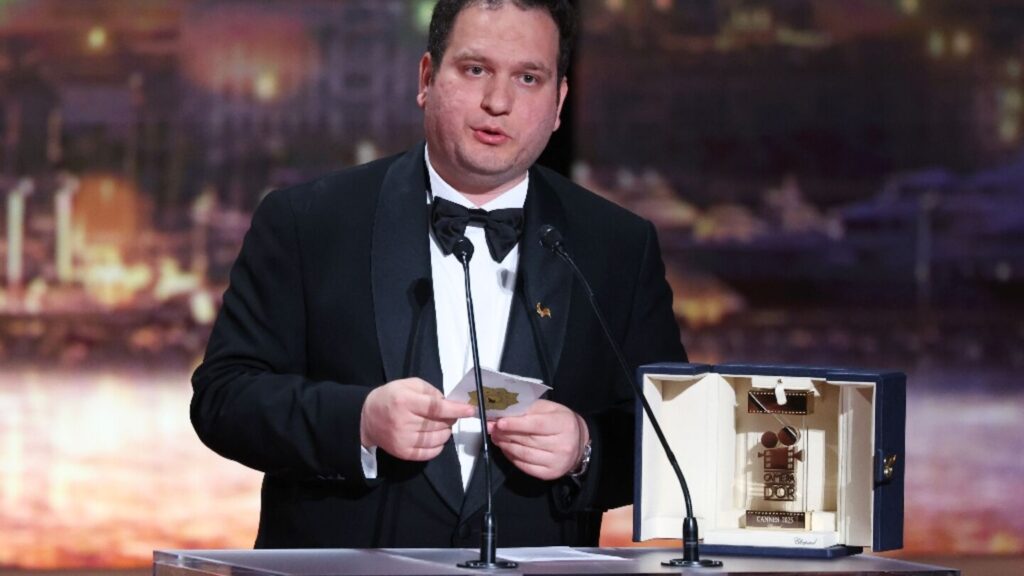
Hasan Hadi, the first filmmaker from Iraq to be selected for the prestigious Cannes Festival, on Saturday won a top prize for his childhood adventure under economic sanctions in “The President’s Cake”.
His first feature-length film follows nine-year-old Lamia after her school teacher picks her to bake the class a cake for President Saddam Hussein’s birthday or risk being denounced for disloyalty.
It is the early 1990s, the country is under crippling UN sanctions, and she and her grandmother can barely afford to eat.
The pair set off from their home in the marshlands into town to try to track down the unaffordable ingredients.
Hadi dedicated his Camera d’Or award, which honours first-time directors, to “every kid or child around the world who somehow finds love, friendship and joy amid war, sanctions and dictatorship.
“You are the real heroes,” he said.
He later shared the stage with dissident Iranian filmmaker Jafar Panahi, who won the festival’s Palme D’Or top prize for his “It Was Just an Accident”, the tale of five ordinary Iranians confronting a man they believed tortured them in jail.
“The President’s Cake” has received excellent reviews since premiering last week in the Directors’ Fortnight section. Cinema bible Variety called it a “tragicomic gem”.
Deadline said it was “head and shoulders above” some of the films in the running for the festival’s Palme d’Or top prize, and “could turn out to be Iraq’s first nominee for an Oscar”.
– Palestinian films –
Also from the Middle East, Palestinian director Tawfeek Barhom received his award for his short film “I’m Glad You’re Dead Now”.
After giving thanks, he took the opportunity to mention the war in Gaza.
“In 20 years from now when we are visiting the Gaza Strip, try not to think about the dead and have a nice trip,” he said.
US President Donald Trump sparked controversy this year by saying he wanted to turn the war-ravaged Palestinian territory into the “Riviera of the Middle East”.
Outside the main competition, Gazan twin brothers Arab and Tarzan Nasser on Friday received a directing award in the Certain Regard parallel section for “Once Upon A Time In Gaza”.
One of them dedicated the award to Palestinians, especially those living in their homeland of Gaza, which they left in 2012.
He said that, when they hesitated to return to Cannes to receive the prize, his mother had encouraged him to go and tell the world about the suffering of people in Gaza.
“She said, ‘No, no, no, you have to go. Tell them to stop the genocide’,” he said.
Amnesty International last month said Israel was carrying out a “live-streamed genocide” against Palestinians in Gaza, claims Israel dismissed as “blatant lies”.
source/content: al-monitor.com (headline edited)
_____________
Hadi’s ‘The President’s Cake’ has received excellent reviews since premiering last week — Sameer AL-DOUMY
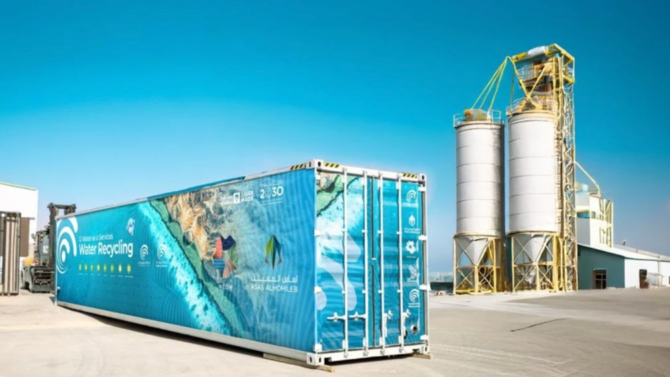
Saudi Arabia’s GI Aqua Tech is set to export its first industrial wastewater treatment plant using nanotechnology in early 2026, the company’s CEO, Sherif Desouky, told Al Eqtisadiah.
The project, which operates on a per-cubic-meter treatment system, is valued at approximately €5 million ($5.9 million), with the first plant set for France, marking the first nanotechnology-based water treatment and reuse system manufactured and exported from Saudi Arabia to the world.
Expanding exports to GCC states in Q1 2026
These plants are designed for 100 percent reuse of industrial wastewater, and the expansion plan includes exporting several units to Bahrain and other Gulf countries with a combined capacity of 10,000 cubic meters in the first quarter of next year.
Desouky noted that the plant being exported to France will be installed at a cosmetics manufacturing facility, one of the most challenging industries for wastewater treatment.
Previously, wastewater had to be collected and transported for incineration at high costs, but nanotechnology now allows on-site treatment and reuse with higher operational efficiency.
He added that the technology directly contributes to reducing liquid waste disposal costs, saving up to 80 percent of energy, and replacing conventional disposal with reuse solutions compliant with strict environmental standards.
Desouky stated that the technology was fully developed and manufactured in Saudi Arabia with government support, enabling the project to move from local implementation to exports to European and global markets.
The plant, located in Al-Kharj Industrial City under the Saudi Authority for Industrial Cities and Technology Zones, known as Modon, spans 23,000 sq. meters and is the first in the Middle East to combine nanomaterial production with wastewater treatment plant manufacturing, according to Desouky.
Investments reach €150m, with 50 percent of workforce Saudi nationals
The CEO explained that the project investments are expected to reach €150 million upon completion, with 54 percent of the workforce currently Saudi nationals.
He added that the technology has already been deployed across major projects in Saudi Arabia, successfully integrating large volumes of industrial and sanitary wastewater, including at Riyadh’s Third Industrial Area, where it achieved 100 percent water reuse in a global first.
He added that while Modon allocated 40,000 sq. meters for the project, the technology required only 4,000 sq. meters, allowing the remaining land to be transformed into a public park irrigated entirely with treated, odor-free water, underscoring the high environmental standards achieved.
Decentralized plants in areas not connected to sewage networks
Desouky highlighted the world’s first decentralized nanotechnology wastewater treatment plant within a residential neighborhood in Al-Mousa district, northern Jeddah.
He explained that the plant was constructed and became operational in just 10 days to address the issue of areas not connected to the central sewage network, which previously relied on tankers, and it now serves 8,000 residents.
This model represents a global first as a rapid solution for water and environmental crises, with the added advantage that the plant can later be relocated without leaving any negative impact.
According to the CEO, applications of the technology have also included the world’s largest plant for treating concrete factory wastewater in Neom and the Samhan Hotel plant in Riyadh, which has successfully treated all types of hotel wastewater for a year, including kitchen, laundry, and blackwater — not just greywater, as is common in hotels.
He added that this has opened avenues for collaboration with the global Marriott chain, noting that exporting this technology allows Saudi Arabia to achieve record energy savings of 80 percent, reduce space requirements by 90 percent, and ensure water meets the highest quality standards.
source/content: arabnews.com (headline edited)
_________________
The technology was fully developed and manufactured in Saudi Arabia with government support, enabling the project to move from local implementation to exports to European and global markets. Al-Eqtisadiah
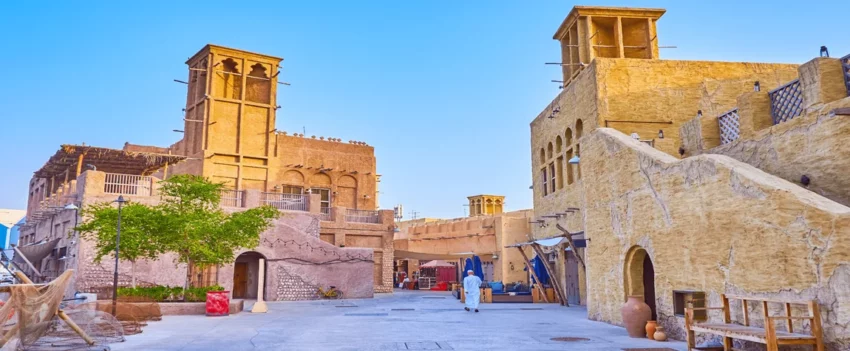
Heritage has become an important pillar of national identity and tourism across the Gulf Cooperation Council (GCC). Saudi Arabia, the United Arab Emirates, Qatar, Oman, Bahrain and Kuwait are investing in museums, restored districts and conservation projects that foreground local history. Projects range from museums and historic districts to botanical gardens, geoparks and open‑air heritage trails. This article highlights key initiatives under development or about to launch. Details are drawn exclusively from official or government‑verified sources; a list of references is provided at the end.
Saudi Arabia’s flagship heritage project is Diriyah Gate, which surrounds At‑Turaif—the mud‑brick citadel of the first Saudi state. A royal decree brought UNESCO recognition. The Diriyah Gate Development Authority is building Najdi‑style hotels and a mixed‑use square that opened in 2024, creating a neighbourhood where cafés, shops and cultural venues reinforce the historic character.
Further north, the Royal Commission for Al‑Ula is executing the Journey Through Time masterplan, which divides the valley into heritage districts and pairs archaeological preservation with museums, eco‑lodges and interpretive trails through 2035. The commission is also developing Khaybar Heritage Village, connecting it with Al‑Ula and Tayma to form a “living museum” that showcases thousands of years of history.
In Sharjah, the Heart of Sharjah project is revitalising the city’s historic core. Led by the government’s Investment and Development Authority (Shurooq), the five‑phase programme is preserving houses, souqs and mosques and repurposing them as museums, workshops and cafés. Completion is expected in 2025, with the restored district seeking UNESCO World Heritage nomination.
Abu Dhabi is building the Saadiyat Cultural District on Saadiyat Island. Its centrepiece, the Zayed National Museum, will open in December 2025 and celebrate the life of Sheikh Zayed and the UAE’s heritage. The museum will stand alongside new institutions such as the Guggenheim Abu Dhabi, complementing the Louvre Abu Dhabi and establishing the island as a cultural hub.
Qatar Museums is developing Dadu, Children’s Museum of Qatar, the nation’s first children’s museum. While construction continues, Dadu Gardens has opened as an outdoor space where children learn about gardening and sustainability through play. The broader museum will nurture creativity and support national education goals.
Three other museums will diversify the country’s cultural offering. The Lusail Museum, scheduled to open in 2029 on Al Maha Island, will showcase Orientalist art. The Art Mill Museum, due in 2030, will convert a historic flour mill on Doha’s corniche into galleries and a public park. The Qatar Auto Museum will explore the history and future of cars through exhibitions and workshops.
Oman’s Ministry of Heritage and Tourism funds community‑led restoration of forts, mosques and other traditional structures. In 2024 it supported more than twenty projects to preserve vernacular architecture and encourage tourism.
The country is also completing the Oman Botanic Garden, a 500‑hectare conservation site near Muscat. Developed between 2021 and 2025, it will protect more than 1,450 native plant species in biomes replicating desert, mountain and coastal environments. After a 2025 handover to Muscat Municipality, the garden is expected to open soon.
Bahrain celebrates its pearling heritage through the Pearling Path, a 3 km route in Muharraq. Managed by the Bahrain Authority for Culture and Antiquities, it links offshore oyster beds with restored merchant houses and mosques and narrates how pearls were harvested and traded. Inscribed on UNESCO’s World Heritage List in 2012, the path is still being restored; Siyadi House is being converted into a pearling museum.
Kuwait is diversifying tourism with projects highlighting geology and modern history. The Kuwait Geopark will showcase desert landscapes and archaeological sites north of Kuwait City. A UNESCO‑backed initiative in Al‑Ahmadi (2024–2025) is documenting the town’s souq, cinema and neighbourhoods and planning heritage‑based regeneration. In Kuwait City the cabinet has revived a delayed Heritage Village that envisages a hotel, shops and villas inspired by traditional architecture.
Heritage has become a driver of tourism across the GCC. Saudi Arabia is transforming Diriyah and Al‑Ula into living museums. The UAE is reviving historic quarters and erecting new museums in Sharjah and Abu Dhabi. Qatar is creating attractions for children, art lovers and car enthusiasts. Oman couples community restoration with a vast botanic garden. Bahrain narrates its pearl‑diving legacy along a restored path. Kuwait is highlighting geological landscapes and mid‑century towns while reviving a heritage‑themed village. Collectively, these projects show a regional commitment to preserving the past while shaping diverse tourism futures.
These efforts are rewriting the region’s tourism story.
Diriyah Gate Development Authority. Diriyah Gate timeline and preservation vision[1].
Royal Commission for Al‑Ula. Journey Through Time masterplan and Khaybar development[2][3].
Sharjah Government. Heart of Sharjah project details and restoration timeline[4][5].
Department of Culture & Tourism – Abu Dhabi. Saadiyat Cultural District and Zayed National Museum opening date[6].
Qatar Museums. Dadu Gardens and vision for Dadu Children’s Museum[7]; Art Mill Museum due to open 2030[8]; Qatar Auto Museum concept and design[9].
Visit Qatar. Lusail Museum overview and 2029 opening schedule[10].
Oman News Agency / Federation of Arab News Agencies. Ministry of Heritage and Tourism support for heritage restoration initiatives[11]; Oman Botanic Garden completion and handover for opening[12][13].
Bahrain Authority for Culture and Antiquities. Pearling Path project description and components[14].
Kuwait Times (quoting KUNA and Ministry of Information). Kuwait Geopark initiative and heritage significance[15]; UNESCO Core Data Portal. Heritage and Identity for Al‑Ahmadi’s sustainable development, Phase 1 (2024–2025)[16]; Zawya Projects. Revival of Kuwait Heritage Village project endorsed by cabinet[17].