Arabs & Arabian Records Aggregator. Chronicler. Milestones of the 25 Countries of the Arabic Speaking World (official / co-official). AGCC. MENA. Global. Ist's to Top 10's. Records. Read & Enjoy./ www.arabianrecords.org
Event will showcase the diversity of Arab cultural heritage and civilization while promoting intercultural dialogue and cultural development goals
Initiative reflects Saudi Arabia’s commitment to global engagement and received unanimous backing from Arab culture ministers at the ALECSO General Conference in May
Saudi Arabia is organizing the inaugural Arab Week at UNESCO, set for Nov. 4-5 at its Paris headquarters.
This marks the first such event in more than 50 years of Arab-UNESCO relations, the Saudi Press Agency reported on Wednesday.
Supported by all Arab nations, the event will showcase the diversity of Arab cultural heritage and civilization while promoting intercultural dialogue and cultural development goals.
Organizing by Saudi Arabia’s National Commission for Education, Culture and Sciences, the event will highlight the Arab world’s artistic and literary traditions, creating a broad platform for cultural exchange.
The initiative reflects Saudi Arabia’s commitment to global engagement and received unanimous backing from Arab culture ministers at the ALECSO General Conference in May.
Prince Badr bin Abdullah bin Farhan, minister of culture and chairman of the commission, has led the initiative, positioning Saudi Arabia as a key player in promoting regional and international cultural collaboration.
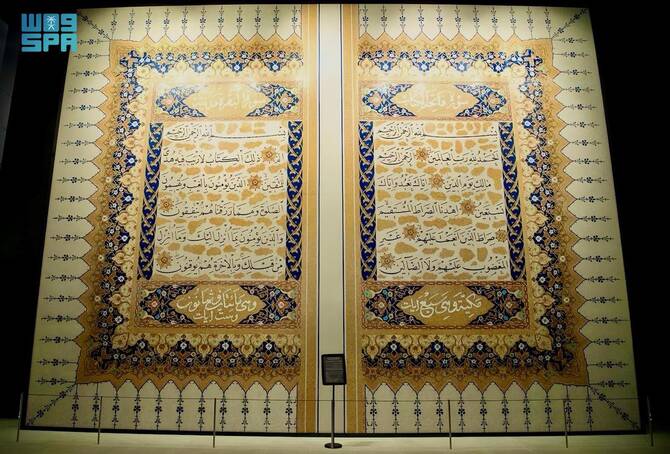
The program includes a marketplace for Arab cultural products, Arabic calligraphy exhibitions, UNESCO-listed heritage site displays, music, food demonstrations, traditional crafts, and fashion showcases.
Academic activities feature symposiums on novel writing, artificial intelligence, calligraphy, children’s literature, and poetry, alongside competitions and artist displays.
This event enhances Arab culture’s global standing, providing a platform to share its rich heritage and ideas while uniting Arab nations through shared values and contributing to global development.
source/content: arabnews.com (headline edited)
__________
At-Turaif District is a UNESCO World Heritage site located in Diriyah, Saudi Arabia. (Wikimedia Commons)
She might be just 24 years old, but Palestinian artist Salma Dib already has a remarkable story to tell.
The young UAE-based artist is displaying one of her wall pieces at an exhibition called “Summer and Women” at Etihad Modern Art Gallery in Abu Dhabi.
Dib has been working on an ongoing, powerful and labor-intensive series of works which she calls “generational walls.” She mounts a mix of building materials — including cement, gravel and sand — on wooden panels featuring obscure Arabic writings. The result is visually intense, stopping viewers in their tracks.
The inspiration behind the politically charged, grey-toned imagery is the graffiti found on the walls of Syria, Jordan and Palestine.
“People can anonymously say anything on them,” said Dib, referring to the protest nature of her work. “I think I found a part of myself in those walls, because I (have always been) reserved in what I had to say . . . A lot of it is about healing because I get to say what I want.”
Born in a Syrian refugee camp, Dib’s journey has taken her to the UAE and Chicago, where she studied art and exhibited some of her works. But it hasn’t all been smooth sailing.
“You know how they say you face in your life a lot of your biggest fears? I think my biggest fear has always been uncertainty — familywise, country-wise, passport situations and my schooling. There was always that feeling of ‘Where is home?’ which I feel a lot of us really deal with,” Dib told Arab News in Dubai, where she now lives.
The artist is the descendent of a displaced Palestinian family who were forced out of their homes in 1948 as a result of the Israeli occupation. Her grandfather, then a child, reached Syria — mostly by walking — and settled there.
“There was always this inherited pain passed down to us,” she said.
Dib was born in the refugee camp of Khan al-Shih, in southern Syria, 27 kilometers from Damascus. She lived with her family on a farm, a place of which she has many happy memories and where she says her love of art began. Her grandfather built a treehouse for her and her cousins, and her aunt and uncle were artists and had a studio at the camp.
“When we were kids, we would just play with paint in their studio,” Dib recalled. “As a child, art was something for fun. In the farm, we used to always paint on furniture.”
When Dib was five, her father had the chance of a job in the UAE, and the family initially settled in Abu Dhabi.
During her mid-teens, Dib began to take art more seriously. After losing her mother at 15, art became her “alone time.”
“It was an outlet, but there were no thoughts — just doing. Making something was always part of my life,” she said.
In 2018, Dib wanted to experience life on her own and was able to travel to the US to study art. She enrolled at the School of the Art Institute of Chicago and found her artistic voice, experimenting with textile art, ceramic, and neon signage. One of her teachers encouraged her to get out of her “reserved” self: “She kept pushing me and telling me, ‘There is more to your story that you need to be showing through your art’.”
Summer and Women continues throughout the summer and open daily at the Etihad Modern Art Gallery.
source/content: arabnews.com (headline edited)
____________
Palestinian artist Salma Dib already has a remarkable story to tell. (Supplied)
– Astronomer from Hamdanid dynasty at end of 10th century A.D.
– Astrolabes integrate science, technology, engineering, arts, math
The STEAM Festival, organized by the King Salman Science Oasis, is highlighting the pioneering work of scientist Mariam Al-Astrolabi and Saudi Arabia’s women.
Running until Sept. 30 under the theme “Fun Chemistry,” the festival aims to instill a sense of pride in the nation’s heritage, raise awareness about the role of women in science, and inspire girls to pursue careers in STEAM.
Al-Astrolabi made significant contributions to science, particularly astronomy, becoming one of the most notable women in Islamic history.
A Muslim scientist, she is renowned for her work in creating and perfecting astrolabes, instruments used in ancient times to determine locations based on the movement of stars.
Al-Astrolabi, an astronomer from the Hamdanid dynasty at the end of the 10th century A.D., excelled in astronomy and engineering.
The astrolabe was also used in marine navigation to explore new routes, and helped to determine the times and direction of prayers for Muslims.
Astrolabes varied in size and design, with some small enough to be carried like a pocket watch before mechanical clocks were invented.
Astrolabes are symbols of the integration of science, technology, engineering, arts and mathematics, known as STEAM.
Skilled engineering was used to design and manufacture the instrument with precision.
Mathematical calculations ensured accurate observations, and some astrolabe designs included artistic elements.
Centuries after Al-Astrolabi’s passing — the exact date remains unknown — her name continues to inspire those working in astronomy.
In 1990, American astronomer Henry E. Holt honored Al-Astrolabi by naming after her one of the asteroids he discovered at the Palomar Observatory in San Diego, California.
source/content: arabnews.com (headline edited)
___________
The STEAM Festival is highlighting the pioneering work of scientist Mariam Al-Astrolabi. (SPA)
The Kuwaiti shooting team won three gold medals in the 2024 Asian Shotgun Cup held in Almaty, Kazakhstan, said an official on Monday.
The Kuwaiti team scored its wins in the men and women’s single and team Trap shooting competitions.
Speaking to KUNA, Chairman of the Kuwaiti Shooting Sport Federation (KSSF) and Secretary General of the Asian Shooting Confederation Duaij Al-Otaibi commended the performance of the Kuwaiti team, noting that the tournament, held on September 20-30, saw the participation of various top competitors from China, Japan, Qatar, the UAE, Saudi Arabia, Uzbekistan, Kazakhstan, and more.
Hagar Rashid Al Naeemi has carved a historic path as the first female police officer from Abu Dhabi to be selected for a role for the International Police. This remarkable achievement underscores her exemplary dedication, skills, and the UAE’s commitment to fostering gender equality in law enforcement.
A Distinguished Career
Hagar’s journey to Interpol is marked by a series of significant accomplishments. Serving in Abu Dhabi’s police force , she demonstrated outstanding expertise in various critical areas, earning respect and recognition from her peers and superiors. Her selection for Interpol is a testament to her hard work and the progressive vision of the UAE’s leadership.
Al Naeemi specialises in digital crime, focusing on combating cyber threats such as hacking, data breaches, and online fraud. Her expertise involves using advanced technological tools to track and prevent cyber-criminal activities, ensuring the security of digital infrastructures. At Interpol, she will continue to leverage her skills in cybercrime to develop and implement strategies for international cooperation in fighting digital threats, contributing to global cybersecurity initiatives. This role could involve coordinating with various countries to enhance collective cyber defences and address emerging digital crime trends.
Empowering a new generation of female leaders
Hagar’s appointment is more than a personal victory; its a milestone for all Emirati women. Her success symbolises the breaking of barriers and the new potential for women in fields traditionally dominated by men. It serves as an inspirational narrative, encouraging more women to pursue careers in law enforcement and other male-dominated fields.
Her success highlights that dedication and hard work can lead to global recognition, motivating young women to dream big and strive for excellence in their chosen paths.
A source of national pride
Hagar’s achievement brings immense pride to the UAE. It reflects the nation’s progressive policies and the successful integration of women into high-stakes roles. Her journey from Abu Dhabi to Interpol showcases the UAE’s commitment to empowering women and highlights the significant strides the country has made in gender equality.
About one million tonnes of ammonia produced will be shipped to either European or North-east Asian markets, Adnoc executive says.
Adnoc will acquire a 35 per cent equity stake in oil major ExxonMobil’s proposed blue hydrogen and ammonia production facility in Texas as the Abu Dhabi-based energy company boosts its presence in the US.
The project, set to be the “world’s largest” of its kind, will be capable of producing up to 1 billion cubic feet daily of blue hydrogen, with about 98 per cent of carbon dioxide removed, and more than 1 million tonnes of low-carbon ammonia per year, Adnoc said in a statement on Wednesday. The final investment decision is projected for 2025, with operations expected to begin in 2029.
“This strategic investment is a significant step for Adnoc as we grow our portfolio of lower-carbon energy sources and deliver on our international growth strategy,” said Dr Sultan Al Jaber, Adnoc managing director and group chief executive.
Blue hydrogen is primarily produced from natural gas through a process known as steam reforming, which involves combining natural gas with steam. This process generates hydrogen as the main product, while carbon dioxide is produced as a by-product.
The plant, which will be in Baytown, will have access to “cheap” gas from the US Gulf Coast via pipelines, Michele Fiorentino, executive vice president of low carbon solutions at Adnoc, told The National on Wednesday.
Mr Fiorentino said that about half of the facility’s production will be utilised by ExxonMobil for its operations as “captive demand”. While part of the remaining half will be sold in the Gulf Coast, where there is a well-established hydrogen network, about one million tonnes of ammonia will be shipped to either European or north-east Asian markets, he added. Discussions are under way with possible buyers, he said.
“A big off-taker is going to be North-east Asia – Japan and South Korea are keen to decarbonise their energy systems, and so they’re looking at ammonia … to reduce the carbon footprint of their coal-fired [power] plants,” Mr Fiorentino said.
Ammonia co-firing involves substituting part of the coal used in power plants with ammonia and burning the low-carbon fuel with coal to produce electricity.
“There are obligations on the overall refining system in Europe to reduce their carbon footprint and other hard-to-abate sectors are looking at hydrogen as a way to decarbonise,” Mr Fiorentino said.
Adnoc’s latest agreement follows its acquisition of a 11.7 per cent stake in phase one of NextDecade’s Rio Grande liquefied natural gas export project in Texas.
“This is the second [deal] in a relatively short period of time. The US remains an interesting geography from our perspective, whether it’s on the gas side or on the low carbon solution side,” Mr Fiorentino said. “We remain very receptive to investment opportunities that really make financial sense in the region.”
Adnoc is making substantial investments in carbon capture and establishing a hydrogen supply chain, which is seen as crucial for abating emissions in industries such as shipping and steel manufacturing.
The company is building a one million tonnes-per-year low-carbon ammonia production plant at the Ta’ziz industrial ecosystem and chemicals hub in Ruwais, Abu Dhabi.
Adnoc has also shipped several demonstration cargoes of low-carbon ammonia to customers in Asia and Germany. In December, the company teamed up with Japan’s Mitsubishi Heavy Industries to explore potential opportunities in green hydrogen and ammonia value chains.
The companies will also study the deployment of carbon management technology, the state-run energy company said at the time.
The market for clean hydrogen is expected to top the value of the liquefied natural gas trade by 2030 and grow to $1.4 trillion per year by 2050, Deloitte said in a report last year.
Green hydrogen, which is produced using renewable energy such as solar and wind, is projected to help drive the bulk of the growth, the report said.
Sheikh Khaled bin Mohamed, Crown Prince of Abu Dhabi and chairman of the Abu Dhabi Executive Council, at the signing of a strategic partnership by Dr Sultan Al Jaber, Adnoc’s managing director and group chief executive and Darren Woods, ExxonMobil’s chairman and chief executive. Photo: Abu Dhabi Media Office
Qatari champion Mutaz Barshim won the bronze medal in the Men’s High Jump at the Olympic Games Paris 2024.
Barshim successfully cleared a height of 2.34 meters, his best performance this season, securing third place behind American Shelby McEwen, who won the silver medal with a height of 2.36 meters, giving the best performance of his career, and New Zealand’s Hamish Kerr, who won the gold medal with a height of 2.36 meters.
With this achievement, Barshim became the first high jump athlete to ever win four medals across four Olympic Games, having won the gold medal at the Tokyo 2020, in addition to silver medals at Rio de Janeiro 2016 and London 2012.
Mutaz Barshim won Qatar its first medal at the Olympic Games Paris 2024 and has become the most decorated Qatari athlete in Olympic history, with a total of four medals. (QNA)
Egyptian weightlifter Sara Ahmed Samir has once again made Egypt proud, securing a silver medal in the 81kg Women’s Final at the 2024 Paris Olympics.
Samir lifted a total of 268kg, marking an incredible achievement in her illustrious career and reinforcing her position as one of the sport’s leading athletes.
The 26-year-old’s performance included a snatch of 117kg and a clean and jerk of 151kg, surpassing her previous personal best of 148kg, which she set at the 2022 World Championships in Colombia.
Despite falling short of the top podium spot, Samir’s silver medal adds to her already impressive collection, which includes a bronze medal from the 2016 Rio Olympics and a gold medal from the 2022 World Championships.
The gold medal in the 2024 Paris Olympics event was claimed by Norway’s Solfrid Eila Amena Koanda, who set a new Olympic record with a total lift of 275kg, comprising 121kg in the snatch and 154kg in the clean and jerk. Ecuador’s Neisi Patricia Dájomes Barrera took home the bronze, narrowly missing out on the silver with a total lift of 267kg.
Samir’s journey in the final was marked by determination and resilience. After successfully lifting 113kg and 117kg in her first two snatch attempts, she narrowly missed out on her third attempt at 119kg. In the clean and jerk, she successfully lifted 146kg on her first attempt but was unable to complete her final lift at 155kg, which would have secured her the gold.
This silver medal represents Egypt’s second medal at the Paris 2024 Olympics, following Mohamed El-Sayed’s bronze in the men’s epee individual fencing event.
Bahrain’s Salwa Eid Naser said she had mixed emotions after claiming a silver medal in the women’s 400m on her Olympic debutdebut.
Eid Naser clocked 48.53 seconds on a wet night in Paris but was blown away by Marileidy Paulino of the Dominican Republic who raced to gold in an Olympic record time of 48.17.
The Bahraini sprinter looked disappointed after the race but was never truly in the hunt for gold while also comfortably seeing off bronze medallist Natalia Kaczmarek of Poland who finished in 48.98.
Eid Naser has the full collection of medals – gold, silver and bronze – from World Championships but this was her first Olympics. She missed Tokyo because of a controversial ban for missed doping tests. The Court of Arbitration for Sport overturned the ban and she has made up for missed time with an Olympic medal.
But she said: “I cannot even begin to put into words what this means. I am happy and at the same time I am sad.”
Paulino, the gold medallist, said: “This is the best of my life, absolutely it is. I saw myself as very strong, I’ve worked so hard and now I have an Olympic record.
“For me this gold medal means a lot. It was the medal that I needed to complete an Olympic cycle and it is a medal that my country needed. The truth is that it was worth it because I think it will inspire many young people who are in a precarious situation. Many doors will open for them because of me.”
The Dominican entered the race as a big favourite having won gold at last year’s world championships in Budapest. However, this title, won in front of a crowd who cheered her all the way down the home stretch, will rank as the greatest of her career.
Meanwhile, Team USA’s Rai Benjamin won gold in the men’s 400m hurdles at the Stade de France as he saw off his ‘Big Three’ rivals.
The race was billed as a shoot-out between Benjamin, Norway’s Karsten Warholm and Brazil’s Alison dos Santos. And so it proved as they all grabbed a medal.
For Benjamin it was gold in 46.46secs, with Warholm (47.06) second and Dos Santos (47.26) third.
Qatar’s Abderrahman Samba came in sixth but was never in the mix for a medal.
Elsewhere, Egypt’s Ahmed Elgendy looked in fine form as he set an Olympic record points total in qualifying for the final of the men’s modern pentathlon.
Elgendy, the silver medallist from Tokyo, won his semi-final with a record tally of 1516 points.
The 24-year-old competed in fencing, riding, swimming and laser run, and topped his section with the best aggregate performance. He did struggle somewhat in the showjumping but more than made up for it elsewhere.
His compatriot Mohanad Shaban sneaked into the final. Shaban finished ninth in the second semi-final with only the top nine progressing to Saturday’s main event.
The final begins at 7:30pm UAE time on Saturday, with the climax being a laser run which starts at 9.10pm.
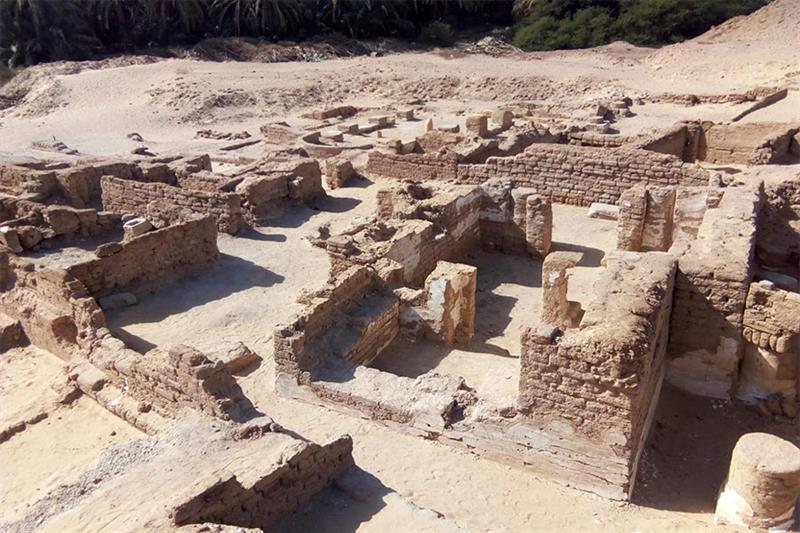
The UNESCO World Heritage Committee, during its 46th session in New Delhi, India, announced the inclusion of three new Arab sites to the World Heritage List. The sites are the Monastery of Saint Hilarion/Tell Umm Amer in Palestine, Umm el Jimal City in Jordan, and the Cultural Landscape of Al Faw Archaeological Area in Saudi Arabia.
The Monastery of Saint Hilarion in Gaza is one of the oldest historical sites in the Middle East, while Umm el Jimal in Jordan showcases a Nabataean-Roman-Byzantine character and is notable for its inhabitants’ resilience in a water-scarce region. Saudi Arabia’s Al Faw Archaeological Area, a significant ancient human settlement, is now the eighth site in the Kingdom to be registered on the World Heritage List.
Prince Badr bin Farhan, Saudi Arabia’s Minister of Culture, emphasised that the inscription of Al Faw aligns with Saudi Vision 2030, highlighting the Kingdom’s commitment to preserving global human heritage and promoting national identity.
“The Kingdom recognizes the importance of heritage, its preservation, and its promotion worldwide in order to establish a solid foundation for the present, chart a roadmap for future endeavors, and support the Heritage Commission in developing national heritage assets,” the Prince said.
Shaikh Khalifa bin Ahmed Al Khalifa, President of the Bahrain Authority for Culture and Antiquities and Chairman of the Arab Regional Centre for World Heritage (ARC-WH), congratulated the three countries on their achievement. He highlighted that this inclusion underscores the importance of Arab heritage on a global scale and reflects the growing interest in preserving the region’s cultural and natural heritage.
The inclusion of Tell Umm Amer was also simultaneously added to the List of World Heritage in Danger, amid the brutal genocidal war being waged on Gaza by the Israeli occupation forces.