Category: Uncategorized
U.A.E: Space42 develops high-resolution digital maps covering the entire African continent.
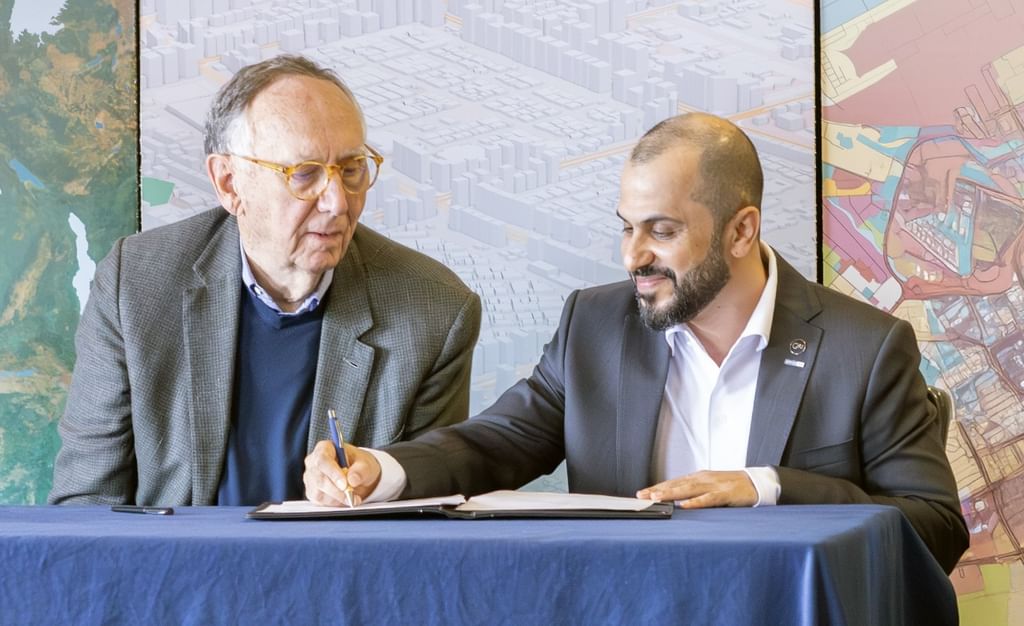
Space42 announced today the signing of a memorandum of understanding with Microsoft and Esri to develop high-resolution digital maps covering the entire African continent. The initiative aims to support development and planning efforts in infrastructure, investment, and corporate decision-making across the continent.
This step comes within the framework of the “Map of Africa” initiative, which aims to create a unified and comprehensive map of the continent. It is the largest of its kind to date, encompassing 54 countries and more than 1.4 billion people.
The MoU aims to establish a smart information infrastructure that enhances the ability of governments, institutions, and communities to make accurate decisions and drive economic and social development based on data-driven knowledge.
The five-year partnership also aims to enhance geospatial capabilities in both Africa and the UAE, and provide accurate and accessible data to stakeholders at the national and regional levels.
Hassan Al Hosani, CEO of Bayanat Smart Solutions, a subsidiary of Space42, emphasized that building a more sustainable and resilient future begins with access to reliable data and accurate insights, especially in markets with information gaps. He explained that advanced geospatial maps and geospatial intelligence solutions are essential tools for supporting decision-makers, achieving comprehensive economic development, and empowering communities in Africa and beyond. Peng Xiao, CEO of G42, said that artificial intelligence is the cornerstone of societal development, yet access to it remains limited in many countries in the Global South. From this perspective, this partnership represents a strategic step to bridge the data and knowledge gap and enable governments to make decisions based on insights and advanced analysis. He pointed out that through this collaboration, we are working to transform artificial intelligence into a practical tool that contributes to smarter urban planning, the development of resilient infrastructure, enhanced natural resource management, and accelerated economic empowerment.
Jack Dangermond, President of Esri, explained that transforming satellite imagery into accurate continent-wide maps requires advanced geospatial technologies and precise professional methodologies. These same capabilities have supported similar initiatives in various regions of the world and are now being put to use in Africa. He said, “With this initiative, the partnership contributes to the creation of a vital resource that will support infrastructure planning and enhance economic and sustainable development across the continent.”
Space42 is leading this pioneering project by securing funding, overseeing implementation, and providing satellite data through its sovereign capabilities and network of strategic partnerships. This data is analyzed using AI-powered digital twin models to produce dynamic maps tailored to different uses. The company is also leading an integrated research and development roadmap aimed at innovating new models and automating map production processes to meet future requirements.
Esri is leading the map development methodology, leveraging its advanced geospatial intelligence and remote sensing technologies, while supporting regional centers to train local talent and build sustainable capacity. In return, Microsoft provides secure cloud infrastructure via the Azure platform, enabling data processing, integration, and sharing at scale, ensuring operational efficiency and rapid access to actionable results.
As part of the G42 ecosystem, Space42 is further strengthening its collaboration with Microsoft to develop smart solutions that meet the needs of communities and support business ecosystems.
The initiative is expected to have a broad positive impact across multiple sectors, such as ports and logistics, renewable energy, security and disaster response, smart cities, and digital economies.
The data will be licensed to national government entities, ensuring their sovereignty over it and ensuring its continued updating by the relevant mapping authorities. The initiative also aims, in the long term, to enable an innovative commercial ecosystem that includes African startups that contribute to expanding the scope of geospatial solutions. The data will subsequently be stored in data centers operated by G42 and Microsoft on the continent.
The UAE is the largest foreign investor in Africa, with investments exceeding $44 billion by 2024, roughly equivalent to the combined investments of the United Kingdom and China. As the leading national space entity, Space 42 supports this agenda by exporting Emirati capabilities in artificial intelligence and geospatial data, enabling data-driven development.
source/content: wam.ae (headline edited)
______________
___________________________________
UNITED ARAB EMIRATES (U.A.E)
SAUDI ARABIA : The vision architect: Princess Nouf Al-Saud’s blueprint for Saudi sport
When Princess Nouf Al-Saud started her role as general manager of marketing at Saudi Arabia’s Ministry of Sport in 2018, she confronted a world unfamiliar with the Kingdom’s pulse.
“When I first began this journey,” she said, “I realized that many people around the world had never truly experienced our culture, our energy or our vision.”
Six years and more than 135 global events later — from the electrifying debut of Formula 1 to the pioneering E1 Electric Boat Race — Al-Saud now orchestrates a marketing portfolio that has drawn more than 3 million attendees and broadcast Saudi Arabia’s evolution to more than 160 countries.
Her greatest triumph? Rewriting the narrative. Al-Saud told Arab News: “We’ve evolved from being seen simply as a destination that hosts events, to being recognized as a forward‑thinking leader in sports.”
Where skepticism once lingered, Al-Saud now projects certainty: “Today, the most important message is that Saudi Arabia is not only open to the world, but actively shaping the global sports narrative.”
This conviction permeates every campaign — whether amplifying community participation at Extreme E or embedding cultural storytelling into the WTA Finals.
The most profound transformations, however, unfold in Saudi stands. “A decade ago, it was rare to see parents, daughters and sons attending events side by side,” Al-Saud said.
Now, stadiums brim with multi-generational energy. Al-Saud said: “Girls are proudly wearing team jerseys, parents are cheering with their children and young fans are recognizing themselves in the athletes they watch.”
She calls this phenomenon “a ripple effect where sport becomes a shared cultural language” — a testament to Vision 2030’s societal impact.
Challenging global perceptions remains intrinsic to her work. “We viewed every global event as a fresh opportunity to open a new window,” she said, countering stereotypes with experiential proof — be it through world-class venues or volunteers’ warmth.
Her creative arsenal relies on authentic storytelling: “We flip the script by designing campaigns that don’t just market a match or a race, they tell stories.”
These narratives, showcasing international fans’ pilgrimages or homegrown talent, serve a higher purpose: “Our role goes far beyond ticket sales; it is about inspiring the next generation of athletes.”
As chair of the Women’s Sports Committee, Al-Saud wields platforms like the WTA Finals as catalysts. “It’s never been enough to simply host a women’s tournament,” she added.
Her strategy is inclusion at every level: “We use these platforms to show that Saudi women are athletes, leaders, strategists and innovators.”
From mentorship programs to leadership panels, the objective is unequivocal: “Redefining roles not just on the court, but in boardrooms, production teams and strategy tables.”
Amid the scale of progress, human moments anchor her. She vividly recounts the Italian Super Cup: “Watching them, dressed in their club colors, walking through our fan zones with their children, laughing, taking photos, I felt an overwhelming sense of pride.”
In that instant, the mission crystallized: “It wasn’t just about the game. It was about Saudi Arabia becoming a magnet for people who love sport, wherever they come from.” For Al-Saud, those smiles are more than rewards — they are proof that sport can build bridges no statistic can measure.
source/content: arabnews.com (headline edited)
___________

Princess Nouf Al-Saud started her role as general manager of marketing at Saudi Arabia’s Ministry of Sport in 2018. (Supplied)
__________________
SAUDI ARABIA
IRAQ : ‘I am the last link’: Hamid Al-Saadi’s fight to save a centuries-old Iraqi musical tradition
Exiled vocalist who released his first album, Maqam Al-Iraq, in 25 years this month does not know who will follow him.
Hamid Al-Saadi is worried he might be the last one in the lineage, the final master of a musical tradition that dates back centuries.
The 67-year-old is recognised as the most prominent practitioner of Iraqi maqam, the only vocalist to have mastered the tradition’s entire repertoire of 56 pieces. He is also the author of the first two new maqams to have been composed in the past century – both appear on Maqam Al-Iraq, Al-Saadi’s first album in 25 years, which was released on July 18.
Yet it’s not clear to Al-Saadi when, or if, the next additions to the canon will come.
“I remain the last link – I carry all the traditions of maqam with me,” says the exiled musician. “There’s nobody else alive who knows this entire tradition and nobody who’s actively performing it, or taking on the responsibility to pass on the maqam.”
Elements of Iraqi maqam can be traced back to the Abbasid golden era of AD750 to AD1258, when Baghdad’s place at the heart of Islamic civilisation was akin to modern London or New York as the “centre of inspiration for artists from all over the world,” says Al-Saadi.
While the Arabic maqam can be considered a system of modes, Iraqi maqam refers to a repertoire of compositions, where each maqam has a specific episodic structure. Its preservation has been inscribed on Unesco’s Intangible Heritage list .
Unique to Iraq is Maqam Mukhalif, reputed to have first been sung after the Mongols sacked Baghdad in 1258, ending 500 years of prosperity. “A lot of Iraq has seen pain and suffering, and most maqams were born from a specific story that affected the singer or musician,” explains Al-Saadi. “It’s a malleable form that can adjust to current events – that’s what keeps maqam alive, able to persist throughout many generations.”
Yet there is no set text for each musical composition, with the lyric the choice of the performer. “You could have three different singers perform the same maqam, following the same musical structure, but each choosing a different poem,” adds Amir ElSaffar, a member of Al-Saadi’s band and founder of Maqam Records, which is releasing Maqam Al-Iraq. “One could be an extremely sad poem, the other could be joyful or divine, one could be very secular – that keeps it dynamic and constantly changing.”
Al-Saadi was one of the last musicians to grow up amid affluence and intellectual freedom. It was a time when maqam performances were regularly heard in Iraq’s concert halls and coffee houses, and performers were supported by institutes and conservatories.
Born in 1958, and having mastered the entire repertoire by his mid-twenties, Al-Saadi became an in-demand performer on stage and television throughout the 1980s. Yusuf Omar, the most recorded Iraqi maqam singer in history, eventually named Al-Saadi his successor.
Before him, Omar had learnt from Mohammed Al-Gubbanchi, who in turn studied with forefather Ahmed Zaidan – a ceremonial torch-passing that dates back centuries. But Al-Saadi is not sure there is anyone to pass the torch to next. “I became the link from those masters to the generation that I live in,” says Al-Saadi, humbly claiming he did not ascend to “even one quarter” of Omar’s technique.
After the UN Security Council imposed sanctions in 1990 and the first Gulf War, Iraq’s civil society crumbled and, unable to support himself as a musician, Al-Saadi fled to London in 1999. He busied himself writing a book about Iraqi maqam, Al-Maqam wa Buhoor Al-Angham.
In 2003 he was approached by ElSaffar, a young and hungry Iraqi-American jazz trumpeter who had already made a name for himself performing with free jazz pioneer Cecil Taylor. Raised in Chicago and on a mission to reconnect with his roots, ElSaffar arrived in London fresh from six months of fruitless study in Iraq.
“I went to Baghdad at a very difficult moment – 35 years of dictatorship, 12 years of sanctions, and it was a very tense time politically post 9-11,” remembers ElSaffar. Moreover, all the teachers he approached refused to take a novice Arabic speaker seriously.
When it became clear a second invasion was inevitable, ElSaffar decamped to London and tracked down Al-Saadi, who took him on as a student. “Hamid was my dream teacher because he would sit and teach me, phrase by phrase, and he wouldn’t let me move on until I mastered it,” adds ElSaffar.
The knowledge he gleaned enabled ElSaffar’s later experiments with Arabic music – witnessed in Abu Dhabi with a performance of his 17-piece Rivers of Sound ensemble at NYUAD in 2016.
In 2018, ElSaffar repaid the favour, bringing Al-Saadi to the US on an Artist Protection Fund Fellowship. Now based in Brooklyn, New York, Al-Saadi has held teaching positions at Sarah Lawrence College and Rutgers University, and lectured through institutions including Lincoln Centre, the Smithsonian and Kennedy Centre.
His greatest influence may have been on stage, leading Safaafir, the only Iraqi maqam ensemble in the US – a family affair featuring ElSaffar on santur, his sister Dena ElSaffar on violin and joza, and her husband Tim Moore on percussion.
It was this group that recorded Maqam Al-Iraqi via ElSaffar’s continuing Maqam Studio preservation initiative. The 87-minute, four-track album is named after its first piece, a maqam of longing Al-Saadi composed since moving to the US, based on a text by the highly regarded Iraqi poet Ni’mah Hussain. “I lived in exile for seven years,” adds Al-Saadi. “I missed my homeland, my people – the essence of longing comes from the poem and the text.”
source/content: thenationalnews.com (headline edited)
__________
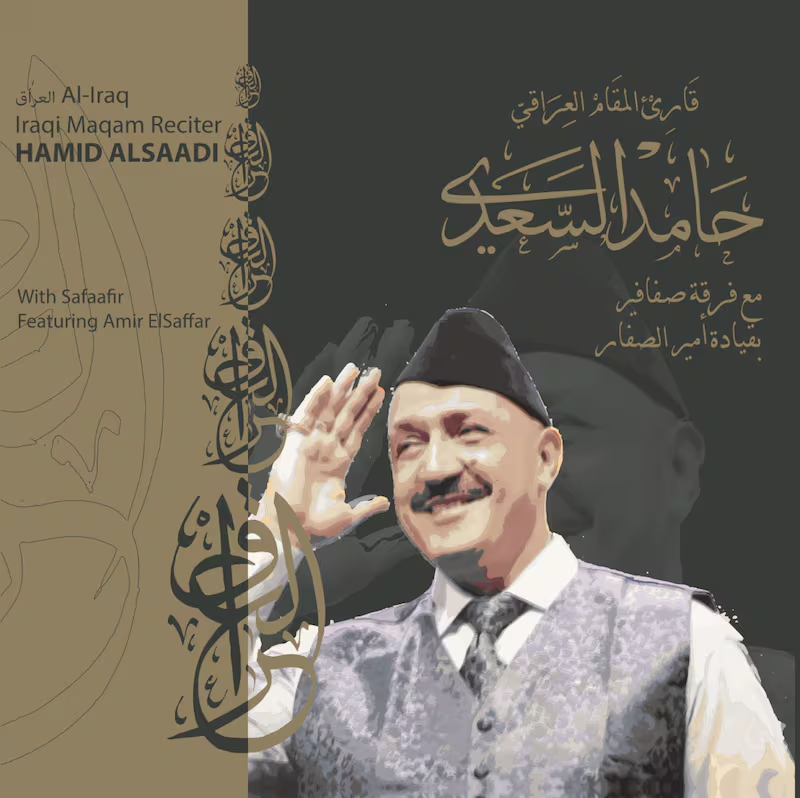
Hamid Al-Saadi is recognised as the final master of Iraqi maqam, a musical tradition that dates back centuries.
__________
IRAQ
LEBANESE BRITISH: Razane Jammal shares behind-the-scenes look at ‘The Sandman’
British Lebanese actress Razane Jammal took to social media this weekend to share behind-the-scenes shots from her time filming Netflix’s “The Sandman.”
The second season of the show landed on the streaming platform in July in two parts, with the second half of the season premiering this weekend.
“Dream dangerously and beware of the kindly (not so kindly) ones,” Jammal captioned her post on Instagram.
The carousel of photos shows Jammal in a hair and makeup studio, as well as on location in a mist-covered field.
In the role that arguably shot her to stardom, Jammal played Lyta Hall in 2022’s “The Sandman,” based on the legendary graphic novels — and she reprised her role in the latest season.
In season one, her character dreams of her dead husband each night, slowly realizing that he is not a figment of her imagination but is hiding out in the dream world.
It is a part that Jammal managed to play truthfully with subtlety — a subtlety for which she credited her mother in a previous interview with Arab News.
“I’ve always been extra, and my mom was far more subtle than I am. I had to fine-tune myself to vibrate on her frequency, a frequency that was very sweet and very raw, and vulnerable and nurturing. I took that from her.
“I grew up having a simple, community-based life in a place where you have 500 mothers and everyone feeds you and you feel safe — even if it’s not safe at all. At the same time we went through so many traumas, from civil wars to assassinations to losing all our money in another financial crisis.”
“The Sandman” is based on novels written by British author Neil Gaiman.
This is the final season of the series, with Netflix announcing its cancellation after Gaiman faced a civil lawsuit accusing him of rape and sexual assault earlier this year, amid more accusations of sexual misconduct.
“‘The Sandman’ series has always been focused exclusively on Dream’s story, and back in 2022, when we looked at the remaining Dream material from the comics, we knew we only had enough story for one more season,” showrunner Allan Heinberg said in a statement to Variety in January, indicating that the reason behind the show’s cancellation was a lack of script material.
Gaiman has denied the allegations.
source/content: arabnews.com (headline edited)
______________
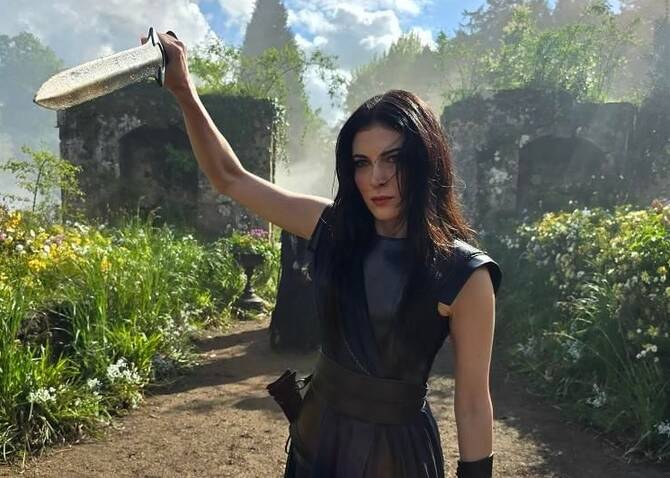
British Lebanese actress Razane Jammal took to social media this weekend to share behind-the-scenes shots from her time filming Netflix’s “The Sandman.” (Instagram)
_______________________
BRITISH / LEBANESE
SHARJAH, U.A.E : Ruler of Sharjah receives the Honorary President’s Medal from the University of Exeter and unveils the Al Qasimi Building project
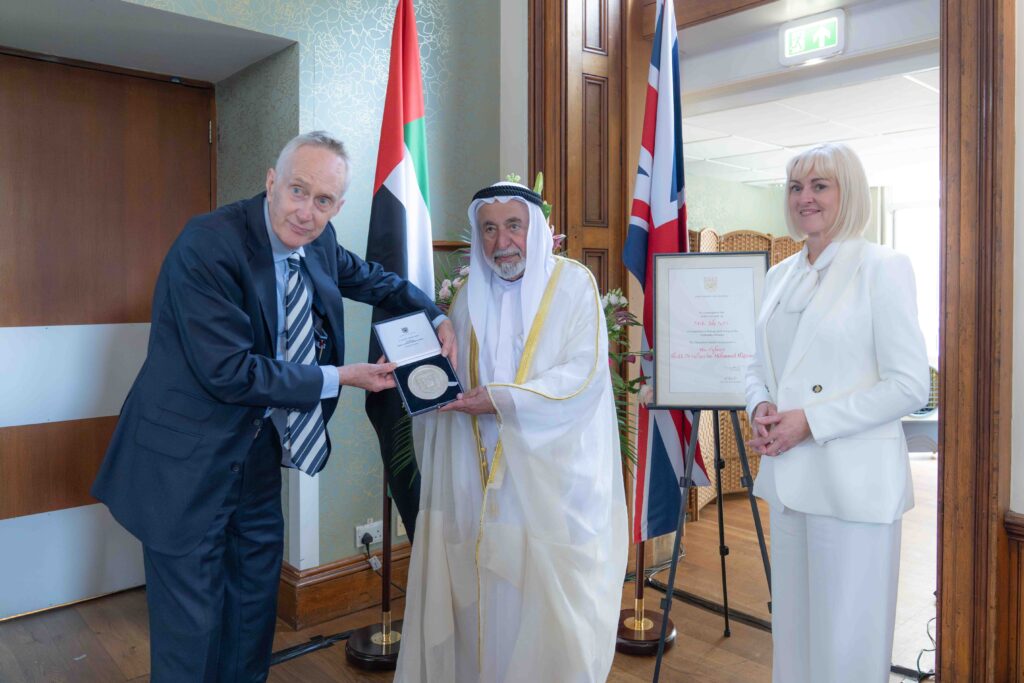
His Highness Sheikh Dr. Sultan bin Muhammad Al Qasimi, Supreme Council Member and Ruler of Sharjah, received the Honorary President’s Medal of the University of Exeter on Thursday, in the presence of His Highness Sheikh Sultan bin Ahmed bin Sultan Al Qasimi, Deputy Ruler of Sharjah and President of the University of Sharjah, and Sheikha Bodour bint Sultan Al Qasimi, President of the American University of Sharjah. The award is presented by the university for the first time in its history.
This came during His Highness the Ruler of Sharjah’s visit to the University of Exeter, during which he received the medal from Sir Michael Barber, the University’s Honorary President. The unveiling of the Al Qasimi Building project, which will be constructed at the university at His Highness’s initiative, and the unveiling of His Highness’s publications corner in the Library of the Institute of Arab and Islamic Studies, also took place. A cooperation agreement was also signed between the Sharjah Council for Higher Education and Scientific Research and the University of Exeter.
His Highness the Ruler of Sharjah was awarded the Honorary President’s Medal of the University of Exeter in recognition of his distinguished contributions to education and scientific research, as well as his distinguished relationship with the University of Exeter. His Highness is also considered a pioneer in cultural, scientific, social, and economic development, and has played a significant role in promoting cultural interaction and dialogue between countries and civilizations at the local, regional, and international levels.
During his speech at the honoring ceremony held in Reed Hall at the University of Exeter, His Highness said: “I am very pleased to return today to the University of Exeter, this prestigious institution that embraced me as a student more than forty years ago, and which has remained deeply rooted in my academic journey and memory ever since.”
His Highness expressed his gratitude for the close and fruitful cooperation with the University of Exeter over the past decades, saying: “I stand before you with deep gratitude for the fruitful path we have traveled together, a path that has brought us together in knowledge, partnership, and shared goals. I feel particularly proud of the enduring cooperation that has continued between the University of Exeter and the Emirate of Sharjah over the past four decades. This cooperation has not only stood the test of time, but has also evolved into a model of academic excellence. At the forefront of this achievement stands the Institute of Arab and Islamic Studies, a distinguished center that houses the Arab World Archives Unit and the Emirati Collection, which together represent a vital contribution to the preservation and study of our cultural heritage.”
His Highness the Ruler of Sharjah highlighted the academic partnerships with the University of Exeter, saying: “Over the years, this collaboration has led to the development of many successful academic partnerships across universities in the Emirate of Sharjah. At Khorfakkan University, the joint Marine Sciences programme with the University of Exeter contributes to the development of studies in coastal and marine ecosystems. At Al Dhaid University, there is cooperation in the field of geology and environmental sciences, which contributes to forming a strong academic foundation in earth science studies for university students. At the same time, the Sharjah Education Academy has introduced innovative programmes in the field of special educational needs, benefiting from the University of Exeter’s long academic experience and its long history in inclusive education.”
His Highness explained that these initiatives reflect a shared vision of investing in people and knowledge, a vision that continues to expand. Evidence of this is the Al Qasimi Building project at the University’s Institute of Arab and Islamic Studies, which was unveiled today to reflect the shared commitment to building inspiring academic environments for future generations.
His Highness expressed his gratitude and appreciation to the University of Exeter’s leadership, faculty members, and partners for his special recognition and for their continued dedication to education, research, and global collaboration. He called for continued building bridges of understanding, discovery, and progress together.
In her speech at the ceremony, Dr. Lisa Roberts, Chancellor of the University of Exeter, praised the vision, leadership, and support of His Highness the Ruler of Sharjah for education. She noted that His Highness’s influence extends to the educational facilities he has helped establish, the partnerships he has strengthened with the university, and his inspiration to many scholars and students.
In her speech, Roberts addressed the work model established by His Highness the Ruler of Sharjah across all universities and higher education institutions in the Emirate of Sharjah, its significant positive impact on education, and its impact on advancing societies at various levels.
She reviewed the historical relations that have linked His Highness the Ruler of Sharjah with the University since the 1980s, which have yielded distinguished academic programmes and projects, the fruits of which have been evident in the extensive cooperation between the universities in the Emirate of Sharjah, which His Highness established and sponsored, and the University of Exeter, which is very proud of these fruitful and ambitious relations and looks forward to developing them in the future.
Martha Holden, a graduate of the Institute of Arab and Islamic Studies, delivered a speech on behalf of the Institute’s students and graduates. She expressed her sincere thanks and appreciation to His Highness the Ruler of Sharjah for his support, which had a significant impact on her educational journey and her exposure to different cultures and understanding of the differences between dialects. This opened up new horizons for her and helped her deepen her knowledge of the Arabic language.
She described her experience at university as inspiring, inspiring her to continue her interest in the Arabic language even after graduation, praising His Highness’s support for her and her colleagues.
The ceremony included an artistic performance by a group of Exeter University students, and a video presentation that highlighted the close relationship between His Highness the Ruler of Sharjah and the University of Exeter since his studies and graduation in 1985. The continued scientific and academic interaction and partnerships with the university continue to this day, when His Highness was awarded the Honorary President’s Medal of the University of Exeter.
His Highness received a commemorative gift from Councillor Ann Jobson, Mayor of Exeter, in appreciation of His Highness’s visit and continued support for the University of Exeter.
During his visit, His Highness the Ruler of Sharjah unveiled the Al Qasimi Building project, which will be established through a generous initiative by His Highness at the Institute of Arab and Islamic Studies, which His Highness had previously established at the University of Exeter in 2001 to support researchers and students and provide scientific sources, historical documents, and references in a specialized institute for Arab and Islamic studies, enabling them to conduct and document studies.
His Highness and the attendees were introduced to the details of the Al Qasimi Building project through several visual presentations. These included the architectural vision of the building, which is based on the building being a distinguished scientific meeting place for students and scholars, reflecting Arab and Islamic civilization and scientific production. It is built on a beautiful geometric shape that constitutes a true addition to the university, with carefully distributed green spaces and places that provide forums for discussion and communication between the building’s visitors. The presentations also covered the building’s facilities, which consist of halls, classrooms, gardens, offices, study areas, and the services that will be provided to visitors, readers, and researchers.
The presentations included an introduction to the most prominent scientific findings of research conducted with the support of the Institute of Arab and Islamic Studies and in partnership with entities in a number of countries, as part of scientific cooperation in various scientific studies, such as archaeology, human existence, and others.
During his visit to the Library of the Institute of Arab and Islamic Studies, His Highness Sheikh Dr. Sultan bin Muhammad Al Qasimi unveiled the corner dedicated to His Highness’s writings, which includes a complete collection of his works, which he donated to the University of Exeter, in addition to a luxury copy of the Historical Dictionary of the Arabic Language.
His Highness the Ruler of Sharjah has published 118 books in various fields of knowledge. Each book reflects a penetrating vision and enlightened thought that demonstrates the depth of his culture and the strength of his faith. His Highness’s books have been translated into more than 20 living foreign languages, including English, French, Chinese, Italian, Hindi, Russian, Spanish, German, Portuguese, Malayalam, Marathi, Urdu, Bengali, Polish, Dutch, Romanian, Persian, Turkish, and Somali.
His Highness’s publications are distinguished by their research depth and academic rigor, and reflect his keen interest in the history of the Arabian Gulf, particularly Sharjah and the Gulf in the modern era. His scholarly research is based on original documents preserved in global archives.
The works of His Highness Sheikh Dr. Sultan bin Muhammad Al Qasimi are the product of a long intellectual and historical journey that began in the 1980s, when His Highness felt the need to correct the false narratives disseminated by colonial powers, which distorted the history of the Arabian Gulf. His first book, “The Legend of Piracy in the Gulf,” published in 1985, marked the beginning of a comprehensive documentation project based on original documents from British, Ottoman, and French archives. Over the years, his works expanded to include various aspects of Gulf history.
His Highness also wrote his autobiography in a narrative work entitled “Self-Narration,” in a style that combined personal documentation with a national vision. He also brought history to the stage through more than twenty plays that reflected Arab issues and their cultural identity. His writings evolved over time from historical responses to academic and theatrical works, forming, in their entirety, a comprehensive cultural project that brought together the ruler, the historian, and the creative thinker.
During his visit to the library, His Highness viewed a collection of important and valuable historical documents, books, and sources, including the thesis he submitted in 1985 to obtain a PhD in History from the University of Exeter with distinction. The thesis was titled “The Myth of Arab Piracy in the Arabian Gulf between 1797 and 1820.”
At the university’s Northcote building, His Highness the Ruler of Sharjah, Chairman of the Sharjah Council for Higher Education and Scientific Research, and Dr. Lisa Roberts, President of the University of Exeter, signed a cooperation agreement between the Council and the University to implement a leadership training program for higher education institutions. The program, titled “Leadership Compass: Shaping the Future of Responsible Governance in Universities,” is an advanced and ambitious training program for transformational executive education, specifically designed for the Sharjah Council for Higher Education and Scientific Research.
The program’s content is aligned with five main objectives that are consistent with the goals of the Sharjah Council for Higher Education and Scientific Research, namely:
Develop strategic leadership capabilities by equipping university leaders with the skills and vision to lead with courage and clarity in the rapidly changing higher education landscape. Enhance institutional governance by encouraging responsible resource management, transparent decision-making, and aligning operations with the institution’s mission and values. Foster a culture of inclusivity and excellence by supporting the development of inclusive, values-based academic environments that prioritize staff well-being, student success, and the integrity of research. Enhance stakeholder engagement and influence, build the capacity to engage effectively with internal and external stakeholders, and promote the university’s civic, social, and global responsibilities. Encourage reflective and collaborative practice by creating space for peer learning, critical reflection, and inter-institutional dialogue, with the goal of inspiring innovation and shared leadership.
On the sidelines of the signing of the agreement, several areas of cooperation and shared interests in educational and academic affairs were discussed, as well as the results achieved from the cooperation between higher education institutions in the Emirate of Sharjah and the University of Exeter.
The honoring ceremony was attended by His Highness the Ruler of Sharjah, His Excellency Mansour Belhoul Al Falasi, UAE Ambassador to the United Kingdom; Sheikh Khalid bin Saud Al Qasimi, Deputy Ambassador of the UAE to the United Kingdom; Abdullah Mohammed Al Owais, Chairman of the Department of Culture; Dr. Khalifa Musabah Al Tunaiji, Chairman of the Department of Agriculture and Animal Resources; Dr. Mansour Mohammed bin Nassar, Chairman of the Sharjah Government Legal Department; Ahmed bin Rakkad Al Ameri, CEO of the Sharjah Book Authority; Dr. Muhadditha Al Hashimi, President of the Sharjah Education Academy; and a number of officials from government agencies and higher education institutions in the Emirate of Sharjah.
From the British side, the ceremony was attended by Lord David Fursden, Her Majesty’s Representative in Devon; Councillor Ann Jobson, Lord Mayor of Exeter; Sir Michael Barber, Honorary President of the University of Exeter; Dr. Lisa Roberts, President of the University of Exeter; and a number of University of Exeter officials. A / M
source/content: wam.ae (headline edited)
____________
______________________________________________
SHARJAH, UNITED ARAB EMIRATES (U.A.E)
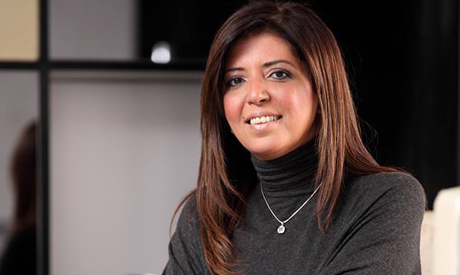
EGYPT : INTERVIEW: Dalia Sadany sheds light on hidden talent of Egyptian designers
The renowned Egyptian architect speaks to Ahram Online about her design philosophy, projects of excellence and giving back to society.
n 2014, Alexandra-born architect Dalia Sadany made headlines when she became the president of the International Association of Designers (IAD) after ranking 12th at the World Designer competition the same year.
Sadany sat down with Ahram Online to discuss a passion for architecture that paved the way to award-winning projects, her hands-on design philosophy and her intention to shed light on Egypt’s talents in the field.
Ahram Online: How do you describe the onset of your passion for this career?
It was extremely circumstantial, not intended or planned. I just fell in love with it as I was studying it.
AO: Tell us about the balance between visual appeal and practicality?
It is actually the job of the architect, to be able to do that equation. The whole point of being successful in design and architecture is that you can balance the need to have a successfully functional space with something that appeals visually. First comes functionality and then my designs work to mirror it.
If the work is residential, we are talking about mirroring human beings. If it is corporate, we mirror the occupation of that space. If it has to do with retail, we mirror a certain product. In regard to the visual aspect that makes the work appealing, it has to do with taste.
AO: Do you try to maintain an Egyptian cultural element in your creations?
You cannot actually define an Egyptian cultural element because Egypt has so many styles combined. So if we are talking about an Egyptian Identity, then I would say it is my lifetime goal.
I definitely try to maintain that [identity] but with a certain twist; I don’t imitate in regard to anything that we call “Egyptian” or ethnic, but rather give that Egyptian feature a sort of a futuristic aspect.
We do have history that we must be proud of but we cannot keep copying what we have historically; we have to add to it. Abroad they don’t have as much history as we do, so they will always be hungry for designs that have a story, and we have lots of stories to tell.
AO: You are an advocate of the “The master builder” approach; could you explain that?
“The master builder” is responsible for all phases from concept design to handover, like back in the pharaonic age; there was the architect who would design and construct, and he was also a craftsman.
I am not belittling designers who don’t do that; it’s just a different approach. I’m a hands-on person, and I like to work on site, and this approach had been gaining traction worldwide.
Back in the 1800s there came a sort of revolutionary idea to segregate designers from contractors, and since then, people started to look down on contractors. But, all of a sudden the mischief of that approach surfaced, and we saw mega products having problems that went back to the missing link between these two entities. That’s why there was a third entity created to solve these problems: the project manager.
AO: As a multi-award winning designer, which projects from your portfolio are the closest to your heart?
The ones that were done in Egypt, like renovating Tahrir Square, the new educational hub that I did, even El-Hegaz Square, because they come from an emotional experience and are related to certain problems that I see around me.
AO: Tell us more about your ground-breaking recent project on the American University in Cairo Greek campus?
I was somebody who didn’t believe in corporate design. I didn’t think that companies were interested in investing in design, especially in Egypt.
This was proven wrong. I met with the CEO of the company in charge of [building] the intended training facility, and I was taken with the interest in design that was expressed. They told me to design what I feel, and this was music to my ears.
We talked about the idea of creating this educational hub, and investing for IT students, especially for public university graduates, which really touched me.
This hub was like an incubator; through it the graduates and I saw how their lives changed and how they found better opportunities, so I took that project deeply to heart.
When people from abroad complimented the work saying that they couldn’t believe it was made by an Egyptian designer, it made me happy and it made me sad. It saddens me that there is not enough focus on the calibre of designs and creative minds in Egypt.
AO: As president of IAD, you pioneered an initiative to honour and encourage Egyptian designers. Tell us more about that.
As soon as I became president, I wanted to begin drawing international attention to pioneers and landmarks in the field of design. We discussed candidates from 12 fields of design.
I wanted to give back to these names in their country, so we talked the board of IAD into flying down from Milan to honour theses names. We honoured two companies in Egypt.
Everyone really appreciated that they were honoured in their own country. I have won awards all over the world, but it makes all the difference when it is done in ones’ own country.
AO: You have written educational articles about architecture and spoken about inspiring homeowners to build their own houses. Are you still passionate about writing in that regard?
I am still very passionate, but I wish I had more time. Juggling so much becomes tedious and you have to focus, but I will return soon to writing about the field to teach people how to design and build in simple ways.
AO: What are you looking forward to contributing to the society?
A lot. Sometimes when we try to help we get setbacks, but you stand back again and you try. I want to make this country worth its reputation and history. It is a beautiful country and although I studied, lived and worked abroad, something irreplaceable makes me very attached to my homeland.
AO: Amid the economic crisis prevailing now, how is an interior designer affected?
Difficulty purchasing anything! We cannot provide bills of quantity, as prices fluctuate crazily, especially lacking an entity that would filter prices or help maintain a ceiling. This has done huge damage to designers and architects; many have stopped working.
AO: What obstacles must be removed to pave the road for more creation and art in that regard?
The main obstacle would be removed if the [project creators] in this country really believed in the minds of [Egyptian] designers. It saddens me that whenever there is a mega project, they would prefer to get a foreign designer.
Also we have to expand horizontally: no point in getting more designers to work if we don’t have land and projects for them.
source/content: english.ahram.org.eg (headline edited)
_____________
___________
EGYPT
MOROCCO : Boeing, Alphavest Capital to Establish Five Aerospace Centers in Morocco
The five aerospace excellence centers will specialize in engineering, tubing systems, complex mechanical components, composite structures, and raw materials processing – strengthening Morocco’s aviation manufacturing capabilities.
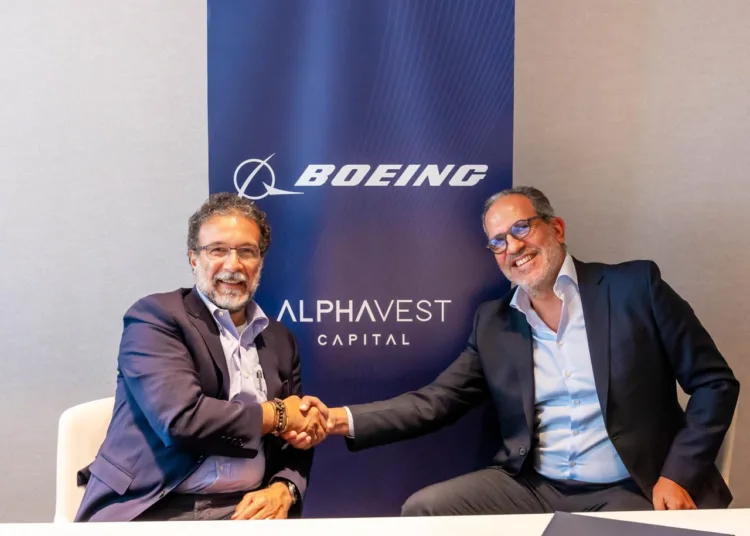
Moroccan asset management firm Alphavest Capital and aircraft manufacturer Boeing have signed a memorandum of understanding (MoU) to collaborate on creating five aerospace excellence centers in Morocco.
The agreement, announced on Friday, aims to strengthen the North African country’s position in the global aerospace industry. According to the MoU terms, the two companies will work together to develop logistics capabilities and establish specialized centers in five key areas.
The five aerospace excellence centers will focus on engineering; tubes, ducts, hoses and fittings; complex mechanical parts and sheet metal activities; secondary structures, particularly composite parts; and metal and raw materials processing and distribution.
Majid Benmlih, President and CEO of Alphavest Capital, stressed the significance of the partnership. “This historic agreement with Boeing marks Morocco’s arrival on the global aerospace scene, confirming the Kingdom’s position as an aerospace destination offering the best value for money, particularly in terms of risk, quality, cost and time,” he remarked.
He noted that the agreement builds on years of collaboration between Alphavest Capital and Boeing, notably through the creation and development of TDM Aerospace.
Ihssane Mounir, Senior Vice President of Global Supply Chain and Fabrication at Boeing Commercial Airplanes, expressed pride in the partnership. “We are proud to partner with Alphavest Capital to continue developing Moroccan aerospace supply chain capabilities and fostering a highly skilled and high-performing workforce,” he declared.
“This agreement reinforces our commitment to the Kingdom’s vision of positioning Morocco as a key player in the global aerospace industry,” Mounir concluded.
Alphavest Capital is among the thematic and sectoral fund management companies selected by the Mohammed VI Investment Fund to support the aerospace sector.
The company mobilizes Moroccan and international capital in two key transformation areas: Industrial Innovation through the Aerospace Fund (MAIC OPCC), and Technological Disruption via the Tech I Fund “Startup Nation Morocco.”
This Boeing-Alphavest alliance emerges as Morocco’s aerospace sector gains substantial momentum. In a separate development last month, French group Figeac Aéro entered a strategic partnership with Boeing on June 16 during the Paris Air Show, to manufacture machined parts for the 737 Max in Morocco.
Speaking at the same event, Minister of Industry and Commerce Ryad Mezzour revealed that Morocco’s aerospace sector now encompasses 150 companies generating €2.5 billion (approximately $2.5 billion) in annual revenue while employing 26,000 people full-time.
He outlined ambitious growth plans including expansion into cabin fittings and landing gear manufacturing. “Within ten years, we think we can offer a final assembly line for commercial aircraft,” Mezzour projected, expressing confidence in doubling the sector’s turnover by 2030.
He stressed Morocco’s competitive advantage with production costs at €25 per hour compared to €100-120 in Europe or the US, supported by 23,000 engineering graduates annually, of whom 400 enter the aerospace field.
According to recent data from the Exchange Office, Morocco’s aerospace sector exports exceeded MAD 9.5 billion (approximately $950 million) by the end of April, marking a 14% increase compared to the same period last year.
Additionally, Royal Air Maroc (RAM) is reportedly preparing a major aircraft order from Boeing, potentially including about two dozen 787 long-haul aircraft and up to 50 737 medium-haul planes, deepening the strategic aerospace relationship between Rabat and the American manufacturer.
source/content: moroccoworldnews.com (headline edited)
_______________
______________
MOROCCO
AL-AIN, U.A.E. : A research team from the United Arab Emirates University has obtained a patent for developing smart robots for underground pipe maintenance
A research team from the United Arab Emirates University (UAEU) has been granted a patent from the United States Patent and Trademark Office (USPTO) for the design of an advanced system of transformable smart robots specifically designed to inspect and maintain subsurface pipes using swarm technology.
The team included Dr. Fadi Al-Najjar, a specialist in human-centered artificial intelligence and neurorobotics; Dr. Walid Ahmed, an expert in additive manufacturing and mechanical engineering; Amjad Al-Hassan, a master’s student and research assistant in mechanical engineering; and technical engineer Muthanna Ahmed Aziz.
The system relies on a group of small robots capable of coordinating with each other using a mechanism inspired by the behavior of ants and bees. Tasks are distributed automatically, and the robots react in real time to environmental challenges.
enhancing inspection and maintenance efficiency and reducing the need for human intervention or external excavation.
Dr. Fadi Al-Najjar explained that smart robots were developed to operate within an interconnected group structure that communicates with each other and adapts to complex environments, representing a qualitative leap in pipeline network management and maintenance technologies, especially in challenging environments.
He pointed out that this system will contribute to reducing operational costs, limiting breakdowns, and reducing pollution rates resulting from leaks, in addition to extending the life of vital infrastructure.
He emphasized that this innovation reflects UAEU’s support for applied scientific research and represents a qualitative scientific advance that strengthens its role as a leading center in the fields of artificial intelligence, robotics, and sustainable engineering. He noted that the team aspires to continue developing new innovations that support sustainability and serve the knowledge economy.
source/content: wam.ae (headline edited)
______________

__________________________________________
SABU DHABI, UNITED ARAB EMIRATES
SAUDI ARABIA praised at UN for global leadership on dust storm early warnings
The meeting highlighted the Kingdom’s $10 million commitment over five years to strengthen early warning systems.
Saudi Arabia’s international efforts to combat sand and dust storms were commended this week during a high-level meeting at the UN Headquarters in New York, the Saudi Press Agency reported on Friday.
The meeting highlighted the Kingdom’s $10 million commitment over five years to strengthen early warning systems and support countries vulnerable to dust storm impacts.
The initiative, led by Saudi Arabia in cooperation with regional centers affiliated with the World Meteorological Organization, was praised for enhancing forecasting and response capabilities.
Jumaan bin Saad Al-Qahtani, deputy CEO of the National Center of Meteorology, emphasized the Kingdom’s work through Vision 2030 programs such as the Saudi and Middle East Green Initiatives.
He also noted the establishment of the Regional Center for Dust and Sand Storms in Jeddah as a strategic hub for regional coordination, data exchange, and capacity building.
Saudi Arabia has hosted major research events, including the First International Conference on Dust and Sand Storms in Riyadh, and plans to hold a second edition in 2026.
Its environmental efforts have resulted in planting over 142 million trees and reclaiming more than 436,000 hectares of degraded land.
Al-Qahtani reaffirmed the Kingdom’s readiness to expand international partnerships to reduce dust sources, protect the environment, and improve resilience against climate change, SPA added.
source/content: arabnews.com (headline edited)
_____________
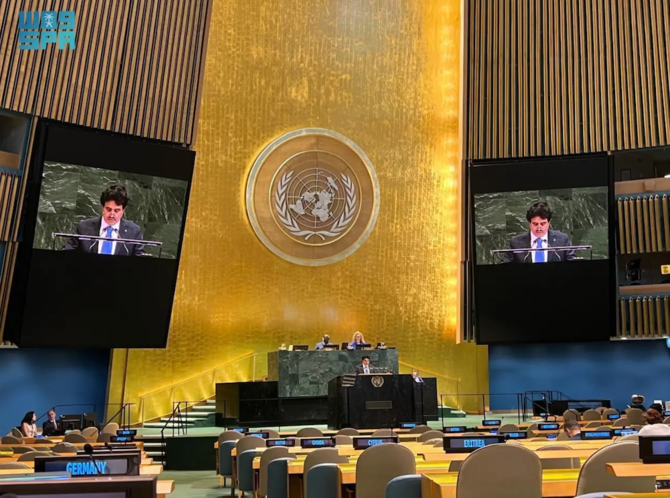
Saudi Arabia’s international efforts to combat sand and dust storms were commended this week during a high-level meeting at the UN Headquarters in New York. (SPA)
_________________
SAUDI ARABIA